

The question seems simple enough, but it’s actually wrapped up in your entire lifestyle. Whether you’re staring at your nails wondering if you should let them grow out—or desperately wanting to trim them back down—the choice between short and long nails touches almost everything you do with your hands. It affects how fast you can type, whether your nails snap off at inconvenient moments, how much time you spend maintaining them, what kind of work you can comfortably do, and honestly, how you feel about yourself when you look down at your hands.
The frustrating part? There’s no universal “right” answer. What works beautifully for someone else might be completely impractical for your life. A surgeon, a rock climber, and a graphic designer all have legitimate reasons to prefer different nail lengths—and all three reasons are equally valid. The real work is understanding what actually matters in your specific situation, not what you think should matter or what looks impressive on social media.
Let’s dig into the genuine trade-offs between these two approaches. By the end, you’ll have a clear sense of which direction makes sense for how you actually live, not some idealized version of how you think you should live.
Understanding the Basic Difference Between Short and Long Nails
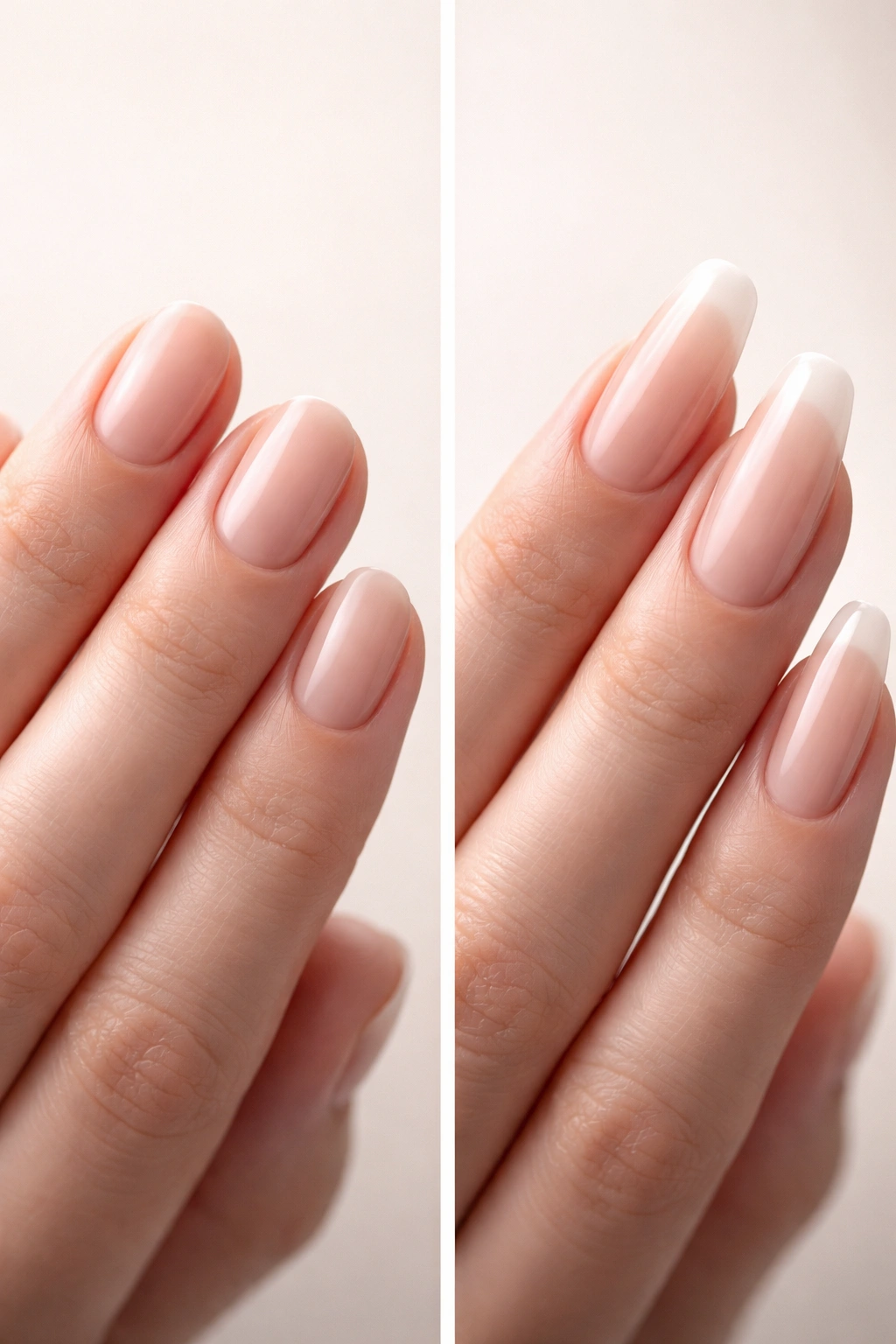
Short nails typically sit just at or barely past the tip of your fingertip—the kind where your finger’s natural pad is still the dominant feature when you look at your hand. Long nails extend noticeably beyond your fingertip, sometimes an inch or more, creating a dramatic visual element that’s impossible to ignore.
But here’s what matters more than the aesthetic difference: the physics change entirely. A short nail is supported by living finger tissue nearly all the way across. A long nail has a significant cantilever—it’s extending past where your fingertip ends, which means it’s structurally unsupported from underneath. That’s not a flaw; it’s just the reality of what happens when you extend beyond your natural nail bed.
This structural difference ripples through everything else. It affects how much force your nail can withstand before it breaks. It changes how much time you need to spend maintaining them. It influences what activities are genuinely comfortable versus what requires constant anxiety about damage. Understanding this foundation helps explain why so many of the other differences between short and long nails aren’t just preferences—they’re practical realities.
Durability and Breakage Risk
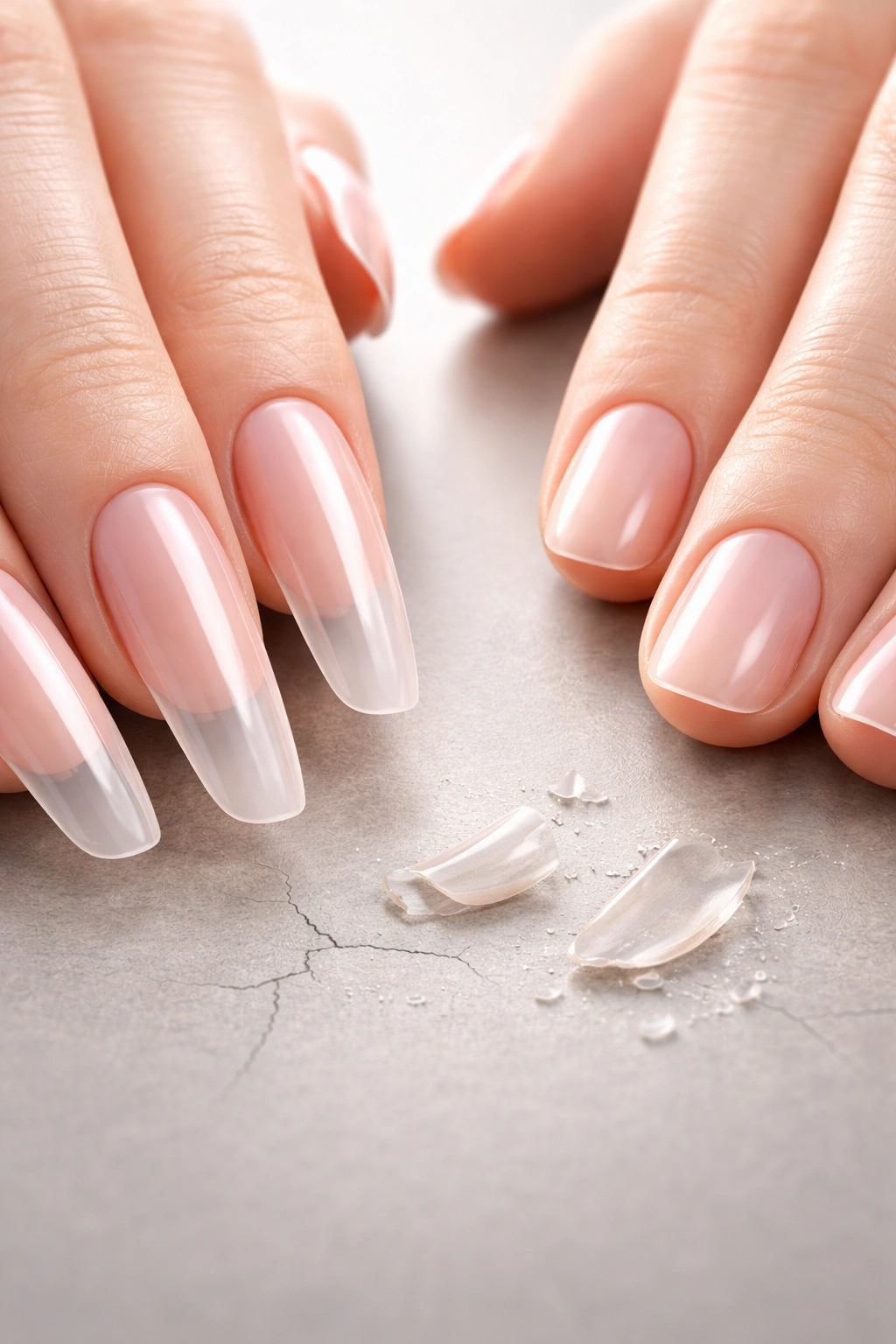
Let’s be honest: long nails are more fragile. It’s not because of the length alone; it’s because of that unsupported extension and the way force concentrates at a single stress point. When you jam your hand into a car door, when you bump your nail against the edge of your desk, when you grip something too hard—the impact travels differently on a long nail than on a short one.
Short nails, by contrast, distribute force across their entire structure because the support goes all the way across. They simply can’t break in the same ways. You’d have to apply direct, serious force to snap a short nail, and even then, the damage tends to be less severe because there’s less leverage involved.
If you’ve ever watched someone with long nails work, you might notice they move their hands slightly differently—more deliberately, with a bit more caution. That’s not neurotic. That’s adaptation to a genuine physical reality. Typing, opening packages, scratching an itch, reaching into a crowded bag—all of these become situations where your nails are at risk.
This matters more for some people than others. If you work with your hands—mechanical work, childcare, gardening, construction, healthcare—breaking a long nail doesn’t just hurt; it might happen multiple times a month. For someone in a desk job who mostly uses a keyboard, the risk is much lower. But the baseline fact remains: short nails are mechanically more durable.
Daily Maintenance and Care Requirements
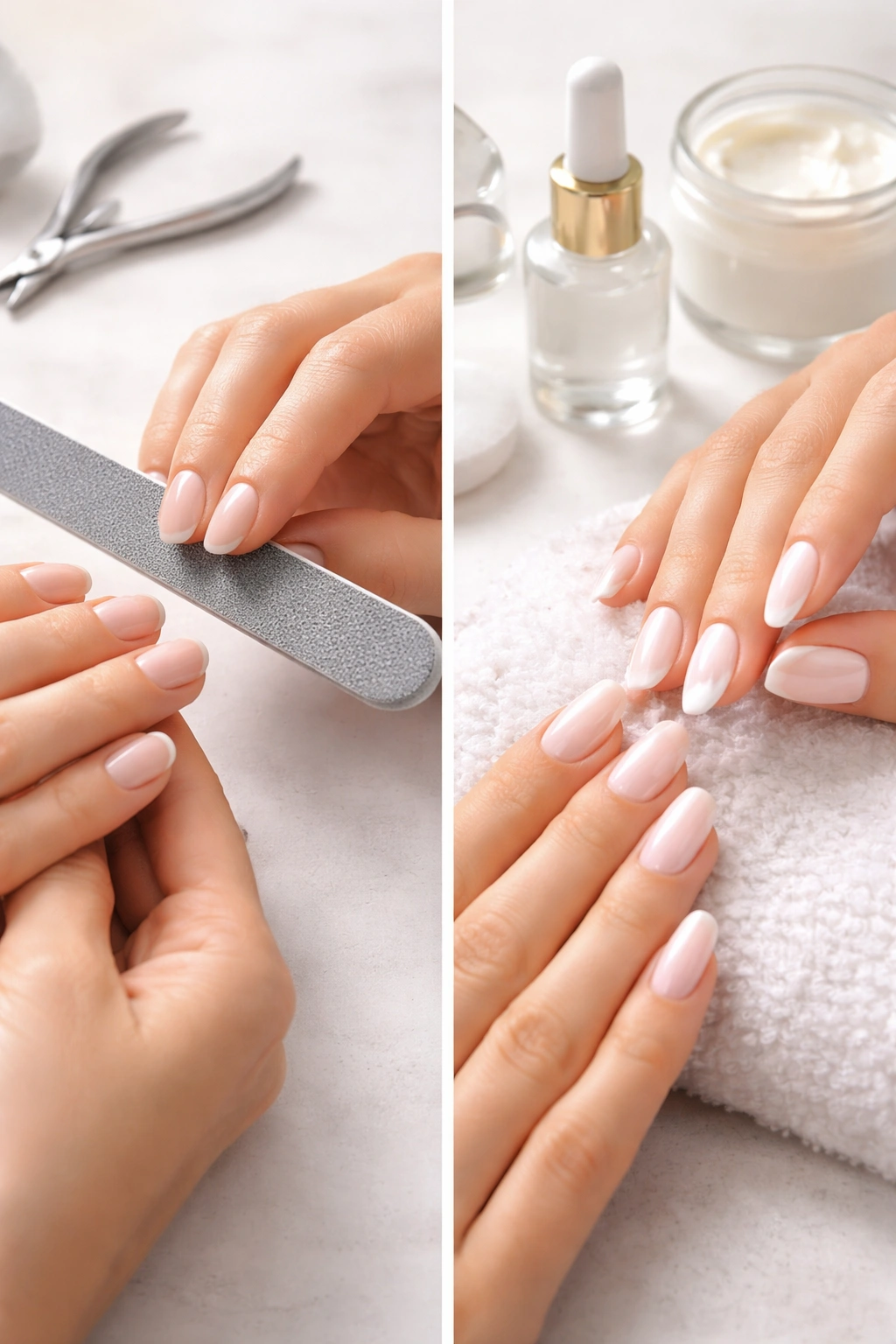
Short nails demand remarkably little from you. File them once a week or whenever they develop rough edges. Keep them moisturized. That’s genuinely the entire requirement. You’re spending maybe 10 minutes per week on basic nail care.
Long nails? They’re a commitment. You need to file them every few days to maintain the shape and prevent breakage from irregular edges. You’ll spend more time on filing alone than someone with short nails spends on their entire routine. You need to be careful with certain activities that would barely register as a concern for short nails. You probably need cuticle oil or hand cream more frequently because the increased surface area loses moisture faster. If you’re wearing polish, you’ll want to reapply it sooner because long nails show chips and wear more visibly.
This isn’t a judgment; it’s just the basic math of surface area and maintenance. A long nail simply requires more attention to look intentional rather than neglected. The question is whether you enjoy that attention—whether it feels like a pleasant self-care ritual or a burdensome chore. If you’re someone who forgets to moisturize your hands or let’s basic grooming slide, long nails will probably frustrate you. If you genuinely enjoy spending time on nail care and find the ritual relaxing, it becomes a non-issue.
Some people underestimate this factor and end up growing out long nails only to become frustrated when they look ragged after a week. Be honest with yourself about whether you’re likely to maintain them, because unmaintained long nails look worse than unmaintained short nails by a significant margin.
Professional and Work Environment Considerations

Your work environment might actually make this decision for you. Certain fields have genuine practical reasons to prefer shorter nails, while others have no issue with length at all.
Healthcare workers, food handlers, and anyone working in hygiene-sensitive environments often face policies limiting nail length specifically because longer nails harbor bacteria and pathogens more easily. It’s not arbitrary; it’s based on infection control research. If this applies to you, you might not have a real choice.
Office jobs, creative fields, writing, accounting—these typically have no restrictions. Your nails exist for their own sake, not as functional tools for the work itself.
Physical jobs—carpentry, construction, plumbing, mechanical work—tend to create situations where long nails are constantly getting caught, broken, or in the way. You could technically keep them long, but you’d be replacing them constantly and working with genuine disability (you can’t grip a wrench the same way, you can’t reach into tight spaces, you’re constantly anxious about catching them on something).
If you work in a client-facing role where people make snap judgments about you—sales, hospitality, certain professional services—you might notice that long, well-groomed nails get read as “put-together and professional,” while short, neat nails read as “practical and no-nonsense.” Neither is objectively better, but perception matters in some industries.
Before you decide on nail length, seriously consider what your actual work day looks like. Would long nails genuinely interfere with your job, or would they just be a minor inconvenience you could adapt to? That’s the real question.
Typing, Gaming, and Fine Motor Tasks
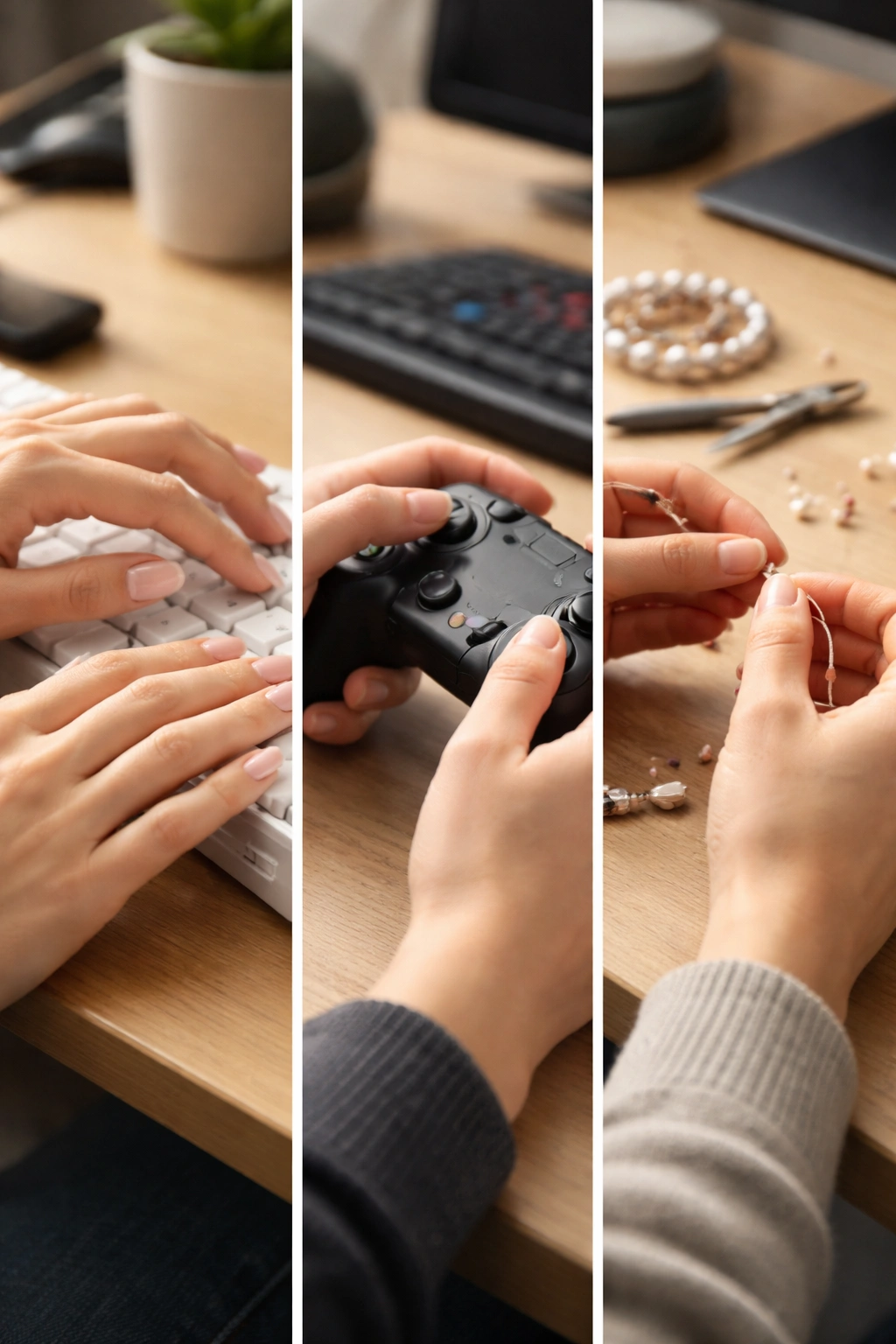
This one gets surprisingly contentious, and the answer depends on your specific situation. Some people type beautifully with long nails; others find it genuinely irritating.
The mechanics work like this: with short nails, your fingertip pad naturally contacts the key first, and your nail has no role. With long nails, you’re often hitting keys at a slight angle, or your nail contacts the surface around the key, or you have to adjust your hand position to accommodate the extra length. Whether this matters depends on three things: how long your nails are, how you naturally type, and how adaptable your muscle memory is.
People who learned to type with long nails usually develop a hand position that works perfectly fine. People who switch to long nails after years of short nails often experience a frustrating transition period. The same applies to gaming, playing musical instruments, or any activity requiring precision with your fingertips.
Fine work—sewing, jewelry making, detailed artwork, threading needles—is genuinely easier with short nails for most people. There’s no debate there. Your fingertip has more sensitivity, more control, and you’re not accidentally snagging thread or scratching delicate surfaces.
If your hobby or work involves any of these fine motor tasks, seriously test long nails for a week or two before committing. What feels impossible for day one might feel natural by day seven—or you might confirm that you genuinely prefer the control of short nails. Don’t assume based on aesthetics; test based on actual use.
Health and Hygiene Factors

This is where personal preference meets legitimate biology. Longer nails, simply by virtue of their increased surface area, can collect more bacteria, dirt, and debris underneath them. It’s not that short nails are sterile and long nails are filthy; it’s that long nails require more intentional cleaning to reach the same hygiene standard.
If you’re someone who regularly washes your hands, uses a nail brush, and maintains basic hygiene habits, this isn’t a real concern. But if you’re someone who washes your hands quickly and doesn’t think much about what’s under your nails—or if you’re immunocompromised or working in an environment where hygiene is critical—longer nails do objectively require more attention to maintain equivalent cleanliness.
There’s also the issue of nail health itself. Long nails can sometimes cause discomfort or pain at the attachment point if they’re truly excessive, and they’re more likely to develop fungal infections if you regularly expose them to moisture or dampness (long nails trap water longer). Short nails, being mostly supported by living tissue, are less vulnerable to these specific issues.
On the flip side, some people find that keeping nails on the longer side actually improves their nail health because it motivates them to moisturize more carefully and avoid harsh chemicals. The nail bed itself—the living tissue underneath—benefits from regular care, which long nails sometimes inspire more than short nails do.
The honest take: if you have a history of nail infections, weak or peeling nails, or your hands are regularly wet from your job, short nails are the safer choice. If your nails are naturally strong and you’re diligent about hygiene, length becomes a non-factor.
Cost and Expense Over Time
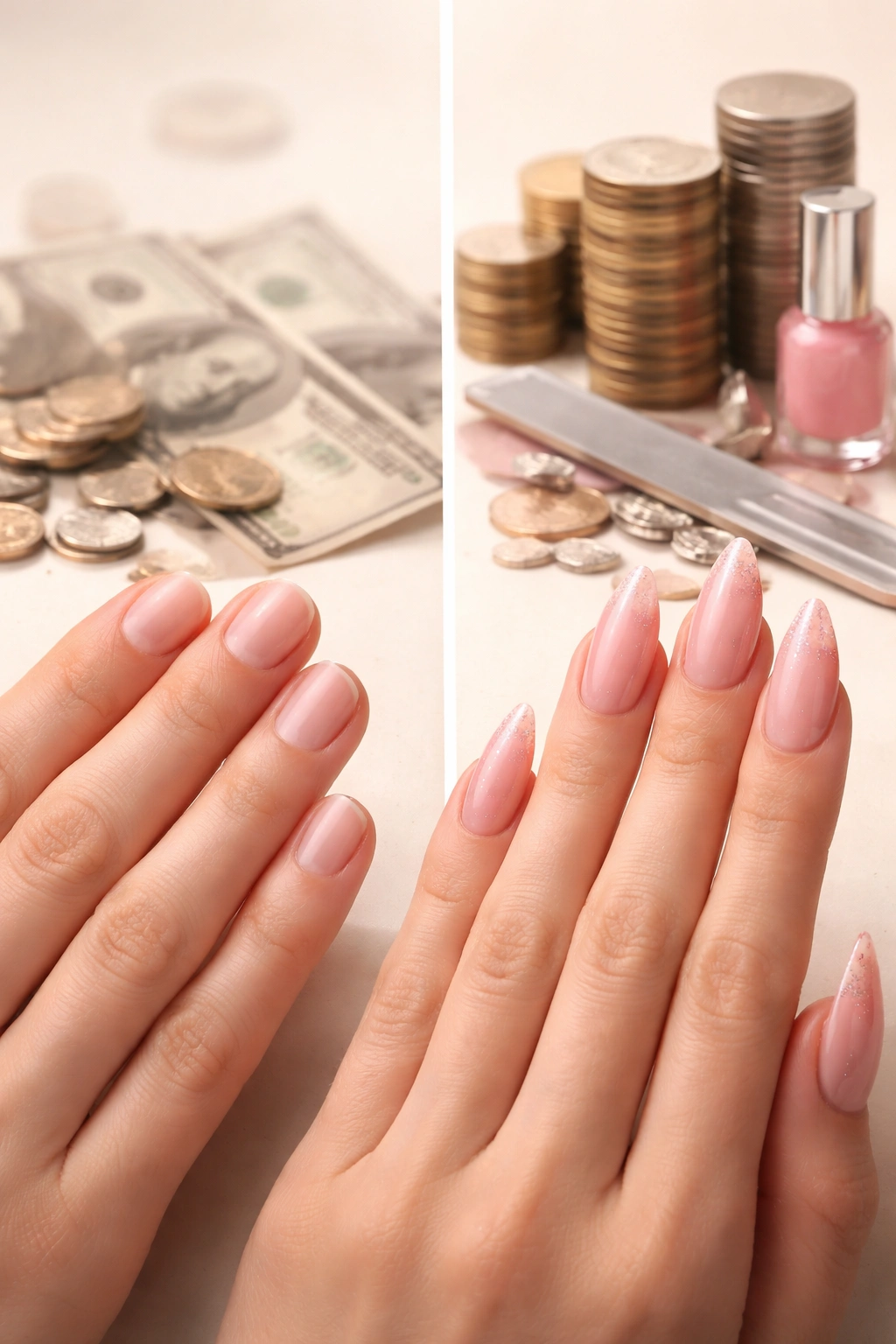
This one often surprises people. Short nails cost less to maintain, period. You’re not paying for professional manicures as often (if at all), you’re not buying as much polish or nail art supplies, and you’re not replacing broken nails as frequently if you do get manicures.
Long nails, especially if you maintain them professionally, become a regular expense. A manicure to maintain the shape, polish, and health costs money every 2-3 weeks. If you get gel or acrylic nails (which are designed to accommodate longer lengths), that’s an even larger expense. Even if you do everything yourself, you’ll go through file refills, nail polish, cuticle oil, and hand cream faster.
This isn’t about judging anyone’s spending choices—it’s just math. Over a year, the difference between “file my nails at home weekly” and “get a professional manicure every two weeks” is significant.
If maintaining long nails requires professional help for you (because you can’t achieve the shape or quality you want on your own), budget that reality into your decision. Some people don’t mind it; others find it becomes an unexpected expense they didn’t anticipate. Be realistic about what “long nails” means for you specifically.
Aesthetics and Personal Style Expression
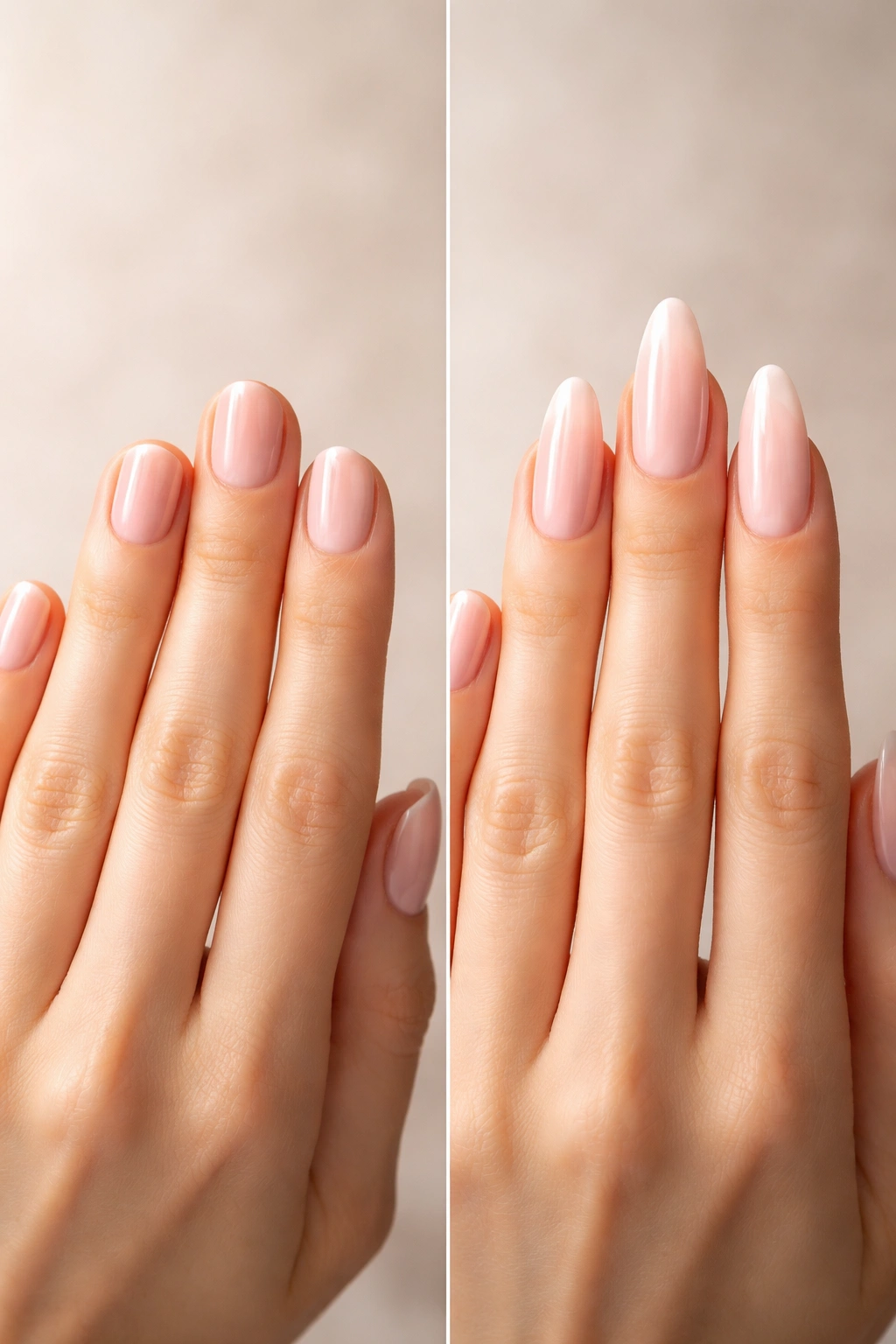
This is where subjective preference finally gets to win. Nails are visible almost constantly—people see them before they see your face in many interactions. What you do with them is a form of self-expression, and there’s no objective “better” choice here.
Long nails create visual drama and elegance. They extend your silhouette, they look polished and intentional, and they’re ideal for nail art that plays with length and shape. If you love the way long nails look and feel on you, that matters. There’s genuine confidence and pleasure in having nails that feel like an extension of your style.
Short nails communicate practicality, neatness, and a no-nonsense approach. They suit certain hand shapes, certain skin tones, certain personal styles beautifully. They photograph well. They work with minimalist aesthetics and they read as clean and modern. If short nails make you feel like yourself, that counts for something real.
Some people try long nails because they think they “should”—because they see them on influencers or celebrities, or because they think long nails signal success or femininity. That’s worth examining. Are you choosing this because it resonates with you, or because you feel obligated to?
Your nails are visible to you constantly, multiple times per day. Living with a length that doesn’t feel right to you is choosing to feel slightly off every time you look at your hands. That’s a bigger deal than it sounds. The aesthetic choice matters.
Athletic Performance and Active Lifestyles

If you’re active—whether that’s running, weightlifting, yoga, swimming, rock climbing, or any sport—nail length can genuinely affect your experience. Long nails aren’t impossible for athletes, but they do introduce complications.
Rock climbing becomes harder because your nails can catch on holds, snap on friction, and limit how tightly you can grip. Swimming works fine aesthetically, but long nails are more likely to snag your swimsuit or your hair while drying off. Yoga and Pilates require modification of certain poses because your nails might dig into your palms or forearms. Weightlifting is easier without the anxiety of breaking a nail mid-set.
For activities like running, cycling, or tennis, the impact is minimal. Your nails aren’t really part of the physical action. For anything involving your hands gripping, pushing, or pulling, longer nails introduce friction and vulnerability.
If you’re someone who values a specific athletic practice, think about whether long nails would genuinely interfere with your ability to do it comfortably. “Interfere” doesn’t mean “impossible”—plenty of athletes have long nails. It means “require adaptation or limit your performance.” You get to decide if that trade-off is worth it for the aesthetic you want.
Comfort While Sleeping and Resting

This is a small thing that actually matters to people: long nails can be uncomfortable when you sleep or rest. Some people wake up with indentations on their hands from their own nails, or find that lying on their side puts pressure on their nails in a way that aches. Accidental scratching in your sleep—your own nails scratching your face, neck, or body—is a real complaint from people with longer nails, especially during certain sleep positions.
Short nails don’t create these micro-discomforts. You can lie however you want, rest your hands however you want, and not wake up with aches or inadvertent scratches.
This seems trivial, but discomfort adds up. If every time you lie down or rest your hands you’re slightly conscious of your nails, that’s choosing daily minor friction. For some people, it’s worth it for the aesthetic they love. For others, discovering this issue is the reason they decide to keep nails shorter.
Nail Art and Decoration Possibilities
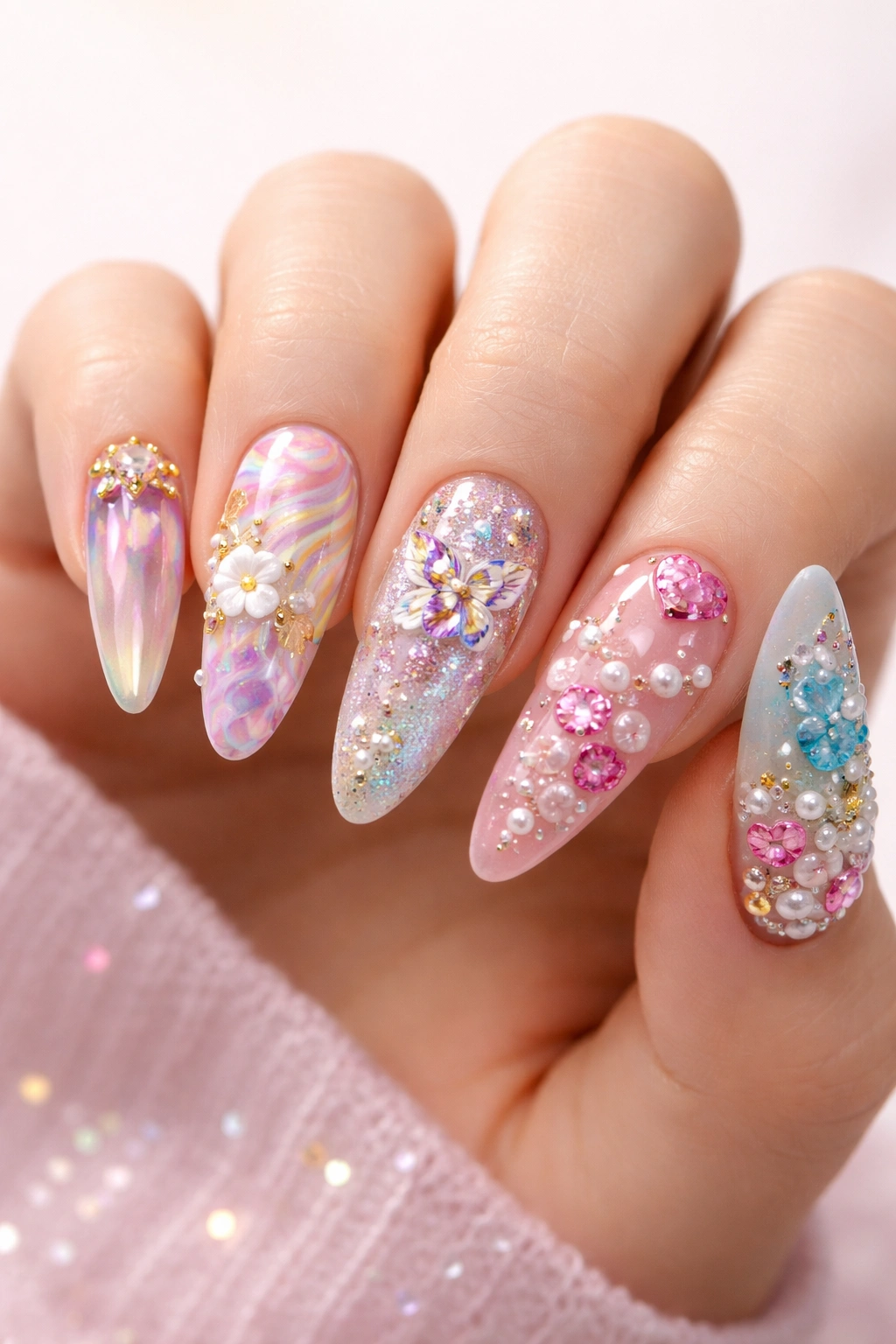
Long nails genuinely do create more surface area for nail art. Designs that look elegant and spacious on a longer nail can look cramped on a shorter nail. Ombre designs, detailed artwork, rhinestones, and complex patterns all benefit from the extra real estate.
That said, short nails aren’t excluded from beautiful nail art. The aesthetic is different—designs tend to be more minimalist, more geometric, more graphic. A well-executed manicure on short nails can be stunning; it just reads differently than the same design on long nails.
If nail art is something you genuinely enjoy doing or getting done professionally, you might find that longer nails expand your creative options. If you rarely wear polish or do art on your nails, this factor doesn’t matter. But if you’re the kind of person who uses nails as a creative canvas, acknowledging that longer nails give you more literal canvas space is fair.
The Transition Period: Growing Out or Cutting Back
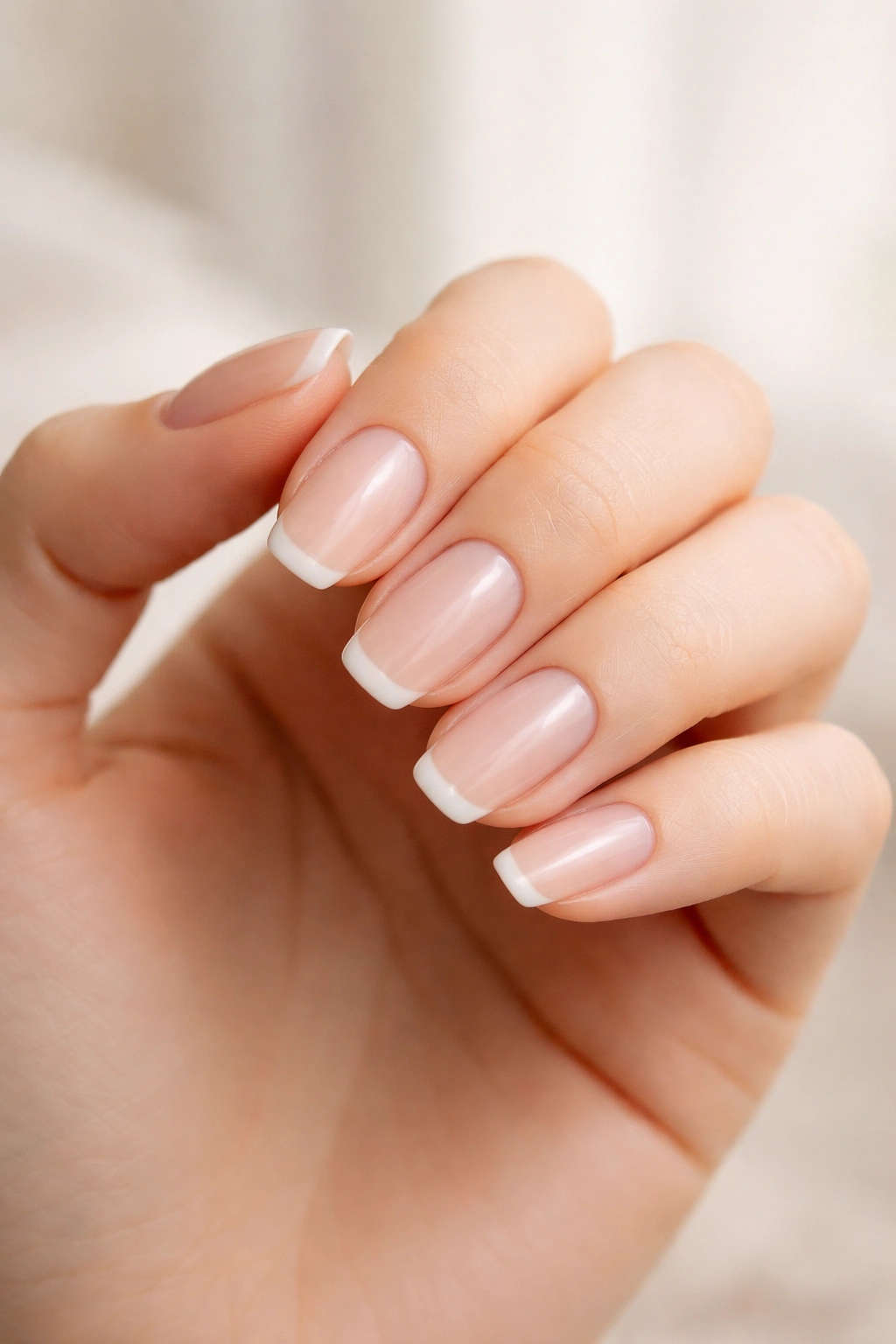
This deserves its own section because it’s often what trips people up. If you’ve been keeping nails short and want to try long nails, or vice versa, there’s a transition where things feel awkward.
Growing out from short to long takes patience. Your nails are uneven lengths for weeks as they grow (because they naturally break at different rates). They feel slightly fragile during the awkward middle stage where they’re long enough to be vulnerable but not long enough to feel intentional. This period lasts about 4-6 weeks. Many people give up during it because it feels uncomfortable and looks unfinished.
If you’re serious about trying longer nails, plan for this transition consciously. You might keep them cleaner and file them more carefully during this period. You might be gentler with your hands. You might get a professional manicure to ensure they look intentional even though they’re mid-length. Or you might realize during this transition that longer nails genuinely aren’t for you—and that’s valuable information that’s worth the experiment.
Going the other direction—cutting down from long to short—is psychologically harder for some people because you’re losing something you’ve built. There’s usually grief for a moment. But the practical comfort tends to hit immediately. Once you experience the ease of short nails after months of maintaining longer ones, you’ll have actual data for your next decision rather than just imagination.
Making Your Personal Decision
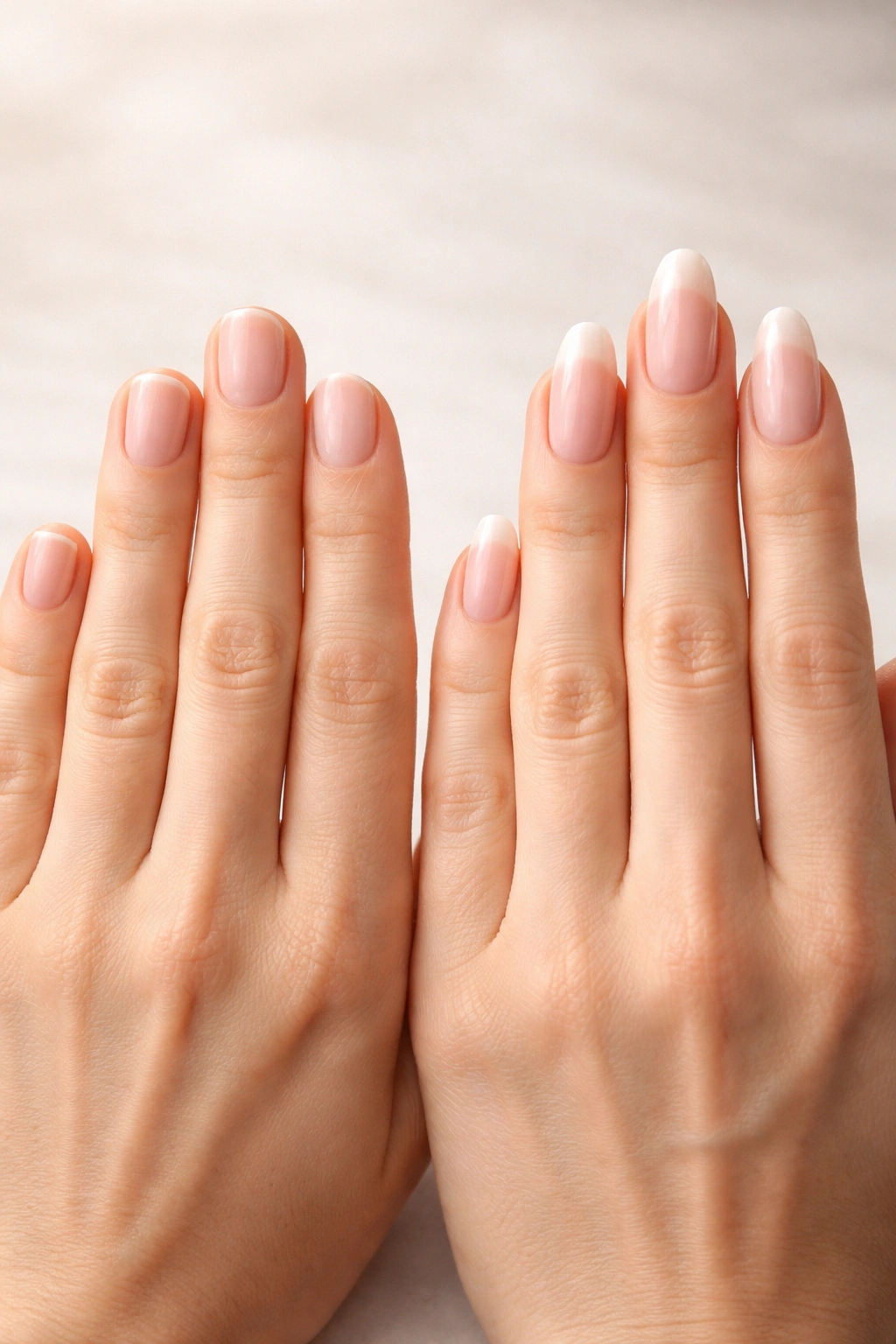
The right length is ultimately the one that matches your actual life, not the life you think you should have or the aesthetic you wish resonated with you. It’s the length where you’re not constantly frustrated by either the maintenance demands or the practical limitations.
Consider all the factors here, but weight them according to what actually matters in your specific context. If you work in healthcare, health concerns and hygiene are weightier factors. If you’re an athlete, physical performance matters more. If you’re in a creative field and spend hours doing fine detail work, precision and comfort are more important than aesthetics.
Think about your genuine maintenance habits, not your aspirational ones. Think about what would actually frustrate you—whether that’s filing nails every three days or dealing with occasional breaks. Be honest about whether you enjoy the ritual of nail care or whether it feels like a chore.
The beautiful thing about nails is that this isn’t a permanent decision. You can try longer nails for two months, hate them, cut them, and revisit it in six months if your life circumstances change. You can keep them short for years and suddenly grow them out because you’re excited about a new aesthetic. Your nails are responsive to experimentation—use that flexibility.
Final Thoughts
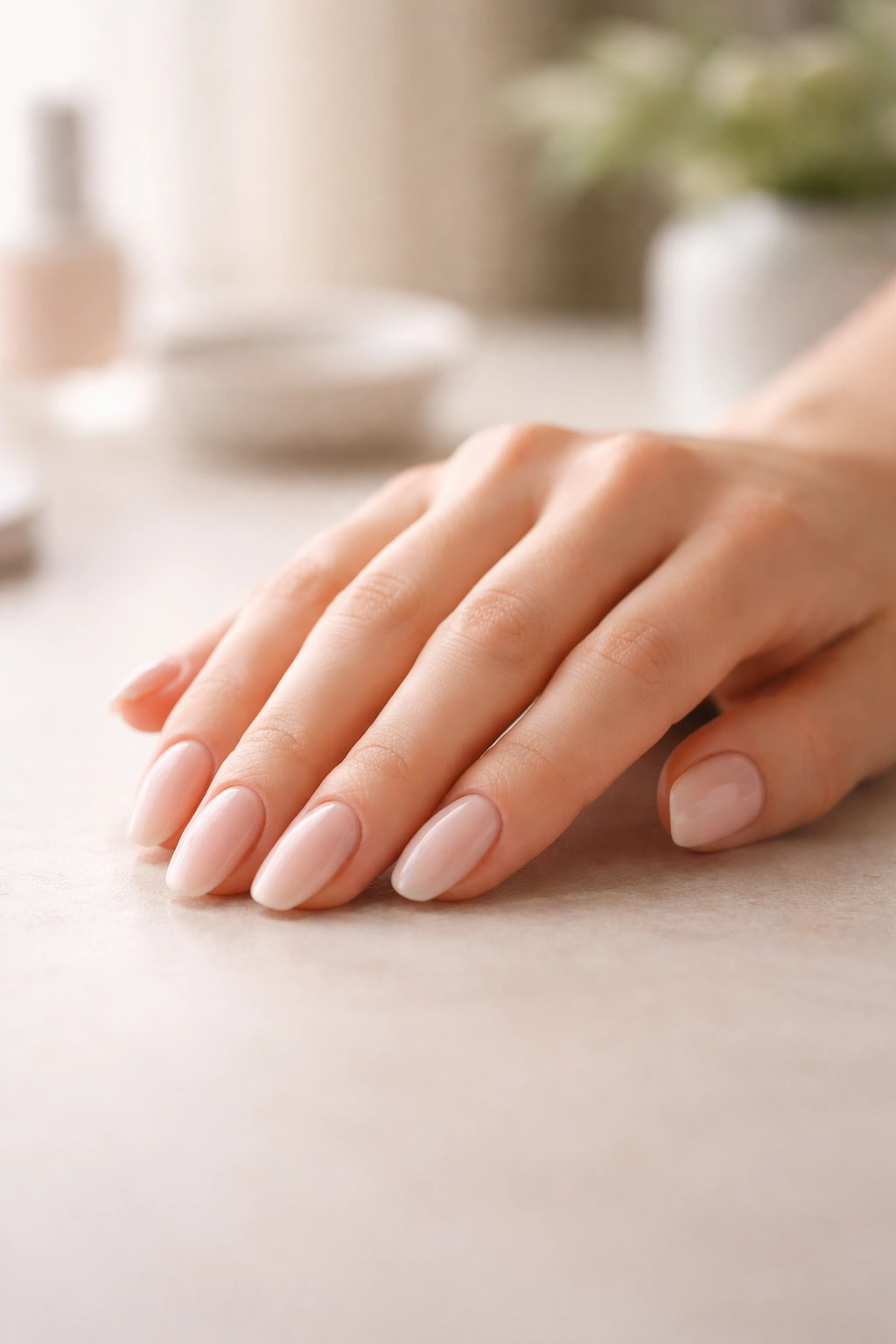
Your nails are one of the few grooming choices that’s simultaneously completely personal and entirely visible to everyone you interact with. That paradox is why this simple question—short or long—actually carries so much weight.
The practical reality is this: short nails are lower maintenance, more durable, less risky for certain activities, and objectively easier to keep pristine. Long nails are beautiful, expressive, and create visual drama that short nails simply can’t match. Both are legitimate choices.
What matters is choosing deliberately, based on your actual lifestyle and preferences, not on what you think you’re supposed to choose. If long nails make you feel like yourself—and if your hands-on reality can accommodate them without constant frustration—then absolutely keep them long. If short nails let you move through your day without thinking about your nails at all, that freedom and ease is worth something real.
The worst choice is the one where you’re constantly slightly frustrated—wishing your nails were different every time you look at them, or feeling like you’re fighting against them to function the way you want to function. That misalignment between what you have and what works for you is the real problem worth solving.
Look at your hands. Think about what you actually do with them. Imagine waking up tomorrow with the nail length you’re considering, and running through your typical day. Does that feel right, or does it feel like you’re accommodating something? That instinctive answer is often more reliable than any checklist of pros and cons.