

When you have small hands, finding the right nail shape feels like a game of proportions—and it absolutely is. The nail shape you choose can either make your fingers look delicate and elegant or visually overwhelm your hand with unnecessary length and bulk. Short nails are inherently more flattering for smaller hands, but which short nail shape works best depends on your specific hand structure, lifestyle, and what kind of statement you want your nails to make.
This isn’t just about picking whatever looks trendy. The right nail shape for small hands creates optical balance, makes your fingers appear longer or stronger depending on what you need, and honestly requires less maintenance than longer styles. Whether you spend hours at the keyboard, work with your hands constantly, or simply prefer the practicality of keeping nails trimmed short, the shape matters far more than most people realize.
The good news? There are several excellent nail shapes specifically suited to smaller hands, each with distinct advantages. Understanding how each shape interacts with hand proportions, the visual effects they create, and how to maintain them is the difference between nails that look effortlessly polished and ones that feel like a mismatch with your overall appearance. Let’s explore what actually works.
Why Short Nails Are Perfect for Small Hands
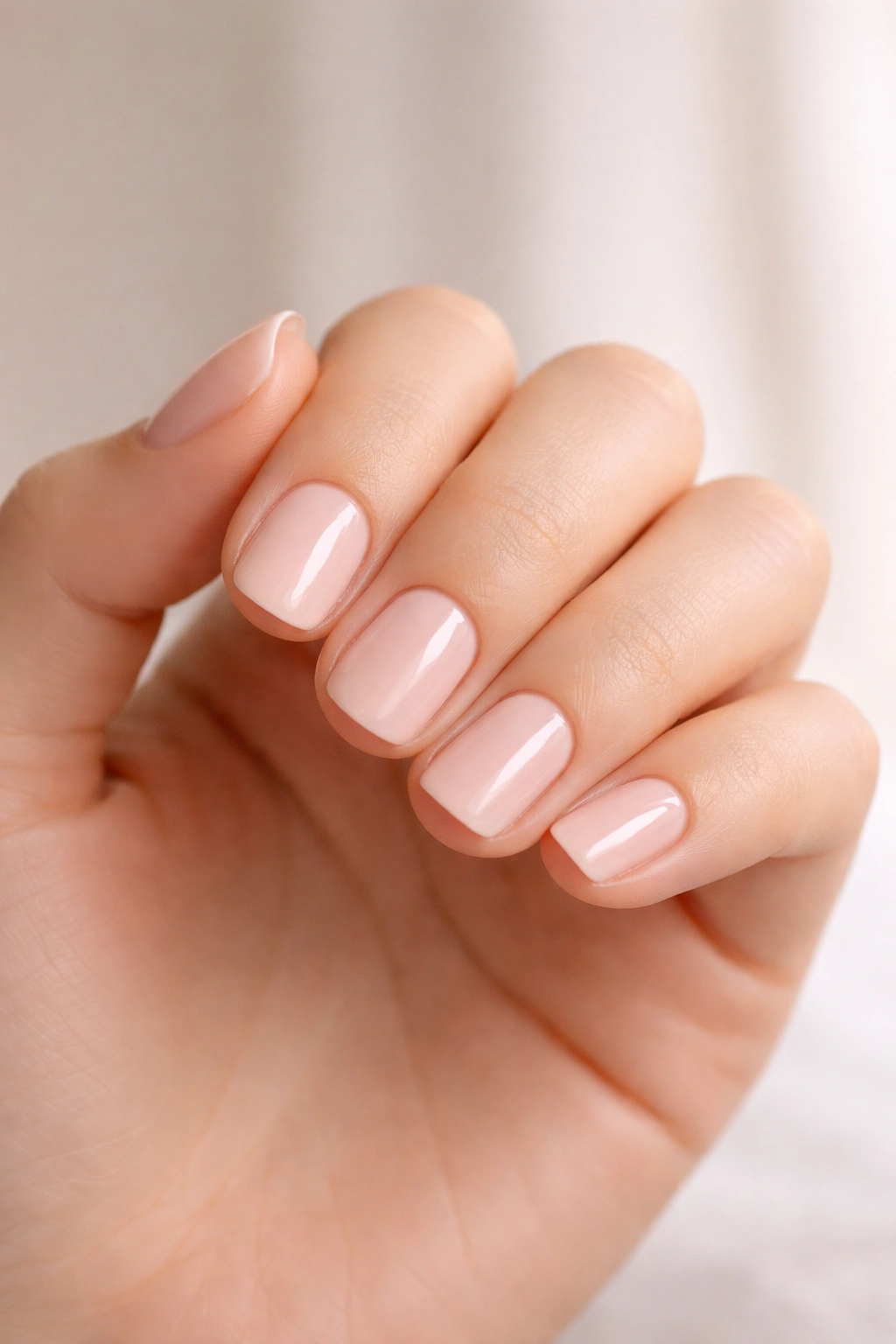
Short nails aren’t a compromise or a second-best choice—they’re genuinely the optimal decision for people with smaller hand frames. There’s actual visual logic behind this, not just personal preference. When your hands are naturally petite, adding length through nail growth creates a disproportionate weight at the fingertips that can make your entire hand look clunky rather than refined.
Short nails create a balanced visual line that stops where your hand’s natural lines do, rather than extending beyond them. This means your fingers look more proportional and complete rather than like the nail is doing all the visual work. Think of it like clothing proportions—a petite frame doesn’t benefit from oversized items that swallow the figure. The same principle applies to nails.
Practically speaking, short nails on small hands are also dramatically easier to maintain. You’re not dealing with breakage or splitting from catching them on things, your manicure looks fresh longer because the visible white tip doesn’t grow out as quickly, and you have so much more flexibility in your daily activities. Typing, exercising, cooking, or doing anything with your hands becomes effortless rather than something you have to think about.
There’s also a psychological element at play. Short nails tend to read as more professional, more approachable, and more intentional than long nails—especially in professional settings. For women with small hands, this confidence boost matters. You’re choosing a look that flatters you specifically, not trying to force yourself into a universal standard.
Understanding Nail Shapes and Proportions
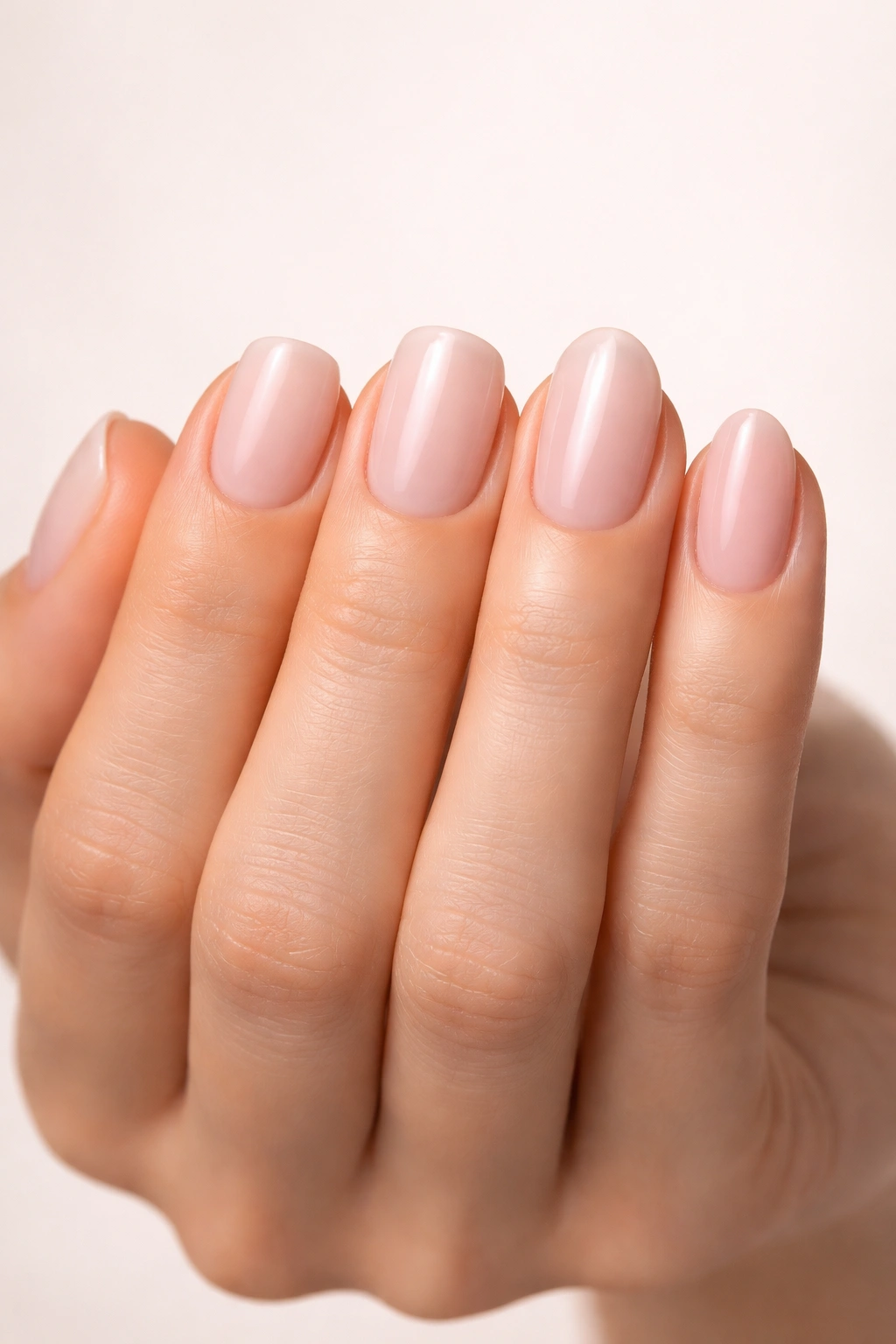
Before you settle on a specific nail shape, it helps to understand how nail geometry actually affects the perception of your hands. Nail shapes work through proportion and visual direction—they either emphasize width, create the illusion of length, or provide structural balance. For small hands, you want a shape that does one of these three things effectively.
Width and length ratios matter more than most people think. A nail that’s too wide relative to its length looks stubby, regardless of how short it actually is. Conversely, a shape that tapers significantly can create an elongating effect even when the nail isn’t technically long. The shape, in other words, does the heavy lifting. Your actual nail length is less important than how the shape manipulates the visual space.
The direction the nail shape creates is also critical. Shapes with pointed or tapered ends draw the eye upward and outward, making fingers appear longer. Shapes with blunt or rounded ends feel grounded and balanced. For someone with small hands, you typically want either significant tapering for elongation, or a softly rounded shape that looks intentional and complete rather than like the nail just broke off short.
Curved shapes (like round or oval) soften the hand and create a feminine, refined impression. They also hide nail bed irregularities better because there’s no harsh line to emphasize any unevenness. Geometric shapes (like square or coffin) feel modern and strong, and they create an impression of length through their clean lines even when the nail isn’t actually long.
The key for small hands is choosing a shape that feels complete and intentional at short length, rather than like you just haven’t grown them out yet. That distinction is everything.
Round Nails: The Classic Choice for Petite Hands
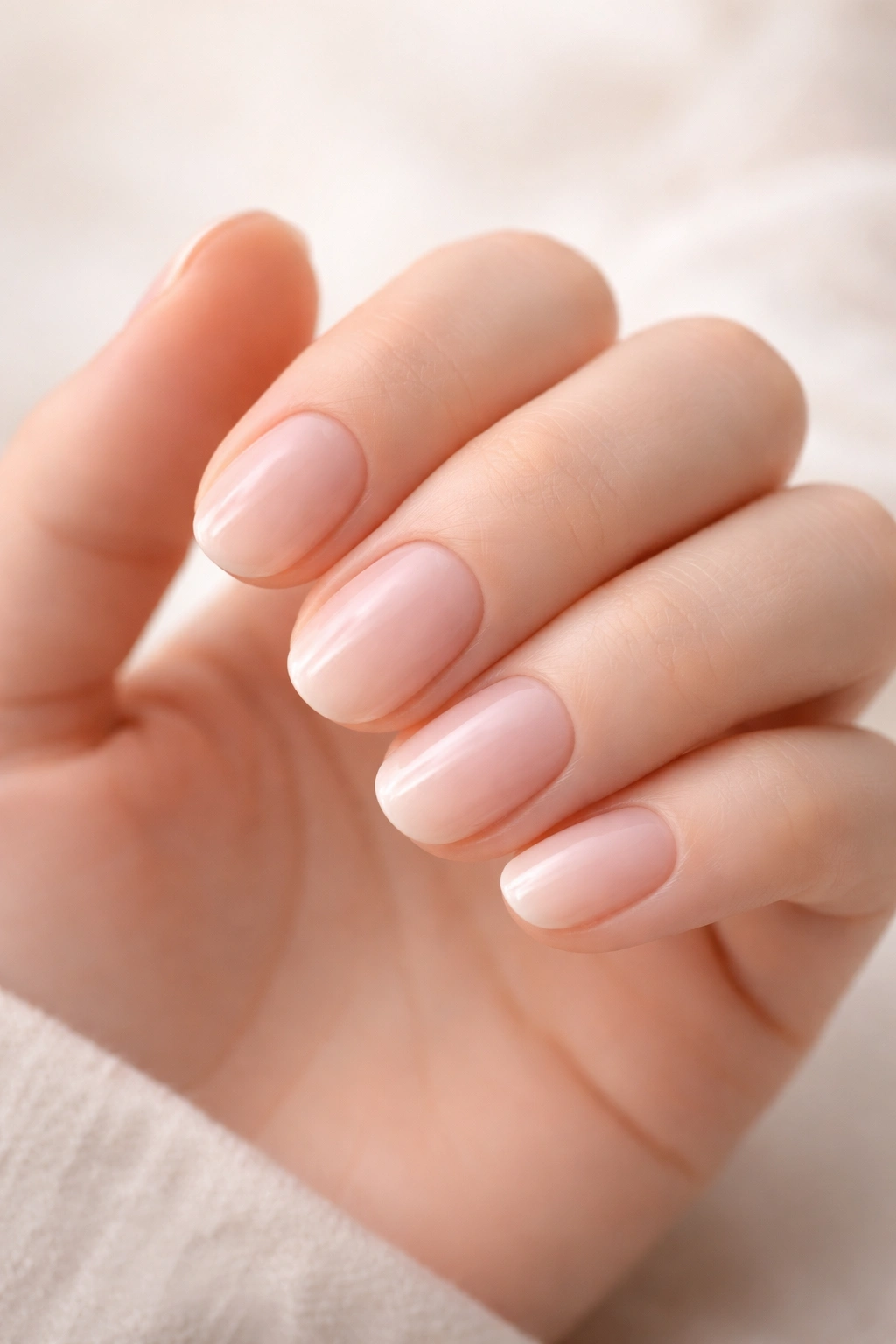
Round nails might be the single best short nail shape for women with small hands, and there are solid reasons why dermatologists and hand models with petite frames tend to favor this shape. It’s the most universally flattering option because it works with virtually every hand structure.
A truly round nail is shaped like a small dome—not just the edges rounded slightly, but the entire nail following a gentle curve from cuticle to tip. This shape is exceptionally flattering because it makes even very short nails look intentional and polished rather than like they’ve simply been clipped short. The curved lines soften the overall impression of your hand and create a graceful, feminine silhouette.
The visual advantages are significant. Round nails draw attention to the nail bed itself rather than creating an emphasized edge, which means your actual hands look more important than the nail length. For someone with small hands, this redirection of visual focus is genuinely valuable. You’re not trying to create impressive length; you’re working with the hand you have and making it look beautiful.
Maintenance is also dramatically simpler with round nails. There are no corners to catch, no edges prone to chipping or peeling. A round nail can literally never break at the edge in the way a sharp corner can. If you’re someone who types, exercises, or gardens regularly, round nails let you forget you even have them and get on with your day.
How to Shape Round Nails Properly
Round nails aren’t just “cut straight across then round the corners.” The actual technique matters. File from the outer edge toward the center of the nail at a 45-degree angle, moving in one direction (not sawing back and forth, which causes splitting). The goal is a smooth, continuous curve with no flat spots or angles. The tip should align with the widest point of your finger, not extend beyond it.
What Length Works Best
For small hands, keep round nails at approximately 1-2mm beyond your fingertip—just enough to create visible whitespace that shows the shape is intentional. This length is sometimes called “barely there short” and it’s genuinely the sweet spot. Anything shorter and the nail can look too blunt; anything longer and you’ve moved into awkward territory where the length doesn’t match your hand size.
Oval Nails: Elongating Small Hands
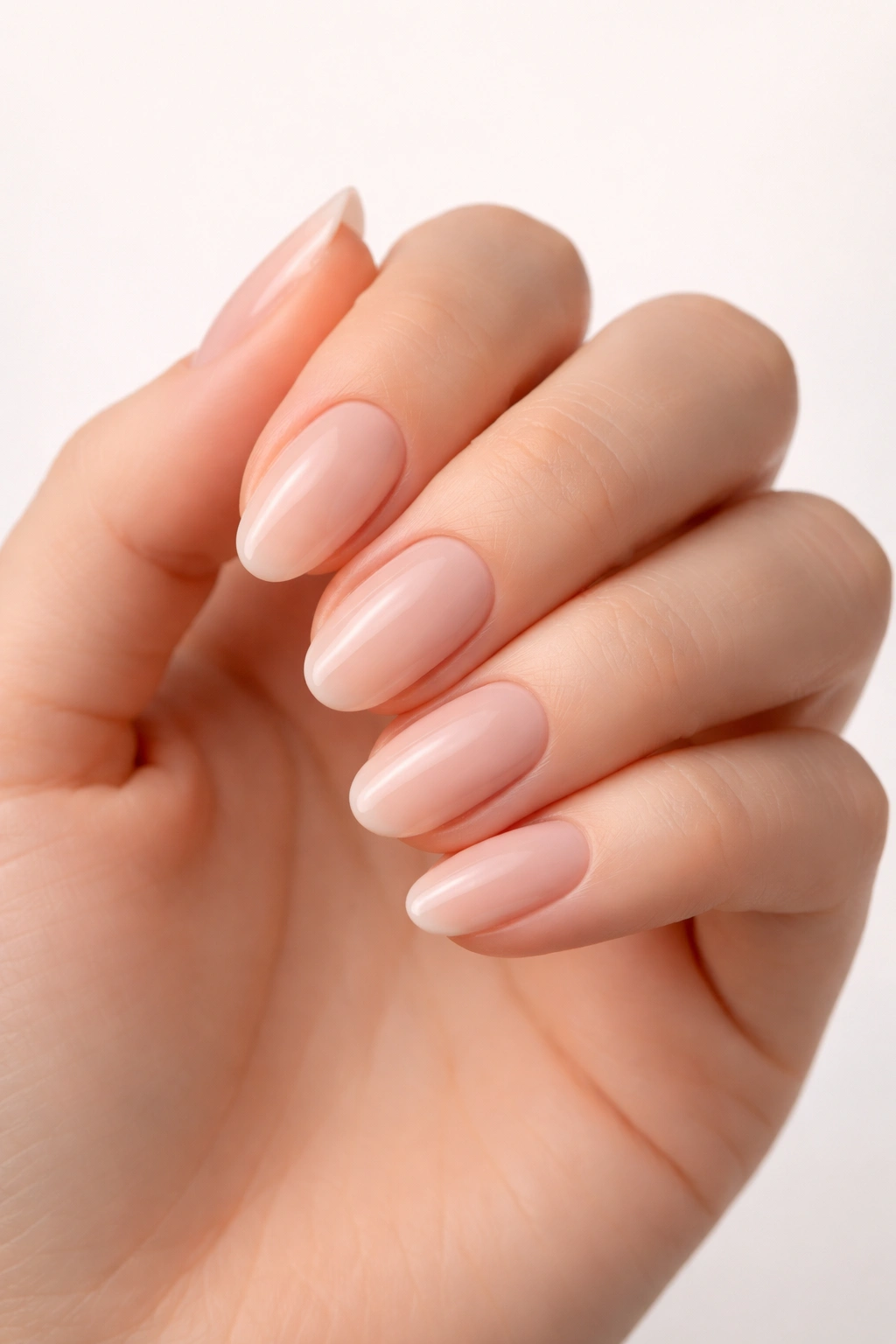
If you want to create the optical illusion that your fingers are slightly longer than they actually are, oval nails are your answer. This shape is fundamentally about creating vertical lines on the nail, which the eye naturally follows upward, making fingers appear more elongated.
An oval nail tapers gradually from a wider base to a rounded point, creating a shape similar to a standing egg. The key difference between oval and round is this tapering—it’s more pronounced, more directional, and it actively creates the elongation effect. For women with small hands who want just a touch more visual length without going into territory that feels impractical, oval is essentially perfect.
Oval nails read as sophisticated and elegant in a way that feels effortless. They’re not as trendy as some other shapes, which means they never look dated or like you’re chasing a particular aesthetic. Oval has genuinely been a classic for decades because it’s enduringly flattering. On small hands, this timeless quality is especially valuable—you’re making a choice that will always look polished, whether you’re looking back at photos in five years or trying a new nail color next month.
The tapering of an oval shape also makes your fingers appear more refined. There’s something about the narrowing at the tip that feels graceful, even when the nails are genuinely short. You get the elongation benefit without needing to actually grow your nails out significantly.
The Difference Between Oval and Almond
People often confuse oval with almond, but there’s a meaningful distinction. Oval nails round smoothly at the tip with gentler tapering throughout. Almond nails come to more of a point, with sharper tapering that starts higher up the nail. For small hands, oval is usually the better choice because the sharper taper of almond can look slightly too dramatic or feel impractical for everyday wear.
Styling Oval Nails
Oval nails look especially stunning with solid colors that extend the color all the way to the tip—there’s no visual interruption, and the continuous color enhances the elongating effect. They also look beautiful with French tips that follow the natural curve rather than creating a stark contrast. Avoid designs that are too busy or centered directly on the nail, as that visual weight can counteract the elongating effect.
Square Nails: Creating Balance and Strength
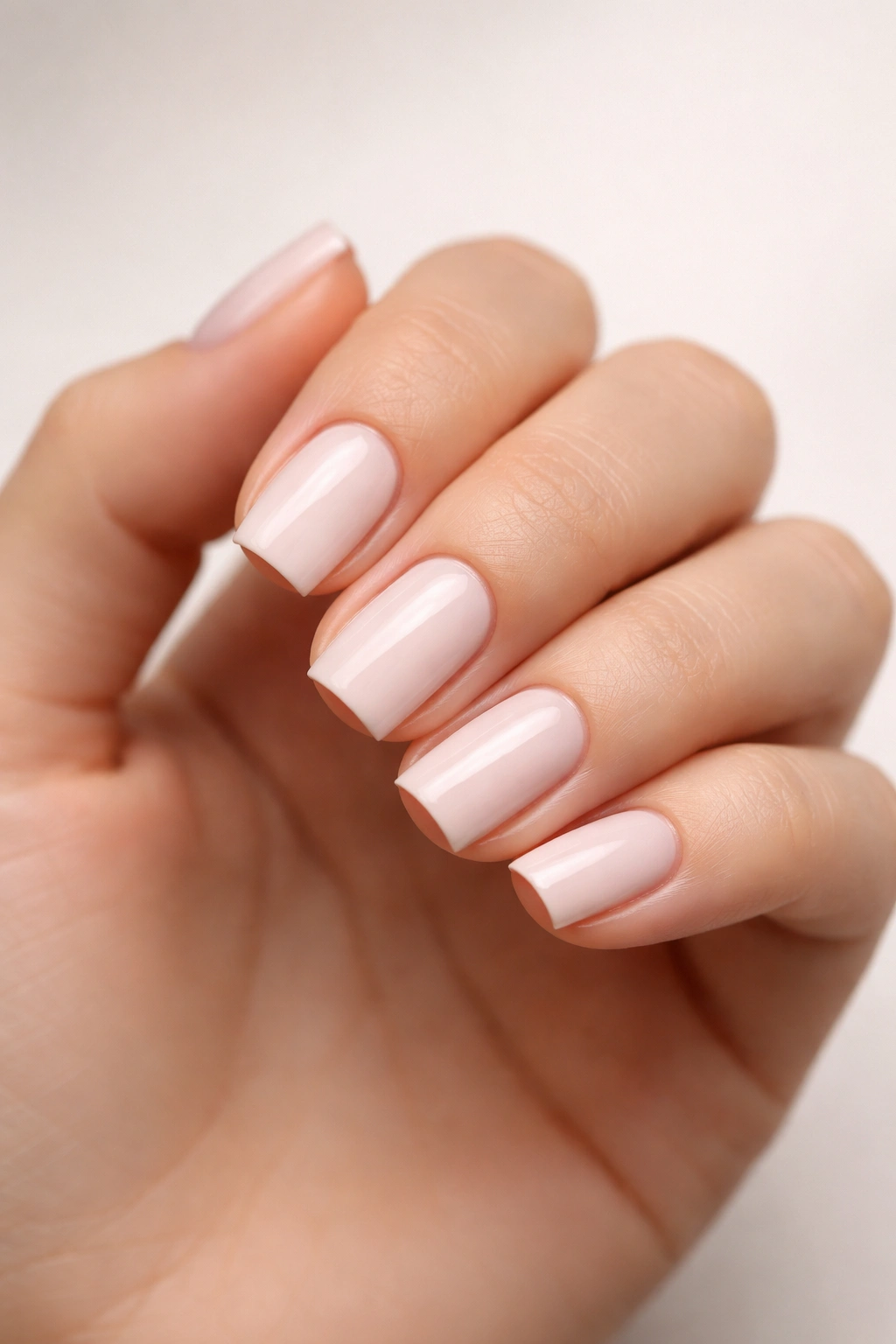
Square nails aren’t typically the first choice people think of for small hands, but they can actually be remarkably flattering—provided they’re kept genuinely short and proportioned carefully. Square nails are all about creating an impression of strength and modernity, and on smaller hands, this can be genuinely powerful.
A short square nail creates a clean, geometric line that feels intentional and confident. There’s no ambiguity about whether this is a deliberate choice or just how your nails happened to grow. The straight edge of a square nail reads as decisive and put-together, which translates to confidence even on petite hands. This is especially true in professional settings where that visual communication matters.
The catch with square nails on small hands is that they can look stubby if you’re not careful with proportions. The key is maintaining a height-to-width ratio where the visible white tip is roughly equal to the width of your nail bed, or just slightly less. This creates balance and prevents that “trimmed blunt” appearance that makes nails look too short.
Square nails also provide excellent structural support because there’s no tapering to weaken the shape. If you do anything that puts stress on your nails—playing instruments, rock climbing, any sport or hobby that involves hand impact—square nails hold up better than softer shapes.
Modern Square vs. Classic Square
Classic square has perfectly right angles and perpendicular edges. It’s bold and architectural. Modern square (sometimes called soft square) has slightly rounded corners that soften the look while maintaining the overall geometric feeling. For small hands, soft square is often more flattering because it removes that ultra-sharp impression while maintaining the strength and intentionality of the square shape.
The Squoval Hybrid: Best of Both Worlds
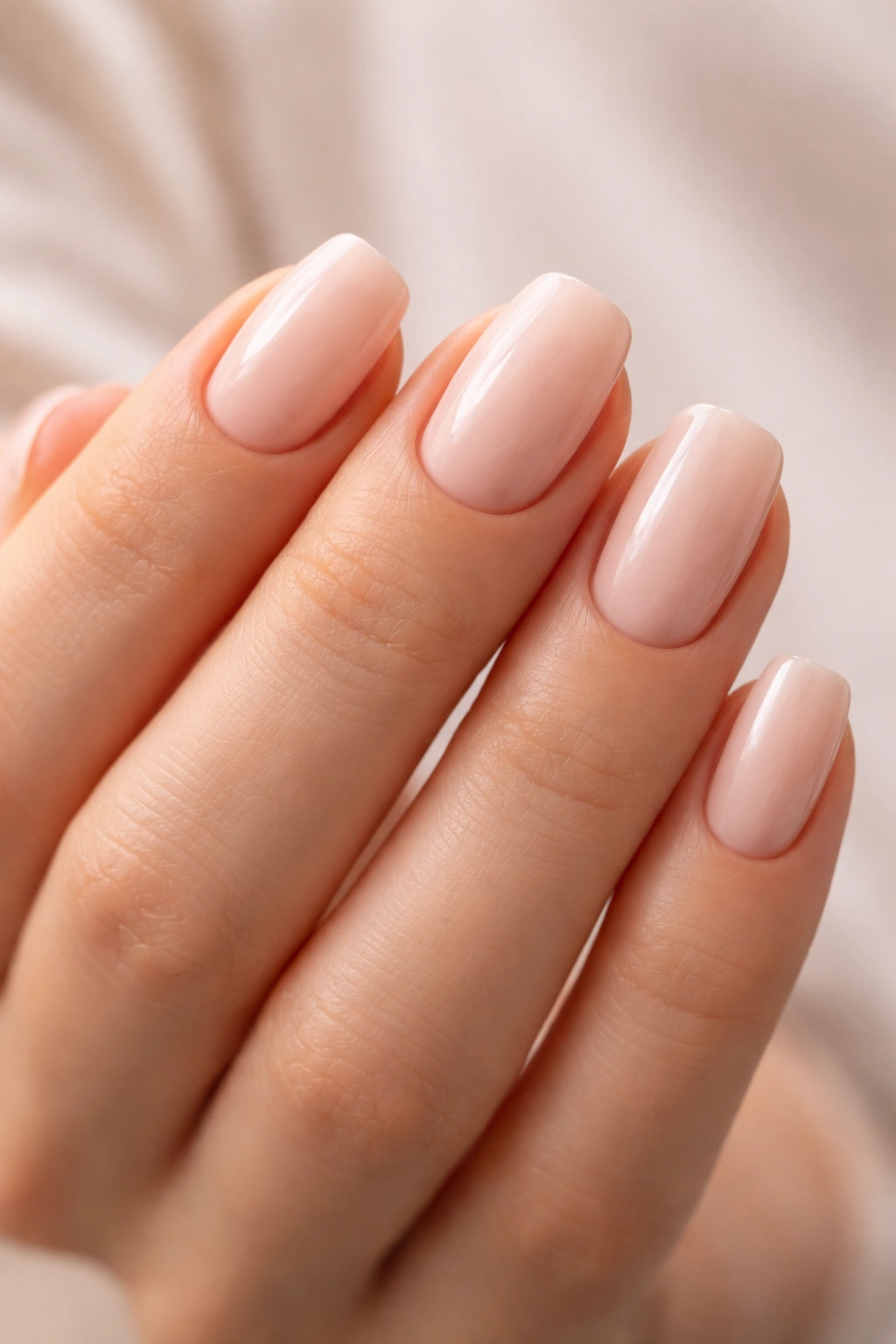
Squoval is genuinely the nail shape that seems to have been designed with small hands in mind. It combines the softness and elegance of oval with the strength and intentionality of square, creating a hybrid that’s essentially foolproof for petite hand frames.
A squoval nail is square along the edges but with rounded corners rather than sharp angles—think of a square with soft, curved corners, or an oval that’s been squared off slightly at the sides. It’s the nail shape equivalent of “just right.” You get the clean, intentional feel of a square nail without the potential stubbiness, and you get the elegance of an oval without losing structural strength.
Squoval is the most versatile shape available. It works with every hand shape, every skin tone, every nail length from barely-there short to medium length. It suits professional settings, creative careers, casual wear, and formal occasions equally well. On small hands specifically, squoval never looks like you made a compromise—it looks like you made an intentional, confident choice about what shape would suit you best.
The maintenance is also genuinely simple. Squoval is forgiving of slight irregularities in filing because the corners are already soft. You can’t accidentally create the sharp chipping that square nails are prone to because there’s no harsh corner there to break. It’s a shape that works with you rather than against you.
Why Squoval Wins for Small Hands Specifically
For women with small hands, squoval offers psychological reassurance that the other shapes might not. You get visible length created by the nail shape rather than requiring actual length. You get the clean, professional appearance of a geometric shape without worrying it looks too stubby. You get elegance without fuss. That combination is genuinely hard to beat.
Almond-Shaped Nails: Subtle Elegance
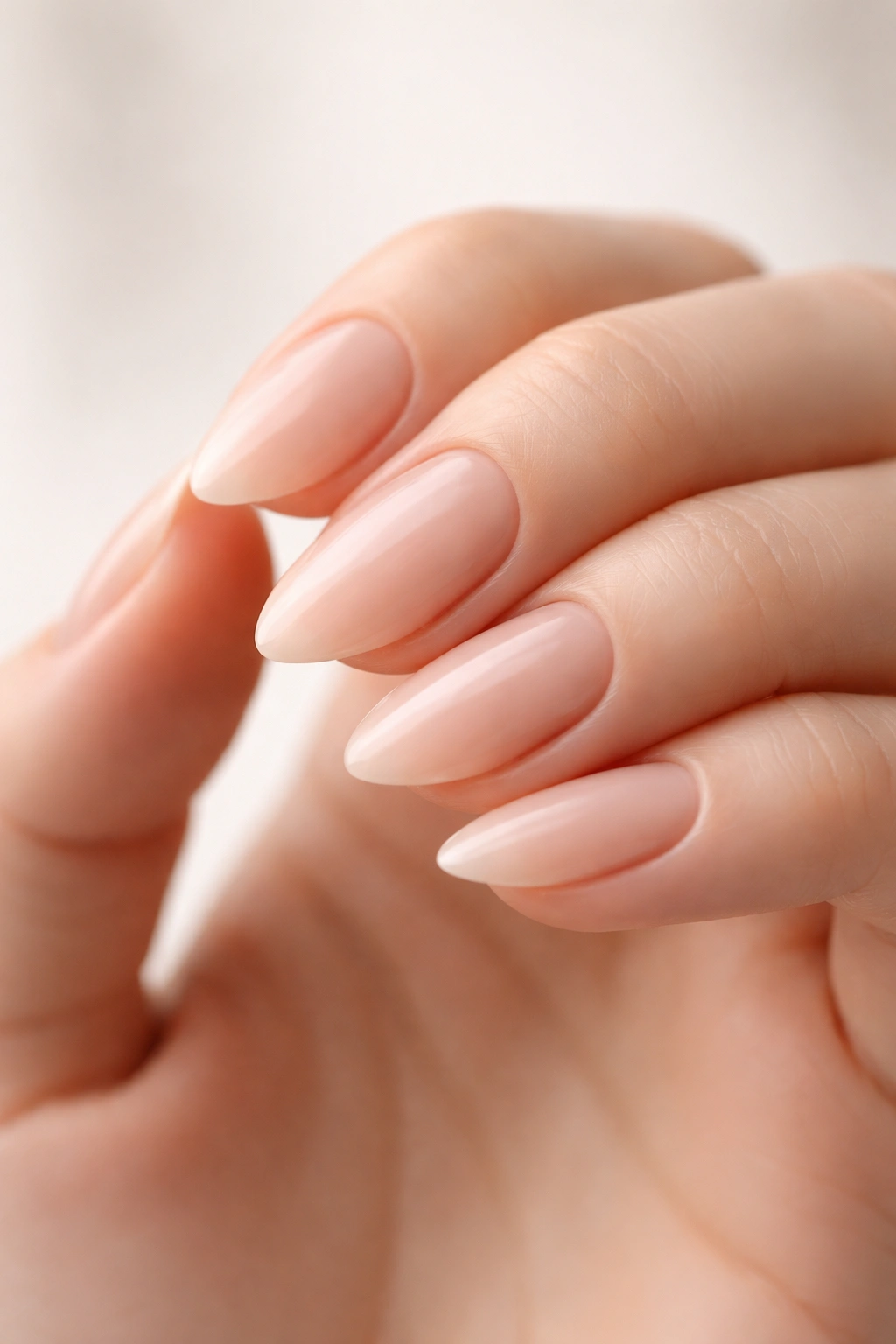
Almond nails come to a subtle point, creating the most elongating effect of any short nail shape. If your primary goal is to visually extend your fingers as much as possible without growing them out to impractical lengths, almond might be your best option.
The shape involves tapering the sides of the nail gradually toward a rounded point at the tip. The difference between almond and oval is that the almond starts tapering higher up the nail and comes to a more defined point rather than a rounded center. This creates maximum vertical line work for visual elongation.
Almond nails are inherently elegant. There’s something about the slightly pointed shape that reads as refined and feminine, almost delicate. For women with small hands who want their nails to enhance rather than overpower their proportions, almond can be genuinely beautiful. You’re creating a visual line that extends the finger upward and outward, making the hand appear more graceful.
The trade-off with almond nails is that they’re slightly more fragile than more rounded shapes. The pointed tip is the weakest part of the nail structure, and if you catch it on anything, it’s more prone to breakage than a wider, rounder shape. If your lifestyle involves activities that stress your nails—gardening, rock climbing, sports, typing intensively—almond might require more upkeep than you want to commit to.
Maintaining Almond Nails Short
The key to making almond nails work for small hands is keeping them genuinely short. At 2-3mm of white tip beyond your finger, the point is refined but not fragile. You’re creating elongation through shape, not length, which is exactly the right approach for smaller hands. Anything longer and you’ve entered territory where the practical challenges outweigh the aesthetic benefits.
Best Products and Polishes for Almond
Almond nails look stunning with anything that emphasizes their shape—solid colors that create continuous vertical lines, or designs that follow the natural line of the taper rather than fighting against it. They’re especially beautiful with shimmer finishes or subtle metallics that catch light along the length of the nail.
How Nail Length Affects Hand Appearance
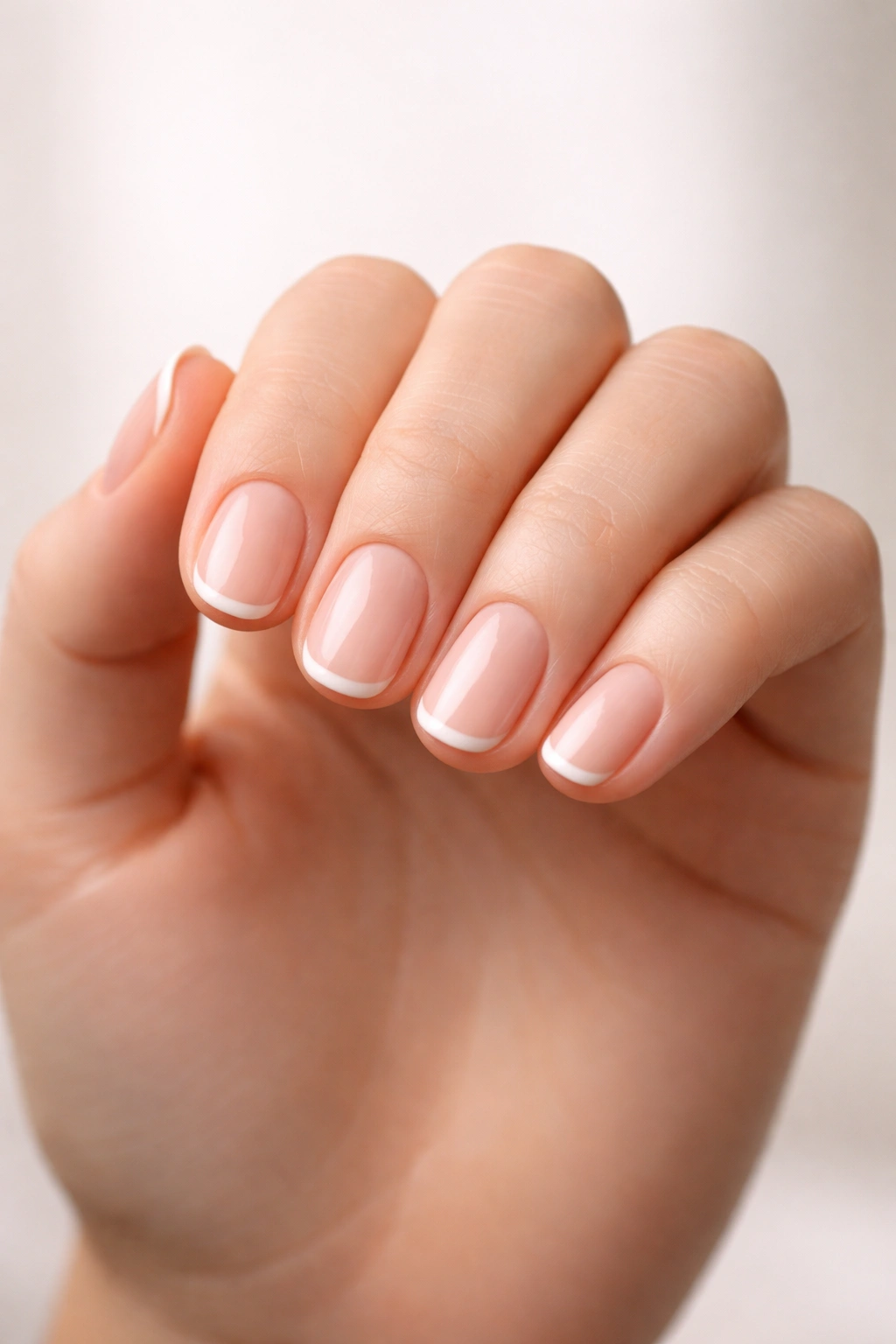
This is something that deserves its own focused discussion because most people genuinely underestimate how much nail length affects the overall visual balance of a small hand.
The actual measurement of your nails matters far less than the proportion of the nail to your hand. A woman with large hands can wear nails that extend a quarter inch beyond her fingertip and it will look proportional. A woman with small hands wearing the same length looks disproportionate. The nail becomes visually dominant over the hand itself, which is the opposite of what you want.
For small hands, the rule of thumb is to keep the white tip (the visible nail beyond your fingertip) at or below the width of your nail bed. This creates a ratio where the nail and hand are in conversation with each other rather than the nail dominating. You’re creating a visual space that feels balanced and intentional.
Very short nails (1-2mm white tip) read as practical, professional, and sometimes minimalist. They’re often perceived as someone who either works with their hands constantly or has made a deliberate choice to prioritize function. On small hands, this ultra-short length works beautifully with round or squoval shapes because the shape does all the visual work.
Short nails (2-4mm white tip) are the sweet spot for most women with small hands. You have enough visible nail to create clear shape definition, but not so much length that proportions feel off. This is the length where different shapes really start to show their distinct benefits. Oval creates elongation, square creates strength, round creates softness.
Medium-short nails (4-6mm white tip) are where most people without small hands find their comfort zone, but for smaller hand frames, this length often starts to feel impractical. The visual dominance of the nails becomes noticeable, and you’re more likely to catch them on things. If you do want to experiment with this length, rely heavily on shapes with strong tapering (oval, almond) to create the elongation that compensates for the proportional imbalance.
Choosing the Right Base Shape for Your Hand
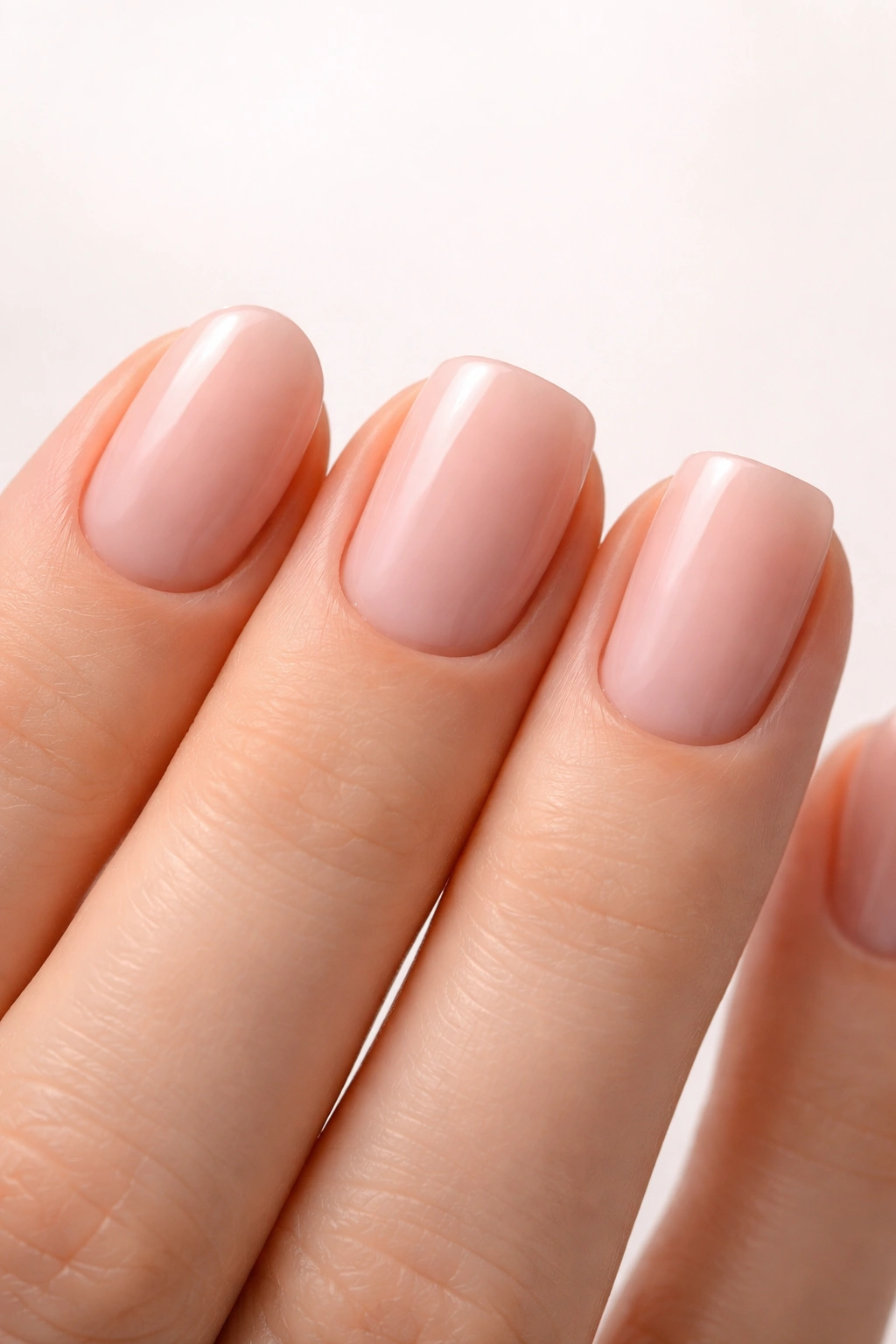
This is where individual hand structure comes into play. Even among women with small hands, there are variations in bone structure, finger length, nail bed shape, and hand width that mean different shapes will be optimal for different people.
If your fingers are naturally short in length relative to width, round or squoval nails are your best bet. These shapes feel complete and intentional at genuinely short lengths, and they won’t emphasize the width-to-length ratio in an unflattering way. You’re working with your hand structure rather than trying to fight it.
If your fingers are relatively long and narrow, you have more flexibility. Almond or oval nails will create beautiful elongation, and you can likely get away with slightly more length (4-5mm white tip) without proportions feeling off. Your hand structure already has length relative to width, so adding a little more through nail shape and length works harmoniously.
If your nail beds are naturally very wide, avoid shapes that taper dramatically (like true almond). Instead, lean toward round, squoval, or even soft square. A tapered shape on a wide nail bed can create an awkward proportional mismatch. You want the width of the shape to feel like a natural continuation of your nail bed width.
If you have pronounced knuckles or your hands feel particularly delicate-boned, round nails are genuinely magical. The soft curves echo the bone structure and create visual harmony. Squoval is your second choice because it provides intentionality without harshness.
The honest truth is that you might need to try a couple of shapes before finding your ideal. Pay attention not just to how they look in photos, but how they feel when you’re actually using your hands. The best nail shape for you is one you forget you’re wearing because it’s so proportionally suited to your hand.
Colors and Finishes That Flatter Short Nails
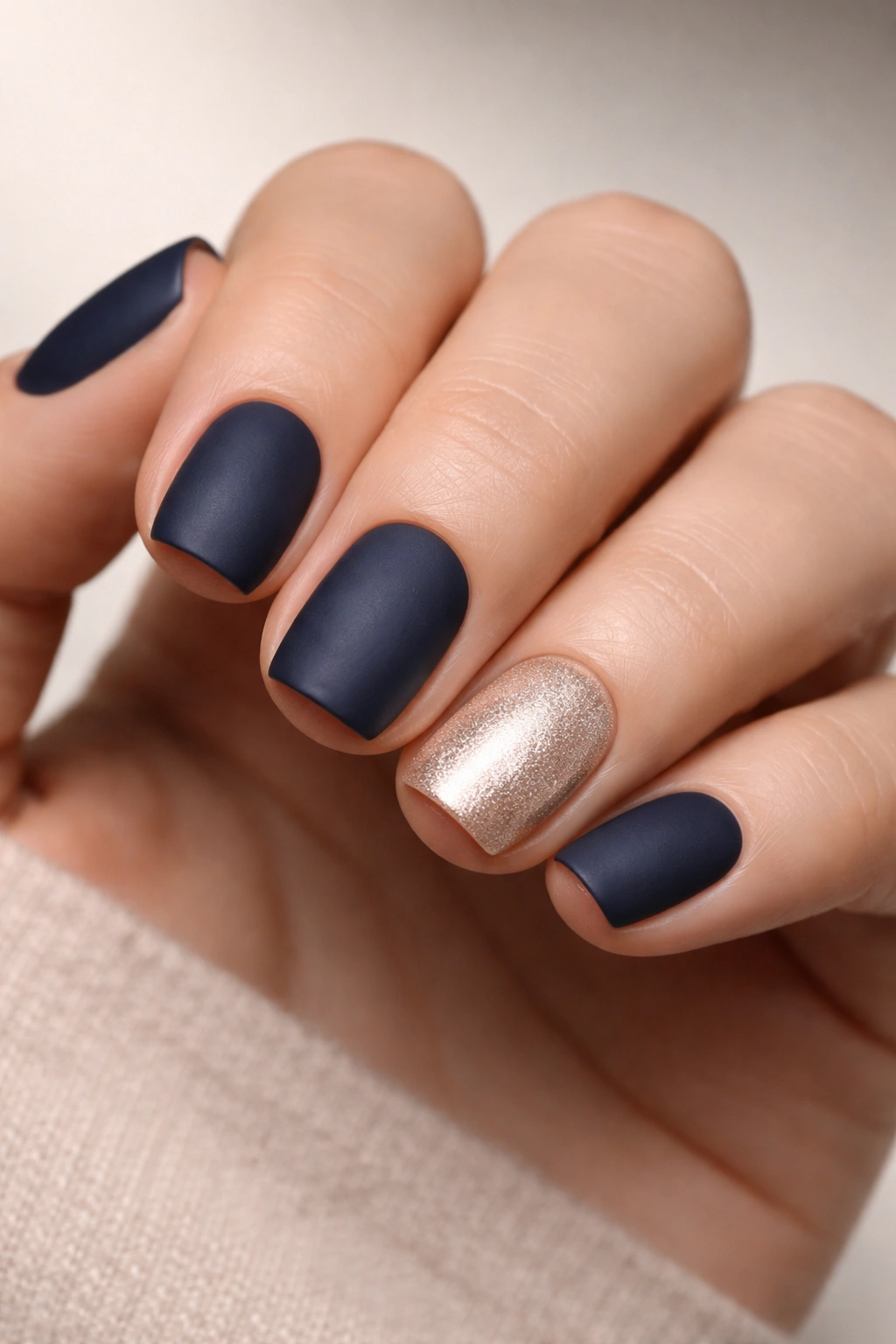
The color and finish you choose can either enhance the effect of your nail shape or work against it. On short nails especially, this matters because there’s less real estate to work with.
Solid colors are your strongest choice. A single, continuous color from base to tip creates an uninterrupted vertical line, which visually elongates even very short nails. Darker colors (navy, burgundy, deep green) appear to recede slightly, which can make hands look more delicate and refined. Lighter colors (soft pink, nude, pale peach) feel bright and fresh, with that same subtle elongating effect.
Metallics and shimmers catch light across the nail surface, which creates additional visual interest that compensates for shorter length. A shimmery rose gold or champagne on short squoval nails looks intentionally elegant rather than like you’ve just kept them trimmed short. The light reflection draws the eye across the nail rather than emphasizing its brevity.
Matte finishes on short nails read as sophisticated and intentional—you’ve made a deliberate choice about texture as well as color. A matte nude on short squoval nails looks like quiet confidence. Matte is especially flattering on small hands because it doesn’t create any visual tricks; it’s straightforward and elegant.
French tips (where the tips are one color and the base is another) can work beautifully on short nails if executed well. The key is making sure the contrast is soft rather than stark. A soft nude base with a barely-there white tip looks more refined on small hands than a high-contrast classic French. The gradual color transition creates a more flattering effect.
Avoid designs that cluster toward the tip of short nails. When the visual weight of a design or pattern is concentrated right at the end of the nail, it emphasizes how short the nail is. Instead, choose designs that flow across the entire nail or use minimal accents. On short nails, less is genuinely more.
Maintaining Short Nails for Maximum Impact
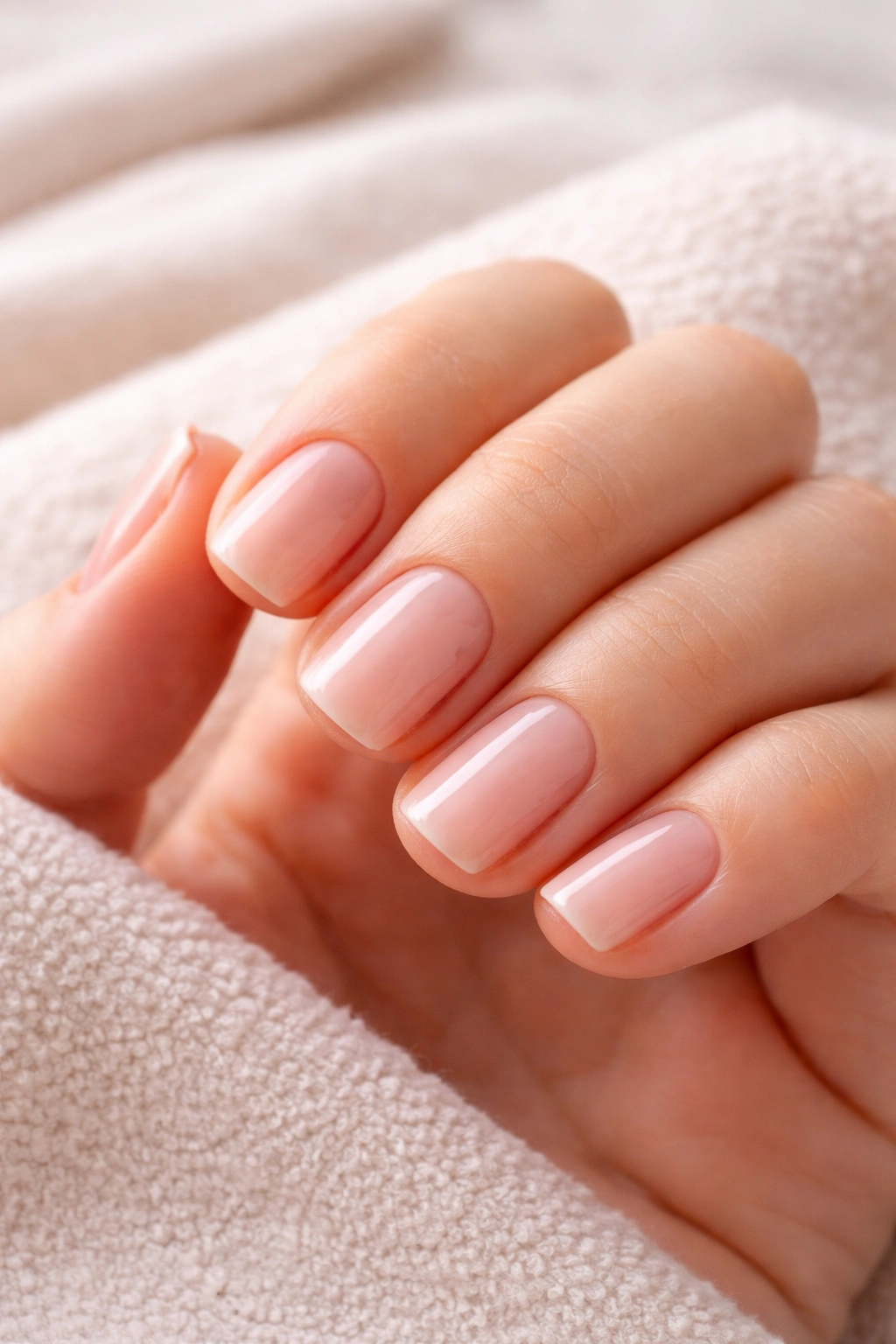
How you care for your short nails determines whether they look intentionally polished or like you’ve just kept them clipped. The maintenance is actually simpler than longer nails, but there are specific techniques that matter.
File your nails consistently, ideally every 3-4 days after you shower when they’re slightly soft. Use a nail file with a fine grit, and file in one direction from the outer edge toward the center of the nail. Sawing back and forth splits the keratin and causes peeling. Move slowly and deliberately, creating a smooth edge rather than rushing through it.
Keep nails dry and moisturized simultaneously. This sounds contradictory, but it’s not—dry nails are brittle nails, prone to splitting and breaking. After washing your hands or after your shower, dry them thoroughly, then apply a cuticle oil or hand cream. Nails absorb moisture just like skin does, and keeping them hydrated prevents that brittleness.
Push back your cuticles gently rather than cutting them. Your cuticles protect the nail matrix (the growing part of your nail beneath the cuticle). Cut cuticles can lead to nail damage. Use a wooden pushback stick (usually included with nail files) and gently move the cuticle back. This creates a cleaner appearance and helps maintain the visible white tip of your nail.
Buff the surface very lightly (once every two weeks or so) if you want a natural shine without polish. Use an extremely fine buffer in one direction, don’t overwork it. This smooths the nail surface and creates a subtle sheen that makes unpolished short nails look incredibly clean and intentional.
Apply base coat every time you paint, even for regular colors. Base coat protects your nail from staining and from the drying effects of pigmented polish. For short nails, a thin coat of clear base that’s allowed to dry fully (about 2 minutes) makes all the difference in longevity.
Professional vs. At-Home Nail Care
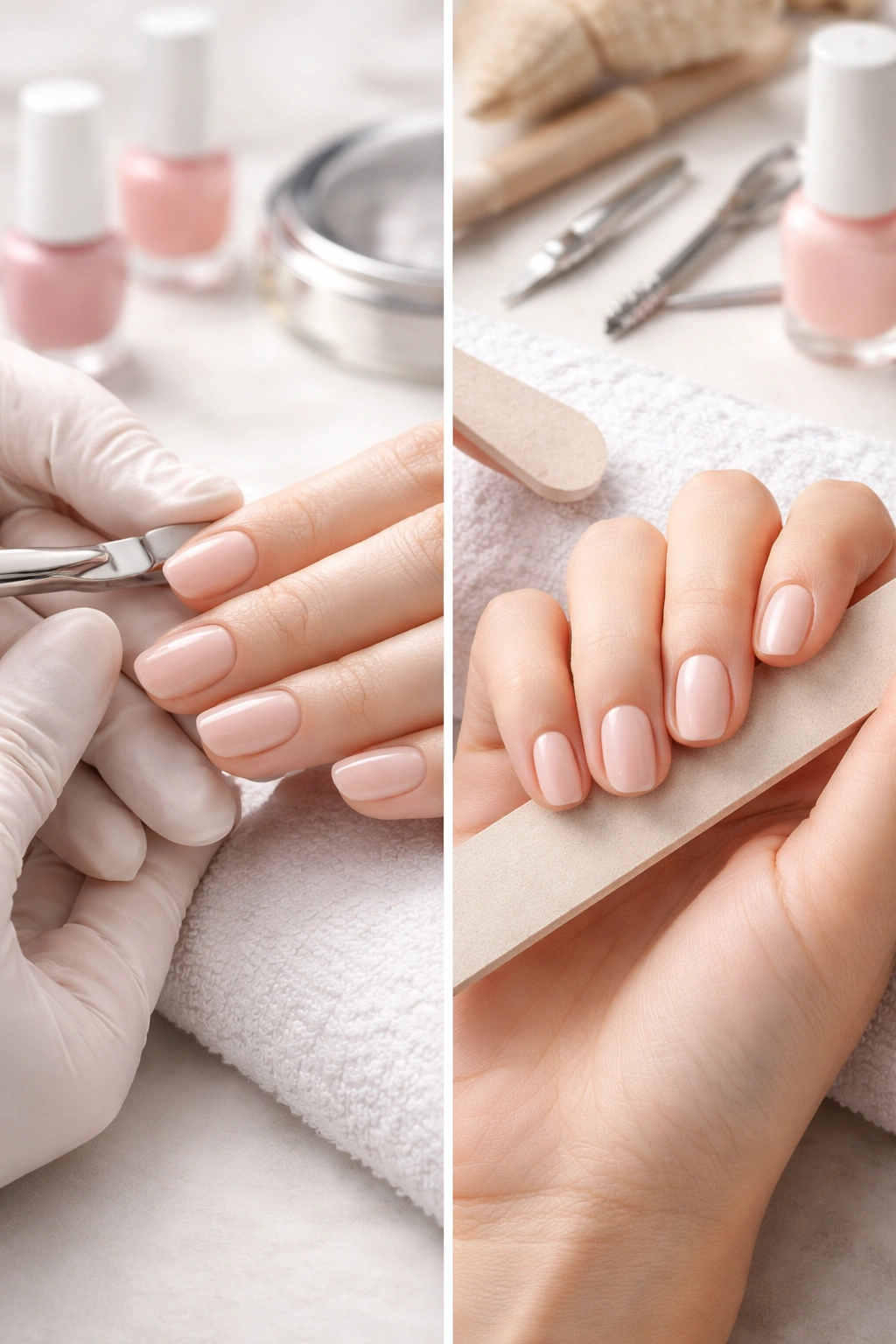
Both approaches have genuine value for women with small hands, and choosing between them is really about lifestyle and budget rather than quality.
Getting professional manicures takes the technique question out of your hands—literally. A skilled manicurist has the muscle memory and tools to create truly even edges and perfect shape consistency. Professionally shaped nails often look noticeably more polished than DIY versions, especially if you’re new to nail care. The benefit is worth it if you want a guaranteed beautiful result and you have the budget for regular appointments (typically every 2-3 weeks).
Professional nail technicians also use tools you might not have at home—fine diamond-grit files that create smoother edges, professional-grade base and top coats that last longer, and techniques that prevent chipping. For women with busy lives or who simply prefer having someone else handle this, professionals are genuinely worth it.
At-home nail care is absolutely achievable and genuinely very good once you develop your technique. You need three core tools: a fine-grit nail file, a gentle buffer, and a cuticle pushback stick. Those three tools cost about $15-20 total and will last years. The time investment is genuinely minimal—10 minutes every few days to maintain your shape and keep polish looking fresh.
The advantage of at-home care is that you can respond to your nails immediately rather than waiting for an appointment. If a corner starts to chip, you can smooth it in 30 seconds. If your polish chips, you can touch it up the same day rather than living with it until your next appointment. You also have complete control over shape and length, which matters if you’re still figuring out what works best for your hands.
Common Mistakes to Avoid with Small Hands
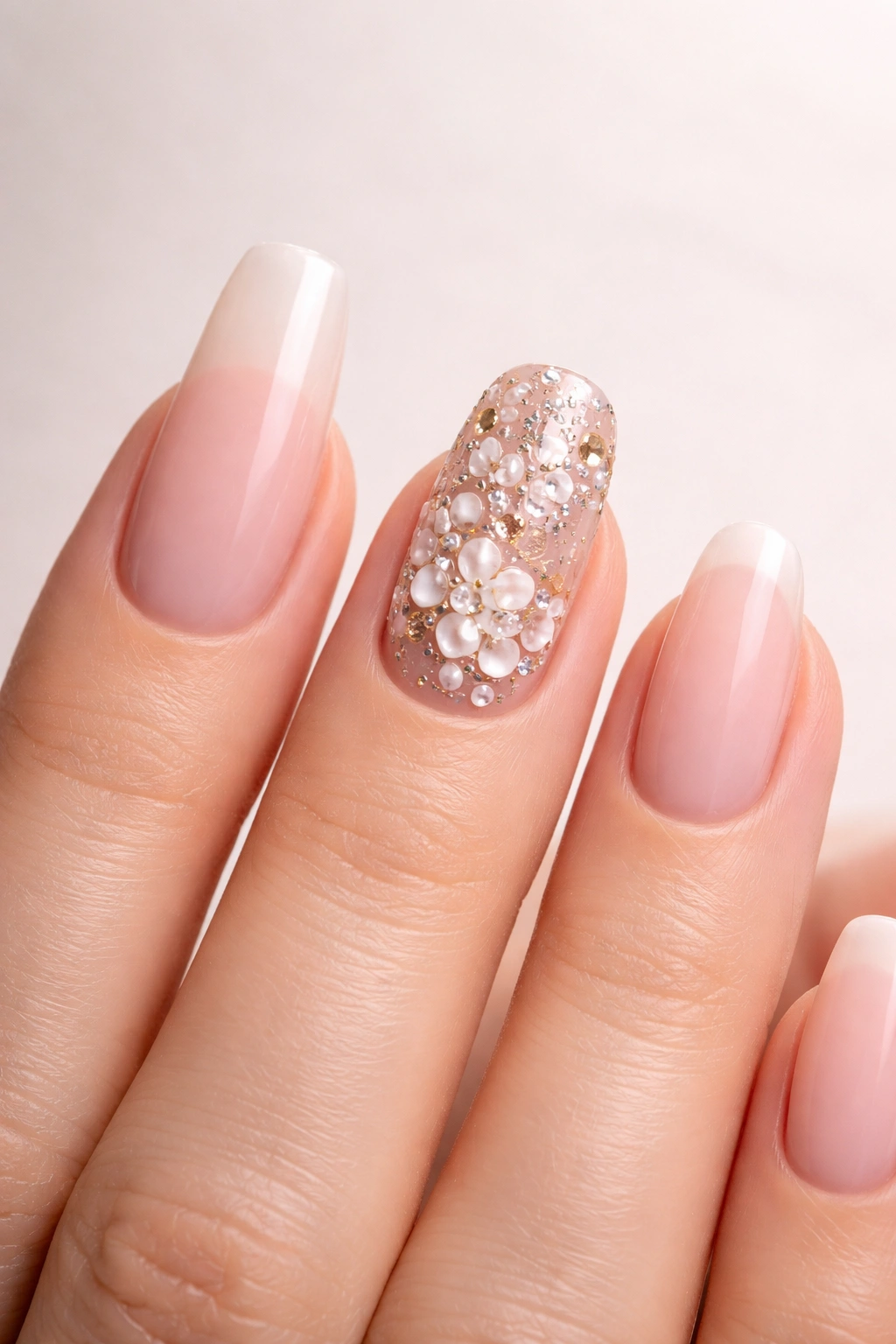
Understanding what not to do is sometimes just as valuable as knowing what to do. There are specific pitfalls that people with small hands commonly fall into.
Growing nails too long is the most obvious one, but it bears emphasizing because it’s so common. The desire to have “nice nails” often translates to longer nails in people’s minds, but longer nails on small hands can actually read as impractical rather than attractive. Short nails can be infinitely more elegant and flattering on a smaller frame. Resist the pressure to grow them out.
Choosing overly ornate designs can visually overwhelm small hands. A short nail with intricate art, multiple colors, stamped designs, or elaborate embellishments draws attention and visual weight to the nail in a way that doesn’t flatter smaller hand frames. Keep designs simple, elegant, and relatively minimal. Let your hand shape be the star.
Using shapes that don’t suit your hand structure is another common mistake. If you have naturally wide nail beds, forcing yourself into ultra-tapered almond shapes creates visual tension. If your fingers are naturally short and wide, trying to create length through nail shape rather than proportional balance leads to disappointment. Honor what your hands actually are rather than fighting them.
Neglecting your cuticles makes even beautifully shaped nails look unkempt. Overgrown cuticles create visual clutter right at the base of the nail, and they draw attention in the wrong direction. Spend 30 seconds once a week gently pushing back your cuticles, and your entire hand immediately looks more polished.
Trying to recreate celebrity nail trends can be a mistake if those trends don’t actually suit small hands. Long coffin nails, extreme stilettos, or long glitter acrylics might look incredible on some people, but if your hands are small, jumping into these trends often results in nails that feel impractical and out of proportion. Choose trends that can be adapted to your frame, or skip them entirely in favor of timeless shapes.
Using colors that are too muted can make short nails feel forgettable. A pale, washed-out color on very short nails sometimes reads as “she didn’t bother” rather than “intentional choice.” This doesn’t mean you need bright nails—a rich, saturated color (even if it’s a neutral like taupe or soft pink) reads much more intentional and polished than a diluted version of that same shade.
Styling Tips for Short Nails on Petite Hands
Beyond just the shape and color, there are specific styling approaches that make short nails on small hands look absolutely stunning.
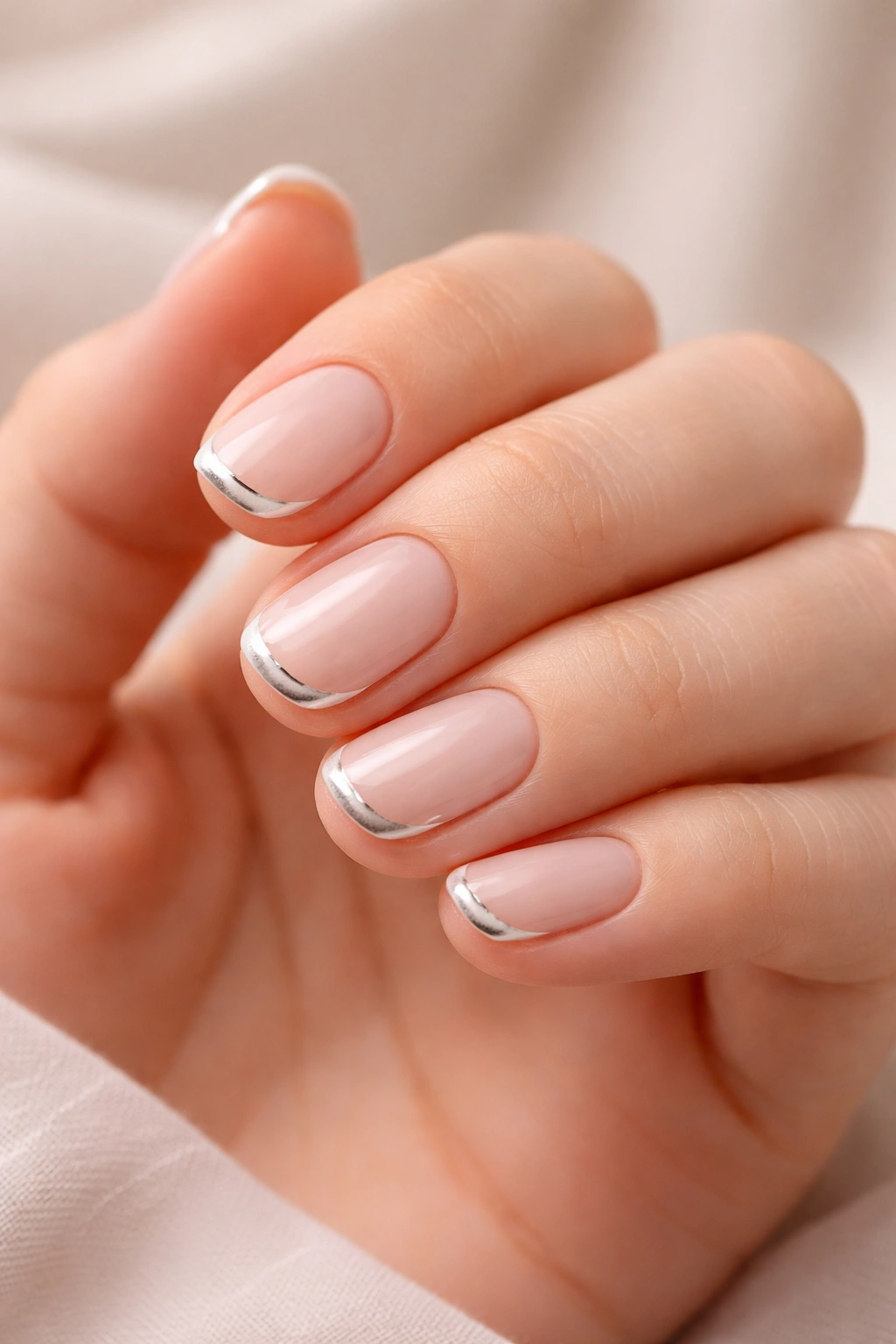
Create definition through contrast. A thin gold or silver line along the edge of your nails (using a thin brush and metallic polish or nail art pen) can create visual definition that makes short nails pop without looking overdone. This works especially well on squoval or round nails where you want to emphasize the clean edge.
Use white or nude tips to create the appearance of slightly longer nails without actually growing them. A soft white tip on short nails reads as sophisticated rather than like you’ve just clipped them short. The slight contrast creates visual separation and makes the nail appear intentional.
Coordinate your nail shape to your jewelry. Sharp, geometric jewelry (angular gold rings, structured designs) looks stunning with squoval or short square nails. Delicate, curved jewelry (thin rings, curved designs) pairs beautifully with round or oval nails. This coordination creates visual harmony across your entire hand.
Keep your hands and cuticles moisturized because healthy skin draws attention to your hands in a positive way. When your hands are well-moisturized, the focus shifts from “these are short nails” to “these hands look cared for.” Use hand cream or cuticle oil daily, and apply it especially during and after your shower when your skin is most absorbent.
Paint your nails in colors that echo your skin tone. Nudes and warm tones that match your skin create an uninterrupted line from nail to finger, which visually elongates your hand. This is an old styling trick, but it genuinely works. The continuous color flow makes your hands appear more graceful than a high-contrast color would.
Invest in quality polish that actually lasts on short nails. Cheap polish chips almost immediately on short nails because there’s less surface area to work with. One or two chips can make a short manicure look neglected. Higher-quality formulas that are specifically designed for longevity will extend the life of your manicure significantly.
Keep your nails polished regularly rather than going long stretches unpolished. Unpolished short nails can sometimes read as neglected, even if they’re perfectly healthy. A fresh coat of color—even a simple, understated shade—makes short nails read as intentional and well-maintained.
Final Thoughts
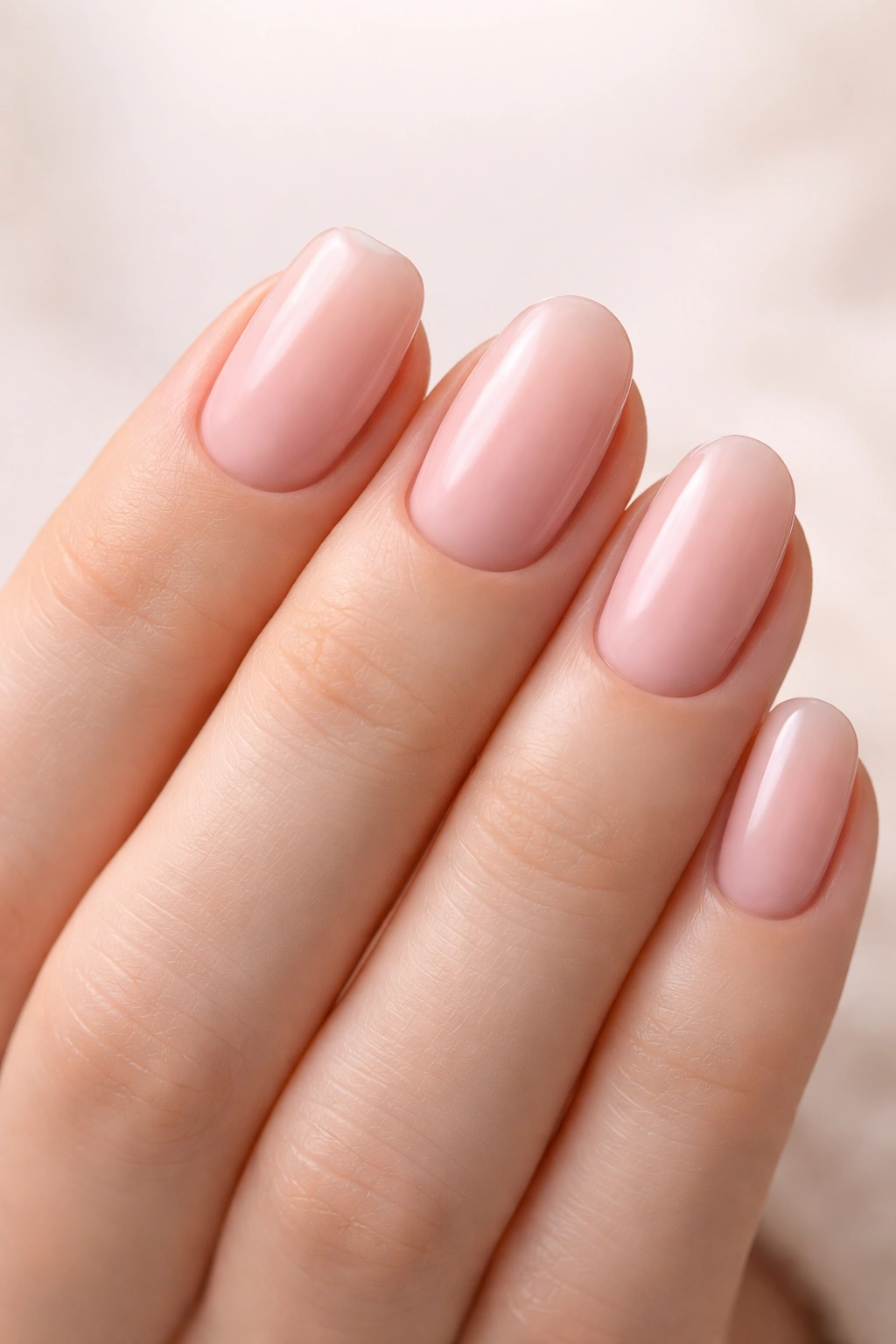
The right short nail shape for small hands isn’t about following a universal rule—it’s about understanding how proportions, geometry, and visual direction work together to create the most flattering effect for your specific hand structure. Squoval, oval, and round nails are genuinely the safest choices because they’re forgiving and flattering across the board, but almond and even short square nails can work beautifully if you choose them thoughtfully.
The key is embracing short nails as a choice, not a compromise. Short nails on small hands can be infinitely more elegant, more practical, and more flattering than longer versions would ever be. You’re not trying to create the appearance of longer fingers through nail length—you’re creating beauty and polish through shape, color, and intentional design choices.
Spend a moment really looking at your hands. Notice your knuckles, your finger proportions, how wide your nail beds are, whether your fingers tend toward length or width. Then choose a shape that honors what you actually have rather than fighting it. That’s where the magic happens—when your nail shape amplifies your hand’s natural strengths rather than emphasizing what you perceive as limitations. Your hands are beautiful. The right nail shape simply makes that beauty impossible to miss.