

There’s something deeply satisfying about the moment when your nail technician asks, “What shape would you like today?” and you actually know the answer. That confidence comes from understanding what works with your hands, not just what looks good on Instagram. The right nail shape isn’t about following a trend—it’s about enhancing your natural hand structure, fitting your lifestyle, and expressing your personal style in a way that feels authentic.
Picking a nail shape that suits you well means considering multiple factors that most people overlook. Your finger length, hand size, nail bed width, skin tone, and daily activities all play a role in determining which shapes will look flattering and feel practical. Some shapes elongate short fingers, others ground overly delicate hands, and a few work beautifully for almost everyone if applied thoughtfully. The goal isn’t to chase perfection but to choose a shape that makes you feel confident when you look down at your hands.
The beauty of understanding these principles is that you’ll stop second-guessing your choices. You’ll walk into a salon or sit down to do your own nails knowing exactly which shape will work for you—and why. This knowledge takes the guesswork out of every manicure and transforms what might feel like a frivolous decision into something genuinely empowering.
Understanding Your Hand Shape and Proportions
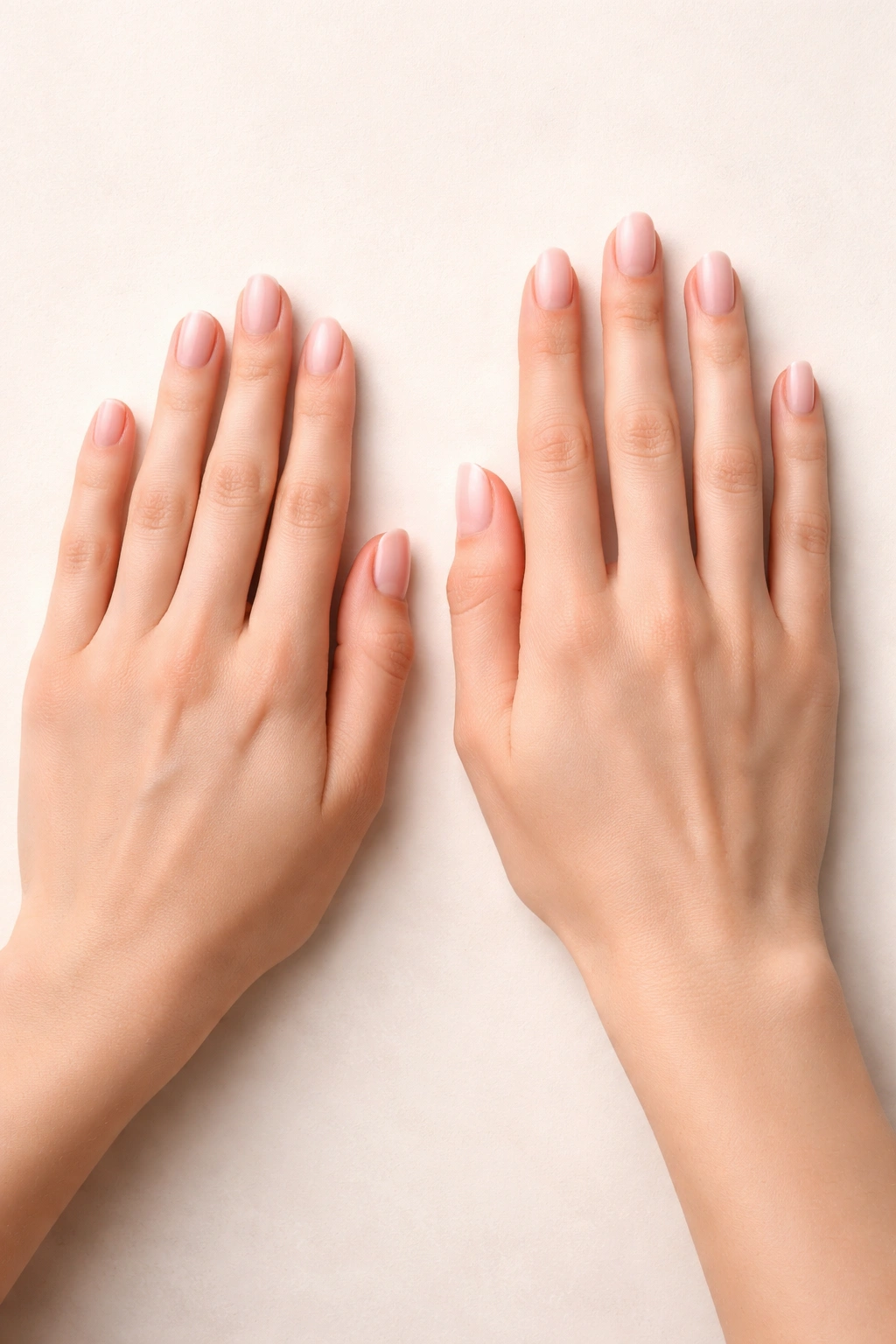
Before you commit to any particular nail shape, take a real look at your hands. This isn’t about judging them—it’s about understanding their unique architecture. Hold your hands in front of you with your palms facing down, fingers relaxed, and observe their overall silhouette. Are your fingers long and slender, short and sturdy, or somewhere in between? Is your hand overall delicate, average, or broad?
Hand shape and proportion matter because your nails don’t exist in isolation. They’re part of the overall visual composition of your hand, and the right nail shape will either enhance that composition or work against it. A nail shape that’s beautifully balanced on one hand might feel completely off on another—and that’s not a failure on your part. It’s simply proof that there’s no universal “best” shape.
The ratio between your finger length and width is particularly important. When your fingers are long and narrow, certain shapes will elongate them further, while others will anchor them better. If your fingers are shorter or wider, you’ll want to consider how different shapes can create the illusion of length or create visual balance. It’s the same principle interior designers use when choosing furniture proportions for different-sized rooms.
The Classic Round Nail Shape
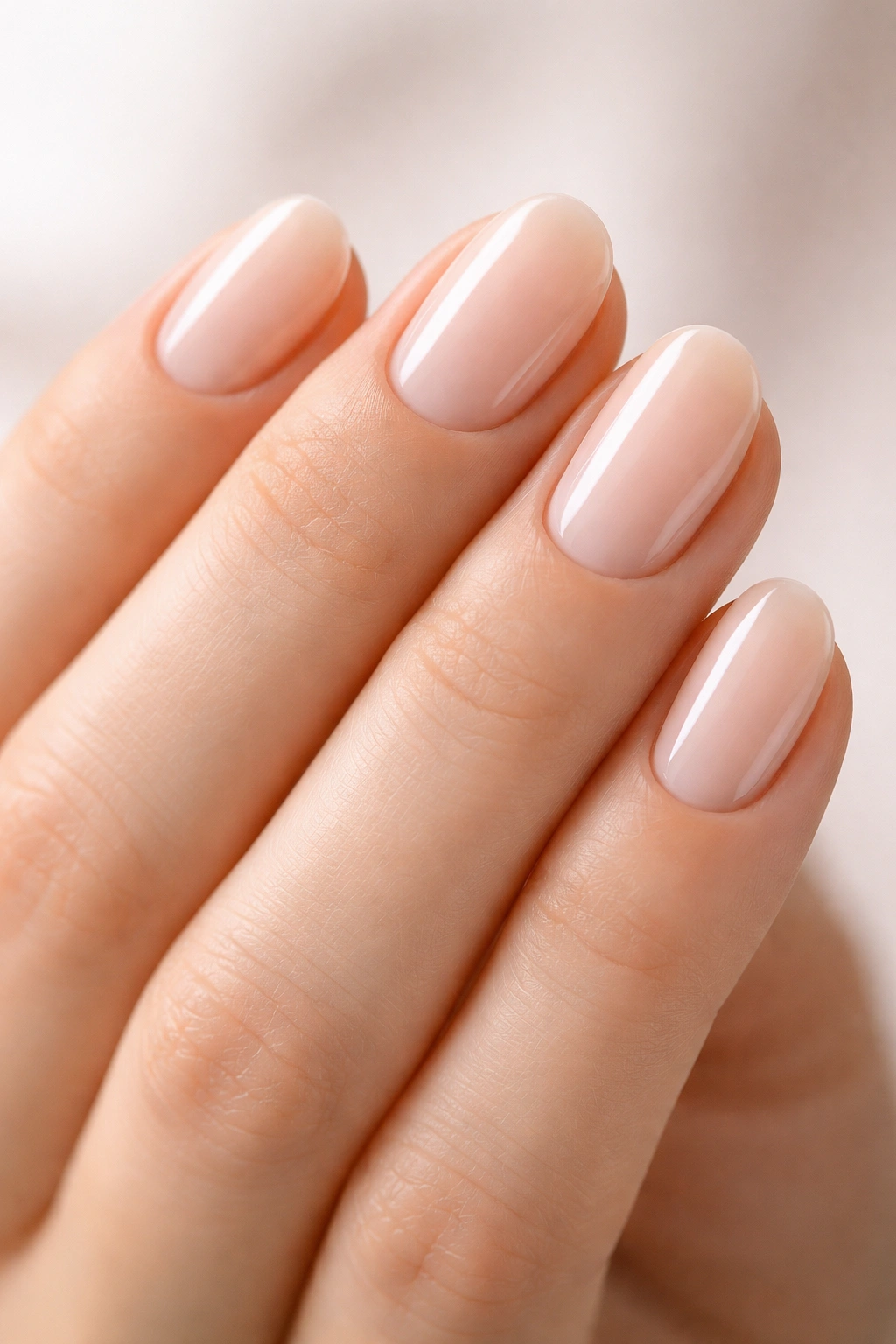
Round nails are the foundation nail shape for good reason—they work beautifully on nearly every hand, and they’re the easiest shape to maintain long-term. The curve follows the natural arc of your fingertip, which means there’s minimal stress on the nail structure and virtually no sharp corners prone to breaking.
Why Round Nails Suit Most Hands
Round nails create a soft, finished look that flatters short fingers, long fingers, wide fingers, and narrow fingers equally well. Because the shape mirrors the natural contour of your fingertip, the proportions feel inherently balanced. They photograph well, they’re forgiving if your nails grow at slightly uneven rates, and they work for professional environments where understated elegance matters. If you’re unsure about committing to a stronger shape, round nails give you a sophisticated baseline.
Best For
- Short fingers that need a shape that doesn’t emphasize length
- Professional settings where nail shape should fade into the background
- Active lifestyles where longer nail extensions might snag or break
- Minimal maintenance and low-fuss upkeep
- First-time manicure clients testing out longer nails
The one moment where round nails might feel like a compromise is if you love dramatic nails or you want a shape that creates serious visual impact. Round nails are reliable and pretty, but they’re not designed to turn heads.
Oval Nails for Balanced Elegance
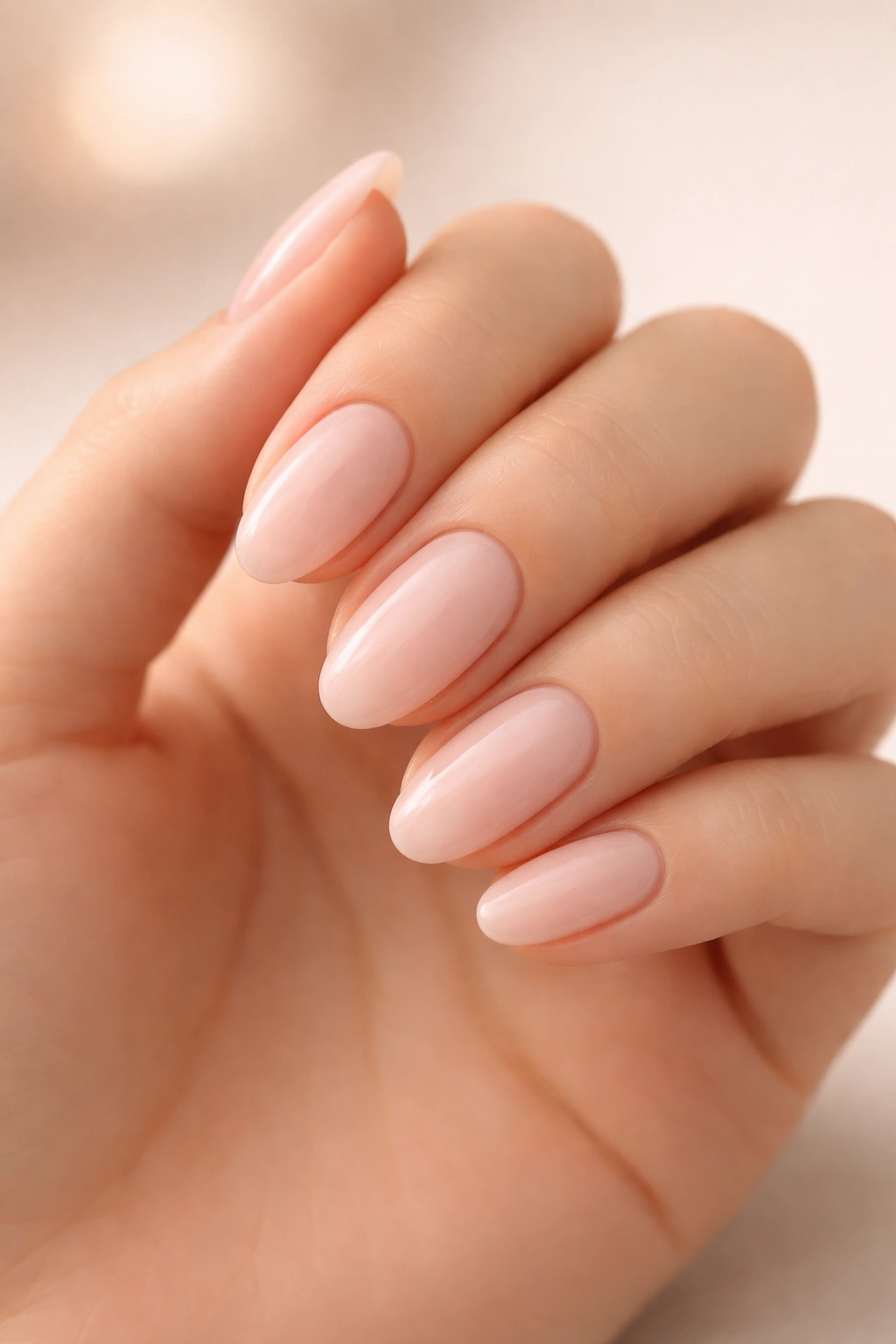
Oval nails sit perfectly between round and pointed shapes, offering the longevity and wearability of round with a touch more refinement. The shape tapers gradually from a wider base at the cuticle to a softly pointed tip, creating subtle visual elongation without the fragility of true pointed nails.
This is the shape that feels timeless because it genuinely works across decades and contexts. You’ll see oval nails on everyone from surgeons to celebrities—it’s the shape that communicates “I put thought into this, but I’m not trying too hard.” There’s quiet confidence in an oval nail shape.
When Oval Nails Shine
Oval nails work exceptionally well on hands with average-width fingers, especially if you want a touch of elegance without committing to an extreme shape. They elongate short fingers slightly without looking jarring, and they don’t overwhelm delicate, narrow hands the way some shapes might. If your nail beds are naturally narrow, oval nails make them appear slightly wider because the shape tapers at the sides rather than maintaining straight edges.
Versatility Across Nail Length
One of oval’s greatest strengths is its flexibility across different lengths. You can wear oval nails at a conservative half-inch past your fingertip, and they’ll look refined and professional. You can also wear them at two inches with dramatic nail art or a bold color, and they’ll read as intentionally glamorous rather than accidental-looking. This range of wearability makes oval the safety choice for people who want a shape that can move with them as their style preferences shift.
Square Nails and Modern Minimalism
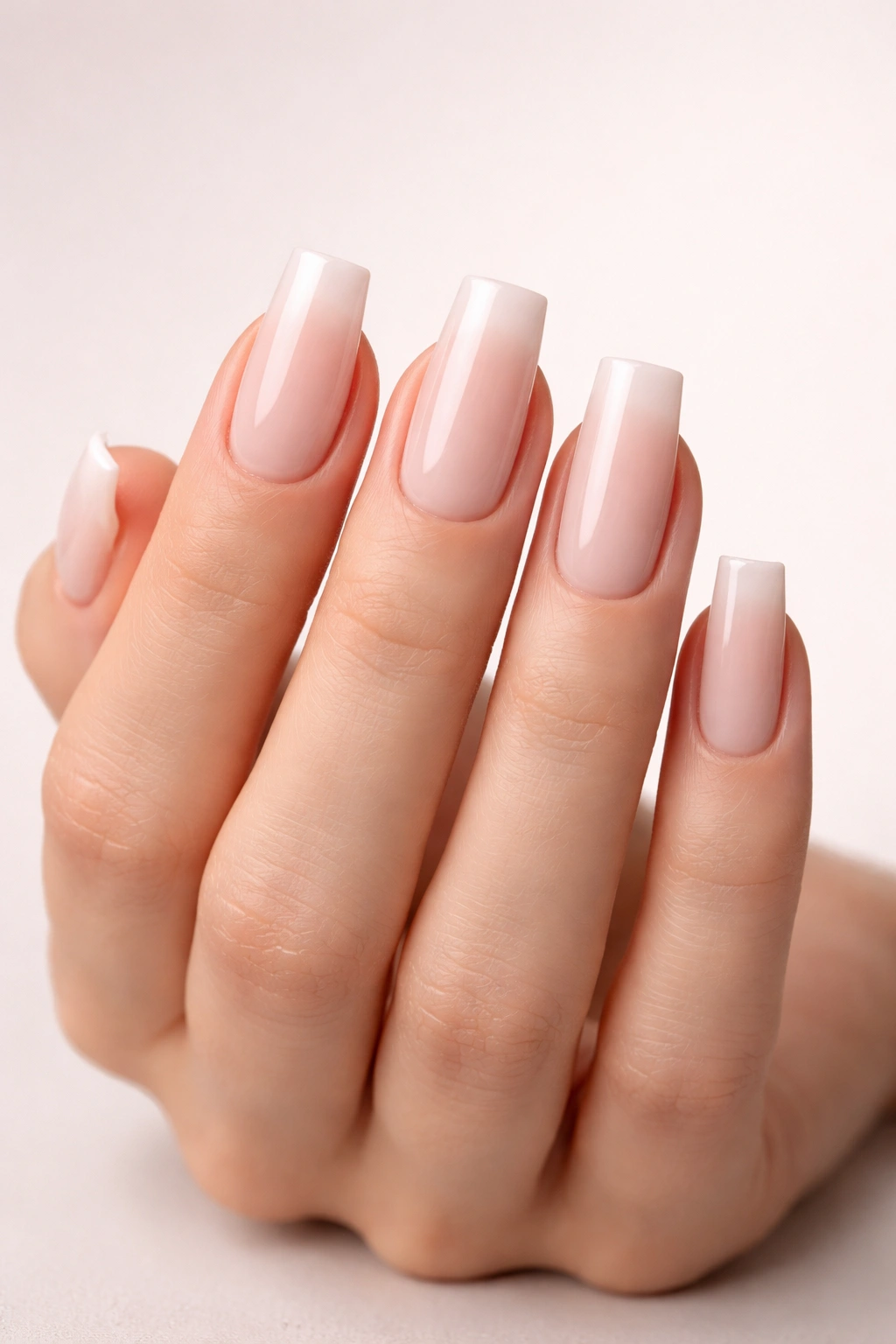
Square nails make a statement. The sharp angles, the structured edges, the geometric precision—they’re modern, bold, and undeniably fashion-forward. Square nails photograph beautifully, they’re the ideal canvas for nail art, and they create immediate visual impact.
Who Should Consider Square Nails
Square nails suit hands with longer fingers exceptionally well because the straight edges don’t draw attention to length the way pointed shapes do. They also work wonderfully on hands with average-to-wide nail beds, where the width of the nail can be displayed without feeling disproportionate. If your nail beds are naturally broad and you like the look of bold nail color or intricate designs, square nails give you a dramatic frame for that artistry.
Square nails also work well for people who embrace a more edgy, architectural aesthetic. They pair beautifully with minimalist style, modern jewelry, and crisp, clean fashion. If your overall vibe is polished and contemporary, square nails feel like a natural extension of that.
The Durability Consideration
Here’s the honest part: the sharp corners of square nails are stress points. They’re more prone to breakage, especially at the corners where pressure concentrates. If you’re active, if you work with your hands, or if you’re prone to accidentally catching your nails on things, square nails will require more intentional care. This isn’t a dealbreaker—it’s just something to understand going in.
Almond Nails for Refined Femininity
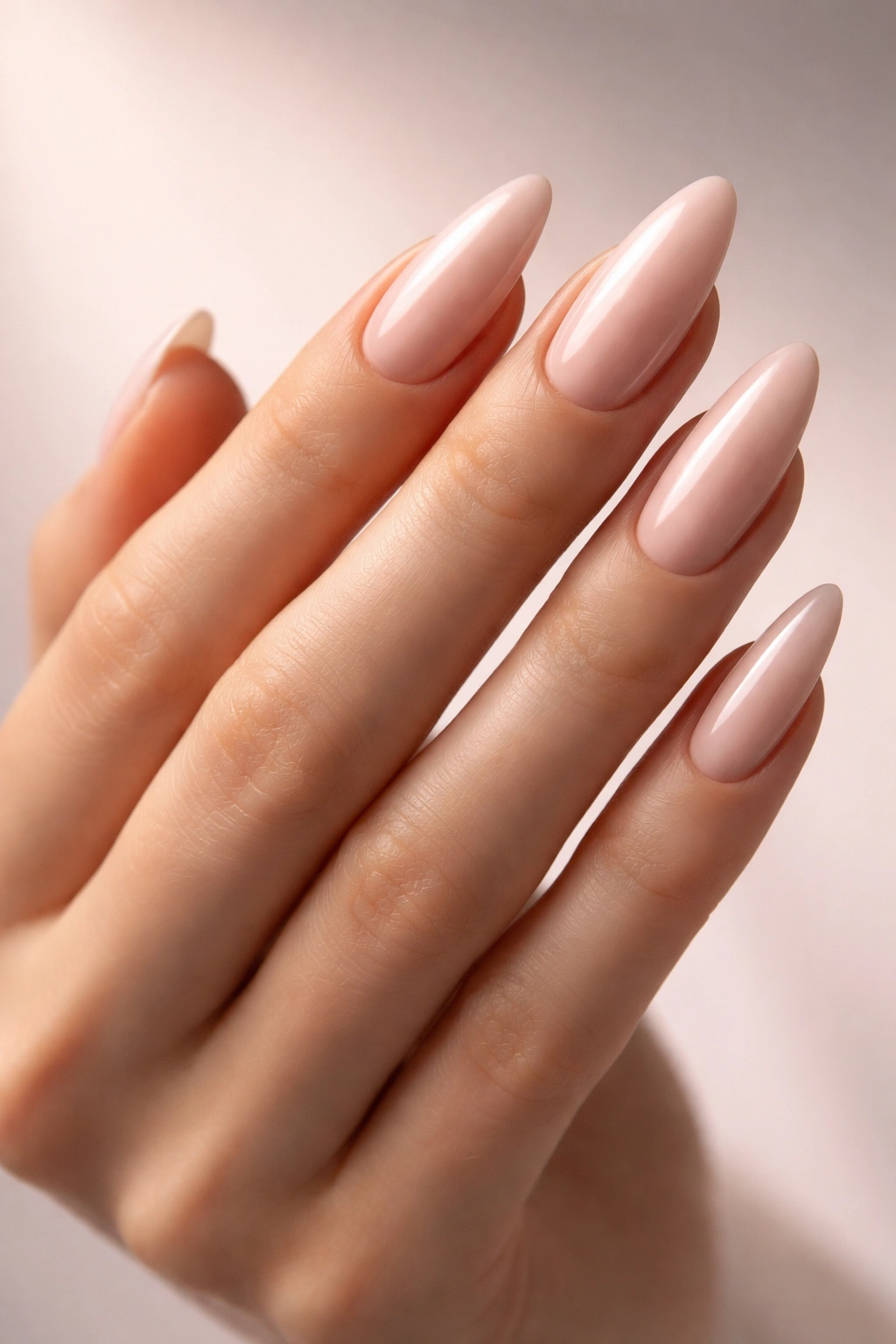
Almond nails taper from a wider base to a rounded point, creating an elongated oval silhouette that feels both delicate and somehow sophisticated. The shape is distinctly feminine without being frilly, and it’s flattering on an impressive range of hands.
The genius of almond nails is that they create visual elongation without the fragility of sharp points. The rounded tip is stronger than a stiletto point while still maintaining that refined taper. If you’re attracted to pointed shapes but concerned about durability, almond is the shape that bridges that gap beautifully.
Ideal Hand and Finger Types for Almond
Almond nails suit shorter fingers exceptionally well because they create the illusion of length and elegance. They also flatter hands with delicate, narrow fingers—the tapered silhouette echoes that delicacy. If you have small hands and you wear them on shorter nails (maybe a quarter to half inch past your fingertip), almond creates refined, almost jewelry-like proportions.
Almond nails also work well on hands with narrow nail beds because the tapered shape naturally accommodates narrower nail plates without looking pinched. The visual flow from base to tip feels balanced, even on hands where other shapes might feel off-kilter.
Aesthetic and Lifestyle Alignment
Almond nails read as intentional and refined. They’re popular in fashion and beauty circles because they’re sophisticated without being aggressive. If your personal style leans toward elegance, femininity, or romantic aesthetic, almond nails feel like a natural match. They work across professional and creative settings, and they adapt beautifully to both minimalist and decorated styles.
Coffin Nails and Stiletto Nails for Drama
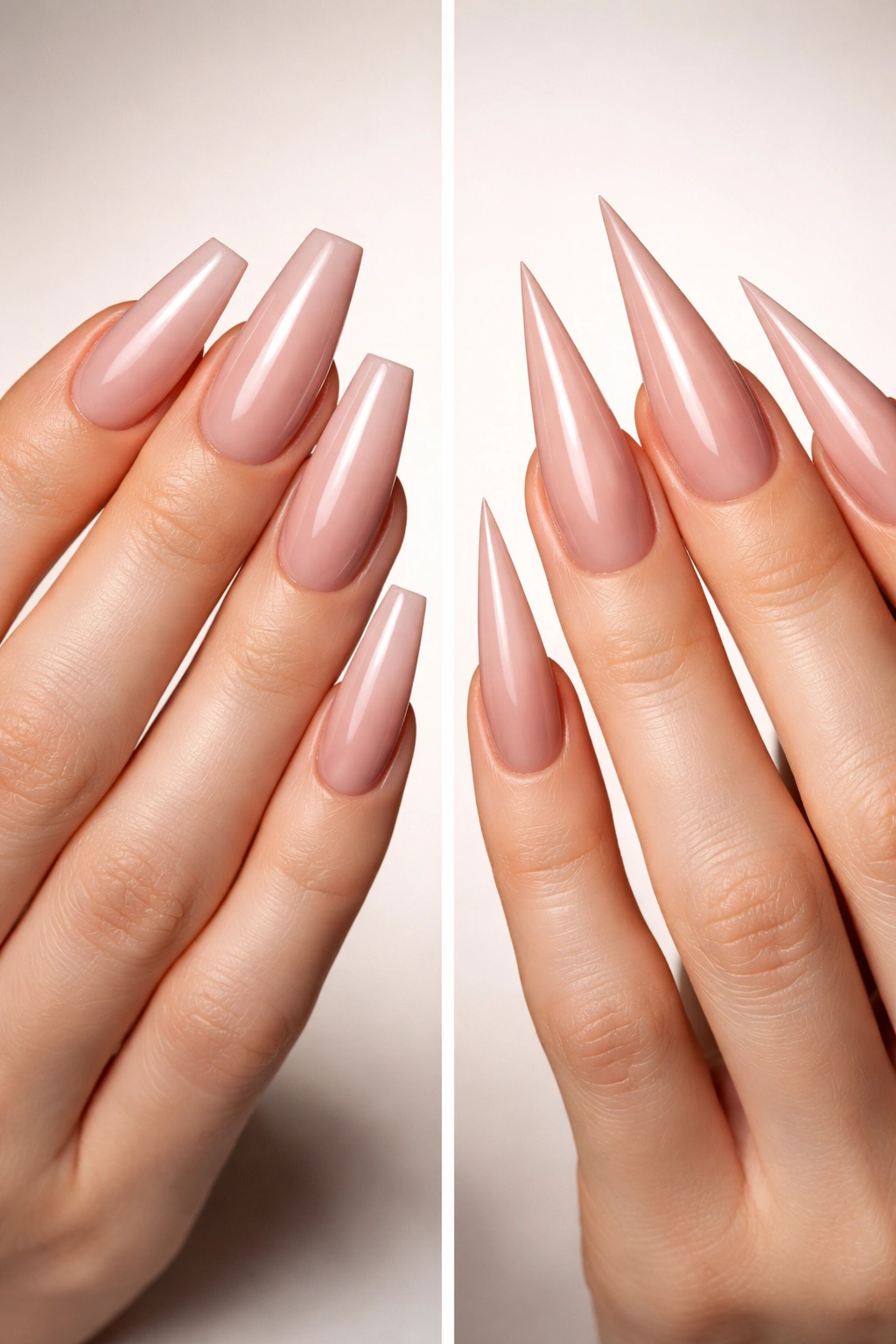
Coffin nails (sometimes called ballerina nails, though that term is increasingly used for a different shape) taper dramatically toward the tip, then flatten out into a squared-off edge, creating that distinctive coffin-like silhouette. Stiletto nails are the extreme version—a dramatic, sharp point that’s purely for visual impact.
These shapes are unapologetic. They say, “I am making a statement.” They’re bold, they’re fashion-forward, and they command attention. If you love dramatic nails and you’re willing to accept the maintenance and durability trade-offs, these shapes can feel absolutely right.
The Hands That Carry These Shapes Best
Coffin and stiletto nails suit longer fingers and larger hands beautifully because the proportion doesn’t feel overwhelming. On average-length or short fingers, these shapes can read as disproportionate—they might visually overwhelm your hand rather than complement it. If you have delicate, narrow hands, dramatic shapes can look out of place, as though they belong to someone else’s hands.
These shapes work best on hands with wider nail beds and strong nail growth. The structure needs to support the length and drama without looking fragile. People with naturally thick, resilient nails who don’t work with their hands extensively are ideal candidates.
Lifestyle Honesty
Here’s the essential truth: coffin and stiletto nails require intentional care. The length makes certain tasks difficult—typing, opening things, washing your hair. The pointed tips break more easily. These nails aren’t for everyone, and that’s perfectly okay. They’re for people who prioritize aesthetics over convenience and who genuinely enjoy the ritual of maintaining long nails. If that’s you, embrace it fully. If it’s not, no judgment—there are plenty of other shapes.
Ballerina Nails as a Softer Alternative
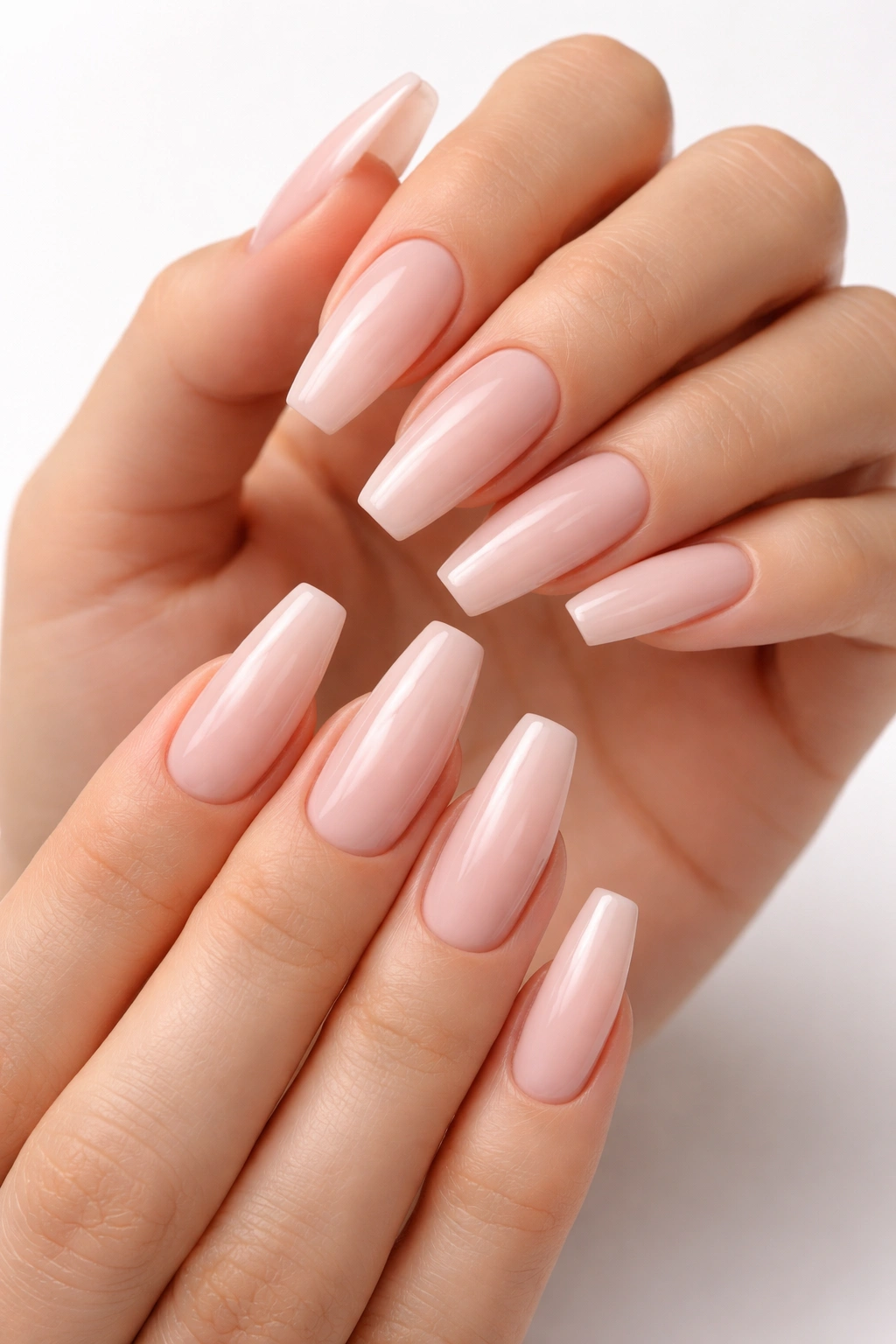
Ballerina nails have gained popularity as a middle ground between almond and coffin. The shape is tapered and elegant like almond, but with a slightly squared-off tip that creates a more contemporary look. It’s all the visual interest of a dramatic shape with slightly more durability and wearability.
The Appeal of Ballerina Shape
Ballerina nails photograph beautifully—they’re Instagram-friendly without being impractical. The shape is modern and intentional-looking while still feeling elegant rather than aggressive. They’re particularly popular among people who love the idea of longer nails but want something more wearable than stiletto or true coffin.
This shape works well on hands with average-to-longer fingers and average-to-wider nail beds. The slight squared edge gives the nail more structural integrity than a pointed tip, which means fewer breaks and less maintenance stress. If you love dramatic nails but you also need your hands to function in your daily life, ballerina nails offer a real compromise.
How Finger Length Affects Nail Shape Choices
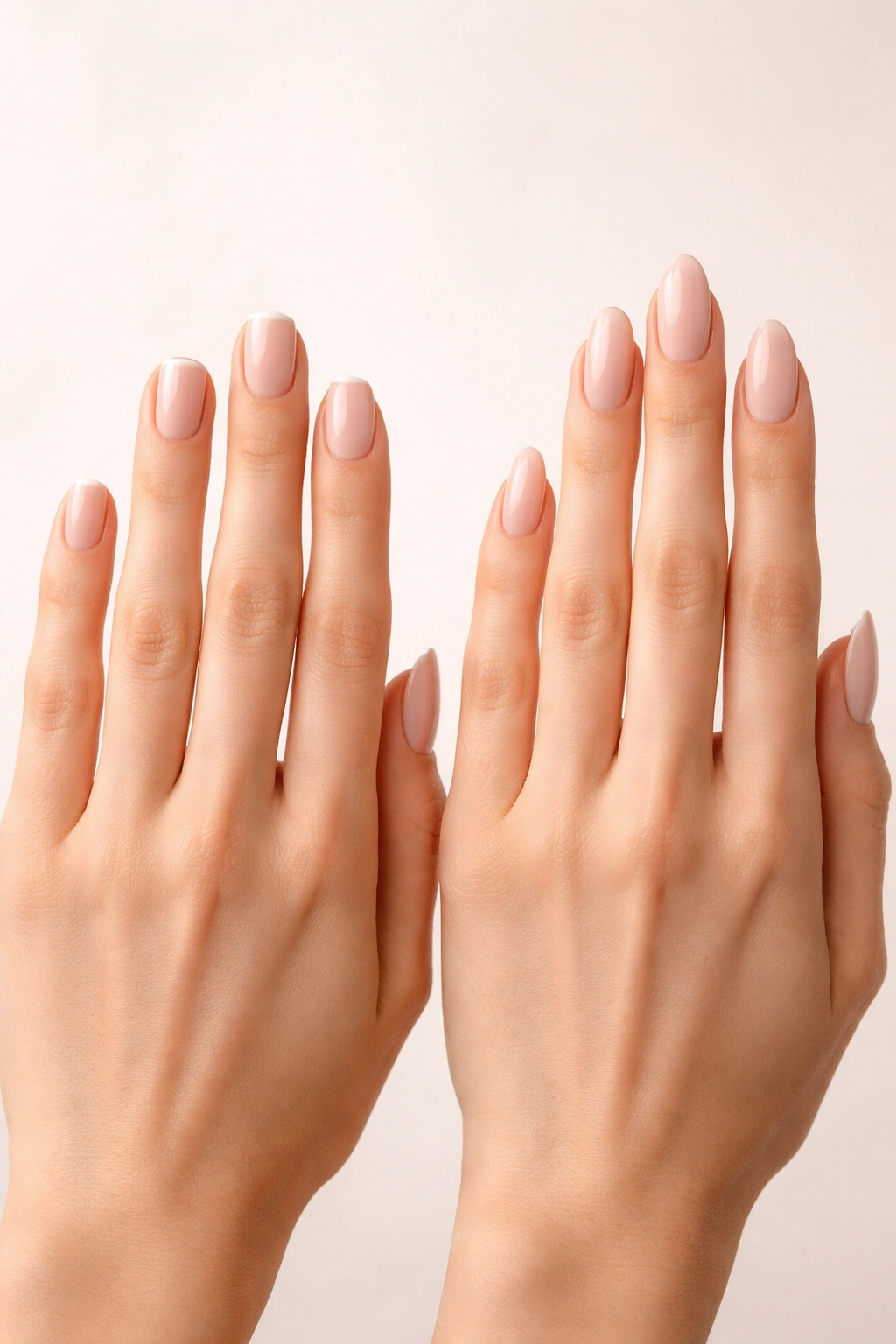
Your natural finger length is one of the most important factors in choosing a nail shape that will look balanced and feel right to you. This isn’t about changing who you are—it’s about understanding how different shapes will read on your specific hand structure.
Short Fingers: Shapes That Create Visual Elongation
If your fingers are naturally shorter, shapes that taper toward a point will elongate them visually. Almond, oval, and ballerina nails all create the illusion of length by drawing the eye upward. Pointed shapes also emphasize the vertical line of the nail, which tricks the eye into perceiving more length than actually exists.
Round nails work fine on short fingers—they’re not wrong—but they won’t create any elongation effect. They’ll simply appear as nails of proportionate length. If you like the look of your short fingers and you don’t want to create an illusion, round is perfectly valid. But if you’d like your nails to visually add a touch of length to your hands, shapes with defined points are your friends.
Long Fingers: Shapes That Create Visual Anchor
If your fingers are naturally long and slender, you might worry that pointed shapes will emphasize that length. Here’s the secret: elongated shapes actually work beautifully on long fingers because they echo your hand’s natural proportion rather than exaggerating it. Square nails, however, create a visual anchor at the tip that grounds long fingers and makes them feel less extended.
Long fingers are genuinely one of the few hand types that can carry any shape successfully. The proportions are forgiving. Embrace this gift—it means you have real freedom to choose based on your aesthetic preferences rather than corrective needs.
Average Fingers: Maximum Flexibility
If your fingers fall into an average length range, you have the most flexibility across shapes. Almost everything will look balanced on your hands. Your choice can be purely aesthetic—which shape makes you happiest? Which one aligns with your personal style and lifestyle? This is a position of genuine freedom.
Matching Nail Shape to Skin Tone and Nail Bed
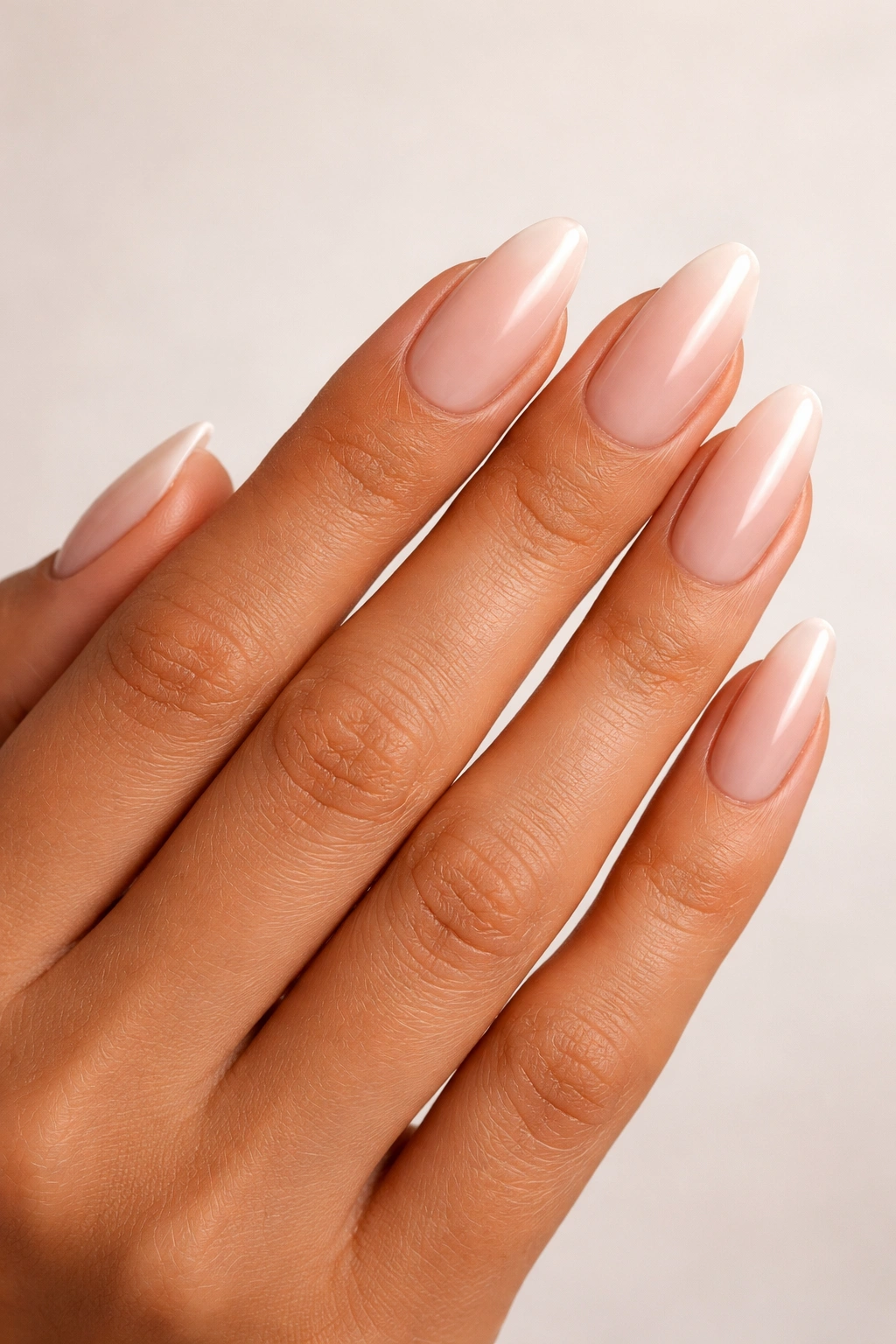
While nail shape is the primary driver of your choice, skin tone and natural nail bed characteristics add another layer of consideration. These factors don’t absolutely determine which shapes you can wear, but they can influence which shapes will feel most flattering.
Fair and Cool-Toned Skin
Fair skin with cool undertones looks stunning with crisp, structured shapes like square and coffin nails. The contrast between light skin and defined nail edges creates strong visual definition. Oval and almond nails also work beautifully, creating an elegant frame. Avoid worrying about whether you “should” wear certain shapes based on skin tone—this is about what feels beautiful to you.
Medium and Warm-Toned Skin
Medium skin tones with warm undertones glow with soft, tapered shapes like almond and oval nails. The warmth in your skin creates a beautiful interplay with the delicate lines of these shapes. Square and round nails work wonderfully too—there’s real flexibility here.
Deep and Rich Skin Tones
Deep skin tones are showcased beautifully by bold, structured shapes like square and coffin nails. The contrast creates striking visual impact. Almond and oval nails are equally lovely, creating refined elegance. Long, dramatic shapes feel particularly beautiful on deeper skin tones—the proportions feel naturally balanced.
Wide Nail Beds: Shapes That Fill the Space
If you have naturally wide nail beds, structured shapes like square work beautifully because the width of the nail is part of the design. Round and oval nails also display well on wider beds because there’s enough surface area that the shape doesn’t read as cramped or disproportionate.
Narrow Nail Beds: Shapes That Create Visual Width
If your nail beds are naturally narrow, avoid shapes that emphasize that narrowness. Almond, oval, and ballerina nails work well because they taper from a slightly wider base, creating an optical illusion of width. Round nails also work fine—the curved lines don’t draw attention to narrowness.
Lifestyle Factors That Influence Your Best Nail Shape
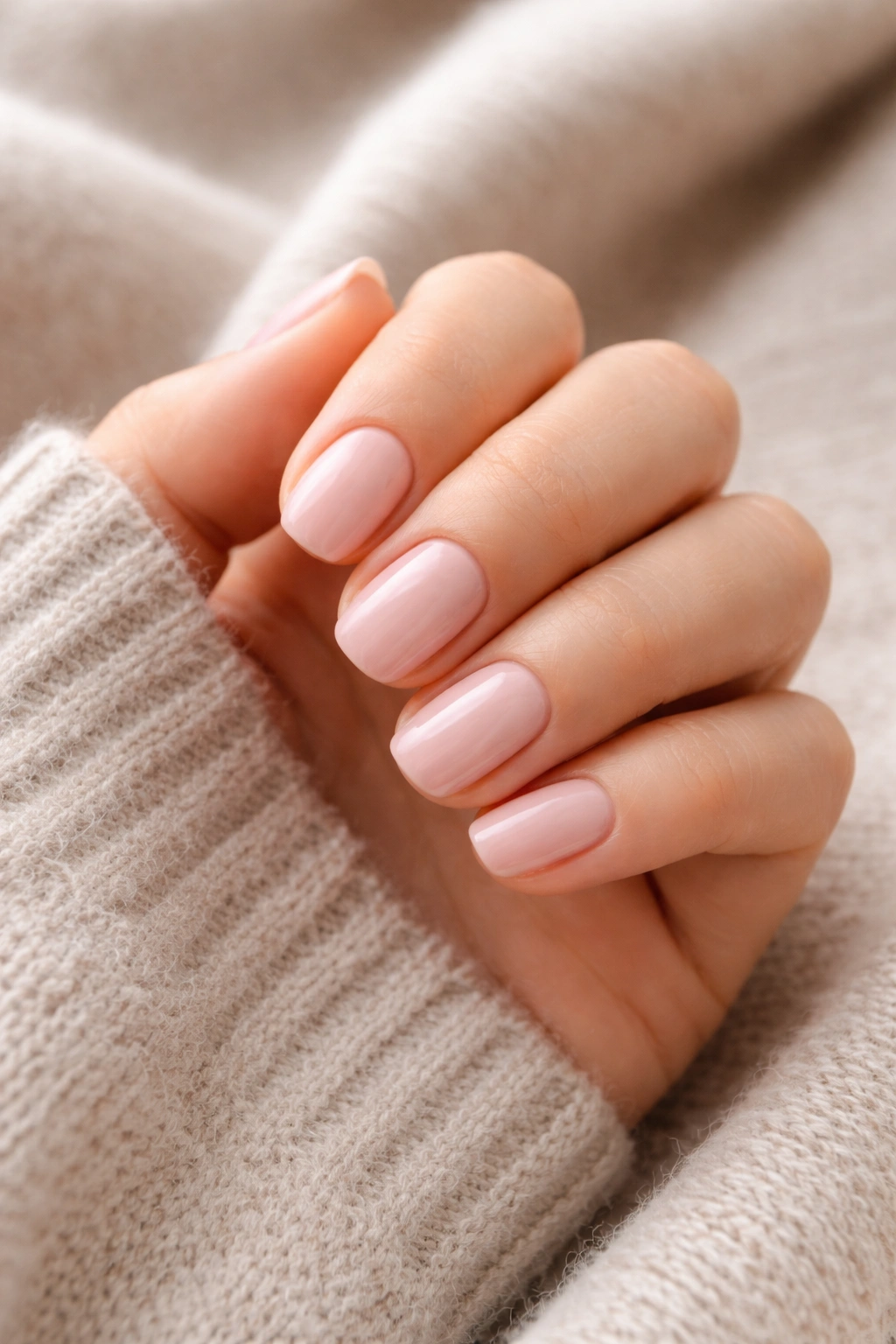
Here’s where theory meets reality: the most beautiful nail shape in the world won’t feel right if it doesn’t work with how you actually live.
Active and Hands-On Lifestyles
If you exercise frequently, work with your hands, garden, cook, or spend time with children or pets, dramatic shapes with sharp points or extended lengths become impractical. You’ll spend your days catching your nails on things, worrying about breaks, and frustrated by limitations. Round and oval nails give you the satisfaction of a deliberate nail shape without the constant friction with your actual life.
This isn’t a failure on your part. It’s a sign of maturity and self-awareness. Choosing a shape that works with your lifestyle rather than against it is infinitely smarter than committing to a beautiful shape that leaves you constantly frustrated.
Professional and Corporate Environments
Some workplaces have unspoken (or explicit) expectations about nail appearance. In healthcare, food service, and certain corporate environments, conservative shapes like round, oval, and short almond read as appropriate and professional. Coffin and stiletto nails, while beautiful, might read as too bold for these contexts.
If you love dramatic shapes but you work in a conservative environment, you have options: wear them on weekends, wear them in a conservative length, or save them for vacations. Or own them fully in your professional life if that’s part of your identity. The key is making a deliberate choice rather than defaulting to what you think you “should” do.
Creative and Expressive Contexts
If you work in fashion, beauty, creative fields, or anywhere that values self-expression, bold nail shapes are often celebrated rather than questioned. In these environments, square, coffin, and stiletto nails are part of your creative identity. The freedom to experiment and push boundaries is part of the culture.
Time and Maintenance Availability
Different shapes require different maintenance schedules. If you have limited time for upkeep, shapes with simple edges like round require minimal maintenance. If you love maintaining your nails—buffing, reshaping, applying fresh polish weekly—dramatic shapes give you more to work with and keep things interesting.
Be honest about your actual maintenance capacity. Choosing a shape that requires more upkeep than you’ll realistically commit to is setting yourself up for disappointment.
Nail Shape and Maintenance Demands
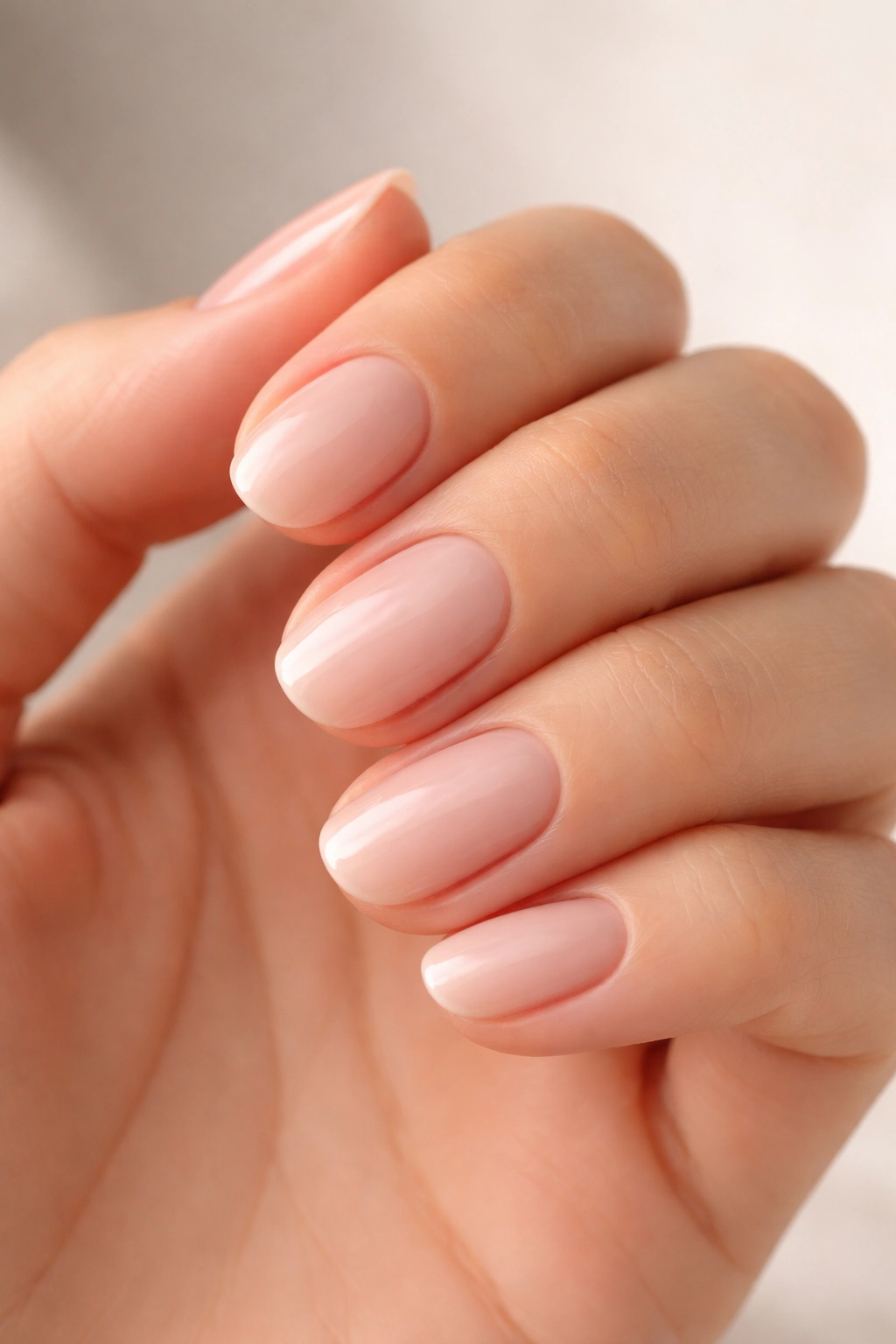
Each nail shape has different maintenance requirements. Understanding these trade-offs helps you choose a shape you can actually sustain long-term.
Low-Maintenance Shapes
Round nails require the least upkeep. The simple curve is easy to file, and there are no sharp angles to catch or break. If you prefer to file your own nails between salon visits, round is forgiving. You can maintain the shape even if your filing isn’t perfectly precise.
Oval nails fall into the moderate category. They require slightly more precision when filing, but the curved edges are still relatively forgiving. You’re creating gentle lines rather than perfect angles.
Moderate-Maintenance Shapes
Almond nails require more precision when filing because you’re creating a tapered line from base to tip. The filing takes slightly longer, and you need to maintain evenness on both sides. This is manageable if you’re willing to invest five or ten minutes per week.
Ballerina nails fall into this category too—they require deliberate, precise filing to maintain the characteristic squared tip and tapered sides.
High-Maintenance Shapes
Square nails demand precision. You’re creating sharp angles on both sides, and maintaining them requires careful, consistent filing. If your shape drifts even slightly, the nails look unkempt. Square nails require more frequent maintenance, especially as your natural nail grows and you need to reshape the edges.
Coffin and stiletto nails are the highest maintenance. The length alone requires more frequent buffing and polish application. The dramatic shape requires precise filing to maintain its character. Breaks and chips are more noticeable on these shapes, so touch-ups are frequent.
The Durability Reality
Shorter shapes are inherently more durable. The less surface area extending past your fingertip, the less leverage for breakage. If you’re prone to breaking nails or you have fragile nail structure, shorter almond, oval, or round shapes will last longer than extended coffin or stiletto nails.
Length matters more than shape in terms of breakage risk. A short coffin nail might break less frequently than a long oval nail, simply because the reduced length means less stress on the nail structure.
How to Transition Between Nail Shapes
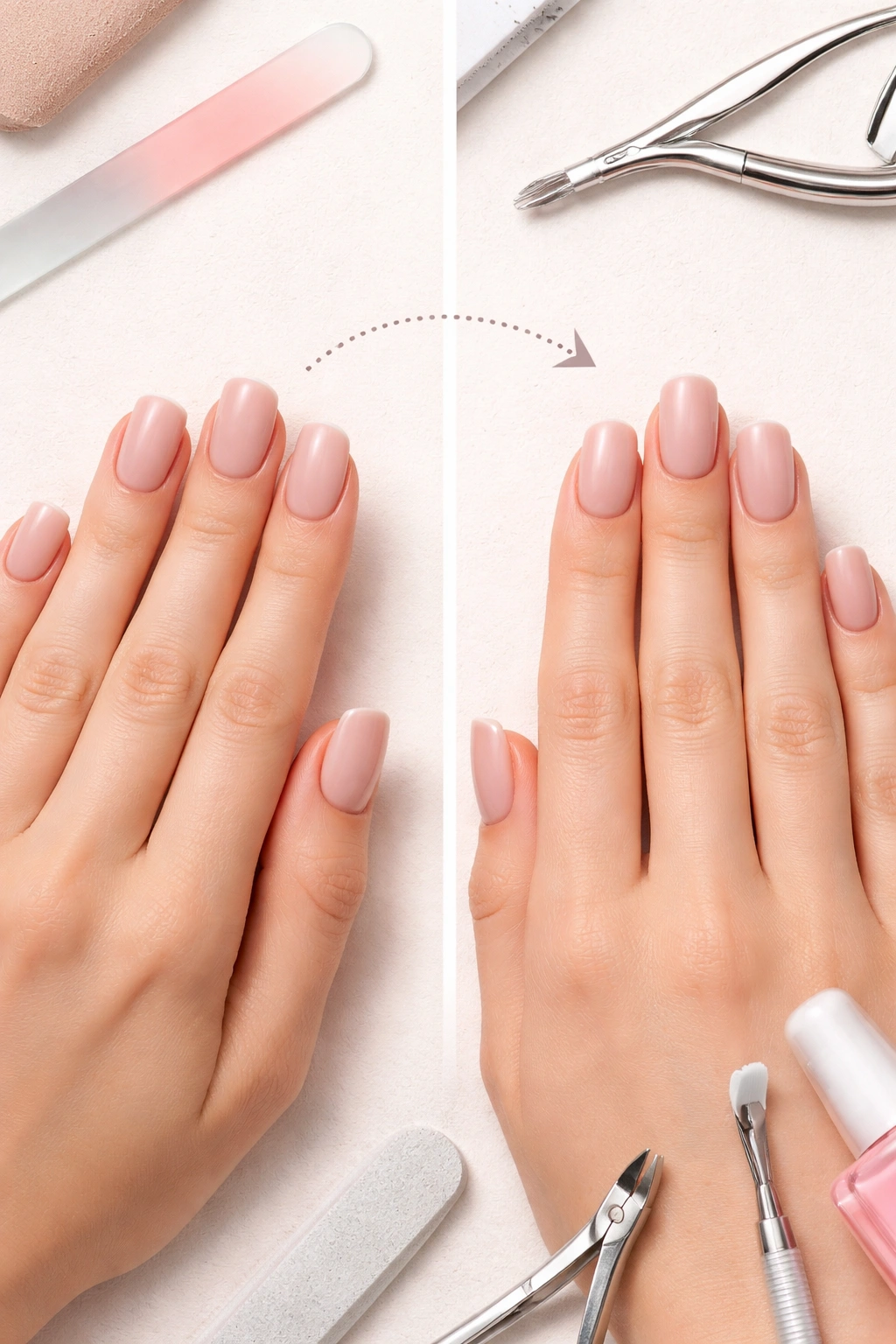
If you’re changing from one shape to another—moving from coffin to oval, or from round to square—the transition requires intentional care to avoid damaging your nails.
Planning Your Transition
If you’re moving from a very dramatic shape to something more conservative, give your nails a break between shapes. Grow out your nails slightly, let them rest for a week or two with minimal polish, and treat them with cuticle oil and strengthening treatments. This recovery period helps any subtle damage heal before you commit to a new shape.
The Reshaping Process
File gradually rather than aggressively. If you’re moving from oval to square, file the sides first to create straight edges, then work on the corners. Don’t try to reshape your entire nail at once—multiple filing sessions over a few days are less stressful on your nail structure than one aggressive session.
Strengthening During Transition
Use a nail strengthener during your transition phase. Your nails are adjusting to new stresses and new filing angles, so extra support is helpful. Increase cuticle oil application too—the extra moisture keeps your nails flexible and less prone to breakage.
Length Considerations
If you’re going from very long nails to significantly shorter ones, cut gradually. Removing several millimeters all at once can feel shocking to your nail structure. Trim a little bit every few days, giving yourself time to adjust to the new proportions and giving your nails time to strengthen as they shorten.
Working With Your Specific Hand Challenges
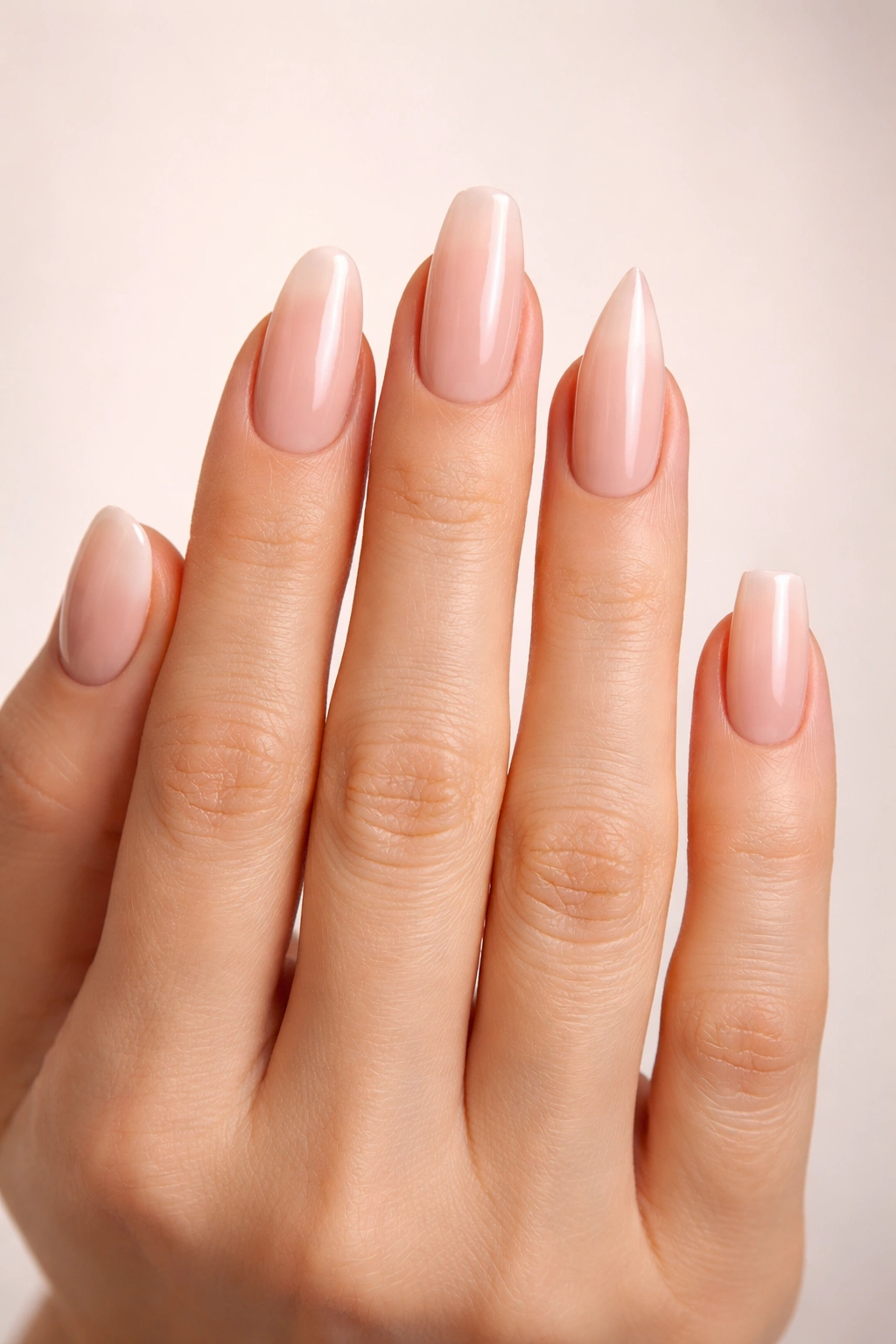
Most people have something about their hands they’d like to change—it’s part of being human. Understanding how different nail shapes address common concerns helps you make shape choices that feel genuinely empowering.
Making Hands Look Larger or Smaller
If you feel your hands are too small or delicate, longer nails in more dramatic shapes create visual impact and presence. Coffin, stiletto, and ballerina nails make small hands feel bolder and more commanding. Square nails create visual width, which grounds delicate proportions.
If you feel your hands are large or broad, conservative shapes like round and short oval provide visual restraint. The simplicity prevents your hands from feeling overwhelming. Almond and ballerina nails, with their tapered silhouettes, create elegance rather than amplifying size.
Addressing Uneven Nail Growth
Some people’s nails grow at slightly different rates, which means one nail grows faster than others. This is completely normal and doesn’t reflect any health issue. Round nails are forgiving of uneven growth because the curved edge reads as intentional even if the lengths vary slightly. Structured shapes like square and coffin show uneven growth more obviously, so they require more consistent filing to maintain.
Working With Naturally Thin or Weak Nails
If your nails are naturally thin or prone to breakage, shorter shapes are your friends. Round and short oval nails give you the aesthetic satisfaction of intentional shape without the structural stress of extended lengths. You can still enjoy beautiful, polished nails even if your natural nail structure isn’t ideal for very long shapes.
Stronger nail structure often develops over time with good care—consistent moisturizing, nail vitamins, and protective polish choices. As your nails strengthen, you might be able to gradually move into slightly longer or more dramatic shapes.
Final Thoughts
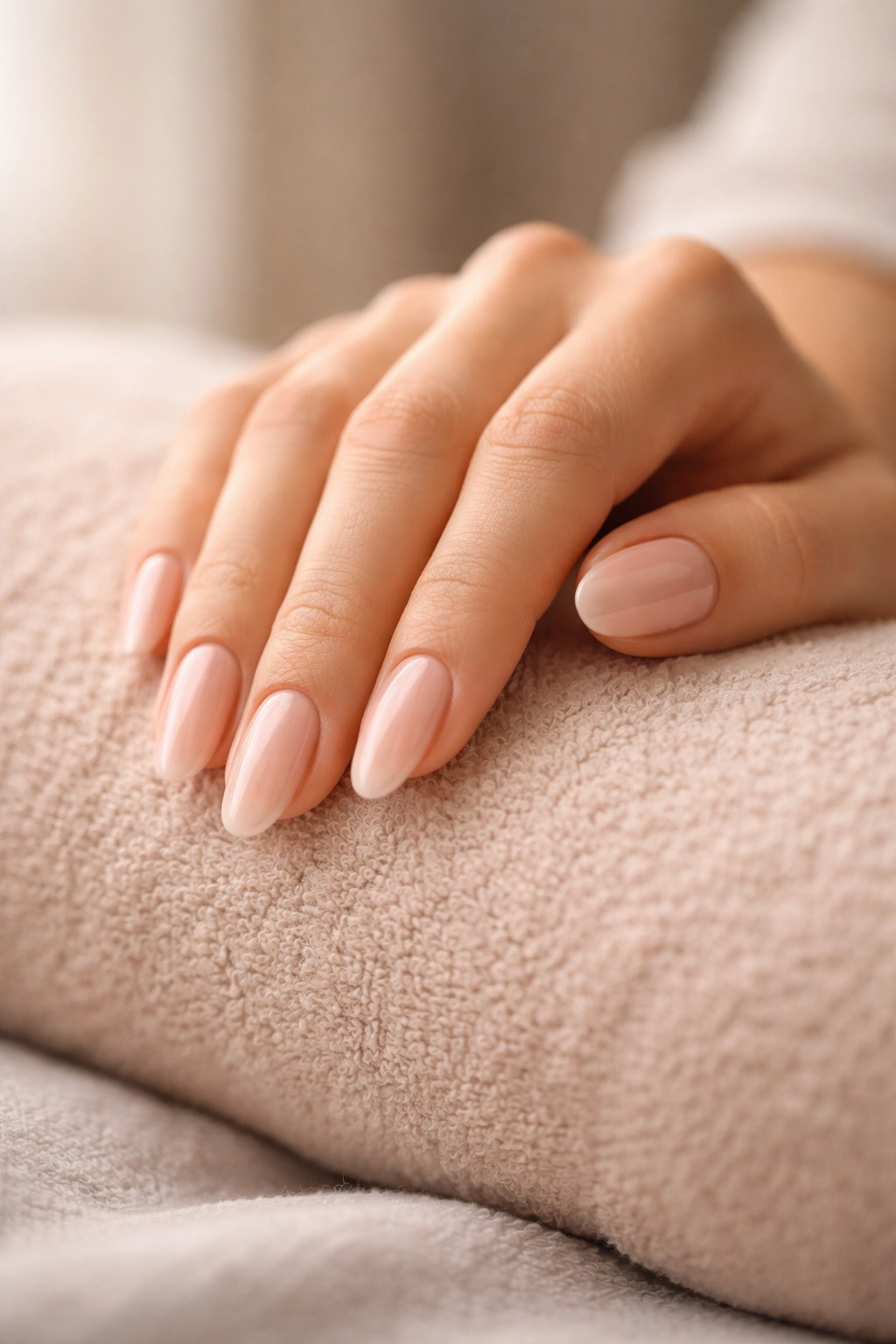
Choosing the right nail shape is one of those small decisions that has an outsized impact on how you feel about yourself. When your nails feel right—when the shape suits your hands, aligns with your lifestyle, and reflects your personal style—you stop thinking about them and just enjoy them. That’s the goal.
There’s no single “best” shape, and there’s no shape that will look perfect on everyone. What matters is finding the shape that makes you feel confident, capable, and genuinely happy when you look down at your hands. This might be a shape that creates a visual effect you love, or it might simply be a shape that requires less maintenance so you can stop worrying about your nails and focus on other things.
Your hands are constantly visible in your own life—when you’re typing, cooking, gesturing while talking, holding your phone. Choose a nail shape that makes you happy in those moments. Choose based on your actual lifestyle, not on how you think you should look. And remember that nail shapes can change. If what you’re wearing stops working for you, you can always try something different. The freedom to experiment, to adjust, and to evolve your style is part of the joy.