


Red ballerina nails can look sharp or cheap, and the difference is usually one shade choice and one filing mistake. Red is less forgiving than beige, pink, or milky white. On a tapered ballerina shape, any wobble in the sidewalls, any flooded cuticle, any uneven free edge shows up fast.
That’s why this manicure keeps pulling people in anyway. Red ballerina nails have edge built into the shape: slim sides, a flat tip, and enough length to make a classic color feel a little meaner and a lot more polished. And yes, some salons still call the shape coffin. Same family, same flat tip, same need for clean structure.
Bright reds hit first. Deep reds linger.
The tricky part is choosing a red that matches the mood you want and the way your nails are built. A sheer tomato jelly behaves nothing like an opaque fire-engine cream. A glossy black-cherry set can hide tiny scratches better than matte oxblood, while a bright cherry polish will expose every bump unless the base is smooth. Start loud and glossy if you want instant attention, or keep going until the shades turn darker, moodier, and almost black.
Why the ballerina shape makes red look sharper
Ballerina nails give red polish a cleaner frame than most shapes. Almond softens it. Square can make it feel blocky. Stiletto pushes the color into full drama. Ballerina lands in the middle, which is why it suits such a wide red range—from candy-apple bright to wine-dark and smoky.
The flat tip matters more than people think. When the free edge ends in a straight line instead of a point, red polish reads more deliberate. You see the color first, then the shape. On a pointed nail, your eye goes to the tip; on ballerina, it travels down the whole nail.
Length matters too. A short ballerina can work, but the shape looks strongest when you have at least 4 to 6 mm past the fingertip. Less than that, and the taper can start to look cramped. Longer extensions need a visible apex, especially if you use a dark cream red, because deep shades make weak structure easy to spot.
One more thing. If your natural nails bend at the corners, do not force a long ballerina file job on top of them and hope for the best. Ask for builder gel or a structured overlay. Red polish on a flimsy shape never looks expensive for long.
Picking the right red by undertone, finish, and length
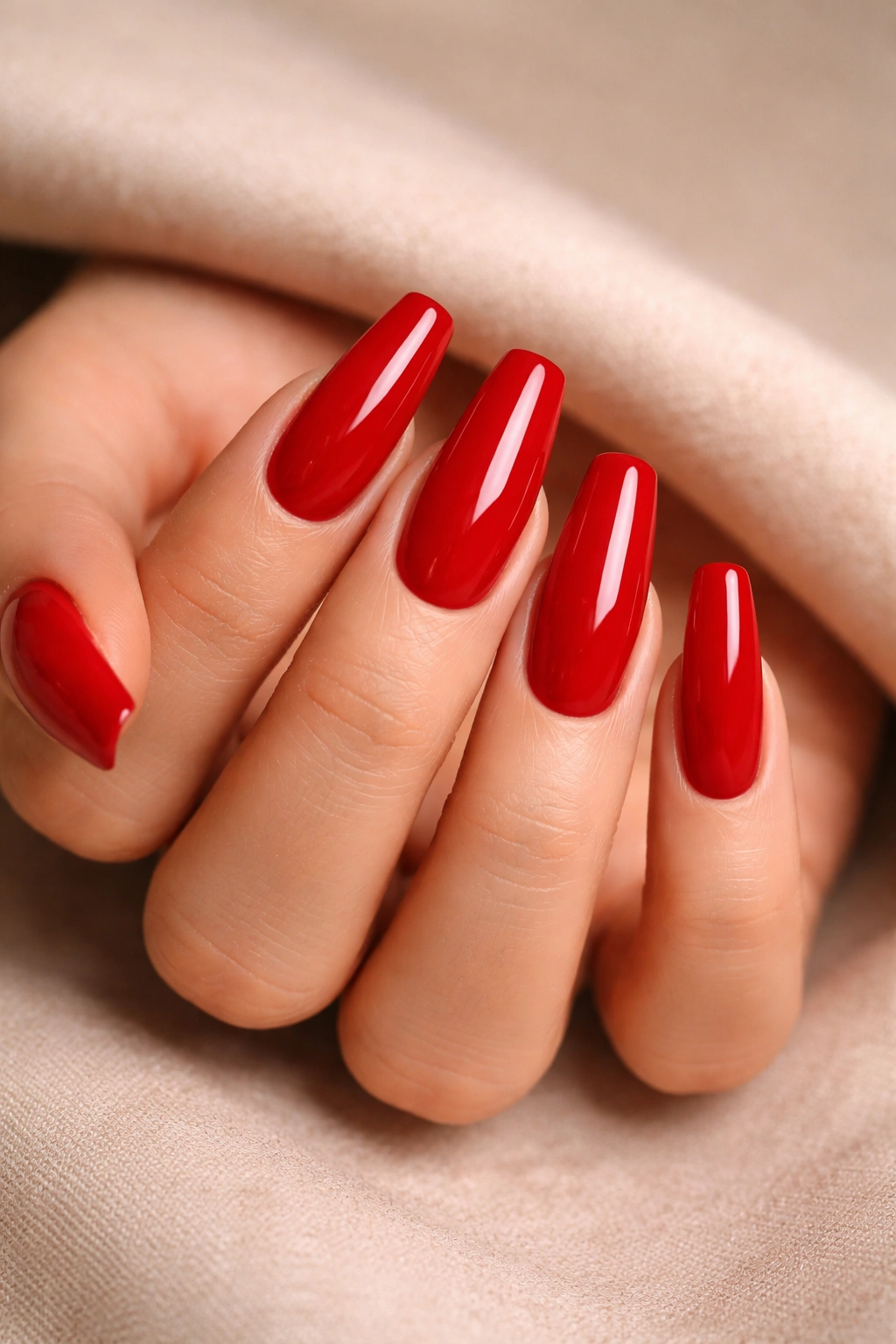
A red polish is never “just red.” Some lean orange, some lean blue, some carry brown, berry, or black beneath the surface. The undertone changes how your skin looks and how the ballerina shape reads from a distance.
Warm, bright reds—cherry, tomato, candy apple—bring heat and energy. They hit hard on medium-length nails and look crisp with a high-gloss top coat. Cooler reds—ruby, cranberry, wine—feel denser and a bit dressier. Once you move into oxblood and black cherry, the finish starts to matter as much as the color.
A few quick rules help:
- Orange-based reds usually look strongest with gold jewelry and warmer skin.
- Blue-based reds can make teeth look whiter and pair well with silver tones.
- Jelly reds show the nail line underneath unless you use a milky base.
- Matte deep reds can make short nails look shorter because they absorb light.
- Chrome or cat-eye reds need smooth structure under them; reflective finishes show dents.
Then there’s contrast. If you like a clean, hard-edged manicure, go brighter or glossier. If you want something richer and quieter, move toward wine, burgundy, and blackened red. Same shape. Entirely different attitude.
Nail prep that keeps red polish from looking messy
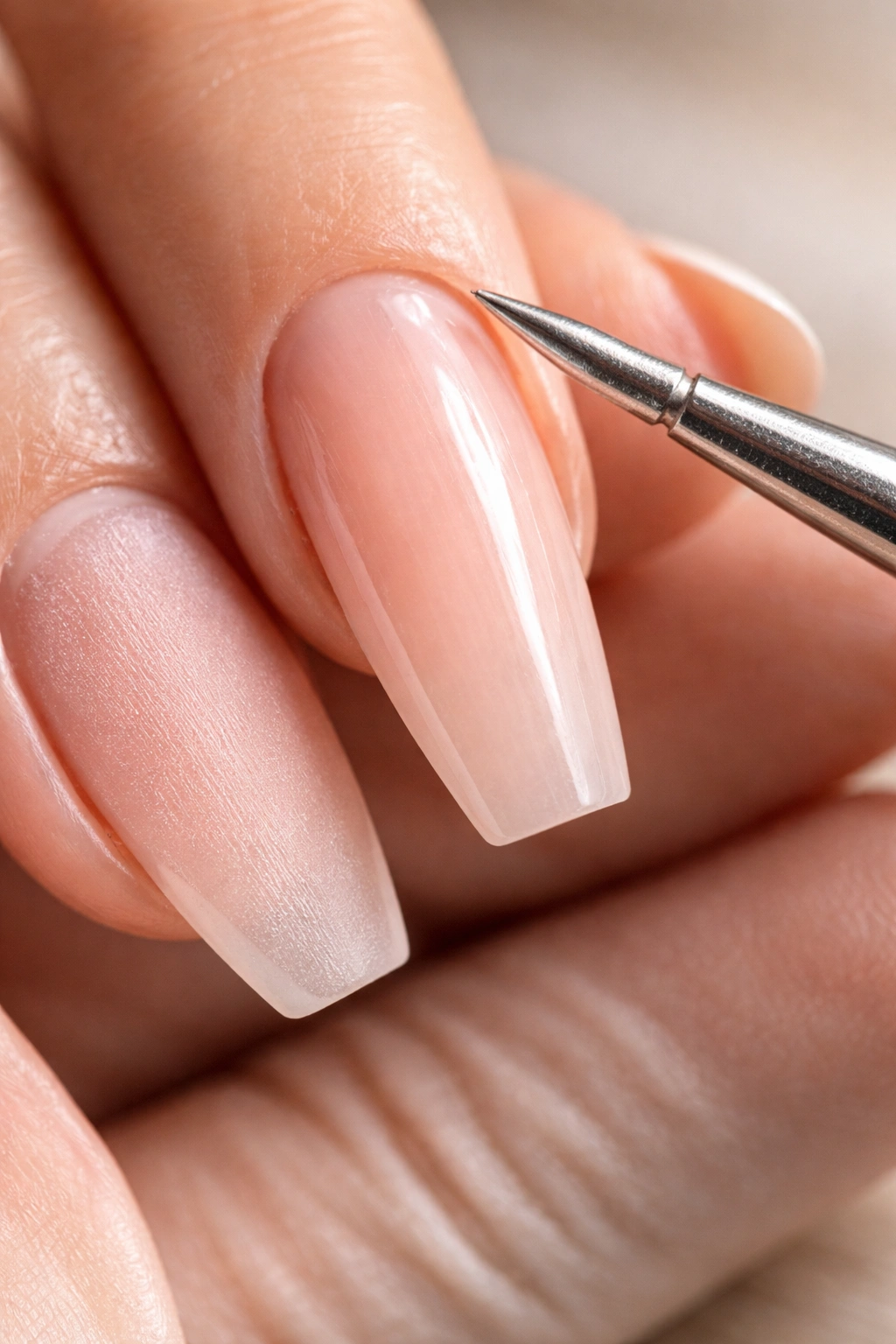
Red does not forgive lazy prep. Pale shades can blur over a small ridge or a slightly fuzzy cuticle line. Red will put a spotlight on both.
Start with the cuticle area. Any hanging skin around the base of the nail can make even a salon-fresh manicure look rough by day two. A clean push-back, trimming only what lifts cleanly, and a wipe with dehydrator makes a bigger difference than extra nail art.
Surface prep is next. If your nail plate has ridges, use a ridge-filling base or a builder base floated thinly over the nail. On longer ballerina sets, cap the free edge with both color and top coat. That one step cuts down tip wear, which matters a lot with bright reds.
Watch the sidewalls.
The taper has to match on both sides, or the red will make the whole nail look crooked. Before color goes on, look straight down the finger—not from above—and check whether the tip sits centered with the finger, not drifting left or right.
For home care, keep these basics in rotation:
- Cuticle oil twice a day to stop lifting around the edges
- Gloves for cleaning so dark shades stay glossy longer
- A thin layer of top coat every 5 to 7 days if you wear gel-like regular polish
- Non-acetone remover for tiny cleanup around the sidewall if red smudges show up
Now for the fun part.
1. Bright Cherry Gloss
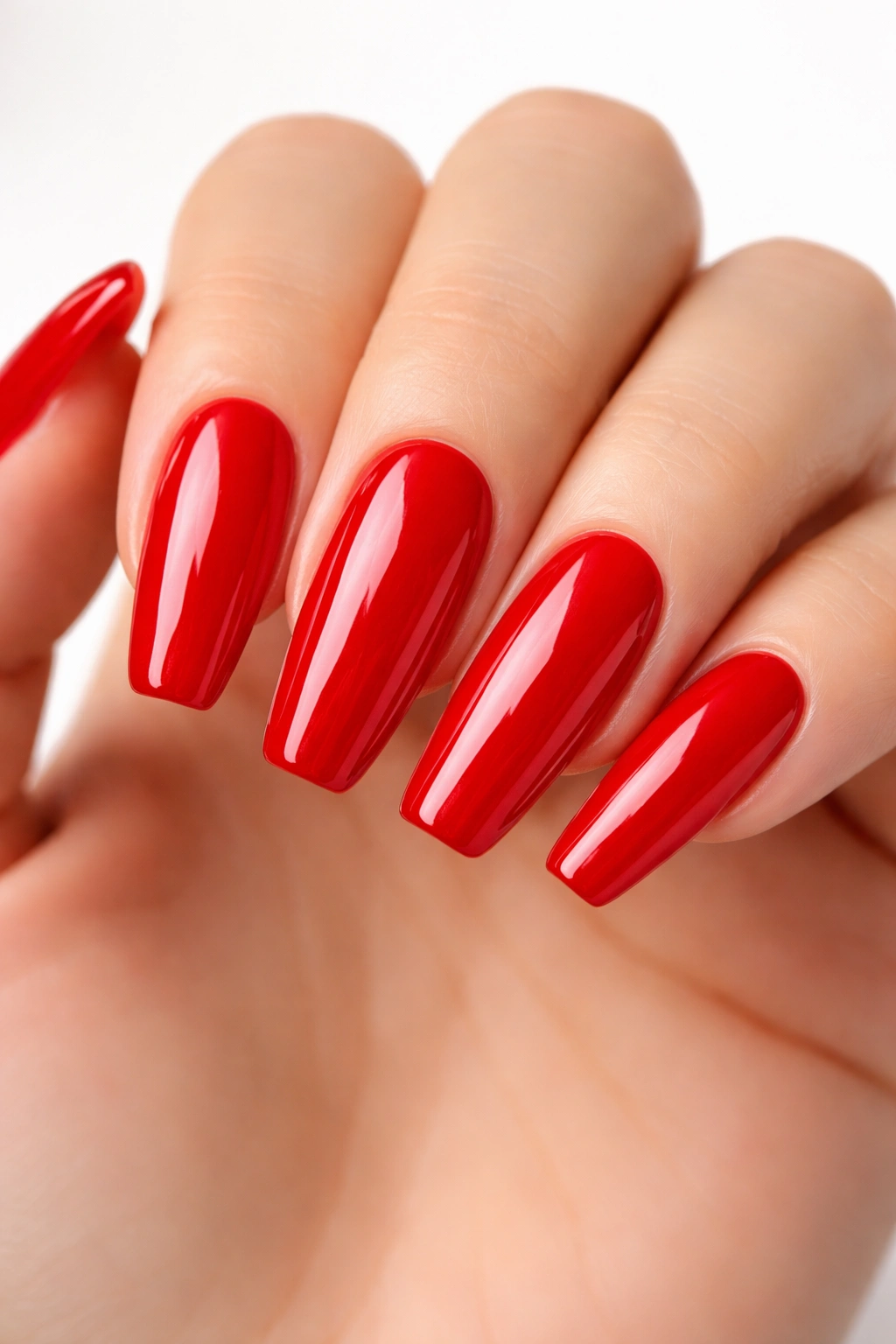
Nothing says “I meant to choose red” like a bright cherry gloss on a clean ballerina shape. This is the red that reads instantly across a room. No shimmer, no art, no apology. It works because the color is crisp and the shape keeps it from turning cartoonish.
Why it hits so fast
Cherry red sits in that sweet spot between blue-red and true red. It has enough brightness to feel fresh, but it still looks grown up when the polish is fully opaque. Two thin coats over a neutral pink base usually give the smoothest result. One thick coat tends to pool at the cuticle and leaves bald patches near the sidewalls.
Quick salon notes
- Ask for a medium-length ballerina with a tip no wider than the nail bed.
- Choose a glassy top coat, not a soft satin finish.
- Keep the surface plain; chrome, glitter, or stones can fight with this shade.
- Bright cherry looks cleaner when the cuticle line is rounded and tight.
My take: if you only wear red once in a while, start here. It gives you the full effect of red ballerina nails without getting too dark or too themed.
2. Poppy Red Micro-French
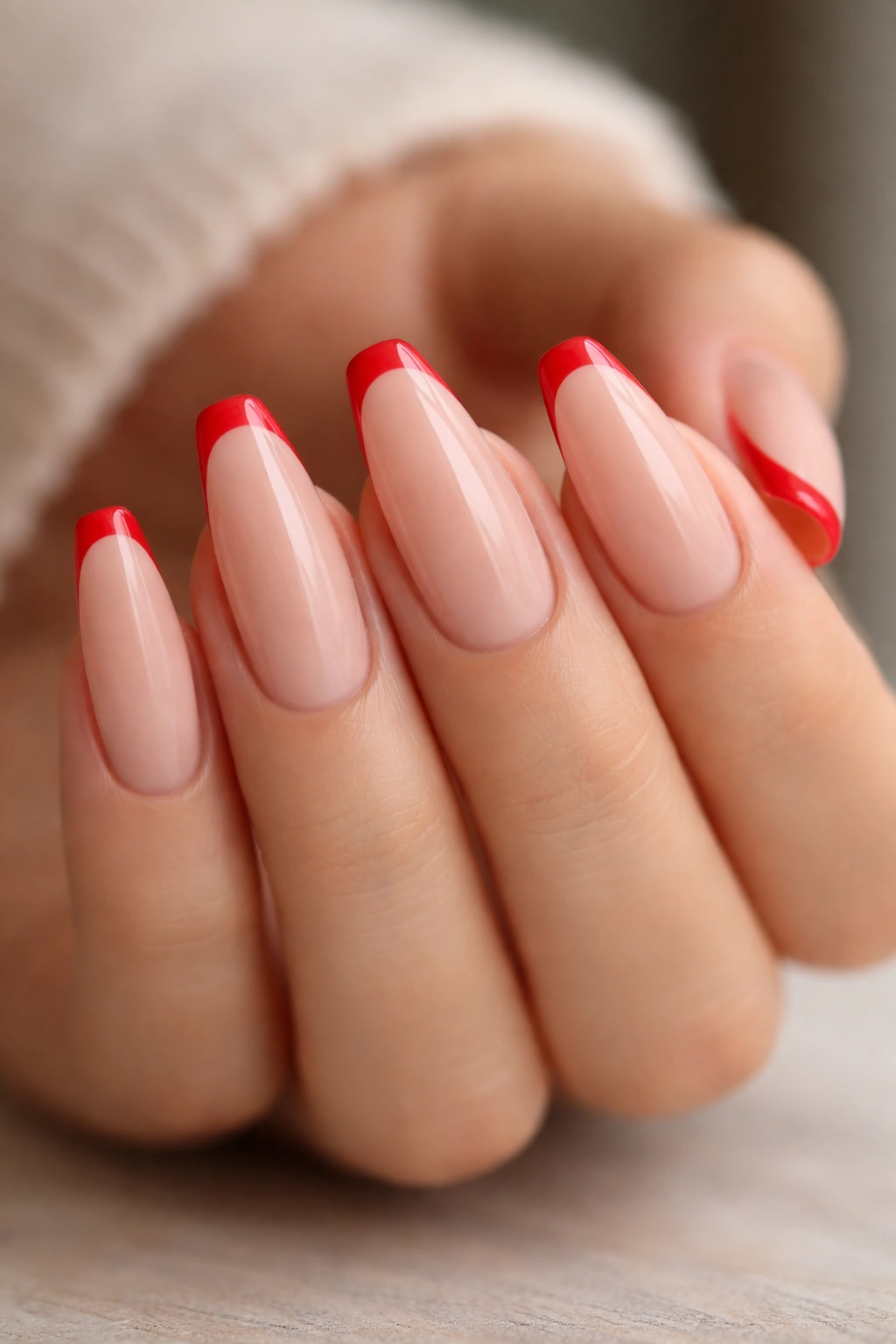
A poppy red micro-French can look sharper than a full red set. That sounds backward until you see how a thin line of bright color on a nude base stretches the nail. The ballerina shape does the rest by keeping the tip flat and slim.
This design lives or dies by proportion. The tip should sit around 1 to 2 mm thick, not a chunky smile line. Any heavier, and the manicure starts to lose that lean, precise look that makes a micro-French worth doing in the first place.
Poppy red has a touch more orange than cherry. That warmth makes the tiny tip stand out without looking cold or formal. On shorter ballerina nails, it can fake extra length because the eye reads the nude base first and the red second.
You also get easier grow-out. Full red near the cuticle shows a gap sooner. A nude base with a red tip buys you more time between fills, which matters if you like extensions but do not want a fresh appointment every two weeks.
Skip extra detail here. A tiny red tip is already the point.
3. Tomato Red Jelly
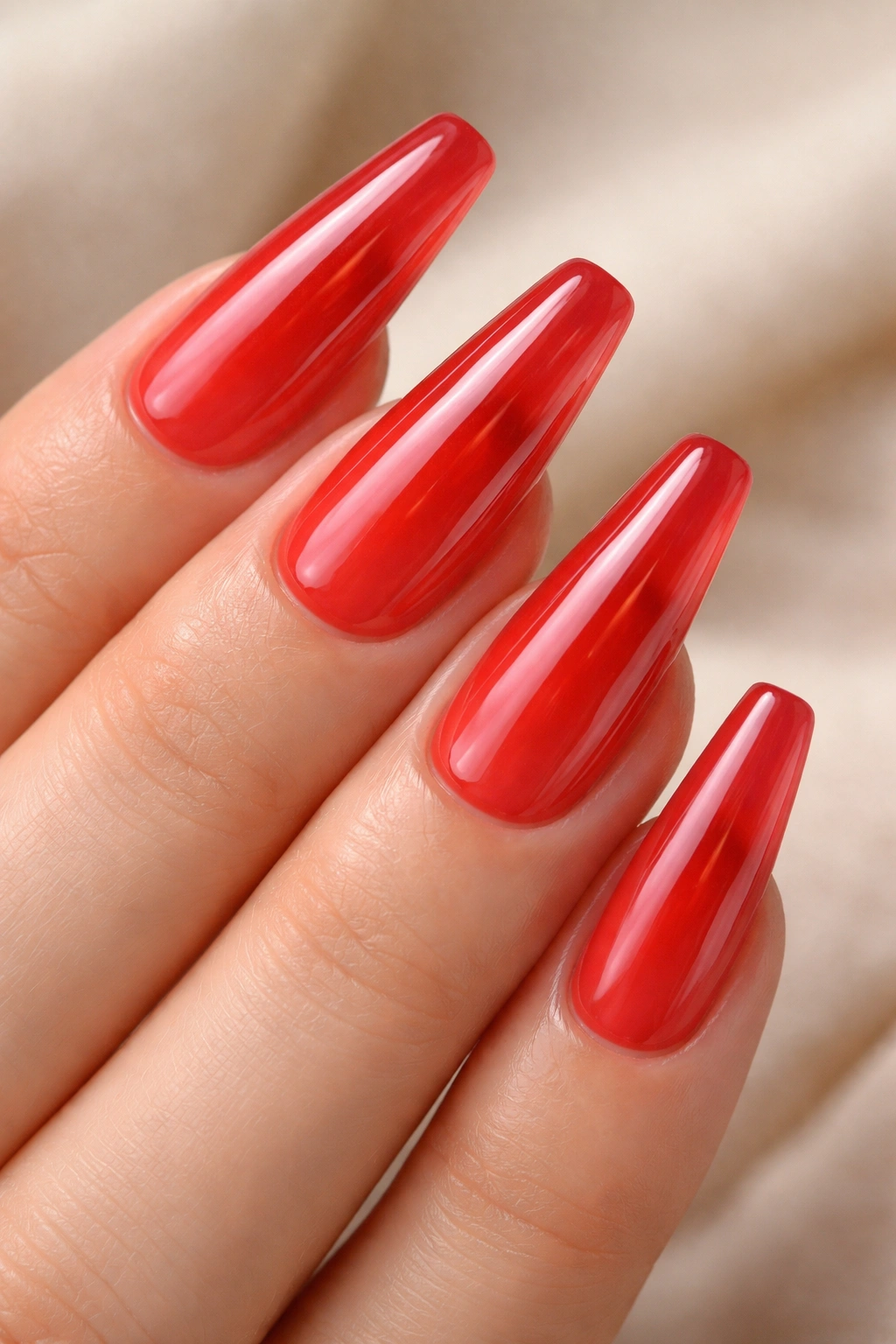
Why does a tomato red jelly look so much fresher than a standard cream polish on some hands? Light. That semi-sheer finish lets light move through the color instead of bouncing off a solid painted wall, so the nail looks juicy rather than dense.
Tomato red leans warm and bright, but it has a softer edge than fire-engine red. Three sheer coats usually look better than two. The first coat can look streaky and wrong—ignore that. By coat three, the color settles into a glossy candy layer with a bit of depth underneath.
How to wear it without patchiness
If your natural nail line is uneven, put down a sheer milky pink base first. That keeps the free edge from showing through in a distracting way. On extensions, jelly red looks strongest over a smooth builder surface because bumps under translucent color stand out.
This shade also suits a slightly shorter ballerina length. On long nails, jelly can start to feel too playful unless you pair it with a hard-gloss top coat and a precise file. On short-to-medium tips, it looks clean, quick, and a little addictive.
4. Candy Apple Chrome
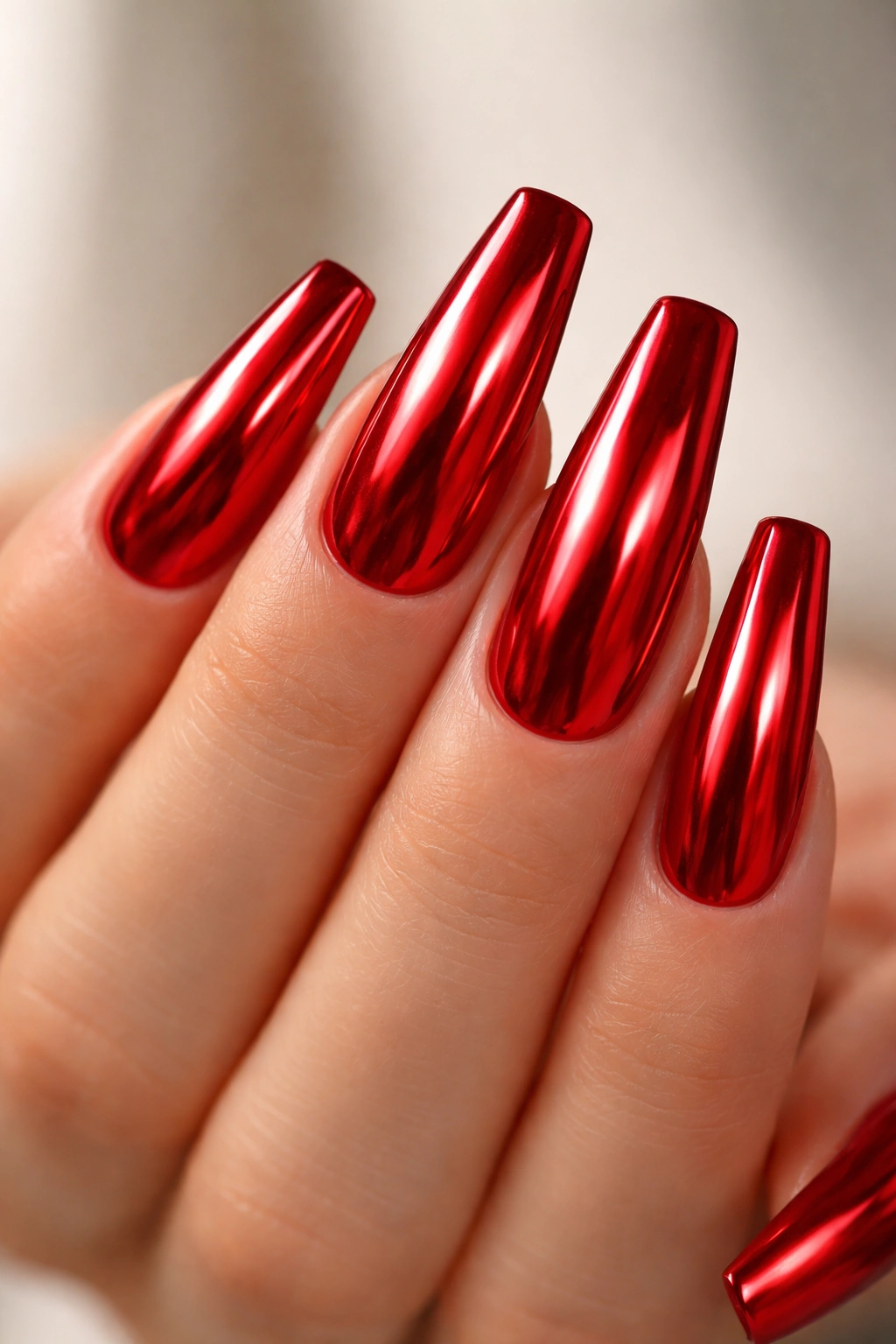
Under direct light, candy apple chrome has a mirror flash that plain red polish cannot fake. It’s the nail version of a lacquered sports car hood—slick, bright, and impossible to ignore.
The base color matters. You want a clear, saturated candy-apple red, not a muddy red-brown, under the chrome powder. A fine silver-red chrome on top of that base gives the nail a molten finish without turning it fully metallic.
A few details make or break this look:
- Use a no-wipe gel top coat before rubbing in chrome powder.
- Keep the chrome layer thin; thick chrome can dull the red underneath.
- Medium or long ballerina nails show the reflected light better than short ones.
- Ask for a smooth apex because reflective finishes reveal dips fast.
I like this design when the shape is plain and the length does the talking. No crystals. No glitter ombré. Chrome already carries enough visual weight. Too many extras, and the set starts looking noisy.
5. Coral-Red Fade with Nude Base
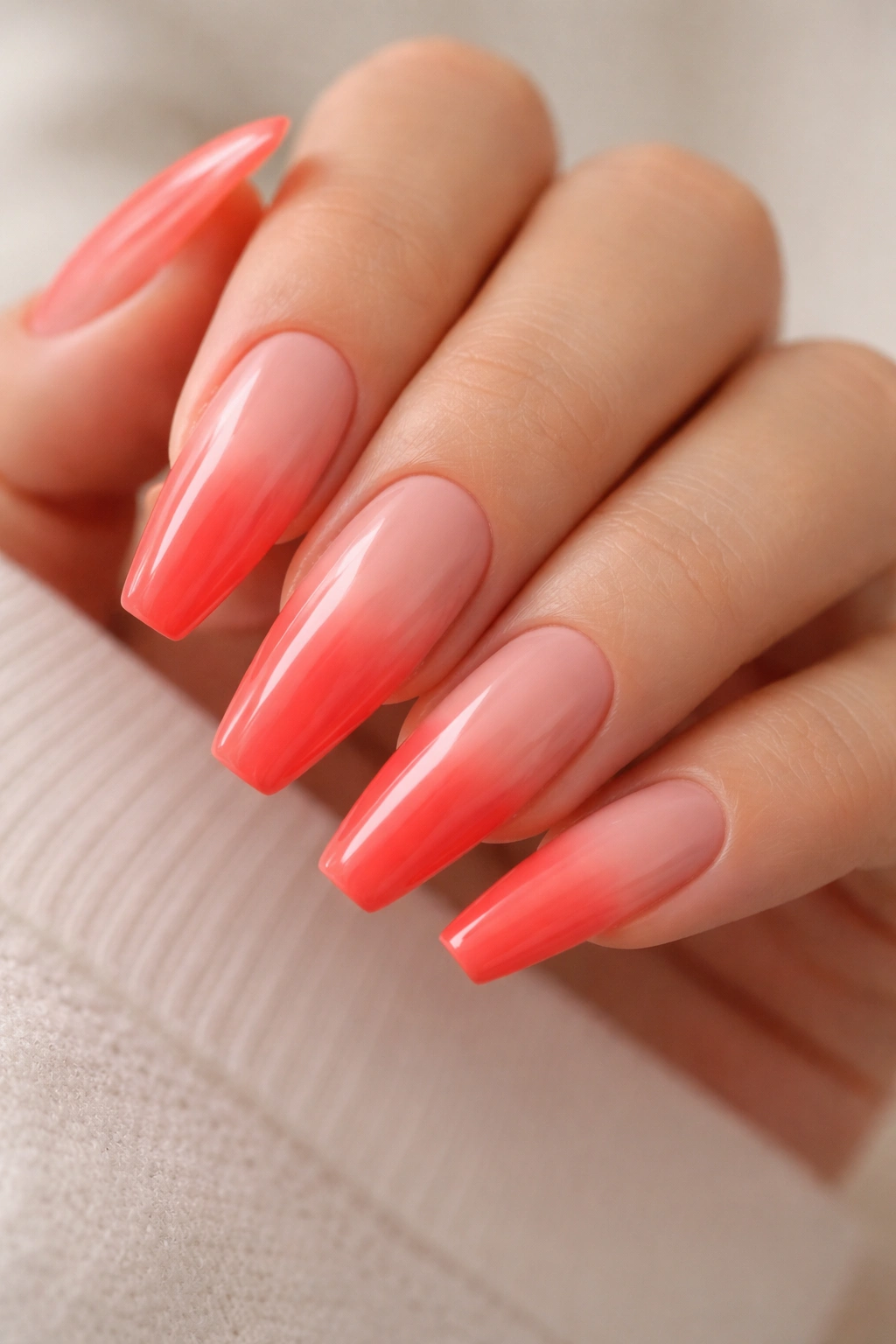
Coral-red on a ballerina shape can go sweet in a hurry, which is why I prefer it as a fade instead of full coverage. Start with a nude or sheer pink near the cuticle, then let the coral-red build toward the tip. You still get the brightness, though the soft base keeps the manicure from looking heavy.
This is one of the easier red looks to grow out. The blend at the bottom hides the line that shows when your natural nail starts pushing the product upward. If you wear extensions for three weeks at a time, that matters more than people admit.
Application needs patience. A sponge can work with regular polish, though the cleaner salon version usually comes from an ombré brush, blooming gel, or airbrush. Ask for the red to begin around the lower third of the nail, not halfway up. Too much nude and the set loses its red identity.
Coral-red also flatters tan and olive skin in a different way than blue-based red. The warmth echoes the skin instead of fighting it. You get brightness, though the nude base keeps the whole look softer at arm’s length.
No accent nail needed. The fade already does enough.
6. Scarlet Side-Swipe Tips
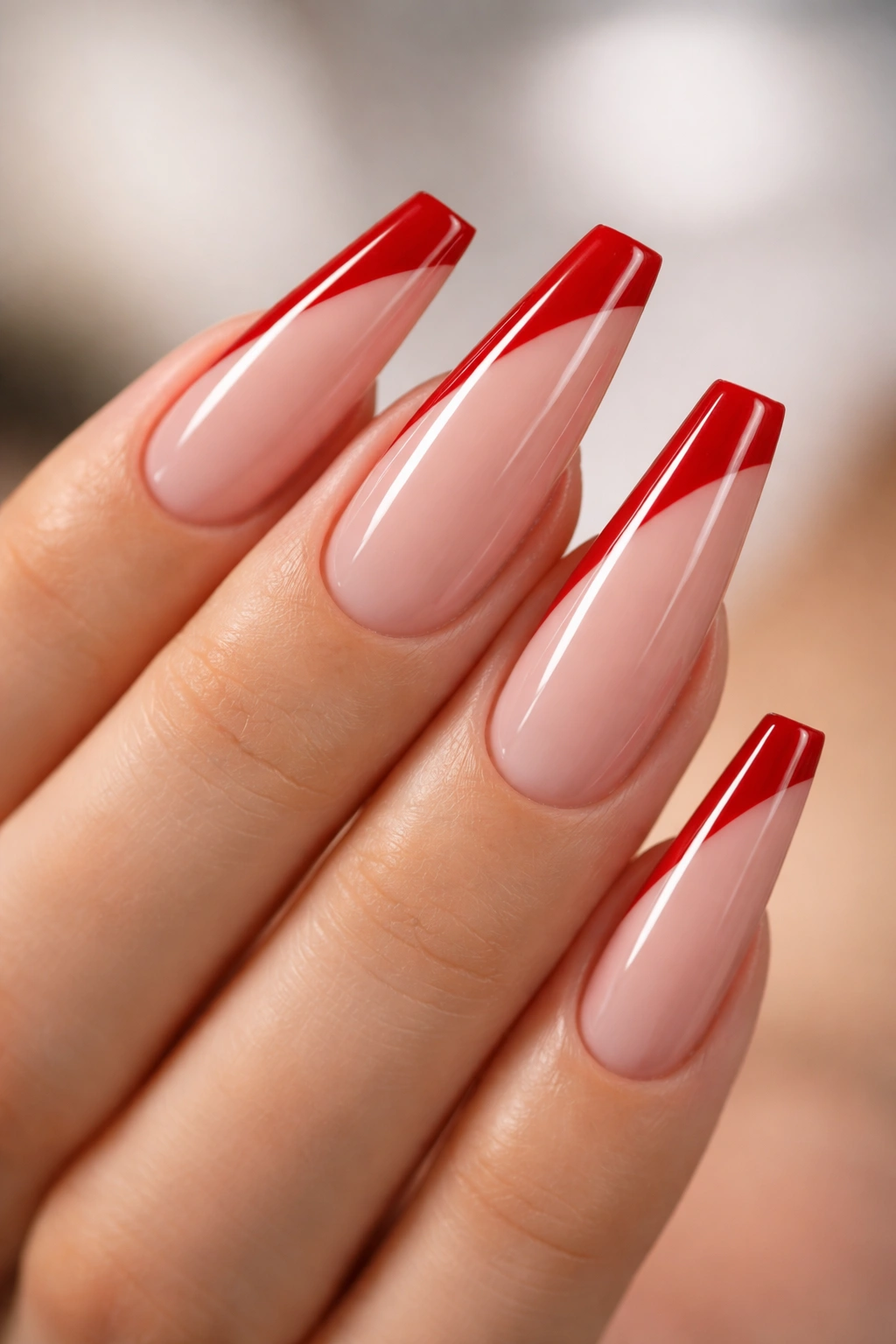
Unlike a straight French, a scarlet side-swipe tip creates movement. The red slices diagonally across the nail, which makes broad nail beds look narrower and gives the ballerina shape a sharper line without adding length.
The angle matters. A diagonal around 30 to 40 degrees usually looks clean. Too shallow and it reads accidental; too steep and the design starts to look like a color block from an old salon poster. I’d keep the base either sheer nude or milky beige so the scarlet stays the focus.
This style suits people who want red, but not wall-to-wall red. It also photographs better than some full bright sets because the diagonal line breaks up the color and makes the nail shape easier to read.
Who should skip it? Anyone whose sidewalls are already uneven. A side-swipe design will trace that unevenness like a highlighter pen. If your tech is strong with structure and line work, though, this one looks precise and expensive with minimal effort on the surface.
7. Fire-Engine Red Cream
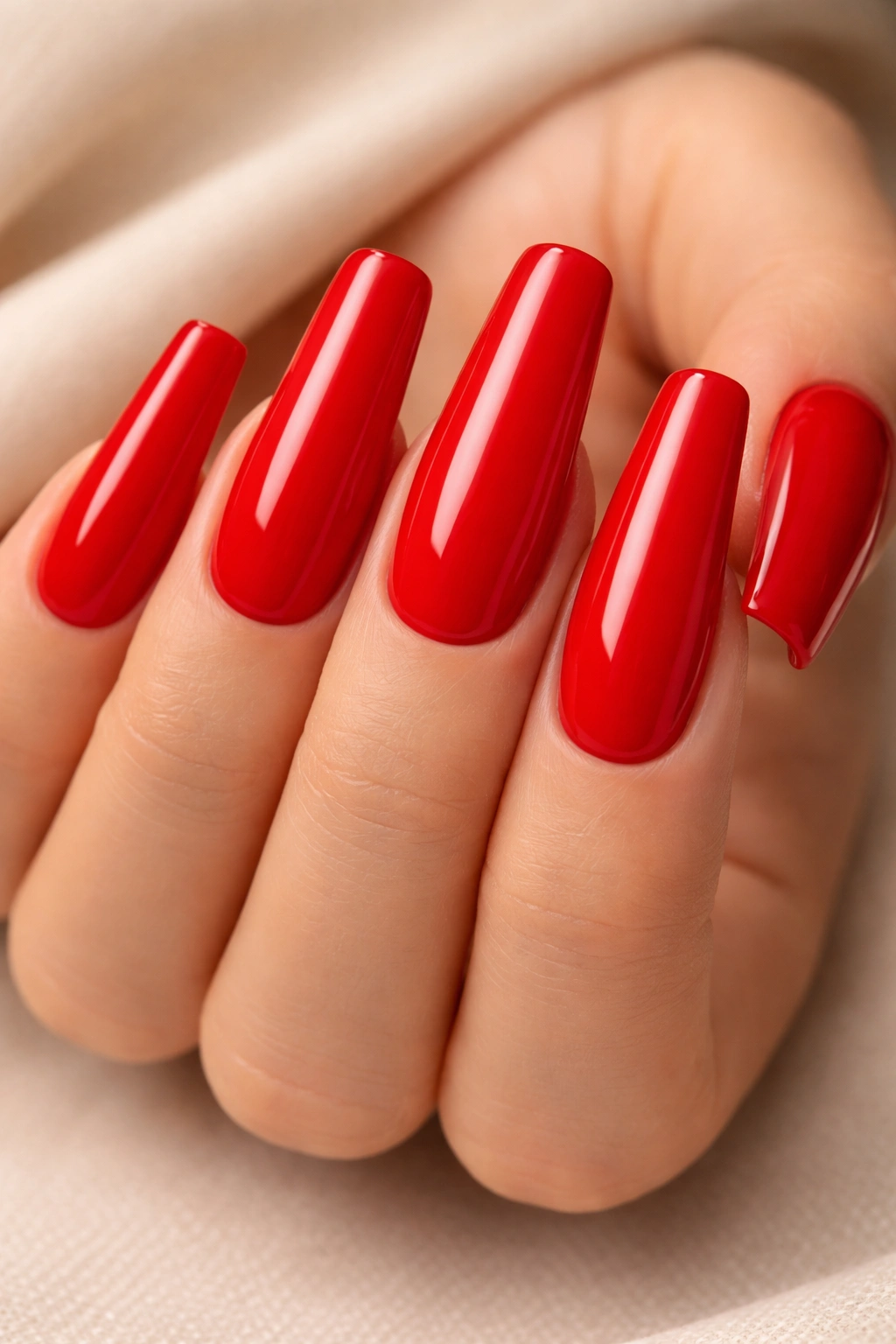
Fire-engine red cream is blunt in the best way. No shimmer to distract you. No sheer layer softening the impact. You get a flat, opaque red with enough brightness to feel bold and enough density to look intentional on a long ballerina tip.
What the cream finish changes
Cream polish throws all the attention onto color payoff and shape. Because of that, the nail surface has to be smooth. A ridge-filling base or builder layer under the color is not optional here. Skip it, and every small bump reads through the finish once the light hits.
This is also one of the strongest picks for medium-to-long extensions. On short nails, fire-engine red can look abrupt. On a longer ballerina, the color has room to stretch out, and the flat tip stops it from looking too pointy or costume-like.
A good version of this set uses two medium coats, not one thick flood coat. You want the color dense, though still clean around the cuticle. Fire-engine red is the manicure I reach for when I want red to look graphic and almost editorial, minus extra design work.
8. True Red with Crystal Cuticle Accent
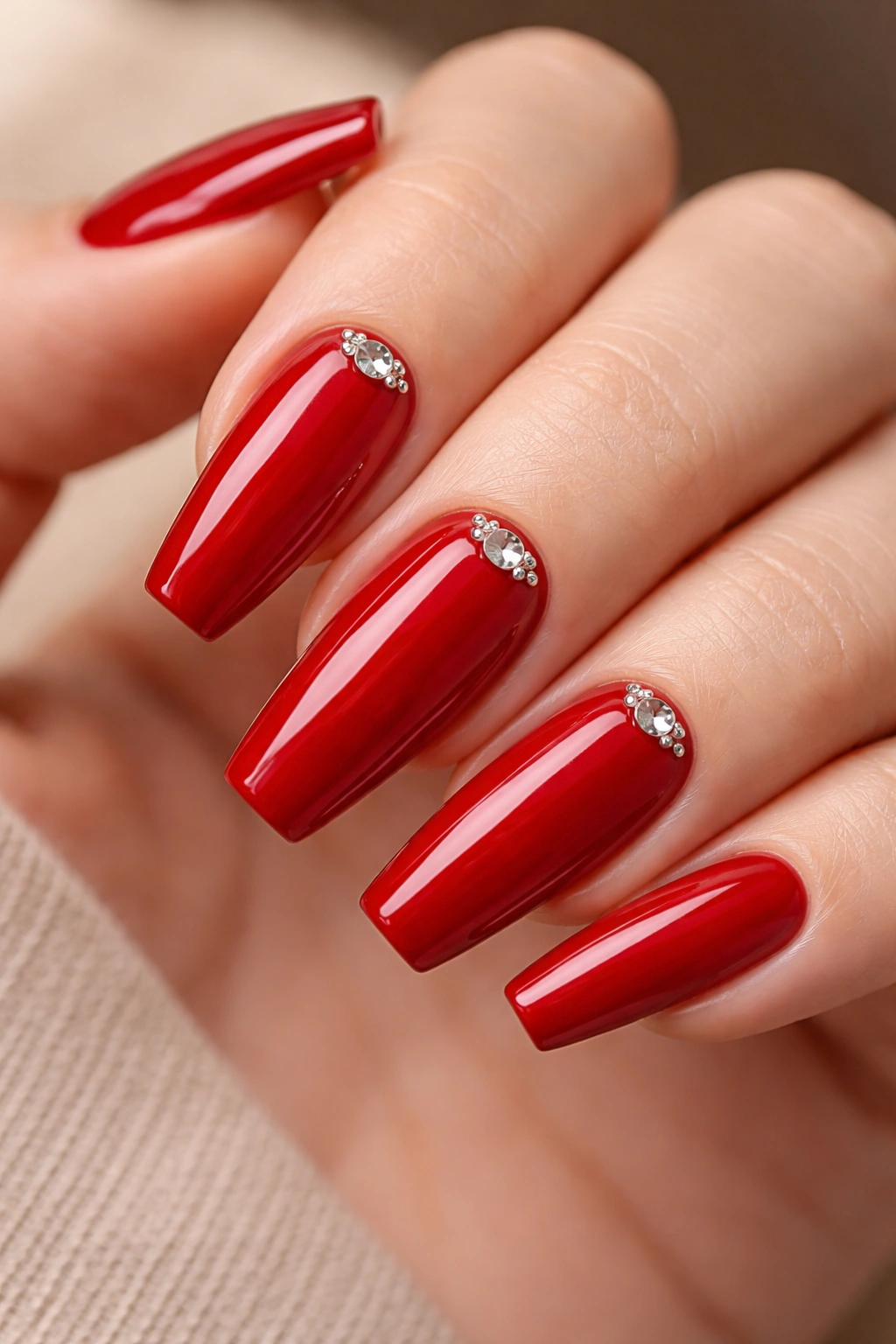
A single crystal cluster near the cuticle can push a plain true-red set into dressier territory without turning the nails into jewelry storage. That restraint matters. On ballerina nails, shape plus red plus stones can go too far fast.
I like three tiny crystals at the base of one or two nails per hand—usually the ring finger and thumb. More than that, and everyday wear gets annoying. Hair catches. Sweaters snag. One missing crystal ruins the whole balance.
Where the accent should sit
Place the stones tight to the cuticle curve, not floating in the middle of the nail. The arc at the base mirrors the natural half-moon and keeps the decoration looking placed on purpose. Pair the stones with a true red cream or gloss, not chrome. Reflective finishes plus crystals can start competing for attention.
If you want event nails but still need to type, cook, and live like a normal person, this is a smart compromise. The red carries the set during the day. The crystals wake up under evening light.
9. Ruby Cat-Eye
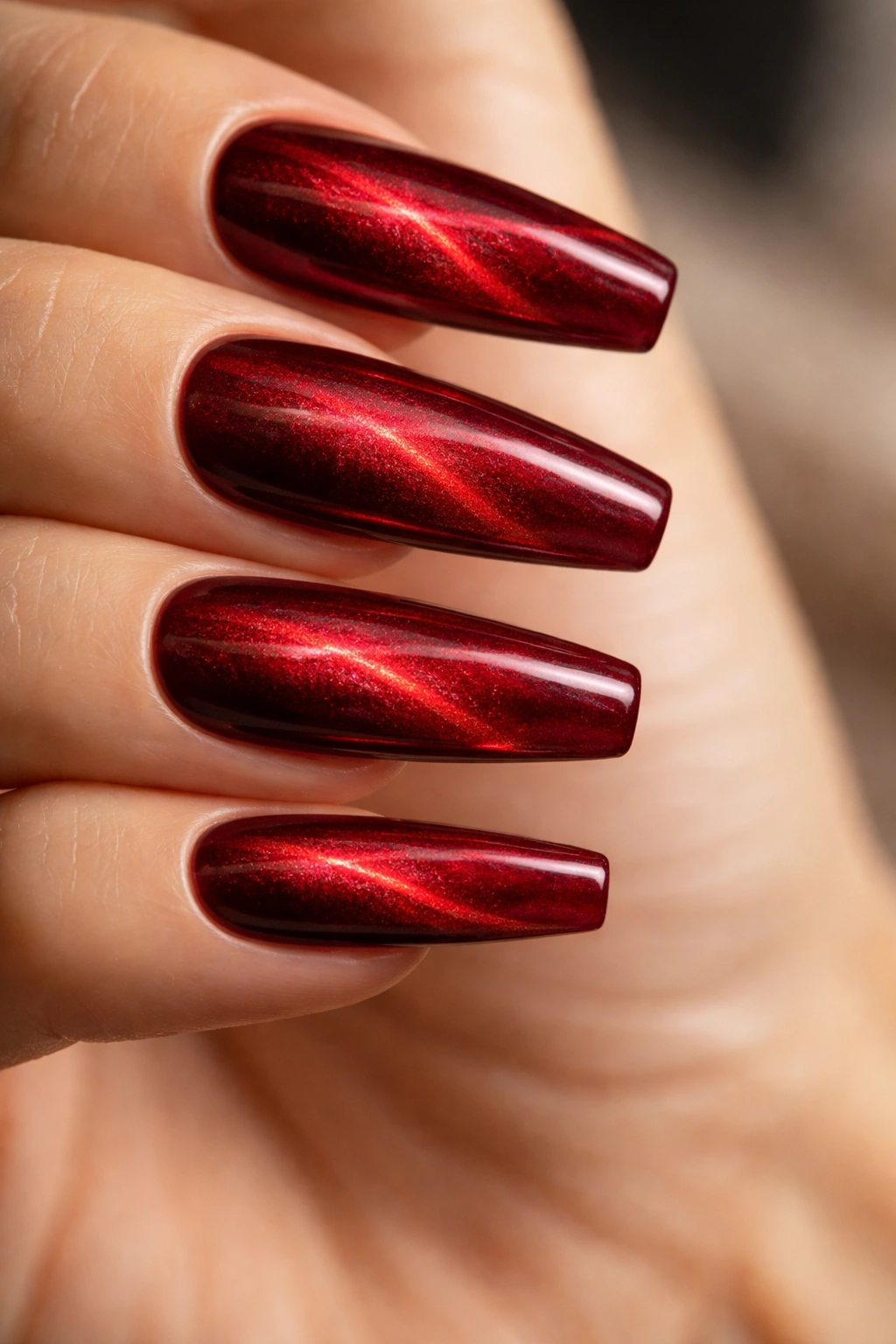
Ruby cat-eye is where red starts to pick up mystery. The color sits deeper than cherry or scarlet, and the magnetic shimmer moves when you tilt your hand, which makes the ballerina shape look longer because the eye follows the light trail down the nail.
You can wear cat-eye two ways. The classic stripe runs diagonally or vertically across the nail. The softer version uses the magnet to pull the sparkle toward the center, giving you a velvet glow instead of a hard beam. On red, I prefer the softer pull. It reads richer.
Application takes a steady hand. Each nail needs the magnet held in place for about 5 to 10 seconds before curing. Rush that part and the effect goes muddy. A black or dark red base under the cat-eye layer deepens the tone and gives the shimmer something to float over.
Ruby cat-eye suits evening better than daytime, though a medium-length set can still work in daily life if the rest of your look stays plain. That’s the trick with this one: let the nails be the luxury item and keep everything else quiet.
10. Cranberry Velvet Matte
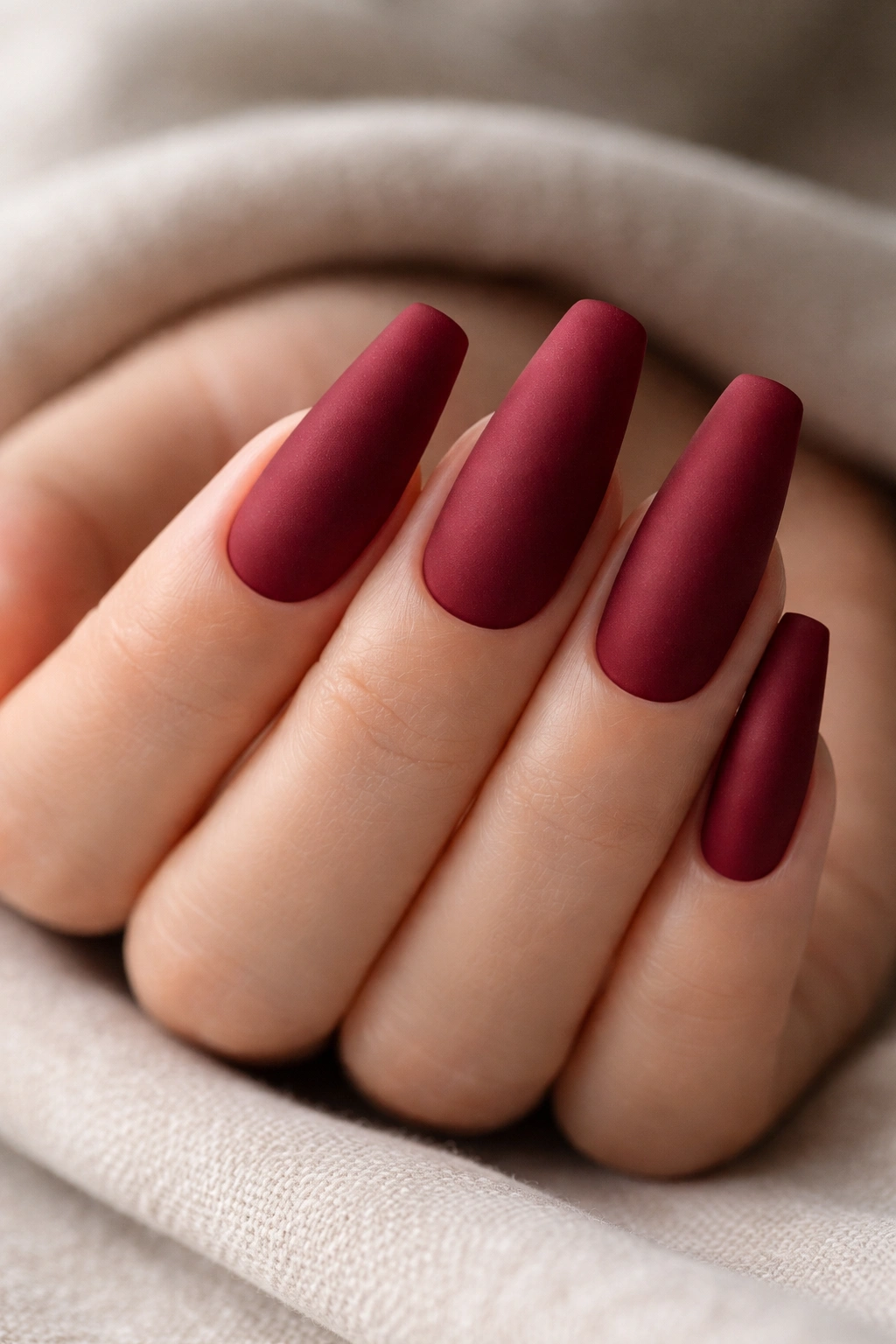
Matte cranberry feels softer than glossy ruby, though not softer in impact. The finish absorbs light, and the slightly cooler red gives the set a plush, almost fabric-like look on a ballerina tip.
What to watch for
Matte top coats show hand-cream marks, makeup residue, and tiny scratches faster than gloss. Dark cranberry hides some of that, though you’ll still want to wipe the nails with alcohol every few days if the surface starts looking dusty. A velvet-matte top coat usually looks smoother than a chalky one.
Who this shade suits
Cranberry has enough berry in it to flatter cooler skin and deeper skin without turning purple. On medium length, it looks calm and deliberate. On extra-long ballerina extensions, it can lean dramatic in a way that feels more fashion shoot than everyday office.
- Pair it with gold rings if you want warmth.
- Pair it with silver if you want the berry undertone to stand out.
- Keep nail art minimal; matte already changes the texture story.
- Refresh the top coat when the tips start going shiny.
This one is quieter than bright red, though it still has bite.
11. Brick Red Tortoiseshell Mix
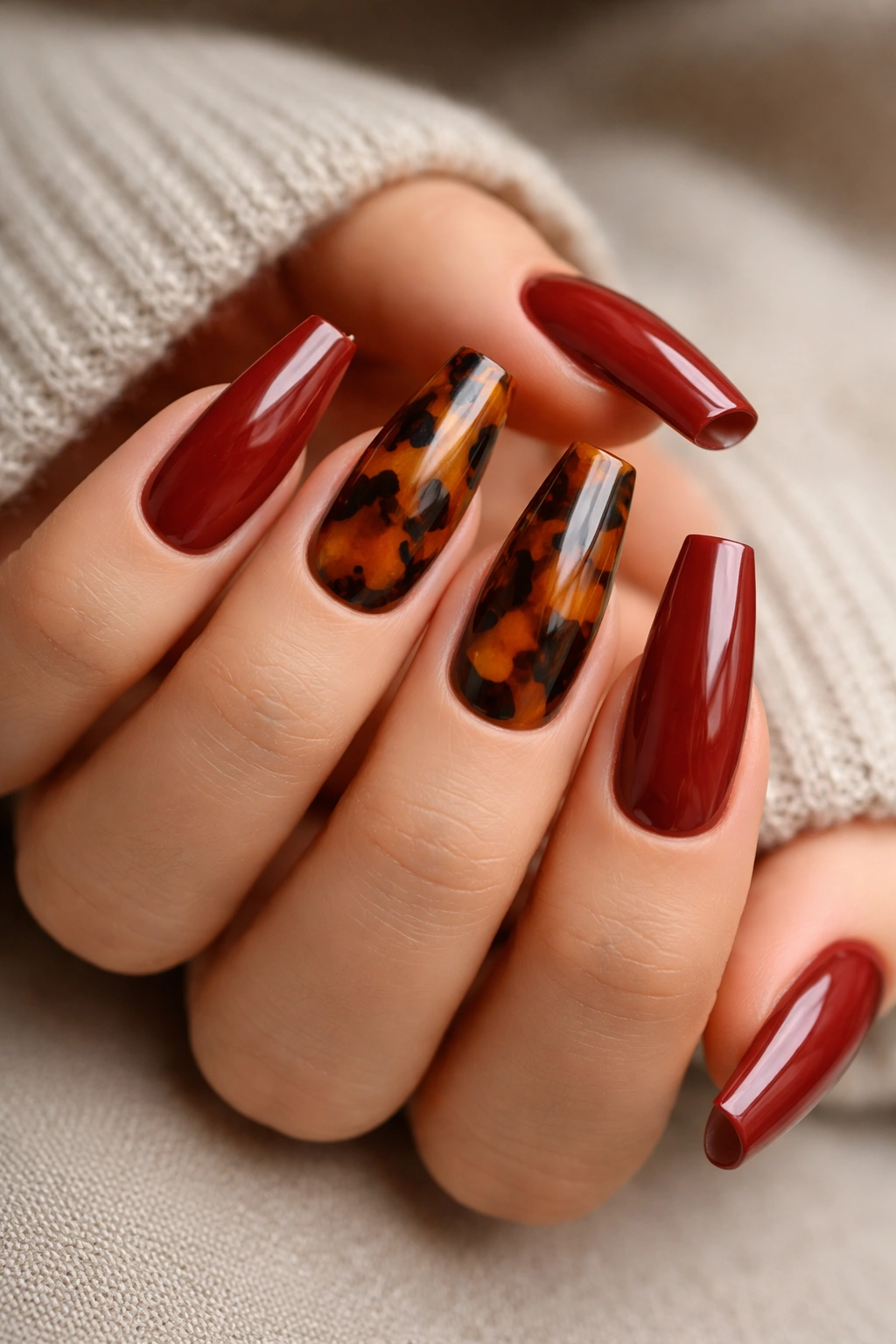
Brick red and tortoiseshell belong together. The warmth is similar, though the pattern breaks up the solid color enough that the manicure feels layered instead of flat.
I like this as three brick-red nails and two tortoiseshell accent nails on each hand. Any more pattern than that and the set starts drifting away from red ballerina nails into full art territory. The appeal here is the contrast between the dense earthy red and the amber-brown translucence of tortie.
The accent nails need depth to look right. A flat brown blob with black spots will not do it. You want honey, amber, caramel, and smoke layered in loose patches, then sealed under gloss so the pattern looks like it sits under glass. Brick red next to that has enough brown in it to connect without disappearing.
This is one of the richer mid-depth reds on the list. It does not shout from a distance. Up close, though, it has much more personality than a plain cream manicure.
12. Chili Red Negative Space Lines
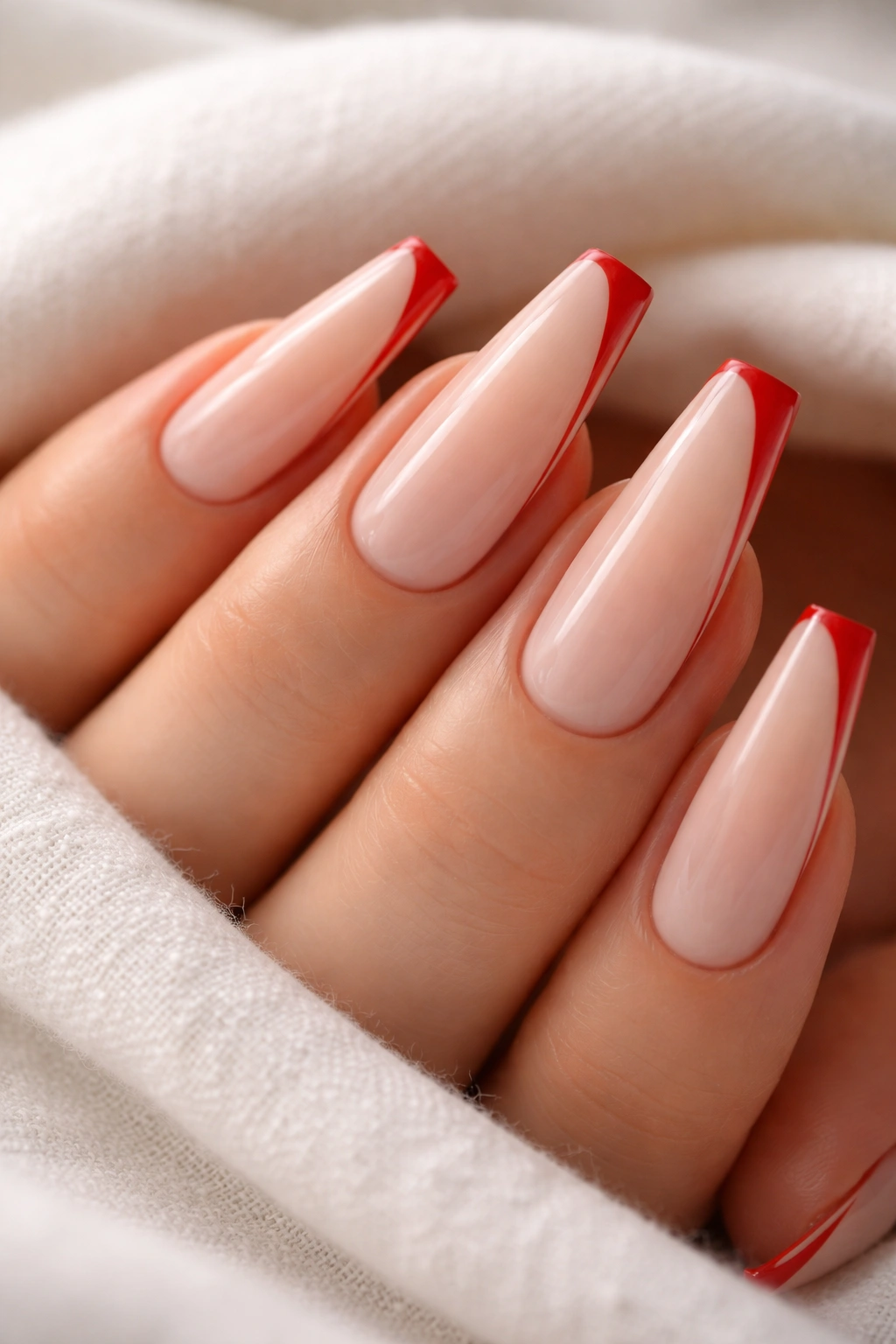
A full red manicure isn’t the only way to wear red on ballerina nails. One or two chili-red negative-space lines can feel cleaner and more expensive than filling the whole nail, especially if you like sharper, graphic designs.
The base should stay sheer—milky nude, soft beige, or a clear pink—and the red should trace something intentional. A sidewall line, a split diagonal, or a slim frame near the tip works better than random swirls. Ballerina nails already have geometry. Lean into it.
How to ask for this at the salon
Request fine liner-gel detailing, not thick painted stripes. The line should sit narrow enough to look crisp from three feet away. On medium-length nails, one red line per nail is enough. Two lines can work if they echo the taper and stop before the cuticle instead of crowding it.
Chili red has that slightly peppery warmth that keeps the negative space from looking cold. You get a red manicure with air in it, and that space is what makes the design feel deliberate rather than unfinished.
13. Garnet Glitter Ombre
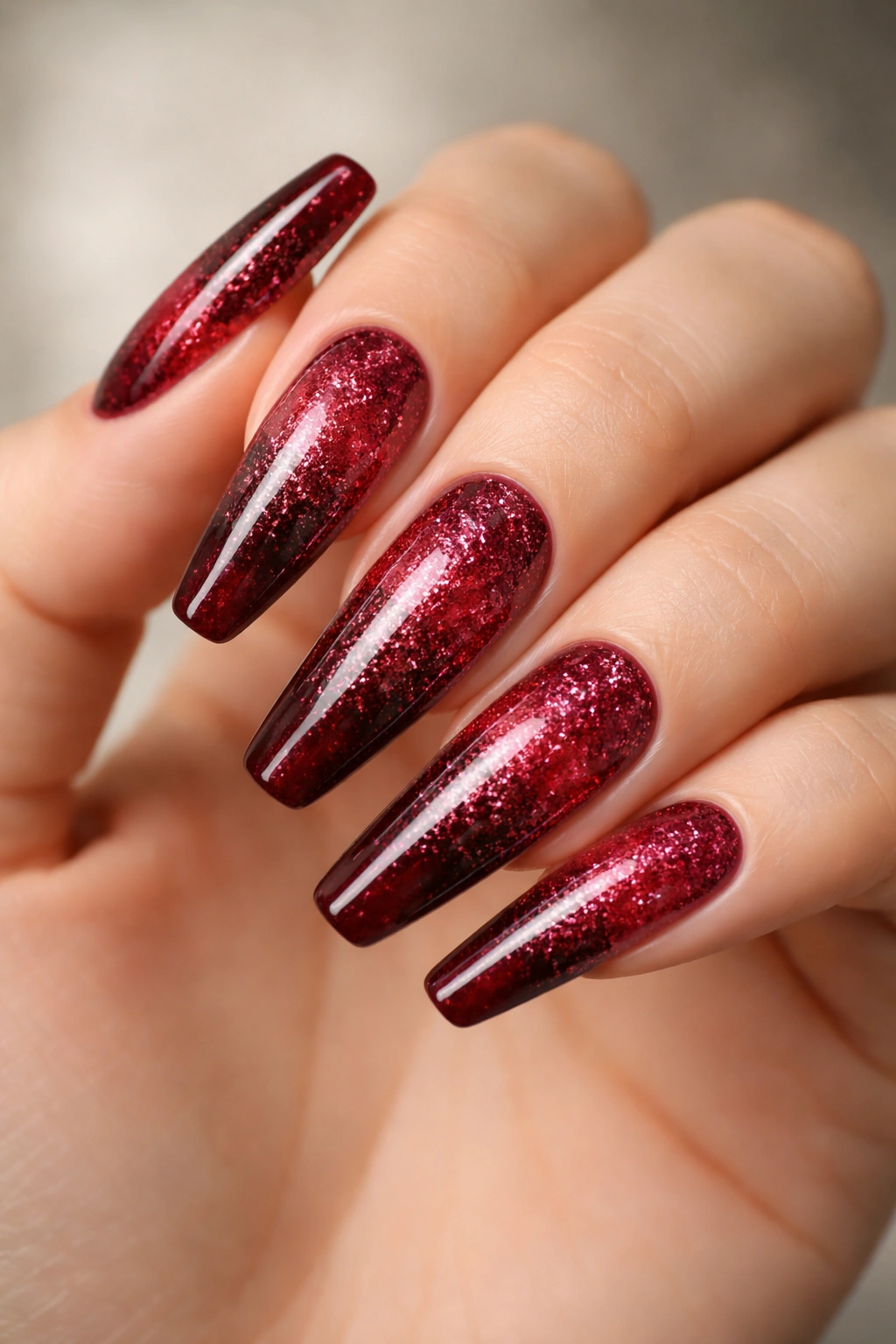
At arm’s length, garnet glitter ombré looks like the light is gathering at the tip of the nail. Up close, you see the gradient: dense sparkle near the free edge, then a softer fade into a deep red base.
This is where glitter earns its keep. A full glitter nail can flatten the shape. A tip-heavy ombré keeps the ballerina silhouette readable because the nail still has a clear base color underneath. Garnet works well because it sits darker than classic red glitter and doesn’t turn pink.
A strong version of this design usually has:
- A wine-red or deep garnet base
- Fine glitter first, then a few larger reflective pieces near the tip
- A smooth encapsulated layer so the surface stays glassy
- Medium-to-long nails so the fade has room to breathe
I would avoid pairing this with chunky stones or chrome powder. One reflective idea is enough. Done cleanly, garnet glitter ombré looks rich without crossing into pageant territory, and that line is thinner than people think.
14. Burnt Red Croc Texture
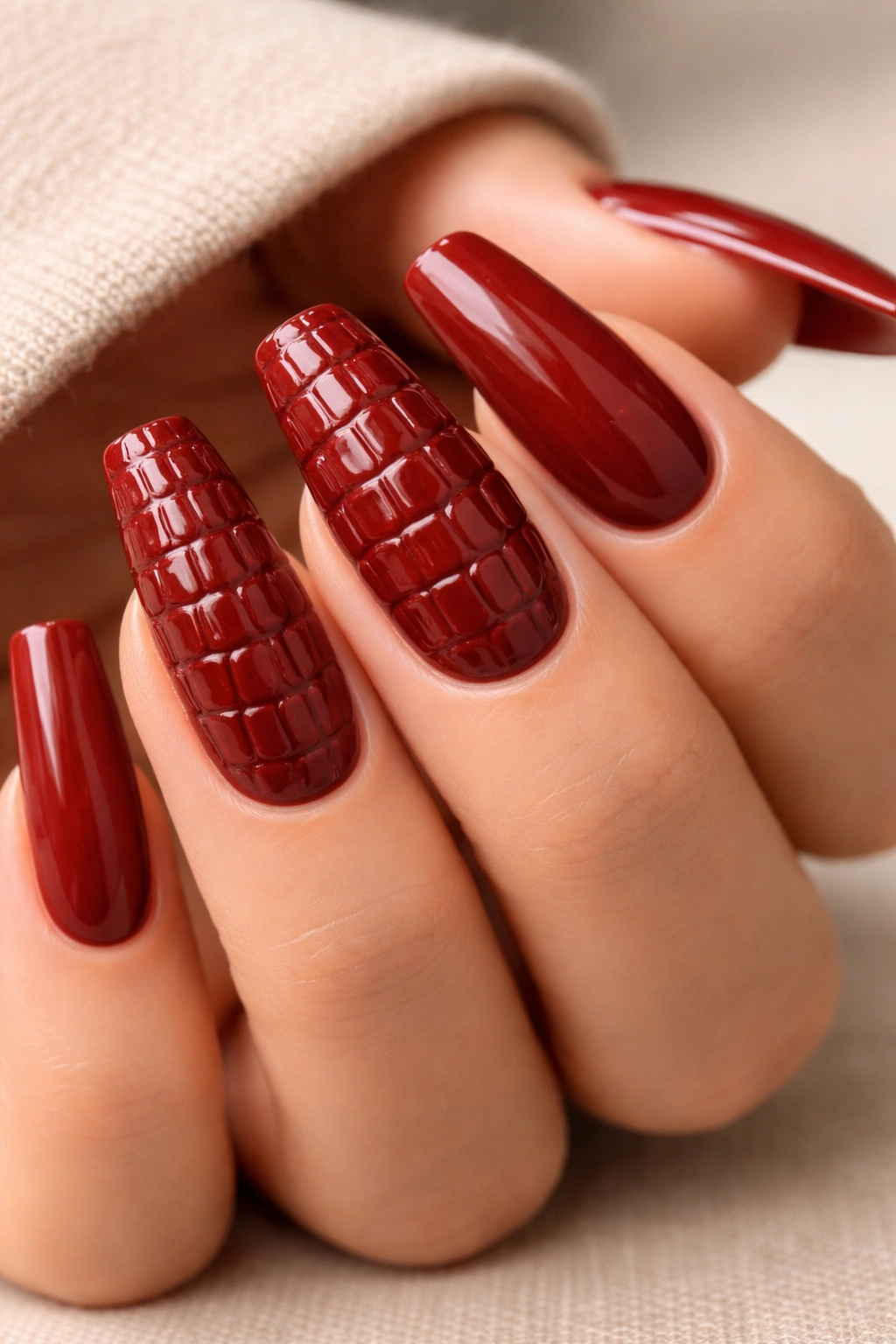
Burnt red croc texture is not for shy days. The raised pattern catches shadow across the nail and gives the color a dry, leather-like mood that flat gloss never can.
You do not need all ten nails textured. Two accent nails per hand—middle and ring, or ring and thumb—usually carry the idea. The rest can stay in a matching burnt red gloss or soft matte. That contrast keeps the set readable and stops the texture from swallowing the shape.
Creating the pattern takes product control. Some techs build it with clear gel over color, curing each section to hold the lifted “scale” effect. Others stamp or sculpt a flatter version. The raised gel method looks better on ballerina nails because the long, tapered surface gives the croc pattern room to stretch.
Burnt red sits between brick and burgundy, which is why it works here. Brighter red would make the texture look novelty-heavy. Deeper red-brown grounds it. If you like fashion-heavy nail sets and still want red at the center, this one scratches that itch.
15. Merlot Aura Blend
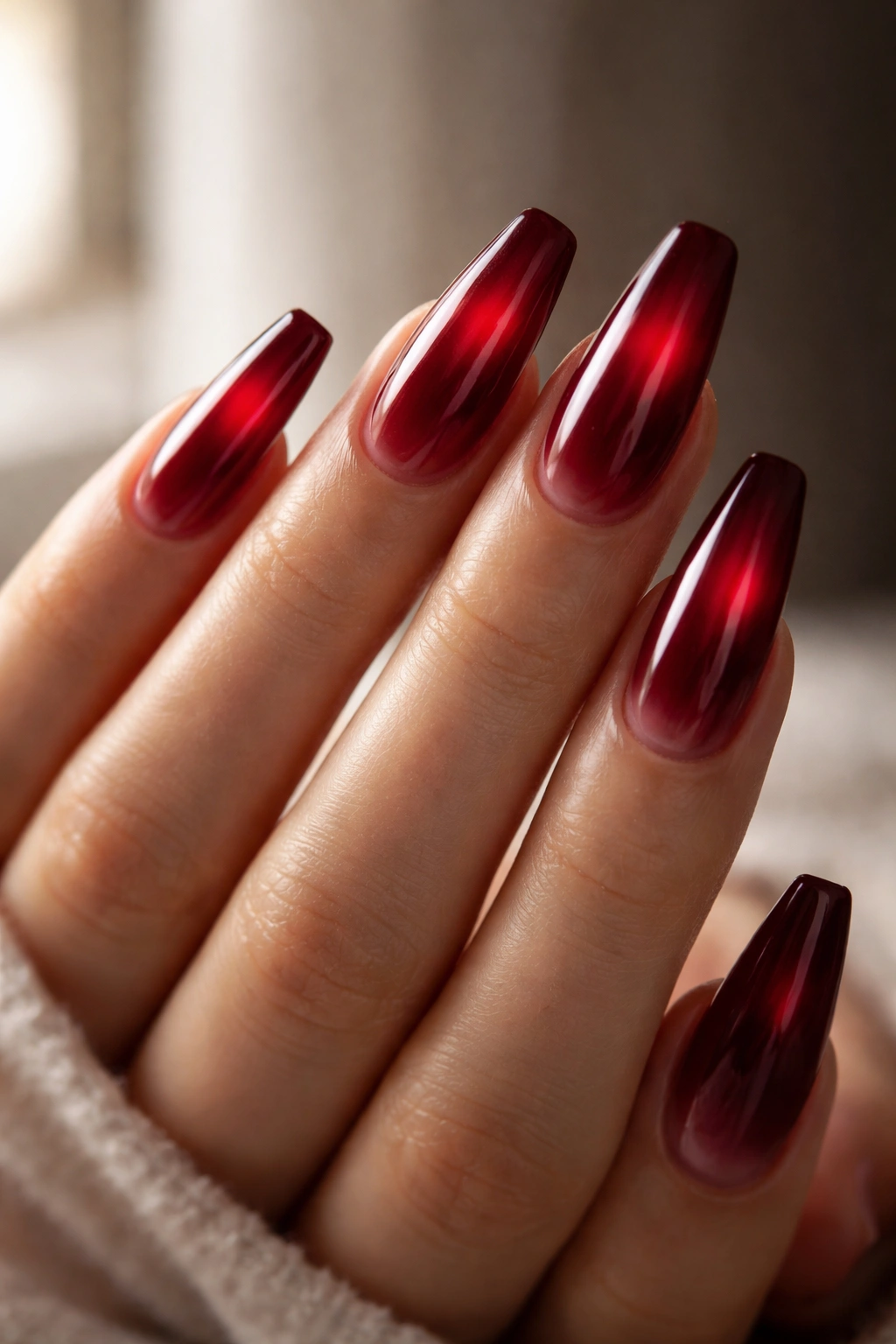
Unlike an ombré, aura nails put the color in the center instead of fading from base to tip. On a ballerina shape, that central merlot glow makes the nail look longer because the darker middle draws the eye inward.
The base can be sheer pink, dusty rose, or a smoky nude. Then the merlot gets airbrushed or blended into a soft oval at the center, fading out before it reaches the sidewalls. That placement matters. If the dark color touches every edge, you lose the aura effect and end up with a muddy fade.
Merlot is a smart choice because it carries red, berry, and brown at once. Lighter aura shades can look cute. Merlot looks moodier and more polished. On long ballerina nails, the center haze can almost mimic a gemstone under glass.
I’d keep the finish glossy here. Matte tends to flatten the soft blur, while gloss gives the blended center more depth. If you want red without a solid wall of pigment, aura nails are one of the more interesting ways to get there.
16. Deep Rose Wine French Fade
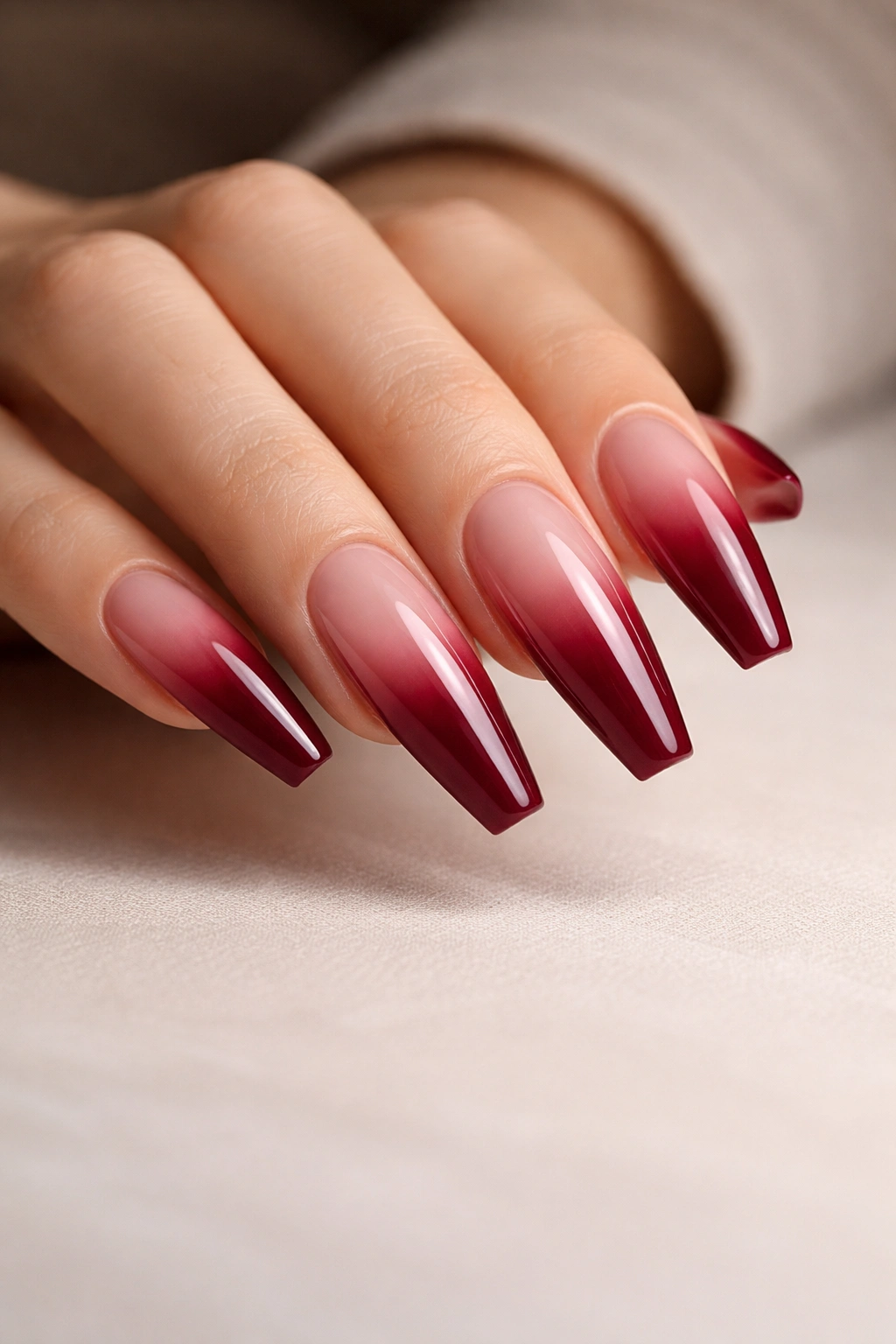
A French fade does not need white tips to read elegant. Swap the white for a deep rose-wine shade and the whole manicure turns warmer, darker, and more interesting on a ballerina shape.
This style suits anyone who likes a cleaner base near the cuticle but finds bright French tips too stark. The wine tone should start near the free edge and melt down about one-third of the nail, leaving the rest in sheer pink or nude. If the blend stops too abruptly, the set looks unfinished. If it travels too far, the nude disappears and the design loses contrast.
Deep rose wine lands in a useful middle zone. It’s darker than classic red but not as heavy as oxblood or black cherry. That makes it a good bridge shade if you want to move from bright reds into richer territory without jumping straight into gothic shades.
Long ballerina nails carry this look best. The shape gives the fade enough room to read. On shorter nails, I’d push the color closer to the tip and keep the blend tight.
17. Black Cherry Patent
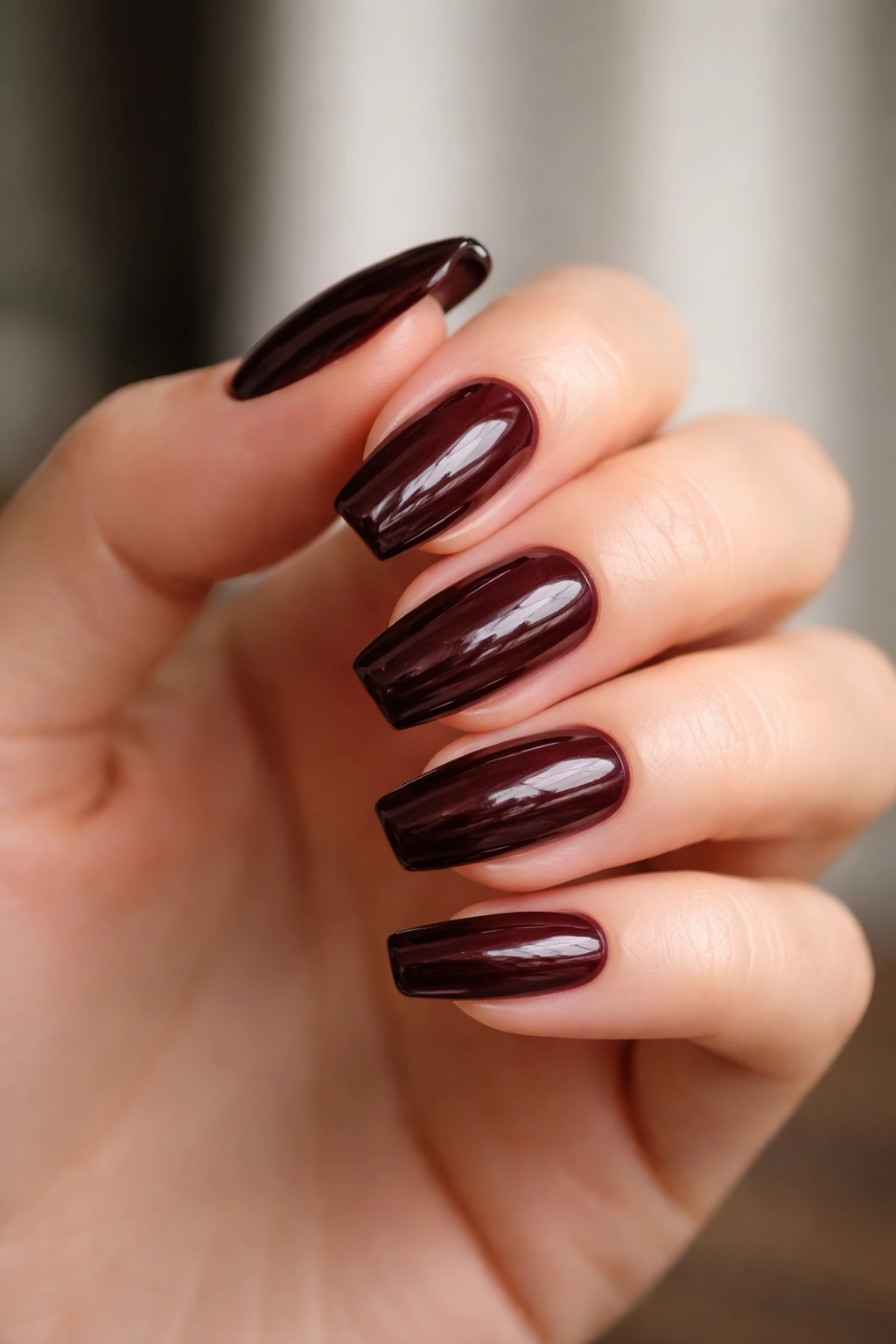
Why does black cherry keep coming back? Because it never reads the same in every light. Under daylight, you catch the red. In dimmer rooms, it looks almost black. That shift gives the manicure depth without needing art.
The patent part matters. A high-gloss top coat turns black cherry from dark polish into something that looks almost liquid. Matte kills the whole point. You want that wet, sealed surface that makes the red undertone surface when your hand moves.
Lighting changes the mood
Black cherry can look plum if the formula has too much purple. Ask for a blackened red or blood-wine base, not a berry-purple. Two dense coats usually give the best payoff. One thin layer leaves the color uneven, and three thick ones can bulk up the sidewalls.
This shade suits short, medium, or long ballerina nails, which is part of its appeal. On shorter lengths it feels polished. On long extensions it turns dramatic fast. If plain black feels too dead and bright red feels too loud, black cherry is the middle path with more personality.
18. Oxblood Matte
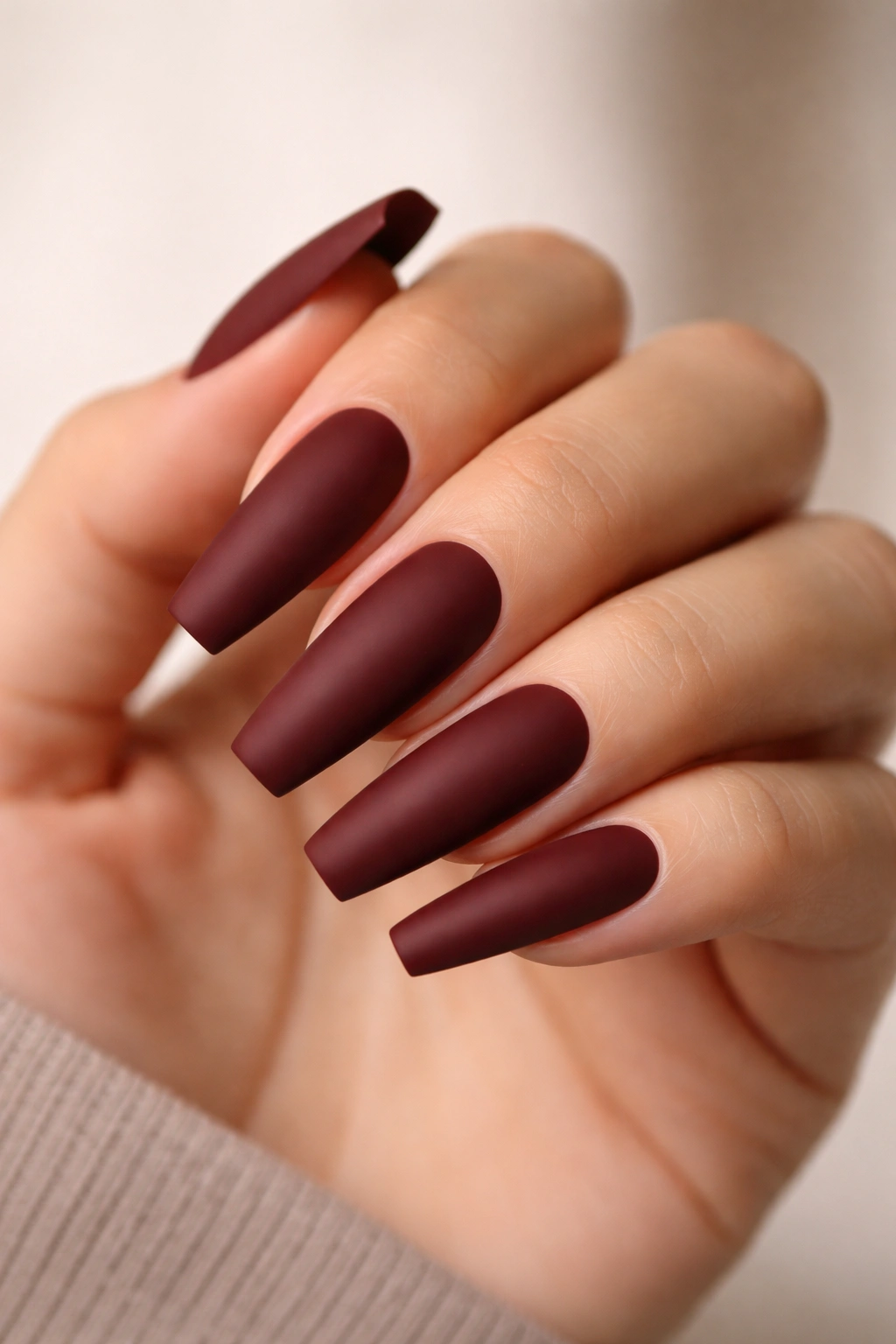
On a long ballerina tip, oxblood matte looks tailored. There’s no sparkle asking for attention and no gloss reflecting every light source. You get a dense, brown-leaning red with a dry finish that feels controlled and expensive.
Oxblood carries more brown than burgundy and more red than chocolate. That balance keeps it from sliding into plain dark brown, which can happen under weak salon lighting. Matte pushes the color deeper, so structure matters a lot. Any bulky sidewall or crooked tip will stand out.
Care is a little fussier here:
- Refresh with a new matte top coat every 5 to 6 days if the surface gets shiny
- Use cuticle oil carefully; wipe off excess so it doesn’t spot the finish
- Keep the nail shape crisp at fills because matte dark shades expose filing mistakes
- Choose medium or long length so the ballerina silhouette stays obvious
I like oxblood matte when the rest of the set stays plain. No glitter, no gems, no marble. The color already gives enough attitude.
19. Mahogany Marble
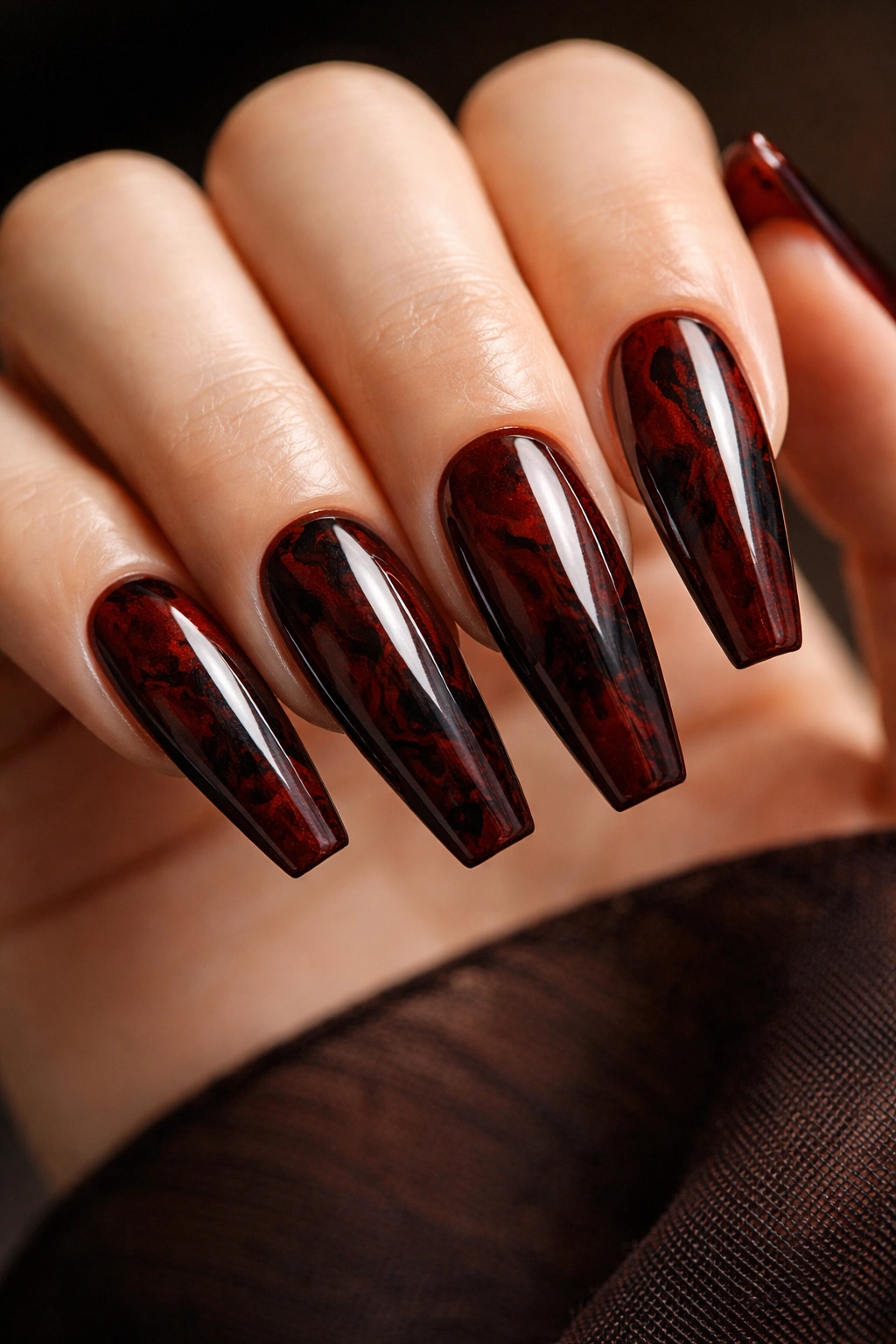
Mahogany marble looks best when it is used with restraint. One accent nail can be enough. Two per hand is still safe. Ten full marble nails in red-brown tones usually blur together and hide the ballerina shape, which defeats the point.
The base color should sit in the mahogany zone—deep red mixed with brown—then get veined with black, darker wine, and a touch of translucent smoke. Blooming gel can soften the lines. A fine liner brush can sharpen them back up. That push and pull makes the marble look like stone instead of mud.
This design has more texture in the pattern than in the surface. Keep the top coat glossy and level. Raised marble lines on top of an already dark palette can make the nails look lumpy, and nobody wants that.
Mahogany marble suits people who like dark reds but want something with movement. A plain oxblood set feels stricter. Marble breaks that up and gives the eye more to follow—especially on a medium-long ballerina with a crisp taper.
20. Almost-Black Red with Glossy Finish
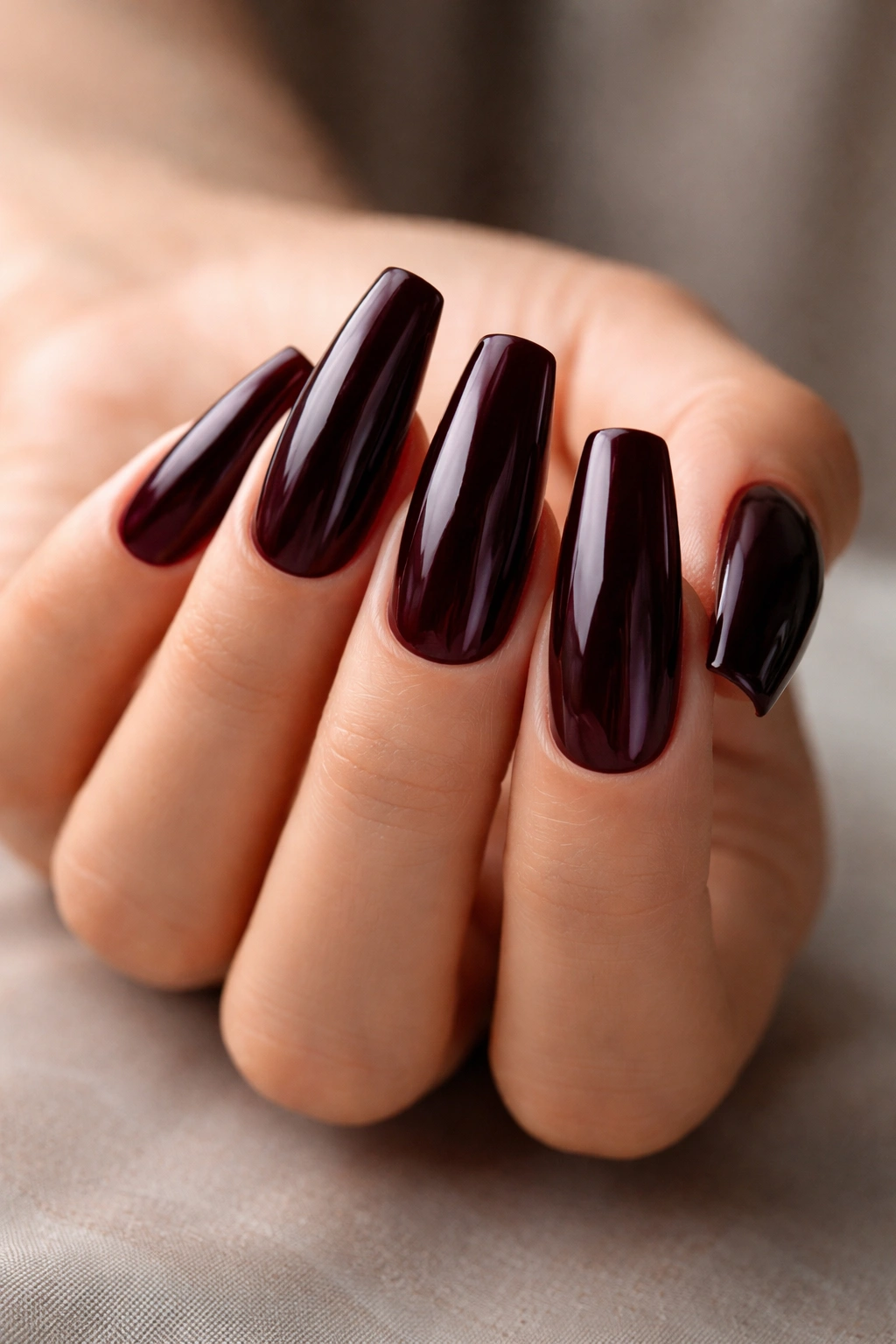
When you want drama without defaulting to black, almost-black red is the shade to ask for. It reads deep, moody, and sharp, though it still flashes red at the edges when light hits the curve of the nail.
The trick is getting the tone right. Ask for a blackened merlot, deep blood red, or near-black burgundy, not a muddy brown-black. Brown can deaden the manicure. A red-black mix keeps life in it. The glossy top coat is non-negotiable. Without shine, the undertone gets lost and the set can read flat.
This is the darkest stop on the red spectrum, and it suits ballerina nails because the flat tip gives the darkness structure. On almond, the same shade can feel softer. On square, it can look heavy. Ballerina gives it edge.
I also like how forgiving it is between appointments. Tiny scratches and tip wear hide better here than on bright cherry or scarlet. If you want one dark red set that still feels red—not plum, not brown, not black—this is the finish line.
Keeping red ballerina nails looking crisp between appointments
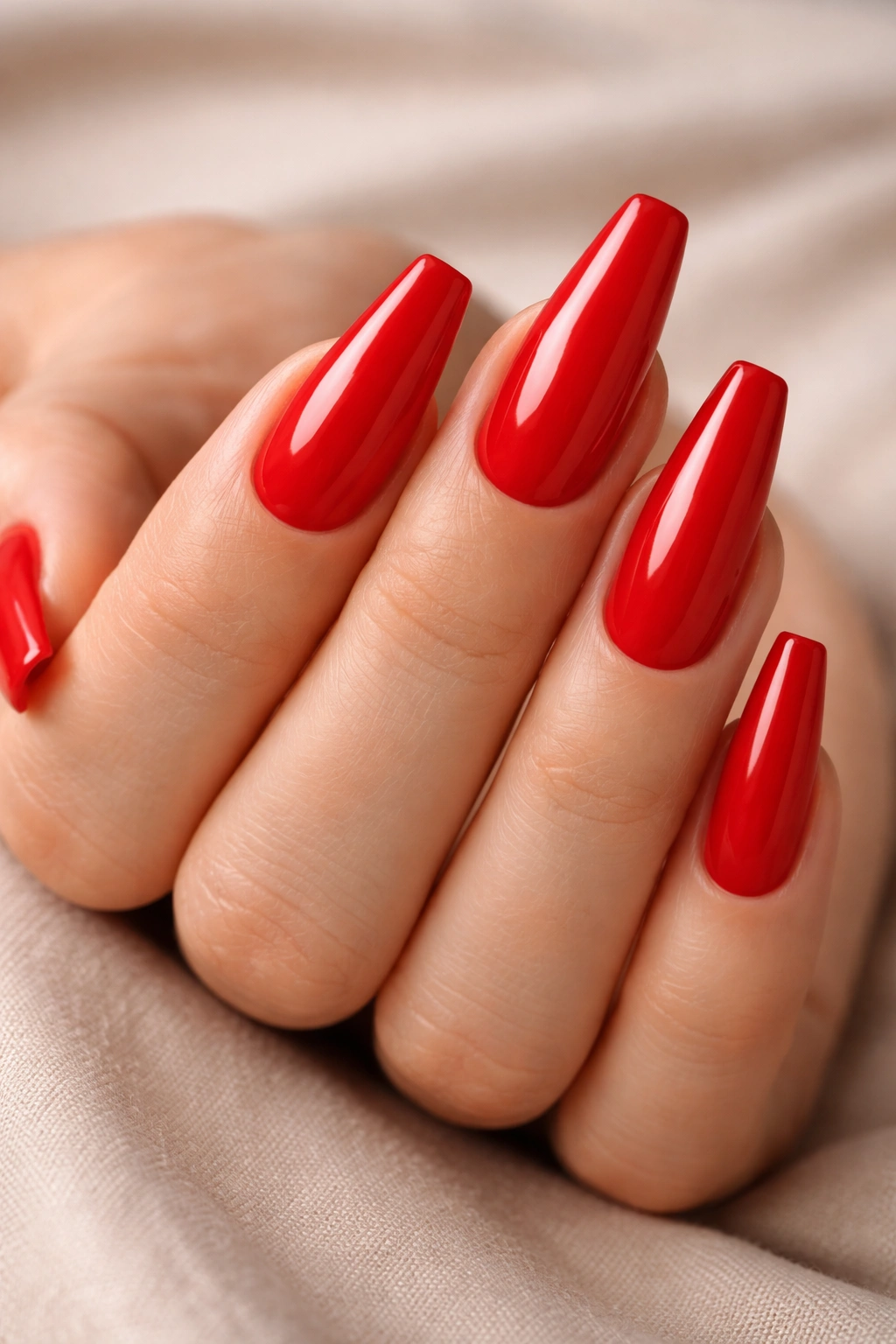
Fresh red can slide downhill fast if the surface gets scratched and the cuticle area dries out. You do not need a huge routine, though you do need a consistent one.
Cuticle oil morning and night helps more than a drawer full of random hand creams. Focus on the sidewalls and the base of the nail. Dry skin makes red polish look older because the contrast gets harsher as the manicure grows.
File snags early. A small crack at one side of a ballerina tip grows faster than you expect because the shape narrows toward the end. Use a fine-grit file and keep the tip flat. Do not round it out in a hurry or you’ll wreck the whole silhouette.
Glossy dark reds can handle more wear than bright creams, but every red shade benefits from clean edges. A tiny brush dipped in remover fixes a surprising amount if you catch chips or smudges before they spread.
Final Thoughts
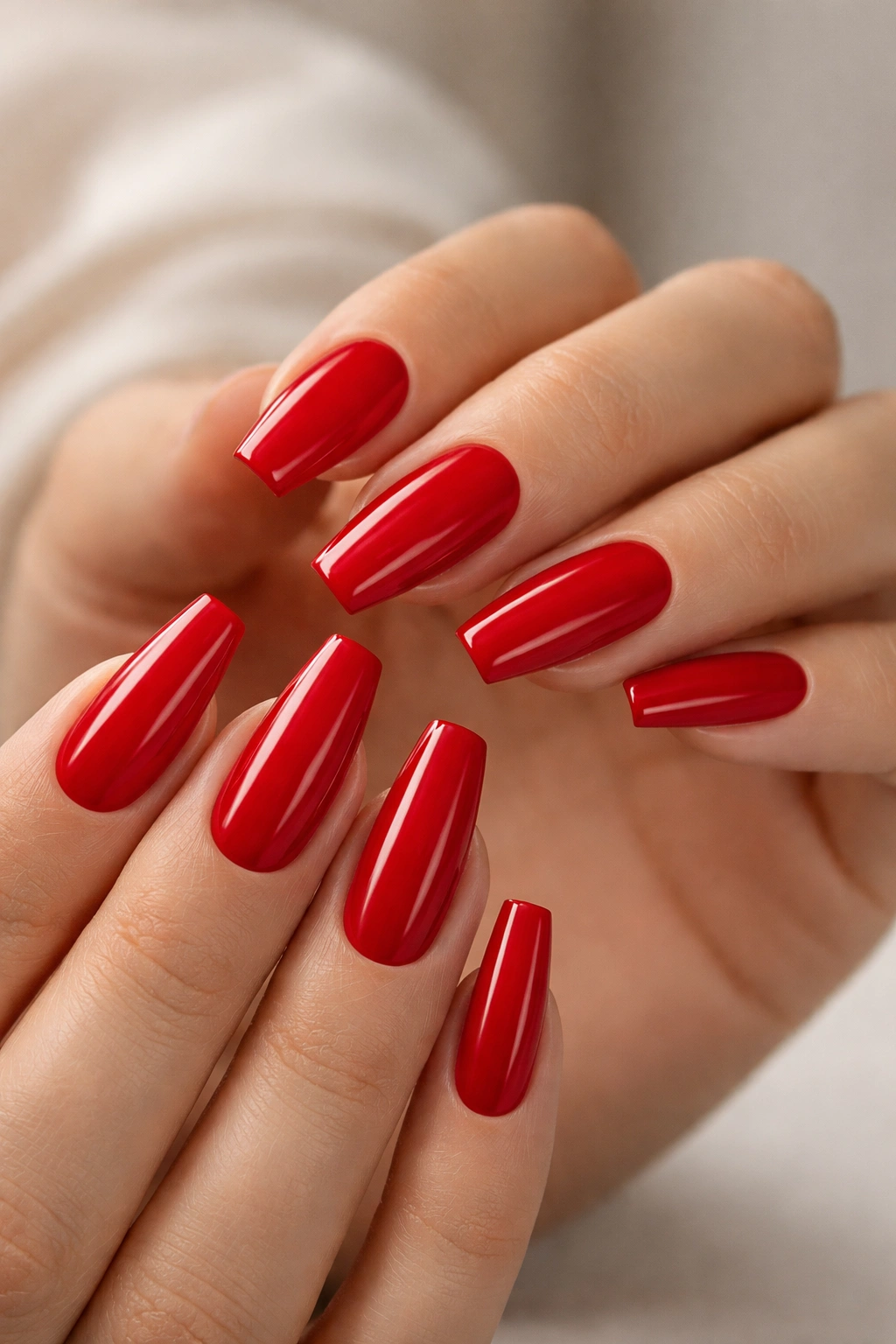
The shade matters, though shape and finish matter almost as much. Bright cherry gloss, poppy micro-French, and candy-apple chrome hit hard because the color is loud and the ballerina tip keeps it controlled. Deep wine, oxblood, and near-black red lean on gloss or matte texture to change the mood without changing the shape.
If you’re stuck between two options, compare them by finish first, not only color depth. A glossy cranberry and a matte oxblood can feel farther apart than a scarlet and a ruby, even if both pairs sit close on a color chart.
One last practical move: save one bright red idea and one deep red idea before your appointment. Looking at both on your own hand length—not a random photo online—makes the decision a lot easier, and your next red set will look like it belongs there.