

Blue can look cheap on the wrong nail shape. It can also look sharp, clean, and far more expensive than black, nude, or red when the shape is right, the sidewalls are crisp, and the shade actually suits your skin. That’s why blue coffin nails keep pulling people in: the color has range, and the coffin shape gives it room to show off.
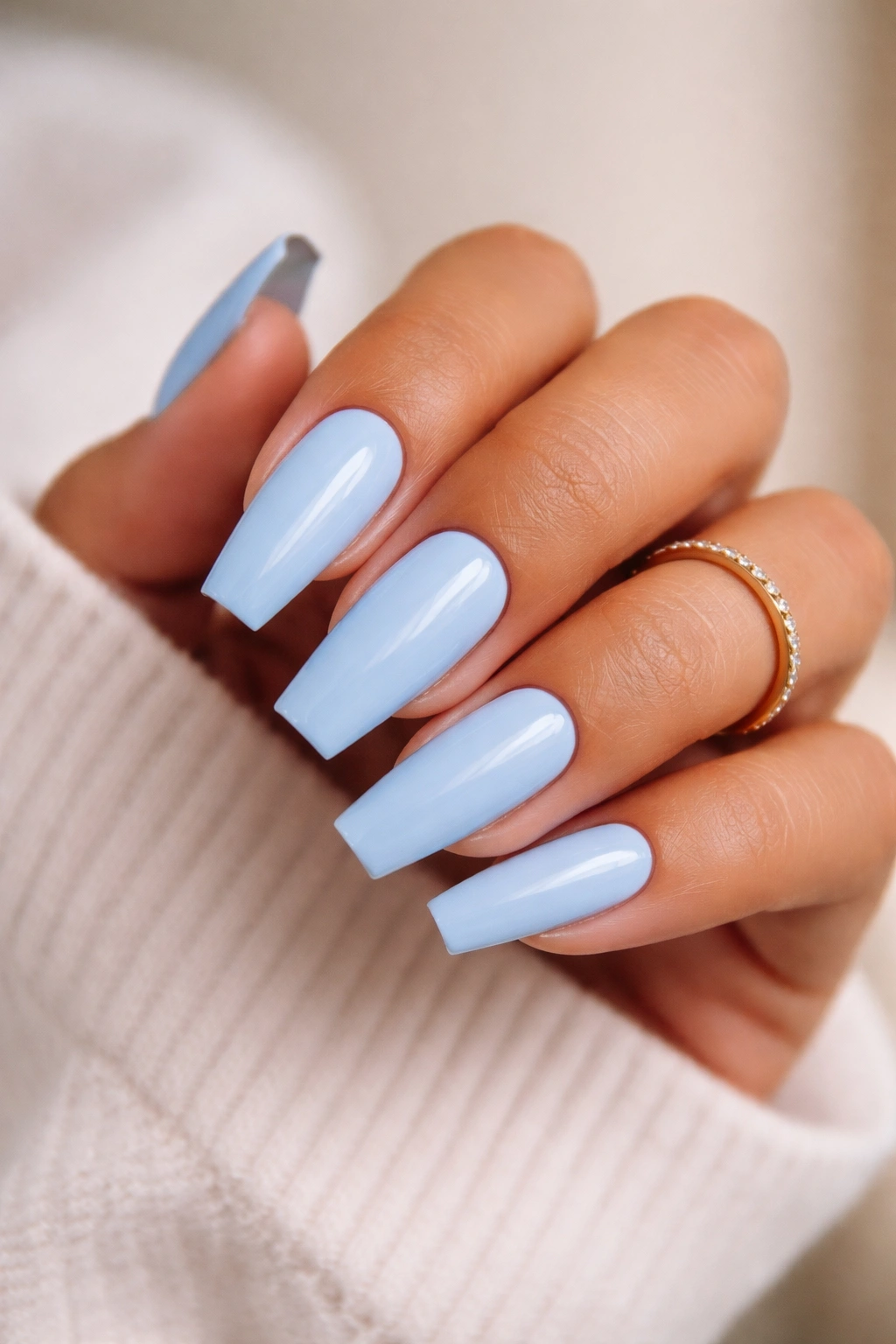
A pale baby blue reads soft and airy on a medium coffin tip. Shift that same shape into cobalt or navy, and the whole mood changes. Darker blues make the tapered sides stand out more, which is great when the nail is balanced and not so great when the filing is off by even a little. That tiny detail matters more than most inspo photos admit.
I’ve always thought blue is one of the hardest polish families to fake your way through. Milky blues can turn chalky. Royal blue can stain if the base coat is weak. Navy looks rich until the top edge starts wearing down and then, suddenly, every little chip is all you can see. You need the right finish, the right length, and a design that makes sense for the shade.
Some sets are all about color. Others depend on texture, shine, placement, or how much negative space you leave behind. That’s where the fun starts.
How the Coffin Shape Changes the Look of Blue Polish
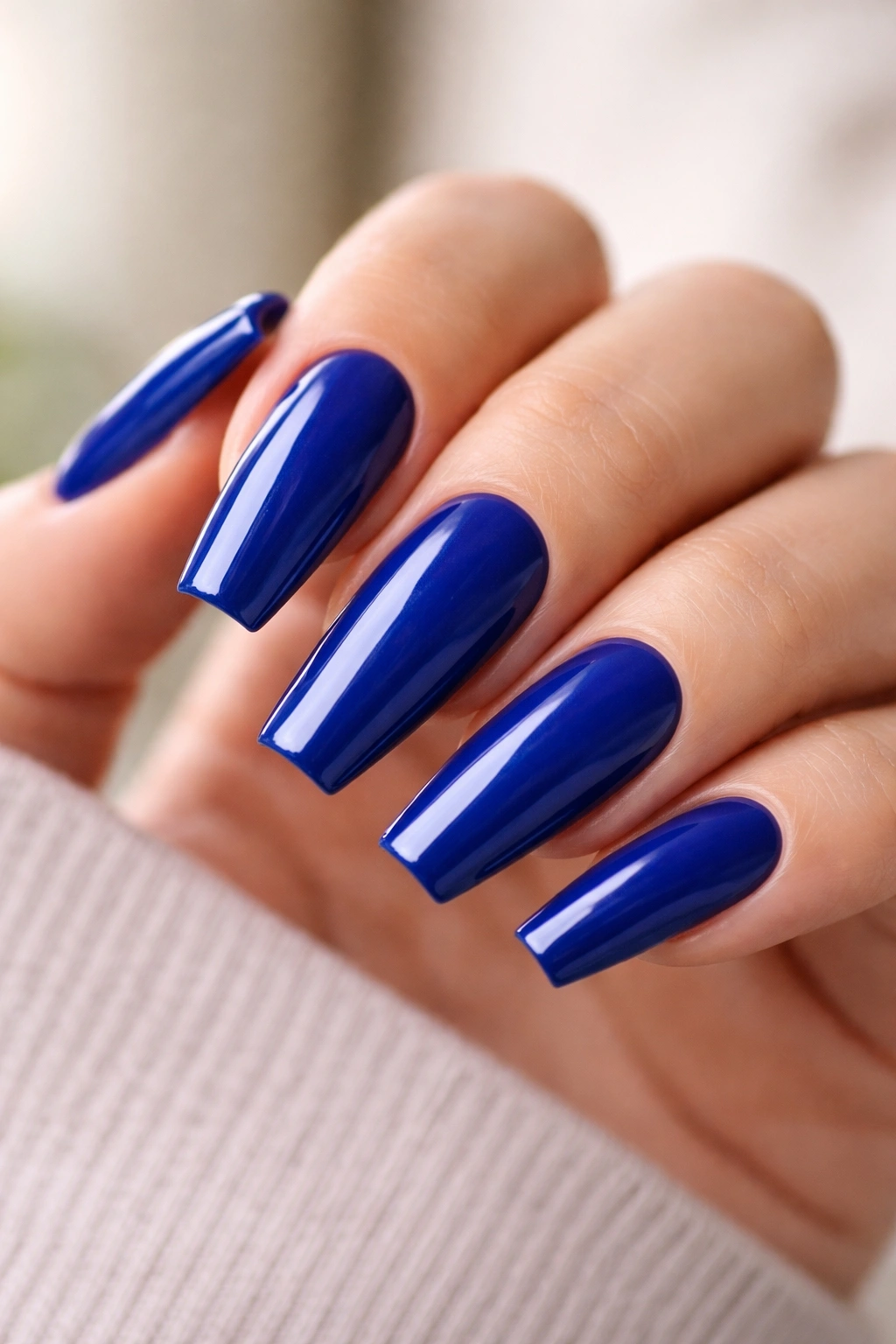
Coffin nails do something round and almond shapes do not: they give blue polish a flat, squared canvas at the tip. That wider end makes color look bolder, especially with creams, chromes, and dark jellies. A soft blue that feels gentle on an oval nail can look more graphic on a coffin set.
Shape matters.
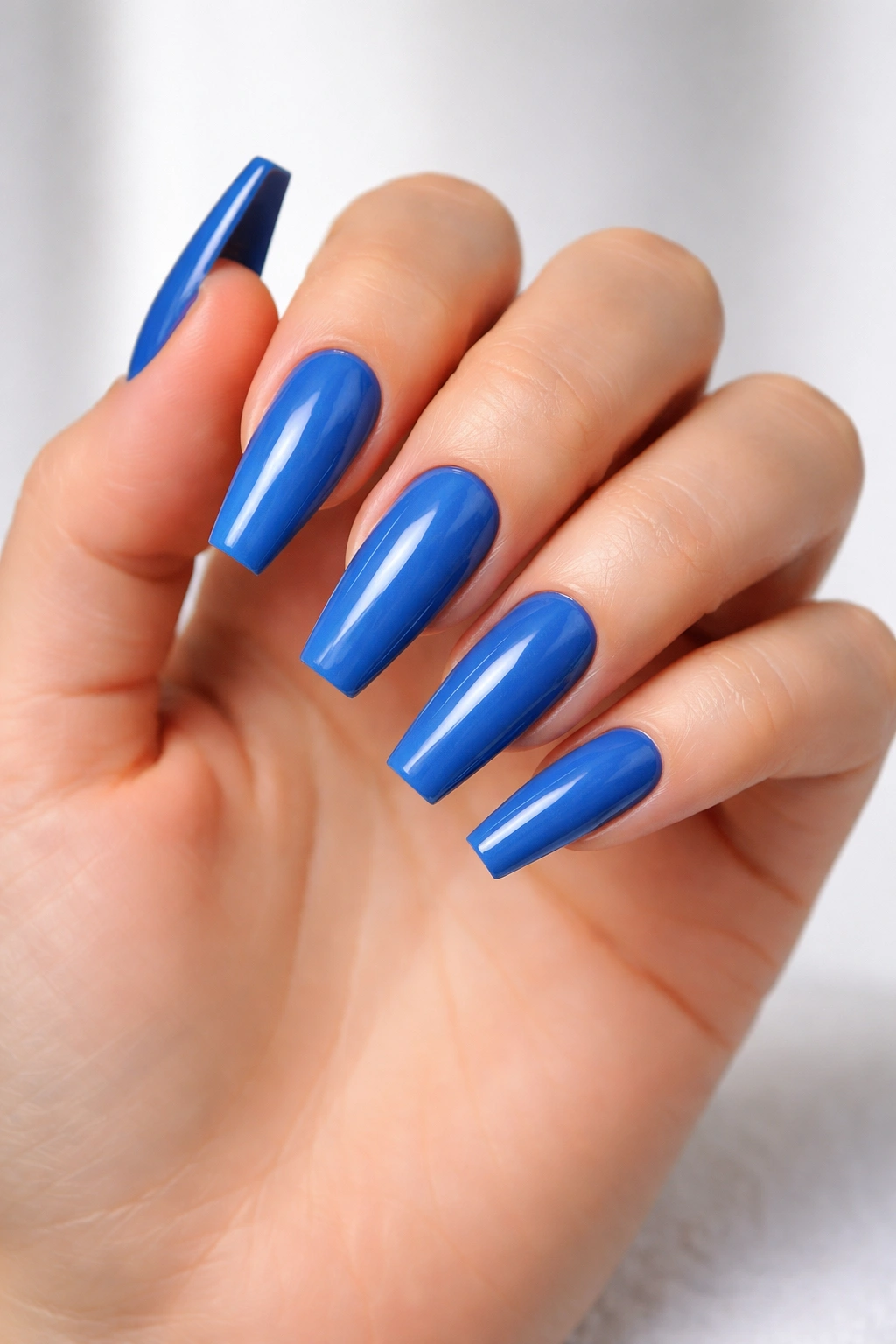
The taper is the whole trick. If your nail tech pulls the sidewalls in too hard, deep blue shades can make the nail look pinched and claw-like. If the tip stays too wide, pale blue looks blocky instead of clean. The nicest coffin nails usually have a straight visual line from the cuticle down the side, then a controlled taper, then a blunt tip with slightly softened corners.
Short, medium, and long coffin each tell a different story
A short coffin works best for micro-French tips, solid navy, denim matte, and any design you want to wear to work without fuss. A medium coffin gives you the most room to play and is usually the sweet spot for clouds, ombré, marble, and aura effects. A long coffin is where jelly sapphire, cat-eye indigo, and foil details start to look intentional instead of cramped.
One more thing: dark blue tells on bad prep. Every ridge, every bump in acrylic, every uneven top coat shows up faster under navy or cobalt than under sheer pink. If you are choosing a deep shade, ask for extra smoothing before color goes on.
Picking a Blue Shade That Works With Your Skin Tone
Not every blue is friendly.
That does not mean you need to follow rigid color rules, but a little undertone awareness saves you from that weird moment when a shade looked great in the bottle and flat on your hand. Blue has hidden leanings—some push gray, some violet, some green, some white—and those shifts change everything.
Here’s the quick version I give people when they’re staring at a salon wall:
- Pink or cool undertones: baby blue, sky blue, periwinkle, icy chrome blues
- Golden or olive undertones: denim blue, cobalt, royal blue, deep navy
- Neutral undertones: you can wear almost the full range, so focus on finish instead of undertone
- Deeper skin tones: pale icy blue gives strong contrast; sapphire, indigo, and royal blue look rich and saturated
- Silver jewelry wearers: cooler blues often sit more naturally with your usual look
- Gold jewelry wearers: dusty blue, royal blue, and navy tend to tie in better than frosty powder blues
Jewelry is a handy clue when you are unsure. If silver always makes your skin look clearer, start with cooler blue. If gold is your default and it never fights your complexion, try richer blues with a hint of depth.
Ignore strict rules if you love the color. Still, it helps to know why one blue feels easy on your hand and another feels slightly off.
Salon Prep for a Clean Blue Coffin Set
A blue set usually looks best when the planning is boring.
I mean that as praise. The strongest nail appointments often start with plain decisions: how long, what base, what finish, what kind of growth-out you can live with for two to three weeks, and whether you want your hands to look softer, sharper, or louder.
Bring three separate reference photos, not ten random screenshots:
- one for the shape
- one for the shade
- one for the art placement
That keeps the appointment grounded. A lot of disappointment comes from mixing a baby blue color you love with a shape from another photo and chrome from a third photo, only to realize those ideas fought each other from the start.
If you are going for dark blue, ask for:
- a smooth builder or acrylic base
- thin, even sidewalls
- a top coat wrapped over the free edge
- a stain-blocking base under highly pigmented polish
If you are choosing chrome, cat-eye, or jelly finishes, say so before filing is done. Those designs need a cleaner surface than a plain cream color.
Dermatologists often warn against rough cuticle cutting, lifting product, and repeated skin exposure to harsh removers for a reason: irritated skin around a bold manicure stands out fast. Blue polish draws the eye. Dry, red, overworked cuticles draw it too.
1. Baby Blue Milk Bath Coffin Nails
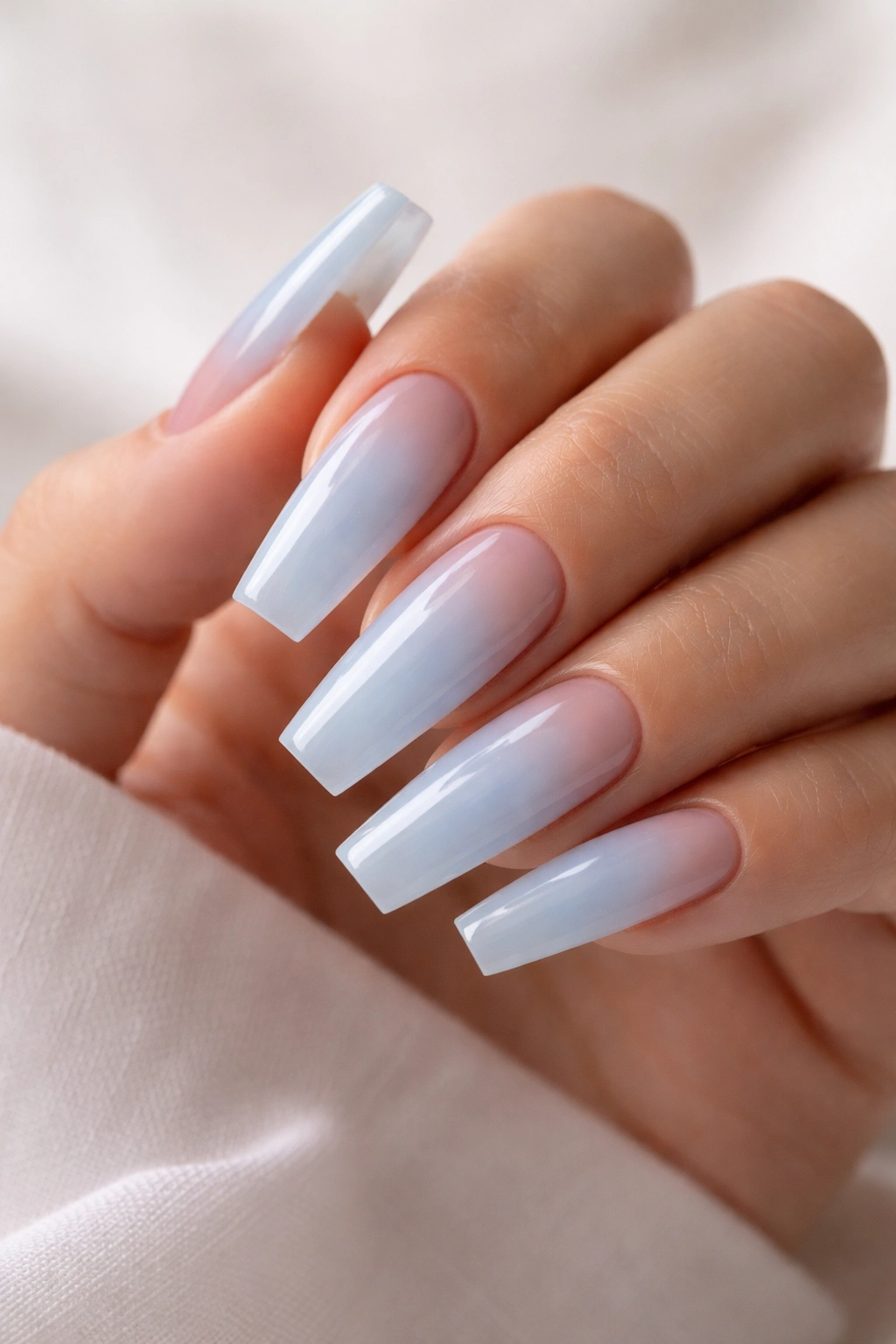
The softest set in the lineup is also one of the prettiest when it’s done with restraint. Baby blue milk bath coffin nails use a cloudy, semi-sheer base instead of a flat pastel wall of color, so the finished nail looks airy rather than chalky.
Why this shade works so well on coffin tips
Coffin nails can make pale polish look heavier than you expect. The milk-bath approach fixes that by thinning the visual weight. A sheer white or milky nude base with a wash of baby blue lets light pass through the layers, which gives the nail more depth and keeps the color from looking like correction fluid.
Quick details to ask for
- Use two thin coats of jelly baby blue instead of one thick cream coat.
- Keep the shape medium length so the pale color does not read too boxy.
- Ask for a high-gloss top coat, not matte; matte turns this look powdery fast.
- If you want art, limit it to tiny dried flowers, a pearl accent, or one subtle shimmer nail.
The set feels calm and clean, and it grows out more softly than a full opaque pastel. That matters if you stretch appointments.
Best move: ask your nail tech to keep a whisper of transparency near the cuticle. It makes the whole manicure look fresher for longer.
2. Soft Sky Blue French Fade Coffin Nails
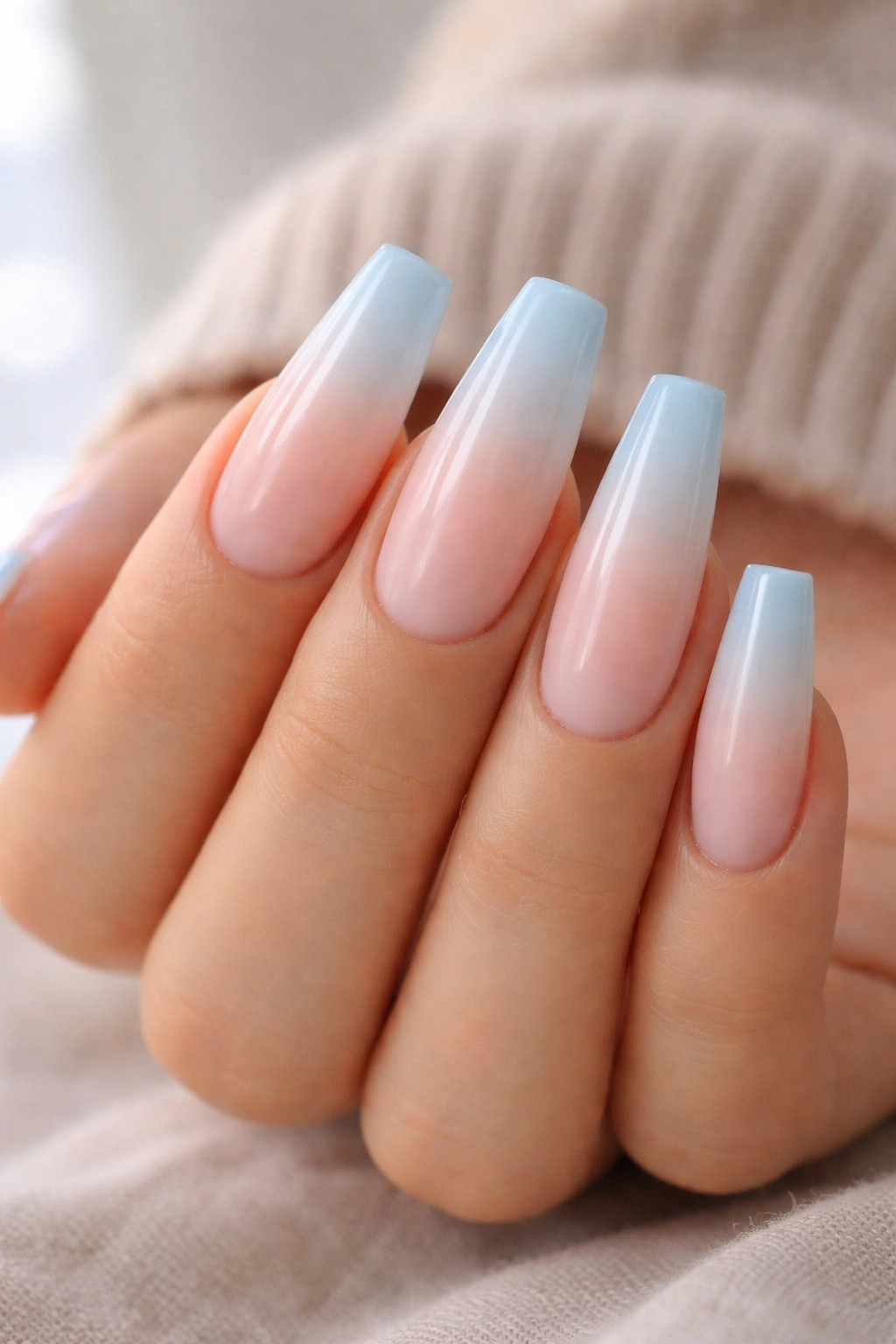
A blue French fade is smarter than a full solid set when you want color but do not want commitment shouting from across the room. The tip carries the blue, the base stays sheer or nude, and the gradient keeps the line from looking harsh.
I like this design most on short-to-medium coffin nails because the fade uses the shape well without needing extra length. If the tip is only 2 to 4 millimeters deep, you get enough blue to read as intentional while the rest of the nail still looks light and open. It’s one of those manicures that works on weekdays and still feels dressed up enough for an event.
The finish decides the mood. A glossy sky blue fade feels crisp and a little sporty. Add a pearl top coat and it turns softer, almost bridal. Skip chunky glitter here. It muddies the clean edge the design depends on.
You also get a practical bonus: growth-out is forgiving. Since the base is already sheer, the cuticle area does not announce itself after ten days the way solid cobalt or navy can. If you hate obvious regrowth, this is a safe place to start.
3. Powder Blue Ombré Coffin Nails
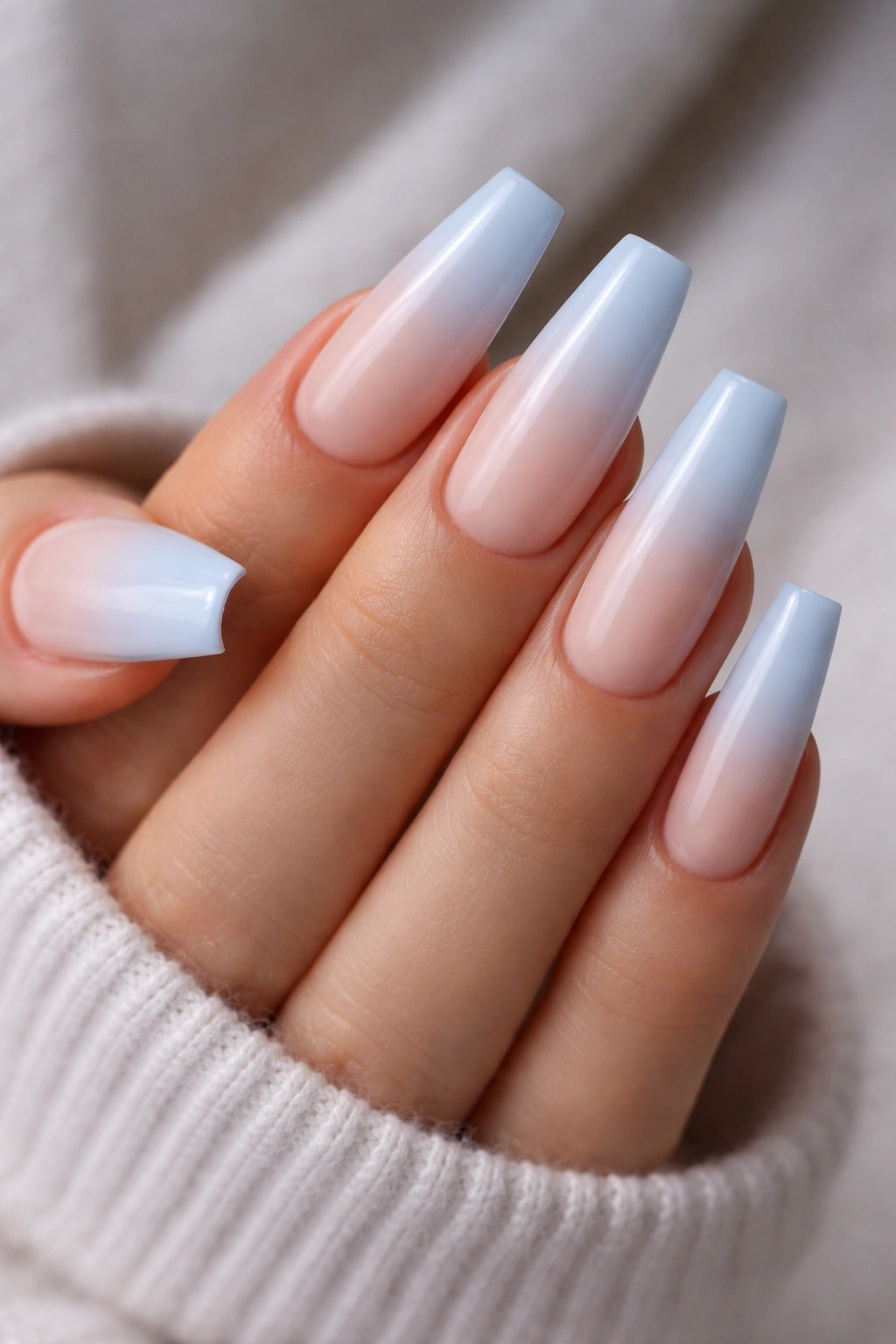
Need a blue manicure that feels softer than a French tip but fuller than a sheer wash? Powder blue ombré coffin nails sit right in that middle ground, and that’s why they keep working.
The nicest version blends a milky nude or pale pink near the cuticle into powder blue through the middle, then deepens slightly at the tip. That three-step shift matters. If the whole ombré only uses nude and blue, the blend can look blunt. A little extra haze in the center smooths everything out.
Powder blue has a muted quality that makes coffin nails feel less aggressive. That sounds odd, but you see it right away on the hand. The shape still gives structure, yet the color softens the edges enough that the set feels polished instead of severe.
What to ask for if you want the blend to look clean
A sponge blend can work, but an airbrushed or soft-brush ombré usually looks finer on close inspection. If you wear medium or long coffin nails, ask for the fade to start around the lower third of the nail bed, not halfway up. That keeps the design elegant and gives the blue room to stretch.
Powder blue also pairs well with one accent detail—a tiny crystal at the cuticle, a chrome line, a single white swirl. More than that, and the whole point of the set gets lost.
4. Blue-and-White Cloud Coffin Nails
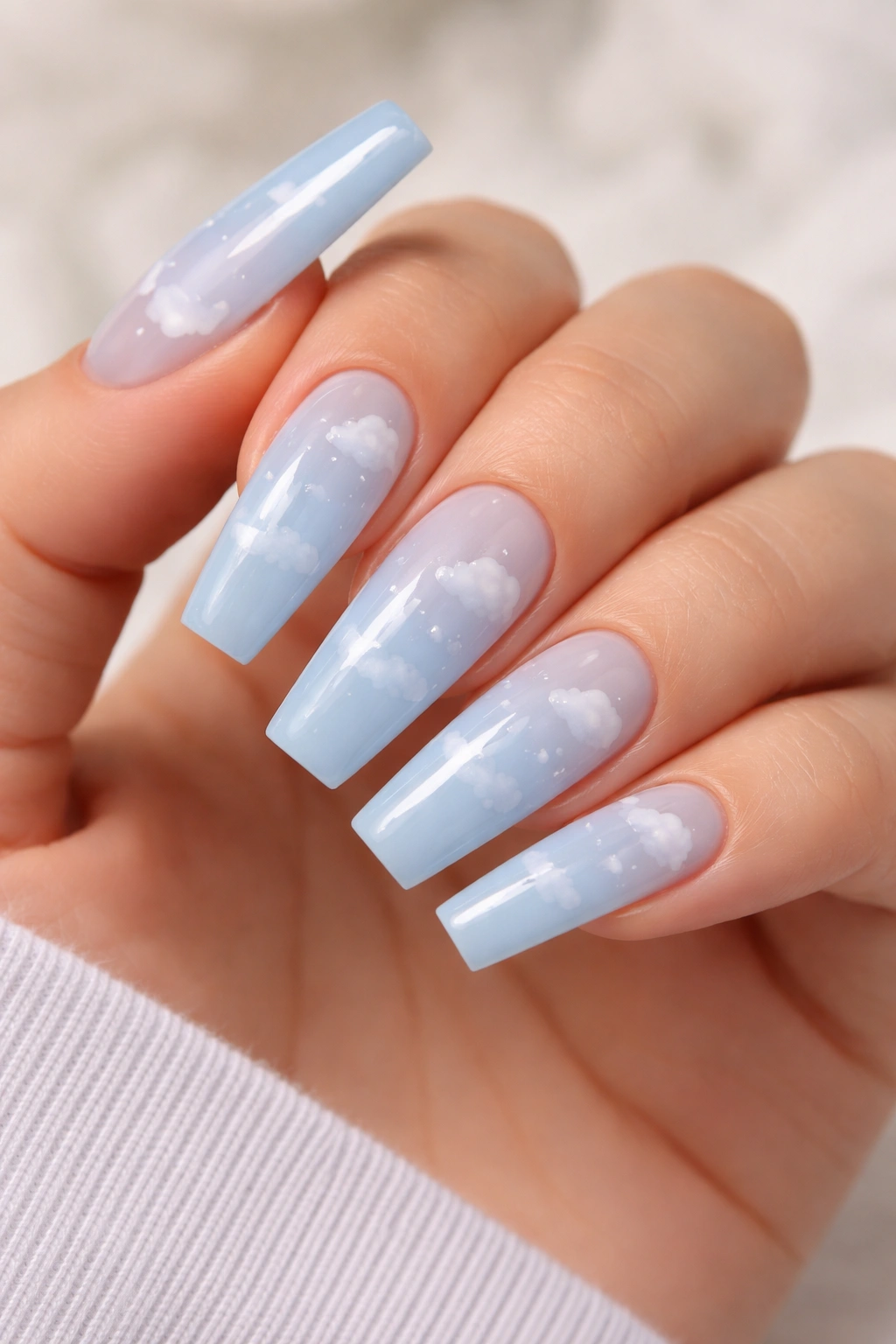
Cloud nails can go wrong fast. Too much white, too many doodled outlines, or a background blue that is too bright, and the set starts looking costume-y instead of fresh.
When they work, though, they’re charming.
The version I’d pick uses a soft sky blue base, slightly sheer, with white cloud clusters placed unevenly across two to four nails rather than all ten. Coffin nails help here because the flat tip gives the cloud shape a bit of horizon. You get space for puffy edges without crowding the nail.
A cloud set looks best with some breathing room, so I’d keep a few nails plain blue or use a soft nude on one or two fingers to break up the art. That contrast keeps the hand from looking overloaded.
Keep the art from turning cartoonish
- Use small cloud forms, not giant blobs centered on every nail.
- Blend the white lightly at the base of each cloud so it looks soft around the edges.
- Choose gloss, because matte makes white cloud art look dry.
- Stop at two colors unless you add a tiny silver star accent on one nail.
There’s a playful side to this set, but it doesn’t have to feel childish. The more controlled the placement, the better it reads.
5. Icy Periwinkle Chrome Coffin Nails
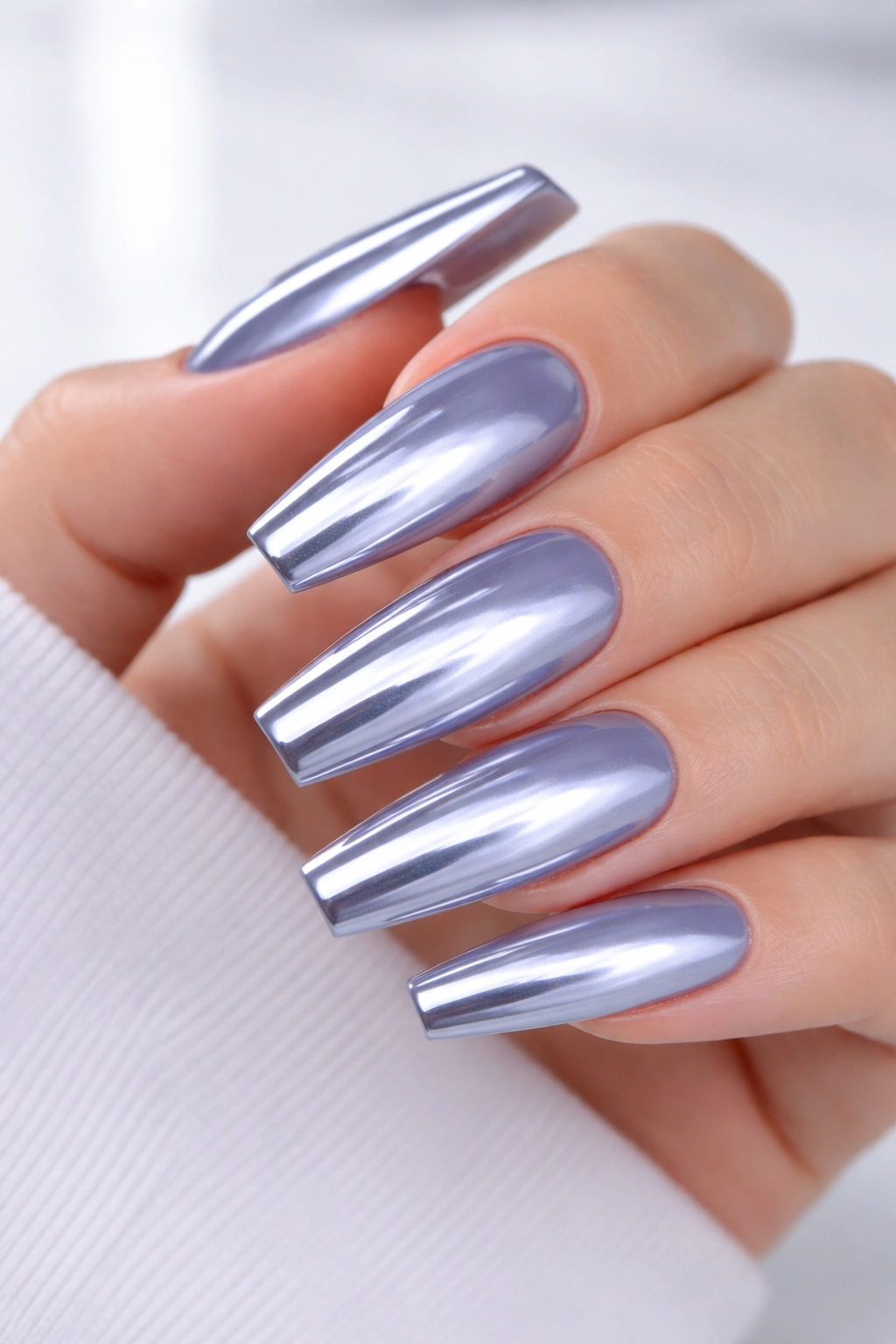
Chrome changes blue in a way cream polish never can. It adds a silvered cast over the base shade, and with icy periwinkle underneath, the finish looks cool, slick, and a little futuristic without dipping into costume territory.
I would not put this design on a lumpy base. Every ridge shows. If you’re doing acrylic or builder gel, ask for extra buffing before color. Chrome rewards precision and punishes shortcuts.
Periwinkle sits between blue and violet, which gives it more life than straight baby blue. On a coffin shape, that slight shift keeps the nail from looking flat. The color moves as your hand moves—more blue in one angle, more lavender in another. It’s subtle, but it’s there.
Length matters here. Medium or long coffin nails give chrome enough room to look deliberate. On very short coffin tips, the effect can feel compressed, like the shine is trying to do too much in too little space.
One accent nail is enough if you’re chrome-shy. Ten full chrome nails look slick when the application is flawless, though I’ll be honest: they show wear at the tip sooner than a standard gloss top coat. If you type a lot or open cans with your nails—please stop doing that, by the way—you’ll notice edge wear faster.
6. Cornflower Blue Floral Coffin Nails
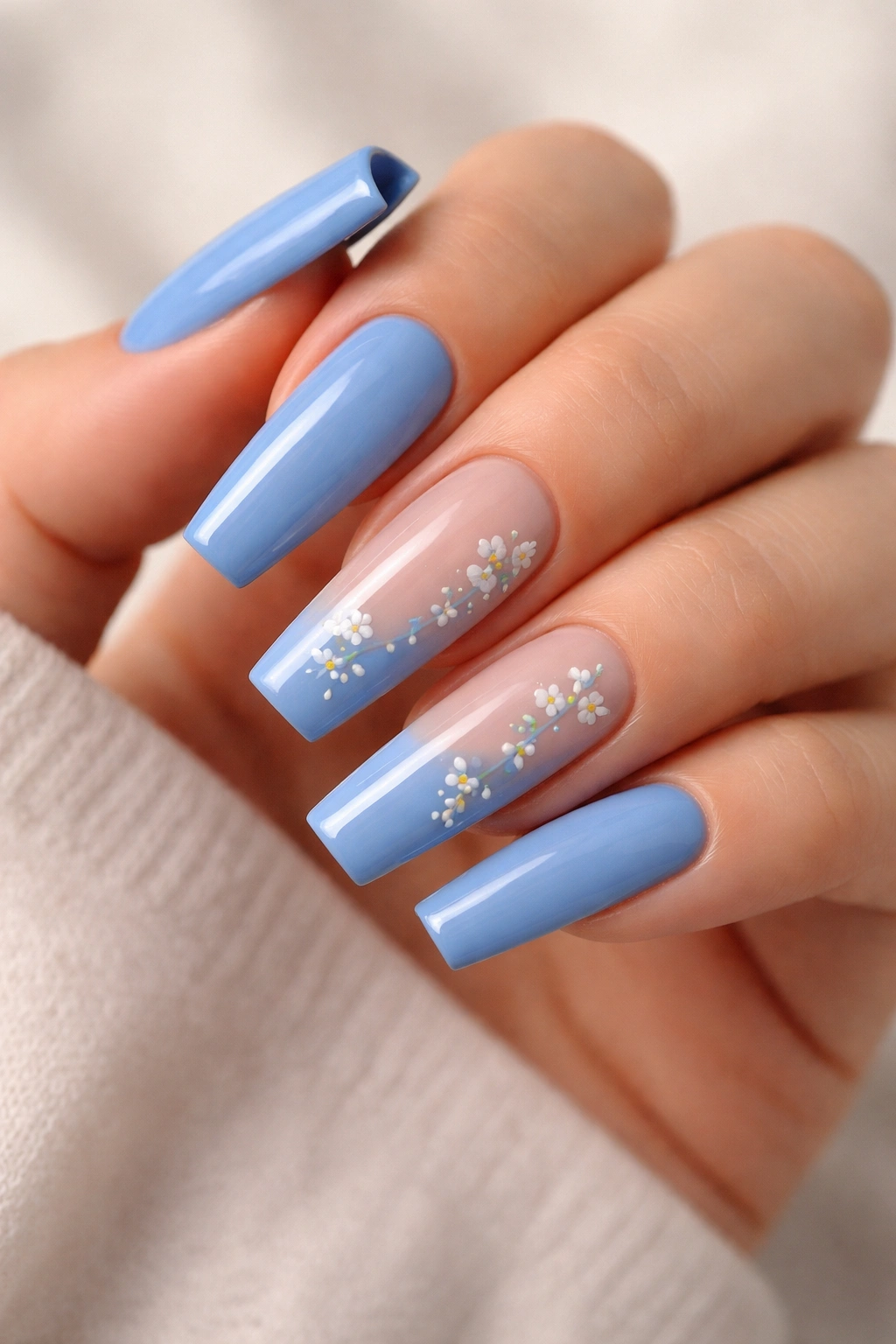
Unlike pale blue cloud nails, cornflower blue floral coffin nails lean more classic than playful. The color has enough pigment to hold its own, and the floral art can stay tiny and sharp instead of fluffy.
Cornflower works especially well if you want a blue set that doesn’t wash out your hands. It sits deeper than baby blue but lighter than cobalt, which makes it a handy middle shade for spring florals, porcelain-inspired details, and daisy work. A sheer nude base with cornflower petals gives the set a crisp look. A full cornflower base with white flowers feels bolder and more polished.
Who suits this best? Anyone who likes nail art but gets annoyed when every finger looks busy. Use the floral detail on two nails per hand, maybe three if the rest are solid color. Past that, the eye doesn’t know where to land.
A fine liner brush matters more than the flower type. Daisies, tiny blossoms, pressed-flower style petals—they all fall apart if the line work is thick. Ask for small-scale art placed near one sidewall or the cuticle area, not giant centered blooms.
If you wear gold rings often, this shade also has a nice habit of making them look warmer and cleaner. That little pairing is part of the appeal.
7. Dusty Denim Matte Coffin Nails
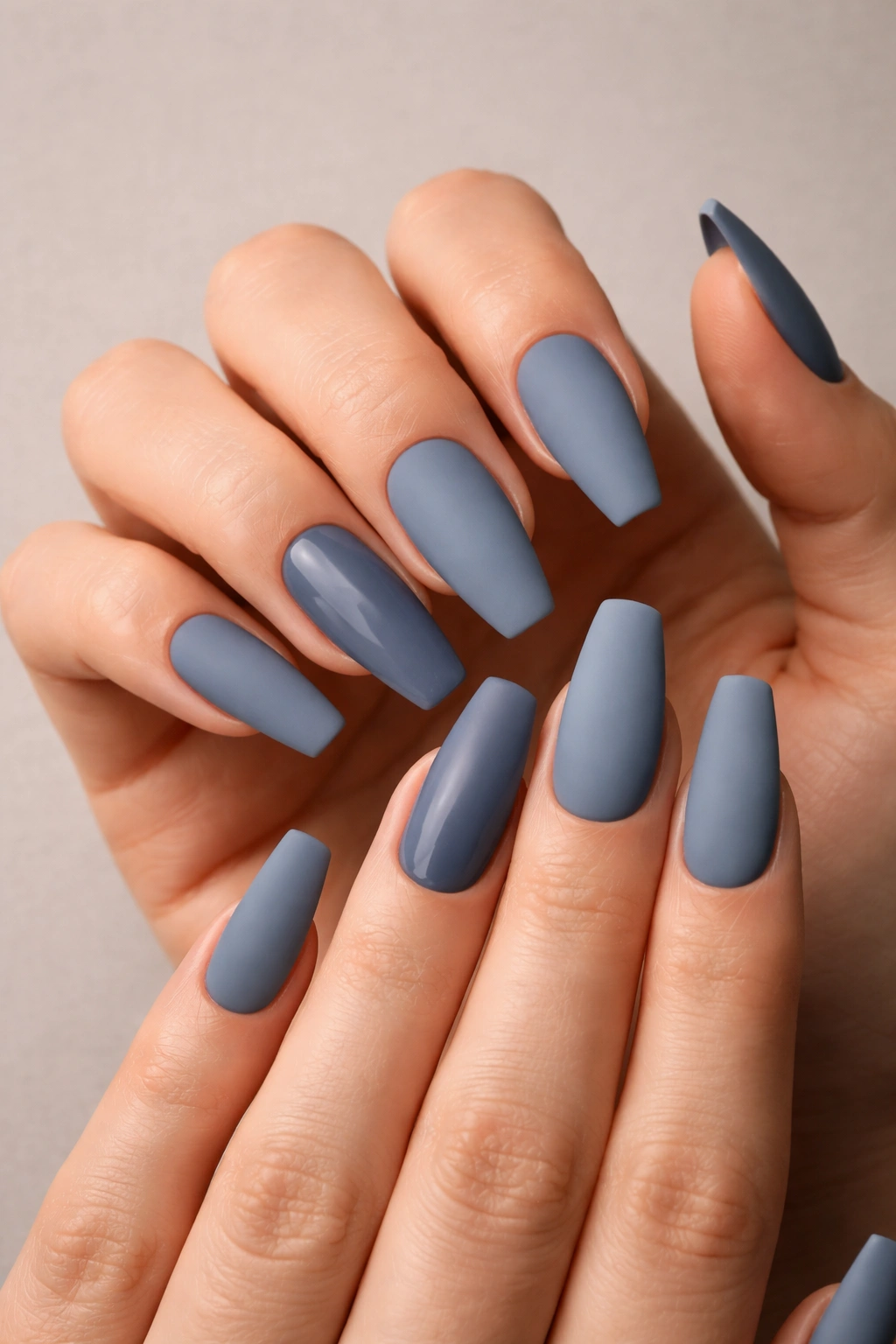
Dusty denim blue in a matte finish looks grown-up in a way bright blue rarely does. It’s a little gray, a little worn-in, and it gives coffin nails that tailored, straight-edge feel people want when they say they want something “clean” but not boring.
What makes denim blue different
Denim blue has muted pigment. That means it doesn’t scream from the nail the way electric blue does, and it plays well with shorter coffin shapes. If you’ve been curious about blue nails but worry they’ll feel too loud on your hand, this is one of the safer entries.
A few smart ways to wear it
- Full matte on all ten nails for a clean, editorial look
- Matte blue with one glossy accent nail for contrast
- Denim blue base with thin white stitch-like lines if you want a nod to actual denim
- Medium-short coffin with a soft square tip for a neat everyday set
There is one catch. Matte top coats show oils, makeup, and wear faster than gloss. If you choose this look, keep a small alcohol wipe or hand wipe nearby if you use heavy hand cream through the day.
What I’d avoid: chunky rhinestones. They fight the quiet texture that makes matte denim work.
8. True Blue Swirl Coffin Nails
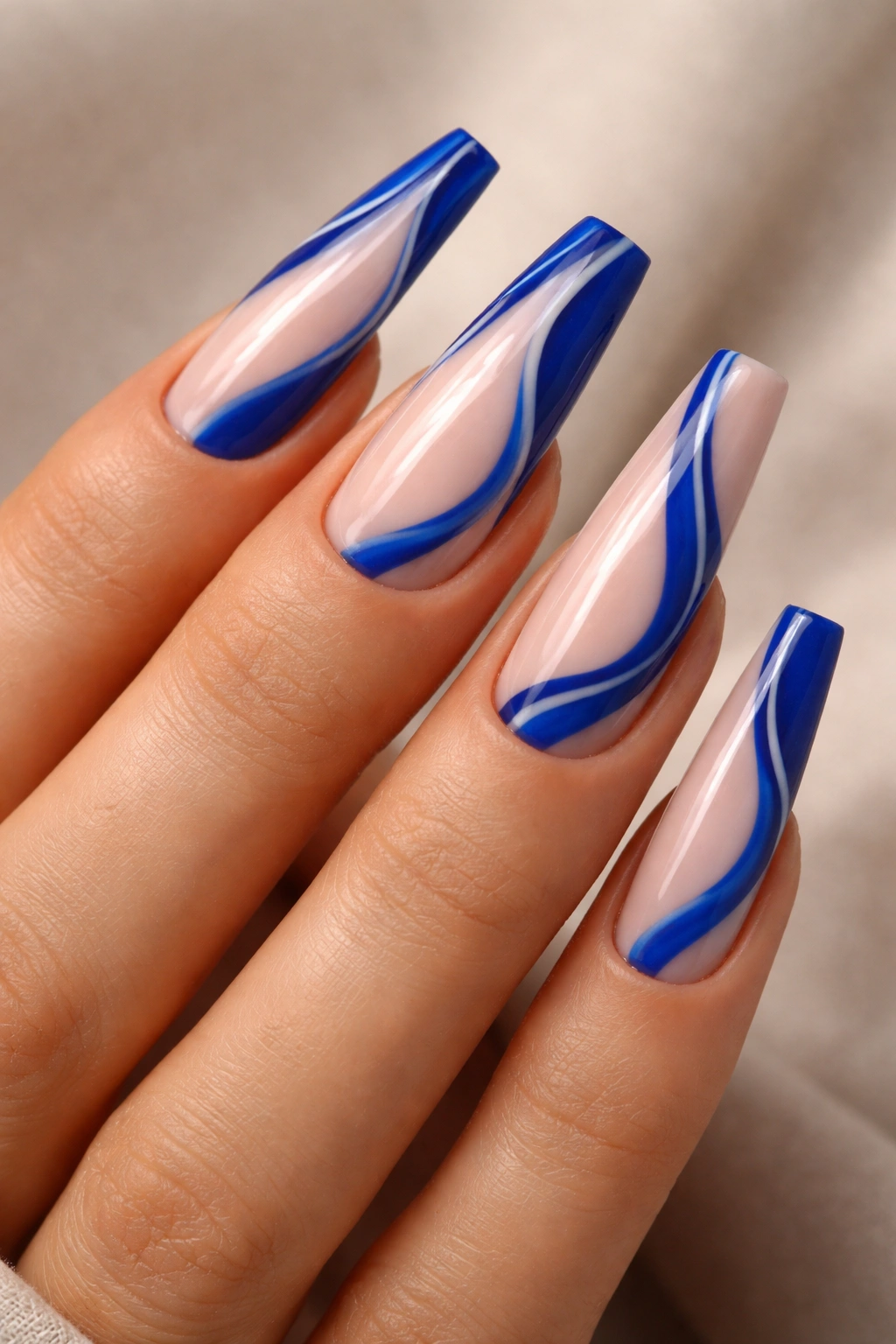
Why do swirl nails keep surviving trend cycles? Because they move with the nail shape, and coffin tips give them a long, straight lane to run through.
A true blue swirl set usually combines a nude, sheer pink, or milky base with curved lines in one or two blue tones. The best ones are not symmetrical. One nail might have a single ribbon line from cuticle to tip. Another might carry two crossing arcs. That unevenness is what keeps the hand looking modern instead of over-designed.
I’d use true blue here—not baby blue, not navy—because the middle tone gives enough contrast without swallowing the base color. Add white if you want a sharper graphic finish. Add silver if you want more shine. Leave both out if you want the blue line work to do all the talking.
Placement matters more than color count
The swirl should follow the nail’s length, not cut it in half. Horizontal lines make coffin nails look stubby. Diagonal or vertical curves stretch them, which is one of the reasons this design flatters shorter fingers.
If you are doing this on press-ons, look for a slightly translucent nude base rather than opaque beige. Blue lines look cleaner over a base that still has a bit of light in it.
9. Cobalt Micro-French Coffin Nails
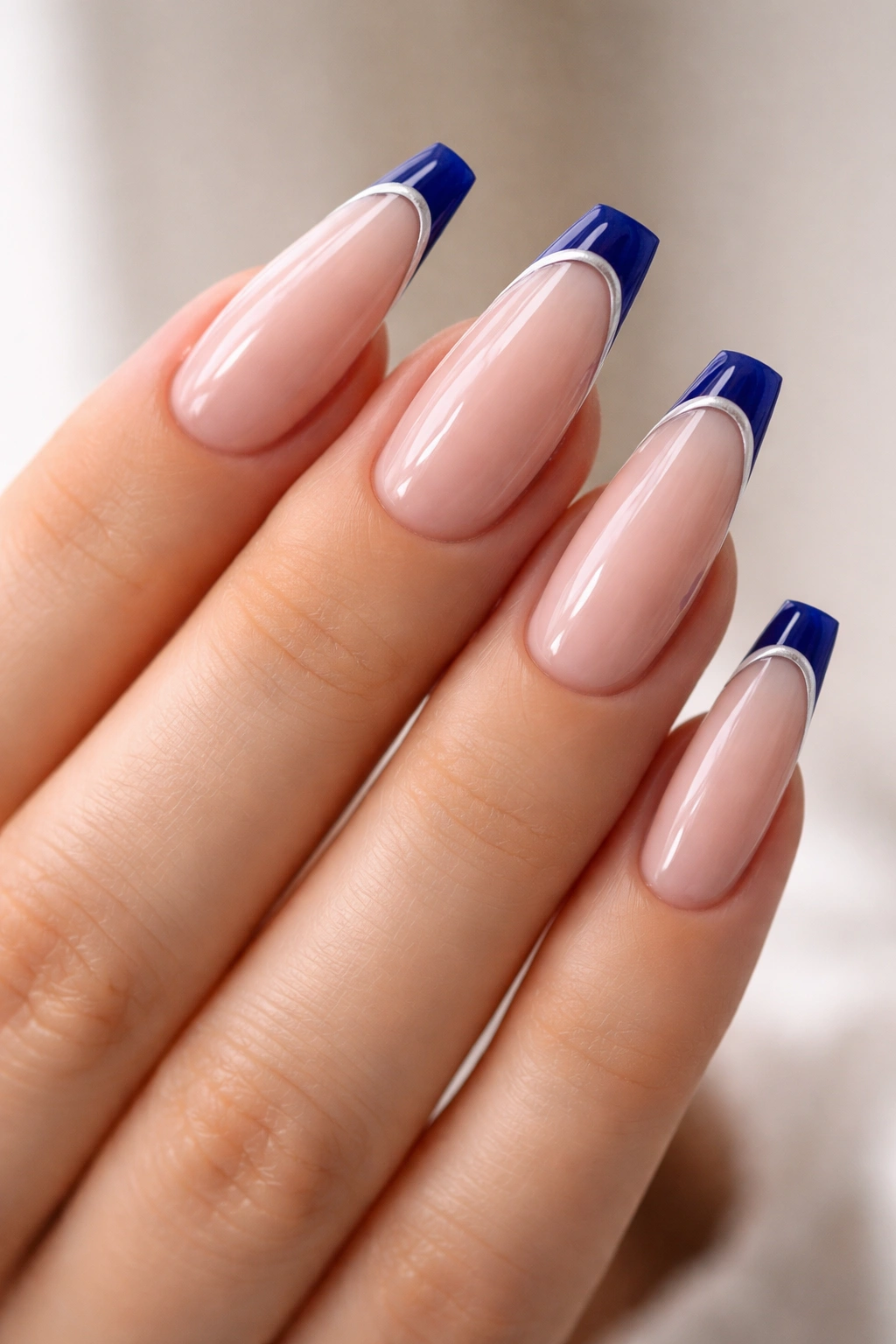
A full cobalt set is bold. A cobalt micro-French is sharper.
This design uses a nude, pink, or milky base and adds a thin cobalt line right at the tip—usually 1 to 2 millimeters wide. That tiny strip of color is enough. Cobalt has so much pigment that it does not need help.
The reason I like it on coffin nails is simple: the squared tip turns that thin line into a graphic detail. On almond nails, a micro-French feels soft and curved. On a coffin shape, it feels crisp. Cleaner. A little more architectural, if we’re being honest.
How to keep it from looking accidental
The line has to be even from side to side. If one corner is thicker, you’ll see it immediately. Ask for the tip to be painted after final shaping, not before, because a last-minute file tweak can throw the whole line off. If you want more interest, add a second line in white or silver a hair above the cobalt. Keep the spacing tiny.
This is one of the best blue coffin nails for people who want color with low maintenance. Chipping at the tip still matters, but cuticle regrowth stays discreet because the base remains sheer.
10. Electric Blue Aura Coffin Nails
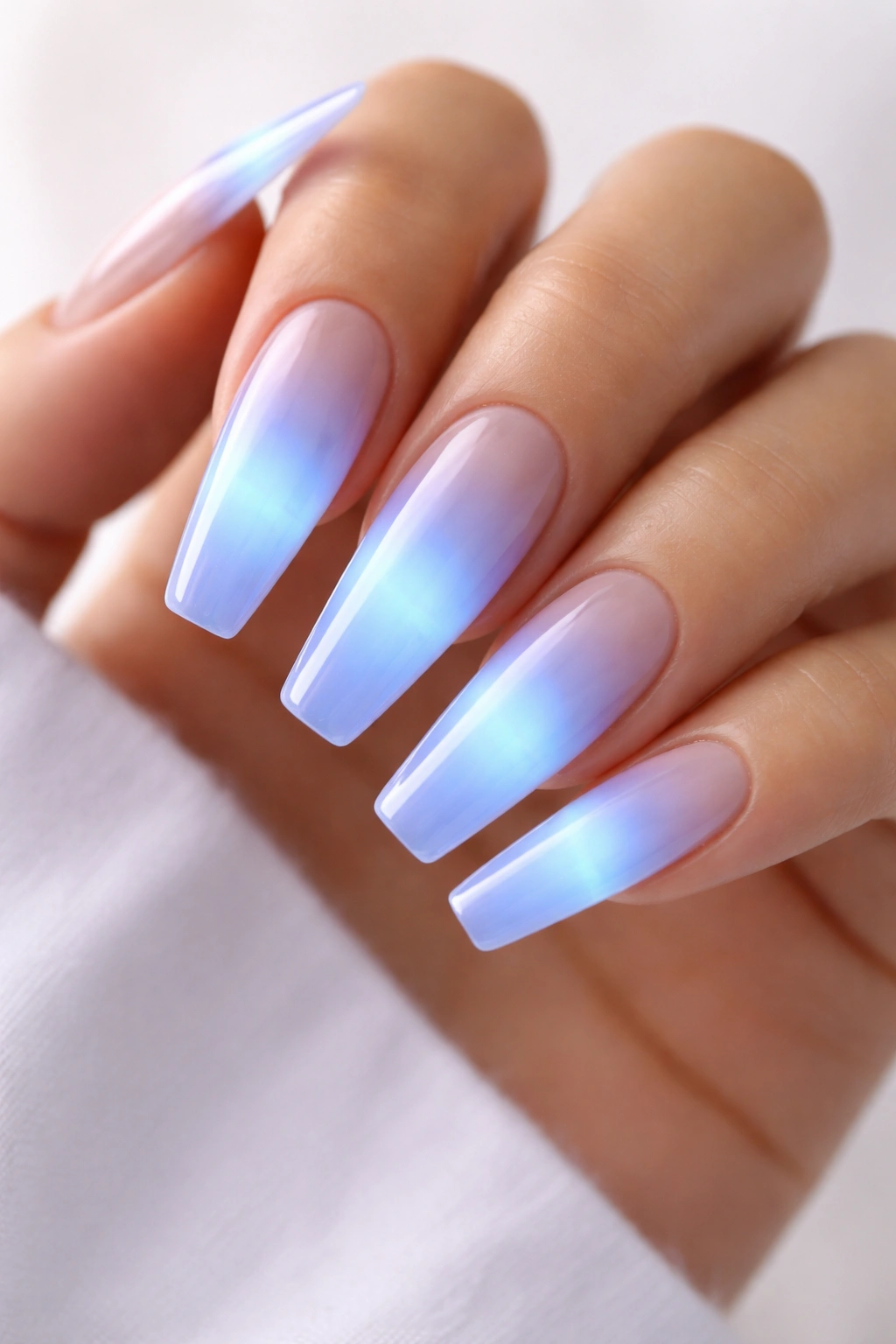
Electric blue aura nails are louder than most of the sets here, and that is the point. They use a soft base—usually milky nude, pale blue, or translucent pink—with a blurred electric blue glow in the center or upper middle of the nail. The effect almost looks airbrushed from inside the nail rather than painted on top.
I’d only do this on medium or long coffin nails. Short nails can wear aura effects, but the blur needs space. On a longer coffin tip, the glow has room to bloom, and the tapered sides help frame it.
A good aura set should not have a hard circle stamped in the middle. The color needs to feather outward in a diffused halo. If you can see a crisp ring, the effect loses its softness and starts reading like a target. Not ideal.
This design also benefits from editing. One aura shade is enough. Maybe a dusting of fine shimmer over the top. Maybe one tiny crystal near the cuticle on each ring finger. Once people start stacking aura, glitter, stars, charms, and chrome all at once, the manicure turns noisy.
Electric blue has that fresh, high-energy feel some people love and others tire of after five days. If you are unsure, do the aura on two accent nails and keep the rest in a matching solid blue.
11. Sapphire Jelly Coffin Nails
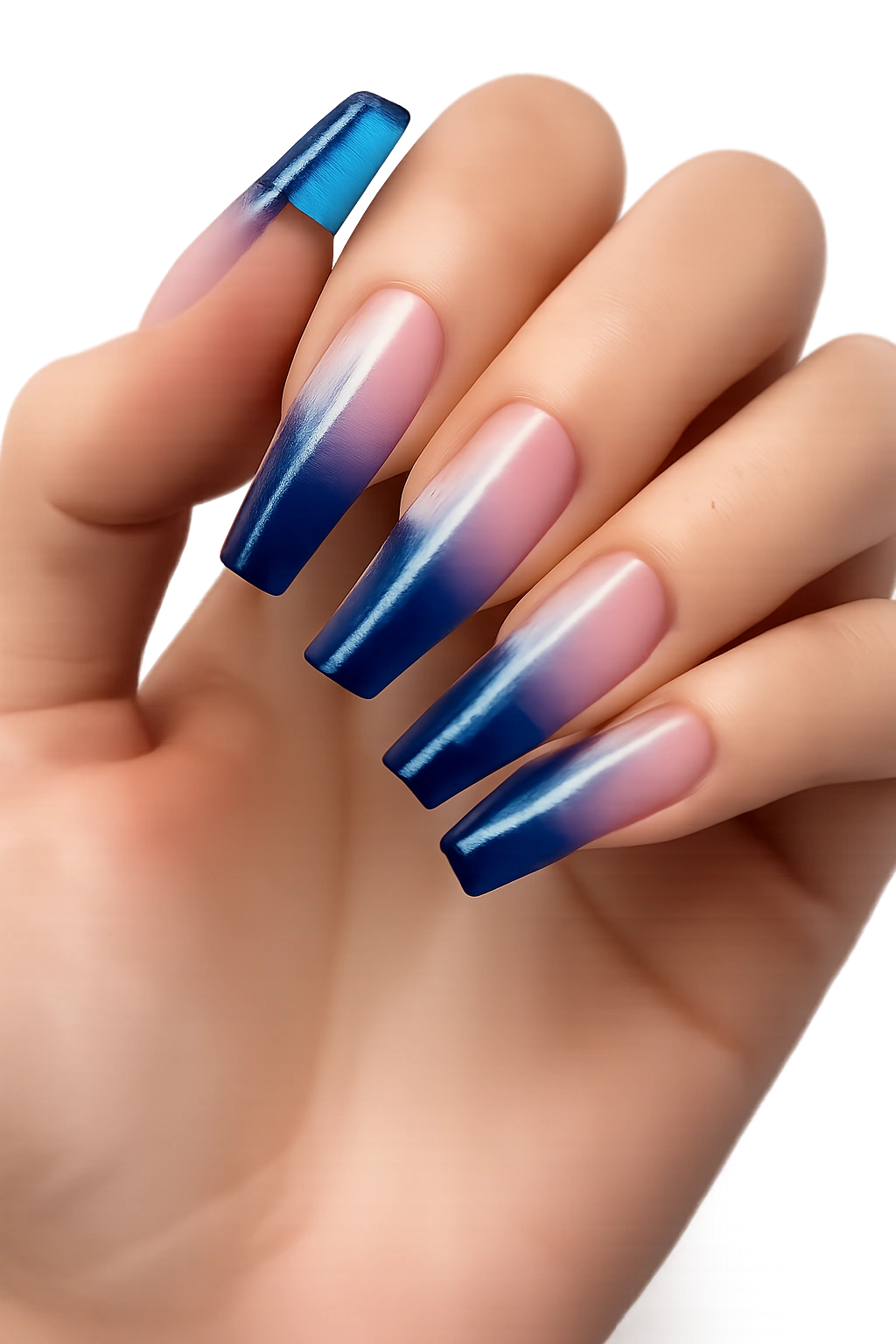
Unlike opaque cream polish, sapphire jelly nails use transparency as the whole point. The color looks like tinted glass—deeper at the tip, lighter where the natural nail bed or extension base shows through.
That glossy depth is why jelly finishes look so good on coffin shapes. The wider tip gives you a stronger pool of color at the end, and the taper keeps the whole nail from looking thick. If you want something rich but not flat, sapphire jelly gets there fast.
Who should pick this over solid royal blue? Anyone who likes shine and depth more than blunt pigment. Jelly blue feels less heavy on the hand, even when the shade is dark.
There is one technical issue to watch. Jelly polish needs thin, even layers. Three thin coats usually look better than two thick ones because the transparency stays smooth and the cured surface stays cleaner. Thick jelly can wrinkle, flood the sidewalls, or cure unevenly under the lamp.
If you wear extensions, this set looks especially good with a nude or clear base underneath. The layered blue near the tip creates a stained-glass effect that cream polish cannot copy.
12. Royal Blue Marble Coffin Nails
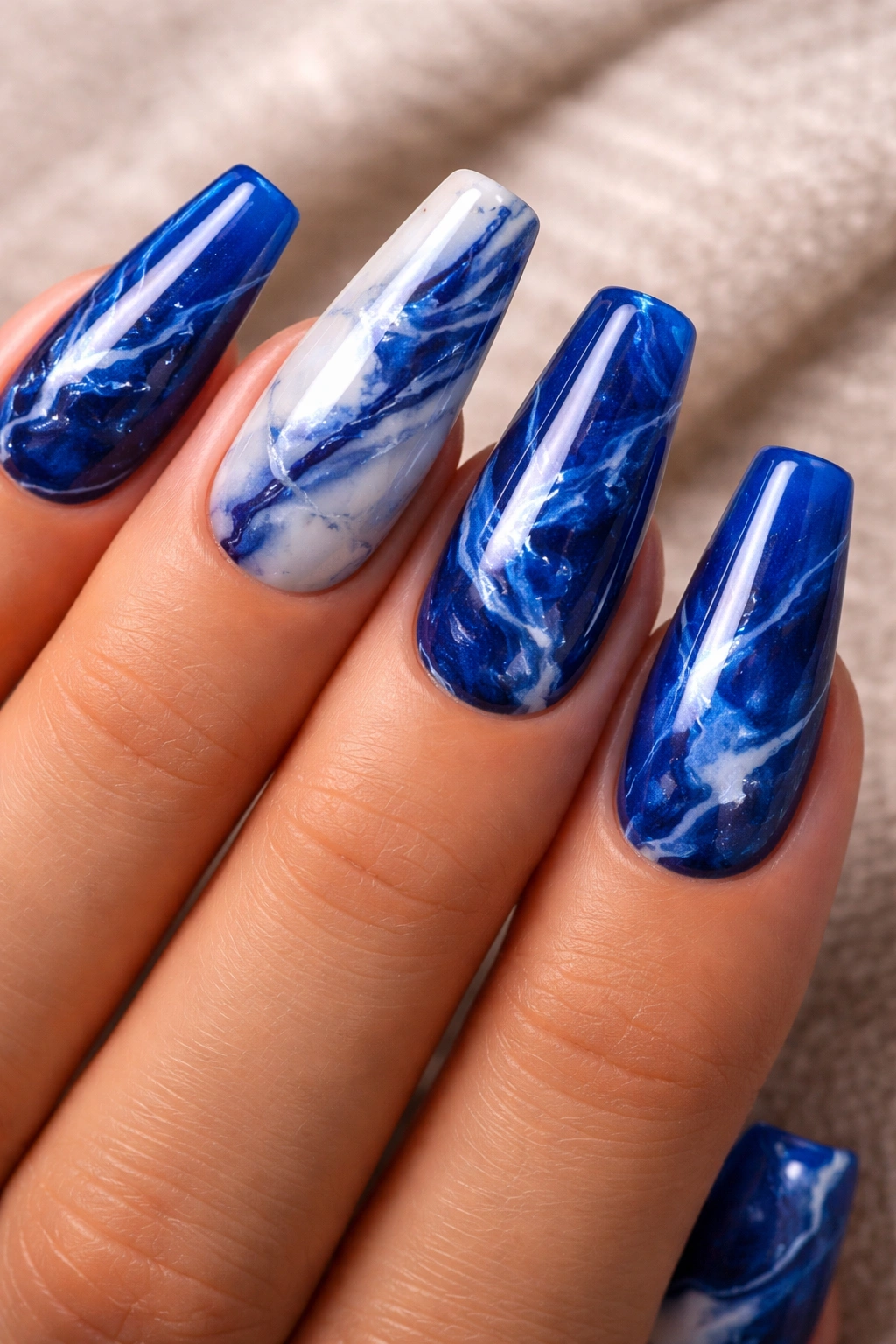
Royal blue marble has movement. It looks like ink dropped into water and pulled through with a fine tool before it fully settles, which gives the manicure a little tension and keeps the color from reading flat.
You can do the design two ways. The first uses a white or milky base with royal blue veins dragged across the nail. The second uses a royal blue base with white, navy, or metallic veining layered on top. I lean toward the first if you want a brighter, cleaner set, and toward the second if you want something moodier.
The marble effect works best when each nail is different. Not wildly different—just enough that the lines do not repeat. Repeated marbling looks stamped. Real marble-inspired work has variation in thickness, direction, and density.
A few details that improve the finish
- Keep the veins thin and let some fade out before they hit the edge.
- Add one metallic line at most on accent nails, not every nail.
- Use marble on two to four nails, then anchor the set with solids.
- Choose gloss, because marble needs that wet depth to read well.
This is one of the easier blue art looks to make dressy. Pair it with silver rings and it turns sharp. Pair it with gold and the color starts looking richer.
13. Indigo Velvet Cat-Eye Coffin Nails
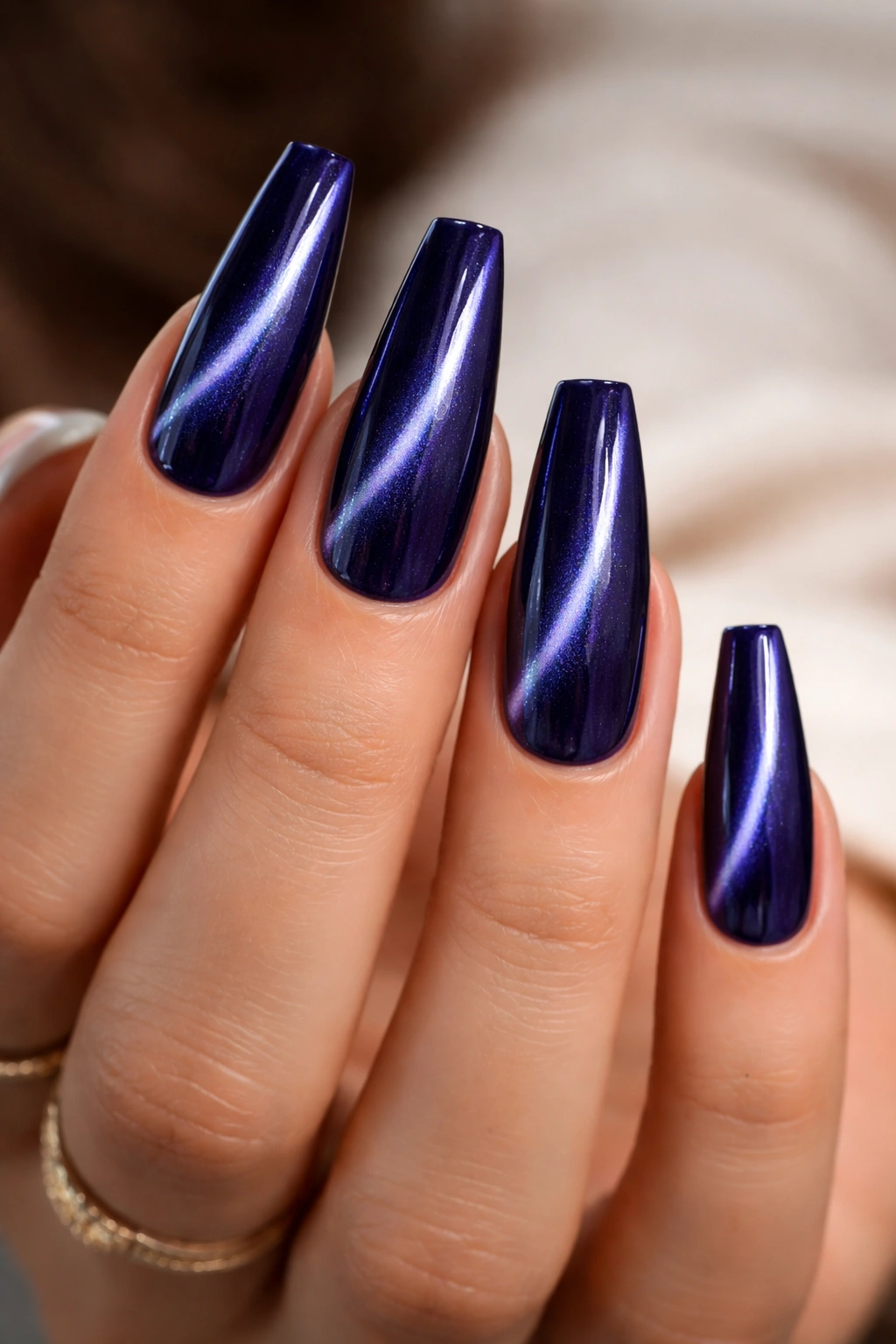
Cat-eye polish does not need black to look dramatic. Indigo velvet cat-eye might be the best proof of that, especially on coffin nails where the magnetic line or glow can run cleanly from cuticle to tip.
The magnetic effect is the whole show
A cat-eye set uses magnetic particles suspended in gel polish. When the magnet hovers over the wet layer for a few seconds, the shimmer shifts into a line, band, or diffused glow. Indigo works because it already has depth. The magnetic pull adds movement without washing out the base shade.
Ask for these details if you want the “velvet” look
- A deep indigo base coat under the magnetic gel
- The magnet held for 3 to 5 seconds per nail before curing
- A soft diagonal or centered pull, not a harsh stripe
- Medium or long coffin tips so the light path has room to show
This manicure looks best under indoor light and evening light, where the shift moves as your hands turn. Strong daylight flattens it a little, though the color still holds.
Skip chunky gems with this one. The whole design depends on that smooth, moving surface.
14. Midnight Blue Glitter Fade Coffin Nails
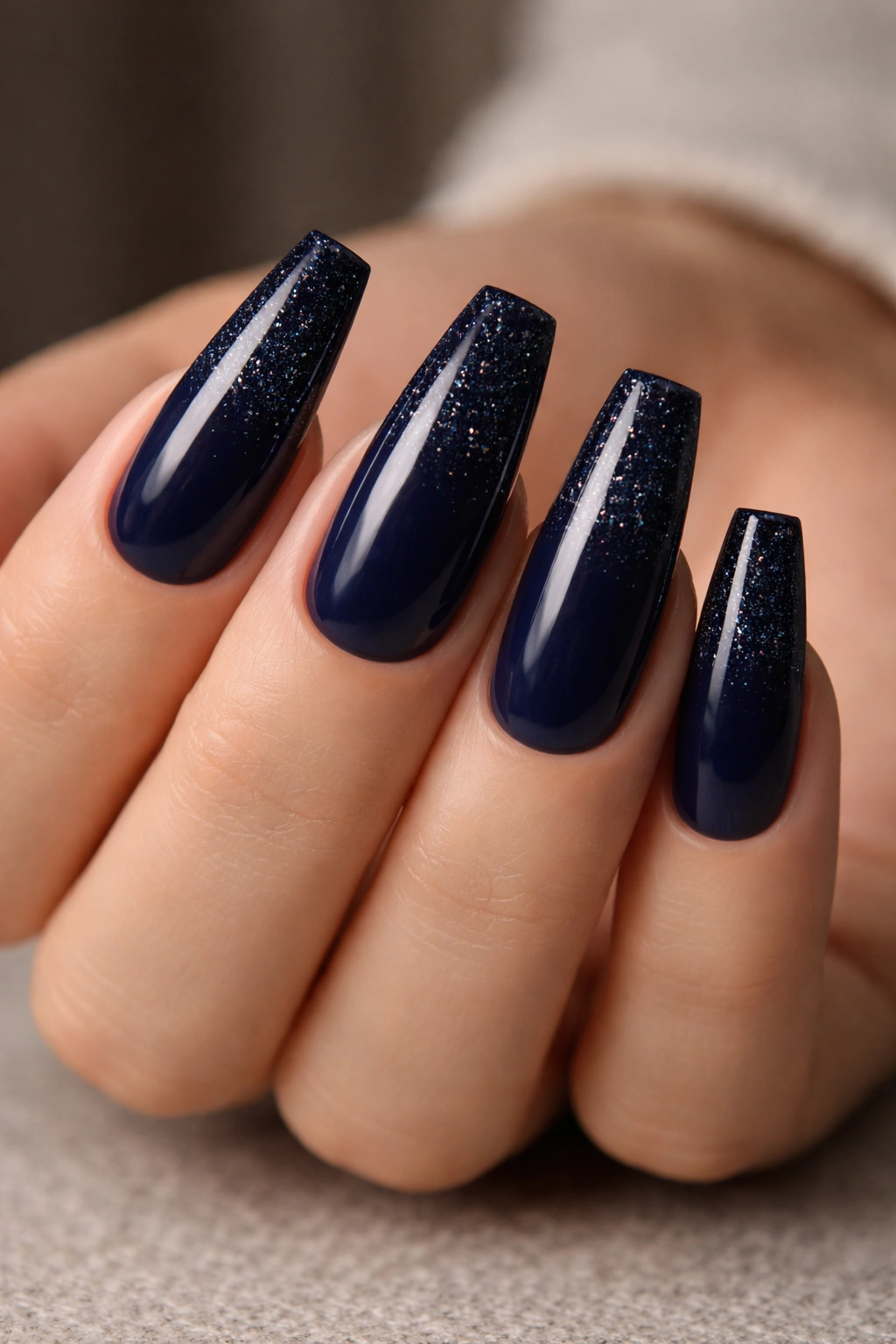
Glitter looks expensive when it is placed with discipline. Midnight blue glitter fade nails prove the point.
The trick is using the right glitter mix. You want fine shimmer plus a few small reflective pieces, not craft-store chunks that sit on top of the nail like gravel. Start dense at the tip, then let the sparkle thin out as it moves toward the center or lower third of the nail. That gradient keeps the set sleek.
Midnight blue is a smart base for glitter because it hides the blend line better than pale blue. Navy and black-blue shades let the sparkle look suspended in color, almost like a night sky, while still staying more polished than straight black glitter nails.
This set also gives you options. You can do a nude base with midnight glitter concentrated at the tip for a lighter feel. Or you can lay the glitter over a dark blue base for a richer, more evening-ready finish. Both work on coffin nails because the square tip gives the fade a clear starting point.
One warning, though: heavy glitter adds bulk fast. If the nail is already thick from acrylic, too much glitter gel plus top coat can leave the tip looking blunt. Thin layers win here.
15. Navy Blue Gold-Foil Coffin Nails
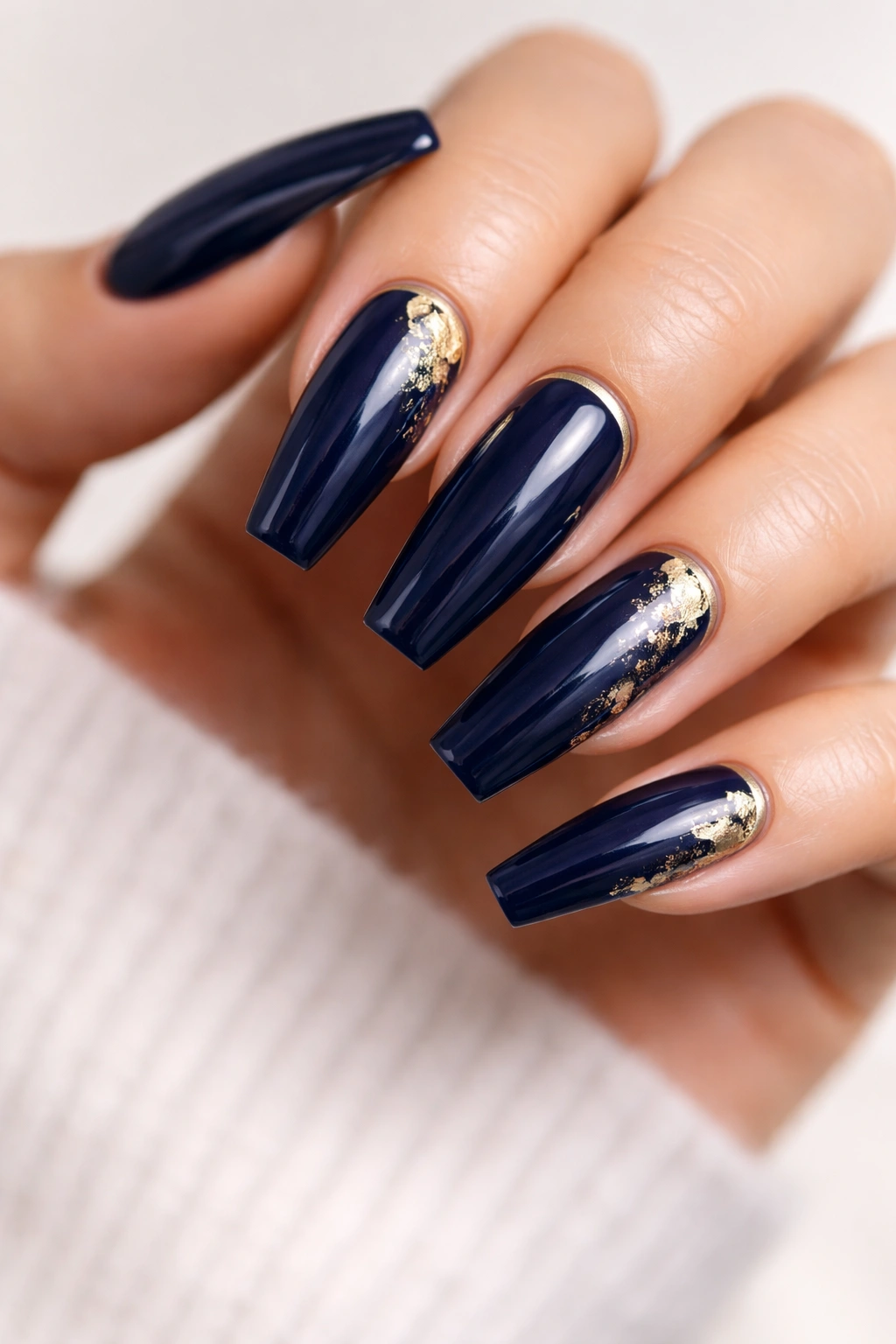
If you want the deepest, richest end of the blue spectrum, navy blue gold-foil coffin nails are hard to beat. Navy has weight. Gold foil gives it contrast and a little warmth, which stops the manicure from feeling flat or severe.
I prefer foil used sparingly—a torn edge near one sidewall, a slim cuticle crescent, a broken diagonal across two accent nails. Full foil coverage can turn muddy on navy because the metal starts competing with the color instead of lifting it.
Navy also looks best when the coffin shape is clean and not too long. Medium length is the sweet spot for most hands. Long navy nails can still look good, but the shade is so dark that extra length shifts the mood from polished to dramatic fast. If that is what you want, go for it. If not, rein it in a little.
Gloss is the best top finish for this set. Matte navy with foil can work, though it loses some of the richness that makes deep blue worth choosing in the first place. I’d save matte for denim or dusty shades and let navy stay slick.
This is the set I’d pick when you want blue to read formal, crisp, and expensive—especially with gold jewelry already in the mix.
Making Blue Coffin Nails Last Longer at Home
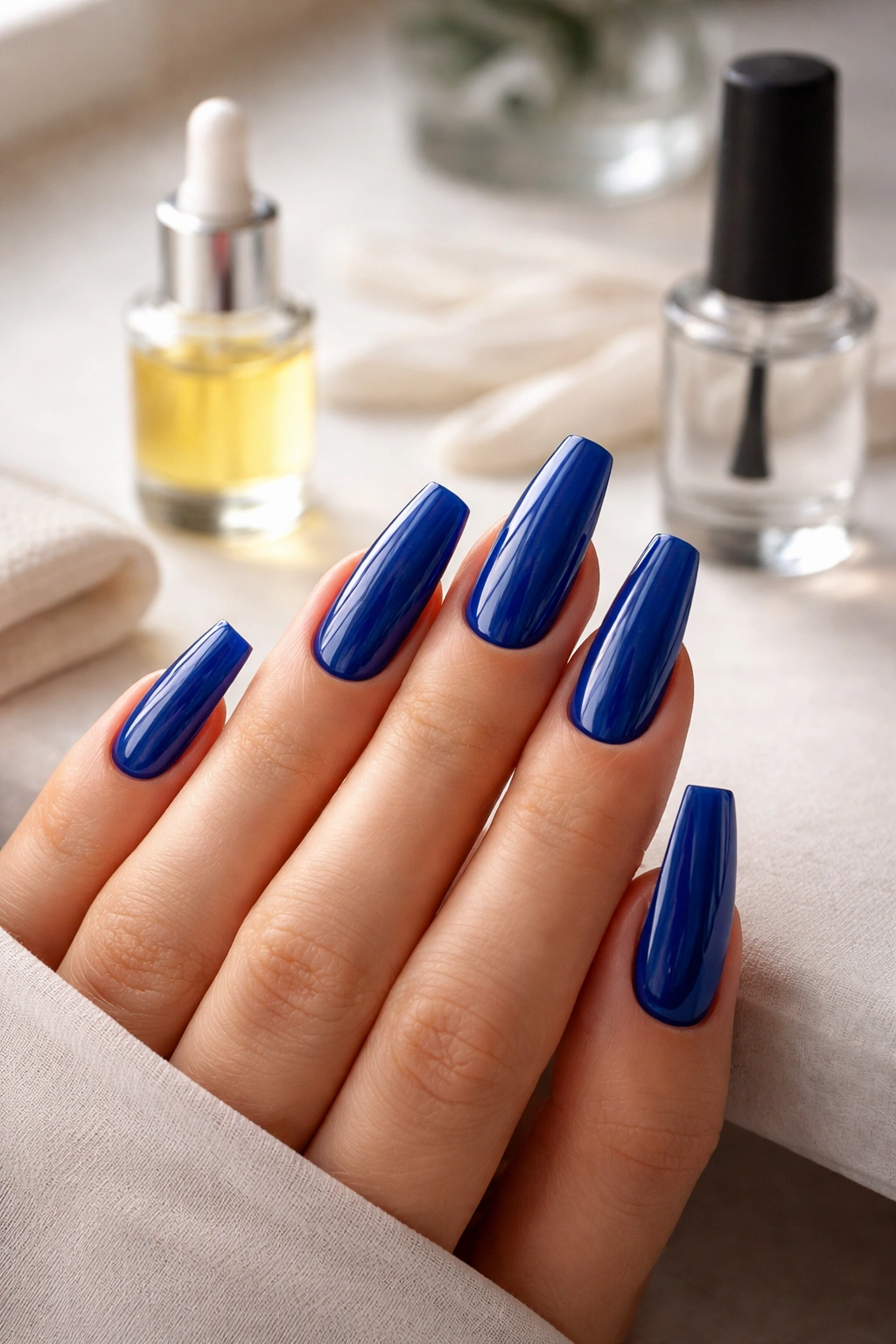
Blue polish is less forgiving than nude when the set starts wearing down. Tip wear shows faster. Tiny chips show faster. Staining from dark pigments can show up on the underside of lighter free edges too, especially with strong royal and navy shades.
A little home care goes a long way:
- Apply cuticle oil twice a day, morning and night
- Wear gloves for dishwashing and heavy cleaning
- Reapply a clear top coat every 5 to 7 days if you’re wearing regular polish or older gel that’s starting to dull
- Do not use your nails to open cans, peel labels, or scrape wax
- File snags with a fine 180- or 240-grit file instead of picking
Blue nails also look better on moisturized hands. Dry knuckles and ragged cuticles can make even a fresh set look tired. Hand cream, SPF on the backs of your hands, and a little cuticle oil do more for the final look than another crystal accent ever will.
Final Thoughts
Blue is one of the few nail colors that can move from soft to sharp without leaving the same color family. Baby blue milk bath nails feel light and airy. Cobalt micro-French tips feel graphic. Navy with gold foil feels polished and a little dressed up. Same shape, same color family, completely different mood.
If you are choosing your first blue coffin set, I’d start by deciding how much contrast you want on your hand. Low contrast points you toward baby blue, powder blue, or denim. High contrast pulls you into cobalt, sapphire, indigo, and navy. After that, pick finish before art. Cream, jelly, chrome, matte, and cat-eye each change the shade more than most people expect.
And if you are torn between two ideas, save one for the next appointment. The strongest sets usually come from editing, not piling on.