

If you’ve scrolled through office nail inspiration only to find yourself staring at either ultra-long stiletto designs or boring, chipped manicures, you’re not alone. The gap between “too much” and “not enough” feels impossibly wide — until you discover that squoval nails might just be the shape that finally splits the difference. Squoval nails have become the unofficial uniform of the modern professional workspace, and for good reason: they offer just enough sophistication and length to feel intentional without screaming for attention. This shape manages to be both flattering (it’s actually one of the most universally flattering nail shapes, especially for shorter lengths) and practical — your keyboard doesn’t sound like a jackhammer, your manicure doesn’t chip after day two, and you still look polished enough to take that video call without apologizing for your nails.
The real question isn’t whether squoval nails work for the office — it’s which design will make you feel most confident while you’re navigating spreadsheets, sending emails, and trying to remember where you put that file everyone keeps asking about. Short squoval nails specifically have become a bit of an insider trick for people who know that professional doesn’t have to mean invisible. These designs walk the line between “I woke up like this” and “I absolutely planned this look,” which is exactly the vibe that commands respect without demanding a second glance.
What makes these 12 designs work in a professional setting isn’t complexity — it’s intention. Each one proves that office nails don’t have to be bland, and that short squovals give you the canvas to express personality while maintaining absolute professionalism. Whether you’re heading into a law firm, a creative agency, a corporate office, or anywhere else where people care that you care about details, one of these designs will become your go-to.
1. Classic French Squoval
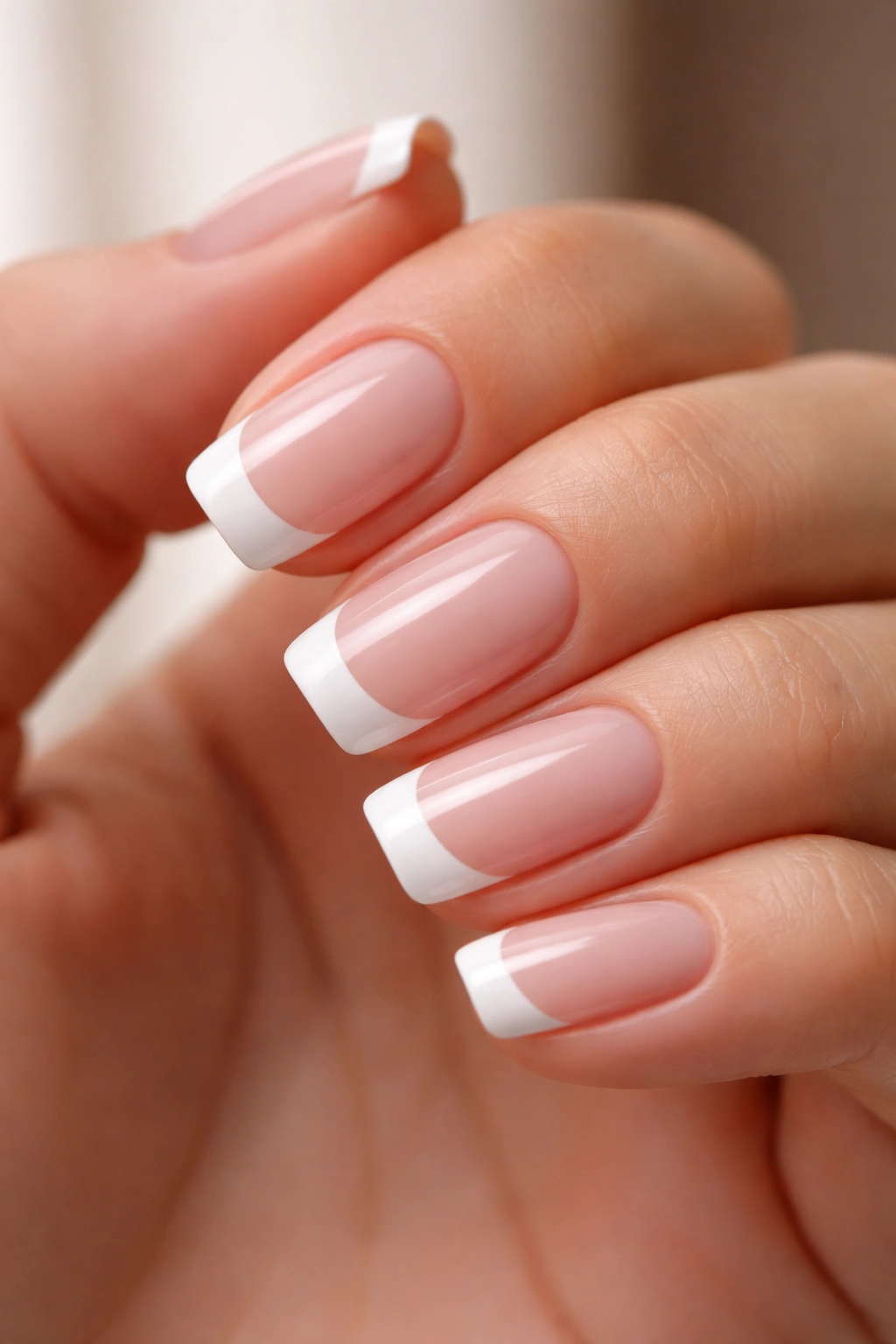
The French manicure transcends trends because it works — it just does. But the traditional almond shape can feel a little too formal for everyday office wear, whereas a French squoval manages to be equally elegant while feeling grounded and real. Paint the entire nail a soft off-white or cream color, keeping it opaque and smooth. The key here is precision with the tip line: create a clean, crisp white strip at the edge of your nail that sits just a fraction wider than a traditional French would. The white should never creep up more than a quarter-inch from the edge. This restraint is what keeps the design professional.
Why This Works in the Boardroom
The French squoval reads as intentional without trying too hard. Your nails look immaculate without broadcasting that you just got a manicure, which somehow makes them feel even more professional. The design is timeless enough that it won’t look dated next quarter, and it’s neutral enough to pair with any outfit, any season.
Application Tips for Longevity
Use a good base coat — this protects your natural nail and prevents the white polish from staining your nail bed. Apply thin coats of the nude or cream color (three thin coats beat one thick coat every single time). The white tip is the star, so make sure your white polish is highly pigmented — one good coat usually covers perfectly. Seal everything with a glossy top coat for that expensive, fresh-from-the-salon finish.
2. Soft Blush and Nude
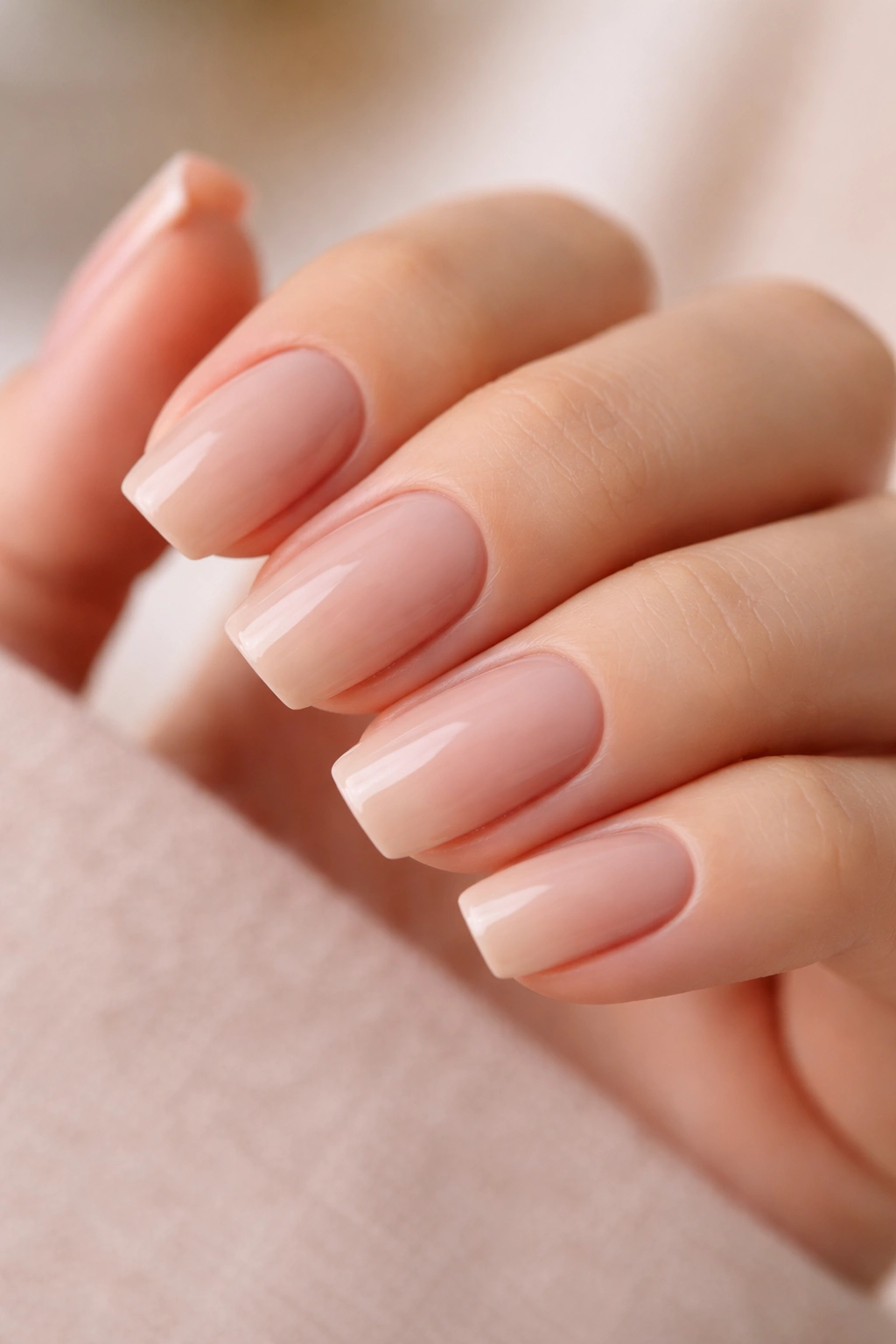
This is the design that every person with fair to medium skin tones has probably worn at some point, and that’s because it genuinely flatters everyone. The magic is in choosing two complementary shades that sit on opposite ends of your undertone spectrum. Paint your nails a soft, warm nude — something that sits somewhere between your actual skin tone and a whisper of pink. Then, on the squoval tip, layer a slightly deeper blush tone that has a hint of warmth without being aggressively pink. The effect should look like your nail naturally deepens at the edge, like there’s natural dimension happening.
The nail should look alive, not flat.
Building the Gradient
You don’t need fancy tools for this. Apply your base nude color to the entire nail, then take a clean makeup sponge (seriously, the cheap ones work great), dab it into your blush shade, and press it onto the tip of each nail. Blend the edges gently with your finger or a fluffy brush while the polish is still slightly tacky. A top coat will smooth everything out and give you that seamless, airbrushed finish that makes people ask “did you just get a professional manicure?”
3. Deep Burgundy Polish
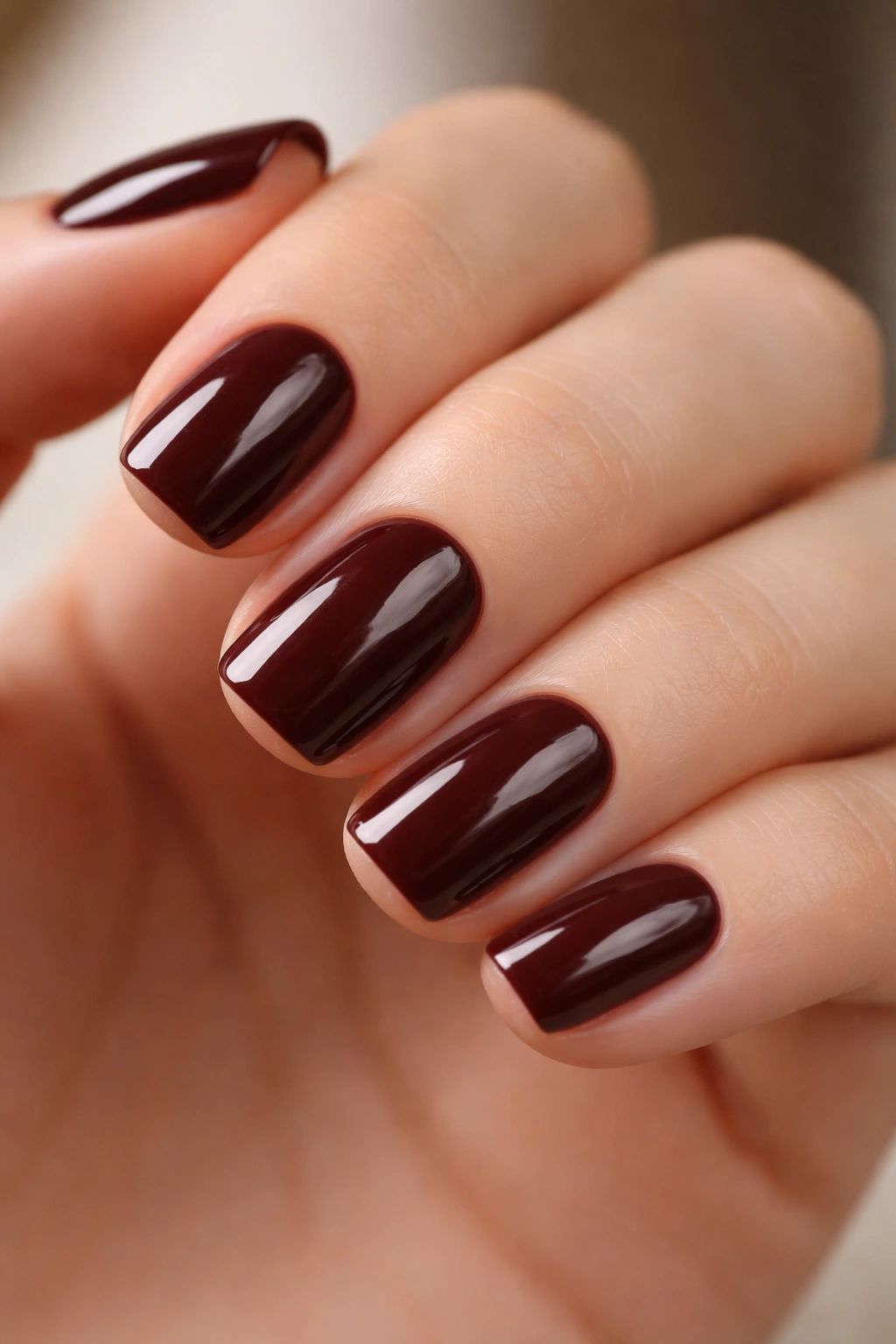
When you want to prove that professional doesn’t mean beige, burgundy is your answer. This is the nail color that says “I have taste” without being so bold that it distracts from your actual work. Burgundy on short squovals feels particularly sophisticated because the shape anchors the boldness — it’s statement-making without appearing reckless. Choose a burgundy that leans slightly brown rather than purple. The warmth of the shade makes it feel both luxurious and wearable.
Why Burgundy Beats Red in the Office
Red can feel aggressive under fluorescent lights. Burgundy has that same intensity but with a sophistication that reads as intentional and professional. It pairs beautifully with the neutral tones most office workers wear — grays, blacks, creams, tans. And if you’re someone who usually plays it safe with nail color, burgundy is the perfect gateway to slightly bolder choices.
Maintenance and Reapplication
Deep colors like burgundy show every speck of dust and chip immediately. Use a good top coat (a glossy rather than matte finish hides imperfections better) and reapply it every few days if you want that just-done look. If you’re not ready to commit to the full five-day professional manicure experience, know that burgundy generally looks intentionally worn-in after a week, unlike lighter colors that just look chipped.
4. Minimalist Single Line
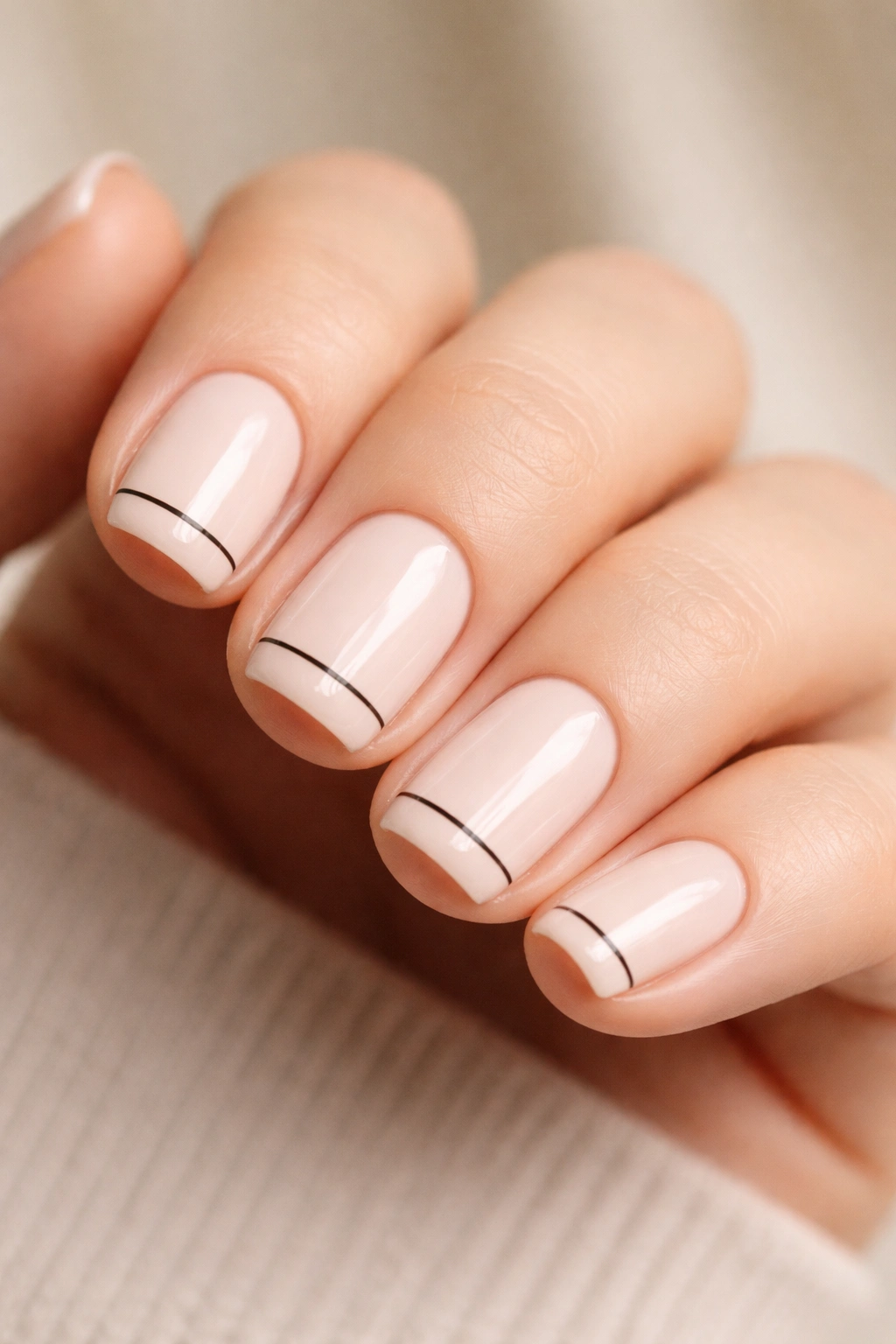
This design is for the person who sees nail art as something to admire from afar but doesn’t feel the urge to participate in it. A single thin line — either black, dark gray, or metallized — painted horizontally across the nail, roughly where your nail bed meets the tip, is somehow more interesting than a completely solid color while still being minimalist enough to feel understated. The line should be thin enough that it requires a steady hand or a thin brush, which is precisely why it feels more intentional than it is.
The Psychology of Less
A minimalist line serves as a subconscious detail that your colleagues might notice without realizing why your nails seem polished. It’s the kind of design that photographers and creatives love because it suggests sophistication without screaming for attention. Pair this with a soft cream or pale gray base, and the effect is utterly professional with a whisper of intentionality.
- Requires steadiness but not artistic talent
- Works on any base color
- Takes approximately two minutes to apply
- Looks intentional rather than like a mistake
5. Subtle Shimmer Nude
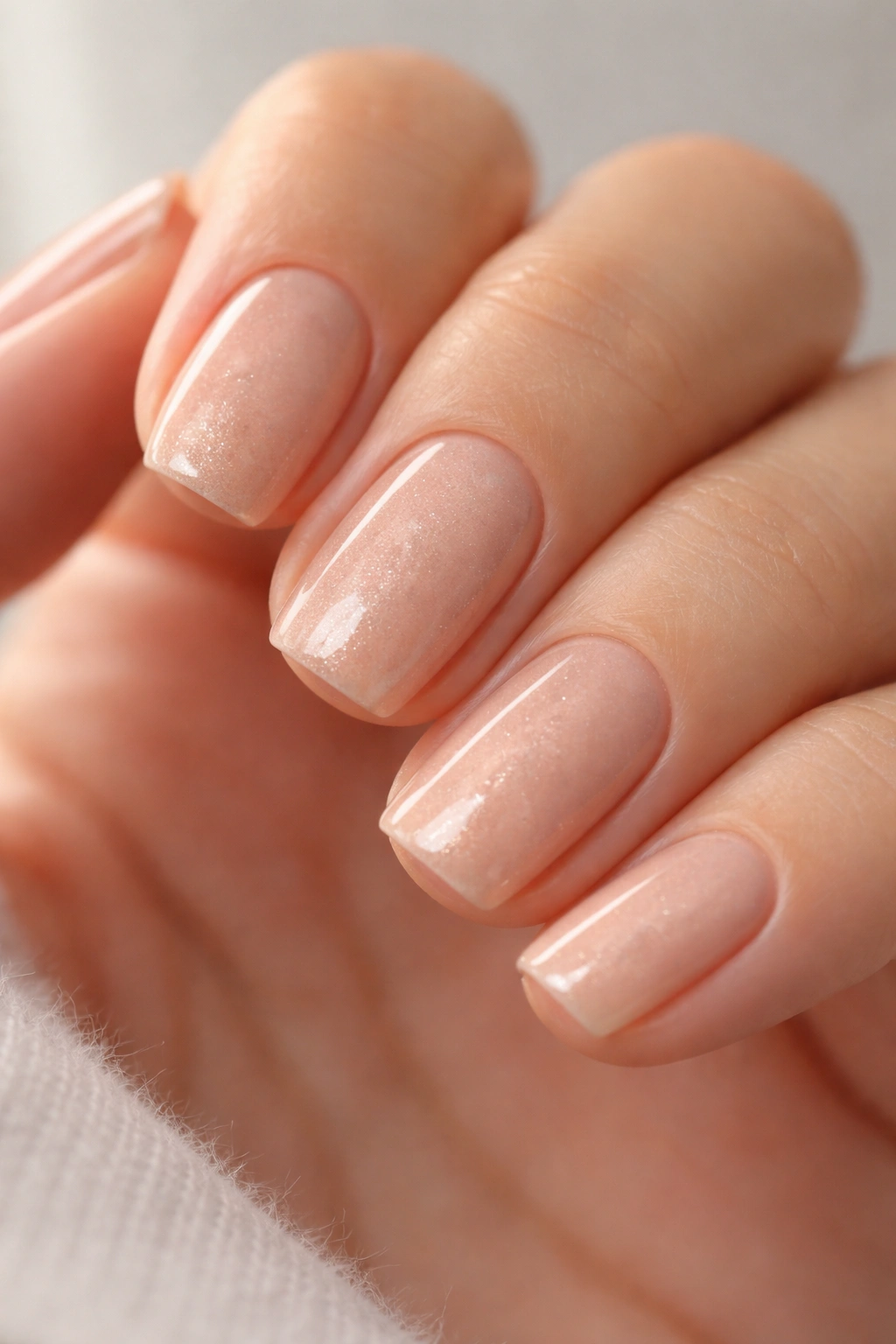
There’s a massive difference between “office sparkle” and “disco ball hands,” and this design lives firmly in the first camp. Choose your favorite neutral nude shade and add just a touch of ultra-fine shimmer — the kind that catches light without glittering. The shimmer should be so subtle that someone would only notice your nails look particularly polished when you’re under direct light. You’re aiming for an effect that reads as “quality manicure” rather than “I have tiny diamonds on my fingertips.”
How to Nail the Shimmer Application
Mix a tiny pinch of mica or ultra-fine shimmer powder into your nude polish before applying it, or use a commercially available shimmer-nude hybrid polish (Essie and OPI make excellent ones). Apply this as you would any solid color — in thin coats with a good base and top coat. The result is a manicure that looks effortlessly expensive and catches light in the most flattering way.
6. Matte Finish Neutral
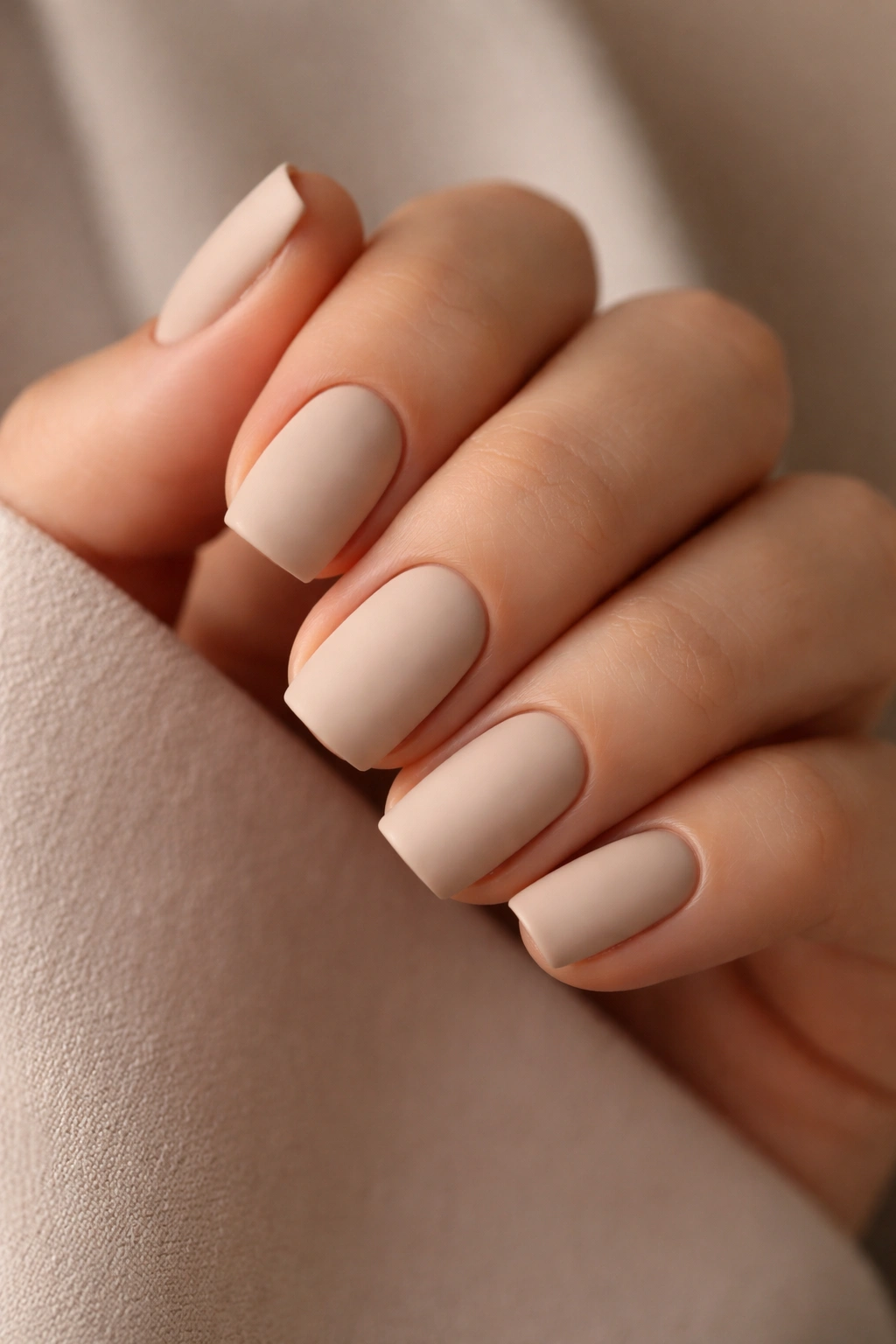
Matte nails have a modern, sophisticated edge that glossy nails sometimes can’t touch. A warm beige or sand-colored matte squoval says you know about finishes and textures, which apparently signals good taste in other areas too. The matte finish means any minor imperfections are practically invisible, making this one of the most forgiving designs in terms of upkeep. You can go longer between manicure appointments without the wear becoming apparent.
The matte finish also feels slightly more contemporary than a glossy version of the same color, which matters if you work in any creative field or anywhere that values current aesthetics.
7. Pastel Pink with Metallic Tips
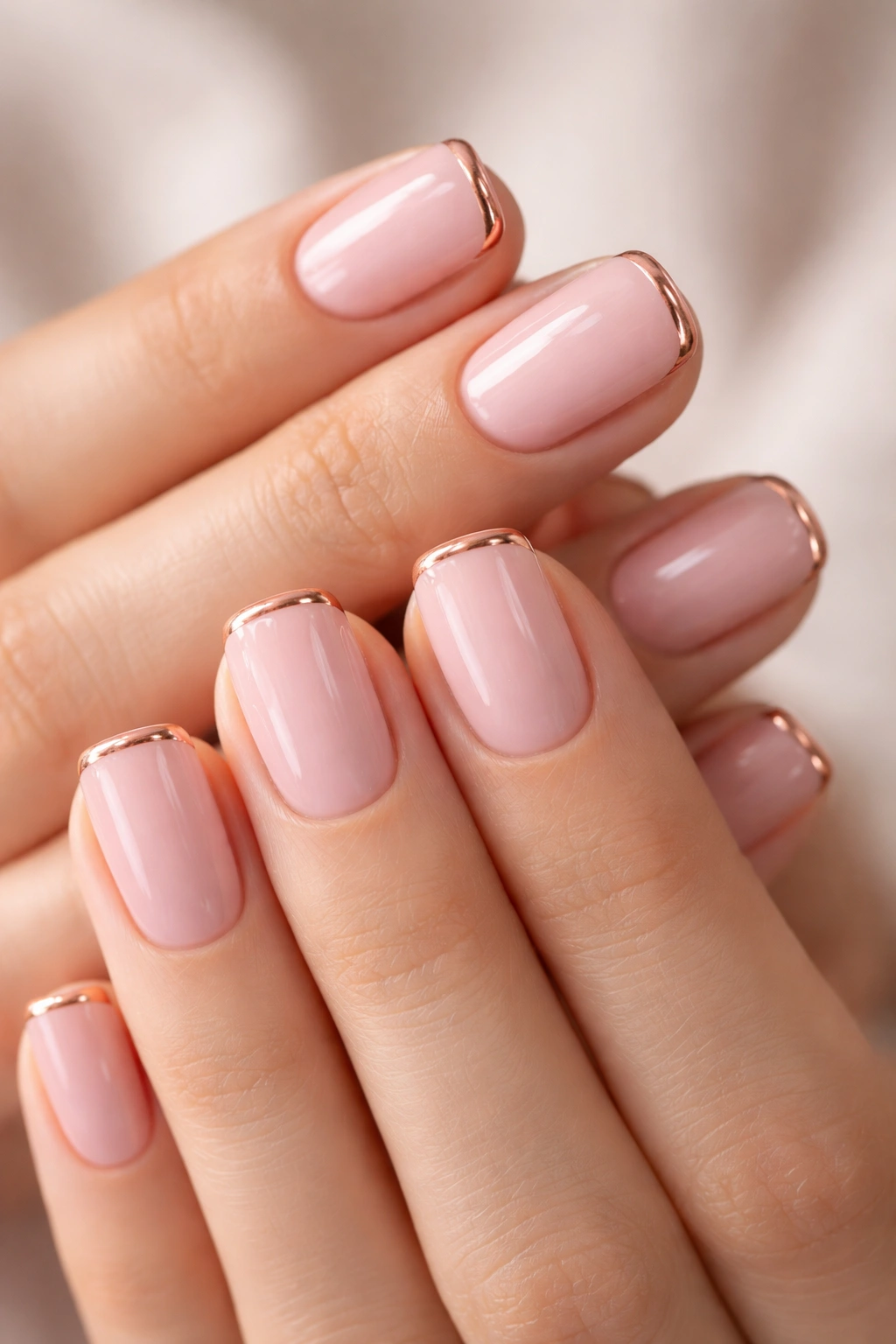
If you want something slightly more interesting than a French squoval but still absolutely office-appropriate, this is it. Paint your nails a soft, almost barely-there pastel pink — something so pale it’s practically a skin tone. Then, on the tip of each nail, paint a thin line of rose gold or champagne metallic that has a soft shimmer rather than a high shine. The metallic should be about a quarter-inch of the nail tip.
The Right Pink Shade
Pastels can go wrong quickly if you choose something too saturated. You’re looking for something that feels like it barely has color — a pink so soft it’s almost a tint rather than a color. Brands like Essie’s “Ballet Slippers” or Zoya’s light pink shades hit this mark perfectly. The combination of extremely soft pink with a whisper of metallic feels contemporary and professional without being trendy.
8. Creamy Beige Squoval
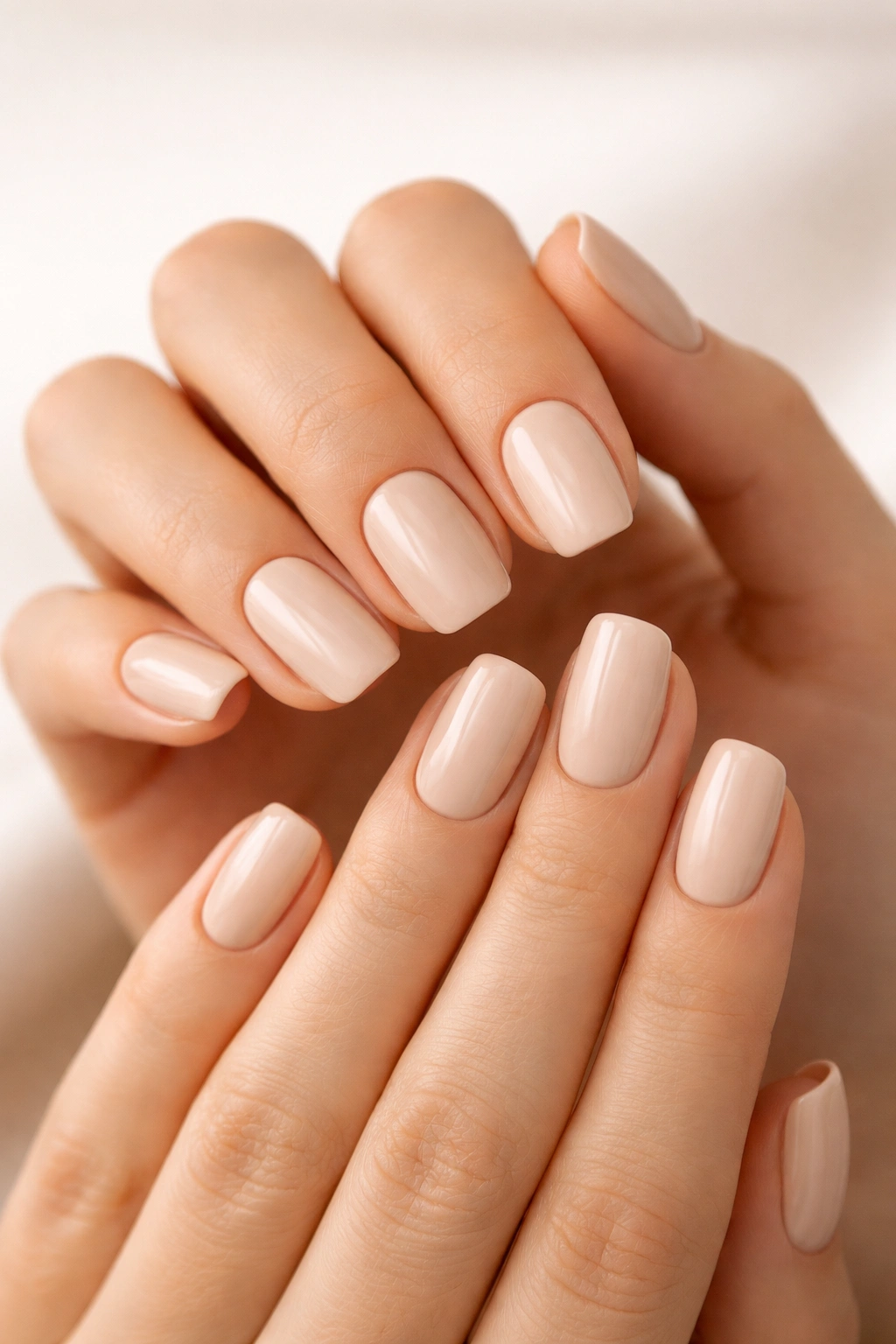
Sometimes the best office nail is the one that looks like you’re not trying at all. A creamy, almost buttery beige that sits about one or two shades darker than your skin tone is the definition of “I just have naturally perfect nails.” This shade works on every skin tone — it’s just about finding the right undertone. The creaminess of the color (as opposed to a stark, cool beige) makes it feel warm and intentional rather than like you grabbed whatever was available.
The Luxury of Simplicity
This is the design that expensive nail salons specialize in. The execution is flawless, the color seems invisible, but there’s absolutely something there. Apply in thin coats, make sure your shape is crisp, and use a top coat that gives you that velvety, soft shine that costs nothing but looks like you spent a hundred dollars at a luxury salon.
9. Slate Gray Professional
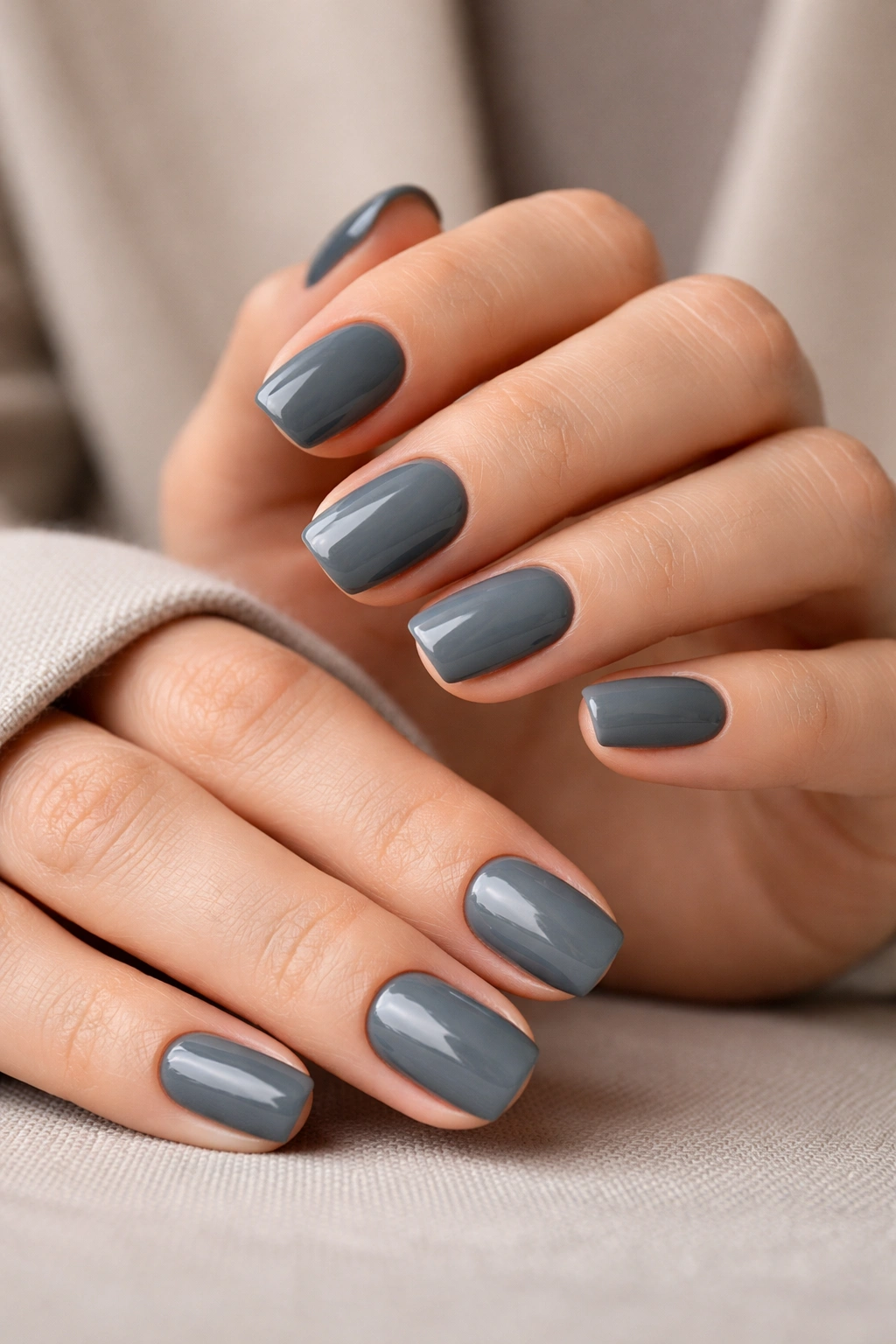
Gray occupies a weird space in office fashion — it’s somehow both completely corporate and surprisingly creative. A slate gray squoval hits all the right notes: professional, modern, slightly unexpected without being bold. This shade works particularly well on short squovals because the shape prevents it from reading as somber. Gray also pairs beautifully with jewelry — it won’t clash with gold, silver, rose gold, or copper tones.
The beauty of slate gray is that it hides minor imperfections better than lighter colors, so your manicure will look fresh longer.
10. Natural Taupe with Elegant Details
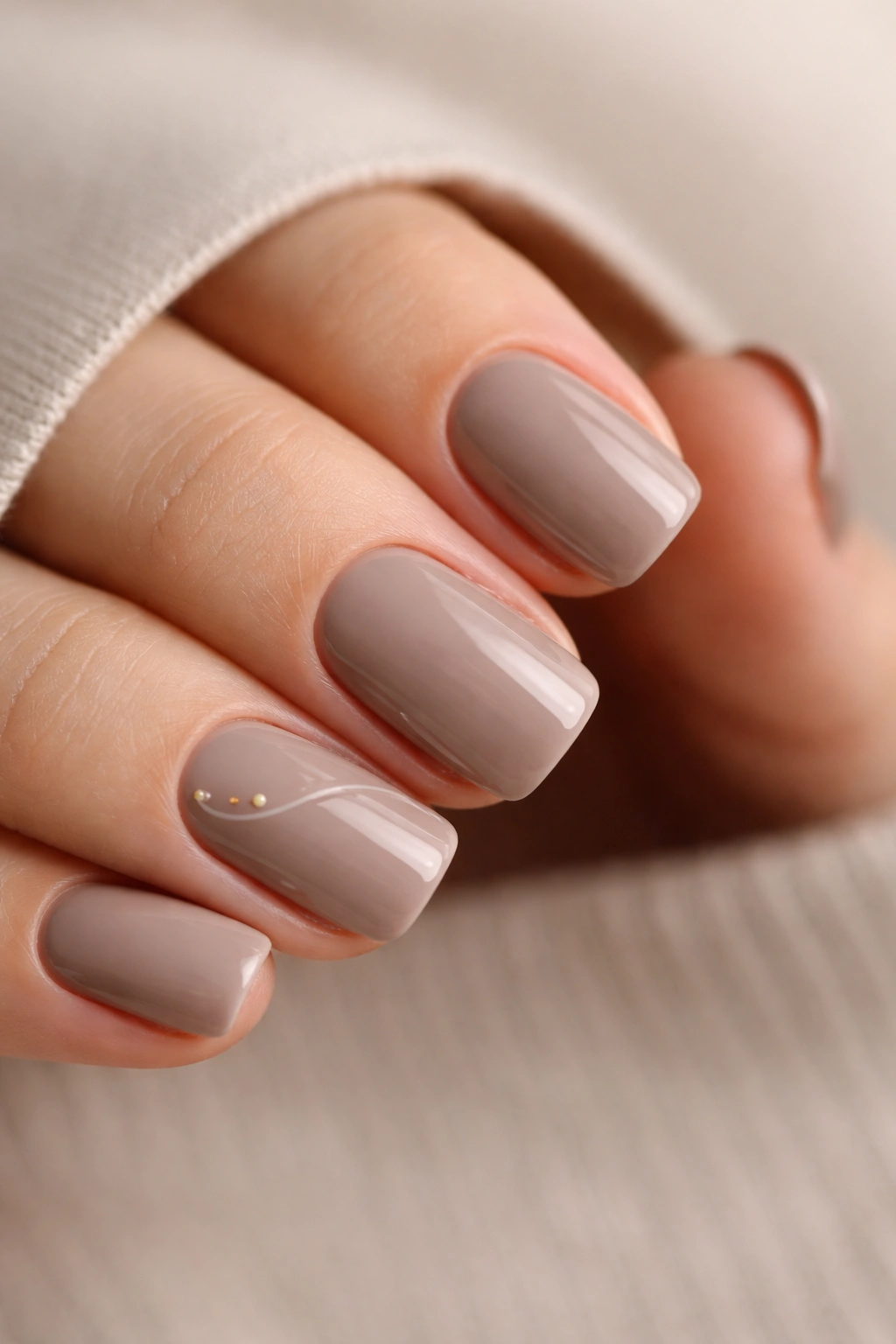
This is where you can let your creative side play without compromising professionalism. Paint your nails a warm, earthy taupe — the kind of color that exists somewhere between brown and gray. On just your ring finger or pointer finger (or both, if you’re feeling bold), add a delicate detail: a single thin white line, a tiny gold accent, or a minimal geometric pattern. The detail should take up no more than a third of the nail.
Where to Place the Detail
If you choose just one nail for the detail, put it on your pointer finger — this draws the eye and creates visual balance without overwhelming your hand. If you’re comfortable with nail art basics, a minimalist geometric pattern (just two or three lines or a small triangle) looks infinitely more professional than florals or busy designs.
11. Soft Peach Tone
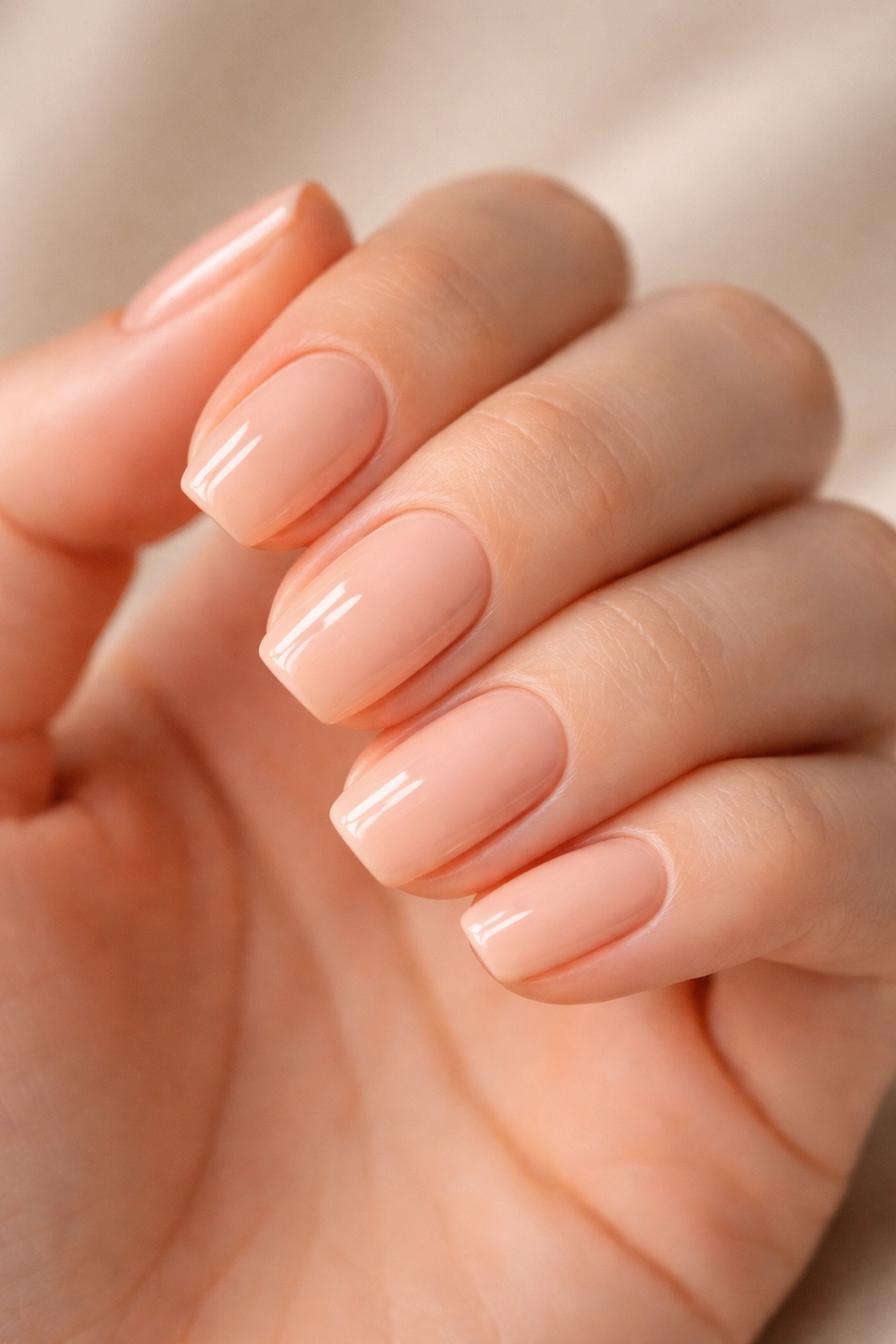
Peach feels summery, but a muted, soft peach that sits somewhere between nude and warm pink works perfectly year-round. This shade is particularly flattering if you have warm undertones (golden skin), though it’s genuinely wearable on all skin tones when you choose the right depth. A soft peach squoval looks friendly and approachable — which matters if you work in client-facing roles — without sacrificing any sophistication.
Keep the finish glossy and clean, and this design will feel fresh and intentional every single time.
12. Understated Gold Accent
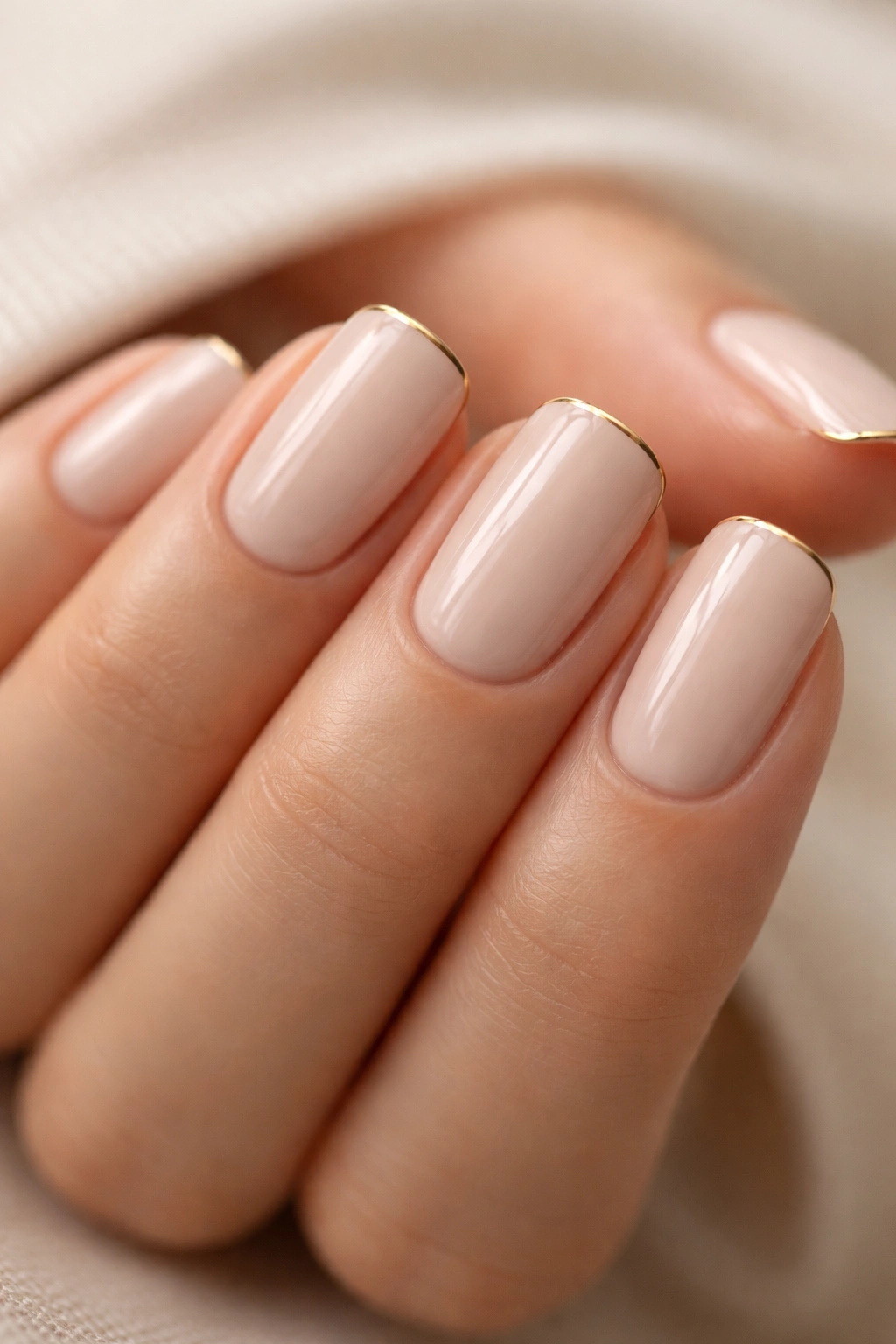
Final design: a creamy nude or pale beige base with the thinnest possible gold line painted along the outer edge of each nail. This requires a tiny bit of steadiness with your brush, but the effect is worth the effort. The gold line should be so thin it’s barely visible — you’re not painting a stripe, you’re adding a whisper of definition. When you hold your hands flat, the gold edge catches light and creates subtle dimension that makes your nails look more interesting than a solid color.
Execution and Durability
Use a gold gel pen or an extremely thin brush with metallic gold polish. The line should be so thin that it’s almost more of a suggestion than a clear stripe. This detail matters when you’re writing, typing, or holding things — it catches the light and creates the impression of a much more complicated design than it actually is.
Final Thoughts
Short squoval nails represent the sweet spot between practicality and polish — literally. These 12 designs prove that you don’t need length or complexity to look genuinely put-together in a professional setting. Each of these works because it respects the context (an office environment) while still expressing personal taste. Whether you lean toward minimalism or slightly bolder color, whether you prefer understated elegance or subtle sparkle, there’s a squoval design here that will become your reliable go-to.
The real win with office nails is consistency and intention. Pick a design that feels authentically you, commit to maintaining it well, and let it become part of your professional presence. Your colleagues might not consciously notice your nails, but they’ll notice that you look polished, and that matters more than any amount of length or embellishment ever could.