

Short squoval French tip nails have quietly become the most versatile manicure option for people who actually live their lives. Not everyone wants stiletto acrylics or the fussy maintenance of anything longer than practical. But a simple nude base with a white tip? That feels like giving up. Short squoval French tips split the difference — they’re polished enough for professional settings, playful enough for weekends, and actually manageable when you have real responsibilities. The beauty of this nail shape is that it works for nearly every hand shape and skin tone, which probably explains why it’s become the go-to look across nail studios from minimalist aesthetic blogs to celebrity manicurists.
What makes short squoval nails different from their almond or coffin cousins is the specific geometry. The sides are nearly straight, not dramatically tapered, and the tip is squared off with a subtle curve at the corners — it’s deliberate and structured without feeling harsh. Add a French tip, and you’ve got something that reads elegant without screaming “look at my nails.” The real trick isn’t finding one design you love; it’s having options for different moods, seasons, and occasions.
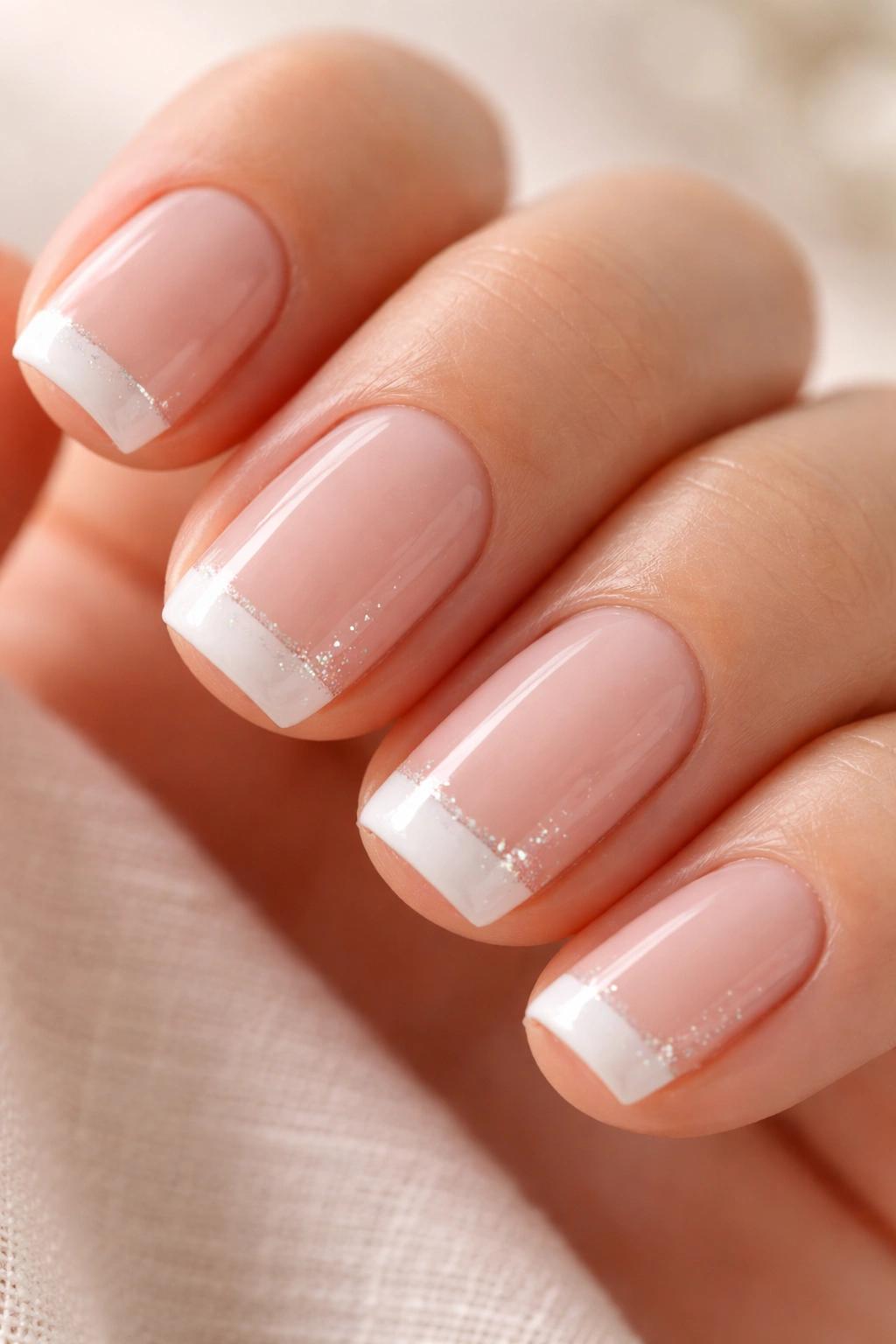
1. The Classic White French with Subtle Sparkle
This is the design you return to when you’re not sure what you want. A soft, neutral base — usually a warm nude or pale pink — meets a crisp white tip with a thin line of shimmer just above the white line. It sounds minimal, but the micro-glitter catches light in a way that feels intentional rather than overdone. The sparkle needs to be fine, like diamond dust scattered across a single line, not glittery chunks that look like craft supplies got involved.
The genius of this version is restraint. You’re adding visual interest without changing the fundamental elegance of the French tip. It photographs well in any lighting, and it pairs with virtually every outfit. The white line should be about 2 millimeters thick — any thinner and it disappears, any thicker and it feels costume-like on short nails.
This design works best for people who wear their nails for the long term. Unlike bolder designs that might feel tired after a few weeks, the subtle sparkle never gets old because you barely notice it until someone points it out. That’s when it feels like a secret you’re keeping.
2. Soft Pink to White Ombré Fade
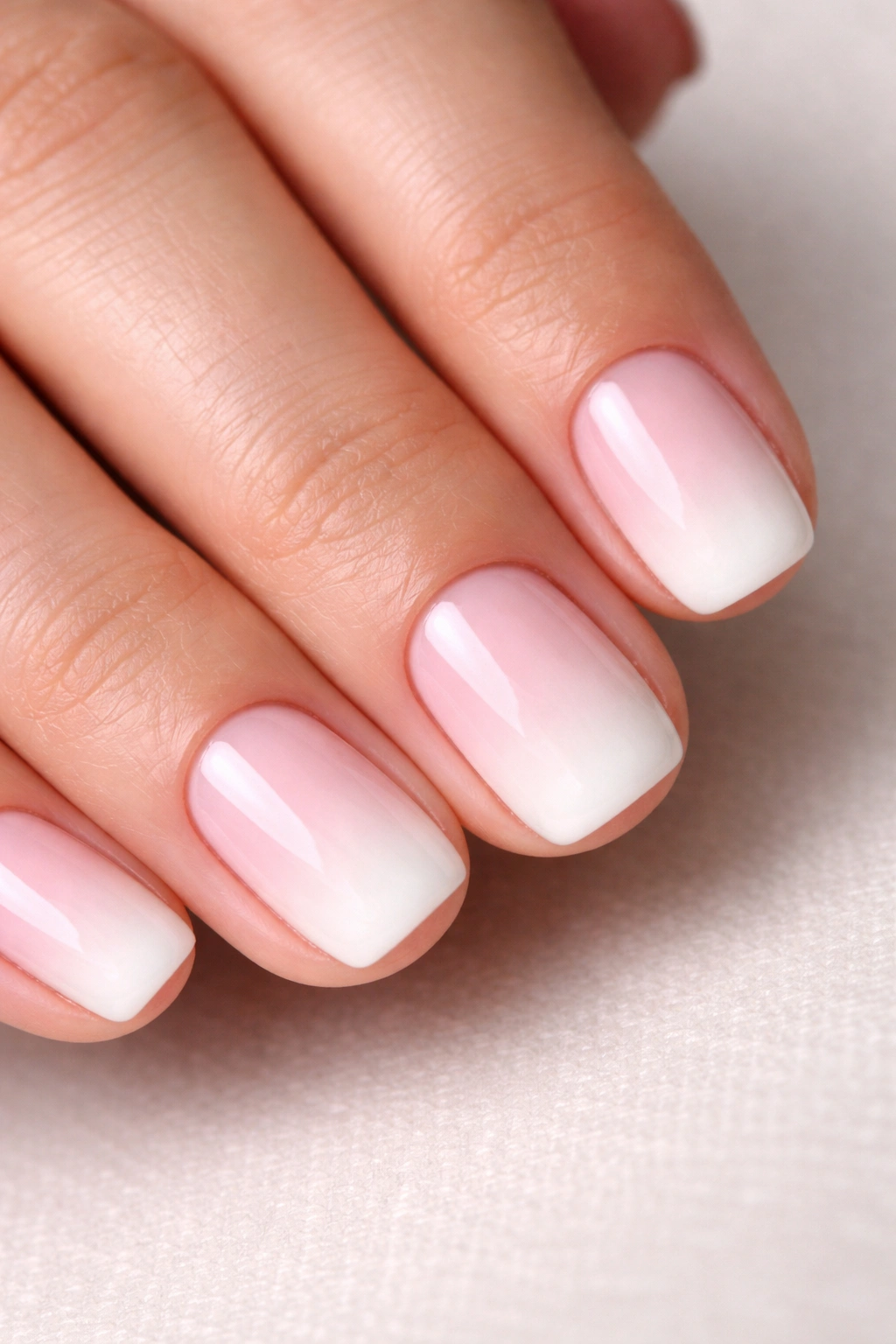
Instead of a sharp line between the base and tip, imagine the pink melting into white across the last third of the nail. This ombré transition sits somewhere between a gradient and a traditional French tip — it has the softness of a gradient but the clarity of knowing where your “tip” ends and your base begins.
Creating the Fade
The best way to achieve this is with a soft sponge application, pressing a barely-damp makeup sponge onto the junction where your pink base transitions to white polish. You’re not blending back and forth aggressively. One or two gentle presses and you’re done. Seal it with top coat to blur the edges even more.
Who Should Try This
Anyone with mature or minimal style. This design reads sophisticated without trying hard. It’s especially flattering on shorter nails because the subtle color shift draws the eye along the length of the nail without dramatic contrast that can make short nails feel stubby.
3. Milky French with Chrome Accent Line
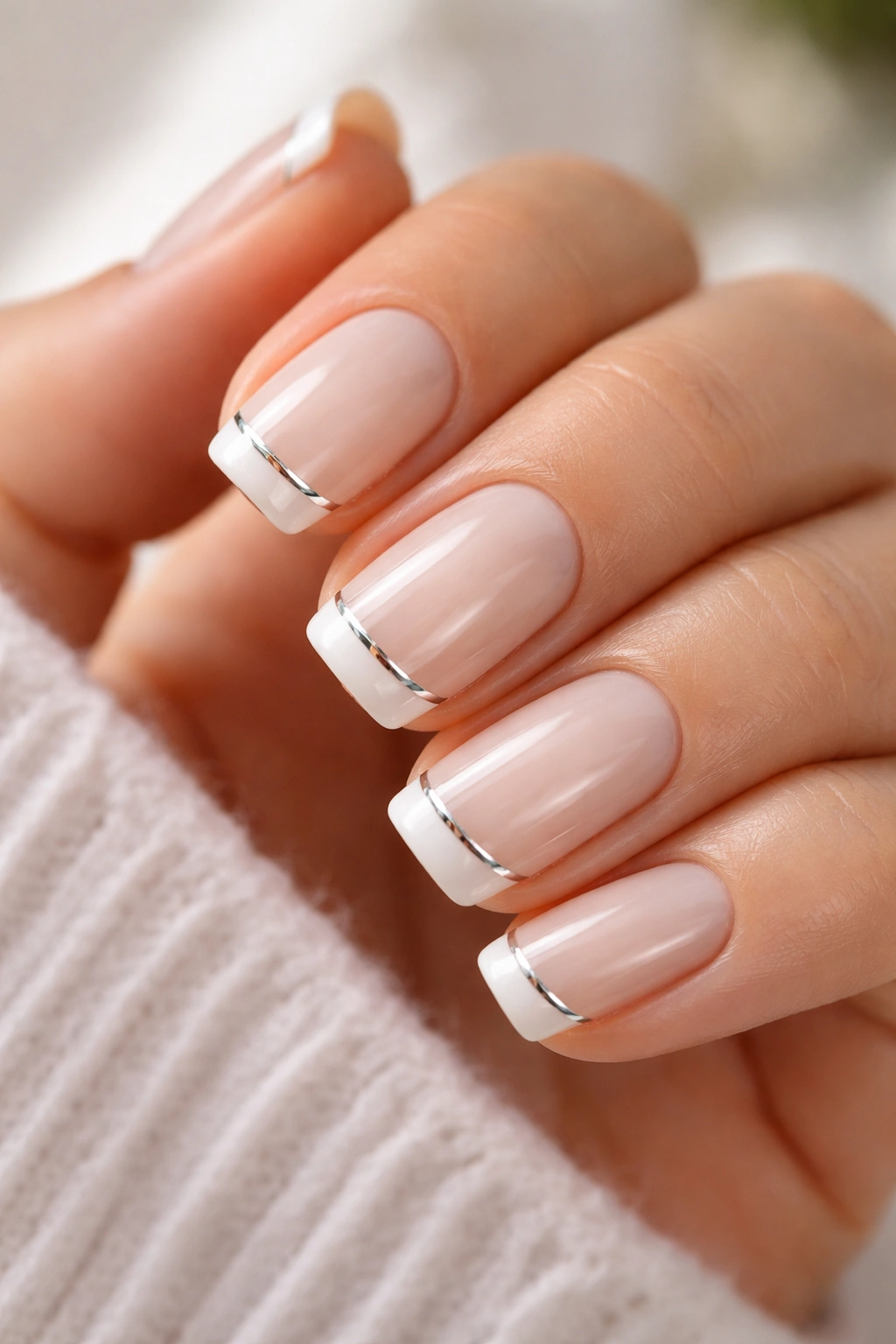
A milky or barely-there base coat shows more of your natural nail color, creating a translucent effect that feels modern and understated. The white tip is almost gossamer-thin, sometimes barely visible. What makes this design interesting is a single chrome line just above the white — a thin stripe of rose gold, silver, or bronze that catches light as you move your hands.
The chrome line needs precision, which is why this design benefits from a professional application. But it’s absolutely doable at home with a thin nail art brush and chrome powder. Press the chrome into a sticky base coat (most gel systems work), seal it, and you’ve created something that photographs beautifully without being loud about it.
This style appeals to people who notice details. It’s the manicure equivalent of a well-tailored jacket — the interesting part is subtle enough that only people looking closely will catch it.
4. Barely-There Nude French Tip
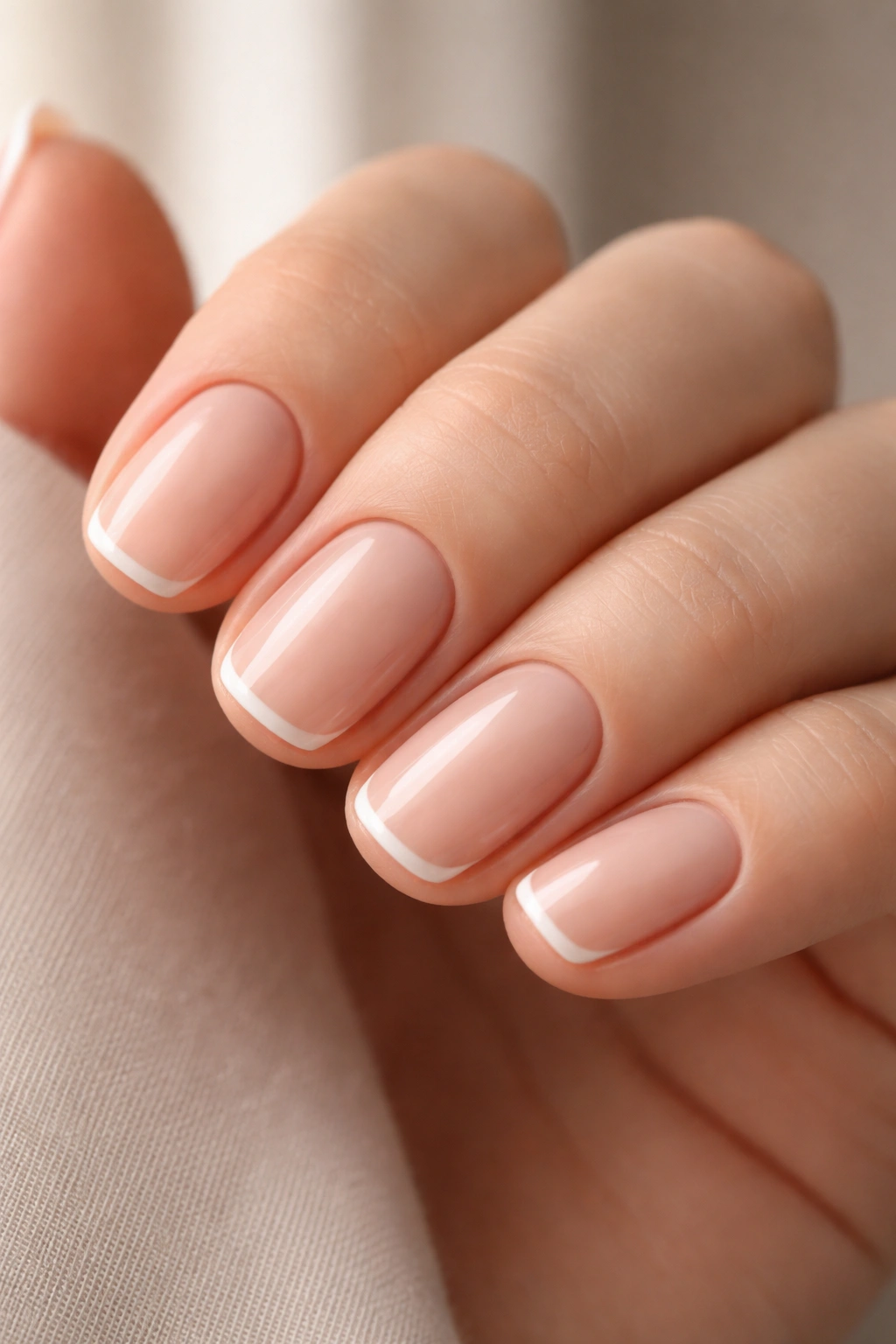
What if the tip was so close to your natural nail color that it barely reads as a separate element? This is French tipping taken to its logical extreme. You’re using a pale, milky white or off-white that’s almost peachy or beige-toned instead of pure white. From a distance, it just looks like very clean, well-maintained nails. Up close, there’s a tip there, but it’s whisper-soft.
The appeal here is subtlety that still registers as intentional. You get the psychological benefit of having styled your nails — there’s a defined shape, a French tip — but the effect is almost invisible. Perfect for environments where nails should feel professional and neutral but not completely bare.
5. Micro French with Matte Finish
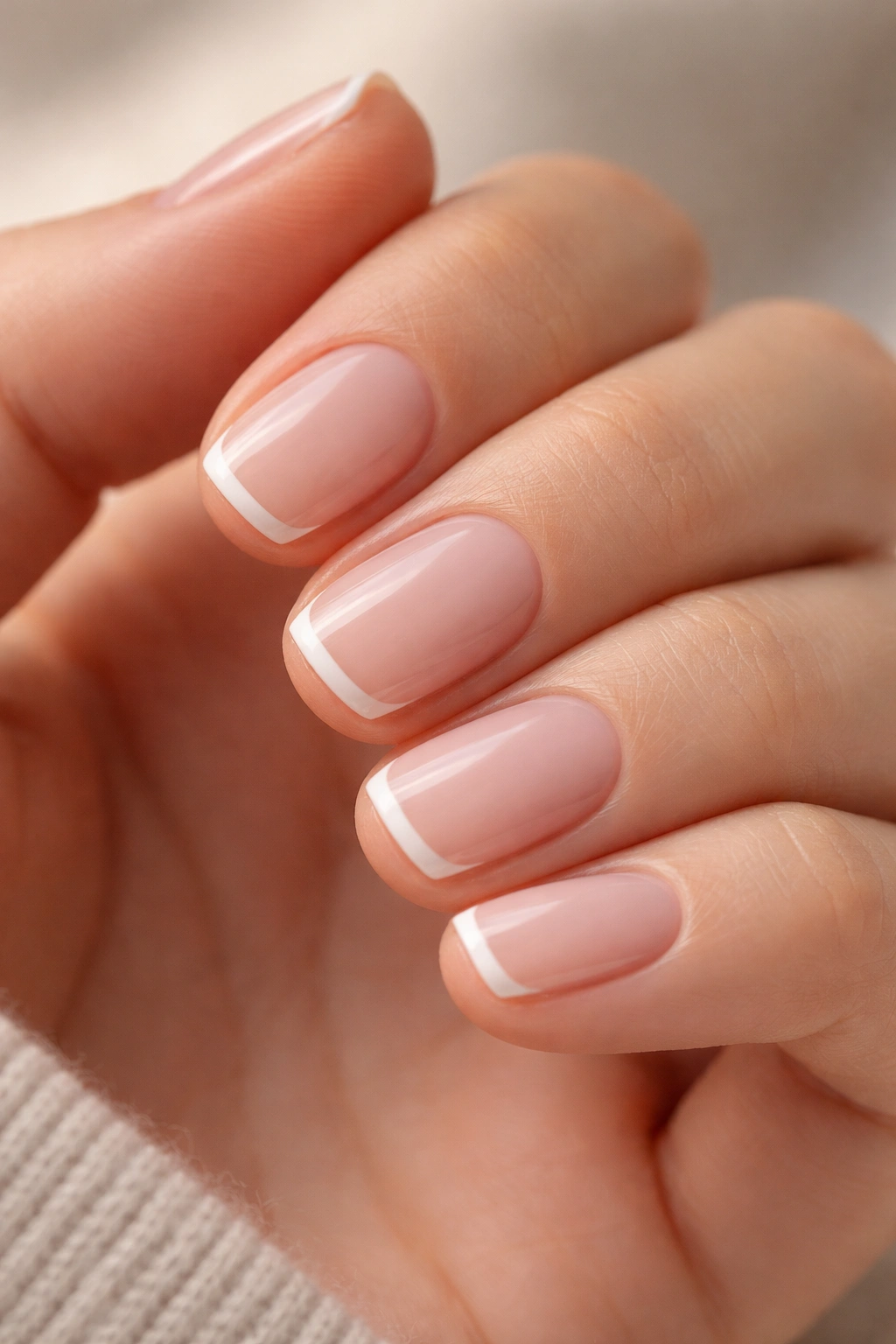
A matte French tip inverts the usual shine hierarchy. Your base stays glossy and luminous while your white tip gets a velvety, matte texture. The contrast between glossy and matte is immediately noticeable, giving the design a modern, editorial quality.
Why Matte Works on Short Nails
The matte finish actually makes short nails appear slightly more refined because it reduces shine, which can sometimes make nails feel plasticky or artificial. A matte white tip, especially a very narrow one (1 millimeter thick), reads almost architectural.
The catch: matte finishes can be drying to the nail, so you need to be committed to moisturizing your cuticles and nail beds. A good top coat helps, but matte nails do require slightly more intentional care than standard glossy versions.
6. Squoval French with Baby Boomer Effect
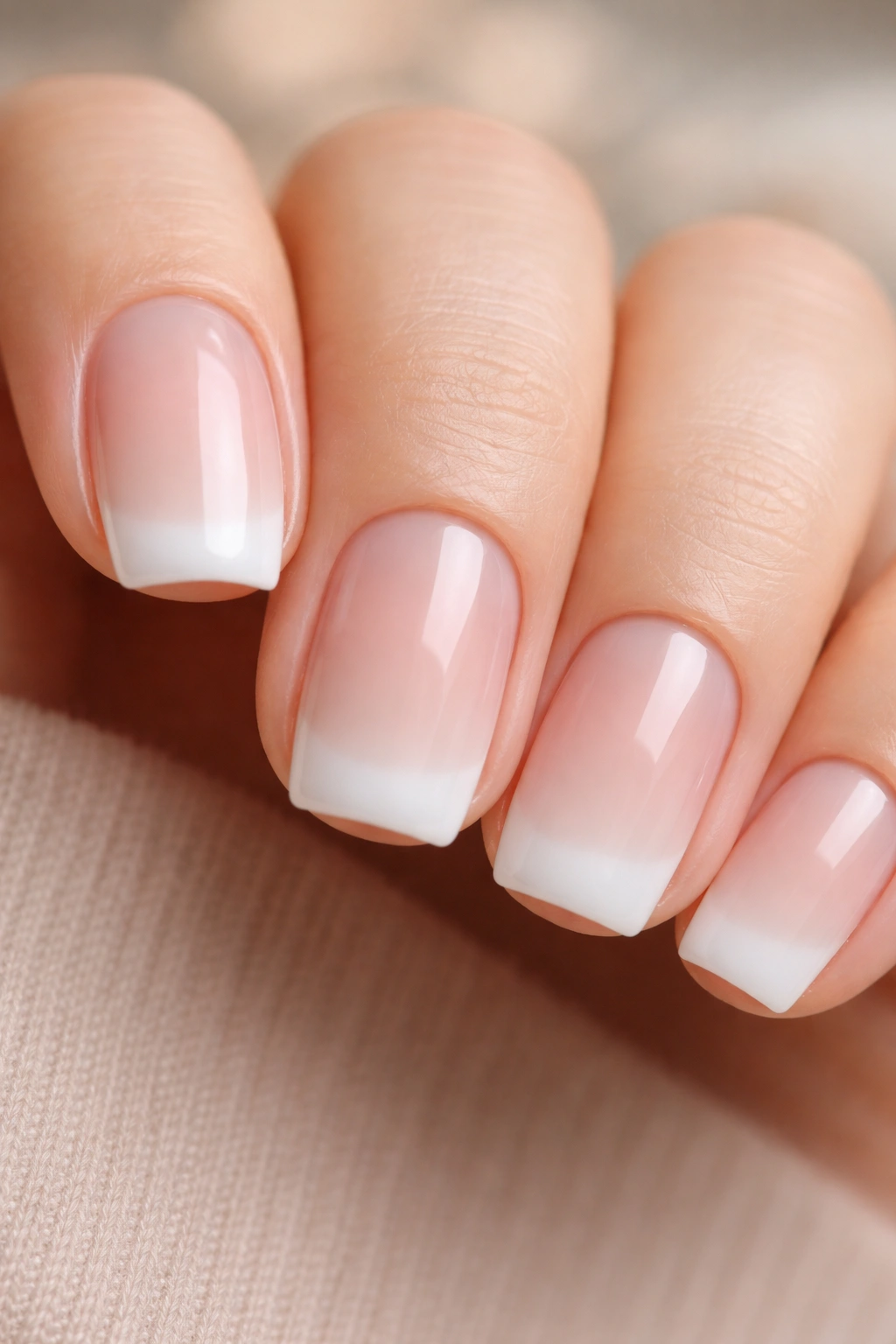
The baby boomer nail design blurs the color from clear or pale pink into white across the tip, creating a gradient that’s thicker and more visible than an ombré. It’s bold in its own gentle way. On short squoval nails, this creates an almost 3D effect where the white part appears to pop forward.
The white section on a baby boomer design usually covers the last quarter of the nail, much more substantial than a classic French tip. It’s decorative without being decorative, if that makes sense — you’re just using color to create dimension, no actual embellishments needed.
This design skews slightly retro, so it pairs well with vintage-inspired outfits. It also photographs exceptionally well, which makes it popular on people who post their manicures regularly.
7. French Tip with Thin Colored Line
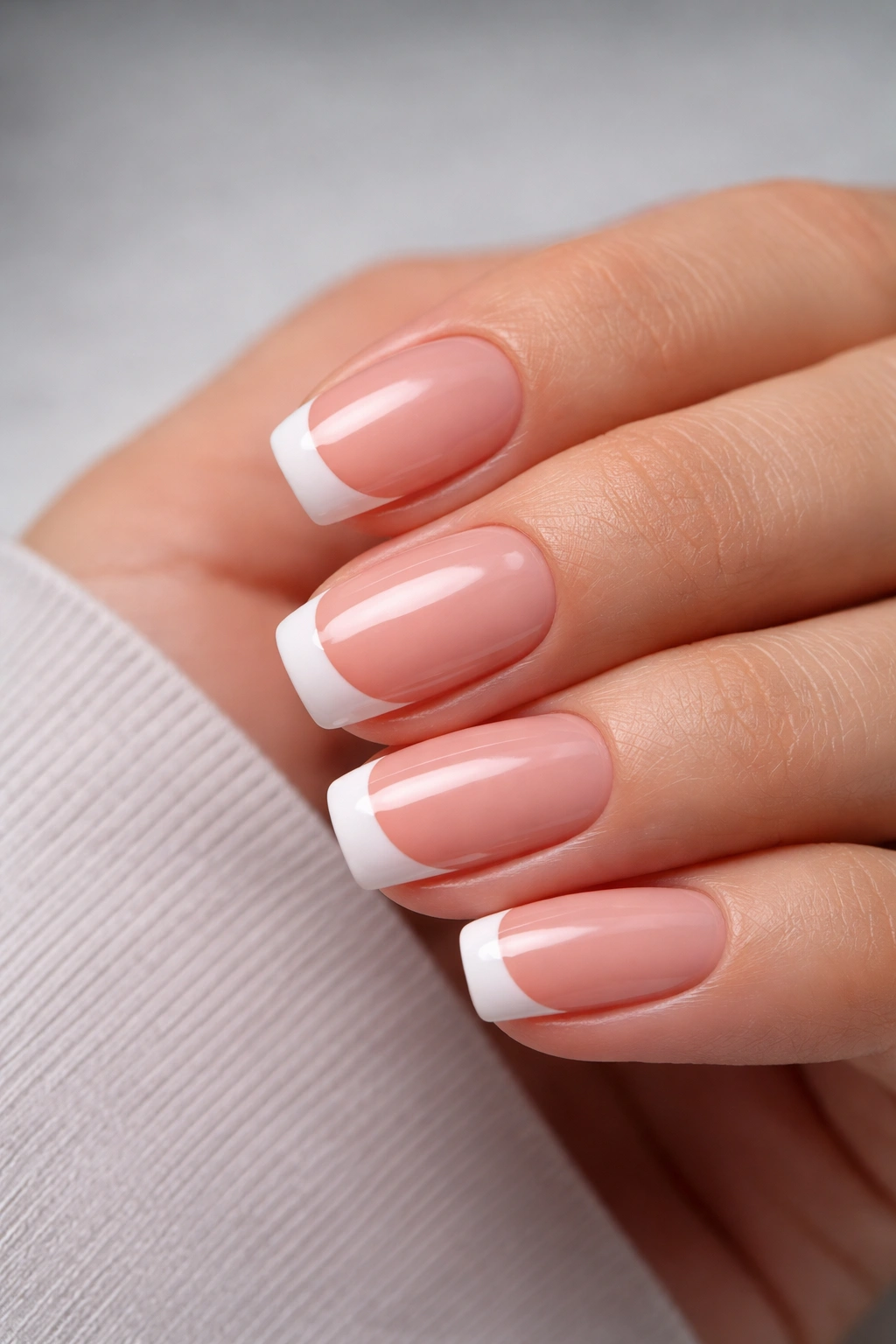
Technically still a French tip, but you’re adding a ribbon-thin line between the white and your base color. This line might be blush pink, gold, nude, gray, or any color that complements your base. The line is genuinely thin — the thickness of a toothpick drawn across the nail.
Placement Matters
The line sits right at the junction between your base color and white. It acts as a visual separator that makes the French tip feel more intentional and designed. On short nails, this thin line is easier to appreciate because there’s less competing real estate.
You can apply this with a detail brush and regular polish, or with a striping brush if you want precision. Some people use thin tape to mask off the area and ensure a perfect line.
8. Semi-Sheer French with Gloss
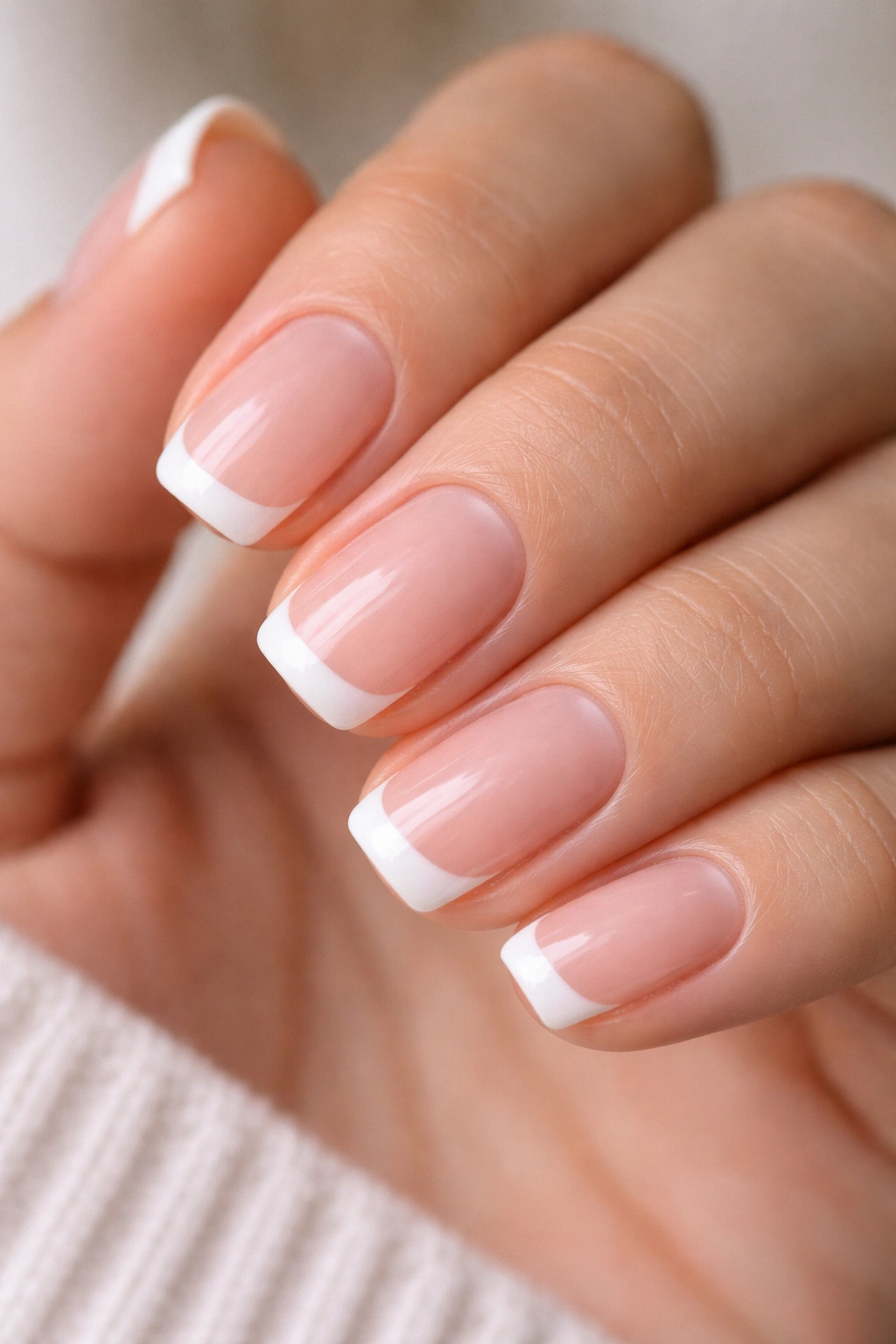
Instead of an opaque white tip, use a semi-transparent white or soft white gel polish. You’ll still see your nail underneath, but there’s clearly a white-tinted section at the end. This works beautifully if you have naturally white nail beds or if your nails are very healthy and clean.
The gloss on top is key — it needs to be extremely shiny, almost wet-looking. This amplifies the translucent quality and makes the nail feel fresh and alive rather than diluted or weak.
People with naturally long nail beds (the pale part at the tip where the nail separates from skin) can leverage this design to look like they’re always immaculately groomed. Even if you can’t grow super long nails, the semi-sheer effect tricks the eye into seeing more length.
9. Dual-Tone French Squoval
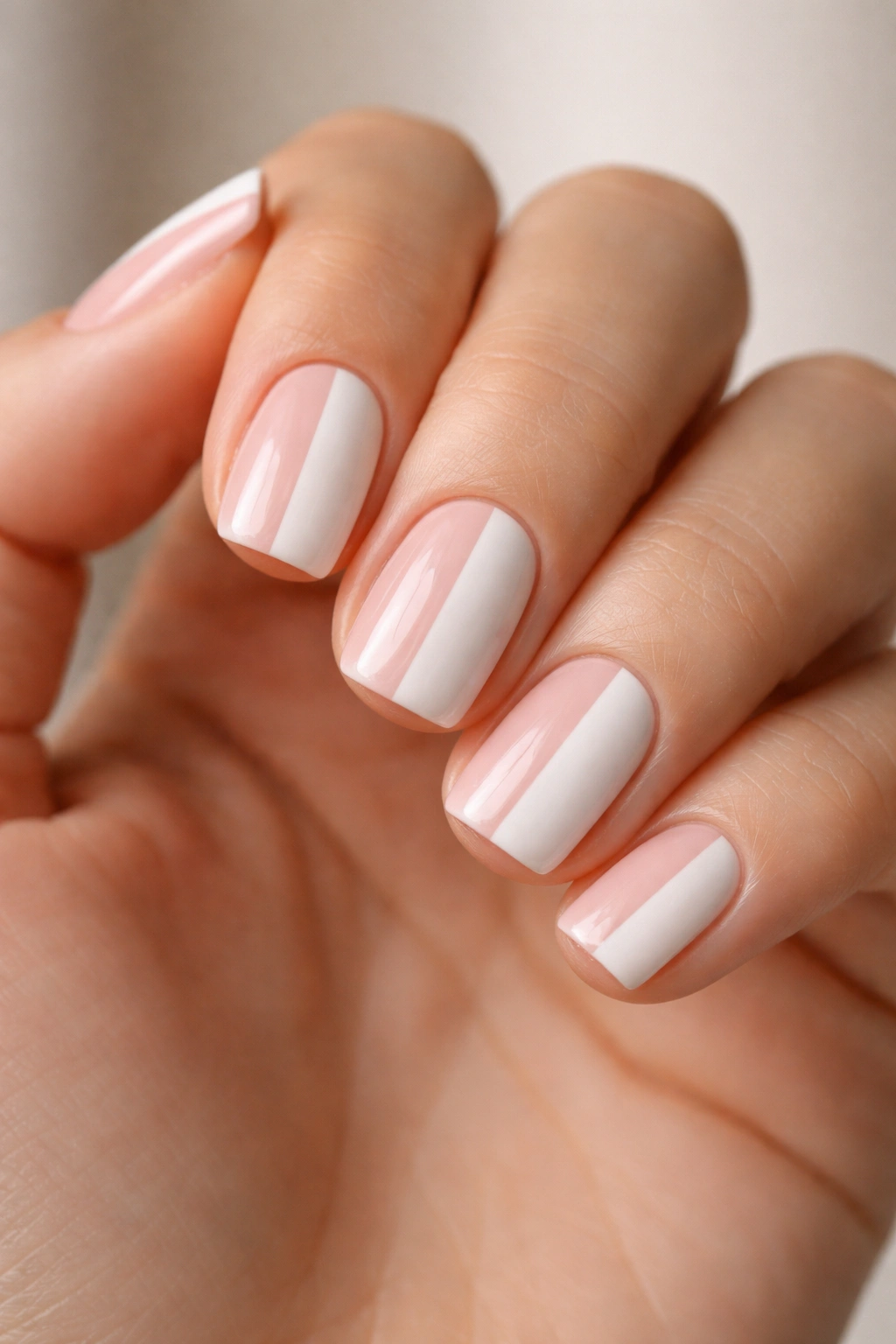
What if your French tip wasn’t monochromatic white? Try a half-and-half white tip split down the middle — one side white, one side a coordinating color like blush, gold, or pale gray. The line runs vertically down the center of each nail.
This takes the French tip formula and makes it immediately more interesting without being loud. It’s geometric and playful while still reading as “professional-adjacent.”
Execution Tips
You’ll want to use tape to create clean lines down the center of each nail. Paint one side white, remove tape, rotate, and paint the other side your secondary color. This requires patience, but the payoff is a design that stops people mid-conversation because they can’t quite figure out how you did it.
10. Classic French with Soft Shadow
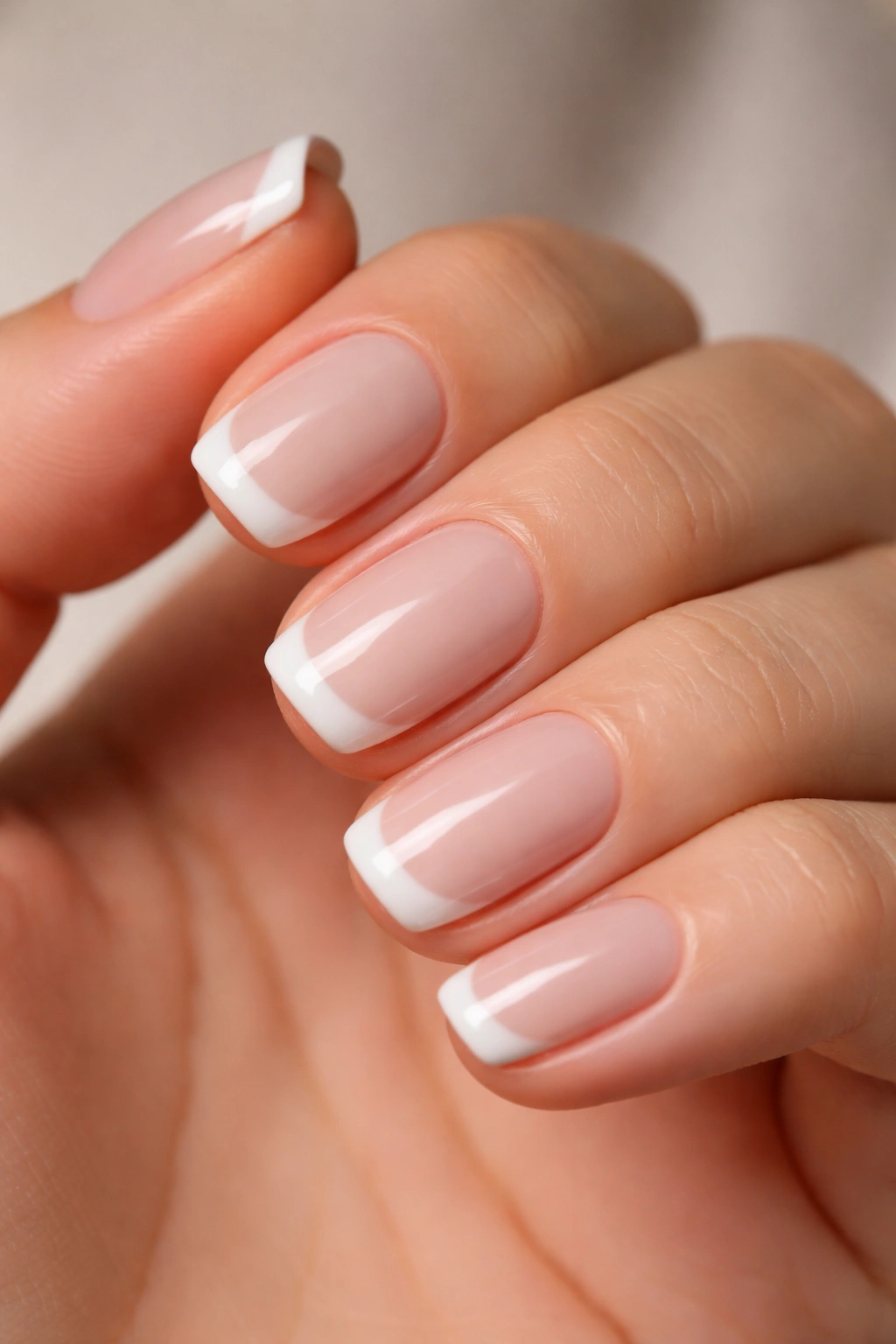
A traditional white tip sits on top of a barely-there shadow beneath it — a thin line of pale gray or nude just under the white. It’s almost like you’ve shaded the underside of the white tip to give it dimension. Professionally, this is sometimes called the “shadow French.”
The shadow is so subtle that most people won’t consciously notice it, but they’ll see the tip as more three-dimensional and intentional. It’s the kind of detail that elevates a basic French tip into something that reads more thoughtfully designed.
You can apply the shadow with a thin brush and gray or taupe gel, or you can achieve a similar effect by using a slightly gray-tinted white instead of pure white. Either approach works.
11. Minimalist French with Single Accent Nail
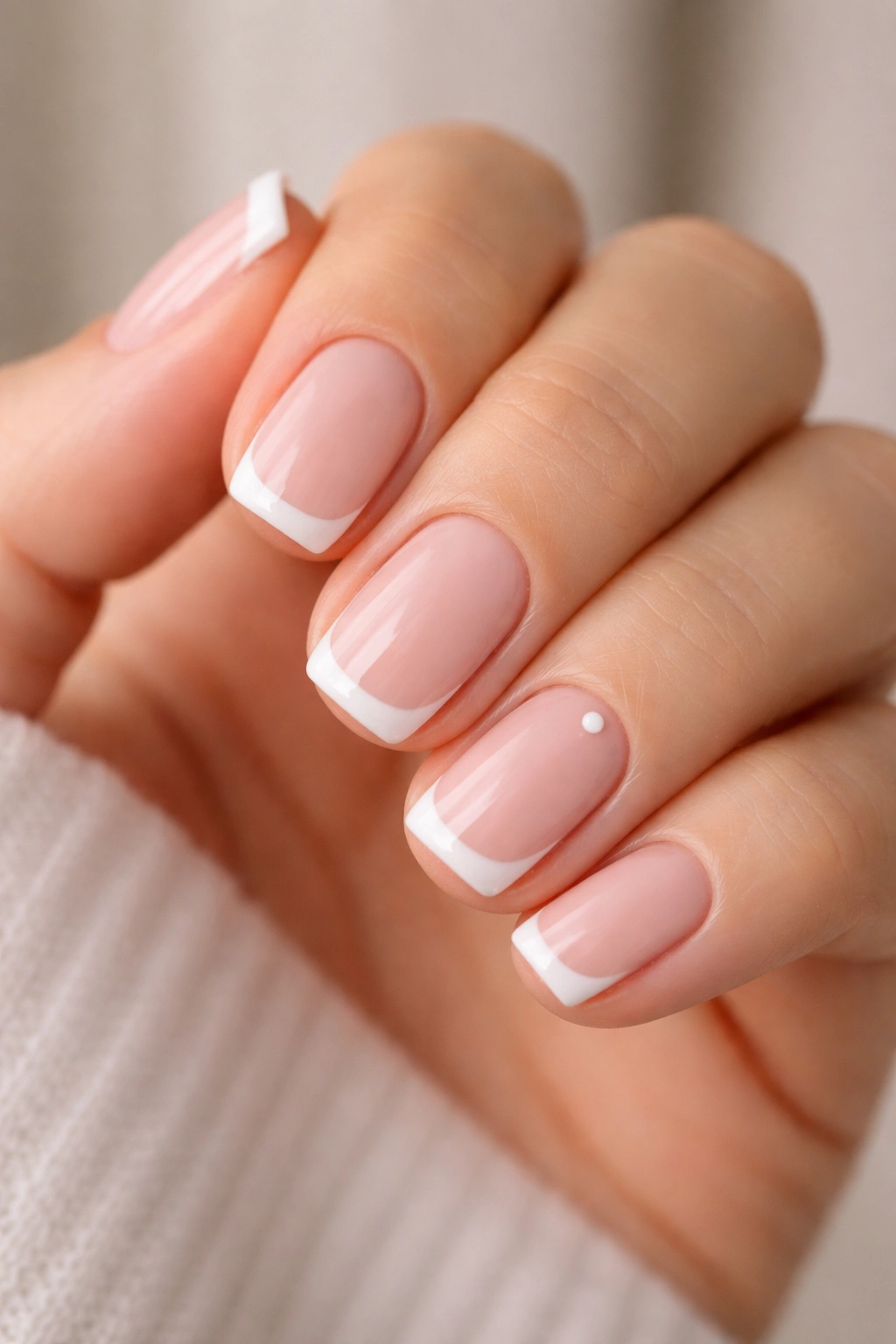
Eleven out of your ten nails get a standard French tip. The accent nail — usually your ring finger — features a slightly thicker white tip or perhaps a tiny detail like a dot, line, or minimal geometric shape above the white.
Why the Accent Works
Most people feel weird about their nails getting too “done” or feeling high-maintenance. A single accent nail lets you express something a little bolder without committing the entire manicure to it. It’s playful without being loud.
On short nails, this design is particularly effective because the nail is small enough that a single accent feels appropriately scaled. You’re not trying to fit a massive design onto a tiny surface.
The accent nail could feature gold foil, a thin stripe, or even just a slightly different finish — matte on all others, glossy on the accent.
12. Pearl or Opalescent French Tip
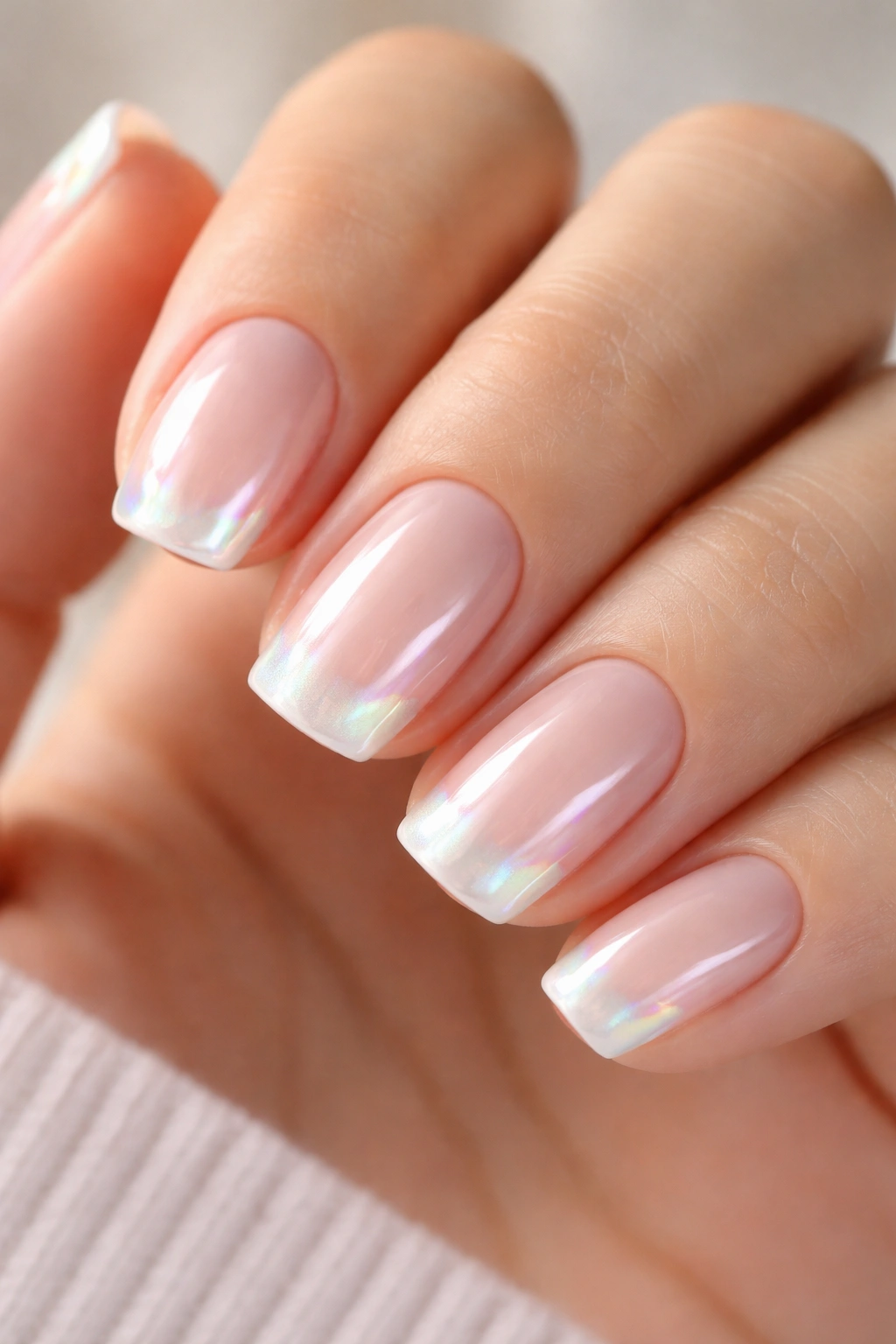
Instead of pure white, your tip is white with an iridescent or pearl finish that shifts colors depending on the angle and light. You’ll see hints of pink, blue, or green depending on how you move your hand. It’s still unmistakably a French tip, but it’s catching light in a sophisticated way.
Pearl effects come in gel or polish form. The best versions apply smoothly without looking grainy or plastic. This design appeals to people who appreciate subtlety that rewards close inspection — it’s quietly special rather than obviously flashy.
13. Sheer White Over Nude Base with Stamped Detail
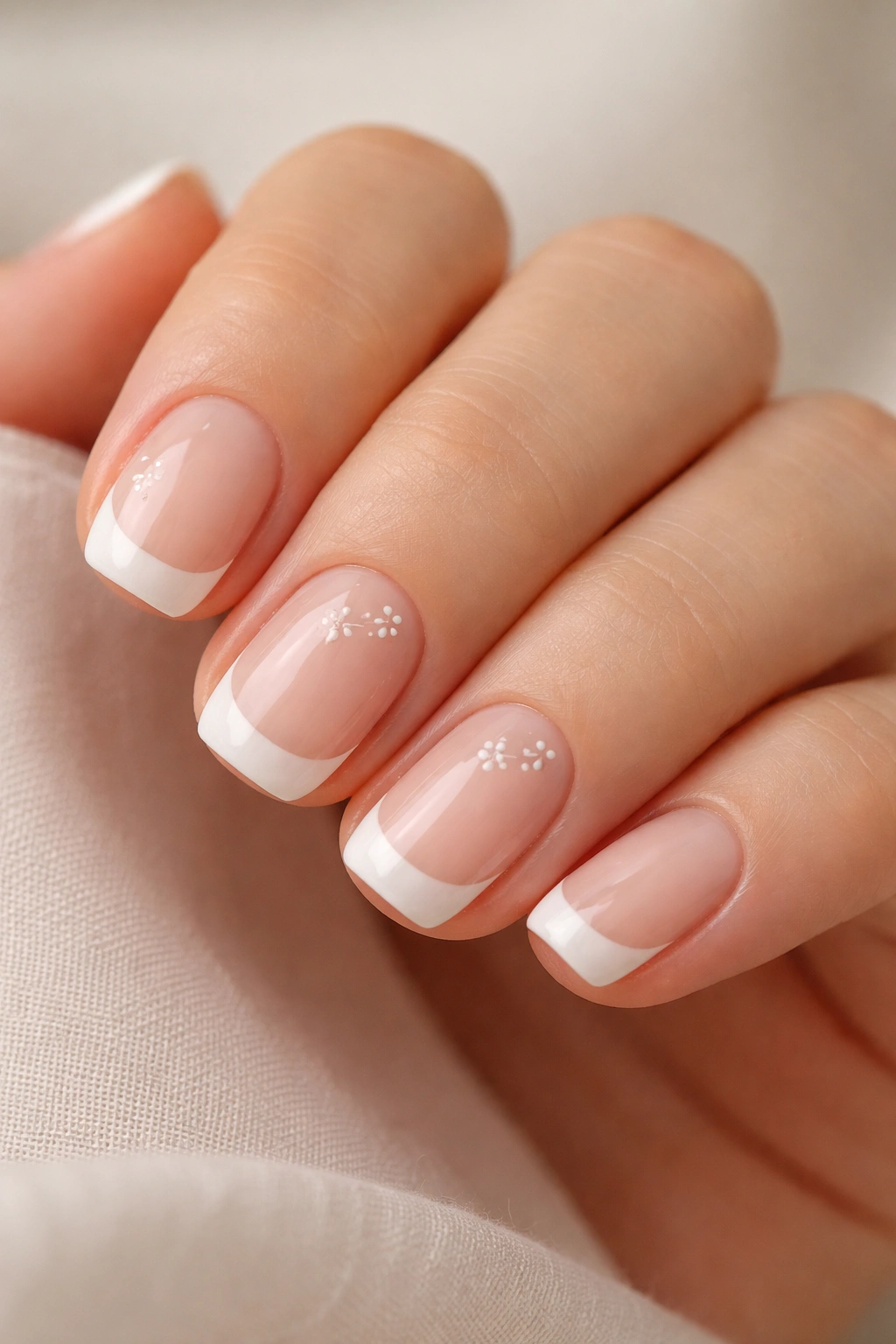
Your French tip uses a sheer white over a nude base, creating the translucent effect, but then a single tiny stamped image appears just above the white line. We’re talking something minimal — a delicate line, a small flower, a geometric dash. The stamped detail is barely noticeable until someone asks about it.
Stamping on short nails requires a slightly smaller stamper plate (nail art stampers come in different sizes), but it’s absolutely doable. The stamped detail gives you something visual to focus on without requiring actual design skills.
Why This Works
Stamped designs democratize nail art. Even people who can’t paint freehand can execute something that looks intentional and designed. On short squoval nails, the scale is forgiving — a tiny stamp looks appropriately proportioned.
14. French Tip with Metallic Base
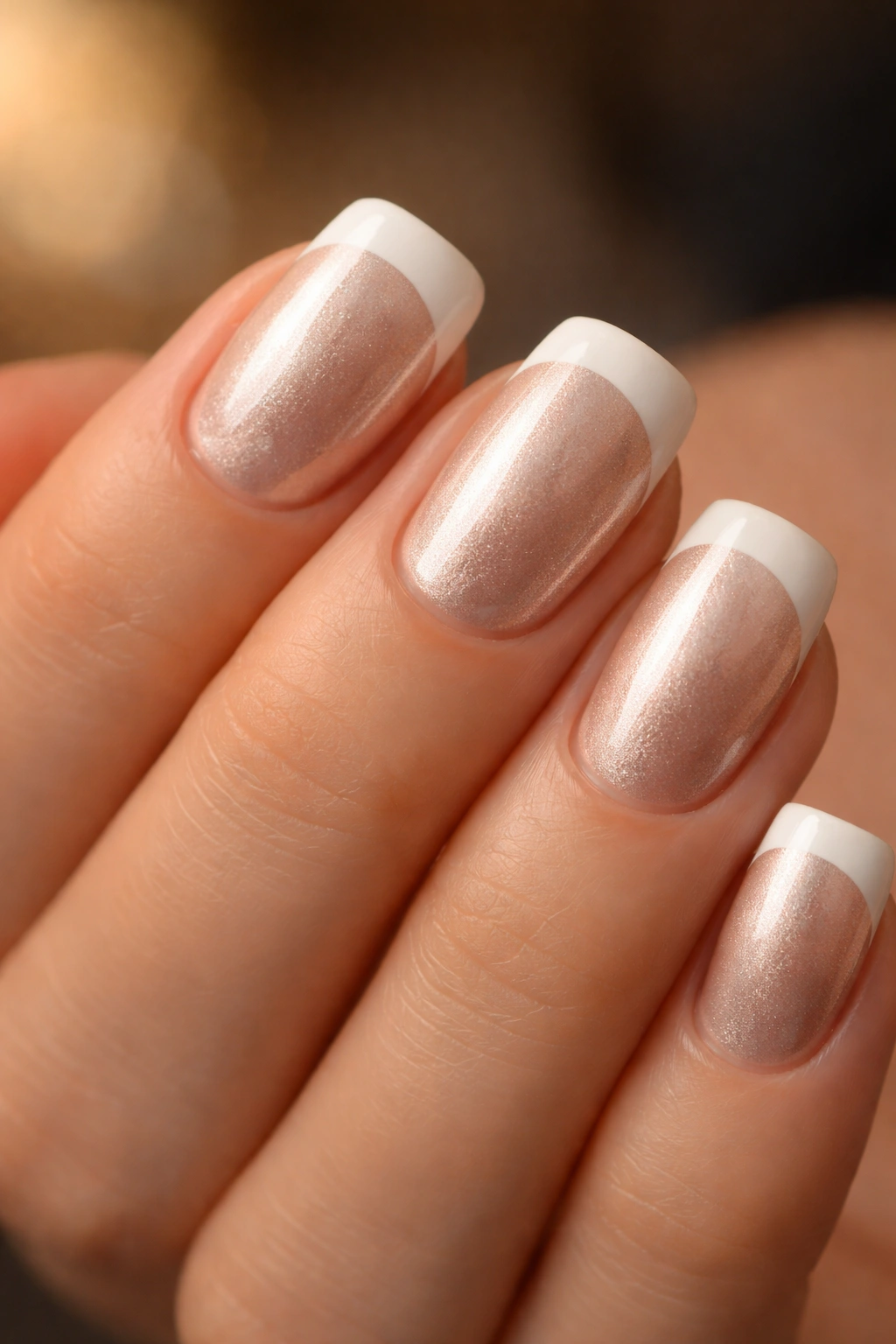
Instead of a traditional nude or pink base, try a soft metallic — pale gold, rose gold, champagne, or silver. The white tip stays crisp and traditional, but the base underneath shifts the entire energy of the manicure. It’s still professional and appropriate, but with a hint of glamour.
The metallic base needs to be subtle enough that it reads as elegant rather than costume-y. Think more champagne than gold glitter. A shimmery finish is fine; chunky glitter is not.
This design works particularly well for evening events, holiday seasons, or any time you want your nails to feel slightly more special than everyday. The white tip keeps it grounded and wearable.
15. Pure White French with High Shine Top Coat
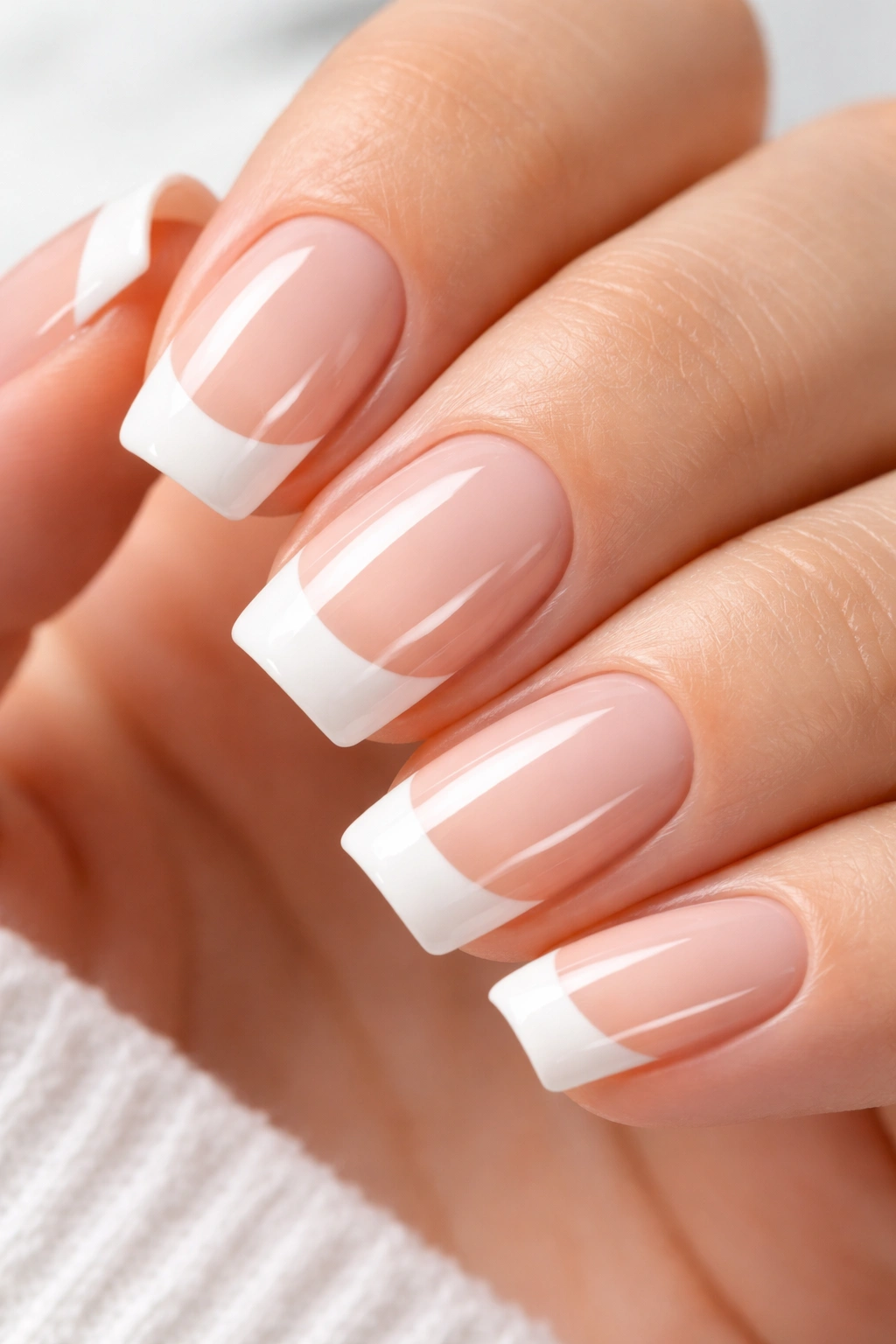
Sometimes perfection is the opposite of complexity. A clean, opaque white tip on a neutral base with an absolutely pristine, high-gloss top coat is the entire design. No sparkle, no shadow, no lines. Just impeccable clarity and shine.
This design requires exact execution. The white line needs to be perfectly straight, the edges crisp, and the top coat applied so smoothly that the nail surface appears almost wet. It’s the manicure equivalent of a crisp white button-up shirt — simple, classic, and immediately impressive when done correctly.
The white needs to be truly white, not off-white or cream. And the high shine is non-negotiable — it makes the difference between “nice nails” and “expertly done nails.”
Final Thoughts
Short squoval French tips remain endlessly versatile because the silhouette is inherently professional while being genuinely flattering. Whether you’re drawn to barely-there minimalism or slightly bolder accents, the formula adapts.
The real choice isn’t whether to get French tips — it’s which version speaks to how you’re feeling right now. Some weeks you want the invisible elegance of a barely-there nude French. Other times you’re reaching for the definition of a crisp white line or the interest of a subtle accent. That flexibility is exactly why short squoval French tips have become the default for people who want their nails to feel intentional without demanding constant attention.
The maintenance is reasonable too. Short nails grow out faster, so you’ll need fills or new applications every two to three weeks depending on how quickly your nails grow. For most people, that’s a manageable commitment that doesn’t feel like a second job. Find the version that matches your lifestyle, and you’ve found your signature manicure.