




The choice between round and square nails might seem trivial, but it’s one of the most impactful decisions you make for your hands. These two shapes aren’t just aesthetic preferences — they fundamentally change how your nails look, feel, perform, and age over time. Whether you’re growing your nails naturally, getting a manicure, or deciding on an artificial nail style, understanding the practical and visual differences between round and square shapes will help you choose what actually works for your lifestyle.
Most nail decisions are made on emotion or impulse. You see a style you like on social media and you commit to it without thinking through the daily reality. Round nails feel soft and approachable. Square nails look modern and polished. But the real question isn’t which looks better — it’s which one will actually make you happier when you’re living your daily life with these nails on your hands. That’s what this guide is about: the honest, practical differences that matter.
The nail shape you choose affects everything from how easy your nails are to maintain, to whether they’ll hold up during your workout, to whether you can actually text or open a can of soda without frustration. Your hand shape, profession, daily activities, and personal aesthetic all play a role. By the end of this guide, you’ll know exactly which shape aligns with who you are and how you live.
The Visual Difference and Why It Matters
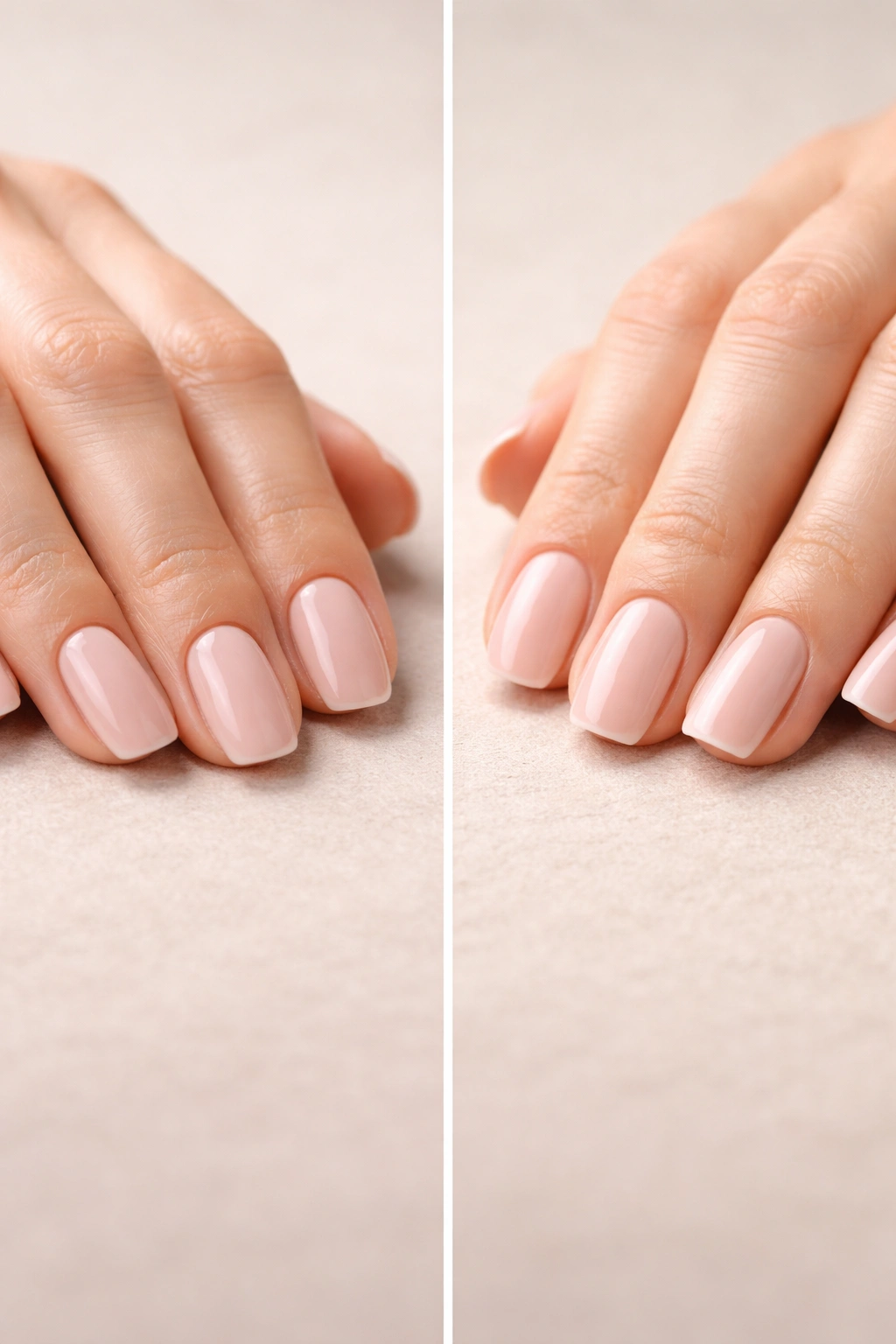
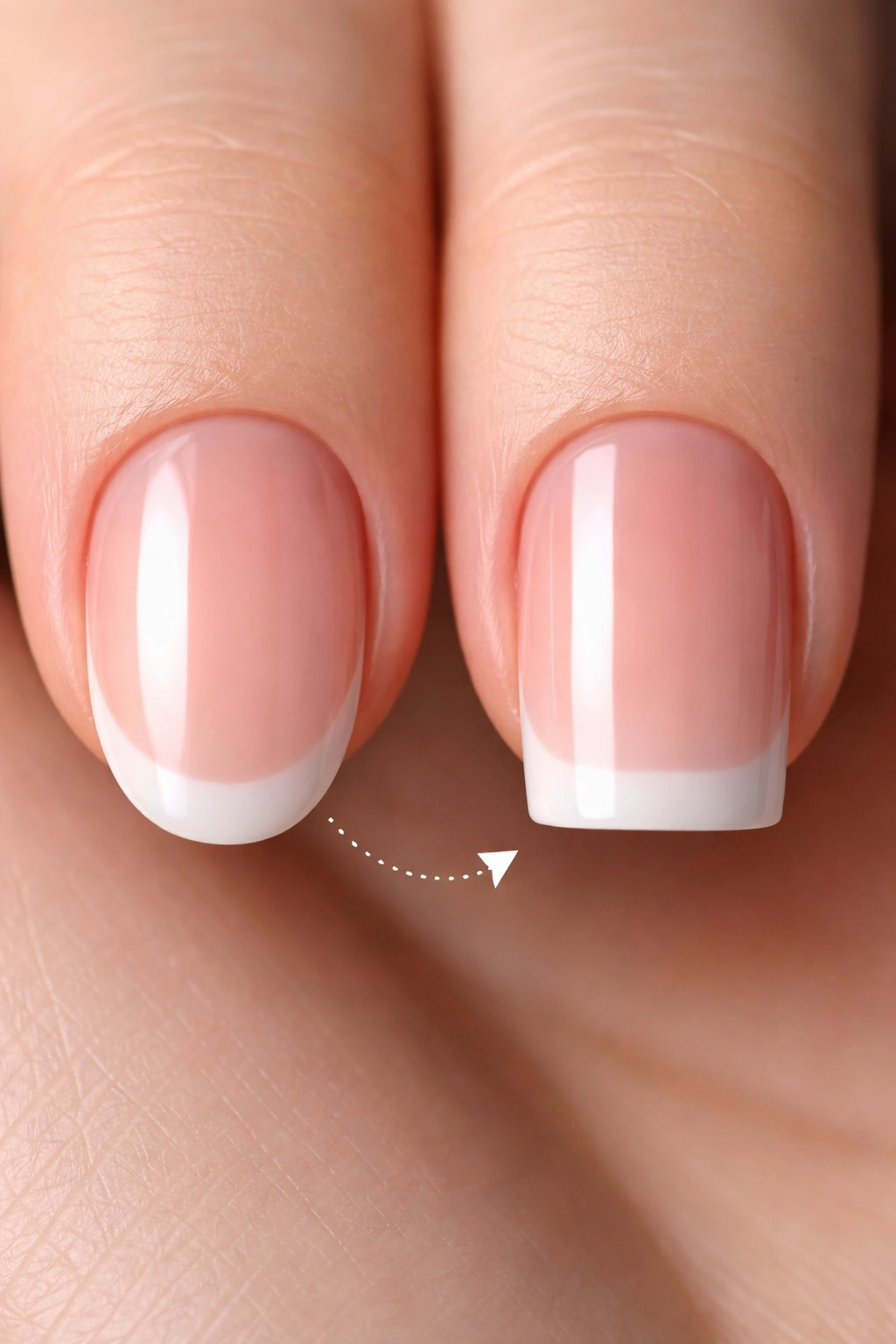
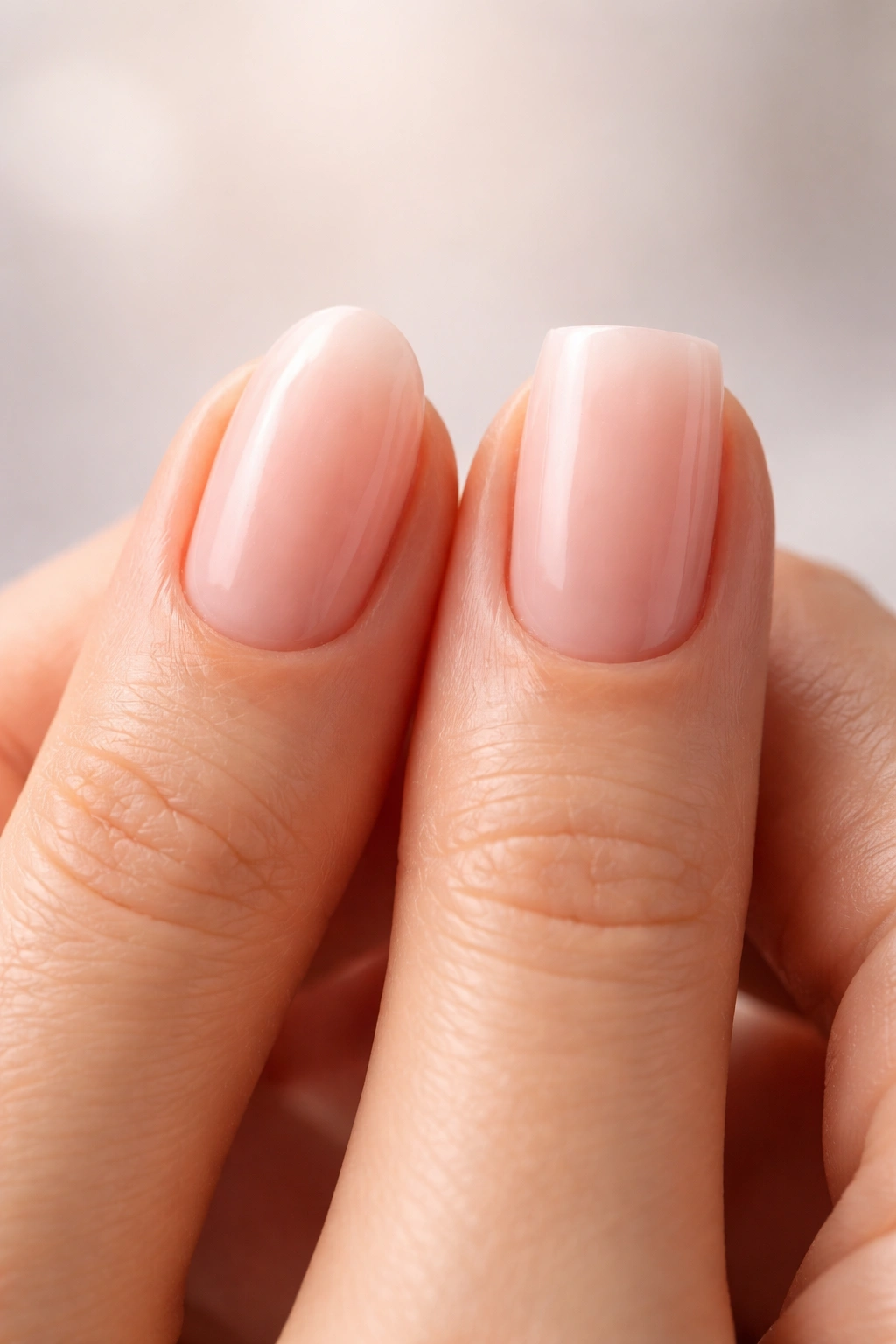
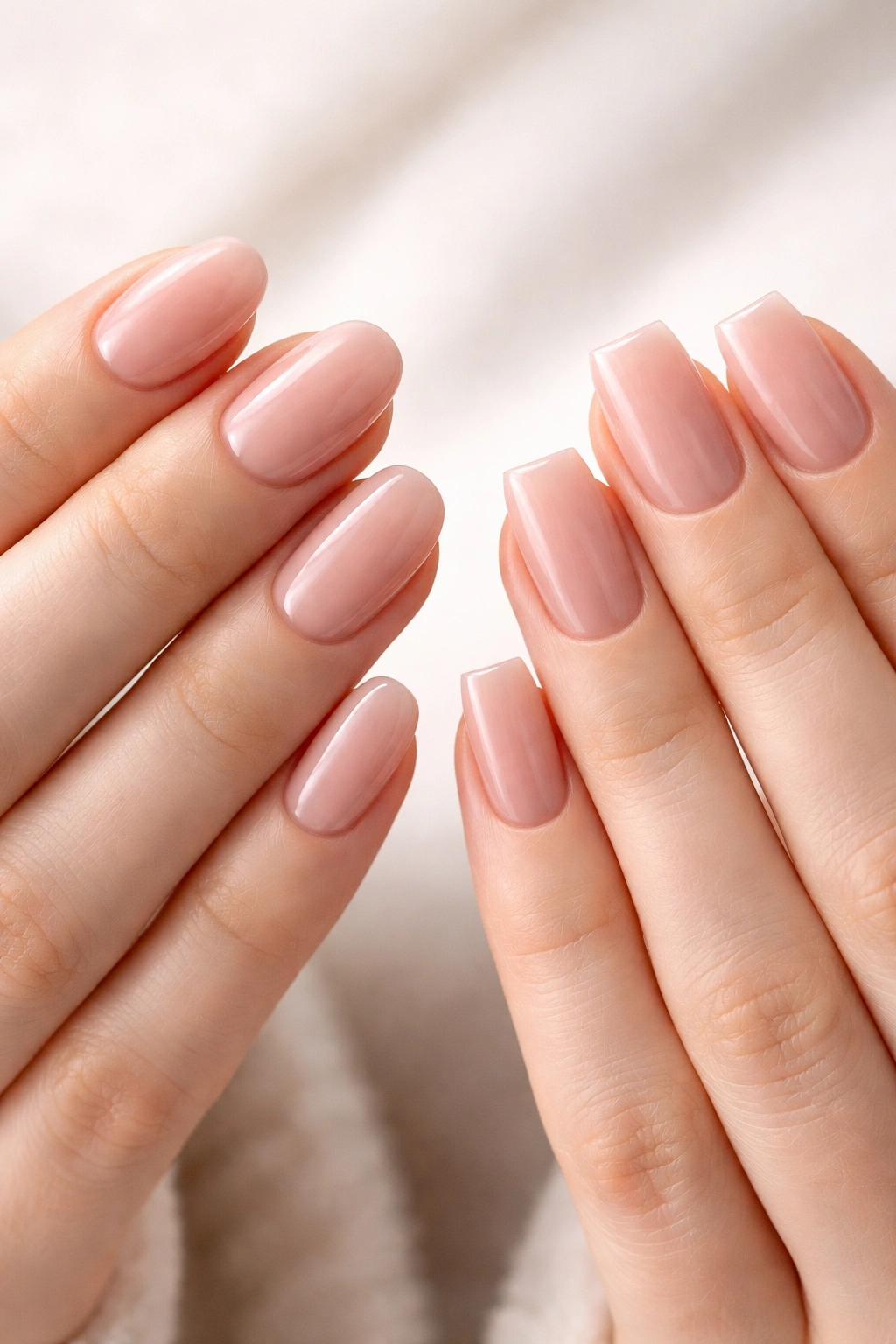
Round nails have curved edges that flow smoothly from the nail bed to the tip. The entire nail follows a gentle arc — no sharp corners, no angles, just soft transitions. This creates a softer, more approachable silhouette that photographs beautifully in close-ups and draws attention to the length rather than the shape.
Square nails have distinct right angles at the corners where the top meets the sides. The sides run parallel, and the top edge sits completely flat or nearly flat across. This geometric precision creates a more structured, intentional appearance that reads as polished and modern to most people.
Here’s the thing: these visual differences carry psychological weight. Round nails feel younger, more gentle, and more flexible. The curved edges suggest softness and movement. Square nails feel more architectural, professional, and controlled. The sharp corners suggest precision and confidence.
The shape also directly impacts how nails interact with light. Round nails catch light more evenly across the curved surface, creating a gentle glow that can make shorter nails look fuller and longer nails look even more elegant. Square nails create distinct light and shadow zones because of the flat top and the sharp edges — this can make the nail look wider and more commanding, depending on the length.
Durability and Breakage Resistance
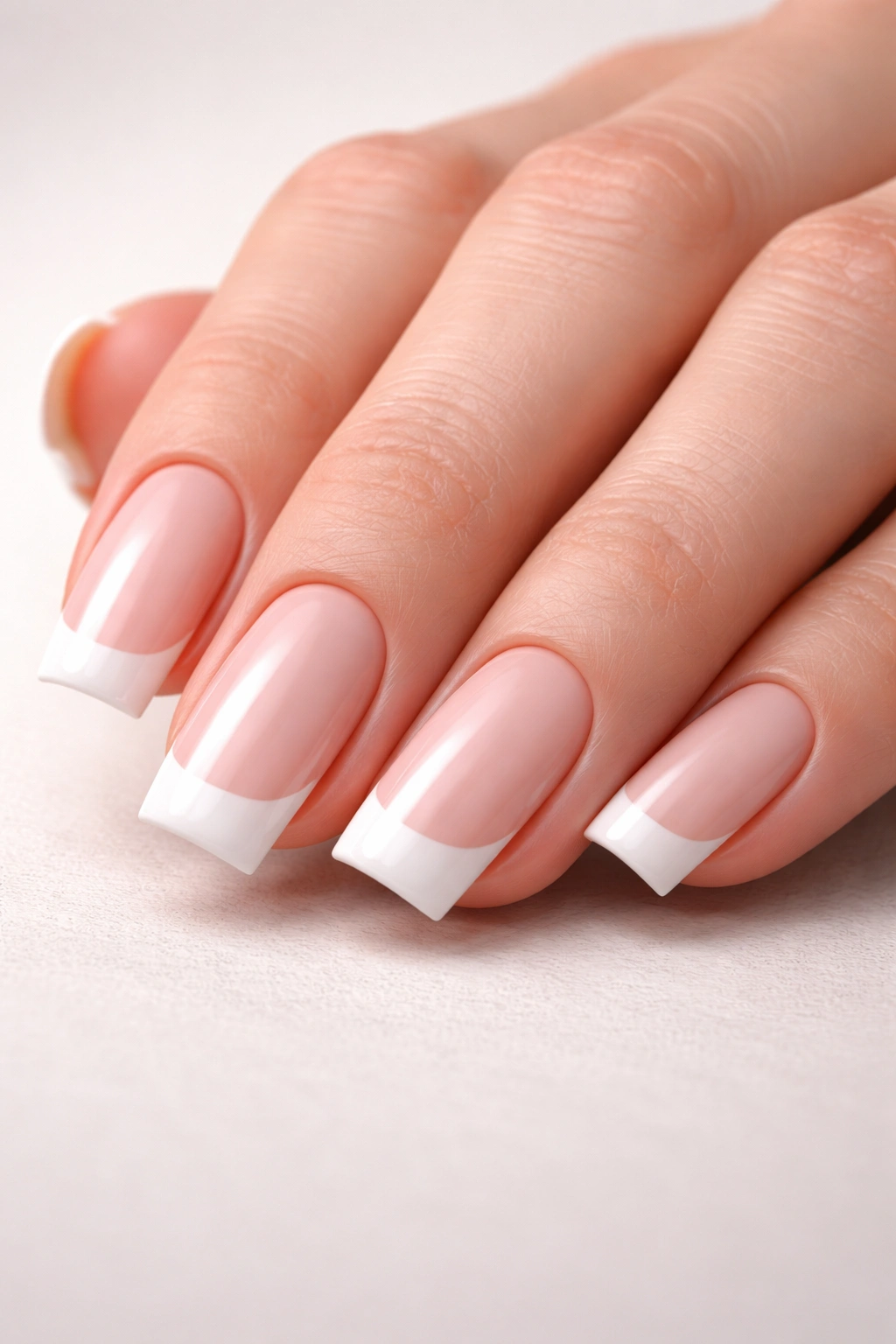
If you want nails that can survive real life, shape matters enormously. Square nails are significantly more durable because the nail structure itself is stronger. The squared-off edges distribute stress more evenly across the nail plate, and the straight sides provide structural support along the entire length of the nail.
Round nails have a vulnerability at the curved edges. When you bump your hand against something — opening a door, reaching into a bag, working at your desk — that curved edge is often the first point of contact. The curve concentrates force at a single point rather than distributing it, which makes the rounded edge more prone to chipping, cracking, or catching on fabric.
This doesn’t mean round nails are fragile in an absolute sense. It means that at the same length, a square nail will outlast a round nail by one to two weeks on average, especially if you use your hands actively. If you’re the type who catches nails on sweater cuffs or accidentally bumps them regularly, square nails will save you multiple repair trips.
Round nails do have one advantage here: when they do break, they tend to break in a cleaner line. The rounded edge sometimes snaps at the weakest point, leaving a relatively smooth edge that’s easier to repair or file down. Square nails sometimes shatter or peel along the sides when they break, which can look messier and take longer to fix.
Maintenance and Daily Care Requirements
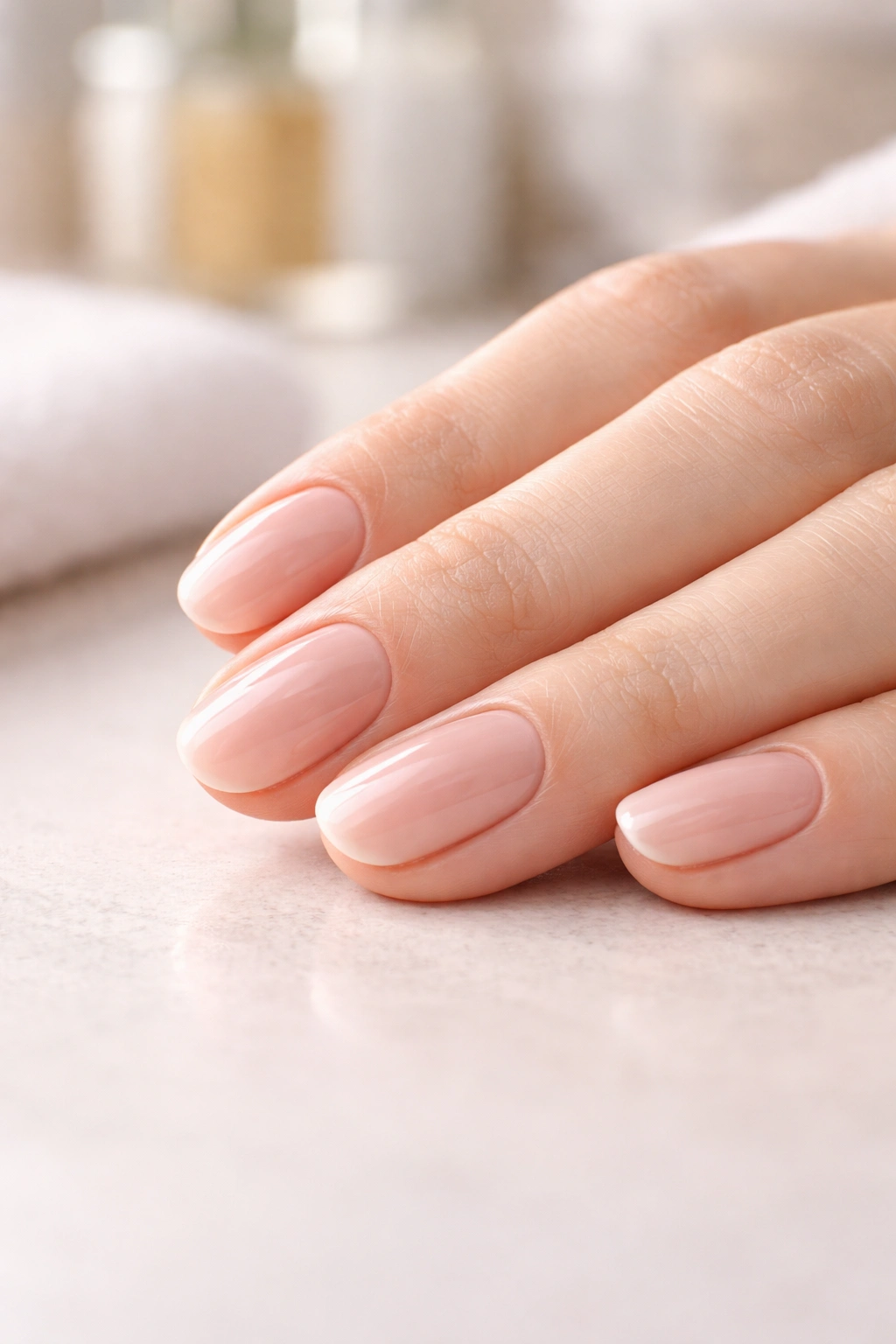
Round nails are lower-maintenance in terms of shaping. Once you’ve filed them round, they stay round naturally. Even as they grow out, the rounded edge persists. You might file them once every two weeks just to maintain the shape and smooth any rough edges, but the fundamental shape takes minimal work.
Square nails require more deliberate maintenance. The edges need to be actively maintained with a file to keep those sharp corners defined. If you skip filing for two weeks, those corners start to round off naturally, and your square nails drift toward a softened square or oval shape. This doesn’t mean they become round, but they lose their clean geometry.
The filing process itself is different. Round nails are filed in smooth, continuous strokes around the edge. The motion is almost meditative — you’re just following the natural curve. Square nails require you to angle the file to create and maintain those right angles. If you’re doing this at home, it takes a bit more skill to keep both corners matching.
Practical tip: If you’re someone who hates filing nails and doesn’t want to maintain them at a salon regularly, round nails require significantly less upkeep. You can go longer between maintenance appointments and still have nails that look intentional and polished.
Hand Shape Compatibility and Flattery
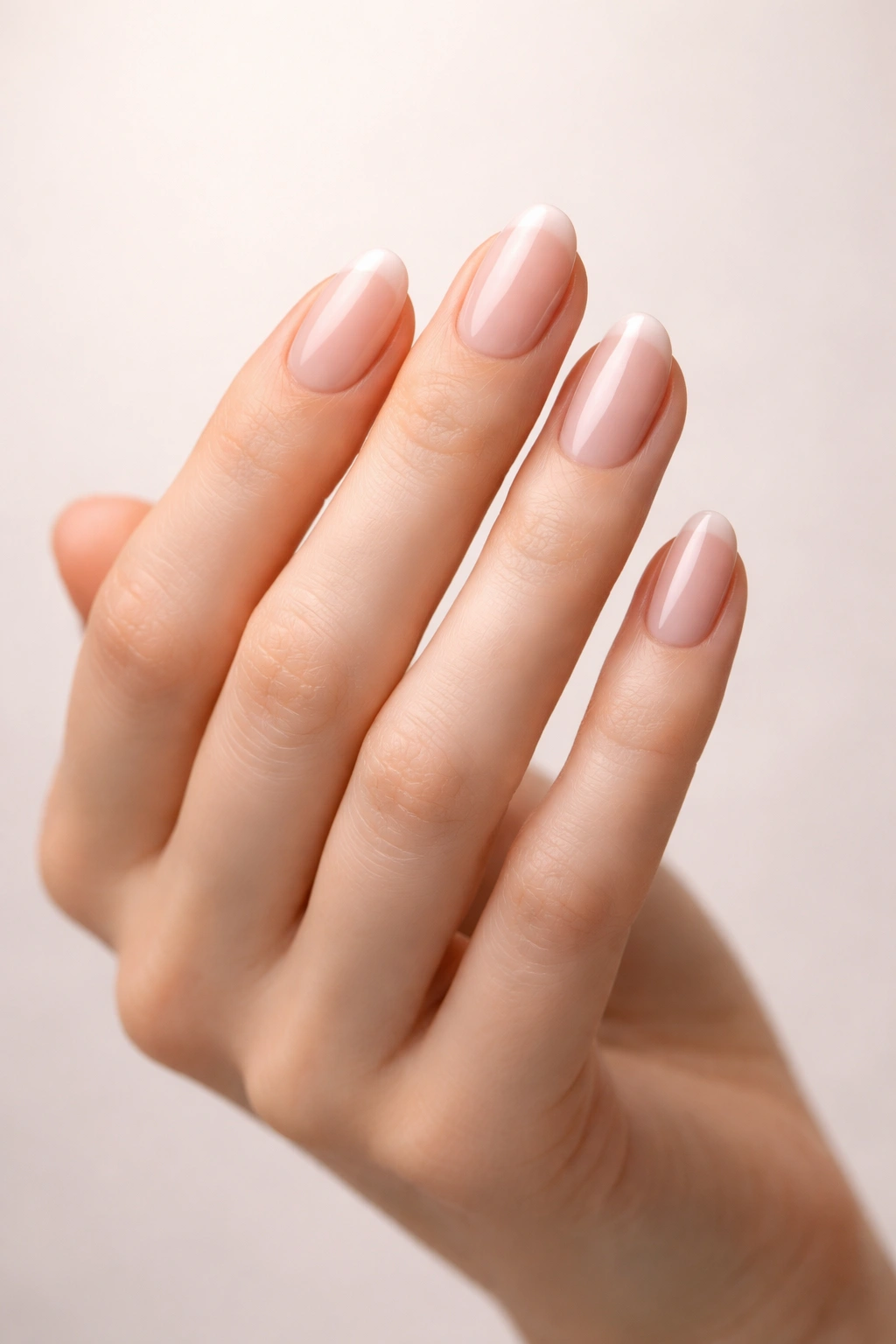
Not every nail shape flatters every hand. This is one of the most overlooked factors in choosing a nail shape, but it genuinely matters for how your hands look.
Round nails are universally flattering because they elongate the appearance of your hand and fingers without adding geometric weight. They work beautifully on shorter hands, wider hands, long hands, and everything in between. The curve creates an optical softness that actually makes fingers look longer and more refined. If you have broader hands or shorter fingers, round nails will create a more balanced, harmonious look.
Square nails have width. They make nails look wider across the top, which can actually make shorter fingers look stockier rather than longer. On tall, slender hands with long fingers, square nails look striking and proportional. But on a shorter hand or someone with wider fingers, square nails can sometimes overwhelm the hand and make proportions feel off.
This isn’t a hard rule — plenty of people with shorter fingers absolutely rock square nails and love them. But if you’re trying to figure out which shape will make your hands look their best, pay attention to your natural finger length and hand width. Round nails are the safer choice for hand flattery across the board.
Performance During Daily Activities
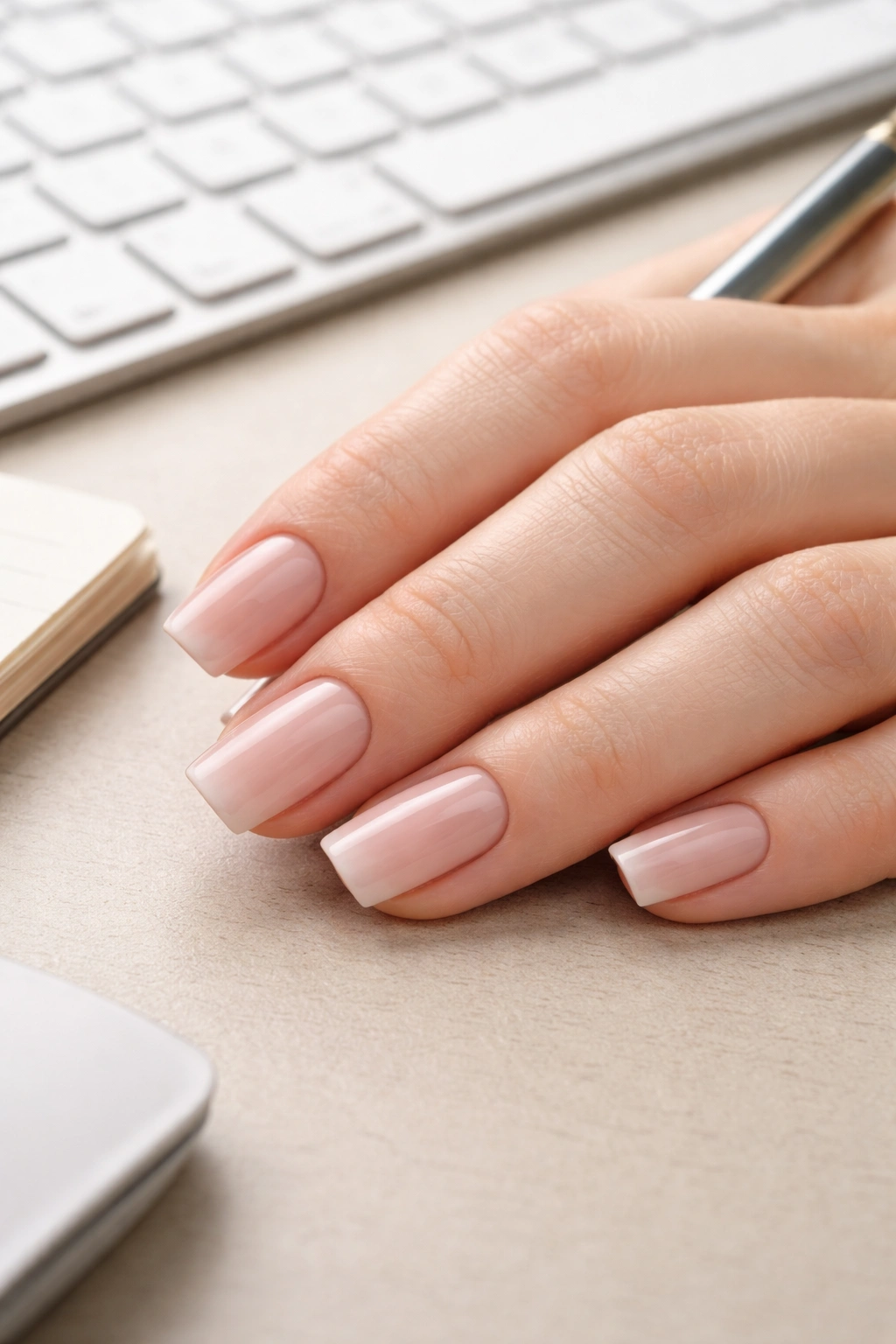
This is where your actual lifestyle makes or breaks your choice. The shape of your nail directly affects what you can comfortably do with your hands.
If you type regularly — on a keyboard, phone screen, or laptop trackpad — square nails actually perform better. The flat top of the nail creates a more stable surface when you’re tapping keys or swiping screens. Round nails can feel a bit less precise because the curve means you’re touching the screen or keyboard at slightly different angles depending on exactly where your fingertip lands.
If you play a musical instrument — guitar, piano, strings — round nails are generally preferred. The curved edge doesn’t catch on strings or create the same resistance against instrument surfaces. Guitar players in particular often choose round nails because the curve is less likely to snag on strings mid-play.
If you do detail work — painting, drawing, detailed work with your hands — round nails feel more natural. The curved edge gives you better sensory feedback and allows for more precise fine motor control.
If you do manual labor — construction, gardening, sports, or anything where your hands take a lot of impact — square nails are tougher but also more likely to break catastrophically when they do snap. Round nails, being slightly more flexible, sometimes survive impacts that would shatter a square nail. But they also chip more often. It’s a tradeoff between frequent small chips versus less-frequent but more dramatic breaks.
If you work in customer-facing roles — healthcare, hospitality, childcare — nail shape can matter more for perception. Square nails are often read as more professional and polished. Round nails read as warmer and more approachable. Choose based on the vibe you want to project.
Professional Context and Workplace Appropriateness
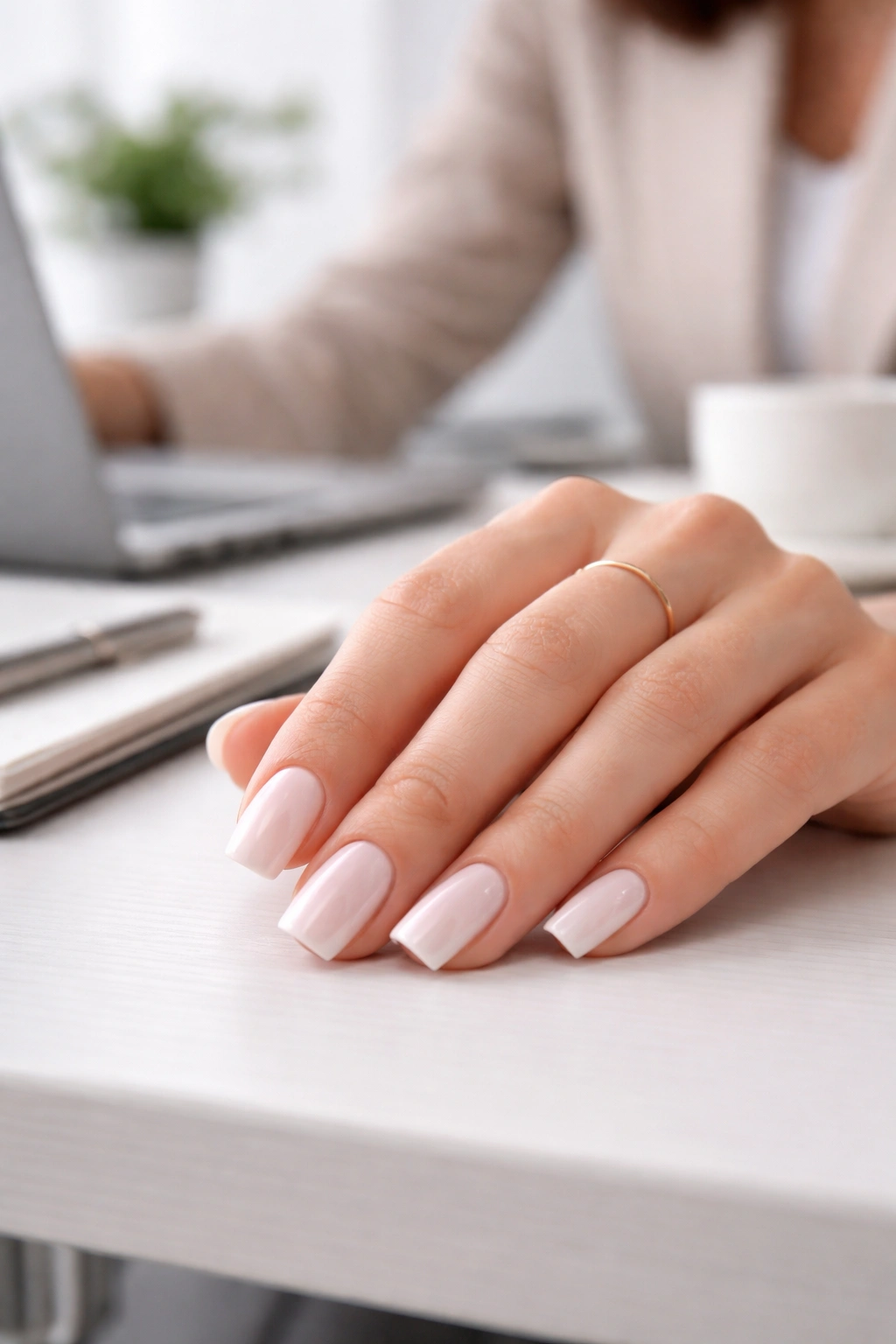
Nail shape carries implicit meaning in professional settings, whether we like it or not. Understanding this can help you make a strategic choice.
Square nails are universally read as more professional across industries. The geometric precision, the clean lines, the structured aesthetic — all of these read as “polished” and “intentional” to most people. In finance, law, corporate environments, or any high-stakes professional setting, square nails are the safer, more universally accepted choice. They don’t call attention to themselves; they just read as “professional nails.”
Round nails read as friendlier and more approachable. In creative fields, education, wellness, hospitality, or any environment where warmth and approachability matter, round nails actually work beautifully. They don’t read as unprofessional; they read as “I’m polished but not severe.”
The reality is that any well-maintained nail shape is appropriate in professional settings. But if you’re unsure about your workplace’s culture, or if you’re in a conservative industry, square nails are the choice that will never be questioned. Round nails are equally professional — they’re just read slightly differently.
Nail Art and Design Versatility
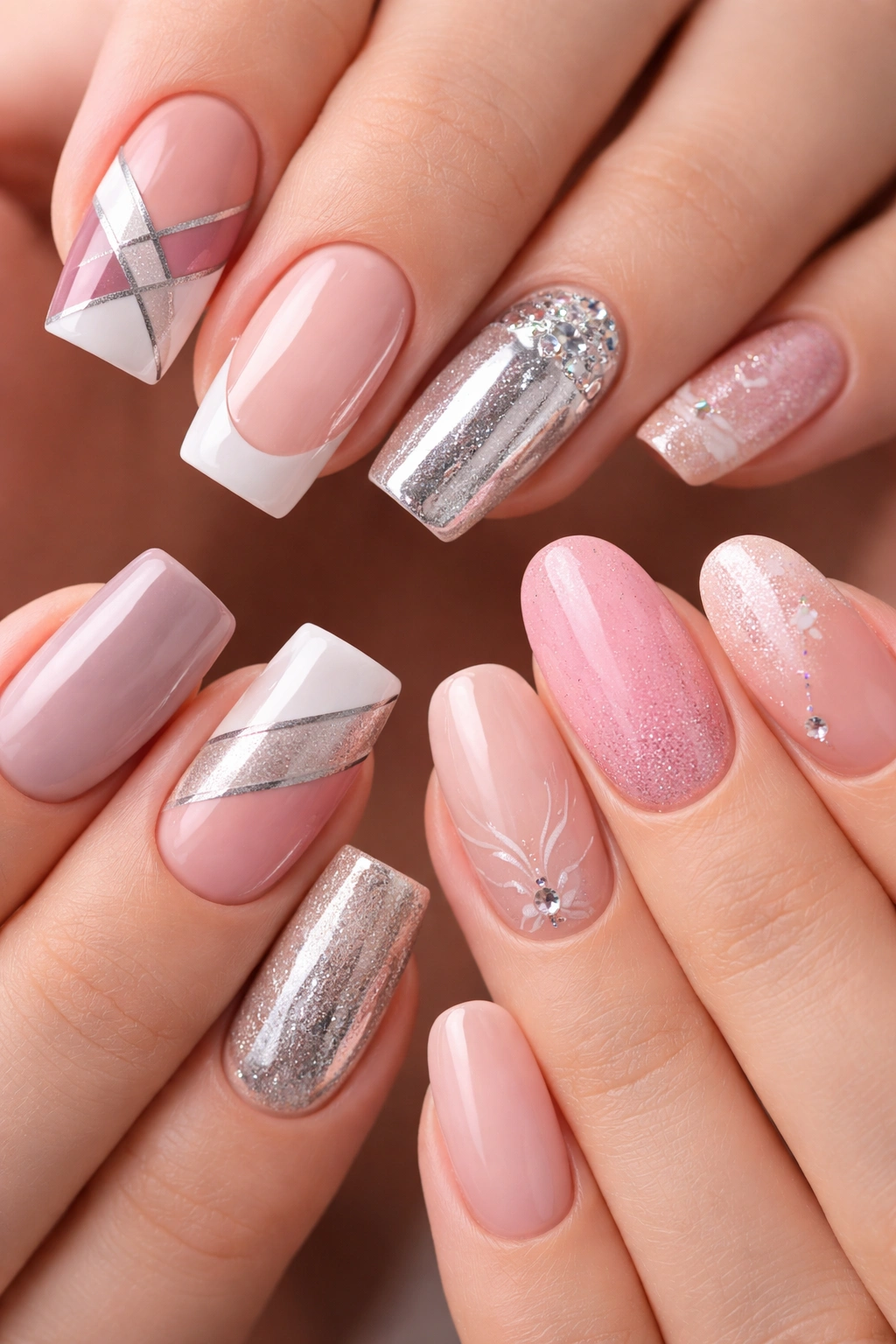
If you love changing your nail designs frequently or having elaborate nail art, shape absolutely affects what works visually and practically.
Square nails are the canvas everyone prefers. The flat top gives nail artists a wide, stable surface to work with. Designs look symmetrical and balanced on square nails. Geometric patterns, stripes, and structured designs look crisp and intentional. Fine detail work looks sharper. Most nail art tutorials you see online feature square or coffin nails specifically because the flat top makes detailed work easier to execute and showcases designs beautifully.
Round nails have a different kind of versatility. Designs don’t look as sharply defined because the curved edge means patterns naturally soften. But this works beautifully for certain aesthetics — ombre designs look more organic on round nails, watercolor effects look prettier, and softer, more impressionistic designs suit the shape. Round nails are also ideal if you love minimalist designs — a single accent nail, a thin line, a small dot. These look delicate and intentional on round nails in a way they sometimes don’t on square.
If you’re the type who changes your nail design every week, square nails give you more design flexibility and make complicated designs easier. If you prefer simpler designs or want a nail shape that looks beautiful even when plain, round nails are exceptional.
Growth Appearance and How They Look as They Grow Out
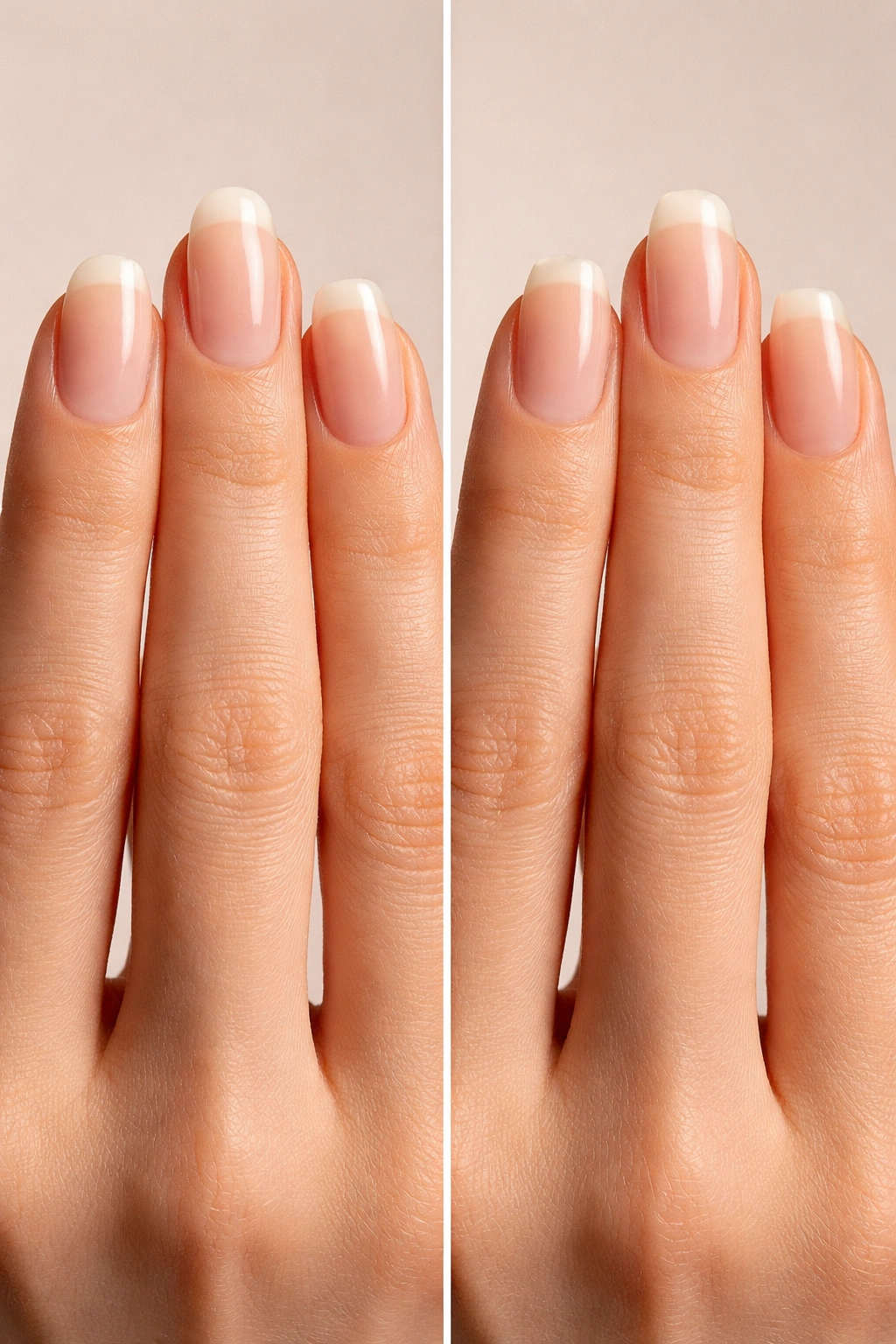
This is a practical consideration that deserves more attention than it usually gets. How does your nail look as it grows out over three weeks, six weeks, ten weeks? Both shapes change in appearance as they grow, but differently.
Round nails grow out beautifully. As the nail extends from the nail bed, it maintains that soft, curved aesthetic. Even at longer lengths, the roundness just gets more pronounced and more elegant. The growth-out phase doesn’t look awkward or in-between. You can wear round nails at any length and they look intentional at every stage.
Square nails require more precision as they grow. In the first two to three weeks, square nails look freshly manicured and intentional. But around week three, as new nail growth comes in and extends beyond your last filing, those soft, rounded edges at the base become visible and the shape looks less defined. By week four or five, if you haven’t refiled, your nails look like they’re transitioning to a different shape — not quite square anymore, not quite round, just ambiguous.
This doesn’t mean square nails look bad as they grow. It means they look like they need maintenance. If you enjoy the feeling of having freshly manicured nails regularly, you might actually prefer this — it’s a visual cue that reminds you to get them touched up. But if you prefer a nail shape that looks polished at every stage of growth without intervention, round nails win this round.
Creating the Shape on Natural Nails vs Artificial Nails
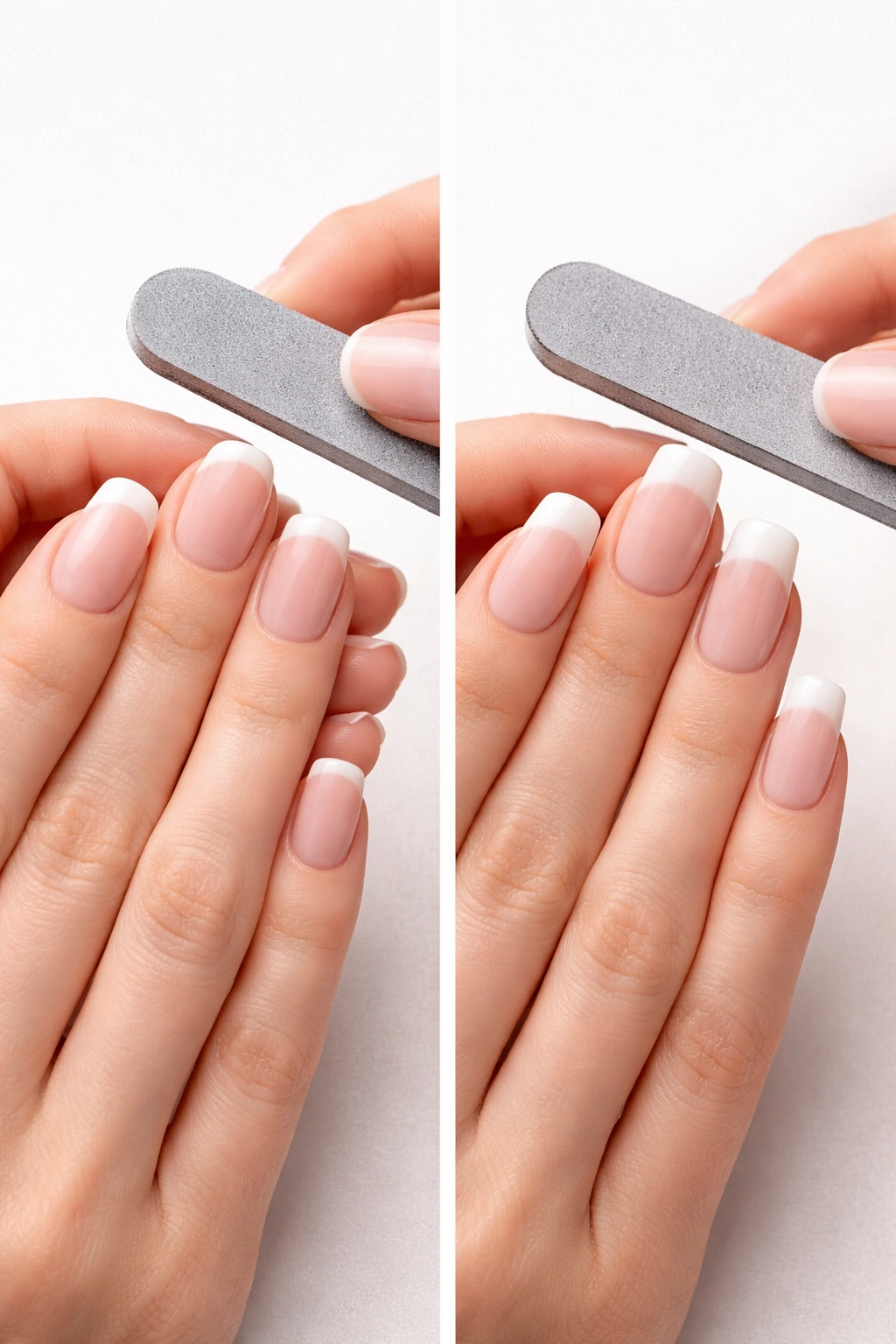
The method you use to achieve your desired shape affects how realistic and comfortable each option is.
Round nails on natural nails are easy and forgiving. You file from the side toward the center, creating a gentle curve, and the shape is done. Natural nails are already somewhat flexible, so the curve feels natural and suits how nails actually grow. Round nails are the easiest shape to achieve and maintain on natural nails without professional help.
Square nails on natural nails require more precision. You need to file the sides completely straight and then create sharp corners at the top. This is doable, but it requires better filing technique and a steady hand. The angles need to be symmetrical on both sides. Many people find this harder to DIY than round nails. Additionally, square nails on natural nails sometimes feel slightly uncomfortable at first because the straight edges can occasionally catch on cuticle skin or feel structurally unsupported compared to a curve.
Round nails on artificial nails (acrylics, gel extensions, dip powder) are beautiful but slightly less common. They look gorgeous and elegant, but they’re a bit less structurally stable than square, which is why salon professionals often steer clients toward square or coffin shapes for extensions.
Square nails on artificial nails are the most popular choice for extensions. The flat top and straight sides maximize the surface area, making the extension strongest and most structurally sound. Artificial nails’ inherent rigidity actually works perfectly with the geometric nature of square nails.
The bottom line: Round nails are easier and more natural-looking on natural nails. Square nails are easier and more common on artificial nails. If you’re working with your natural nails, both are achievable, but round requires less fussing.
Comfort and Feel During Wear
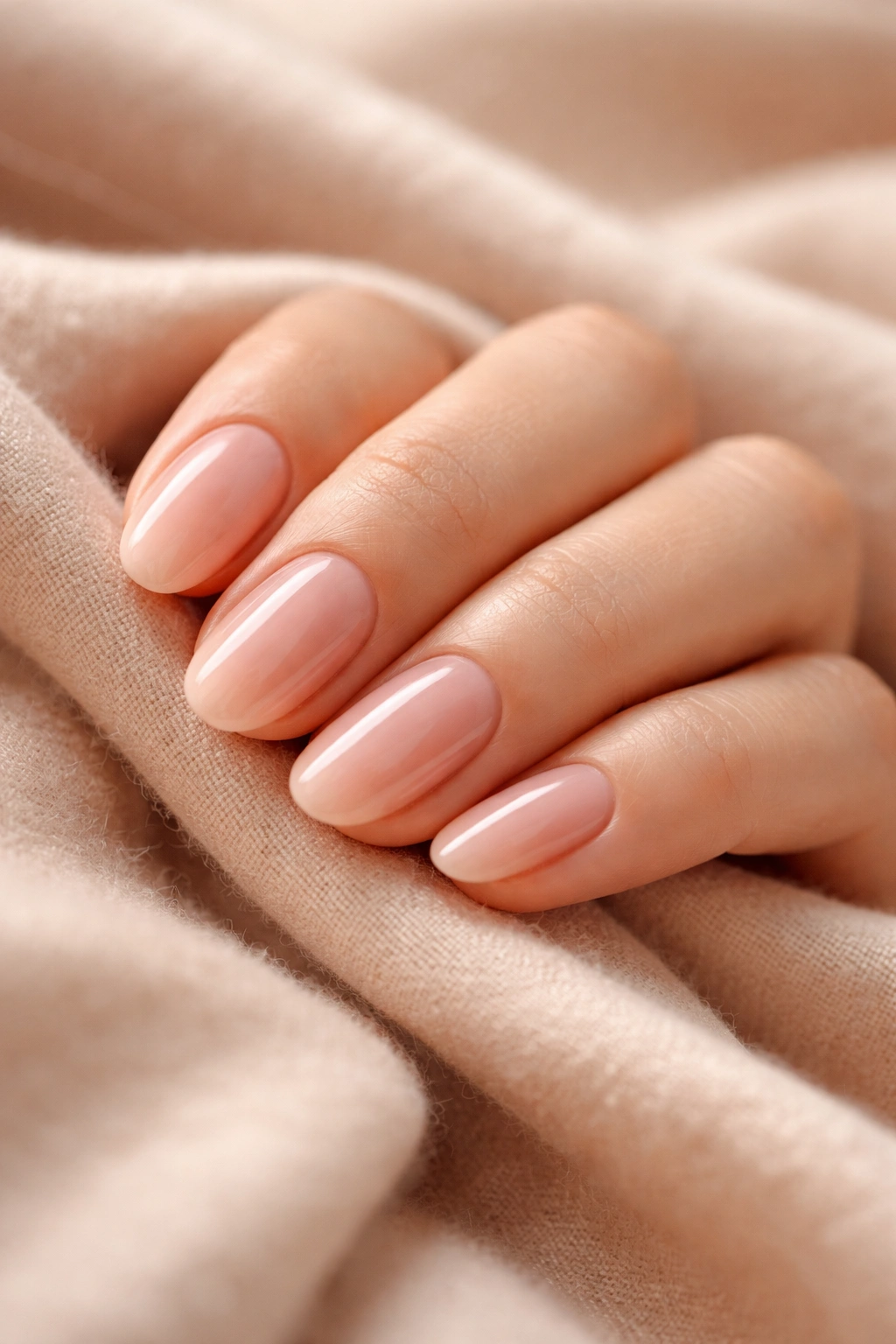
How a nail shape feels when you’re wearing it matters more than people acknowledge. Even if a shape looks good, if it doesn’t feel right to you, you won’t enjoy wearing it.
Round nails feel softer and less aggressive in your hands. The curved edges don’t catch on anything. They feel almost like wearing something slightly rounded and smooth. Most people describe round nails as feeling comfortable and unobtrusive — you’re not constantly aware you’re wearing longer nails because nothing is catching or snagging. This is a huge advantage if you’re new to longer nails or if you’re easily annoyed by tactile sensations.
Square nails feel more intentional and present in your hands. The corners are there, you’re aware of them, and you need to be slightly more mindful about how you move your hands to avoid catching the corners on fabric or your skin. Some people love this because it feels like wearing an accessory — a visual and tactile reminder that your nails are polished. Others find it slightly uncomfortable or annoying, especially during the adjustment period when they first switch to square nails.
The comfort difference is genuinely personal and partially depends on how you move your hands and what you’re sensitive to. If you tend to catch your nails on sweater sleeves, blankets, or hair, round nails will feel more comfortable. If you prefer nails that feel like a deliberate accessory and you’re mindful about hand movements, square nails feel satisfying.
Cost and Salon Maintenance Frequency
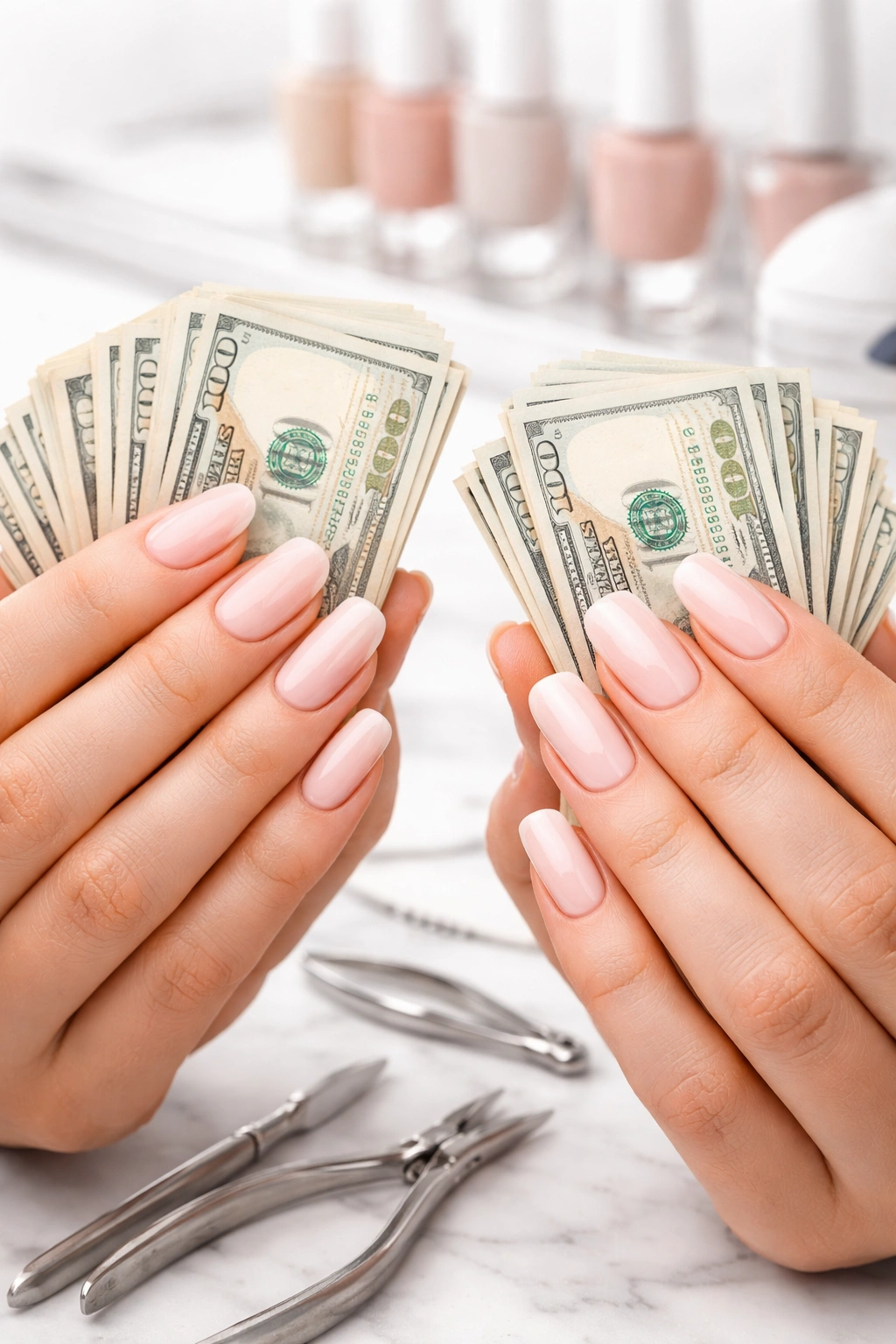
If you’re getting manicures professionally, the shape you choose affects how often you need to book appointments and what that costs over time.
Round nails need maintenance every two to three weeks if you’re being particular about them looking crisp and intentional. But honestly, round nails look acceptable for three to four weeks, which means you can extend the time between appointments if your budget requires it. When you do need maintenance, the filing is quick — your manicurist can shape them round in a couple of minutes.
Square nails need maintenance every two to three weeks if you want those corners to stay sharp and defined. Unlike round nails, square nails really do start to look noticeably less sharp by week three. If you’re particular about clean corners, you might find yourself coming back every two weeks consistently. The refiling process is also slightly more time-intensive, which sometimes means a tiny increase in the service cost.
On natural nails doing your own maintenance, round nails are cheaper because you just need a nail file and maybe 10 minutes every two weeks. Square nails require more skill and more filing time, but the cost is still minimal.
If you’re on a tight budget and want to stretch out time between professional manicures, round nails are more forgiving and can look great for longer without touch-ups.
Suitability for Different Nail Lengths
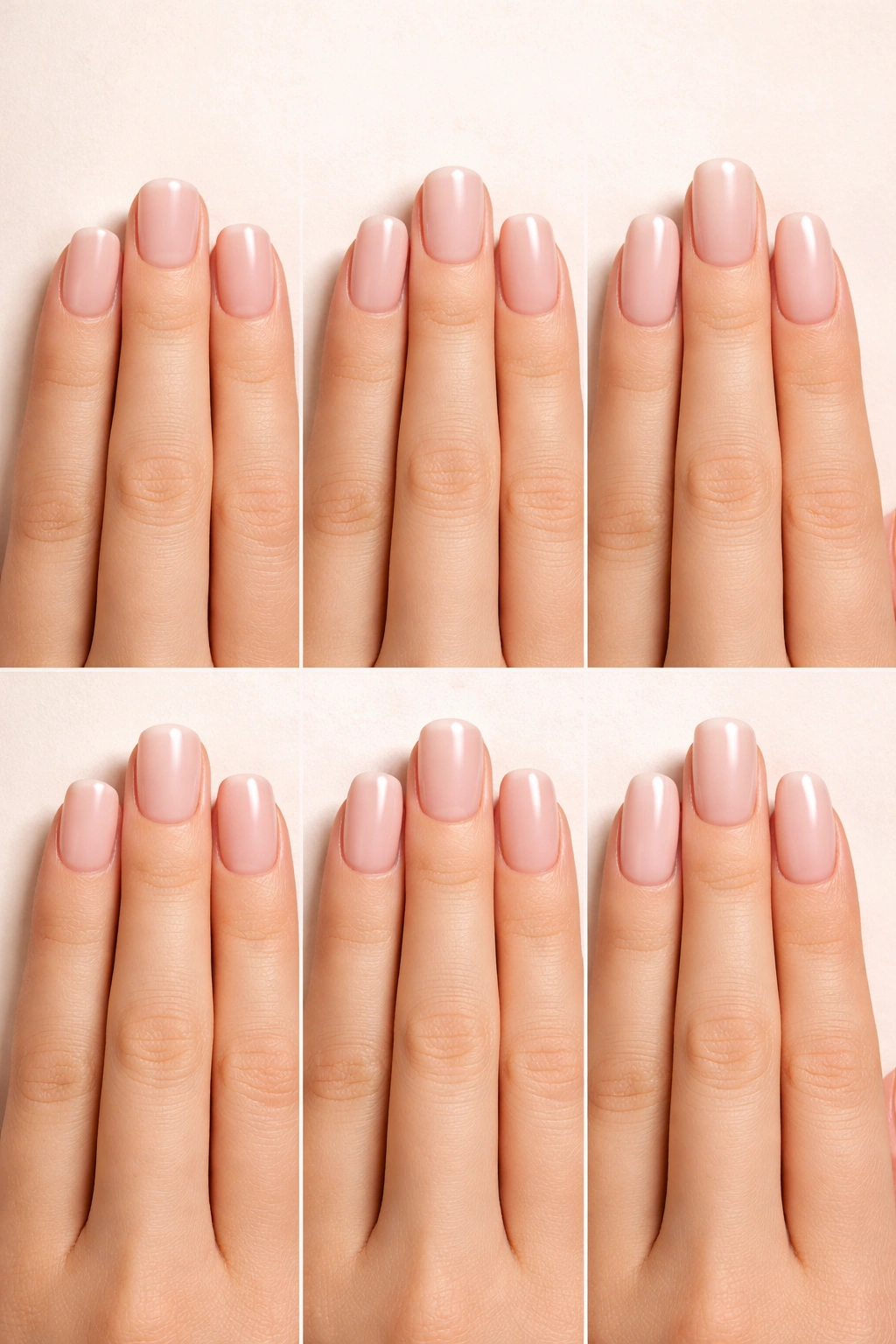
The length you want to wear your nails actually affects which shape works better.
Short nails (under ¼ inch of free edge): Round nails on short nails don’t look round — they look almost blunt and solid. You need some length to appreciate the roundness. Square nails on short nails look clean and polished, so short square nails can look intentional and elegant. If you’re keeping nails short, square is the better choice.
Medium nails (¼ to ½ inch): This is where round nails truly shine. Medium length is the perfect length to showcase that soft curve. Square nails at medium length also look great, so you really can’t go wrong here. Both shapes work beautifully.
Long nails (½ inch or longer): Both shapes look stunning at longer lengths. Round nails get increasingly elegant as they get longer, with the curve becoming more pronounced and graceful. Square nails start to look more dramatic and fashion-forward the longer they get — think luxury, fashion, intentional style. If you’re going for glamorous or dramatic nails, longer square nails are iconic.
Transitioning Between Shapes and Switching Preferences
Sometimes you change your mind about your nail shape preference. Or you want to try both. How smoothly can you switch?
Switching from round to square is straightforward if you’re growing nails naturally. You just file the sides straighter and create the corners. It takes two or three manicures worth of intentional shaping to create truly crisp, symmetrical corners, but the transition is doable. On artificial nails, your nail technician can reshape extensions in one appointment.
Switching from square to round is easier. You’re literally just softening the corners and filing a curve, which is simpler than creating sharp angles. One or two manicures of intentional rounding and you’re there.
Switching back and forth frequently is fine, but each switch requires a touch-up appointment. If you’re with a good nail technician who knows your preferences, they can switch you smoothly. If you’re doing it yourself on natural nails, you can experiment freely because it’s just filing — you can literally change your mind and try something different next week.
The nice part about nail shape is that it’s one of the most reversible nail decisions you can make. Unlike a specific color or design, changing the shape doesn’t require growing out damage or removing extensions. You can experiment without major commitment.
Making Your Decision Based on Multiple Factors
Choosing between round and square nails isn’t about which is objectively better — they’re genuinely different, and each has real advantages.
Choose round nails if: You want low-maintenance nails that look beautiful at any stage of growth, you’re new to longer nails and want something forgiving, your hand shape is shorter or wider, you use your hands for detailed work or playing instruments, you’re in a creative or warm professional field, or you simply prefer how they feel in your hands.
Choose square nails if: You want maximum durability, you work in a professional corporate environment, you love changing nail art designs frequently, you prefer a more polished modern aesthetic, you’re willing to maintain them every two to three weeks, you have longer hands that suit geometric shapes, or you want nails that feel intentionally styled.
The best nail shape is ultimately the one you’ll actually enjoy wearing and maintain consistently. A beautifully maintained round nail always beats a neglected square nail, and vice versa.
Final Thoughts
The choice between round and square nails comes down to three core factors: your lifestyle and how much you use your hands, your professional environment and the message you want to send, and your personal preference for how nails feel and look. Neither shape is superior — they’re different tools for different situations.
Round nails are forgiving, universally flattering, and low-maintenance. They work for almost everyone and look elegant at any length. If you’re uncertain or prefer simplicity, round nails are the choice that rarely disappoints.
Square nails are polished, professional, and more dramatic. They require more commitment to maintenance, but they deliver a stronger visual impact and superior durability. If you’re particular about your nails looking crisp and you’re willing to maintain them regularly, square nails reward that effort.
The most important thing is to choose based on your actual life and preferences, not on what looks good in photos or what you think you should have. The nail shape you’ll be happiest with is the one that aligns with how you actually move through your day, what makes you feel confident, and what you’re genuinely willing to maintain. That’s the real answer.
