

Yellow coffin nails can look sharp, creamy, playful, or a little loud—in the best way—and that range is exactly why people keep choosing them. On the right shape, yellow coffin nails stop feeling risky and start looking intentional, because the straight sidewalls and flat tip give the color enough room to read clearly instead of getting lost.
There is a catch, though. Yellow is one of those polish families that can go chalky, streaky, or oddly green if the base underneath is wrong. Anyone who has sat in a salon chair staring at a swatch wheel knows butter yellow, lemon yellow, mustard, and neon do not behave like close cousins once they hit the nail.
Coffin nails help more than people think. The shape gives you a broad canvas for French tips, fades, checkerboards, marbling, tiny florals, and those slim outline designs that look clean from across the room. Short square nails can wear yellow well too, but coffin has a cleaner runway for it.
A good yellow set is never only about color. It is about finish, length, placement, and the little details your hand shows off every time you reach for a cup, type on your phone, or tuck your hair behind your ear.
Why Yellow Looks So Good on a Coffin Shape
Straight edges do yellow a favor.
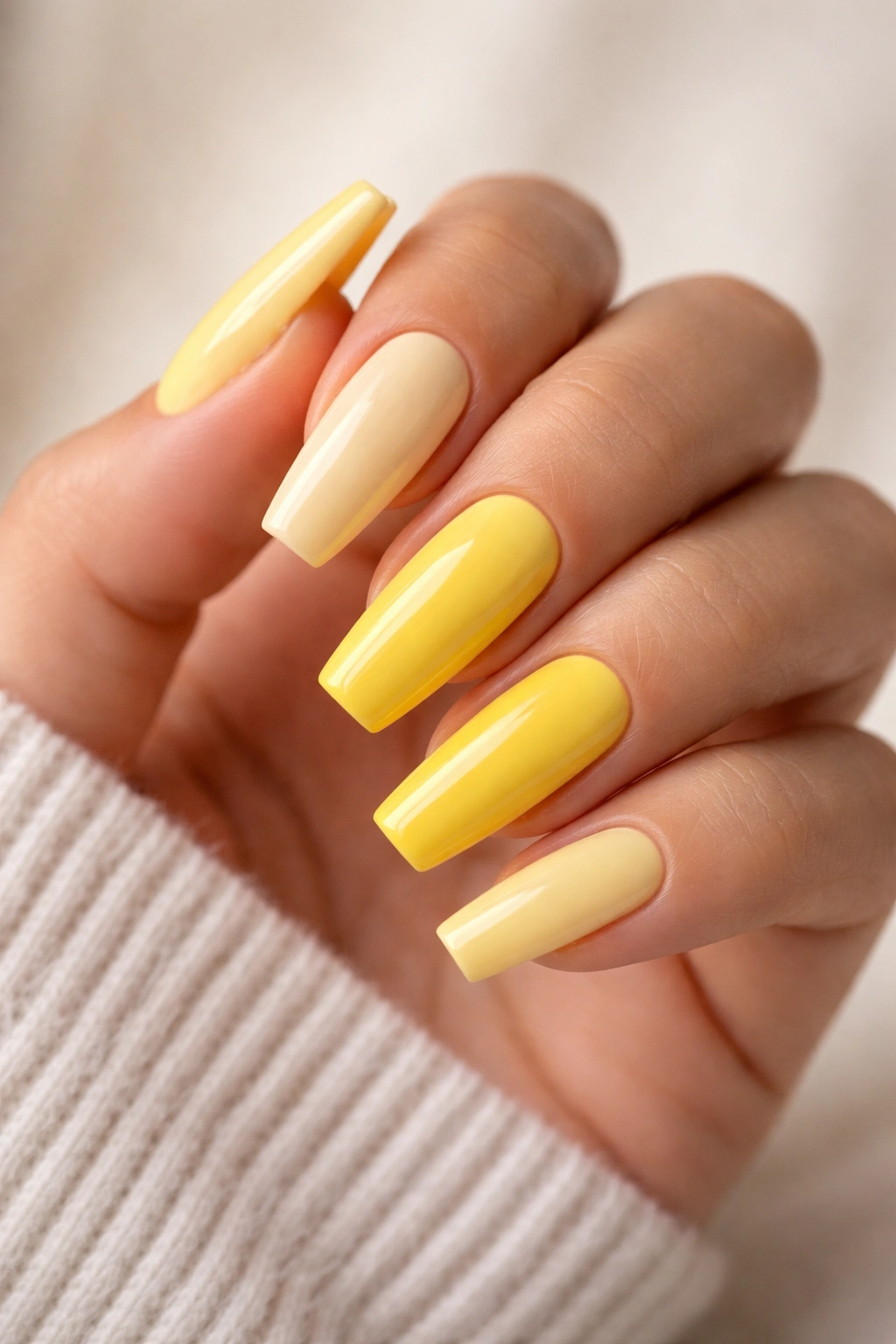
Coffin nails have a crisp structure: narrow sidewalls, a flat tip, and enough length to show color placement in a way rounder shapes cannot. When you paint that surface in yellow—especially a creamy pastel or juicy lemon—the shade looks more graphic and less washed out. The shape gives it backbone.
There is also a practical reason this combo works. Yellow tends to show brush strokes and uneven coverage faster than beige, taupe, or soft pink, especially in lighter shades. A coffin shape lets your nail tech smooth the color across a flatter, more even panel, which helps the final result look cleaner.
I also think coffin nails make yellow feel more grown-up. A soft butter yellow on a medium coffin does not read childish at all. It reads neat, planned, and a little self-aware—which is often what people want when they say they want color without full chaos.
A few pairings stand out:
- Short to medium coffin + butter yellow gives you a neat daily set with color that still feels calm.
- Medium coffin + lemon French tips keeps the shape crisp and the grow-out softer.
- Long coffin + jelly or neon yellow shows off transparency, outlines, and layered art better than shorter lengths.
- Extra-long coffin + marble, chrome, or 3D flowers gives the art room to breathe.
Shape comes first. Then color gets to do its job.
Picking the Right Yellow Before You Book the Set
Not all yellow lands the same once it leaves the bottle.
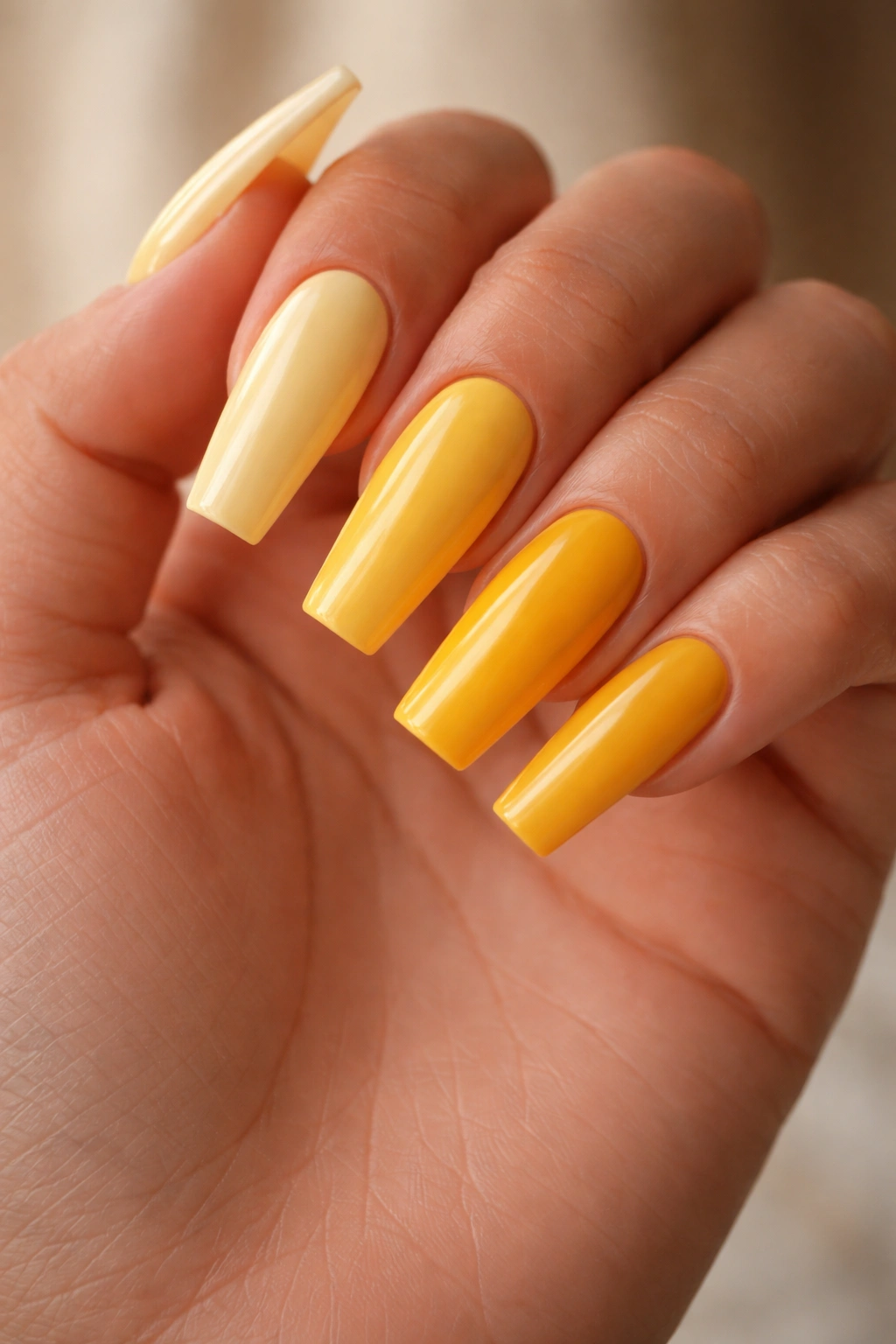
A pale cream-yellow can look soft and buttery under warm light, then turn chalky under cool LED lamps. Neon yellow can look electric on a swatch stick but pull almost green on the hand if the base has too much chartreuse in it. Swatching the shade against your skin before the full set starts is worth the extra minute.
Shade families that change the mood
Butter yellow sits closest to ivory and cream. It feels soft, easy, and wearable on medium coffin nails.
Lemon yellow is brighter and cleaner. It brings more contrast, so it suits French tips, line work, and graphic designs.
Sunflower and marigold yellows have more orange in them. Those shades feel warmer and richer, especially under a matte top coat or with gold jewelry.
Mustard sits deeper and moodier. If you want yellow without the candy look, this is where I would start.
Finish matters more than most people expect
Gloss makes yellow look smoother and juicier. Matte can flatten a bright shade—in a good way—so the color feels velvety instead of shiny. Jelly finishes let light pass through, which is why they look so good on longer coffin tips and clear overlays.
One small salon detail matters here: if your acrylic or hard-gel base is bright white, a sheer yellow placed directly on top can look harsh. A thin milky nude base coat underneath softens the color and keeps it from turning chalky. Nail techs do this all the time with tricky pastels for a reason.
1. Butter Yellow Gloss Coffin Nails
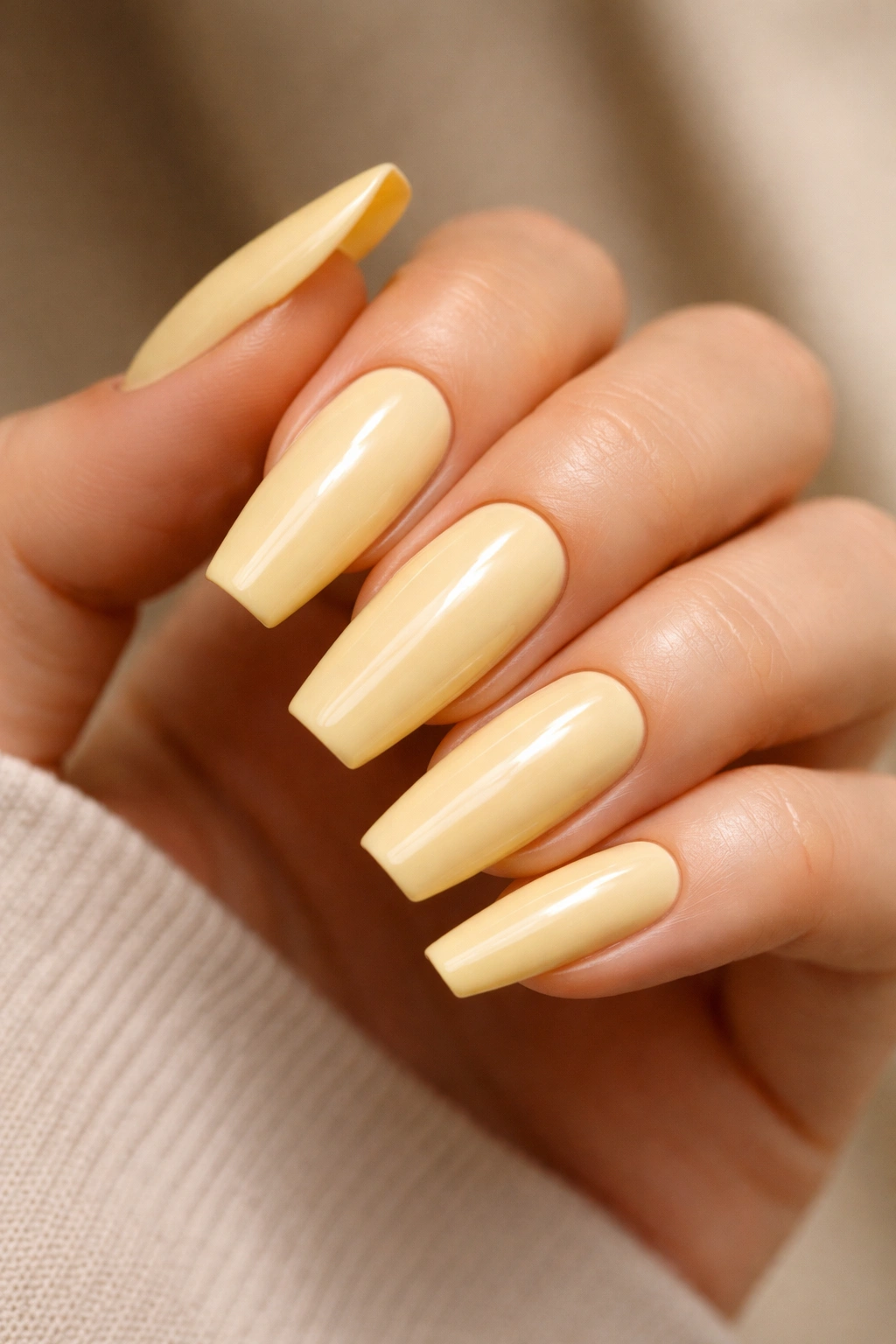
If you want an easy starting point, this is it. Butter yellow gloss is soft enough to wear for two or three weeks without getting tired of it, yet it still gives you that hit of color every time your hands move.
The reason it works so well on coffin nails is balance. The shape has enough edge to keep the color from looking sweet in an overly delicate way, while the creamy yellow takes the sharpness out of the silhouette. Medium length is the sweet spot here—long enough to show the color, short enough to stay tidy.
Why this shade stays clean on the nail
A good butter yellow has a touch of cream or vanilla in it. That tiny bit of warmth matters because flat pastel yellow can turn chalky fast, especially over a stark acrylic base. If you are getting this as a gel set, ask for two thin coats instead of one thick coat. Thick pastel layers wrinkle more easily and show unevenness near the sidewalls.
Quick design notes
- Ask for a milky nude or soft ivory base layer if the salon uses bright white extensions.
- A high-shine top coat helps smooth out any faint brush marks.
- Medium coffin lengths usually carry this shade better than extra-long lengths.
- Gold rings, tortoiseshell accessories, and creamy knits make this color look warmer.
My pick: add one accent nail with a sheer nude base and a tiny butter-yellow half moon near the cuticle if you want a lighter take on full color.
2. Lemon French Tip Coffin Nails
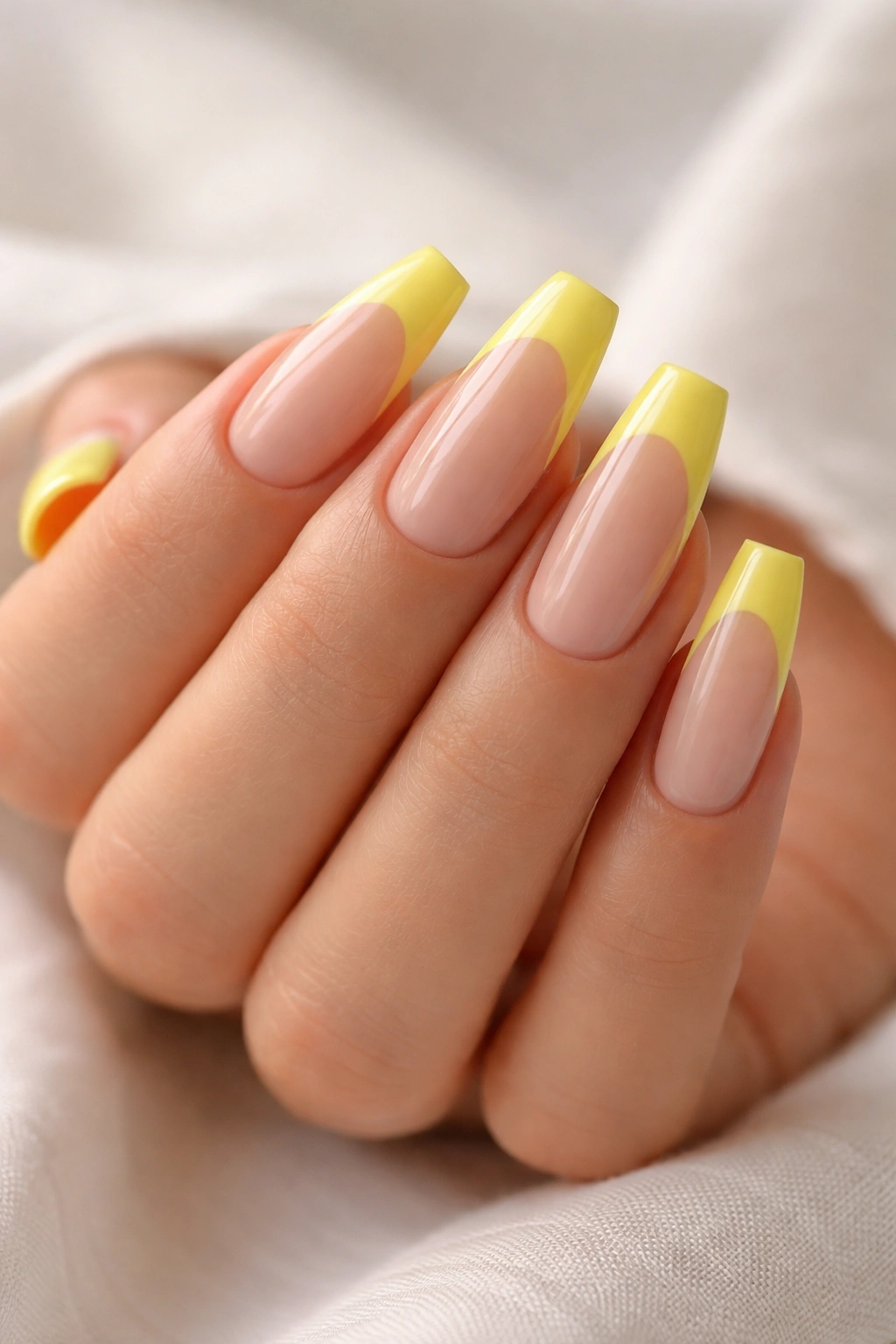
A yellow French tip is easier to live with than a full yellow set. You still get the color hit, but the nude base keeps the manicure airy and less demanding.
Coffin nails make French tips look sharper because the straight edge mirrors the line of the tip. On a medium coffin, a 2 to 3 millimeter lemon tip looks crisp and clean. On a longer set, a deep French or a V-shaped French gives you more drama without covering the full nail.
Base color matters here. A sheer pink, beige, or milky nude helps the lemon tip stand out while keeping the nail bed healthy-looking. If the nude is too peachy, the yellow can start to read dull. If the base is too pale, the whole thing can look flat.
I like this set for people who want color but still need their nails to look polished in work settings, dinners, weddings, or everyday life where neon all over might feel like too much. There is also a maintenance upside: grow-out looks cleaner because the color sits on the tip rather than at the cuticle.
One more salon note. Ask your tech to cap the corners well. The edges of coffin tips take the most wear, and a tiny chip is easier to spot on a bright French line than on a beige full-cover nail.
3. Matte Sunflower Yellow Coffin Nails
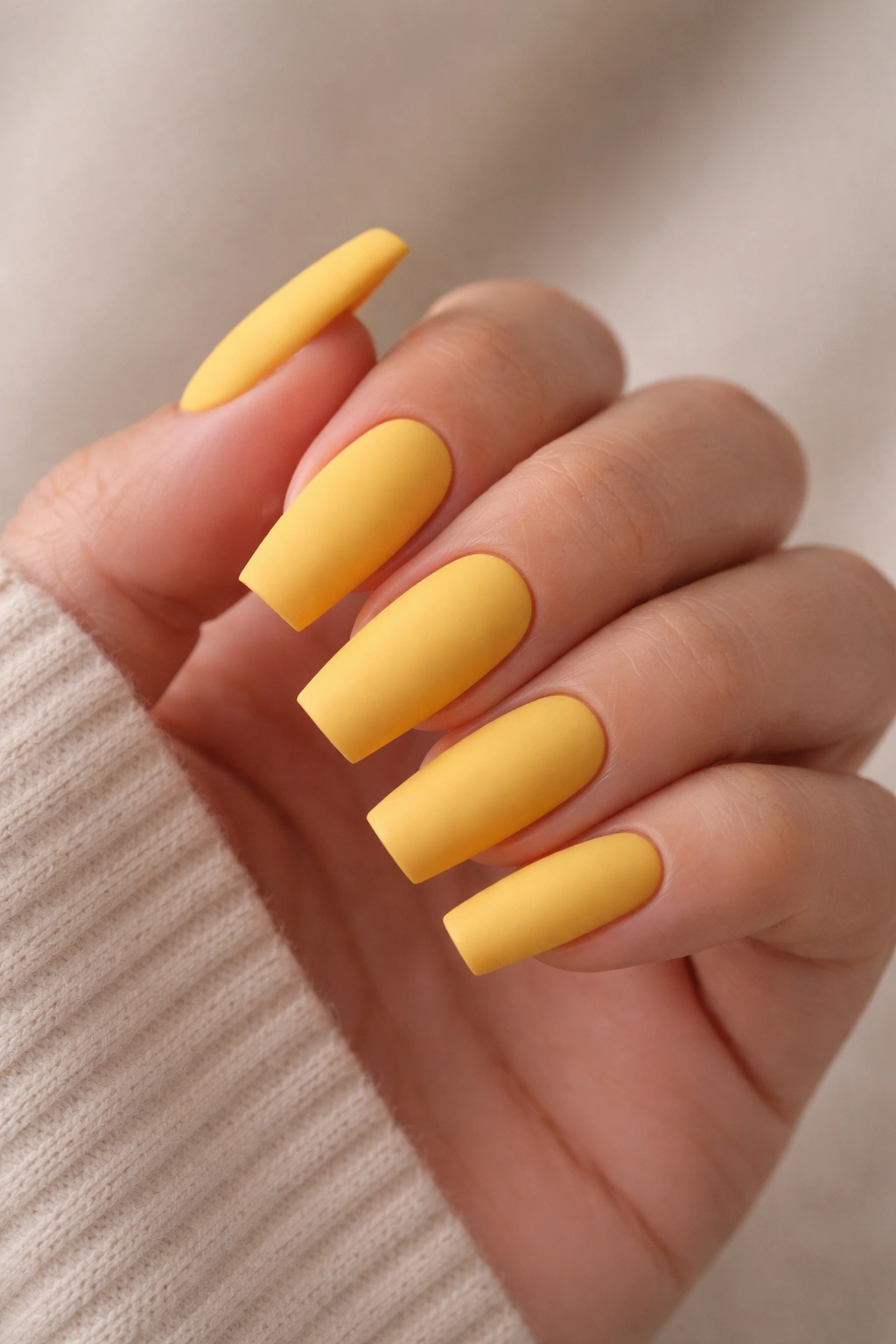
Want yellow to feel warmer and a little less candy-like? Go matte.
A sunflower yellow has more depth than lemon and more personality than pale butter. Put that shade under a matte top coat and it shifts again—less glossy polish, more soft pigment. The finish takes some of the brightness down, which is useful if shiny yellow feels too loud on your hand.
This look suits medium to long coffin nails because the shape gives the color enough room to show its depth. On shorter lengths, sunflower yellow can still work, but the matte finish looks best when you have some surface area to see it properly.
What the matte finish changes
Gloss reflects every light source. Matte absorbs it, so the color looks flatter, softer, and more velvety. That makes sunflower yellow feel richer. It also hides tiny ripples in the polish better than glossy pastel yellow, though it can make dry cuticles stand out more.
How I would wear it
Pair the full matte set with one glossy accent nail or a tiny gold foil line near the cuticle on two fingers. That little contrast keeps the manicure from looking heavy. If your hands run dry, cuticle oil becomes part of the deal with this one—matte nails make rough skin easier to spot.
This is one of those sets that looks stronger in person than it does on a swatch stick.
4. Yellow Ombré Fade Coffin Nails
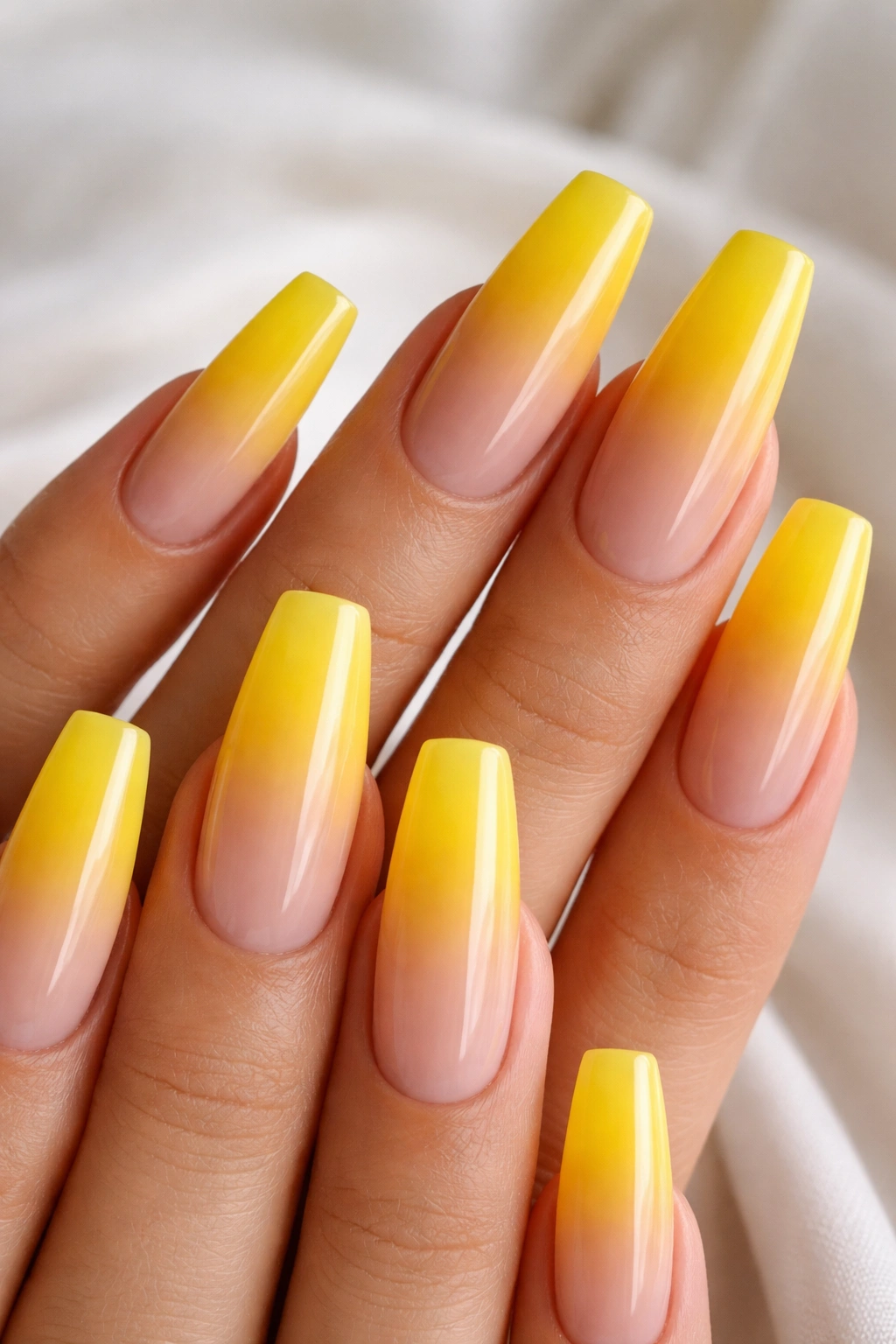
Across a table, this set looks almost airbrushed.
A yellow ombré fade starts soft near the cuticle and grows brighter toward the tip, which makes coffin nails look longer and more refined. The fade also solves one of the biggest yellow-polish problems: a full block of color can look harsh if the shade is bright, while an ombré gives the eye an easier transition.
Most techs build this with a sponge blend, an airbrush, or a soft blooming effect over gel. On coffin nails, the blend should start around the lower third or midpoint of the nail, depending on length. Shorter sets need a tighter fade. Longer sets can stretch it out.
A good version uses a nude, milky pink, or soft beige base. Yellow laid over a cold gray nude tends to look muddy, and that is not what you want.
Details that make this set look cleaner
- Start the fade lower on long nails and higher on medium nails.
- Use a milky neutral base so the yellow melts into the nail bed instead of sitting on top like a stripe.
- Ask for gloss if you want a juicy look; choose matte if you want the fade to look powdery.
- Airbrush gives the smoothest blend, though sponge work can still look good when sealed well.
I would choose this over a full solid neon set if you want yellow with a softer edge.
5. Nude and Yellow Color-Block Coffin Nails
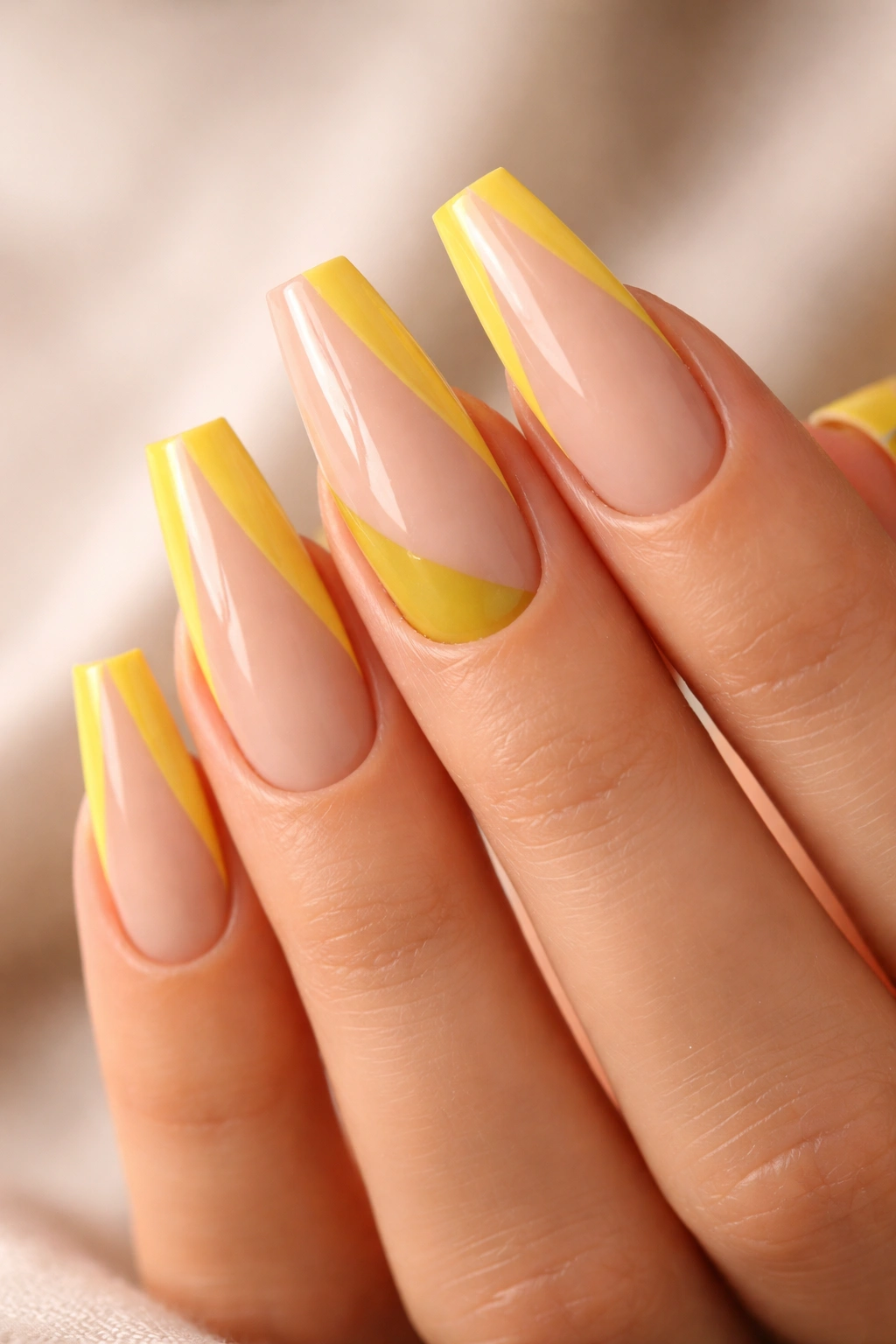
Graphic color-blocking and coffin nails belong together. The shape already has those neat straight edges, so diagonal panels, side swipes, half-tips, and split-color sections look more deliberate on it than they do on round nails.
You do not need a complicated design here. A diagonal slash of mustard across a sheer nude base can do enough on its own. A side panel in lemon yellow with the rest of the nail left nude looks clean. Even a reverse French in butter yellow can count as color-blocking if the lines are sharp and placed with intention.
What I like about this idea is that it feels modern without leaning on glitter, stones, or heavy art. Negative space does part of the work, which means the yellow gets to stand out against skin and nude polish instead of fighting for attention with five other details.
Placement changes the mood. A high diagonal line feels sharper. A low side panel feels softer. A bold half-and-half split looks strongest on longer coffin nails, where the line has enough room to read from a distance. If you are doing press-ons at home, striping tape or vinyl guides help more than freehand ever will. Straight lines look easy until you try to paint them on your own hand.
I would skip busy add-ons here. Let the geometry carry it.
6. Sheer Yellow Jelly Coffin Nails
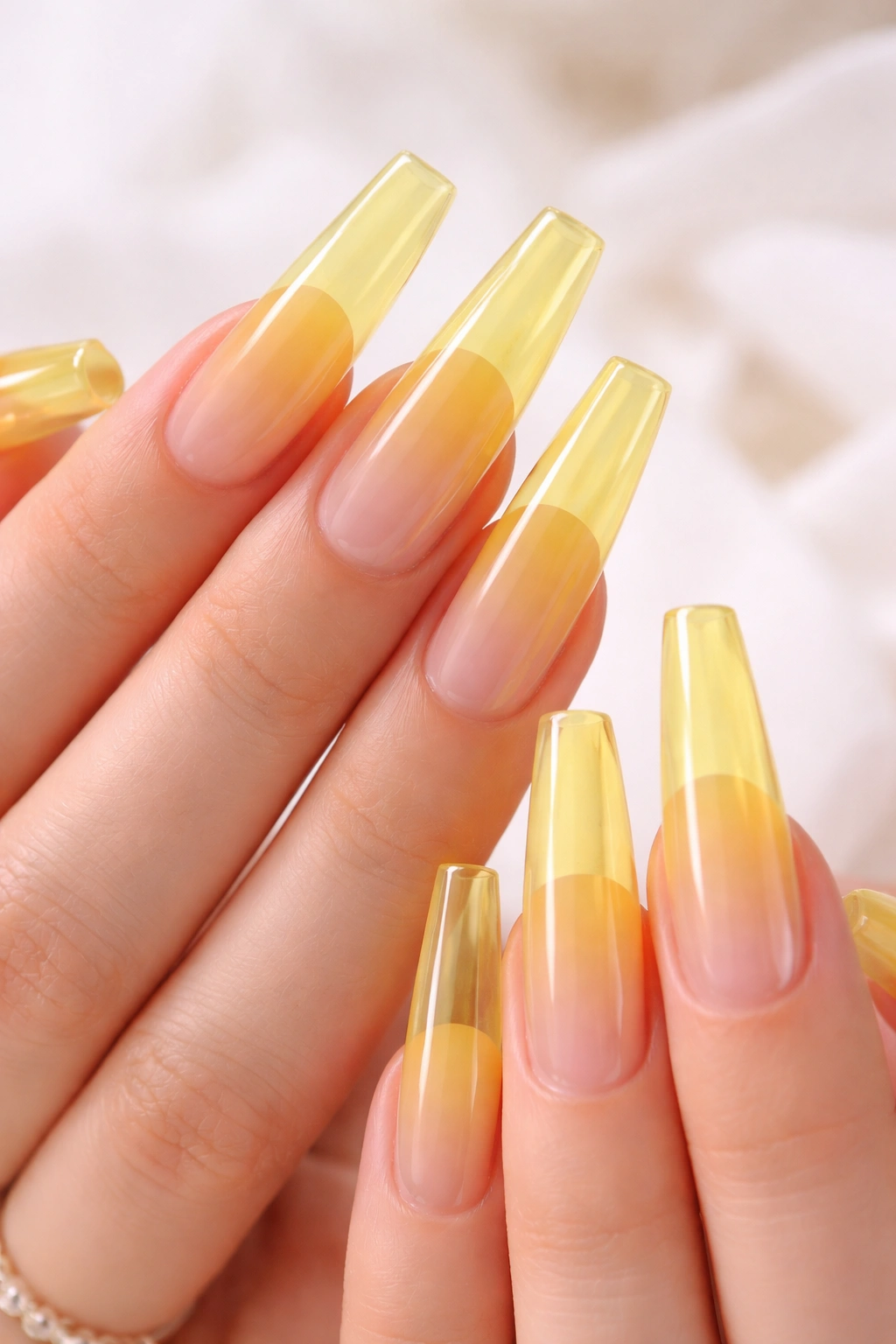
Unlike opaque pastel, sheer yellow jelly nails let light pass through the color, and that changes the whole mood. The finish feels lighter, glossier, and more playful without needing extra art.
This style shines on medium-long or long coffin nails, especially if you have clear tips, builder gel, or structured overlays underneath. The transparency gives the nail that candy-glass look people chase with fruit shades, and yellow does it well because the color stays bright instead of turning heavy.
There is one technical issue, though. If your natural free edge is uneven or your extension base is too white, the transparency can show every bit of it. That is why a tech may neutralize the nail first with a sheer nude, pale beige, or soft pink layer. It keeps the jelly effect while cleaning up what sits beneath it.
Who is this best for? Anyone who wants color and shine but does not want nail art. I like jelly yellow on longer vacation sets, on clean minimal wardrobes, and on hands stacked with rings because the manicure still has movement to it.
My recommendation: two translucent coats are usually enough. Three can still look good, but once the jelly gets too dense, you lose the airy effect that makes it special.
7. Dainty Daisy Yellow Coffin Nails
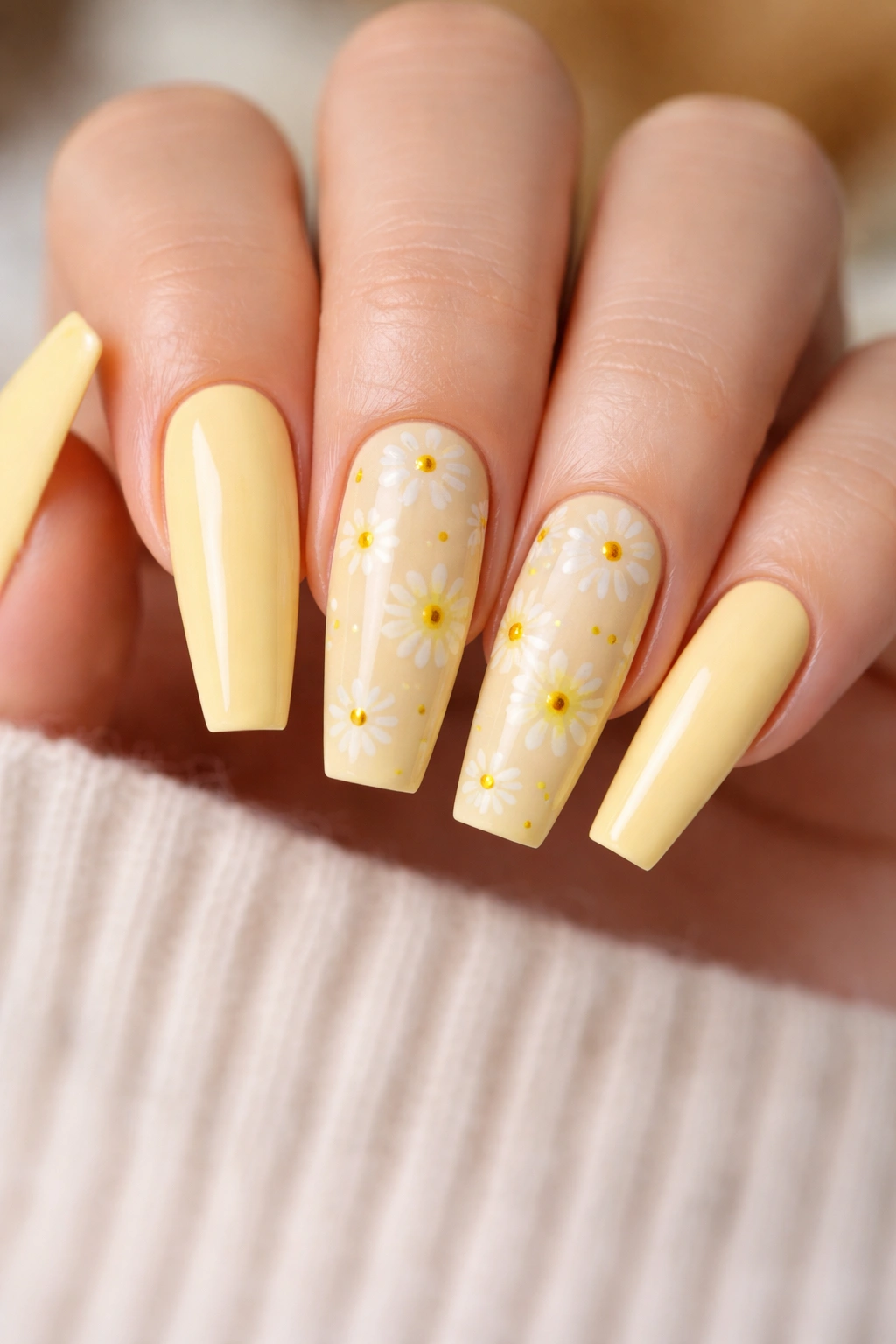
There is a reason people keep coming back to floral nail art. On yellow, tiny daisies feel cheerful without looking busy—if you place them well.
The best version starts with a soft butter or lemonade-yellow base, then adds white daisies on two or three accent nails. Coffin nails help because the flat tip gives the flowers room to sit without crowding the cuticle. You do not need a full bouquet across all ten nails. Two floral nails per hand is often enough.
Why the flowers sit better on coffin tips
Coffin nails create a longer visual line, so small flowers can be spaced out instead of packed tightly together. That spacing matters. Crowded petals make the art look homemade in the wrong way, while a little breathing room makes each bloom stand out.
Smart ways to place the design
- Put daisy art on the ring finger and thumb if you want it to show in photos and hand gestures.
- Use thicker gel paint for the white petals so they stay opaque over yellow.
- Tiny gold or amber centers warm up the whole set.
- Leave one or two nails plain yellow so the floral art has contrast around it.
Best move: ask for micro daisies, not oversized ones. Big petals can swallow the whole coffin shape.
8. Mustard Yellow Chrome Coffin Nails
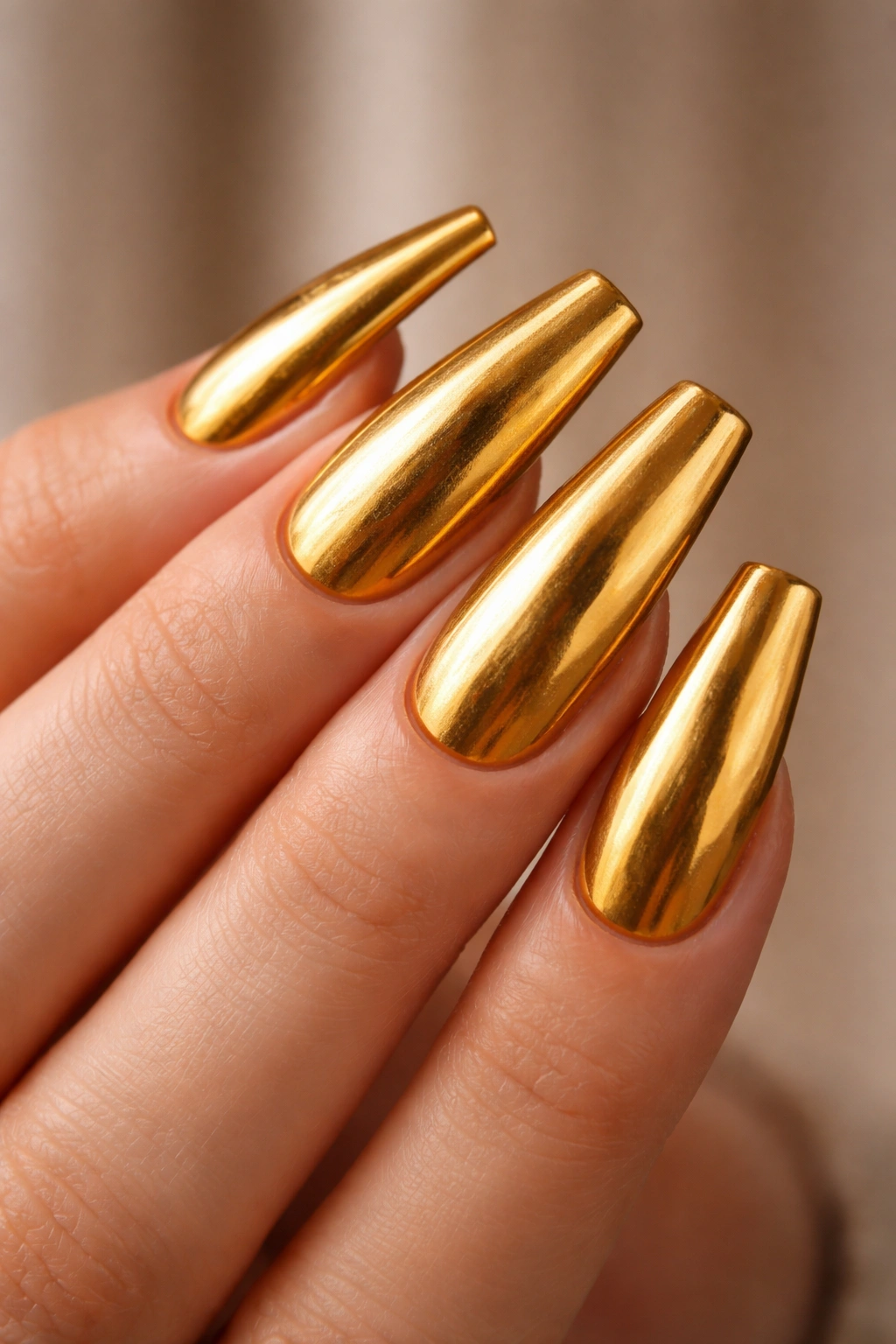
Chrome does not have to mean silver mirror nails. Over mustard yellow, it turns richer—closer to antique gold than nightclub metal—and the effect on coffin nails is strong.
A mustard base brings in brown and orange undertones, which gives the chrome something warmer to reflect. The final look feels denser and moodier than bright gold chrome over lemon polish. If plain yellow feels too flat for you, this is one of the smartest ways to add depth without adding art.
Technique matters. Your tech will usually apply the mustard gel, cure it, seal it with a no-wipe top coat, then rub in a fine chrome powder. The pressure of that rub changes the result. A light hand gives you a soft glazed sheen. A firmer buff creates a more metallic finish.
I prefer this on medium or long coffin nails, where the reflective surface has enough room to show the full shift. Short coffin nails can wear it too, but the look leans stronger on length. Pair it with almond jewelry tones—gold, amber, brown tortoiseshell frames, camel knits—and it starts to look rich fast.
One warning: chrome shows surface scratches sooner than plain gloss. If you are hard on your hands, ask for a sturdy top coat over the finished set.
9. Honey Marble Coffin Nails
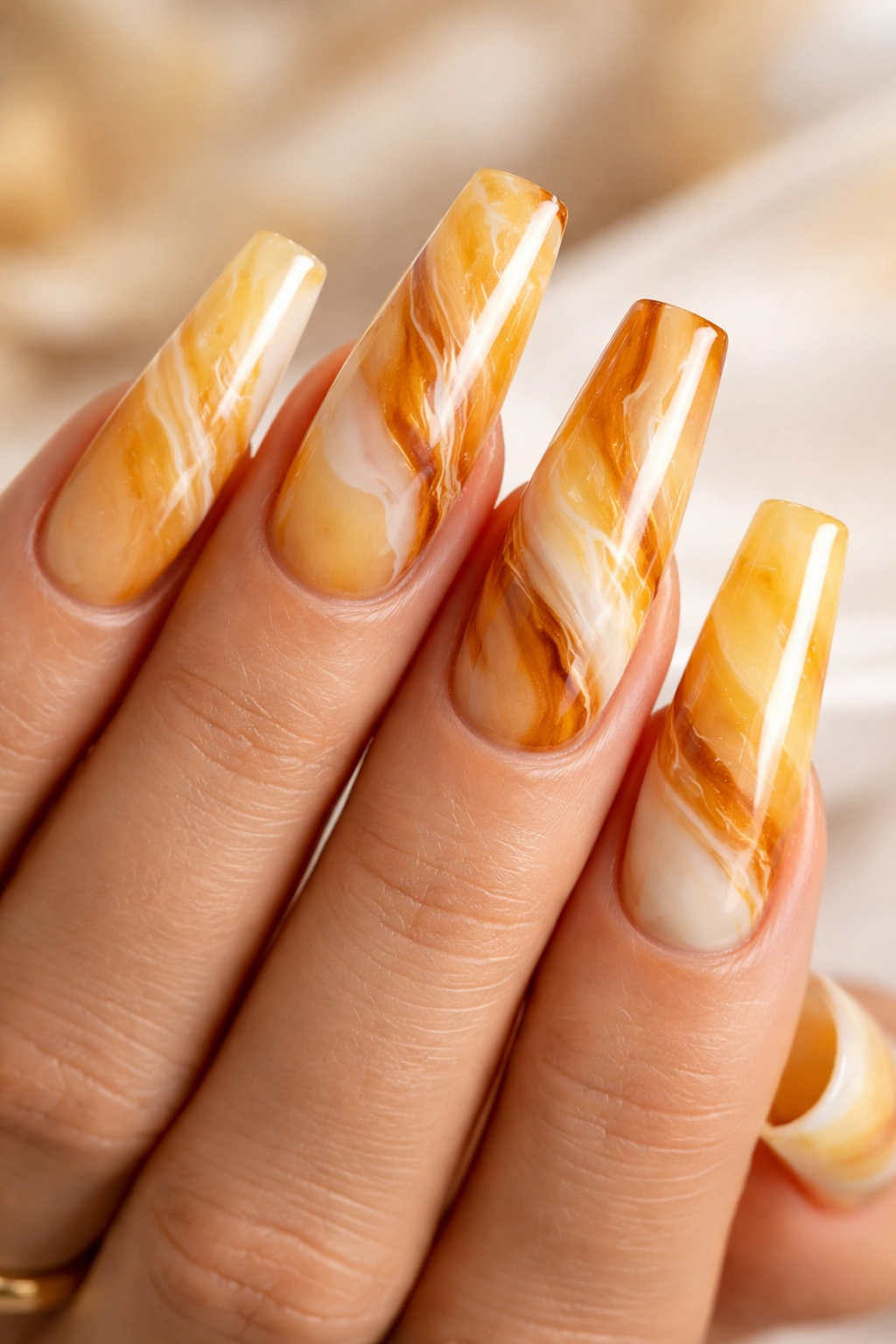
Can a yellow manicure feel richer without rhinestones or heavy charms? Absolutely. Honey marble nails do it with color layering.
A good honey marble set mixes amber, caramel, soft white, and translucent yellow in fluid swirls that look like polished stone or thick honey caught in light. On coffin nails, the shape keeps the pattern from looking muddy. You get enough length for the veins to stretch and enough width for the color shifts to show.
How the marble effect should look
The best marble is not fully blended. You want movement—soft drifts of yellow, thin caramel lines, maybe one whisper of white cutting through the middle. If every shade gets stirred together too much, the result goes brown and cloudy. Good marble has contrast.
A blooming gel, fine liner brush, or blooming top technique usually builds the pattern. Your tech may float a little clear gel over parts of the design to create depth. That extra layer is what makes some marble sets look flat and others look almost wet.
I like honey marble best when it is used on all ten nails with slight variation from finger to finger, or on three accent nails mixed with solid butter or mustard yellow. The set looks expensive without trying too hard—which, for nail art, is a useful line to hit.
10. Neon Yellow Outline Coffin Nails
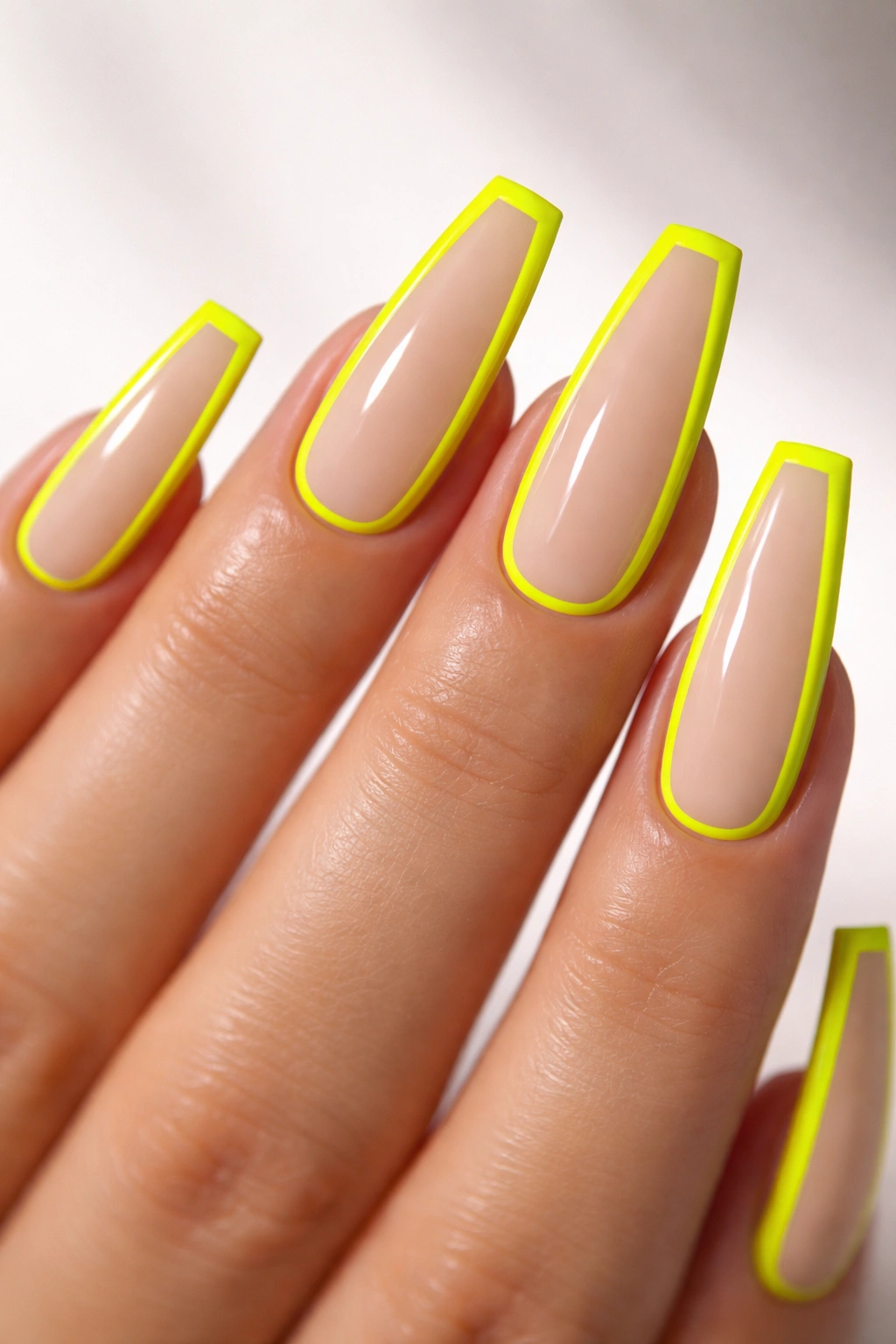
Under dim light, this design still reads.
That is the appeal of a neon yellow outline nail: the center stays nude or sheer, while a slim line of bright yellow traces the perimeter of the coffin shape. It is sharp, graphic, and cleaner than a full neon set. You get the color hit at the edges, where the eye notices shape first.
Coffin nails are built for this. The sidewalls give the outline a straight track, and the flat tip finishes the frame neatly. On almond nails the same design looks softer; on coffin it looks intentional.
What makes the outline look crisp
- Leave a tiny gap near the cuticle so grow-out stays clean.
- Use gel paint and a liner brush, not thick polish, for the sharpest edge.
- Add a black or white micro-line inside the yellow if you want more contrast.
- Medium and long lengths carry the design best because the frame has room to show.
This is a strong choice if you like minimal nail art but still want color people notice. It also holds up better visually than you might think, because the nude center hides small wear marks more gracefully than a full neon surface does.
11. Pale Yellow Aura Coffin Nails
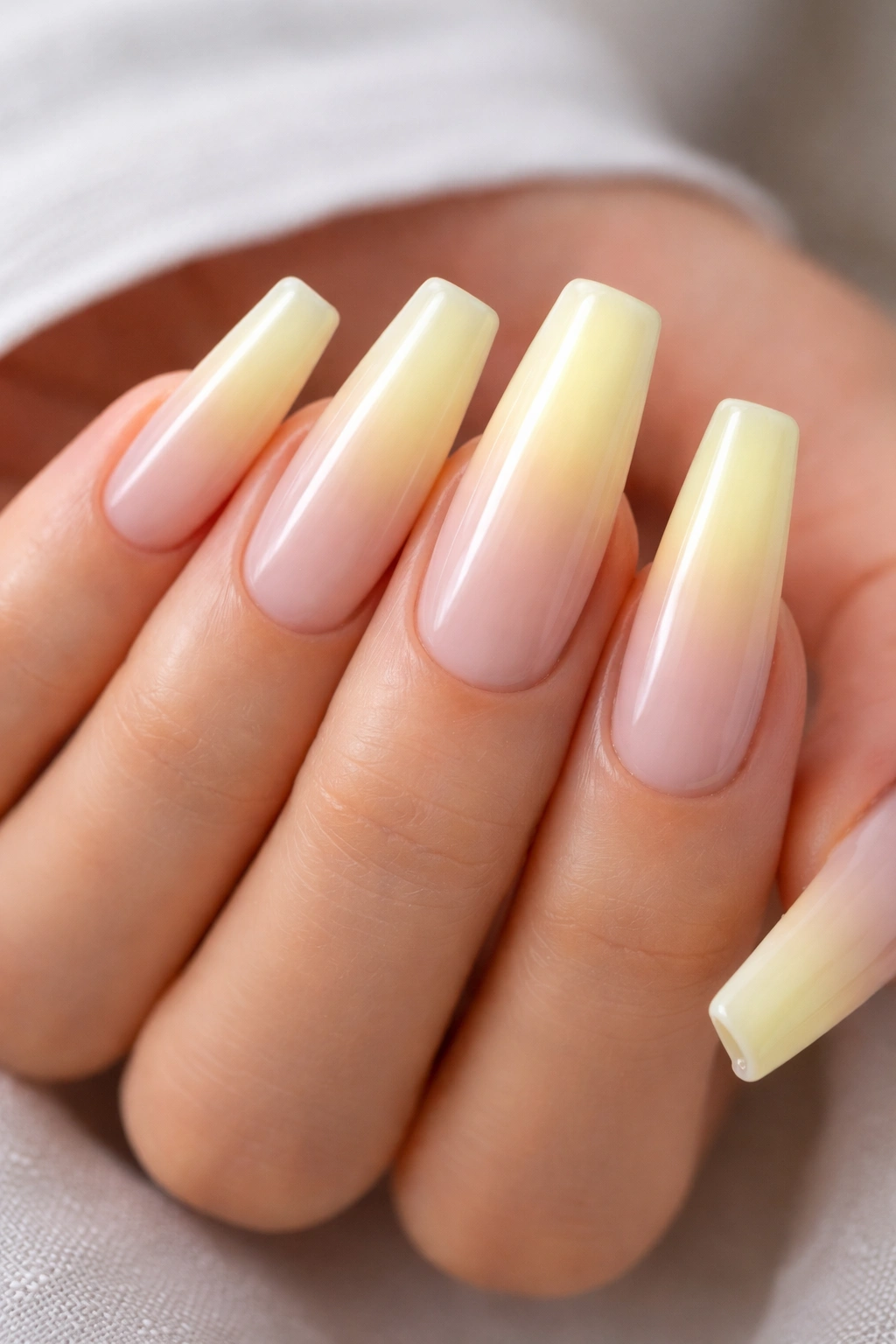
Aura nails can go wrong fast. The bad ones look like a blurry circle stamped onto the middle of the nail and left there. The good ones look diffused, soft, and almost lit from underneath.
A pale yellow aura over a milky nude base works well on coffin nails because the shape gives the color a defined border without boxing in the glow. The center can sit closer to the middle for a rounded aura, or it can be pulled slightly upward for a more lifted look. That small placement change affects the whole manicure.
I like aura yellow when the shade is muted—think buttercream, custard, pale lemonade—not bright neon. Bright aura colors can overwhelm the softness that makes the effect worth doing in the first place. A gentle yellow center with a sheer beige or pink outer area feels cleaner and more wearable.
Application matters more here than in a solid-color set. An airbrush gives the smoothest fade, but a soft sponge can still work if the pigment is built in thin layers. You want haze, not a hard ring. Once the edge of the aura gets too crisp, the illusion disappears.
If I were booking this set, I would ask for short-medium or medium coffin length, a milky base, and a glossy top coat. Matte aura nails can work, but gloss keeps the blend from looking dusty.
12. Yellow Glitter Fade Coffin Nails
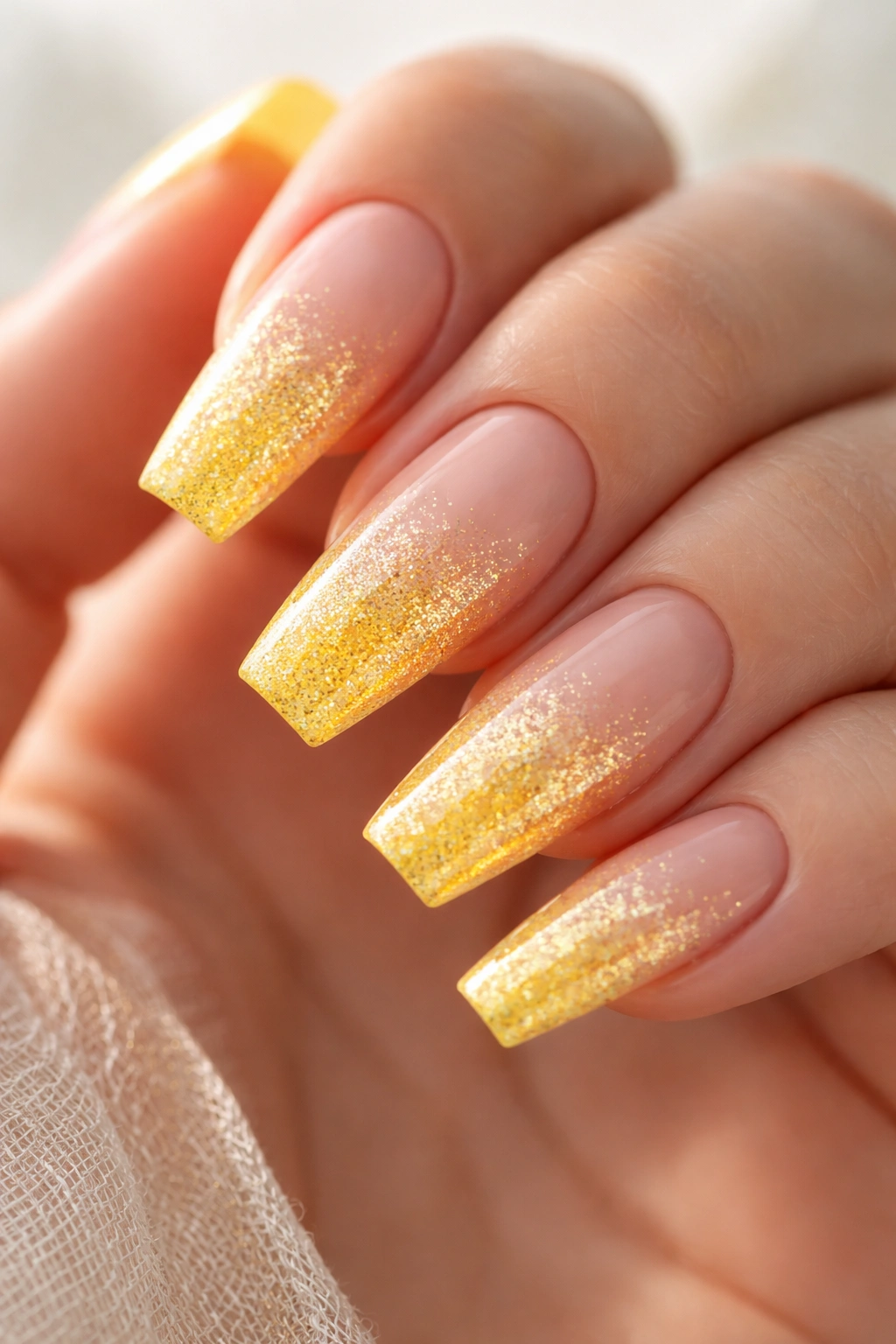
Unlike a full glitter nail, a yellow glitter fade keeps the coffin shape visible. That matters, because a dense wall of sparkle can flatten the silhouette and hide the clean edge that makes coffin nails look so good.
This design usually starts with a clear, nude, or pale yellow base. Glitter builds from the tip downward, becoming thinner as it moves toward the middle of the nail. You can go soft with fine iridescent glitter, warmer with gold shimmer, or bolder with lemon-yellow reflective particles.
Who should pick this? Anyone who wants movement and shine but does not want a full chrome or rhinestone set. Glitter fades are also forgiving. Tiny wear marks and small chips do not shout at you the way they do on a solid cream pastel.
A practical note from too many glitter manicures: fine glitter almost always looks cleaner than chunky glitter on coffin nails. Large pieces can create bumps near the sidewalls, and if those are not sealed under enough top coat, the surface catches on fabric and hair. If you want texture, use it on one accent nail and keep the rest of the set smoother.
This one has party energy, though it can still look polished if the fade is soft.
13. Checkerboard Yellow Coffin Nails
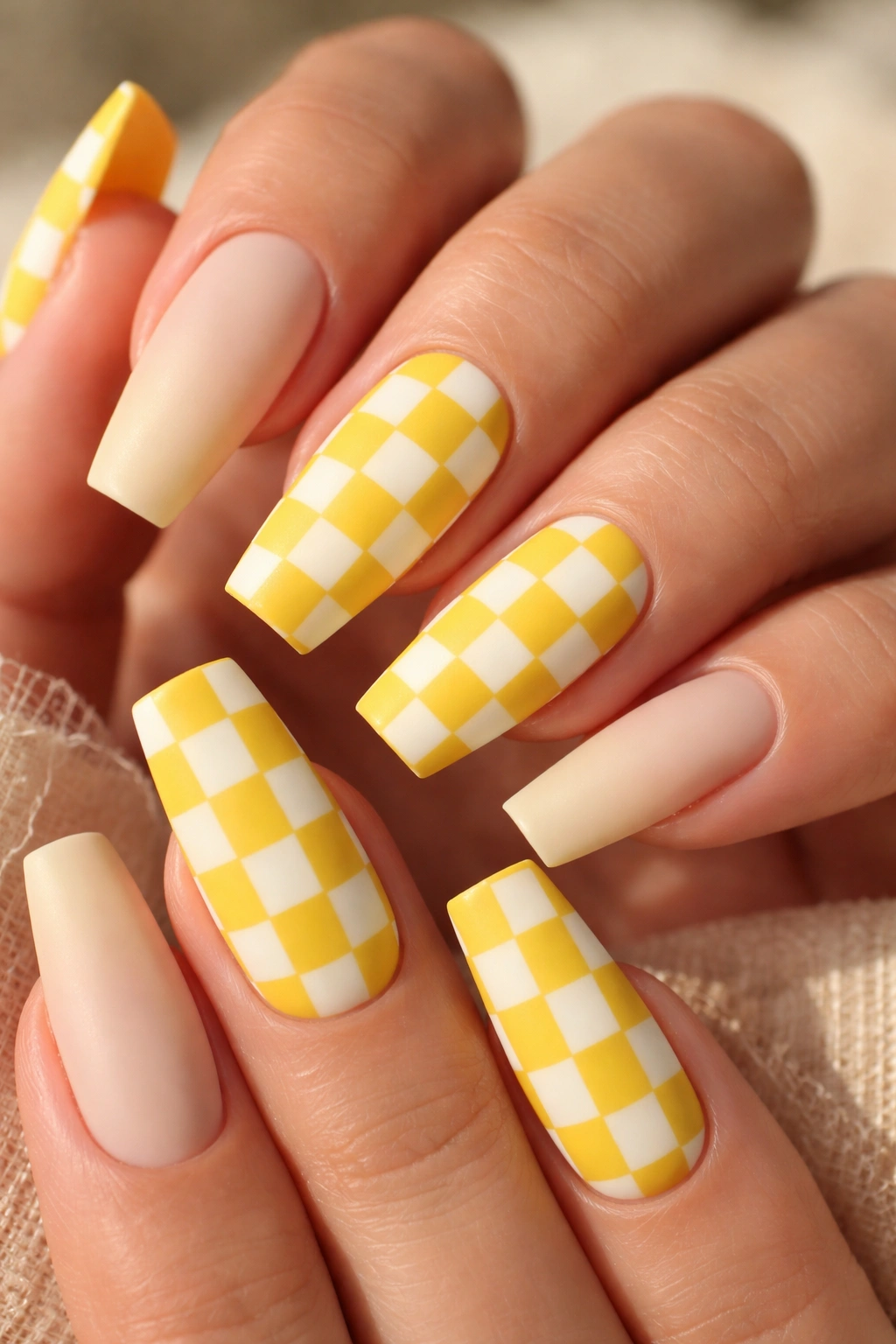
Checkerboard nails bring a retro punch that suits yellow better than people expect. The pattern already has energy, so using yellow in it makes the design feel playful instead of stiff.
On coffin nails, scale is everything. If the squares are too large, the tip looks blocky. If they are too tiny, the pattern blurs from more than a foot away. Medium coffin lengths usually fit three columns of squares across the nail best, sometimes four on a wider thumb.
Where this pattern hits hardest
A full ten-nail checkerboard set can work, but I prefer mixing it. Put the checkerboard on two to four nails, then use solid yellow, a nude glossy nail, or a yellow French tip on the others. That balance keeps the pattern from taking over your whole hand.
Design details worth asking for
- Yellow and white looks brighter and softer.
- Yellow and black looks sharper and more graphic.
- Matte top coat gives the pattern a poster-like finish.
- A thin border around the checkerboard nail can make the art look cleaner on long coffin tips.
Skip oversized squares on short coffin nails. They eat the shape alive.
14. Yellow Tortoiseshell Coffin Nails
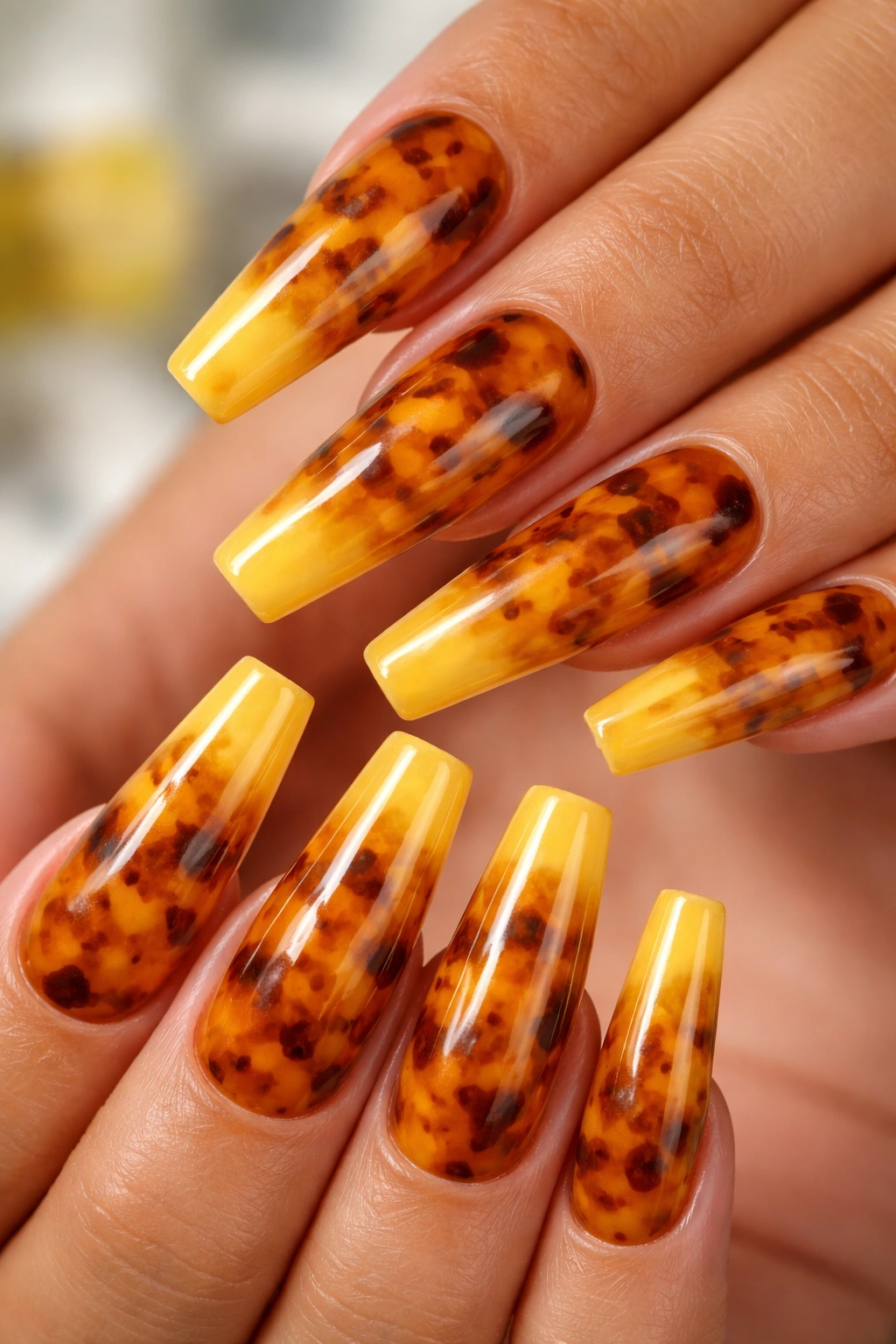
Tortoiseshell and yellow belong together. Not the muddy, overworked version—the good one, where translucent amber spots sit over a warm yellow or honey base and create that layered shell effect.
This design differs from marble. Marble flows in streaks and veins. Tortoiseshell builds in patches: soft-edged pools of caramel, brown, amber, and golden yellow, stacked in translucent layers until the nail looks like it has depth inside it. On coffin nails, the straight edges help keep that layered look neat instead of messy.
Gloss is the only finish I would choose here. Tortoiseshell needs light to bounce through the layers or the whole point gets lost. Your tech may start with a jelly yellow base, then add blurred brown spots, then another translucent coat over top to sink the pattern down. That layering is what gives the shell effect dimension.
I like this set best on medium and long coffin nails with one or two solid companion nails in mustard or butter yellow. Full tortoiseshell on all ten can work, though it is a bigger look. If you want warmth, depth, and something less obvious than plain yellow, this is a smart turn.
15. 3D Floral Yellow Coffin Nails
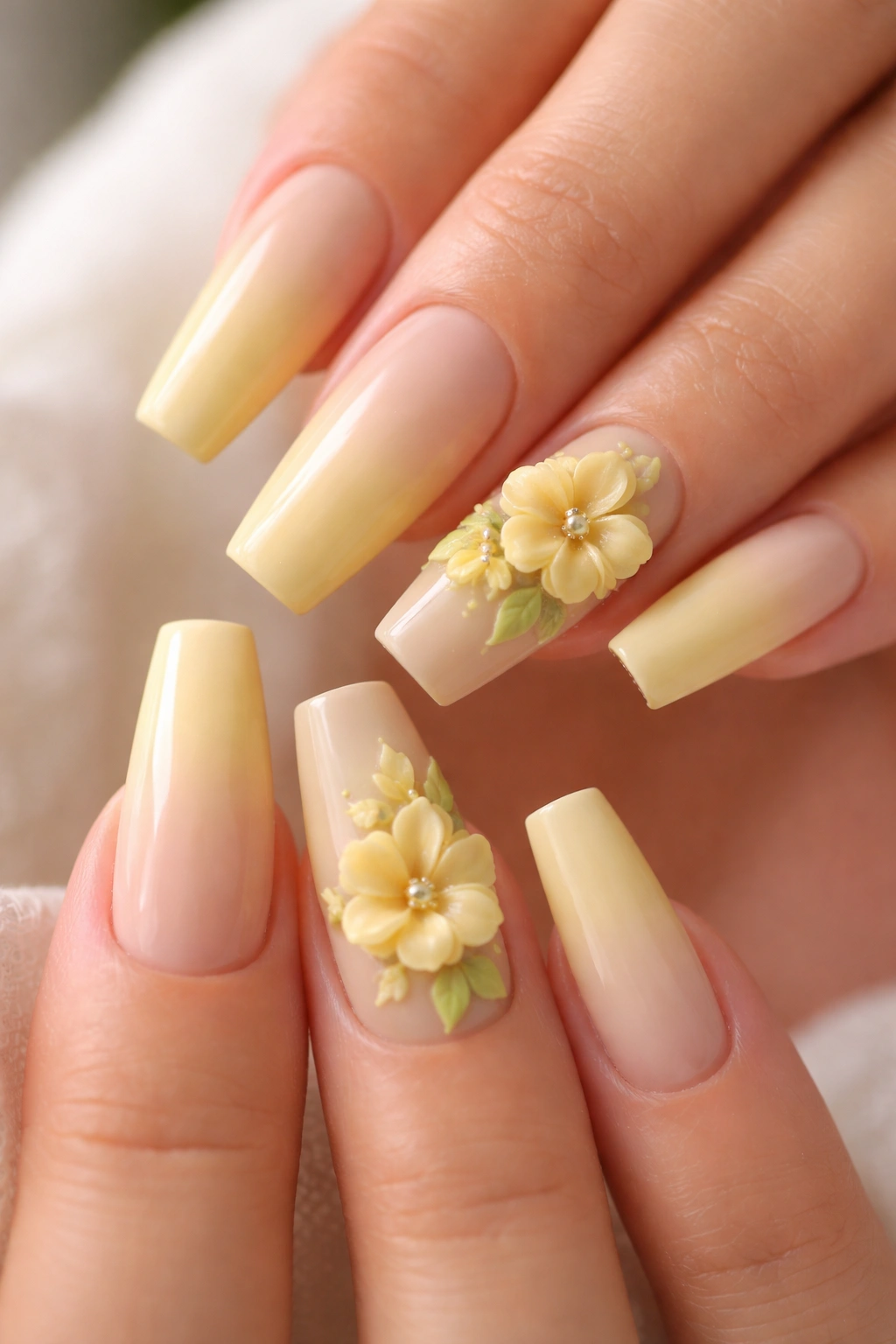
This one is not subtle.
A 3D floral yellow coffin set uses sculpted gel or acrylic flowers raised from the nail surface, usually paired with a soft yellow, nude, or French-style base. On coffin nails, the flowers sit best when they are placed off-center—near the cuticle, sidewall, or lower third—so the shape still has room to show.
There is a reason this design looks expensive when it is done well. Light catches the petals differently from flat polish, and the raised edges create real shadow, not painted shadow. That gives the set more texture than daisies or line art ever can.
What keeps 3D florals from getting clunky
- Use one or two statement nails per hand, not raised flowers on every nail.
- Ask for builder-gel petals if you want a flatter shape that snags less than acrylic.
- Keep the base soft—butter yellow, nude, or a pale French—so the flowers stand out.
- Add tiny pearls or gold beads only if the floral placement is already sparse.
I would be honest here: this design asks more from your hands. If you are opening boxes all day, wearing tight gloves, or digging around in big tote bags, tall petals can catch. A lower-profile sculpted flower solves most of that. And when it is done with restraint, the effect is worth the extra care.
How to Keep Yellow Coffin Nails Looking Fresh Between Fills
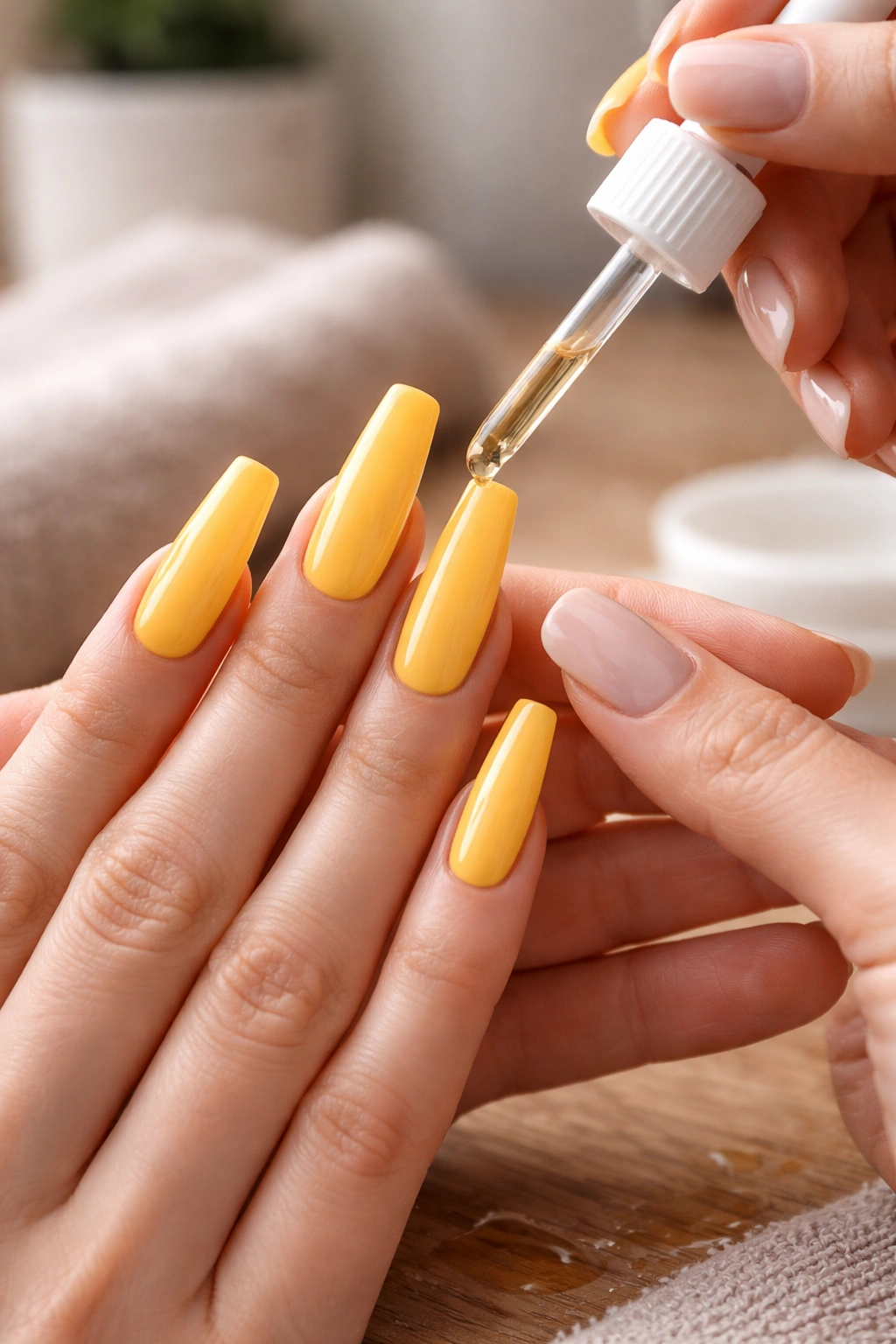
Yellow shows wear in its own way. It does not hide dullness like beige, and it does not distract from chips the way glitter can. If the top coat loses its shine or the corners start to wear down, you will notice.
A few habits help:
- Apply cuticle oil once or twice a day, especially with matte yellow sets.
- Wear gloves when cleaning with bleach, strong sprays, hair dye, or anything that can stain or dry the surface.
- Wipe self-tanner, bronzer, and heavy makeup off your nails after application. Pigment likes to cling near the cuticle and under the free edge.
- If you use press-ons, file the sidewalls lightly after application so the coffin shape stays crisp.
Longer acrylic or hard-gel coffin nails usually need a fill every two to three weeks, depending on growth and how rough you are with your hands. Outline designs and French tips can stretch a touch longer visually because the grow-out is less obvious. Full solid yellow and matte sets tend to show age faster.
One more thing. Do not pick at lifting. Yellow polish makes disturbance near the edges easier to spot, and once you start peeling, the whole set goes downhill fast.
Final Thoughts
Yellow has range. It can look soft and creamy, sharp and graphic, warm and rich, or full-on playful, and coffin nails give each of those moods enough space to land properly.
If you want the easiest entry, start with butter yellow gloss, a lemon French tip, or a yellow ombré fade. If you want more edge, go for neon outlines, mustard chrome, or tortoiseshell layering. The shade matters, sure—but finish and placement matter almost as much.
I keep coming back to the same point because it is the part people skip: the right yellow is not only about the bottle color. It is about the base underneath, the length of the coffin shape, and how much design you want the nail to carry.
Pick the set that makes you glance down at your hands one extra time. That is usually the right one.