

Short squoval nails are having a serious moment right now, and for good reason. This hybrid shape — part square, part oval, all practical — hits that sweet spot between edgy and elegant. It’s angular enough to feel modern and intentional, but rounded enough at the corners to keep you from catching the shape on literally everything you touch. And when you pair that versatile base with the timeless sophistication of a French tip? You’ve got a manicure formula that works whether you’re heading to the office, out for the weekend, or just living your everyday life.
The beauty of the squoval shape is that it photographs beautifully and actually works for people who do things with their hands. No breaking, no snagging, no constant babying. A French tip on short nails reads as polished and put-together without the commitment or maintenance nightmare of longer lengths. Whether you’re drawn to minimalist clean lines, intricate nail art, ombré transitions, or textured finishes, the squoval canvas holds up everything with equal grace.
We’ve rounded up fifteen killer short squoval French tip designs that deserve to be saved directly to your phone for your next manicure appointment. Each one brings something different to the table — from barely-there elegance to statement-making details that prove short nails can absolutely be sophisticated. Scroll through, take screenshots, and bring these inspiration images to your nail tech. Because the best manicure is the one you’re genuinely excited to wear.
1. Crisp White Classic with Sharp Edges
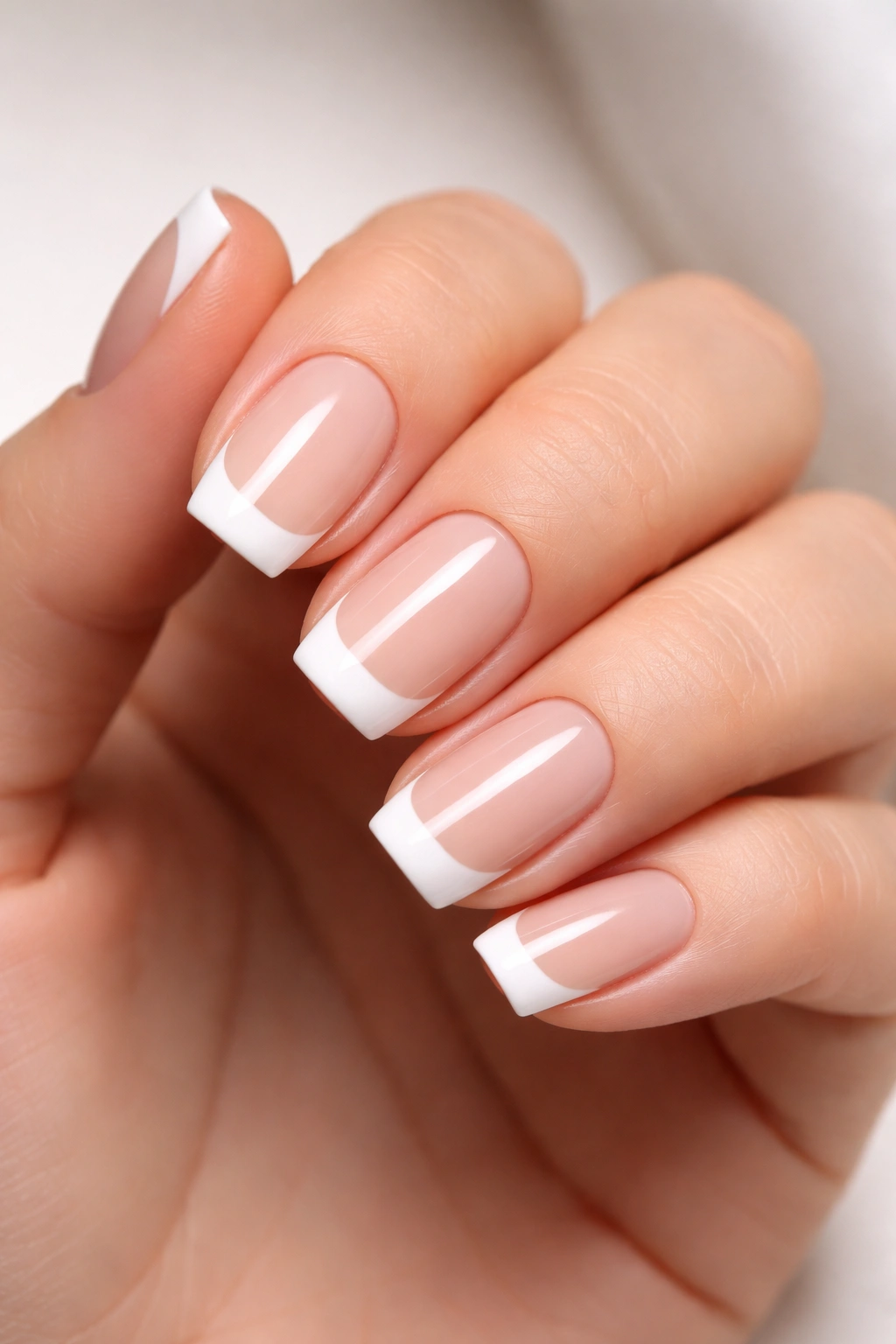
The original French tip remains undefeated, and there’s absolutely nothing wrong with honoring tradition. This version keeps the white tip razor-sharp and defined, with a stark contrast between the pale nude or barely-pink base and that signature bright-white edge. The squoval shape elevates the look beyond basic — it’s geometric and intentional in a way that rectangular tips just can’t quite match.
Why This Design Endures
There’s a reason this look has been a manicure staple for decades: it’s endlessly flattering and works with every single outfit and occasion. The bright white against a neutral base makes hands look larger and more elegant, while the squoval shape keeps the whole effect modern rather than dated. It’s the equivalent of a white button-down shirt in nail form — a foundational piece that never goes out of style.
How to Make It Work for You
- Keep the white edge clean and straight — even a tiny wobble shows
- Ask your nail tech for a very thin white stripe (about 1-2mm) for sophistication, not a thick theatrical tip
- Pair with a warm, soft pink or peachy nude base rather than pure white-on-white
- Top with a high-shine glossy finish that catches the light
- Maintain with regular touch-ups, as the white tip grows out visibly
Pro tip: If your natural nails tend toward yellow or have visible undertones, a pale pink or warm beige base reads better than stark white — it creates a sophisticated ombré effect as the white transitions into the base color.
2. Soft Gradient Pink-to-White Ombré
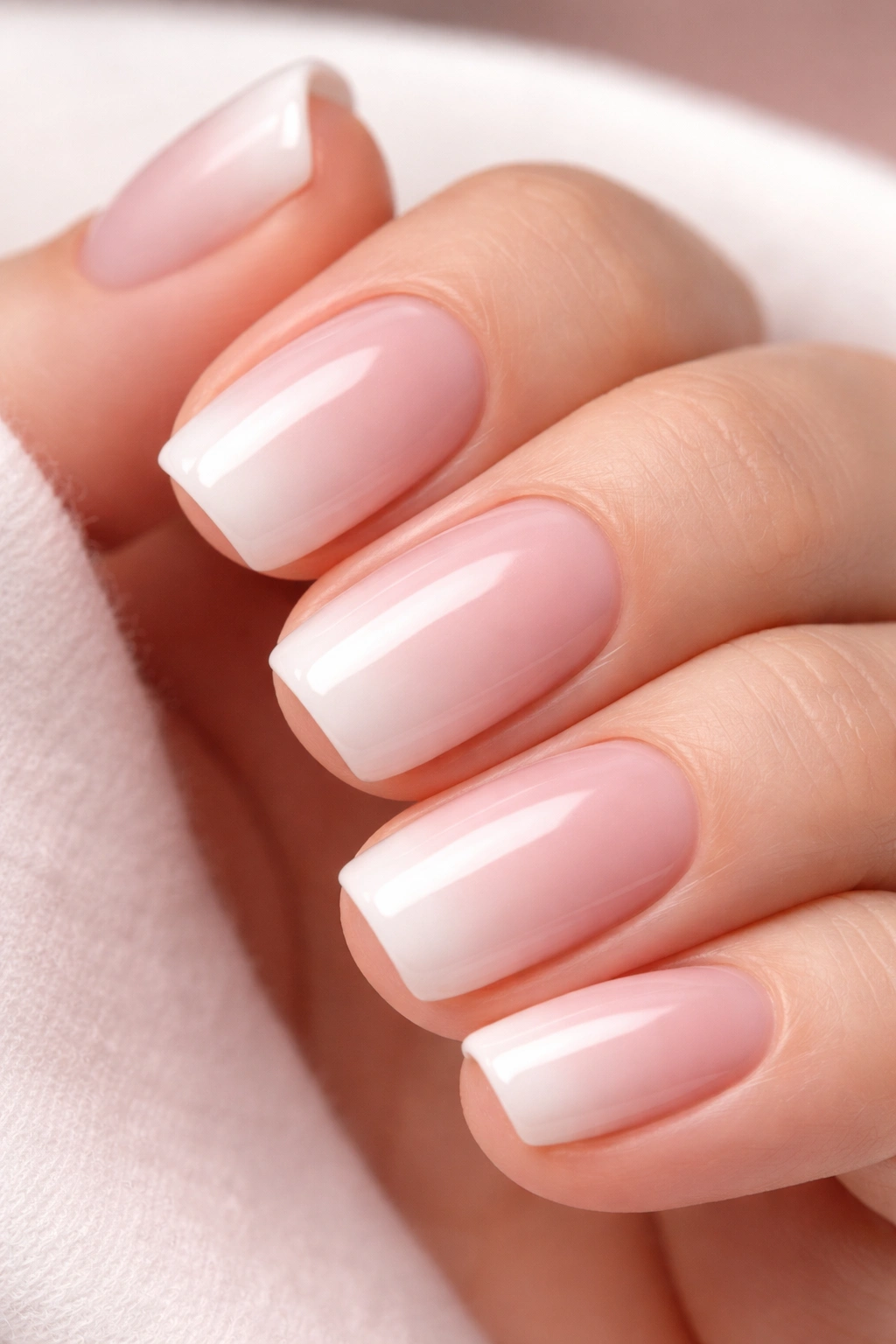
Instead of a harsh line separating the tip from the base, this design builds a soft, dreamy gradient that transitions slowly from pale pink to white. The effect is romantic and modern at the same time — you get all the elegance of a French tip without the graphic boldness of a distinct color block.
The Gradient Technique
The magic here is in the blending. Your nail tech will layer translucent white and pink shades, working from the base upward and gradually increasing the ratio of white as they move toward the tip. The transition should feel natural, like the color is melting from one shade to another. In short squoval nails, this gradient reads as subtle sophistication rather than gimmicky.
Application and Longevity
- Gradient French tips typically use gel polish or acrylics for the smoothest blend
- The design looks best when the white doesn’t reach the very edge — leave a tiny sliver of the gradient visible at the nail tip for dimension
- Ombré designs actually hide regrowth better than traditional French tips, making them a practical choice for longer stretches between appointments
- The soft effect works beautifully with both matte and glossy top coats
Worth knowing: If you have shorter nail beds, a gradient French tip makes them appear slightly longer because the eye follows the transition rather than focusing on the actual nail length.
3. Minimalist Thin-Line French with Nude Base
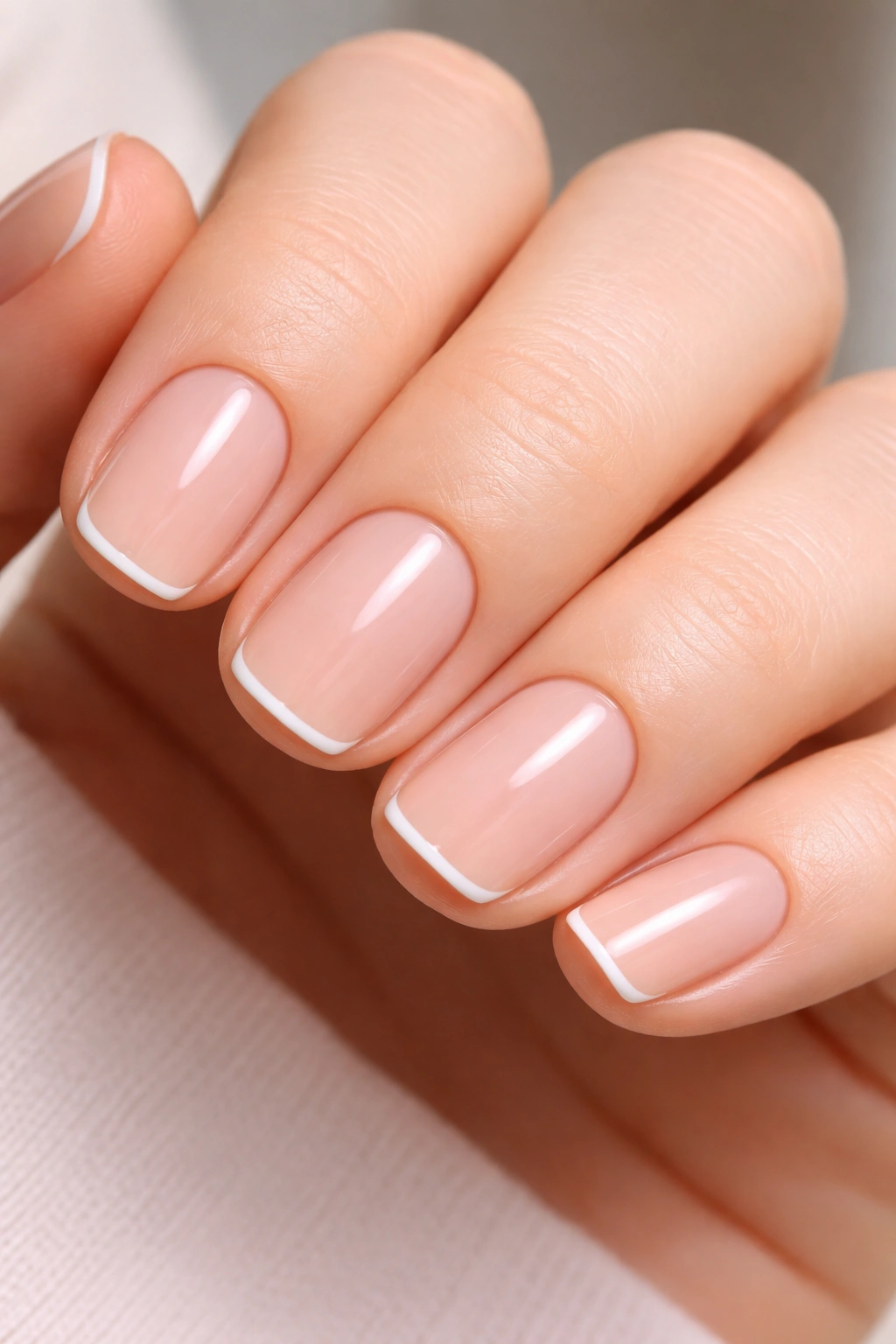
Here’s where squoval truly shines for minimalists: a razor-thin white or pale gold line at the very tip, so subtle it’s almost invisible unless you really look. The base is a warm, creamy nude that matches your skin tone almost perfectly. The overall effect is “I woke up with perfect nails” elegance — barely-there but absolutely intentional.
Why Less Really Is More
This design works because it respects the natural nail and simply enhances what’s already there. The squoval shape does most of the heavy lifting, providing geometric interest without needing color blocks or embellishment. It’s the kind of manicure that makes your hands look naturally beautiful rather than like they’re competing for attention.
Color Matching and Finish
- Ask your nail tech to match the base to your skin undertone — cool skin looks best with cool pinks or beiges, warm skin shines with warm nudes and peachy tones
- A matte or semi-matte finish feels more sophisticated than super-glossy for this design
- Keep the white line almost impossibly thin — thinner than you think looks good, then go thinner still
- This design is perfect if you like the look of a manicure but prefer to keep it subtle
Pro tip: This design actually requires more precision than a bolder French tip, so bring reference photos and give your tech clear direction about exactly how thin you want that line.
4. Gold Foil Accent at the Tip
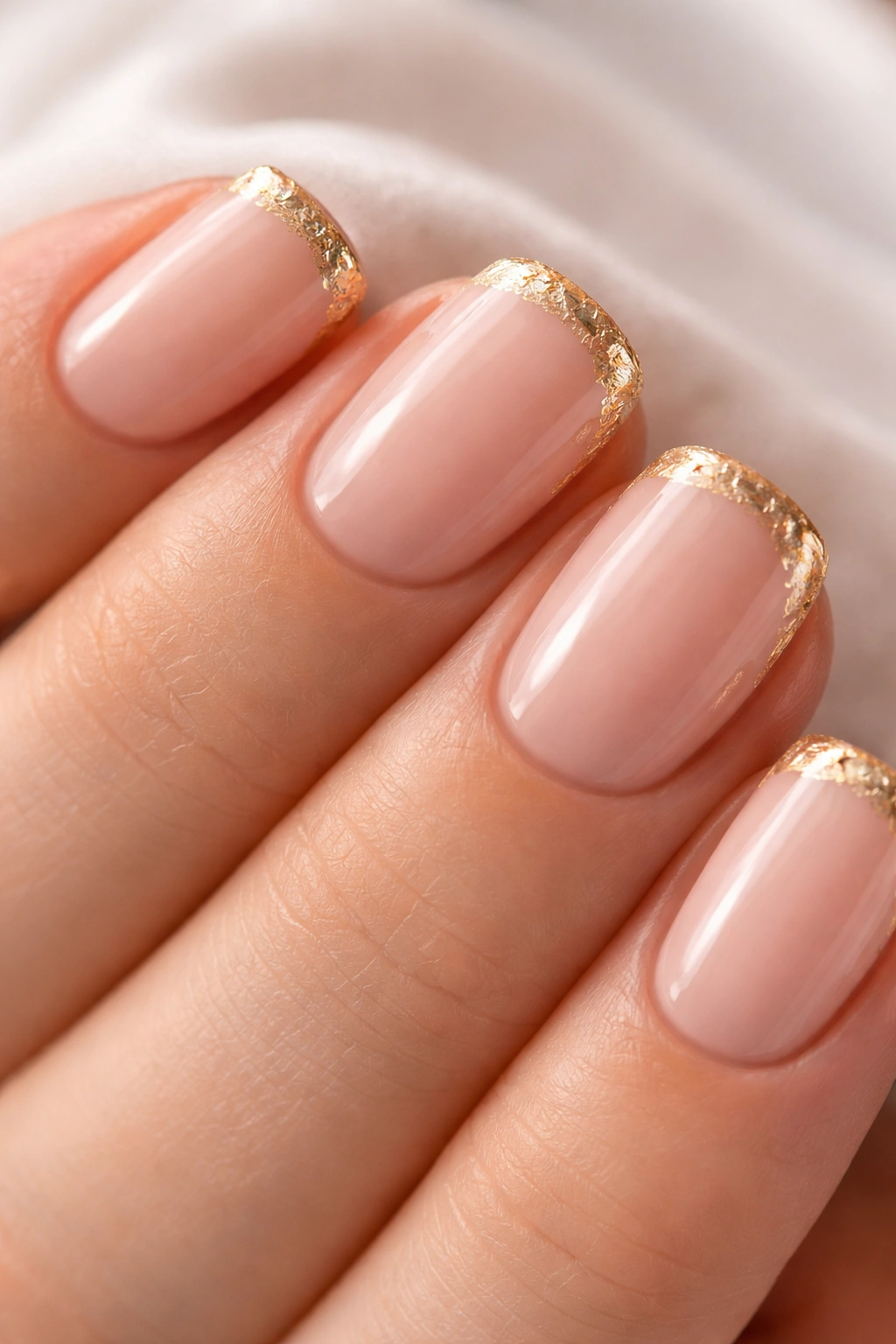
Swap white for a thin edge of delicate gold foil, and suddenly your French tip feels warmer, more luxe, and slightly unexpected. The gold catches light beautifully against short squoval nails and reads as sophisticated rather than costume-y. Pair it with a soft pink, warm beige, or even a very pale champagne base.
Making Gold Work
Gold foil is delicate and requires careful application — it’s pressed into wet gel or polish rather than painted on, so it catches light in a dimensional way. The thin line you get from foil application sits right at the tip of the nail, creating that French tip silhouette but in warm metal instead of white.
Gold vs. Silver vs. Rose Gold
- True gold foil works best with warm undertones and peachy-pink bases
- Rose gold is the more universal option — flatters cool and warm skin equally well
- Chrome or mirror finishes (sometimes called liquid metal) offer a similar vibe but with even more light-reflection
- Pair foil tips with a glossy top coat to maximize the sparkle factor
Insider note: Gold foil tips have a softer, more romantic quality than full glitter or rhinestone designs while still feeling special and intentional.
5. Translucent Nail with Opaque White Tip
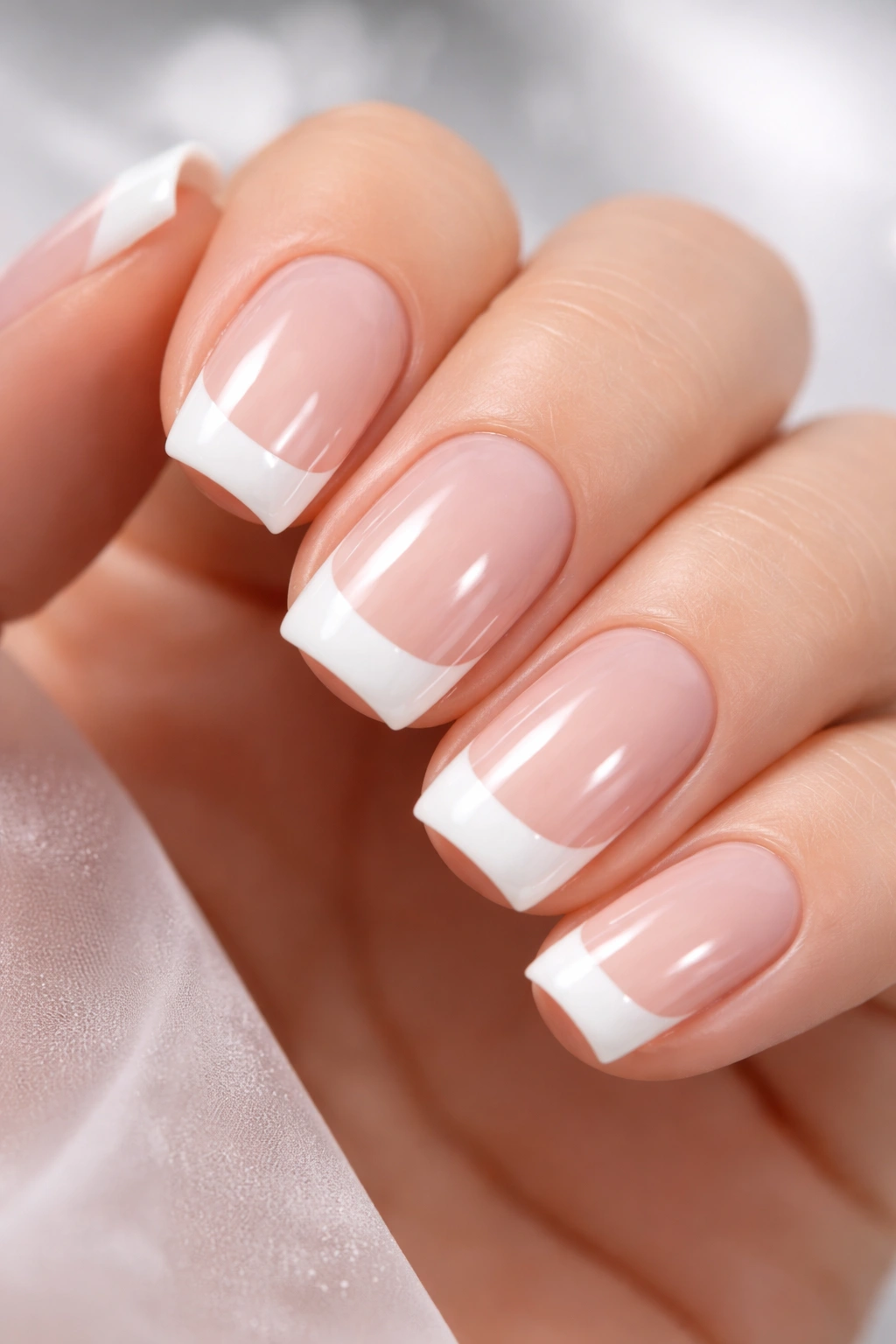
This design uses a sheer, nearly transparent base that lets your actual nail show through — creating a glass-like quality — then adds a solid, opaque white tip for contrast. The translucent portion feels modern and slightly edgy, while the white keeps it firmly in French tip territory.
The Sheer Base Effect
Translucent nails are having a moment because they feel fresh and different without being loud. On short squoval nails, this works particularly well — the shape is strong enough to anchor what would otherwise feel too delicate. The transparency also makes hands look slightly less heavy, which short nail wearers often appreciate.
Application Notes
- Translucent designs typically use clear gel with a tiny amount of pigment, or specially formulated sheer polish
- The white tip should be bright and opaque enough to show clear contrast against the translucent base
- A high-gloss finish emphasizes the glass-like quality
- This design works beautifully as a base for subtle nail art — small designs show up clearly against transparent nails
Worth knowing: Translucent designs highlight the nail surface more than opaque designs, so make sure nails are smooth and polished. Any ridges or bumps become more visible.
6. Soft Peachy-Pink Base with Blurred White Tip
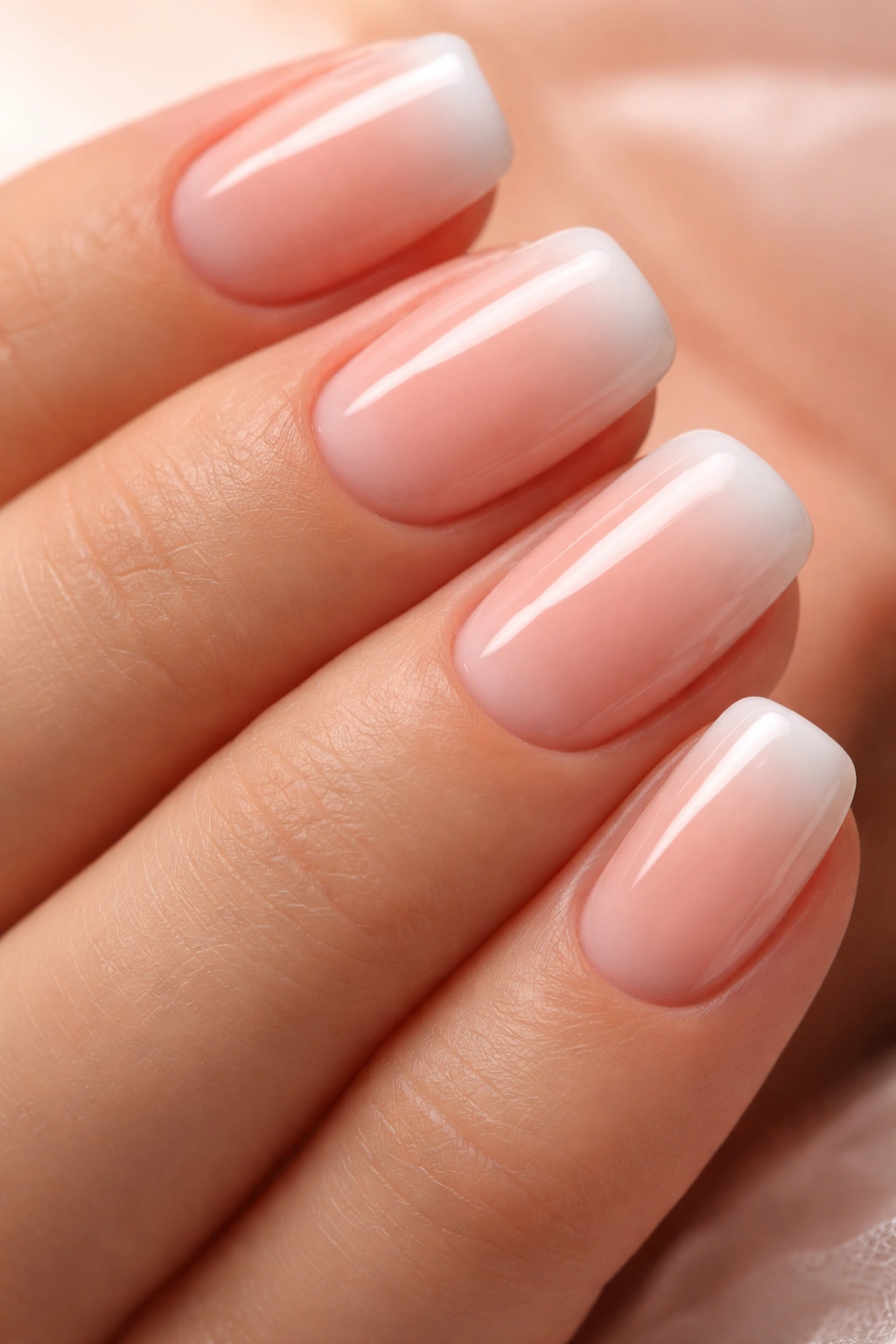
The softest take on a French tip: a warm, flattering peachy-pink base with a white tip that intentionally blurs and fades rather than creating a clean line. The effect is romantic, slightly vintage, and feels gentler than a traditional French manicure.
Why Blur Works
A blurred or diffused tip line is harder to execute perfectly, which is exactly why it looks sophisticated when it’s done well. The technique requires skill — your nail tech is blending the white downward into the peachy-pink base, creating a hazy transition rather than a graphic one. On short squoval nails, this soft approach reads as elegant rather than uncertain.
Creating the Blur Effect
- This requires careful hand-painting or a special blurring technique with gel
- The white should gradually fade until it disappears into the base color
- Work best with warm, peachy bases that complement pink undertones
- A satin or matte finish emphasizes the soft, romantic quality
- Ask for the blur to extend slightly further back than a traditional French tip — it creates more of a color story
Pro tip: This design is actually forgiving to wear because regrowth happens gradually against an already-soft transition. You have more time between touch-ups than with a crisp French line.
7. Negative Space French with Geometric Cutouts
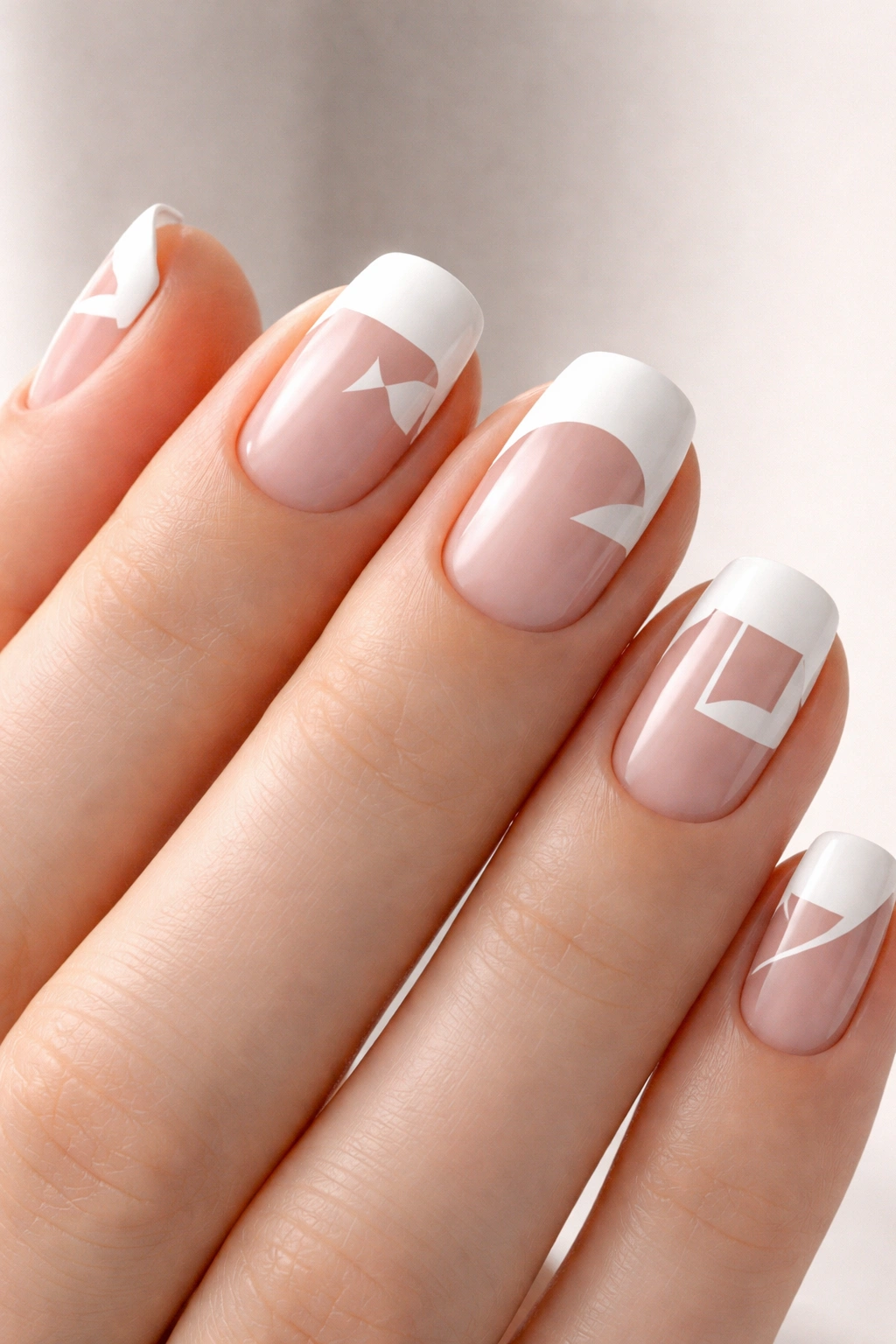
Here’s where your short squoval shape really earns its keep: a French tip design that uses the actual negative space of the nail itself as part of the art. Imagine a traditional white tip, but with small geometric shapes — triangles, circles, or rectangles — removed to show the skin or the base color underneath.
Negative Space as Design
This technique feels incredibly modern and architectural. It works because it respects the nail’s shape and uses cutouts to emphasize the squoval geometry. The design feels intentional and creative without being overly complicated. It’s a clever middle ground between elegant minimalism and actual nail art.
Execution and Longevity
- Negative space designs work best with gel polish for longevity — polish versions chip too easily
- The cutouts should have clean, sharp edges for maximum impact
- Design complexity can vary — you could have one simple triangle removed, or a pattern of small circles
- These designs photograph beautifully and feel design-forward without being costume-y
Worth knowing: Negative space designs show the most dramatic before-and-after transformation with shorter nails, because the proportion of the design relative to nail size is more balanced.
8. Pearl or Oyster White with Subtle Shimmer
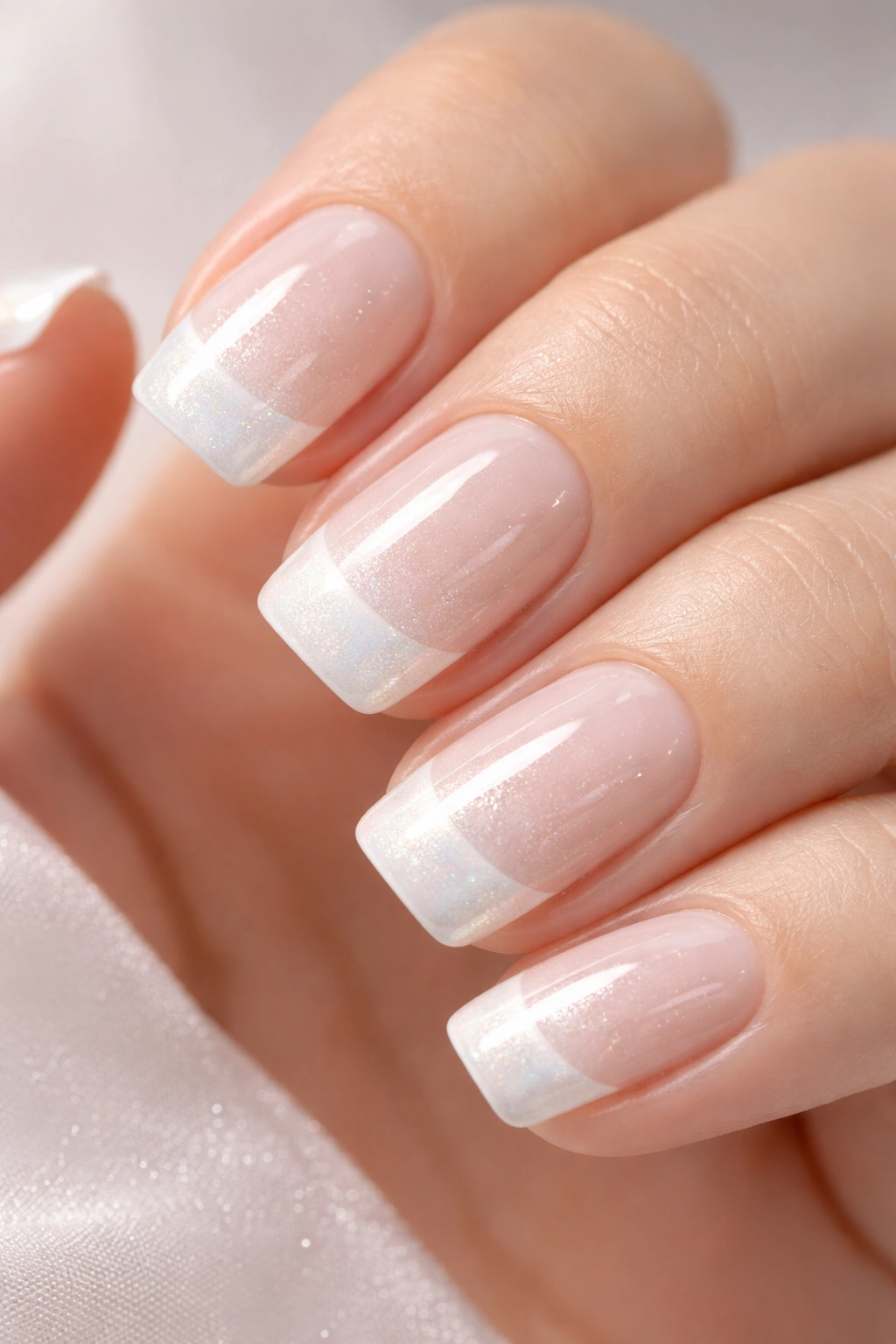
Instead of flat white, use a pearl-finish white tip that catches light with subtle shimmer. The base stays neutral and classic, but the tip has a soft luminescence that gives everything a quietly luxe quality. It’s still a French tip — just one that glimmers.
Pearl vs. Glitter
Pearl finish is far more sophisticated than glitter because the shimmer is built into the polish itself rather than added on top. The effect is subtle, elegant, and reads as intentional luxury rather than party vibes. On short squoval nails, pearl white keeps the effect refined and wearable.
Pearl Finish Pairing
- Works beautifully with both warm and cool base colors
- A soft pink, nude, or even very pale peachy base balances the pearlescence
- The pearl white should be the star — keep the base understated
- High-gloss top coat amplifies the shimmer
- This design works for everyday wear or special occasions equally well
Pro tip: If you’re concerned about the shimmer being too much, ask for a soft pearl white (less reflective) rather than a high-impact chrome-like finish.
9. Two-Tone French with Contrasting Accent Color
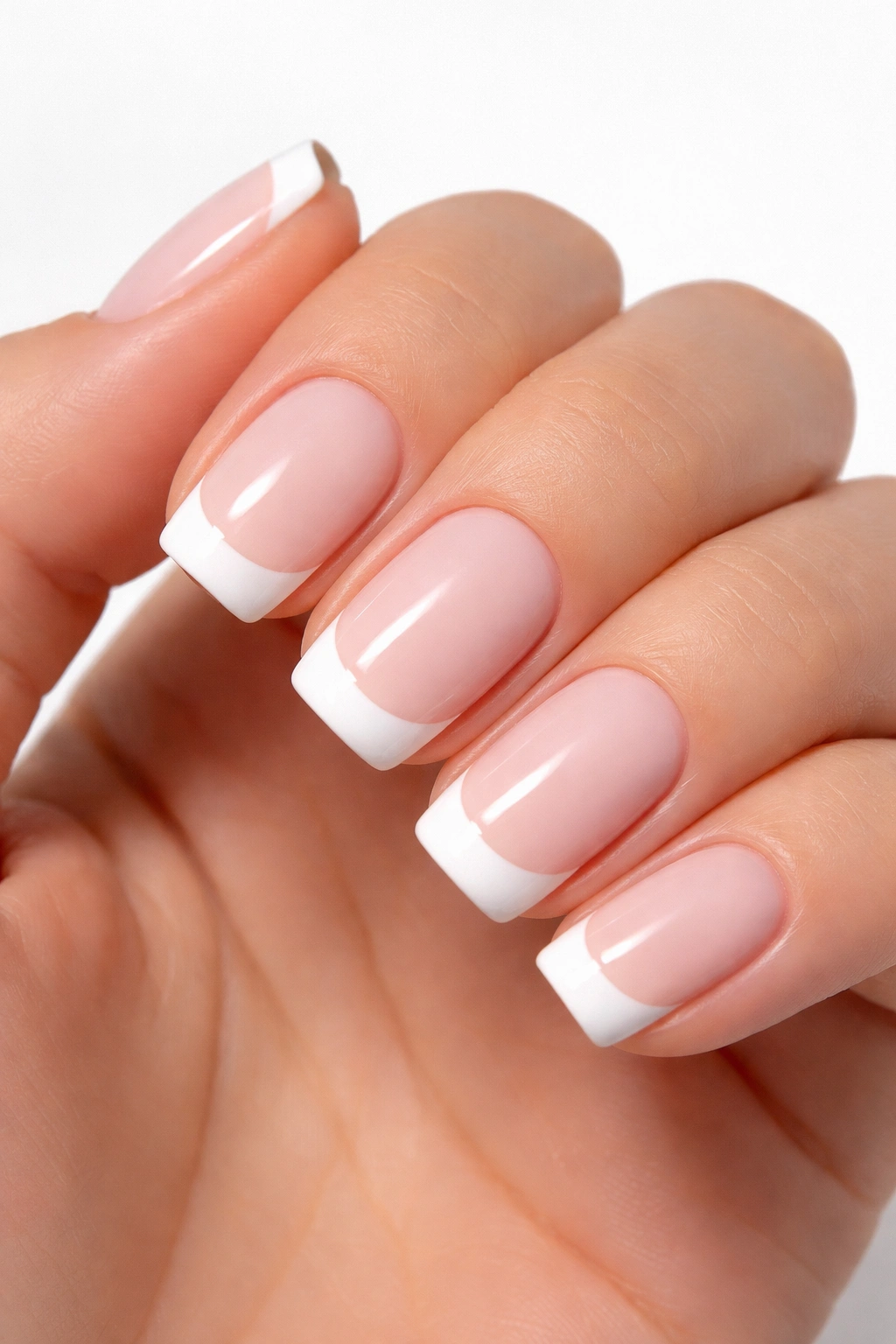
Expand the French tip formula: instead of just white, use a white tip plus a thin line of contrasting color — maybe blush pink, soft gold, or even a muted sage. The accent line sits just above the white, creating visual interest and dimension while staying within the French tip aesthetic.
Accent Color Strategy
The accent color shouldn’t compete with the white — it should enhance it. A thin stripe of blush pink above the white tip on a pale pink base creates a sophisticated ombré effect. A thread-thin line of gold between the white and the base adds warmth without overwhelming the design.
Color Combinations That Work
- White + soft blush on a pale pink base = monochromatic elegance
- White + pale gold on a warm beige base = warm luxury
- White + sage green on a cream base = subtle and unexpected
- White + dusty rose on a warm nude base = romantic and cohesive
Worth knowing: The accent color should be less saturated and less opaque than true French white, so it reads as a detail rather than a competing color block.
10. French Tip with Delicate Microdot or Speckle Pattern
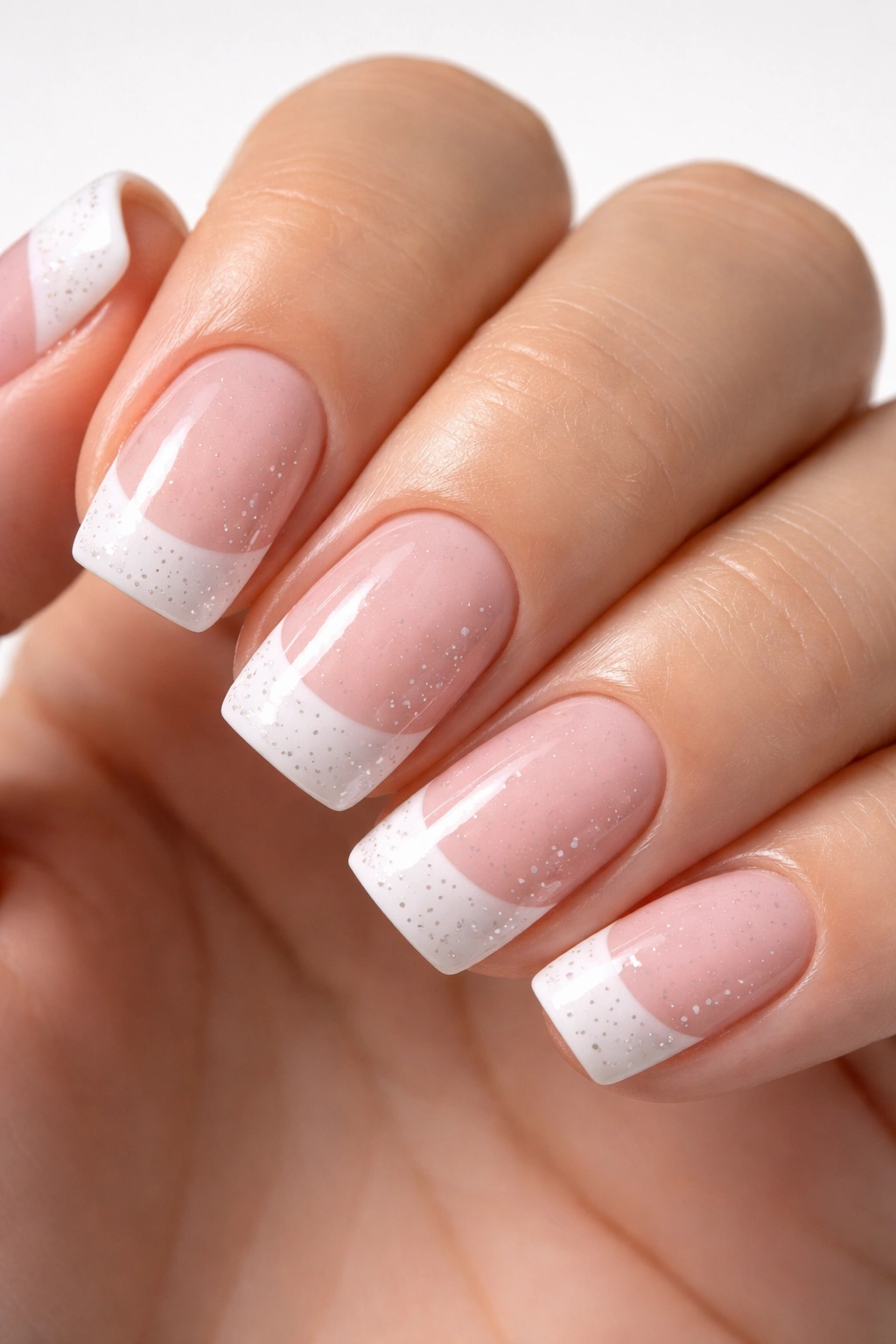
Add texture to the tip itself: tiny dots or specks scattered across just the white tip area. The effect is tactile and intricate without reading as complicated nail art. It’s still fundamentally a French tip — the color and placement remain classic — but with a detail that makes the design feel personalized and special.
Dot Patterns and Placement
Microdots work best when they’re densely packed enough to read as a deliberate texture rather than a sloppy application. The dots should be confined to just the white tip area, keeping the base absolutely clean. Spacing should be uniform, which requires steady hands or digital printing (yes, some salons have this technology).
Size and Color Variations
- Tiny dots (smaller than a grain of salt) in the same white create dimension through texture
- Dots in a contrasting neutral color (warm gold, soft pink, cool silver) on white create subtle graphic interest
- A gradient of dot density (denser near the edge, fading out) creates soft movement
- This design works beautifully on short squoval nails because it’s visible enough to appreciate at that scale
Pro tip: If your salon doesn’t offer dot application, ask about using a toothpick or even a very fine brush to create microdots yourself at home — it’s genuinely easier than you’d think.
11. Matte White Tip on Glossy Base
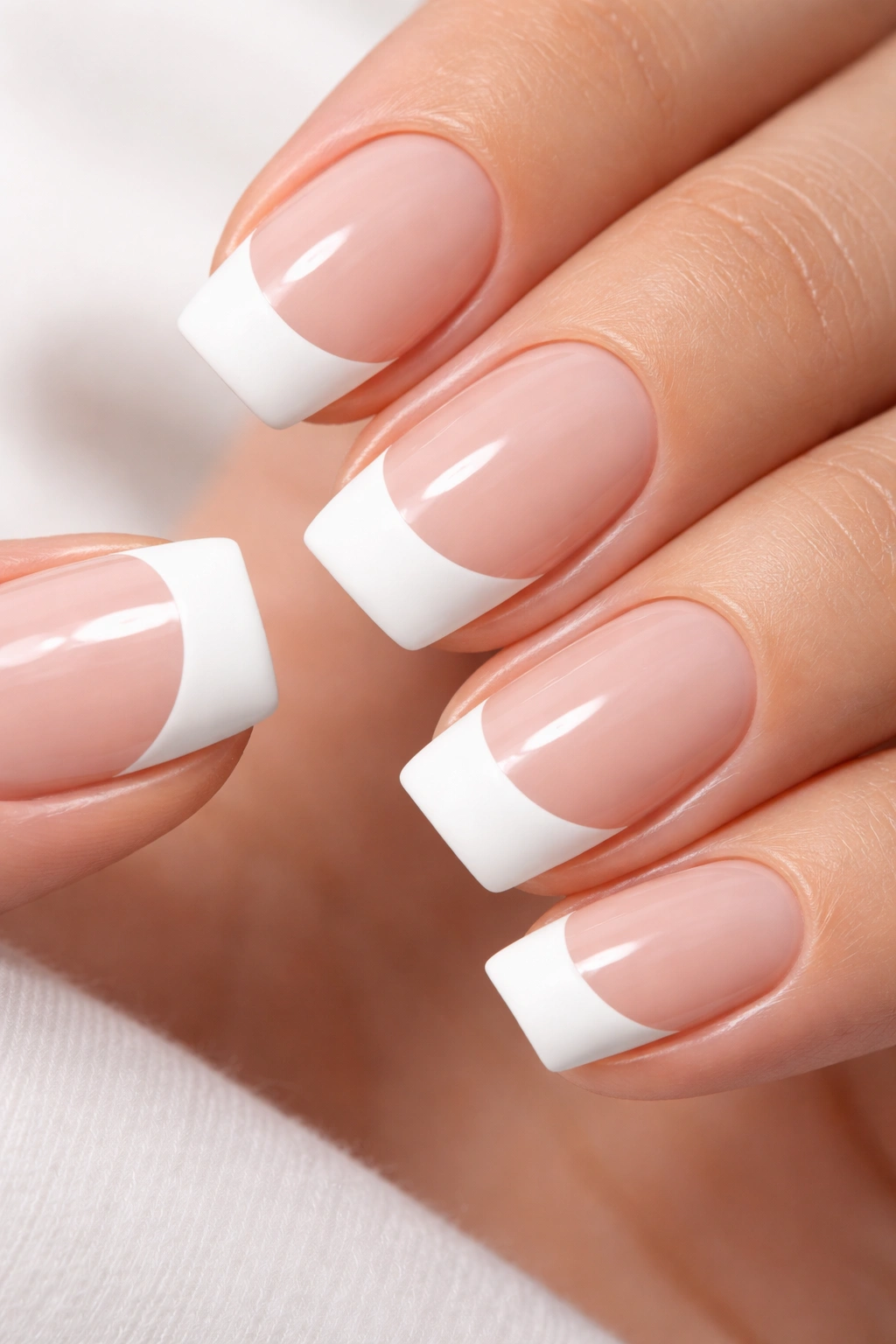
Create contrast not through color but through finish: a glossy, shimmering base that abruptly transitions to a completely matte white tip. The visual shock of different finishes creates interest and makes the French tip pop without needing any additional color variation.
Finish Contrast Power
This technique works because matte and glossy surfaces reflect light completely differently. The matte white appears more solid and graphic against a glossy base, making the French tip feel three-dimensional and modern. On short squoval nails, this finish contrast does heavy lifting to make the design feel intentional and considered.
Application and Maintenance
- Both finishes require gel polish to work well together without chipping
- The matte powder should be applied only to the white tip area for precise contrast
- Top coat might need to be matte on top of matte and glossy on top of glossy, or use a hybrid product
- This design is easier to maintain than you’d expect — regrowth is less obvious because of the finish difference
Worth knowing: Matte finishes are trendier than they’ve been in years, and this split-finish approach feels modern and design-forward without being impractical.
12. Soft Nude-on-Nude Ombré with White Micro-Tip
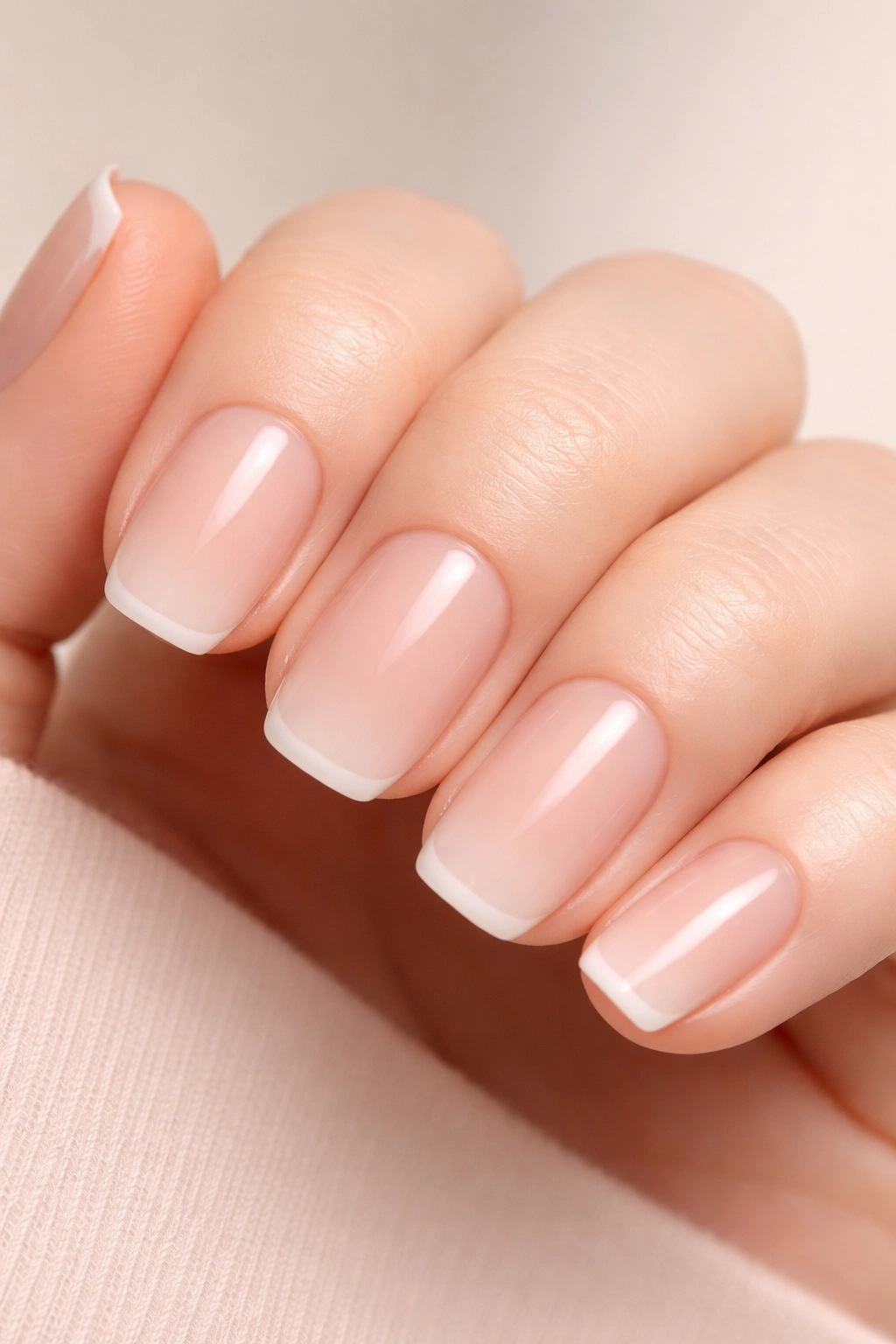
For the ultimate in understated elegance, layer multiple soft nude tones to create depth, then add a barely-visible white micro-tip at the very edge. You’re still technically wearing a French tip, but it’s so subtle that it reads as a nail color rather than a manicure design.
Building Subtle Depth
Start with a pale pink base, add a slightly warmer or deeper pink layer in the middle of the nail, then pale again at the tips. The ombré creates dimension while staying within one color family. The white micro-tip is almost invisible — just enough to acknowledge the classic French style — but doesn’t dominate.
Nude Tone Matching
- Cool skin tones: cool pinks, dusty mauves, soft rose
- Warm skin tones: peachy pinks, warm beiges, soft apricot
- Olive skin tones: soft warm pinks with underlying gold warmth
- The goal is making your hands look naturally longer and more elegant without obviously doing something
Pro tip: This design requires the most precise application of all because the effect relies on subtle tone shifts rather than graphic contrast. Bring multiple reference photos to show exactly the depth level you’re aiming for.
13. Clear Squoval with Painted White Tip and Minimal Base
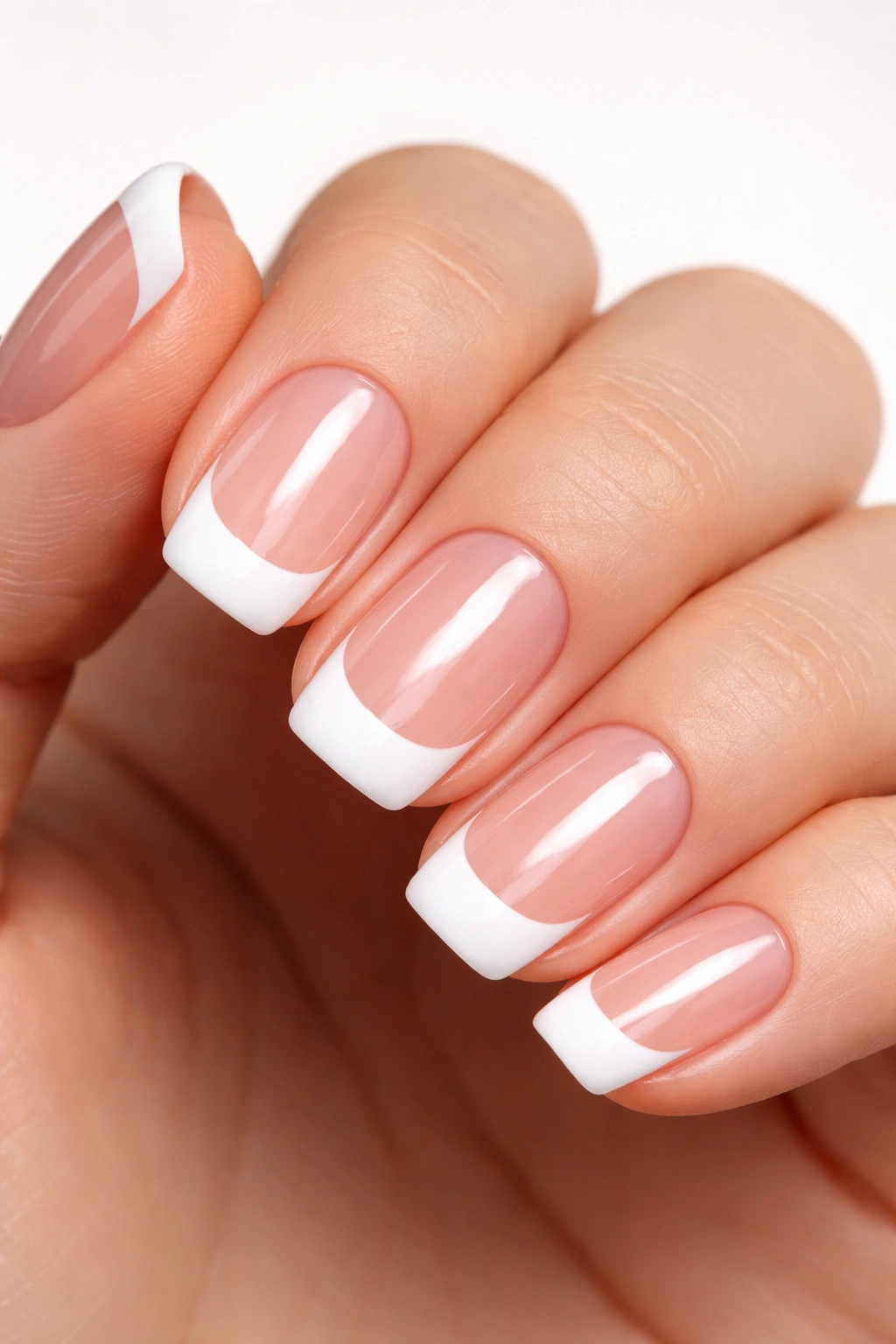
A radical take on the French tip: crystal-clear base over the nail (so clear you see actual nail) with a clean white tip. The rest of the nail is bare or barely tinted. The effect is almost 3D — the white tip sits on top of transparency, making it feel like it’s floating.
Transparency and Clarity
This design works because it respects the natural nail while still delivering that satisfying French tip silhouette. Squoval nails are perfect for this approach — the shape is strong enough to carry the design without a heavy color base. Hands look naturally elegant rather than heavily manicured.
Technical Execution
- Use a high-clarity builder gel or super-clear extension gel for the body
- The white tip must be opaque and bright enough to show clear contrast
- Top coat should be super glossy to emphasize clarity
- This design requires strong, healthy-looking natural nails to be flattering
- Works beautifully on shorter nail beds because the transparency doesn’t make them look smaller
Worth knowing: This design shows your natural nail at its best, so book your manicure after your nails have recovered from any damage or brittleness.
14. Soft Blush Base with White Tip and Nude Liner
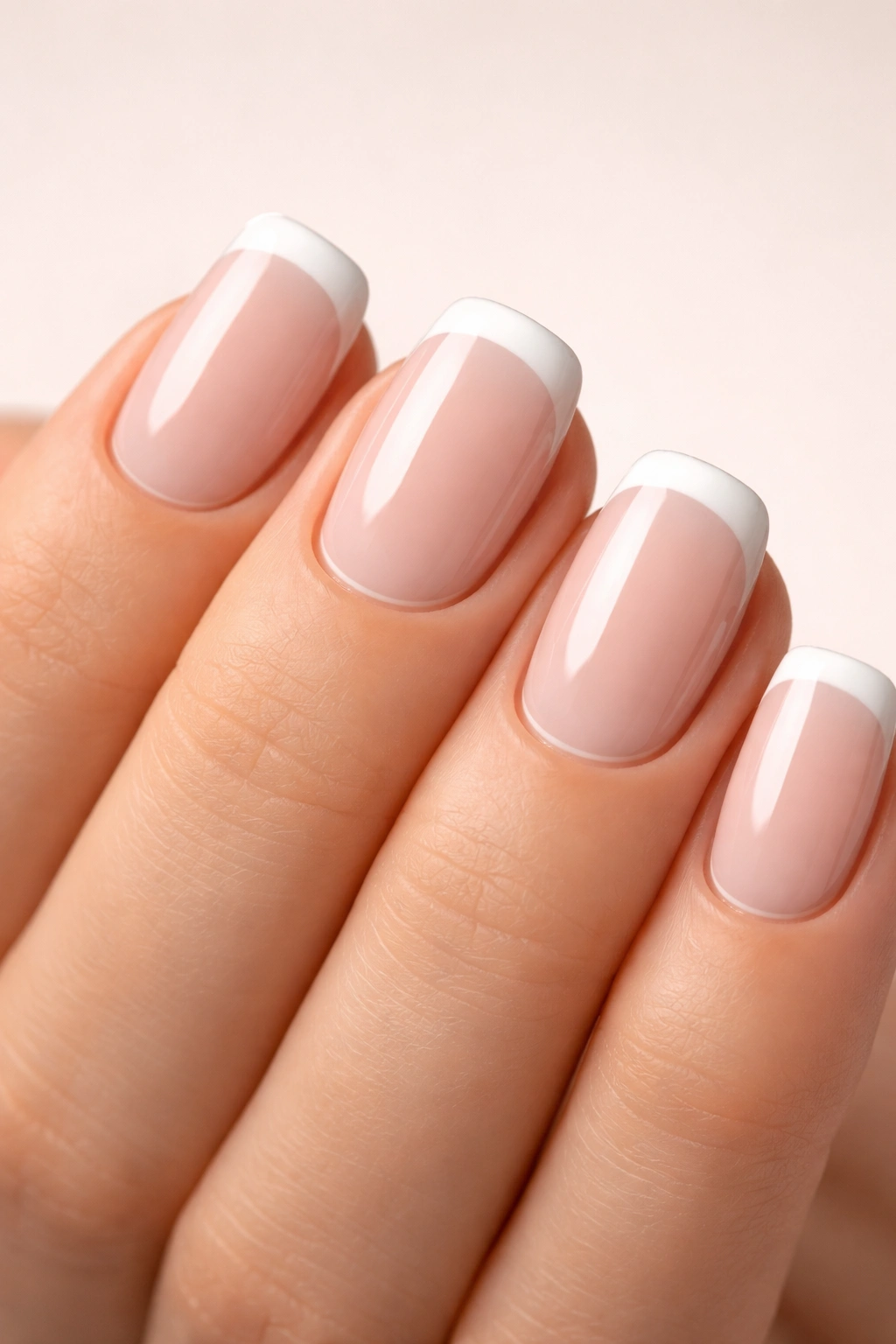
Layer three colors in perfect harmony: a soft blush pink base, a clean white tip, and a thread-thin nude or taupe liner separating the two. The liner acts as a subtle bridge between the white and the pink, making the color story feel more sophisticated and intentional than a straight two-color French tip.
The Power of a Transition Line
The nude liner is the detail that elevates this design. It creates visual continuity between the white and the base color, making the whole manicure read as more cohesive. Technically, it’s still a French tip, but with extra thoughtfulness in the execution.
Color Harmony
- The liner should be slightly warmer or cooler than the blush base, not identical
- If using a warm blush, try a warm taupe liner
- If using a cool pink, try a cooler gray-taupe liner
- The liner should be impossibly thin — barely-there but visible when light hits it
- This works on short squoval nails because the proportions are balanced
Pro tip: This design is slightly more complex to execute, so give your nail tech very detailed direction and bring close-up reference photos.
15. French Tip with Subtle Rhinestone or Diamond Accent
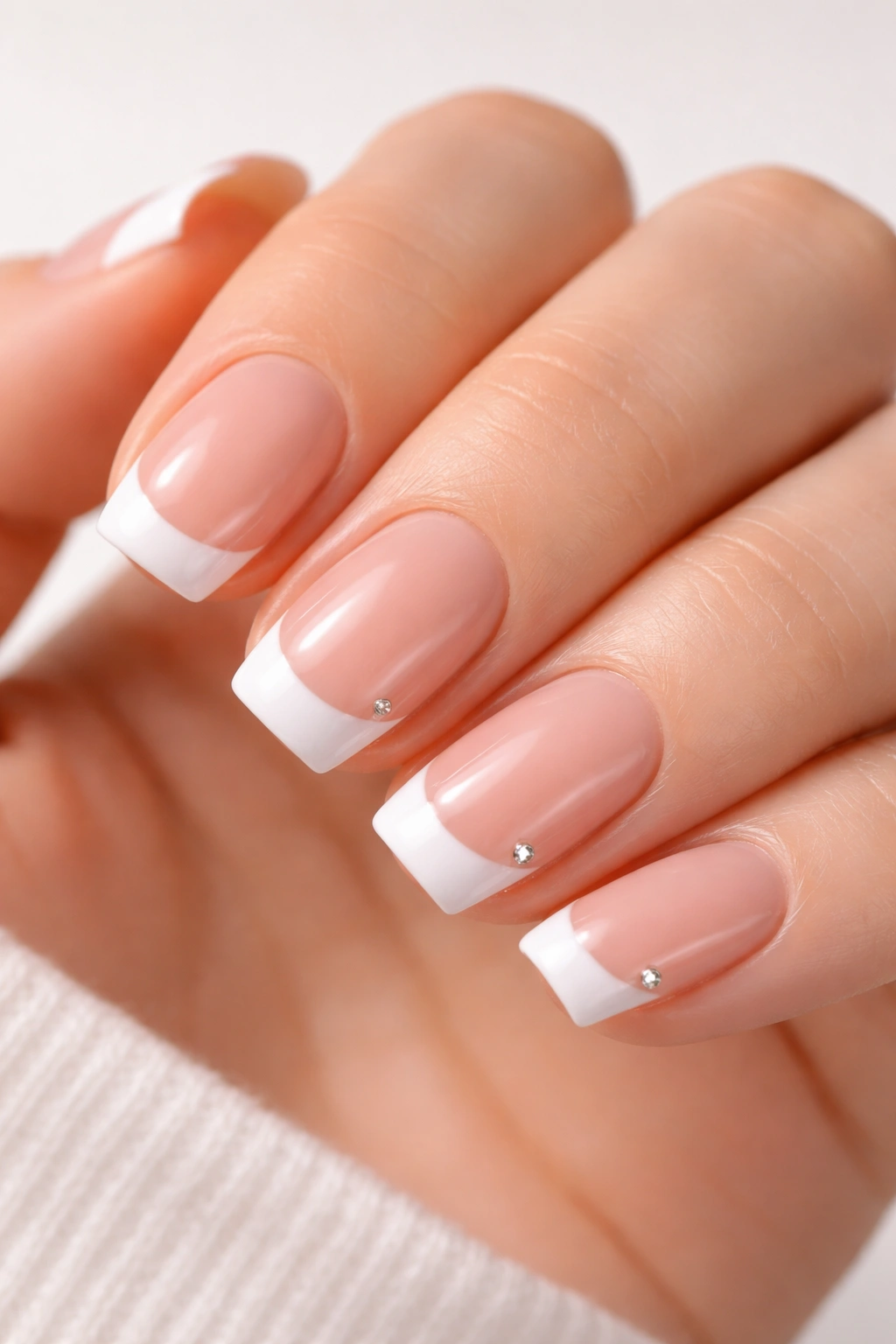
Keep everything classic — white tip, neutral base — but add exactly one strategically placed crystal or rhinestone at the corner where the white meets the base color. The single stone catches light and adds personality without reading as costume-y or over-the-top.
Rhinestone Placement and Restraint
The power of this design is in its minimalism. One stone, carefully placed, creates intrigue and sparkle. Too many stones and it reads as prom nails; one stone reads as intentional luxury. On short squoval nails, a single accent stone feels proportionate and sophisticated.
Stone Selection
- Use quality Swarovski crystals or lab diamonds for sparkle that lasts
- Clear stones work with any base color and read as most elegant
- Peach, champagne, or rose-tinted stones complement warm base colors
- Place the stone at the outer corner of the tip (where the white meets the pink base) for maximum visual impact
- A tiny stone (not a large statement piece) reads as refined
Worth knowing: Rhinestone longevity depends on application — professionally applied stones embedded in gel last far longer than stones glued onto polish. Invest in quality application for a design you plan to wear long-term.
Final Thoughts
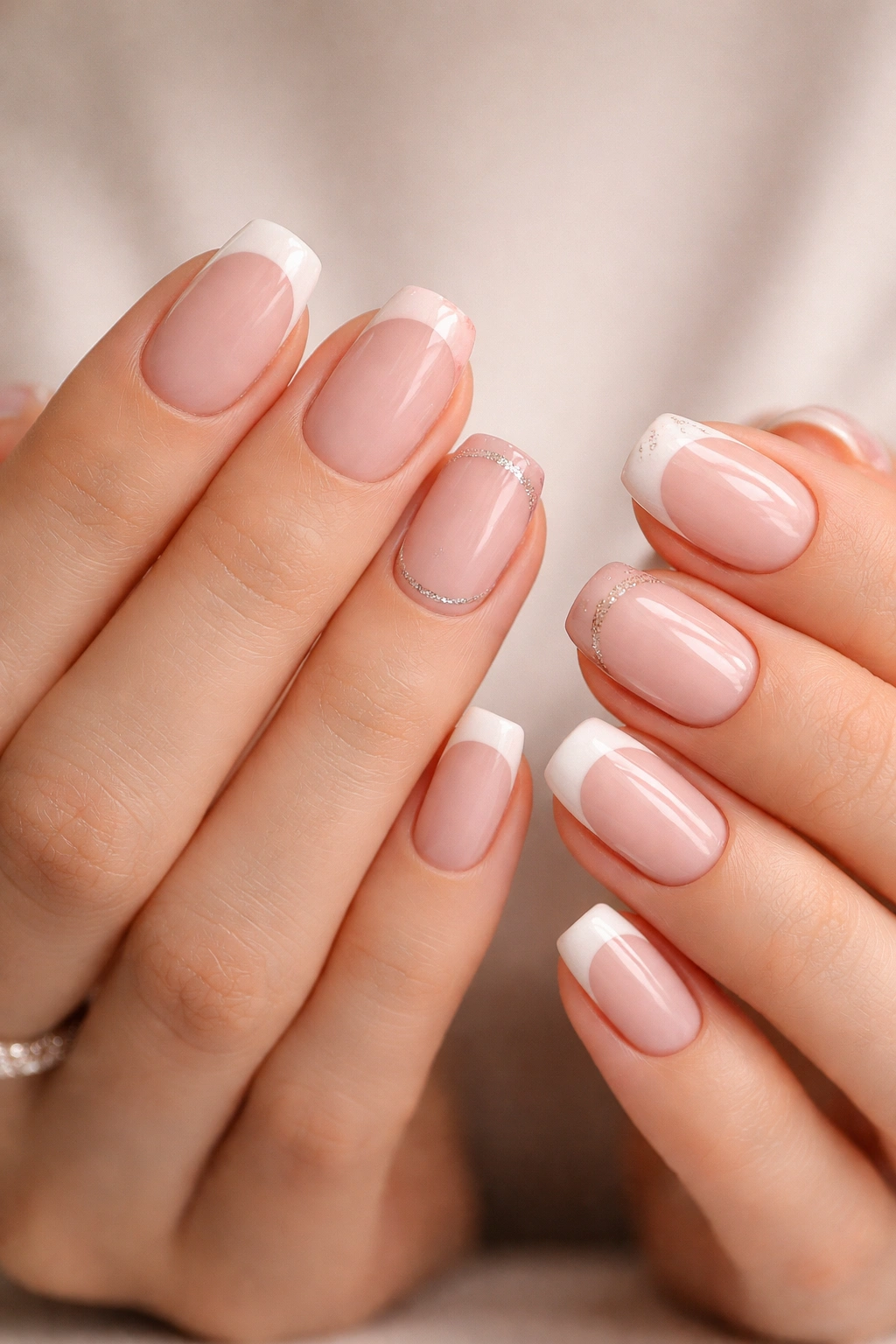
The beauty of short squoval French tips is that they offer sophistication without sacrifice. You get the timeless elegance of a French manicure in a shape that actually works for real life — strong enough to handle daily activities, beautiful enough for any occasion, and versatile enough that you can switch designs every appointment without the design feeling unstable or precarious.
Whether you’re drawn to the crisp minimalism of a classic white tip, the softness of a blurred gradient, the modernity of negative space, or the personal touch of a single rhinestone, squoval nails are the perfect canvas. The shape itself does so much visual work that even the simplest color combination reads as intentional and designed.
Bookmark a few of these designs, discuss them with your nail tech, and find the versions that resonate with your style and lifestyle. The best manicure is the one you feel confident wearing — and short squoval French tips deliver that feeling consistently. Whether you’re refreshing your nails weekly or you’re someone who can stretch a gel manicure for three weeks, this shape and design formula work harder than you’d expect.