

Not every nail shape can carry a milky nude, a black French tip, a chrome finish, and a floral accent without looking confused. Coffin nails can. That’s the whole appeal. The tapered sides slim the finger, the straight tip gives polish and nail art a clean edge, and even a quiet color looks more thought-out on this shape than it does on a plain round manicure.
The catch is shape control. If the sidewalls narrow too early, the nail starts drifting toward stiletto. If the tip stays too wide, the whole set turns blocky and shortens the hand. I keep coming back to medium coffin nails—usually around 5 to 8 millimeters past the fingertip—because they show the shape clearly without making contact lenses, typing, and jacket zippers feel like a test of character.
Color changes the mood fast. A sheer pink-beige reads clean and polished. Deep chocolate looks rich and a little moody. A black micro-French can sharpen the whole hand more than a full black set, mostly because you keep that open space through the center of the nail.
The prettiest coffin manicures almost always have one thing in common: the design respects the shape instead of fighting it. Once that clicks, picking your next set gets much easier.
Why Coffin Nails Flatter So Many Manicure Styles
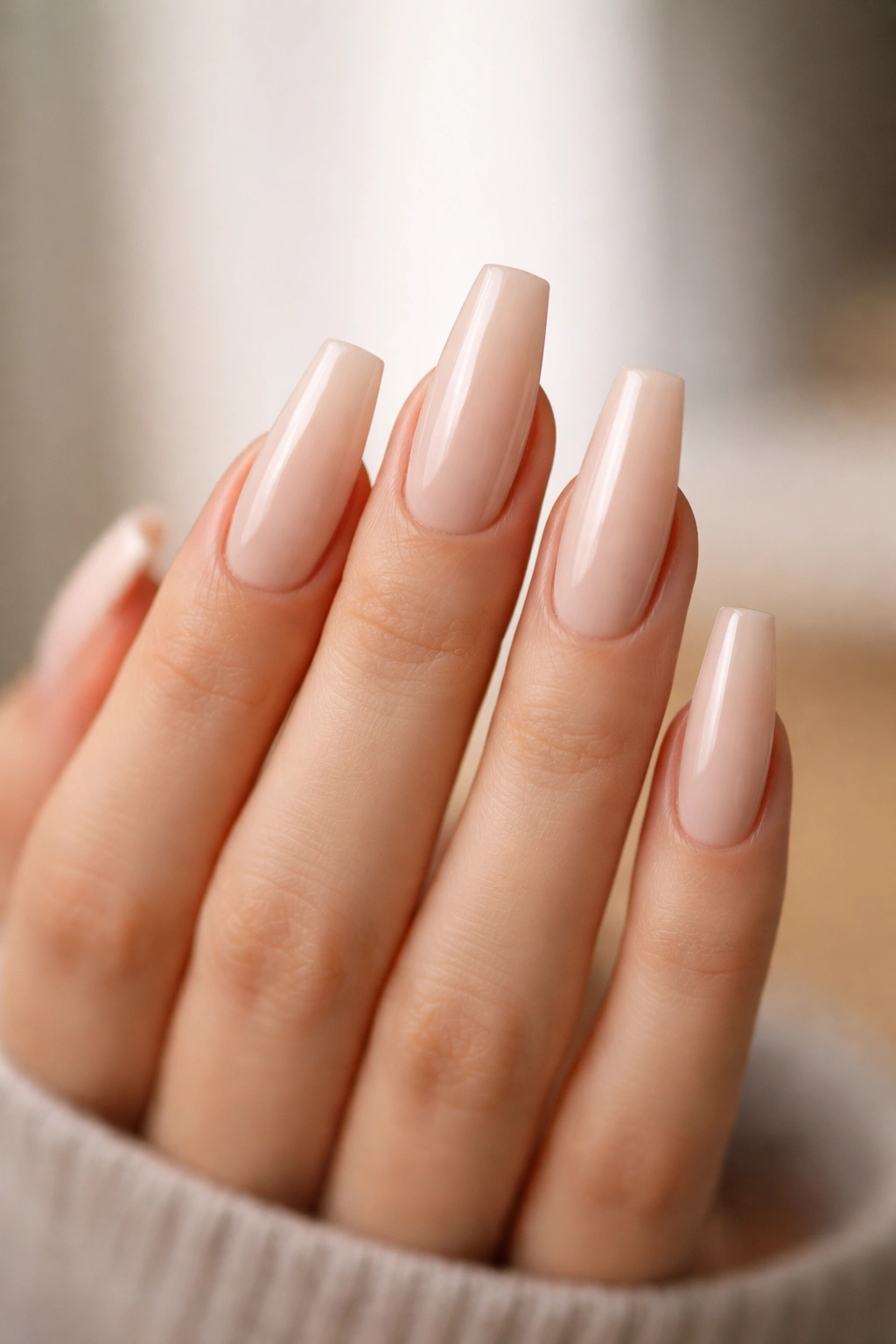
Shape does more work than polish. People usually focus on color first, but with coffin nails, the outline is doing half the job before the bottle even opens. The taper draws the eye inward, and the blunt tip stops the shape from looking too sharp or costume-like.
The taper is where the magic lives
A good coffin nail should not pinch dramatically at the sides. You want a gradual narrowing from the stress area toward the free edge, then a crisp square tip at the end. That small geometry change makes nude shades look cleaner, dark shades look neater, and French tips look more deliberate.
Short coffin sets can work, though they need precision. If the nail barely extends past the fingertip, your tech has less room to build the taper, so the shape can turn soft square fast. Medium length gives the best margin for error.
The flat tip changes how color reads
French tips look tidier on coffin nails because the edge acts like a frame. Chrome powders sit differently too—there’s more visible surface at the end of the nail, so the finish looks smoother and less cramped than it can on almond nails. Even simple sheer polish has more presence here.
And yes, that’s why a plain nude on coffin nails rarely feels boring.
How to Pick Your Coffin Nail Length Before You Choose a Design
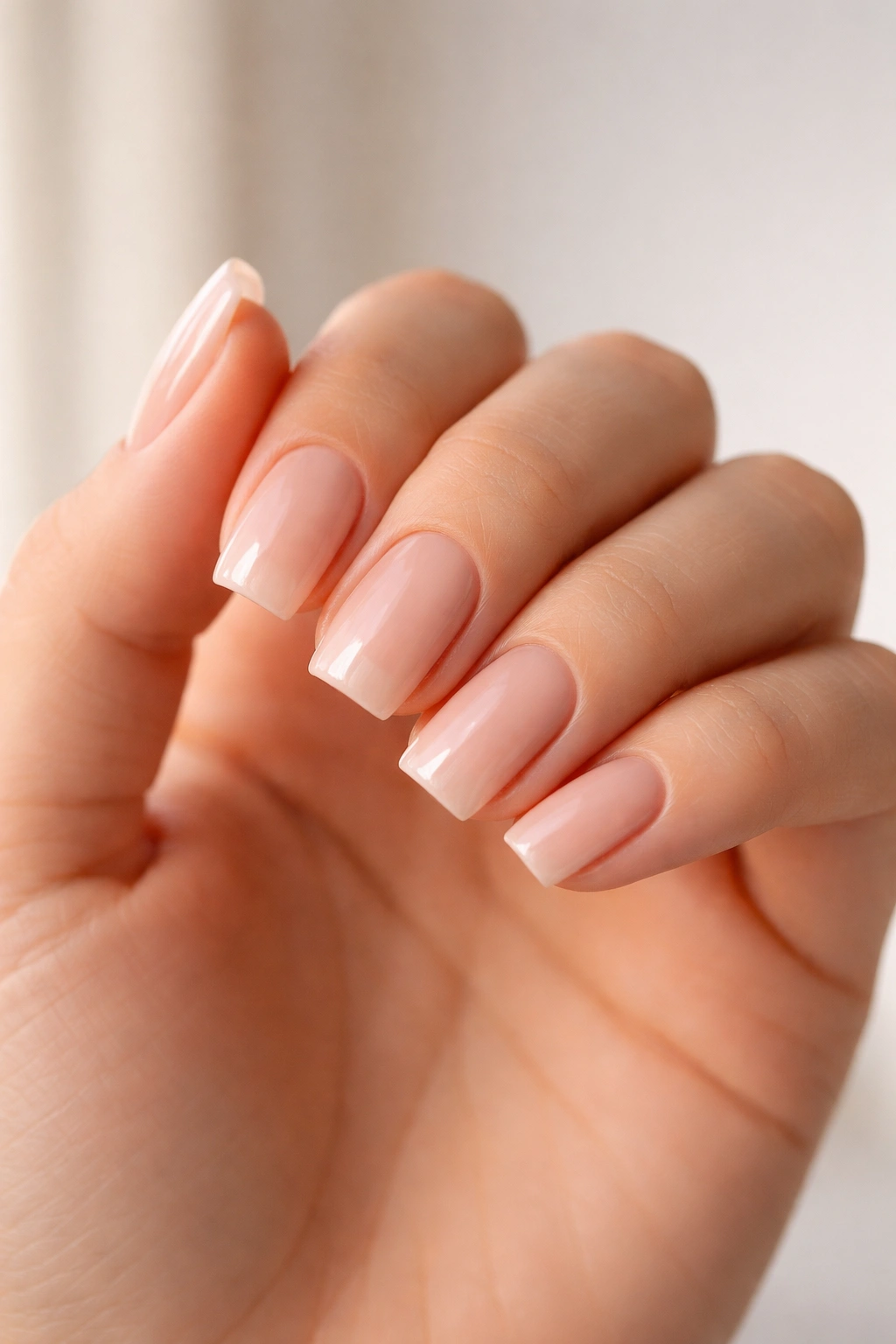
Short, medium, or long? That choice matters more than the art.
A short coffin usually extends 2 to 4 millimeters beyond the fingertip. It’s the easiest length to live with if you type all day, wear contact lenses, open soda cans, or have zero patience for adjusting your grip on everything. The downside is visual space. Tiny details do better here than large swirls, bulky gems, or wide French tips.
Medium coffin nails—5 to 8 millimeters past the fingertip—hit the sweet spot for most people. You get enough room for ombré fades, chrome, marble, slim French lines, and accent art without the set feeling fragile or overly dramatic.
Long coffin nails start around 9 millimeters and keep going. They can look great, but they ask more from the structure underneath. If your natural nails flare or bend, ask for one of these:
- A builder gel overlay if you want a lighter feel and already have some natural length.
- Acrylic if you need sharper sidewalls and stronger corners.
- Hard gel extensions if you like a glassy finish and a little more flex than acrylic.
- Press-on coffin nails if you want to try the shape before committing to a fill schedule.
One more thing. Bring your reference photo and tell your tech the finish you want—glossy, jelly, matte, chrome, sheer. The same design can look soft, sharp, or heavy depending on the surface.
1. Milky Nude Coffin Nails
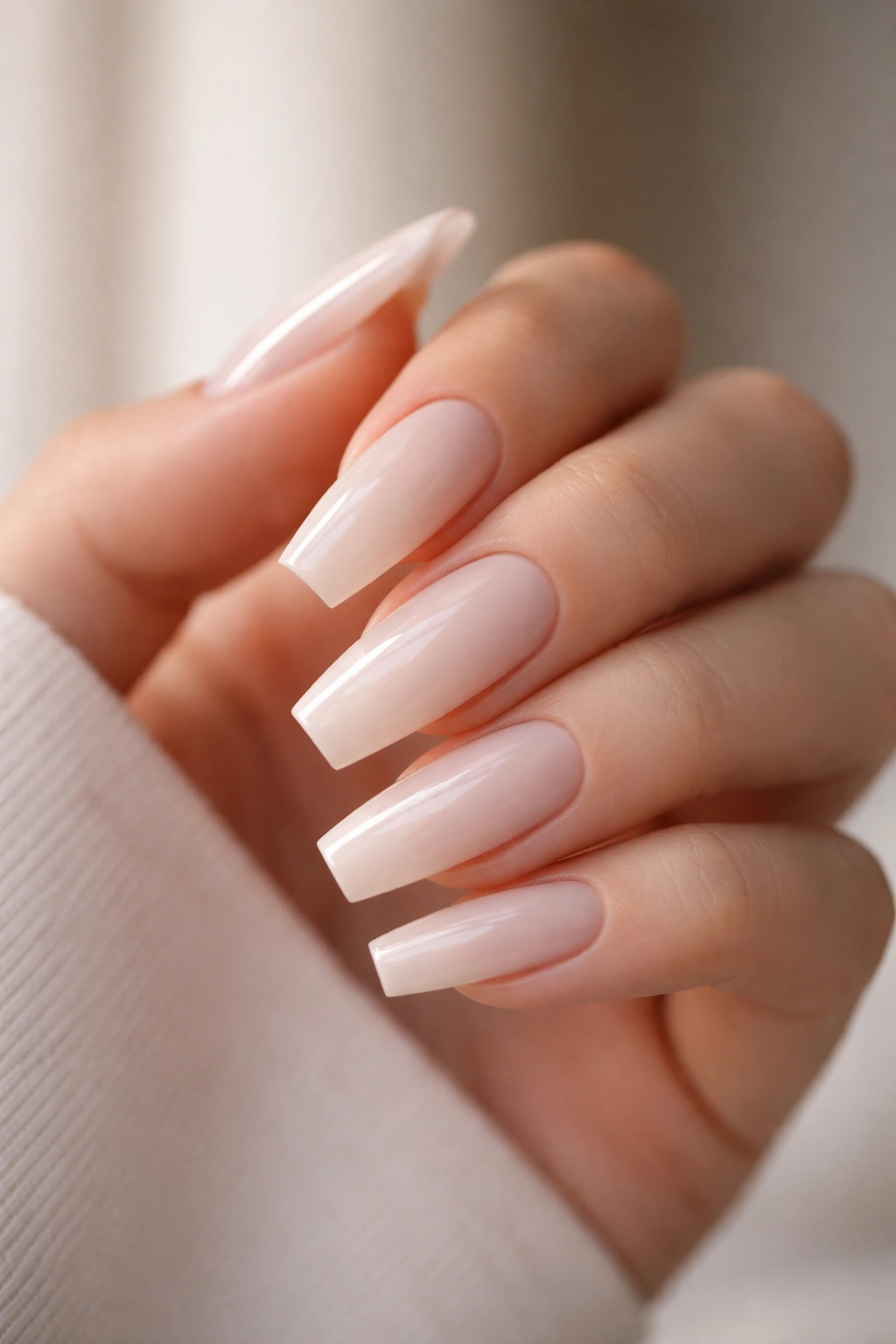
A milky nude set is what I suggest when someone wants their hands to look polished without feeling overdone. It has enough pigment to blur streaks and free-edge color, but not so much opacity that the manicure turns flat. On coffin nails, that softness keeps the shape elegant instead of severe.
Why this shade flatters coffin nails
Milky nudes soften the straight tip. A hard-edged shape paired with a harsh opaque color can look stiff, especially on long nails. A sheer beige-pink or creamy neutral gives you that long, clean line through the finger while keeping the finish light.
This shade family also grows out better than dense cream polish. You won’t erase regrowth, but the line at the cuticle is less abrupt after a week.
What to ask for at the salon
Ask for two thin coats of a pink-beige or neutral beige sheer, followed by a milky layer if you want more haze. If your nail beds are rosy, lean beige. If they’re olive or muted, a peach-beige often looks smoother.
- Best length: Short to medium coffin.
- Best finish: High-gloss top coat.
- What to avoid: Chalky pale beige that turns gray against the skin.
- Maintenance note: Use cuticle oil daily or the softness of the shade can make dry skin stand out.
Best detail to add: one tiny crystal on each ring finger—or nothing at all. This set can stand on its own.
2. Soft Pink French Tip Coffin Nails
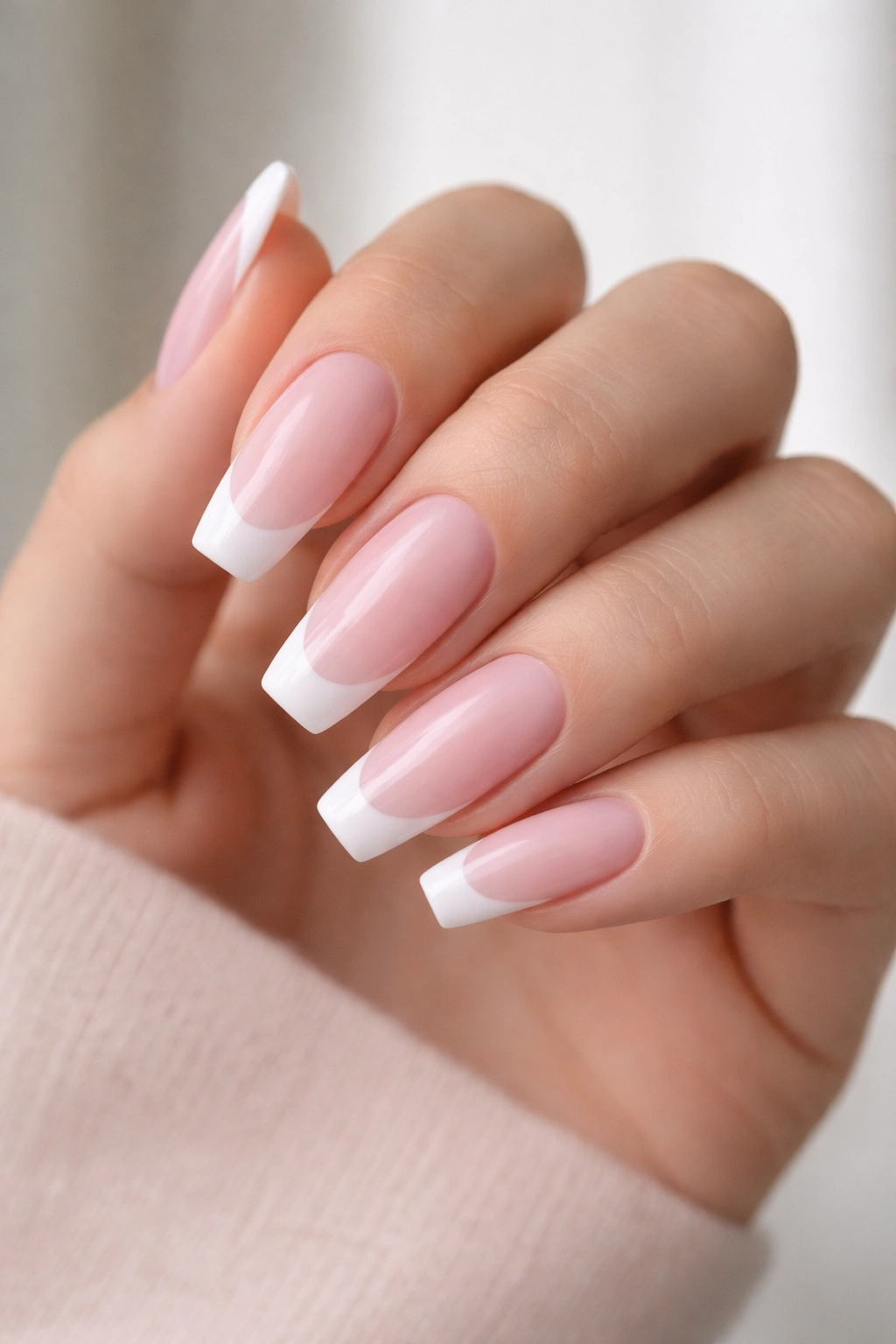
If you want one manicure that can handle work, dinner, a wedding guest dress, and a random Tuesday in sweatpants, pick this one. A soft pink French tip does the job without asking for attention every time you move your hands.
The trick is keeping the tip delicate. A thick white or bubblegum-pink line can overpower the coffin shape and chop the nail in half. A 1 to 2 millimeter tip, curved cleanly across the free edge, looks sharper and more expensive. It also leaves enough open space through the nail bed so the taper still shows.
Pink-on-pink matters here. Use a sheer blush or neutral pink base, then add a tip that is one or two shades deeper. You still get definition, but the contrast is gentle. That softness is what keeps the set looking fresh instead of dated.
I also like this design for shorter coffin nails, where a full white French can feel wide and heavy. Ask your tech to keep the smile line slightly deeper at the sides, which helps the nail look longer. Small detail. Big difference.
3. Baby Boomer Ombré Fade
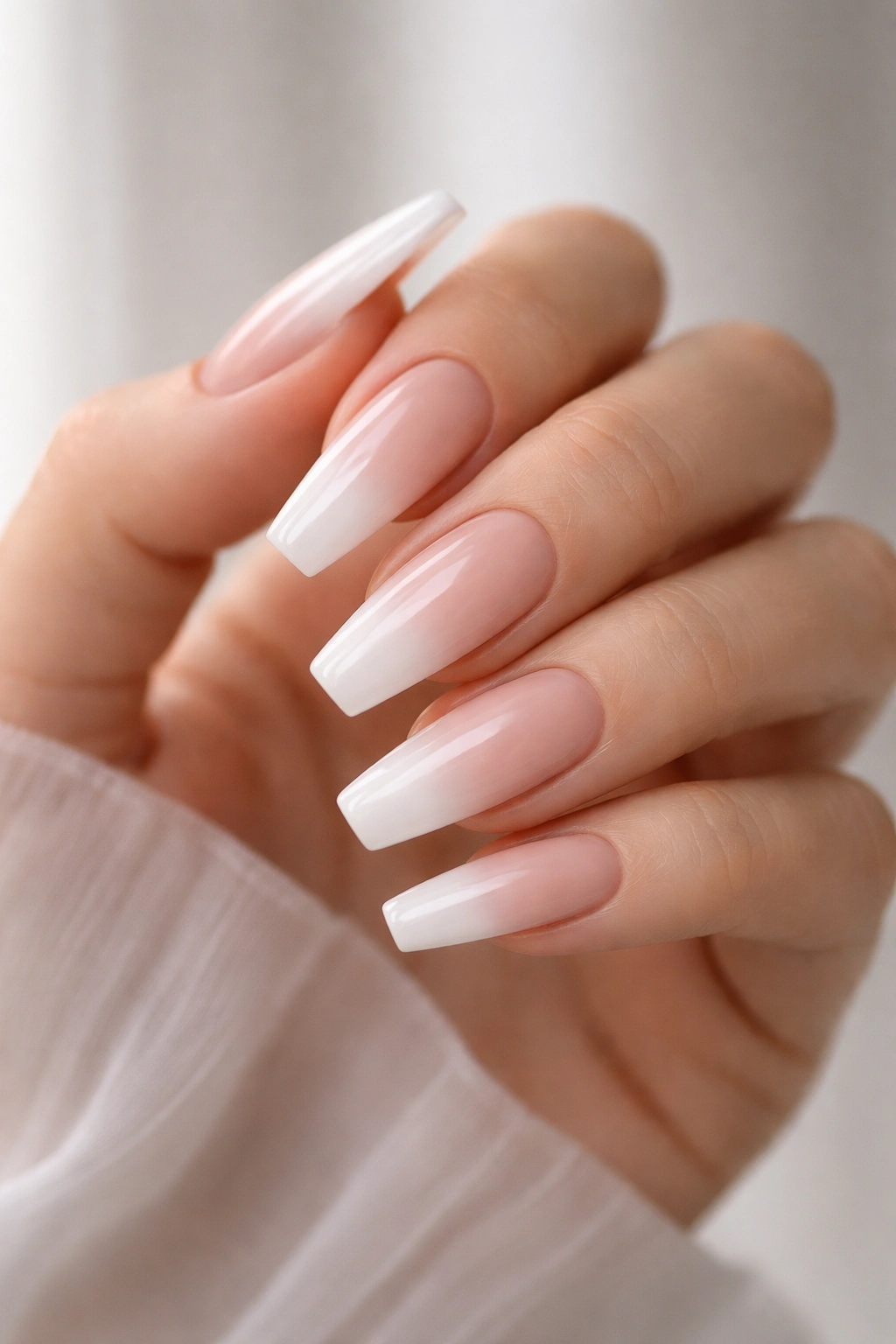
Why do people keep coming back to the baby boomer fade? Because it gives you the clean feel of a French manicure without the hard line.
A baby boomer set blends pink-beige at the base into soft white at the tip, and on coffin nails that gradient looks smooth from cuticle to edge. You keep the structure of the shape, but the color transition softens it. If you like classic nails and still want something less strict than a regular French, this is a strong middle ground.
There’s a practical reason I like it too: grow-out is forgiving. With a sharp French line, regrowth shows early. With an ombré fade, the cuticle area stays lighter and more natural-looking for longer, so the manicure ages better.
How to ask for the right fade
Tell your tech you want a soft ombré with no visible line where the colors meet. Airbrush, sponge blending, and gel blending all work if the transition stays smooth. On medium coffin nails, let the white live mostly in the last third of the nail. Too much white too soon and the set can lose that airy look.
Add a glossy top coat and stop there. This design does not need glitter to make sense.
4. Glossy Chocolate Brown Coffin Nails
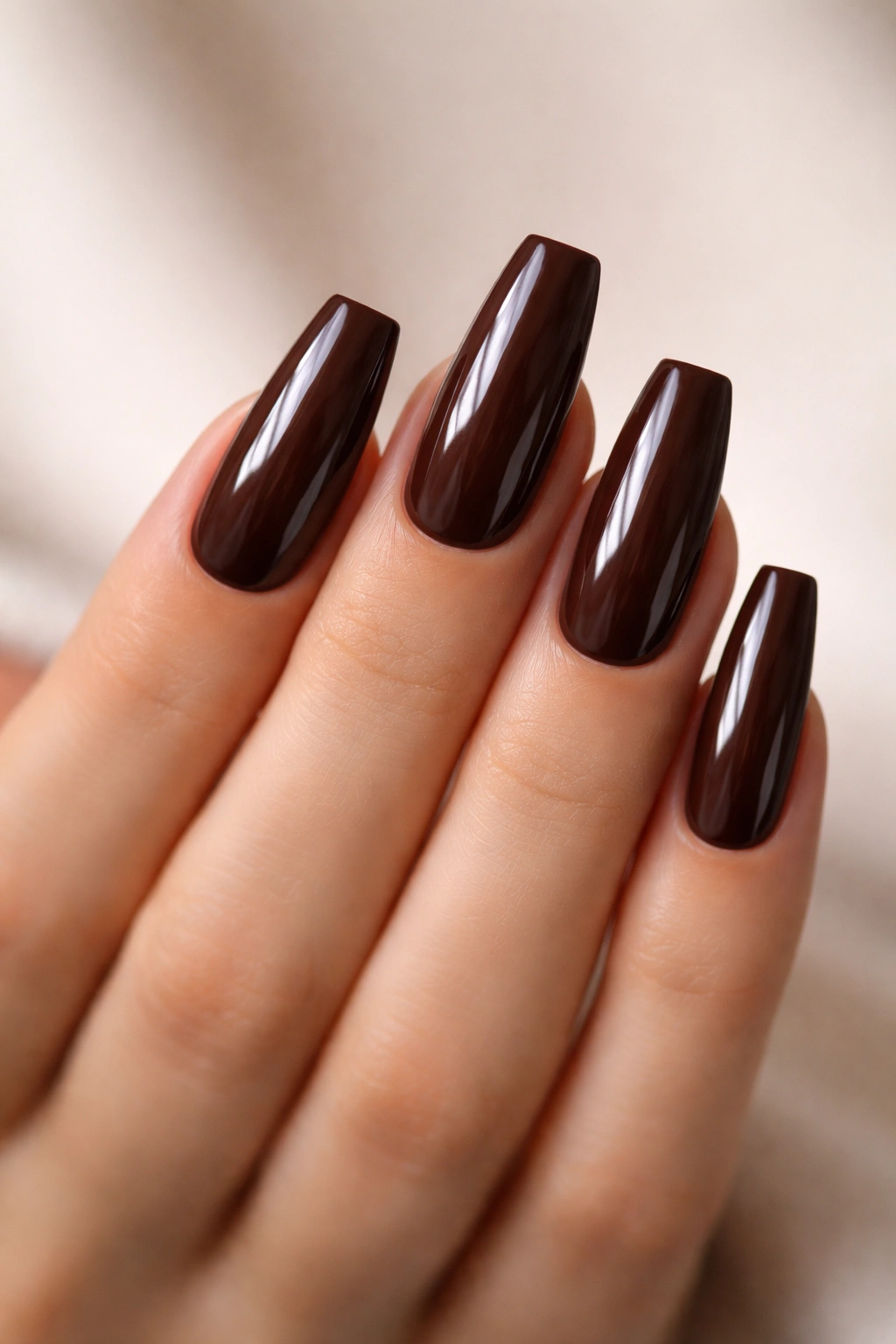
The first time you see a well-shaped coffin set in chocolate brown, it clicks. Black can look stark. Burgundy can lean dressy. Brown sits in that sweet spot where the color has depth, but the manicure still feels wearable on a grocery run.
Gloss makes the difference. A flat brown can look muddy fast, especially under indoor lighting. A high-shine gel top coat turns chocolate, espresso, and chestnut shades into something richer and smoother, almost like polished leather.
A few details matter more than people expect:
- Cool espresso browns look crisp with silver jewelry and cooler skin tones.
- Chestnut and cocoa shades warm up gold jewelry and tan or olive skin.
- Medium coffin length keeps the color chic; extra-long sets push it into a stronger statement.
- Two thin coats usually look cleaner than one thick coat, which can wrinkle near the sidewalls.
I would skip heavy art here. Brown already has presence, and coffin nails give it structure. A plain glossy set is enough.
5. Pearl Glazed Ivory Nails
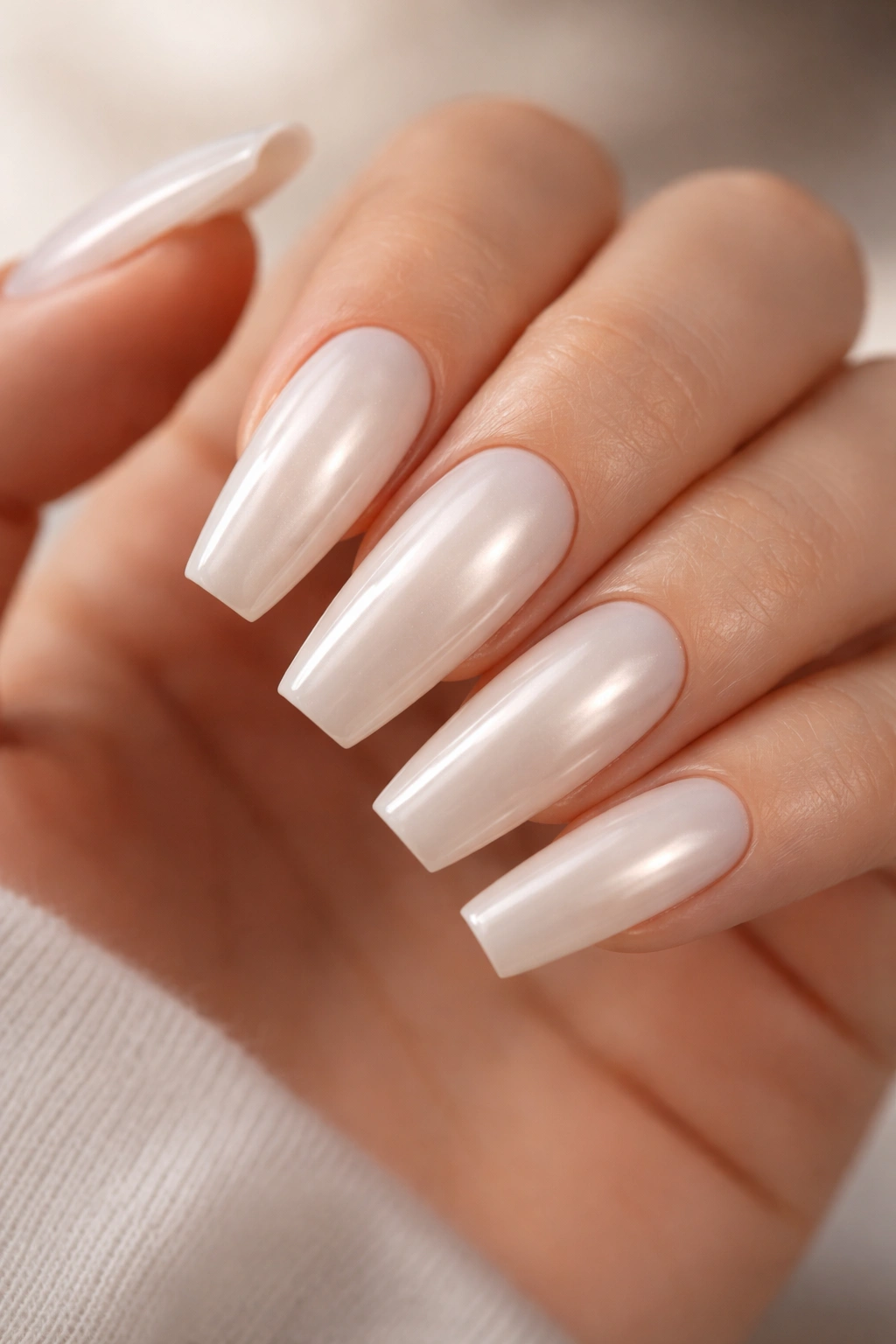
Chrome does not have to shout.
Pearl glaze over an ivory or soft cream base gives coffin nails a smooth, almost porcelain finish. You still get that reflective shift when the hand moves, but it’s gentler than mirror chrome and easier to wear with everyday clothes. White tank top, black knit, camel coat, old denim—this set fits into all of it without clashing.
The base color matters more than the powder. Bright paper-white can look harsh on some skin tones and can make the shape feel more rigid than it needs to. Ivory, soft cream, or a milky off-white leaves some warmth underneath, which keeps the manicure from reading icy.
Application matters too. Chrome powders show every lump, ridge, and uneven sidewall. If the surface is bumpy, the finish will announce it. A smooth builder base or a careful buff before top coat makes a big difference, especially on longer coffin nails where you have more visible surface.
I like this style best when the nails are kept clean—no gems, no foil, no accent finger trying to compete. Let the sheen do the work.
One warning, though: pearl glaze can highlight wear at the free edge if you’re rough on your hands. Cap the tip well, and ask for top coat under and over the chrome if you want better longevity.
6. Sheer Nude with Tiny Gold Foil
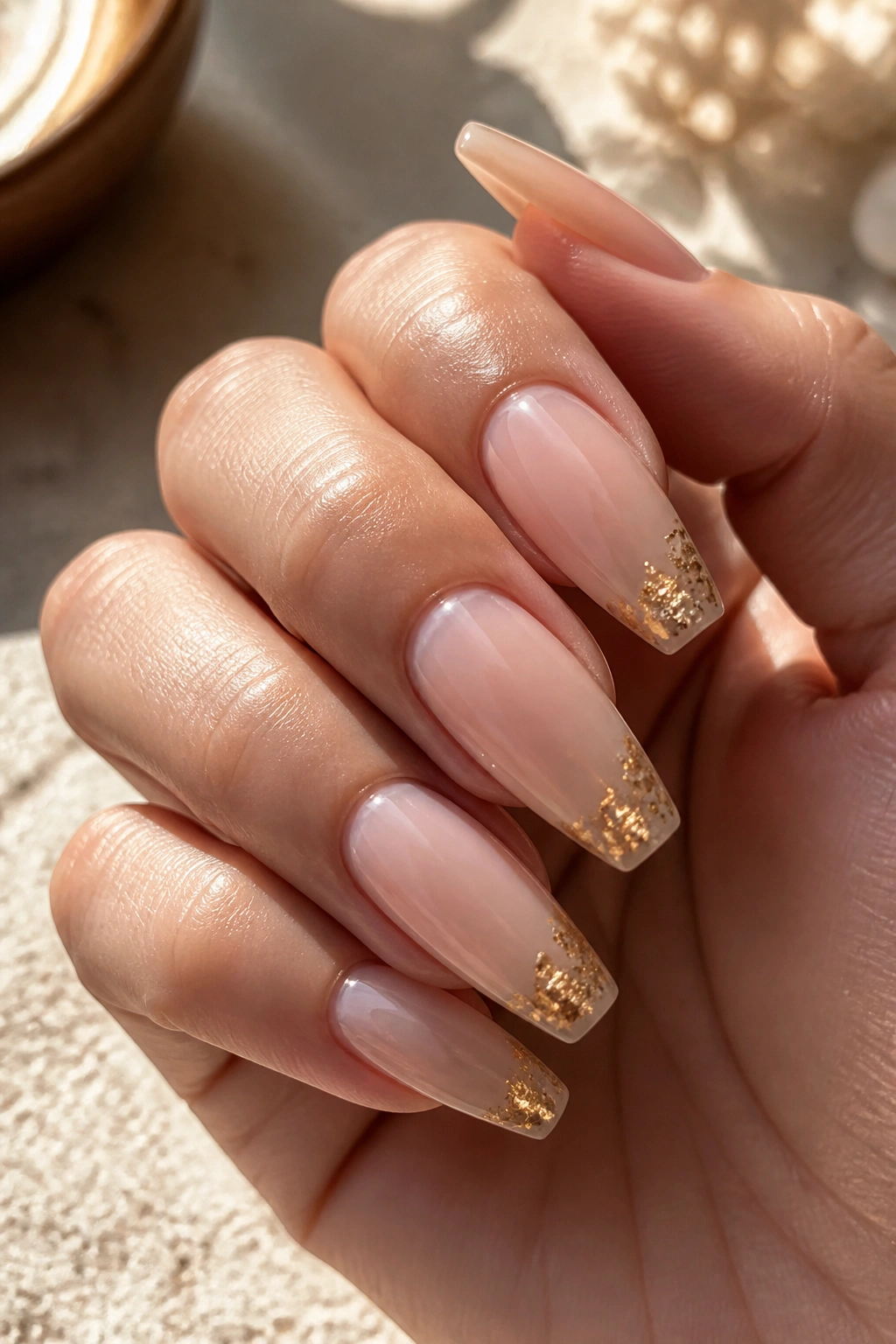
Unlike full glitter nails, gold foil gives you sparkle in broken little flashes instead of one solid shimmer coat. That difference matters. Coffin nails already have a strong outline, so they don’t need a loud finish piled on top to feel dressed up.
The base should stay sheer. Think pink-beige jelly, soft nude, or even a translucent taupe. Then place foil in small torn pieces—sesame-seed size, not big flat sheets—near one side of the nail, close to the tip, or scattered through two accent nails. Random placement looks better than trying to make each nail match perfectly.
This is also one of the easiest ways to make a neutral manicure feel less safe. Gold foil adds texture without bulk, and it catches enough attention that the set feels styled, not plain. Still, it stays easier to maintain than rhinestones or raised chrome art.
Who is this best for? Someone who likes neutrals, wears gold jewelry most days, and wants a manicure with a little movement but no high-maintenance hardware. If that sounds like you, keep the foil light and the base glossy. Too much metal and the whole thing gets busy.
7. Matte Mauve Coffin Nails
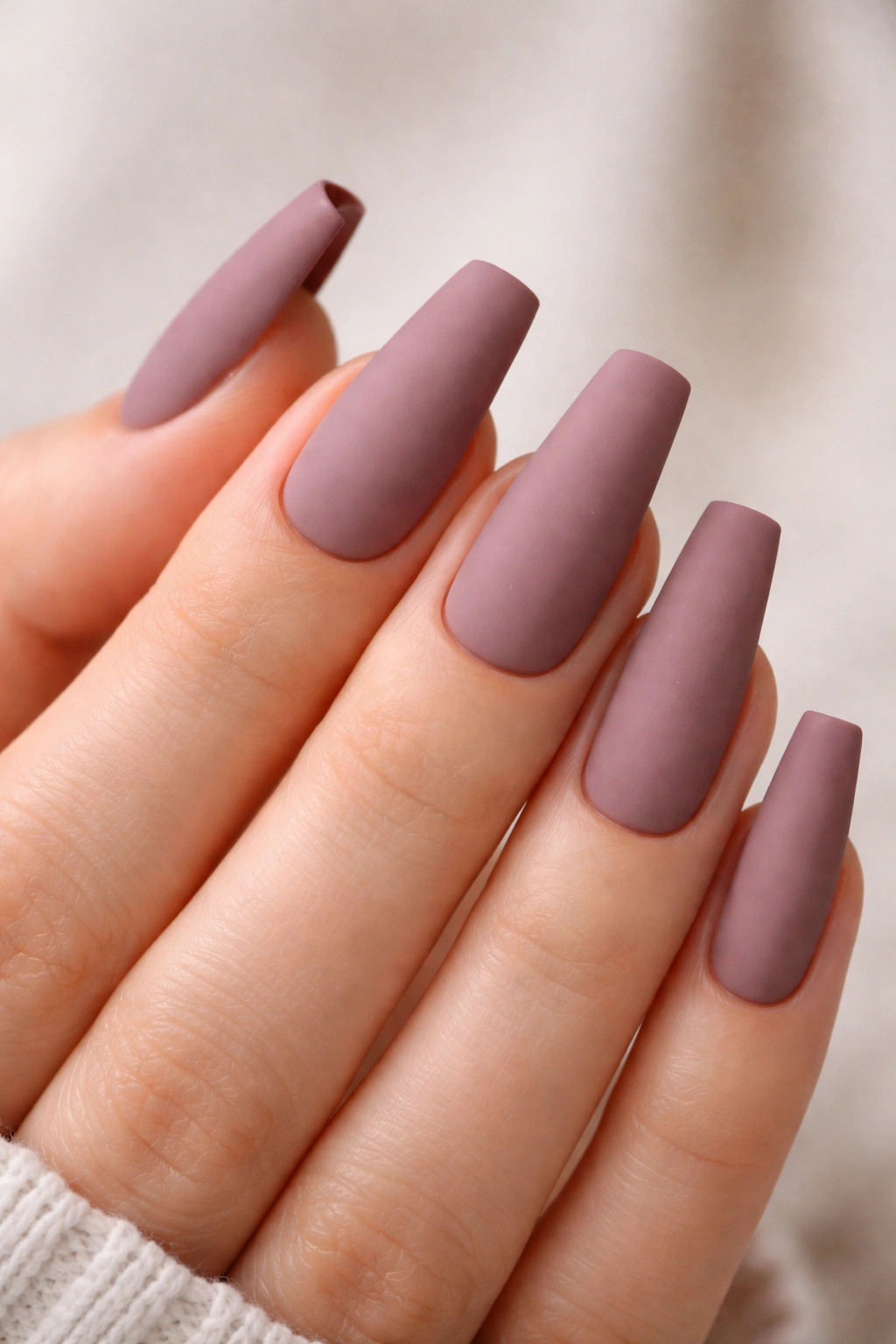
Velvet. That’s the mood.
A matte mauve set looks calm, grown-up, and a touch moody in the best way. Coffin nails can sometimes read sharp because of the tip; a matte finish softens that edge and gives the whole shape a powdery look that feels more relaxed than glossy polish.
Why mauve works better than plain pink here
Mauve carries a little gray or brown under the pink. That muted base helps the color look richer and less sugary, which suits the clean lines of coffin nails. Straight pastel pink can turn juvenile on this shape. Mauve keeps the manicure grounded.
How to keep matte from looking dry
Matte top coat shows wear differently from gloss. You won’t see shiny scratches as much, but oils from lotion and daily life can make the surface patchy.
- Pick a medium or dusty mauve, not a chalky pale one.
- Ask for a smooth base underneath, since matte finishes can reveal texture.
- Wipe nails with alcohol if the surface starts looking uneven from hand cream.
- Carry cuticle oil anyway—soft skin keeps matte polish from looking dusty.
A matte coffin set also pairs well with one glossy accent line or a glossy French tip if you want contrast without changing colors.
8. Black Tips Over a Natural Base
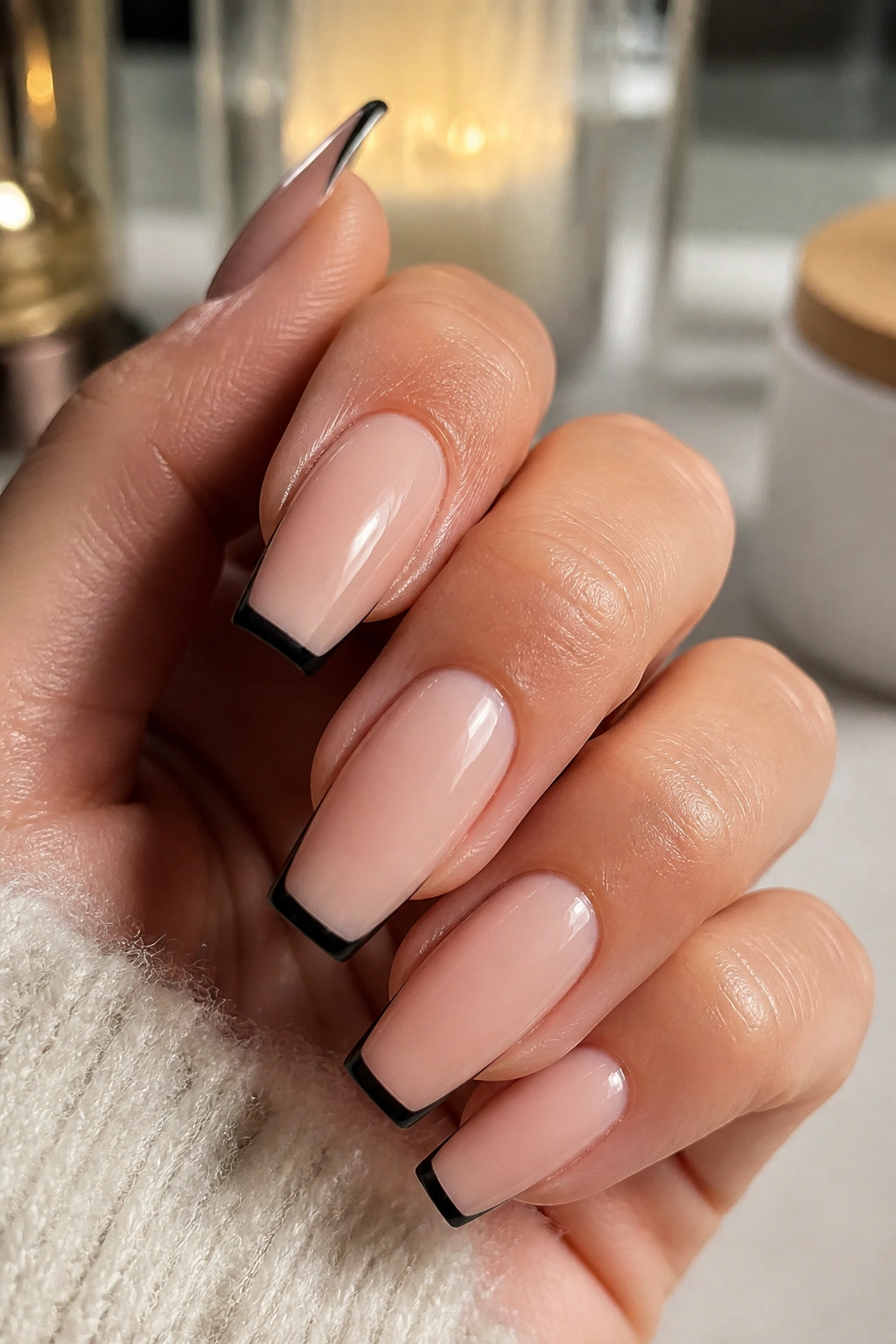
A full black manicure has attitude. Black tips over a natural base have restraint, and that’s why I like them more on coffin nails.
The design is simple: a sheer nude, beige, or pink base, then a thin black French edge across the tip. Because the center of the nail stays open and light, the shape still looks long. You get contrast, but not the weight that comes with painting the whole nail black.
This style needs precision. The black line should be crisp and slim—usually about 1 millimeter on short or medium lengths. Go thicker and the design starts looking heavy, especially if the smile line is flat. A slightly curved line that hugs the tip will always look cleaner.
I’d wear this set with silver jewelry, leather, denim, or a white shirt, though it doesn’t need a whole wardrobe concept to make sense. It also suits people who want a darker manicure without committing to a full dark color on every finger.
Keep the rest quiet. No glitter. No flowers. No chunky gems. The graphic edge is the point.
9. Tortoiseshell Accent Set
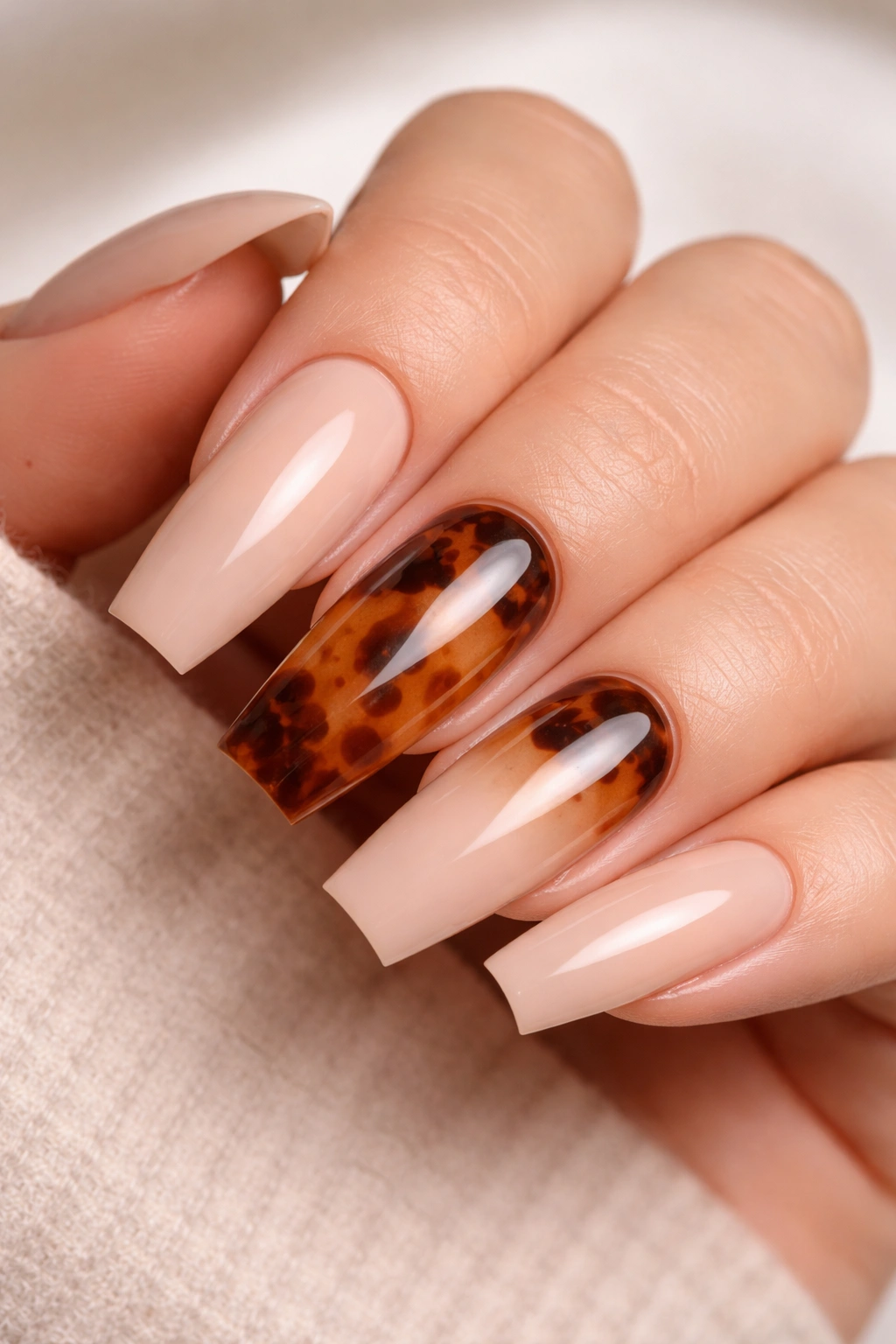
Picture a glossy caramel-brown nail with little pools of amber, espresso, and near-black floating through it. Done well, tortoiseshell looks rich and layered. Done badly, it looks like a smudge. That’s why I almost always suggest using it as an accent on coffin nails rather than across all ten fingers.
Two accent nails—middle and ring, or thumb and ring—usually give you enough pattern without making the whole manicure feel busy. Pair them with solid shades like warm nude, deep brown, soft beige, or even a muted cream.
If you want the pattern to look believable, the color order matters:
- Start with a translucent amber or honey base.
- Add soft-edged brown spots, not hard dots.
- Drop a little black into the center of some spots for depth.
- Finish with a jelly amber layer to blur and fuse everything together.
Gloss is non-negotiable here. Tortoiseshell needs that glassy top coat to show the layers underneath. Matte kills the effect fast.
One more opinion—because I do have one. Tiny tortoiseshell details on a short coffin set can look smarter than a full long set packed with pattern. A little restraint helps this design look expensive.
10. Lavender Chrome Coffin Nails
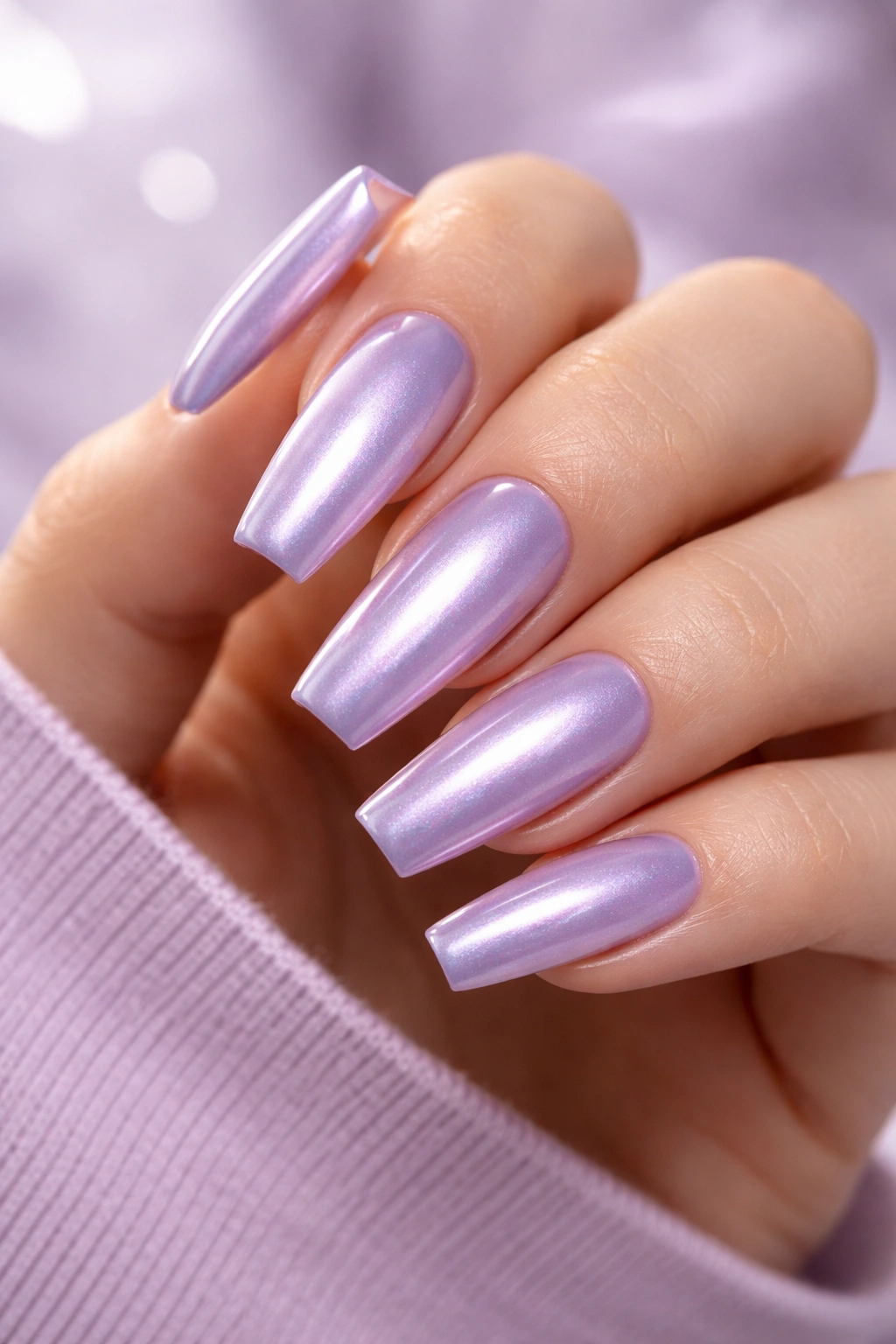
Want color without losing that clean, polished feel? Lavender chrome is a smart pick.
Silver chrome can read cold. Hot pink chrome can get loud fast. Lavender sits in a softer lane, especially when the base is a muted lilac instead of a bright candy purple. On coffin nails, that cool glow plays nicely with the straight tip and makes the shape look crisp without turning hard.
What to ask for
Ask for a soft lavender gel base topped with a pearl or chrome powder, depending on how reflective you want it. Pearl chrome gives a gentler sheen. Full chrome has more flash and sharper reflection.
This design looks strongest on short to medium coffin nails, where the color stays sleek. On extra-long sets, the finish can start dominating the whole hand—great if that’s the goal, less great if you wanted something subtle.
I also like lavender chrome in spring weddings, summer trips, winter evenings, none of which matter as much as one thing: keep the undertone dusty rather than neon. Dusty lilac looks cleaner and wears better with everyday clothes.
11. Rose Quartz Marble Coffin Nails
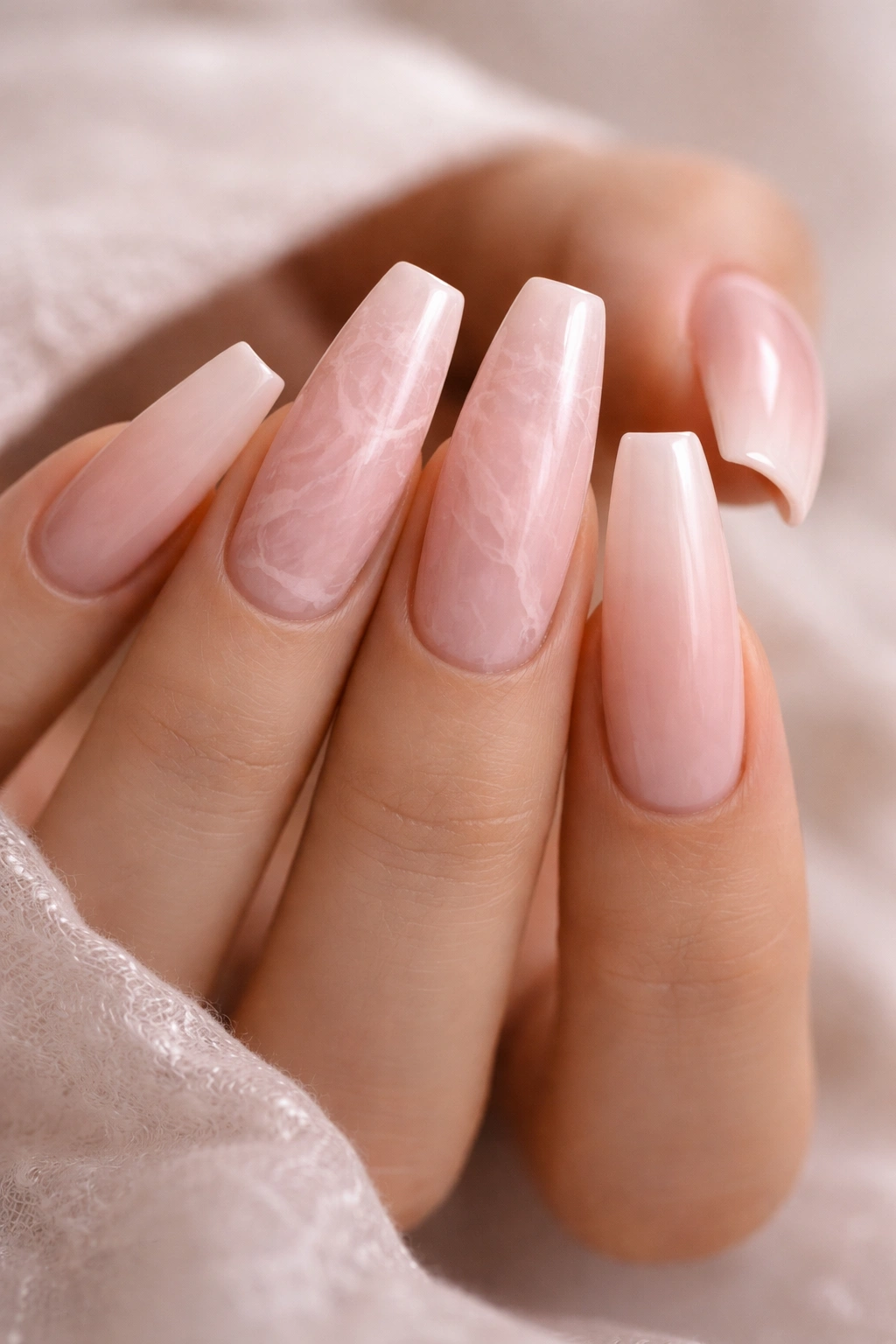
Soft pink marble can go wrong fast. Too much white and it looks cloudy. Too many veins and it turns busy. The version that keeps winning is the one that actually borrows from rose quartz: milky pink, soft translucence, and thin white lines that drift instead of zigzag.
On coffin nails, that stone effect looks best when it has room to breathe. I like it on two or three nails, with the rest painted in a matching sheer pink or a creamy blush. All ten marbled can feel overworked unless the set is short and the pattern stays faint.
A good nail tech will build this with blooming gel, thin brush work, or layered jelly color. You want movement in the design, not stripes. If every line is sharp and identical, the set starts looking printed rather than painted.
Gold foil can work here, but use almost none of it. One tiny fragment near a vein is enough. More than that and the manicure shifts away from stone and toward decorative art, which is a different mood.
This style suits bridal manicures, formal events, or anyone who likes pink but wants more texture than a plain cream polish can give. It feels soft, but not sleepy.
12. Cherry Red Micro-French
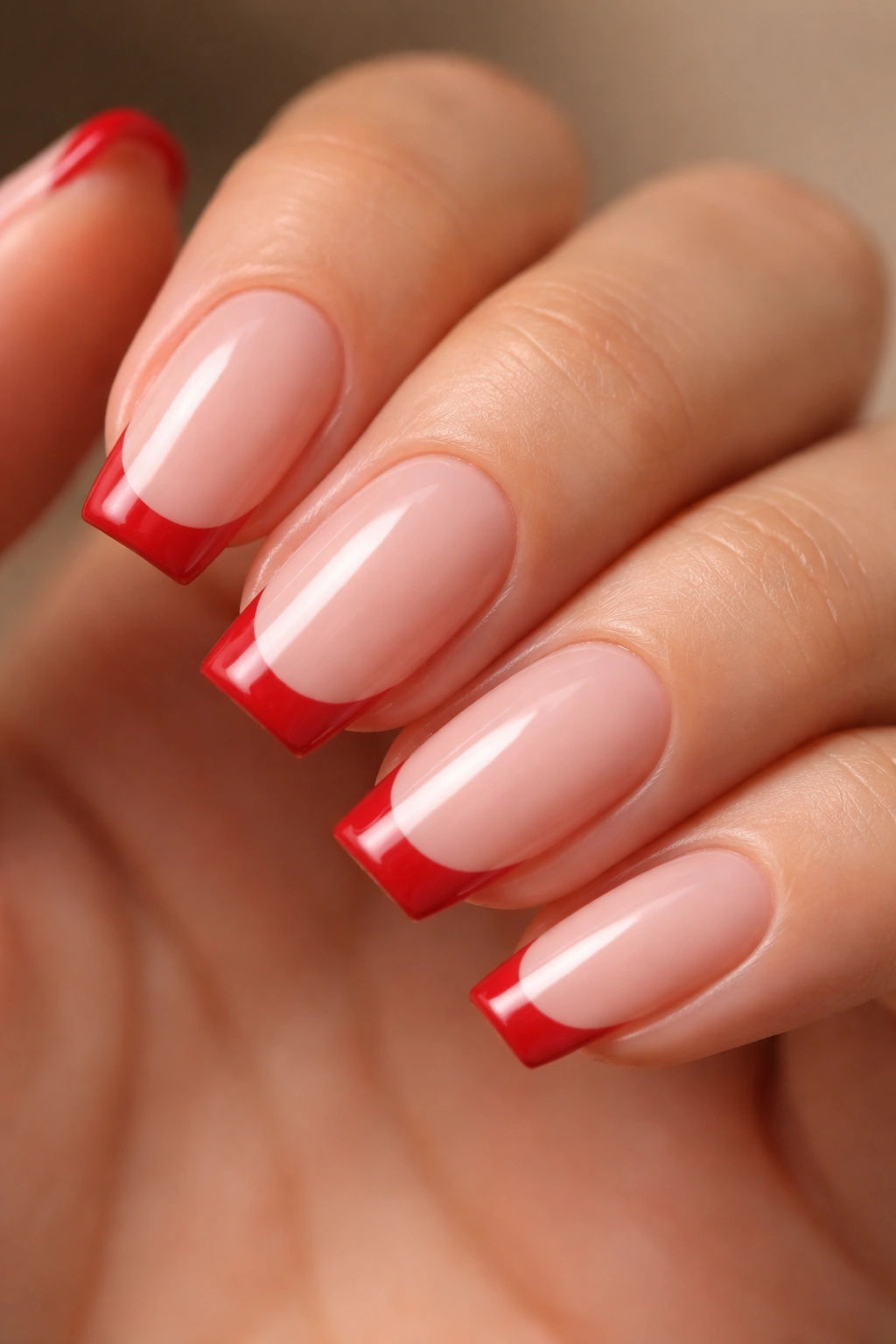
Unlike a full cherry red set, a red micro-French leaves breathing room through the middle of the nail. That negative space is what makes it feel crisp instead of heavy.
The tip should stay narrow—around 1 millimeter, maybe 1.5 if the nails are longer—and the base should look natural, not beige and opaque. Sheer pink, pale nude, or a milky blush gives the red a cleaner contrast. Bright red over a thick tan base can look dated in a hurry.
I especially like this on shorter coffin nails, where full red polish can make the shape look wider. A slim red tip keeps the eye moving toward the edge, which helps the fingers look longer. Tiny design, strong effect.
Skip extra art. Red already brings enough energy. If you want one more detail, a thin red outline on one accent nail can work, but even that is optional. This design earns its keep through restraint.
13. Sage Green with Daisy Details
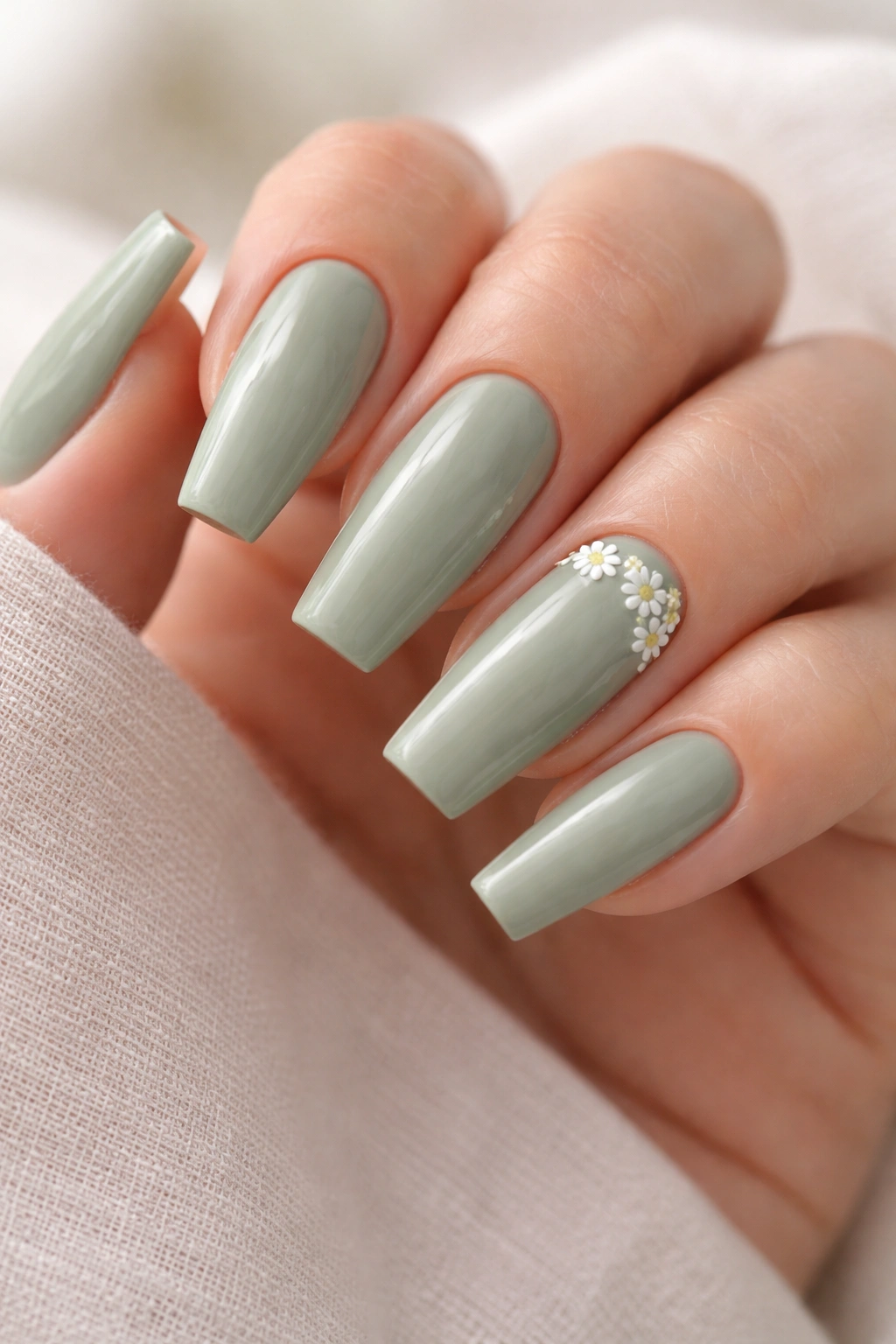
Florals go wrong when they lean too cute. Sage green keeps that from happening.
A muted sage base gives coffin nails a calm, earthy look, and tiny daisy details add contrast without turning the set childish. Scale is everything here. The flowers should be small, placed on two or three nails at most, and painted with compact petals rather than oversized cartoon blooms.
Placement makes the difference between tasteful and crowded:
- Put one daisy near the sidewall on a sheer accent nail.
- Cluster two tiny flowers near the cuticle on one ring finger.
- Add single-petal fragments on a solid sage nail if you want less symmetry.
- Use mustard or soft yellow centers the size of a pinhead, not big dots.
I would not put daisies on all ten nails. Coffin nails already bring structure, and the sage color has enough presence on its own. Let the flowers act like punctuation marks, not a whole paragraph.
Gloss works best here. Matte sage can be nice, though it can flatten the floral detail unless the painting is sharp.
14. Mocha and Cream Swirl Nails
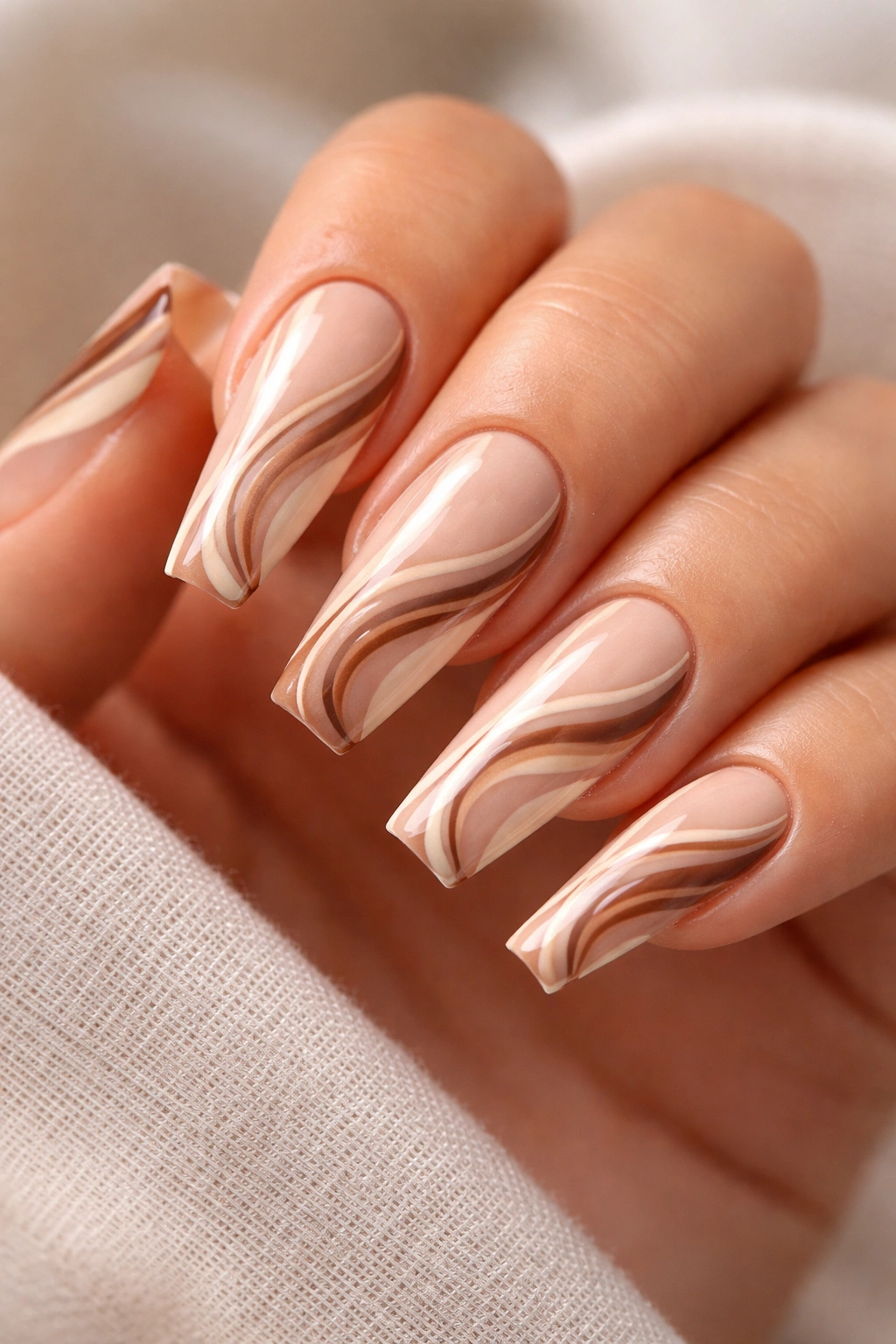
Some nail art looks busy from three feet away. Swirls don’t—at least not when the color story stays tight.
Mocha and cream swirls work because the shades are close enough to feel cohesive but different enough to show movement. On coffin nails, those curved lines soften the straight tip, which creates a nice push and pull between fluid art and clean shape. That contrast is half the appeal.
The best version leaves some open space. A sheer nude or milky base with two or three flowing lines per nail looks polished. Fill the whole nail with loops and the design starts crowding itself. Thin liner-brush strokes look smarter than thick ribbon swirls.
This is one of those designs that suits medium length best. Short coffin nails can handle it if the lines are minimal. Long nails can handle more, though I’d still keep the palette to two or three shades—cream, latte, mocha, maybe espresso on one accent nail.
There’s also a practical upside: grow-out is less obvious than it is with dark full-coverage polish, since the base usually stays sheer near the cuticle. Small mercy, but I’ll take it.
15. Nude Base with Crystal Cuticle Accents
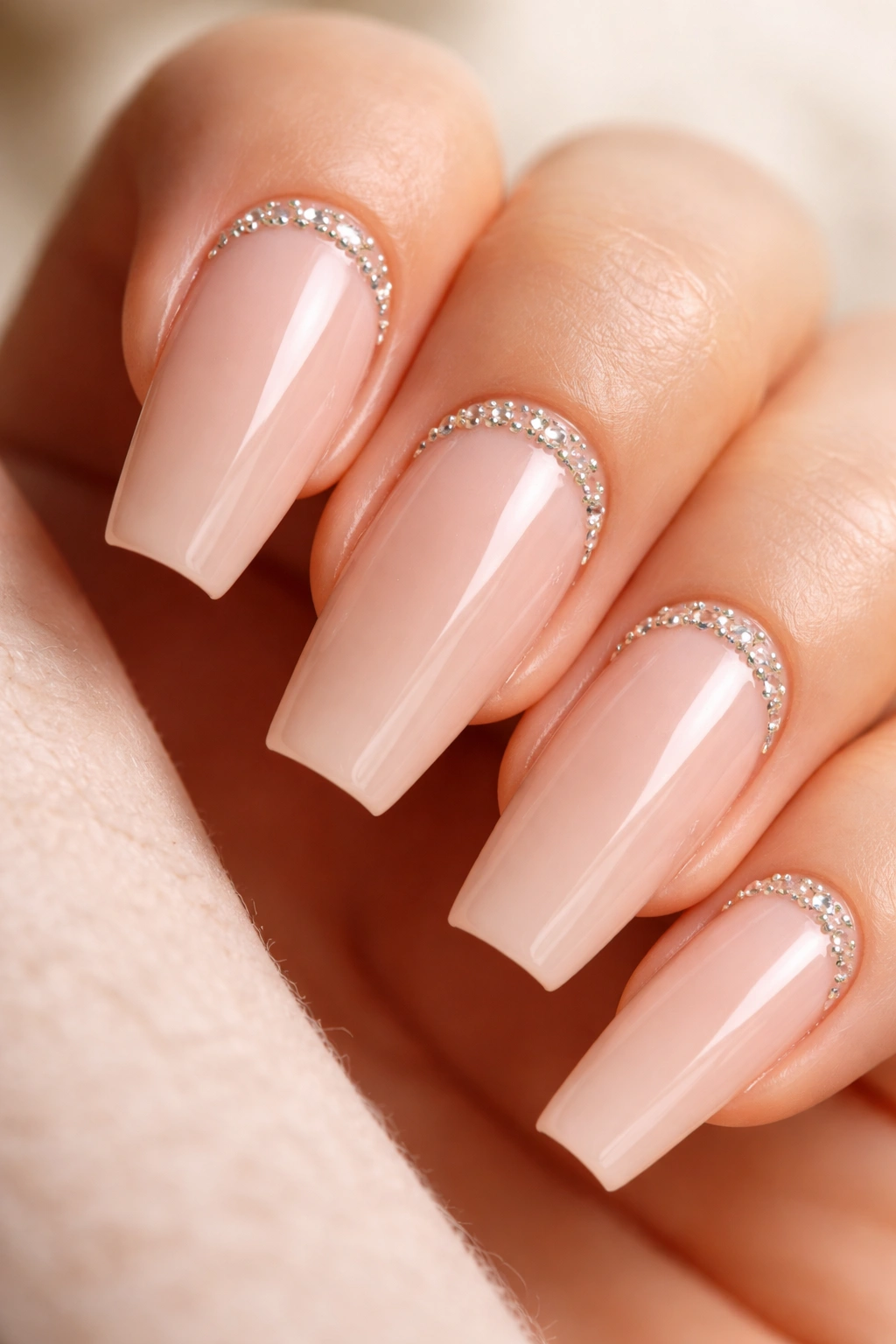
If you want a little shine without committing to full bling nails, place the crystals at the cuticle and keep everything else calm. A nude base with a curved line of tiny stones looks clean, dressy, and far easier to wear than gem-heavy nail art spread across the whole nail.
Size matters. Think SS3 to SS5 crystals—small enough to follow the half-moon shape near the cuticle, large enough to show. Three stones on each accent nail can be enough. Five is usually the upper limit before the set starts feeling loaded down.
A few details make this design last longer:
- Use flat-back crystals, not chunky craft rhinestones.
- Keep gems slightly away from the skin, or lifting starts early.
- Ask your tech to seal around the edges with gel, not bury the stones completely.
- Limit embellishment to one or two nails per hand.
I like this best over milky beige, blush nude, or sheer pink. Dark backgrounds can work, though they push the look dressier and a little sharper. On a soft nude coffin set, the crystals feel intentional without taking over the whole manicure.
Final Thoughts
A good coffin manicure is rarely about piling on more. Shape first, color second, detail last. Get those in the right order and even the quietest set can look polished for days.
If you’re torn between two or three of these designs, choose based on maintenance. Chrome shows surface flaws. Matte needs cleaner upkeep. Crystal accents need a careful hand. Milky nudes, soft French tips, and ombré fades are easier to live with if you want your manicure to age gracefully.
And bring more than one screenshot to the salon. Bring the length you like, the finish you like, and one backup choice in case your nail length or appointment time changes. The best set is usually the one that still looks good on day nine, after typing, dishwashing, handwashing, and real life have had their say.