
Stand in front of a salon wall long enough and you start to notice something funny: lavender coffin nails are never one shade. Some lean pink and creamy. Some look misty, almost gray. Some turn glassy under top coat, while others go flat and powdery in a way that can make even a clean shape look dull. That difference is where a soft manicure either lands—or misses.
Lavender works because it carries color without shouting. On a coffin shape, that matters. The straight sidewalls keep the nail looking neat, the tapered tip adds structure, and the pale purple tone takes the edge off what can otherwise read sharp. You get shape, length, and polish without the hard look that black, neon, or harsh white can bring.
There is a catch, though—not a dramatic one, but one that shows up fast under salon lights. A lavender that looks creamy on a swatch stick can turn chalky across ten nails, especially if the base is too opaque or the tone fights your skin. I have seen soft lilac designs come alive with one thin milky layer underneath, and I have seen the same color look flat because the finish was wrong.
The best soft nail sets do not rely on color alone. They use finish, transparency, line placement, and shape balance. That is where these ideas start to separate themselves.
Why Coffin Nails Make Lavender Look Softer
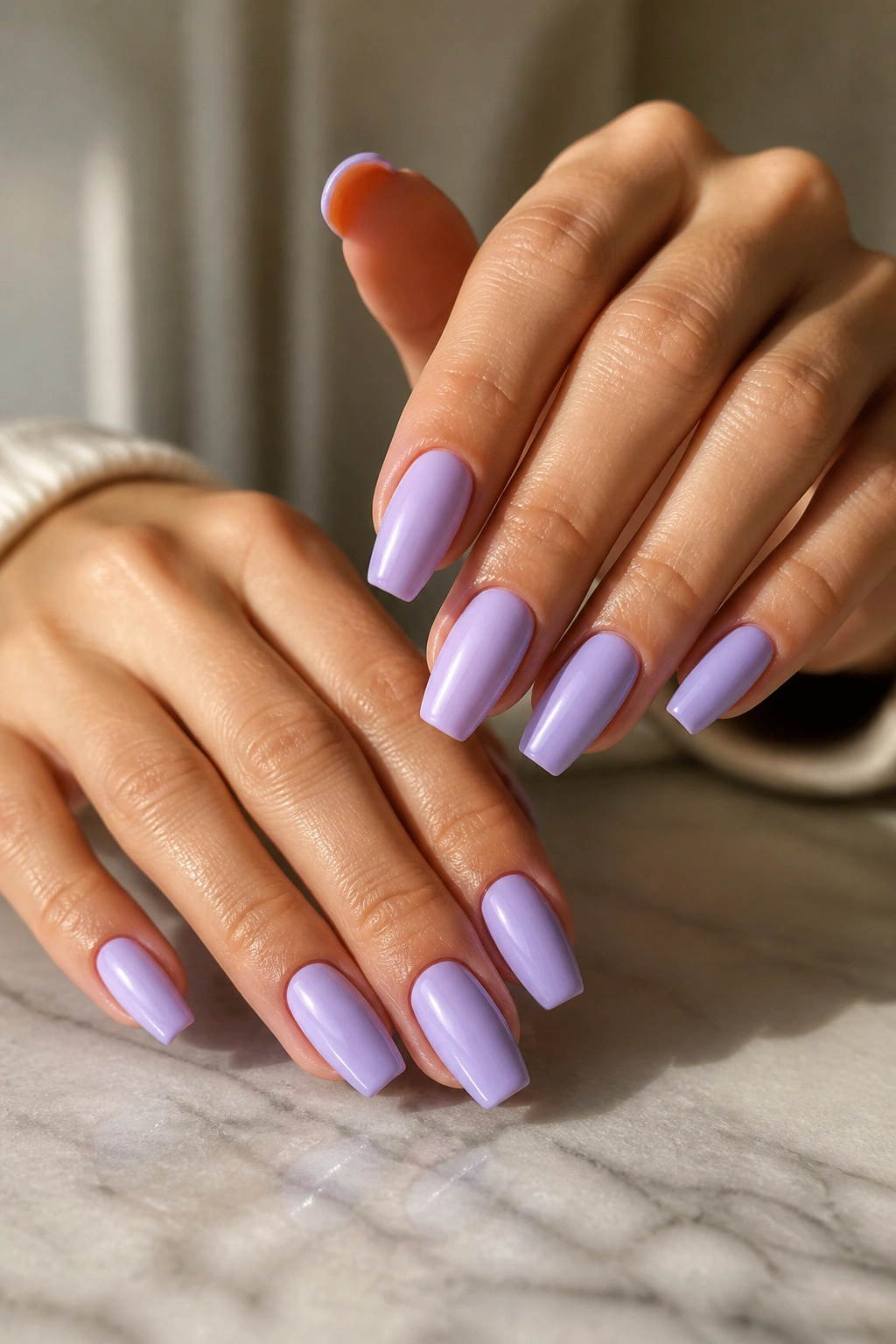
Shape does half the work. People tend to focus on polish first, yet with pale shades, the silhouette decides whether the manicure reads airy or stiff.
Coffin nails have two features that help lavender along: straight side edges and a squared-off tip that narrows before the end. On a medium length, that shape gives your eye a clean frame for the color. Lavender sits inside that frame and looks more intentional than it often does on a flared square or a long stiletto.
Short round nails can make lavender look sweet in a casual way. Long stilettos push it toward drama. Coffin lands in the middle, which is why it works so well for a soft look. You get enough surface area for milky finishes, fades, tiny florals, and pearl top coats, yet the final effect still feels controlled.
Length matters too. If you want softness first, ask for short to medium coffin nails, not extra-long tips. A free edge in the 8 to 14 mm range tends to look the cleanest for pale purple shades. Once you go longer than that, the color can still work, though the vibe shifts from soft and low-contrast to styled and more fashion-forward.
One small detail many people miss: pale polish shows the smile line and free-edge shadow more than nude beige does. A thin builder gel overlay or a sheer pink-lavender base can blur that line and make the whole set look smoother from arm’s length.
How to Choose the Right Lavender for Coffin Nails
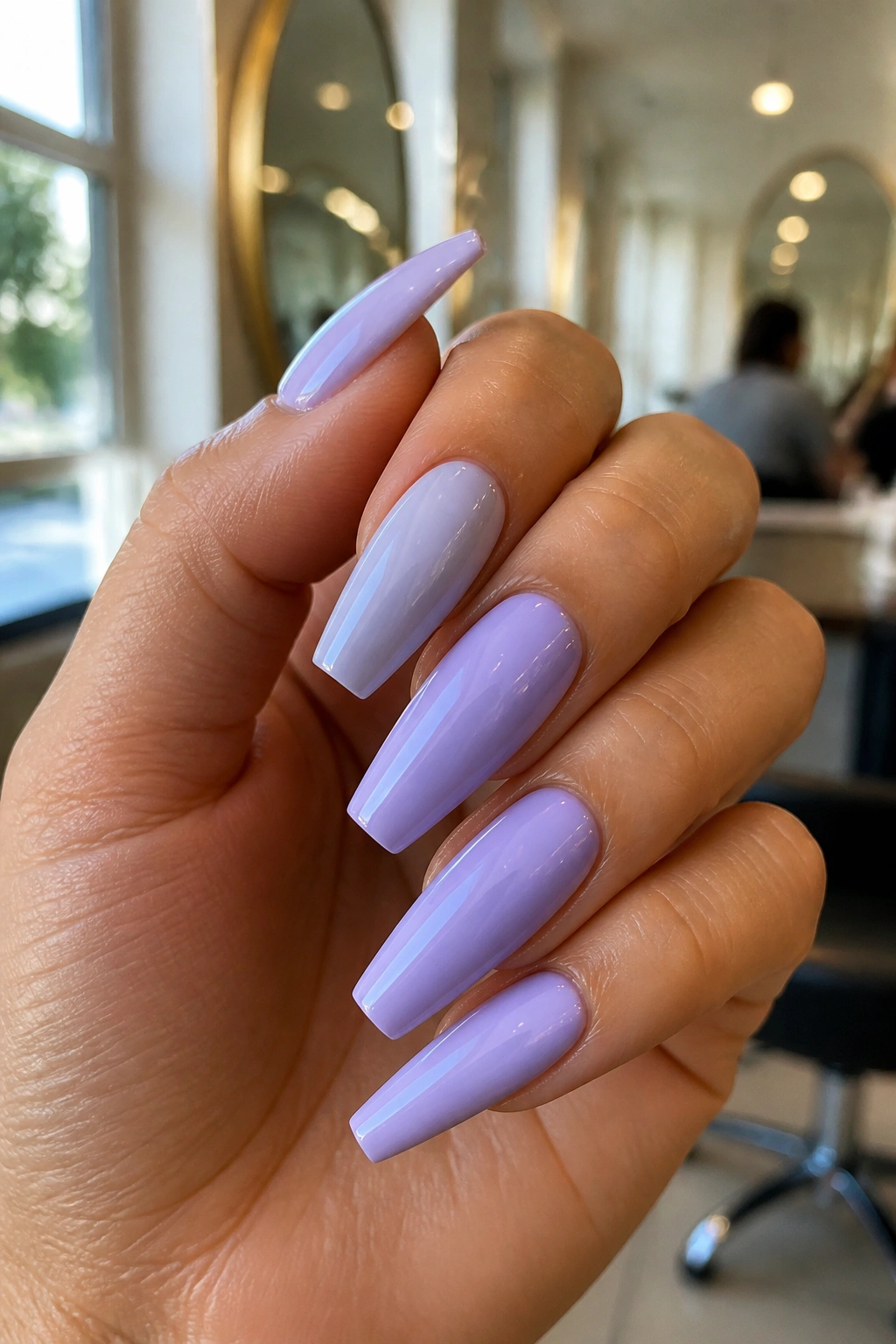
Pick the wrong lavender and the set goes powdery fast.
What you want is soft contrast, not flat contrast. That means matching the undertone and finish to your nail length, skin tone, and the amount of detail you plan to add on top.
A few quick rules make the choice easier:
- Milky lavender works well when you want the nail bed to look smoother and the shape to feel lighter.
- Dusty lavender has a touch of gray, which helps on medium and long coffin nails that might look too sweet in a candy-toned lilac.
- Pink-leaning lilac tends to warm up olive and deeper skin tones without turning ashy.
- Blue-leaning pastel lavender looks crisp on fair and cool-toned skin, though it needs a glossy or glazed top coat to avoid a chalk effect.
- Jelly lavender gives a softer finish than full-coverage cream polish because a little light still moves through the color.
- Matte lavender can look clean and velvety, though it shows dents and surface marks faster than gloss.
At the salon, ask to see the shade in two coats on a clear swatch, not one thick coat on the bottle cap. Bottle color lies. Thin layers tell the truth.
And if you are torn between two shades, choose the one with a little more depth. Soft nails do not need to be pale to the point of disappearing.
1. Milky Lavender Gloss
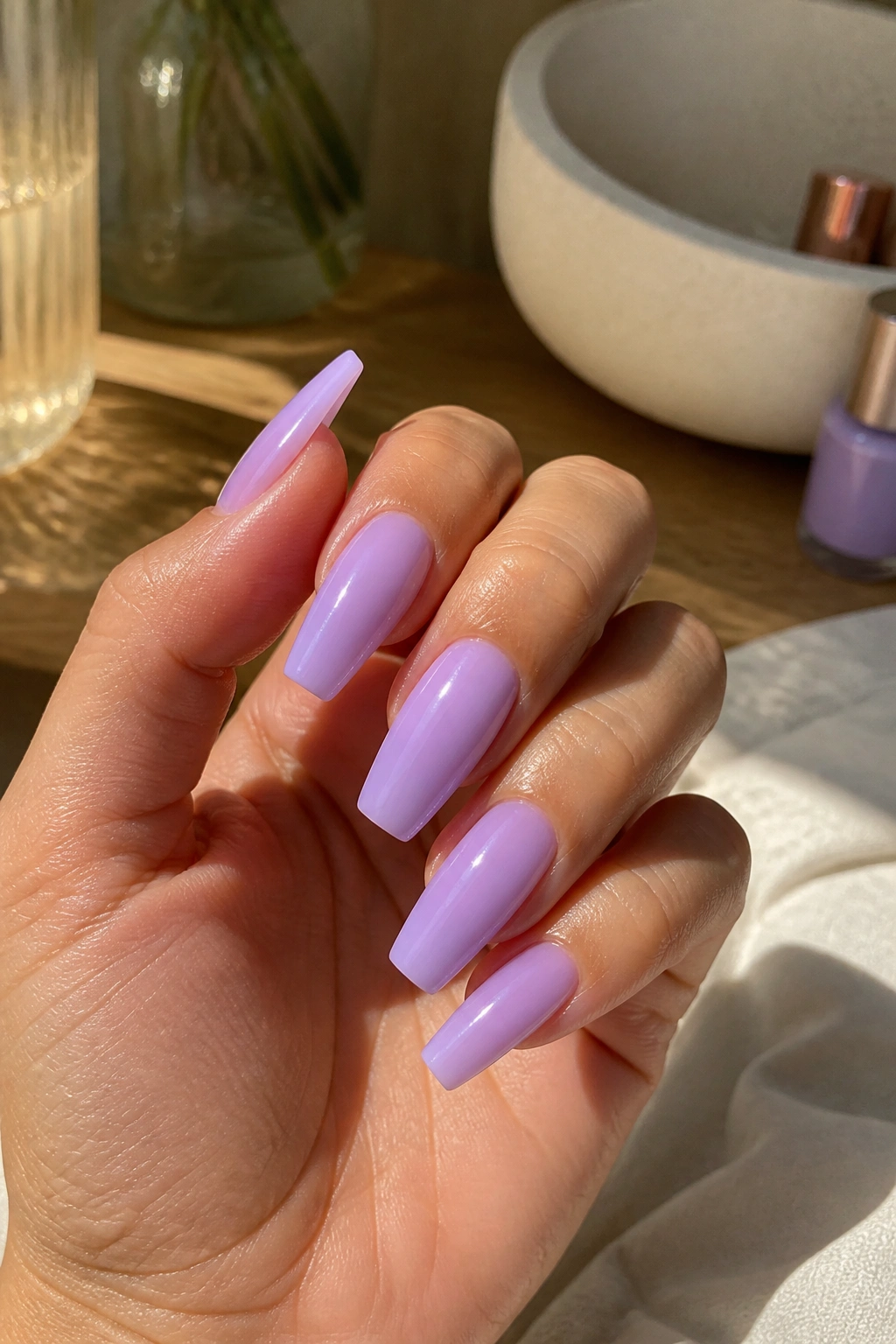
If you want the safest starting point, this is it. A milky lavender gloss gives you color, shine, and softness without asking for much else. No crystals, no line work, no art that needs explaining. It looks clean from every angle, which is part of its appeal.
The finish matters more than people think. A cream pastel can turn stiff on coffin nails, while a milky formula lets a trace of the natural nail bed show through. That tiny bit of depth makes the manicure look smoother and less painted-on. On medium coffin tips, it almost has a porcelain look—soft, cool, and neat.
Why the milky base works
Milky shades scatter light better than flat opaque pastels. You see that most under daylight, where the polish looks almost clouded rather than solid. That keeps lavender from reading like school-supply purple and pushes it toward something calmer.
This one also hides growth well. Since the color is not fully opaque, the line near the cuticle grows out with less contrast than a dense cream polish would.
Salon notes worth asking for
- Ask for two thin coats, not one heavy coat, so the finish stays translucent rather than streaky.
- A high-gloss top coat makes the color look deeper and less chalky.
- Medium coffin length shows this shade best; extra-long tips can make it feel colder.
- If your nail plate has ridges, a rubber base or builder gel under the polish smooths the surface fast.
Best pick if you want one lavender coffin nail design that will still look good with a hoodie, a blazer, or a wedding guest dress.
2. Matte Dusty Lilac with Crisp Sidewalls
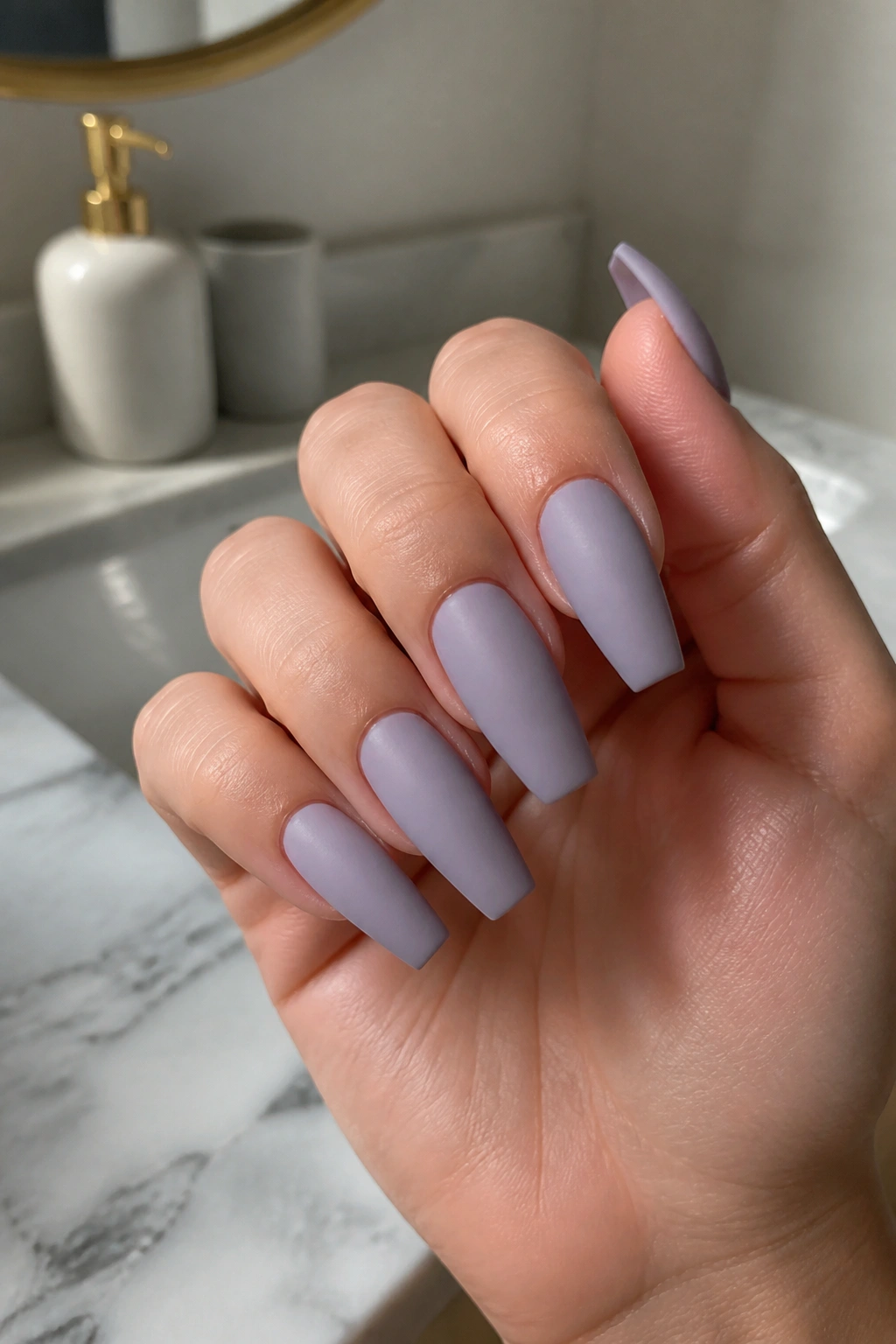
Gloss is not always the softest finish. A dusty lilac matte can look even gentler, though only when the shape is sharp and the color has enough gray in it.
Here is where people go wrong: they pick a bright pastel purple, slap matte on top, and end up with nails that look dry instead of velvety. The better move is a muted lavender with a smoked undertone. That extra gray takes the edge off the color and gives matte something to work with.
On coffin nails, the sidewalls need to stay clean for this to look right. Matte surfaces pull attention toward shape because they do not bounce light around the way gloss does. If the filing is uneven, you will see it. If the taper is smooth and the tip is straight, the design looks tidy in a way that almost feels architectural.
I like this look most on short or medium coffin nails. Longer lengths can still carry it, though the set starts to feel editorial rather than gentle. There is nothing wrong with that. It is simply a different mood.
One practical note: matte top coat grabs makeup, self-tanner, and blue dye from dark jeans faster than glossy finishes do. Wipe the nails with a little alcohol on a lint-free pad when they start looking dull. It brings the surface back without changing the color.
3. Lavender French Fade
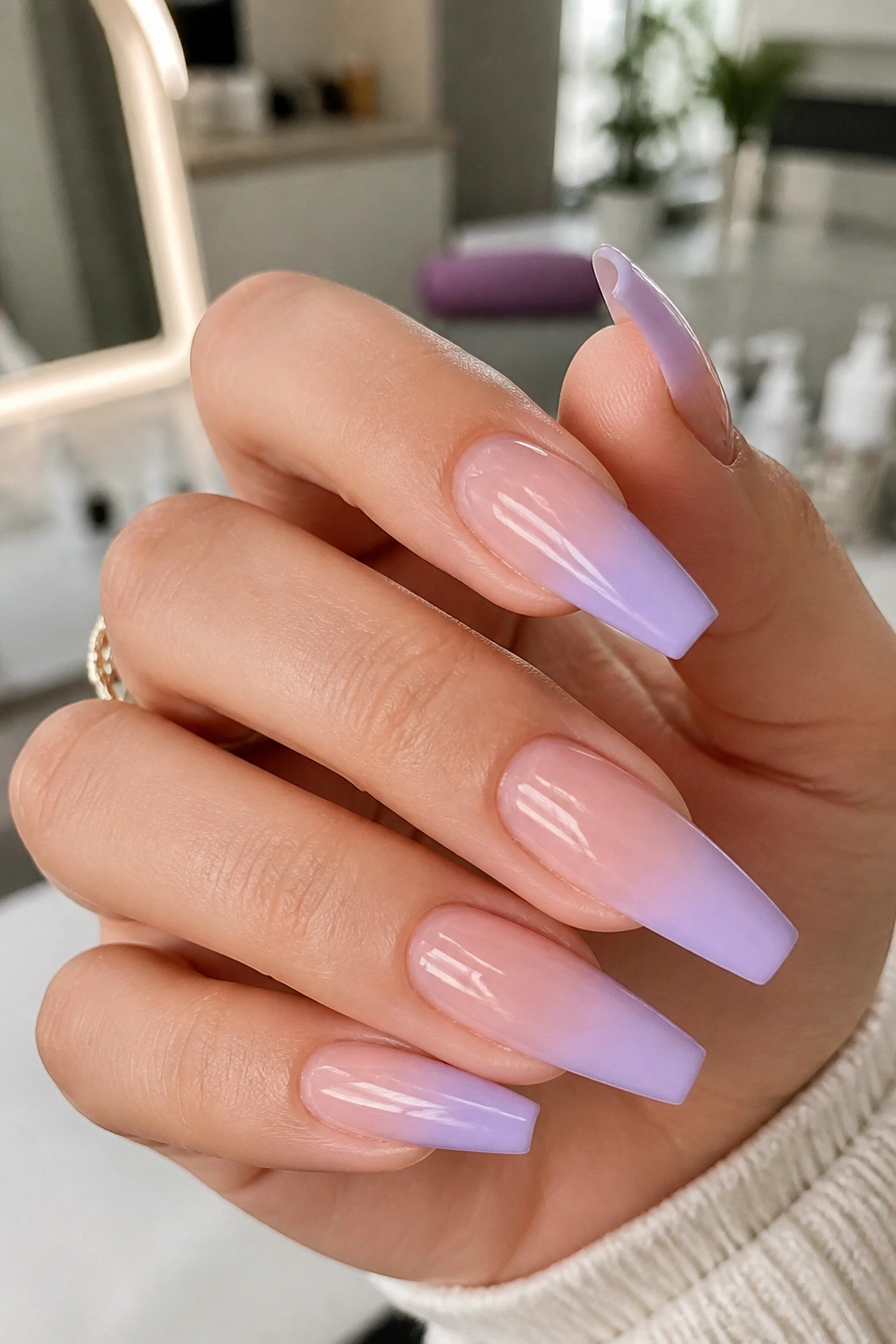
Why does a French fade look so much softer than a blunt French tip on coffin nails? Because your eye never hits a hard line. It moves from natural pink into pale lavender through a haze, and that blur changes the whole manicure.
This is one of the best lavender coffin nails ideas for anyone who likes polish that looks grown from the nail rather than laid on top of it. The base stays sheer and skin-like. The lavender gathers toward the free edge, then melts upward with an airbrush effect or sponge blend. On a coffin shape, that fade keeps the square tip from looking harsh.
There is also a little optical trick happening. Since the color is strongest at the edge, the nail bed looks longer and cleaner. Short fingers often benefit from that. So do wide nail plates.
What to ask your nail tech for
Ask for a baby boomer fade, though with lavender replacing white. If the tech airbrushes, the blend will look misty and even. A sponge blend can work too, though it needs a light hand or the edge turns patchy.
A glossy finish suits this design best because it helps the gradient blur. Matte can make the fade look dusty.
You do not need accent nails here. Leave it alone. The softness comes from restraint, and that is the whole point.
4. Pressed Flower Accent on Sheer Lilac
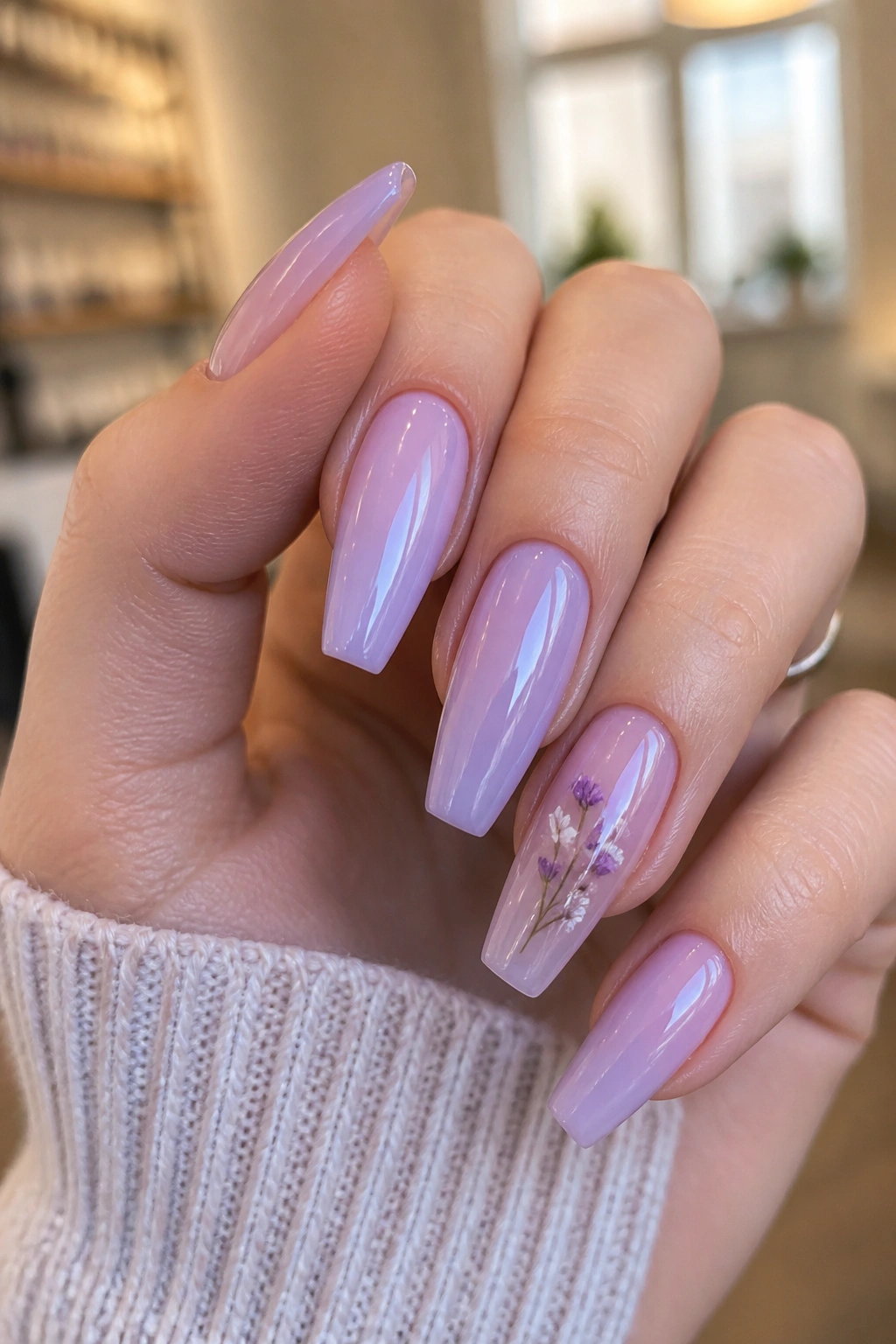
Picture a sheer lilac base with one or two tiny dried flowers pressed beneath clear gel on the ring finger and maybe the thumb. That is the set. Small scale, low contrast, no clutter.
This design works because the floral detail stays embedded, not stuck on top like a craft-store decal. When the petals sit under builder gel, the surface remains smooth and the art looks part of the nail instead of an afterthought. On a lavender background, white, pale yellow, or faded purple petals look light and airy.
I would not do flowers on every nail. That turns soft into busy in a hurry. One accent nail per hand is enough, two if the blooms are tiny.
A few details make the difference:
- Use mini pressed flowers, not full petal clusters, so the nail still reads clean from a distance.
- Pair them with a sheer lilac or milky lavender base, not full-coverage cream polish.
- Keep embellishment to one or two nails per hand.
- Seal with builder gel or a thicker top coat so the petals do not create bumps.
The nicest version of this manicure always looks a little handmade, which I mean as praise. It has that soft, pressed-between-book-pages feel that flat decals never quite capture.
5. Sheer Jelly Lavender
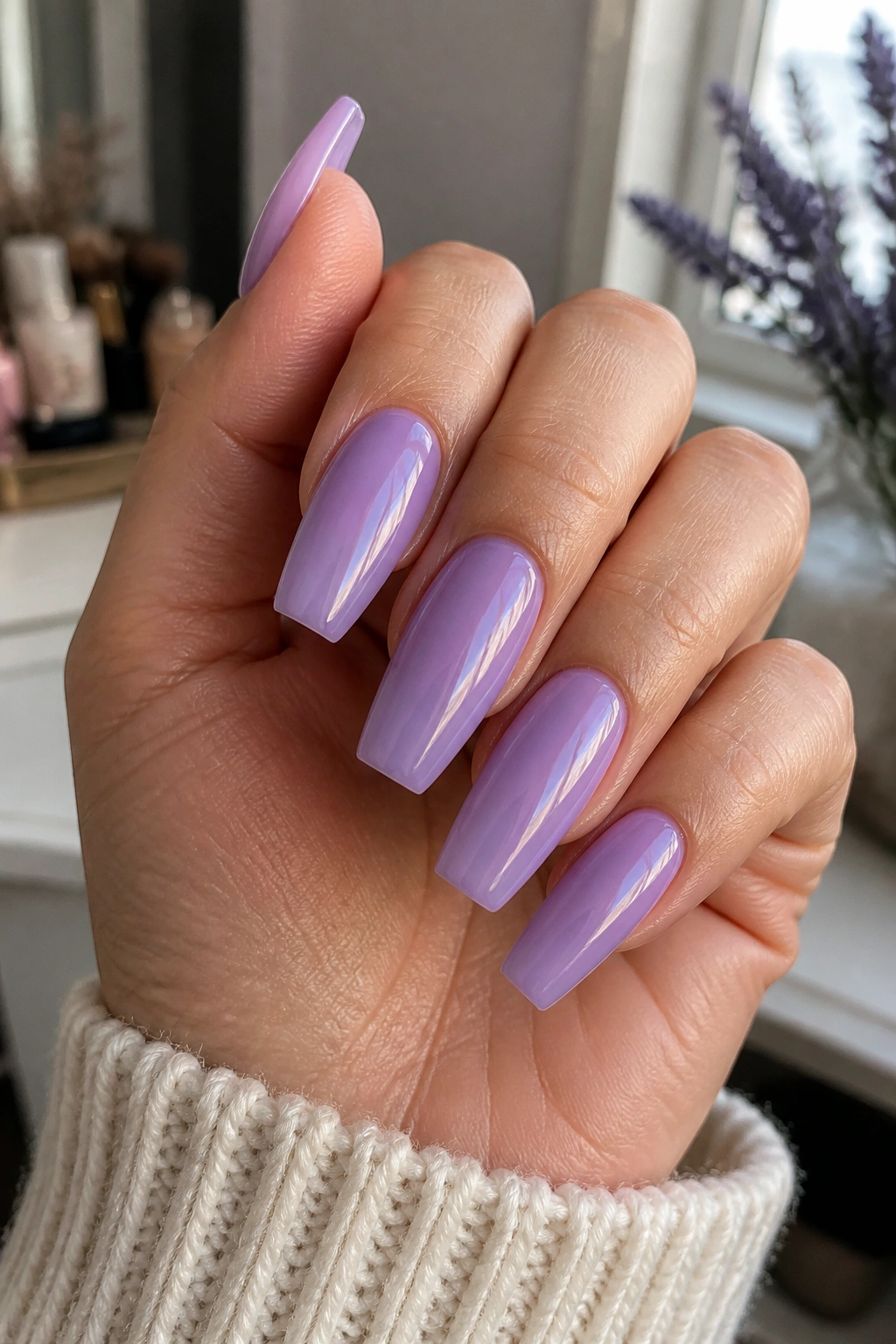
Some nail colors look better when you can see through them a little.
Jelly lavender has that syrupy, translucent finish that lets light pass through the polish. On coffin nails, that means the shape still looks defined, though the color feels lighter than a standard cream pastel. If you have ever put on a pale purple polish and thought, why does this feel so thick, jelly is the answer to that complaint.
It is also one of the few soft designs that looks better as it moves. When you tilt your hand, the edges go deeper and the center stays lighter. That built-in depth gives the manicure life without any art at all.
This style suits spring clothing, yes, though it also works with gray knitwear, white shirts, silver rings, and worn blue denim. Pale shades do not need to live in one lane. Jelly finishes make that easier because they feel clean instead of theme-based.
Application matters here. Three thin coats tend to beat two thicker coats because the color stays glassy and the free edge still glows faintly underneath. A dense application kills the effect. So does a cloudy top coat.
One warning: sheer lavender can reveal staining on the natural nail. If you wear dark polish often, use a thin milky base first. The jelly color will still show depth, and the finished set will look far more refined.
6. Lavender and Cream Micro-Tips
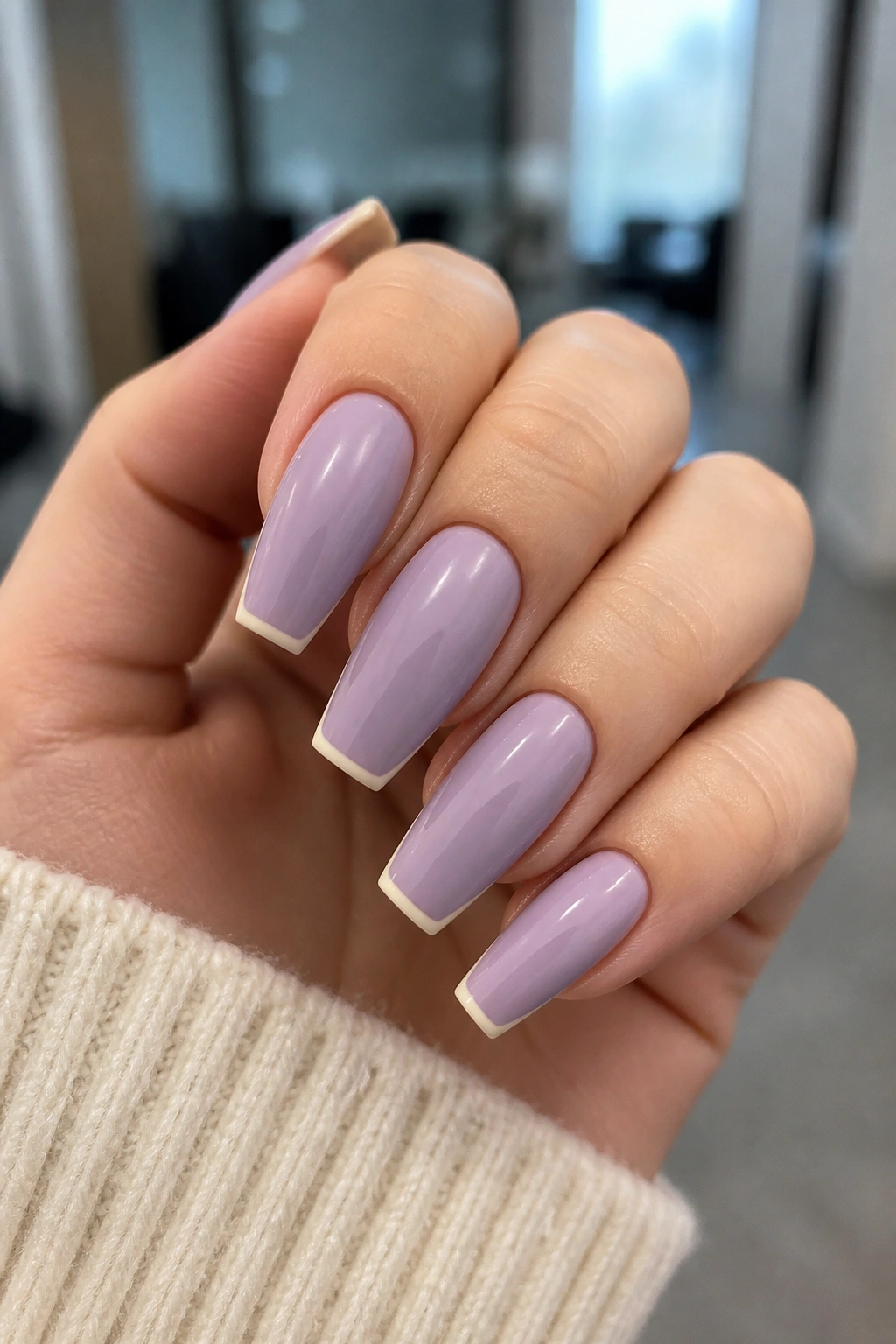
Unlike a classic French manicure, which puts one strong color block at the edge, lavender and cream micro-tips keep the line whisper-thin. That smaller tip width changes everything on a coffin nail.
A standard French tip can cut the nail in half. Micro-tips do the opposite. They trace the edge with a line around 1 to 2 mm wide, which keeps the nail bed looking long and the color feeling light. When one hand uses cream and the other alternates cream with pale lavender—or when you switch finger by finger—the set has enough interest without becoming loud.
This works well for people who like a neutral manicure but want more color than sheer pink gives. It is also smart for office wear, weddings, interviews, and days when you want your nails to look polished rather than decorative.
The best base here is a sheer pink-nude or a milky translucent beige. Skip stark nude covers. They can make the soft tip color look pasted on.
If you try this at home, use a long liner brush and turn the finger rather than dragging your whole hand across the tip. At the salon, ask for the smile line to stay shallow and crisp. A deep smile line starts pushing the set back toward classic French territory, which is a different look.
7. Short Coffin Nails in Dusty Lavender
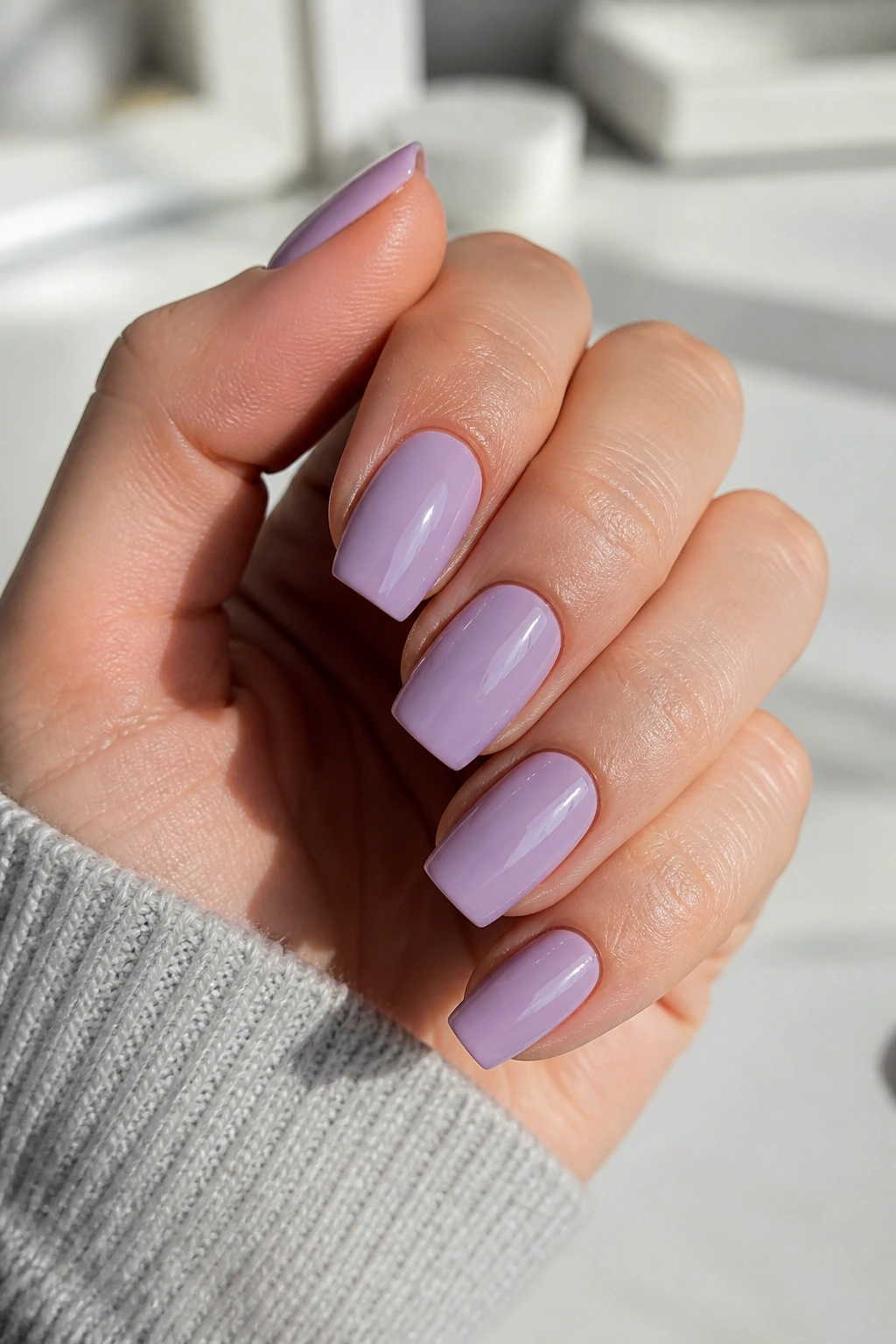
Long coffin nails get the attention. Short coffin nails in dusty lavender are the ones I keep coming back to.
There is something refreshingly practical about this set. You still get the straight sides and squared finish that make coffin nails look neat, though the shorter length strips away any extra drama. Add a gray-toned lavender and the whole manicure settles into a clean, low-contrast place that feels easy to wear every day.
Why shorter length changes the mood
Short coffin nails leave less room for color to dominate. That helps pale purple shades look softer because the shape is present without taking over your hand. If you type all day, use your hands at work, or do not enjoy long tips tapping against every hard surface in your house, this length solves half the problem before polish even enters the picture.
A dusty tone does the other half of the work. Candy lilac can look playful on short nails. Dusty lavender feels calmer and a little cooler.
Best details to request
- Keep the free edge around 3 to 6 mm if you want the shape to stay short yet visible.
- Ask for a soft taper, not a sharp pinch at the sides.
- Choose a gray-lavender cream with a glossy top coat.
- Skip heavy nail art. One tiny dot, line, or chrome accent is enough.
This is the set for anyone who wants lavender coffin nails that can survive groceries, laptop keys, and opening soda cans without a second thought.
8. Pearl-Glazed Lavender
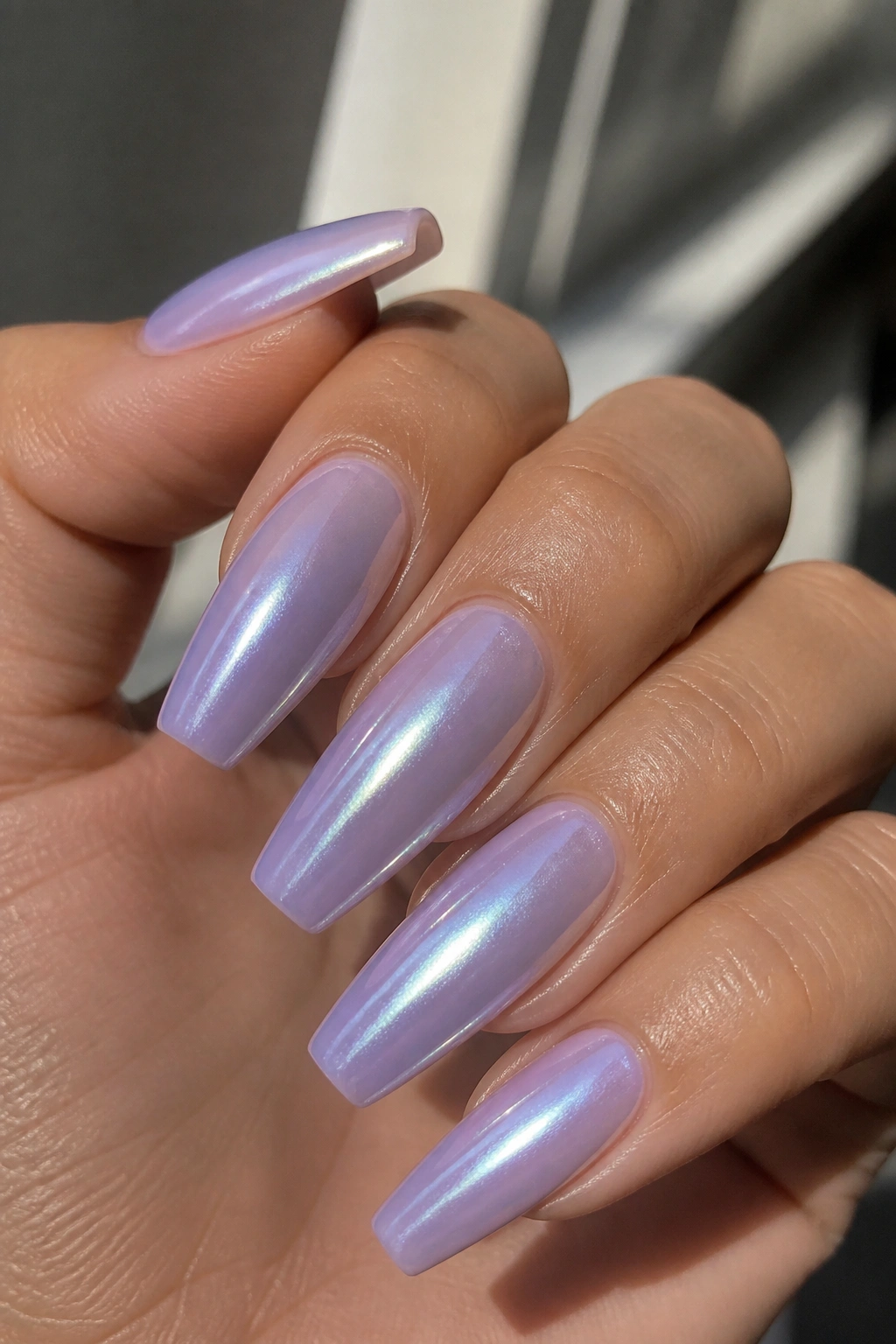
A plain pastel can sit flat on the nail. Add a pearl glaze and the color starts to shift.
Pearl-glazed lavender uses a pale purple base—often milky or semi-sheer—then tops it with a fine iridescent powder or a pearly top coat. The result is not mirror chrome. It is softer than that. You get a nacre-like sheen, the sort of finish that looks brighter across the center of the nail and cooler near the sidewalls.
I like this design because it gives lavender some movement without crowding the manicure with art. On a coffin shape, that sheen also softens the squared tip. Hard edges look less hard when the light diffuses across them.
This is one of the few finishes that can rescue a cooler lavender on warm skin. The pearl effect adds warmth and dimension, which keeps the base from reading chalky.
Wear silver jewelry with it and the set looks crisp. Wear yellow gold and it turns a little creamier. That tiny shift is half the fun.
Ask for a fine pearl powder, not heavy chrome. If the powder is too metallic, the manicure loses its soft quality and starts reading icy. A glazed top coat should catch the light in a hazy way, not flash like foil.
9. Lavender Ombré into a Clear Tip
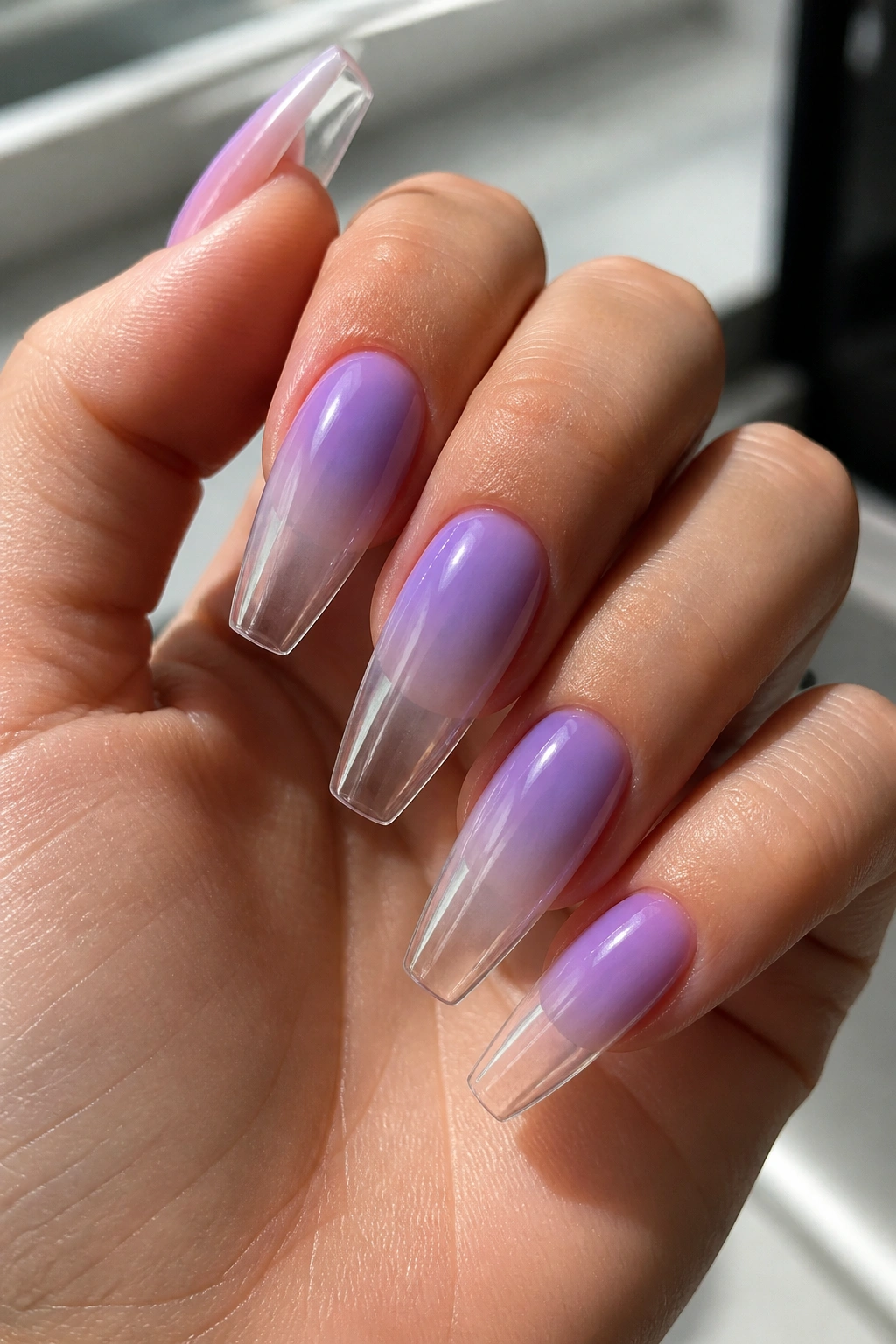
This one has a little more shape play, though it still stays soft. The color begins at the cuticle or mid-nail in a pale lavender, then fades into a transparent tip. On coffin nails, that clear end makes the shape feel lighter and a touch airier than full-coverage polish.
The design works best on medium length. Short nails do not leave enough room for the fade and the clear tip to read separately. Extra-long nails can carry it, though the soft look shifts toward statement nails once the transparent edge gets too long.
You can build this set in two ways:
- With clear extensions and lavender blended over the nail bed area
- With builder gel over a natural nail, then a transparent polish effect at the tip
- With a milky lavender acrylic fade that gets thinner toward the edge
A glossy top coat is non-negotiable here. The whole design relies on light moving through that tip. Matte kills that depth.
I also like a tiny line of silver foil sealed near the fade point on one accent nail, though not everyone will. If you want the gentlest version, leave the clear tip alone and let the transparency do the talking. It already has enough character on its own.
10. Pale Lavender with a Single Gold Stripe
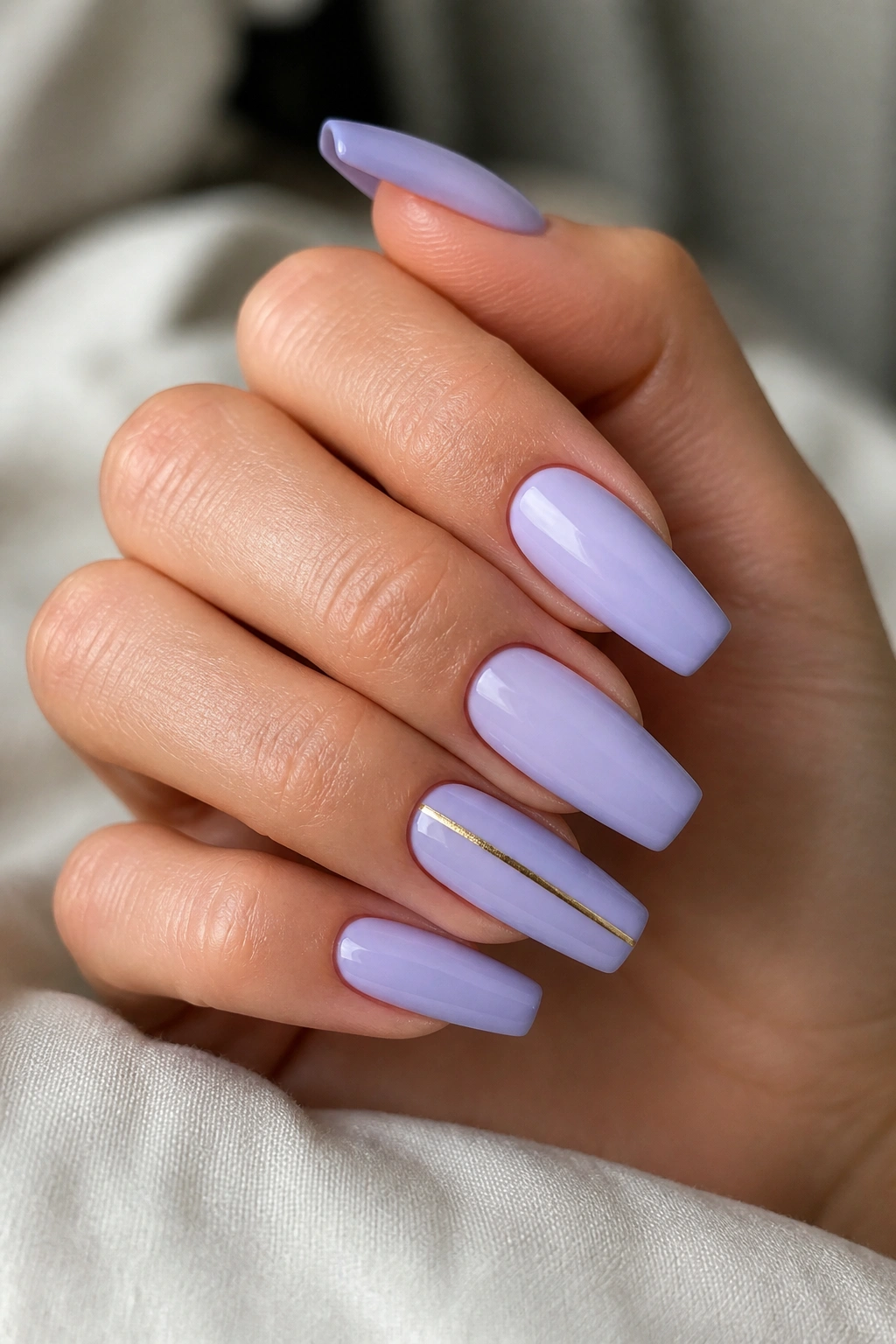
No floral art, no ombré, no pearl powder—just a soft lavender base and one fine metallic line. That restraint is why it works.
A single gold stripe placed vertically near one side of the nail can make pale lavender coffin nails look cleaner and more deliberate. Horizontal stripes tend to shorten the nail. Diagonal lines can work, though they add more movement and less calm. Vertical placement stays sleek and lengthens the shape.
The stripe should be thin. Think thread, not ribbon. Nail tape under top coat works, though hand-painted metallic gel often looks better because it sits flatter against the nail.
I would use this on two fingers per hand at most. Ring finger and thumb is a good pairing. Full coverage on all ten starts to look graphic, and that pulls the set away from the soft look promised by lavender in the first place.
Gold changes the feel of the purple too. Silver makes lavender look cooler. Gold makes it read warmer and a little creamier, especially when the base has a pink undertone. If you wear gold jewelry most days, this manicure ties into the rest of your hand without trying too hard.
11. Milky Lavender Chrome
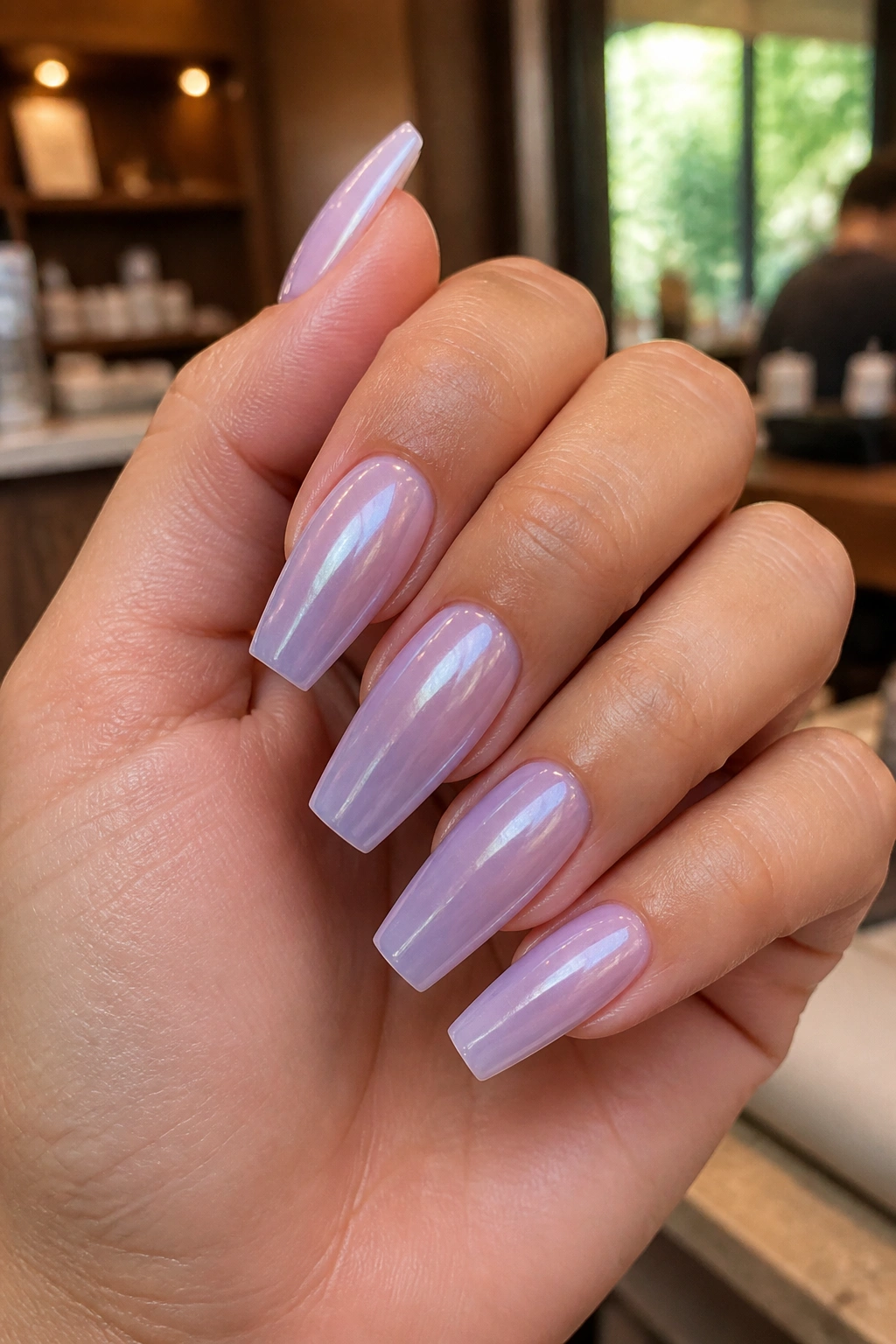
Unlike pearl glaze, which looks hazy and powder-soft, lavender chrome brings a smooth reflective finish. The trick is to keep the base milky so the final result stays soft rather than space-age.
Start with a semi-sheer lavender that has some white mixed into it. Rub a light chrome powder over a no-wipe top coat. What you want is reflection with blur—not a mirrored helmet finish. On coffin nails, the contrast between the sharp shape and the softened reflection creates a cool balance.
This style works when you want your nails to feel dressed up without using rhinestones or 3D art. It catches restaurant lighting, candlelight, and daylight in different ways, which keeps the manicure from feeling flat across a full week or two of wear.
People often think chrome equals bold. Not always. A soft base changes the whole mood.
If you go this route, ask the tech to keep the chrome layer light. One pass can be enough. Heavy rubbing packs in too much pigment and makes the finish look silver instead of lavender. Cuticle prep also matters more here because reflective surfaces show every uneven edge.
Who does this suit best? Anyone who likes clean shapes, smooth surfaces, and a manicure that has polish without lace, flowers, or tiny painted details.
12. Soft Marble in Lilac and White
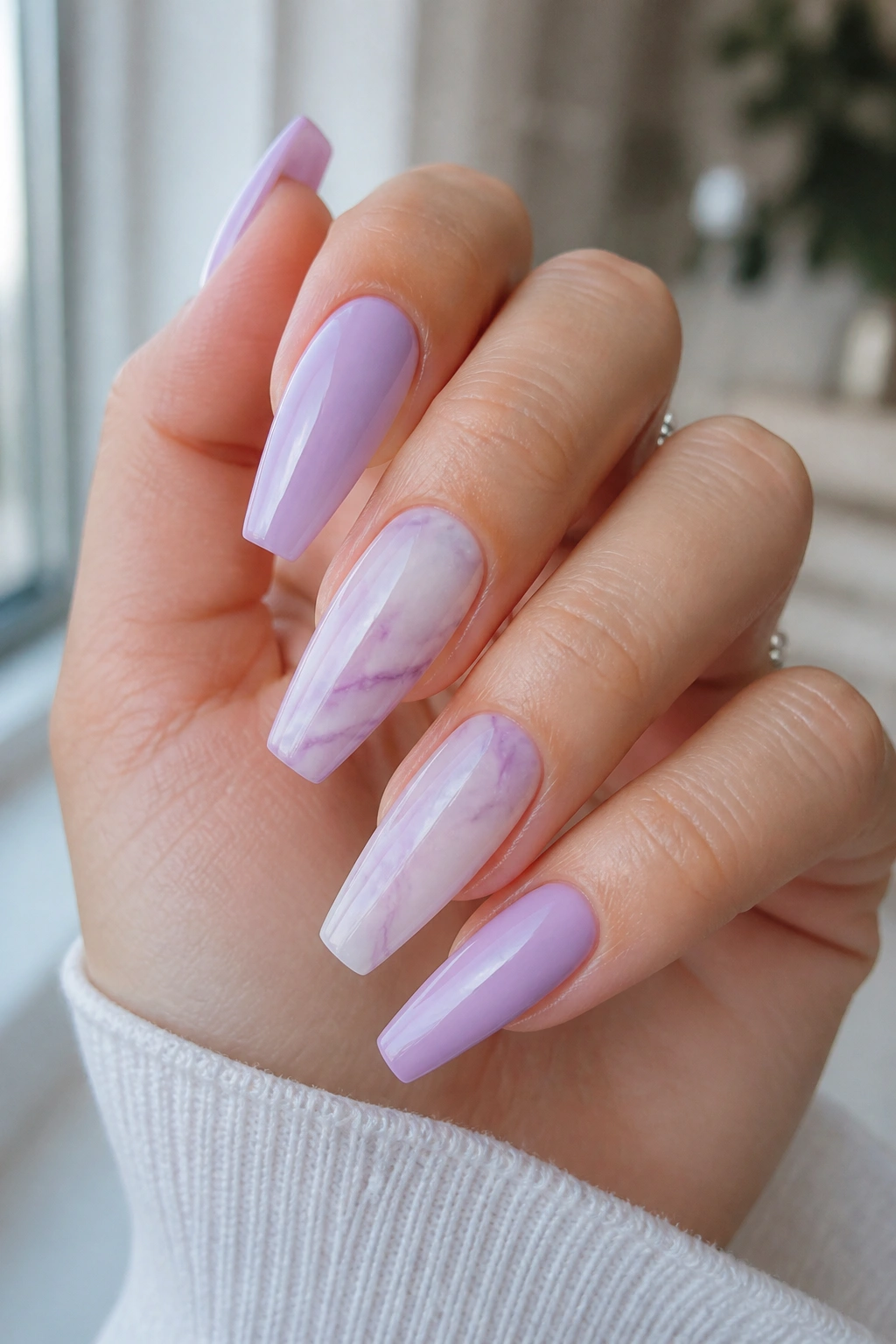
Marble nail art can look busy fast. The softer version uses white and lilac veining with lots of open space, not thick swirls covering every inch of the nail.
What makes this marble feel gentle
The base should stay sheer or milky, then one or two thin threads of lilac and white get dragged through uncured gel with a liner brush or a fine needle. The movement needs to stay loose. If every line is neat, the nail loses the stone effect. If there are too many lines, it starts looking muddy.
I like this design most when only two or three nails carry the marble and the rest stay plain lavender. That mix gives the eye somewhere to rest.
Smart ways to keep it clean
- Use one pale purple and one soft white, not four shades fighting each other.
- Leave negative space in the marble pattern so the base can still show through.
- Choose gloss over matte, since gloss gives the veining more depth.
- Keep the pattern on middle and ring fingers and leave the pinky alone.
Done well, this looks like a washed slice of stone, not a watercolor project. That distinction matters.
13. Lavender Sweater Texture
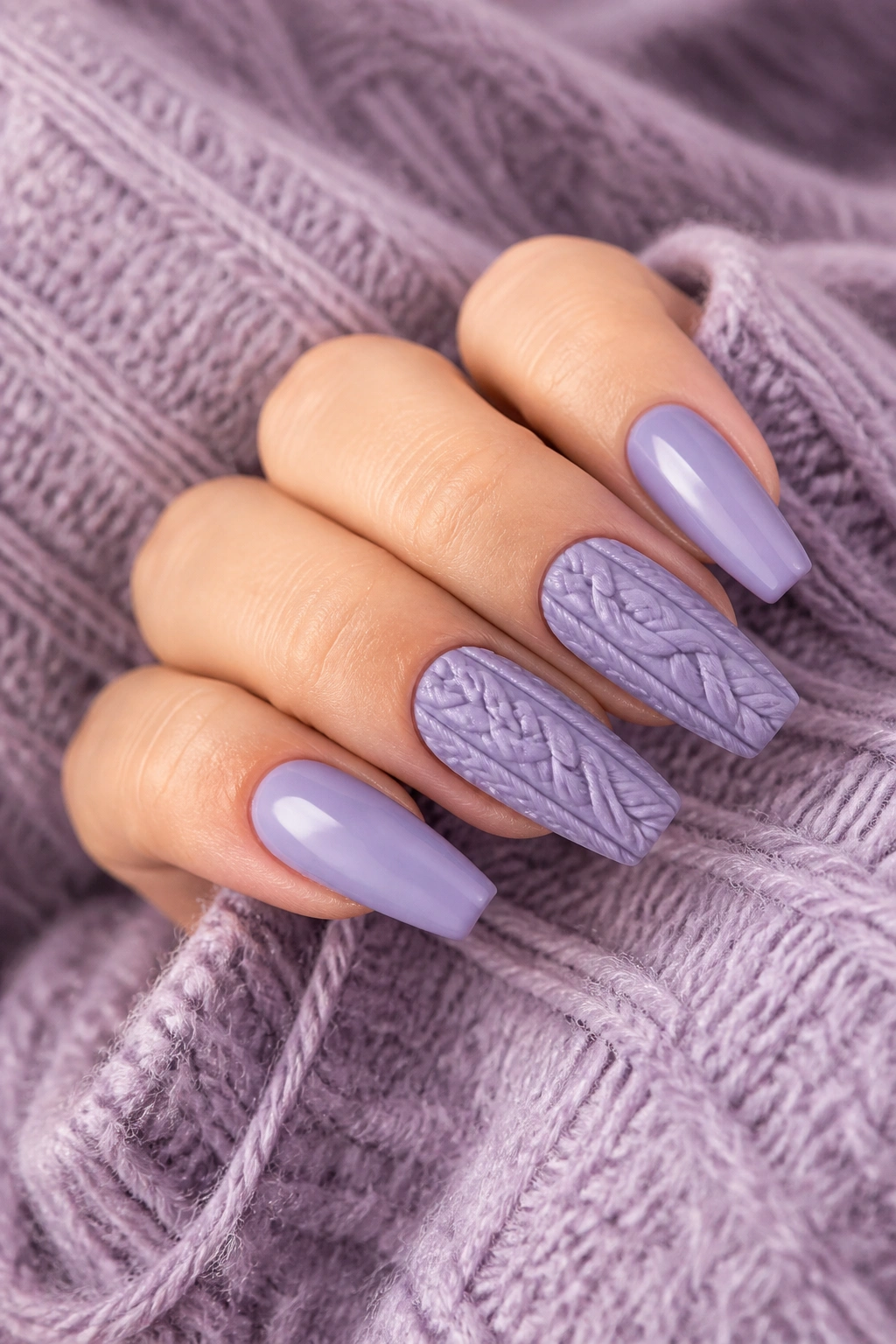
This is the coziest idea on the list, though it needs a steady hand and a little self-control.
A sweater texture manicure uses raised gel lines to mimic knit patterns—braids, little dots, cable twists—over a lavender base. On coffin nails, that texture can look soft and tactile, almost like your nails are wearing a tiny piece of cashmere. The mistake is piling it on every finger with thick, puffy detail. Then it turns bulky.
The better move is a monochrome set in one muted lavender shade, with raised texture on one or two accent nails and flat glossy or matte polish on the rest. Monochrome keeps the texture from looking fussy. A dusty or creamy lilac reads better than a bright purple here.
I prefer this style in matte because the raised pattern shows more clearly when the light is diffused. Still, if you hate the feel of matte top coat, a satin finish can split the difference.
Raised art also needs extra thickness, which means shorter or medium coffin nails carry it better than long ones. Long textured nails can feel heavy at the tip.
This is not the manicure I would pick for a beach trip or a week of constant handwashing. Textured surfaces hold onto lint and makeup more than flat nails do. Wear it when you want that plush, knitted look and do not mind giving the set a quick brush clean at the end of the day.
14. Lavender Aura Nails
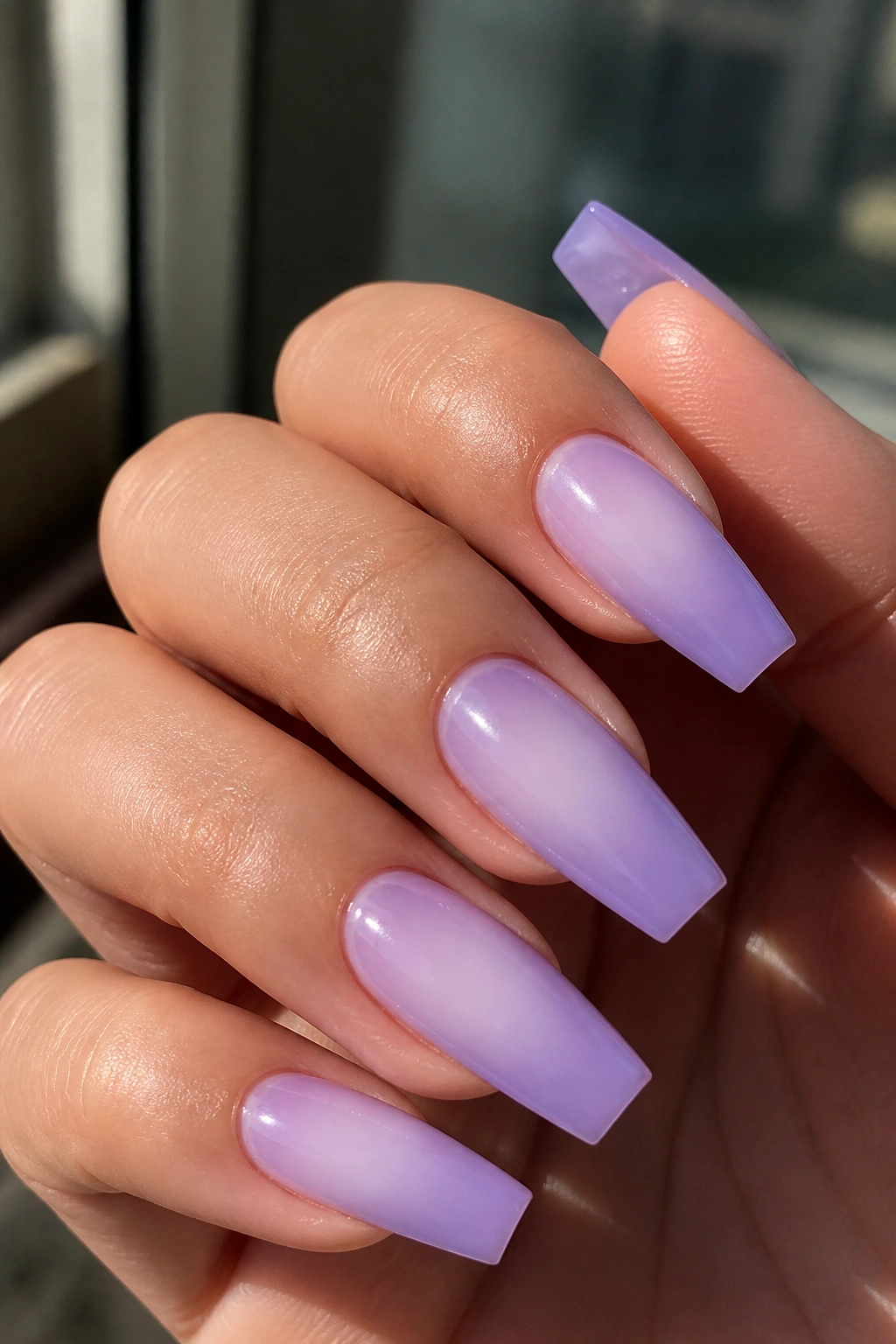
Can aura nails look soft on a coffin shape? Yes—when the center glow stays pale and the outer edge stays even paler.
Aura nails often go bold, with hot pink centers and dark borders. A lavender version takes the opposite path. Think of a diffused lilac bloom at the center of the nail, melting into a milky or nude-lavender halo around it. The effect is airy, blurred, and a little dreamy without crossing into loud territory.
How to keep aura nails from looking harsh
The color spread should stay broad. A tiny concentrated dot in the center can look like a bruise. What you want is a soft cloud that covers roughly one-third to one-half of the nail, feathered outward with an airbrush or sponge.
Choose shades close to each other. A white-lavender base with a medium lilac center gives enough contrast. Dark purple edges do not.
You can wear aura nails on all ten fingers if the blend stays light. I would still keep the length moderate. Too much length plus a central glow can make the shape feel sharper than the color intends.
For anyone who wants a lavender set with a little more mood and less floral sweetness, this is a strong pick.
15. Tiny White Daisies on Pastel Lavender
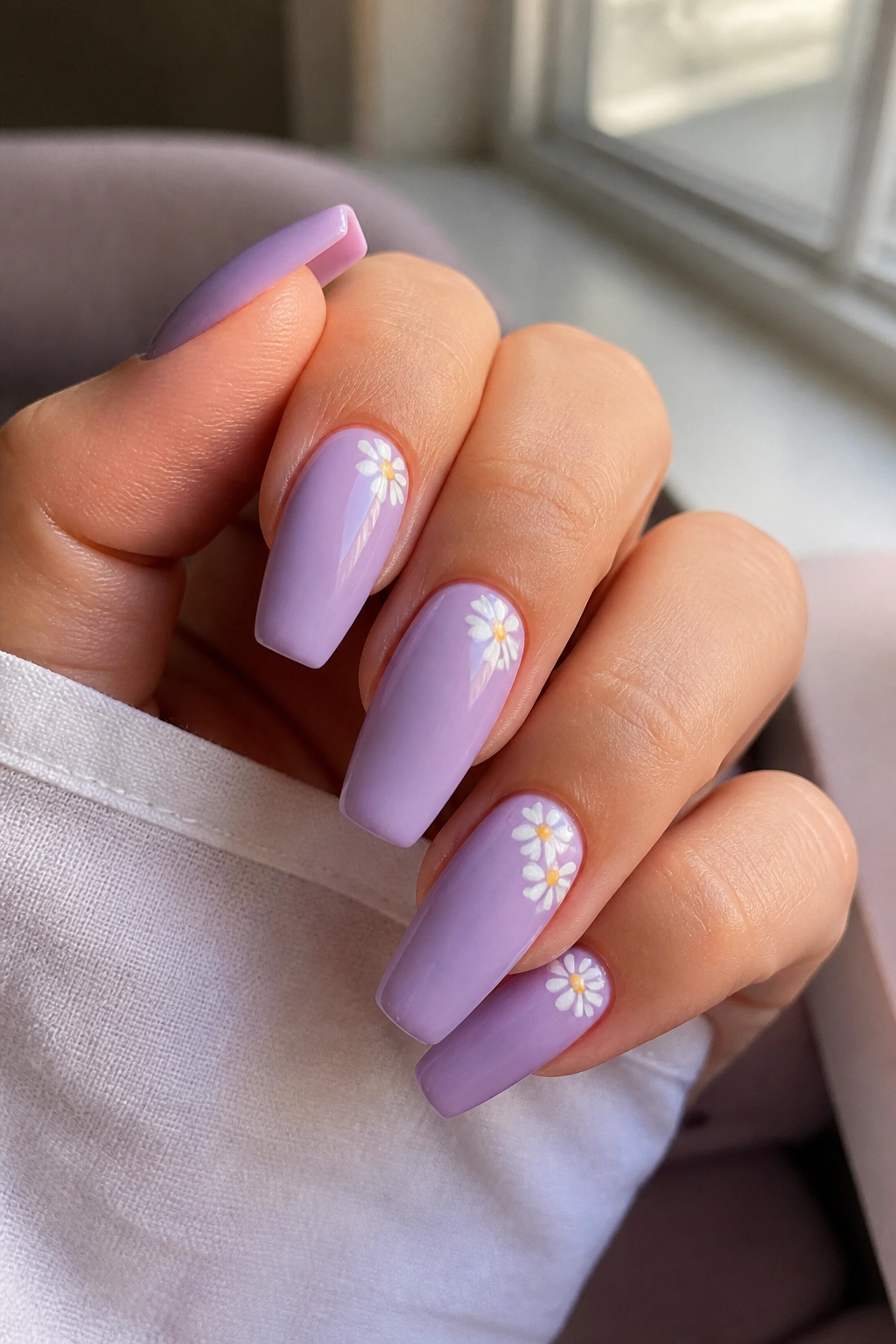
A daisy manicure can slip into cartoon territory fast. Tiny scale is what saves it.
Use a pastel lavender base—milky or semi-opaque—then paint mini white daisies with small yellow centers on two or three nails. One flower near the cuticle, maybe two scattered off-center, is enough. Full bouquets across all ten nails bury the softness under too much detail.
The reason this design works is contrast control. White petals stand out against lavender, though the shapes are round, light, and familiar. That keeps the look gentle. A glossy top coat helps the art sink into the base a bit more, which makes the flowers look less stamped-on.
Placement matters more than drawing skill. I like daisies clustered near one corner of the nail rather than centered. Center placement can make the design feel stiff. Off-center flowers leave negative space, and that blank space keeps the manicure airy.
If you want a cleaner version, paint daisies only on the ring fingers and leave the other eight nails plain lavender. If you want a sweeter set, add one small bloom on each thumb.
This one is easy to underestimate. Done with a light hand, it gives you the softest kind of nail art—the kind people notice after a second look, not from across the room.
Final Thoughts
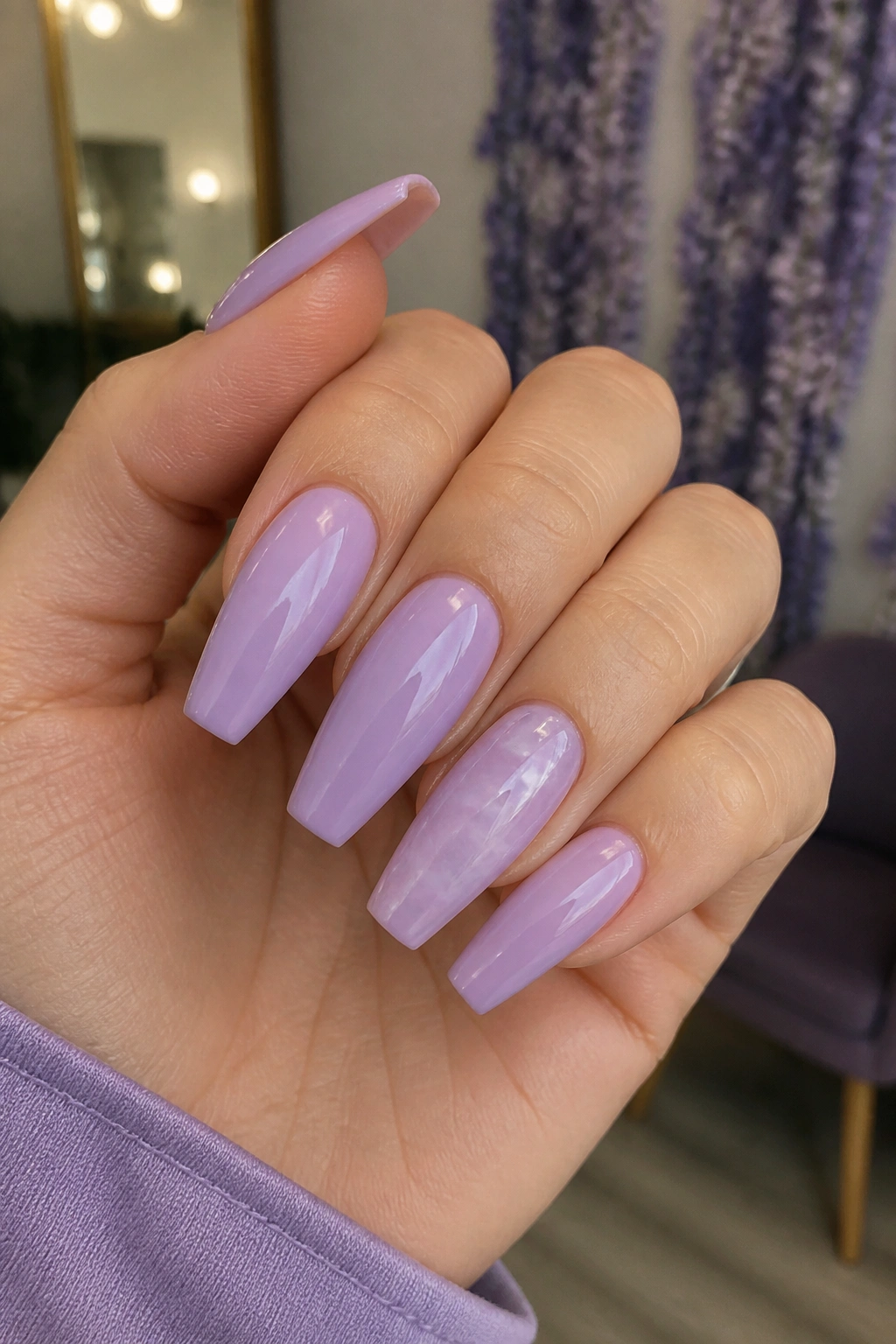
Soft lavender nails work best when the shade, finish, and shape all pull in the same direction. A pale purple alone will not do the job. The finish might need to be milkier, the length might need to come down a few millimeters, or the art might need to be cut in half.
If I had to narrow the list to the three most wearable options, I would start with milky lavender gloss, lavender French fade, and short dusty lavender coffin nails. Those sets hold up across workdays, weekend clothes, and different skin tones with the least fuss.
Then again, nails are one of the few places where a small shift changes the whole mood. Swap gloss for matte. Add one gold line. Turn the base sheer. Suddenly the same lavender feels new again.
That is the fun of it.