
Butter yellow on almond nails can go one of two ways: chic and soft, or oddly chalky and flat. The difference usually comes down to the exact shade, the finish, and how much detail you pile on top of it. A creamy yellow with a tiny bit of warmth looks polished. A harsh, lemony tone can start to feel busy fast.
The best butter yellow almond nail ideas work because the shape does part of the styling for you. Almond nails already have that tapered, clean line, so a gentle yellow reads as intentional instead of childish. That’s why this color looks so good with a glossy wash, a fine French tip, a slim swirl, or even a little chrome dusting. It has room to breathe.
Creamy yellow also plays nicely with skin tone in a way brighter shades don’t always manage. On cooler undertones, it can act like a soft contrast; on warmer ones, it can look like sunlit cream. And because almond nails have length without the bluntness of a square edge, they make pale yellow feel lighter on the hand.
If you’ve been saving yellow nail photos and wondering why some look expensive while others feel off, the answer is usually in the details. Tiny details. A 1 mm tip. A milky base. A softer shine. Those are the things that make butter yellow nails worth wearing.
1. Creamy Butter Yellow on Classic Almond Nails
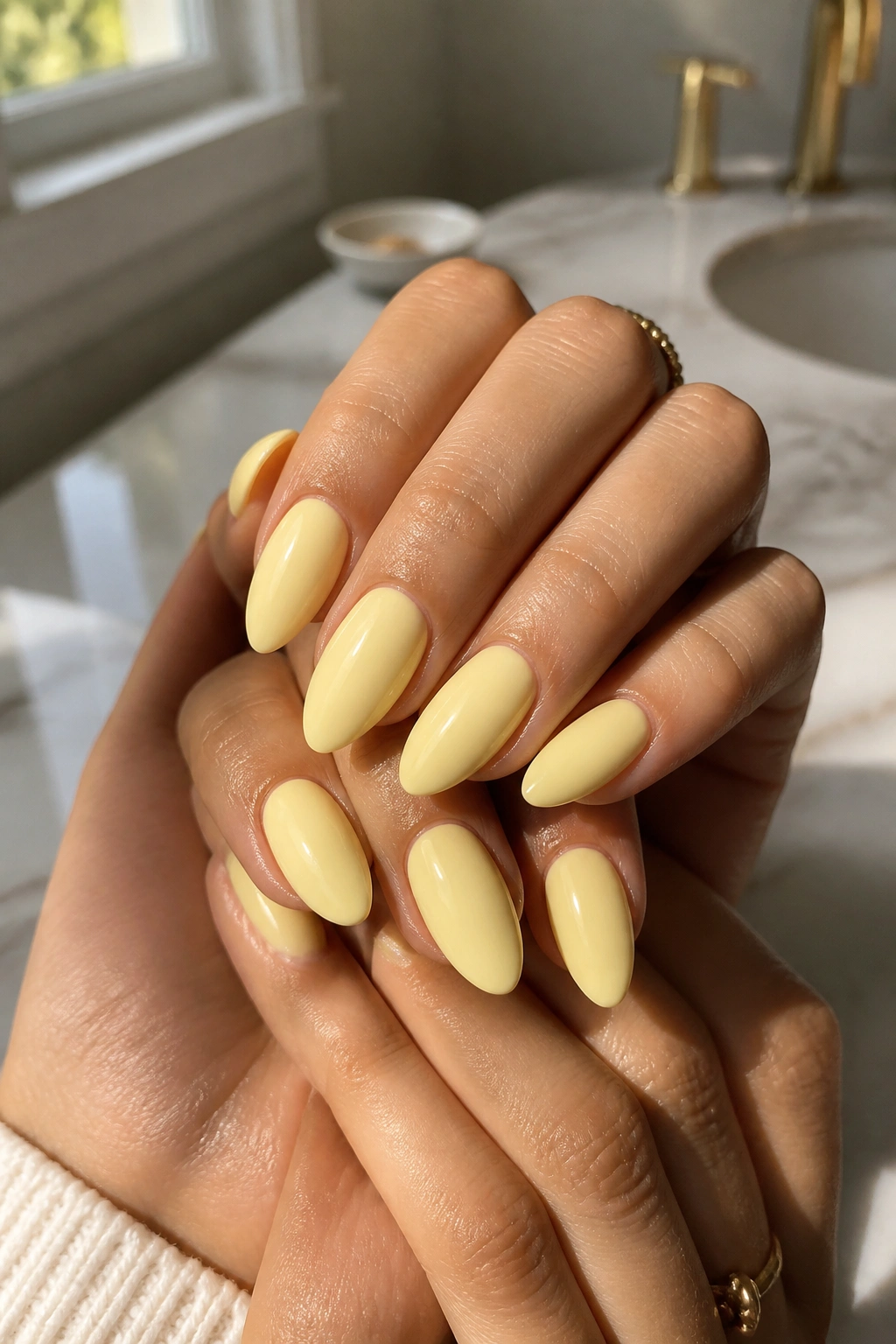
This is the version I keep coming back to. No art, no accent, no extra fuss—just a smooth, opaque butter yellow laid over a clean almond shape. The trick is choosing a shade that looks like softened custard instead of highlighter ink. That slight creaminess is what makes the whole manicure feel wearable.
Why It Works
Almond nails already have movement built into the shape, so a solid color doesn’t need to do much heavy lifting. The curve at the tip keeps yellow from looking too hard. A glossy top coat helps too, because matte yellow can start to look dusty if the pigment is too pale.
I’d call this the safest choice for people who want yellow but don’t want nail art shouting across the room. It’s tidy. It’s bright enough to feel fresh, but not so loud that it fights with rings, denim, or a tailored jacket.
- Best on medium-length almond nails
- Looks strongest with two thin, even coats
- A ridge-filling base coat helps the color lay flatter
- High-shine top coat keeps the shade from going dull
My favorite version: a creamy butter yellow with a slightly sheer first coat, then full coverage on the second. That little bit of depth makes it look less like flat paint and more like polished lacquer.
2. Butter Yellow Micro French Tips
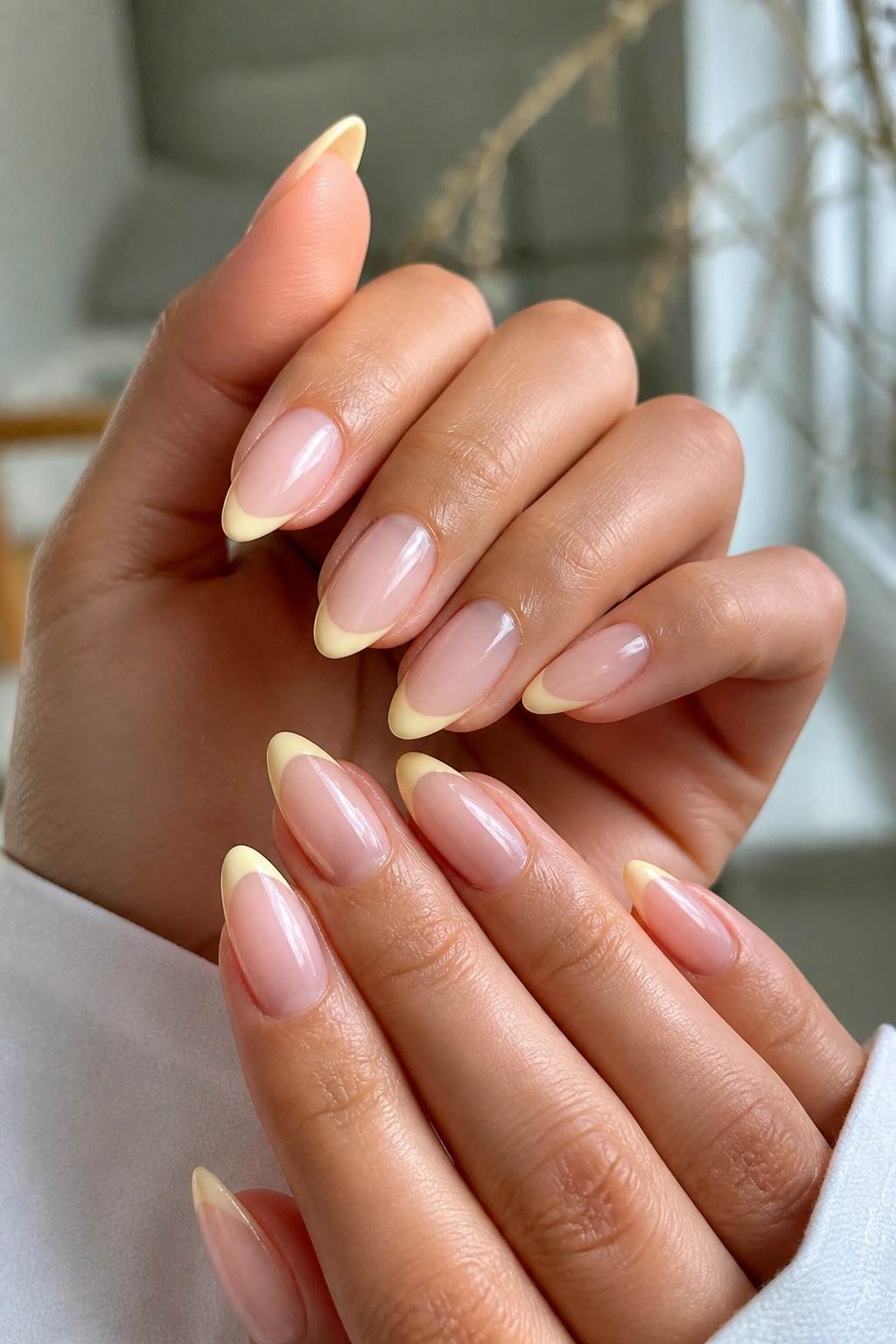
A thin yellow French tip on almond nails is one of those ideas that looks more expensive than it has any right to. The line at the edge is tiny—often just 1 to 2 millimeters—but that’s enough to make the manicure feel crisp. The nude base keeps it light, and the yellow tip gives you color without covering the whole nail.
You can make this feel softer by using a sheer pink-beige base. Or you can push it a little cleaner with a milky nude base that leans cool. Either way, the almond shape helps the tip look longer and more graceful than it would on a square nail.
I like this most on shorter almond nails, actually. It stops the design from feeling delicate in a fragile way. The small tip gives the nail a neat edge, and the rest stays open and airy.
No heavy art needed here. The whole point is restraint.
3. Butter Yellow Ombré Into Milky Nude
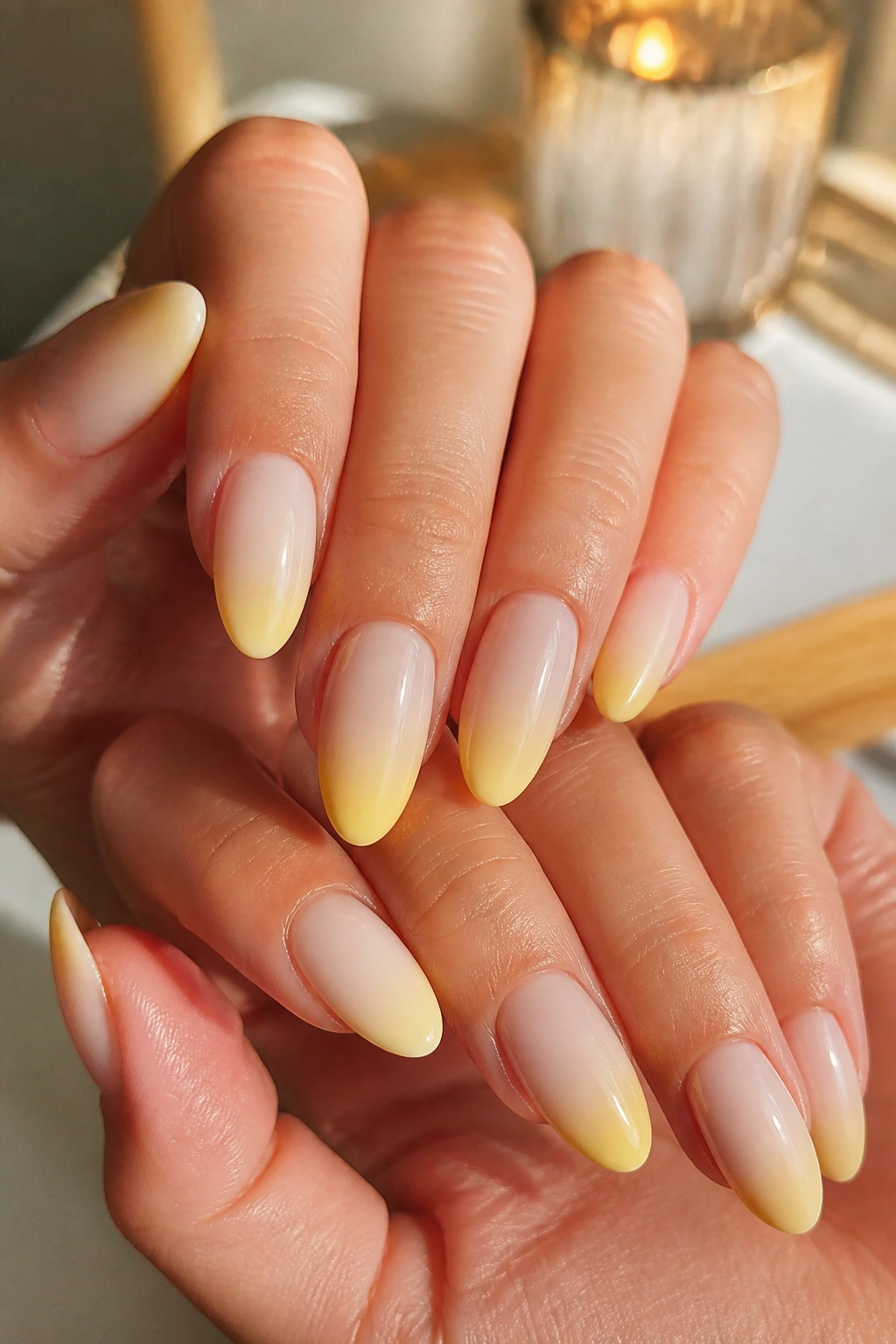
Can yellow fade into nude without looking muddy? Yes, if the blend stays soft and the colors stay close in value. A butter yellow ombré on almond nails is one of the best choices when you want color but don’t want a hard line anywhere.
How I’d Ask for It
Ask for a milky nude base, then a butter yellow fade that starts around the mid-nail or tip area. On longer almond nails, the gradient has enough room to stretch. On shorter ones, keep the fade tighter so it doesn’t eat up the whole nail bed.
The blend matters more than the brightness. A sponge can work, but a fine ombré brush gives a smoother finish if the tech knows what they’re doing. If the yellow is too saturated, the fade can look cloudy instead of soft.
Best Ways to Wear It
- Pair it with a glossy top coat, not matte
- Keep the cuticle area sheer so the nail grows out cleanly
- Use it on all 10 nails if you want something quiet
- Put it on 2 accent nails if you want a little drama
This is one of those styles that looks especially good with gold jewelry. Not because it’s trying to match, but because the tones sit in the same warm family.
4. Gold Foil Flecks on Butter Yellow Almond Nails
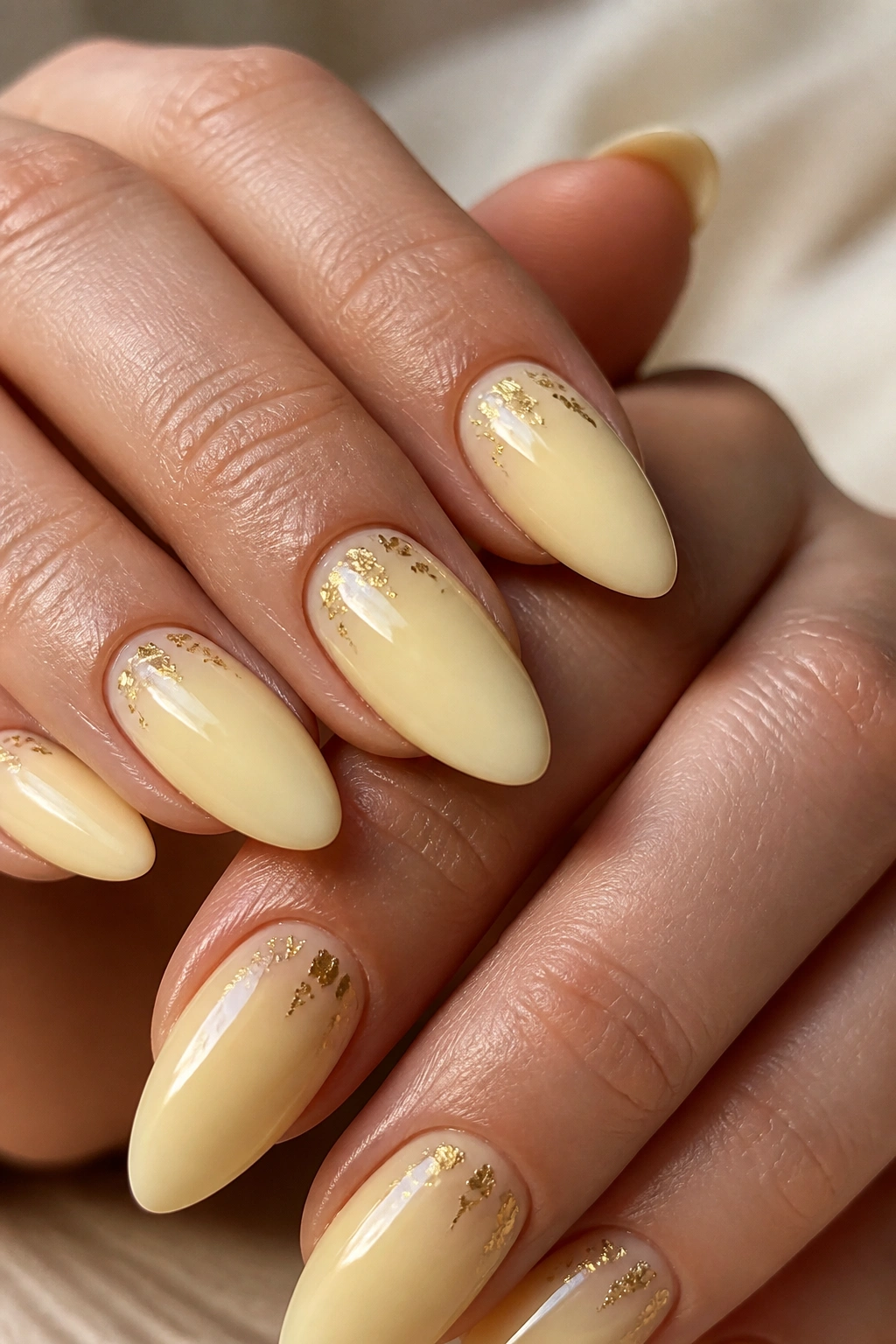
A tiny bit of gold foil changes everything. The manicure goes from sweet to slightly dressed up, and the yellow suddenly feels more grown-up. On almond nails, the foil works best when it’s scattered lightly near the cuticle or tucked in one corner, almost like something caught in wet varnish.
I’ve seen versions with too much foil, and they always lose the charm. You don’t want a full metallic storm. You want the kind of irregular shimmer that looks accidental from far away and deliberate up close.
A sheer butter yellow base is the nicest way to do this. The foil sits better on translucent color than on a thick opaque layer, because you can still see depth underneath. If you want the look to stay soft, keep the foil pieces small and flat. No chunky flakes.
The result is a manicure that looks calm in daylight and a little richer under indoor light. That’s a good place to be.
5. Matte Butter Yellow Almond Nails
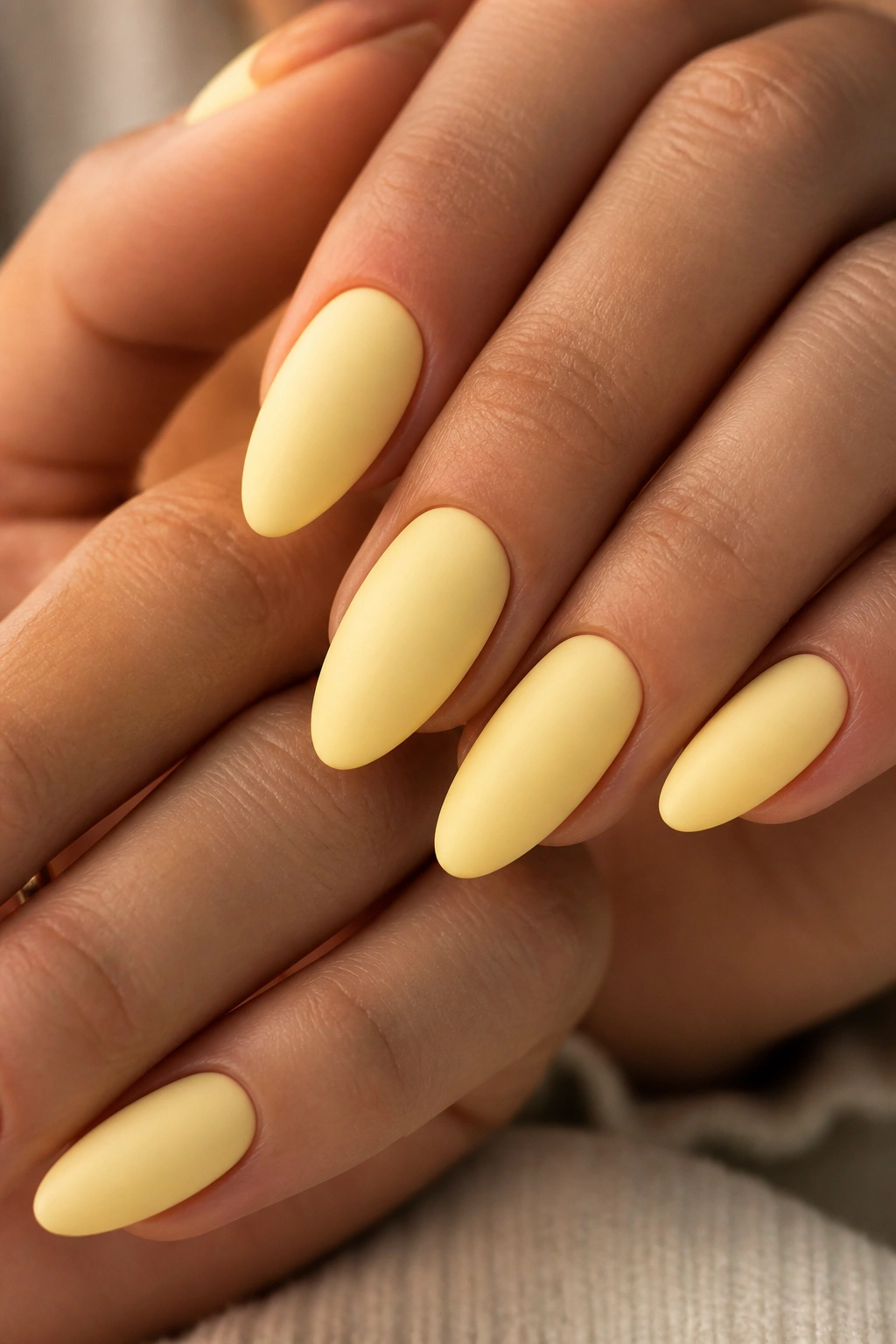
Matte yellow is riskier than glossy yellow, and that’s exactly why I like it. It can look velvety and modern, or it can go flat and chalky if the shade is too pale. So the polish itself matters. You want a butter yellow with enough warmth to survive the matte finish.
What Makes It Different
The matte top coat takes the shine out of the equation, which means the shape has to do more work. Almond nails help here because the soft taper keeps the design from looking boxy. A flatter nail shape can make matte yellow feel stubborn. Almond softens it.
The finish also changes how the color reads. Glossy butter yellow can feel sunny. Matte butter yellow feels more like pastel suede. That makes it a nice choice if you wear a lot of linen, knitwear, or neutral basics and want your nails to sit in the same soft lane.
A Few Things I’d Watch
- Don’t use a yellow that’s too chalky
- Keep the nail surface smooth before top coat
- Use thin coats so the matte finish doesn’t drag
- Skip heavy texture; it fights the softness
If you’ve only ever worn glossy pastels, this one surprises people. It’s quieter. And somehow that makes it stronger.
6. Tiny Daisy Accents on Butter Yellow Tips
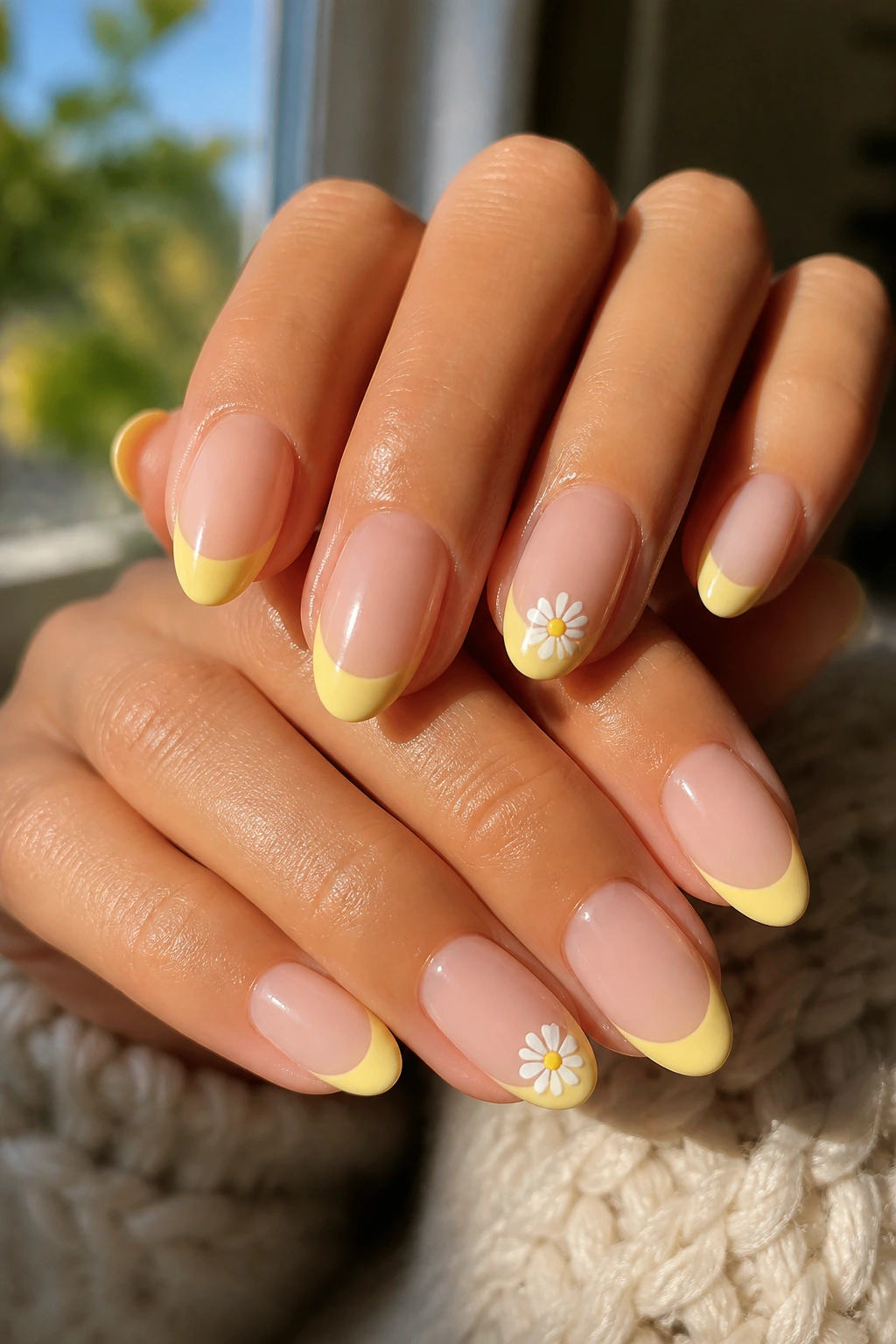
Daisy nail art can get cheesy fast, so I like it best when it’s used with restraint. One or two tiny white daisies on butter yellow almond nails is enough. The whole manicure starts to feel fresh and a little playful without drifting into full spring-craft territory.
Why It’s Better Than a Full Floral Set
A full set of flowers can be cute, but it can also feel crowded on almond nails, especially if the nails are long. Two accent nails on a buttery yellow base usually look cleaner. The rest can stay solid or milky nude, which gives the flowers room to breathe.
The petals should be small. Think pinhead-sized centers with five narrow white petals. You want them to sit near the side of the nail or close to the tip, not smack in the middle where they turn into the only thing you notice.
This works best when the yellow underneath is soft and opaque. If the base is too translucent, the flowers can look a bit lost. I’d keep the rest of the set simple, maybe with one tiny yellow dot on the ring finger and call it done.
That’s enough. More than enough, really.
7. Yellow Swirls on a Sheer Base
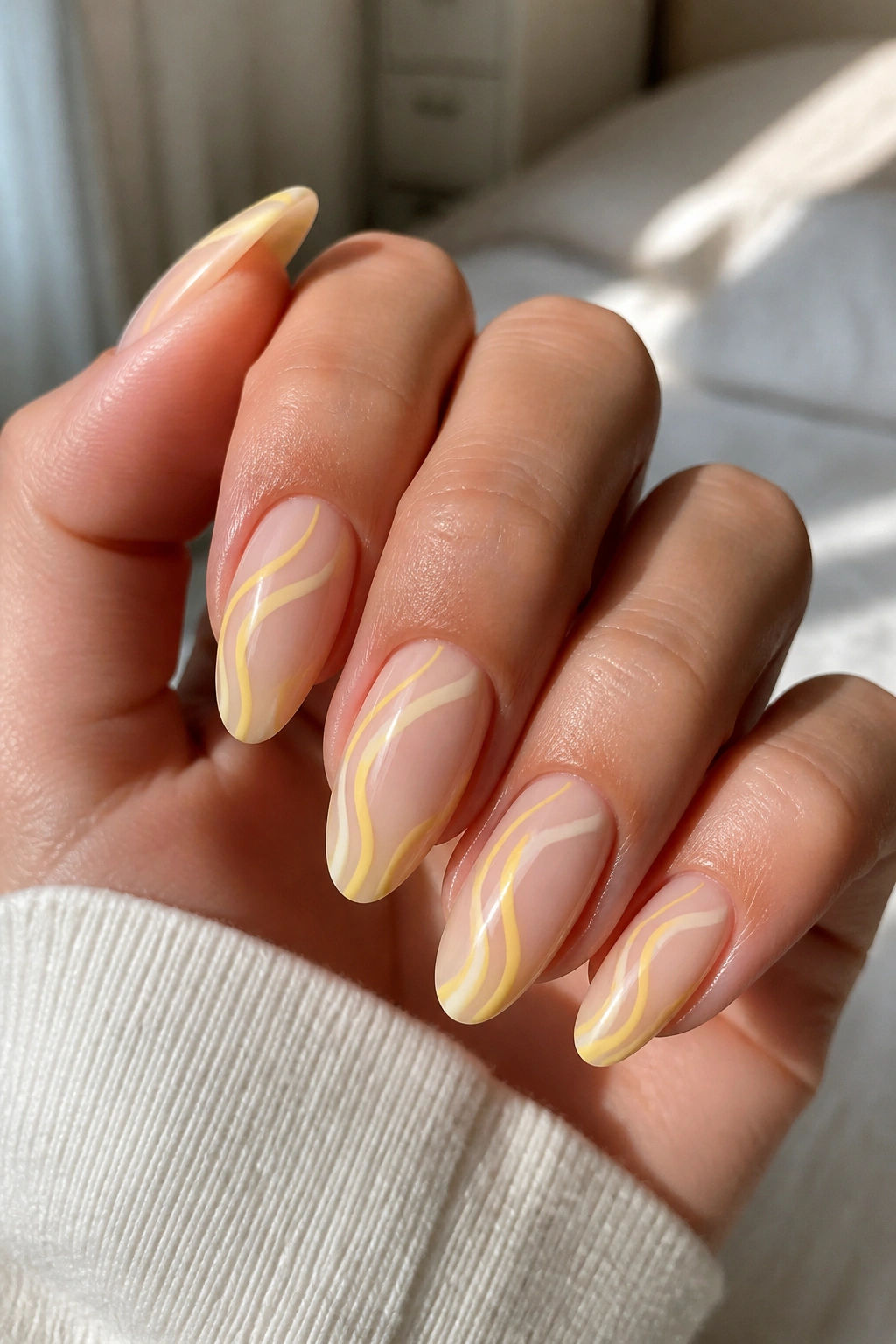
A swirl design gives butter yellow some movement, which is handy if you like a manicure that feels a little more styled than a plain solid but still doesn’t cross into busy territory. On almond nails, the curve of the swirl can echo the curve of the tip. That visual repetition is what makes the whole thing click.
I like this with a sheer nude or pale pink base. Then the yellow lines can drift across the nail in 2 or 3 thin passes, not thick ribbons. If the swirl is too wide, the manicure loses its lightness. Thin lines keep it airy and a little modern.
What to Ask for at the Salon
- A sheer nude or pink-beige base
- Two or three slim butter yellow swirls per nail
- Slightly different swirl placement on each finger
- A glossy top coat to smooth the line work
The nice thing about swirl nails is that they’re forgiving. The pattern does not need to be identical on every finger. In fact, a tiny bit of mismatch makes it look hand-done in the best way.
8. Butter Yellow Aura Nails
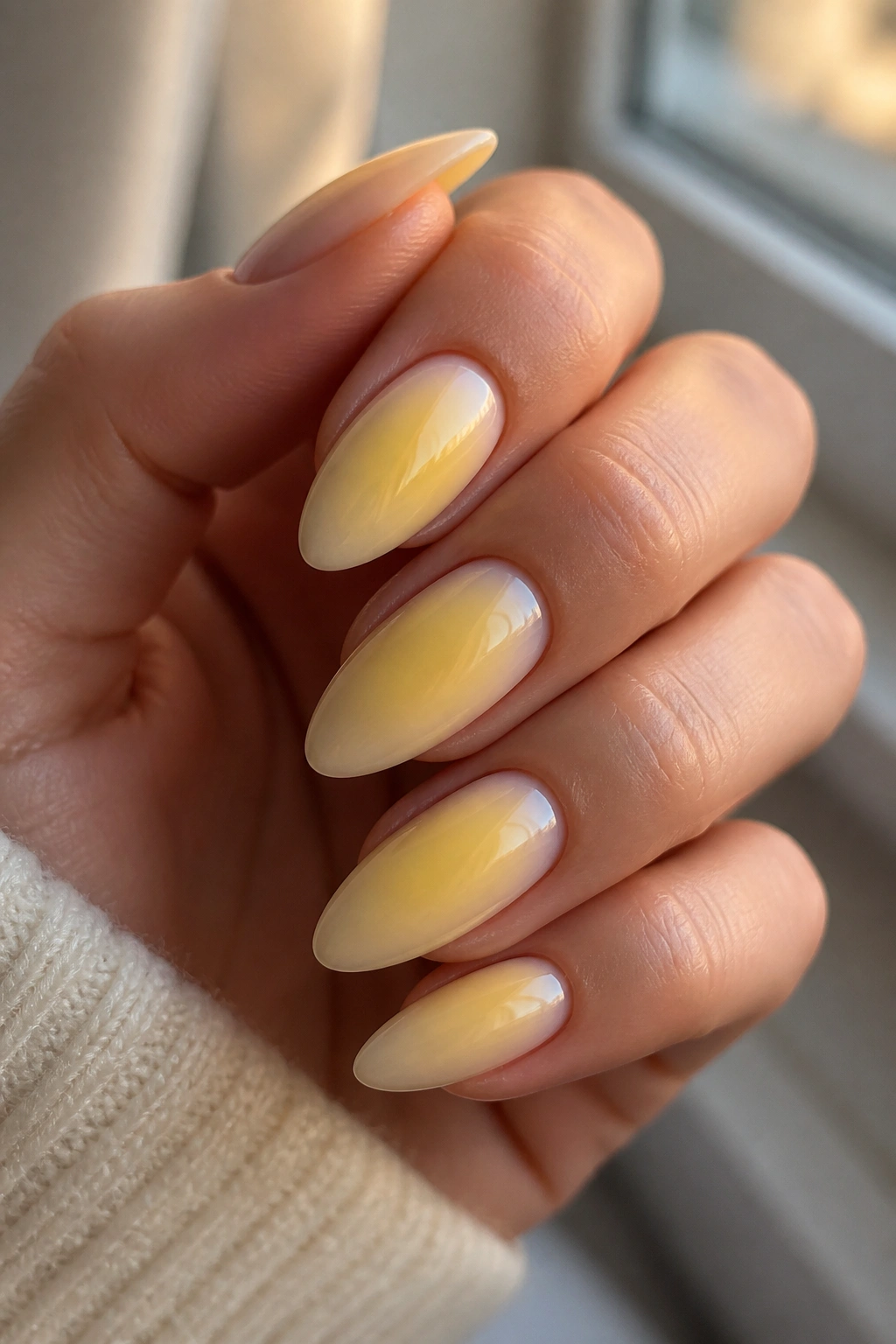
Aura nails can look overworked when the colors are too loud. Butter yellow solves that problem. The soft center glow works with the color’s gentle tone, so you get a manicure that feels hazy and light instead of neon and graphic.
This style looks best on almond nails because the elongated shape gives the color room to bloom outward. You can keep the center a little more saturated and let the edges fade into a milky nude or translucent pink. Done well, it looks like the nail has its own little halo.
Why It Stands Out
Unlike a solid yellow manicure, aura nails create depth without needing extra art. The color sits in the middle and diffuses toward the sides. That makes the style feel softer than a flat block of color, which is useful if you’re tired of everything looking too neat.
It’s also a good choice if you want something a little dreamy but not sugary. The effect reads modern, not childish. And on almond nails, that matters.
If you wear shorter almond tips, keep the glow tight. Longer nails can handle a wider fade without looking fuzzy.
9. Butter Yellow and White Checkerboard
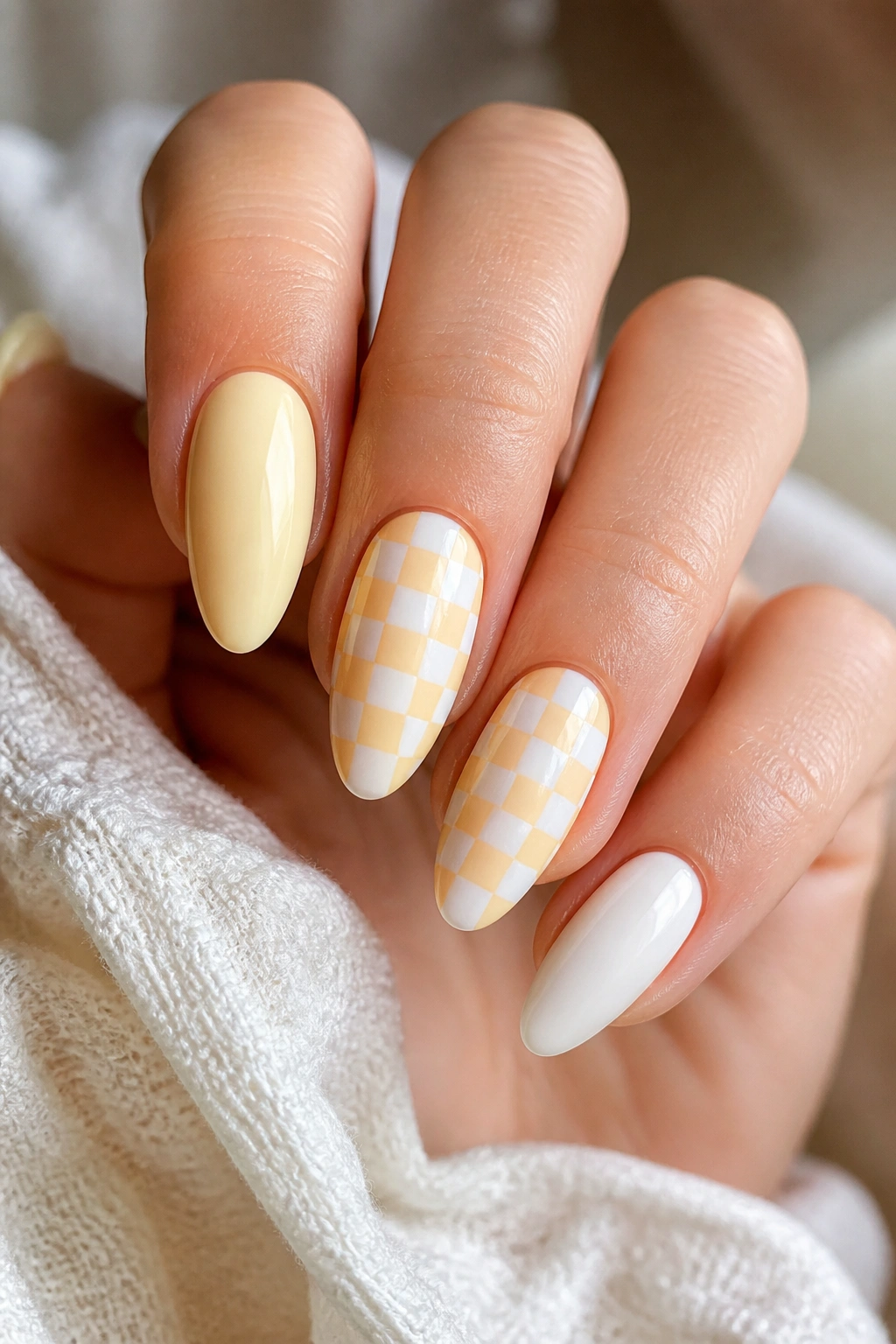
Checkerboard nails sound loud on paper, but a softened yellow-and-white version can be surprisingly wearable. The trick is scale. Small checkers look sharper and more polished than oversized blocks, especially on almond nails where the surface narrows toward the tip.
Would I put the checkerboard on all 10 nails? Probably not. I’d use it on two accent nails and keep the rest solid butter yellow or milky white. That way the pattern has impact without turning the manicure into a costume.
How to Keep It Wearable
- Use small squares, not giant tiles
- Keep the yellow creamy, not neon
- Limit the pattern to 1 or 2 nails
- Balance it with plain nails on the other fingers
The white breaks up the yellow and keeps it crisp. Without that contrast, the checkerboard can blur from a distance. Almond nails help because the tapered tip gives the grid a slight curve, which softens the whole thing just enough.
If you want something that feels a little more fashion-forward than floral art, this is a good lane. Clean, but not boring.
10. Butter Yellow with Sage Green Accents
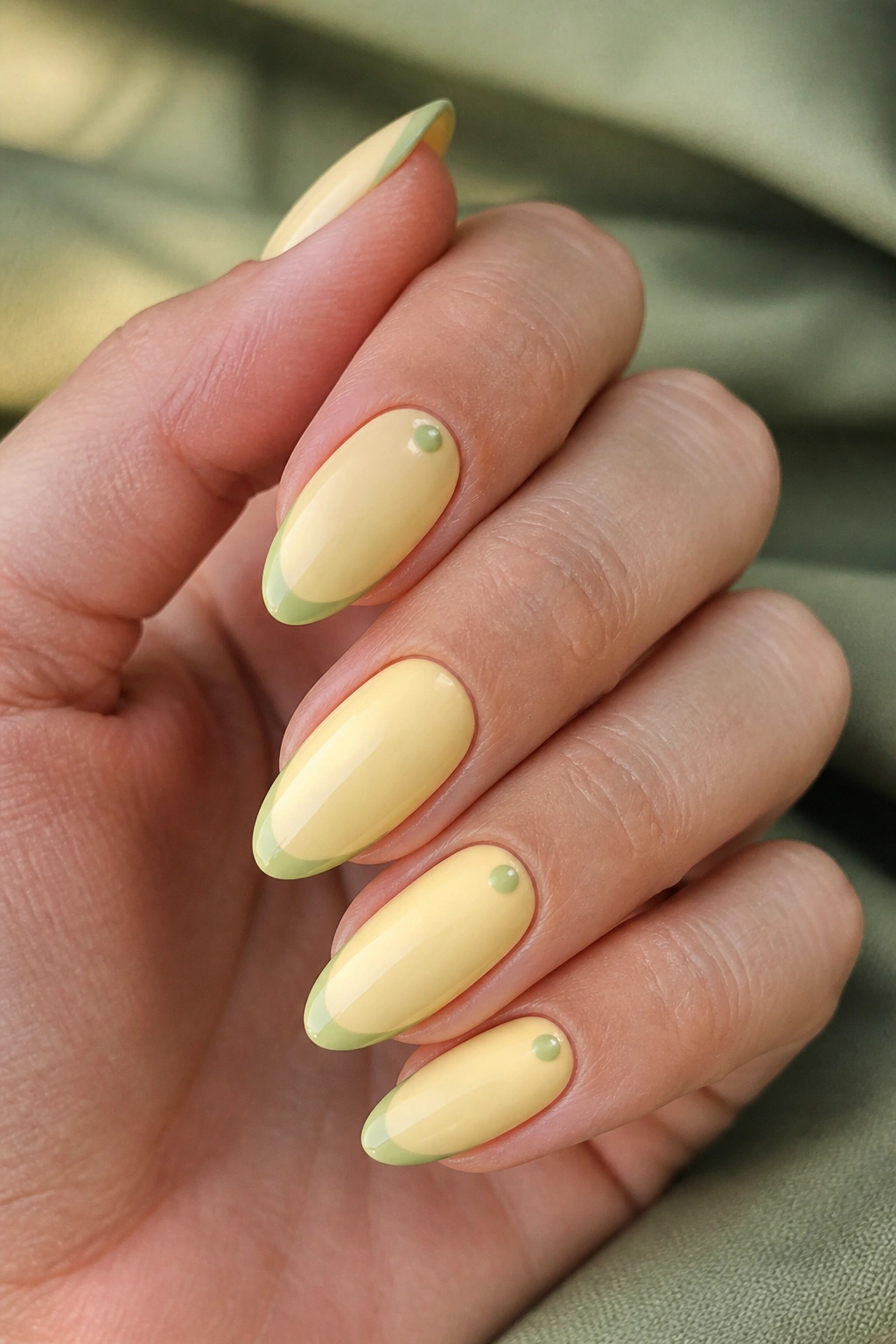
This pairing works because both colors are soft, but they don’t say the same thing. Butter yellow feels warm and creamy. Sage green feels cool and dusty. Put them together on almond nails and the contrast looks calm instead of loud.
A tiny sage stripe near the tip, or a green cuticle dot on a yellow base, is enough. You do not need full half-and-half nails unless you want the manicure to lean more graphic. I actually prefer the smaller touches. They keep the yellow in charge.
The shape matters here too. Almond nails have enough elegance to carry a color pairing that might feel too quirky on a square nail. The soft tip gives the design a little polish. No pun intended, although I’m leaving it in.
This is one of the few yellow manicures I’d happily wear with olive jackets, cream sweaters, or gold rings all at once. The colors play well together without looking matchy in that forced way people sometimes chase.
11. Soft Yellow Marble with White Veins
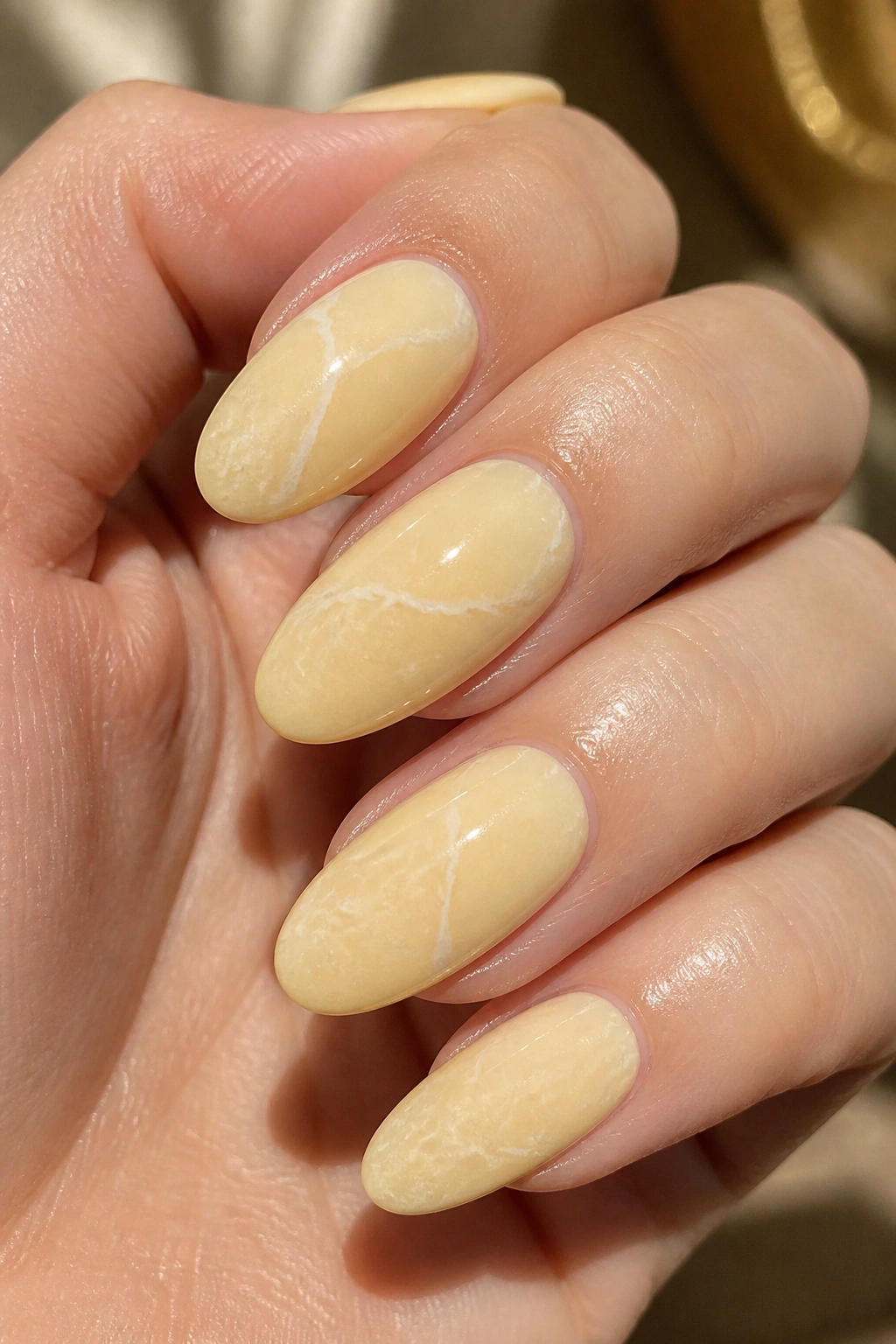
Marble nails can get too busy fast, so the version I like best is the one that barely looks like marble at all. On butter yellow almond nails, that means soft white veining drifting through a pale yellow base, with enough negative space to keep the design calm.
The appeal is in the movement. A little streak here, a soft vein there. Nothing harsh. Nothing too contrasty. The marble effect should feel like a whisper, not a slab of countertop.
Almond nails suit this design because the soft lines of the shape echo the irregular veining. A square nail can make marble feel rigid. Almond keeps it fluid.
I’d keep the white thin and semi-sheer, not opaque. That way the yellow still shows through and the nail has depth. If the veins get too dark or too thick, the manicure loses the airy feeling that makes this version worth doing.
12. Half-Moon Butter Yellow Negative Space
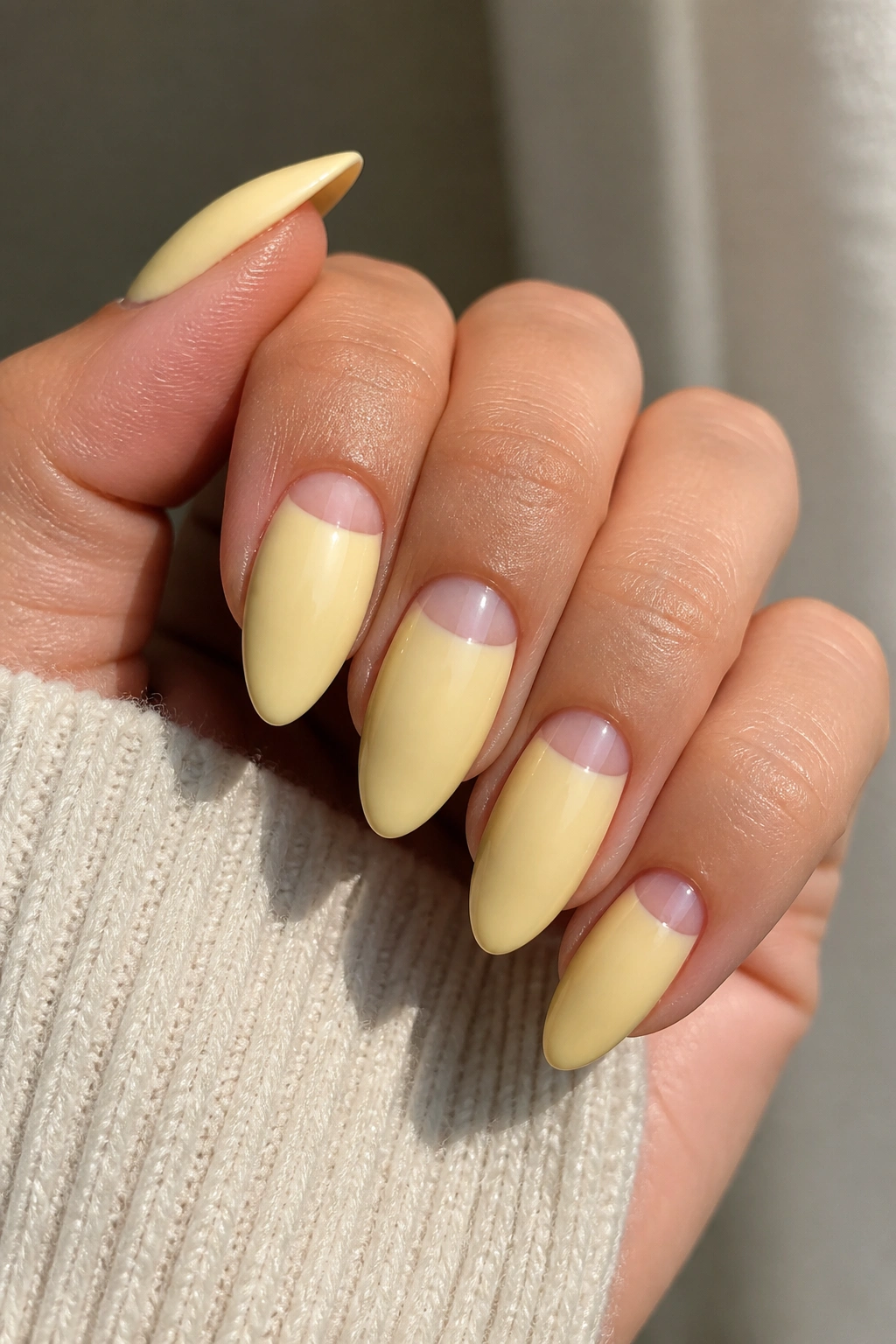
This one feels smarter than it sounds. The half-moon design leaves a crescent of negative space near the cuticle, then fills the rest of the almond nail with butter yellow. It’s the sort of manicure that looks clean from across the room and even better when you notice the shape up close.
Unlike a full solid color, the half-moon gives the nail a little architectural detail. That tiny bare curve at the base also helps with grow-out, which is a nice bonus if you don’t want to rush back for a fill too quickly.
Why It’s a Good Pick
It balances the softness of yellow with a sharper visual edge. That contrast keeps the design from feeling too sugary. If you wear a lot of neutral clothing, this is one of the easiest ways to add color without making your hands the loudest thing in the outfit.
Best for people who want:
- A neat grow-out line
- A more graphic look
- A butter yellow manicure that still feels polished
- A style that works on both short and longer almond nails
I’d keep the crescent clean and slim. Thick half-moons can make the nail look shorter than it is.
13. Butter Yellow Chrome Glaze
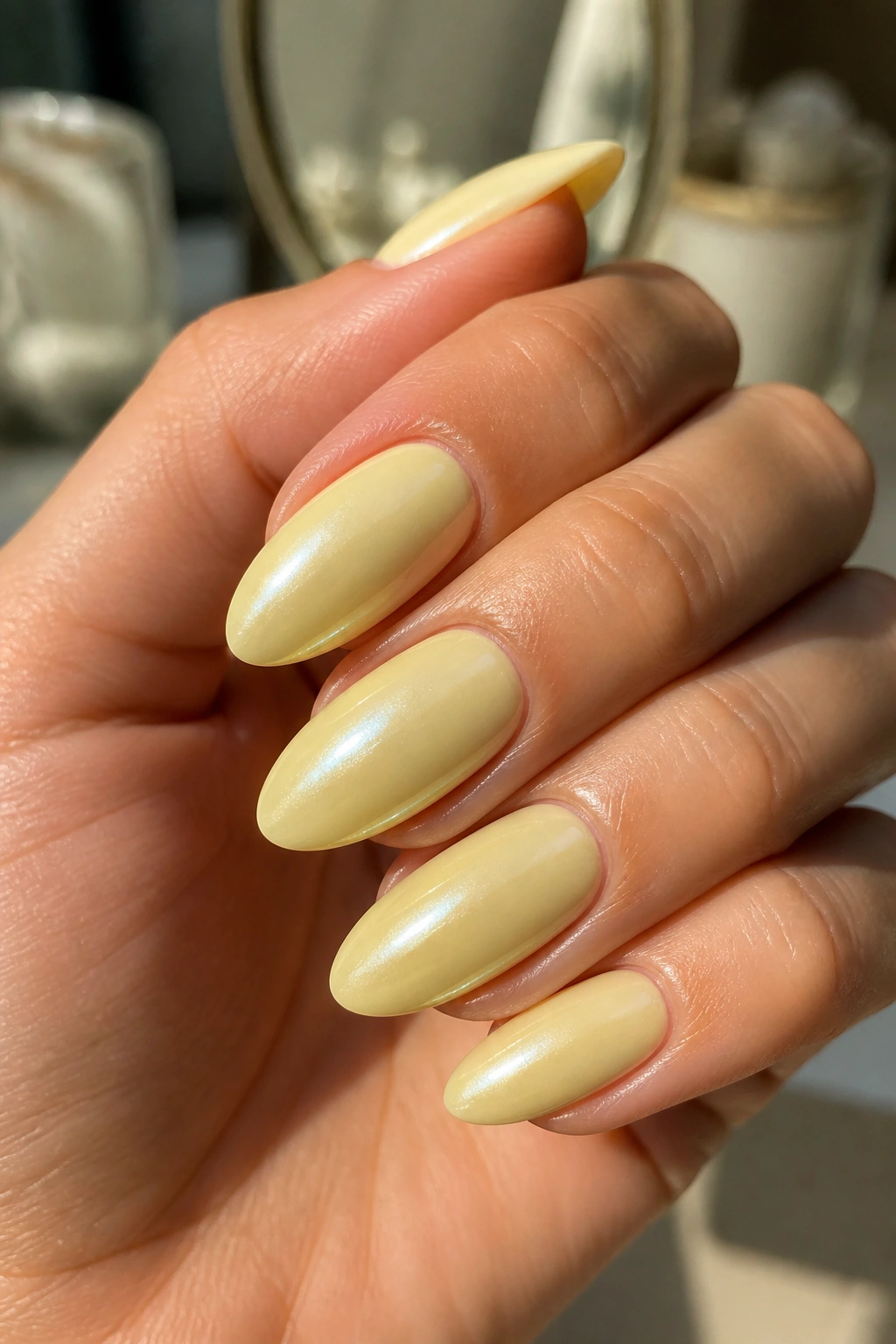
Chrome over butter yellow sounds bold, and it is, but the trick is using a soft glaze instead of a mirrored finish. Think pearly sheen, not full disco ball. On almond nails, that little bit of reflection gives the color a smoother, richer look.
The difference between powder chrome and a softer pearl top coat is huge. Powder chrome can make the yellow look almost metallic. A glaze keeps it creamy and luminous. If you want the manicure to feel light, choose the softer route.
This style stands out because it changes the mood of the color without changing the color itself. Same yellow. Different attitude. More shine. More depth. Less candy, more polish.
I especially like this on medium-length almond nails, where the curve of the tip catches the light in a clean line. It’s one of those manicures that can read understated in some rooms and more dramatic in others, depending on how much light hits it. That’s a nice trick to have.
14. Butter Yellow with Blush Pink Details
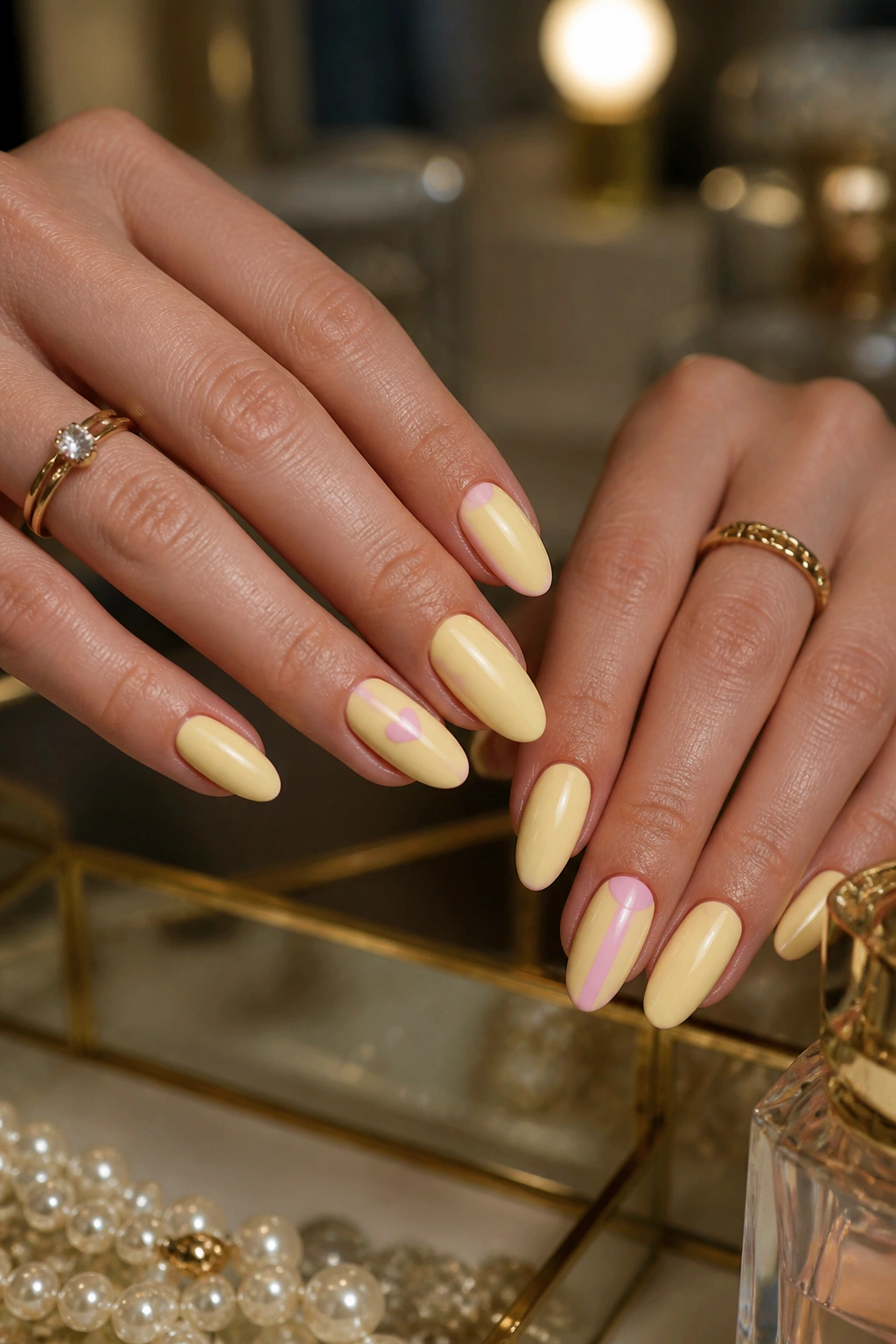
Yellow and blush pink can look childish if both shades are too sweet. But on almond nails, with the right balance, the pairing turns soft and elegant instead. I like using pink as the supporting color, not the lead. A tiny pink heart, a blush stripe, a small blush crescent at the cuticle—those kinds of details.
Why It Works
Butter yellow brings warmth. Blush pink adds a little softness around the edges. Together, they make the manicure feel gentle without turning into a themed set. The almond shape helps because the curve keeps the look fluid.
You can keep one or two nails fully pink and the rest yellow, but I think the cleaner move is using pink as an accent. That way the set stays focused. Too much pink can muddy the whole point of choosing butter yellow in the first place.
A glossy finish makes the two colors blend better visually. Matte can work too, but it tends to flatten the contrast. If you want the manicure to look sweet without being sugary, this is the lane I’d choose.
15. Butter Yellow Tortoiseshell Tips
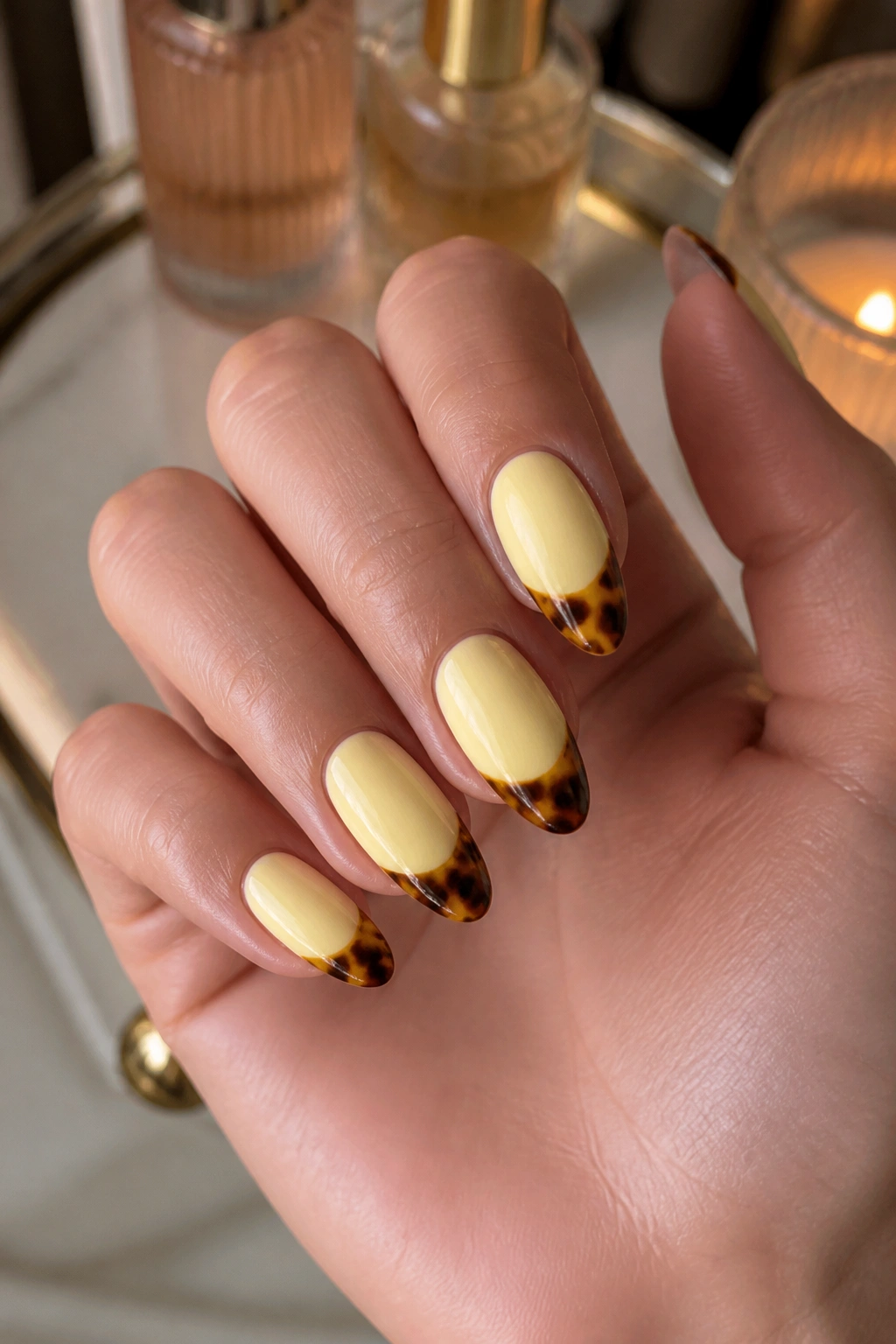
Butter yellow and tortoiseshell sounds like an odd match until you see it done well. The soft yellow base keeps the manicure light, and the tortoiseshell tips bring in that amber-brown depth that makes the whole set feel richer. On almond nails, the combo looks especially good because the tapered shape lets the darker tips feel deliberate instead of heavy.
I like this version when I want a yellow manicure that doesn’t lean too delicate. It has a little edge. The tortoiseshell can sit just on the tip, or it can run in a thin crescent near the free edge with a sheer yellow base underneath. Either way, the darker pattern keeps the butter yellow from floating away into pure sweetness.
This is the set I’d pick if you want something with more personality but still enough restraint to wear with denim, cream knits, or a black coat. It’s softer than full tortoiseshell, and more interesting than a plain yellow. That mix is the whole point.
If you only try one of these butter yellow almond nail ideas, make it this one.