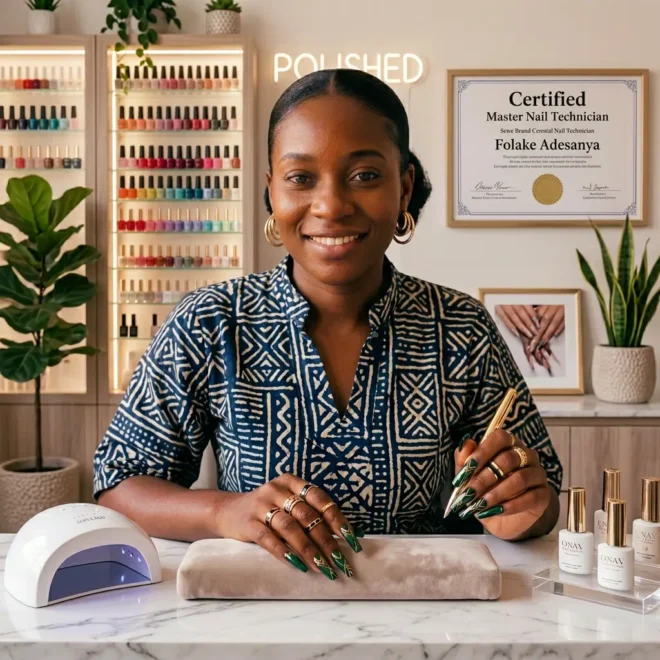


Long French tip almond nails look easy until the smile line lands wrong and the whole hand starts to feel heavier than it should. A clean French on a long almond shape can look crisp in a way few manicures do. Make the white band too thick, though, and the nail stops looking tapered and starts looking boxed in.
That proportion issue matters because almond nails already narrow the eye toward the tip. Add length, and every millimeter counts. A tip that sits too low can shorten the nail visually, while a tip that kisses the free edge keeps the line long and smooth.
I always pay attention to the sidewalls first. On a long almond, the sides should stay slim, the apex should support the length, and the French line should feel like it belongs to the nail instead of sitting on top of it. That sounds picky because it is picky, and that is why the clean versions keep working while the sloppy ones age fast.
The good news is that French tips give you a lot of room to play once the shape is right. Some versions stay barely there. Others push into color, texture, or sharper geometry. The trick is choosing a version that suits the length you already have instead of fighting it.
1. Classic White Long French Almonds
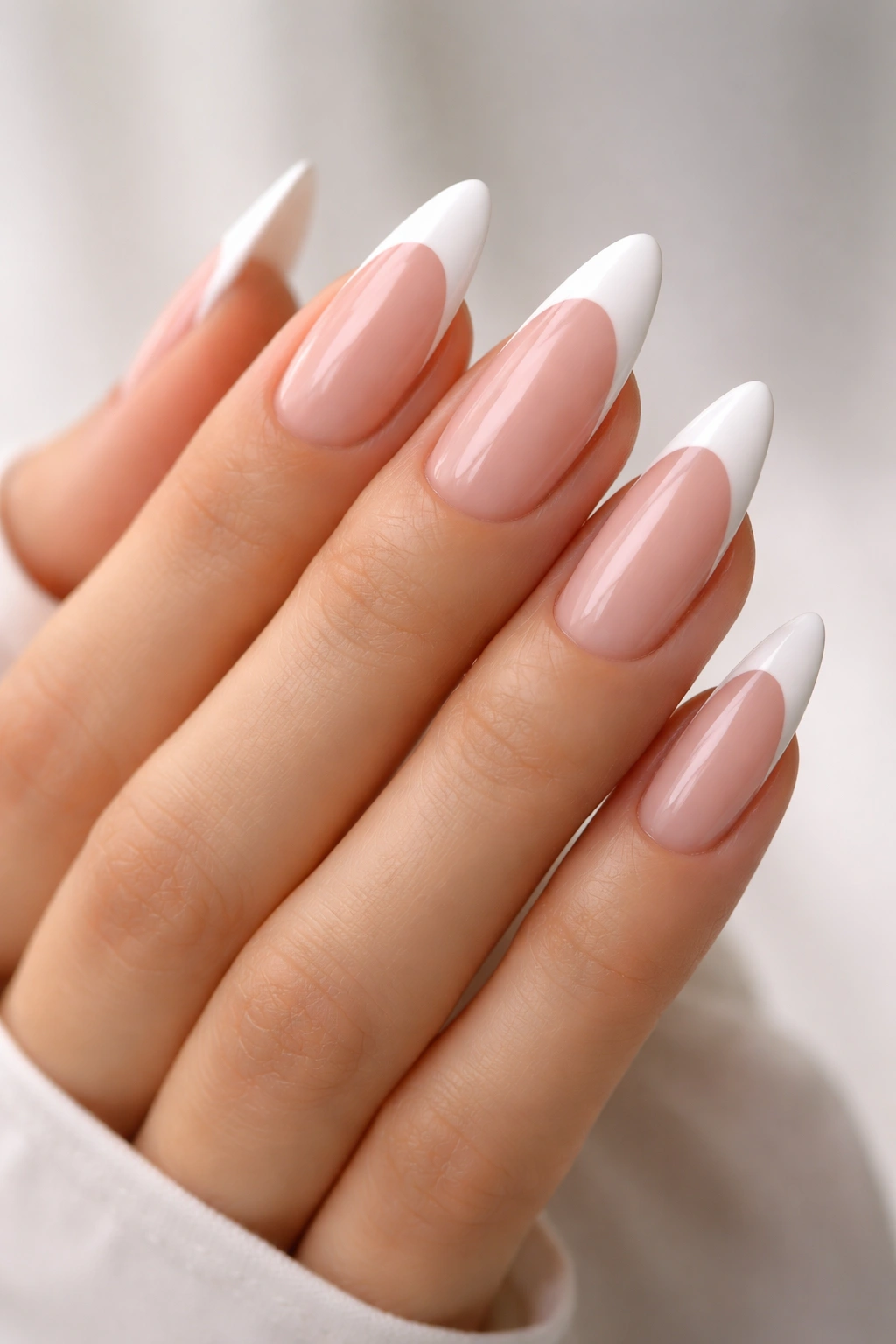
A classic white tip never stopped being a good idea. It just needs the right proportions.
On a long almond nail, the white edge should look deliberate, not painted on as an afterthought. If the tip gets too thick, the nail loses that tapered feel and starts to read blocky from the side. A cleaner approach is to keep the white band around 4 to 6 mm deep on a medium-long extension, then soften the sidewalls so the point still feels elegant rather than sharp for the sake of being sharp.
Why the proportions matter
The base should stay sheer pink, milky nude, or softly beige. That contrast is what makes the white line pop. If the base is too opaque, the whole manicure can feel flat, which is a shame because almond nails already do half the work for you by elongating the finger.
- Ask for a thin apex so the extension doesn’t look chunky.
- Keep the smile line even on both hands, even if your natural nails grow at different angles.
- Use a bright white gel, not a chalky off-white, unless you want a softer finish.
- Finish with a glossy top coat so the tip edge stays crisp.
Best move: if you are unsure where to start, ask for a slightly narrower tip than you think you want. Long almond nails can always handle restraint. They usually cannot rescue a tip that is too wide.
2. Micro-Smile French Almonds
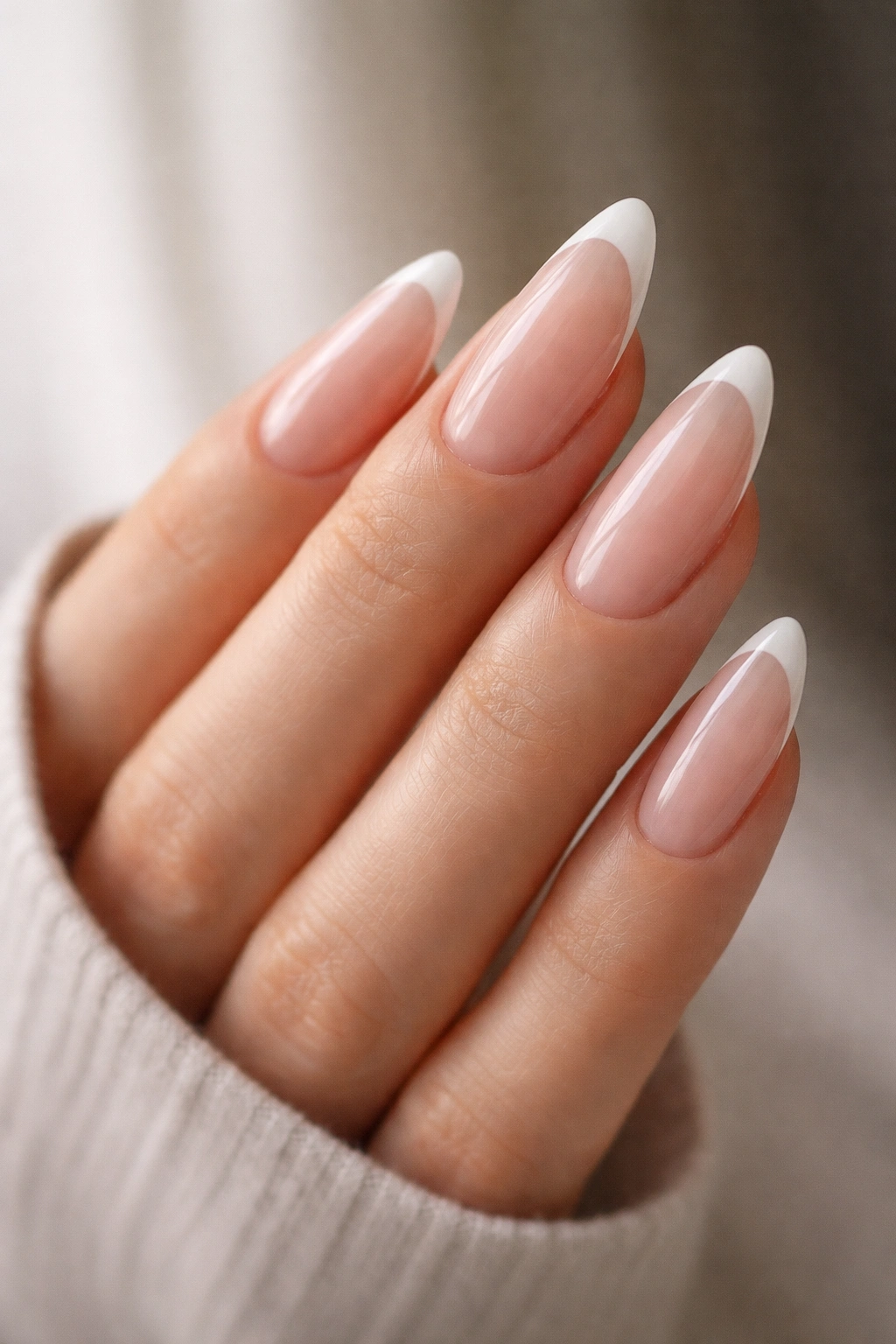
Why does a thinner smile line look better on some long almond nails? Because it leaves the shape room to breathe.
A micro-smile French is one of those styles that looks quiet until you notice how carefully it is drawn. The white line sits close to the free edge and follows a tiny, shallow arc. On a long almond nail, that narrow arc keeps the tip light and makes the whole nail feel slimmer. It is a good choice if you want French nails but do not want the full classic stripe.
How to ask for it
The cleanest version usually uses a smile line no deeper than 1 to 2 mm at the center, with slightly more depth toward the corners if the nail bed is very long. That small adjustment keeps the shape balanced. If the line is too flat, it can look unfinished. Too curved, and the nail starts to lose the subtlety that makes this version work.
- Best on medium-long to long almond extensions.
- Works with sheer pink, nude beige, or milky nude bases.
- Looks especially neat on short-to-medium nail beds that need a little visual lift.
- Grows out more gracefully than a thick French band.
One thing I like about this version: it does not fight your rings, sleeves, or daily clothes. It stays on the nail and lets the shape do the talking.
3. Milky Pink French Almonds
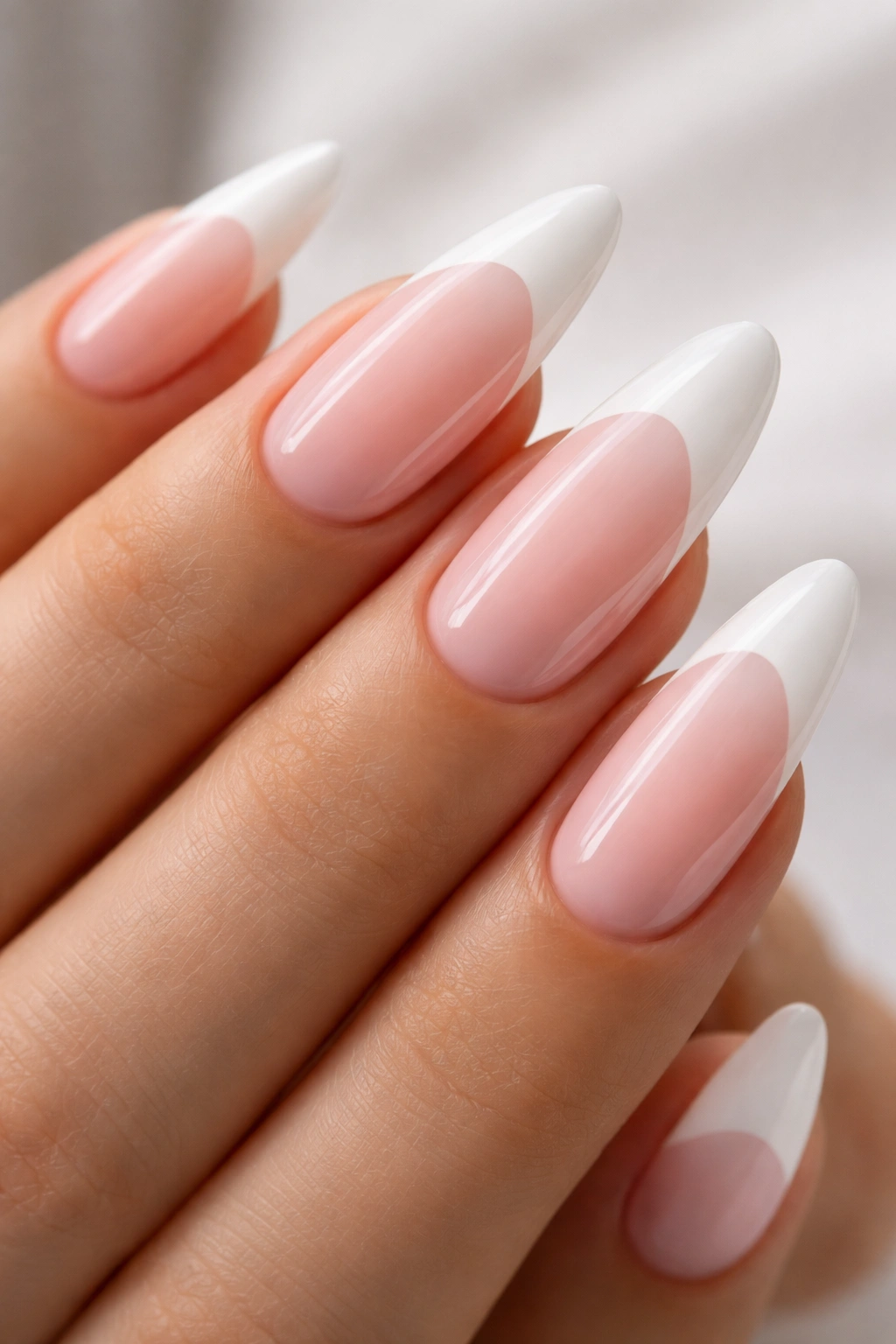
If you want one French manicure that flatters almost every hand, milky pink is the safest place to land.
The milky base softens the whole look, especially on a long almond shape where a clear base can sometimes make the tip feel too harsh. A translucent pink or pink-beige base gives the nail a little depth, so the white edge doesn’t look like a sticker. It feels smoother, calmer, and a bit more expensive-looking in the simple sense that the layers are blended instead of announced.
A lot of nail techs reach for this look when they want the French line to feel softer without going blurry. That is the sweet spot. You still get the crisp white tip, but the base has enough haze to blur tiny ridges, small color shifts, and any slight unevenness in the natural nail.
What to ask for
Ask for two thin coats of a milky builder gel or sheer polish, then a white tip that is painted in one clean pass if possible. On long almond nails, extra thickness near the tip can look clumsy fast, so the layers should stay thin and controlled. If you like a warmer finish, a touch more beige in the base can keep the manicure from looking icy.
This is one of those styles that works for both salon gels and press-ons. On press-ons, the trick is filing the sidewalls after application so the tip does not look too square at the corners.
4. Deep Curve French Tips
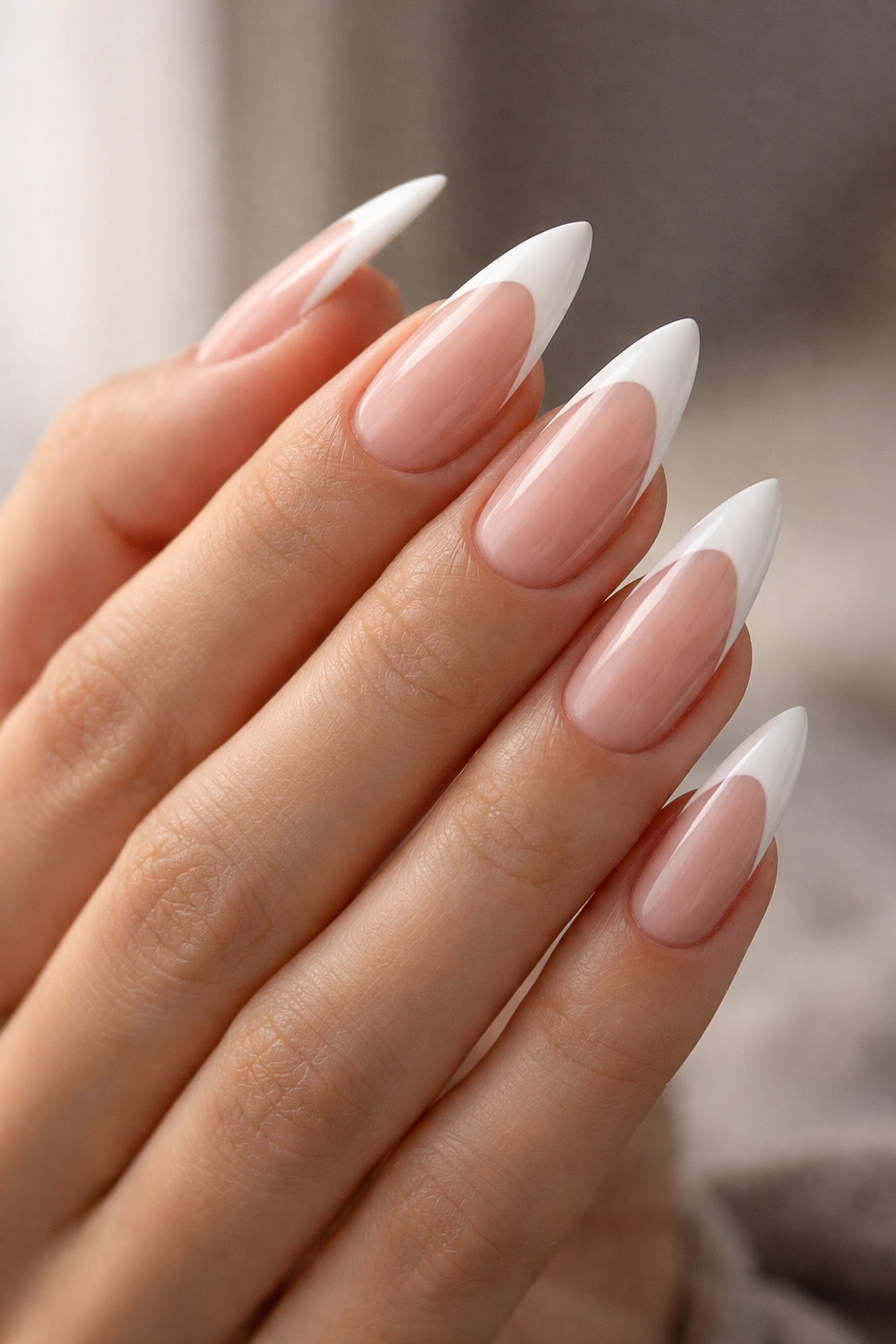
The first time you see a deep-curve French on a long almond nail, it looks almost architectural.
That extra curve matters because it mirrors the almond shape instead of sitting on top of it. A deep smile line pulls the eye upward and makes the nail look longer, especially when the curve dips a little lower at the center and climbs higher toward the sidewalls. The result is sharper than a classic French, but not harsh.
What makes the curve work
If the curve is too shallow, it can disappear into the length of the nail. If it is too deep, the nail can start to look like it has a full white cap instead of a French tip. The line should follow the natural taper of the extension and leave enough nude space near the cuticle to keep the nail from looking crowded.
- Best on longer salon extensions with a clear apex.
- Use a strong white gel so the curve stays clean against the base.
- Ask for the corners to be softened slightly; sharp angles can clash with almond shaping.
- Good choice if you want a French look that reads a little more dramatic without adding extra color.
I’ve noticed this style looks especially good when the nails are filed very smoothly on the sides. Any rough edge gets magnified once the curve gets deeper.
5. Black French Almond Nails
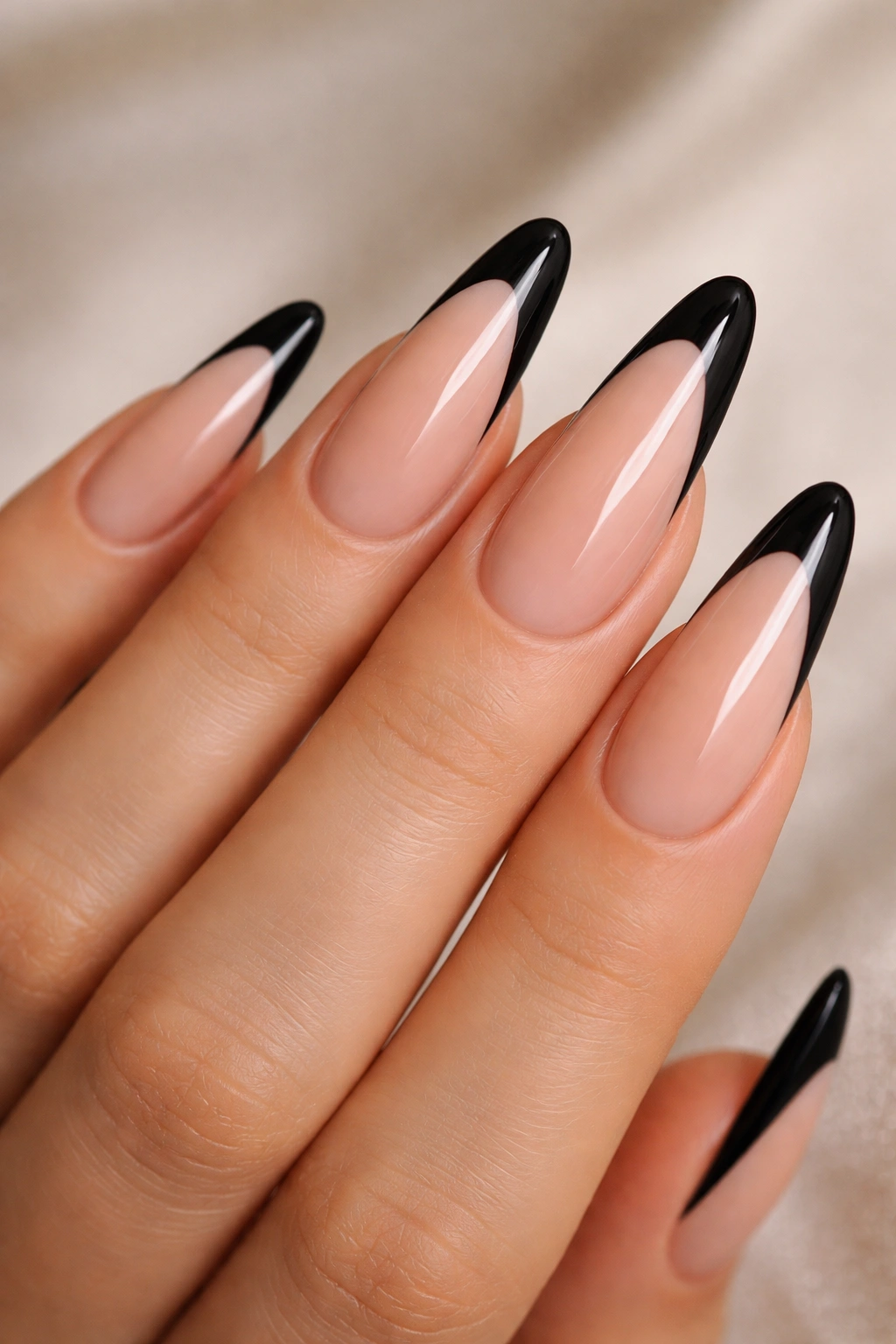
Black French tips do the opposite of white ones. They sharpen everything.
On a long almond nail, black gives the tip a graphic edge that feels modern without needing extra decoration. The shape becomes more obvious because the contrast is so strong. A white French can soften the hand; black tends to define it. That makes it a smart choice if you like a manicure with a little bite.
The base should stay sheer nude or milky pink, because black on top of an opaque base can look heavy fast. The tip also needs to be thinner than a classic white French. Around 3 to 4 mm is usually enough. Go wider, and the nail can start to look blunt instead of slim.
This style works well with high-shine top coats. Matte black tips can be interesting, but they pick up dust and fingerprints faster than people expect, and a tiny scuff shows immediately. Gloss keeps the line clean.
If you wear a lot of black, silver, or dark denim, this manicure feels easy to live in. If you want one manicure that says “put together” without leaning soft, this is the one I’d point to first.
6. Chrome-Tipped Almonds
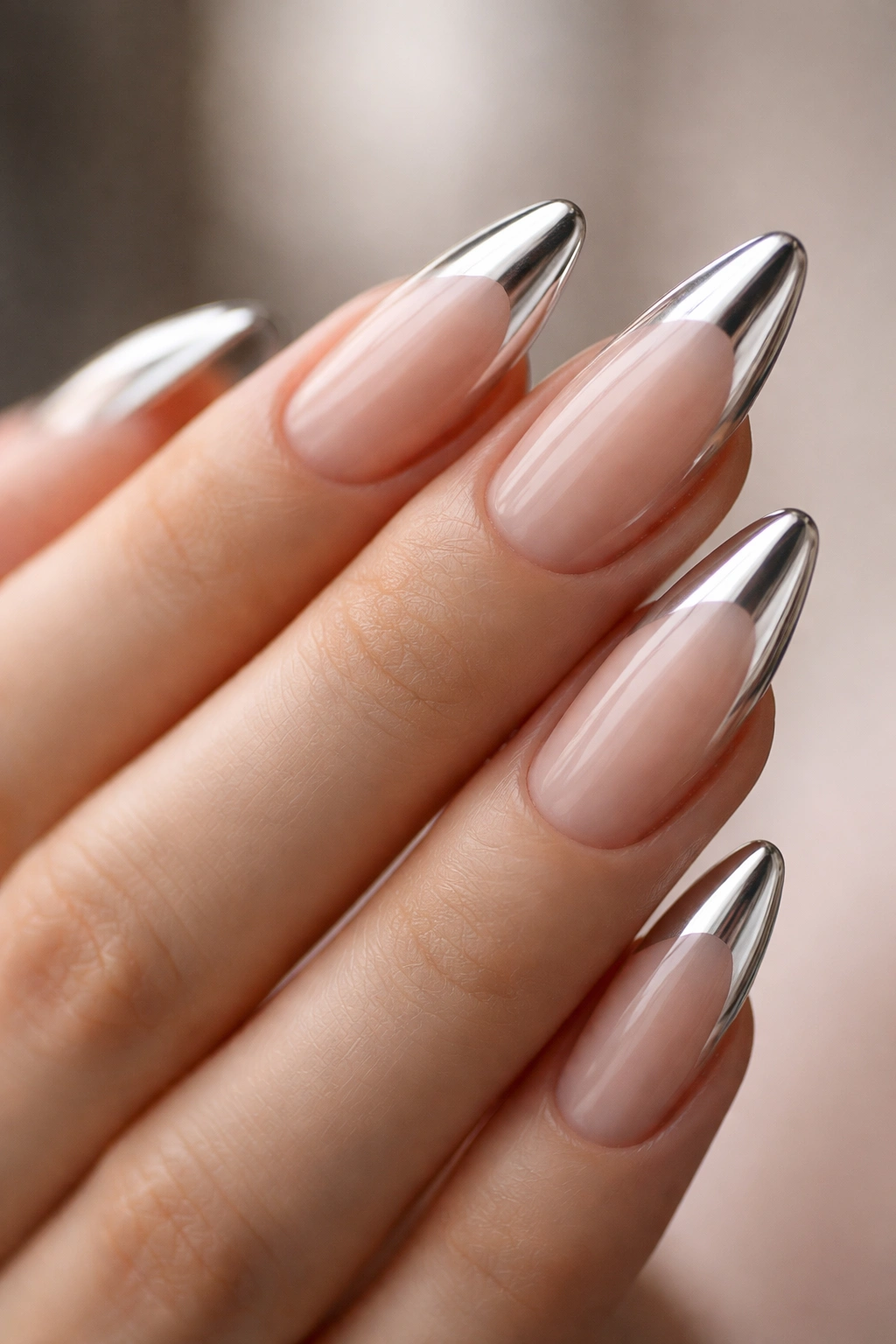
Chrome tips are all about edge and shine, but the base still matters more than people think.
The mirror finish works best when the French band stays narrow and the base stays soft. On a long almond nail, chrome can overwhelm the shape if it covers too much surface. A thin silver, pearl, or champagne chrome at the tip keeps the look sleek instead of space-age. And yes, the edge has to be sealed well, because chrome will rub off faster on the free edge if the top coat is thin.
The nicest version usually starts with a sheer nude or milky pink base, then a white or pale gel tip that gets rubbed with chrome powder. Some techs use a no-wipe top coat over the tip first, then buff the powder in, then seal everything again. That extra layer makes a difference. Skipping it is one of those shortcuts that looks fine for a day and then starts fraying at the edges.
A soft pearl chrome is easier to wear than a hard silver mirror if you want something you can keep on for a while. The finish still flashes under light, but it does not shout from across the room. That’s the version I’d choose for a long almond shape.
7. Pastel French Almonds
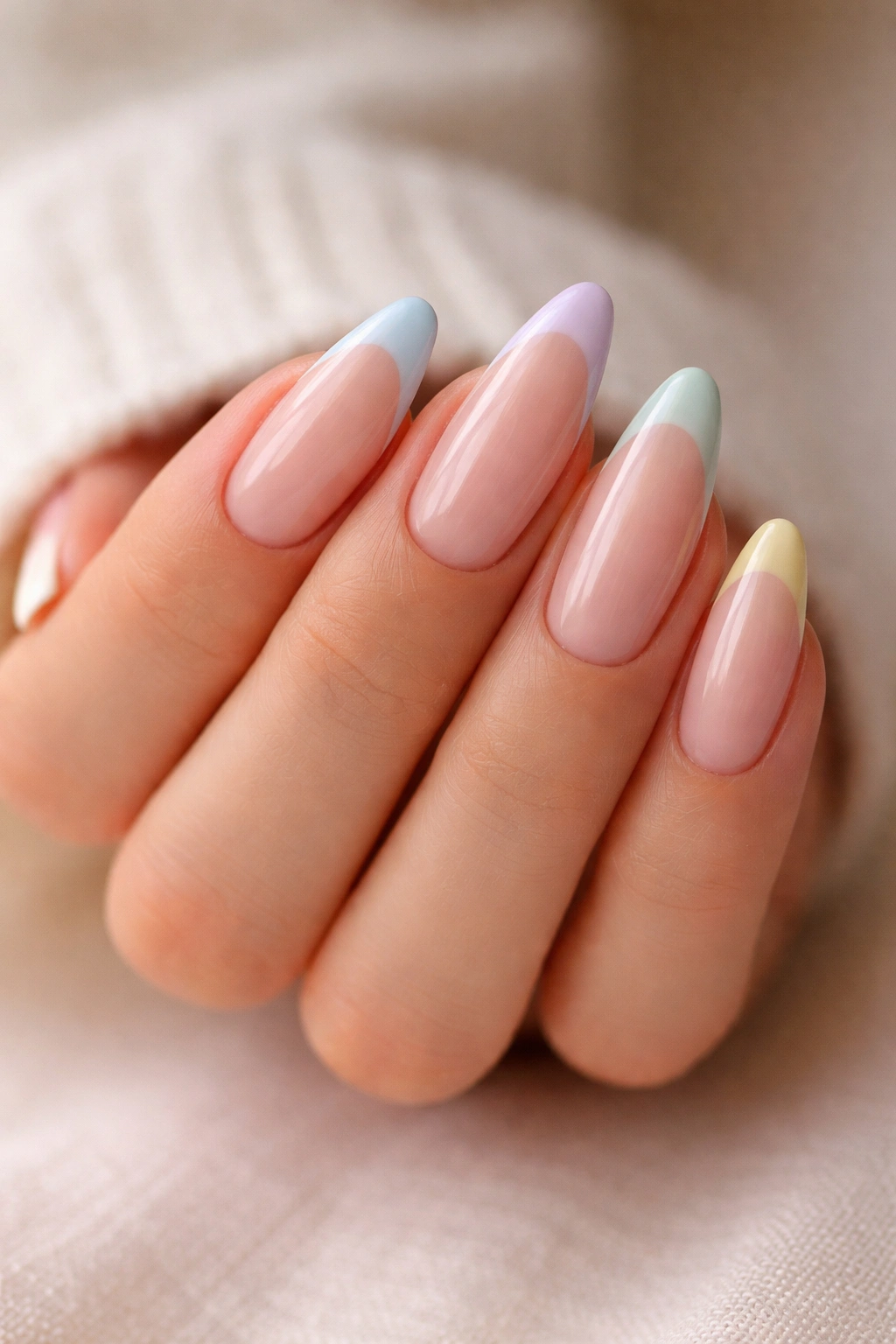
Pastel French tips are the friendlier cousin of the classic white manicure.
They keep the long almond shape soft, but the color adds a little mood. Baby blue, lilac, mint, pale lemon, and blush pink all work well as tip colors because they stay light enough to preserve the clean French silhouette. The base should stay sheer and neutral, otherwise the look can get busy quickly.
Pastels that stay polished
The easiest way to keep pastel French tips from feeling childish is to keep the line thin and the finish glossy. A 4 mm tip is usually enough. Wider bands make pastel shades look louder than they need to be.
- Baby blue feels especially clean on long almond nails.
- Lilac gives the manicure a softer edge.
- Mint reads fresh without looking neon.
- Pale peach is the quietest option if you still want color.
A small detail I like here: the same pastel does not have to sit on every finger in the exact same way. Ring fingers can take the widest version of the tip, while the others stay a touch thinner. That tiny asymmetry keeps the manicure from looking too set-up or flat.
8. Glitter French Tips
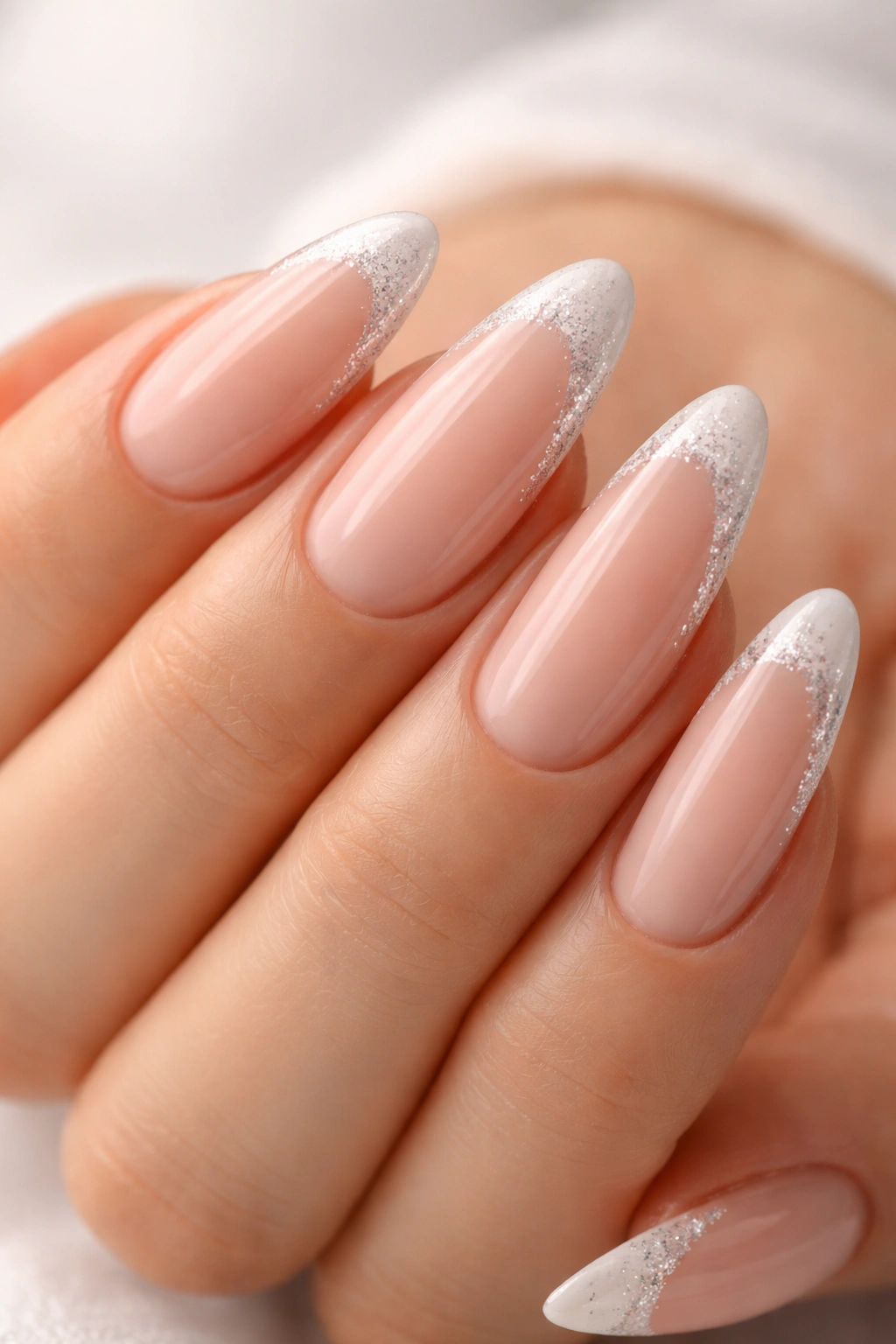
Want sparkle without covering the whole nail? Put it at the tip.
Glitter French tips work because long almond nails already give you enough surface area to frame the shine. A fine glitter line along the free edge catches movement without turning the manicure into a full glitter set. Chunky glitter is harder to control and usually makes the tip look thicker than it is, so fine or micro-glitter is the better choice.
Where the sparkle should sit
The best glitter French usually starts with a thin opaque white or nude tip, then a layer of fine glitter concentrated at the edge. Some versions fade the sparkle downward by a millimeter or two. That fade matters. It keeps the tip from looking like a hard strip of party confetti.
For everyday wear, silver and champagne glitter are the easiest choices. Colored glitter can be fun, but it competes with the almond shape more quickly. If you want the longest wear, ask for the glitter to be sealed with two thin top coats, not one thick one. Thick top coats can pool at the free edge and make the nail feel lumpy.
This style is one of the few that can look dressy without needing a full set of gems or art.
9. Double French Almonds
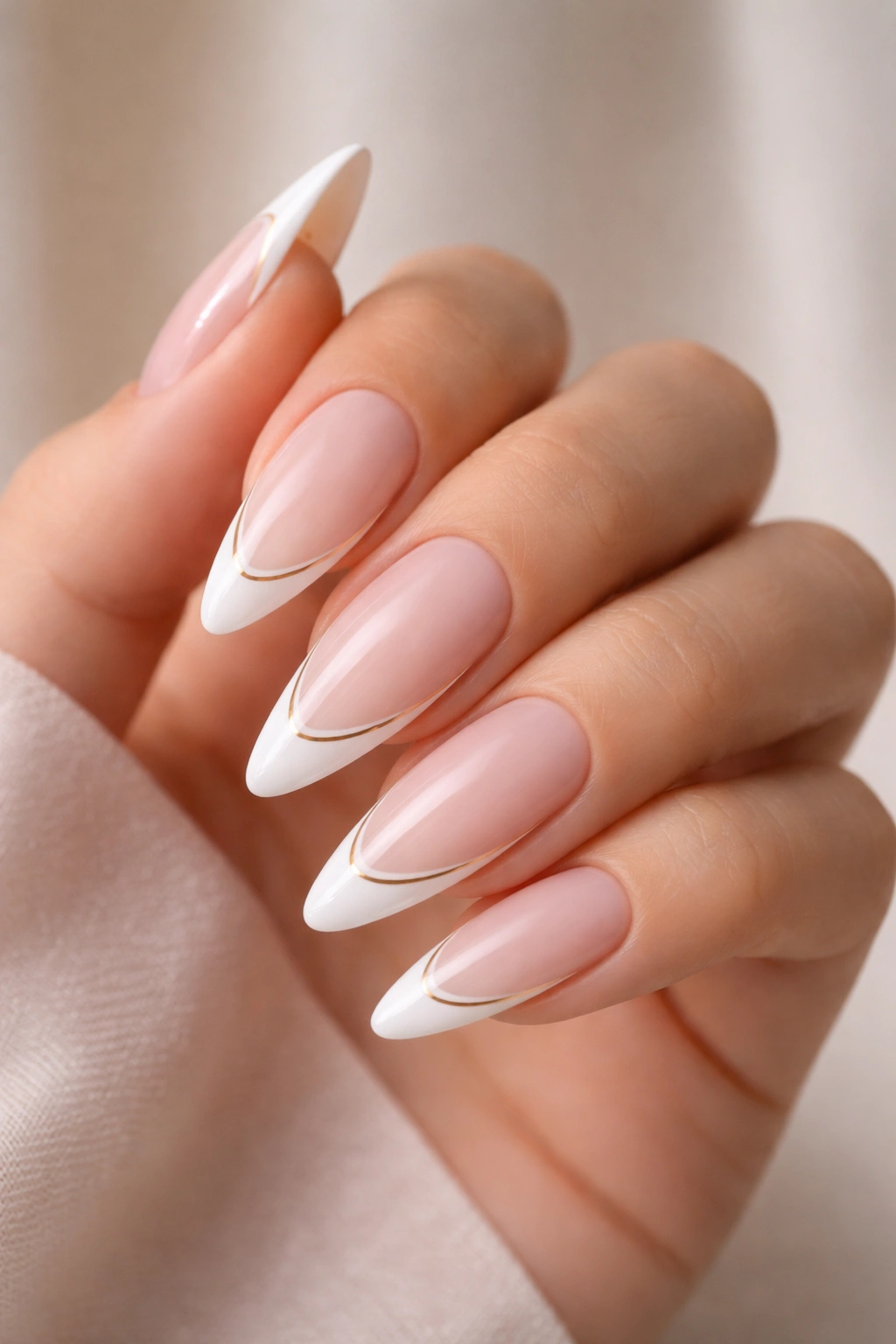
A double French line is what you choose when a single stripe feels too plain.
The idea is simple: one line sits at the tip, and a second line sits just below it or traces the smile line in a different color. On a long almond nail, there is enough space to make that work without making the nail look crowded. The key is keeping both lines thin. If either stripe gets too wide, the design starts to feel busy.
A popular version pairs white with gold, or white with a soft nude outline. That second line gives the tip a little architecture. It also helps the French shape stay visible from a distance, which is useful on longer nails where the tip can sometimes disappear into the length.
The whole look works best when the base stays calm. Sheer pink, milky beige, or soft nude are good choices. A busy base and a double French line together can turn the manicure into too many separate ideas at once.
I like this design for people who usually wear classic French nails but want something that feels a bit more styled. It has range. Not too sweet, not too sharp.
10. Ombré French Almonds
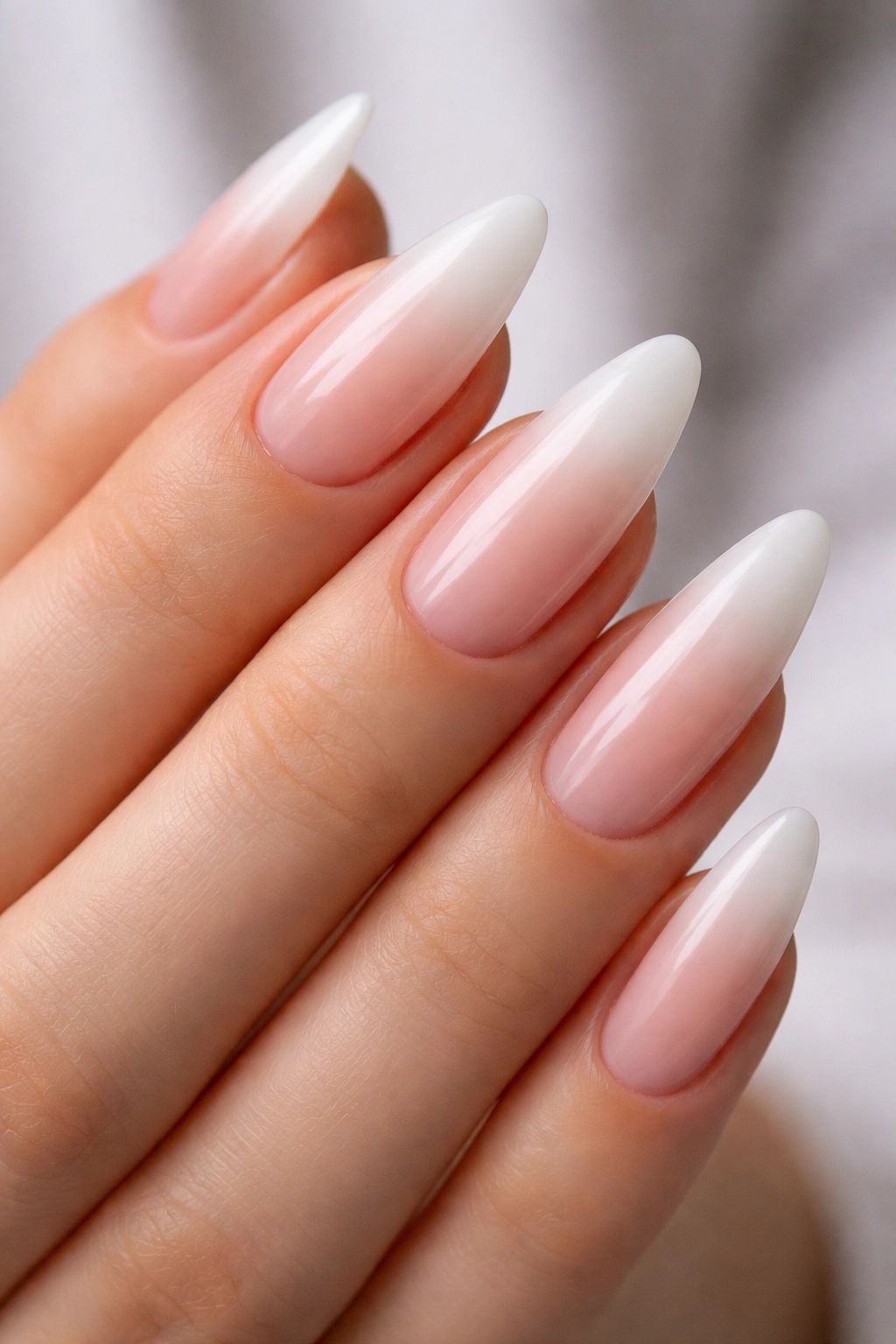
An ombré French is what happens when you want the French idea without the hard line.
Instead of a crisp white band, the tip fades from nude into white, usually with the softest part sitting in the middle of the nail. On a long almond shape, that blur is flattering because it keeps the eye moving. You still get the lighter tip, but the transition is smoother, which makes the nail look less rigid.
The cleanest ombré French usually comes from thin layers. A sponge can work, but so can an airbrush or careful brush blending if the nail tech knows what they are doing. The important part is not to pile on too much product. Too much white at the edge turns the fade into a cloudy block, and that defeats the point.
This version also grows out nicely. The fade hides the line between natural nail and extension better than a stark French does, so the manicure can keep looking tidy even after the cuticle starts moving forward. If you hate obvious regrowth, this one is worth a look.
11. V-Cut French Almonds
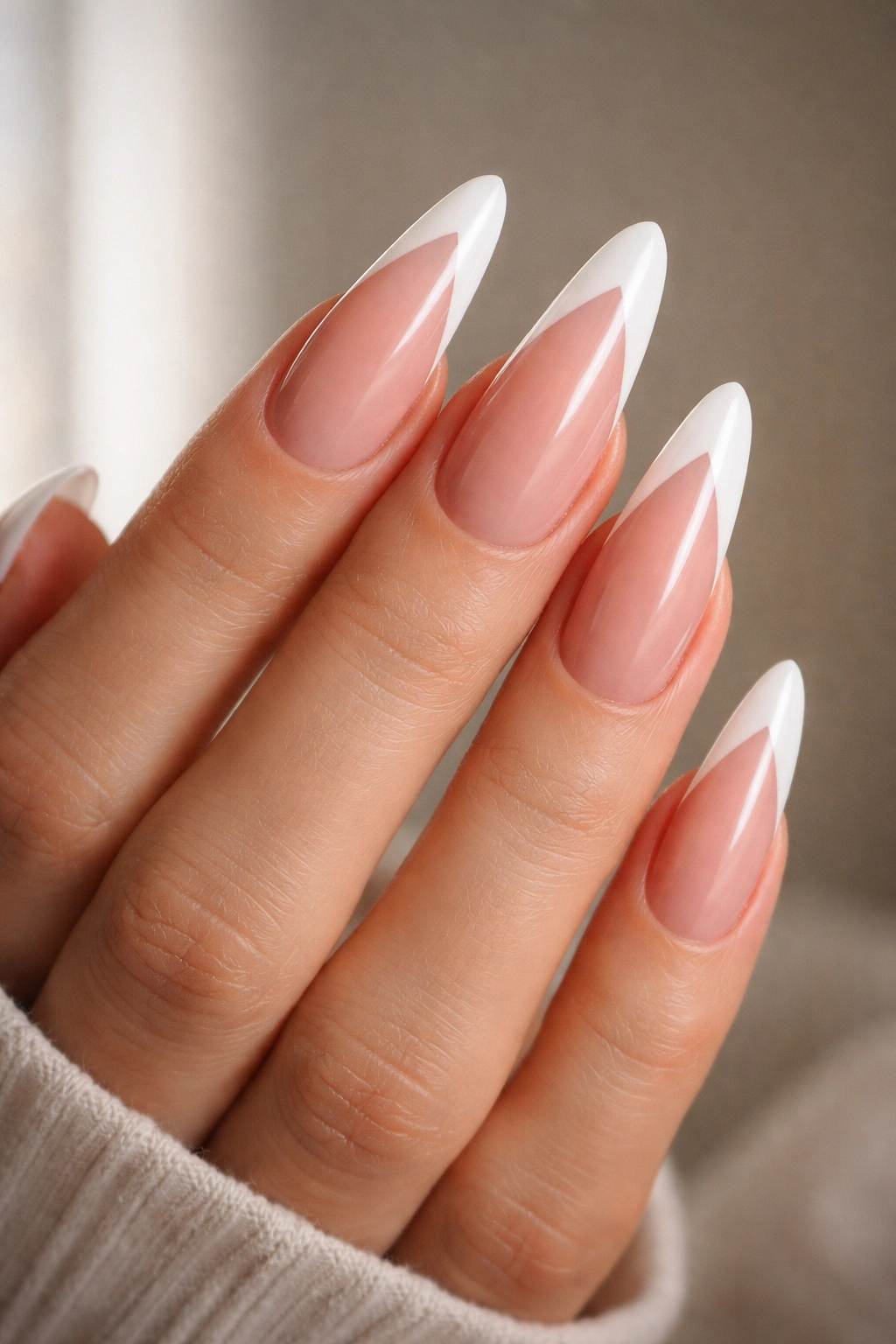
A V-cut French on a long almond nail looks sharper than a round smile line, and that is the whole appeal.
The point in the center gives the tip a little direction. Instead of following the curve of the nail, the white edge drops into a clean V, then rises back out toward the corners. The effect is slim, graphic, and a little more dramatic than the usual French. It also makes the almond shape look longer, especially when the point is centered perfectly.
How to keep the V clean
The center point has to line up with the middle of the nail. If it drifts even a little, the whole manicure can look off. A shallow V is safer than a deep one if you want to wear it every day. Deep Vs can be striking, but they also show filing mistakes faster.
- Works best on long extensions, not short natural nails.
- White, black, and metallic tips all suit this shape.
- The sides of the V should stay smooth, never jagged.
- Keep the base sheer so the point stands out.
I like this style for people who are bored with round smile lines but still want the structure of a French manicure. It has a bit more edge, literally.
12. Matte Base, Gloss Tips
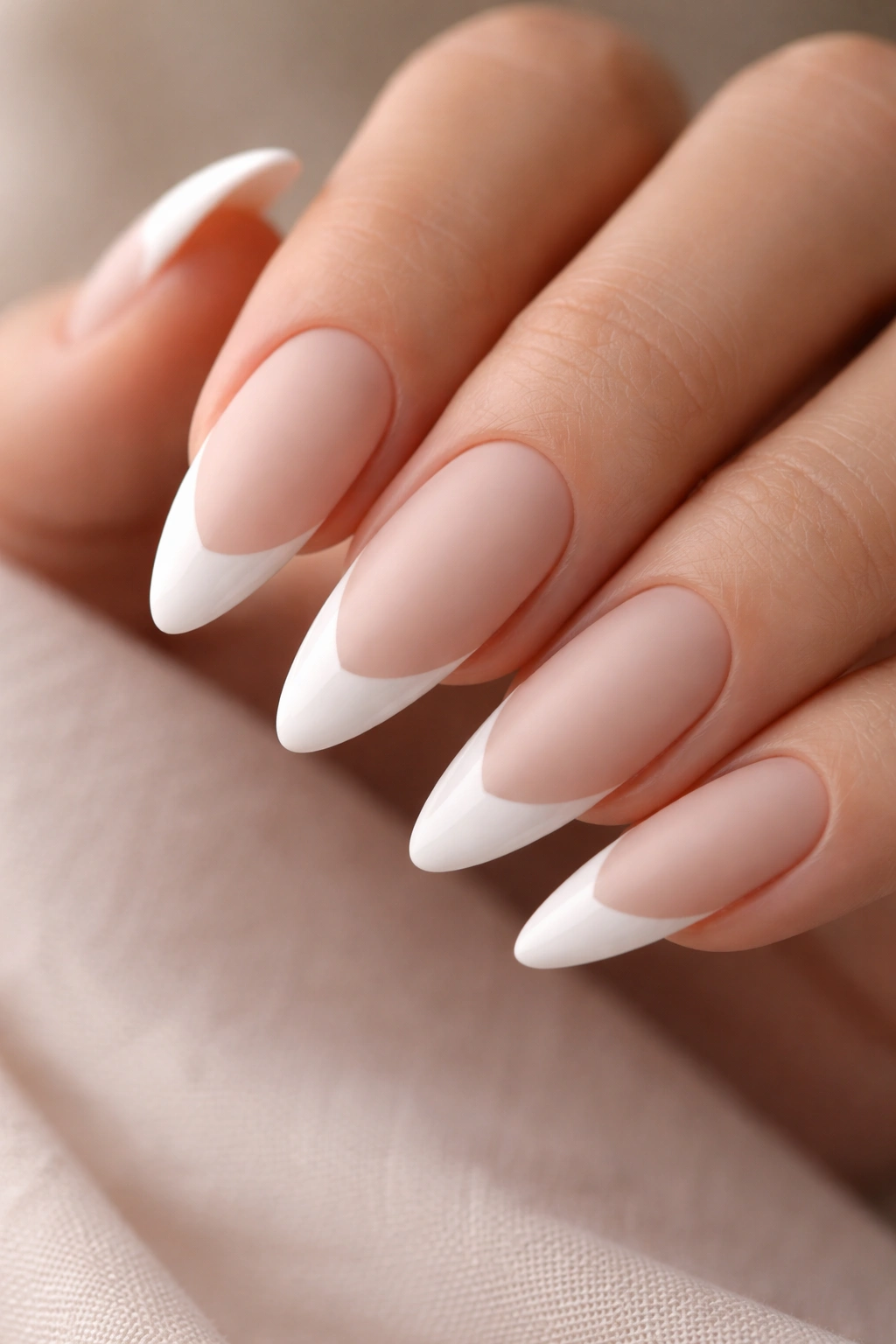
Texture can do the job that color usually does.
A matte base with glossy French tips creates contrast without changing the palette much, and that suits long almond nails surprisingly well. The matte finish dulls the background, so the tip line feels sharper. Then the glossy edge catches light and shows off the curve. The result is restrained, but not flat.
The trick is to keep the matte top coat on the base only. If the gloss and matte mingle, the design starts to look smudged instead of intentional. Nail techs usually cure the matte layer first, then paint or seal the French tip afterward with a high-shine top coat. That separation is what gives the manicure its clean split.
This style wears well if you like simple color but still want something a little more considered than a standard French. It is also useful if you wear a lot of simple clothing and want your nails to carry the detail instead. Matte does show oils and hand cream a bit faster, though, so a quick wipe with a soft cloth helps keep it neat.
13. Burgundy French Almonds
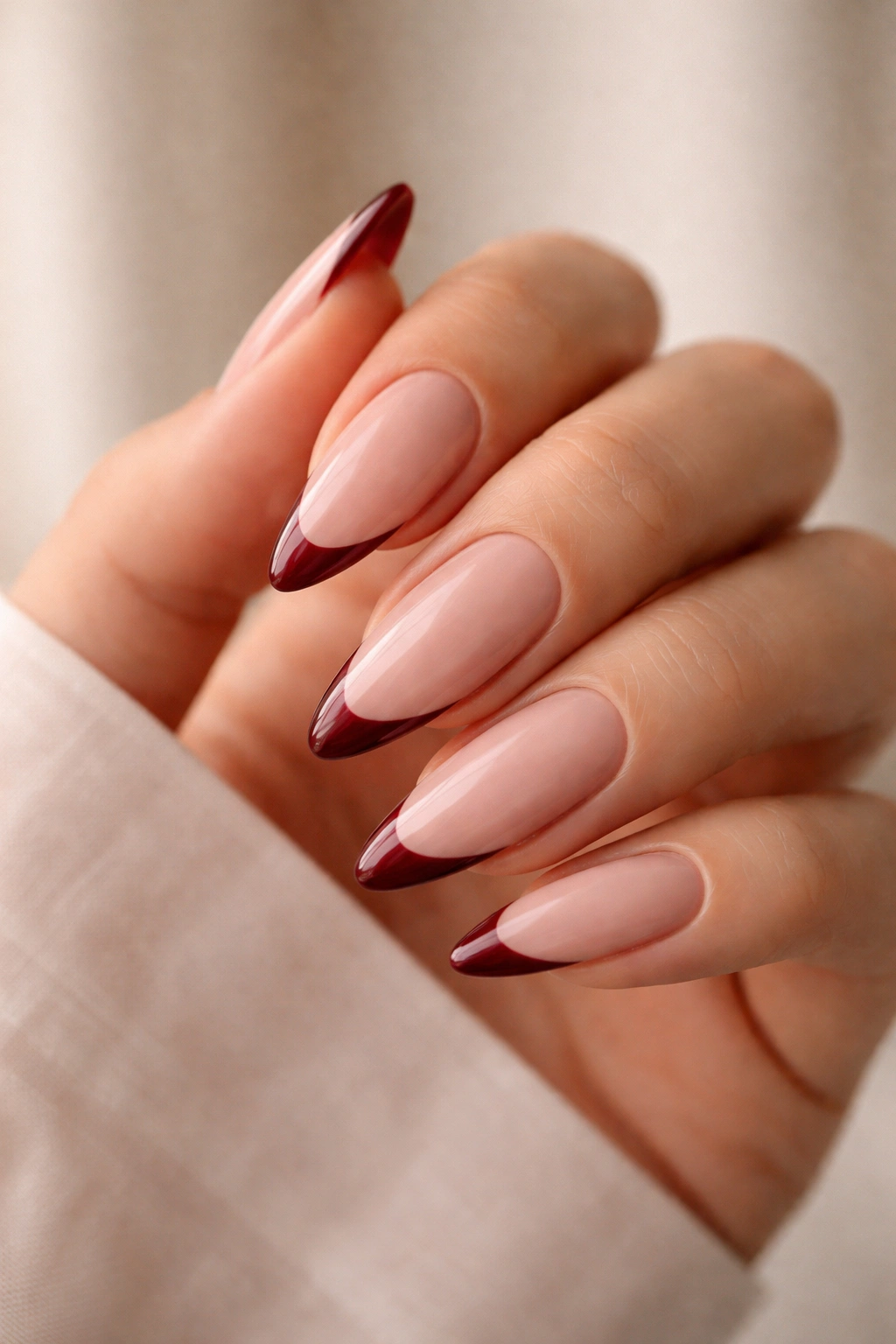
Burgundy French tips on a long almond nail have a quiet richness that white tips never try for.
The color is deep enough to feel intentional, but it still sits in the French family because the tip stays narrow. That matters. Burgundy can look heavy if it spreads too far down the nail, so a thin band keeps the manicure sleek. On almond nails, that narrow band also helps the length stay visible.
Keeping the shade from looking too heavy
A sheer nude or soft pink base keeps burgundy from turning into a block of color. The tip itself should stay glossy, because matte burgundy can look flat and dusty if the formula is too dense. A wine, oxblood, or berry tone usually works better than a brown-red if you want the manicure to feel cleaner.
- Thin tip width: about 3 to 4 mm on a long extension.
- Gloss finish only, unless you want a velvet effect.
- Gold jewelry pairs well, but the manicure stands on its own.
- Good choice for anyone who wants color without losing polish.
This is one of those looks that feels grown-up without getting boring. The shape keeps it sharp; the color keeps it from fading into the background.
14. Neon French Almonds
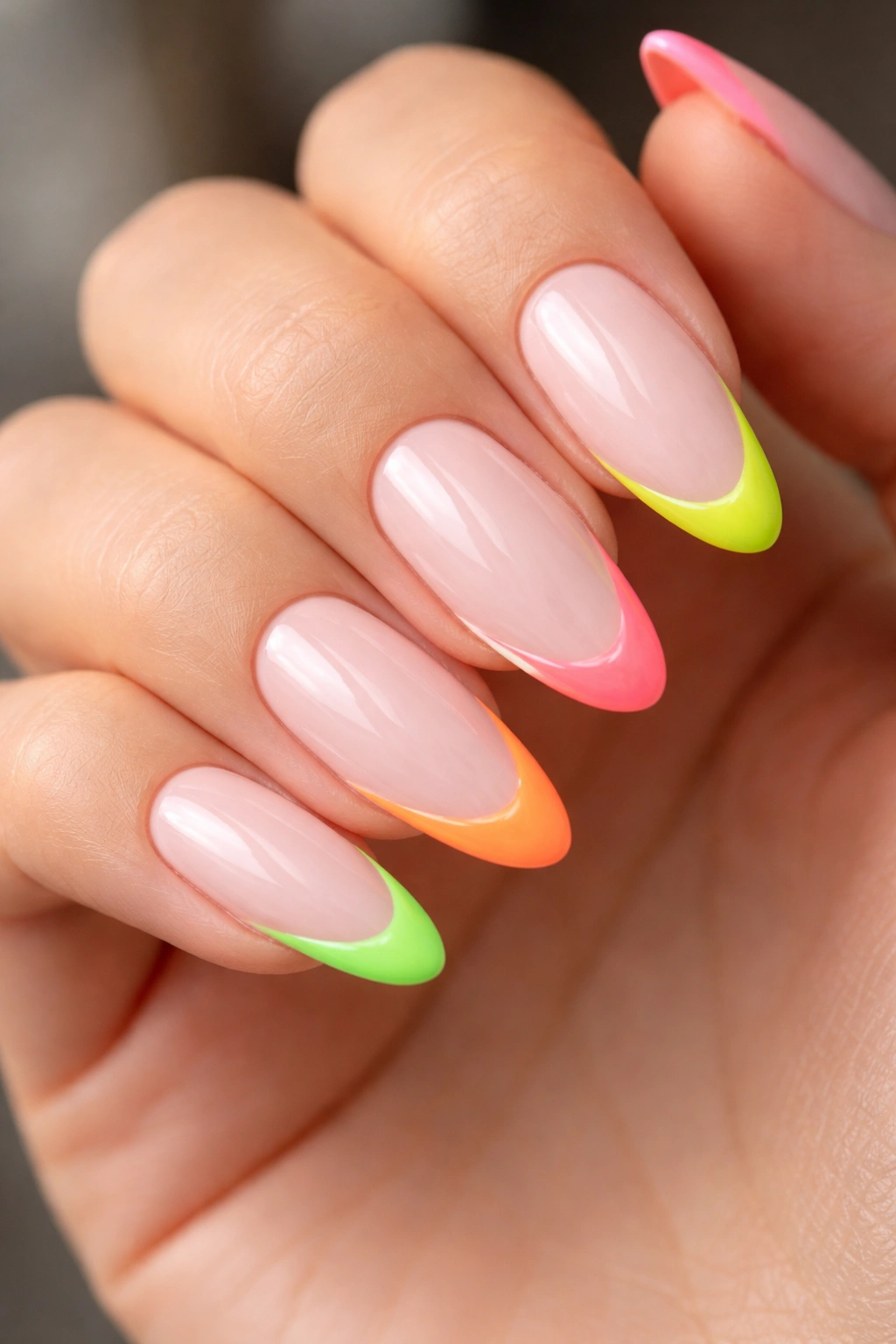
Can neon look clean on a long almond nail? Yes, if you keep the color at the edge.
That is the whole trick. Neon French tips work because the bright color gets contained by the almond shape. A neon pink, lime, coral, or electric orange tip can look fun without turning the whole nail into a loud block. The base should stay sheer and calm so the bright edge has something to sit against.
How to keep neon from taking over
A thinner tip is non-negotiable here. Around 2 to 3 mm is usually enough. If the band gets wider, the manicure stops looking sleek and starts shouting. That’s the downside of neon: it has no patience for sloppy lines.
- Use a milky base, not an opaque one.
- Keep the sidewalls tapered so the shape stays elegant.
- Seal neon with a strong top coat; bright pigments can dull if the finish is thin.
- Best when the rest of the nail is left bare or near-bare.
I like neon French tips on long almond nails when the weather is warm and the outfit is simple. A white shirt, a plain tank, a clean jacket — that kind of backdrop lets the nail do the talking without the whole look becoming too much.
15. Tortoiseshell French Almonds
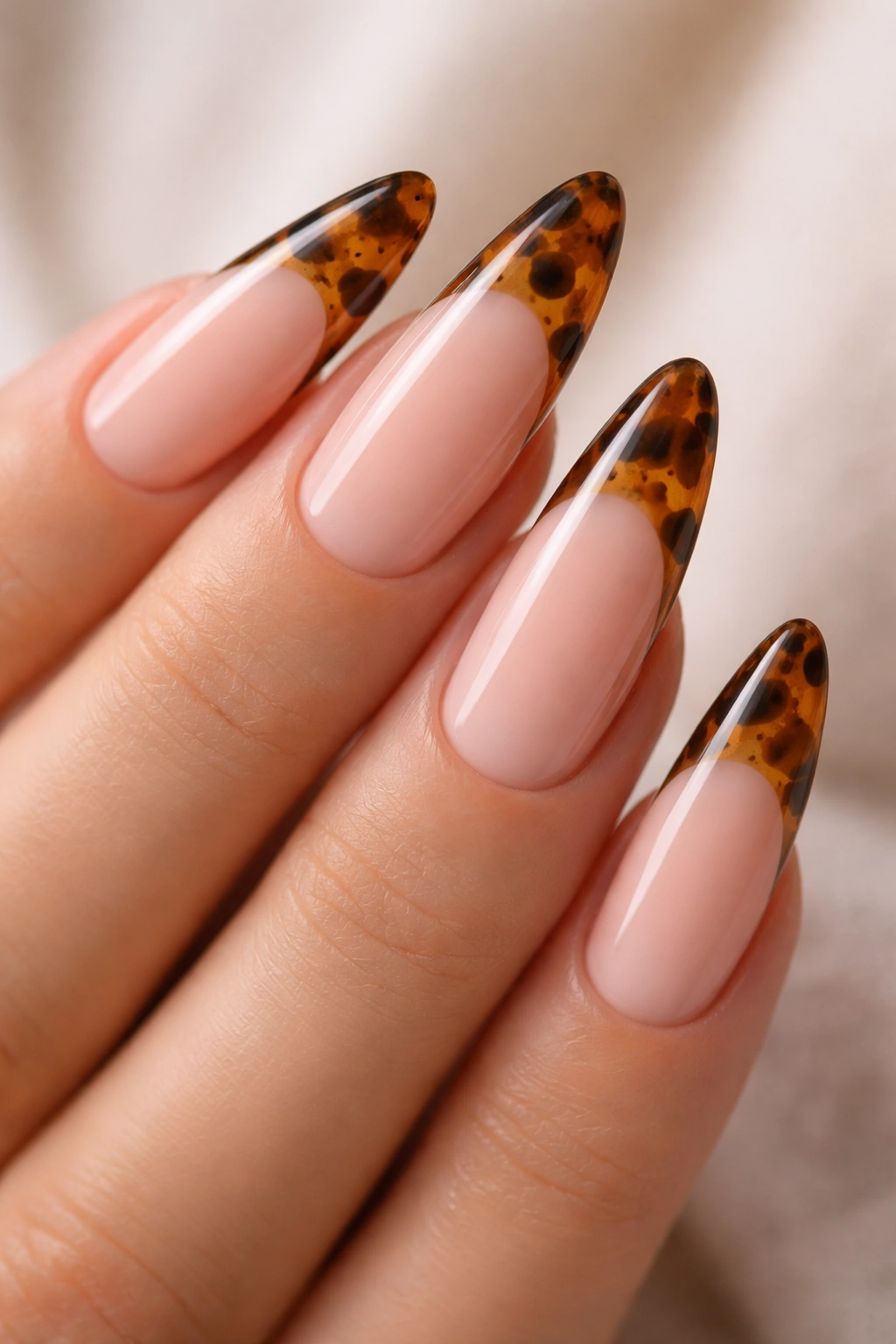
Tortoiseshell French tips look complicated from far away, but up close they are mostly translucent brown, amber, and a few soft black spots.
That layered look suits long almond nails because the shape gives the design room to stretch out. A tortoiseshell tip on a short nail can feel crowded. On a long almond, the pattern breathes. The trick is to keep the print mostly at the tip and let the nude base stay quiet.
Why translucent layers matter
If the brown is painted opaquely, the pattern loses its depth and starts to look flat. The nicest tortoiseshell tips use thin amber layers, then small darker spots, then another sheer glaze over the top. That keeps the design warm instead of muddy.
- Use a nude or milky base with good contrast.
- Keep the tortoiseshell area to the tip only.
- Ask for irregular spots, not perfect dots.
- Finish with gloss so the layers show through.
This is one of my favorites for anyone who wants something a little less expected than white French tips but does not want to leave the French shape behind entirely. It feels styled without needing extra decoration.
16. Pearl Accent French Almonds
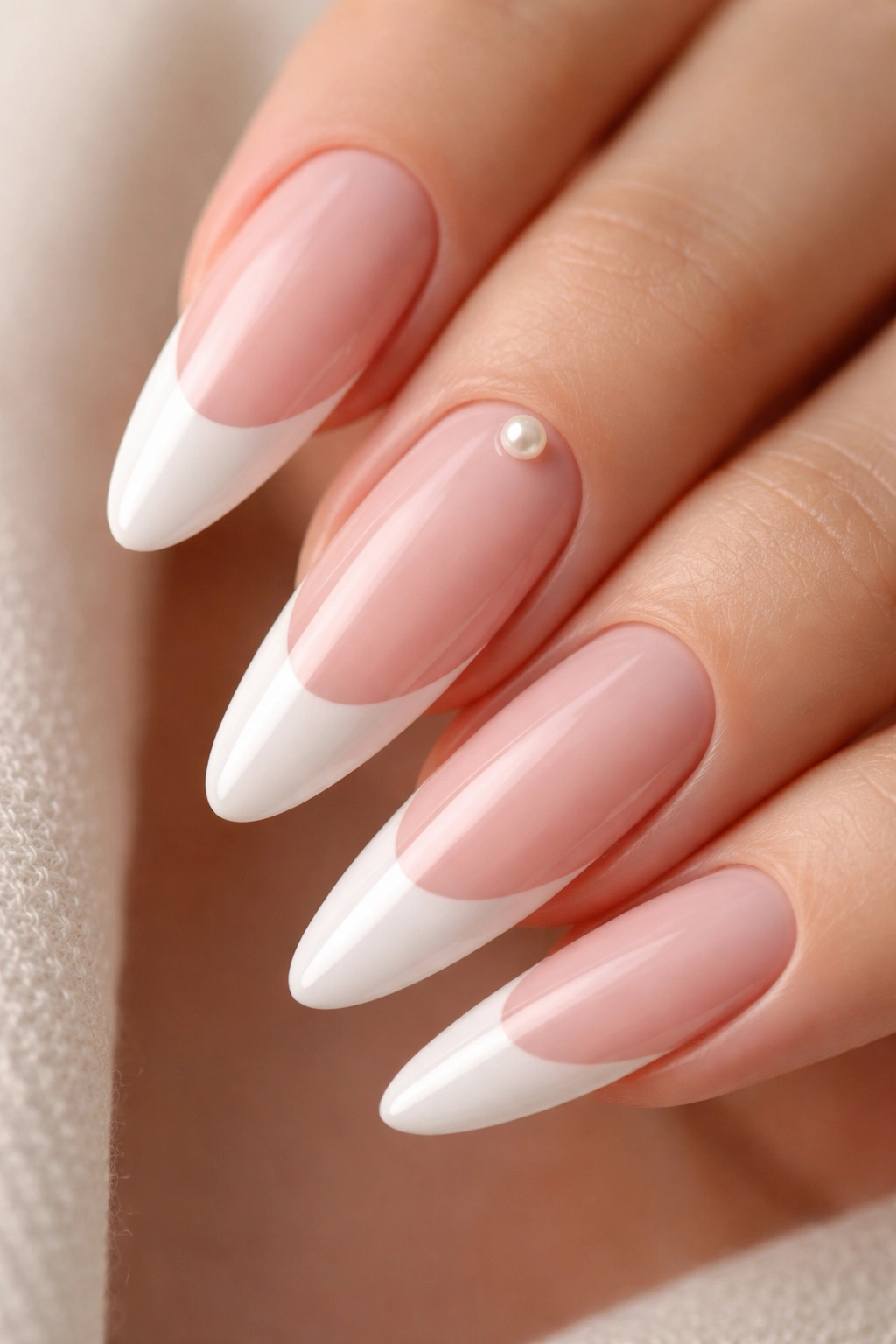
A single pearl can change the whole mood of a French manicure.
On a long almond nail, the pearl accent works because the French tip already gives you a clean base to build on. One small 3D pearl near the cuticle, or a tiny cluster on one accent nail, keeps the design from tipping into costume territory. The rest of the manicure should stay calm. If every nail gets a pearl, the shape gets lost.
Where to place the 3D detail
The safest placement is usually on the ring finger or middle finger, near the base of the nail. That keeps the tip open and lets the almond shape stay visible. You do not want the pearl so large that it catches on hair or clothes every few minutes.
- Choose a single pearl about 2 to 3 mm wide for daily wear.
- Keep the French tip soft: white, milky, or pale pink.
- Use one accent nail if you want the set to stay wearable.
- Ask for a strong gel adhesive so the pearl sits low and flat.
This style works for weddings, events, or just a week when you want your hands to feel a little more dressed up. It is delicate, but not fragile-looking.
17. Bridal Soft French Almonds
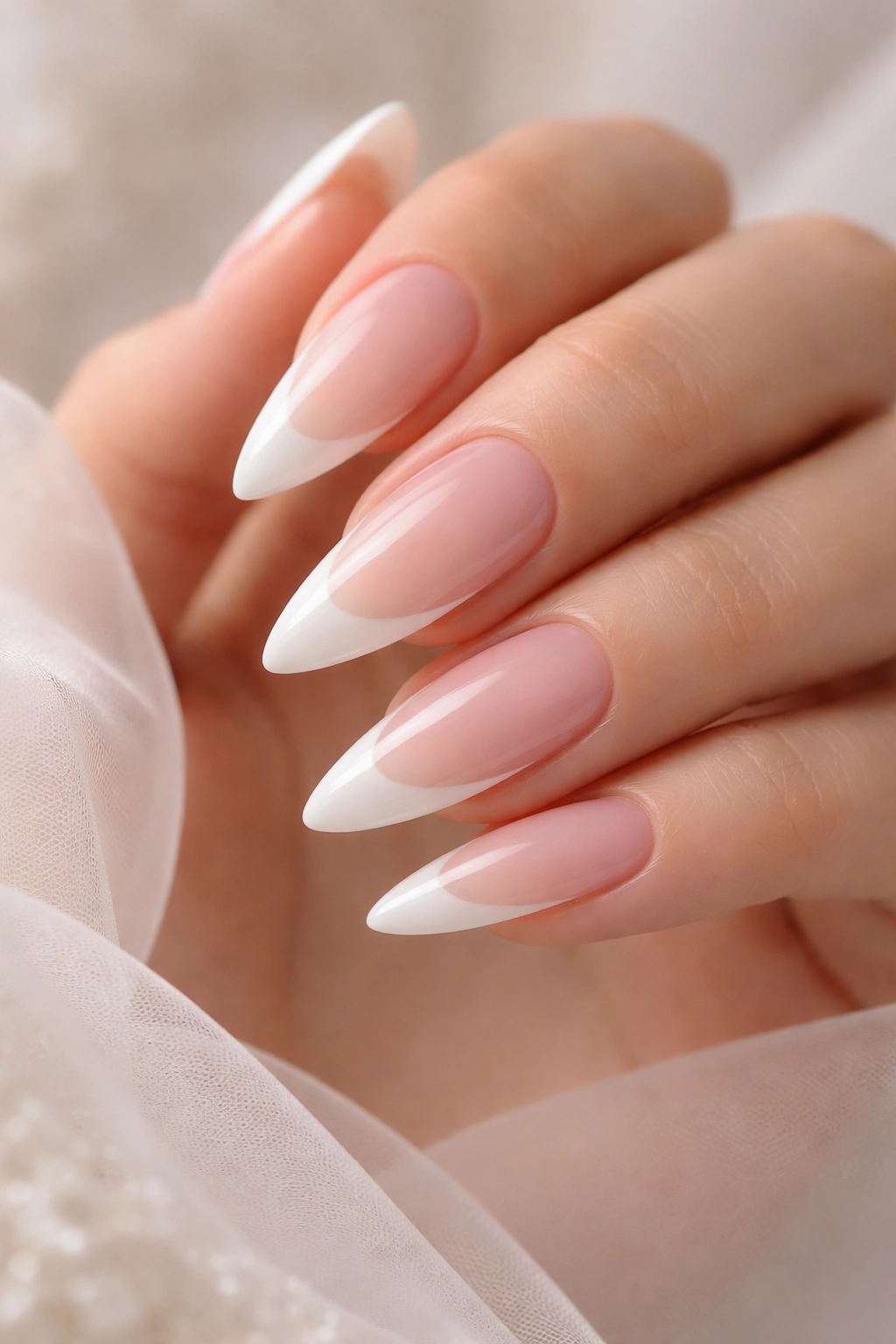
A bridal French on a long almond nail should look calm from a distance and precise up close.
That usually means a sheer pink or blush base, a soft white tip, and a glossy finish that avoids glare. The almond shape does a lot of the work here. It already feels graceful, so the nail design does not need to compete with it. What matters is keeping the tip narrow enough to preserve the taper and soft enough not to look stark.
This is one of the few styles where I would actually avoid anything too bold at the edge. A harsh white can look strange against a dress or veil fabric, especially in bright light. A softer white or milky ivory usually sits better. If you want a little more detail, a tiny pearl or one crystal on a single nail is enough.
A good bridal French also has to survive a long day. Thin product layers help. So does a top coat that cures fully and doesn’t leave the surface tacky after the final wipe. Nothing ruins a close look like a tip that chips the moment the bouquet gets handed over.
18. Reverse French Almonds
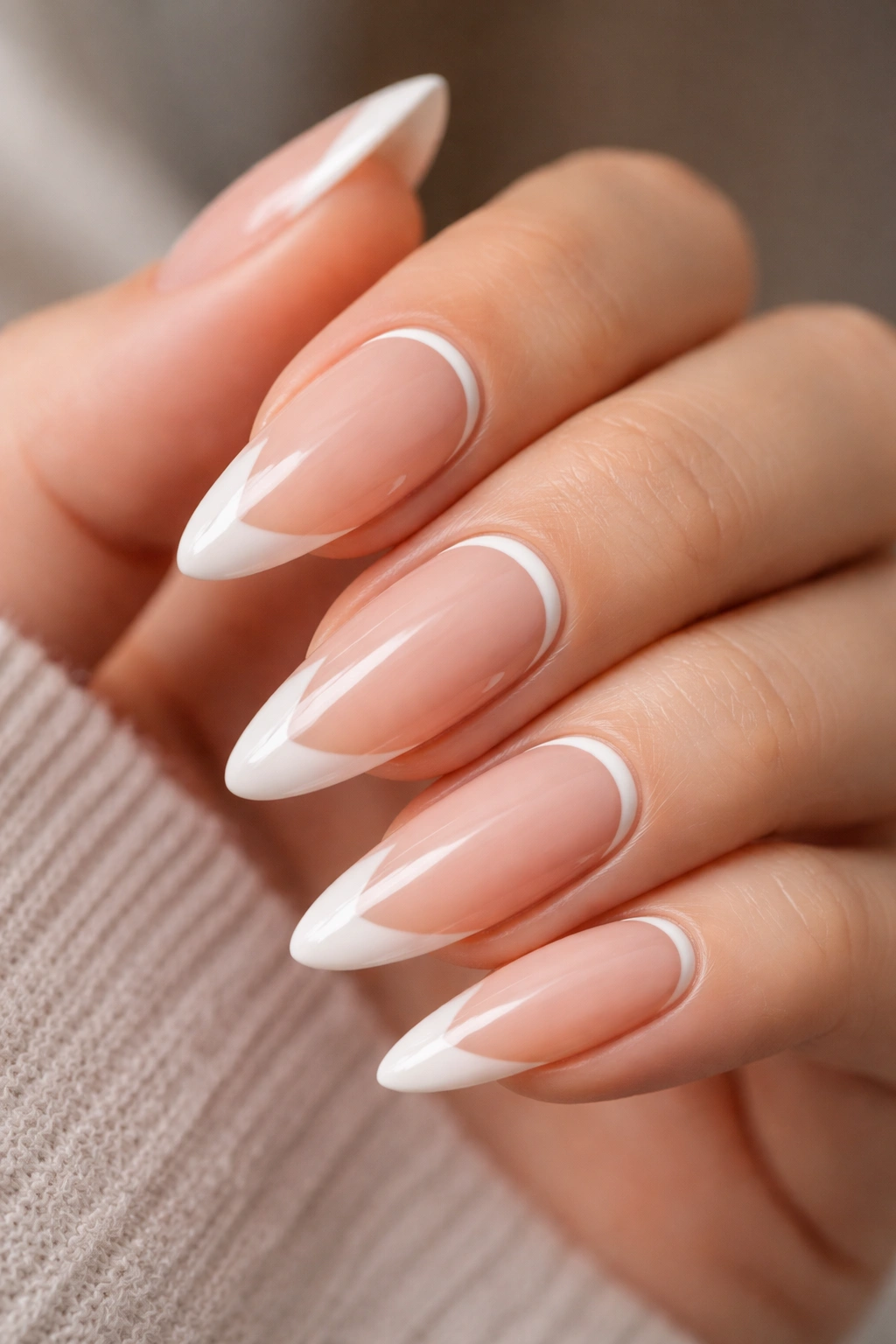
Reverse French nails shift the attention to the base, which makes the long almond shape feel fresh without giving up the clean French idea.
Instead of a colored tip, the accent sits near the cuticle in a crescent or moon shape. On long almond nails, that placement balances the length in a nice way. The eye starts lower, then moves up the nail toward the point. It’s a small change, but it changes the whole rhythm of the manicure.
How low the moon should sit
The crescent should follow the natural cuticle curve and leave a thin gap so the nail still looks neat as it grows. Too low, and it can make the nail look cramped. Too high, and it stops reading as a reverse French at all.
- Best with sheer nude or soft pink bases.
- Gold, white, black, and chrome crescents all work well.
- Keep the moon thin if the nail is very long.
- Great for people who want a French manicure but are tired of the same tip placement.
I like reverse French on almond nails because it respects the shape instead of trying to force a standard tip onto it. It feels modern without needing a lot of extra art.
19. Minimal Thin-Line French Almonds
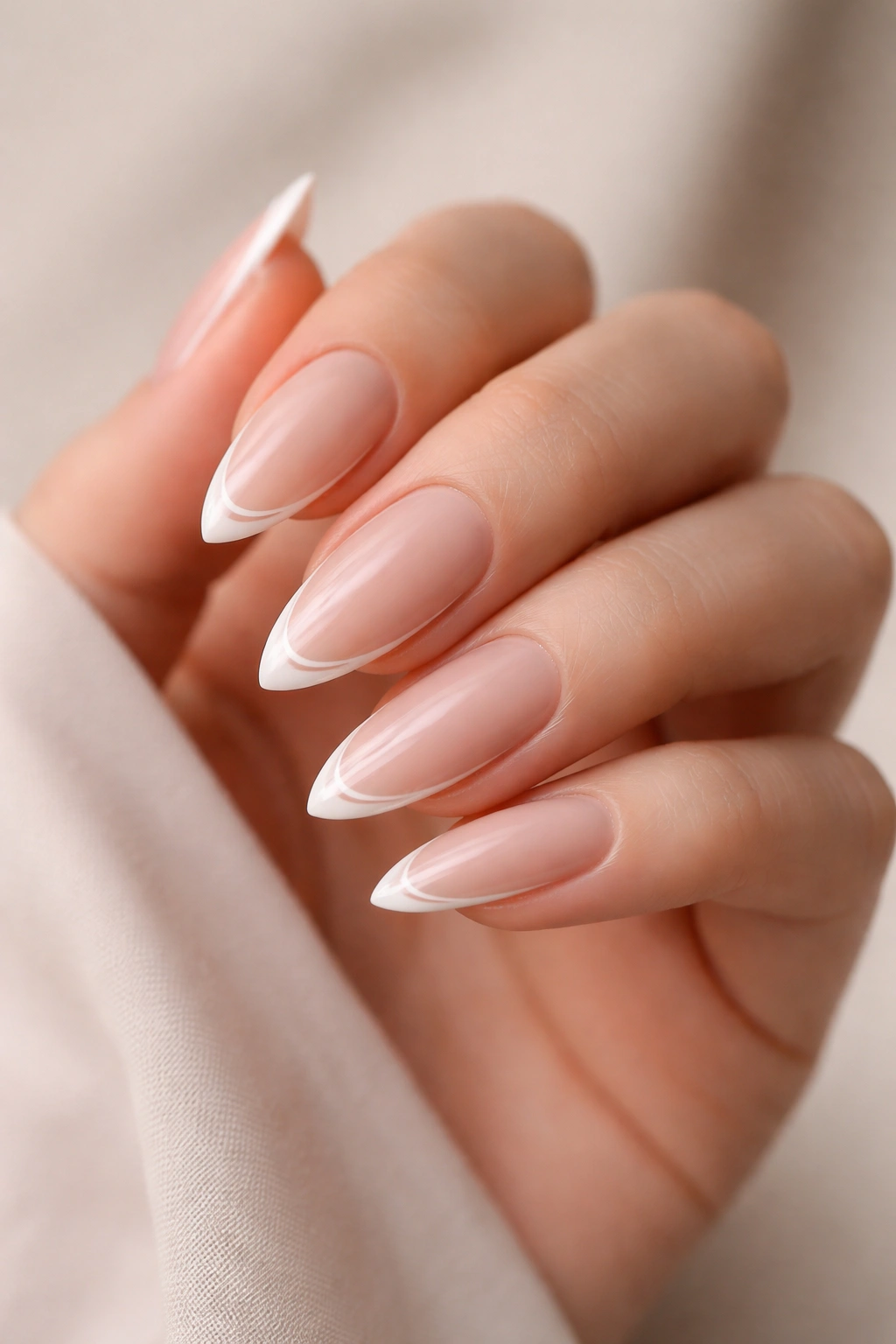
Why does a hairline-thin French tip look so clean on a long almond nail? Because it leaves the shape uncluttered.
The thin-line French is almost the opposite of a heavy classic tip. The white edge is so narrow that it acts like an outline rather than a block of color. On long almond nails, that restraint feels sharp. You see the taper first, then the line. Not the other way around.
How to keep the line clean
Ask for a free-edge line no thicker than 1 mm if you want the most minimal version. That line should follow the nail’s curve without wobbling near the corners. A shaky line is the one thing this style cannot forgive.
- Best on long, slim almond extensions.
- Works with clear, nude, or milky bases.
- Looks especially clean in glossy finish.
- Good for people who want French nails but hate a thick stripe.
This is one of the easiest styles to keep looking fresh as the nail grows. Because the line is so small, regrowth does not shout as quickly. That makes it a smart choice if you prefer to stretch salon visits a little longer.
20. Barely-There Milky French Almonds
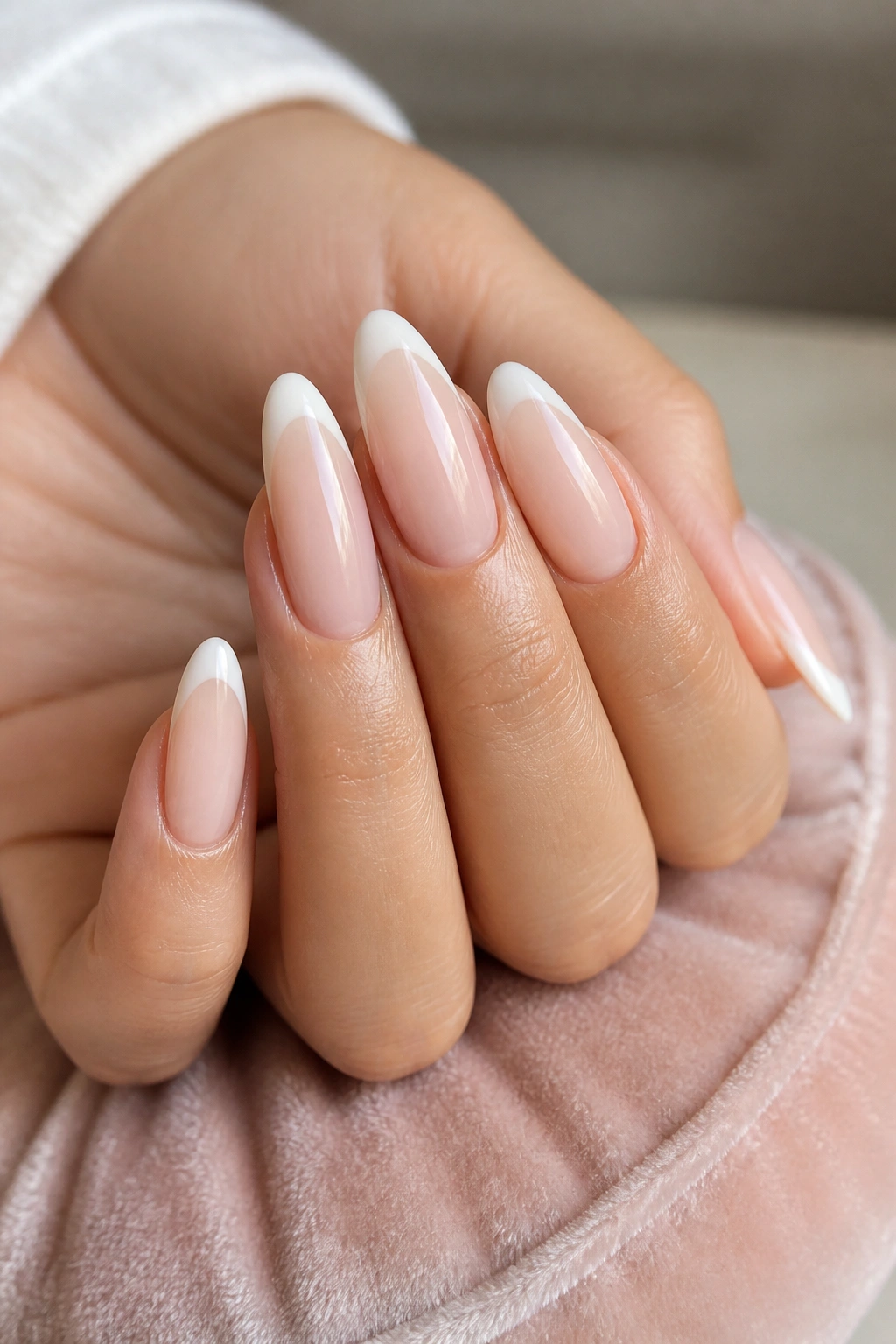
A barely-there milky French is the one I reach for when I want the nail shape to do most of the talking.
The base is soft and translucent, the tip is off-white rather than bright white, and the whole manicure sits in that quiet zone where you notice it more up close than from across the room. On a long almond nail, that softness works because the length already gives the hand enough presence. The French tip just needs to sharpen the edge a little.
This style is also forgiving. It hides tiny imperfections in the natural nail, and the grow-out tends to blend better than a stark white band. If you wear your nails long, that matters more than people admit. A manicure that still looks tidy after a couple of weeks saves you from feeling like the set has gone off the rails.
If you only want one long French tip almond look that can move from daily wear to a dressier setting without changing anything, this is the one I’d pick first. It is calm, neat, and easy to live with. Some designs ask for attention. This one earns it quietly.