

The first close-up you’ll stare at after the ceremony usually isn’t your shoes or your bouquet. It’s your ring hand. If you’re choosing ballerina nails for your wedding day, that matters more than it sounds, because this shape lives in the sweet spot between soft and structured: tapered sides, a flat tip, and enough surface area for detail without the sharp look of a stiletto.
Bridal manicures get tested from odd angles. They show up wrapped around a champagne glass, tucked into a partner’s shoulder, holding a vow book, adjusting a veil, pressing into a bouquet stem. A design that looks sweet on a sample stick can turn heavy once it sits next to bright satin or a diamond ring under flash.
That’s why I keep coming back to ballerina nails for weddings. The shape gives nail artists room to paint a cleaner French line, a smoother ombré, or a finer lace detail than they can usually pull off on rounder nails. And when the length is kept reasonable, the whole thing reads polished, not theatrical.
Some brides want a whisper of color. Others want pearl, chrome, gold edging, or a tiny nod to the dress itself. Both can work. The trick is scale, finish, and knowing where a bridal manicure earns its keep: in real life, not only on the salon swatch wall.
Why Ballerina Nails Hold Up in Wedding Close-Ups
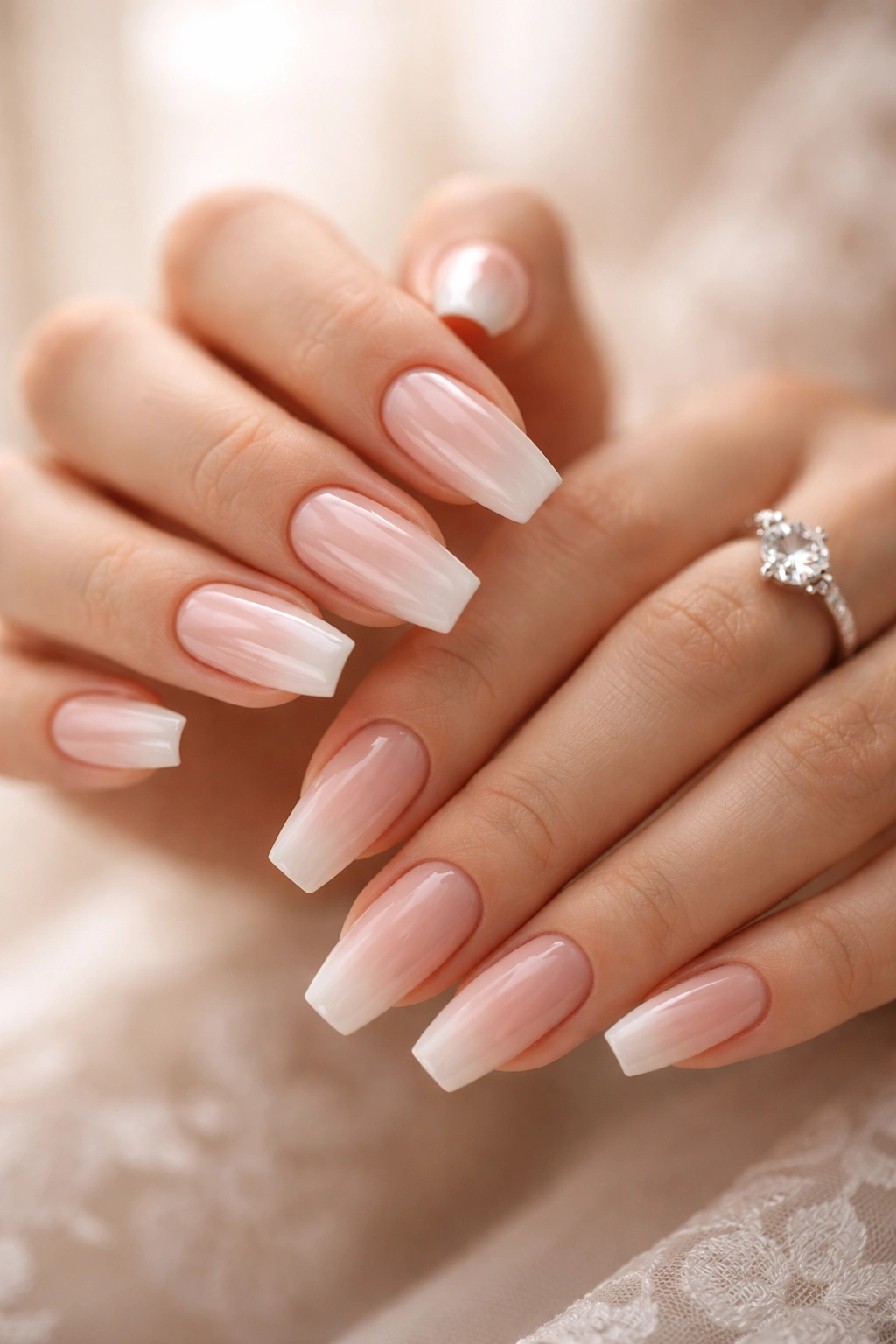
Ballerina nails photograph better than many people expect. The shape gives you those straight sidewalls and that crisp, squared tip, which means details sit in a cleaner frame. French tips look more intentional. Ombré fades look longer. Minimal art has space to breathe.
Nail techs still use coffin nails and ballerina nails almost interchangeably, though the wedding crowd usually prefers the second name for obvious reasons. Same shape, softer mood. That mood shift matters when you’re trying to match silk, tulle, pearls, lace, and polished metal without drifting into anything harsh.
There’s a practical side too. The flat tip often feels more stable than a point when you’re buttoning fabric, handling invitation paper, or fastening tiny hooks at the back of a dress. You still need the right length — more on that in a second — but the shape itself tends to be easier to live with during a full wedding schedule than a long almond or stiletto set.
And the visual payoff is real. On camera, the silhouette reads elegant from a distance, while the broader tip gives close-up shots enough design surface to show detail without cramming it all into the center of the nail.
Choosing Length and Thickness Before You Pick the Design
A lot of bridal nail regret has nothing to do with color.
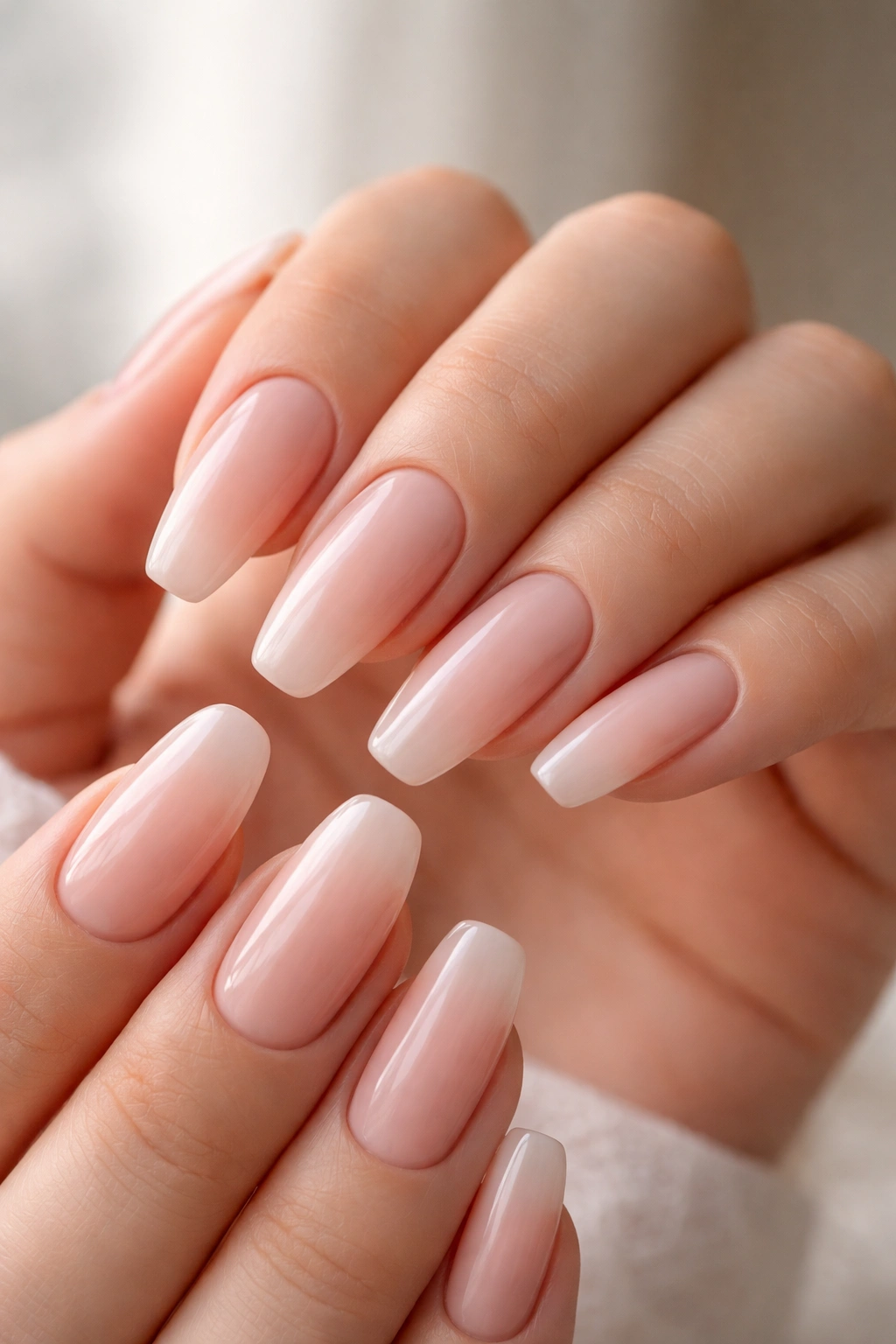
It starts with length. The design may be lovely, but if your nails are so long that you can’t clasp a necklace, peel off dress tape, or text your photographer, the manicure becomes one more thing to manage. For most wedding looks, a medium ballerina length — about 4 to 8 millimeters past the fingertip — is the safest range. You keep the shape, the clean taper, and enough room for detail without losing control of your hands.
The length that usually feels right
If you don’t wear extensions often, stay closer to the short-medium side. That means the free edge is visible, the ballerina shape is still obvious, and your hands still move like your hands.
If you wear longer sets all the time, go ahead and keep the drama — but make sure the width, thickness, and apex are balanced. Sheer bridal shades show structural mistakes fast. A nail that’s too flat can snap. One that’s too bulky looks heavy in ring photos.
Why structure matters more than extra length
Ask for builder gel, hard gel, or an overlay with a soft apex if you’re wearing extensions or if your natural nails bend. Bridal designs often use sheer pinks, milky nudes, soft whites, and pearl finishes. Those colors do not hide ridges, cracks, or lumpy architecture.
A good tech will place the apex a bit back from the center so the nail has strength where it needs it, while the tip stays slim. That balance keeps the shape refined instead of chunky — a detail people notice even if they cannot explain why.
The Nail Appointment Timeline That Causes Less Stress
Picture this: you book your bridal manicure the afternoon before the ceremony, choose a design from memory, and realize at the salon that your ring is yellow gold, your dress is ivory, and the polish you picked leans cool and pink. It happens more than people admit.
A cleaner approach is to test the general look ahead of time. Do a trial manicure 3 to 5 weeks before the wedding if your design includes chrome, lace art, pearls, crystals, or a custom shade mix. You don’t need the full bridal set at that appointment. You need answers: Does that nude pull gray on your skin? Does matte topcoat make your hands look dry? Do pearls snag fabric?
Bring references that matter in real life, not only screenshots.
- Your ring or a photo of it in daylight
- A dress fabric swatch if you have one
- A bouquet color palette
- A photo of the exact nail length you want on a real hand
- Notes on what you cannot tolerate: heavy embellishment, long tips, rough texture
Book the final appointment 1 to 2 days before the ceremony. Any earlier, and you risk tip wear or cuticle grow-out. Any later, and you add pressure to a day that already has enough of it.
One more thing. Start cuticle oil and hand cream at least 10 to 14 days ahead. Dry cuticles can make even the best bridal manicure look unfinished.
1. Milky Pink Micro-French Ballerina Nails
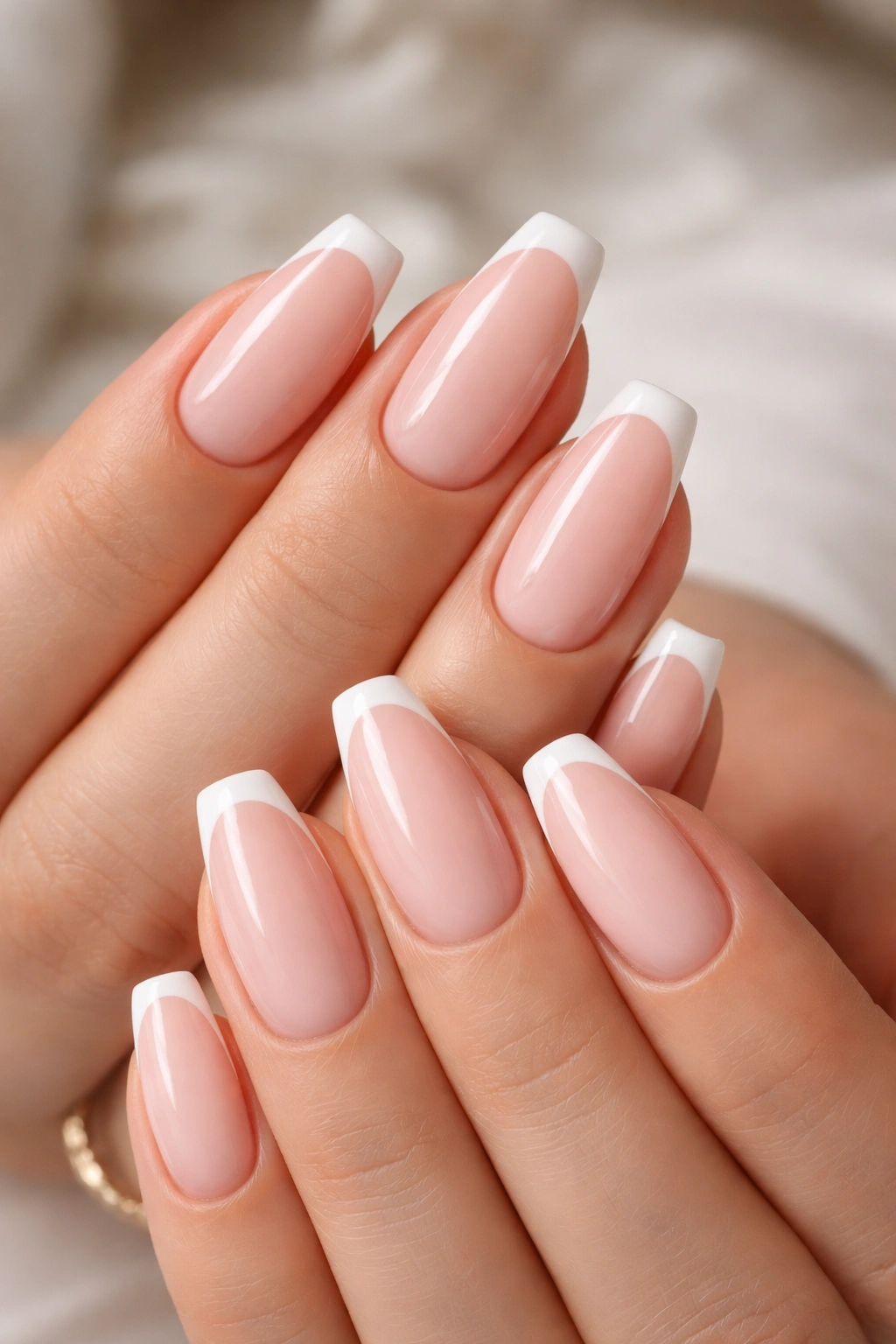
If I had to pick one bridal manicure that almost never fights the dress, the ring, or the flowers, this would be it. A milky pink base with a micro-French tip is clean, soft, and sharp in photos without looking severe.
The magic is in the scale. The tip should sit around 1 to 1.5 millimeters wide, not the thick white band you’d use for a retro French. On ballerina nails, that narrow line follows the straight edge of the tip and makes the whole shape look longer.
Why this one earns its place
The base color does a lot of the work. Ask for a semi-sheer pink with a drop of beige or peach if your skin runs warm, or a cooler baby pink if your skin runs rosy. A chalky paper-white tip can look harsh against an ivory gown, so a soft white is often the better call.
What to ask your nail tech for
- A milky pink builder base that blurs the nail line without hiding it
- A slim French tip, painted with a detail brush rather than stamped
- A soft white instead of bright correction-fluid white
- A high-gloss top coat, not glitter and not chrome
- Medium ballerina length for the cleanest proportion
Best move: wear this design if your dress already has beadwork, lace, or embroidery. The nails stay polished without competing for attention.
2. Blush Ombré Baby Boomer Ballerina Nails
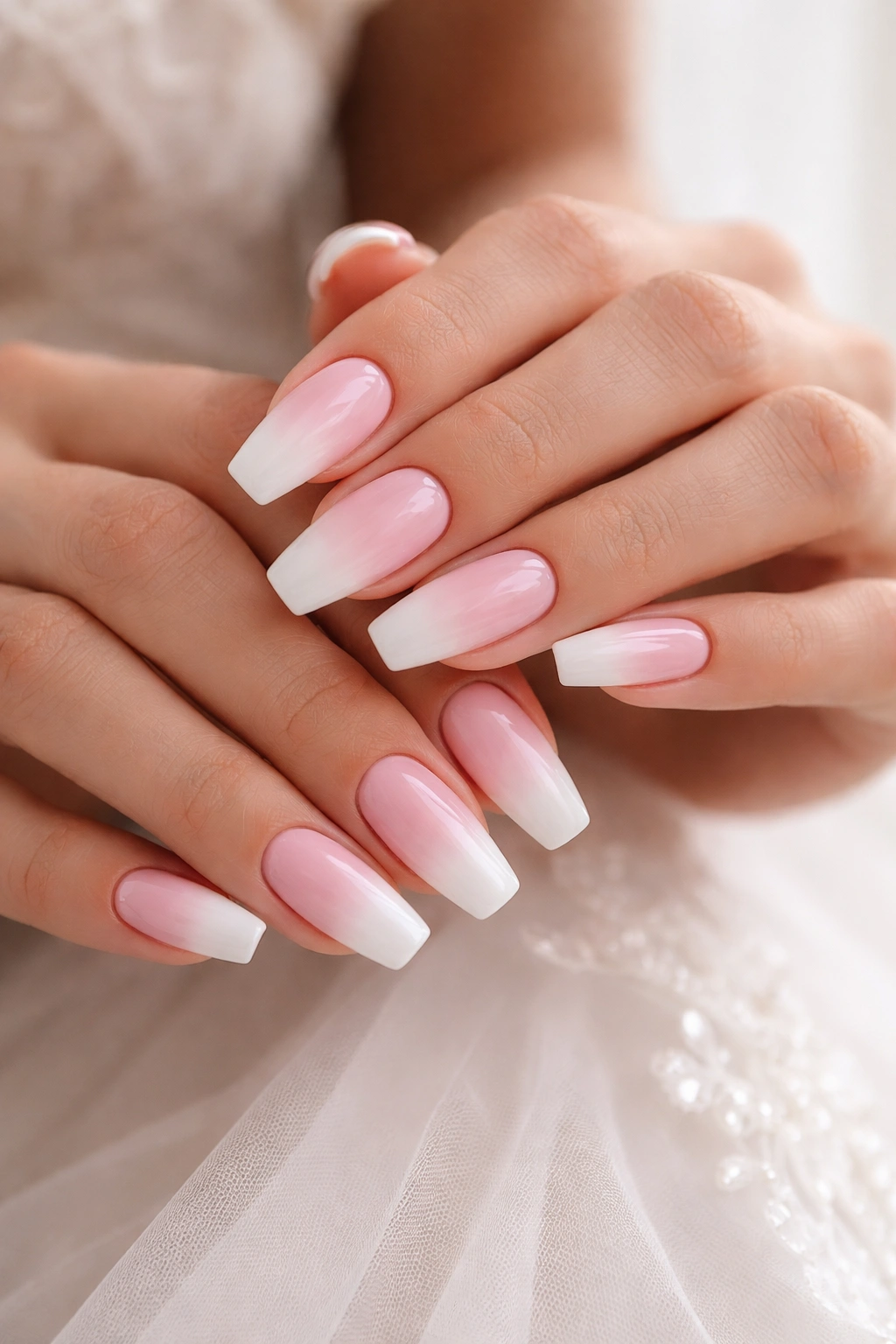
This is the bridal set for people who like French nails but don’t want to see a line. A baby boomer fade blends blush pink at the nail bed into a cloudy ivory at the tip, and on a ballerina shape it stretches the hand in a quiet, flattering way.
The fade matters more than the colors. If the ombré starts too high, the nail looks short and blunt. If the white is too opaque, it can turn powdery in flash photography. A softer blend — usually done with an airbrush, a sponge, or a skilled hand-brushed blend — looks richer and more expensive because the eye never catches a hard stop.
This design also hides grow-out better than a crisp French. That makes it handy if your ceremony sits a day or two after the appointment, or if you’re traveling and want the manicure to keep looking fresh through rehearsal dinner, photos, and the trip home.
Blush ombré also flatters a wide range of dress tones. Bright white dresses still work, but ivory, cream, oyster, and champagne fabrics tend to make this manicure sing because the fade echoes those softer shifts in fabric tone. If you’re wearing pearls, this set sits right next to them without pulling focus.
Ask for a pink-to-ivory fade with the white concentrated only on the last third of the nail. That placement keeps the nail long and airy.
3. Sheer Nude Ballerina Nails with Tiny Pearl Accents
Want detail without sparkle?
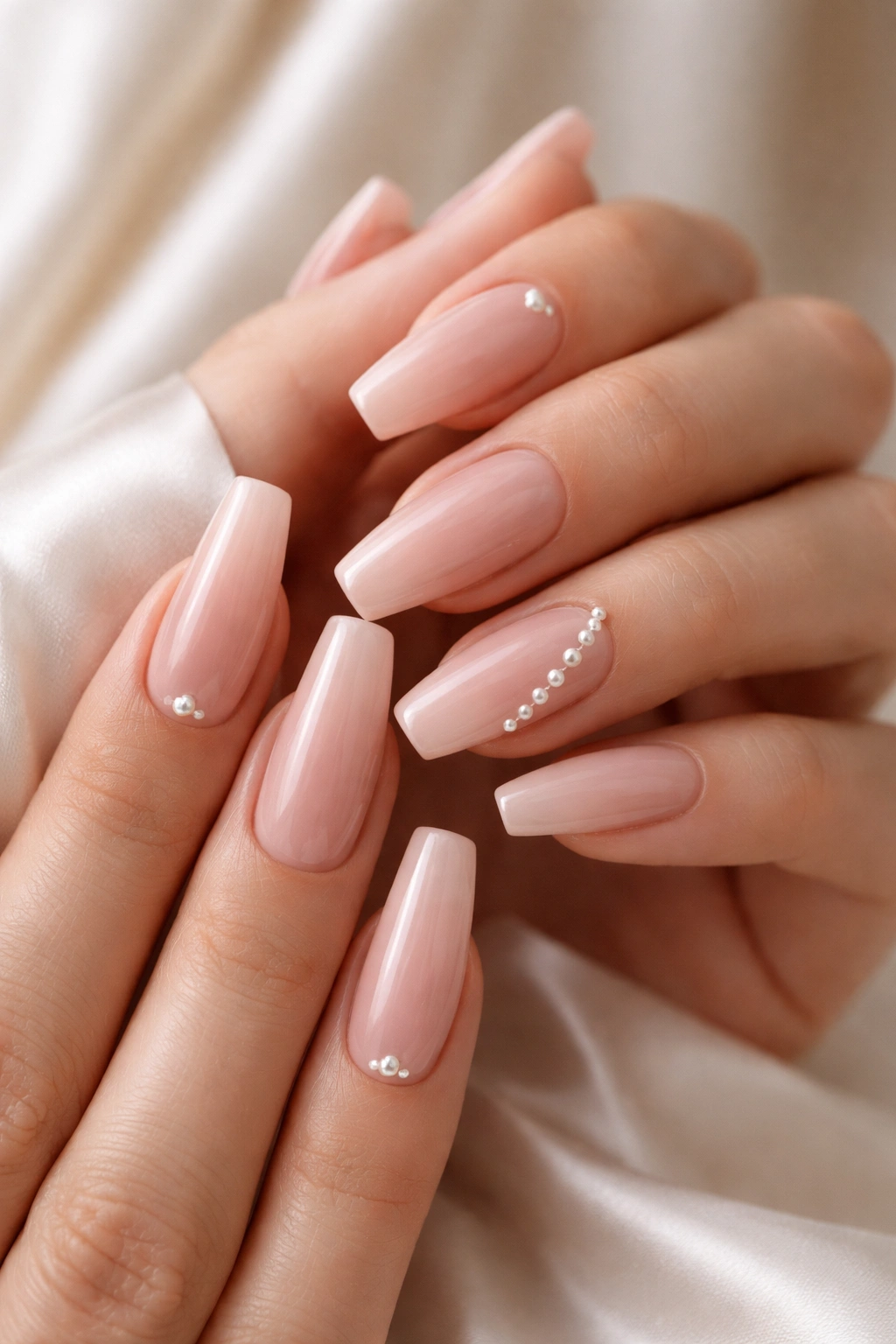
A sheer nude ballerina set with pearl accents can do that job better than crystals, glitter, or foil if your wedding style leans classic. The key is restraint: not a whole row of pearls, not 3D clusters on every finger, and not oversized cabochons that catch on lace.
Use pearls the way a good tailor uses covered buttons — sparingly, with purpose, and where the eye naturally lands. One tiny half-pearl at the base of the ring finger can be enough. Three micro pearls placed in a short arc near the cuticle on one accent nail can also work, especially if your gown has pearl beading.
How to place pearls without making the set fussy
Keep the embellishment to one or two nails per hand. Ask for flat-back half pearls in the 1.5 to 2 millimeter range and have them sealed well around the edges with gel. Raised pieces look sweet at the appointment and annoying by hour six.
The base shade matters too. A beige-pink jelly nude usually gives pearls a softer home than a cold, pale pink. You want the pearls to read intentional, not like random dots floating on the nail.
Pearls also pair best with low-texture gowns, satin bows, drop earrings, or a single-strand pearl necklace. If your dress already has dense silver beading, crystals may make more sense than pearls.
4. Lace-Pattern Ballerina Nails for Dresses with Fine Detail
If your sleeves, bodice, or veil feature lace, copying that motif onto the nails can be lovely — or a mess. The line between the two is thin.
The version that tends to work uses a translucent nude base and lace art on only two to four nails total. A skilled nail artist can echo chantilly, floral lace, or scalloped trim with white gel paint and a fine liner brush, but the design needs negative space around it. Without that breathing room, lace art starts to look muddy.
Here’s where ballerina nails help. The straight sidewalls create a stable canvas for tiny repeating lines, netting, and scallops. Almond nails can handle lace too, though the pattern often has to curve more sharply. On ballerina tips, the layout reads cleaner.
A few details make or break this look:
- Match the lace to the spirit of the dress, not every stitch
- Use ivory or soft white if the gown is not bright white
- Keep full lace coverage to accent nails
- Place the densest pattern near one side or at the tip, not wall-to-wall
- Seal with gloss so the artwork stays crisp
I’m picky about this one. When it’s done with a light hand, it feels bridal in the best way. When it’s too literal, it starts to look like costume art.
5. Glazed Icy Pink Ballerina Nails
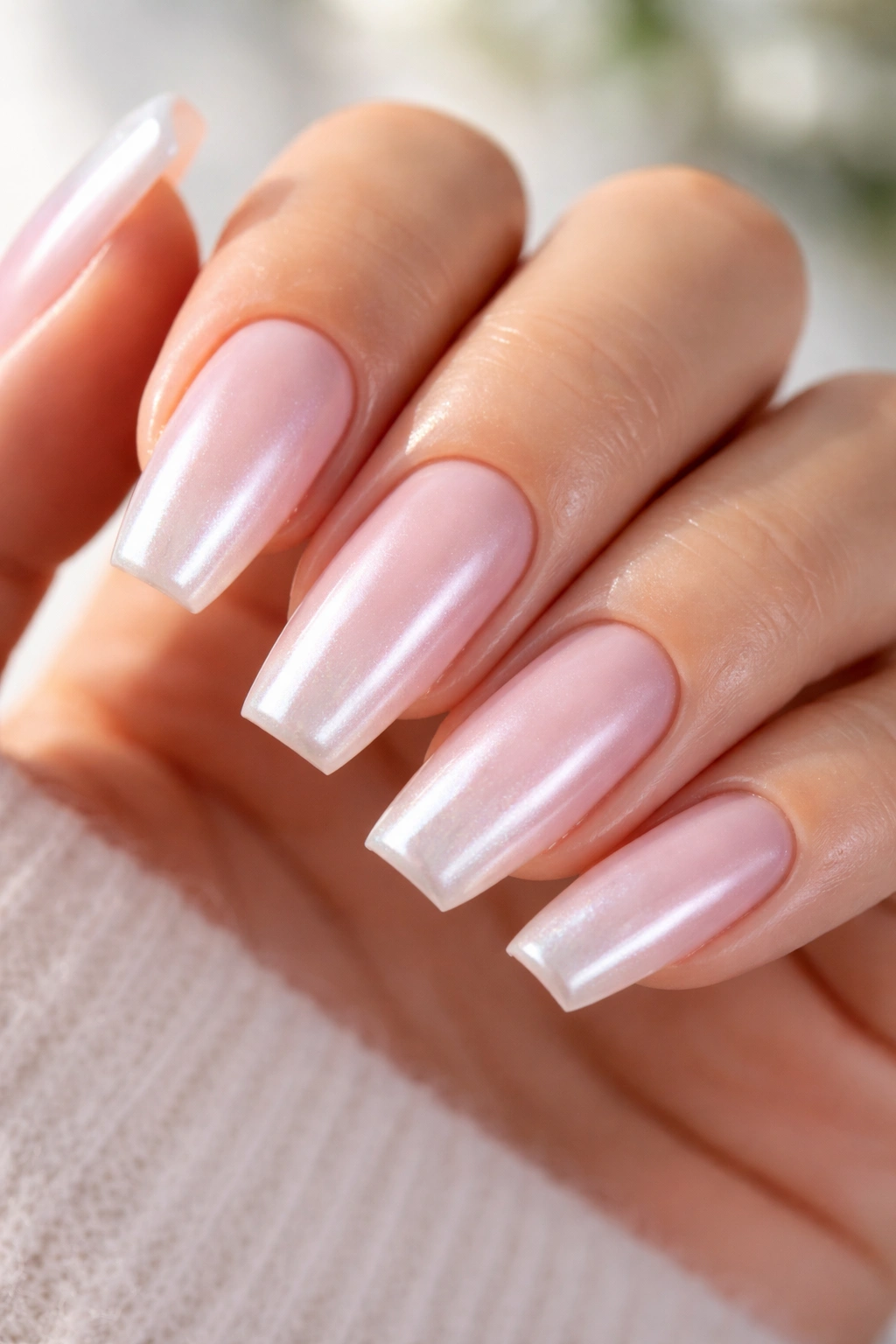
Chrome has a reputation problem in bridal beauty because people picture mirror-finish silver nails that bounce light like car parts. That isn’t what I mean here. A glazed icy pink set uses a sheer pink base and a fine pearl chrome dusted over the top, so the surface flashes a cool sheen instead of a hard metallic finish.
On a ballerina shape, that sheen looks clean because the flat tip catches light across a wider plane than almond or oval nails do. In daylight, the manicure reads like polished glass with a pink undertone. Under indoor lighting, you get a soft halo effect that can make the nails look smoother and more even.
This design suits brides who want something cleaner than glitter but less plain than a milk-bath nude. It also plays nicely with silver, platinum, white gold, and clear stones. If your jewelry runs yellow gold and your dress leans warm ivory, test it first. Cool chrome can sometimes make warm fabrics look yellower by contrast.
Application matters. The base should stay sheer enough that the nail does not look painted over. Two thin coats are usually better than three heavier ones. Then the chrome goes on in a whisper-thin layer. Too much powder and the whole thing tips into frosted, almost metallic territory.
One caution: chrome shows scratches faster than a plain gloss top coat. Good top coat chemistry helps, but if you’re hauling boxes, steaming fabric, or setting tables the day before the wedding, wear gloves.
6. Thin Gold-Edge French Ballerina Nails
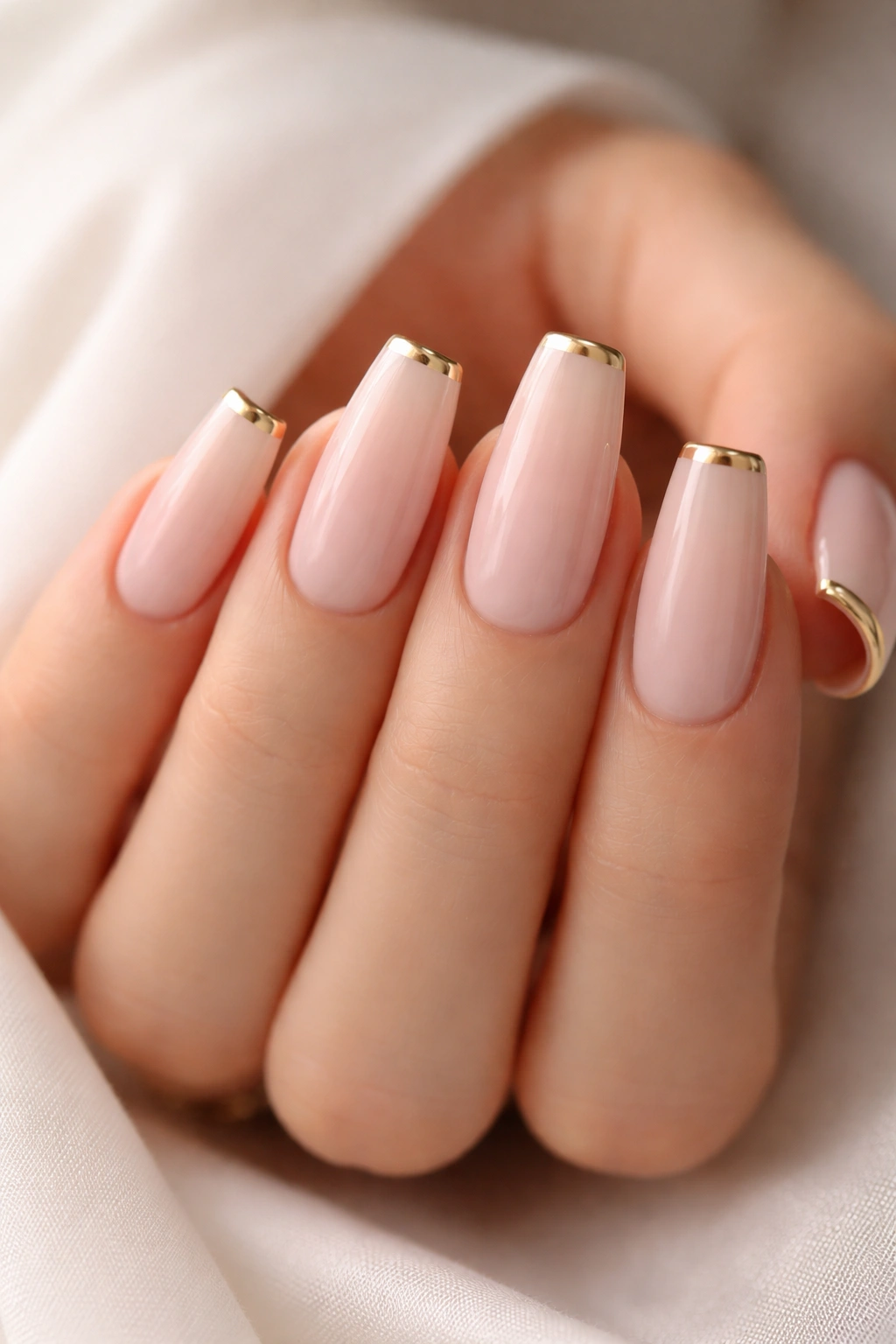
Unlike a standard white French, a gold-edge French ties directly into jewelry. That makes it a sharp choice for brides wearing yellow gold rings, antique gold settings, or warm ivory fabric.
The design is spare: a nude or milky pink base, then a fine metallic line tracing the free edge. Not a chunky gold tip. Not full glitter. Think 0.5 to 1 millimeter of soft metallic foil gel or gold chrome sealed under top coat. On ballerina nails, that thin line follows the flat tip and looks architectural in the best way.
This style works especially well with minimalist gowns, square necklines, structured satin, or older family jewelry that has warmth and history. It can also bridge mixed metals if your engagement ring is white gold but your wedding band or earrings lean yellow gold. The little gold edge picks up warmth without covering the whole nail.
Who should skip it? Brides with ornate gold embroidery on the dress, heavy gold bangles, and a lot of sparkle near the hands. At that point the manicure may start competing instead of supporting.
My recommendation: keep the base creamy and quiet, and let the gold stay thin. The narrower the line, the more polished the effect.
7. Soft Peach Ballerina Nails for Sunlit Outdoor Ceremonies
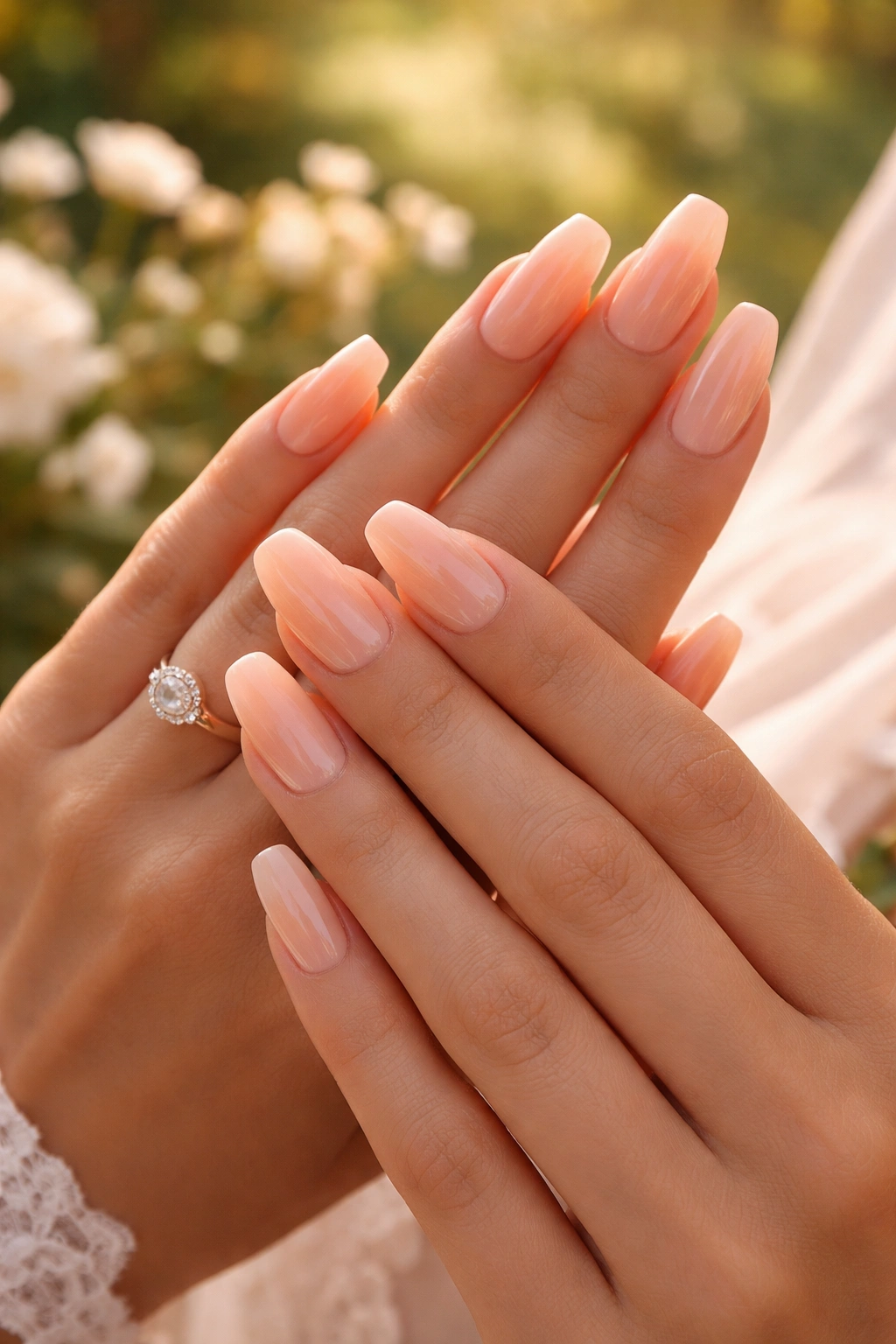
Pink gets all the bridal attention, though peach often looks better once the ceremony moves outdoors. A soft peach nude can warm up the hand, flatter skin that tans or flushes golden, and sit more naturally beside ivory or cream fabric than a cooler pink does.
Under daylight, especially in open shade or late-afternoon sun, cooler pinks can sometimes pull lilac or gray. Peach avoids that. The shade I like lives between blush and apricot — enough warmth to make the nails look healthy, not enough orange to read cosmetic.
When peach beats pink
Peach earns its place when your bouquet leans gardeny rather than icy: cream roses, butter tones, champagne blooms, muted coral, dusty green stems. It also works if your makeup has warmth through the cheeks and lips. The manicure feels tied into the face, which sounds tiny until you look at hand-to-face portraits.
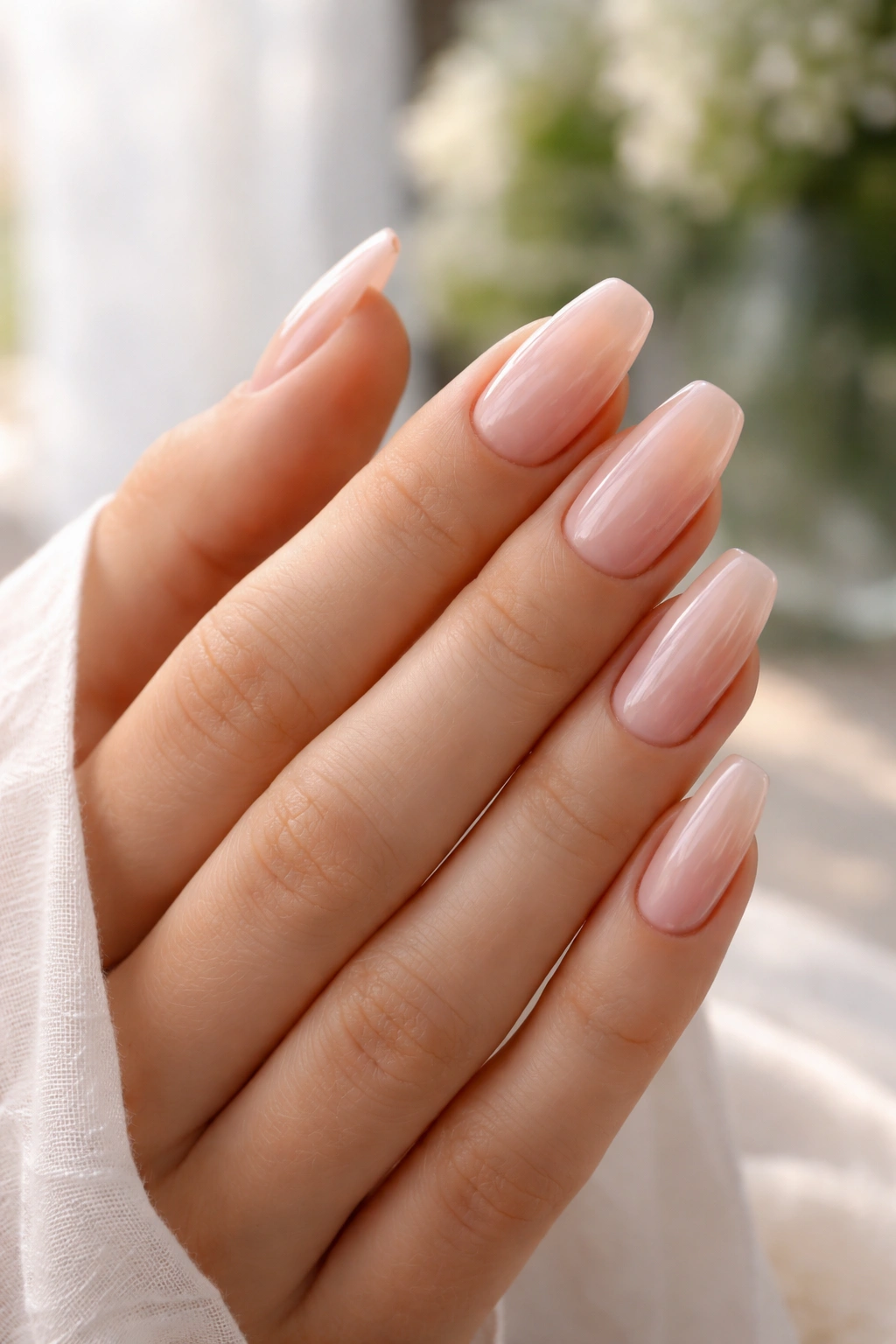
Ask for a sheer peach-beige jelly instead of a flat cream polish. Sheer color lets the natural nail line peek through a bit, and that transparency keeps the bridal mood light.
Good pairing: glossy finish, short-to-medium ballerina length, maybe a single pearl or no embellishment at all. Peach doesn’t need much help.
8. Ivory Matte Ballerina Nails with Glossy French Tips
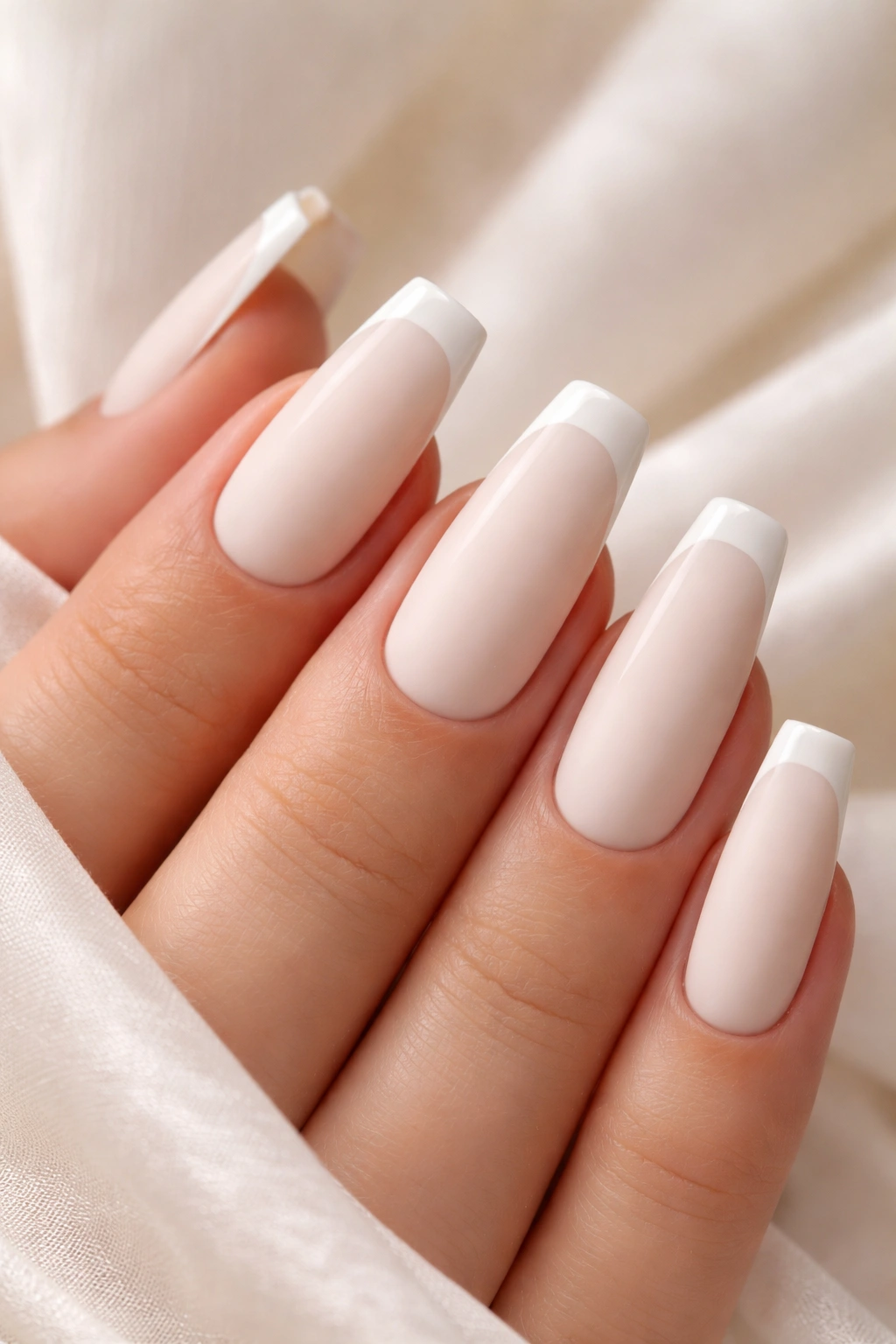
This one has texture rather than decoration, and that difference matters. A matte ivory base with glossy French tips gives you contrast without crystals, glitter, or painted art. It feels tailored.
The look suits crepe, mikado, matte satin, and clean-column gowns because the finish echoes fabric rather than jewelry. From a distance, the nails read soft and velvety. Up close, the glossy tip catches the eye, though in a controlled way. There’s no sparkle fighting the ring.
A few guardrails make this design stronger. First, keep the ivory slightly translucent or milky. Fully opaque white matte can turn chalky fast, especially on hands that run dry. Second, choose a thin or medium-width glossy tip, not a heavy block. The contrast between matte and gloss should be visible within a foot or two, not from across the room.
There is a catch. Matte top coat shows oil, makeup, and hand cream more than gloss does. If you choose this set, keep a lint-free wipe nearby before detail photos. A quick clean can restore that velvety look in seconds.
I like this manicure most for brides whose style is modern, restrained, and fabric-led. It says bridal without spelling it out.
9. Clear Pink Builder-Gel Ballerina Nails with Encapsulated Florals
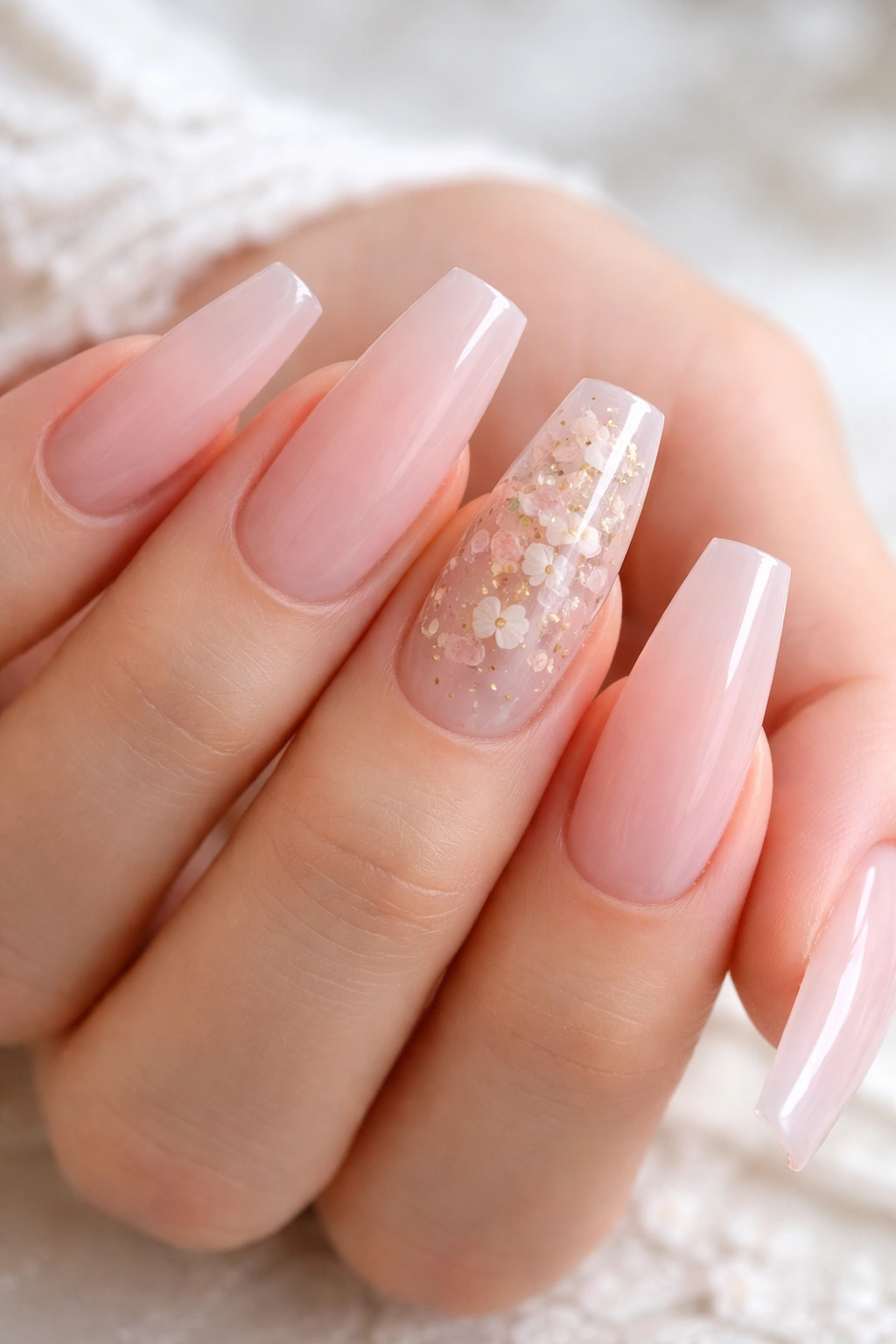
Can floral nails stay wedding-worthy instead of crafty? Yes — if the flowers are tiny, pale, and sealed inside a clear or blush builder layer rather than pasted on top.
That distinction changes everything. Encapsulated florals look like petals suspended in glass. Surface stickers or chunky dried flowers can feel busy, catch on fabric, and age the look fast.
What to request so the set stays refined
Ask your nail tech to use pressed petals or dried floral fragments under 3 millimeters, placed on one or two accent nails only. Baby’s breath, ivory petals, soft blush pieces, and muted greenery tend to read best. Bright botanical mixes can start to look like vacation nails, not bridal nails.
Placement matters too. A scatter along one side of the nail, or concentrated near the tip, usually feels lighter than filling the whole surface. The surrounding nails should stay plain — clear pink, milky nude, or a sheer blush.
Builder gel helps because it seals the plant material flat and gives the nail enough structure to stay smooth. If the overlay is too thin, you’ll feel the texture. If it’s too thick, the florals look trapped in a paperweight.
This design is lovely for garden weddings, greenhouse venues, vineyard settings, or bouquets with visible petal variation. Skip it if your dress already has dense floral appliqué from neck to hem. One floral story at a time is enough.
10. Barely-There Nude Ballerina Nails with Crystal Cuticle Accents
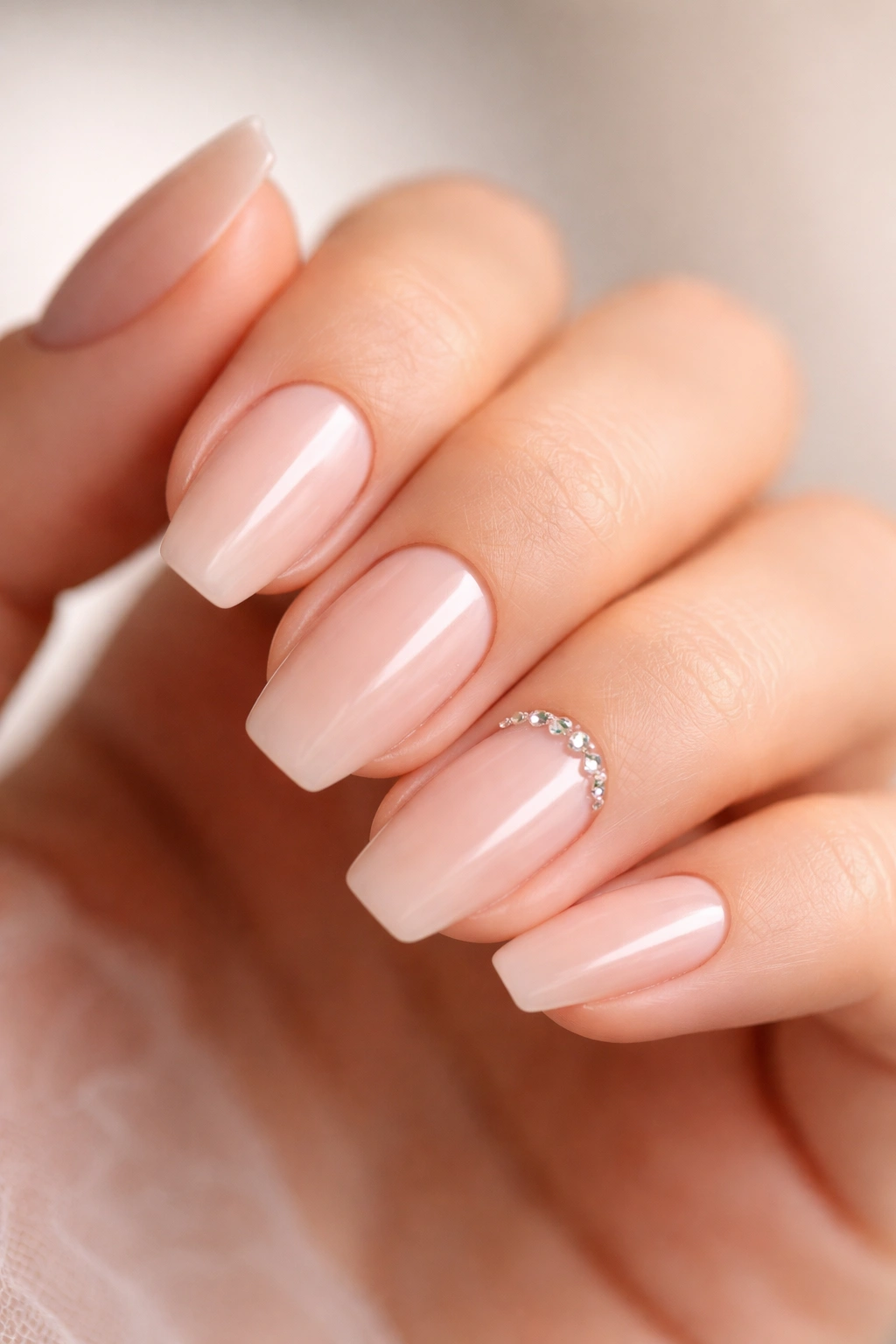
Picture a clean nude manicure from across the room. Then, when the hand turns, a tiny line of light appears at the base of one nail. That’s the whole idea here.
Crystal cuticle accents work because they stay close to the nail fold, where they echo jewelry instead of taking over the tip. On a bridal set, that placement looks smarter than a crystal French or scattered rhinestones across every finger.
A small cluster is usually plenty. Use flat-back crystals in SS3 to SS5 sizes — tiny enough to stay refined, bright enough to show in photos. I like them on the ring finger and maybe the thumb, or only on the ring finger if the rest of the look already has sparkle.
A few practical rules help:
- Choose clear or opal stones, not multicolor AB crystals
- Keep the cluster low and tight near the cuticle
- Use one to three stones per accent nail
- Pair with a sheer beige-pink or rosy nude base
- Ask for extra sealing around the edges if you’re traveling
This style works for brides who want one flash of glamour without committing to a full crystal set. It also reads well with diamond bands and pavé details because the stones on the nails pick up the same crisp light.
11. White Marble Ballerina Nails with Fine Gold Veins
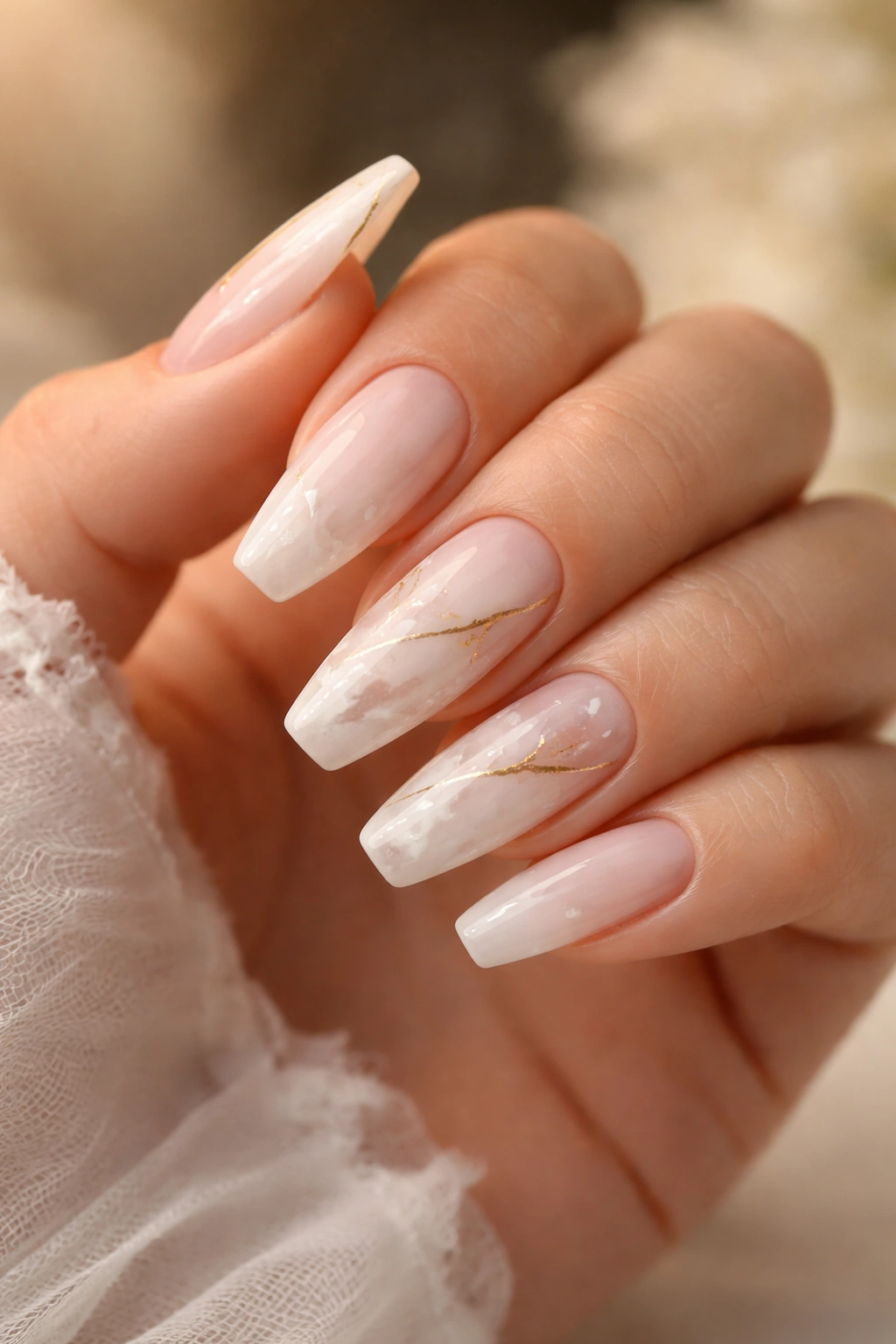
Marble can go wrong fast in bridal nails. Too much gray and it looks cold. Too much white and it turns flat. Thick metallic veining pushes it toward countertop territory, which nobody wants near a wedding dress.
A stronger version uses milky white marble with hairline gold veins and keeps the effect to one or two nails per hand. The base should look cloudy and layered, not solid. The veining should be thin enough that you notice it on second glance.
This set suits formal venues, sculptural gowns, dramatic trains, and jewelry with architectural lines. It has more weight than a micro-French and more structure than a pearl nude, so it earns its keep best when the rest of the bridal styling has some shape to it. Think sleek bun, clean neckline, tailored fabric, polished metal.
Color temperature matters here. If your ring is silver or platinum, you can swap gold for a faint silver vein. If you’re wearing yellow gold, keep the metallic warm and fine. Chunky foil belongs elsewhere.
I would not use marble on all ten nails for a wedding. Two accents are enough. The strength of the design comes from contrast — plain nails framing a little bit of stone-like pattern — not from drowning the hand in detail.
12. Short Ballerina Soap Nails for a Clean Wedding-Day Look
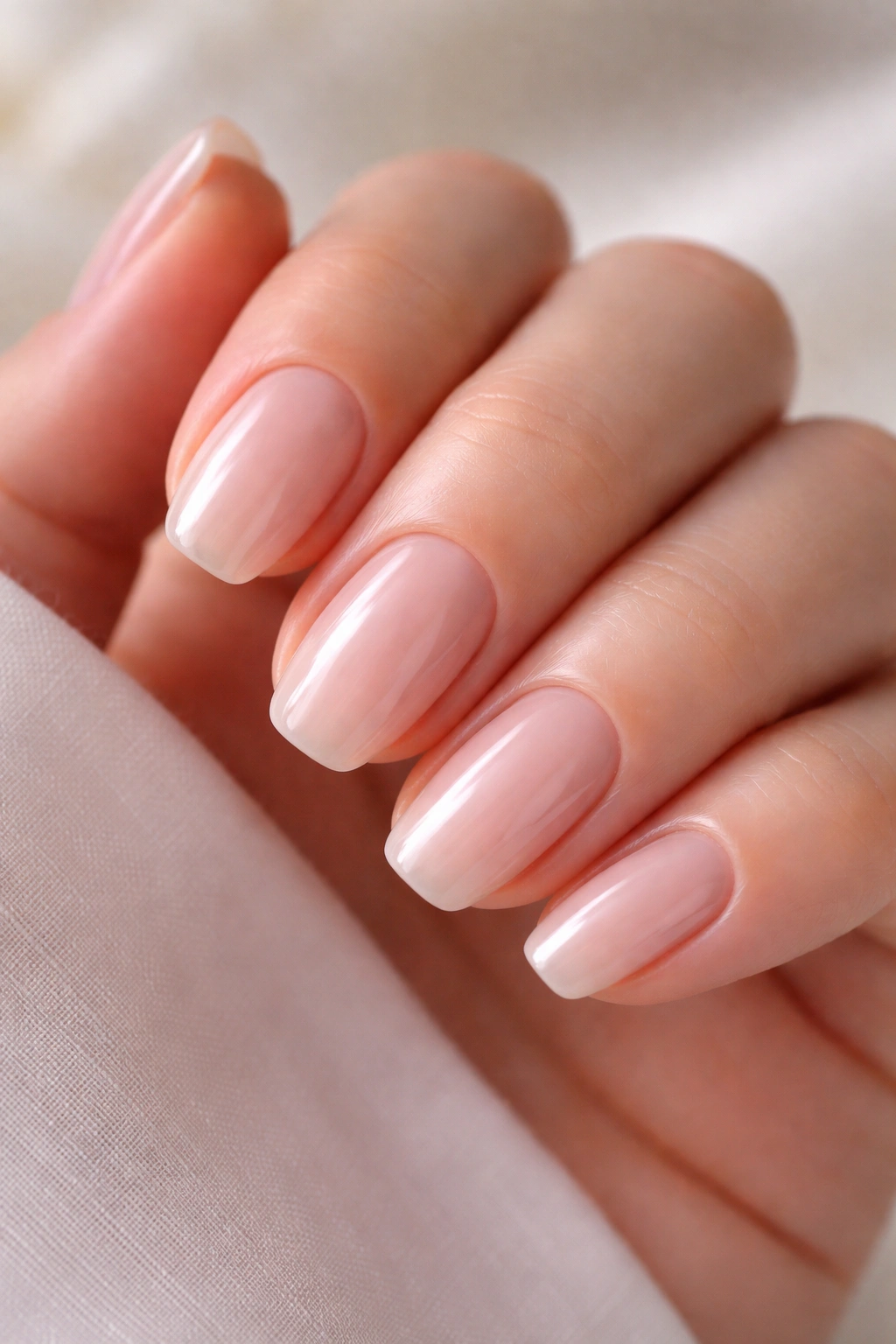
Unlike longer coffin sets, short ballerina soap nails feel almost effortless to wear. You still get the tapered sides and squared tip, though the free edge sits much closer to the fingertip — usually 2 to 4 millimeters past it.
Soap nails rely on finish more than art. Think a translucent pink-beige or milky nude with a glassy top coat, healthy cuticles, and no visible streaks. The effect is plump, clean, and fresh, like your natural nails after they’ve had expensive skincare.
This style is ideal if you almost never wear long nails, if your wedding aesthetic is minimal, or if you need your hands to stay nimble through the whole day. It’s also strong for brides wearing heirloom rings, since the manicure won’t fight for attention with a stone that already has character.
The trick is prep. Short sheer nails show every flaw: ragged sidewalls, dry cuticles, uneven shaping, polish pooling near the edges. Ask for meticulous cuticle work, a ridge-blurring base, and a high-shine gel top coat that gives a slightly cushioned look.
If you’re torn between bridal nail art and bare nails, this is often the answer. It still feels dressed for the occasion, only in a quieter register.
13. Champagne Chrome Ballerina Nails
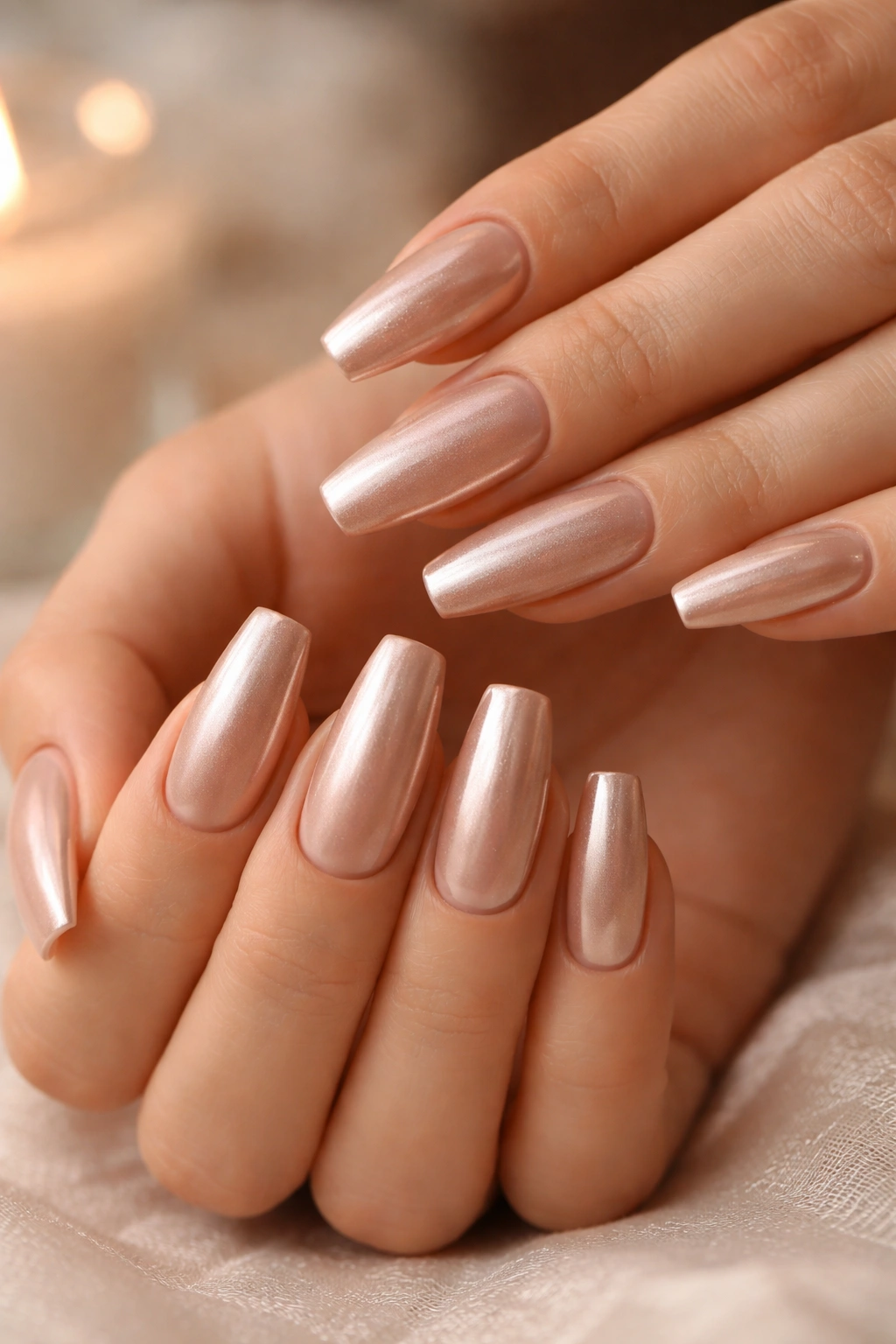
Silver chrome gets more attention, but champagne chrome is often the stronger bridal choice. It carries warmth, which means it tends to sit better with ivory gowns, candlelit venues, and yellow gold rings.
The base should be beige, blush-beige, or warm nude — not stark white. Then a fine champagne chrome pigment goes over the top in a thin layer. What you want is a mellow metallic glaze, not a mirror finish that turns the nails into tiny gold bars.
Where this design shines
It suits satin, silk, old-Hollywood waves, sleek gowns, bias-cut dresses, and any bridal look with a soft golden cast. It also earns points for evening receptions because the surface reflects low light in a way that still reads polished from a distance.
Ask for restraint
- Use chrome on all nails only if the base remains sheer
- Keep the length medium so the metallic finish doesn’t feel heavy
- Avoid pairing it with chunky glitter, foil flakes, or crystal clusters
- Choose a champagne tone that leans soft gold, not bronze
One salon note: ask to see the chrome over your actual base color before the full set is finished. The same powder can look cool on one nude and warm on another.
14. Dusty Rose Ballerina Nails with Hidden Shimmer
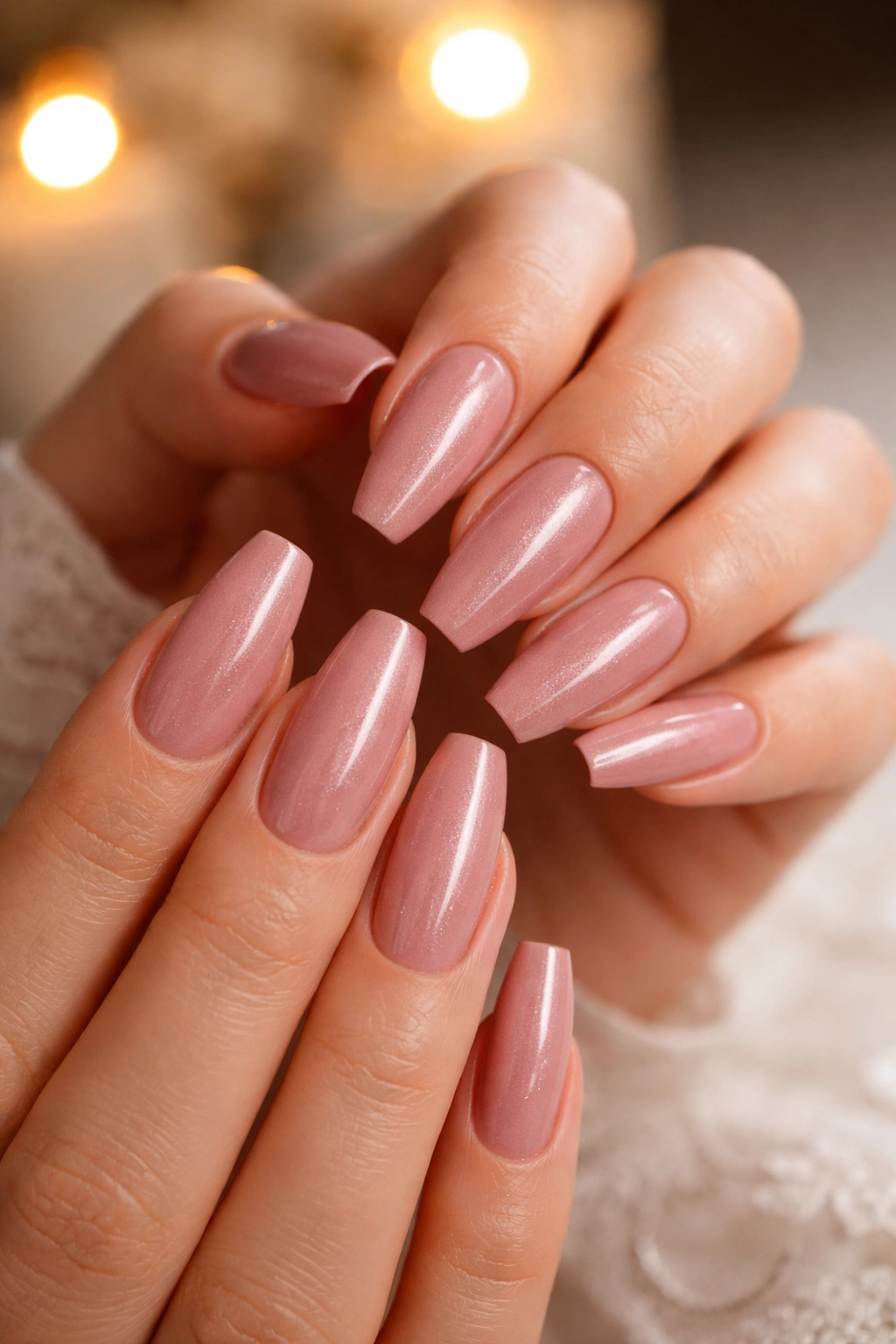
If your flowers, lipstick, or bridesmaid palette lean muted rose, this manicure can tie the whole look together without turning your nails into an obvious color statement. Dusty rose has more body than a bridal nude, though it still feels soft enough for a wedding when the saturation stays low.
The shimmer needs to stay hidden. Think mica-fine pearl or a soft satin glint suspended in the color, not glitter pieces you can spot from three feet away. On camera, that subtle shimmer helps the polish avoid looking flat, especially in candlelit rooms or evening receptions where plain cream shades can lose their shape.
I like dusty rose most on brides whose dress has a hint of warmth and whose styling isn’t trying to be icy or ultra-traditional. It works with mauve bouquets, antique rose silk ribbons, berry-toned lip colors, and vintage-inspired details. It also has a little more personality than blush, which some people find too sweet.
Test it against your gown before you commit. Some dusty rose shades lean brown, and some drift purple. The one you want for bridal nails usually sits in the center: softened pink with a touch of muted beige.
Keep the finish glossy, the shape medium, and the shimmer fine enough that you notice it only when the hand moves.
15. Monogram Accent Ballerina Nails with an Heirloom Feel
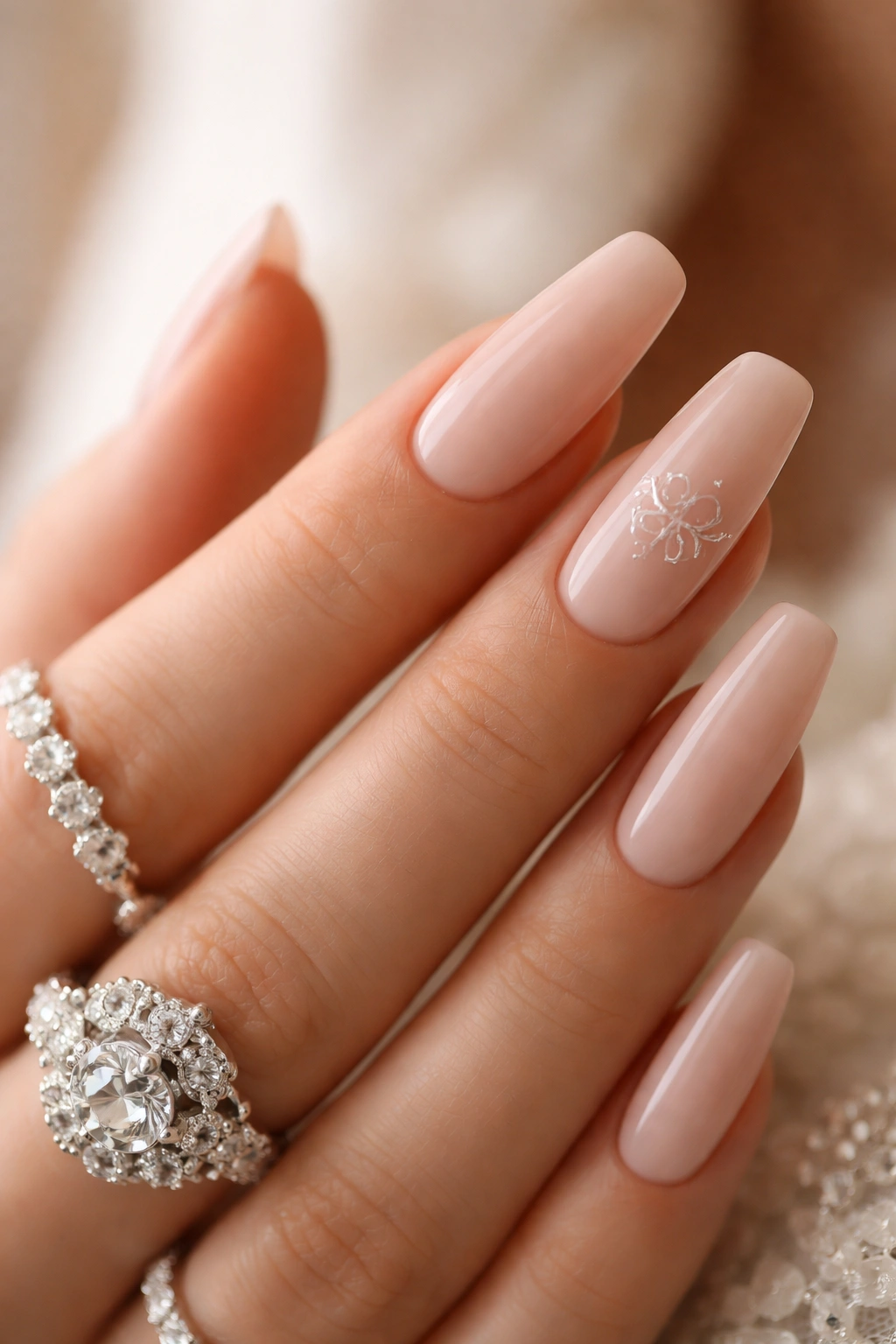
Personalized bridal nails can slip into novelty fast, though a single monogram or date accent can feel intimate and old-world if it’s handled with restraint.
The strongest version uses one accent nail — usually the ring finger or pinky — with a tiny letter, initial pair, or wedding date detail no taller than 3 to 4 millimeters. Tone-on-tone works best: ivory on blush, pearl white on nude, soft gold on milk pink. High-contrast black script is usually too harsh for bridal hands.
How to keep the personalization graceful
Skip oversized calligraphy. Skip full words. Skip putting the same letter on both hands. A small embroidered-looking monogram, a date tucked near the cuticle, or a tiny serif initial on one nail does far more than a big statement design.
This kind of detail pairs well with heirloom jewelry, family veils, antique brooches, or gowns with monogrammed handkerchiefs and sewn-in sentimental pieces. It feels private, almost like a hidden note.
Because the lettering is so fine, your artist needs a steady hand and a detail brush that can lay hairline strokes. Ask to see examples of hand-painted script before booking. Decals can work in a pinch, though painted details often look softer and better integrated into the set.
A personalization nail should feel discovered, not announced.
Final Thoughts
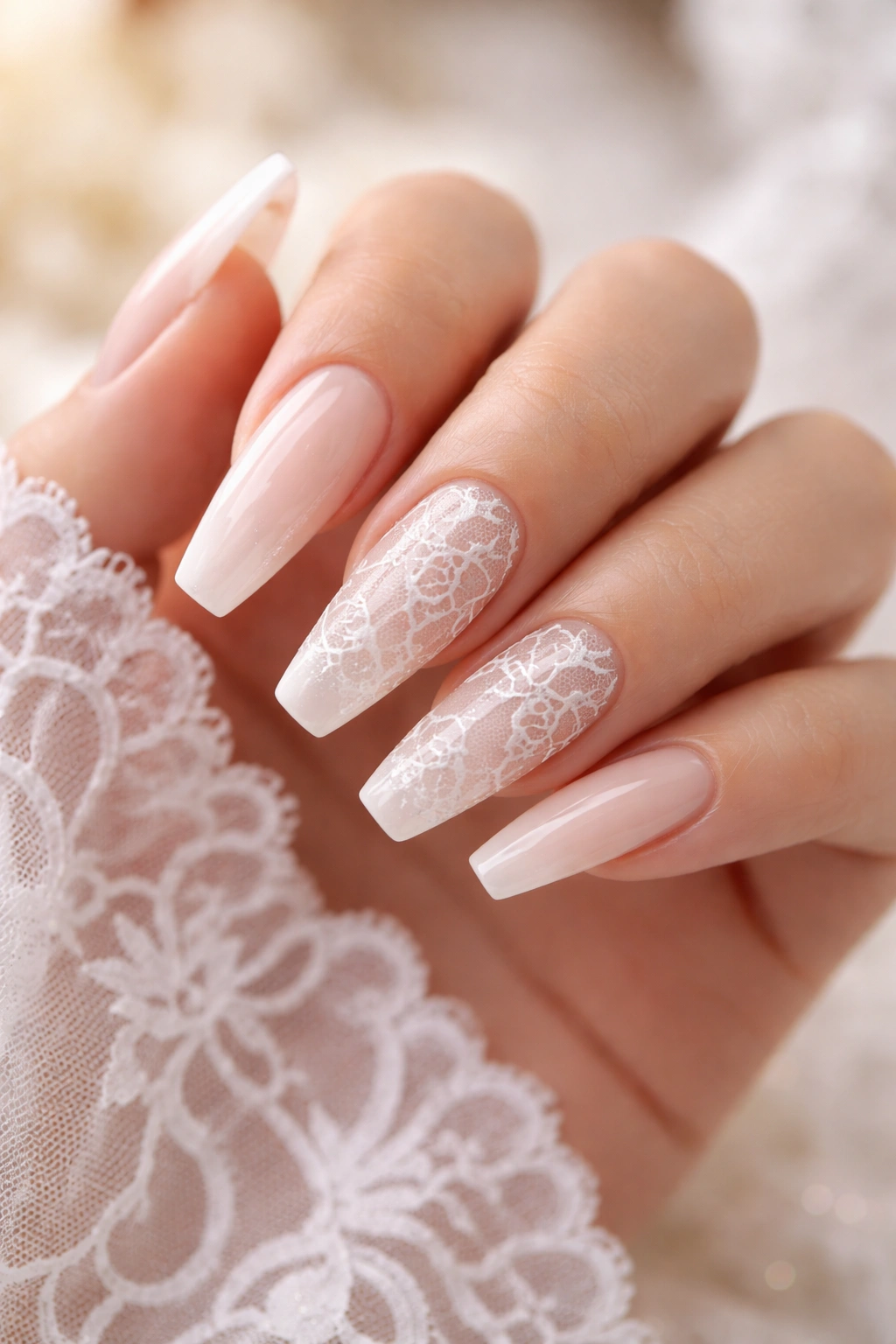
The strongest wedding manicure is rarely the busiest one. More often, it’s the set that still looks right when your hands are dry from flowers, your ring is catching flash, and the camera is six inches away. Shape, finish, and scale beat extra decoration almost every time.
Ballerina nails earn their place because they give you structure without sharpness. That flat tip can hold a micro-French, a soft ombré, pearl detail, lace art, or chrome in a way that still feels bridal when the length stays controlled and the nail architecture is clean.
If you’re stuck between two designs, hold them against the real-life pieces that matter: the ring, the dress fabric, the bouquet colors, and the way you normally use your hands. Pick the one that still feels like you — only better dressed.