

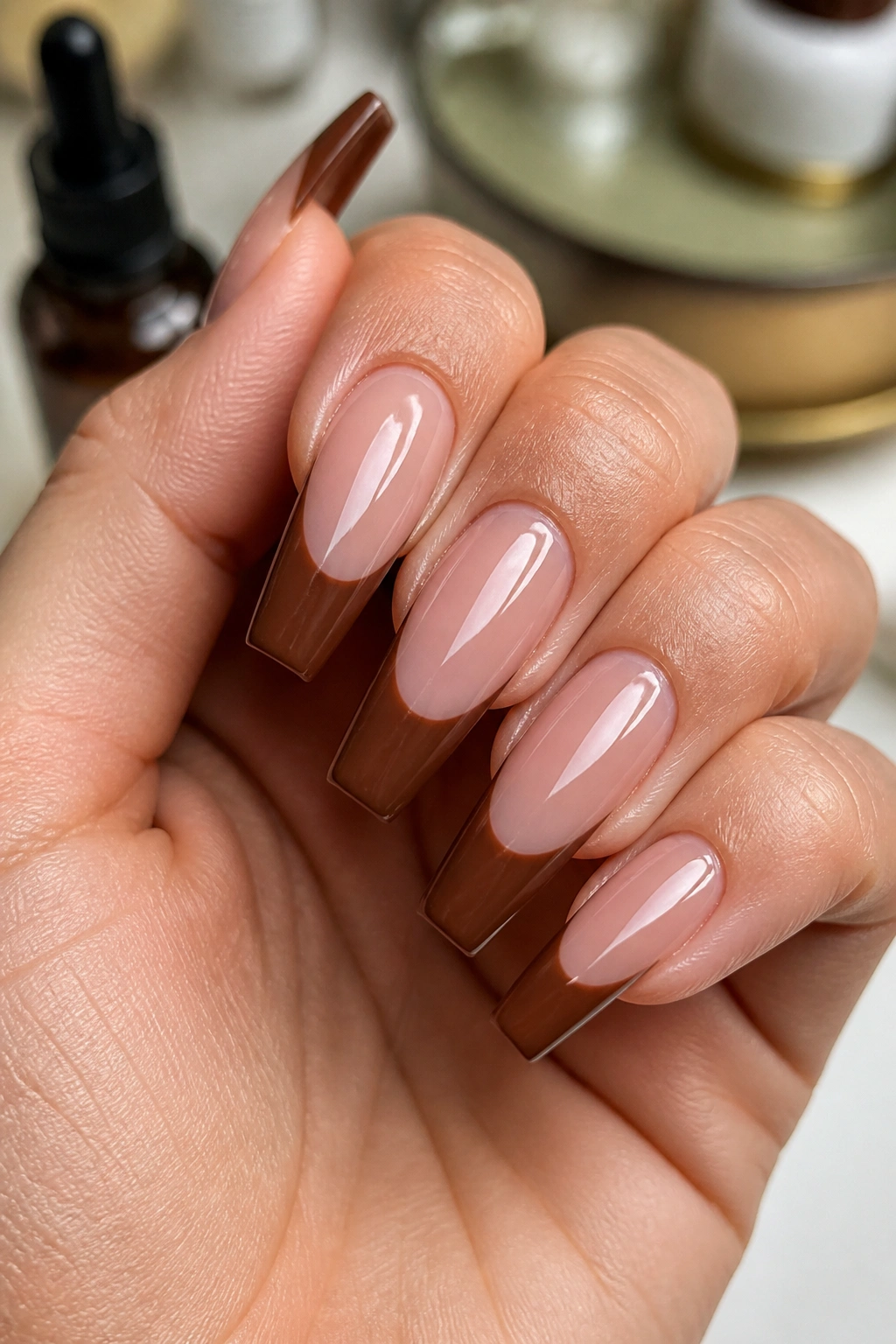
Bright white French tips can look a little hard on a coffin shape. Brown doesn’t. Brown French tip coffin nails hit that rare middle ground where the manicure still looks crisp and polished, but the contrast feels warmer, softer, and a lot more wearable from Monday morning through dinner out.
That’s part of why I keep coming back to brown. It gives you range. A thin milk-chocolate line on a nude base reads clean and minimal; a deep espresso curve on long coffin nails reads sharper, moodier, more dressed up. Same layout. Different attitude.
There’s another reason these sets work so well: brown hides grow-out and tiny chips better than stark white. If you’ve worn a classic white French for more than a few days, you know the free edge can start showing wear fast, especially near the corners. Brown is more forgiving. Not invisible—nothing is—but far less harsh.
Coffin nails help, too. The tapered sidewalls and flat tip give a French design more room to show off, though they can go wrong fast if the smile line is too thick or the tip eats up half the nail bed. The best sets get the balance right, and the designs below do exactly that.
Why Brown Works So Well on Coffin Nails
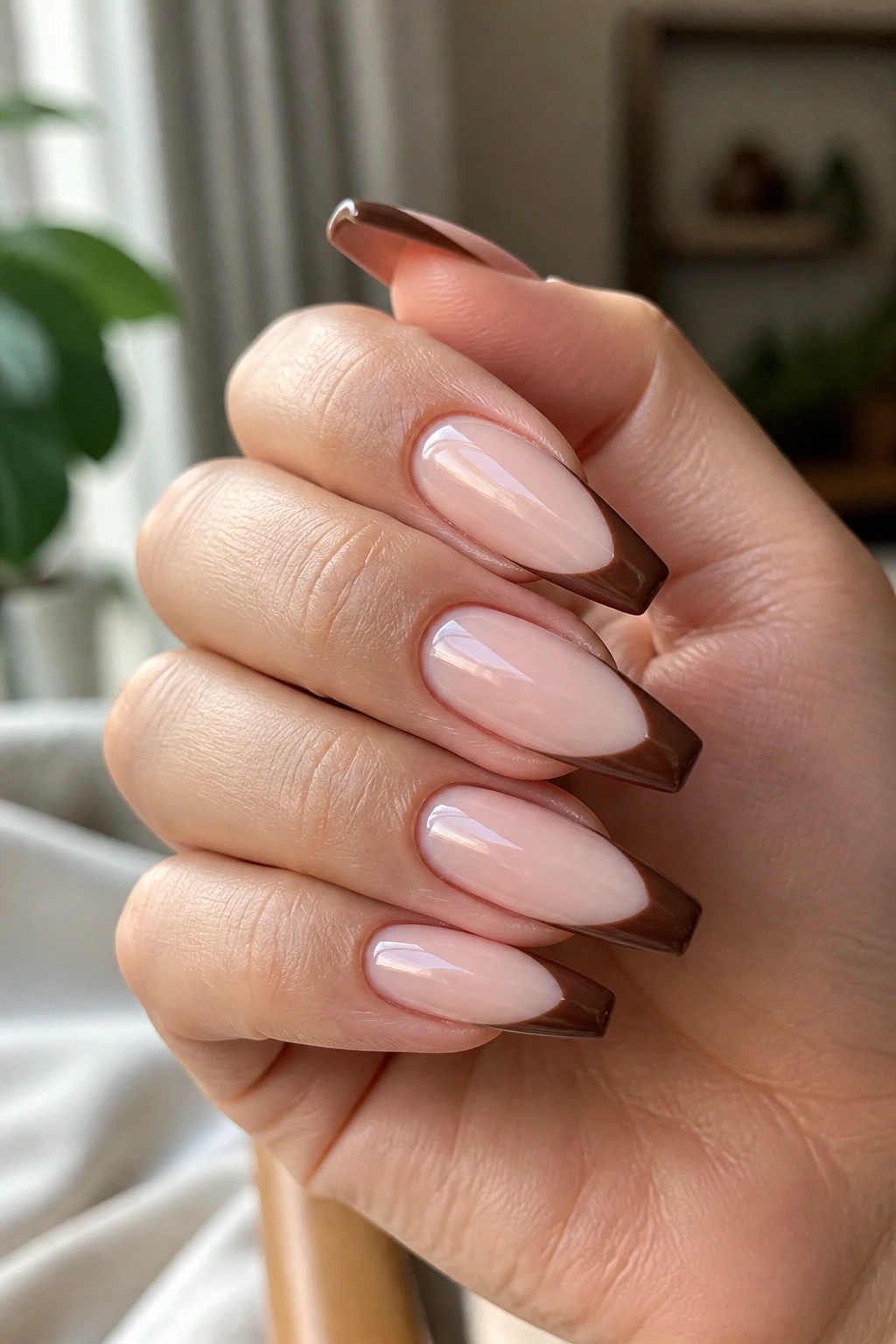
Brown has depth that white doesn’t. White French tips are clean, no question, but they create a hard line from nude base to tip. On a coffin shape, that contrast can look a little blunt if the nails are short or the tips are wide. Brown softens that line without making the manicure look dull.
Skin tone matters here more than people think. Brown sits closer to the warm and neutral tones already in most hands, so the design feels tied together instead of pasted on top. That doesn’t mean every brown works on every person. A gray-leaning taupe gives a different effect than cinnamon or chestnut. Still, the whole color family tends to look more natural against skin than bright white.
Brown also plays well with texture. Matte top coats, tortoiseshell accents, gold striping, chrome edging, jelly layers—they all look more grounded over cocoa, caramel, chestnut, or espresso than they do over plain black. You get detail without the manicure turning heavy.
And on coffin nails, shape control is everything. A brown tip can make the free edge look cleaner and longer when the line is placed with intention, especially if the smile line dips enough to lengthen the nail bed. Nail techs learn fast that coffin nails can drift into “paddle” territory when the sidewalls stay too wide. Brown helps visually slim the shape when used in the right place.
Picking the Right Brown for Your Skin Tone and Nail Length
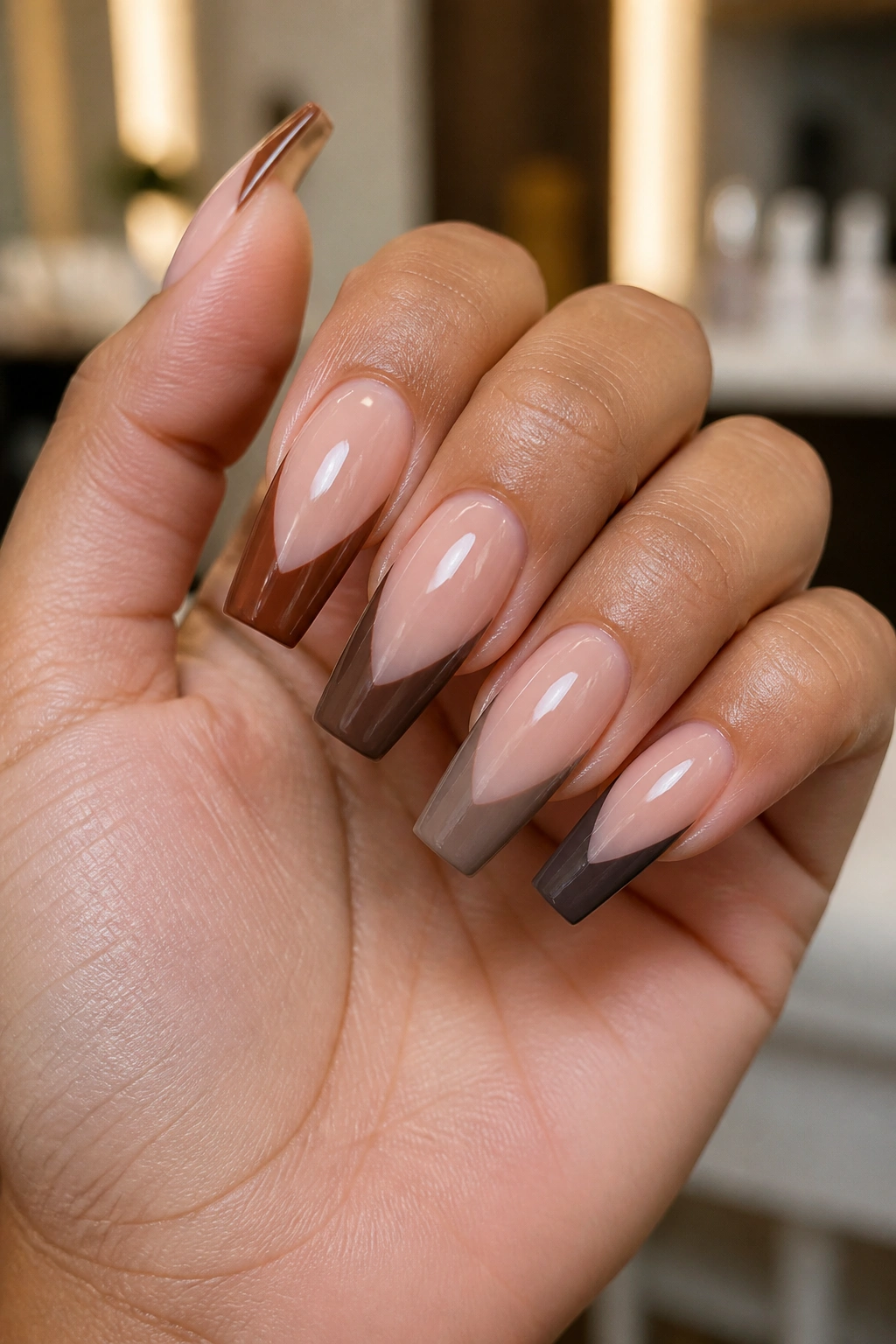
A good brown French set starts with color temperature, not nail art.
If your skin has pink or cool undertones, skip muddy orange-browns and look at taupe, mushroom, cool cocoa, and neutral mocha. Those shades make the manicure look clean instead of sallow. Warm undertones usually carry caramel, cinnamon, chestnut, and toffee with more ease. Olive skin can go either way, though red-browns and amber browns often look especially rich on it.
Match the brown to the length of the coffin shape
Long coffin nails can carry more depth at the tip. A rich espresso or dark chocolate curve looks balanced when the free edge has room—say, at least 6 to 8 mm past the fingertip. Shorter coffin sets look better with lighter browns or thinner lines, because a dark block of color can swallow the nail.
Micro tips are usually the safest bet on medium-short coffin nails. Keep the colored edge around 1 to 1.5 mm thick and the whole set instantly looks sharper.
Choose the finish before you choose the art
Brown changes character depending on the top coat.
- Glossy brown looks smoother, deeper, and a touch dressier.
- Matte brown pulls focus to shape and color more than shine.
- Jelly brown gives a syrupy, translucent edge that looks lighter on the nail.
- Chrome over brown shifts the set away from classic French and into statement territory.
I’d sort that out first. A design that feels too plain in gloss can look far better in matte, and a dark tip that feels too flat can wake up with one thin metallic divider.
1. Milk Chocolate Micro Tips on a Nude Coffin Base
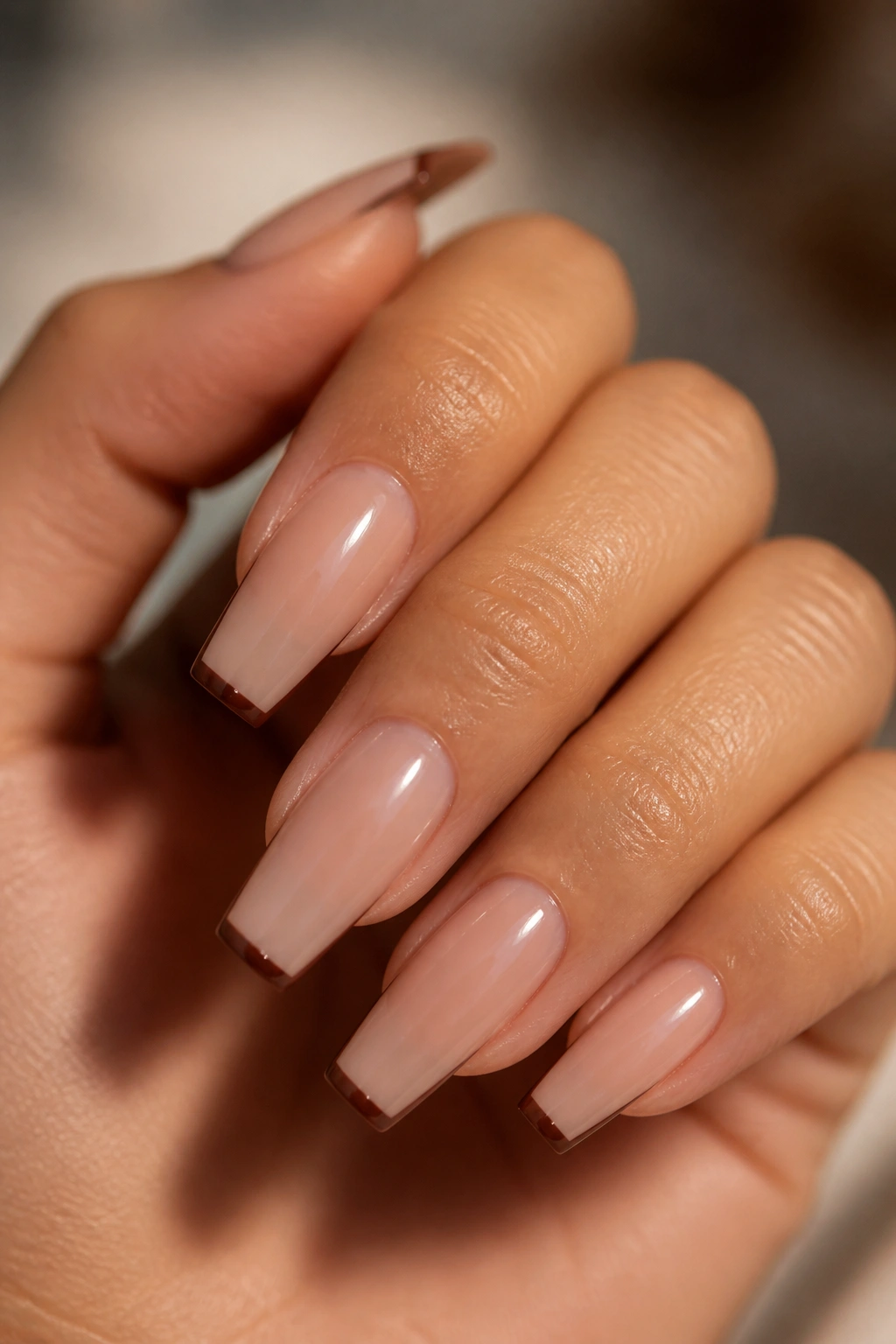
Start with the easiest win. Milk chocolate micro tips on a sheer nude base are the brown French version I’d hand to almost anyone, especially if you want a set that looks neat for two weeks and doesn’t fight every outfit you own.
The reason it works is proportion. A slim brown edge—about 1 mm across the free edge—keeps the coffin shape visible without turning the tip into a color block. That matters on medium coffin nails, where bulky French lines can make the shape look shorter and wider.
Why this one lands so well
Milk chocolate sits in the friendliest part of the brown family. It has enough warmth to soften the French line, but not so much red or orange that it starts pulling attention away from your skin tone. On a pink-beige or milky nude base, the contrast feels smooth and clean.
Quick design notes
- Ask for a sheer nude or milky beige base, not an opaque one, so the nail bed still shows through a bit.
- Keep the smile line soft and shallow if your nail beds are short.
- Use a high-gloss top coat to make the brown look richer.
- Medium coffin length suits this set best, though it also works on longer press-ons.
Best salon note: tell your tech you want the tips thin, even, and crisp at the corners—that last part is where micro French sets often go sloppy.
2. Espresso Side-Swept French Tips
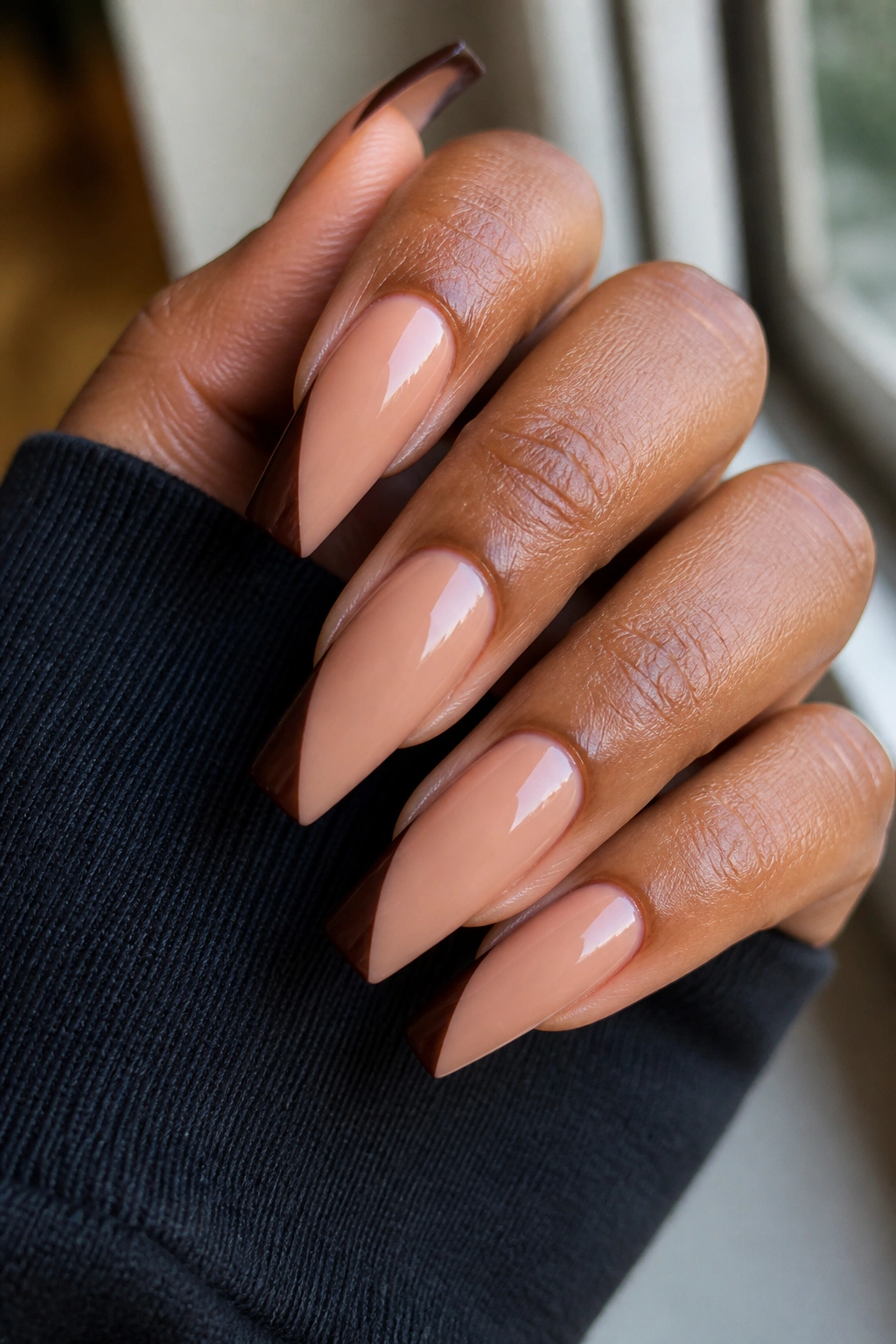
A centered French line is not the only option. An espresso side-swept tip cuts across the nail on a slight diagonal, and that one small shift changes the whole set. It feels cleaner, more directional, and a little less expected than a standard curve.
This design shines on longer coffin nails because the diagonal line uses the full width of the shape. Instead of tracing the tip in a straight band, the brown starts lower on one sidewall and rises toward the opposite corner. The eye follows that movement, which makes the nail look longer.
Espresso is the right shade here because it gives the design enough edge. A pale brown can disappear when the line is slanted; deep espresso holds the shape. On a sheer peach-nude base, the contrast looks crisp. On a beige base, it feels more muted.
Wearability stays strong, though I would not call this the safe office pick if your workplace leans strict. The diagonal reads more fashion-forward than classic. That’s the point.
If you want it cleaner, keep every nail sweeping in the same direction. If you want more energy, alternate the angle from nail to nail. I prefer the first option. It looks tighter.
3. Caramel Outline Brown French Tip Coffin Nails
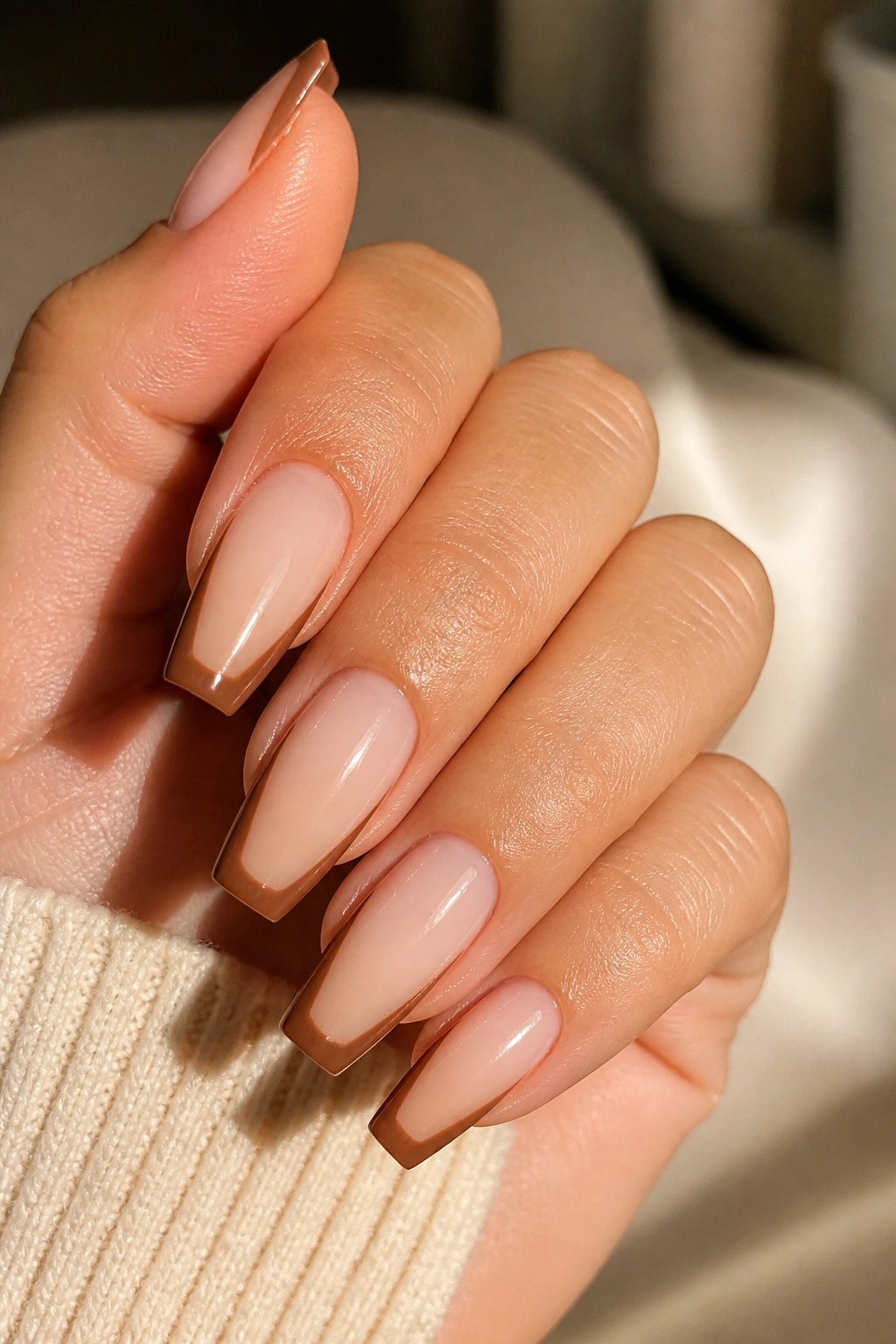
Why do outline tips make coffin nails look longer? Because they frame the shape instead of filling it in.
A caramel outline French follows the edges of the tip and sidewalls with a slim line, leaving the center of the nail mostly bare or sheer nude. On a coffin shape, that border effect pulls attention to the tapered sides and flat edge, which is what makes the shape look sleek in the first place.
You do need control with this one. If the outline is thick—say, more than 1.5 to 2 mm—the set can start looking boxed in. Thin lines are the whole trick. I’d keep the center of the nail soft and translucent, then run the caramel around the edges with a slightly deeper curve at the tip.
Caramel is a smart pick because it gives enough warmth to show the frame but doesn’t hit as hard as dark brown. On medium skin with golden or olive undertones, it looks especially good. On cool skin, lean more beige-caramel than orange-caramel.
How to wear it without losing the shape
Skip heavy rhinestones, big decals, or chunky charms here. The outline already does the visual work. A tiny gold dot near the cuticle on one accent nail? Fine. A full gem cluster? Too much. The whole charm of this design is the negative space.
4. Matte Cocoa Tips with a Glossy Milky Base
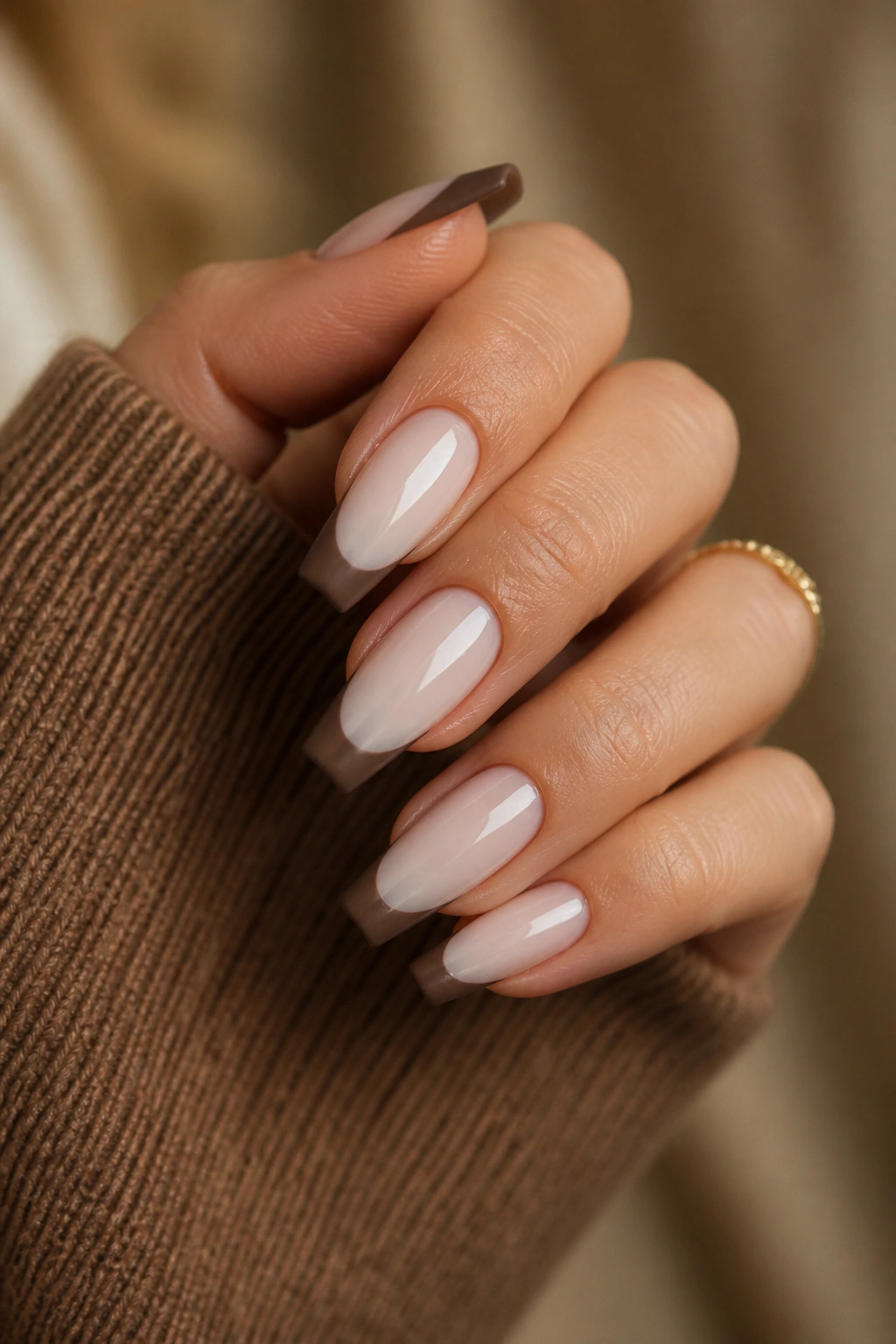
Picture a set under soft indoor light: the base looks smooth and wet, while the cocoa tip has that almost velvety, light-absorbing finish. That contrast is the design. You do not need extra art.
Matte brown tips work because they change the texture before they change the shape. On a coffin nail, that means the free edge looks deliberate without screaming for attention. I like this set when someone wants something darker than nude but still a touch restrained.
The base should stay milky, not chalky. A milky pink-beige or soft ivory-nude gives the matte cocoa more depth. If the base turns flat and opaque, the whole manicure can look dusty.
What to ask for
- A glossy builder gel or glossy nude base
- Cocoa brown only on the French tip
- Matte top coat on the tip area only
- A tip thickness around 2 to 3 mm on medium-long coffin nails
One warning, because this part gets overlooked: matte top coats show oil and makeup faster than gloss. If you use foundation with your hands or handle hair products, wipe the tips with a little alcohol on a lint-free pad now and then. It keeps the brown from looking cloudy.
5. Mocha Double French Tips
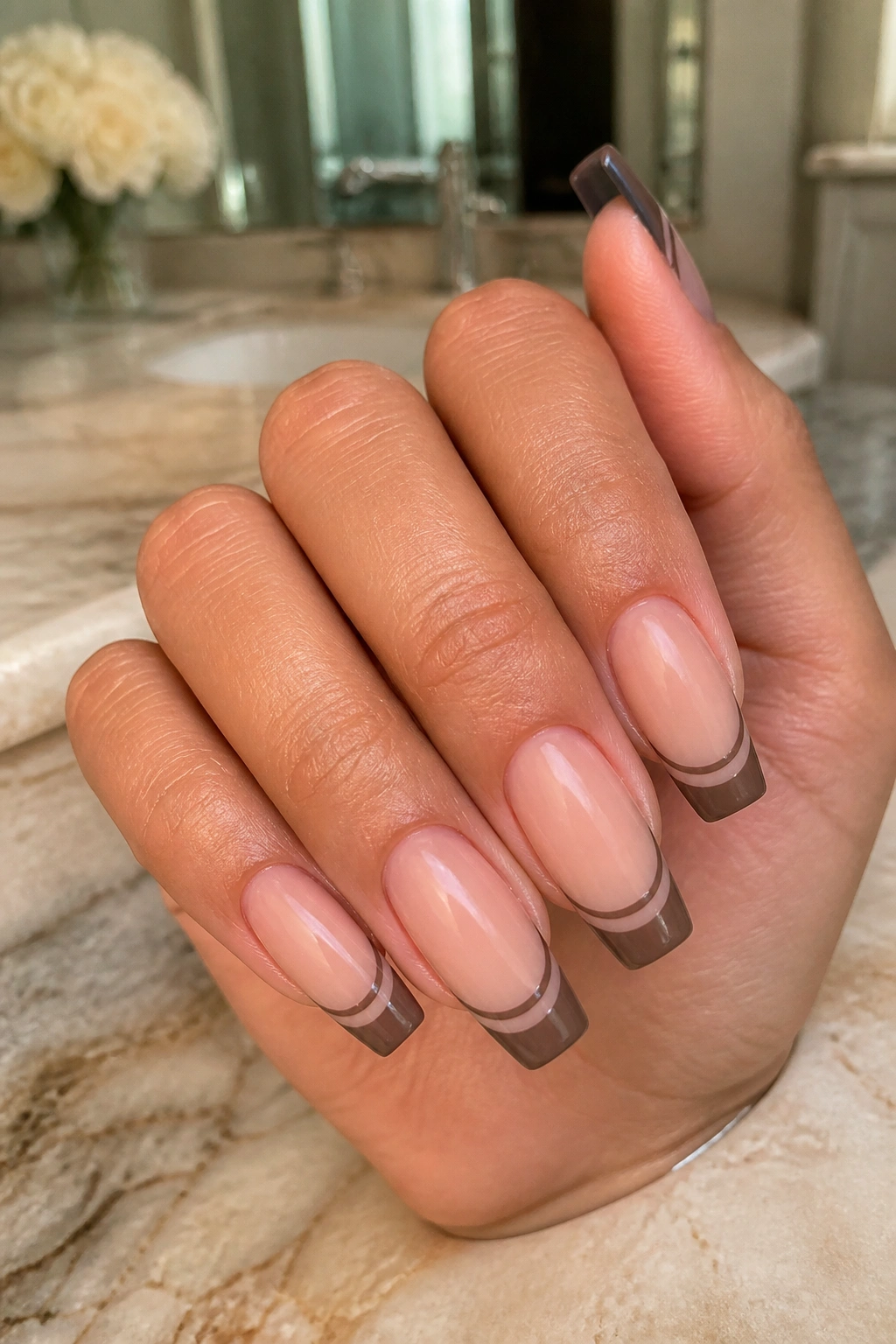
Two lines, not one.
A mocha double French uses a standard brown tip, then adds a second slim arc just above it, leaving a hairline gap of nude between the two. When it is done well, the set looks technical and clean. When it is done badly, it looks shaky. There is not much middle ground here, which is why I like it on people who appreciate precision.
The key is spacing. That gap between lines should sit around 0.5 to 1 mm. Wider than that, and the manicure starts looking chopped up. The upper line also needs to echo the curve of the main French, not wander off into its own shape.
Mocha is better than dark espresso for this design because the doubled lines already add weight. A mid-tone brown keeps the look detailed without closing off the nail bed. On medium to long coffin nails, the effect is sharp and tidy. On short coffin nails, it can feel cramped.
I’d leave the rest of the set bare—no glitter, no heavy accent art, no marble. The double line already gives you enough to look at, and that little strip of nude space is what makes the manicure feel expensive.
6. Cinnamon Brown V-Cut Tips
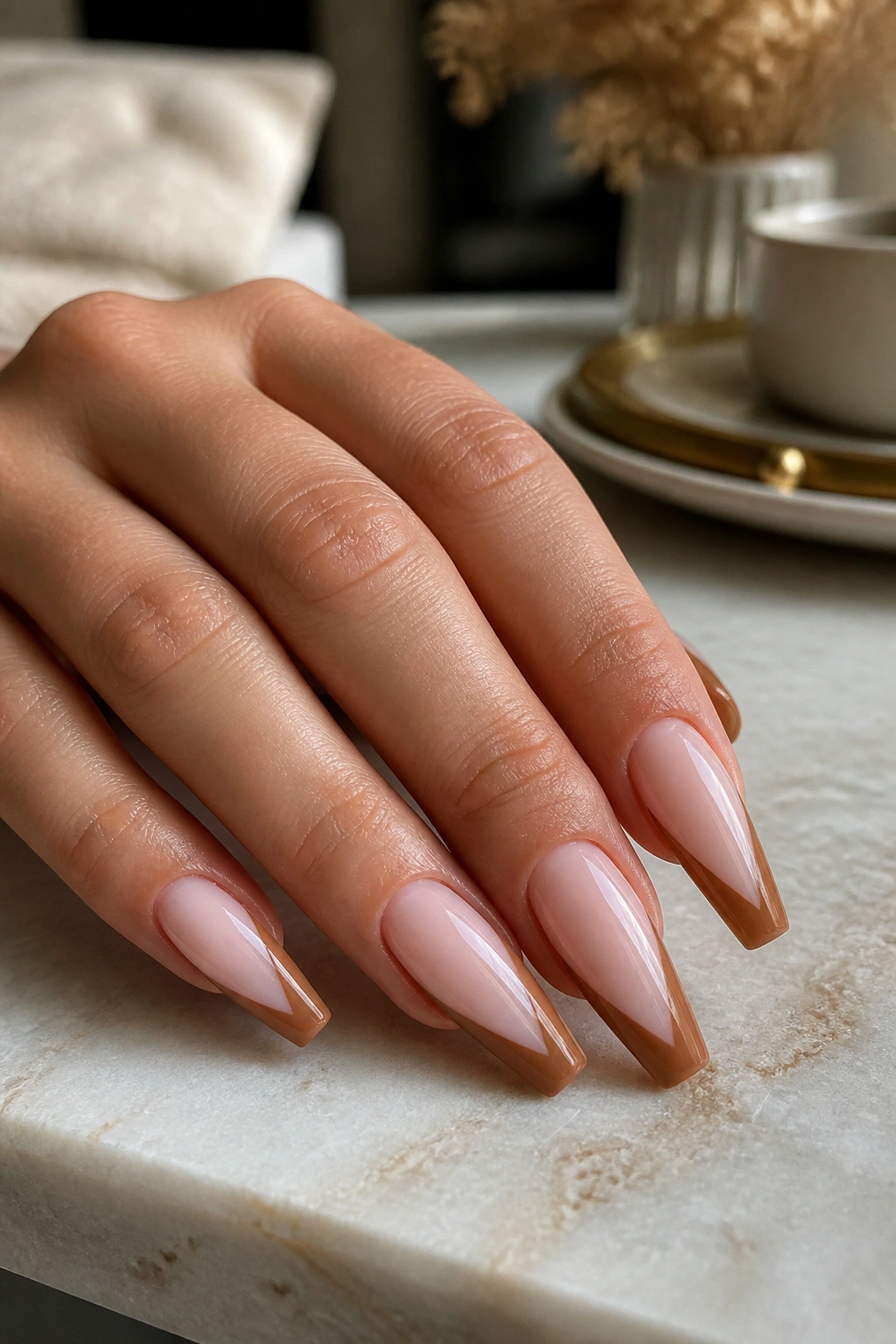
Unlike a rounded French line, a V-cut tip pulls the eye straight down the center of the nail. That makes coffin nails look longer and narrower, which is handy if your natural nail beds are wide or your press-ons tend to read broad from the front.
Cinnamon brown keeps the shape lively. A black V-cut can look severe. A pale beige V can disappear. Cinnamon lands in the middle, with enough red warmth to stand out and enough brown depth to stay grounded.
This design is strong on medium-length coffin nails because it creates length without needing a huge free edge. The point of the V should stop before the middle of the nail bed. If it drops too low, the nail starts looking dagger-like instead of coffin.
Who should pick this? Anyone who wants a French manicure that feels sharper than a classic curve but doesn’t want chrome, gems, or loud art. It’s also a smart choice if you use your hands a lot and want a design that still looks clean when viewed from a distance.
My one hard opinion here: keep the V narrow and centered. Off-center V tips make even a nice shape look crooked.
7. Tortoiseshell-Edge French Tips
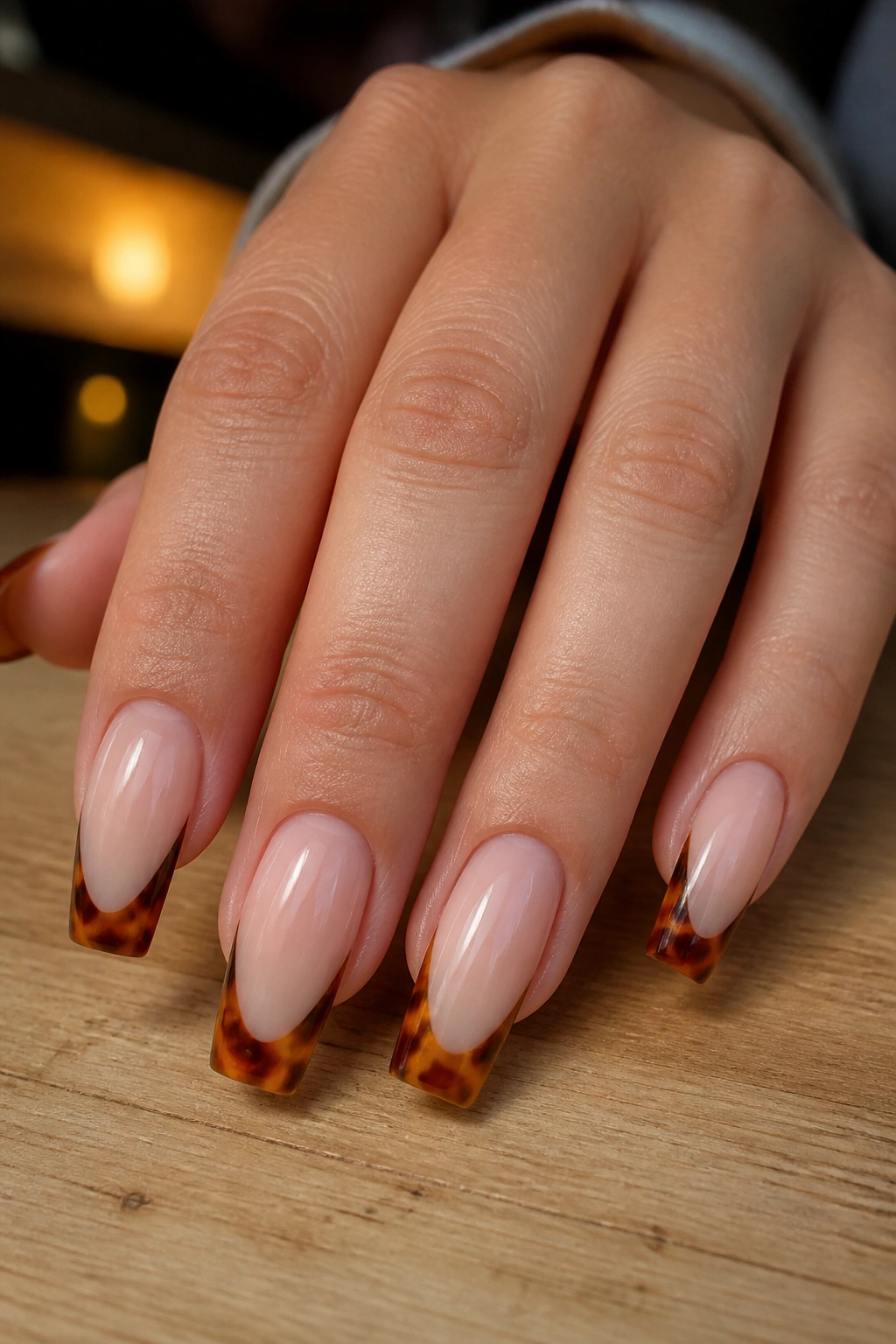
If plain brown tips feel flat, tortoiseshell edges fix that fast. The smart version keeps the pattern right at the French tip or along the side edge, instead of flooding the whole nail with amber and black mottling.
That restraint matters. Coffin nails already carry shape drama, so you don’t need a full tortoiseshell slab on every finger. A slim French edge with translucent amber, honey brown, dark cocoa, and a few inky flecks gives you movement without losing the structure of the manicure.
The pattern itself should stay slightly sheer. Opaque brown blobs kill the tortoiseshell effect. You want little pools of color, layered one over another, so the tip still has light passing through it. Think jelly amber first, then deeper spots, then a glossy seal.
A few details make this set look polished instead of messy:
- Keep the tortoiseshell to the tip only or tip plus one sidewall
- Use a nude base with a warm undertone
- Leave at least two nails per hand in a plain brown French if you want balance
- Stick to gloss; matte hides the layered look
This one has personality. You can wear it every day, sure, but it doesn’t disappear into the background, and I mean that as a compliment.
8. Taupe-to-Chocolate Ombre French Tips
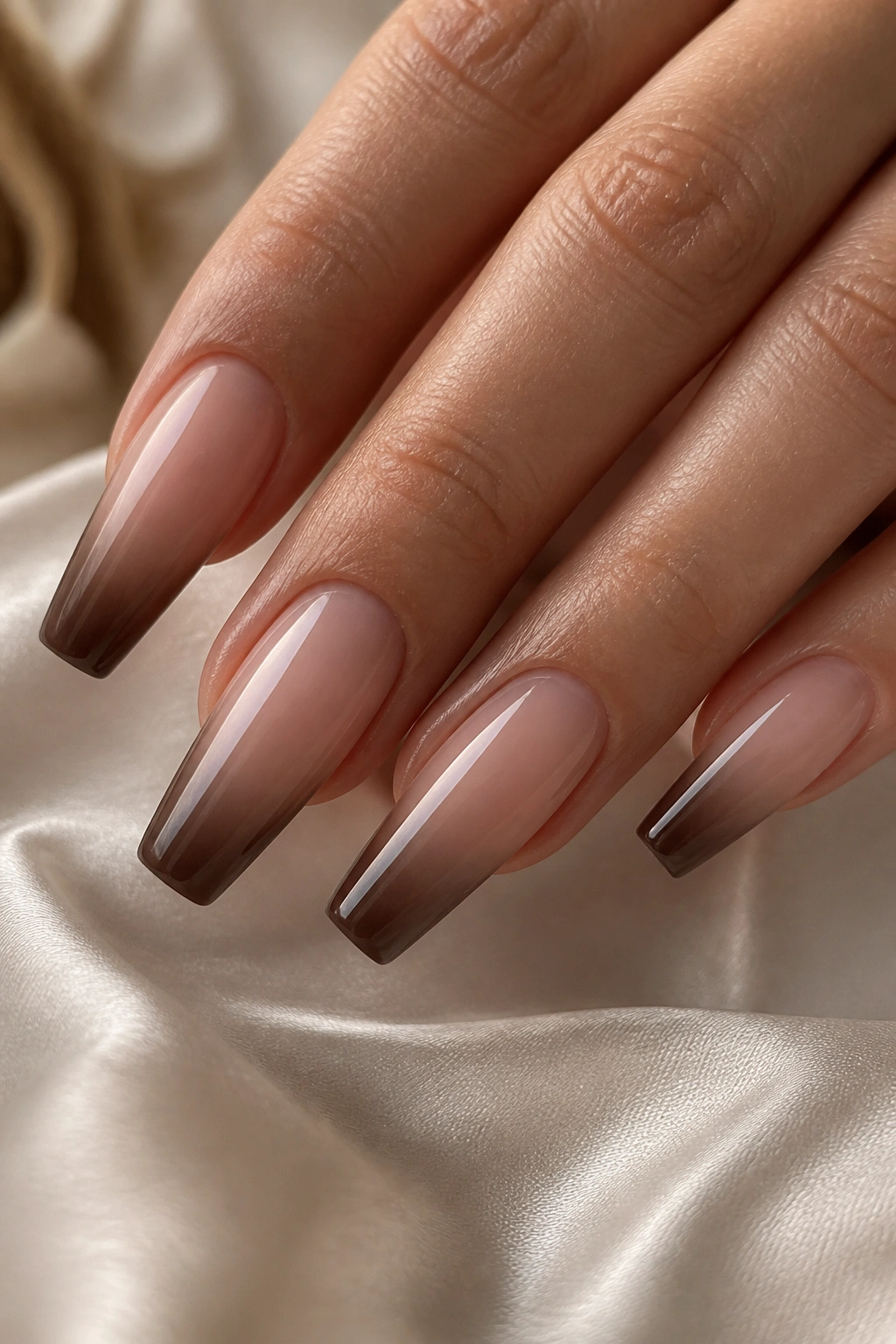
A hard edge is not your only option. Ombre French tips fade from a lighter taupe near the smile line into chocolate at the edge, and that blur gives coffin nails a softer, elongated look.
This works best when the fade stays on the tip area instead of creeping halfway down the nail. A controlled blend across 3 to 5 mm of the free edge gives you that smoky transition without losing the French identity. Once the brown travels too far, the set stops reading French and starts reading brown ombre nails.
Taupe is the right starting shade because it keeps the blend airy. If you jump from nude base to dark chocolate with no middle tone, the fade looks muddy. Nail techs usually get the cleanest result with an airbrush effect, a tiny sponge, or a dense ombre brush tapped in short motions. You can spot a rushed blend fast—the edge looks patchy instead of smooth.
Where this design looks strongest
Longer coffin nails give the color more room to shift, so the fade reads clearly. On short nails, it can still work, but the gradient needs to be tighter and lighter. If you love brown but hate sharp lines, this is probably your set.
9. Glossy Chestnut Brown French Tip Coffin Nails with Deep Smile Lines
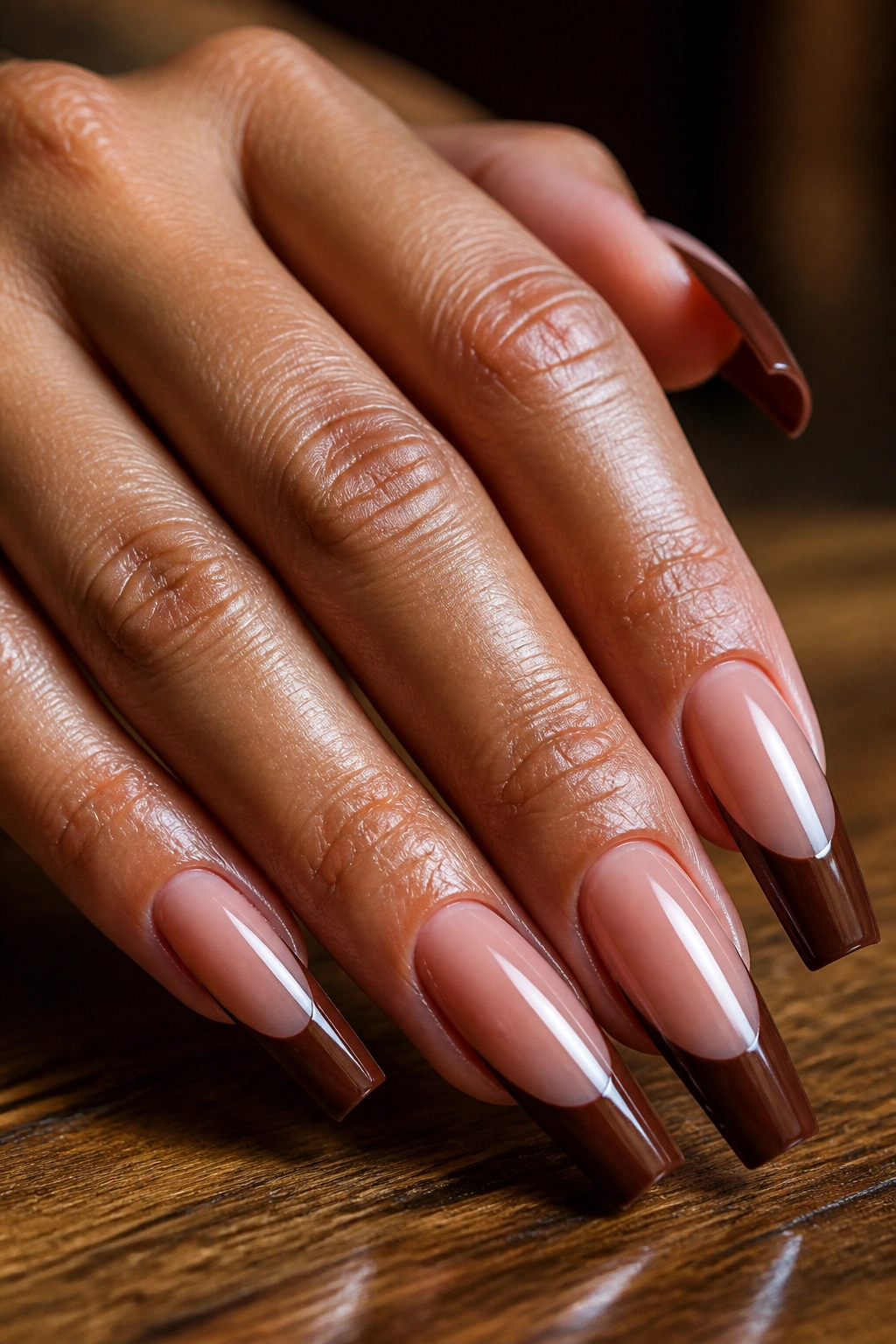
Deep smile lines ask for confidence. They dip lower at the center of the nail bed than a standard French curve, and when they’re paired with glossy chestnut brown, the whole set looks more sculpted.
Chestnut is a smart shade here because it carries a hint of red. That little bit of warmth keeps the design from looking harsh, even with a dramatic curve. On medium-deep and deep skin tones, chestnut can look rich without blending into the background. On lighter skin, it gives stronger contrast than caramel but stays softer than black cherry or black-brown.
The coffin shape matters more than usual with this one. You need enough length for the deeper smile line to read intentional, so I’d keep the nails at least medium-long, with straight sidewalls and a crisp squared tip. If the free edge is short, the dip can crowd the nail bed.
Gloss is non-negotiable for me here. A glassy top coat makes the chestnut look like polished wood—smooth, reflective, clean. Matte drains too much life out of the shade.
This set has more drama than a micro French, but it still counts as classic nail art in my book. It’s not loud. It’s structured.
10. Brown Tips with a Thin Gold Divider
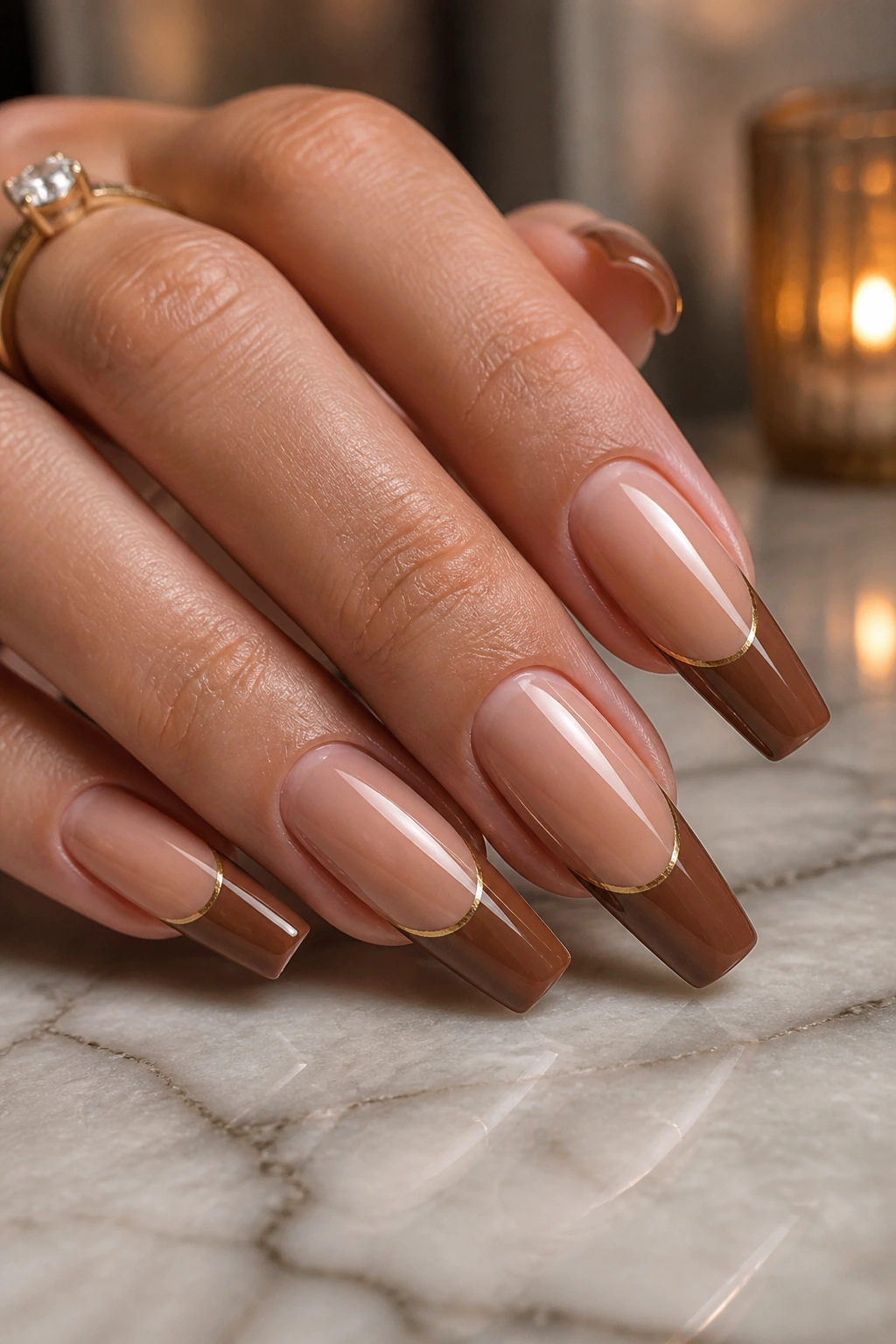
Metal can rescue a brown tip that feels a little heavy. Add a fine gold divider line—about 0.5 mm thick—between the nude base and the French tip, and suddenly both colors look more precise.
The trick is scale. Thick gold striping starts pulling the manicure into holiday-party territory, which may be what you want, though that is a different mood. A whisper-thin line keeps the set sleek. It acts like punctuation between the base and the tip.
I like this design with medium chocolate or chestnut brown because the gold has enough contrast to show up but doesn’t sit on top of a pitch-dark edge. On warm nude bases, the whole color story feels tied together. On cool pink bases, it looks a touch sharper.
A few practical notes help:
- Ask for metallic gel paint or striping gel, not chunky glitter
- Keep the gold line continuous from side to side
- Use gloss on the whole set so the line reflects cleanly
- Skip extra rings of gold foil elsewhere on the nail
This is one of those designs that looks more expensive than it is. A tiny line does the work.
11. Beige Coffin Bases with Dark Brown Corner Tips
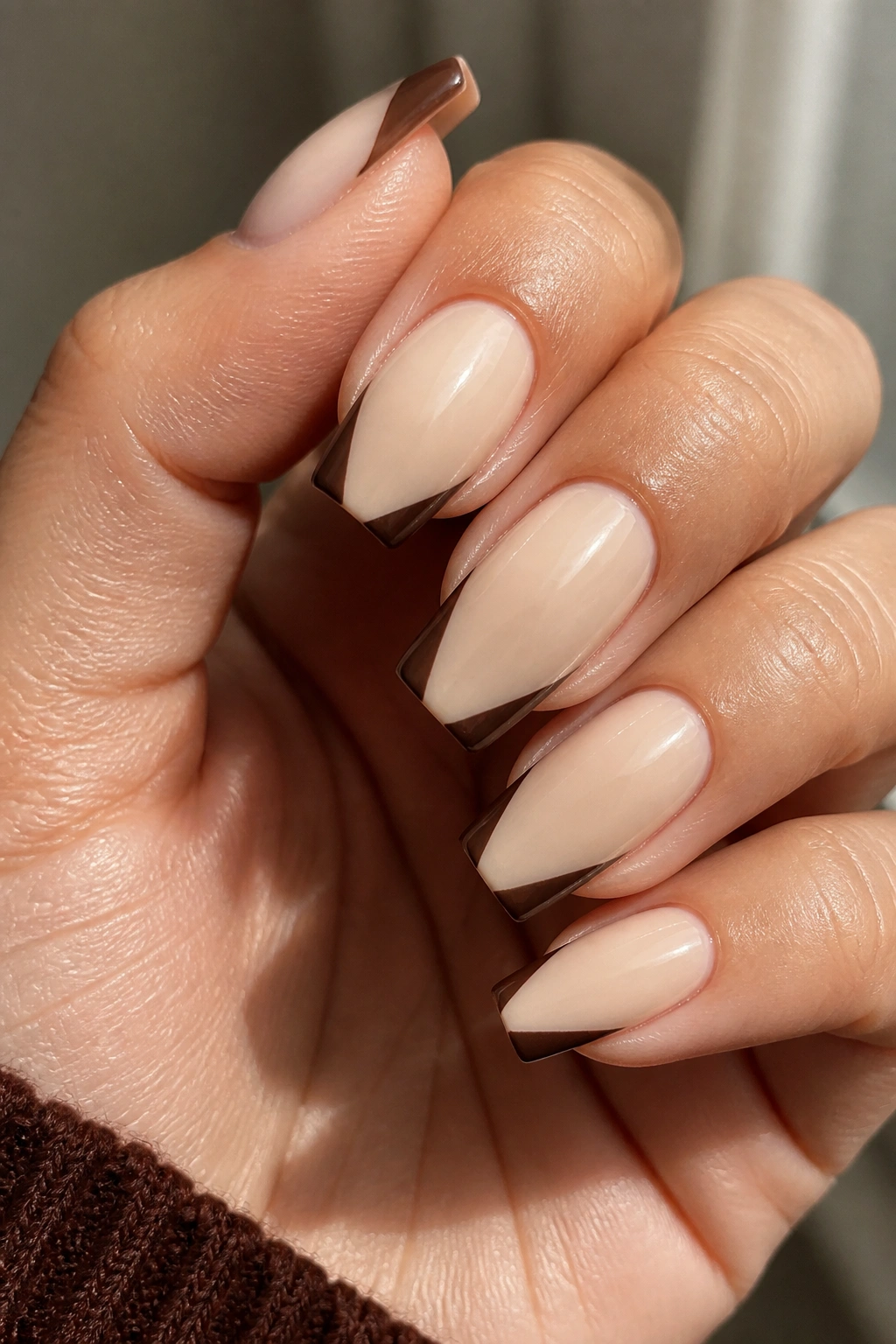
Shorter coffin nails often get ignored, which is annoying because not everyone wants long tips knocking against every keyboard and soda can. Corner French tips are one of the best brown designs for shorter or medium-short coffin shapes.
Instead of painting the full free edge, the dark brown sits mainly on the outer corners, sometimes connected by a fine line across the tip, sometimes left as two angled wings. That leaves more nude space in the middle of the nail, which helps the nail bed look longer.
I like this with a soft beige base and a dark brown that leans neutral, not red. The beige keeps the manicure clean; the dark corners add shape. You get the graphic feel of a French manicure without sacrificing half the nail to color.
The placement matters more than the shade. The corners should start right where the sidewall begins to taper, not halfway down the nail. Too low, and the shape looks pinched. Too high, and the design disappears.
If you want brown French tips but your nails are on the shorter side, this set deserves more attention than it gets.
12. Burnt Cocoa Croc-Texture French Tips
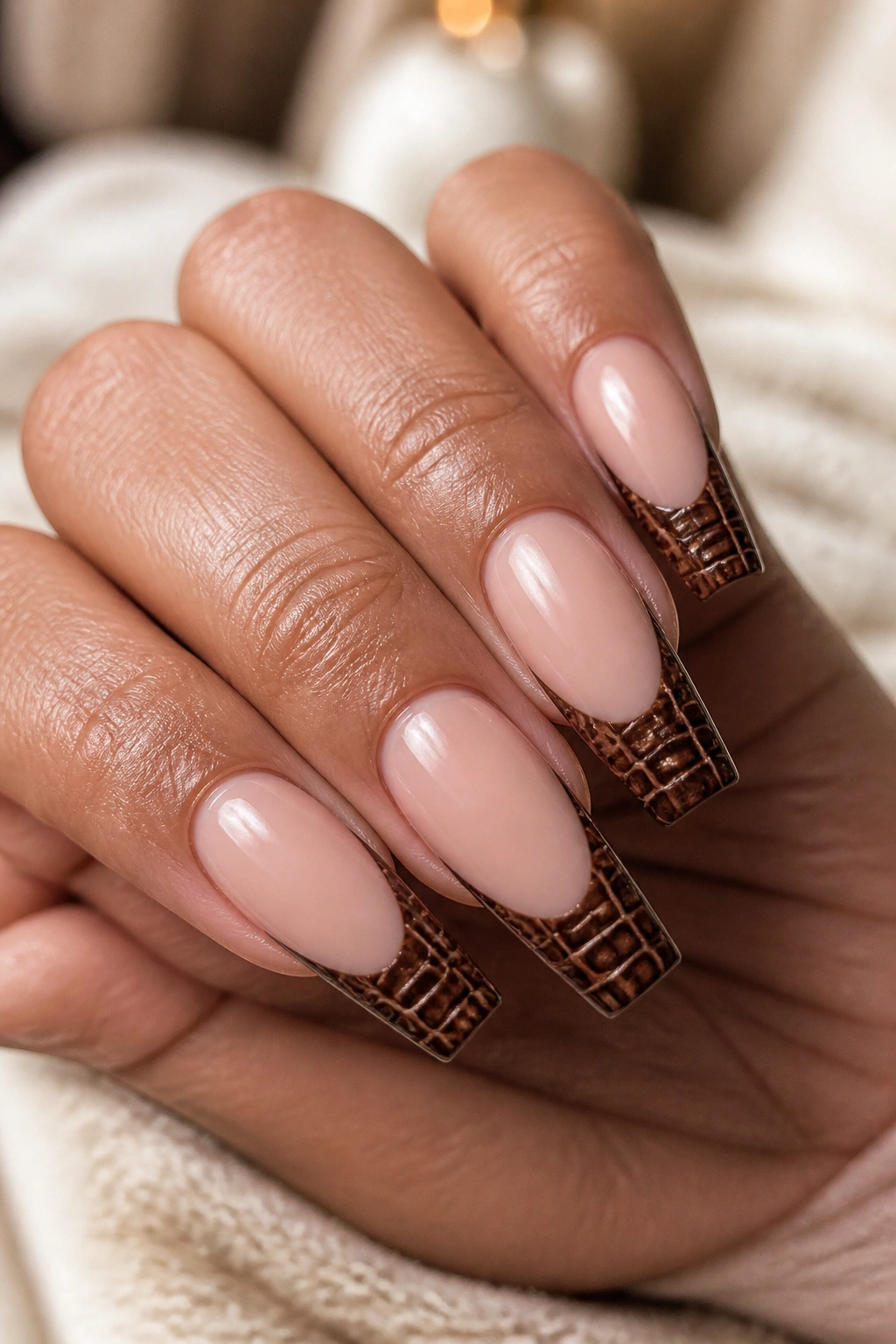
Texture changes the whole mood.
A burnt cocoa croc-texture French uses embossed gel or a raised top-coat pattern on the tip area, creating that reptile-inspired surface while keeping the rest of the nail smooth and nude. On coffin nails, the flat tip gives the texture room to show, so the design looks intentional instead of random.
This is not the everyday-safe choice, and that is why it works. By keeping the texture only on the French portion, you still get a recognizable structure. The set stays readable from a distance: nude base, brown tip, extra detail when you get closer.
Burnt cocoa is the shade I’d choose because it has enough red warmth to show dimension in the raised pattern. A flat gray-brown can make the texture disappear; a pitch-dark brown can hide it in shadow. The raised sections should be sealed with gloss so they catch light on the high points and look tactile.
If you go this route, keep the shape neat and the rest of the hand styling restrained. No massive crystals, no 3D bows, no full chrome overlay. Texture already gives you enough drama. Let it have the floor.
How to Ask for Brown French Tip Coffin Nails at the Salon
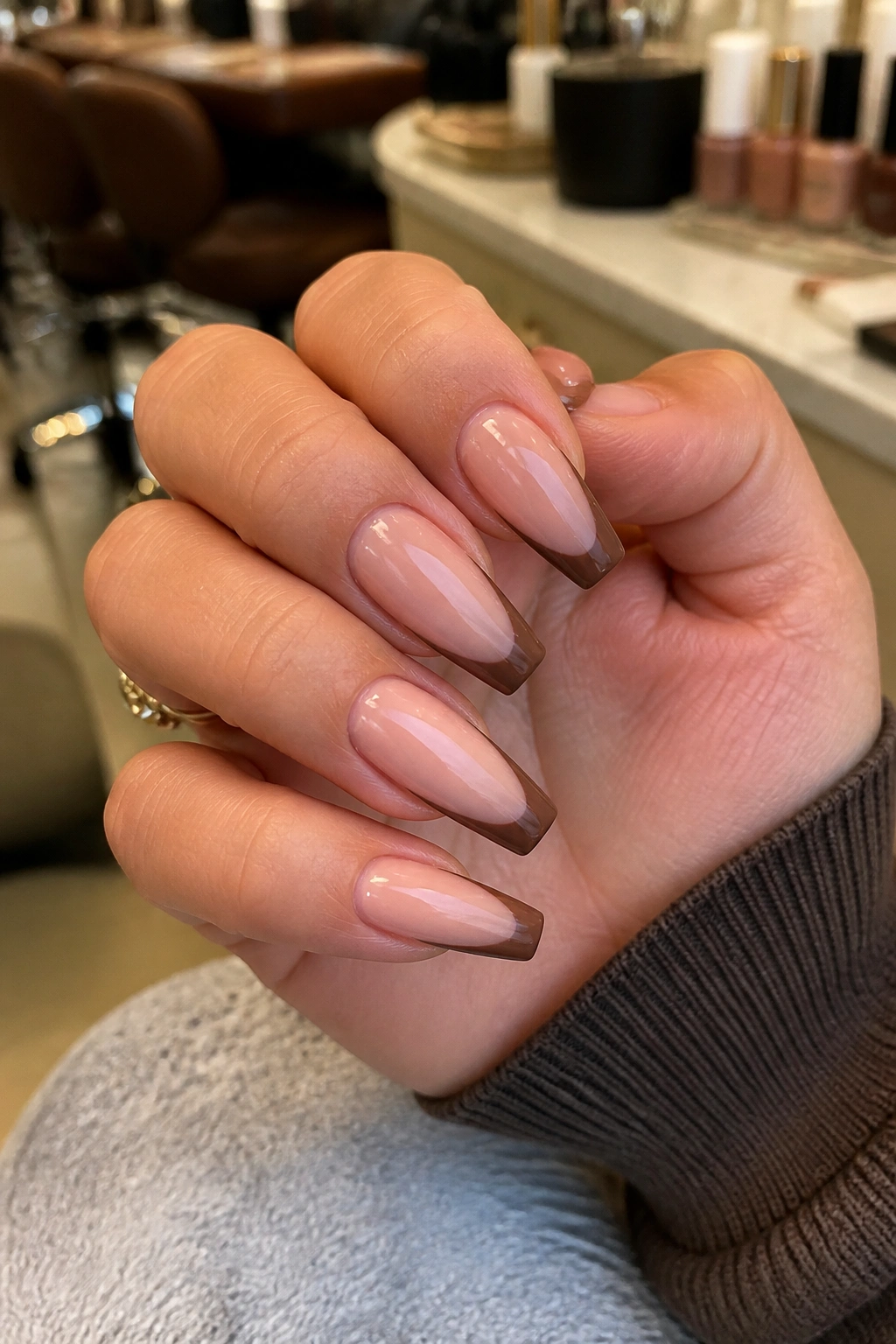
Half the battle happens before the first coat goes on. If you show a photo and say “something like this,” you might still get the wrong brown, the wrong tip width, or a coffin shape that turns too wide at the end.
Be specific. Nail techs usually respond well when you describe the structure first, then the color, then the finish.
A salon script that gets cleaner results
- Ask for medium or medium-long coffin nails with tapered sidewalls and a straight free edge
- Name the base: sheer nude, milky beige, pink-beige, or soft peach nude
- Name the brown family: milk chocolate, caramel, chestnut, cocoa, mocha, espresso
- Give a tip width: micro tip, 2 mm tip, deep smile line, V-cut, outlined edge
- Say the finish out loud: glossy, matte on tips only, jelly effect, gold divider
If your tech uses builder gel, mention whether you want the apex kept natural and low-profile or more sculpted. That changes how the French line sits on the nail. And if you wear press-ons, measure the width carefully. A French design that looks balanced in a sample photo can look clunky if the press-on is too wide for your nail bed.
Bring two reference photos if you can—one for the shape, one for the brown tone. It cuts down on the guesswork.
Keeping the Brown Tips Crisp for Two Full Weeks
Chipped brown tips show fastest at the corners, especially on coffin nails where the free edge is squared off. The fix is boring. Still worth doing.
Start with cuticle oil twice a day. Dry skin around the nail makes the whole set look rough, even when the polish is still intact. A drop of jojoba-based oil rubbed into the cuticle and sidewalls takes about 20 seconds per hand, and it helps the manicure stay cleaner visually.
Seal the free edge if you do at-home touch-ups. A thin layer of top coat every 4 to 5 days can buy you extra wear, mostly because the corners take so much friction from typing, opening cans, washing dishes, and digging through bags.
A few habits make a bigger difference than people think:
- Wear gloves for dishwashing and heavy cleaning
- Do not use your nails to scrape labels, pry tabs, or peel tape
- File snags in one direction instead of picking at them
- Book a fill or replacement set before the sidewalls start lifting
Dermatologists at the American Academy of Dermatology have long warned that peeling off gel polish can strip layers from the nail plate. That damage makes the next manicure sit worse. So if a brown French tip starts lifting, soak it off or have it removed. Do not peel it like a sticker. Tempting, yes. Smart, no.
Final Thoughts
Brown French tips on coffin nails work when the shape and color are doing the same job. The shape should lengthen the finger; the brown should sharpen that shape without swallowing it. That’s why micro tips, deep smile lines, V-cuts, and outline designs all feel so different even though they sit in the same color family.
If you want the safest place to start, go with milk chocolate micro tips or a chestnut deep smile line. If you want more character, tortoiseshell edges and a fine gold divider give you plenty without pushing into costume territory.
And if a design catches your eye but feels a bit much, change one thing—not the whole idea. Make the brown lighter. Thin the tip. Drop the texture to two nails. Most strong nail sets are one edit away from being exactly right.