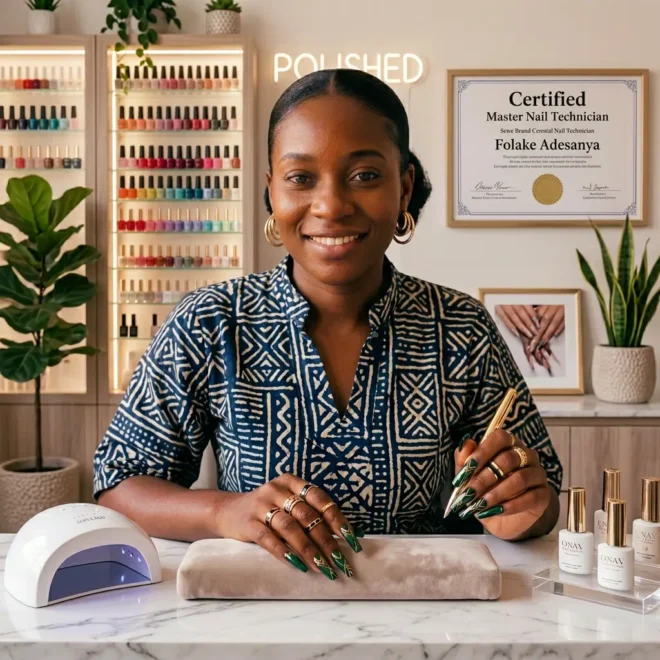


Short squoval nails have become the sweet spot for anyone who wants elegance without the commitment of long talons. The shape itself—a hybrid between a square and oval—offers the best of both worlds: structured edges that catch light beautifully and softened corners that feel less dramatic than a sharp square. But what really sets short squoval acrylics apart is how they look with natural finishes that play down flash and emphasize sophistication.
If you’ve been scrolling through nail inspiration and feeling like everything out there is either too bright, too long, or too much, you’re not alone. There’s a reason natural-looking short squoval acrylic nails have exploded in popularity. They work with real life—you can type, cook, and play sports without worrying. They look polished in any setting, from the boardroom to the coffee shop. And honestly, they’re easier to maintain than longer styles while still giving you that perfectly manicured look that grows out gracefully.
The beauty of acrylics in this style is that you’re not locked into looking “fake.” Modern acrylic techniques allow for incredible depth, subtle shimmer, and barely-there finishes that look like your own nails, just better. Whether you want something completely neutral or a hint of color that whispers rather than shouts, there’s a natural short squoval nail design that matches your vibe.
1. Barely-There Beige with Subtle Shimmer
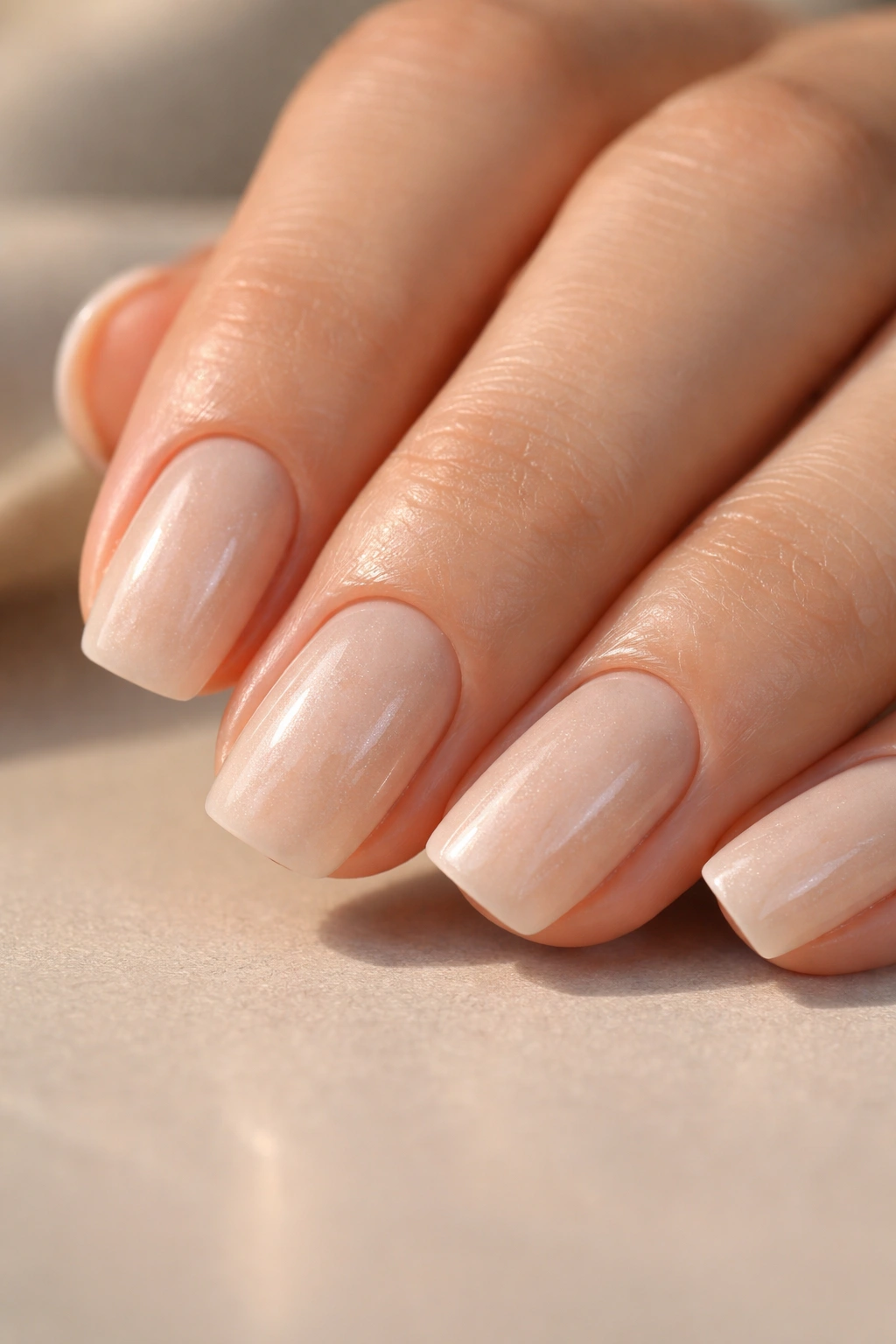
This is the no-makeup makeup of nail designs—a creamy beige that sits just slightly warmer than your skin tone, finished with the tiniest dusting of shimmer that only catches light when your hands move in sunlight. The acrylic sits flush with the nail bed for that seamless look that makes people do a double-take because they can’t quite figure out if you’re just naturally perfect or if you’ve had work done.
Why This Works for Short Squoval
The neutral base lets the actual shape of your nail shine. Because there’s no competing color or pattern, the clean lines of the squoval become the focal point—it’s architectural and elegant without being obvious about it. This design works across every season and dress code, making it genuinely versatile.
The Application Details That Matter
- A thin base coat (not thick and chalky) prevents that separated-from-the-nail-bed look
- The shimmer should be brushed on so lightly it’s almost translucent—think “barely there” rather than glittery
- Use a natural, warm undertone beige (not the gray-beige that can look muddy on deeper skin tones)
- Seal everything with a crystal-clear topcoat that gives depth without shine
Pro tip: This finish is the ultimate nude for photographs—it photographs as clean and classic without the weird yellow or pink cast that some beiges throw under flash.
2. Soft White Tips with Cream Base
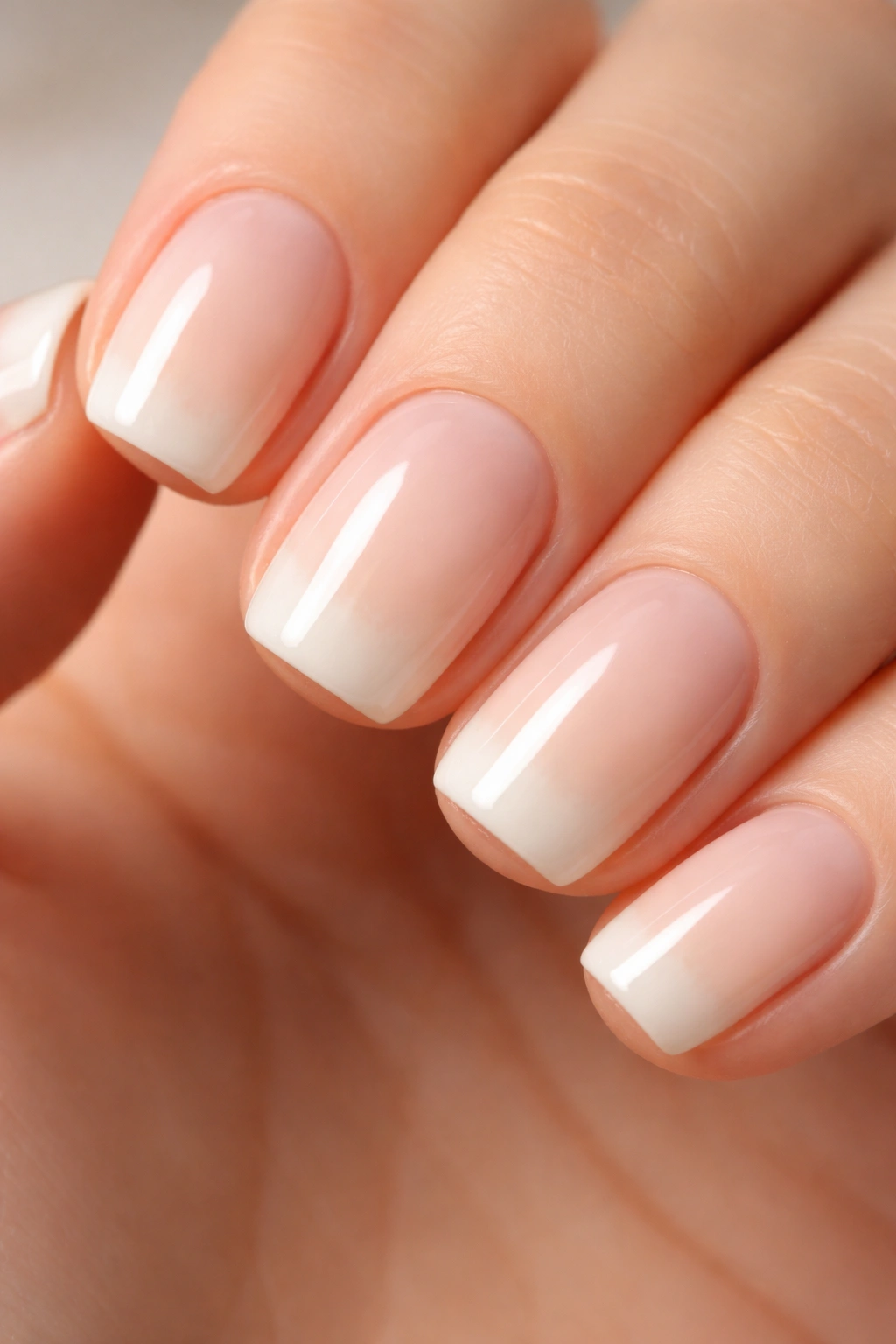
A modernized French manicure that ditches the stark white-on-red look for something softer and warmer—cream-colored base with white tips that fade into a soft gradient rather than a harsh line. It reads as polished and put-together, but in a “I naturally have nice nails” way rather than “I obviously just came from the salon.”
What Makes This Feel Natural
The gradient from cream to white is so subtle that it doesn’t feel performative. The white tips are also shorter than traditional French nails, which keeps them grounded and practical on short squoval shapes. This design elongates the nail visually while still respecting the actual length you’re working with.
Execution Tips for That Gradient
- Use a sponge technique or a fine brush to create the gradient—harsh lines read as dated
- The cream base should warm your undertone, not fight it (warm undertones work with creamy beige-white, cool undertones work with pale pink-white)
- Keep the white fade to about one-quarter of the nail length
- A glossy finish keeps this feeling fresh and modern, not matte
The beauty of this design is that it requires zero creativity or bravery—it’s effortlessly elegant and looks intentional without being trendy.
3. Soft Taupe with Matte Finish
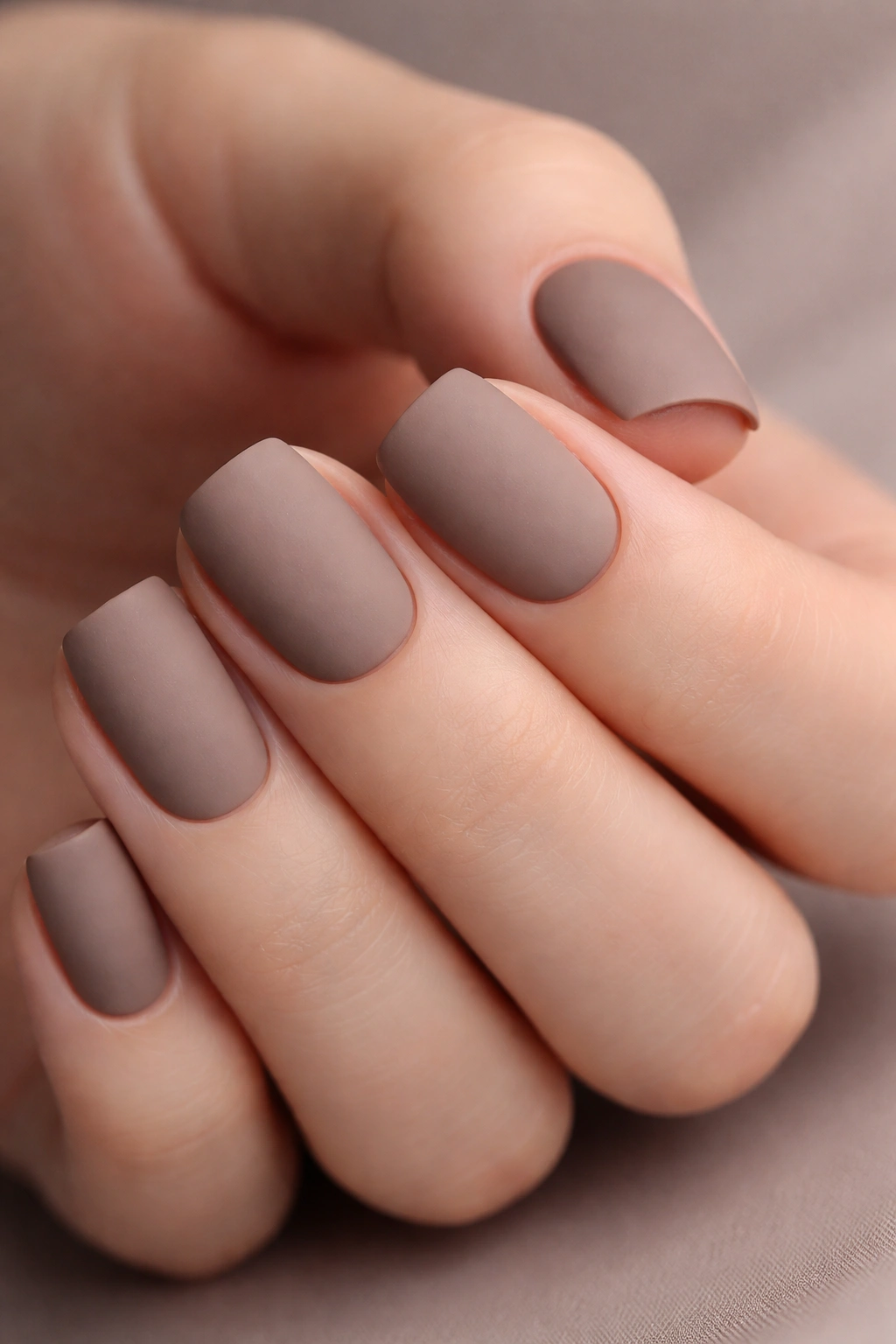
Taupe is the sophisticated cousin of nude—it has slightly more depth and a hint of gray that gives it gravitas. A matte finish (flatting the topcoat) transforms it from standard to striking because the texture becomes part of the design. Light plays off the surface differently, creating visual interest that looks expensive and intentional.
Why Matte Elevates the Look
On short squoval nails, matte finishes emphasize the nail shape because there’s no shine to distract. The color becomes pure, and the quality of the acrylic application becomes obvious—which means this look only works if your application is flawless. That’s actually a good thing because it ensures you’re working with a skilled technician.
Getting the Matte Balance Right
- A matte finish shows imperfections more than glossy does, so flawless application is non-negotiable
- Taupe works on nearly all skin tones if you choose the right depth (warmer taupe for warm undertones, cooler taupe for cool undertones)
- The matte texture can feel drying to some people—if that bothers you, seal with a very thin matte topcoat rather than a thick one
- Matte finishes are slightly higher maintenance because they pick up oils from your skin more visibly
This is the design for someone who wants minimal color but maximum impact.
4. Milky Blush with Rose Gold Flecks
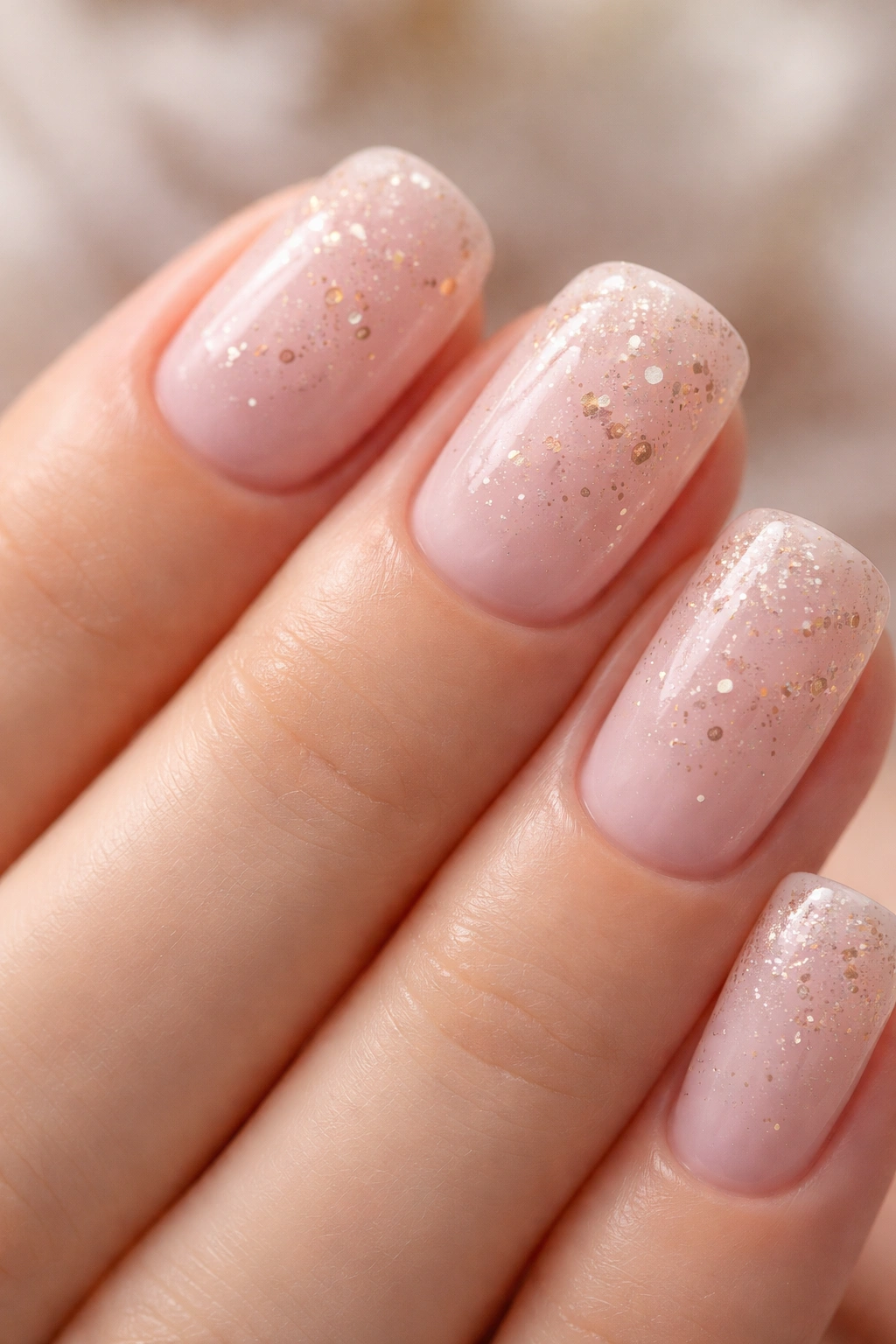
A soft, milky base in a pale blush tone—barely pink, barely nude—with tiny flecks of rose gold embedded throughout that catch the light like you’ve just brushed past something magical. It reads as romantic and feminine without being girly or overdone. The blush works because it’s so pale that it still feels neutral, but the rose gold flecks add dimension and luxury.
The Subtle Luxury Factor
This design demonstrates that you don’t need bold color for visual interest. The interplay between the soft base and the metallic flecks creates movement and depth. On short squoval nails, this prevents the look from feeling boring—the shimmer keeps it alive.
Creating This Look
- Use a translucent blush acrylic as the base, not an opaque colored acrylic (translucence is what keeps it feeling natural)
- Rose gold flecks should be mixed into the acrylic or applied with a thin brush—they shouldn’t look like someone threw glitter on top
- A glossy topcoat makes the rose gold pop without making the whole nail shiny (some techs use sealers specifically for metallics)
- The blush-to-gold ratio matters—more flecks feels trendy, fewer flecks feels timeless
This is the design that makes people ask what you’re wearing, which is the sign of a great natural nail design.
5. Translucent Pink with Chrome Accent Line
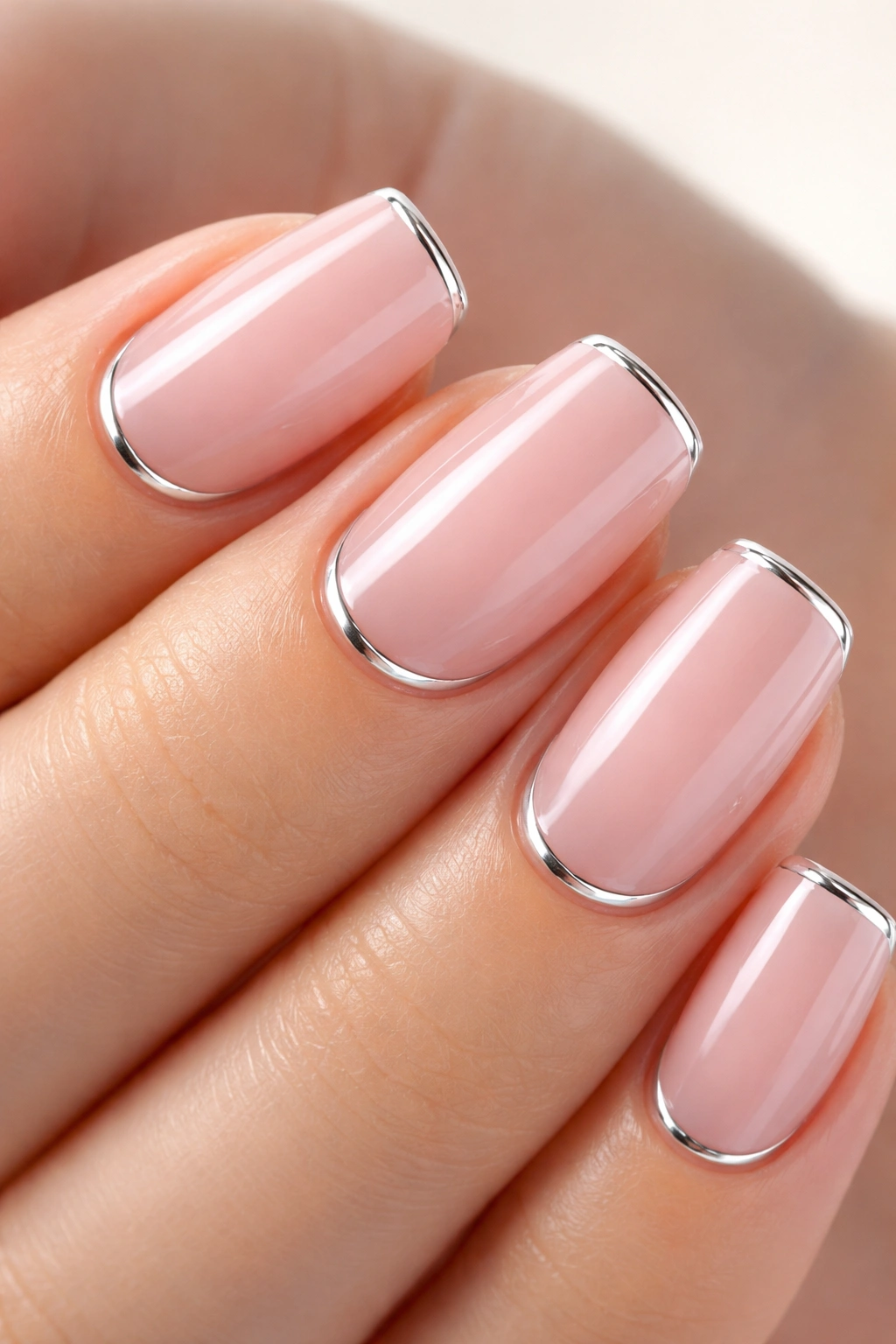
A barely-there pink acrylic that’s so sheer you almost see through it to the natural nail (or the nail bed), with a paper-thin chrome or silver accent line down one edge or along the cuticle. It’s architectural and modern without being cold. The translucence keeps it approachable, while the chrome line gives it personality.
Why This Reads as Premium
Chrome on acrylics looks high-tech and deliberate—like you actually designed this rather than just picked a color. On short squoval nails, an accent line becomes more prominent because there’s less real estate, which means the geometry matters more. This design shows restraint, which is always more expensive-looking than excess.
Technical Considerations
- Translucent acrylics are tricky to apply because they show every imperfection underneath—nail preparation is absolutely critical
- The accent line should be placed where it actually catches light (along the edge rather than the center works better on short nails)
- Chrome powder requires a special adhesive and technique—not all techs offer this, so ask specifically
- This design photographs beautifully because the translucence creates depth in photos that solid color doesn’t
This is the design for someone who understands that natural doesn’t mean colorless.
6. Warm Ivory with Delicate Vein Detail
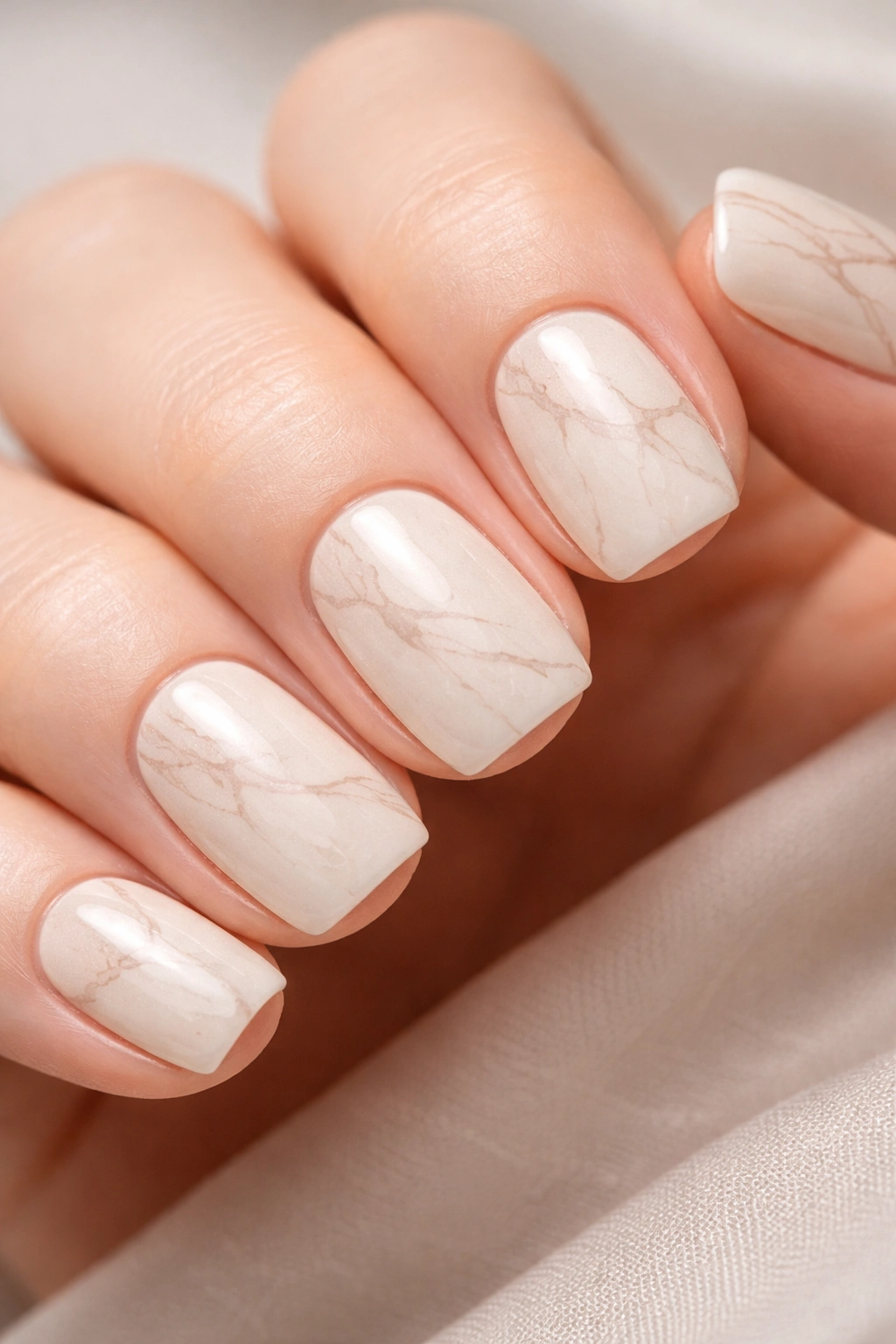
A creamy ivory acrylic (warmer than white, cooler than beige) with the barest suggestion of veining in taupe or gray—not enough to look dramatic, just enough to add organic texture that mimics natural nail variations. The veins run subtly across the nail and disappear and reappear, making it look like this is genuinely how your nails grew in.
The Naturalism of Imperfection
Most people’s natural nails have slight color variation, softer spots, and subtle marks. This design captures that quality in a controlled, beautiful way. It’s sophisticated because it doesn’t hide the fact that nails are natural materials with texture and variation.
Applying the Veining Technique
- Veining should be done with a fine brush and thin acrylic, not thick paint that sits on top
- The lines should be organic and asymmetrical—think marble veining, not grid lines
- Colors should be in the same family as the base (taupe on ivory, not black on ivory) for that barely-there quality
- This technique requires a talented tech; it’s worth seeking out someone who specializes in naturalistic finishes
When done well, this design reads as understated luxury because it suggests you have nothing to prove.
7. Cool Nude with Barely-There Glitter Distribution
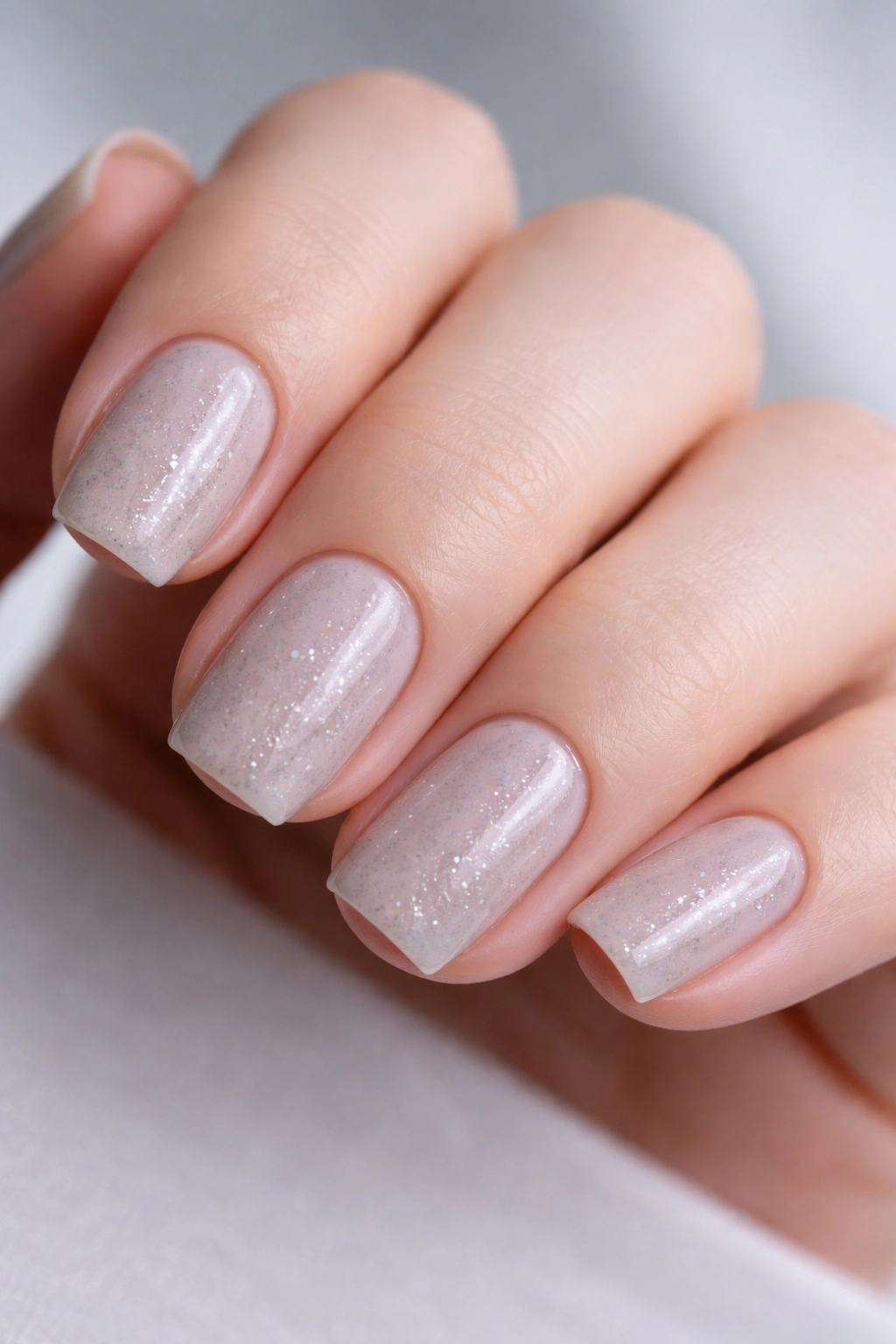
A cool-toned nude (gray-leaning beige, not warm beige) with glitter that’s so distributed and sparse you almost miss it at first glance. The glitter isn’t in a specific design—it’s scattered throughout the acrylic so that movement and light reveal it gradually. It’s the visual equivalent of whispering rather than announcing.
Why Sparse Glitter Beats Solid Glitter
Glitter can read as cheap or loud when it’s concentrated, but sparse glitter reads as luxury detail. On short squoval nails, less is definitely more because you have limited space—glitter placement matters more than glitter quantity. This design says you have refined taste rather than bold taste.
Distribution and Durability
- Glitter should be mixed into the acrylic during application, not added to the topcoat (this makes it more durable and looks more intentional)
- Placement should be thoughtful—maybe heavier at the tips, lighter at the base, or concentrated in one or two nails with accent placement on the rest
- Using fine glitter (not chunky cosmetic glitter) keeps the look sophisticated
- Top with a glossy or semi-gloss finish to let the glitter catch light without making the whole nail shiny
This design works for someone who wants a tiny bit of personality without the commitment of color.
8. Pale Peachy Nude with Cream Accent Nail
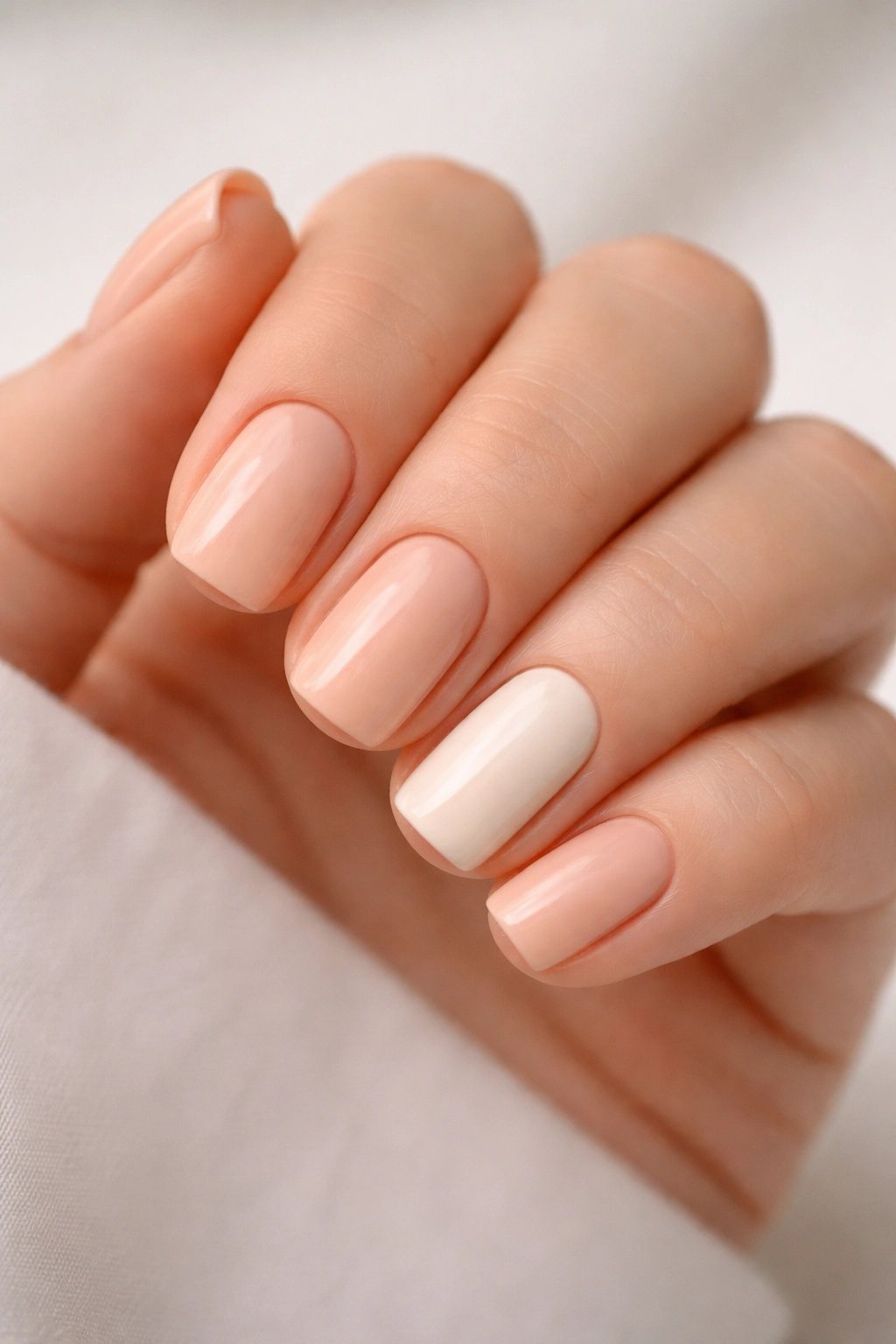
Seven neutral peachy nails with one accent nail in a lighter, creamier shade—simple enough to barely register as intentional, but distinctive enough that the overall look feels designed. The accent nail can be on your ring finger or thumb depending on what feels balanced on your hand. This design is all about proportion and subtle contrast rather than dramatic difference.
The Art of Understated Accents
One accent nail in a nearly-identical shade demonstrates restraint and confidence. You’re not trying to catch attention; you’re just creating a moment of visual interest for people who actually look closely. On short squoval nails, this asymmetrical approach prevents the look from feeling too matchy-matchy.
Choosing Your Shades
- The two shades should be close enough that some people won’t notice they’re different (mission: subtle)
- The peachy shade should complement your undertone (warmer undertones pull warm peachy, cooler undertones go for peachy-pink)
- The accent shade should be slightly lighter to create lift and brightness
- Both shades should read as natural, not candy-colored
This design is perfect for someone who doesn’t want people to ask about their nails—they should just feel like your nails look really good.
9. Greige with Soft Matte White Gradient Tip
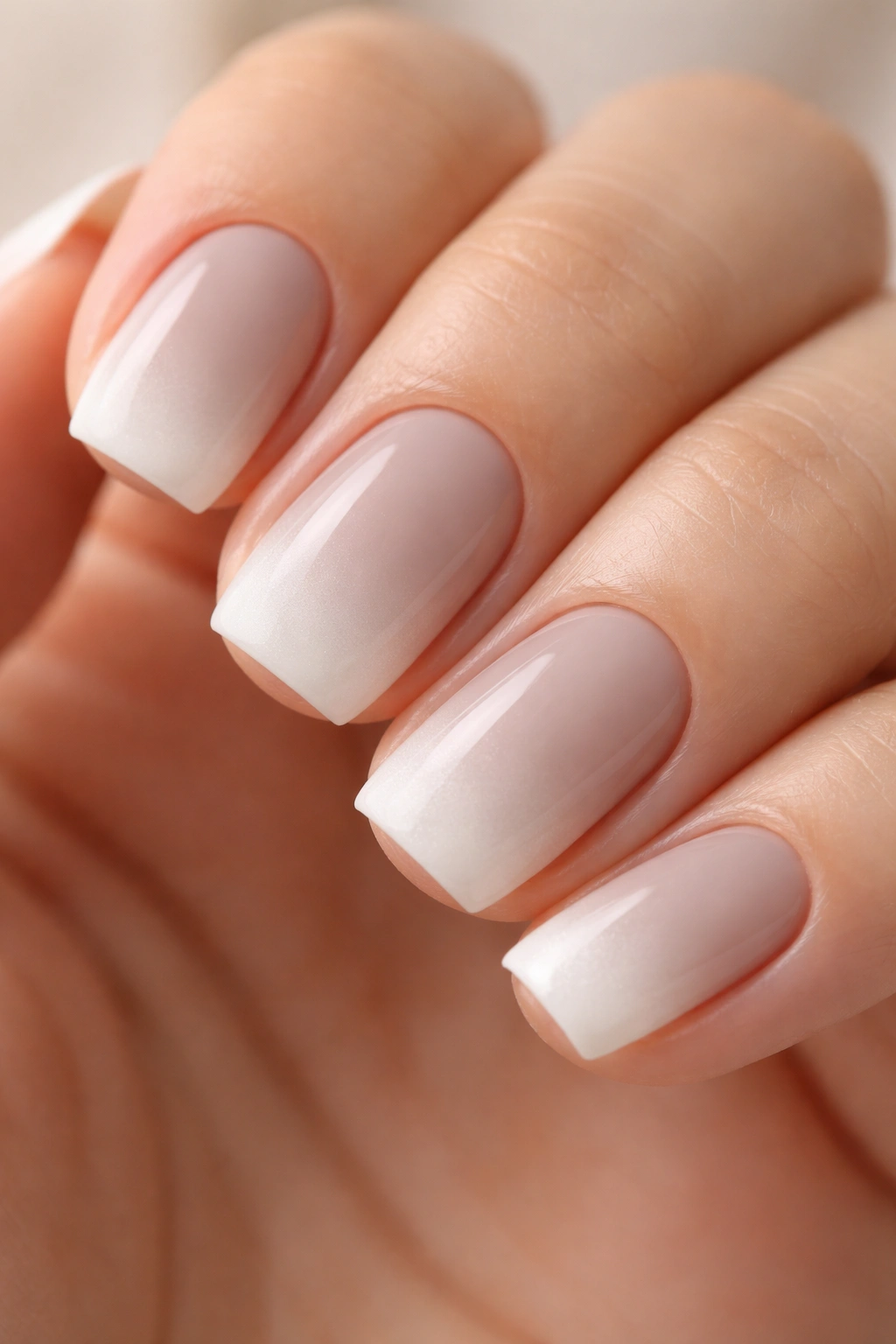
Greige (gray-beige hybrid) as the base with a gradient that fades from greige to a matte white at the tips—softer than a traditional French gradient because the white is translucent rather than opaque. The matte finish keeps the top clean and less shiny than the slightly glossy base, creating a subtle texture shift that feels intentional and modern.
The Sophistication of Texture Play
By combining glossy and matte finishes on one nail, you’re creating visual interest without color variety. This reads as premium because it shows technical skill and design thinking. The gradient isn’t harsh—it’s soft and lived-in, like your nails naturally wear this way.
Creating the Gradient Effect
- A soft sponge application creates the gradient—the goal is translucent overlap, not distinct lines
- White at the tips should be pale and slightly sheer, not stark and opaque
- Seal the greige base with a glossy topcoat, then apply matte topcoat only to the white section for that texture contrast
- The gradient should take up about one-third of the nail for short squoval lengths
This design photographs beautifully because the texture shift catches light differently than a flat nail.
10. Natural Beige with Minimalist Curved Line Accent
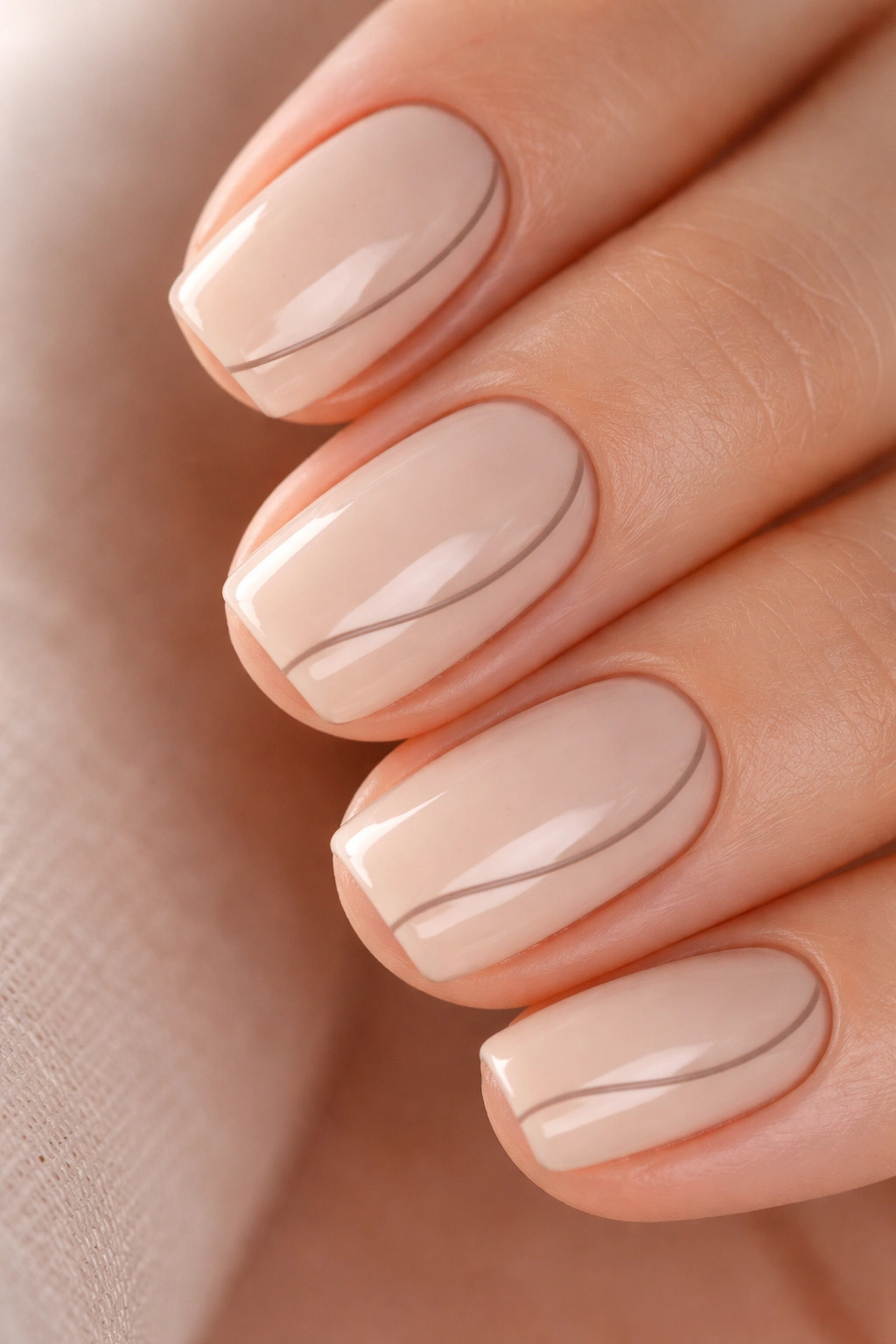
A warm, neutral beige base with a single curved line in a cool dark taupe running along the side or down the center—geometric and artistic without being loud. The line is thin enough that it reads as intentional detail rather than a design. It’s the kind of accent that makes sense with short squoval shapes because the curves and lines of the nail create natural visual boundaries.
When Minimalism Becomes Sophisticated
A single curved line requires confidence because it’s so simple, but simplicity is what signals luxury. This design doesn’t try to distract or impress—it just adds a moment of visual interest that feels earned. It’s what people wear when they actually understand design.
Executing the Line Precisely
- The line should be thin and deliberate, applied with a fine brush by someone with steady hands
- Placement matters—a line that follows the natural curve of your nail works better than a random placement
- The taupe should have good contrast against the beige without being harsh (true black would be too dramatic on short nails)
- Seal with a glossy topcoat that protects the line and makes it appear almost inlaid rather than drawn on top
This design is a statement about taste, not about nails. It’s understated elegance that people notice once they actually look.
Final Thoughts
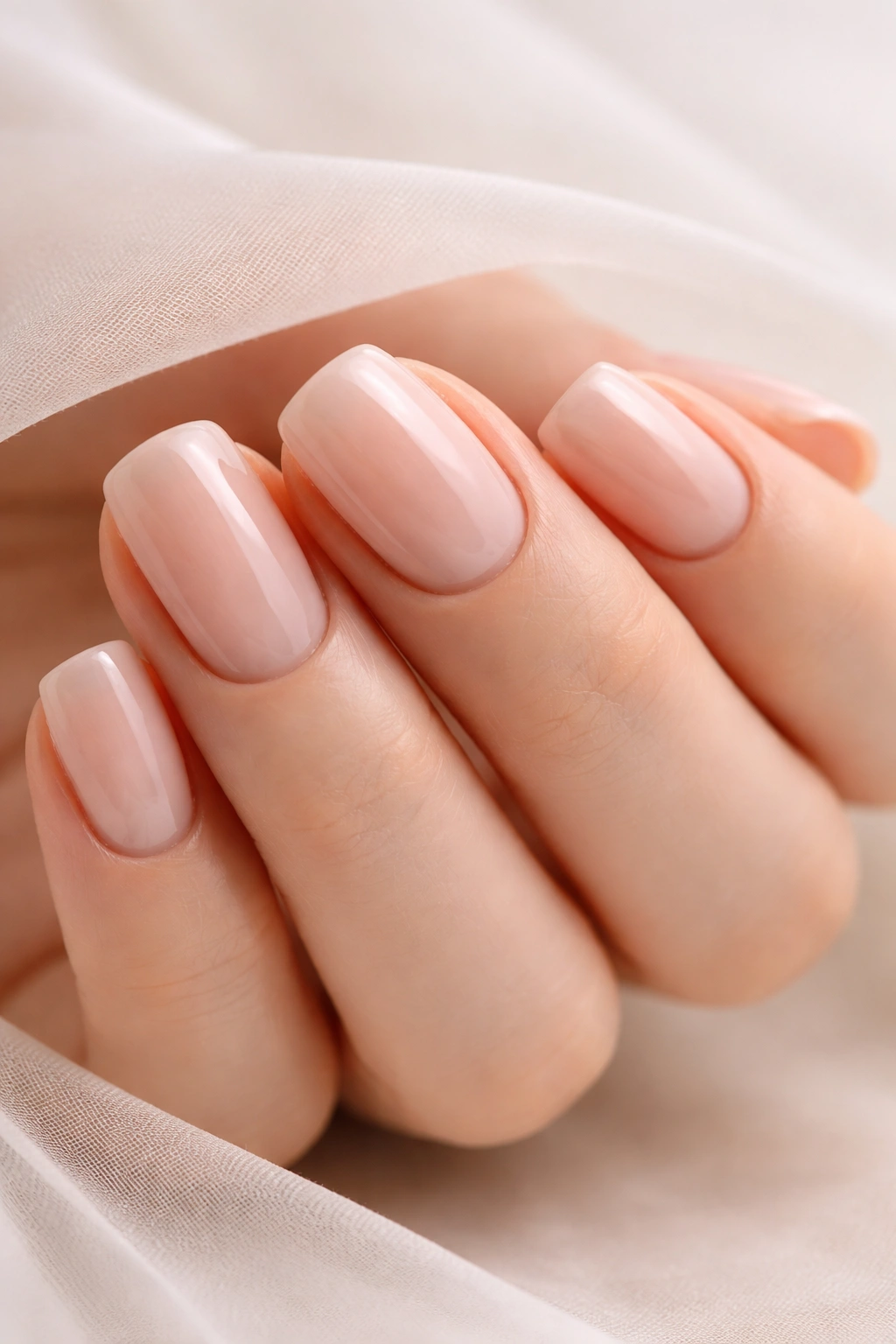
Short squoval acrylic nails with natural finishes are the ultimate hack for looking polished without appearing high-maintenance. The beauty of these designs isn’t that they’re flashy—it’s that they read as intentional and elevated while still feeling like your natural nails, just perfected. Whether you choose barely-there shimmer, soft gradient tips, delicate veining, or minimalist accents, the common thread is restraint paired with genuine design thinking.
The longevity of these natural looks also matters. Unlike trendy designs that feel dated within months, these styles stay relevant because they’re rooted in timeless principles of elegance—neutral tones, quality application, and designs that enhance rather than overpower. You’ll actually want to keep them on for their full four to six week lifespan rather than getting tired of them after two weeks.
Start by communicating clearly with your nail tech about what “natural” means to you. Show them photos of nails you actually love and describe what appeals to you beyond the color (the finish, the shape, the overall vibe). The right tech will understand that natural doesn’t mean boring—it means purposeful, well-executed, and designed to make you feel genuinely confident. Once you find someone who gets it, you’ve found someone worth returning to, because this level of nail artistry is about skill, not trends.