

There’s something deeply satisfying about brown nails—they’re the unexpected choice that somehow works with everything, from casual coffee runs to polished professional settings. Short squoval nails in warm brown tones hit a sweet spot between practical and elegant, giving you a manicure that looks intentional without demanding constant maintenance or lengthy styling time. The squoval shape itself is a modern middle ground, combining the flattering length of a short nail with just enough definition to feel refined and deliberate.
Brown as a base color is quietly transformative. Unlike bolder reds or trendy pastels that demand the conversation revolve entirely around your nails, brown allows you to layer textures, finishes, and subtle design elements that reveal themselves slowly. It’s warm without being heavy, sophisticated without being cold, and genuinely flattering across skin tones in ways that fewer colors manage. When you pair this versatile base with the practical appeal of short, durable squoval length, you’ve got a foundation for dozens of distinct looks.
The real magic happens when you start exploring what brown can do. From velvety chocolates and creamy cappuccinos to dusty taupes and warm caramels, brown encompasses an astonishing range of depth, warmth, and mood. Layer that with matte finishes, metallic accents, minimalist line work, or texture, and suddenly you’re looking at nail designs that feel completely unique—while still maintaining that grounded, wearable quality that short squovals excel at.
1. Chocolate Shimmer with Gold Flecks
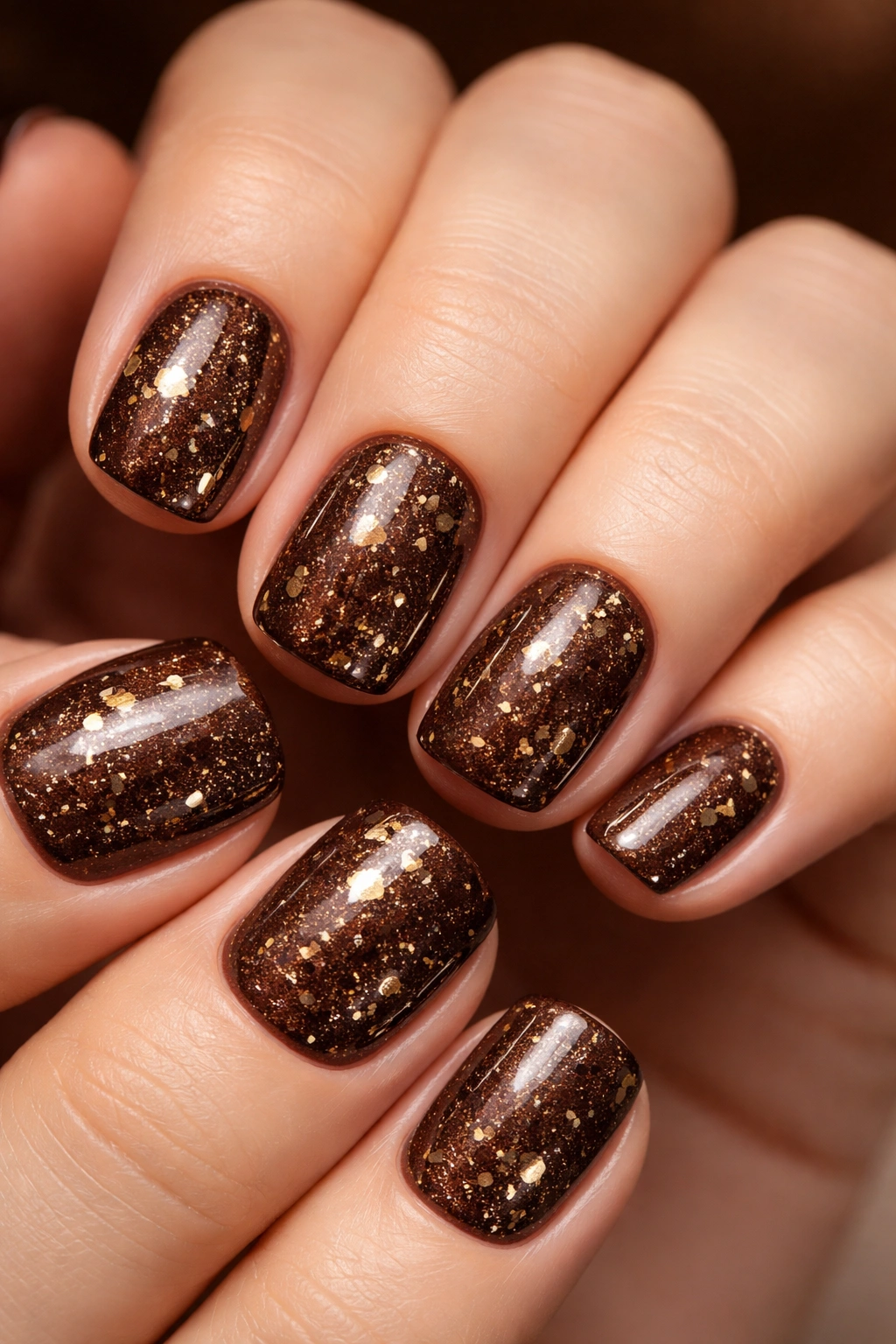
A rich chocolate brown paired with scattered gold foil flecks creates an understated glamour that catches light without screaming for attention. The shimmer here acts like tiny reflected moments—visible only when your hands move or when light hits at the right angle. This design works because the brown base is dark and saturated enough that the gold reads as intentional detail rather than accidental sparkle.
Why This Design Works Best
The chocolate-and-gold pairing taps into a color combination that feels naturally luxurious, like melted chocolate with a dusting of edible gold leaf. Short squoval nails keep the design wearable for everyday life—you get the polish and refinement without the high-maintenance feel of longer nails. The scattered placement of the flecks means regrowth doesn’t show obviously, which makes this a genuinely practical choice for someone who wants their manicure to last three to four weeks without looking bedraggled.
What to Know Before Booking
- Application technique: A skilled technician will apply the chocolate base in two coats, allow it to cure, then carefully place individual gold flecks using a small brush or tweezers while the topcoat is still slightly tacky
- Longevity: Gold foil flecks on gel manicures typically hold beautifully for 3-4 weeks with minimal chipping at the edges
- Removal: Ask your technician to soak rather than aggressively file when removal time comes—foil flecks can occasionally catch and lift if handled roughly
- Matching skin tone: This design flatters cool, warm, and neutral undertones equally well; the brown-gold balance works as a universal pairing
Pro tip: Request a matte topcoat instead of glossy if you want the gold flecks to feel more like embedded details rather than floating on a shiny surface. The subtle finish difference changes the entire mood of the design.
2. Warm Caramel with Cream Swirl
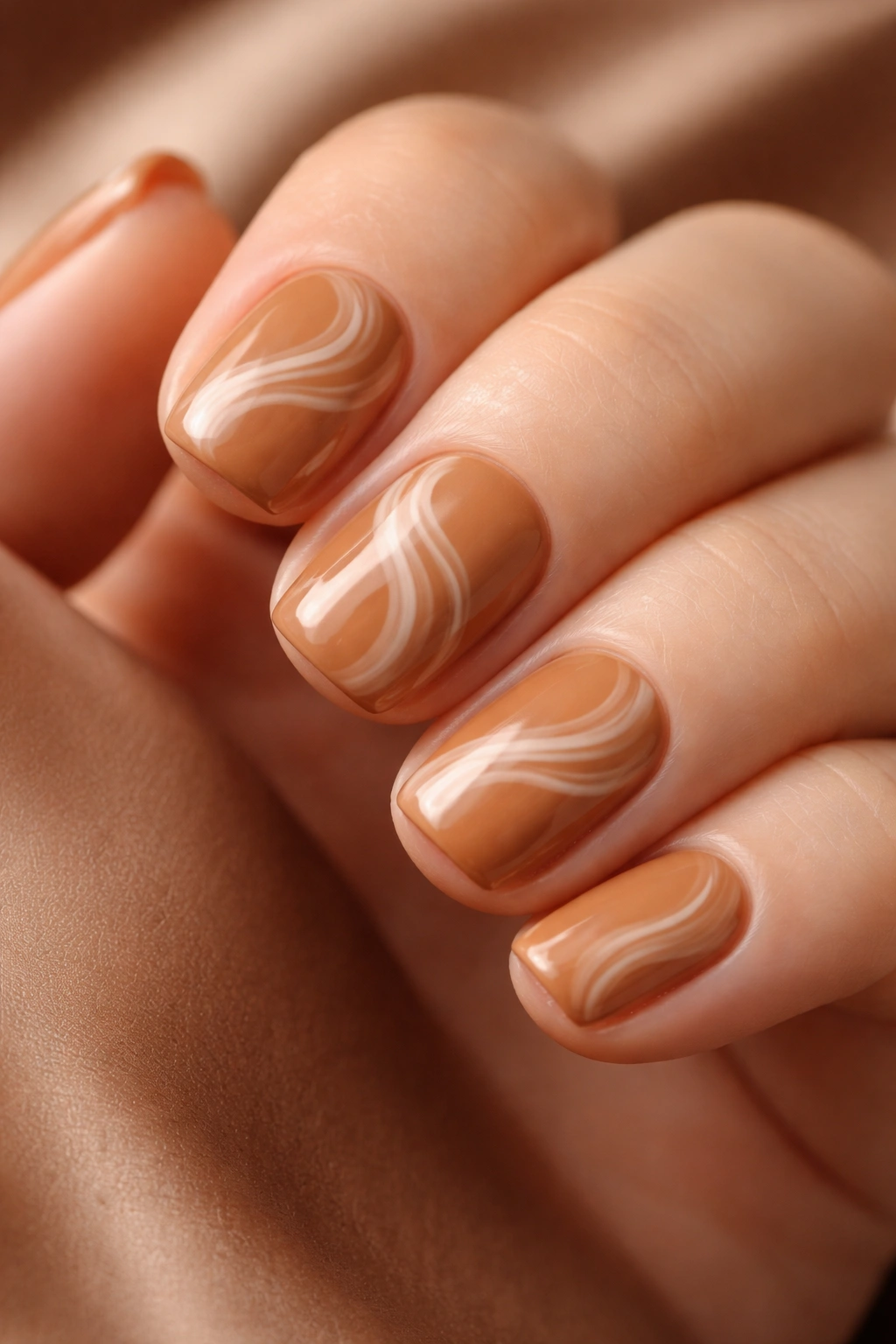
Caramel and cream create an optical illusion of movement and softness on short squoval nails. The caramel base provides warmth and depth, while a delicate cream-colored swirl (painted or hand-drawn) creates contrast and visual interest without overwhelming the short nail canvas. This design sits at the intersection of approachable and sophisticated.
The Appeal of This Pairing
Caramel tones are the sweet spot of brown—rich enough to feel substantial, warm enough to feel inviting, and genuinely flattering to most skin tones. When you introduce a cream swirl, you’re adding dimension and a softness that pure solid color can’t deliver. The swirl technique requires a steady hand or a talented artist, but the payoff is a design that looks deliberate and special without being complicated or trendy in a way that ages quickly.
Technical Details Worth Knowing
- Swirl technique: Applied with a thin brush while the base color is still in the gel state, then blended with a clean brush or stippled with a sponge before curing
- Best placement: A single vertical or diagonal swirl on each nail creates clean, elegant movement; avoid multiple swirls that can look muddled on a short canvas
- Color contrast: Cream against caramel creates just enough visual separation to read clearly without any high-contrast jarring
- Maintenance: Solid base colors with hand-drawn details don’t show nail growth as obviously as many other designs, which makes this a genuinely low-maintenance choice
Worth knowing: If you’re concerned about the swirl looking uneven, ask your technician to create the swirl on just two or three nails (accent nails) rather than all ten. This creates a cohesive look while reducing the risk of imperfect application catching your eye every time you look at your hands.
3. Espresso Brown with Matte Finish
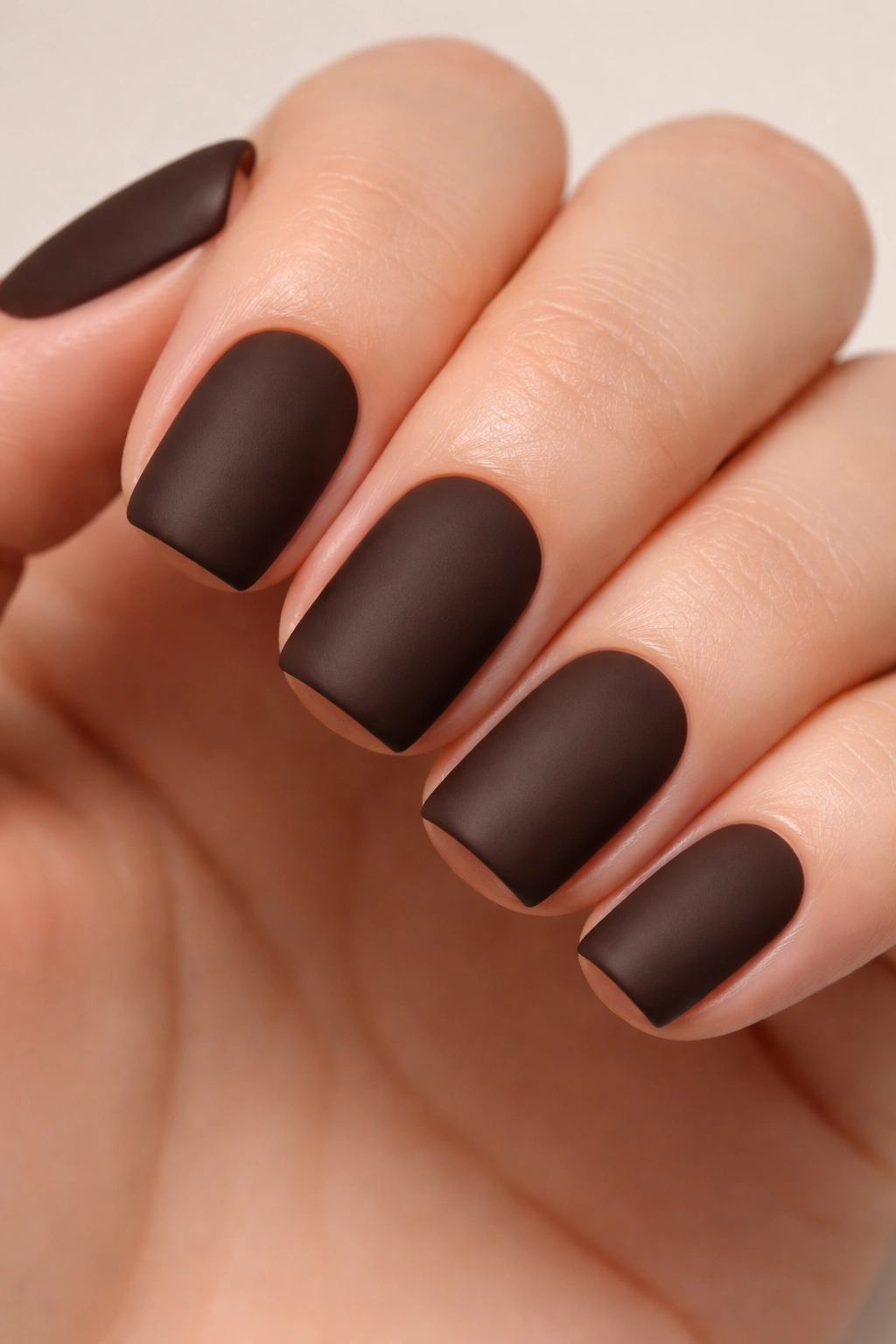
An espresso brown in pure matte finish is the nail equivalent of a well-made latte—deceptively simple, but executed with intention and quality. There’s no texture, no patterns, no shimmer; just a deep, warm, sophisticated brown that demands good application and clean edges. This is a design for someone who believes that refinement doesn’t require complication.
Why Matte Changes Everything
Matte finishes fundamentally alter how a color reads. That same espresso brown in glossy form feels more casual; in matte, it becomes architectural and intentional. Matte finishes also hide minor imperfections in the application better than glossy, and they create a tactile quality—your nails actually feel different, which adds to the sense that you’ve made a deliberate choice. The finish draws attention to the shape and condition of your nails rather than competing with shine.
Making Matte Work Practically
- Topcoat selection: A true matte topcoat (not matte powder applied over gloss) will last through 3-4 weeks without degrading into an uneven satin finish
- Handwashing: Frequent handwashing with hot water gradually breaks down matte topcoats, so this design works best if you have a gentle hand-washing routine
- Regrowth visibility: Because there’s no pattern or texture, nail growth shows more obviously with solid matte than with designs; plan for touch-ups around week 3
- Pairing with everything: The understated nature of matte espresso brown pairs effortlessly with any outfit, jewelry style, or occasion
Quick insight: Matte finishes feel more contemporary and editorial than glossy finishes currently, which means this design reads as intentional and current without being trend-dependent. It’s a sophisticated choice that won’t look dated in six months.
4. Burnt Sienna with Minimal Gold Line Work
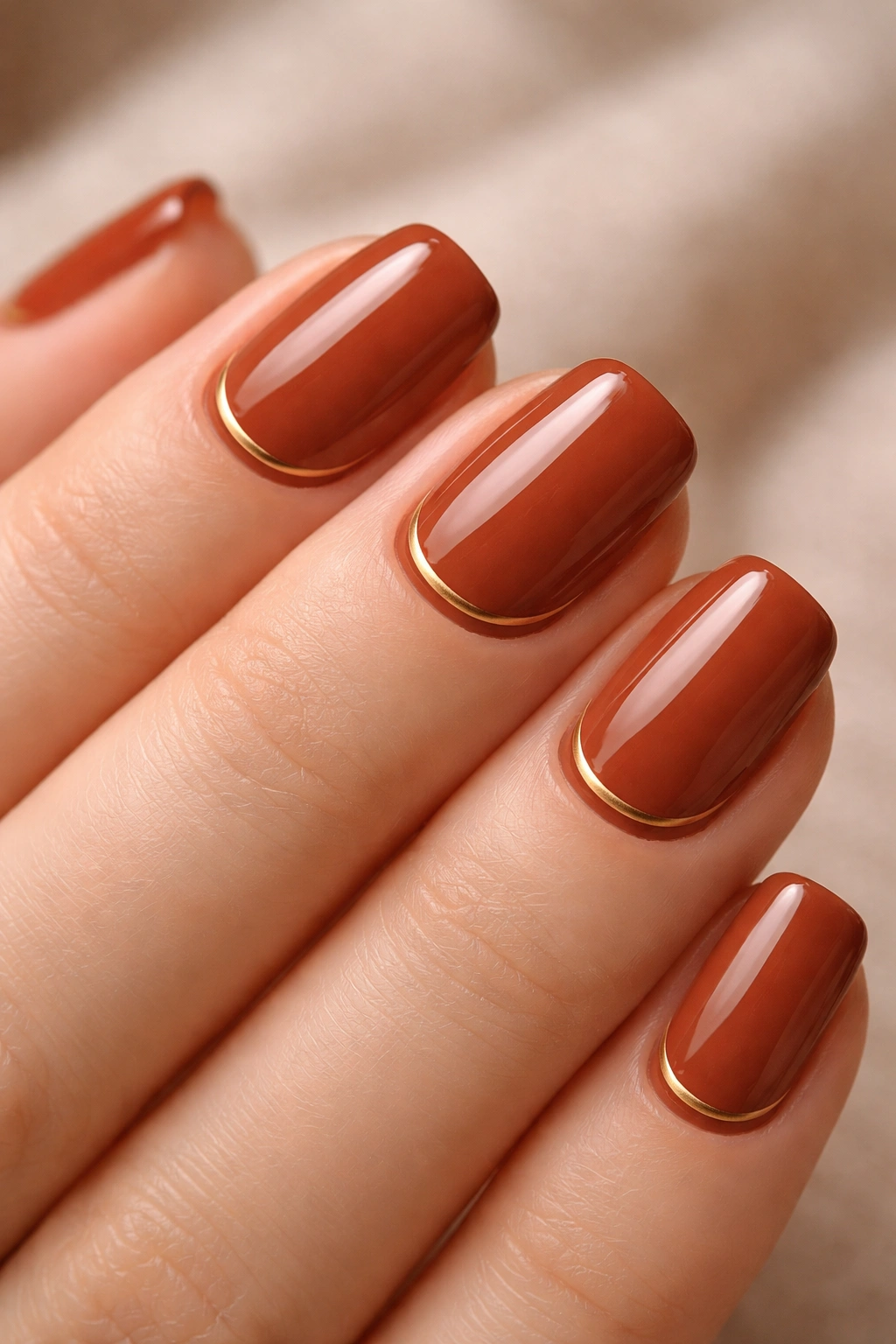
Burnt sienna is the spicy, deeper cousin of caramel—slightly more complex, slightly earthier, with hints of rust and warmth. Pair it with minimal gold line work (a single clean line along the cuticle or a geometric shape on one accent nail) and you’ve got a design that feels artistic without being loud or complicated. The lines should be thin and intentional, not thick enough to visually clutter the short nail surface.
The Artistry of Restraint
Burnt sienna is a color that benefits from minimal accompaniment. Too much decoration and you lose the complexity of the brown itself; too little and you miss the opportunity to elevate it into something special. Gold line work strikes the perfect balance—it acknowledges the nails as a canvas for small artistic moments without demanding that every inch of the nail participate in a complicated design. One thin gold line along the cuticle line creates a frame effect; one small gold triangle or rectangle on a single accent nail draws the eye without overwhelming the overall look.
Design Execution Matters
- Line thickness: A line should be no thicker than a single hair; anything thicker reads as a stripe rather than a delicate detail
- Gold choice: Use actual gold foil or metallic gel, not a metallic paint that can look cheap or dusty
- Placement options: A horizontal line just above the cuticle, a vertical line along the center, or a small geometric shape on the pinky or index finger
- Curing: Gold elements need to be sealed under topcoat immediately after application to prevent oxidation and dulling
- Visual impact: This design works because the line work acts as an anchor or emphasis for the eye; it creates intention without creating complexity
Pro insight: If you’re nervous about nail art, this design is an excellent starting point because the simplicity means small imperfections don’t show. A slightly wobbly line still reads as intentional; it’s the restraint that makes this design work.
5. Creamy Taupe with Nude Gradient
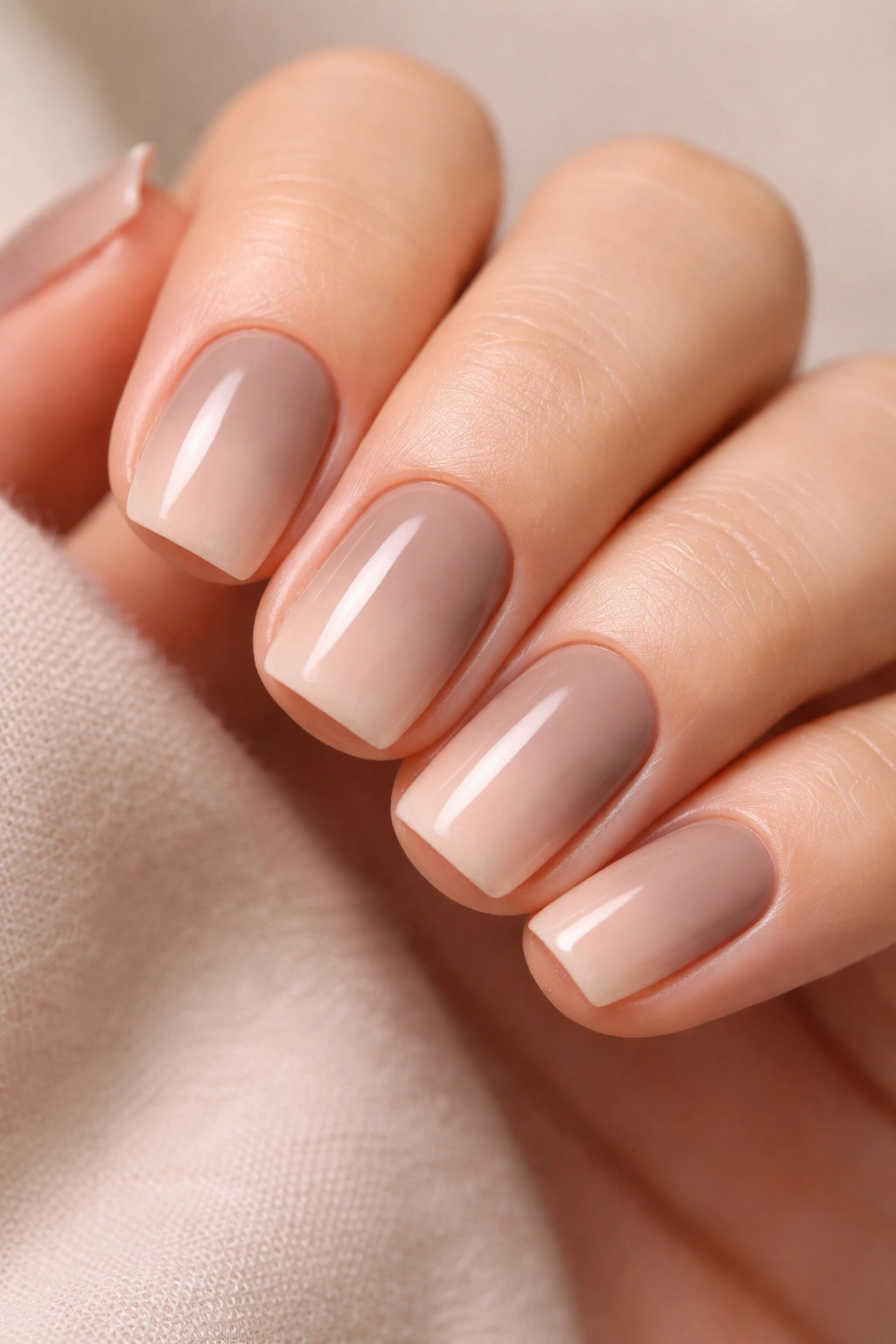
Taupe is the sophisticated middle ground between brown and gray—warm enough to feel inviting, cool enough to feel modern. Pair it with a nude gradient that fades from the taupe at the base to an almost-white cream at the tip, and you’ve got a design that feels both minimal and thoughtfully considered. The gradient creates length and elegance without the commitment of longer nails.
Why Gradient Works on Short Nails
Gradients are one of the few techniques that actually make short nails appear longer and more refined. By drawing the eye from the base to the tip, a gradient creates movement and visual extension. A taupe-to-nude gradient is especially effective because both colors belong to the same warm family; the transition feels natural rather than jarring. The short squoval shape means the gradient isn’t stretched too thin—you get visible color transition without the taupe becoming completely washed out by the time it reaches the tip.
Creating a Gradient That Lasts
- Application method: A skilled technician will blend the colors using a sponge technique while the gel is still uncured, creating smooth color transition rather than distinct lines
- Base coat consideration: A milky base coat helps the taupe read as deeper and richer; skip it if you want the gradient to feel more subtle
- Sealant: A clear glossy topcoat is essential; it protects the gradient from UV damage and keeps the colors from separating or dulling
- Maintenance schedule: Gradients show regrowth fairly obviously, so plan for touch-ups around week 3 if you want the design to stay fresh
- Everyday wearability: This design is understated enough for professional settings while still being visibly intentional and polished
Worth noting: If you’ve never had a gradient manicure, the taupe-to-nude version is an excellent introduction. It’s less dramatic than dark-to-bright gradients, so it’s easier to appreciate the technique without the shock of bold color contrast.
6. Warm Brown with Negative Space Geometric
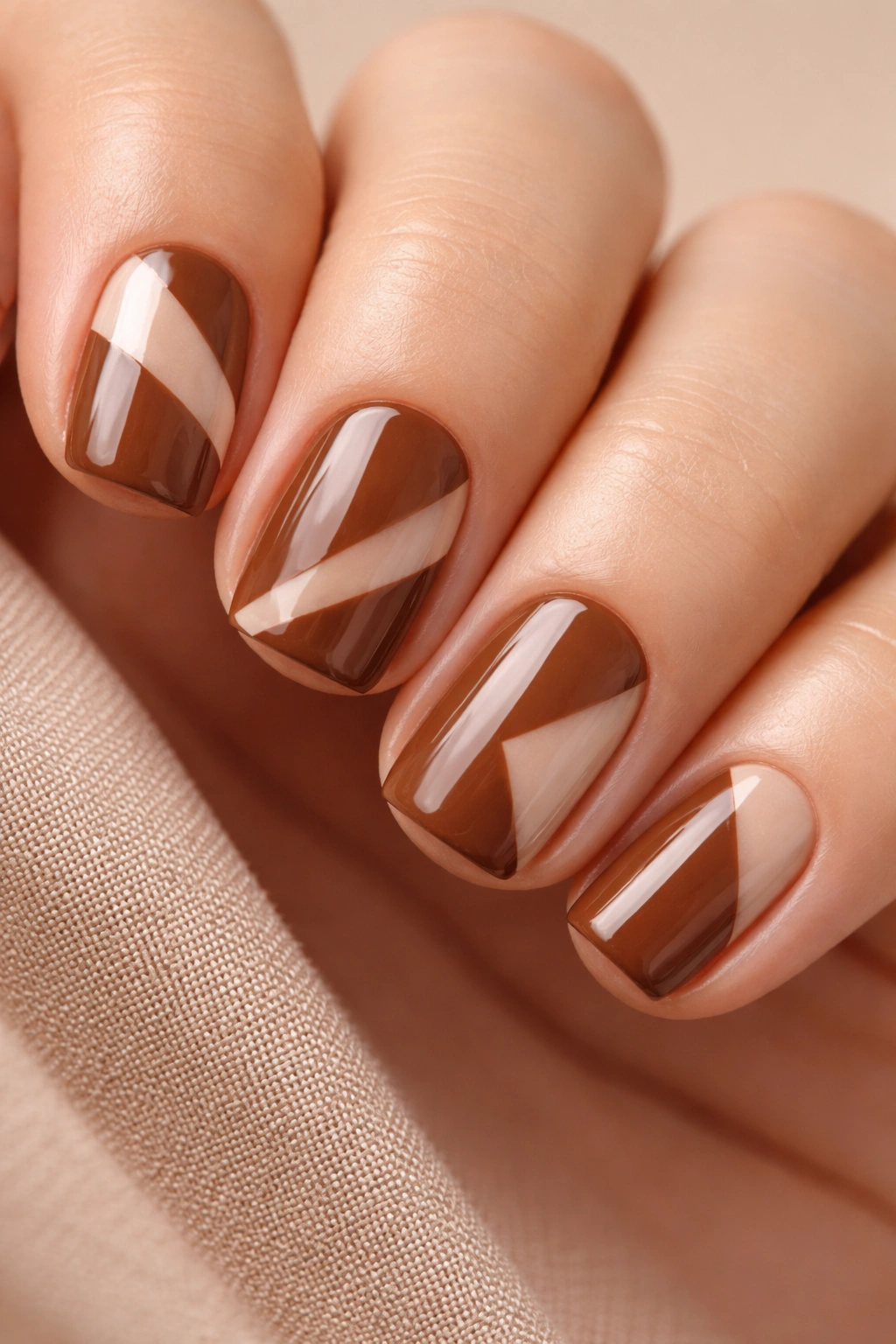
Negative space design—where you intentionally leave parts of the nail unpainted to reveal the natural nail or a base coat beneath—creates optical interest and a contemporary feel. On a warm brown base, carve out a simple geometric shape (a triangle, a rectangle, or an abstract polygon) and leave it bare or fill it with a nude base. This design reads as intentional, artistic, and surprisingly modern.
The Appeal of Negative Space
Negative space inherently creates visual movement because your eye reads both the painted area and the unpainted area as part of the design. It’s a trick used in contemporary art and graphic design specifically because it creates interest while maintaining simplicity. On short squoval nails, negative space is especially effective because the shape of the nail itself becomes part of the composition. You’re not just painting; you’re creating a deliberate absence that transforms the entire design.
Technical Considerations
- Precision matters: The edges of negative space must be clean and sharp; any waviness or unevenness breaks the contemporary aesthetic
- Masking technique: Most technicians use thin tape or stencils to create precise geometric shapes; ask what method your technician prefers
- Color contrast: Warm brown against bare nail creates subtle contrast; warm brown against a nude base creates slightly more definition
- Placement: A single geometric shape on each nail creates cohesion; a different shape on each nail creates visual interest
- Durability: Negative space is surprisingly durable because there’s less paint to chip; the empty areas can’t break or peel
Quick fact: Negative space designs are among the most photogenic nail art because they photograph crisply and read clearly in images, which makes this design ideal if you frequently take photos of your hands or post on social media.
7. Cappuccino Brown with Subtle Texture
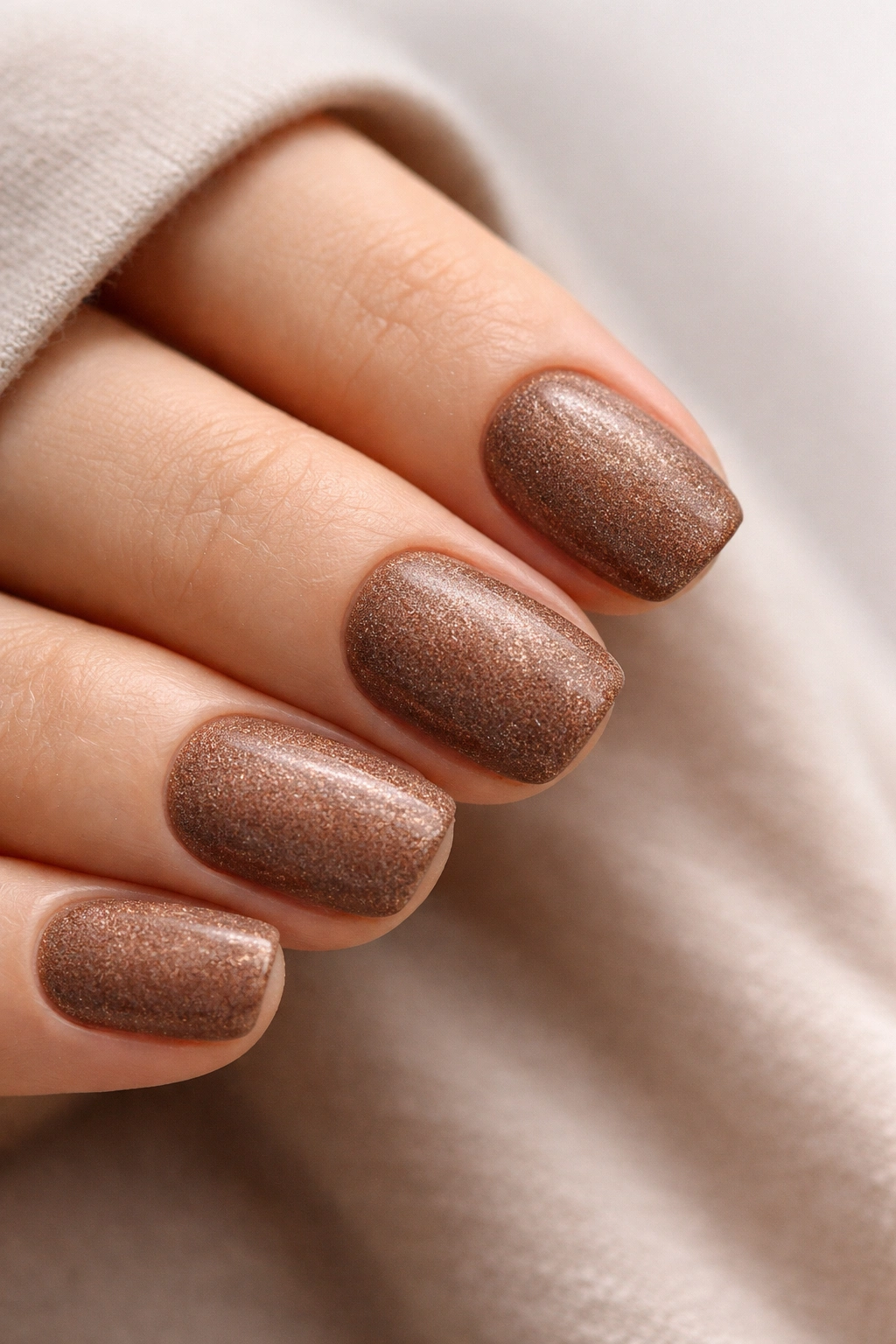
Cappuccino is that perfect warm-toned brown that sits between caramel and espresso—it’s the color of coffee with just enough cream to warm it up. Layer it with subtle texture (a soft, fine glitter distribution, a velvety matte finish with tiny dimensional dots, or a light velour effect) and you’ve got a design that’s visibly interesting while remaining deeply wearable. The texture creates tactile interest without the complication of patterns or line work.
How Texture Elevates Solid Color
Solid colors are inherently risky because they have nowhere to hide; any imperfection in application becomes obvious. Texture solves this problem by creating visual interest that draws the eye past minor imperfections. It also creates dimension—where a solid cappuccino is two-dimensional, textured cappuccino feels three-dimensional and intentional. The tactile quality means your hands feel special, not just look special, which deepens the satisfaction of the manicure.
Texture Options and Their Trade-Offs
- Fine glitter distribution: Tiny glitter suspended throughout a cappuccino base creates sparkle without glam; reads as professional across all settings
- Velvet or velour finish: A plush, velvety tactile feel that’s visibly soft but requires gentle care (avoid excessive handwashing immediately after application)
- Textured gel dots: Tiny dimensional bumps across the surface create interest through dimension rather than shine or pattern
- Matte base with subtle shimmer flecks: The flatness of matte with occasional light-catching moments of shine
- Maintenance: Textured finishes can gather dust and lint; regular gentle cleaning with a soft brush keeps them looking fresh
Worth knowing: If you have a job with strict nail appearance guidelines, ask for texture options that aren’t immediately obvious from a distance. Fine glitter or subtle dimensional dots read as “professional brown manicure” from three feet away, while velvet finishes are more noticeably textured and might read as too trendy in conservative environments.
8. Mocha Brown with Minimalist Cuticle Art
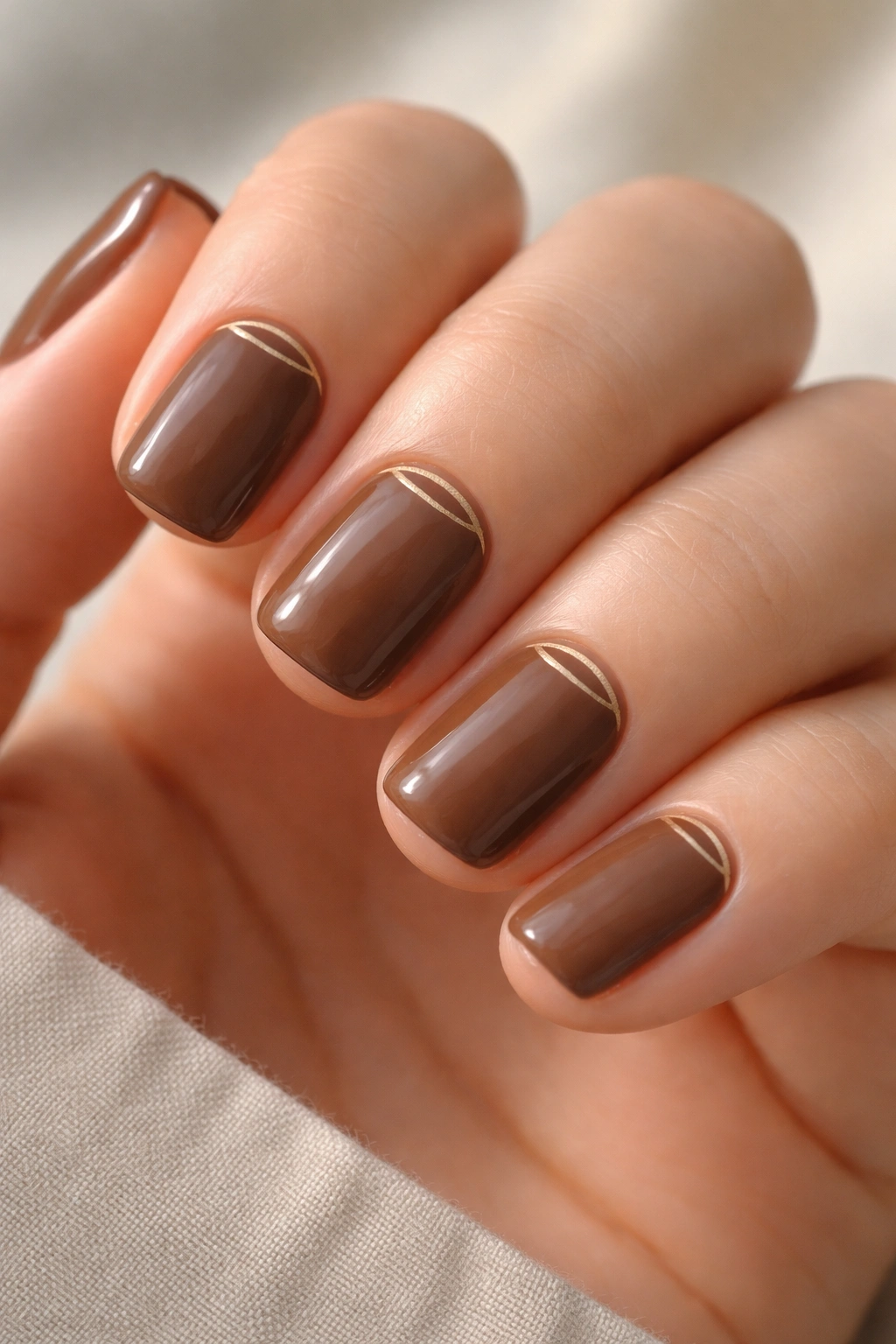
Mocha—that warm, medium brown that’s slightly lighter than espresso—serves as an excellent canvas for minimalist cuticle art. Delicate line work, tiny symbols, or abstract shapes concentrated in the cuticle area create an illusion of sophistication and artistry while maintaining the wearability and practical appeal of short nails. The art stays out of the way of your daily activities while remaining visible when you look at your hands.
Why Cuticle Placement Works
Art positioned at the cuticle line creates an anchoring effect. It frames the nail without dominating it, and it takes advantage of the fact that the cuticle area is less prone to chipping and wear than the nail tip. Minimalist cuticle art is also surprisingly easy to refresh during touch-up appointments because the technician doesn’t need to redo the entire nail; just the decorated area needs touching up. This makes the design more practical for long-term wear.
Cuticle Art Ideas That Translate Well
- Delicate line work: A thin curved line, a geometric symbol, or an abstract swirl that extends 2-3 millimeters from the cuticle
- Tiny nature elements: Minimalist flowers, leaves, or branches that suggest the subject without rendering every detail
- Abstract patterns: Dots, dashes, or tiny connected shapes that create pattern without becoming obviously pattern-like
- Metallic accents: Gold or rose gold work beautifully against mocha; the contrast is clean and intentional
- Negative space shapes: Small unpainted geometric shapes at the cuticle can be equally striking as painted art
Pro tip: Bring reference images of the exact cuticle art style you want. Even tiny line work variations (super thin versus slightly thicker, curved versus angular, centered versus offset) can significantly change the final effect, and clear visual communication prevents misunderstandings.
9. Deep Chocolate with Rose Gold Accents
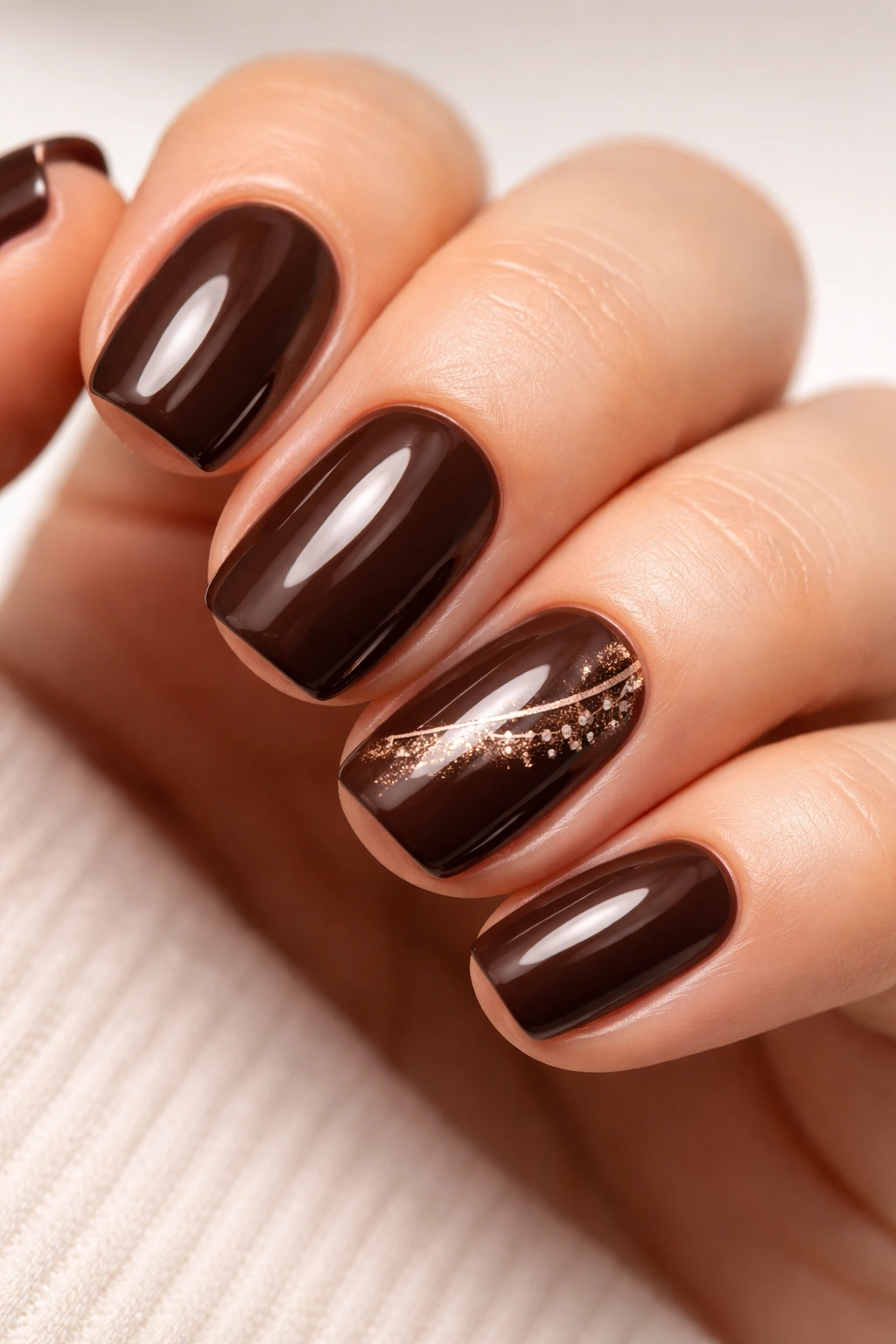
Deep chocolate is the richest, most luxurious brown—it’s the color of premium dark chocolate, with enough depth to feel genuinely elegant. Rose gold accents (geometrics, shimmer, foil flecks, or thin line work) add warmth and femininity without disrupting the sophistication. This pairing feels timeless and refined, appropriate for any occasion from casual to formal.
The Luxury of Deep Chocolate
Deep chocolate reads as intentional luxury in a way that lighter browns sometimes don’t. It’s dark enough to feel substantial, warm enough to remain approachable, and genuinely flattering to a wide range of skin tones. When you add rose gold—which has become the most universally flattering metal tone across all skin undertones—you’re creating a combination that feels expensive and thoughtfully coordinated.
Rose Gold Integration Options
- Scattered foil flecks: Random placement throughout the nail creates a speckled effect that catches light
- Geometric shapes: Small rose gold triangles, rectangles, or abstract shapes on select nails create intentional detail
- Shimmer base: Rose gold shimmer subtly embedded in the chocolate base creates an almost-imperceptible glow
- Thin line work: A single rose gold line along the cuticle or a geometric outline creates framing and definition
- Chrome accent: Rose gold chrome on a single accent nail (usually the ring or pinky finger) creates maximum impact with minimal product
- Curing and sealing: Rose gold elements must be fully sealed under topcoat; any exposed metallic product will oxidize and dull
Quick insight: Deep chocolate with rose gold is a design that photographs beautifully. The contrast between dark and warm-metallic is visually striking in photos while remaining subtle and wearable in person, which makes this an excellent choice if you enjoy documenting your manicures.
10. Warm Tan-Brown with White Marble Swirl
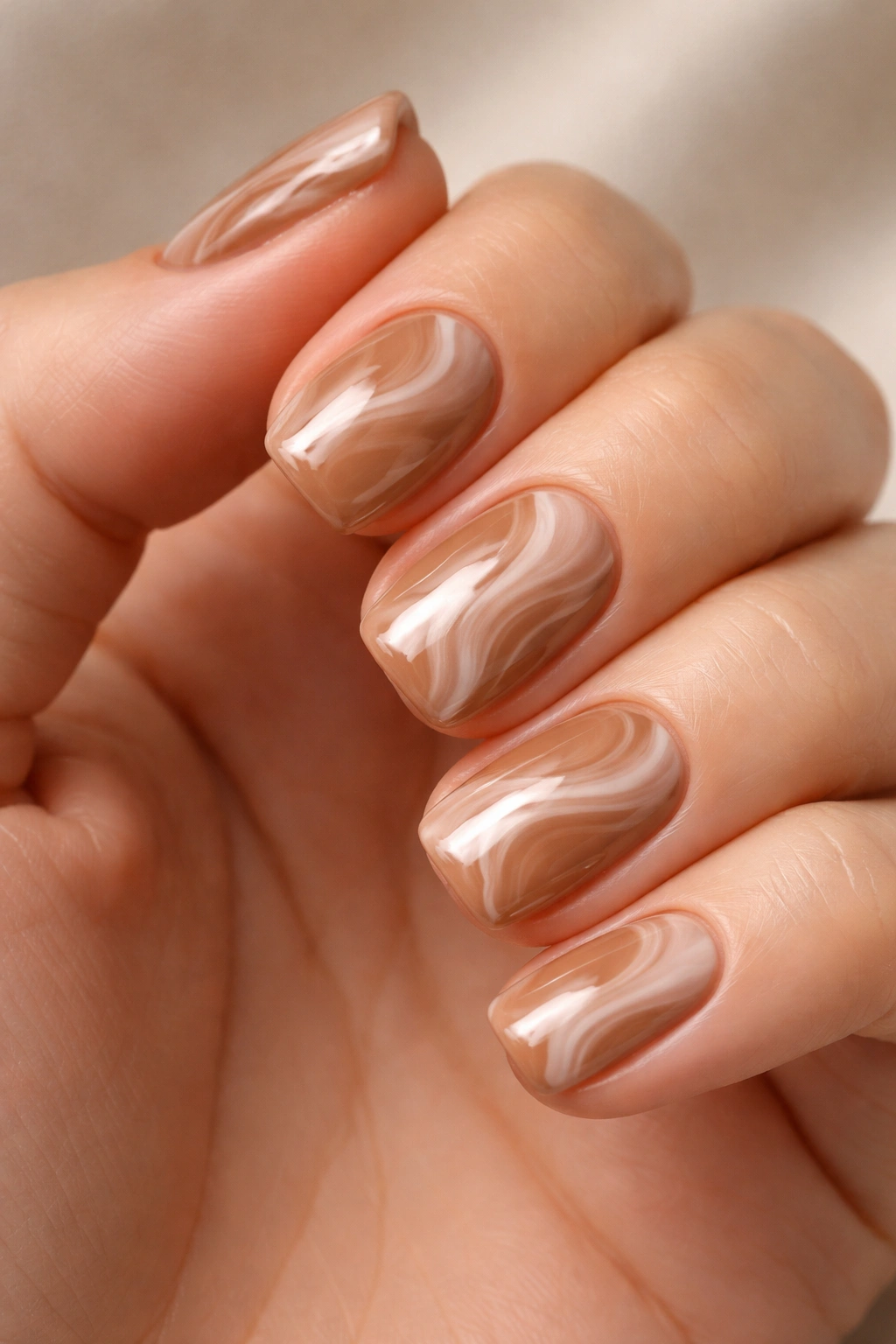
A warm, lighter tan-brown paired with delicate white marble swirling creates a sophisticated, contemporary design that reads as expensive and intentional. The white marble—whether a naturally organic effect or a more geometric application—creates movement and visual interest while the tan-brown base remains warm and wearable. This design bridges the gap between neutral and decorative.
Why Marble Works With Warm Browns
Marble patterns are trendy without being trendy-dependent because marble itself is timeless. When you pair it with a warm brown base instead of gray or black, you soften the aesthetic and make it more approachable. The white marble swirls create contrast and movement, but the warm brown prevents the design from feeling cold or clinical. The overall effect is sophisticated without being precious or over-styled.
Creating Marble Effect That Reads Well
- Pattern density: On short nails, marble should be less dense than on longer nails; concentrate the swirls on 50-60% of the nail surface to avoid visual chaos
- Color contrast: Bright white creates maximum visual contrast against warm tan-brown; off-white or cream against tan-brown creates more subtle contrast
- Organic versus geometric: Organic, naturally flowing marble reads as contemporary and artistic; geometric marble swirls read as more intentional and constructed
- Technique: True marble effect uses water marbling or gel layering techniques; some technicians use hand-painted designs that mimic marble appearance
- Regrowth: As the nail grows, new tan-brown will show at the cuticle; the marble design doesn’t extend to the cuticle area, so regrowth remains visible
- Longevity: Marble patterns with white against warm brown are surprisingly durable; the contrast is strong enough that fading is less noticeable
Worth knowing: If you love this design but worry about regrowth, ask your technician to extend the marble effect slightly into the cuticle area. This way, new growth looks intentional (like you’re choosing to let the plain brown show) rather than like the manicure is fading.
Final Thoughts
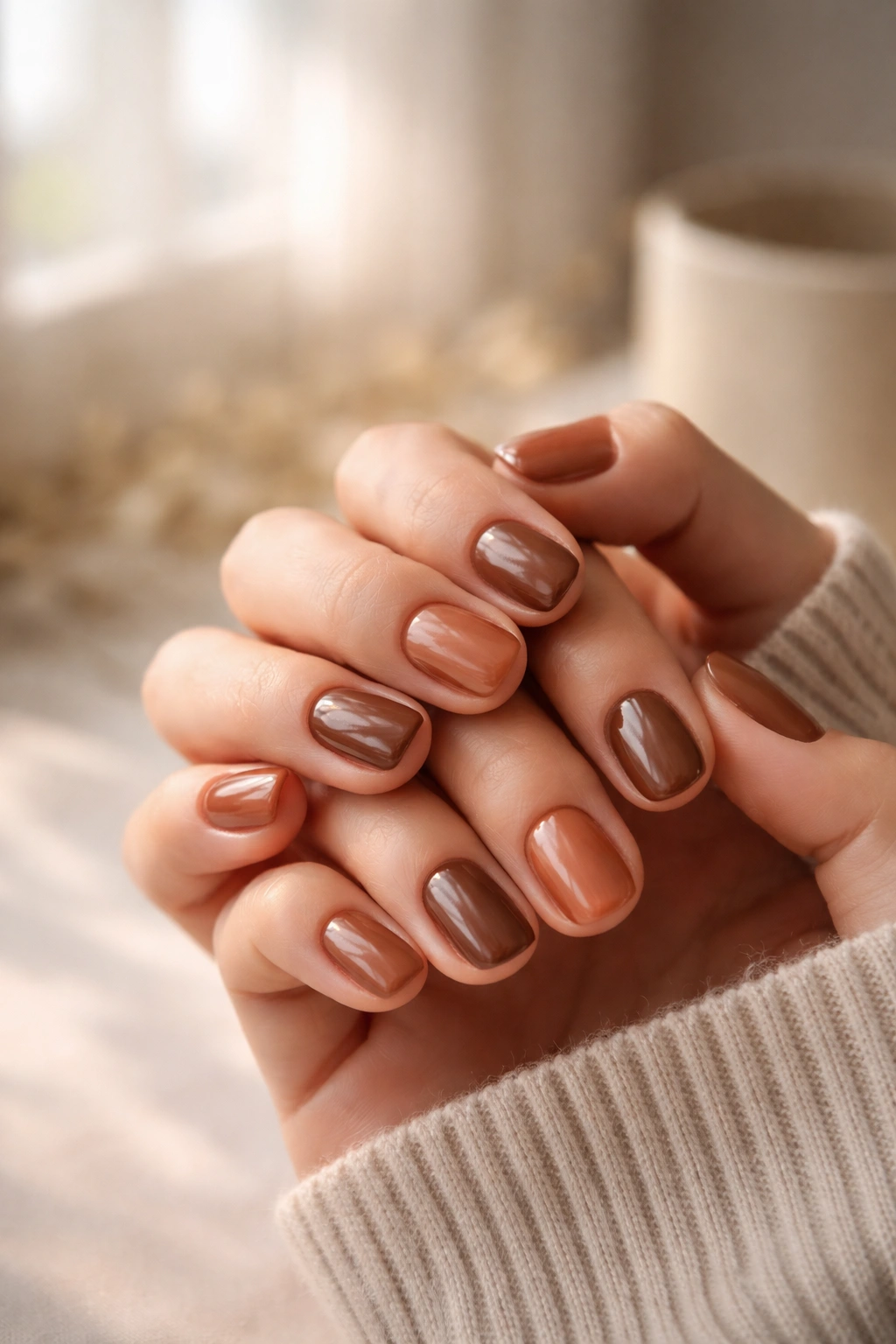
Brown nails don’t get nearly enough credit for their versatility and sophistication. What makes these ten designs genuinely special is that brown doesn’t demand attention—it earns it through thoughtfulness and intention. A matte espresso brown is elegant in its simplicity; a cappuccino with glitter is refined without being loud; a deep chocolate with rose gold reads as luxury without trying too hard.
Short squoval nails amplify this effect. The shape is practical enough for real life, refined enough for professional settings, and flattering enough that your hands look intentional rather than utilitarian. You get the durability and low-maintenance appeal of short nails without sacrificing polish or sophistication. The squoval shape’s gentle curves prevent the sharpness that sometimes makes nail art feel too trendy or costume-like.
When you’re choosing your next brown manicure, focus on what resonates with your lifestyle and your personal style. If you love simplicity, the matte or gradient designs deliver maximum impact with zero complication. If you enjoy subtle artistry, the gold accents and minimalist line work offer visual interest without demanding that your entire aesthetic revolve around your nails. If you want something with texture and dimension, the glitter, marble, or velvet options create depth without crossing into territory that won’t age well.
The best manicure is one you’ll actually wear and enjoy for the full three to four weeks between appointments. These ten brown squoval designs are all genuinely wearable—professional enough for boardrooms, warm enough for casual coffee dates, and thoughtful enough that they look intentional rather than accidental. That’s the quiet power of brown nails done well.