

You’re sitting at your desk, fingers flying across the keyboard, when suddenly—click, click, CLACK. Your nails are hitting the keys at weird angles, you’re making typos left and right, and that report that should’ve taken 20 minutes is now pushing an hour. Sound familiar?
If you love your nails but spend most of your day typing, you’ve probably faced this frustrating dilemma. The good news? You don’t have to choose between having beautiful nails and being productive at work. The secret isn’t giving up your manicure—it’s picking the right nail shape for your lifestyle.
Let’s talk about which nail shapes actually work when you’re typing emails, crunching numbers, or doing pretty much anything that involves a keyboard. Because honestly, your nails should make your life easier, not harder.
Why Your Nail Shape Actually Affects Your Work Performance

Here’s something most people don’t think about: your nail shape can genuinely impact how well you do your job. When you’re typing dozens (or hundreds) of emails per day, every keystroke matters.
The wrong nail shape can slow you down significantly. You might find yourself constantly fixing typos, or worse, developing wrist strain because you’re contorting your hands to avoid hitting multiple keys at once. Over time, this adds up to lost productivity and potential discomfort.
But it’s not just about speed and accuracy. Your nails also need to survive your work environment. If you’re constantly breaking a nail or catching it on your keyboard, that’s a sign your current shape isn’t working for your daily routine. The right shape will be durable enough to last through your workweek without constant touch-ups.
Professional appearance matters too. While nail trends have come a long way, and colorful manicures are more accepted than ever, the shape of your nails still sends a message. Clean, well-maintained nails in a practical shape signal that you’re put-together and professional.
The Top Nail Shapes for Typing and Office Work

Round Nails: The Low-Maintenance Winner
Round nails are probably your safest bet if you spend serious time at a keyboard. This shape mimics your natural nail line, with soft, curved edges that follow the contour of your fingertip.
Why do they work so well? Round nails don’t have any sharp corners or wide edges to catch on keys. They’re also less likely to snag on papers, clothing, or anything else you handle throughout your day. If you’re someone who tends to chip or break nails easily, this shape offers better durability than more dramatic options.
Round nails look particularly flattering if you have shorter fingers, as they create a subtle lengthening effect without looking overdone. They’re also ridiculously easy to maintain—a quick file every week or so keeps them looking fresh.
The one downside? If your nails are naturally wide, a purely round shape might make them look a bit stubby. In that case, you might want to consider the next option instead.
Squoval: The Perfect Compromise
Can’t decide between square and oval? Squoval nails combine the best of both worlds. This hybrid shape features slightly squared-off tips with rounded corners, giving you a modern look that’s still totally practical.
Squoval nails are incredibly versatile. The somewhat flat top gives you a bit more surface area than round nails, which can feel more stable when you’re typing. At the same time, those rounded corners mean you’re way less likely to catch your nails on things or accidentally hit adjacent keys.
This shape works beautifully on almost everyone, regardless of finger length or nail bed width. It’s flattering, professional, and durable—basically the Swiss Army knife of nail shapes. Many people find that squoval nails strike the perfect balance between looking polished and being functional enough for daily computer work.
If you’re new to longer nails or switching from a more dramatic shape, squoval is your friend. It gives you room to experiment with length while keeping things manageable for typing.
Oval Nails: Elegant and Functional
Oval nails offer a more feminine, elegant look while still being typing-friendly. This shape is similar to round but extends a bit further with a gentle taper, creating a softer, more sophisticated appearance.
The elongated shape of oval nails makes fingers look longer and more slender—a flattering effect that works especially well if you have wider fingers or short nail beds. Because the shape follows your natural nail curve but extends it slightly, oval nails feel quite natural to wear.
For typing purposes, oval nails work well because they don’t have any harsh angles. The tapered sides and rounded tip glide over keys without catching. That said, they do require a bit more length than round nails to achieve the proper shape, so you’ll need to keep them maintained to avoid breaks.
Oval nails hit that sweet spot between practical and pretty. They’re professional enough for the most conservative offices while still showing that you care about your appearance. Just keep them at a moderate length—you’ll know they’re too long if you hear constant clicking on your keyboard.
Short Square Nails: The Classic Professional
If you work in a super traditional office or handle a lot of paperwork, short square nails might be your go-to. This shape features straight edges and a flat top, creating a clean, no-nonsense look that’s been popular for decades.
The key word here is short. Square nails at a longer length become problematic for typing because their width makes it easy to hit multiple keys at once. But when kept short—just barely extending past your fingertip—they’re actually quite practical.
Short square nails are extremely durable. The straight edge provides structural support, making breaks less common than with rounded shapes. They’re also super easy to maintain at home with a simple file. Just make sure to smooth any sharp corners slightly to prevent snagging.
This shape works especially well if you have long, narrow fingers and nail beds. On shorter or wider fingers, square nails can sometimes look a bit boxy, so you might prefer squoval instead.
Nail Shapes to Avoid (or Modify) for Heavy Typing
Stiletto: Gorgeous but Impractical
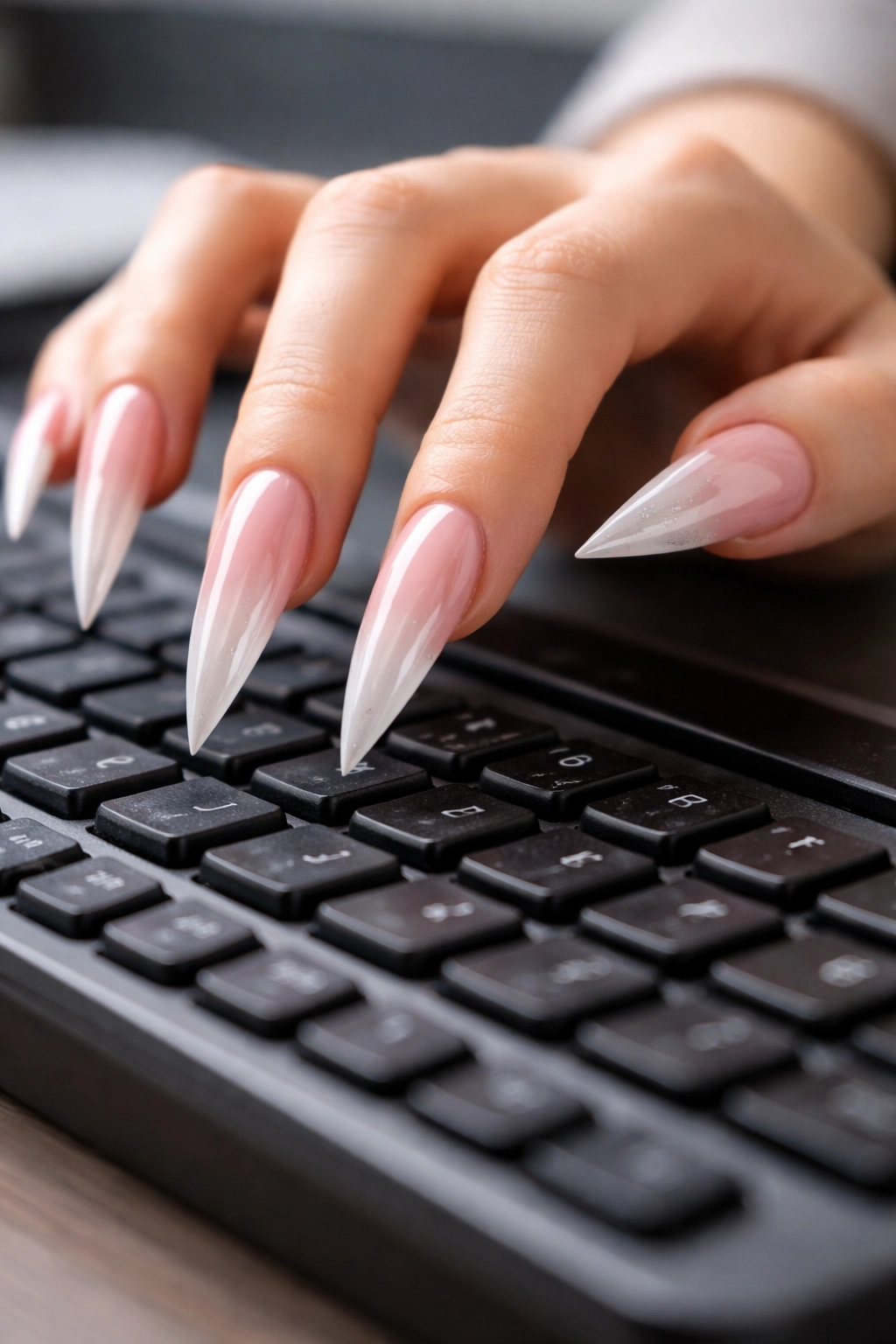
Let’s be real: stiletto nails and office work don’t mix well. These dramatic, pointy nails look incredible for special occasions, but they’re a nightmare for anyone who types regularly.
The sharp point makes it nearly impossible to hit keys accurately. You’ll either be constantly fixing typos or forced to type with the sides of your fingers, which is awkward and tiring. Stiletto nails also tend to be quite long, which means they’re prone to breaking if you accidentally jam one into your keyboard.
Beyond typing issues, stiletto nails can make other work tasks frustrating. Opening files, picking up papers, using your phone—everything becomes a bit more complicated. They also tend to read as more “fashion-forward” than “professional,” which might not fit your office culture.
If you absolutely love the stiletto look, consider saving it for vacation weeks or switching to a shorter almond shape (more on that below) for your regular work weeks.
Coffin/Ballerina: Trendy but Tricky
Coffin nails (also called ballerina nails) are having a major moment right now, and it’s easy to see why. That tapered shape with a squared-off tip looks super modern and chic. But for typing? They’re challenging.
The main issue is width. Coffin nails tend to be fairly wide at the top, which increases your chances of hitting wrong keys. They also require significant length to achieve the proper shape, which brings all the problems that come with longer nails.
That said, if you’re an experienced typist and absolutely love this shape, you might be able to make it work. Keep them on the shorter side and focus on typing with your finger pads rather than your nail tips. You’ll need to be more deliberate with your keystrokes, which might slow you down initially.
One positive: coffin nails are actually fairly sturdy once you get used to them. The straight sides provide good structural support, so breaks are less common than you might expect.
Long Square: A Recipe for Typos
We mentioned short square nails work fine for typing, but long square nails are a different story. The combination of length and width creates maximum surface area—which sounds good until you realize that means maximum chances of hitting the wrong keys.
Long square nails make accurate typing genuinely difficult. The wide, flat top hits multiple keys at once, and the extended length means you can’t easily type with your fingertips the way you naturally would. You’ll find yourself making constant mistakes and having to slow way down to maintain any accuracy.
There’s also a practical durability issue. Square corners are the most likely spots for chips and breaks. The longer your nails, the more force gets applied to those corners when you type, leading to frequent damage.
If you love the look of square nails but need to type all day, keep them short. Really short. We’re talking just a millimeter or two past your fingertip.
What’s the Ideal Nail Length for Office Work?

Shape matters, but length might matter even more. Here’s the thing: if your nails interfere with your normal typing technique, they’re too long. Period.
Most nail professionals suggest keeping nails between 3-5 millimeters past your fingertip for optimal typing ability. At this length, you can still use proper typing technique—striking keys with your fingertips—without your nails constantly hitting the keyboard. You get enough length to have a polished, manicured look without sacrificing functionality.
If you naturally have long nail beds, your nails might look quite long even when they’re a practical length. On the flip side, people with short nail beds might find that even a tiny bit of length feels awkward. It’s really about what works for your hands, not following a strict measurement.
Here’s a simple test: hold your hands in typing position over your keyboard. If your nails touch the keys before your fingertips do, they’re probably too long for comfortable typing. You should be able to rest your fingers gently on the home row keys without hearing clicking sounds.
Want to go longer? You can, but you’ll need to adjust your technique. This means typing with the pads of your fingers instead of the tips, which takes practice. More on that in a minute.
How to Type Comfortably With Your Chosen Nail Shape

Master the Finger Pad Technique
The biggest adjustment when typing with any length of nail is learning to use your finger pads instead of your fingertips. This technique involves flattening your fingers slightly and striking keys with the soft pad area rather than the tip.
It feels weird at first, especially if you’re a trained touch typist. Your hands need to be positioned more parallel to the keyboard rather than arched. Think about how a pianist’s hands look when they’re playing—that’s the general position you’re aiming for.
Start by practicing slowly. Type a simple paragraph or email focusing entirely on hitting keys with your pads. Don’t worry about speed yet. You’re retraining muscle memory, which takes time. Gradually, this new technique will start to feel more natural.
One helpful tip: adjust your chair height so your elbows are at a 90-degree angle and your wrists can stay relatively flat. Good ergonomics make the finger pad technique much easier to maintain.
Keep Your Touch Light
Heavy-handed typing becomes a problem when you have longer nails. Pounding on the keys increases the chance of breaks, chips, and that annoying clicking sound that drives everyone around you crazy.
Practice using a lighter touch. You don’t need to press keys firmly for them to register—a gentle tap is enough. This protects your manicure and also reduces strain on your hands and wrists. Plus, it’s way quieter, which your coworkers will appreciate.
If you’re using a mechanical keyboard (which many people prefer for typing feel), be aware that these often require a bit more force to activate. You might want to switch to a keyboard with softer key switches if you’re committed to keeping longer nails.
Lighter typing also means less impact force traveling through your nails, which can help prevent the kind of micro-trauma that leads to peeling and weakness over time.
Mind Your Posture and Hand Position
Proper posture isn’t just about preventing back pain—it directly affects how well you can type with nails. When you’re slouching or reaching awkwardly for your keyboard, your hands end up at weird angles that make nail-friendly typing nearly impossible.
Sit up straight with your feet flat on the floor. Your monitor should be at eye level, and your keyboard should be positioned so your wrists can remain neutral (not bent up or down). This alignment allows you to keep your hands parallel to the keyboard, which is the ideal position for typing with nails.
Consider using a wrist rest to maintain proper position, especially if your desk is a bit too high. Some people find that a slight negative tilt on their keyboard (front edge slightly higher than back) also helps when typing with longer nails.
Good posture also means you’ll be less likely to develop wrist, shoulder, or neck pain—issues that are super common among people who type all day. Your nails might be what prompted you to improve your setup, but your whole body will thank you.
Choosing Nail Shape Based on Your Specific Office Situation
Traditional Corporate Environments
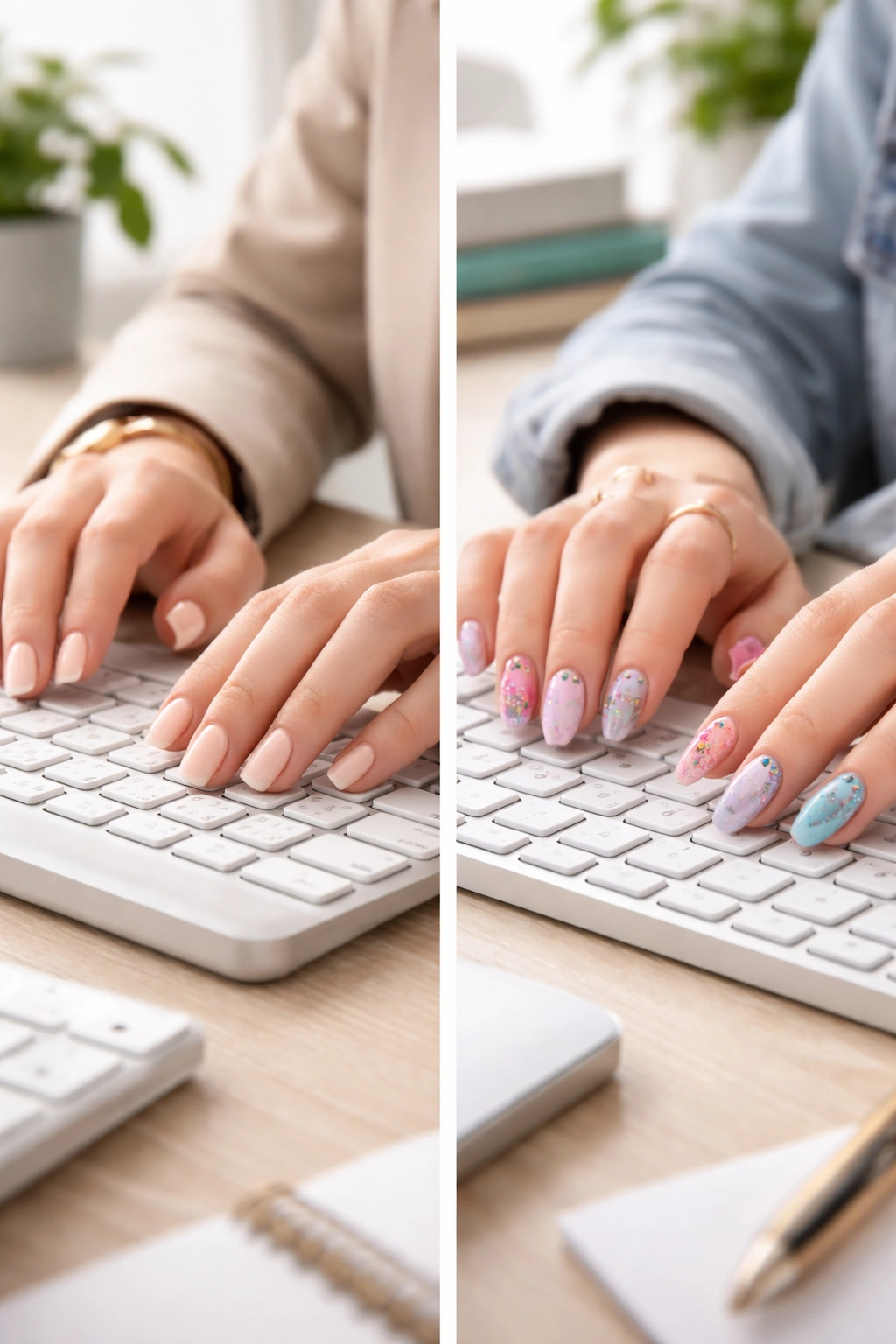
Working in finance, law, or another conservative field? You’ll want to keep things classic and understated. Round, oval, or short squoval nails in a neutral color are your best options.
These shapes project professionalism while still looking polished and well-groomed. Stick to shorter lengths—nobody’s judging your typing speed in partner meetings, but they might raise an eyebrow at super long nails. Natural pinks, soft nudes, and sheer polishes complement these practical shapes perfectly.
If you’re someone who prefers colorful nails, you can usually get away with deeper, sophisticated shades like burgundy, navy, or dark plum in these shapes. Just maybe avoid the bright neon green until you know your office culture better.
The goal is to look put-together without having your nails become a topic of conversation. These classic shapes help you fly under the radar while still enjoying a nice manicure.
Creative or Casual Workplaces
Got a more relaxed dress code? You have way more flexibility in both shape and length. Tech companies, creative agencies, startups, and many other modern workplaces are totally fine with more expressive nail choices.
You can experiment with almond nails, slightly longer squoval, or even carefully maintained coffin nails if that’s your style. Color and nail art are usually fair game too, so have fun with it.
That said, functionality still matters. Even in a creative office, you probably spend hours on your computer. Choose a shape that won’t slow you down or cause frustration. The difference is you can push the envelope a bit more on length and drama.
Pay attention to your specific role too. If you’re meeting with clients regularly, you might want to stay slightly more conservative than someone who’s primarily working internally.
Healthcare, Childcare, and Hands-On Roles
Here’s where we get real: if your job involves a lot of physical work with your hands, your nail options are limited. Healthcare workers, teachers, childcare providers, and similar roles need short nails—often there’s actually a policy requiring it.
For these jobs, short round or short squoval nails are your friends. Keep them barely extending past your fingertip, if at all. This length is practical, safe, and still allows you to have a neat, groomed appearance.
The good news? Dip powder or gel manicures in these short shapes are incredibly durable and can last through tons of hand-washing. Choose these services over regular polish to keep your nails looking fresh despite the demanding work environment.
Focus on nail health rather than length. Use cuticle oil regularly, give your nails breaks from polish occasionally, and treat them well. Healthy, well-shaped short nails look far better than damaged longer ones.
Maintaining Your Work-Appropriate Nail Shape
Weekly Upkeep Matters
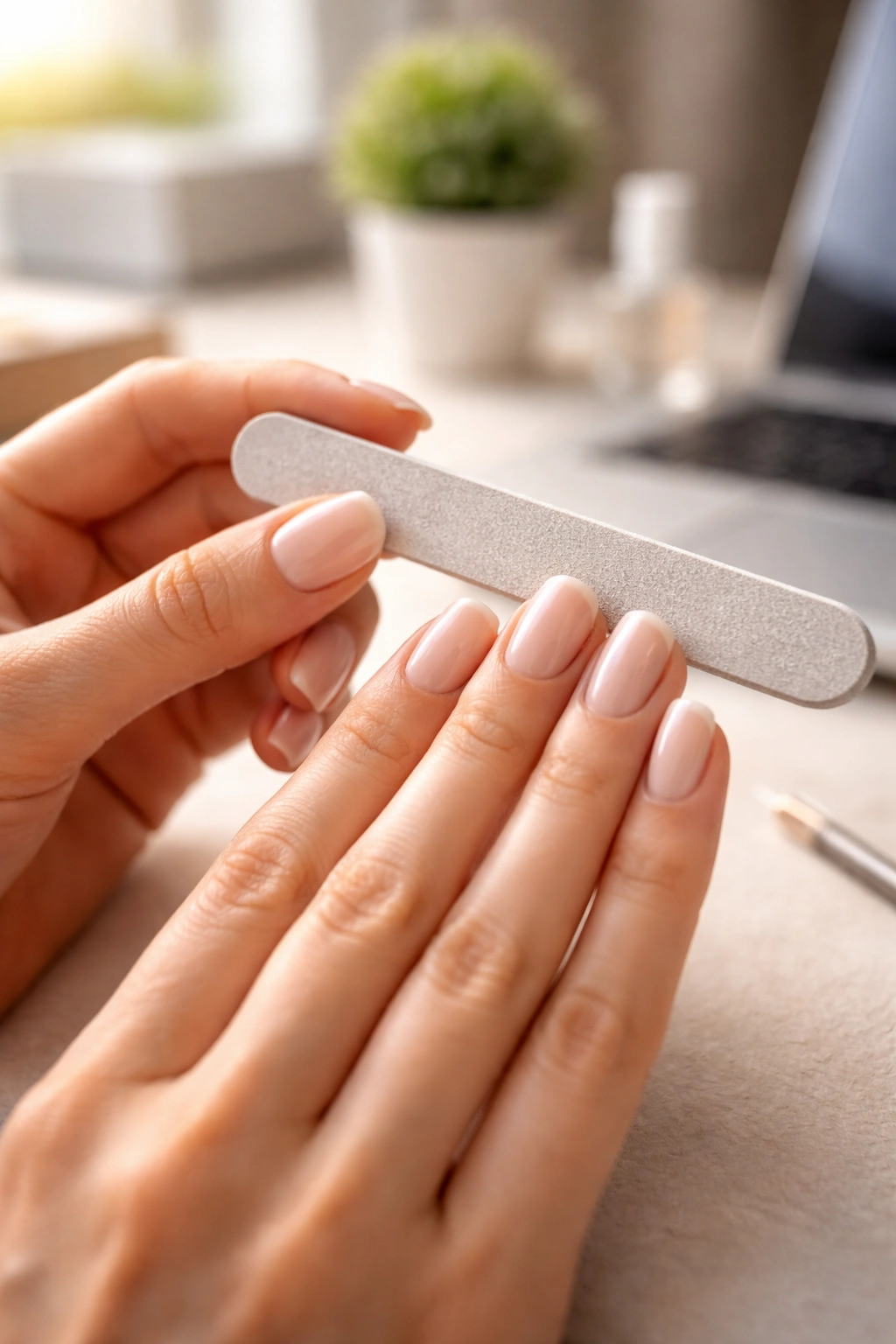
Even the most practical nail shape needs regular maintenance. Set aside 10 minutes each week to file and tidy your nails. This prevents the raggedy look that happens when you let things go too long between manicures.
Keep a good quality nail file in your desk drawer or bag. When you notice a rough edge or slight chip, fix it right away rather than letting it snag and worsen. This tiny bit of prevention saves you from that annoying situation where half your nail breaks off during a big presentation.
For home maintenance, file in one direction rather than sawing back and forth. This prevents splitting and helps maintain a smooth edge. Pay special attention to corners if you have square or squoval nails—these are where chips usually start.
Regular cuticle care matters too. Push back cuticles gently after your shower when they’re soft, and apply cuticle oil daily. Healthy cuticles frame your nails and make even a simple shape look polished and professional.
Consider Professional Services
If you’re serious about maintaining a specific shape, regular salon visits are worth the investment. A professional nail technician can shape your nails more precisely than you can at home and catch potential problems before they become issues.
Dip powder or gel manicures offer serious advantages for office workers. They last 2-3 weeks without chipping, which means your nails look professionally manicured constantly. The strengthening effect also helps prevent breaks during heavy typing sessions.
When choosing services, look for salons that understand the balance between aesthetics and functionality. A good nail tech will listen when you explain you need nails that work for typing and adjust length and shape accordingly.
The cost might seem high at first, but consider how much time you’ll save not dealing with chipped polish or broken nails. For busy professionals, that convenience factor is genuinely valuable.
Making the Switch: Transitioning to a More Practical Nail Shape
Give Yourself Time to Adjust
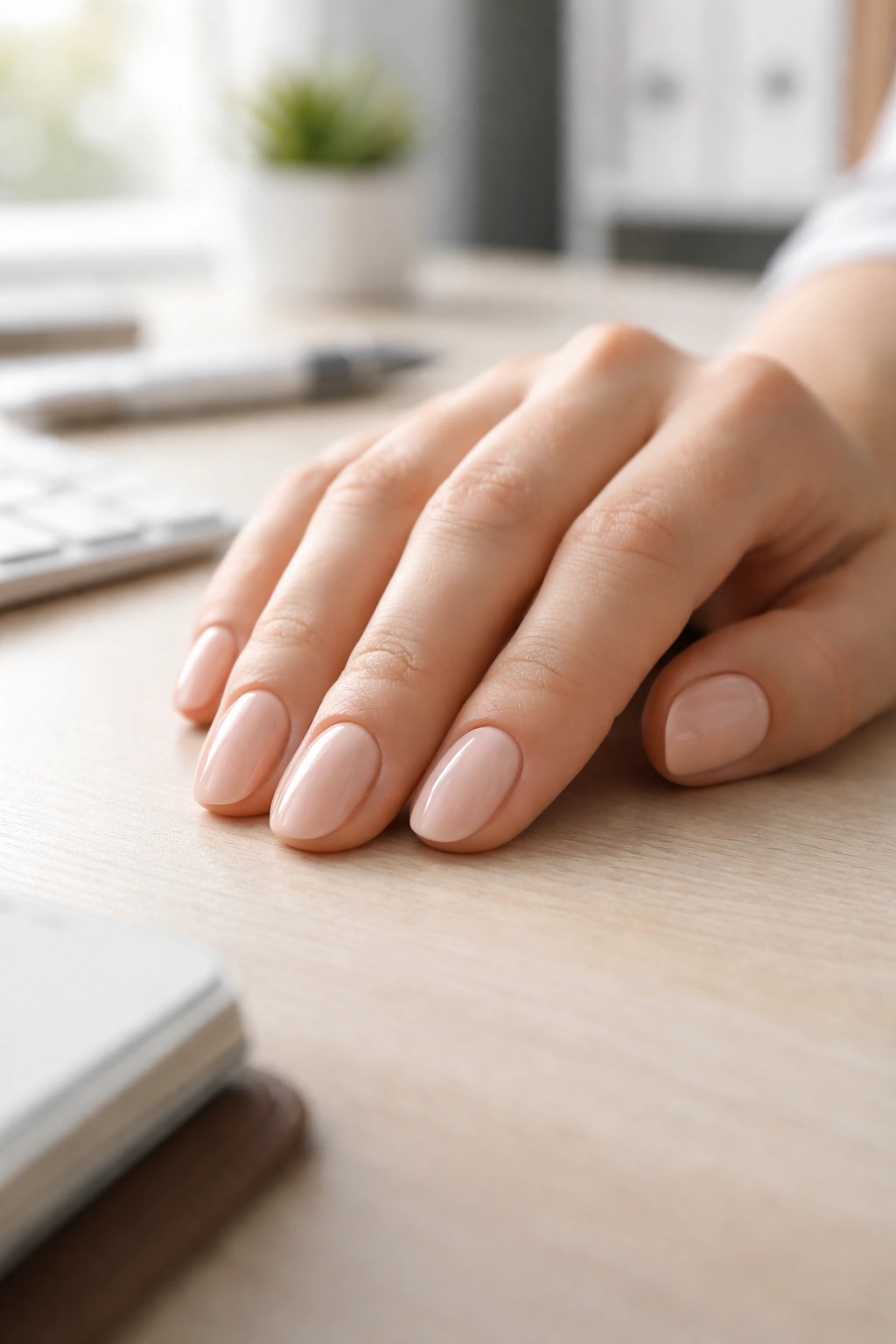
Changing nail shapes takes some getting used to, especially if you’re going from something dramatic to something more practical. Don’t expect to type at full speed immediately after switching from stiletto to round nails. Your muscle memory needs time to recalibrate.
Start the transition on a lighter work week if possible. Give yourself a few days to practice with the new shape before diving into a huge project with tight deadlines. You might feel slower initially, but your speed and accuracy will improve quickly.
Be patient with yourself during this adjustment period. You might make more typos at first or feel like your hands are positioned weirdly. This is completely normal. Within a week or two, the new shape will feel natural, and you’ll wonder why you didn’t switch sooner.
If you’re really struggling, consider whether the shape is right or if it’s a length issue. Sometimes taking your nails a bit shorter makes all the difference in comfort and functionality.
Track Your Progress
Here’s something kind of fun: take a typing speed test before and after switching nail shapes. There are tons of free tests online that measure your words per minute and accuracy.
Test yourself with your old nail shape, then again after you’ve had the new shape for a week or two. Most people are surprised to find their speed increases significantly with a more practical shape—sometimes by 10-20 words per minute.
This concrete data can be motivating if you’re missing your old dramatic nails. Seeing that you’re actually more productive helps reinforce that the practical choice was the right one. Plus, it’s satisfying to watch your speed climb back up as you adjust to the new shape.
You might also notice fewer errors and less hand fatigue at the end of the day. These quality-of-life improvements are harder to quantify but equally valuable.
Final Thoughts on Finding Your Perfect Work Nail Shape
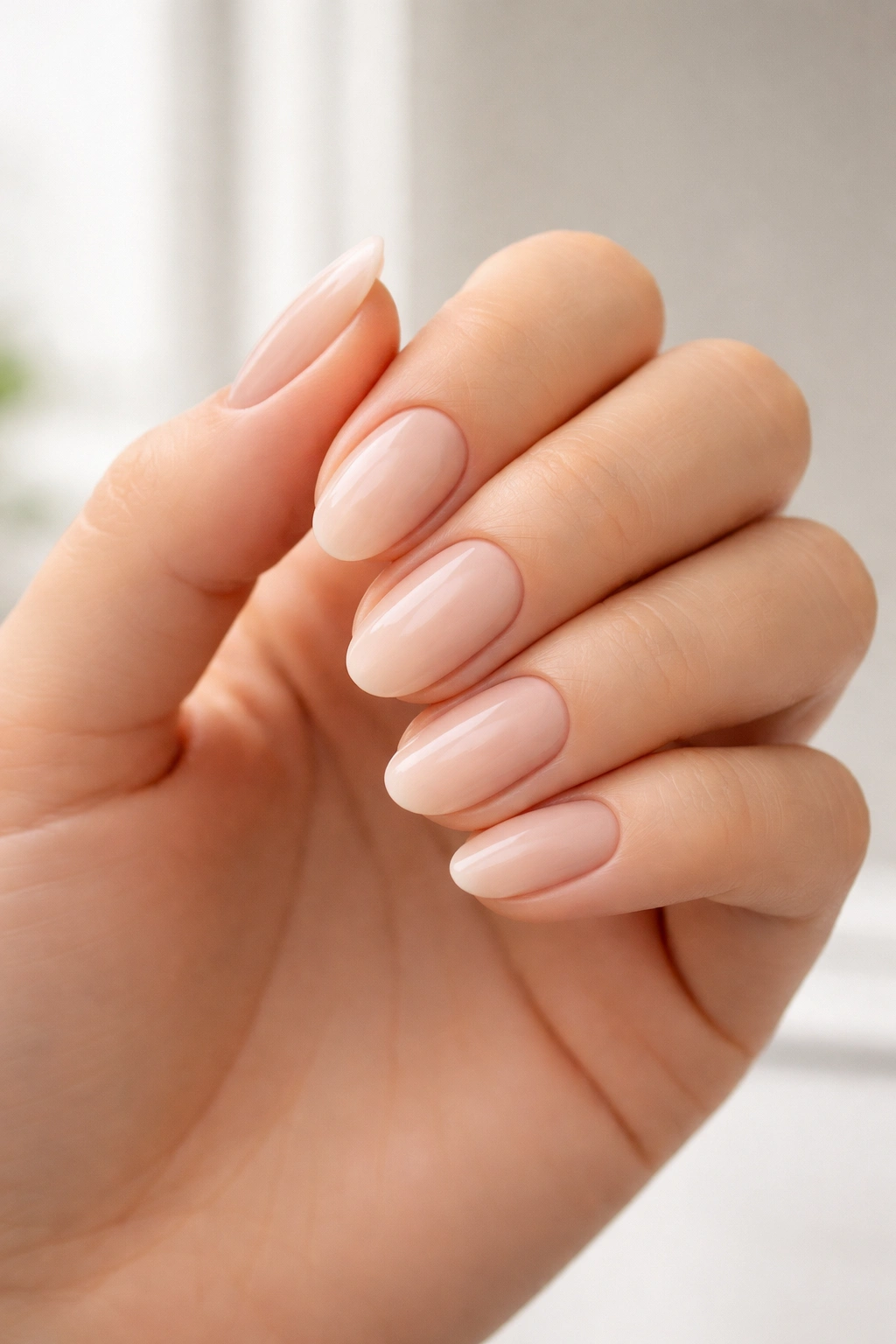
Choosing the right nail shape for typing and office work doesn’t mean sacrificing style. It means being smart about which trends work for your lifestyle and which ones don’t.
Round, oval, and squoval nails give you the best combination of professional appearance, typing functionality, and easy maintenance. Keep them at a moderate length, take care of them consistently, and you’ll have hands that look polished without interfering with your work.
Remember that your nails are part of your overall professional presentation, but they should enhance your life, not complicate it. If you find yourself constantly frustrated by breaks, snags, or typing difficulties, it’s time to reassess your current shape.
The beauty of nails is that they grow. If you try a new shape and hate it, you haven’t made a permanent change. Give practical shapes a real chance before dismissing them—you might find that you actually prefer nails that work with your lifestyle rather than against it.
At the end of the day, the best nail shape is the one that makes you feel confident, looks professional, and lets you do your job effectively. Find that sweet spot, and you’ll never have to choose between beautiful nails and productivity again.