


White polish is unforgiving.
One swipe of self-tanner, a cheap top coat, or an afternoon tearing through cardboard can turn a crisp manicure dull in a hurry. That’s why white and gold coffin nails look best when the design does some of the maintenance work for you. The gold brings shape and contrast. The white needs smarter placement.
More white does not mean a better set. Usually it means more surface area to stain.
The nail chemistry matters more than most inspiration boards admit. White gels and polishes get their opacity from pigments like titanium dioxide, but the layer that usually shifts color first is the clear one on top. When that top coat yellows from UV exposure, strong pigments, or low-grade resin, your bright white starts looking creamy in the wrong way. Add a rough surface from over-buffing or a chalky matte finish, and makeup, turmeric, hair dye, denim transfer, and even some sunscreens cling much faster.
Coffin shape helps here. The tapered sidewalls and flat tip give you room for gold borders, slim French lines, diagonal blocks, and centered artwork that keep the white looking sharp long after day one. A smooth builder-gel base, sealed edges, and the right kind of white—milky, glazed, pearl, ivory, or strategically placed—will outwear a slab of flat correction-fluid white almost every time.
Some of these sets are quiet. Some are dressier. All of them earn their keep.
1. Classic Micro-French White and Gold Coffin Nails
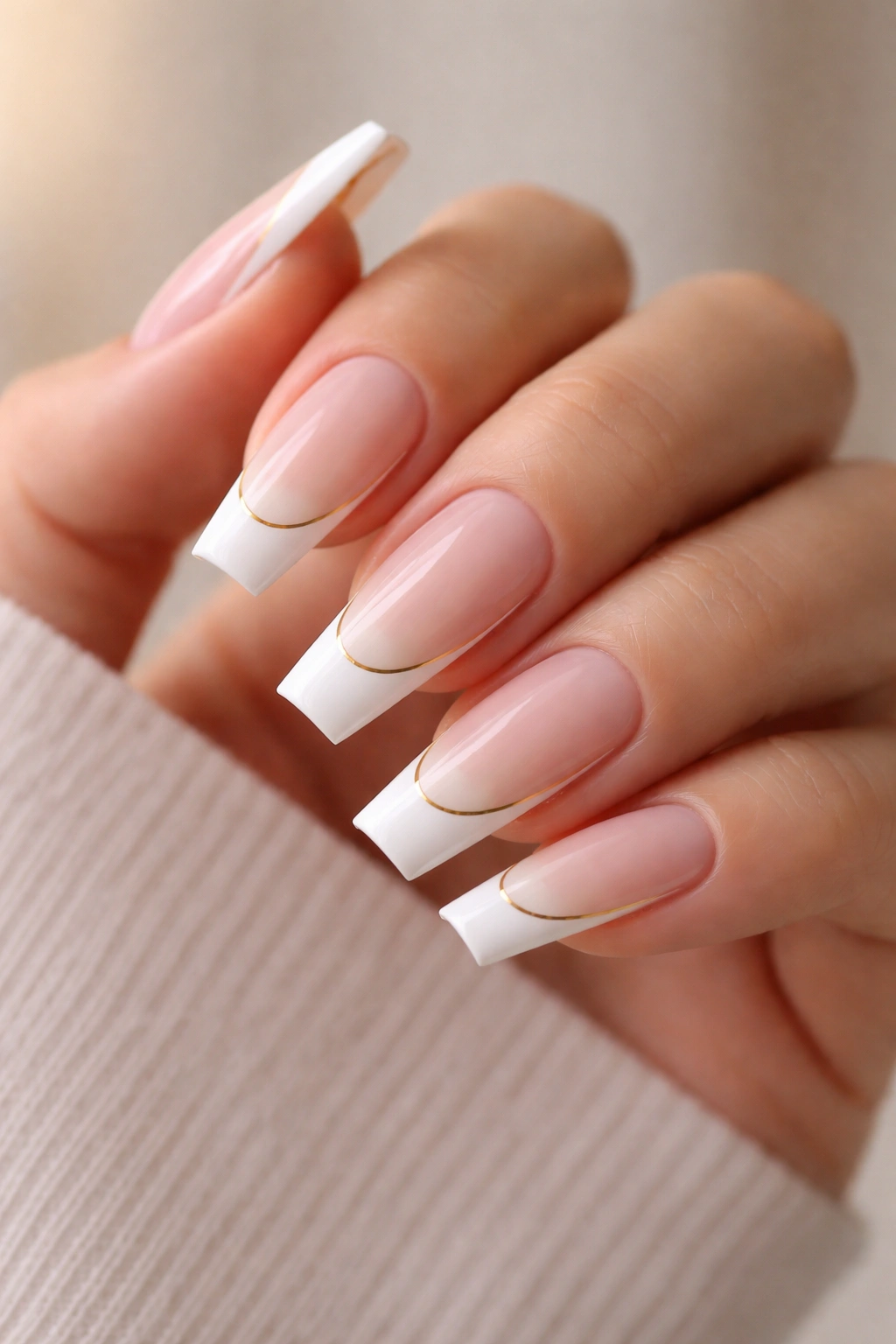
If you want the lowest-maintenance version of a white manicure, start with less white.
A micro-French on a coffin shape uses a narrow white tip—about 1 to 2 millimeters—instead of coating the whole nail. Add a 0.5-millimeter gold line just beneath that white edge, and the design suddenly looks deliberate, polished, and far more expensive than its upkeep would suggest. Because the white lives only on the tip, there is less space for staining, and the rest of the nail can stay sheer pink or milky nude.
That tiny gold border does more than decorate. It hides the meeting point between the base and the tip, which means the white line can be razor-sharp without looking harsh. On coffin nails, that flat edge gives the micro-French enough room to read from a distance, while the gold keeps it from disappearing.
Why the tip stays brighter
A smaller white area collects fewer visible stains. It’s also easier for your nail tech to double-cap the free edge, which matters because tip wear is usually where white starts looking tired. A sheer builder base underneath keeps the nail surface smooth, and smooth nails stay cleaner. That part gets ignored a lot.
Quick design notes
- Keep the coffin length medium to medium-long, with about 14 to 18 millimeters past the fingertip.
- Ask for a cool white gel paint rather than bulky white acrylic on the tip.
- Use a champagne or pale yellow gold liner if you want softness, or a brighter metallic gold if you like sharper contrast.
- Finish with a non-yellowing, high-gloss top coat and have the underside of the free edge sealed too.
Best tip: ask for the gold line to sit between the nude base and the white tip, not painted on top after everything else. It wears flatter, and flat art always stays cleaner.
2. Milky White Base With Gold Cuticle Half-Moons
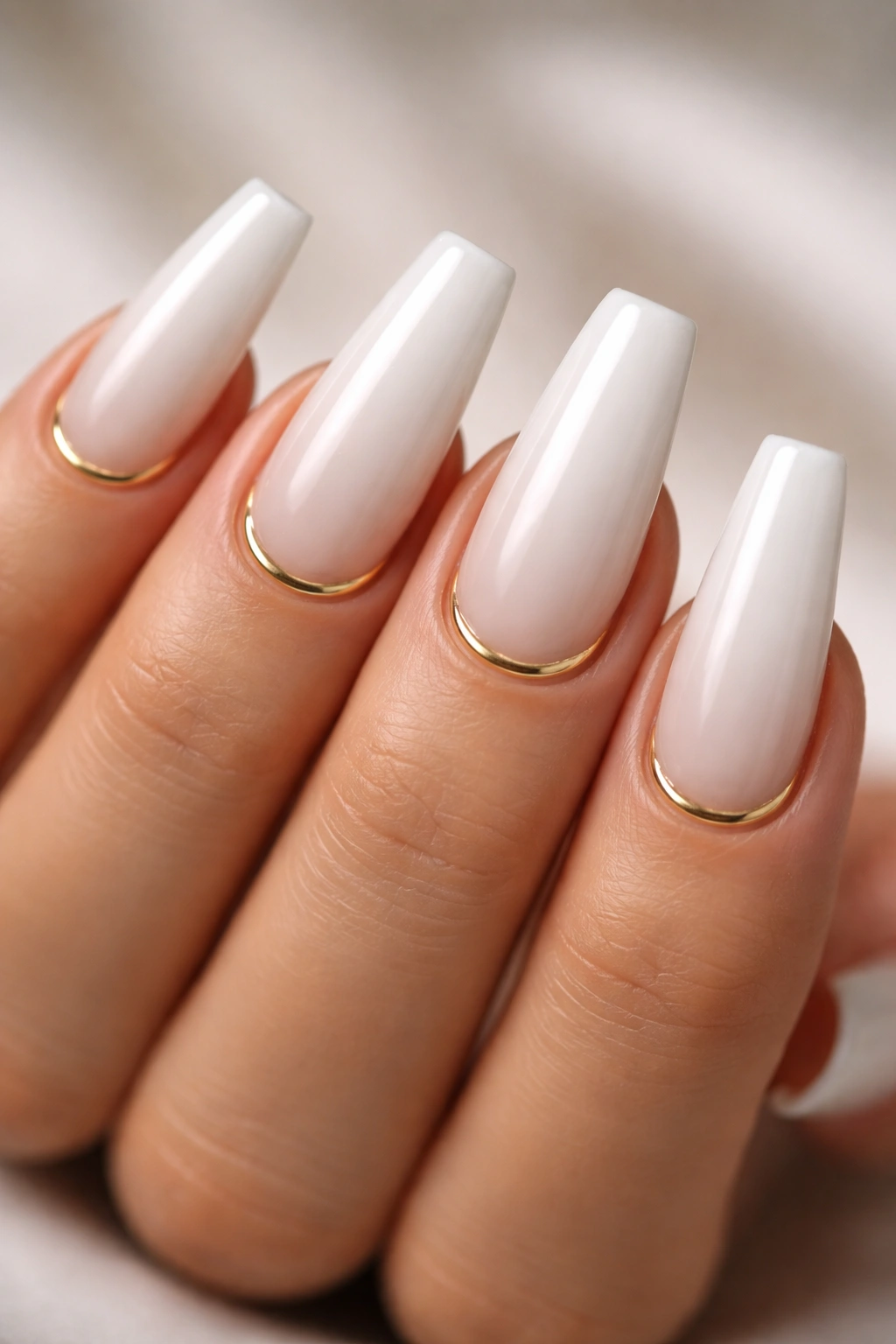
Milky white beats paper-white for long wear. I’ll argue that every time.
A semi-sheer white laid over a nude or pink builder base has a soft clouded look that hides tiny stains, fine scratches, and early grow-out much better than a dense opaque white. Then you add slim gold half-moons at the cuticle, and the set gets that tailored finish people usually chase with crystals and heavy art. You do not need all that.
The cuticle detail matters because your eye goes there first. When there’s a clean gold curve hugging the base of the nail, new growth looks less abrupt. The manicure stretches farther without looking like you’re pushing it. On coffin nails, that small curve also balances the wide flat tip, which keeps the shape from feeling too heavy.
Ask for one or two thin coats of milky white gel, not three thick ones. Thick white can go chalky, and chalky white grabs color. A milky layer keeps light moving through the set, which is why it keeps looking fresh.
Gold half-moons also wear better than raised charms. Charms trap soap residue, hand cream, foundation, and lint around their edges. A smooth metallic half-moon under top coat doesn’t. There’s your difference.
This is the set I’d pick for someone who wants white nails that can survive coffee runs, laptop work, hand washing, and a life that is not spent posing with a satin bow.
3. Pearl White Ombre With Thin Gold Sidewalls
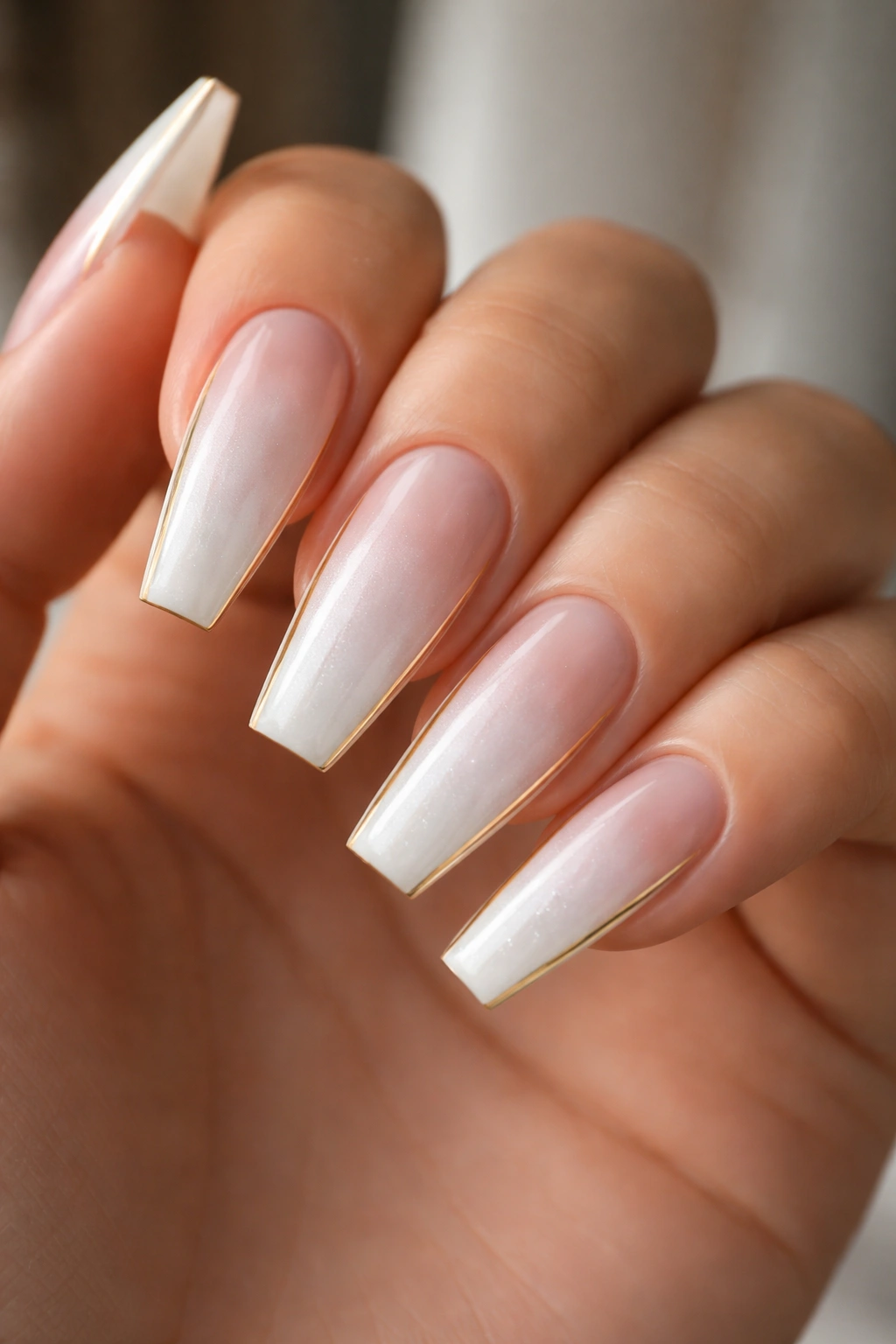
Why does an ombré set age better than solid white?
Because the eye reads a fade as movement, not as a single block of color that has to stay spotless. A pearl white ombré concentrates brightness where you want it—usually from the tip toward the center—then lets it soften into a sheer base near the cuticle. If the very edge picks up a little wear, the design still looks intentional.
The gold belongs on the sidewalls here. Two fine metallic lines running up the tapered edges of a coffin nail make the whole set look longer and leaner, and they leave the center open for that glowy fade. It is a cleaner look than putting gold through the middle, which can crowd the ombré and muddy the white.
How to wear this one well
Use a pearl chrome or soft white shimmer, not a chunky glitter fade. The whole point is to keep the surface smooth and reflective. A pearl finish also hides tiny surface scratches that plain cream white would expose.
Length matters. This design looks best when the coffin shape has enough room for the fade to breathe, so I’d keep the free edge at 15 millimeters or more. Short coffin nails can wear it, but the sidewall gold needs to stay thin or it starts swallowing the shape.
If your nail tech airbrushes the fade, even better. Airbrushed white ombré usually looks softer at day ten than a sponge-packed gradient, which can be slightly grainier unless it’s top-coated well.
Gold sidewalls are one of those details that seem small until you see how much they sharpen the entire hand.
4. Crisp White V-Tips Framed in Gold
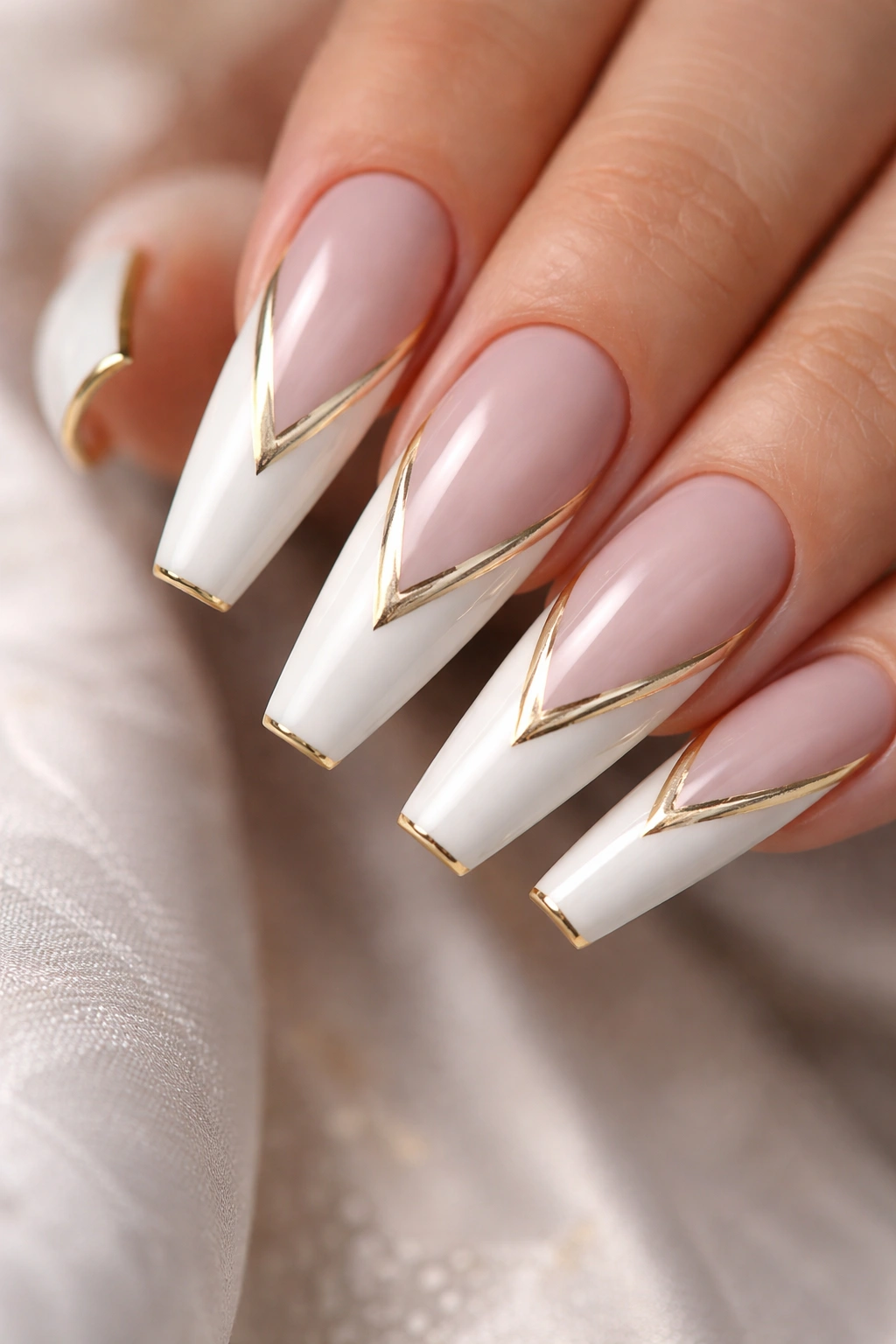
A straight French tip can look heavy on coffin nails. A V-tip fixes that.
Instead of a horizontal line across the nail, the white tapers into a central point, and a slim gold frame follows the shape. The result is sharper, lighter, and more graphic. You still get the hit of white, but not as a thick band sitting across the widest part of the nail.
There’s a practical reason this works so well. The V shape uses less white than a deep traditional French, and that white stays concentrated in the cleanest part of the design. When the tip starts taking life’s abuse—and it will—the gold border distracts from tiny changes at the edge.
The coffin shape loves this layout because it echoes the taper of the sidewalls. Nothing fights the nail.
What to ask for at the salon
- Keep the white point centered, not drifting left or right, or the whole set looks crooked.
- Let the point dip down only 3 to 5 millimeters from the free edge; anything deeper can shorten the nail bed.
- Use a liner brush for the gold frame instead of metallic striping tape, which can lift at the corners.
- Seal the border under a final top coat so you can’t feel the line with your fingertip.
I like this set on medium-long coffin nails with a sheer pink base. It has attitude, but it doesn’t need babysitting. That combination is rarer than it should be.
5. Sheer White Jelly Coffin Nails With Gold Foil Flecks
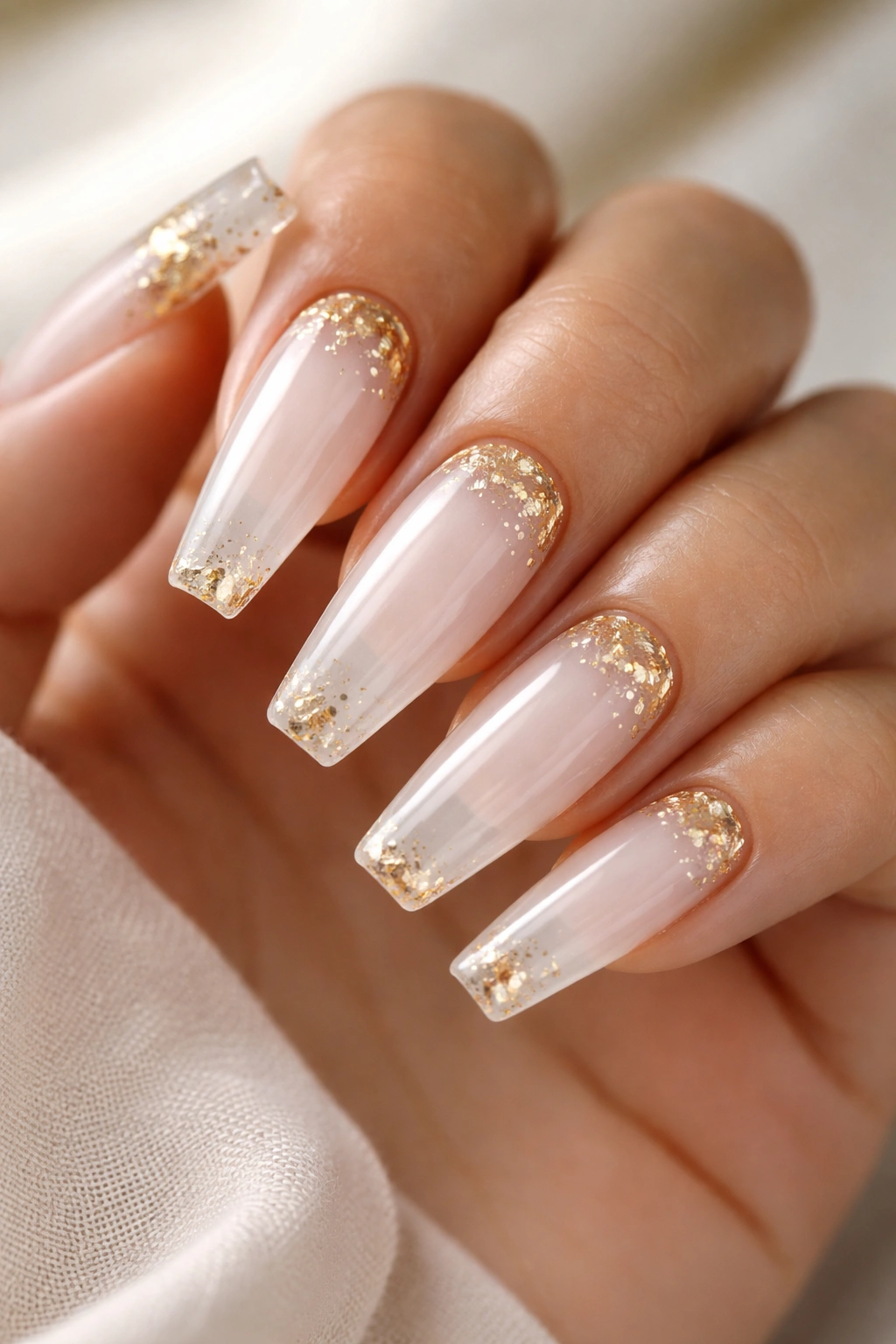
This one has a softer personality.
A white jelly base gives you that washed-milk effect where the nail still catches light through the color. It is not fully transparent, and it is not opaque either. That middle ground is exactly why it wears so well. Tiny shifts in tone are harder to spot because the design already has depth.
Gold foil can make or break this set. If the foil sits on top of the nail, even a little, the manicure starts catching lint and grime around the edges. You want encapsulated foil—pressed into a clear or milky layer, then covered with builder gel or top coat until the surface feels like glass. No texture. None.
I like the foil placed near the cuticle and side edges, not dumped across the middle of every nail. Too much metallic flake can make the white look dirty by contrast. A few scattered pieces look airy. A solid patch starts leaning costume.
Jelly white also flatters shorter coffin shapes better than dense white does. On a shorter nail, opaque white can look blocky. A jelly finish keeps the set lighter, almost like frosted glass.
If you wear hand cream often, this design stays cleaner than raised foil or rough chrome because there are no places for residue to build up. Small thing. Big difference.
Use a cool-toned jelly white if you want it to stay crisp. Warmer jelly whites drift into beige faster, and that is not the mood here.
6. Glazed White and Gold Coffin Nails With Pearl Chrome
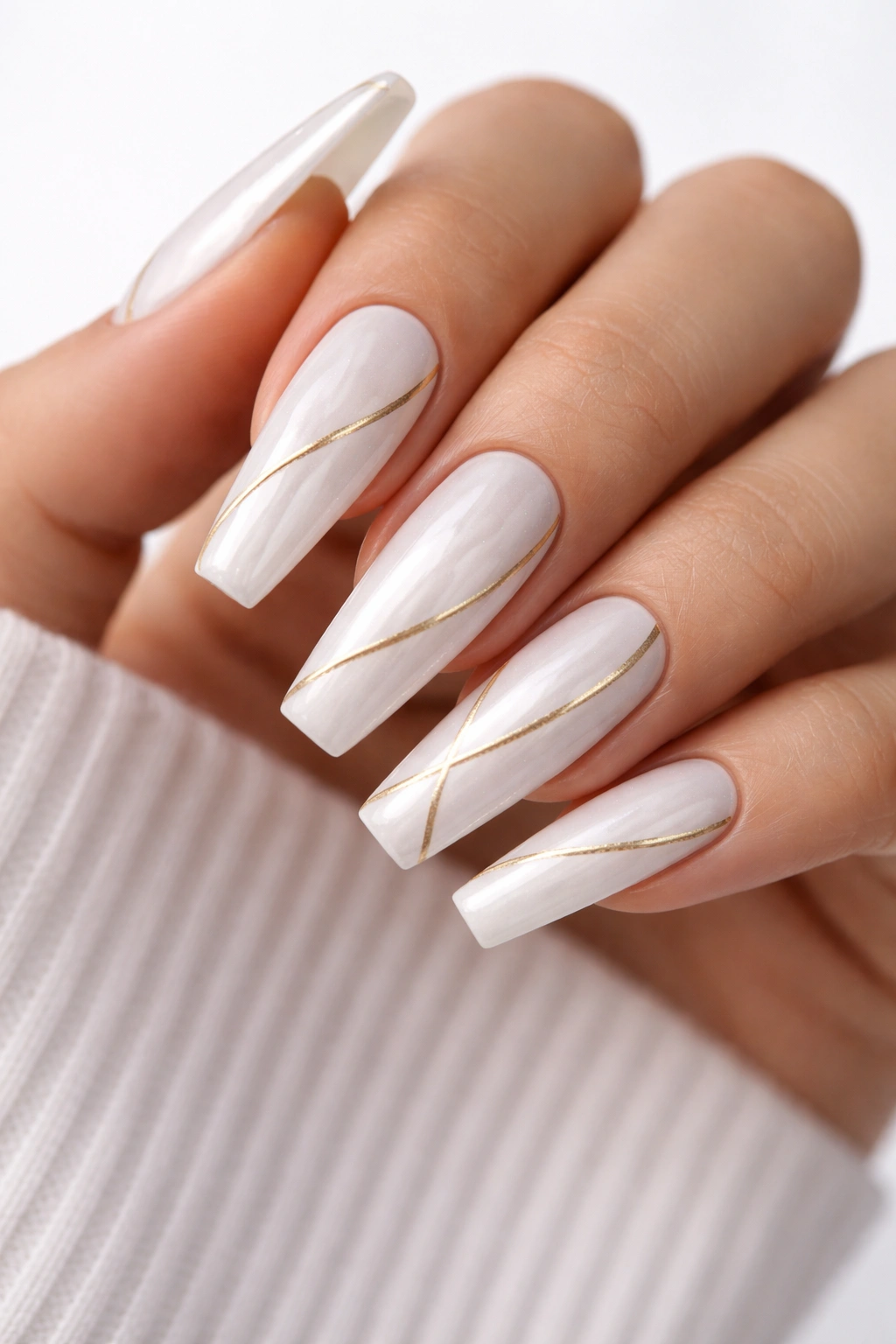
Unlike flat cream white, a glazed white chrome finish does not put every tiny mark on display.
That glossy, pearl-tinted surface reflects light in a way that blurs fine scratches and minor dullness. On day one it looks icy. On day twelve it still looks polished, which is more important. Add a few fine gold lines—one near the cuticle, one crossing an accent nail, maybe a diagonal slash on the ring finger—and the whole set feels clean rather than flashy.
The trick is keeping the chrome refined. You want a white base softened by pearl powder, not a mirror chrome that shifts silver or yellow. Mirror finishes can pull the manicure away from white and into metal territory. Pretty, sure, but not the same thing.
This style is also kinder to hands that see a lot of motion. Laptop keys, steering wheels, grocery bags, drawer pulls—the normal stuff—leave less visible wear on a glazed surface than on flat solid white. A smooth no-wipe top coat buffed with pearl powder has that slick look that doesn’t show life as quickly.
Best for:
- people who want white nails without the chalky look
- medium to long coffin shapes
- ring-heavy styling, where the nails need enough shine to hold their own
My one hard opinion here: keep the gold thin. The chrome already gives you shine. Thick gold lines start competing with it, and the set loses its cool edge.
7. Soft Marble White Nails With Gold Veins
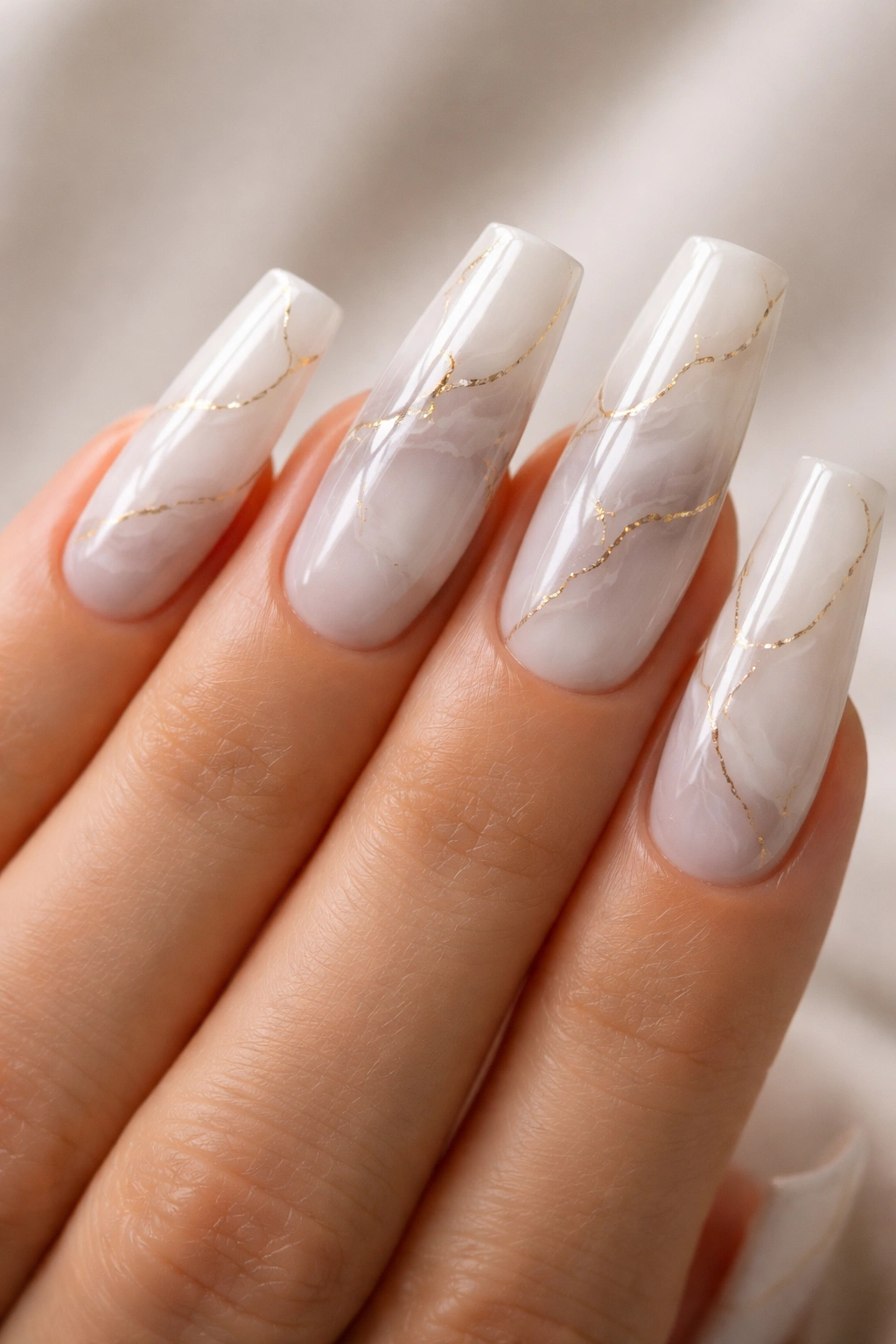
White marble is forgiving in the best way.
A soft marble design uses translucent white, a whisper of gray or taupe, and hairline gold veining to mimic stone rather than sharp graphic art. Because the surface already has movement, tiny shifts in tone do not jump out. If you’ve ever had a solid white set look dingy after one messy meal, marble feels like a relief.
The goal is not high-contrast black-and-white stone. That can read harsh on coffin nails and makes every flaw easier to spot. You want creamy swirls, feathered edges, and gold veins no thicker than 0.5 to 1 millimeter.
Why marble hides wear so well
Patterns break up the eye. A stain on a flat white nail looks like a mistake. On a marble nail, a faint shadow can disappear into the visual texture—if the marble is done softly and sealed smooth.
Keep the stone effect clean
- Use two or three veins per nail, not six or seven.
- Ask for the gold to sit under the final top coat, not raised on top.
- Keep at least two nails solid or milky white so the set doesn’t get too busy.
- Pair the marble with a high-shine finish, not matte. Matte marble sounds good until it starts grabbing makeup.
This is one of my favorite white-and-gold coffin sets for day-to-day wear because it has enough detail to hide life, but not so much that it starts looking noisy.
8. Bridal White Coffin Nails With Gold Cuff Accents
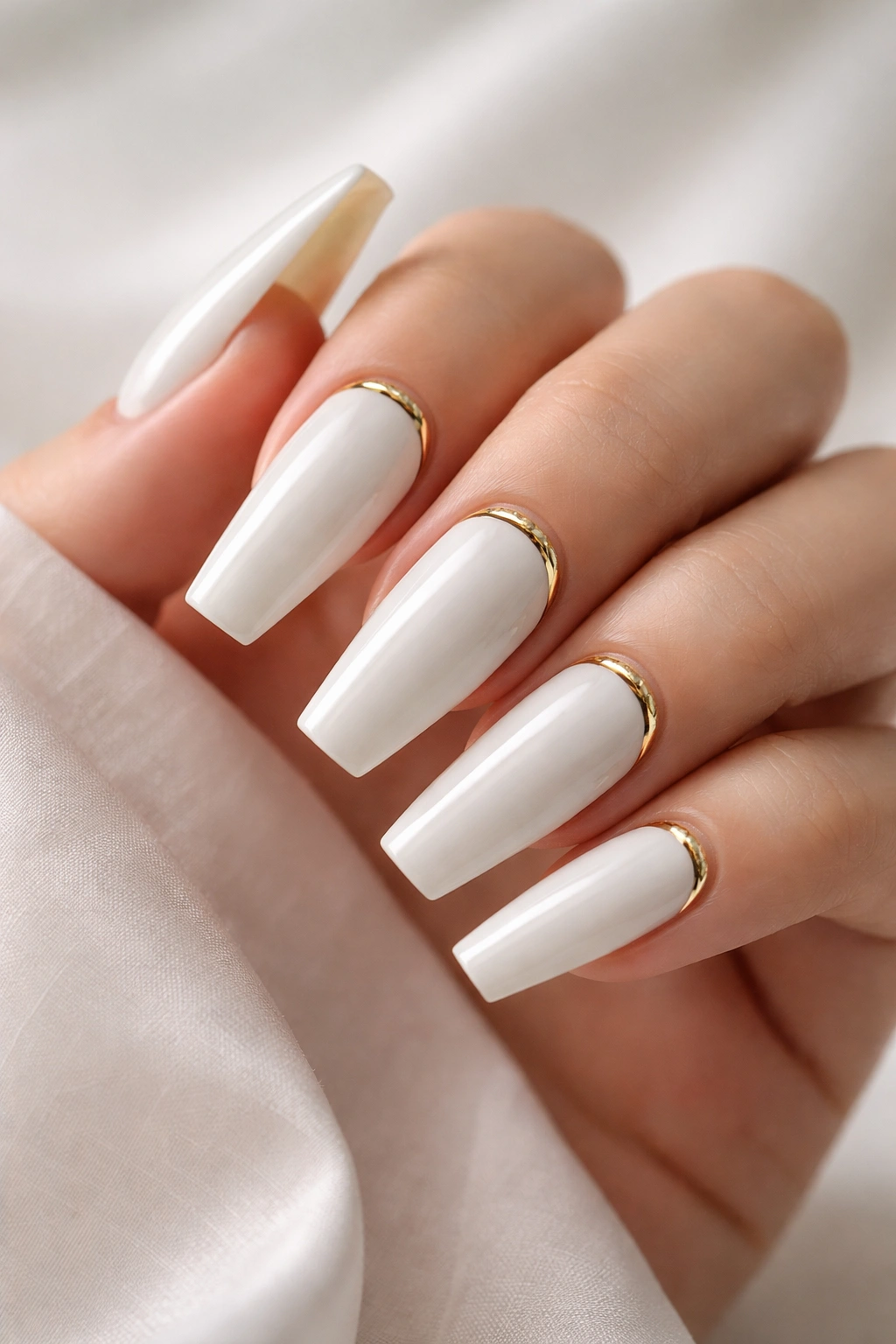
If you want a dressier white set, skip the heavy crystal pile. It clouds up faster than people admit.
A cleaner option is a soft bridal white base with gold cuff accents hugging the cuticle on a few nails. The base can be ivory-white or milky white, depending on how stark you want the look. The cuff adds structure and makes grow-out look tidy instead of abrupt, which matters if you want the set to hold up beyond one event.
Coffin nails can go formal fast, and not always in a good way. Too much sparkle, too many charms, too much opaque white, and suddenly the manicure is wearing you. A small gold cuff pulls the eye upward and keeps the shape elegant without piling product on top of the nail.
I’d also keep any stones flat-backed and limited to one accent nail per hand if you insist on them. Glue-heavy crystal clusters can go cloudy around the base, and once that happens near white polish, it looks messy fast. Flat metallic detail under gel wears much better.
This set also photographs well because the gold catches edges while the white stays soft. There’s enough contrast for the nail shape to show, but not so much that the hands look stiff.
And yes, that matters.
9. Reverse French White Base With Gold Outline
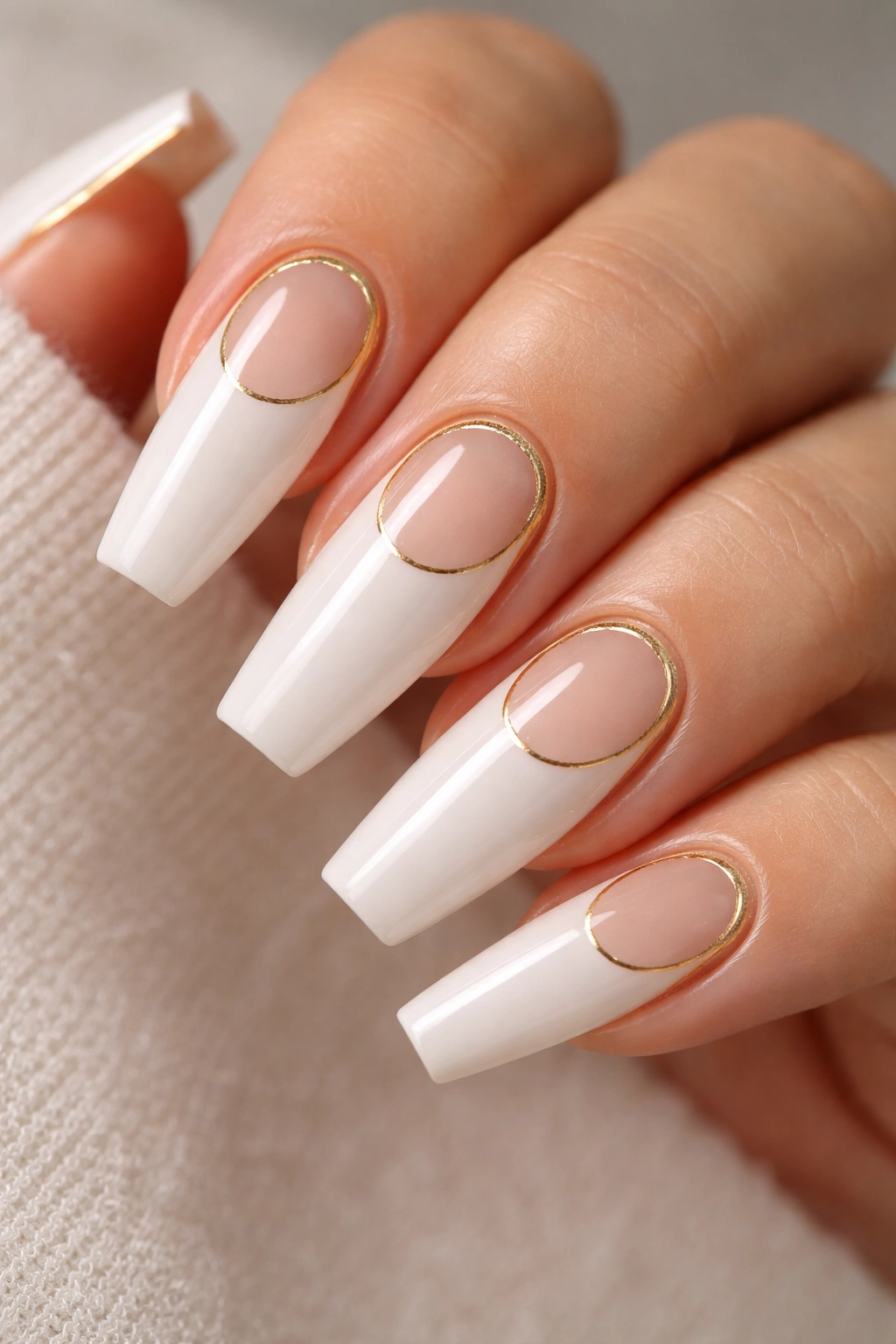
What if you like a full white nail but hate obvious grow-out?
A reverse French solves that neatly. The main body of the nail is white or milky ivory, but a slim crescent near the cuticle stays sheer or nude. Outline that crescent with gold, and the negative space turns into part of the design instead of a gap you’re waiting to fill.
This layout is smart because the cuticle area is where wear becomes noticeable first. Leaving 1.5 to 2 millimeters of sheer base near the nail fold buys you time. On coffin nails, that little crescent also keeps the manicure from looking too dense at the base, which balances the broad flat tip.
Placement matters more than color here
If the crescent is too wide, the set starts looking grown out from day one. Too narrow, and the whole point is lost. A thin gold outline makes the shape intentional and keeps the eye focused on the design line rather than on any later growth.
Use a white that has a hint of softness, not a correction-pen white. Reverse French looks best when the transition from nude to white feels deliberate and smooth. Harsh white next to bare nail can look jarring, especially on longer coffin shapes.
This is one of the best choices if you stretch appointments. Not forever. Nothing good lasts forever. But longer than a full solid white set, no question.
10. White and Gold Checker Accent Coffin Set
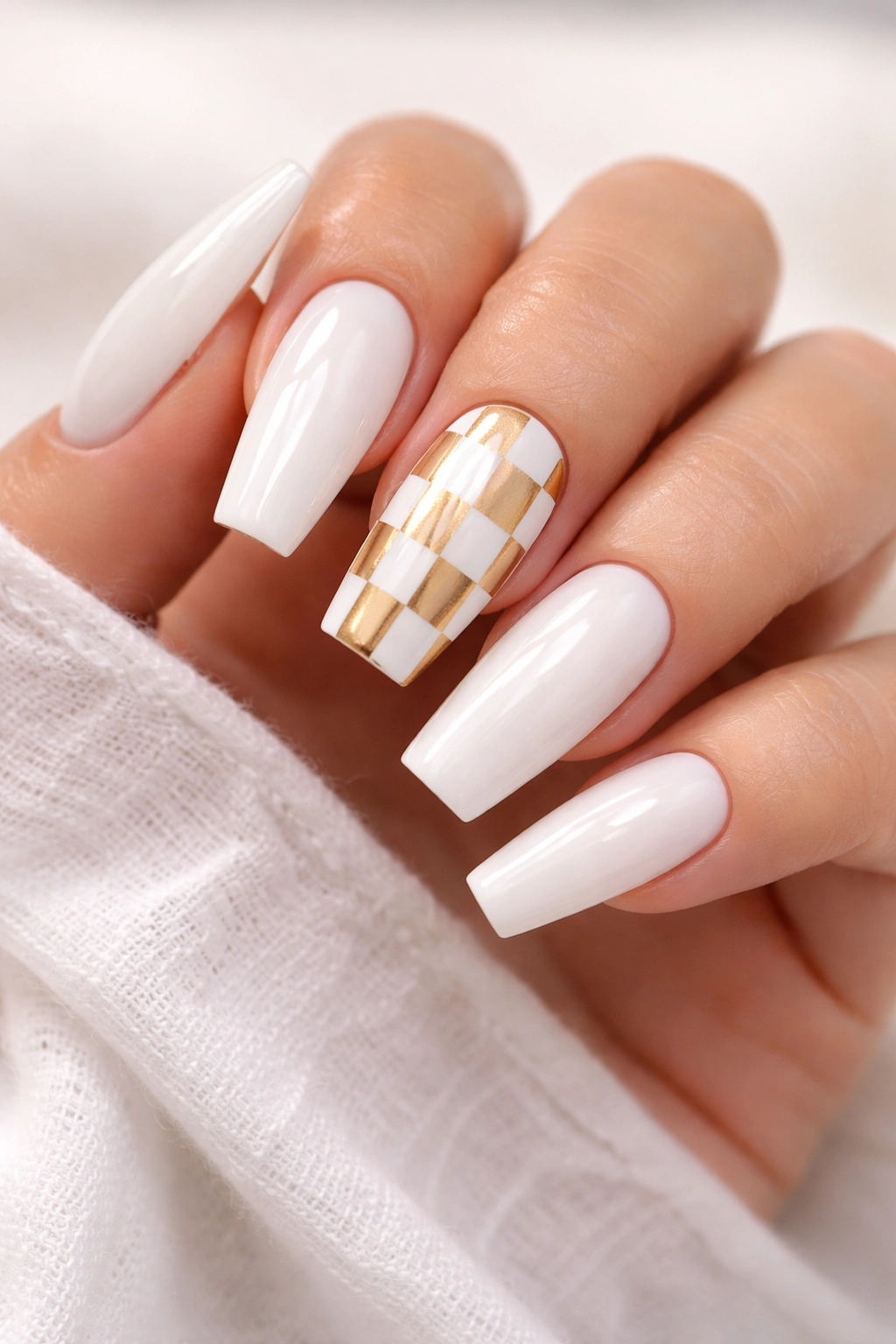
A full set of ten identical white nails can feel a little flat. One or two checker accent nails fix that without making the manicure harder to keep clean.
The smartest version uses a mostly milky-white or French-based set, then drops a white-and-gold checker pattern onto one ring finger and one middle finger, or even just one accent nail per hand if you prefer less noise. The pattern brings energy, while the rest of the nails stay easy to maintain.
Checker art also works well because the gold lines break up the white sections. Each white square is small, so any slight dullness does not show the way it would on a full solid nail. Scale is doing a lot of work here.
A layout that keeps this set wearable
- 6 nails: milky white or sheer pink with micro-French tips
- 2 nails: white-and-gold checker pattern
- 2 nails: simple gold line art or plain milky white
That mix gives the design enough rhythm without turning every hand into a puzzle board. I’d keep the checker pattern medium-sized—around 4 to 6 squares visible per nail—because tiny checks can blur together once top coat goes on.
Use painted checks, not decals with a thick edge. Decals can show a border after a few days, and white nails do them no favors. Hand-painted under top coat stays sharper.
11. Ivory White Coffin Nails With Encapsulated Gold Leaf
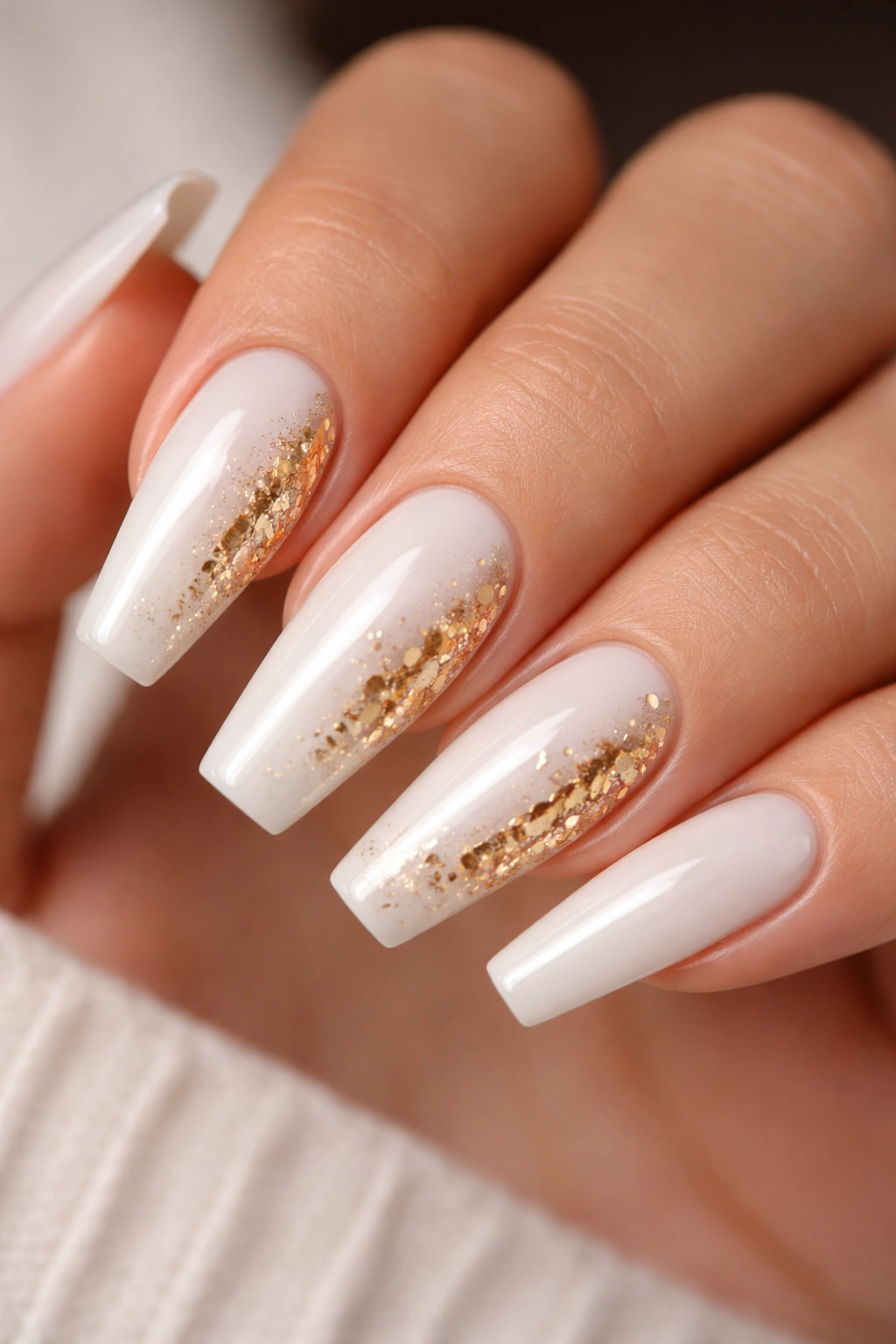
Not every white nail needs to be icy.
A soft ivory white can outwear stark white by a wide margin because slight warmth hides the early stages of yellowing far better than blue-based whites do. That does not mean beige. It means a creamy, porcelain-leaning white that still reads clean on the hand. Pair it with encapsulated gold leaf, and the result feels richer and less harsh than a bright white-and-foil set.
Encapsulation is the whole game here. Gold leaf has fragile edges, and if those edges sit too close to the surface, they catch. Once they catch, the manicure starts collecting lint, soap residue, and odd little shadows that make the white look less fresh. Buried under a clear layer, leaf looks suspended instead of stuck on.
Placement matters. I like the leaf concentrated toward one side of the nail or clustered near the lower third, leaving breathing room around the white. When leaf is scattered wall to wall, it can start muddying the base color. Coffin nails already have enough presence. They do not need metallic confetti from cuticle to tip.
This set works especially well on medium and long lengths because the white has space to show as color, not just background. And if your skin has warmth in it, ivory white usually looks softer and more expensive than a cold salon white.
I have a bias here. I think ivory is underrated.
12. Satin White Coffin Nails With Gold Stud Lines
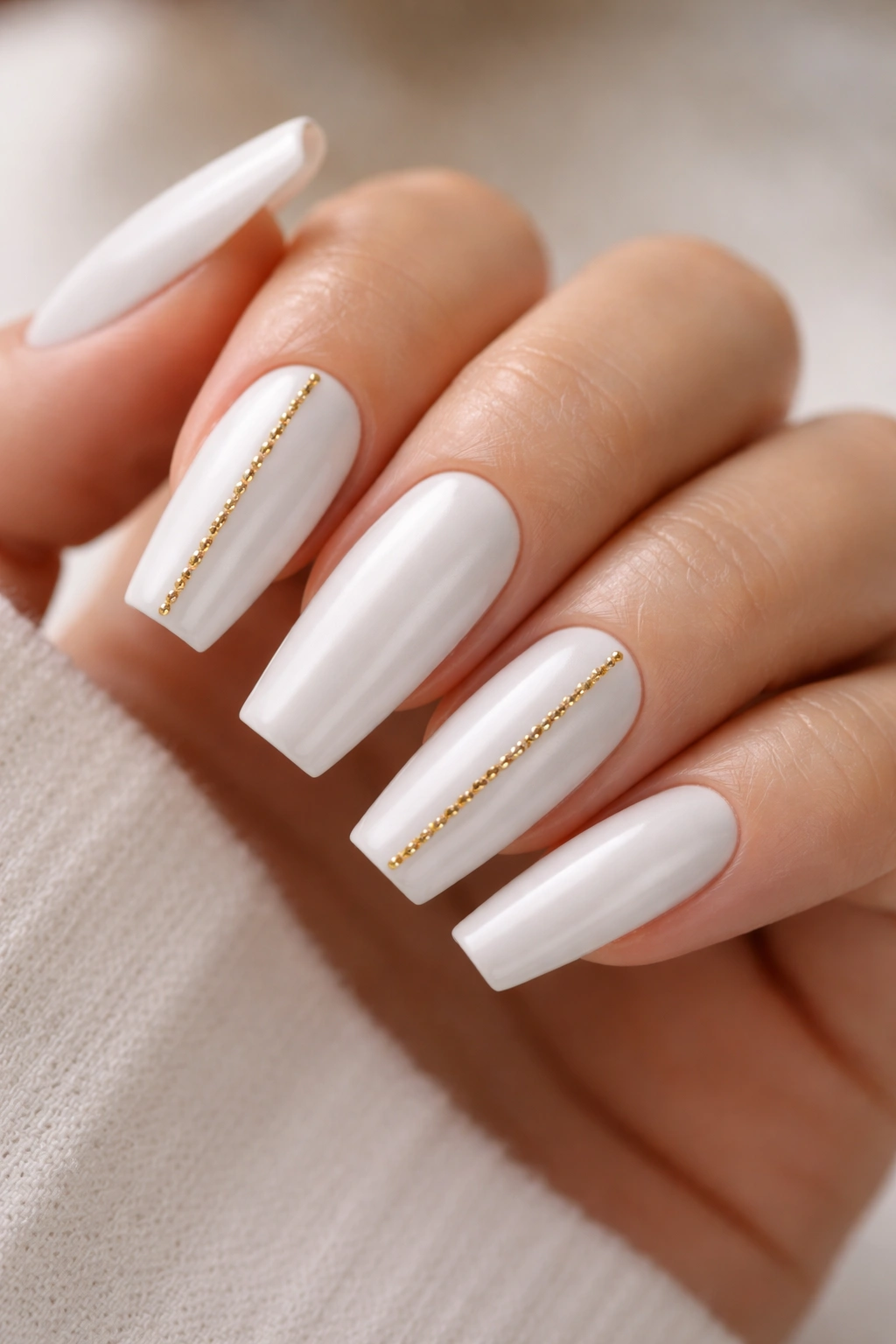
If you love matte white nails, I have bad news: full matte white is high-maintenance.
A satin finish is the better move. It gives you a softer, diffused look without turning the entire surface porous and grabby. On white coffin nails, that slight sheen makes a real difference. You still get the muted effect, but the set doesn’t start collecting every trace of makeup and dye the way a dead-flat matte top coat can.
Gold stud lines need restraint. Tiny flat studs or micro-beads can look sharp running vertically down one side of the nail, but they should be encapsulated or at least sealed around the edges. Raised hardware feels chic for about two days, then starts catching your hair and collecting residue around the base. Skip that headache.
Unlike a glazed set, satin white gives off a softer glow, so the gold detail becomes more important. A single vertical line of micro studs or flat metallic dots draws the eye and keeps the design from reading blank.
This one is best for:
- medium coffin lengths
- people who want texture without bulk
- anyone bored by full gloss but unwilling to baby matte
My preference? Satin on the white, gloss over the gold. That small contrast gives the set dimension while keeping the main surface easier to wipe clean.
13. White Aura Center With a Fine Gold Frame
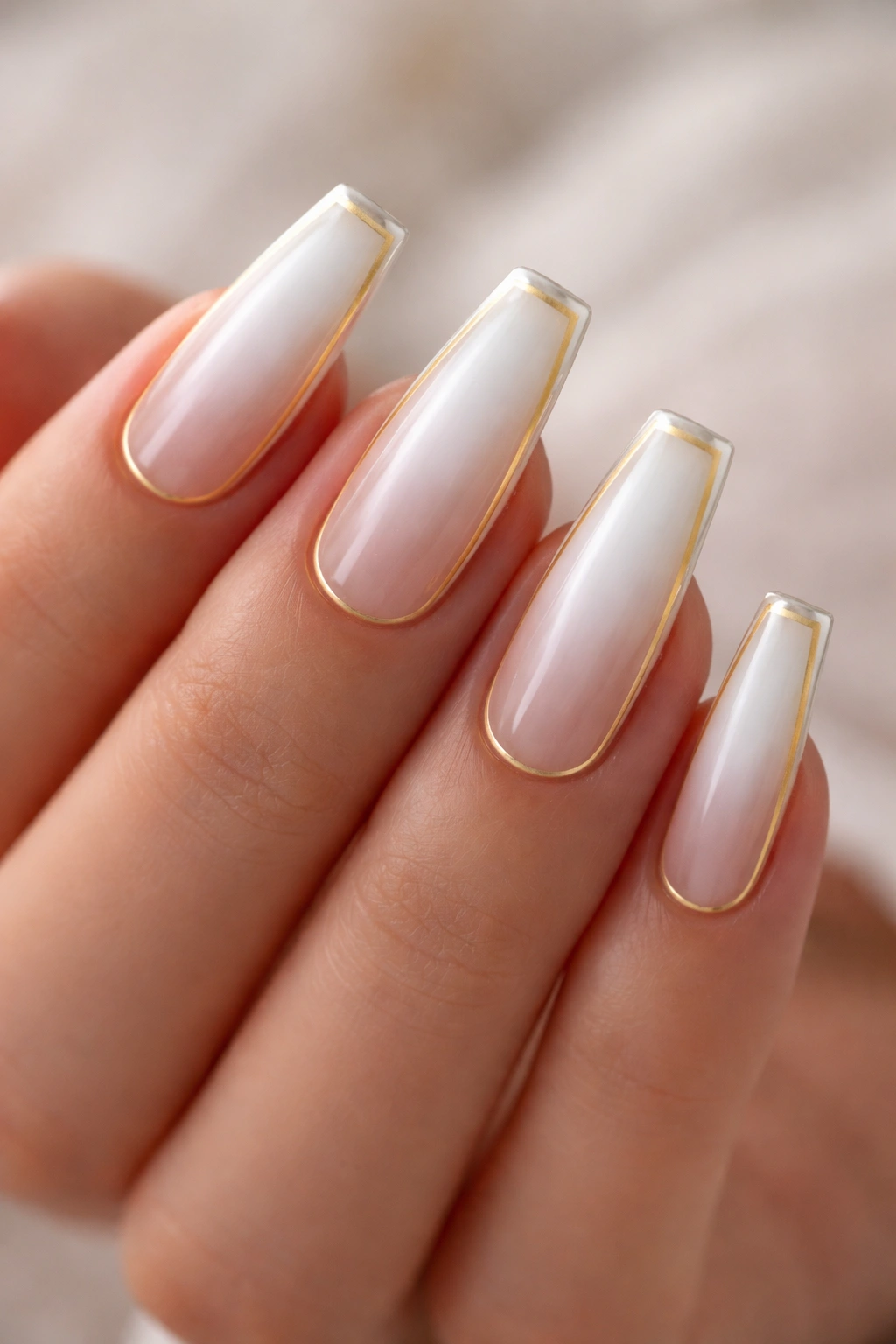
A centered white aura is one of the smartest ways to wear white if you’re rough on your hands.
Instead of covering the whole nail, the white sits in the middle like a soft cloud or halo, fading into a sheer nude, pink, or milky base. Then a thin gold frame—sometimes an inner oval, sometimes a coffin-shaped border—defines that glow. Because the edges of the nail stay more translucent, tip wear and sidewall staining are far less obvious.
Why centered color lasts longer
The perimeter of the nail sees the most abuse. That’s where you tap keys, bump drawer handles, scrape labels, and notice staining first. Pulling the white inward protects the look without making the manicure feel skimpy.
A few details make this design sing
- Keep the white aura at about 60 percent of the nail width.
- Leave at least 1 millimeter of the sheer base visible around the edges.
- Use airbrushed or softly sponged white, not a hard-edged circle.
- Frame it with a hairline gold border, not a thick metallic ring.
Best version: a pearl or milky white aura under a glassy top coat. Flat opaque white in the center can look pasted on. Soft diffusion feels more expensive and wears better.
This set has a little mystery to it. Not in a dramatic way. It just looks considered.
14. Diagonal White Color Blocks With Gold Striping
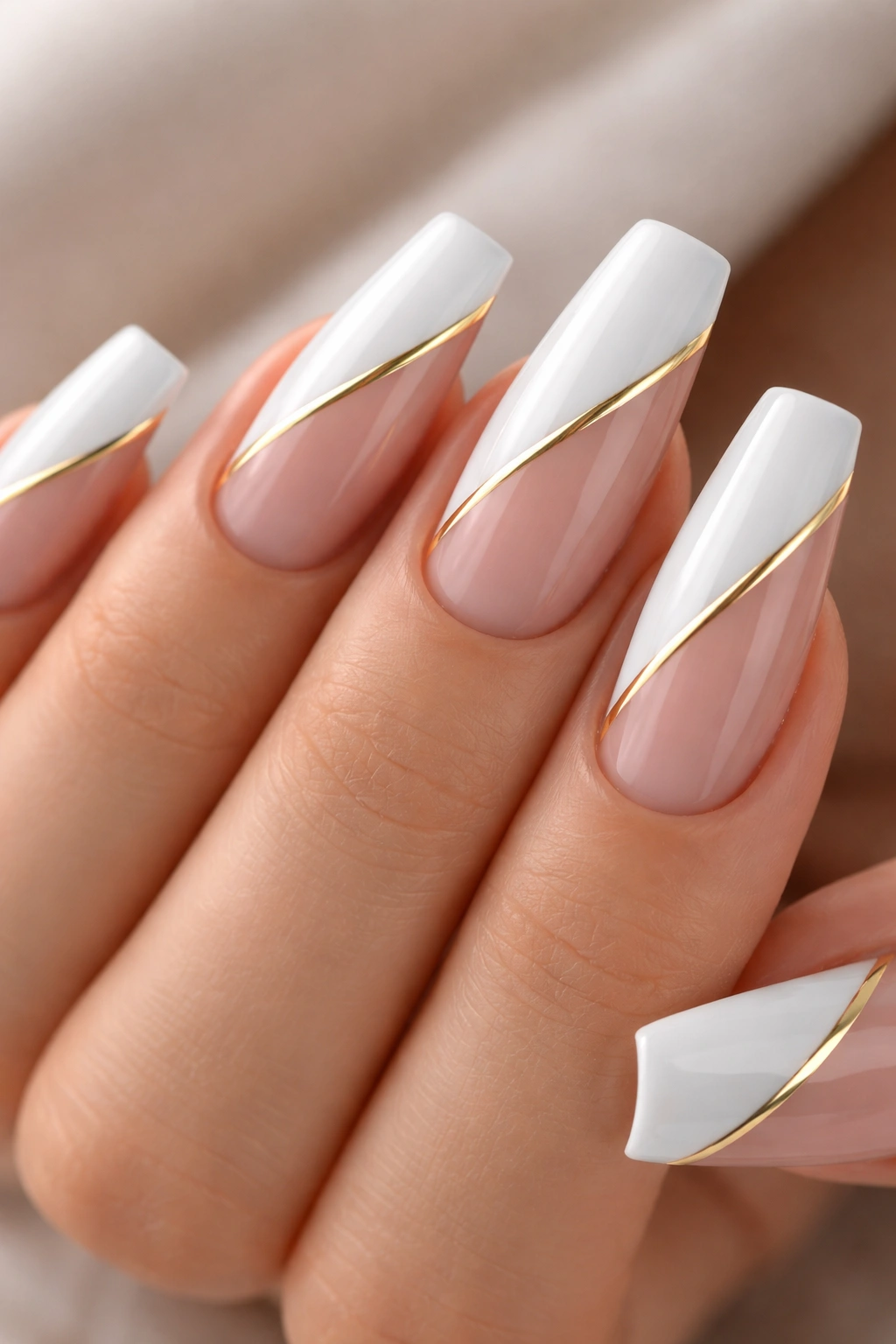
Diagonal blocking is one of the smartest white-nail tricks around.
A single diagonal panel of white paired with a nude, sheer pink, or soft beige panel gives you contrast without asking the entire nail to stay spotless. Run a gold stripe along the seam, and the manicure looks crisp, architectural, and much easier to wear than a full white set.
The angle matters. I like the line starting near one side of the cuticle and sweeping toward the opposite corner of the free edge. That diagonal pulls the eye along the length of the coffin shape and makes the finger look longer. A straight horizontal split can cut the nail in half visually. Diagonal lines do the opposite.
This design also hides tip wear well because the white does not have to cover the whole free edge on every nail. You can rotate the direction from nail to nail if you want a little energy, though I prefer keeping the angle consistent across the hand. It looks cleaner.
Use a liner brush for the gold stripe and bury it under top coat. Striping tape tends to lift, especially if the diagonal reaches the sidewalls. Once it lifts, the set starts looking tired fast.
If you use your hands hard—typing, cleaning, lifting, opening boxes—this design has a lot of common sense built into it. That counts for more than day-one drama.
15. Porcelain White and Gold Coffin Nails With Lattice Tips
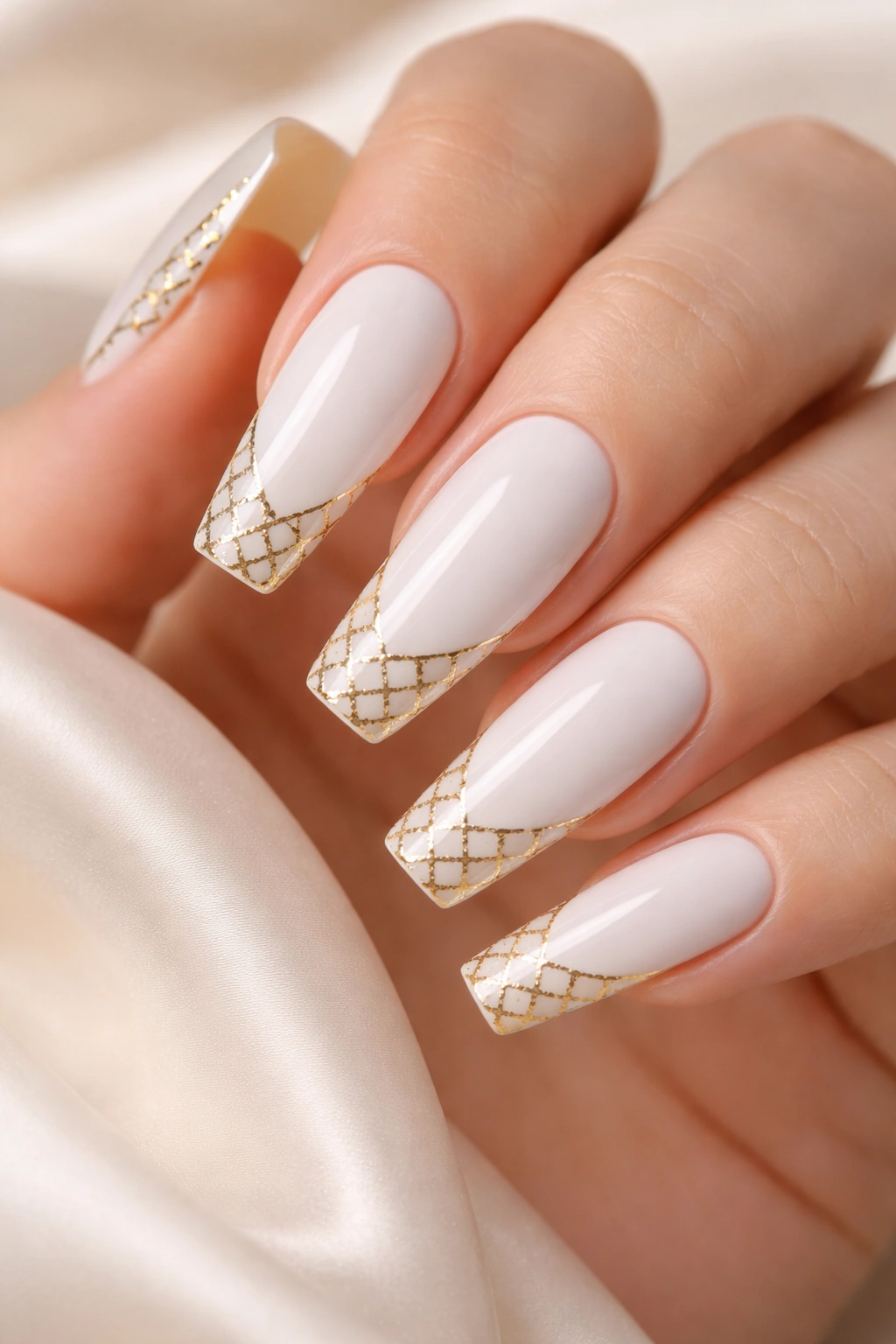
Want something dressy without falling into rhinestone territory?
A porcelain white base with delicate gold lattice at the tips gives you detail, polish, and just enough structure to feel dressed up. The white here should not be bright blue-white. Go for a soft porcelain shade with a glassy finish, then paint a fine crisscross lattice over the tip area in gold. On a coffin shape, that flat edge gives the lattice room to read cleanly.
Keep the lattice flat and tight
The prettiest version uses thin gel-painted lines spaced about 1 millimeter apart, then sealed under top coat until the surface is smooth. Raised metallic gel can look thick at the tip, and thickness is where dirt and dullness start showing. Sealed flat art lasts longer and feels better.
Gold at the tip also does something clever: it distracts from the part of the nail that takes the most punishment. Minor wear blends into the lattice instead of sitting alone on a plain white edge. That’s why this design lasts better than it might look at first glance.
Longer coffin nails suit this one best. Short lengths can handle it, though the lattice needs to stay sparse or the tip starts looking crowded. I’d also keep the rest of the nail plain. No extra gems, no random swirls, no trying to cram three ideas into one set.
Porcelain and gold already know what they’re doing.
Final Thoughts
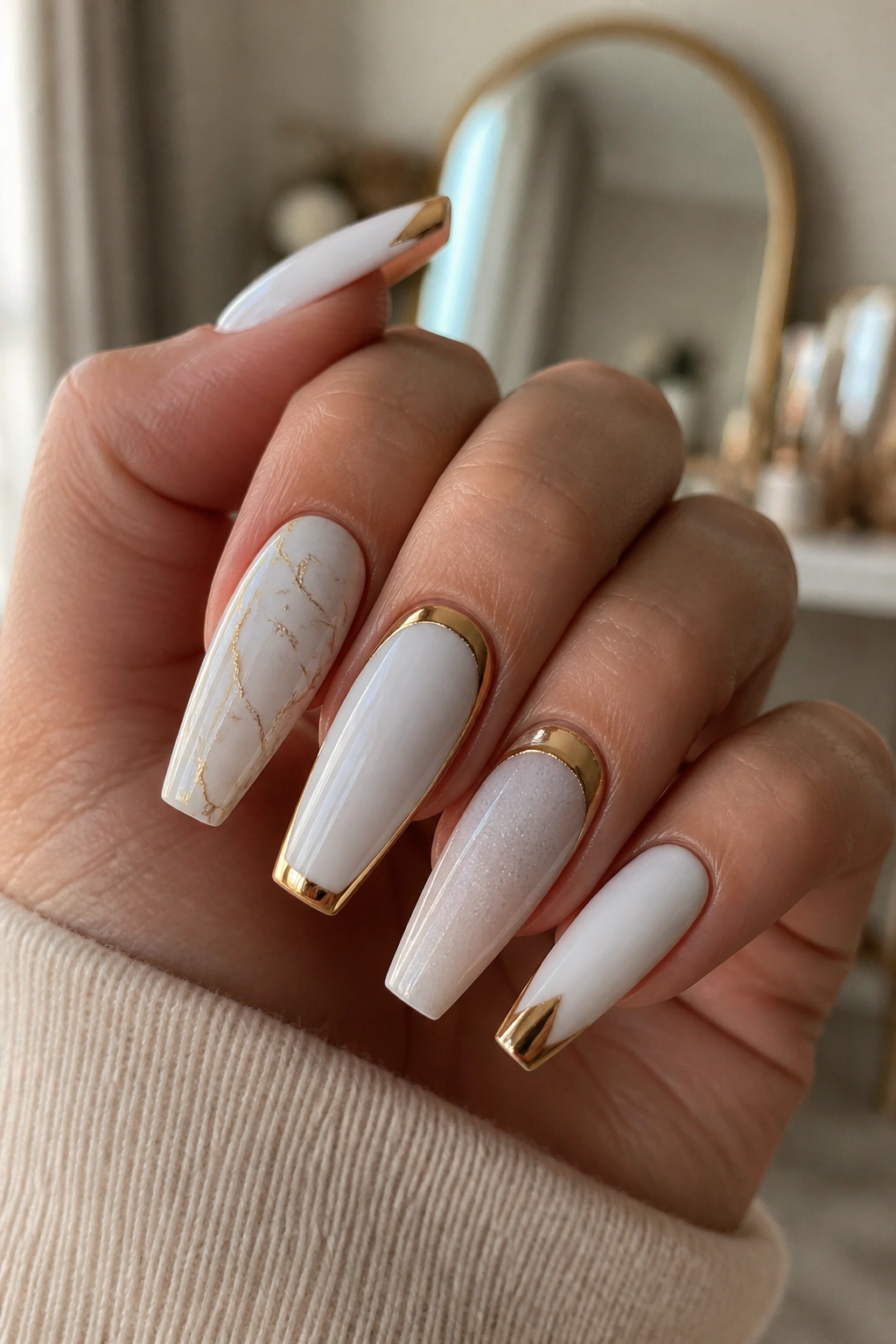
The white sets that stay clean the longest are rarely the ones with the most white on them. They’re the ones with smart placement, a smooth surface, and a top coat that does not yellow halfway through your wear.
If you want the easiest upkeep, go micro-French, reverse French, aura center, or diagonal blocks. If you want more art without the grime risk, marble, jelly white, glazed chrome, and encapsulated leaf do a better job than thick matte white ever will.
One last practical note: if your hands touch self-tanner, hair dye, turmeric, blue denim, or strong cleaning products, wipe the nails down with a little isopropyl alcohol on a lint-free pad when you’re done. Tiny habit. Huge payoff.
Pick the set you’d still like on day ten, not only the one you love for five minutes on a mood board. That’s when white nails earn their place.