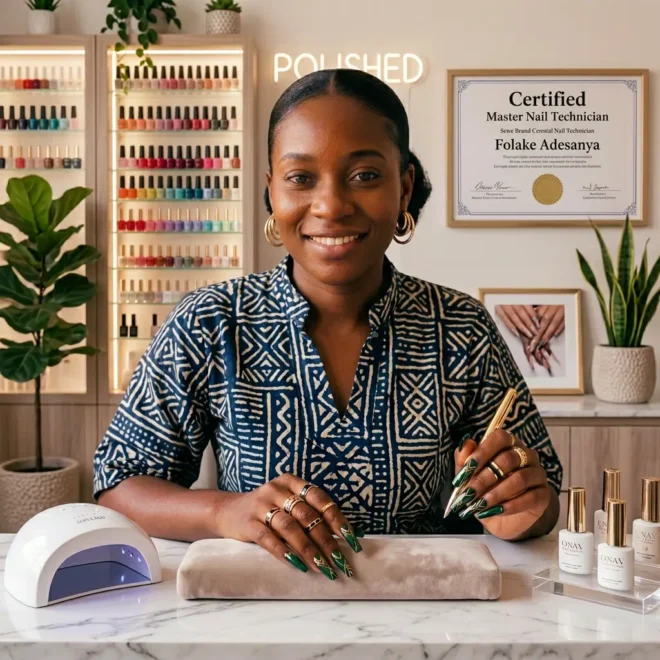


Most people assume ballerina nails need length. They do not. On short nails, that tapered sidewall and flat tip can look cleaner, sharper, and a lot more wearable than a long coffin set that keeps smacking into your keyboard, your coffee mug, and the side of your phone.
The catch is shape discipline. A short ballerina manicure only works when the taper is controlled, the tip stays flat, and the nail artist resists the urge to pinch the sides too aggressively. I’ve seen short sets go wrong in ten seconds with a file: the corners disappear, the nail looks wide, and suddenly the whole hand loses that neat, elongated look people wanted in the first place.
Short length also changes your color choices. A deep black can look sleek on one short ballerina shape and heavy on another; a micro French can make the same nail bed look longer with almost no extra length at all. Free-edge length matters, sure, but polish placement matters nearly as much—maybe more.
If you like the ballerina silhouette but do not want long extensions, there are smart ways to get there.
Why Ballerina Nails Can Still Flatter Short Lengths
Length is overrated.
What most people respond to in a ballerina shape is not raw inches; it’s the visual line. Straight sidewalls that taper slightly inward and finish in a crisp, flat tip create the illusion of a longer nail, even when the free edge only extends 2 to 4 millimeters past the fingertip. That’s enough to show the shape without turning your hands into tiny snow shovels.
Short ballerina nails also solve a practical problem. Square nails can make shorter fingers look blocky, while almond tips often need more length before the point looks intentional rather than accidental. A short ballerina sits in the middle. You get a bit of narrowing through the sidewalls, but the flat tip still looks tidy and balanced.
And if you type all day, cook a lot, or fuss with contact lenses, that matters.
The best short ballerina sets usually share three traits:
- A soft taper, not a dramatic pinch.
- A flat tip wide enough to look stable, usually about 1 to 2 millimeters narrower than the widest part of the nail bed.
- A structured overlay if your natural nails bend, peel, or split at the corners.
Natural nails can hold this shape if they’re sturdy. If they’re thin, ask for builder gel, hard gel, or a light acrylic overlay. Short ballerina corners take more stress than people think, especially on your index and middle fingers.
The File Shape That Keeps Short Ballerina Nails from Looking Stubby
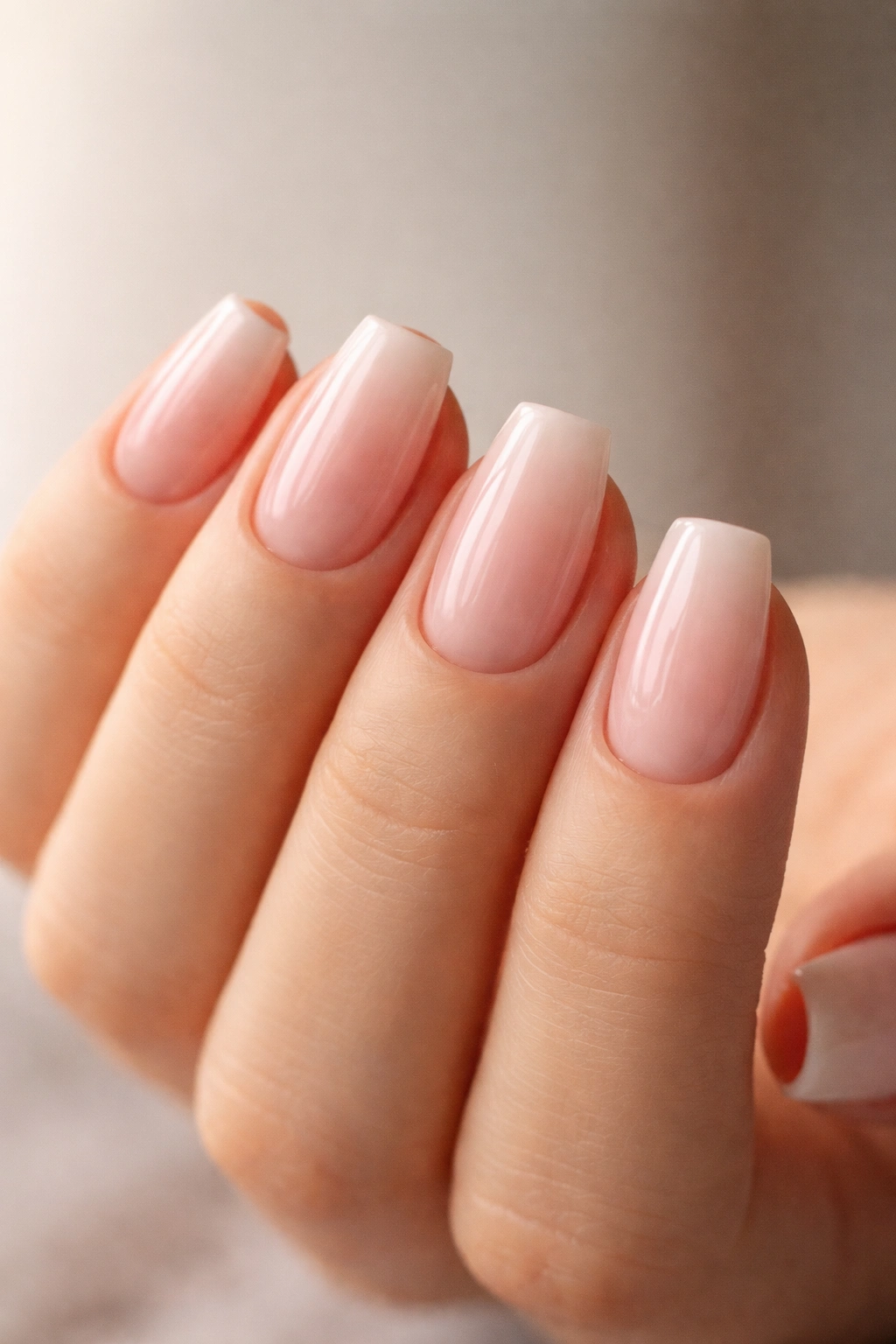
What makes a short ballerina shape look sharp instead of squashed? Not the polish. The file.
The first detail is where the taper begins. On short nails, the sidewalls should stay mostly straight through the lower half of the nail, then narrow gently toward the tip. If the taper starts too low, the nail loses width too early and can look pinched. If it never tapers, you’re basically wearing a square manicure with better marketing.
The tip should be flat, not rounded off
A lot of nail techs soften the tip out of habit, especially on short nails. I get why. It feels safer. Still, the flat edge is what makes ballerina nails look like ballerina nails. You want a blunt finish with slightly softened corners—not a rounded square, not a squoval, and not a tiny coffin that collapses at the end.
Thickness matters more than most clients expect
Short ballerina nails need structure near the apex and enough strength through the corners. Too thin, and the side corners chip first. Too bulky, and the whole manicure looks heavy. On a gel overlay, the apex usually sits around the back third of the nail plate, fading smoothly toward the cuticle and tip.
I keep harping on corners because they decide everything here.
A clean short ballerina shape should look neat from three angles: straight on, from the side, and palm-up. If the underside flares or the tip dips downward, dark polish will expose every flaw.
Color Placement Tricks That Make Short Ballerina Nails Look Longer
A color can rescue an average shape—or expose one.
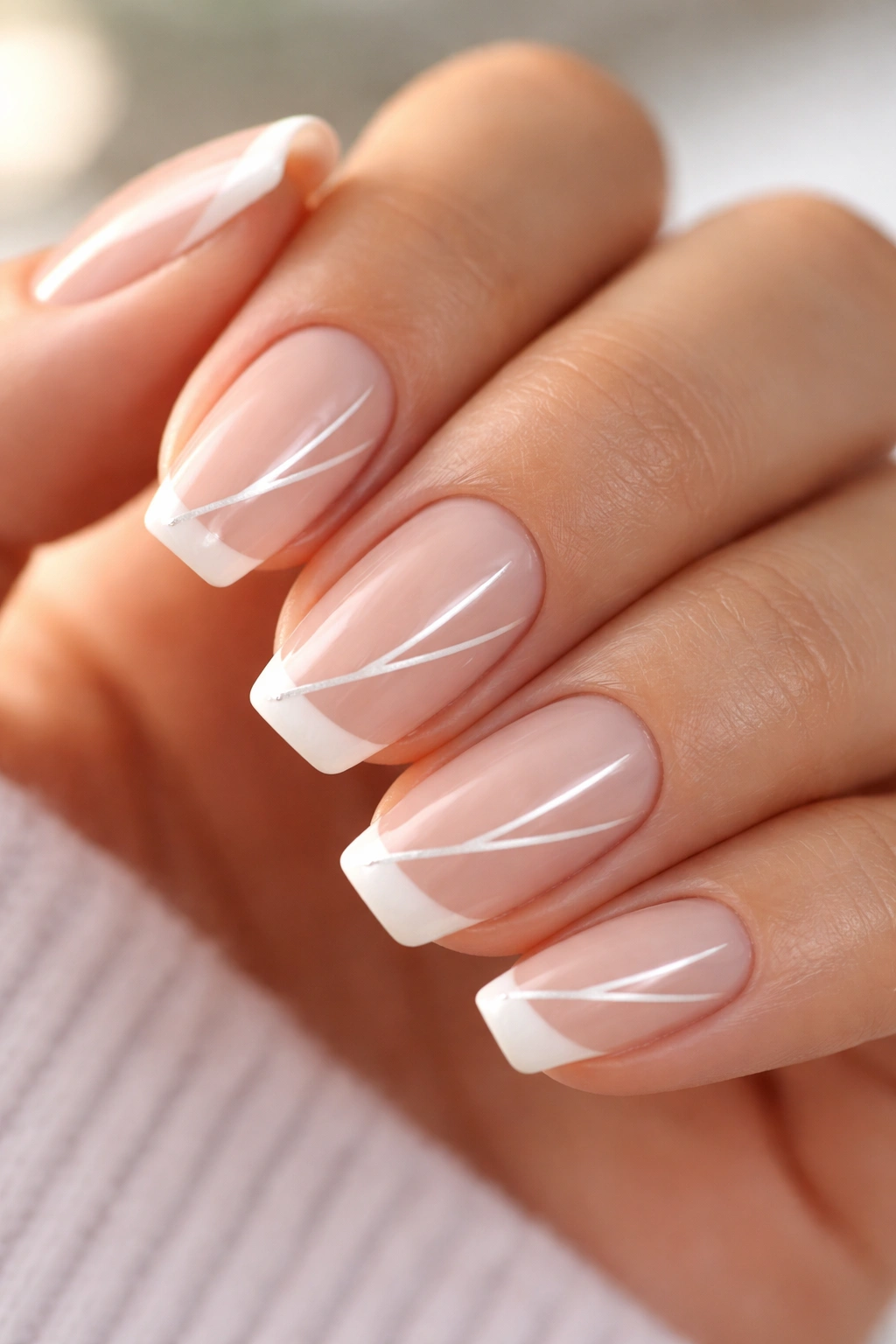
Imagine two short ballerina manicures with the same length. One uses a milky nude that blends into the nail bed and a narrow white line at the tip. The other uses a thick horizontal color block in a chalky shade. The first one stretches the eye forward. The second one cuts the nail off halfway.
That’s why placement matters so much on short nails. Designs that pull the eye upward or inward tend to work better than anything that reads flat and wide.
What usually helps
- Sheer or milky bases soften the line between nail plate and free edge.
- Micro French tips keep the smile line slim instead of chunky.
- Diagonal details create motion and narrow the nail visually.
- Side outlines or vertical accents make short nails look more streamlined.
- Glossy finishes reflect light and make darker shades look cleaner.
What can fight the shape
- Thick tip lines wider than 2 to 3 millimeters
- Large center decals
- Matte pastel shades on a wide, untapered nail
- Heavy glitter that pools at the tip
- Blunt color blocking across the middle of the nail
You do not need to avoid dark colors or nail art. You just need art that respects the shape instead of swallowing it.
1. Milky Nude Ballerina Nails with a Soft Square Tip
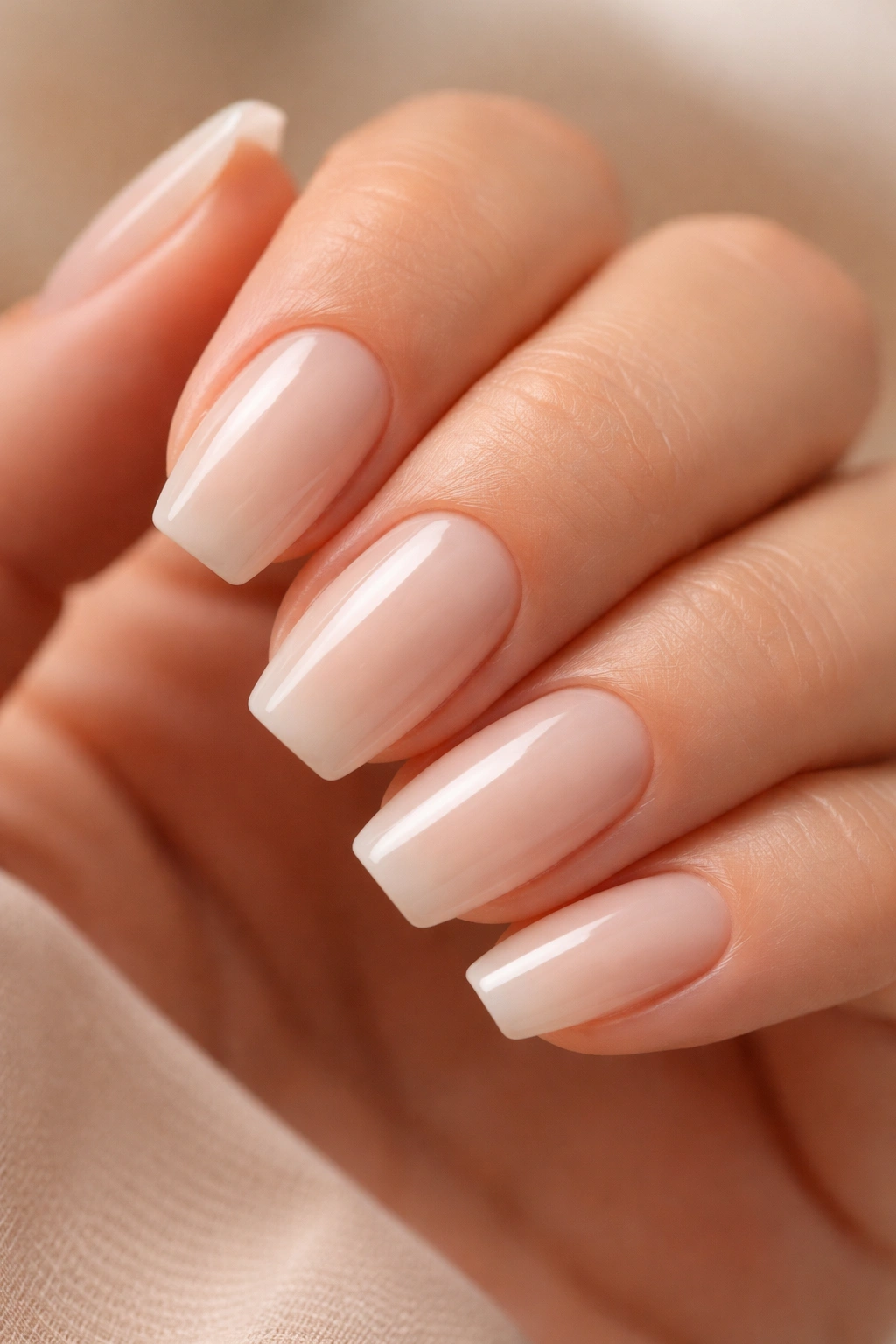
A milky nude is the easiest entry point if you want ballerina nails on short nails without feeling overdone. The shade blurs the line between your natural nail and the added structure, so the taper shows up first and the short length fades into the background. On hands that see a lot of daylight—office lighting, kitchen light, the car dashboard—it stays clean instead of loud.
Why it works on short nails
Short ballerina shapes need visual breathing room. A semi-sheer beige, rosy nude, or milk-tea tone gives that space back. You still see the architecture of the nail, especially the narrowing at the sides and the flat free edge, but the color does not chop the nail into sections.
This is also one of the most forgiving designs for regrowth. With a builder gel overlay under a milky nude, the grow-out line usually looks softer for 10 to 14 days than it does with opaque white or dark plum.
Quick details that make the look better
- Ask for a sheer-to-medium opacity finish, not full coverage.
- Keep the free edge short: about 2 to 3 millimeters past the fingertip.
- Use a high-gloss top coat if your nail beds are short; it helps the nail look smoother.
- Pick a nude that matches your undertone, not your foundation. Pink-beige, peach-beige, and taupe-beige all behave differently on the hand.
Tip: If your nails flare outward naturally, ask your nail tech to taper the sidewalls first and apply the nude after shaping, not before.
2. Micro French Tips on Short Ballerina Nails
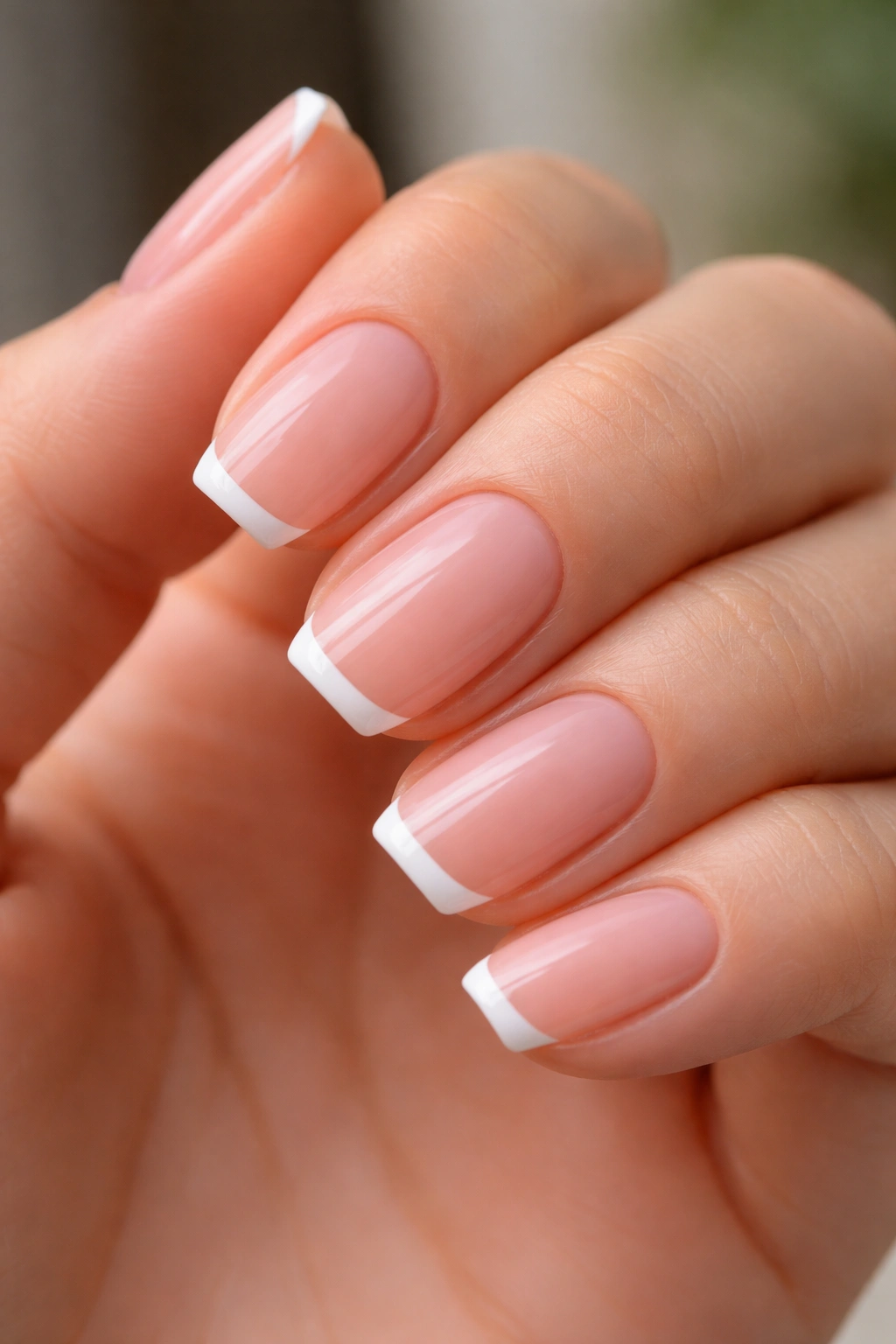
A thin French tip does more for short ballerina nails than a full-inch extension ever will.
That sounds dramatic, but I stand by it. On short lengths, a French manicure works because it maps the shape for the eye. A narrow white line—usually 1 millimeter, maybe 1.5 millimeters if your nail bed is longer—follows the flat edge and makes the taper look sharper. Thick French tips do the opposite. They crowd the nail, shorten it, and pull attention to the widest part of the free edge.
Short ballerina French tips also solve a common salon problem: clients who want a “clean” manicure but still want shape. A micro French gives you both. From across the room it looks polished and crisp. Up close, you can see the blunt edge and the slight inward taper that make the shape work.
Use a sheer pink, beige, or milky base. Chalk-white bases can look harsh on shorter nails, especially under bright indoor lighting. If your hands run dry or your cuticles fray, the softer base also keeps the whole set from looking severe.
I’d skip a deep smile line here. A straighter, shallow smile usually suits the ballerina outline better and keeps the tip from looking too rounded.
3. Baby Pink Jelly Ballerina Nails
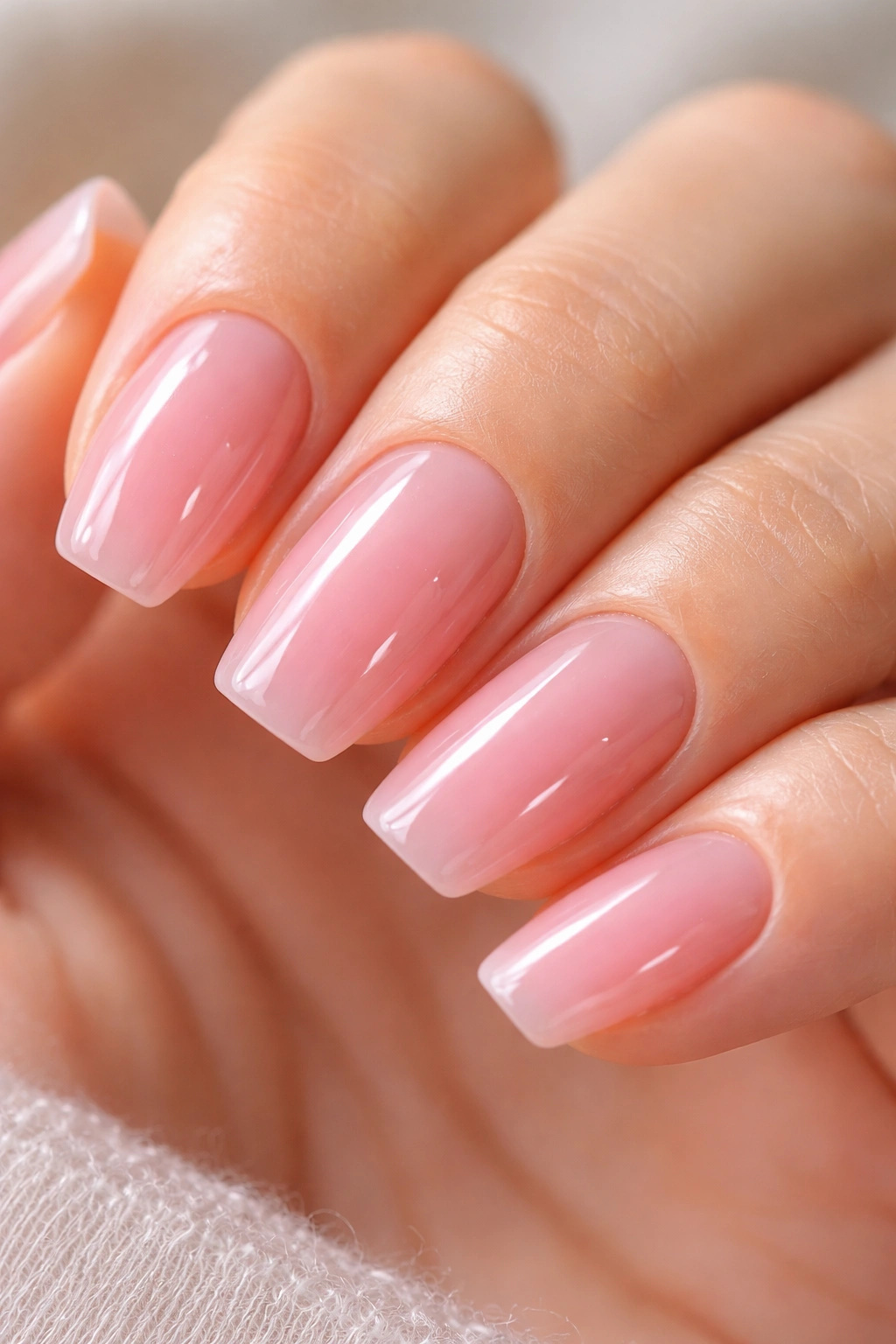
Why does a jelly finish work so well on a short ballerina shape? Because it gives the nail depth without adding visual weight.
Opaque pale pinks can turn gummy on short nails. They flatten out the shape, especially if the nail bed is broad. A jelly pink leaves a little translucency, so light passes through the color and the free edge still has some life to it. That tiny bit of transparency makes the nail feel lighter and longer.
There’s another reason I like this look: chips and tip wear are less obvious. With a hard, creamy pastel, the first sign of wear can show up fast at the edge. Jelly finishes age more gracefully, which matters if you’re squeezing extra days out of a manicure.
How to ask for it at the salon
Ask for two thin coats of translucent pink over a structured base, not three heavy coats of syrupy gel. The surface should look smooth and glassy, with the natural nail line softened but not erased. If the polish starts looking cloudy, the layers are too thick.
For extra shape, pair it with a slim cuticle crescent of shine from cuticle oil. It sounds small. On short nails, it makes a visible difference.
4. Matte Taupe Short Coffin Nails
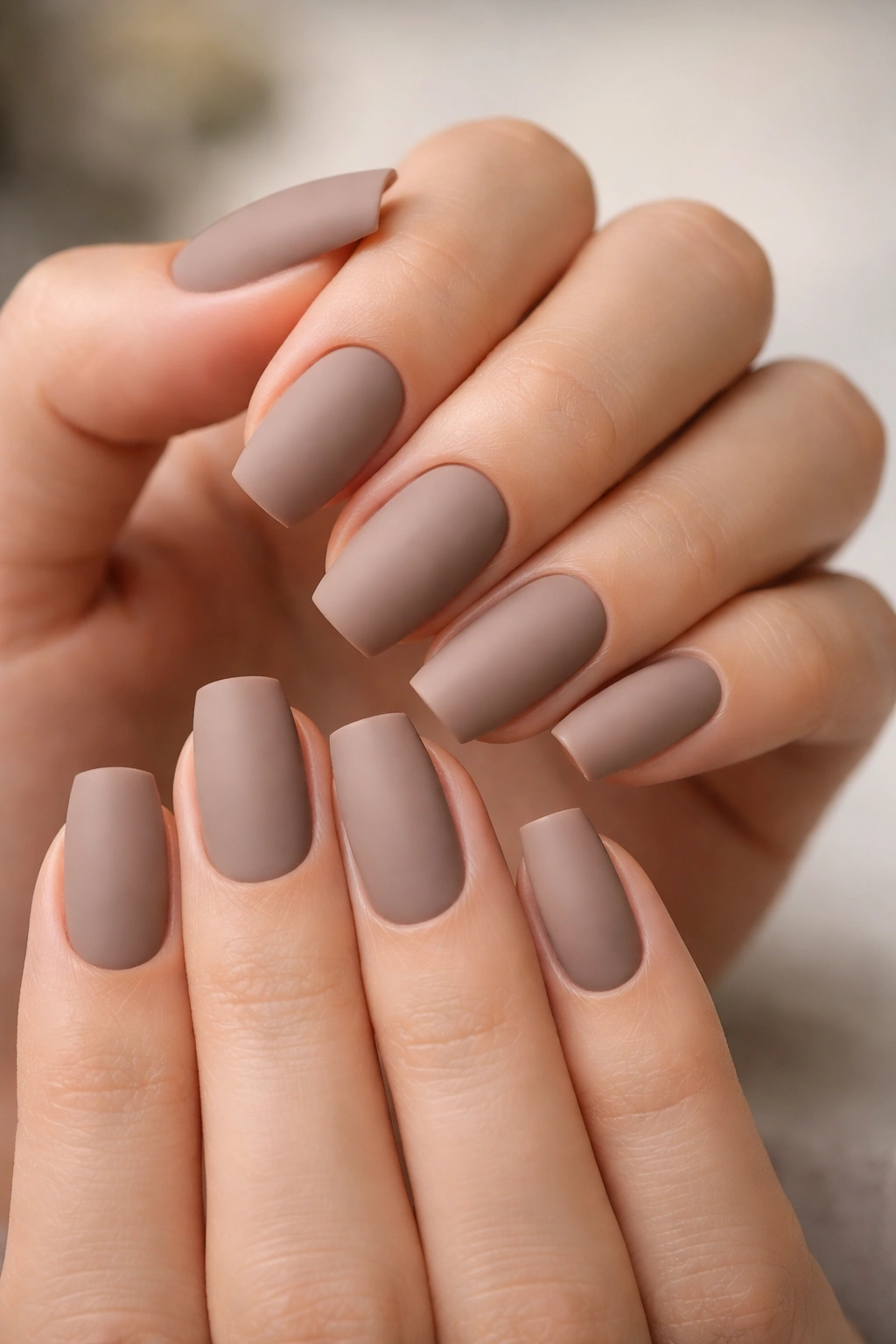
A friend of mine once described matte taupe nails as “the manicure version of good tailoring.” That’s about right. They do not shout for attention, but they make the shape look expensive.
Taupe works on short coffin and ballerina nails because it adds contrast without the starkness of black or white. You can see the side taper clearly, yet the color still feels soft enough for daily wear. Matte top coat changes the whole mood. It removes the wet reflection that can make short dark nails look wider, and it turns the manicure into something more architectural.
There is one condition: the shape has to be clean. Matte finishes show every wobble.
What makes this design successful
- Choose a neutral taupe with gray or beige undertones, not a muddy brown with too much yellow.
- Keep the corners slightly softened so the matte finish does not make the edges look brittle.
- Use a ridge-smoothing base or builder gel underneath; matte top coat highlights dents fast.
- Refresh with cuticle oil around the nail only, not over the matte surface, unless you want patches of shine.
Short matte taupe ballerina nails suit wider nail beds better than people expect. The color recedes a little, and the tapered shape still shows through. If you’ve been wearing beige for years and want something moodier without jumping to burgundy, this is a smart step.
5. Glossy Cherry Red with Narrow Sidewalls
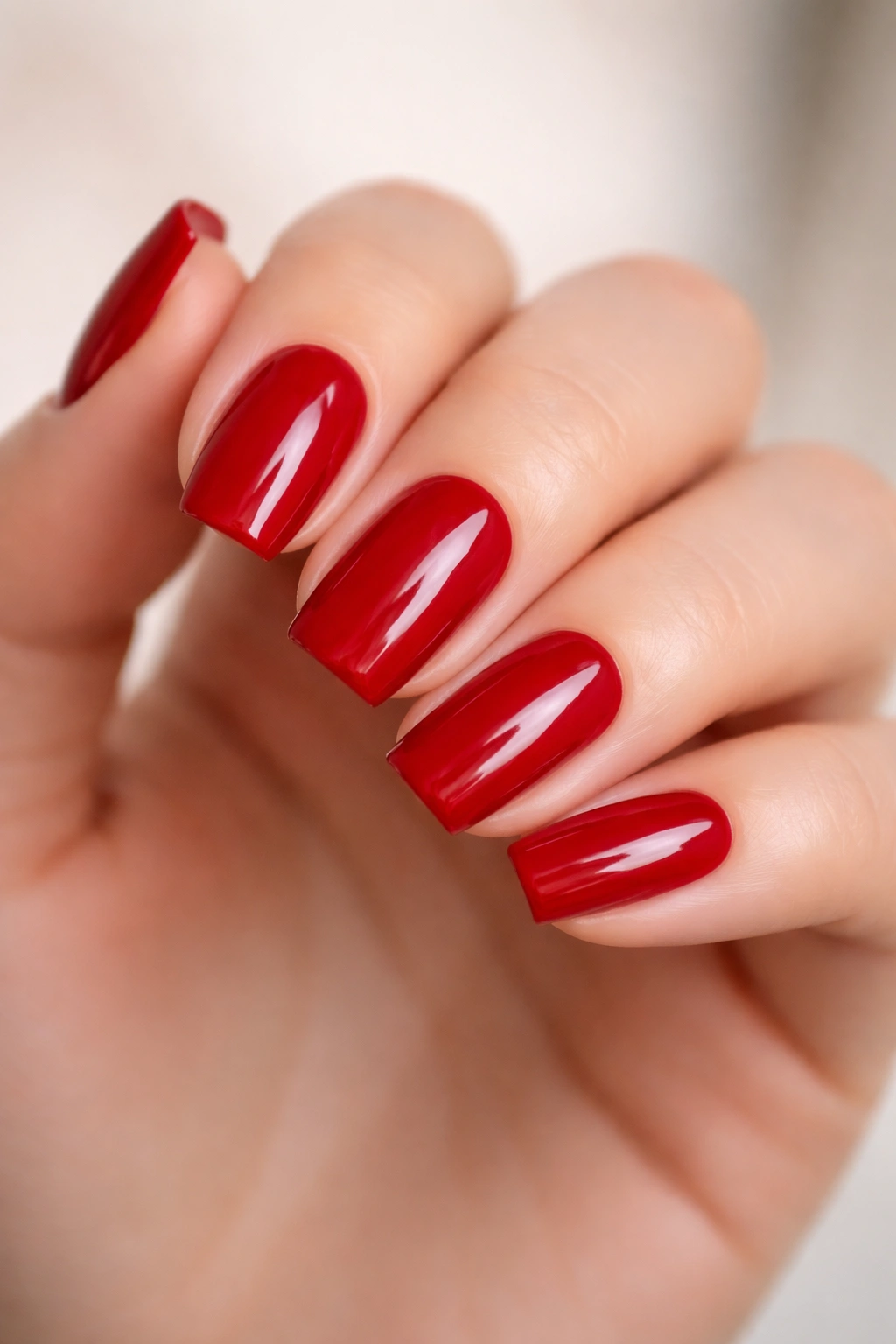
Red gets blamed for making short nails look shorter. The blame belongs to bad shaping, not the color.
A clear, blue-based cherry red on a short ballerina nail can look sharp as hell when the sidewalls are filed evenly and the tip stays flat. What makes it work is that the color is clean and continuous. No shimmer. No milky opacity. Just glossy red, neatly wrapped at the edge.
Short nails also give red a different energy. On long extensions, it can look dramatic in a vintage, high-glam way. On a shorter ballerina shape, it feels brisker—tidy, deliberate, a bit tougher. Good with denim. Good with a black coat. Good when you want color but not fuss.
I’d avoid orange-red if your nail beds are broad and the length is minimal. Blue-red or neutral-red usually slims the nail more. Tiny difference. You can still see it.
The application matters too. Ask your tech to float the polish close to the sidewalls without flooding them. Even a hairline gap makes the nail look narrower and cleaner. Too much product at the sides, and red starts to widen the whole silhouette.
One more thing: red looks best when the free edge is sealed. If the underside of the tip is ragged, bright polish will show it.
6. Soft Ombré Baby Boomer Ballerina Shape
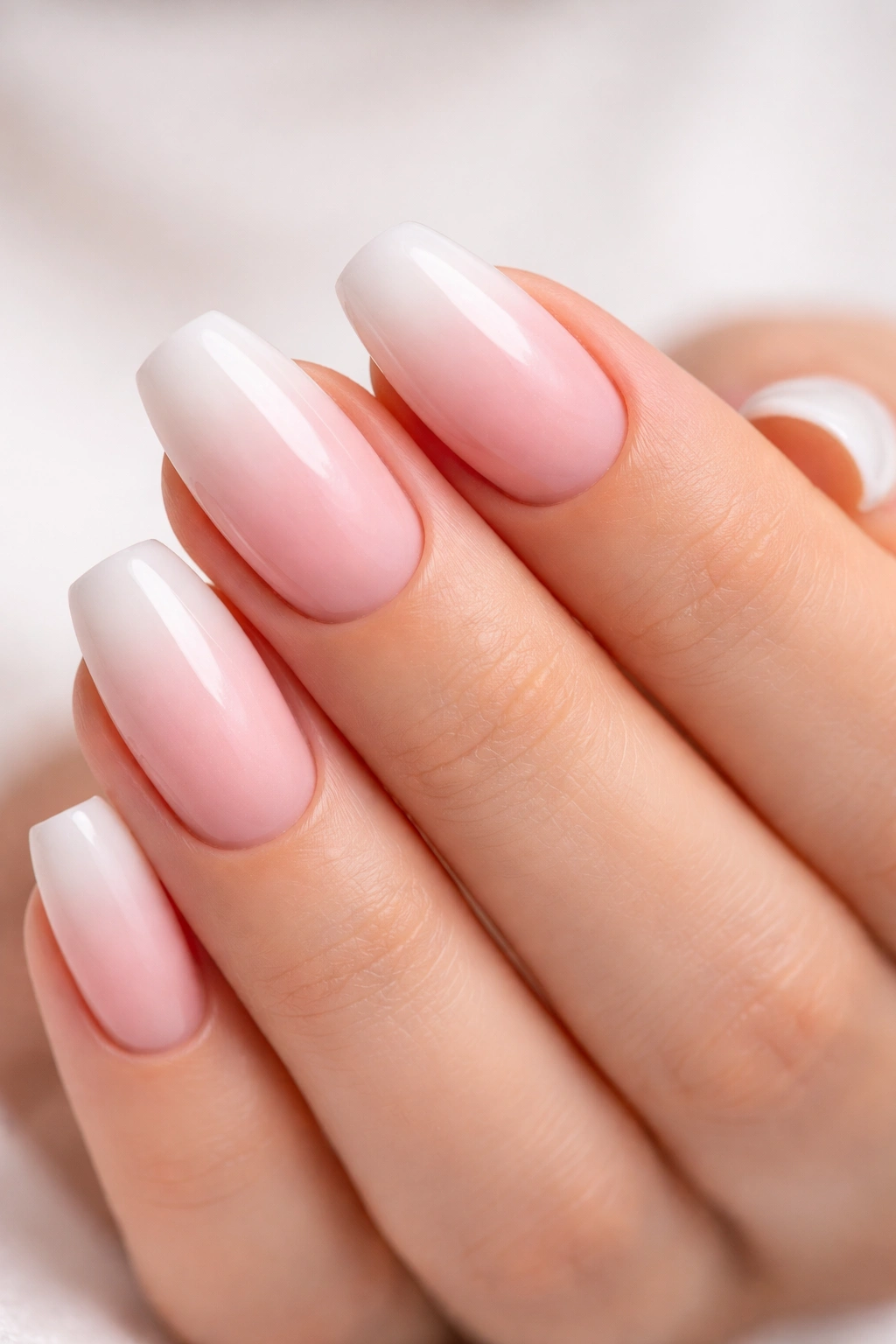
Unlike a hard white French, a baby boomer fade does not draw a hard stop across the nail. That’s why it suits short ballerina nails so well.
The gradient—usually pink or nude at the cuticle melting into soft white at the tip—stretches the eye forward. You still get that fresh, clean manicure effect people want from French nails, but the fade makes the short length look less abrupt. On a nail with only 2 millimeters of free edge, that matters.
This design also hides small imperfections. If one nail is a fraction shorter than the others, the ombré disguises it better than a crisp line would. Same goes for nails with slight asymmetry at the sidewalls. The fade smooths the visual transition.
Who should pick this one? Anyone who likes bridal-style softness but does not want a long set, and anyone trying to make short natural nails look more polished between fills.
Ask for the white to start no lower than the upper third of the nail. If the fade begins too early, the manicure can look chalky. A peachy or rosy base usually flatters the hand more than a pale baby pink, which can go cold under some lighting.
I’m picky about top coat here. Go glossy. Matte kills the airy effect.
7. Espresso Brown Short Ballerina Nails
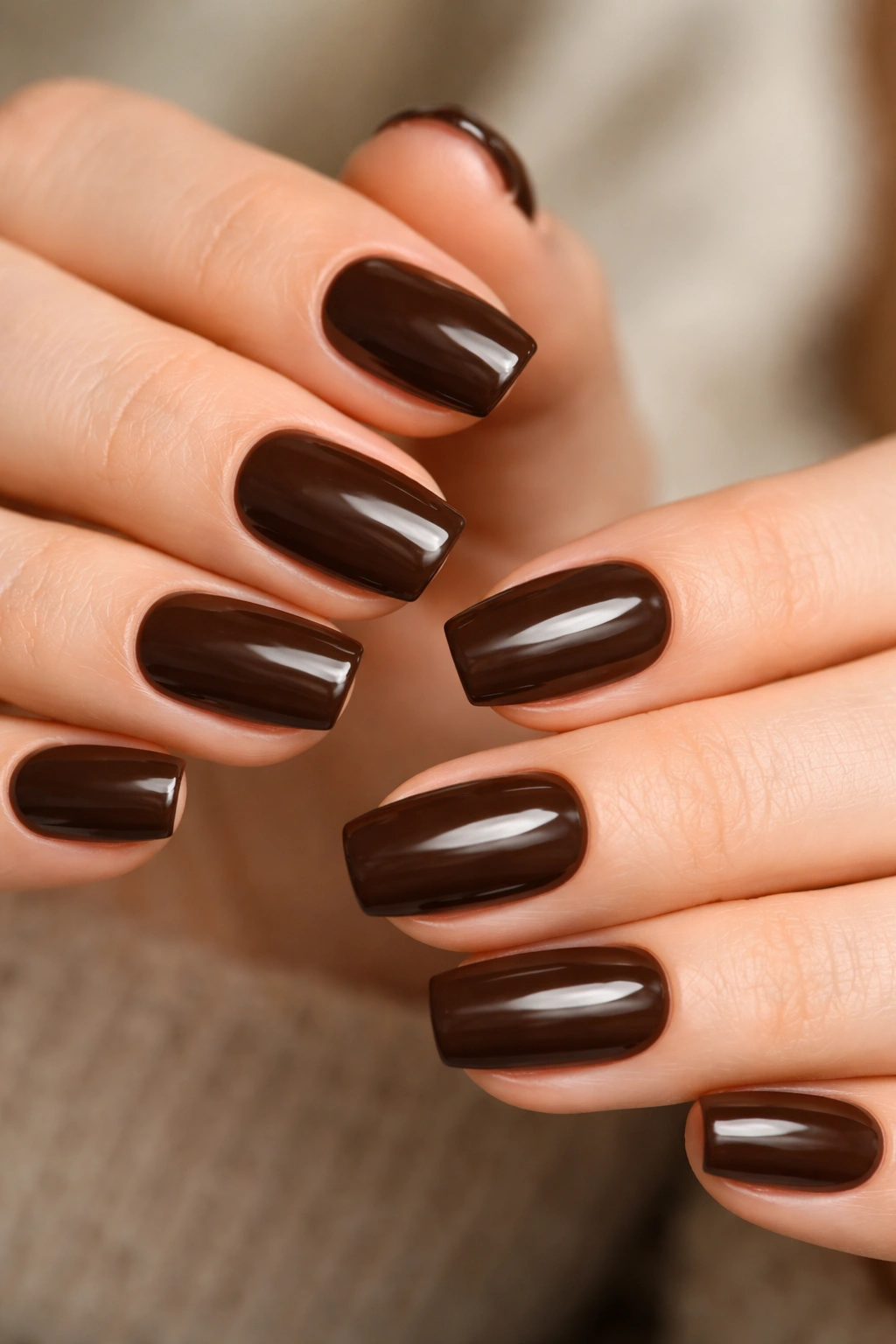
Espresso is one of the few dark shades that can make short ballerina nails look rich without feeling harsh. Black can be chic, sure, but brown has more warmth and more forgiveness around the edges. It softens tiny shape flaws that black would announce to the room.
What makes brown work here
A deep coffee shade creates definition along the flat tip and side taper, yet it doesn’t harden the whole hand the way jet black sometimes can. On shorter nails, that warmth matters. The manicure still looks strong, but it keeps a little softness around the cuticle line and fingertip.
Brown also pairs well with gold jewelry, tan skin, olive skin, cool skin, dry winter hands, moisturized summer hands—yes, I know that sounds like a lot, but it’s one of those shades that keeps finding ways to behave.
Best ways to wear it
- Pick a cream finish, not a heavy glitter or metallic.
- Keep the length short and consistent across all ten nails.
- Ask for slightly slimmer sidewalls than you’d use with a pale nude.
- Seal the free edge and underside so the dark color looks crisp from every angle.
Tip: If you want depth without going fully dark, try an espresso jelly instead of opaque cream. It gives the color a little more light.
8. Glazed Pearl Chrome Over Sheer Beige
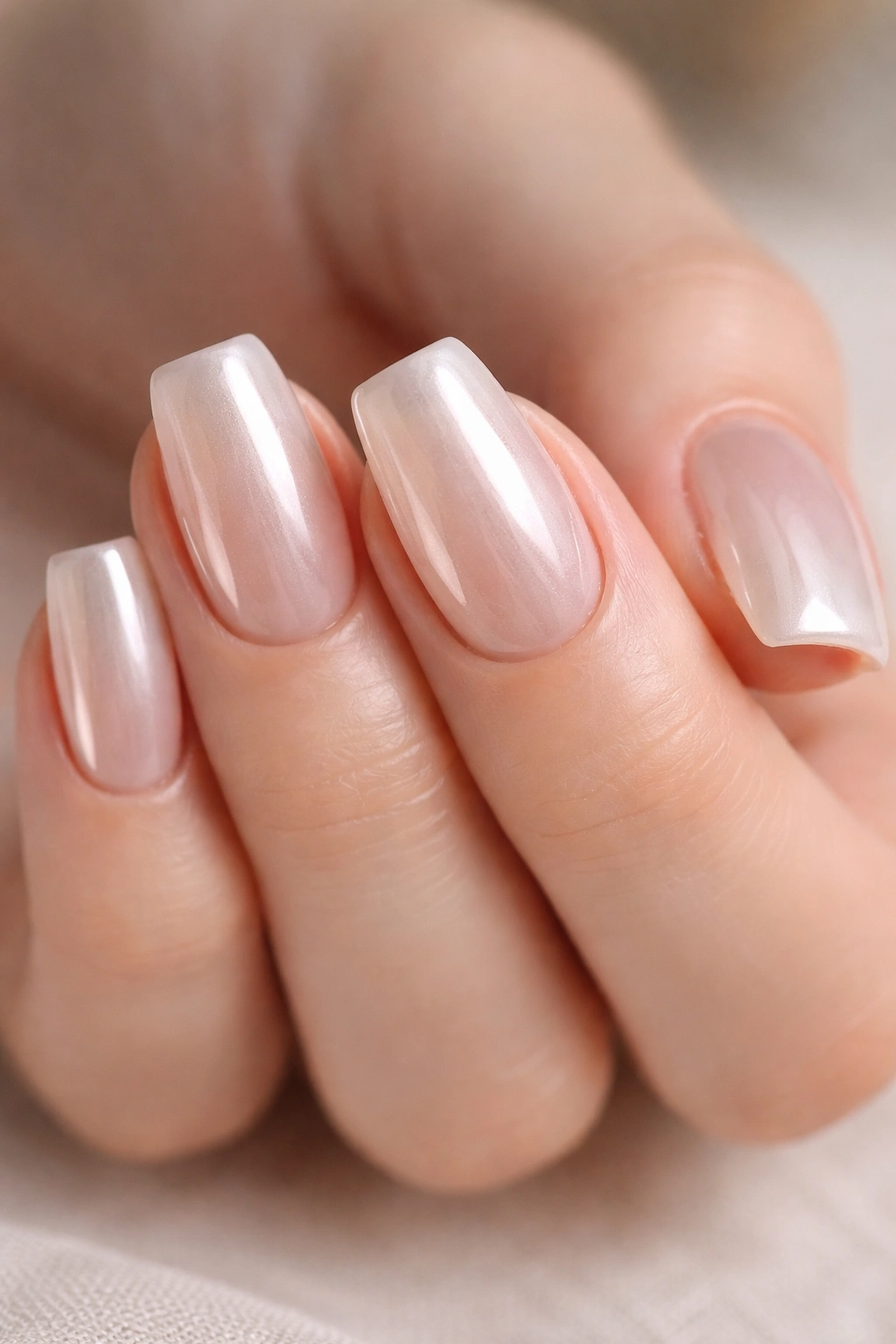
Chrome can go wrong fast on short nails. Too icy, too thick, too silver, and the whole manicure starts looking bulky.
A pearl glaze over a sheer beige base is the version that behaves. The beige keeps the chrome grounded, while the pearl finish throws a soft reflective sheen across the nail without turning it into a mirror. On a short ballerina shape, that means you get movement and shine while the taper still stays readable.
The secret is restraint. One thin layer of chrome powder over a no-wipe top coat is usually enough. Pack on more, and the nail loses definition. You want a candlelit sheen, not a sheet-metal effect. If your nail tech uses a base that is too pink or too white, chrome can exaggerate the width of the nail plate. Beige, taupe-nude, or a translucent almond tone works better.
This design also plays nicely with builder gel overlays because the reflective finish smooths the surface and makes the apex look more even. Short nails benefit from that polish trick.
I like this look most on hands that wear simple jewelry and clean tailoring. Not because the manicure is quiet—it isn’t—but because the shape stays the star.
9. Diagonal French on a Short Ballerina Tip
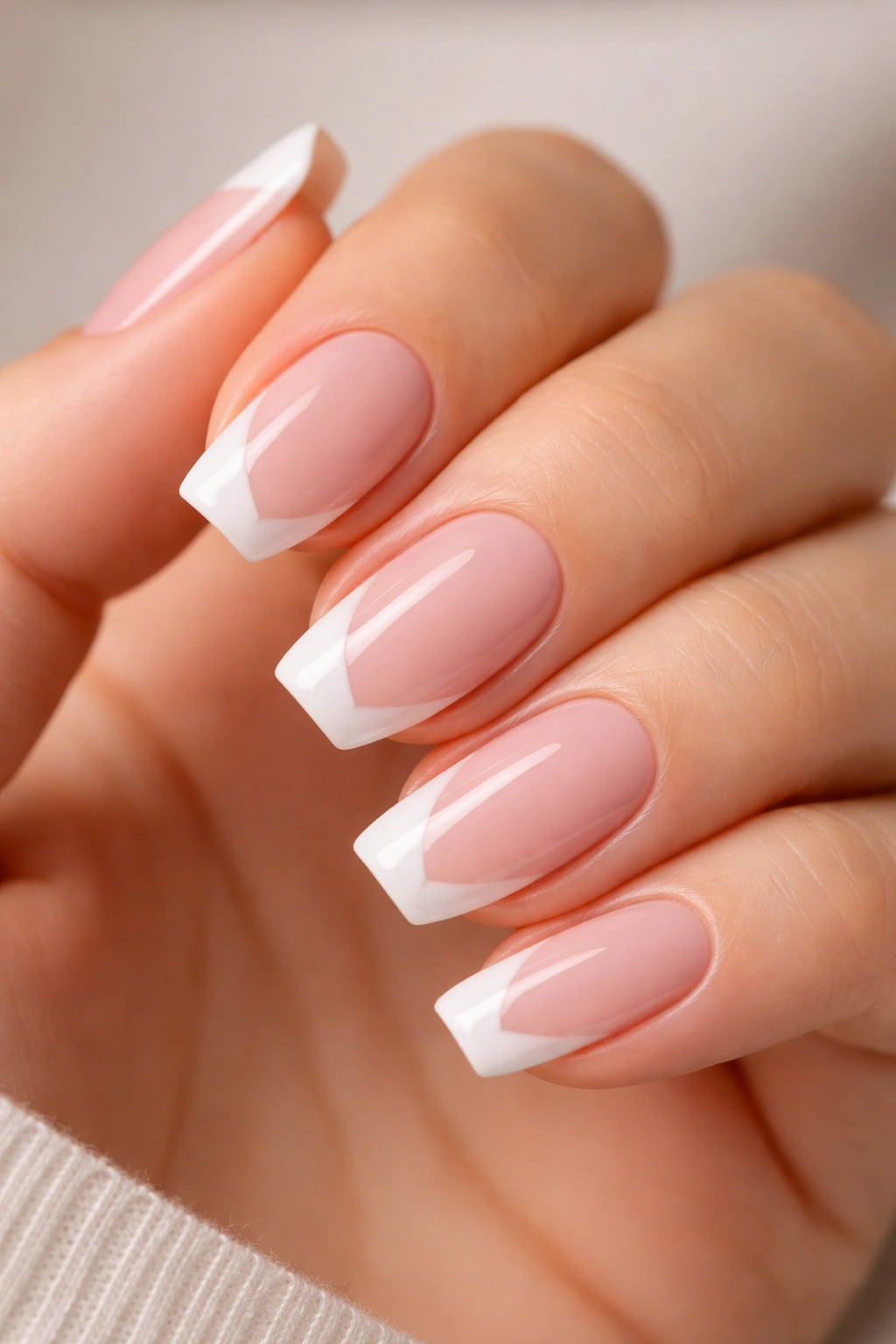
Why do diagonal tips slim a short nail so well? Because the eye follows the angle instead of reading the width straight across.
A diagonal French swaps the standard horizontal line for a slanted tip that starts a little lower on one side and rises toward the opposite corner. On short ballerina nails, that creates motion. The nail looks longer, the taper looks sharper, and the flat tip still shows up underneath the design.
This is one of my favorite fixes for short, wide nail beds. A regular French can sometimes sit too bluntly across the top. A diagonal line breaks that up. It shifts the visual center of the nail and makes everything look a touch leaner.
How to use the design without overcomplicating it
Keep the line thin and the contrast clear. White over sheer pink works. So does espresso over nude, navy over beige, or black over milky peach. I’d skip glitter here. The beauty of a diagonal French is the clean geometry, and chunky sparkle muddies it.
Ask your tech to mirror the same direction on all nails rather than alternating randomly. Consistency makes the set look deliberate and cleaner in photos—and, more important, in motion when your hands are actually doing things.
10. Black Ballerina Nails with a Fine Side Outline
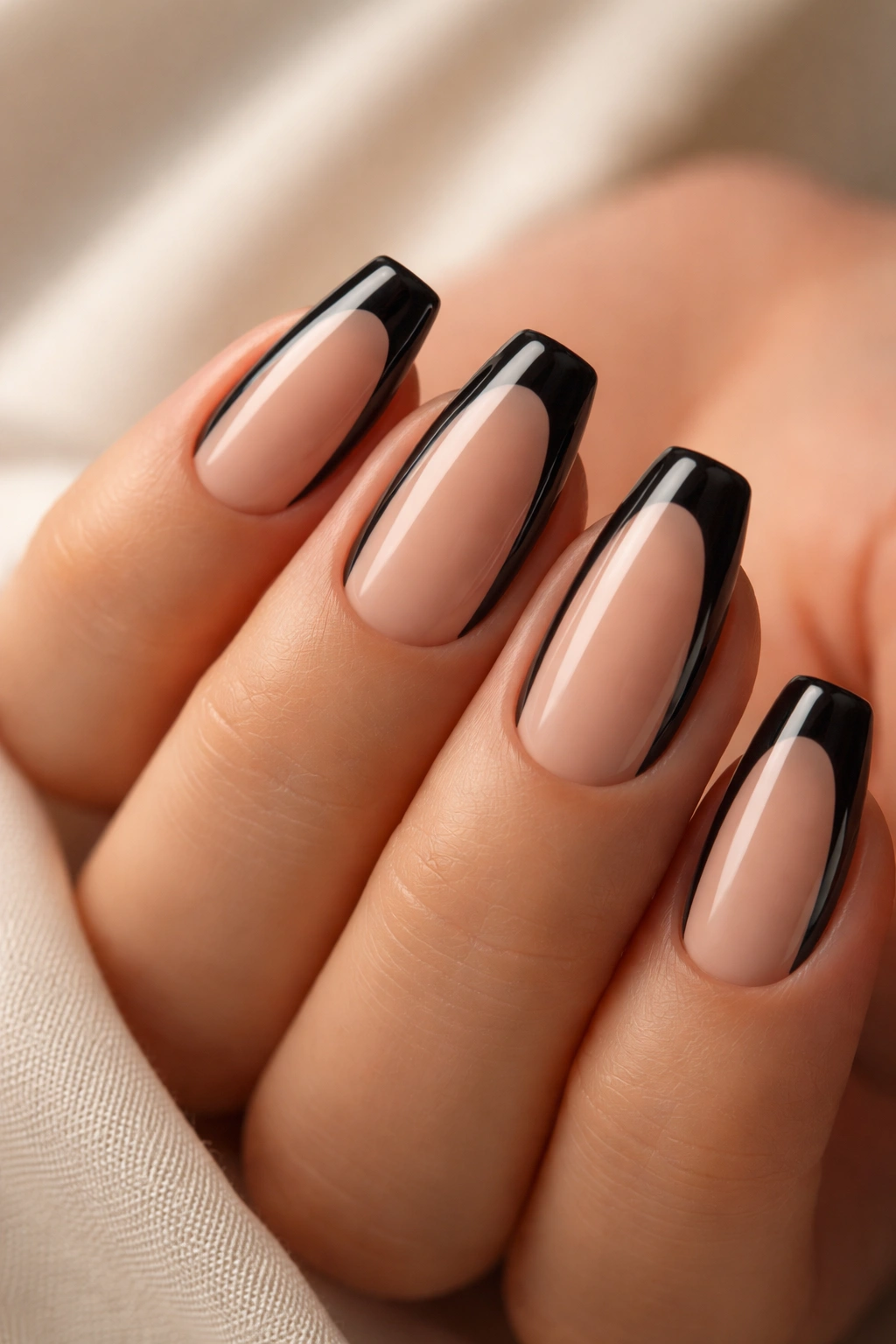
I’ve seen full black short nails look tough and sleek, and I’ve seen them look like little squares of electrical tape. The difference is design placement.
A fine side outline uses black along one or both side edges of the nail, sometimes joining a slim tip, while the center stays sheer or nude. That side framing makes the nail look narrower. It also exaggerates the ballerina taper in a way solid black sometimes cannot on shorter lengths.
Why the outline changes everything
- It creates a vertical slimming effect without needing extra length.
- The nude center keeps the manicure from feeling heavy.
- Any slight width in the natural nail bed becomes less obvious.
- You still get the drama of black, only with cleaner architecture.
This style works best when the lines stay hair-thin to 1 millimeter. Chunky outlines defeat the purpose. So do shaky brush lines, which is why gel paint usually beats regular polish for this one.
There’s a small downside. Growth near the cuticle can show up earlier because the framing draws the eye to the shape. If you hate seeing regrowth, ask for the outline to begin a fraction below the cuticle instead of touching it.
Short black ballerina nails can be chic. Framed black ballerina nails look smarter.
11. Sage Green Cream Finish
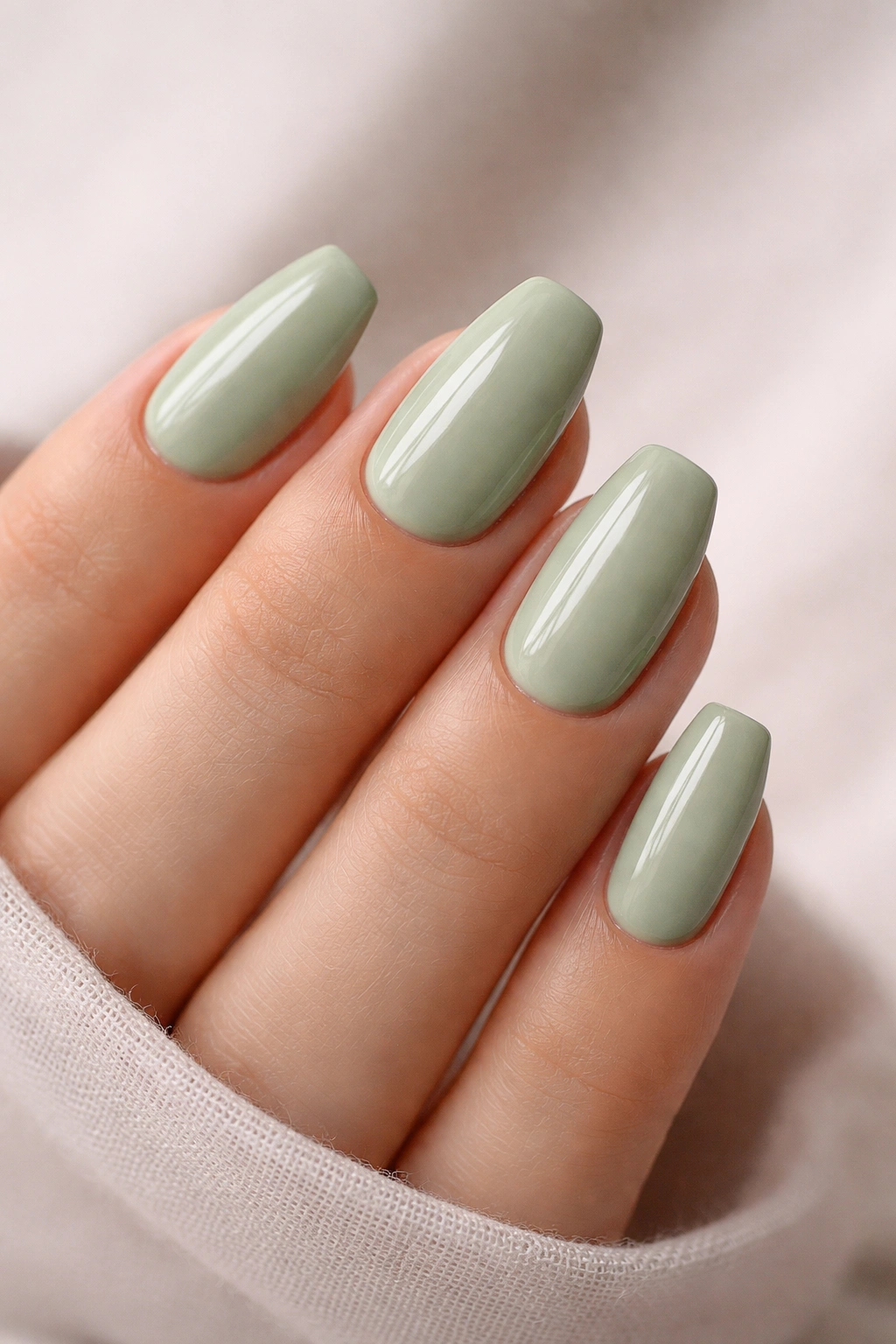
Green scares people who live in beige, but sage is the bridge color that gets them across.
On short ballerina nails, sage cream gives enough color to feel distinct while staying soft enough not to overpower the length. It has the dusty, muted quality that flatters the hand instead of sitting on top of it like a sticker. That matters on a shape this short, where every color choice either supports the silhouette or fights it.
Sage also has a nice effect on skin tone. It can make redness in the hands less obvious, especially compared with some pale pinks that pull more flush into the skin. I would not call it neutral, though. It still has personality. That is part of its charm.
The finish should stay creamy and smooth. Pearl sage can turn dated fast, and chunky shimmer interrupts the clean lines of the shape. If you want a little extra, add one glossy accent nail or a tiny gold detail near the cuticle rather than sparkle all over.
This is a good pick when you want something fresh but still wearable with everyday clothes. Also, sage on a short ballerina tip looks better with a tidy cuticle than a dry one. Grab the oil pen.
12. Tortoiseshell Accent Ballerina Set
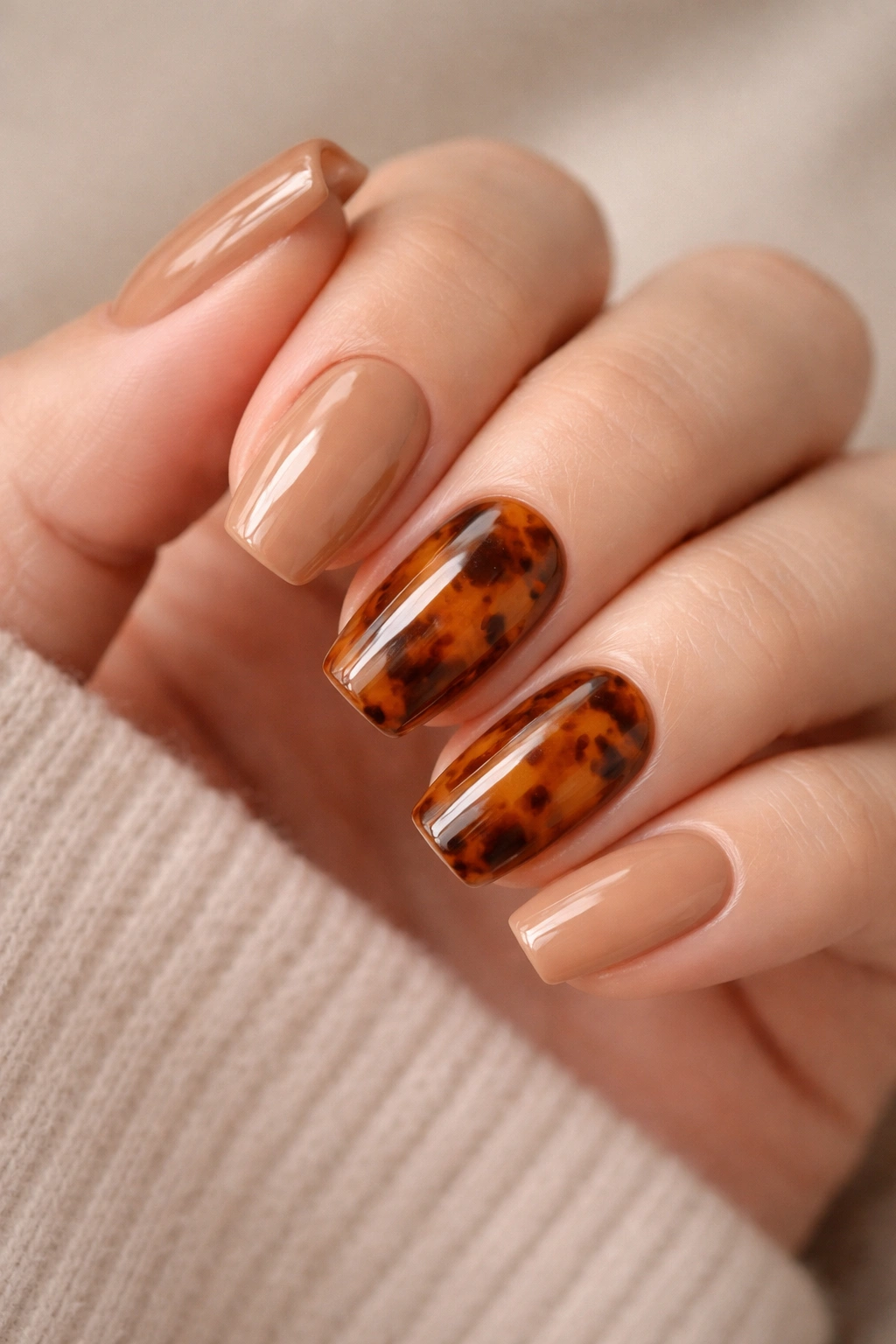
Compared with a full tortoiseshell manicure, an accent version makes much more sense on short ballerina nails. The pattern has depth—amber, caramel, espresso, translucent brown—but it also carries visual noise. Spread that over all ten short nails and the shape can disappear under the print.
One or two accent nails solve the problem. Use tortoiseshell on the ring finger and maybe the thumb, then keep the rest in a matching caramel nude, sheer brown, or warm beige. That way you still get the richness of the pattern, while the clean nails around it preserve the tapered outline.
Tortoiseshell also benefits from a slightly thicker gel application because the layered spots need some depth. On short nails, too much bulk can ruin the profile. That’s why accent placement matters. You can afford a bit more visual density on one nail. Ten is another story.
Ask for translucent patches rather than flat painted dots. Good tortoiseshell should have a little glow in it, almost like light coming through amber. If it looks muddy, the layers were packed too closely.
I love this design in autumn, yes—but it also works any time you want warmth and texture without glitter.
13. Tiny Crystal Cuticle Accents on a Nude Base
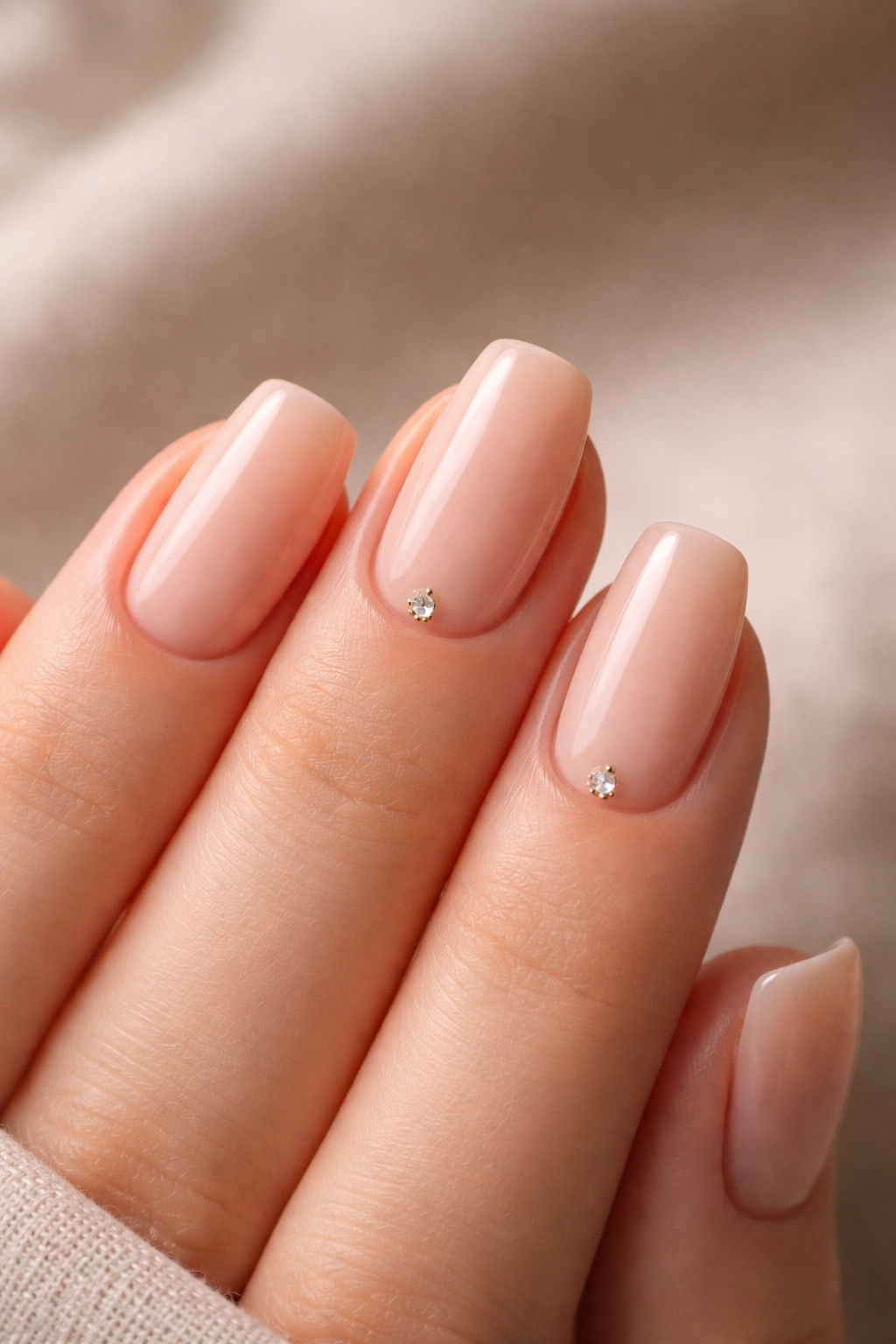
A single crystal is enough.
Short ballerina nails do not need a scatter of rhinestones, and honestly, they do not benefit from one. Tiny crystals placed near the cuticle—one on each nail, or only on two accent nails—add light while leaving the shape visible. The eye still reads the taper and flat tip first.
Where the crystal should sit
Placement matters more than stone size. A 1.5 to 2 millimeter crystal placed slightly off-center or right at the base of the nail looks refined. A larger gem in the middle of a short nail can swallow the whole design. I’d also avoid stacking multiple sizes unless you have more length than most short ballerina sets allow.
Pairing details that help
- Use a sheer nude, ballet pink, or milky beige underneath.
- Keep stones to one or two nails per hand if you want the look to stay clean.
- Ask for the crystal to be sealed properly so hair does not catch around the edges.
- Skip oversized charms; they add height and snag fast on short lengths.
Tip: If you wash your hands constantly or wear gloves for work, crystals on the ring finger often last better than crystals on the index finger.
14. Deep Navy with a Slim Half-Moon
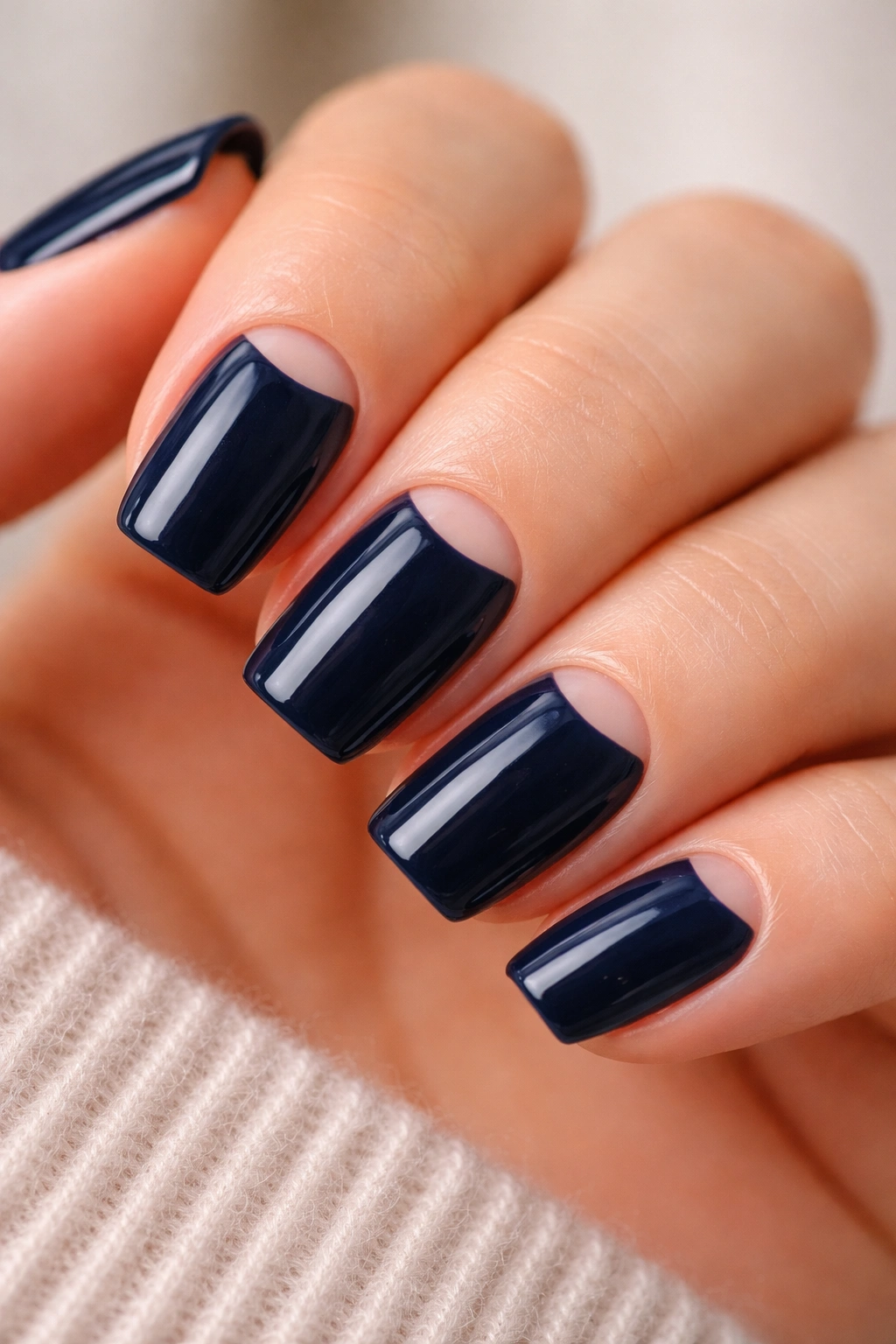
Navy does something black cannot. It keeps the manicure dark and dramatic while still reflecting a little color at the edges.
A short ballerina nail painted deep navy looks polished on its own, but adding a slim half-moon near the cuticle makes it smarter. That small crescent of negative space breaks up the dark block of color and gives the eye a second line to follow. The result is a shorter nail that feels longer and cleaner.
I like the half-moon kept narrow—about 1 to 2 millimeters—and shaped to echo the cuticle line. Too large, and the design starts to dominate the nail. Too tiny, and it disappears. The rest of the nail should stay glossy and opaque. Navy jelly can work, though cream or glassy navy usually delivers a sharper finish.
This manicure also ages well between appointments because the cuticle gap feels built into the design. You still see regrowth, sure, but it doesn’t look abrupt. For anyone who stretches appointments to the edge of good judgment, that’s useful.
Pair navy with silver jewelry if you want it colder, gold if you want it richer. Both work.
15. Lilac Cream with Short Flat Tips
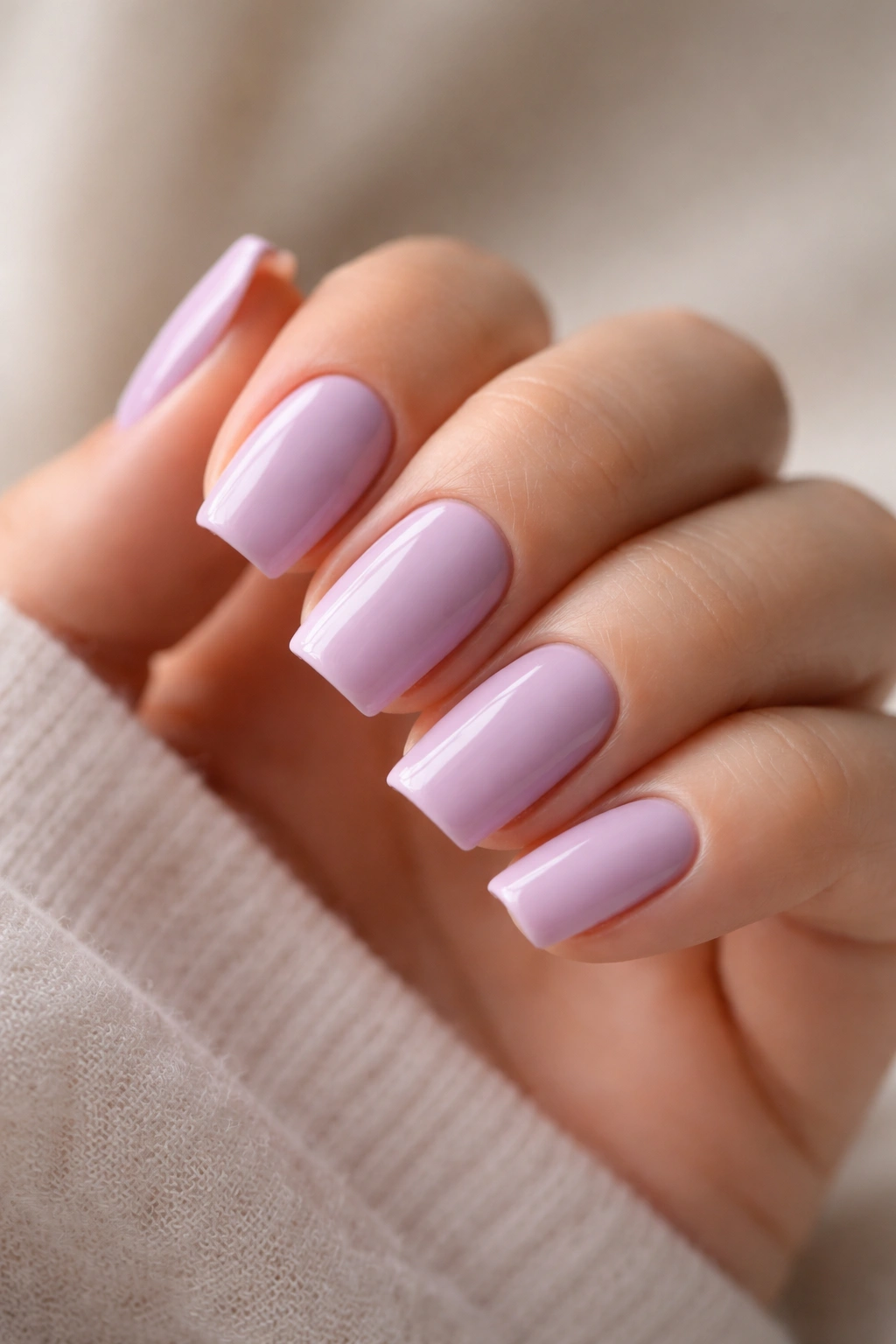
Lilac on a short flat tip has a clean, cool charm that surprised me the first time I saw it done well. I expected it to read sweet. Instead, on a properly filed ballerina shape, it looked crisp and almost modernist.
The reason is contrast. Lilac is soft, but the shape is structured. That tension helps the manicure. On almond nails, lilac can drift into something softer and more romantic. On short ballerina nails, it feels sharper because the blunt tip keeps the color disciplined.
Choose a lilac with a muted gray or blue cast rather than a sugary candy purple. Short nails benefit from shades that have a little dustiness to them. Neon lilac can work, though it needs more confidence and cleaner skin around the nail to pull it off.
I’d keep the finish glossy. Matte lilac on a short, wide nail can look chalky. Gloss gives the color a little lift and helps the shape look smoother.
This design suits spring wardrobes, yes, but I would wear it any time I wanted a color that felt fresh without reaching for pink again. And after the tenth neutral manicure in a row, that can feel like a relief.
Final Thoughts
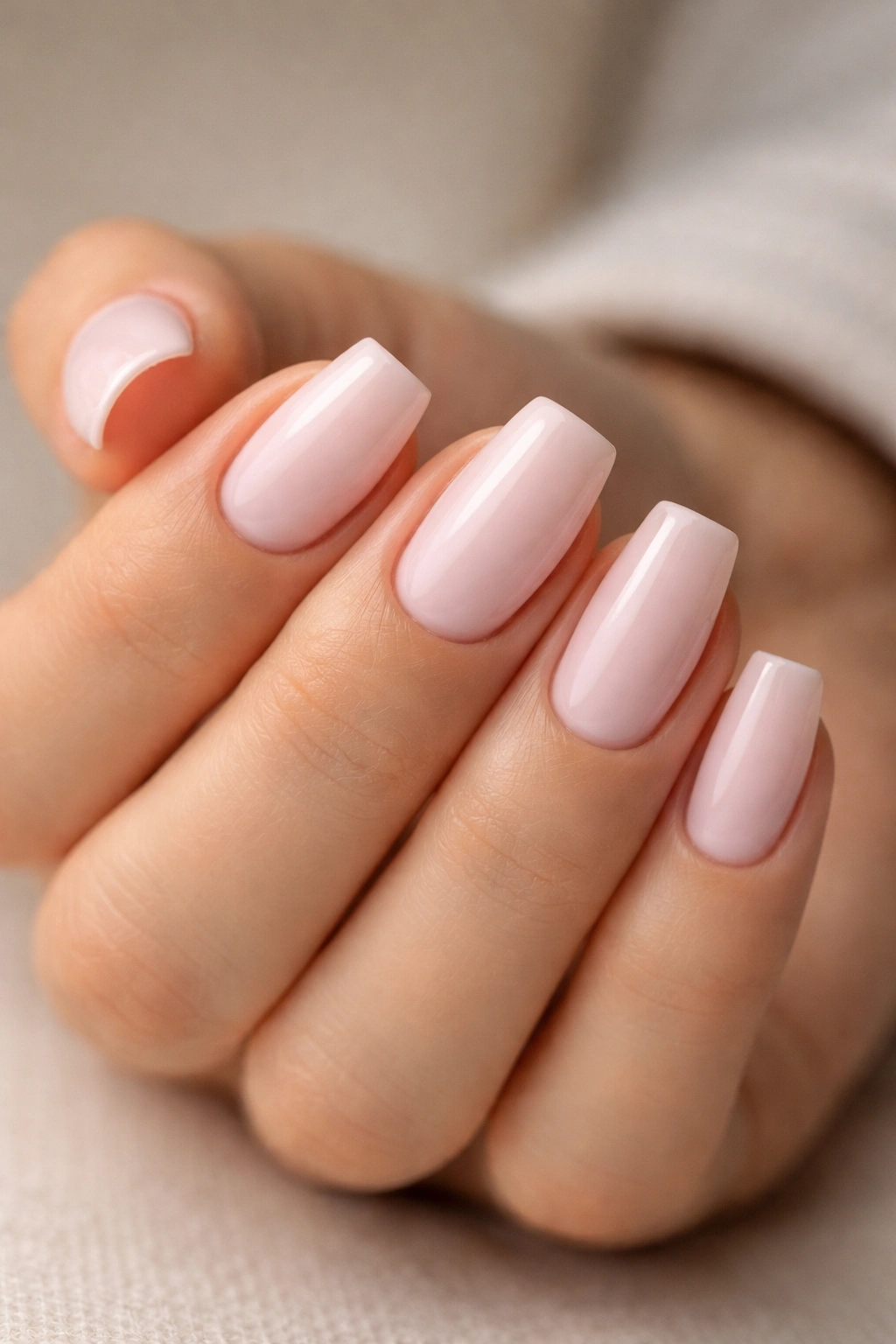
Short ballerina nails work when the proportions do. That is the whole game. Get the taper right, keep the tip flat, and choose colors or art that stretch the eye instead of cutting the nail in half.
If you only change one thing at your next appointment, change the shape conversation. Tell your nail tech you want short ballerina or short coffin nails with a gentle taper, a crisp flat tip, and enough corner strength to avoid chips. Those words matter more than bringing in a photo of extra-long extensions and hoping the salon somehow shrinks the idea for you.
And if your nails are naturally bendy, do not be stubborn about structure. A thin builder gel overlay can make short ballerina nails look cleaner, last longer, and chip less at the corners. That small upgrade is often what turns a nice idea into a manicure you actually enjoy wearing.