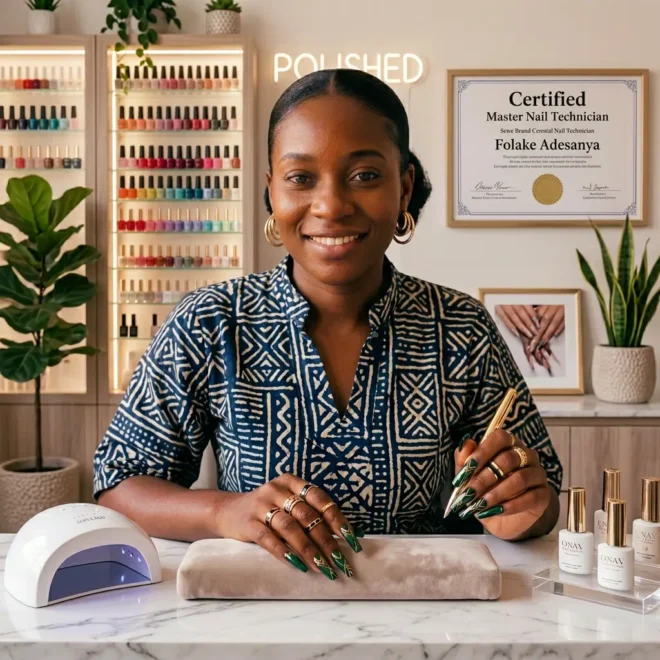


The appeal of short squoval nails lies in their understated elegance. Unlike sharper acrylics or heavily decorated nail art, short squovals strike a balance between practicality and polish—rounded at the tips with slightly squared edges that give definition without the aggression of a true square nail. A bare look amplifies this minimalist charm, letting the natural nail color and shape do all the talking. If you’ve been drawn to that quiet-luxury aesthetic that actually functions in real life, short squovals are where it happens.
The beauty of this nail shape is how forgiving it feels. Short length means less breakage, easier maintenance, and a look that transitions seamlessly from your morning coffee to a professional meeting. Squoval geometry flatters most finger shapes, and when you skip the gel polish, the acrylics, and the elaborate designs, you’re left with something genuinely timeless. These nails are about refinement through restraint—a aesthetic that never dates because it’s based on structure and proportion, not trends.
What makes a “bare look” work on short squovals is understanding the subtle variables that create visual interest without decoration. It’s about nail health, intentional shape, the play of light on the nail surface, and choosing finishes that enhance rather than dominate. The right neutral tone can look modern or classic depending on the undertones you choose. Some people prefer the understated glow of a natural nail with a clear top coat. Others lean into soft nudes, barely-there pinks, or warm creams that suggest depth without screaming for attention.
This guide walks through twelve concrete approaches to achieving a naturally elegant short squoval nail—each one distinct enough that you can find the specific direction that matches your personal style and the way you actually live.
1. Classic Clear Coat on Healthy Natural Nails
The foundation of a true bare look is letting your actual nail show through. This approach skips color entirely and relies on the clarity and shine of a quality top coat to catch light and draw subtle definition to the nail bed. The squoval shape gets reinforced by the clean edges—no color to distract from the geometry, just pure nail structure.
For this to work visually, nail health matters. Your nails need to be free of deep ridging, discoloration, or visible imperfections that would look stark under magnification. If your natural nail has a slightly peachy or rosy undertone underneath the clear coat, that warmth reads as sophisticated and clean. The light reflection from the glossy finish creates enough visual interest that the nails don’t feel flat or boring.
How to Execute This Look
The process starts with proper nail preparation. File your nails into a gentle squoval shape, taking your time to get the curve at the tip smooth and the side edges squared off—not sharp, but defined. Push back your cuticles gently and buff the nail surface lightly to remove any dull spots. A nail file with a fine grit works better than a coarse one, which can create micro-tears that show up under gloss.
Apply a nourishing base coat (choose one formulated to prevent yellowing), then two coats of a clear top coat with a high-shine formula. The glossy finish is what gives this look its polish. A matte or satin top coat on a clear nail reads as unfinished rather than intentional.
Pro Maintenance Tip
Reapply just the top coat every 5-7 days. You don’t need to remove and redo the base—just add a fresh shine coat. This keeps the nail looking wet and reflective without the time investment of a full manicure.
2. Milky Nude With Subtle Shimmer
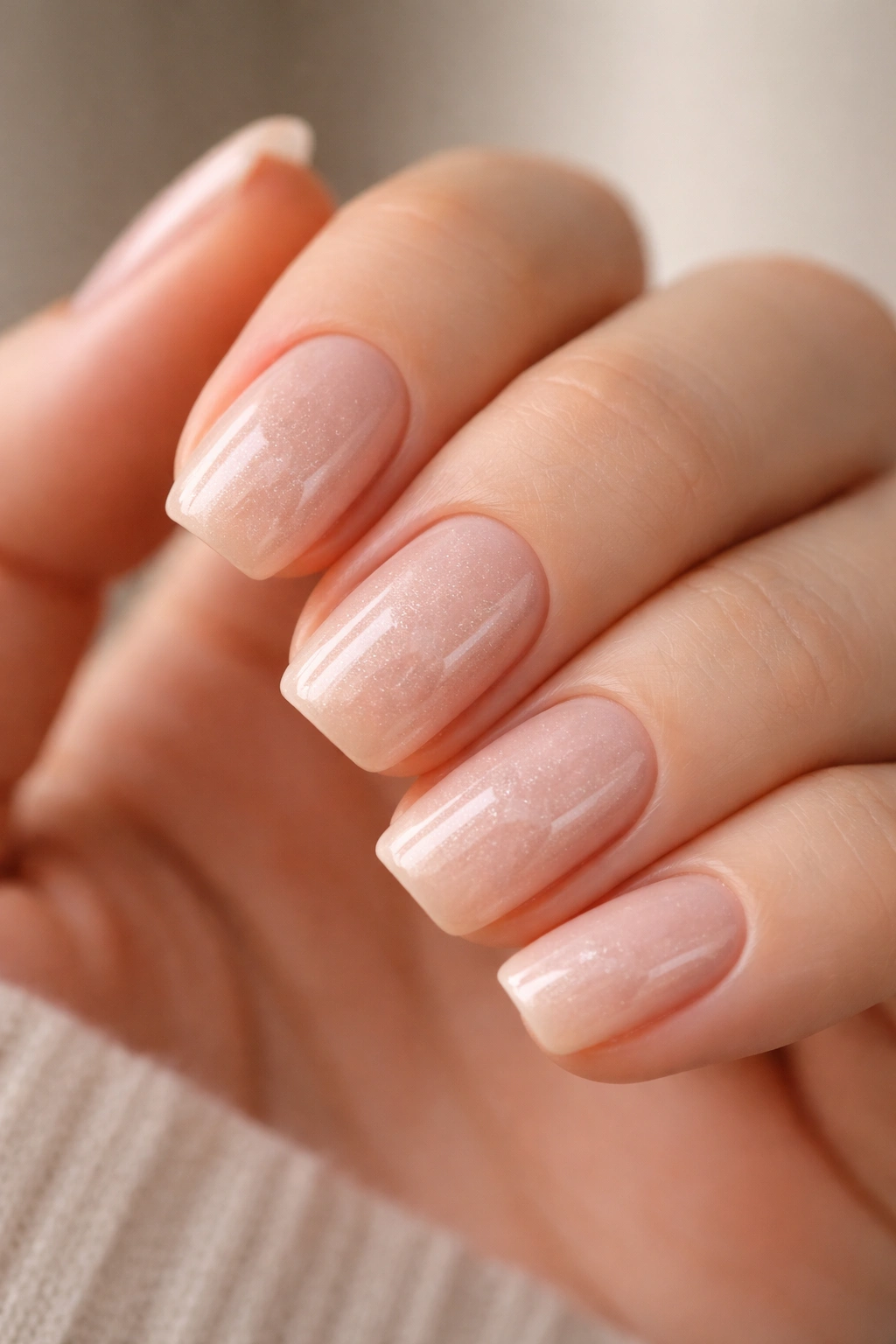
A milky nude base coat creates warmth and depth while still reading as natural and bare. The color sits so close to your actual skin tone that it doesn’t feel like you’re wearing polish, yet it adds a soft luminosity that makes the nails appear healthy and well-cared-for. A trace of shimmer—not glitter, but fine pearl or iridescent particles—catches light without being obvious.
This finish works especially well on shorter nails because the nude tone extends the visual length of your finger, while the subtle shimmer prevents the nails from looking flat or washed out. The squoval shape becomes more prominent when framed by this soft, warm color because the edges have something to contrast against.
Building the Shade
If you’re using regular polish, two coats of a good-quality milky nude should give you opacity without looking thick or clownish. The shimmer should be so fine that it reads more as a glow than as visible sparkle. When you move your hands in different lighting, you should see a soft catch of light—nothing dramatic.
For longer wear and a more professional finish, many people prefer this shade in a builder gel formula. A builder gel allows you to create slightly thicker nails that feel stronger without the brittleness of natural nails buffed thin. Apply one coat, cure, apply a second, cure, then finish with a glossy top coat. The result lasts two to three weeks without chipping.
Who This Suits Best
Milky nude with shimmer is the sweet spot for people with warm or golden undertones in their skin. It’s equally flattering on deeper skin tones as on fair skin because the warmth in the polish complements the warmth in your complexion. If you have cool or pink undertones, a cooler version of nude (closer to pale pink) works better.
3. Soft Blush Pink for Warmth and Femininity
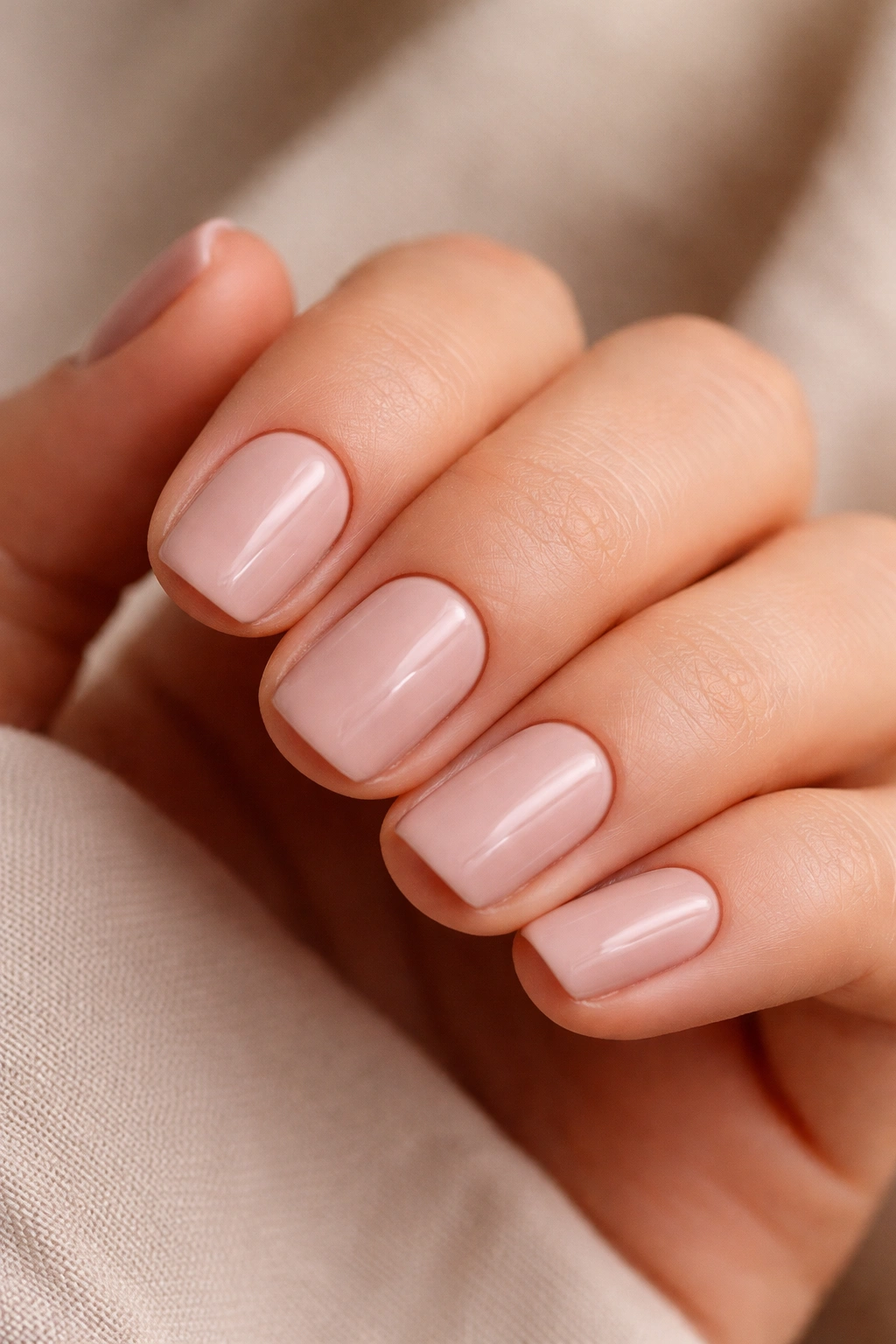
Blush pink occupies that middle ground between nude and color. It’s not quite a statement shade, but it’s warm enough to show intention. On short squoval nails, blush creates a soft, polished appearance that photographs beautifully and reads as intentional without being bold.
The key to making this work as a “bare” aesthetic is choosing a tone that sits just slightly deeper than your natural nail color. A blush that’s too pale reads as wishy-washy; a blush that’s too saturated moves toward traditional pink polish. The sweet spot is a muted rose or mauve-pink with slight gray undertones—the kind of shade that your nails might look like if you had perfect health and ideal circulation.
Finish Options for Blush Pink
A cream finish (no shimmer, completely opaque) on blush pink reads as classic and refined. It’s the traditional choice and the one that feels most “bare” because there’s no additional texture or light-catch to draw the eye.
A satin finish on the same shade adds subtle dimension without the overt shine of a gloss. Satin nails have a soft, almost velvety appearance that’s gained popularity recently. They’re less reflective than gloss but more interesting than cream, hitting that middle note of understated polish.
Application for Lasting Results
Paint a smoothing base coat first. This creates an even surface so the pink goes on uniformly. Apply two thin coats rather than one thick coat. Thin coats dry faster, adhere better, and chip less readily. Finish with your chosen top coat—gloss, satin, or matte depending on the finish you’re after.
4. Pale Beige With Warmth and Depth
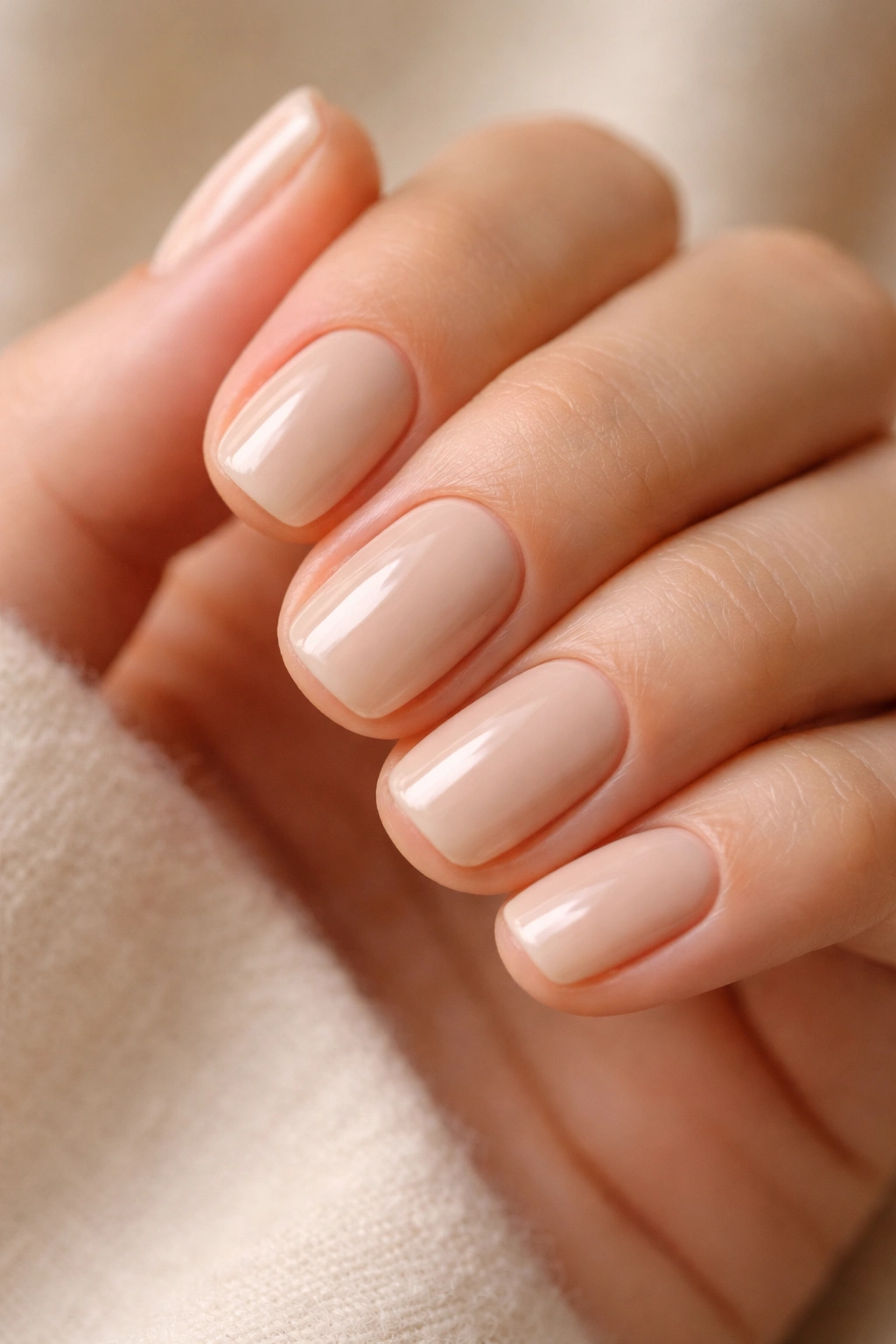
Pale beige is the neutral that sits between warm and cool, making it adaptable to most skin tones. Unlike a stark white or a milky blue-toned nude, pale beige has an earthy warmth that makes it feel organic and lived-in rather than laboratory-clean.
On short squoval nails, pale beige creates an elongating effect because it’s just enough pigment to define the nail without overwhelming the finger. The color feels professional in any setting—from a law office to a creative industry to a casual coffee date.
Why Beige Reads as “Bare”
The psychology of beige is that it recedes. Your eyes don’t catch on it the way they do with true pink or nude. Instead, beige acts as a neutral frame that lets the nail shape and your hands become the focus. This is why beige is the go-to for people who want polish but not attention.
Choose a beige with just slightly more warmth than coolness. A beige that tips toward gray can feel institutional; a beige with yellow or tan undertones feels warmer and more approachable.
Pairing Beige With Textures
A gloss finish on pale beige is the most traditional approach and creates high shine. A matte finish on the same shade gives a modern, almost powdered effect that’s become increasingly popular. The matte version reads as more contemporary and deliberately restrained.
5. Barely-There Peachy Nude
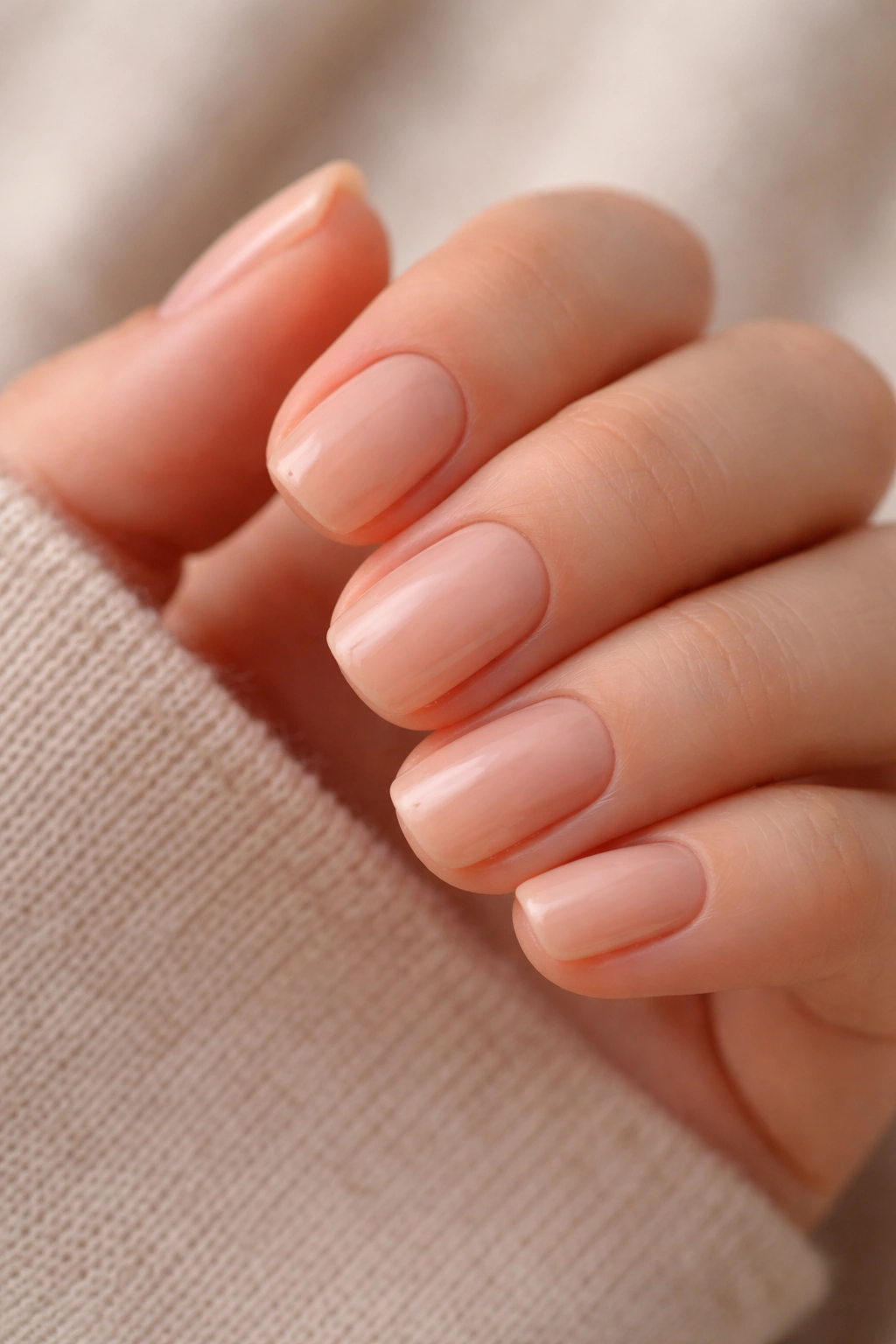
Peach undertones in a nude base are warm without being pink. This shade works beautifully on people with warm or golden undertones in their skin because the nail color echoes and amplifies your natural warmth. Peachy nudes are inherently flattering because they create a visual continuity from nail to skin.
The “barely-there” quality comes from choosing a shade that’s not quite opaque enough to look like color, but not sheer enough to look like a protective coat. Two coats should give you full opacity with a tone that feels like a enhancement rather than a dramatic change.
Visual Effects of Peachy Nude
The peach undertone catches warm light beautifully. In natural daylight, peachy nudes glow. Under artificial lighting, they still read as natural rather than cool or clinical. This is why peachy nudes are beloved by people who want nails that look good in every environment.
The squoval shape is subtly emphasized by the warm tone because peach has enough presence to define edges without looking structured or geometric.
Texture and Finish Choices
A glossy peachy nude is classic and universally flattering. The shine amplifies the warmth and creates a healthy-looking glow.
A satin or soft matte peachy nude feels more modern and intentional. The softer finish tones down any shine that might feel too “done” to some aesthetics.
6. Cool-Toned Pale Pink for Elegance
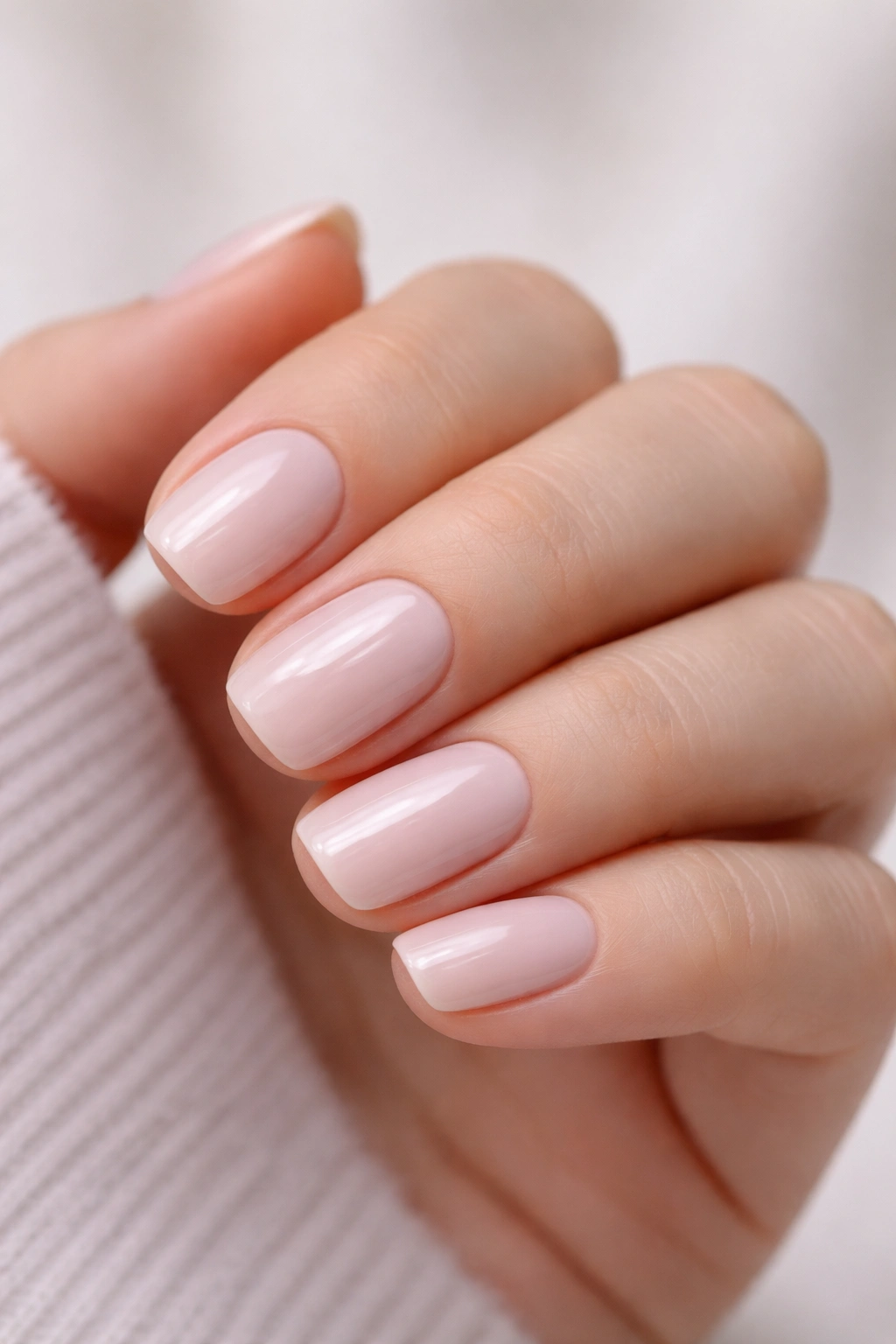
Pale pink with cool or rosy undertones (as opposed to warm peachy pink) creates an elegant, almost romantic aesthetic. This is the shade that reads as slightly more polished than a true nude because the pink undertone is visible, yet it still feels natural and restrained.
Cool pinks work best on people with cool or pink undertones in their skin. If you have warm undertones, a cool pink can look slightly ashy or make your hands appear tired. Know your own undertones before committing to this shade.
Why Cool Pink Feels Different From Warm Pink
Warm pinks (peachy, golden) advance visually and feel approachable. Cool pinks recede slightly and feel more formal or elegant. On short squoval nails, cool pink creates a polished, almost minimal appearance because the color is self-effacing.
The pale intensity of the shade is crucial. A bright or saturated cool pink would be a statement color. A pale, almost washed version reads as barely-there.
Longevity and Maintenance
Cool pinks can sometimes show staining or yellowing over time, especially if you use them frequently without a protective base coat. Always apply a base coat first. Some formulas are specifically designed to prevent staining under cool or blue-toned polishes.
Repaply top coat every 5-7 days to maintain shine and prevent the color from looking dull or flat.
7. Natural Nail With French-Influenced Tips
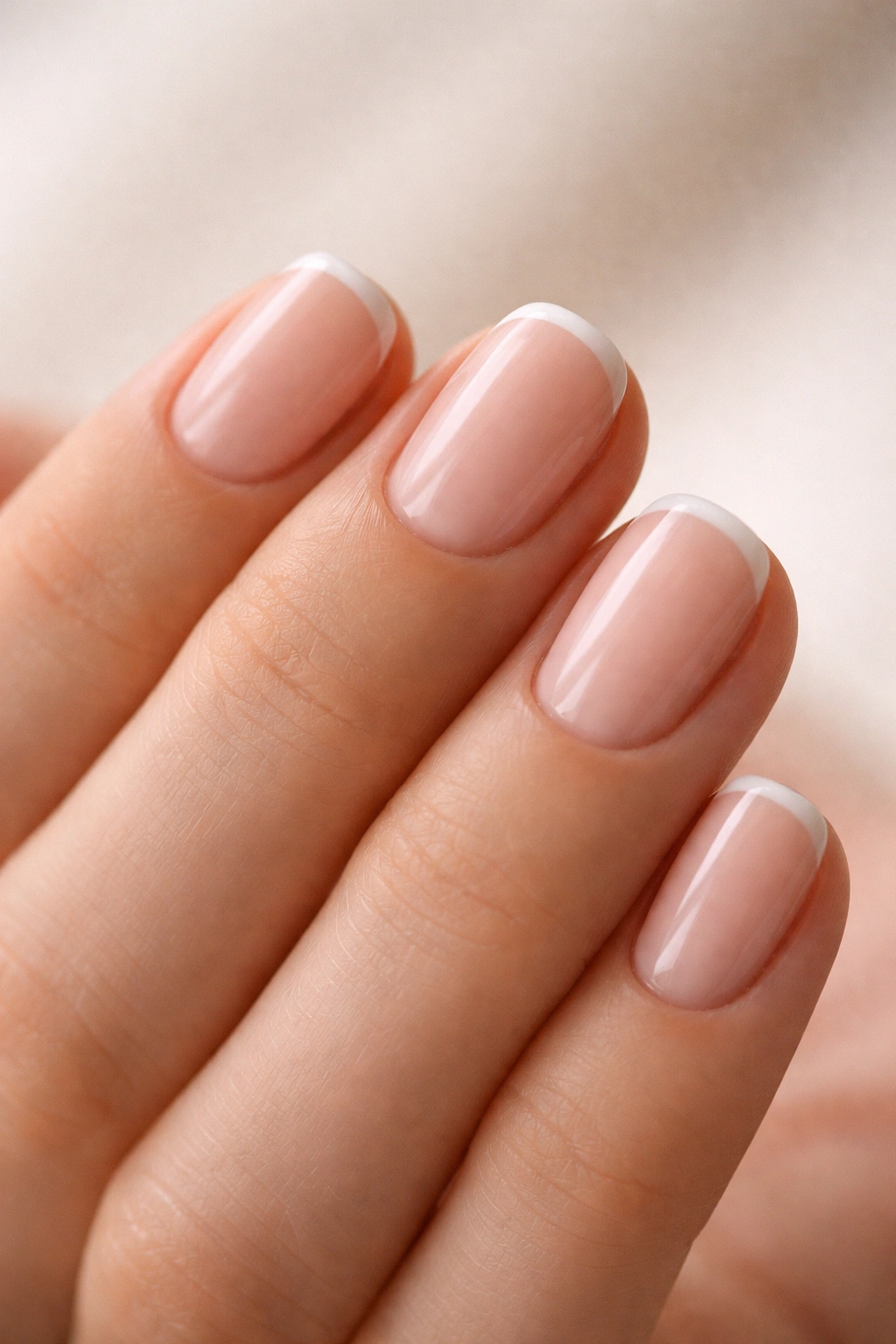
A barely-visible French tip—where just the very edge of the nail is defined with a slightly brighter tone—creates a subtle enhancement without the full commitment of a French manicure. On short squovals, this approach uses the sharp definition of the squoval shape to the advantage of the tip line.
The key is restraint. The tip line should be so subtle that someone at normal conversation distance might not notice it, yet up close it creates dimensional interest. This is the opposite of a bold French manicure where the white or color is obvious and intentional.
How to Create This Look
Using a very fine brush or a thin striping brush, apply just a whisper of a slightly brighter shade to the very edge of each nail. The line should be hair-thin, following the natural edge of the nail without extending past where the nail actually ends.
Some people accomplish this with a natural nail topped by a barely-there white or cream line. Others use a nude base with a slightly pinker or warmer tip. The contrast should be so subtle that you need decent lighting to see it clearly.
Why Squoval Makes This Work
The squared-off sides of the squoval shape give you defined edges to work with. A tip line looks more intentional on a squoval than on a rounded or almond shape because the geometry is already present.
8. Sheer Nude With Gel Formula for Durability
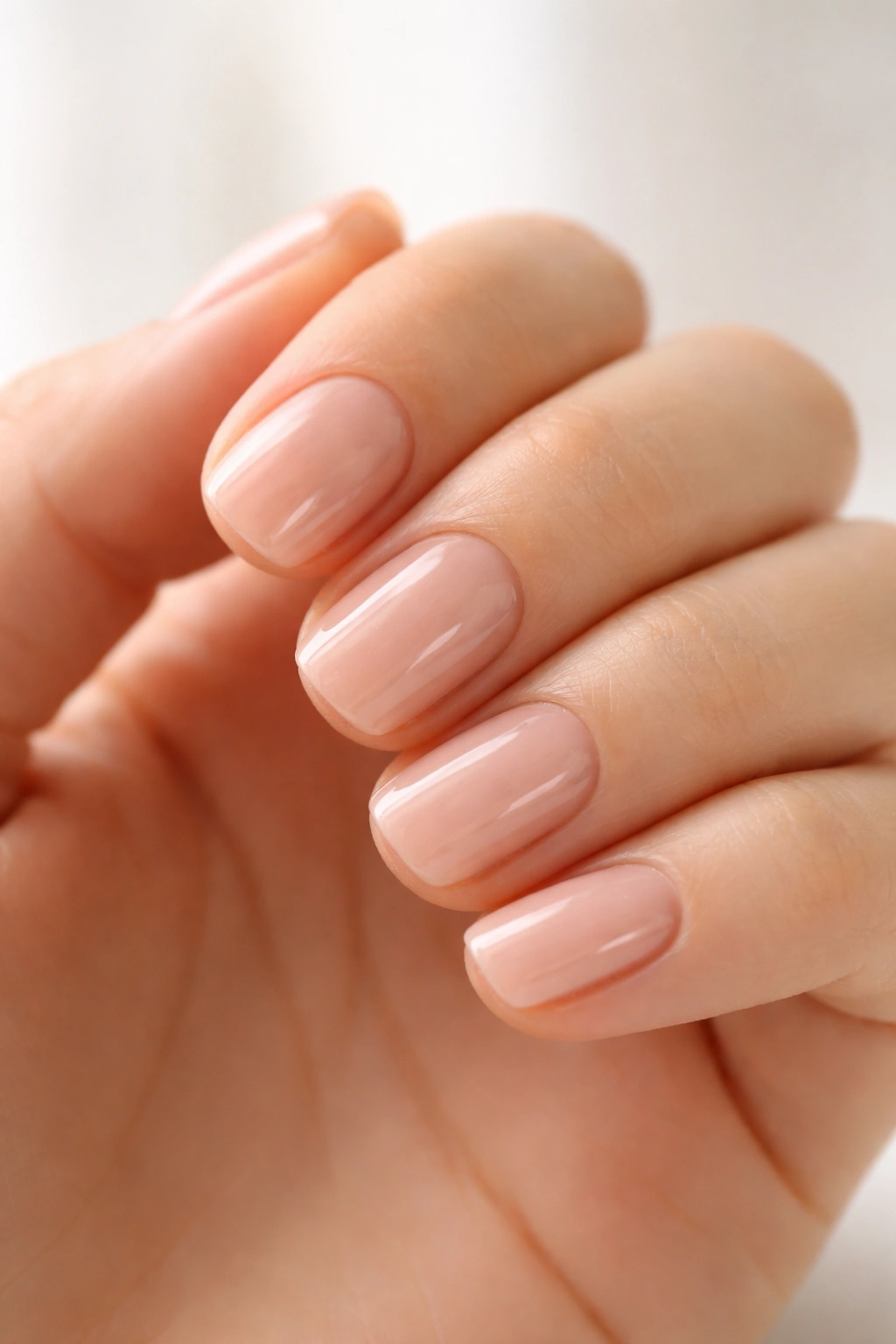
A sheer nude gel formula creates a look that feels like natural nails but lasts like a manicure. Because it’s sheer rather than opaque, you see the actual nail underneath with just a hint of color and shine. The gel formula makes it more durable than polish, so the nails don’t chip or lose shine as quickly.
Gel formulas also allow for slight building of the nail, which many people appreciate for strength. You can keep your nails short and still have them feel sturdy and resistant to breaking.
Application Process
A gel sheer nude typically requires three steps: base coat cured, color coat (or two very thin color coats) cured, and top coat cured. The process takes 15-20 minutes at a salon or with your own tools at home.
Removal requires either soaking in acetone or filing through the gel layers. If you do this regularly, invest in good cuticle oil and hand balm because acetone exposure can dry out your skin.
Maintenance Schedule
Gel manicures typically last 2-3 weeks before the sheer color starts looking dull or the shine fades. Reapply when the shine goes away or the color appears less vibrant. Many people prefer to refresh every two weeks as a preventive measure.
9. Opaque Cream White for Minimalist Impact
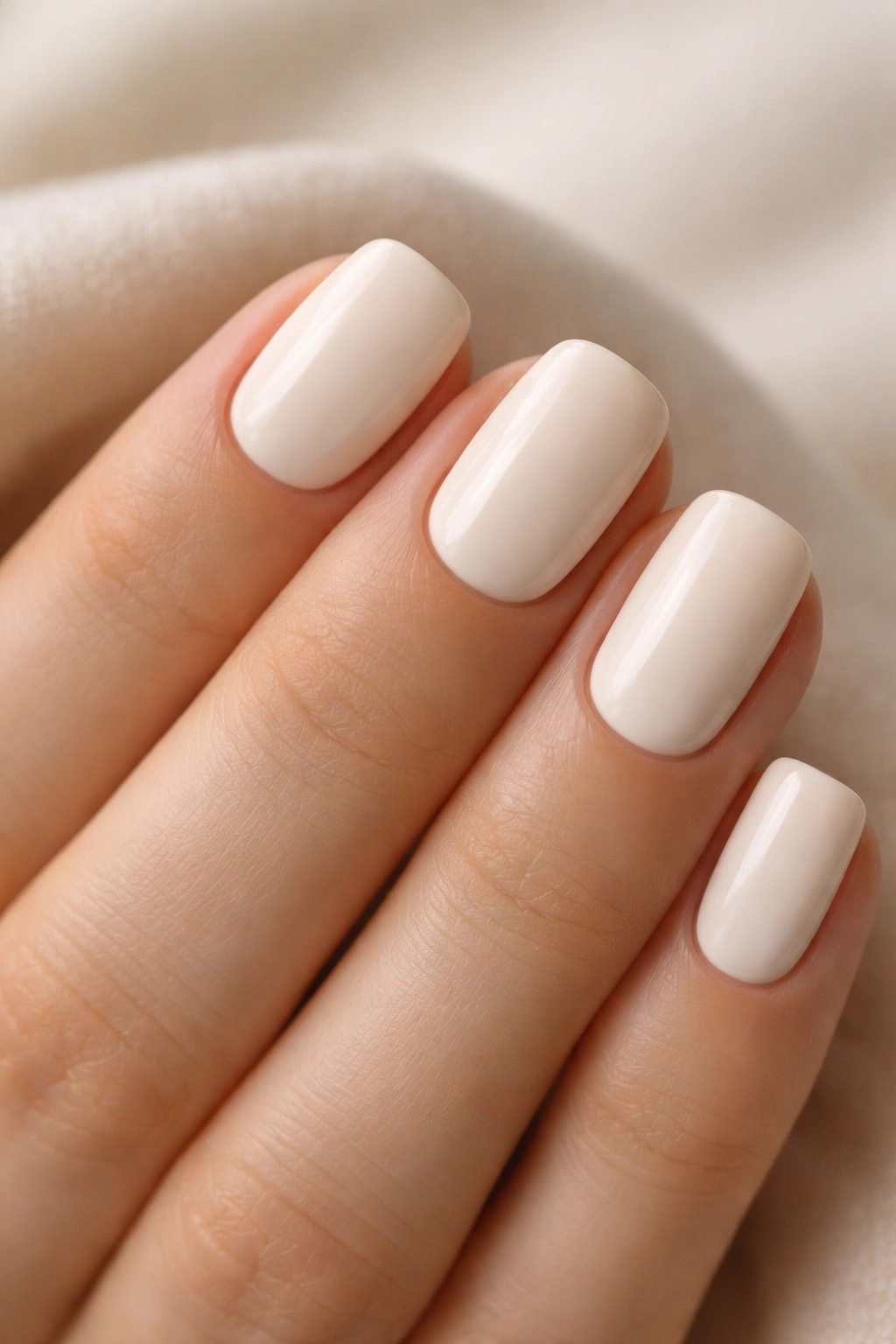
Cream white—not stark white, but an off-white with warmth—creates a clean, almost clinical minimalism when paired with short squoval nails. This shade reads as intentionally bare because it’s so minimal. It’s not color; it’s the idea of polish.
The effect is sophisticated rather than babyish or bridal, especially on shorter nails where there’s no dramatic length to emphasize. Cream white works as a blank canvas that lets the nail shape and hand health become the primary visual.
Who This Suits Best
Cream white works best on people with warm or golden undertones. A true cool white can feel slightly harsh or clinical on warm skin tones. If you’re cool-toned, opt for a cool white with just a whisper of pink instead.
Cream white also reads better on hands with healthy, smooth skin. Any texture or imperfection on the hand itself becomes more visible when surrounded by this neutral tone.
Achieving the Right White
The difference between cream white and stark white is undertone. Cream white has a tiny touch of yellow or warmth—just enough that it doesn’t feel like correction fluid. Stark white is pure white with no warmth.
Apply two coats for full opacity. One coat of cream white will look sheer and slightly underwhelming. Two coats gives you the clean, intentional appearance that makes this shade work.
10. Soft Gray-Toned Nude for Sophistication
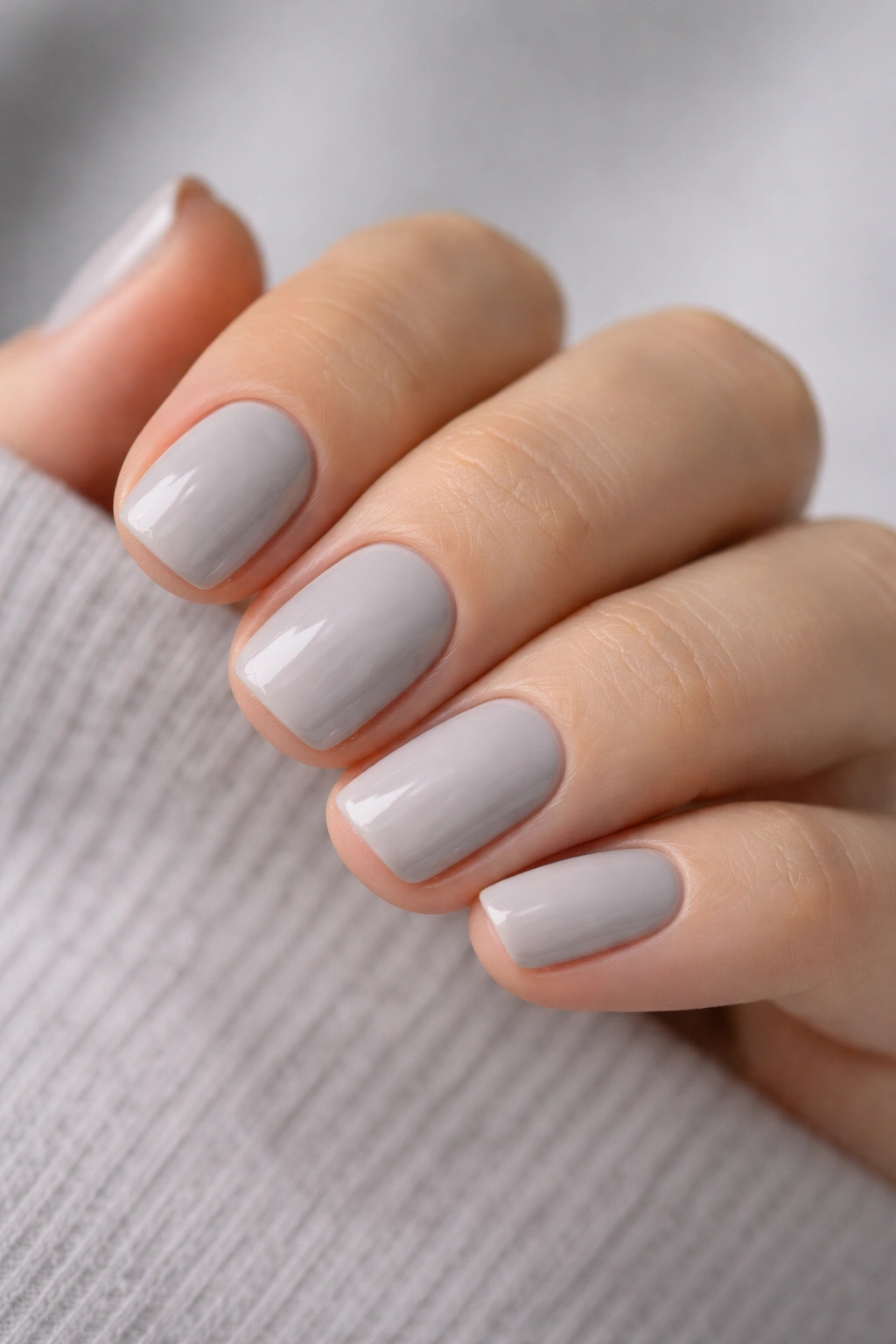
A gray-toned nude is neutral leaning cool. Unlike warm nudes that feel approachable and sunny, gray-toned nudes feel sophisticated and intentional. The gray undertone creates a subtle complexity that feels more deliberate than a straightforward peachy nude.
This shade is beloved by people who want nails that read as polished without being warm or traditionally feminine. It’s cool without being cold, and neutral without being boring.
Undertone Matching
Gray-toned nudes work well on cool skin tones. If you have warm undertones, a gray-toned nude can make your hands look slightly ashy or create an unintended contrast. Understanding your own undertone is essential before choosing this shade.
On the right person, gray-toned nude creates an elegant, almost minimalist appearance—like your nails are naturally that color and you’ve just added a protective shine coat.
Finish Preferences
Gloss on gray-toned nude creates a sleek, polished appearance. The shine amplifies the cool tones and creates a modern, high-polish look.
Matte or satin on the same shade gives a more contemporary, deliberately understated appearance. The softer finish tones down any shine and makes the shade feel less “polished” and more naturally muted.
11. Barely-There Translucent Pink
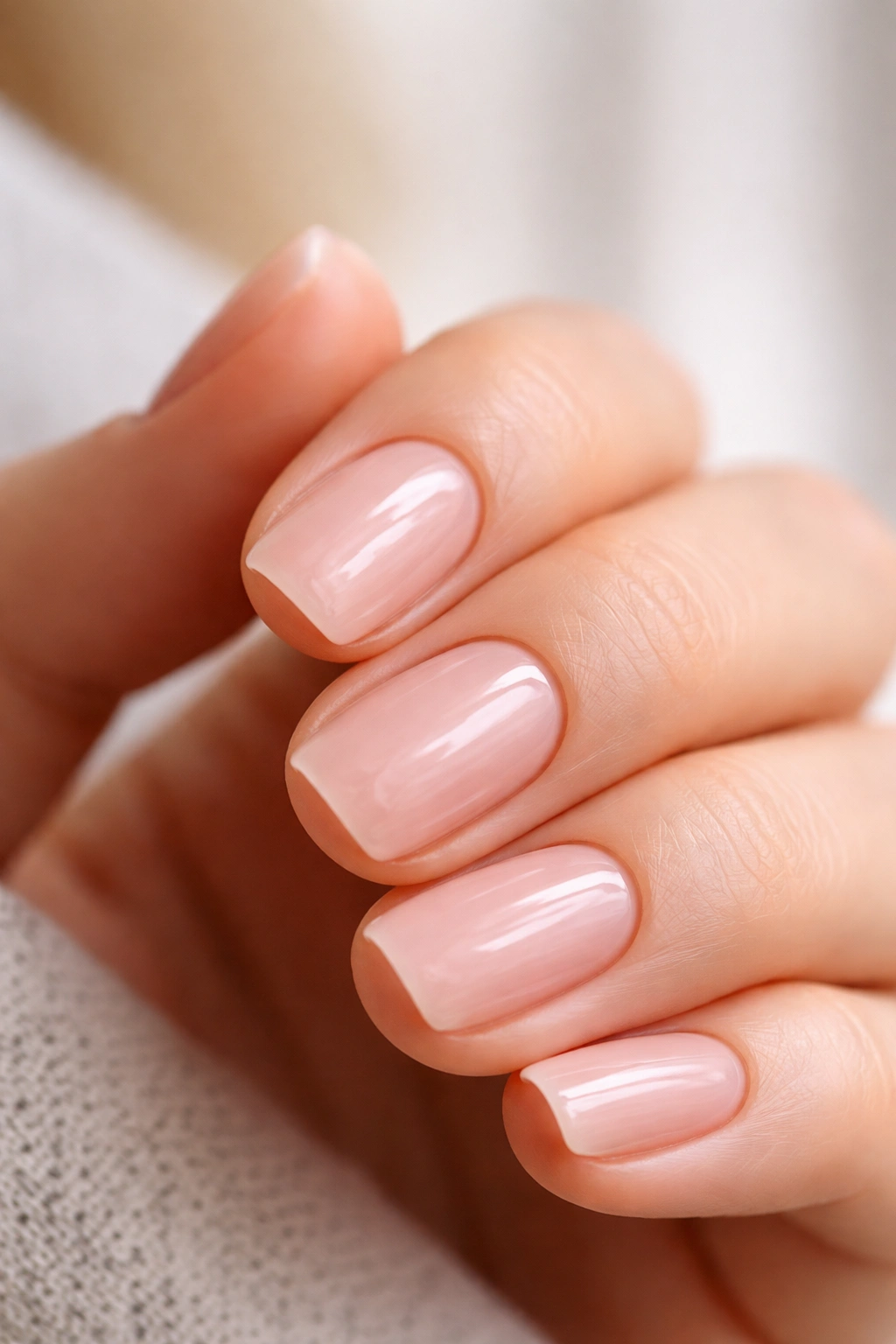
Translucent pink is so sheer that you see the nail bed underneath with just a blush of color on top. This achieves the “bare look” aesthetic while still technically being nail polish. It’s the middle ground between a clear coat and a pale pink.
The effect is subtle. Even someone looking at your hands closely might assume it’s your natural nail color rather than polish. This is the epitome of the understatement approach to nail aesthetics.
Why This Works on Short Nails
On longer nails, a translucent pink can look like you need a manicure—too subtle to read as intentional. On short nails, the same translucency reads as refined. The length is so minimal that a hint of color feels like enough.
The squoval shape remains the primary visual. The translucent pink just adds a gentle glow and slight warmth.
Achieving Translucency
A translucent pink is usually one coat of a very sheer formula. Some brands make specific “sheer” or “translucent” lines where one coat gives you the full effect. With other formulas, you might need to dilute a regular pink shade or apply one very thin coat rather than two full coats.
Top with a glossy coat to amplify the shine and create that wet, healthy appearance that makes translucent pink so visually appealing.
12. Natural Nail With Matte Top Coat
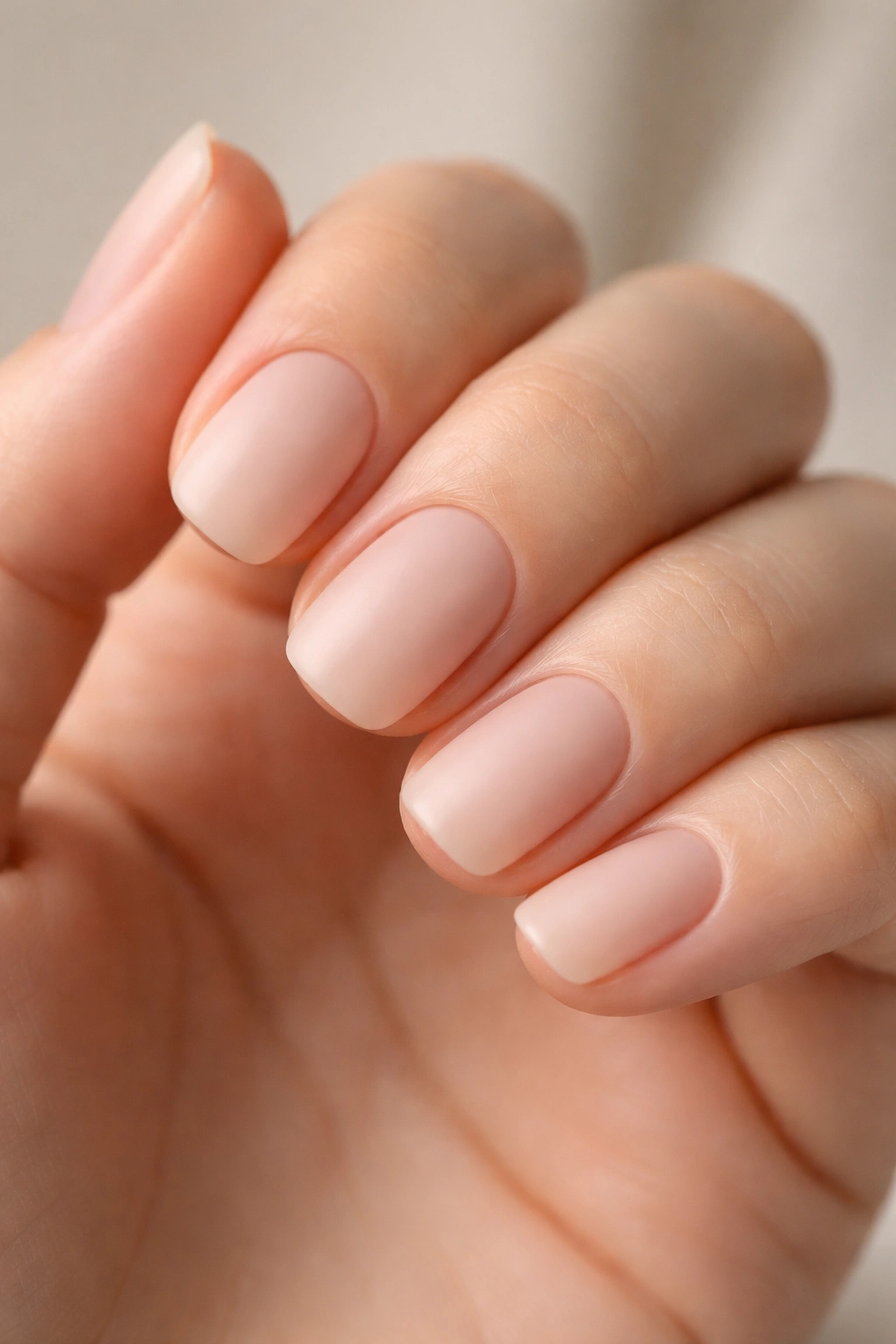
A matte top coat over your natural, unpolished nail is the final frontier of the bare aesthetic. There’s no color added, just a protective coat with a softer finish that creates a different visual effect than gloss.
Matte nails read as deliberately minimalist. There’s something intentional about choosing a matte finish—it’s not the default, so it reads as a stylistic choice. A matte natural nail says you’re confident enough in your nails that you don’t need shine to make them look finished.
The Visual Effect of Matte
Matte reduces shine and creates a velvety, almost powdered appearance. This can be flattering if your nails are in very good condition, as it de-emphasizes any ridging or texture and creates an understated, sophisticated look.
A matte finish can also make nails appear slightly less long because there’s no light reflection to create visual extension. Some people prefer this because their short nails read as proportional and intentional rather than unavoidably short.
Application and Maintenance
A matte top coat should go over a base coat for protection. Apply it the same way you would a regular glossy top coat—smoothly and evenly. It dries with a soft, nonreflective surface.
Matte top coats can chip more readily than gloss in some formulas, so reapply every week or as needed to maintain the finish.
Why Short Squovals Excel With Matte
The squoval shape is emphasized by a matte finish because the defined edges catch no light. This makes the geometry of the shape more prominent without any color to distract from it. If you love the shape itself, matte is the finish that honors that geometry.
Final Thoughts
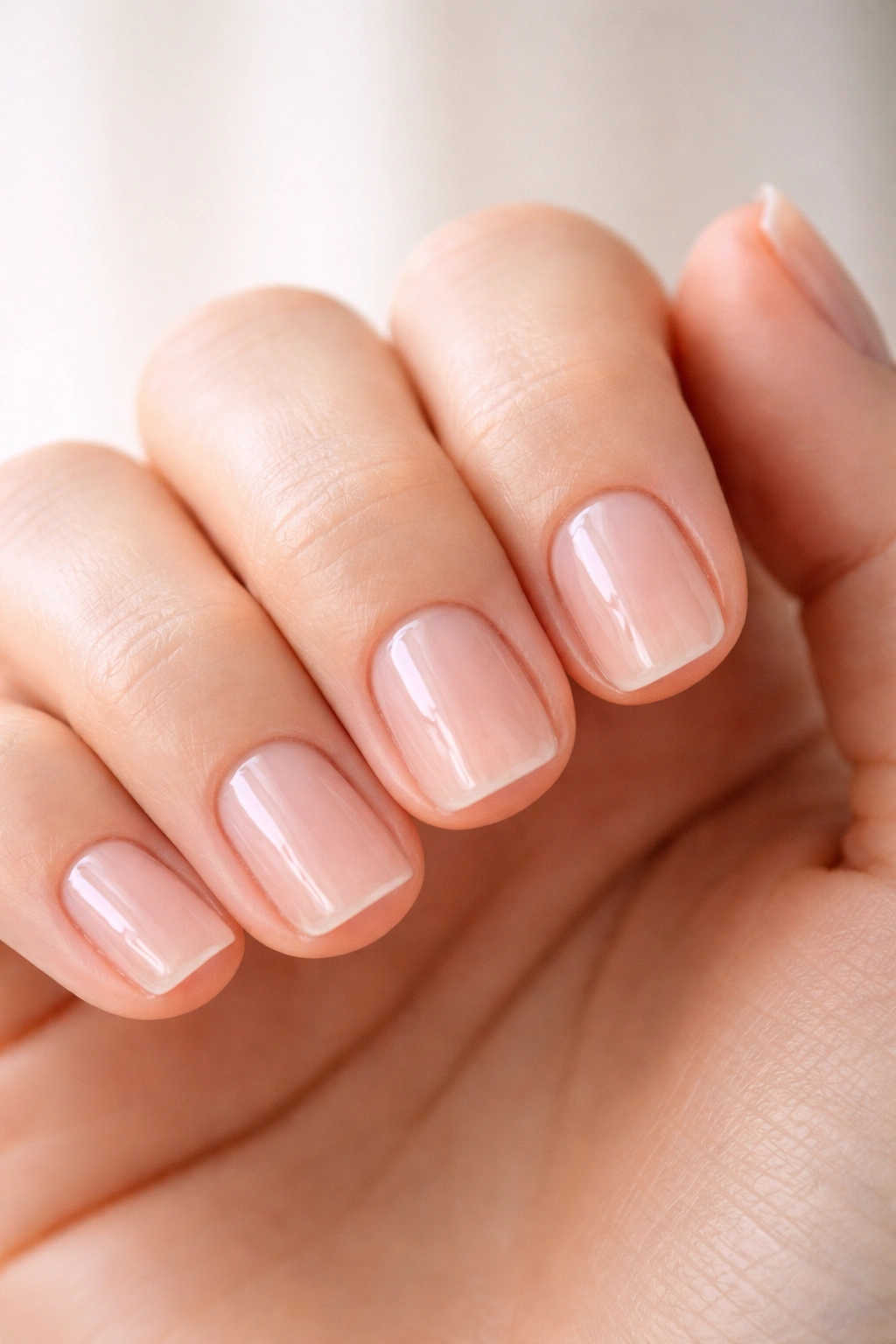
The bare look on short squoval nails isn’t about doing less—it’s about making intentional choices within a minimal framework. Whether you choose a clear coat that lets your actual nail shine through, a barely-there nude that enhances rather than transforms, or a matte finish that leans into deliberate understatement, the goal remains the same: polish that feels like an extension of you rather than a statement on top of you.
The versatility of the squoval shape combined with the restraint of a bare color palette means these nails work in genuinely every setting. They’re professional enough for a business meeting, casual enough for a weekend, and refined enough for any occasion. What makes them work is that the shape itself provides visual interest and sophistication, so the color doesn’t need to do all the heavy lifting.
Start with whichever approach resonates with your personal style and undertone. Pay attention to how your nails feel and look after a week. Does the finish wear well? Does the color photograph as you intended it? Does it feel like you when you look at your hands? Small adjustments—trying a slightly warmer or cooler tone, switching from gloss to matte, choosing a different brand or formula—help you land on exactly what works for you. The beauty of the bare aesthetic is that it’s entirely about refinement and proportion, which means it only gets better the more intentional you become about your choices.