

French nails have a timeless elegance that transcends trends, but when you combine that classic look with a long, round shape, you unlock something truly special. There’s something inherently sophisticated about a perfectly manicured French tip that catches the light, frames your fingertips with delicate definition, and works with virtually every outfit and occasion. The round shape softens the formality of traditional French nails while maintaining all the polish and refinement that made them iconic in the first place.
What makes long round French nails so enduringly classy is their versatility. They work for the corporate boardroom and the weekend brunch with equal grace. They complement both minimalist and more elaborate personal styles. They’re sophisticated enough for weddings and formal events, yet comfortable and wearable for everyday life. The length gives you enough canvas to play with subtle design variations, while the round shape ensures comfort and practicality—no sharp edges catching on things or breaking unexpectedly.
The designs you’re about to see aren’t trendy in the disposable sense. These are the kinds of manicures that make people notice your hands in the best possible way. They’re the ones you find yourself admiring while working at your desk or reaching for your morning coffee. Each design in this collection balances understated elegance with just enough personality to feel intentional and thoughtfully put together.
Why Round Shape Works for French Nails
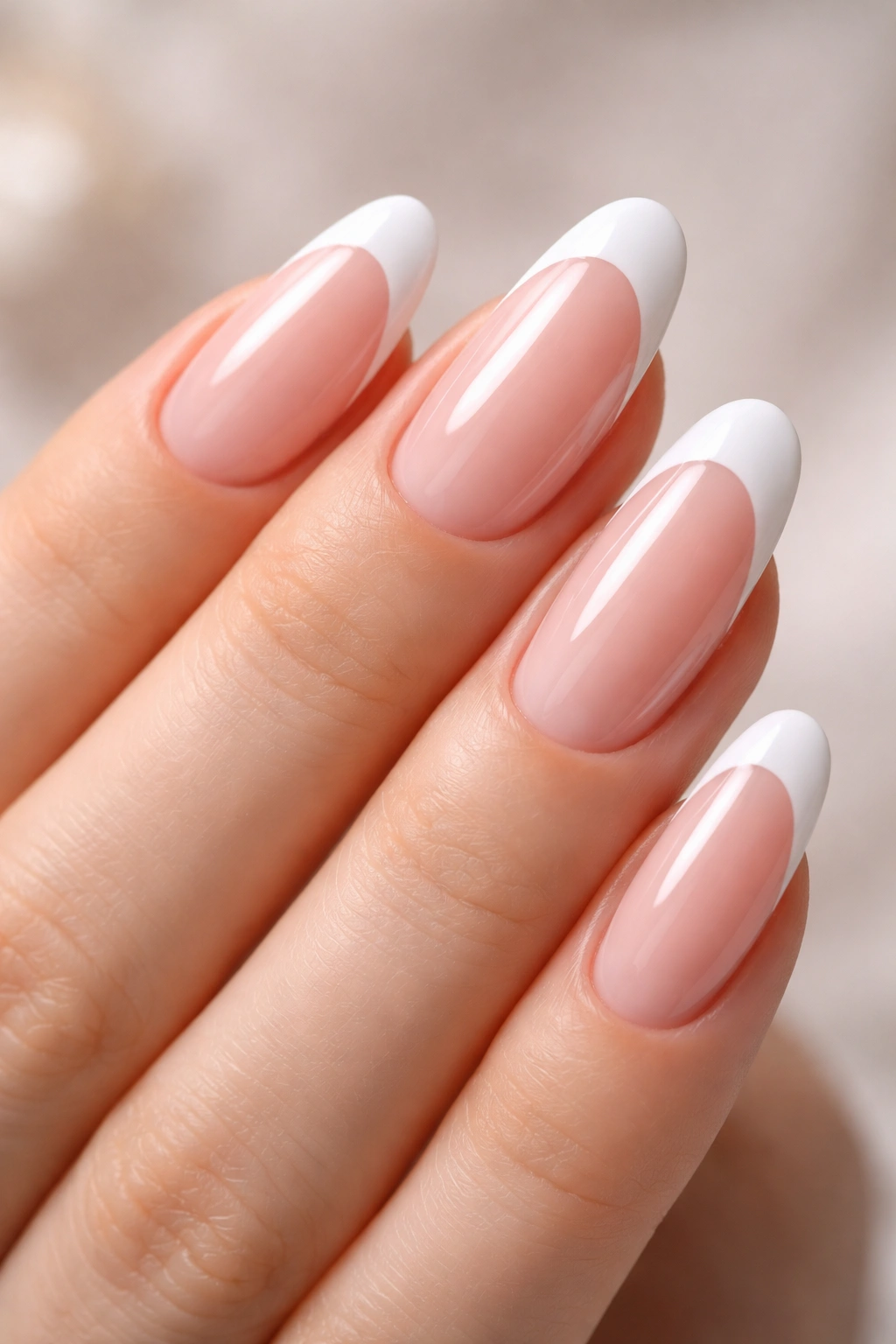
The round nail shape is the unsung hero of the French manicure world. Unlike square or coffin-shaped nails that demand a bolder aesthetic to look balanced, round nails have an inherent softness that lets the delicate French tip line shine without competing for attention. A truly round nail—one that follows the natural curve of your fingertip—creates a harmonious proportion that feels complete and polished without any extra embellishment.
The Comfort and Practicality Advantage
Long round nails are genuinely wearable in ways that other shapes struggle with. There are no sharp corners that catch on fabric, snag on hair, or break unexpectedly when you’re reaching into a bag or typing on a keyboard. This practical durability means your manicure actually lasts longer because the nails themselves are less prone to breaking at the free edge. You’re not constantly worried about your nails snagging on things, which means you can wear them confidently in professional settings, during travel, or while doing active tasks.
The Visual Softness That Reads as Elegant
Round nails have a built-in softness that flatters most hand shapes and skin tones. They don’t create harsh lines that can make hands look angular or aged. Instead, they emphasize the natural curves of your hands and create a continuous, flowing line from your hand to your fingertip. This visual continuity is why round French nails photograph beautifully and look equally stunning in person, whether you’re shaking someone’s hand or holding something delicate.
Choosing the Right Length for Your Hands
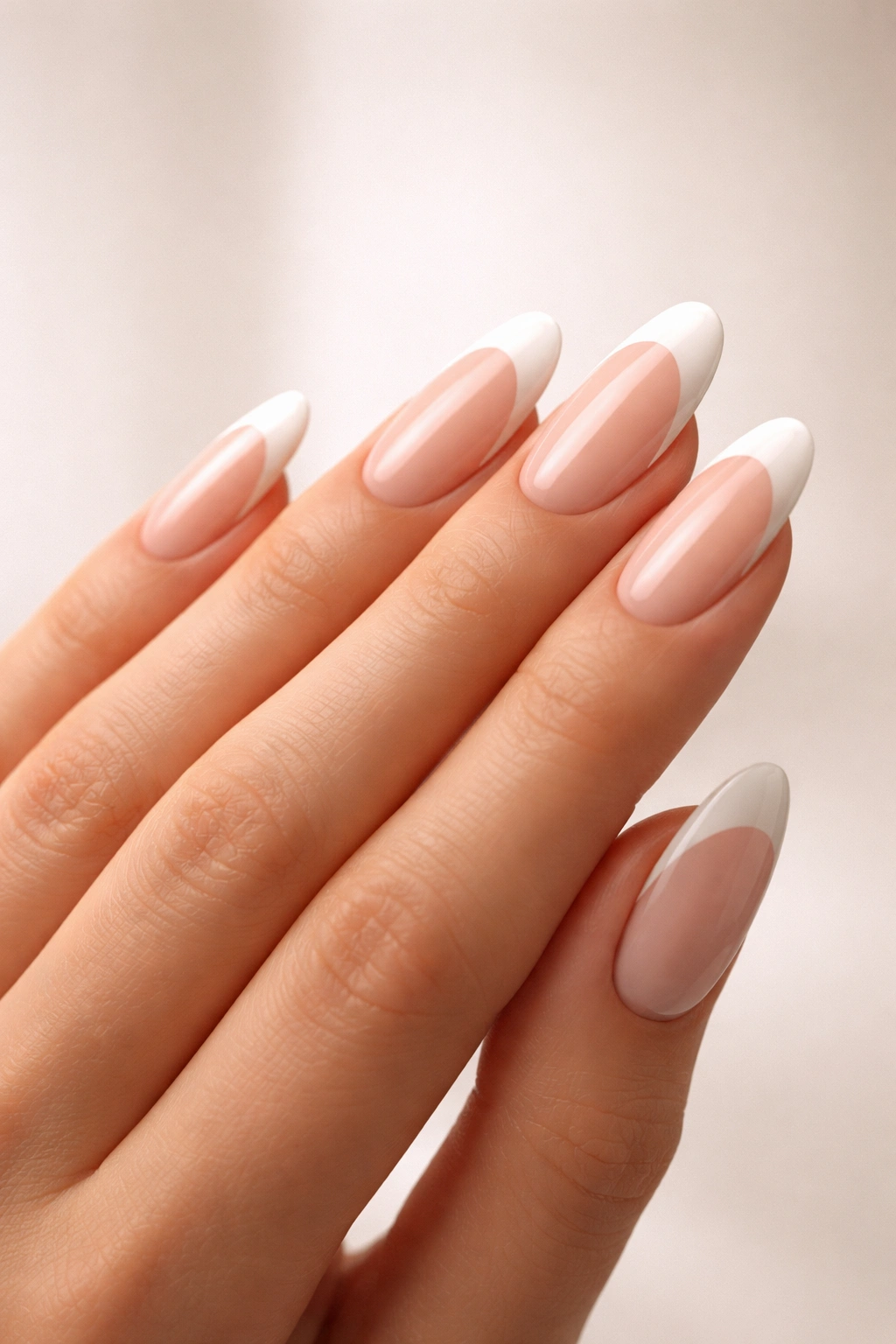
Not every length works for every person, and understanding what length complements your specific hand proportions makes an enormous difference in how polished your manicure actually looks. Long nails aren’t universally flattering—the key is choosing a length that elongates without overwhelming your fingers.
How to Measure What Works for You
Start by looking at your hand from the side with your palm relaxed and open. Ideally, your nail length should roughly equal the height of your fingertip pad (the fleshy area under your nail). If your nails extend significantly beyond that proportion, they can look unbalanced or overstated. For round nails specifically, you want enough length that the rounded shape is fully visible and elegant, but not so much length that the width-to-length ratio becomes extreme. A good target for most people is roughly ¼ to ⅜ inch of free edge beyond your fingertip. This is long enough to be unmistakably “long nails” but short enough that they remain practical and proportionate.
Consider Your Daily Activities
If you’re someone who regularly uses your hands for detailed work, typing, or other activities where nail length matters, err toward the shorter end of long—around ¼ inch of free edge. If you’re mainly using your hands for holding things, gesturing, and display, you can go slightly longer. Your lifestyle should genuinely influence your nail length decision, not the other way around. A manicure that constantly breaks or interferes with your daily life isn’t actually classy—it’s frustrating.
1. Classic White and Pink French Tips
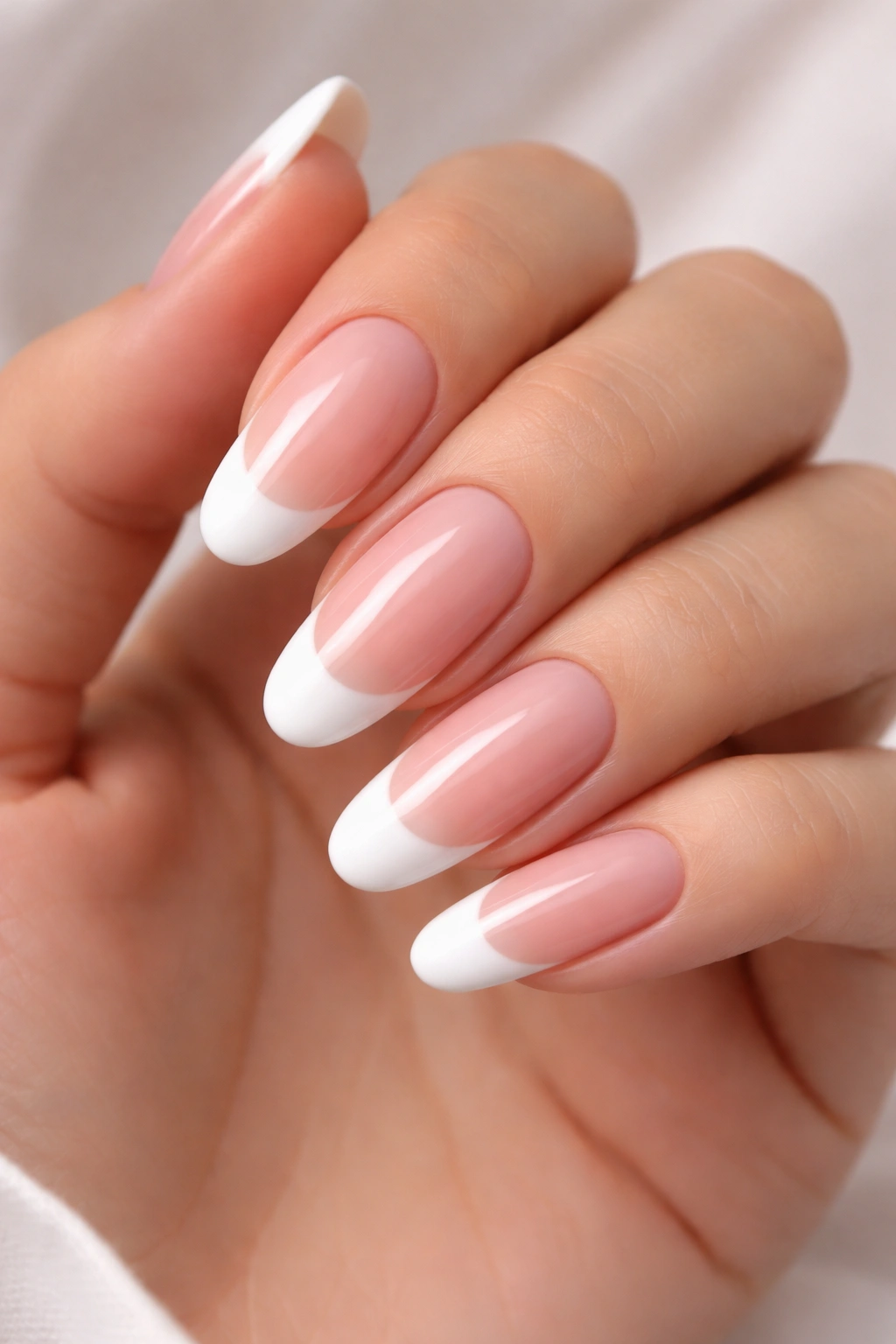
This is the manicure that started it all, and it remains utterly unbeatable. A soft, rosy pink base with a clean white tip is the definition of timeless elegance. What makes this version special is how the round shape emphasizes the gentle gradient between the warm pink and the pristine white, creating a look that’s both striking and understated. The longer length gives the design room to breathe and makes the French line feel intentional rather than minimal.
Why This Design Never Goes Out of Style
The classic French manicure works because it mimics the natural nail—that subtle color at the nail bed and the white at the free edge that appears on natural, healthy nails. By amplifying this natural gradient with intention, you create something that feels both polished and organic. There’s nothing jarring or trendy about it. Even after decades of nail art evolution, this design remains the gold standard that everything else is measured against. Celebrities, brides, business executives, and style icons all return to this design because it’s objectively flattering and completely appropriate for any context.
Application and Maintenance Tips
- The white tip should be applied with precision to create a clean, defined line—usually about 2-3mm thick
- The pink base benefits from being slightly warm-toned (almost beige-pink) rather than hot pink, which reads as more sophisticated
- This design requires regular maintenance to keep the white tip bright and the base from yellowing
- Most people need a touch-up every two to three weeks to maintain the clean line and prevent the natural nail from showing at the base
Pro tip: Ask your mailer to slightly curve the white tip line—instead of a straight edge, a subtle arc that follows the contour of your fingertip makes the design feel more modern and polished.
2. Soft Ombre French Nails
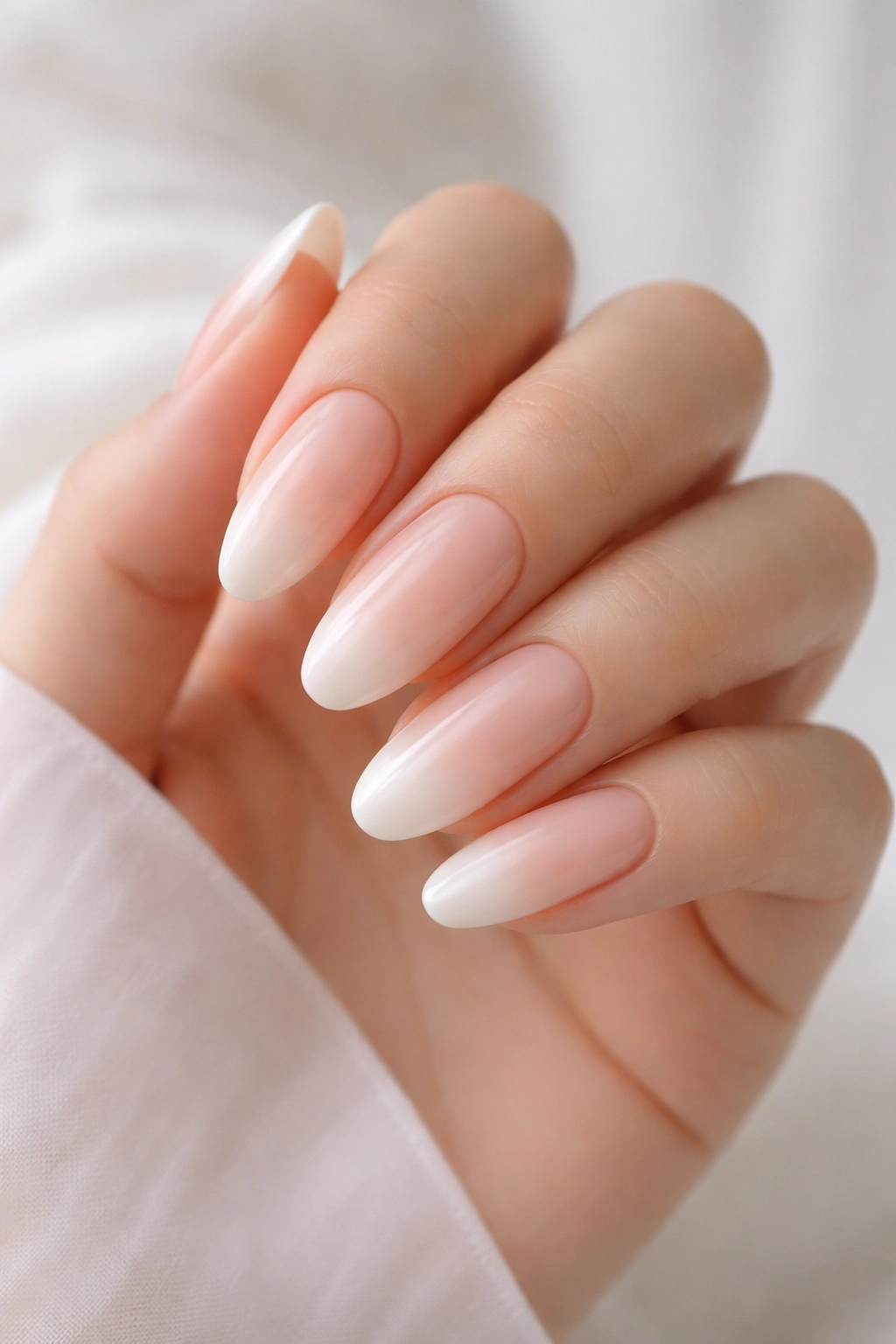
An ombre gradient from a pale, barely-there nude at the base to a cream or ivory tip creates a sophisticated take on the French that feels both modern and timeless. Instead of a sharp demarcation between two distinct colors, the ombre version uses a gradient that softens the transition. The round shape creates the perfect canvas for this gradient—the curve distributes the color shift elegantly across the nail surface.
How the Gradient Creates Dimension
When you layer colors with an ombre technique, you create visual depth that catches light differently than a flat color would. This means your nails look dimensional and interesting even from across a room, but the subtle color progression keeps it inherently sophisticated. The gradient effect also means there’s no harsh line that needs to be perfectly sharp—the softness of the gradient is actually the whole point, making this design more forgiving to maintain while still looking intentional and high-impact.
What Makes This Version Special
- The ombre works particularly well on longer round nails because the gradient has enough distance to develop properly
- The color palette can range from nude-to-white (the most classic version) to beige-to-champagne (warmer) to gray-to-silver (more edgy)
- You can intensify the ombre effect by making the gradient more dramatic, or keep it subtle for a whisper-soft look
- The rounded shape means there are no sharp corners where the gradient might look patchy
Worth knowing: Ombre French nails require a bit of skill to apply—either through airbrushing or careful hand-painting with a sponge. If you’re attempting this at home, invest in a makeup sponge and quality gradient-friendly polishes.
3. Gold-Accent French Design
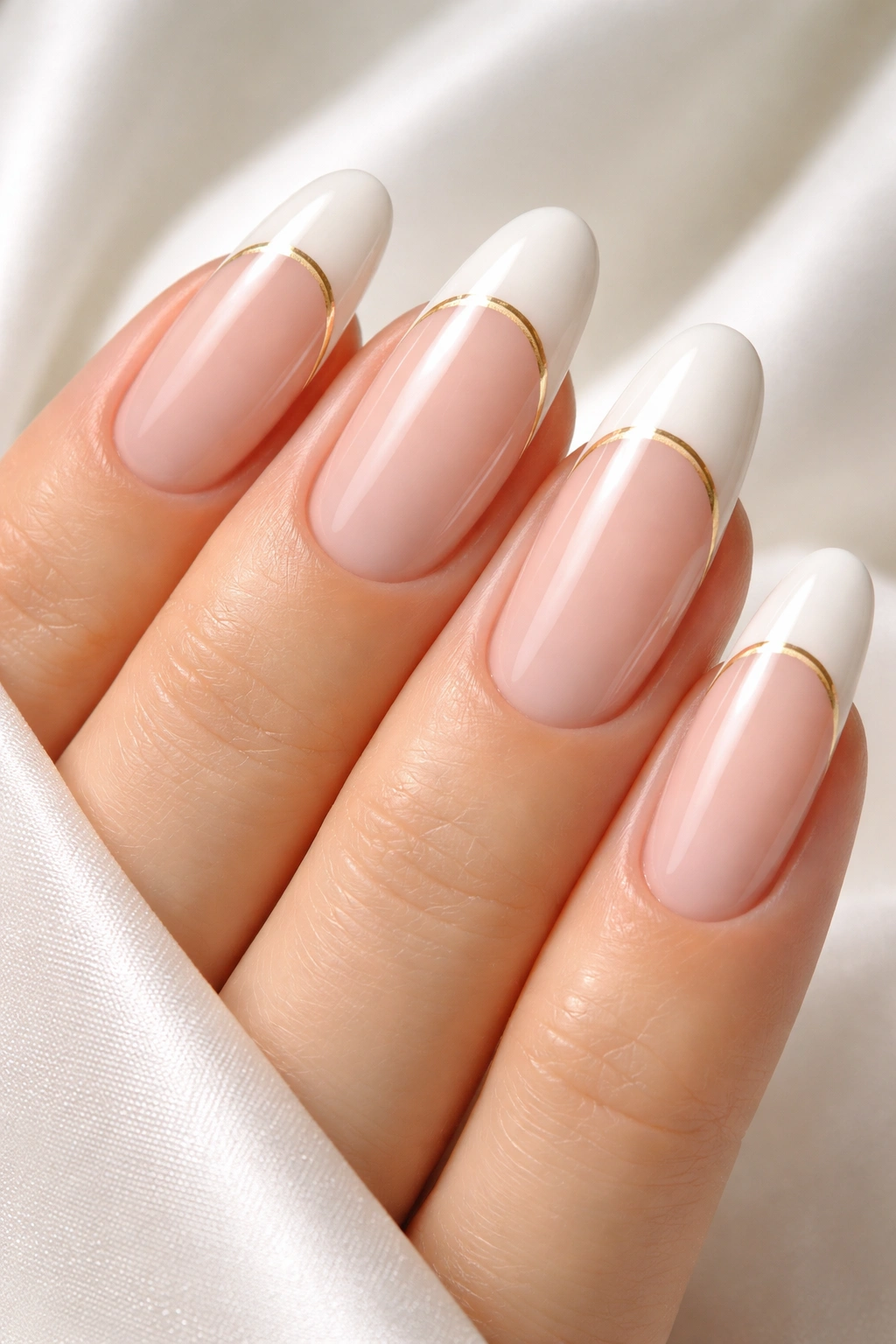
Introducing a whisper of gold into your French tip creates instant luxury without crossing into costume jewelry territory. The gold can appear as a thin accent line between the white and pink (almost like a frame), as flecks caught in the tip itself, or as a very subtle metallic dust layered over the white. On long round nails, this gold accent becomes a detail people notice when you’re gesturing or working—it catches light unexpectedly and adds that special something that makes the manicure feel intentional.
The Psychology of Adding Metallic Details
Gold has inherent associations with luxury and timelessness. A tiny bit of gold detail immediately elevates the perception of a manicure without adding visual weight. The key is restraint—the gold should feel like a sophisticated detail, not a loud statement. On longer nails, you have the perfect opportunity to use gold sparingly and let it do its work through subtlety. A single thread-thin gold line or a dusting of gold on just the tip creates elegance without fuss.
Application Variations That Work
- Thin gold striping tape placed between the pink base and white tip creates a clean, jewelry-like effect
- Gold leaf applied to wet top coat on the white tip area (patchy placement looks intentional and elegant)
- A metallic gold gel polish applied to just the outer edge of the white tip, fading into the white
- Rose gold for warmer skin tones, or cool-toned champagne gold for cooler undertones
Pro tip: Layer a glossy top coat over the gold accent to make it gleam and catch light. The contrast between the shine and the nail surface creates sophisticated visual interest.
4. Minimalist Clean French Tips
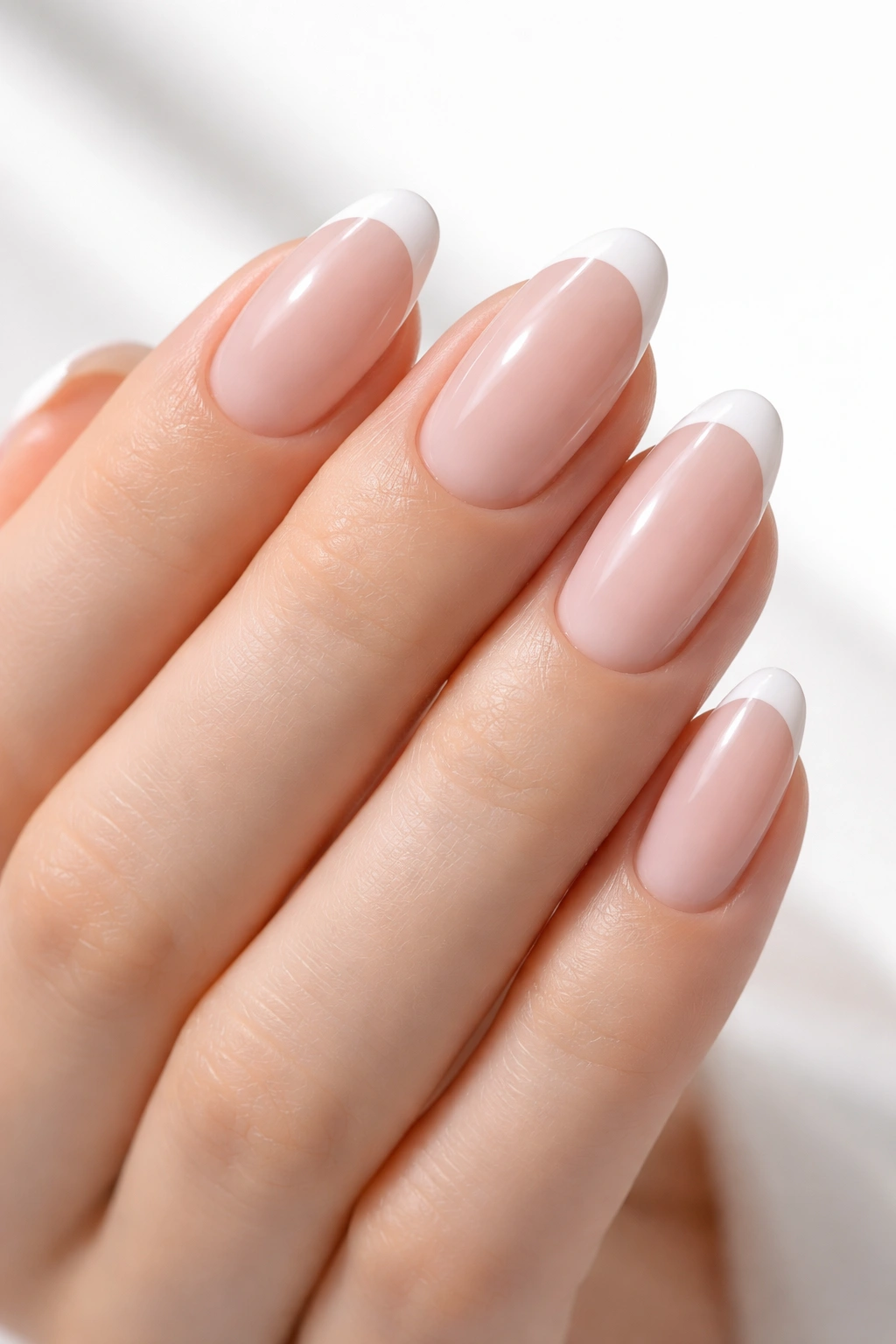
Sometimes less truly is more. A minimalist French tip uses the absolute thinnest white line possible—almost just a whisper of white at the very edge. The base is a soft, neutral color (pale pink, nude, beige, or even barely-there taupe), and everything else is restraint. On round nails, this ultra-clean aesthetic feels almost architectural in its simplicity. The design is so understated that it reads as effortlessly polished rather than obviously manicured.
The Art of Strategic Simplicity
Minimalist design takes more intentionality than maximalist design because every single element has to justify its presence. That hairline white edge has to be perfectly positioned and perfectly clean. The base color has to be chosen with precision to complement your skin tone. The rounded shape has to be absolutely smooth and well-maintained. When all these elements come together, the result is a manicure that looks almost like your nails are just naturally perfect—which is the whole point. It’s the sophisticated version of “no-makeup makeup” for your hands.
What Makes Minimalist French Particularly Classy
- The simplicity reads as confident rather than incomplete
- It works beautifully in professional settings where obvious nail art might feel out of place
- The design actually lasts longer because there’s less to chip or wear
- It complements virtually any outfit, jewelry, or personal style
- The focus stays on your hands’ shape and skin, not on busy design details
Key consideration: Minimalist French nails show every imperfection, so your nail health, cuticle care, and polish application have to be absolutely flawless. Regular maintenance and attention to detail are non-negotiable.
5. Nude Base with Glitter French Tips
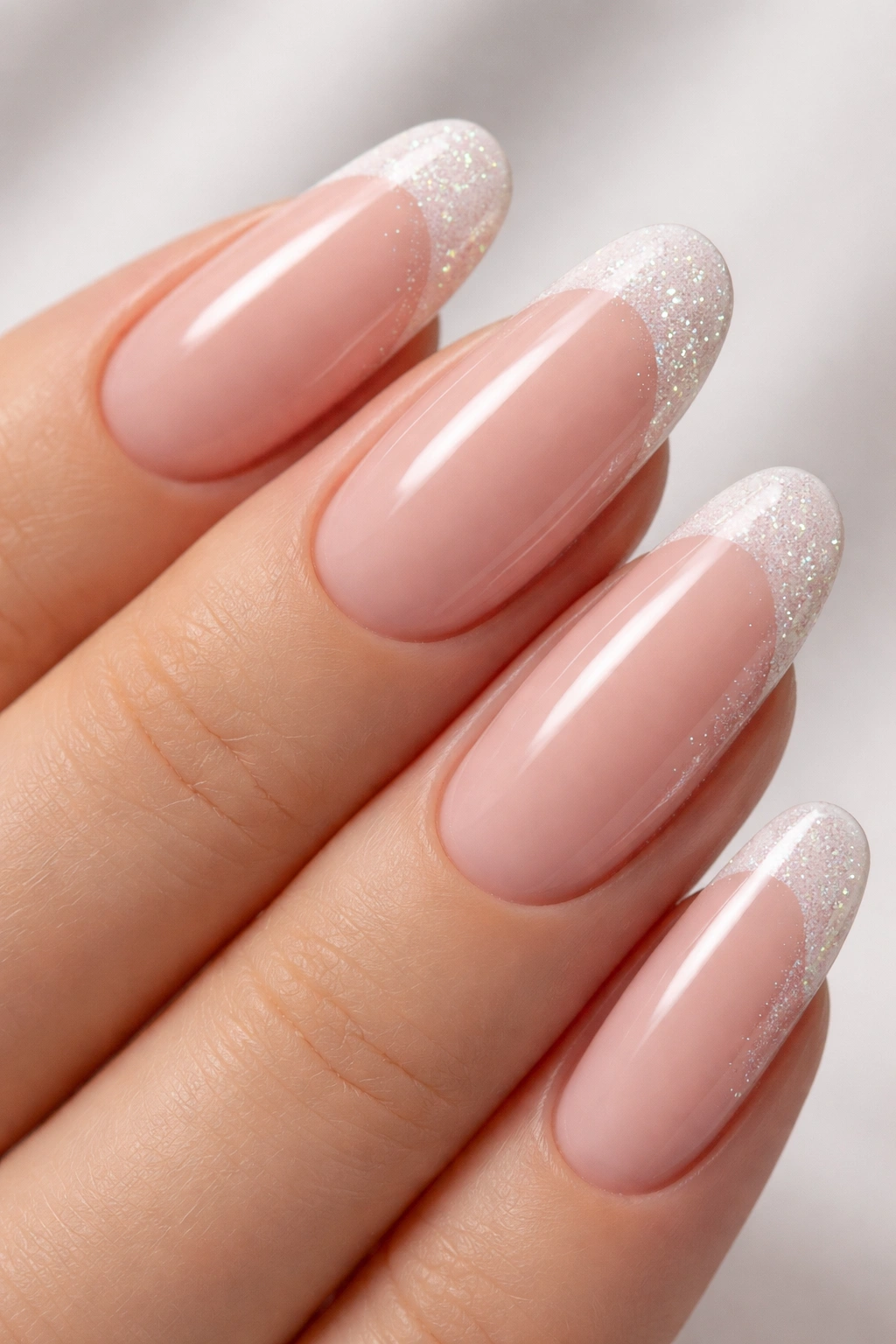
Add dimension to your French tip by using fine shimmer or glitter in the white tip area, or mixing glitter into a translucent white polish to create a tip that sparkles subtly. This design walks the line between elegant and celebratory—it’s fancy enough for special occasions but subtle enough for regular wear if you choose fine enough glitter. On round nails, the curved surface distributes glitter beautifully, creating sparkle that catches light without looking costume-y.
Choosing the Right Glitter Type
Not all glitter creates the same effect. Ultra-fine cosmetic glitter (smaller than microglitter) mixed into polish or applied with a tacky base creates a sophisticated sparkle that reads as premium rather than craft-store. Larger glitter particles or chunky mixes look more playful and less refined. For a truly classy version, limit the glitter to just the white tip portion—don’t extend it into the pink base, which dilutes the elegance. You want the sparkle to feel like a detail, not the whole manicure.
Application Methods That Look Professional
- Mix fine glitter into clear or white gel polish before application for even distribution
- Apply a sticky base coat, then press glitter onto just the tip area (easier to control placement)
- Use a glitter nail pen for precise application—these create a defined glittery line that’s cleaner than hand-application
- Seal everything with a thick, glossy top coat so the glitter sits smoothly and catches light evenly
Pro tip: Using champagne or gold-toned glitter feels more elevated than rainbow or multicolored options. Limiting your glitter palette to one or two colors looks more intentional and sophisticated.
6. Pearl and Shimmer French Nails
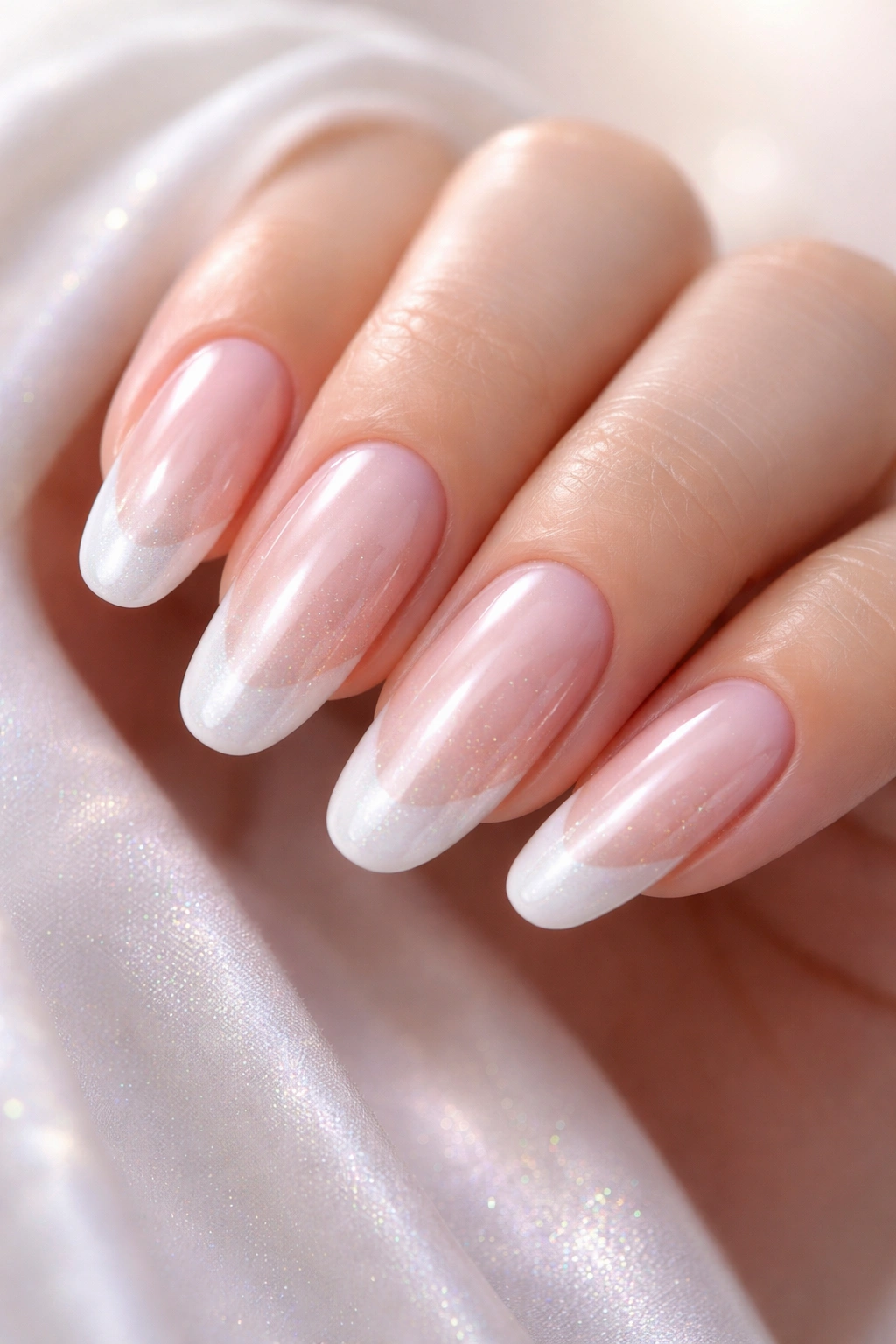
Pearl finishes create a sophisticated, almost luminous quality that photographs beautifully and looks elegant in person. Use a pearl base (soft pink or cream with a subtle pearlescent finish) and top it with a pearl or shimmer white tip, or reverse it with a pearl tip over a solid base. The pearlescent finish catches light in a way that solid color can’t, creating an almost three-dimensional effect that makes the nails look expensive and carefully chosen.
Why Pearl Finishes Feel Inherently Luxe
Pearl has a subtle iridescence that means the nail looks slightly different depending on the angle and lighting. In natural light, it glows. In indoor lighting, it shimmerizes. This dynamic quality makes pearl nails visually interesting without being loud. The soft, opalescent quality also softens the contrast between the pink and white, creating a more cohesive, blended look than a stark white tip would provide. It’s the nail equivalent of wearing cashmere instead of cotton—the same shape and silhouette, but with noticeably more refined texture.
Pearl Finish Options
- Soft pink pearled base with white shimmer tip (the most traditionally elegant)
- Champagne pearl base with opalescent white tip (warmer and more special-occasion feeling)
- Cream pearl throughout with just the white tip remaining matte (for maximum subtle contrast)
- Nude pearl with blush pearl tip (deeply sophisticated and barely-there)
Worth knowing: Pearl finishes can sometimes look chalky or dull if the base polish isn’t high quality. Invest in reputable brands when doing pearl nails—the difference in how the finish catches light is significant.
7. Extended Square French with Artistic Touches
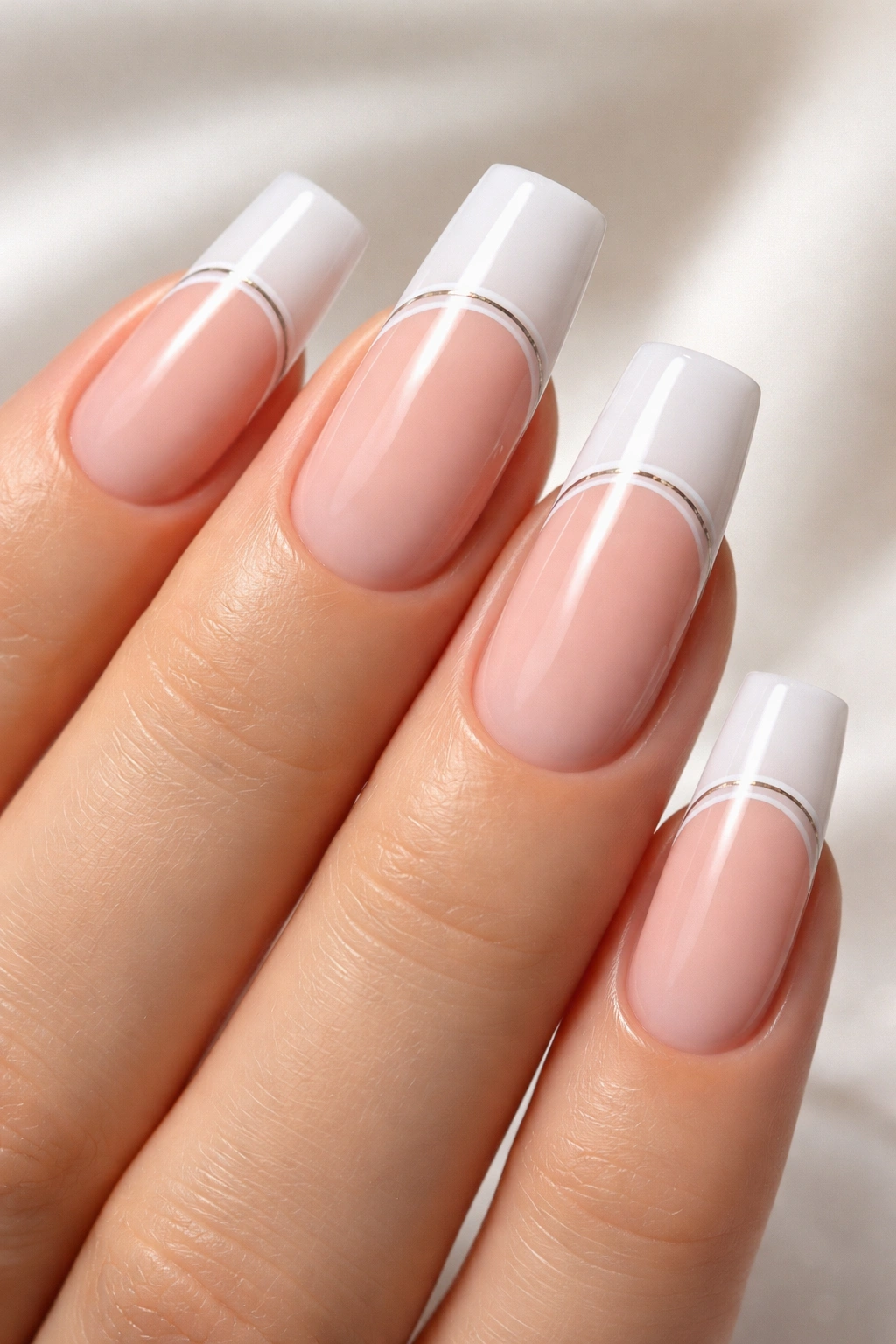
While round is the foundation here, you can extend into a subtle square shape (a round base that extends just slightly into gentle corners) and add artistic touches like hand-painted details. Imagine a very subtle geometric line, a delicate brush stroke, or a minimalist illustration integrated into the white tip area. The extended length gives you actual real estate to work with, while the gentle squareness provides structure for the artistic element.
Balancing Art with Sophistication
The key to keeping artistic French nails classy is using restraint and precision. A single, well-executed detail looks intentional and polished. Multiple details, bright colors, or busy patterns quickly look more casual. Hand-painted lines, minimalist florals, or geometric accents that respect the French tip structure maintain elegance. The artwork should feel like a design choice made by someone with taste, not like decoration applied randomly.
Types of Artistic Details That Work
- A single thin line (gold, metallic, or darker nail color) running horizontally or vertically through the tip
- A minimalist brush stroke or flourish in one corner
- Tiny geometric shapes (dots, dashes, subtle checks) in the white tip area only
- A delicate, single-line illustration (like a tiny leaf or star)
- Negative space designs that carve out shapes within the white
Pro tip: Work with a skilled nail artist for artistic details. The difference between a beautiful hand-painted element and a sloppy one is enormous—this is where professional application absolutely matters.
8. Soft Almond French Nails
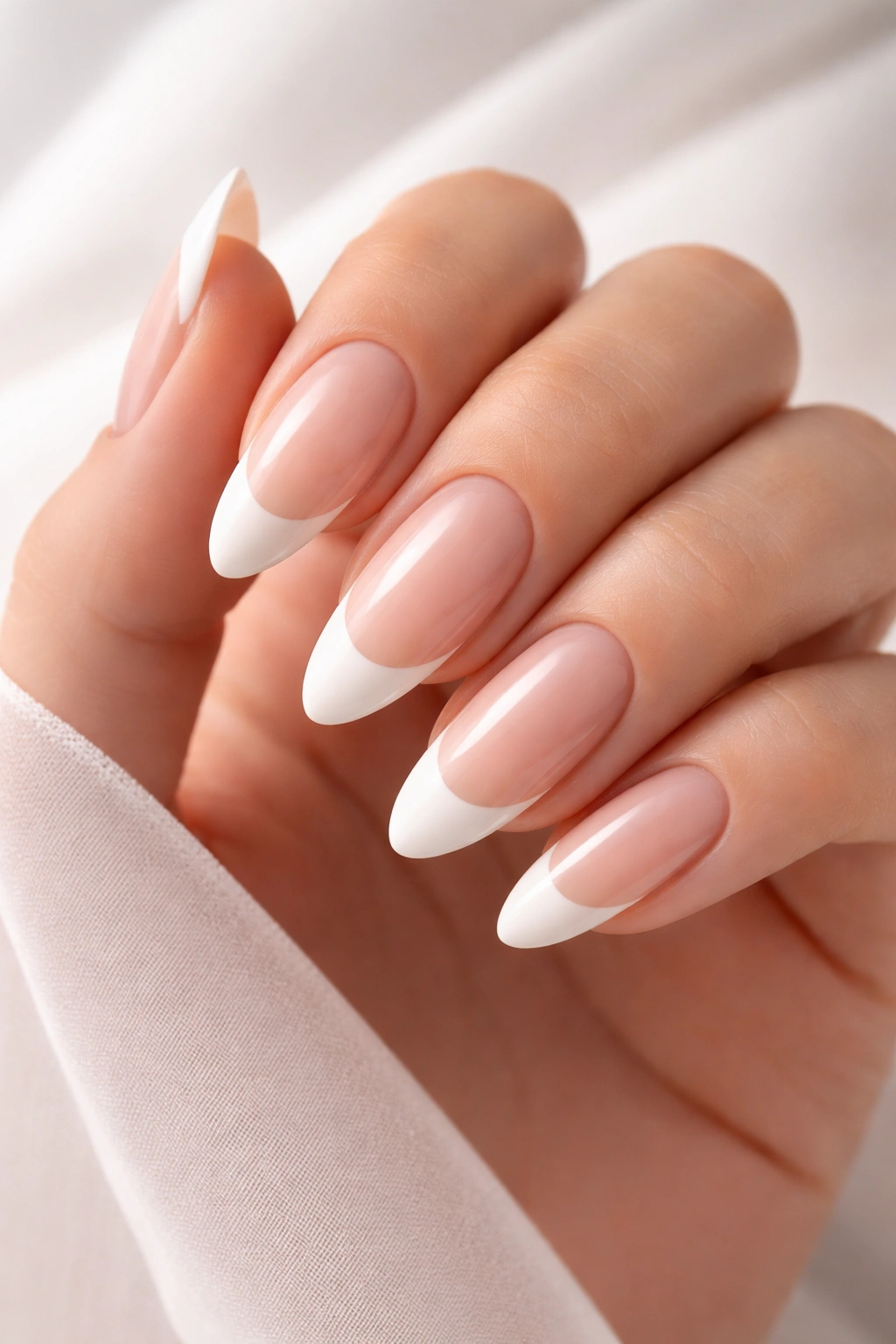
While we’re focusing on round, a mention of soft almond shape is important because it’s similar in philosophy—it elongates slightly while maintaining softness and wearability. The tip is rounded but ever-so-slightly more tapered than a perfect circle. With a French tip, this subtle elongation creates an almost royal aesthetic without being dramatic. The almond shape photographs beautifully and creates an elegant line that flatters hands.
The Subtle Difference Between Round and Almond
A true round nail follows the exact contour of your fingertip with no deviation. A soft almond gently tapers as you approach the free edge, creating a softer point (not a sharp point—we’re talking barely-there tapering). This subtle difference creates a slightly more elongated silhouette while maintaining the softness and durability of a round shape. It’s particularly flattering on longer nails because the gentle taper creates the illusion of additional length without actually being dramatically longer.
Why Soft Almond Works for French Tips
- Creates more visual interest than a perfect circle while staying elegant
- Photographs beautifully from all angles
- Flatters most hand shapes more than a perfect round
- Still maintains excellent durability because the taper is subtle
- Makes hands look more delicate and refined
Consider trying this if: You love the idea of long round French nails but want just a touch more visual interest or elongation. Soft almond is the perfect bridge between round and more dramatic shapes.
9. Gemstone-Studded French Tips
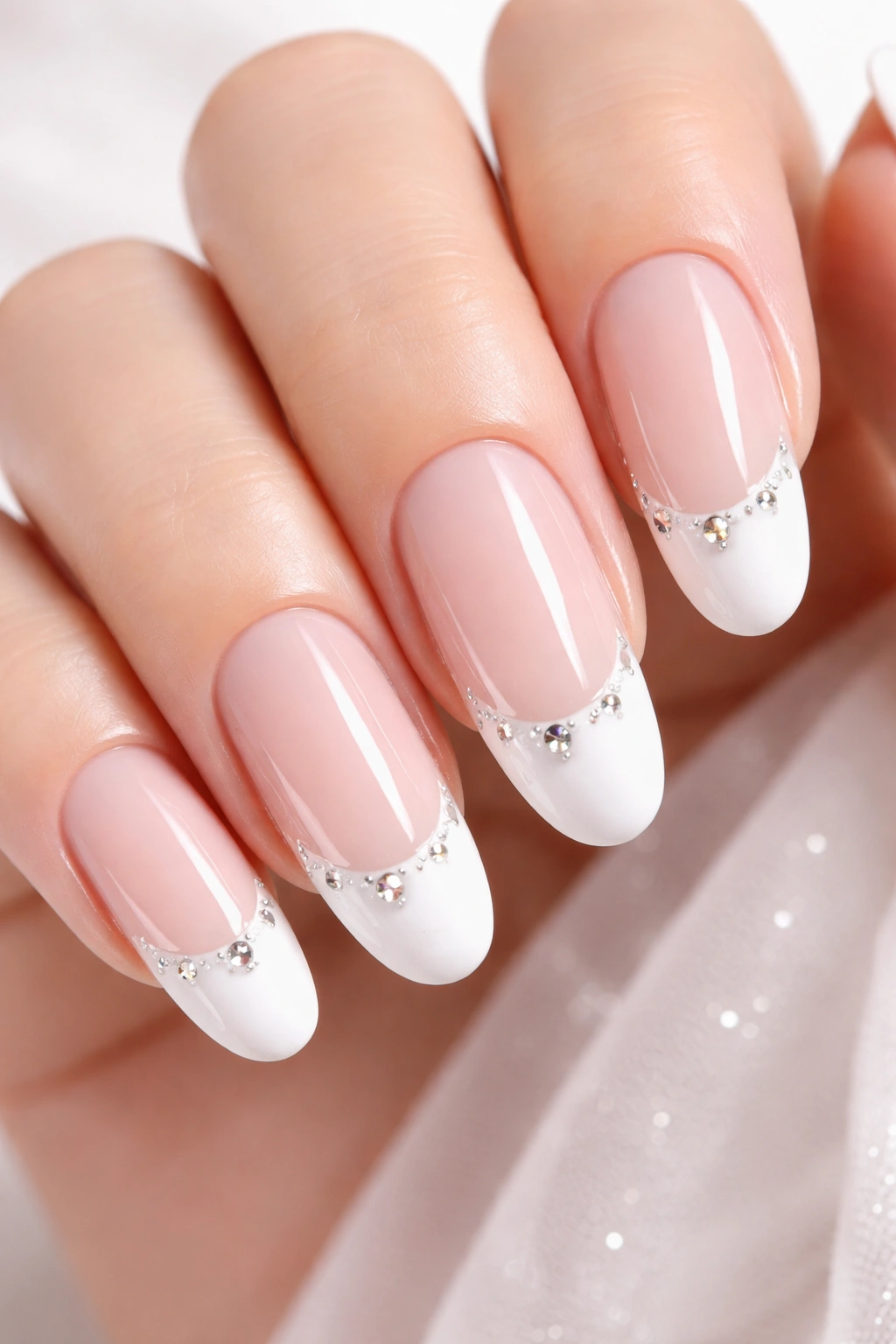
Subtle gemstone embellishments on the white tip or scattered along the French line add a touch of special-occasion glamour. Using quality rhinestones, Swarovski crystals, or opal-like embellishments in a carefully arranged pattern keeps the manicure classy rather than kitschy. A few well-placed stones catch light beautifully, especially on longer round nails where they can be spaced along the white tip area without feeling crowded.
Placement That Reads as Intentional
The difference between elegant and costume is all about placement. A single larger stone in the center of each white tip reads as a thoughtful detail. Small stones arranged in a geometric pattern or gradient looks like a design. Stones scattered randomly or covering the entire nail reads as costume-y. For the most sophisticated approach, place stones only on a few nails (usually the ring finger on each hand) rather than covering all ten nails with embellishments.
Stone Types and Effects
- Clear Swarovski crystals for maximum sparkle and a jewelry-like appearance
- Opal-like stones for a softer, more mystical sparkle
- Rose gold or champagne-toned stones for warmer elegance
- Blue or emerald stones for special-occasion drama (still classy if placement is restrained)
- Ombré gradient of stones from white to gold for sophisticated visual movement
Pro tip: High-quality adhesive matters enormously with gemstone application. Cheap stones applied with weak adhesive will fall off within days. Invest in proper nail art adhesive and quality stones if you want them to stay.
10. Two-Tone French Nail Design
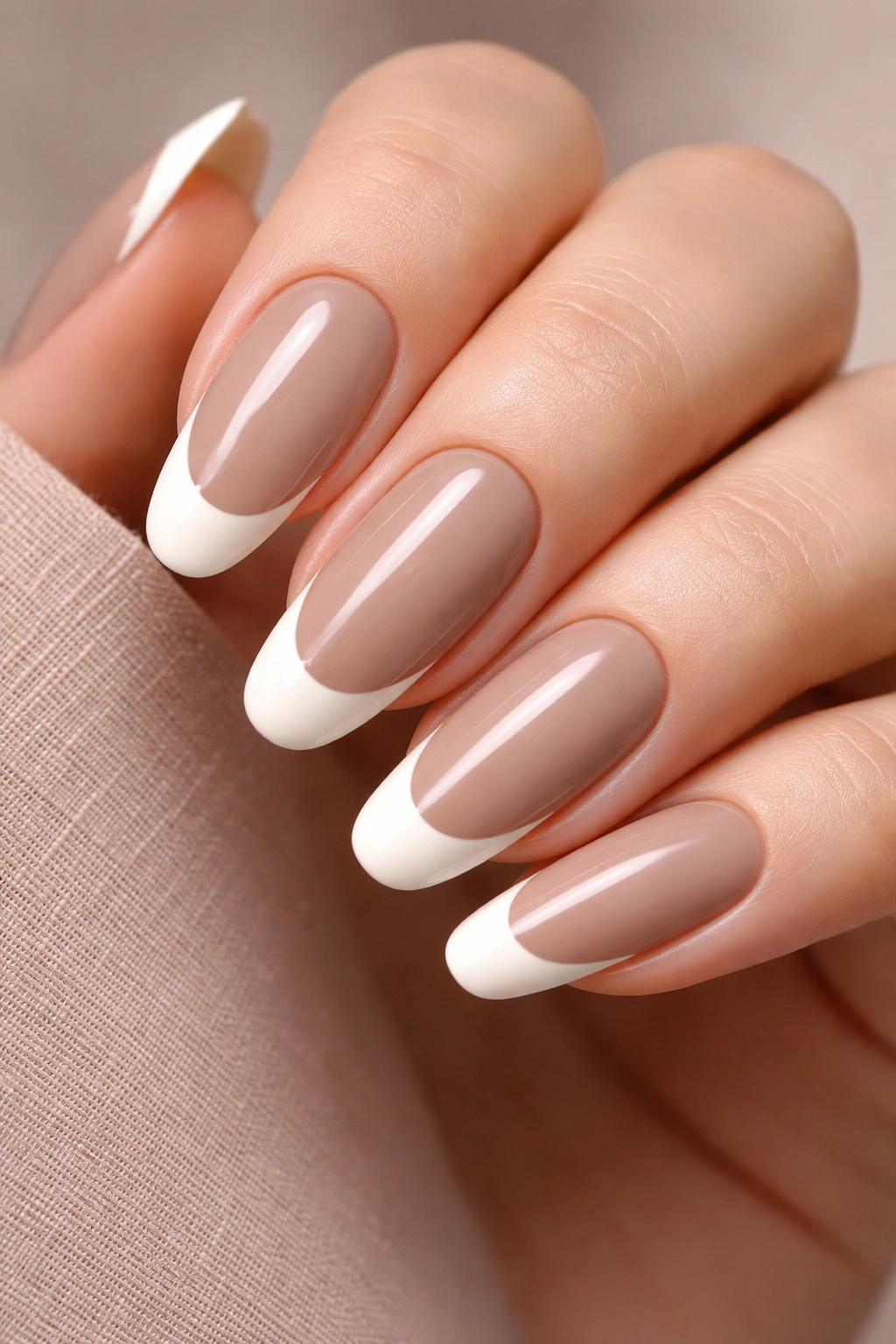
Instead of white and pink, use two other complementary colors for your French tip design. Think ivory tip with a warm beige base, white with a soft gray base, or champagne with a nude base. By moving away from the traditional pink-and-white, you create something that feels more unique while maintaining the French tip structure and elegance. The round shape accommodates color exploration beautifully because the curved surface distributes color evenly.
Color Combinations That Work
- Ivory and warm taupe (sophisticated and earthy)
- White and soft gray (modern and cool-toned)
- Pale champagne and deeper taupe (luxurious and editorial)
- Cream and soft sage (unexpected and refined)
- Pale pink and warm sand (elevated and subtle)
Why Breaking from Traditional Pink Matters
Using unexpected colors signals taste and intentionality. It shows you’ve thought about what complements your skin tone and personal style rather than defaulting to the ubiquitous classic. Non-traditional color combinations often photograph better too—they’re more visually interesting while maintaining the elegant French tip structure. This is a sophisticated way to personalize the classic without sacrificing any of its inherent polish.
Consideration: Choose colors that work with your skin tone’s undertones. Cool-toned people should lean toward cool-toned combinations, while warm-toned skin benefits from warmer color pairings. This attention to tone makes any color choice look intentional and flattering.
11. Matte Finish French Nails
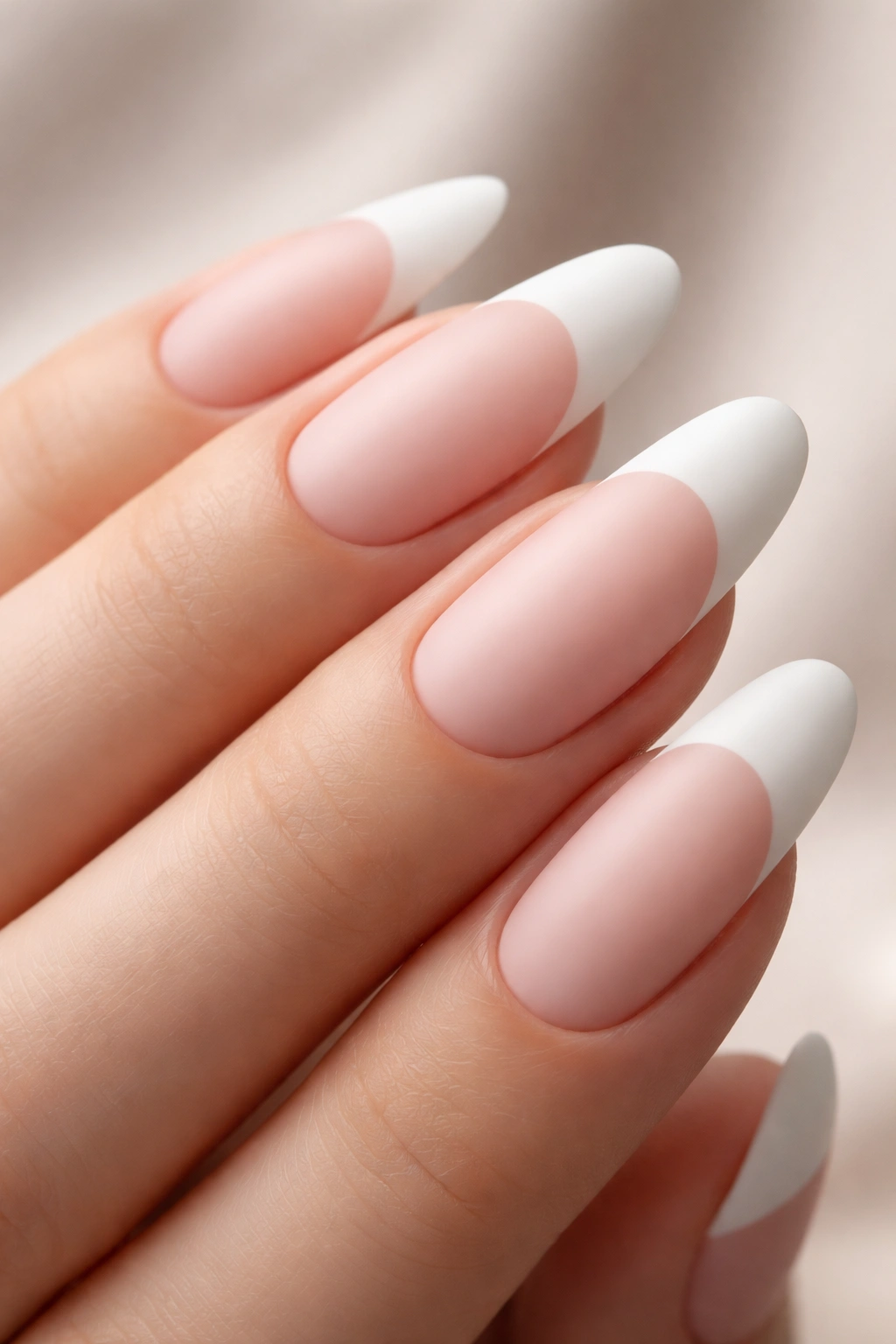
A matte top coat completely transforms the French manicure. Instead of the expected shine, a velvety matte finish creates a textural contrast that feels unexpectedly luxe. The white matte tip looks almost velvet-y, and the transition between the glossy base and matte tip creates visual interest. Matte finishes are particularly sophisticated on longer round nails because the larger surface area shows off the finish beautifully.
The Sophistication of Matte
Matte finishes have become increasingly associated with high-end, editorial beauty because they look intentional and non-conventional. Most manicures default to shine, so choosing matte reads as a deliberate style choice rather than a default setting. Matte also tends to hide imperfections better than glossy finishes—a glossy surface highlights every tiny bump or irregularity, while matte diffuses light and creates a more forgiving surface.
Creating Dimension with Matte
- Matte white tip on a glossy pink base creates textural contrast
- All-over matte (both base and tip) with a single glossy accent creates sophisticated minimalism
- Matte finish on the white tip only, with a slightly shinier base, creates visual hierarchy
Pro tip: Matte finishes require more careful maintenance because they show every smudge and waterspot. Use a cuticle oil or hand cream regularly to keep the finish looking fresh and intentional rather than dull.
12. Chrome and Metallic French Tips
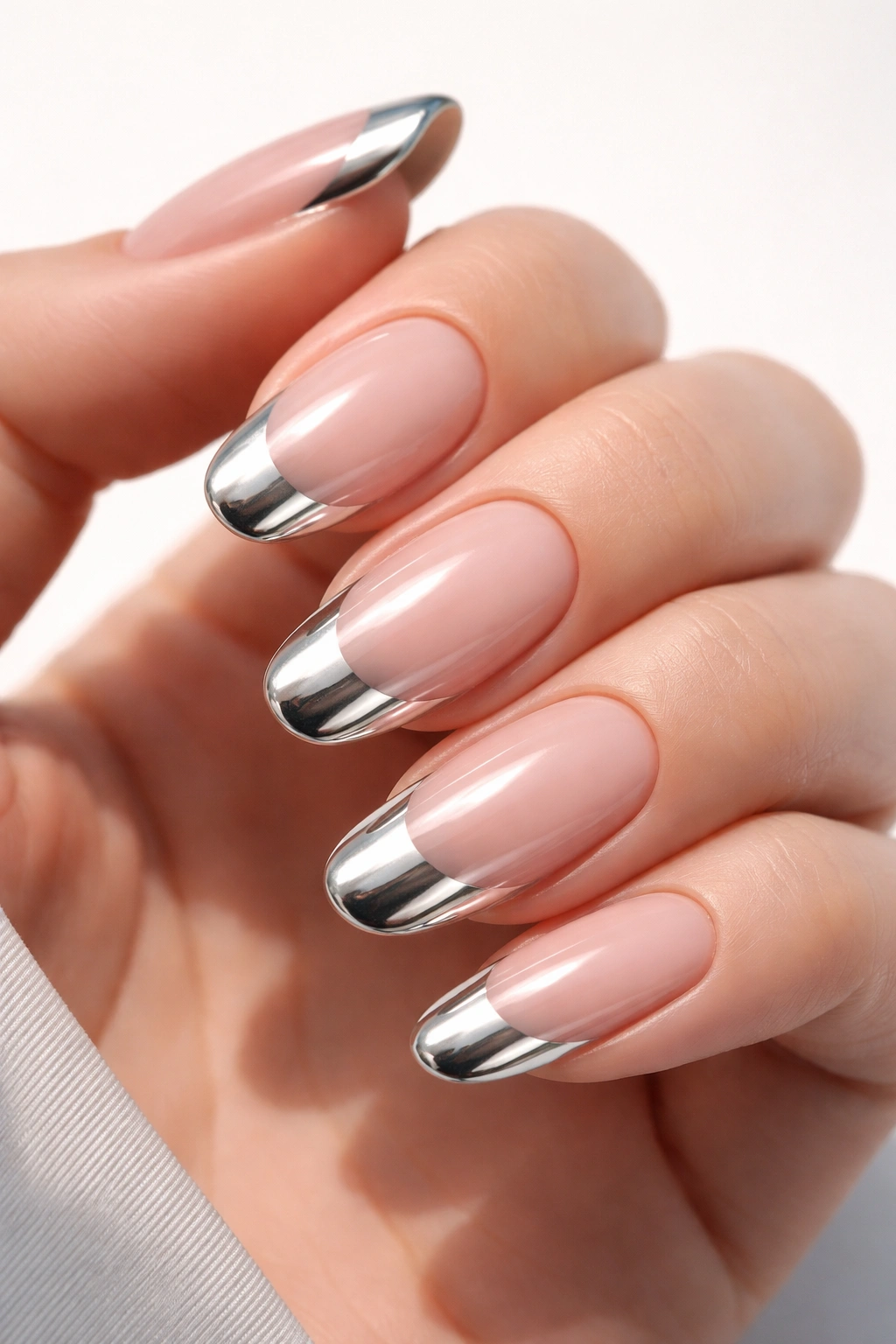
Push into luxury territory with chrome or metallic finishes on your French tips. Chrome creates an almost mirror-like, reflective surface that catches light dramatically. Metallic options include gold, rose gold, silver, or copper. These finishes feel special-occasion ready while still maintaining the elegance of the French tip structure. On long round nails, the curved surface reflects light beautifully, creating an almost three-dimensional effect.
Making Chrome Feel Classy Rather Than Costume
The key is using chrome or metallic finishes on just the tip, not the entire nail. A chrome white tip over a soft pink or nude base feels editorial and intentional. Chrome covering the entire nail reads as more theatrical. The most sophisticated approach is a very thin line of chrome or metallic at the edge where the pink and white meet—it acts like jewelry framing the manicure without overwhelming it.
Types of Metallic Finishes
- Chrome white (almost mirrored and ultra-reflective)
- Brushed gold or rose gold (softer and less reflective than chrome)
- Holographic or rainbow chrome (catches different colors depending on angle)
- Matte metallic (textured rather than reflective)
- Foil finishes (flat and slightly more subtle than chrome)
Worth knowing: Chrome and metallic finishes require specific products to achieve correctly—not all polishes achieve that reflective quality. Professional application usually yields better results than DIY with these finishes.
How to Maintain Long French Nails
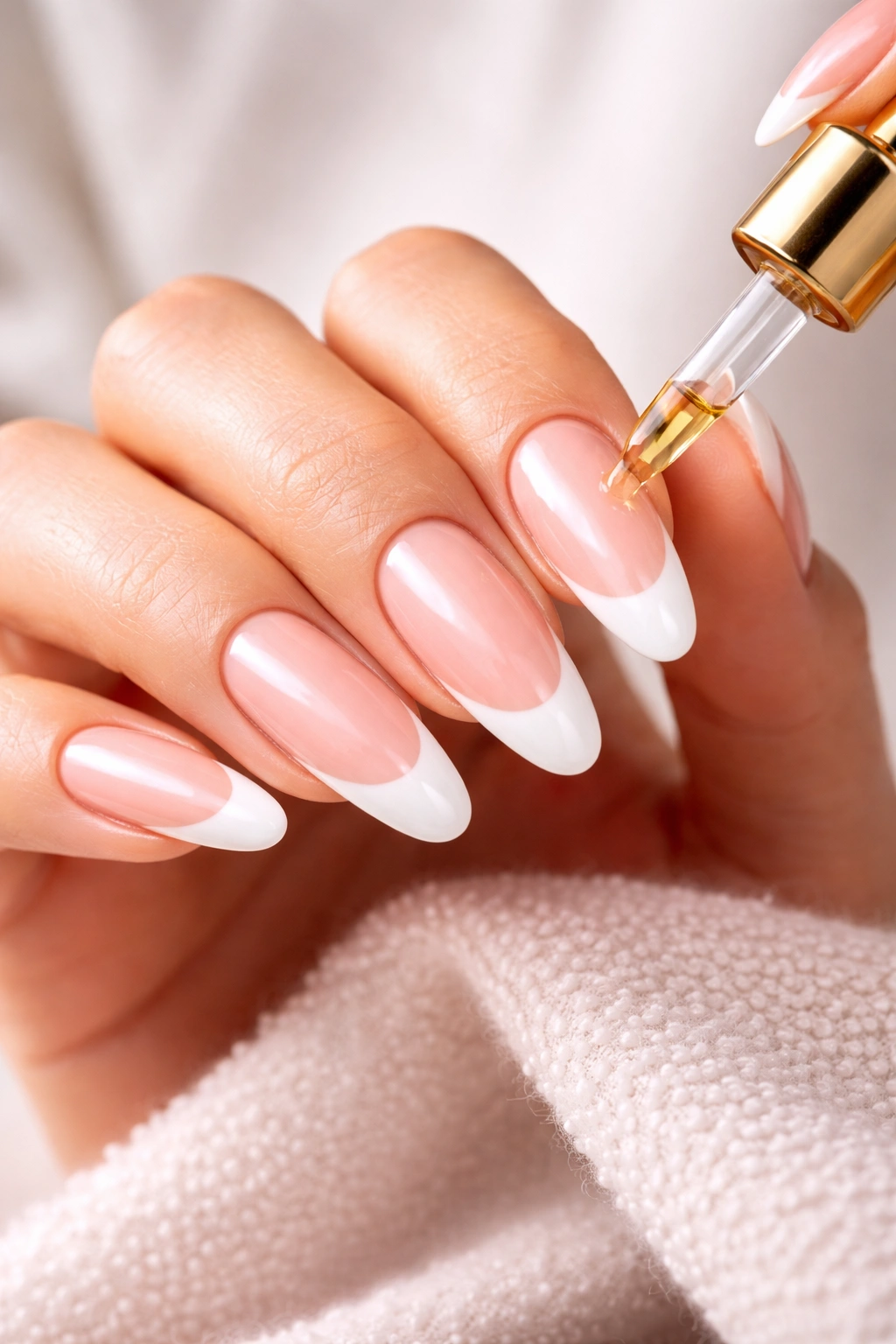
Long nails require consistent care to stay looking polished rather than ragged. The better you maintain them, the longer your manicure actually looks good between appointments. Maintenance is the difference between nails that look intentional and polished versus neglected.
Daily Care Habits That Matter
Wear gloves when cleaning, gardening, or doing dishes. Water exposure weakens nails and causes peeling. Keep cuticles hydrated with cuticle oil or hand cream multiple times daily—this prevents hangnails and keeps the base of the nail looking neat. Use your nails as tools as little as possible; use actual tools for opening packages or scraping things. Avoid excessive heat exposure, which dries nails out and makes them brittle.
Regular Maintenance Schedule
Plan for a touch-up every two to three weeks to keep the French line clean and prevent the natural nail from showing at the base. If you’re doing this at home, invest in quality tools—a good file, a buffer, and proper nail polish. If you’re visiting a salon, developing a relationship with a single nail technician who understands your preferences makes a huge difference in consistency. Between appointments, use a nail file to address any rough edges or slight breakage immediately—don’t wait until they become major problems.
Seasonal Adjustments
During colder, drier months, increase your cuticle oil usage and consider slightly shorter lengths if you experience more brittleness. During warmer months when you’re more exposed to sun and chlorine, protect your nails with sunscreen on your hands and wear gloves when swimming. These small adjustments keep your nails in optimal condition year-round.
Styling Tips to Make French Nails Look Their Best
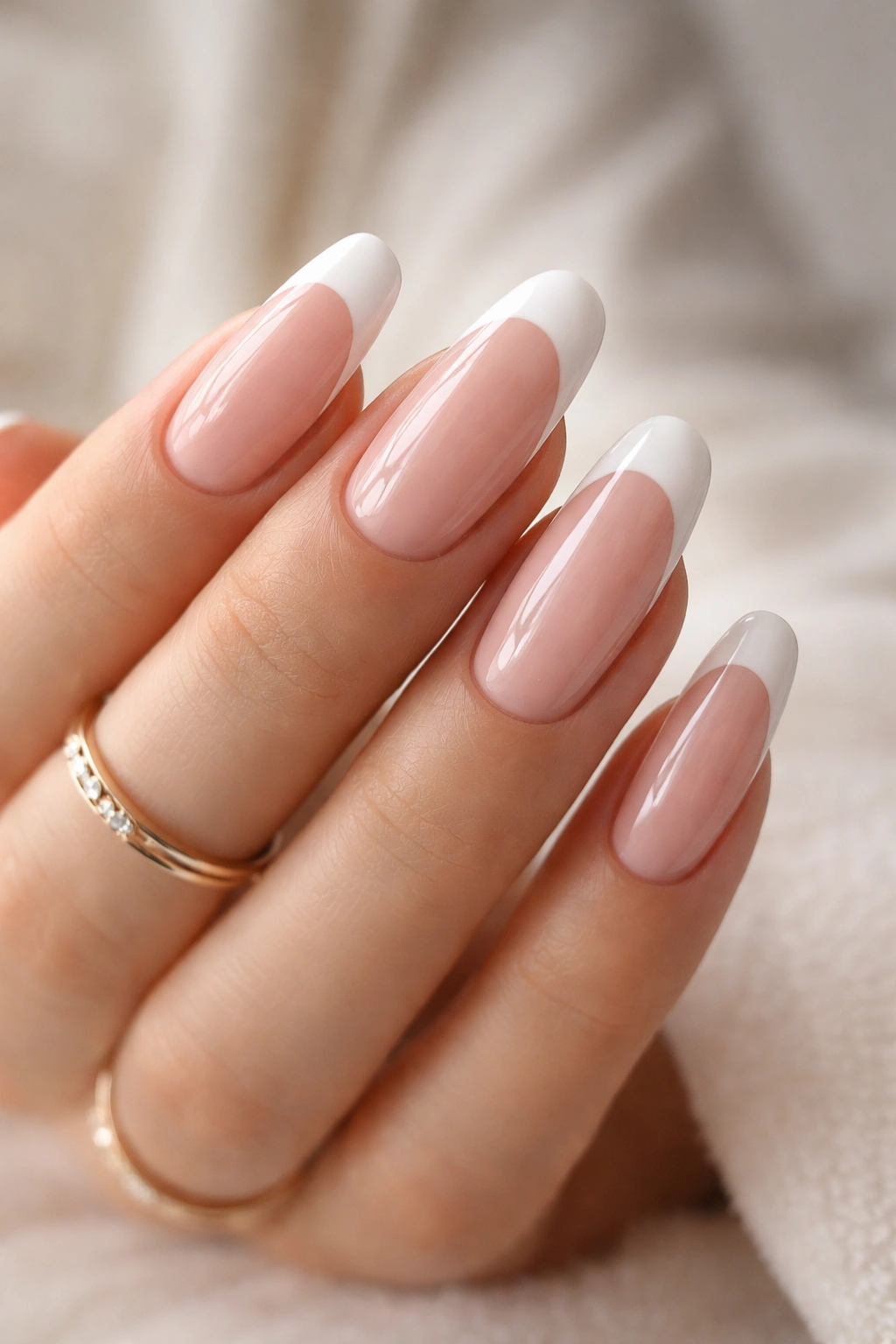
French nails with a specific design aren’t just something you wear; they’re something you wear with. The right jewelry, clothing choices, and even hand placement in photos amplifies their impact.
Jewelry Pairing
Since French nails draw attention to your hands, the jewelry you wear matters significantly. Delicate, understated pieces complement French nails beautifully—think simple gold rings, pearl or diamond studs, or slim bracelets. Chunky, bold jewelry can compete with your manicure. If you’re wearing statement jewelry, consider a more neutral nail design (classic pink and white) so the focus stays balanced.
Clothing and Color Choices
French nails work with virtually any color palette, but certain combinations feel particularly polished. Neutral clothing (blacks, grays, whites, beiges) lets your nails be the detail that draws attention. Jewel tones look particularly striking paired with French nails. Avoid colors that nearly match your nail color, which creates a flat, monochromatic effect that’s less visually interesting.
Hand Placement and Angles
In photographs or when someone is looking at your hands, angles matter. Let your hands rest naturally with palms slightly visible—this shows off your manicure better than clenched fists or palms-down placement. When gesturing or holding something, be slightly conscious of how your nails are showing. Long, round French nails are made to be visible and noticed, so embrace it.
DIY vs Professional French Nail Application
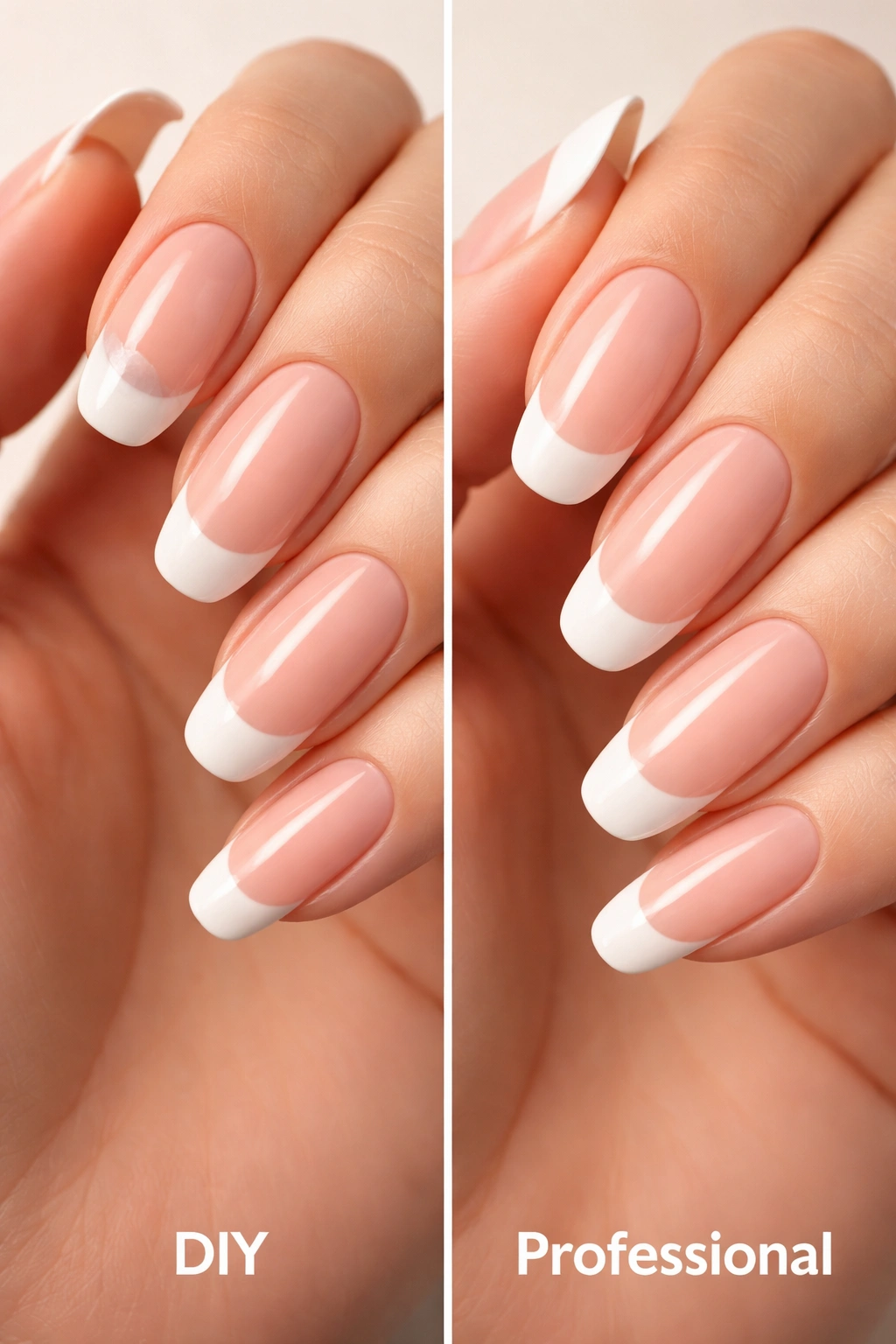
Both have advantages, and your choice depends on your skill level, time availability, and expectations for precision.
When DIY Makes Sense
If you’re experienced with nail polish application, have steady hands, and don’t mind the occasional imperfection, DIY can save money. Simple French tip designs (traditional pink and white, basic colors, minimalist) are achievable at home with practice. You’ll need quality tools—a good file, buffer, base coat, two or three quality polishes, and a top coat. The learning curve exists, and your first few attempts might not be salon-quality, but you can improve with practice.
When Professional Application Is Worth It
Complex designs (ombre, glitter, gemstones, hand-painted details, chrome finishes) really require professional skill. The time investment alone (a professional might spend 30-45 minutes on a complex design versus potentially 2+ hours if you’re doing it yourself) often makes salon visits worthwhile. Additionally, professionals have access to specialty products, tools, and techniques that are difficult to replicate at home. For special occasions or when you want absolutely flawless results, the money spent on professional application is absolutely worth it.
The Hybrid Approach
Many people do basic maintenance at home (filing, touch-ups between appointments) while getting complex designs done professionally. This balances cost with quality—you get professional results on important occasions while maintaining nails at home in between. It’s the best of both worlds if you’re willing to put in minimal effort.
Common Mistakes to Avoid
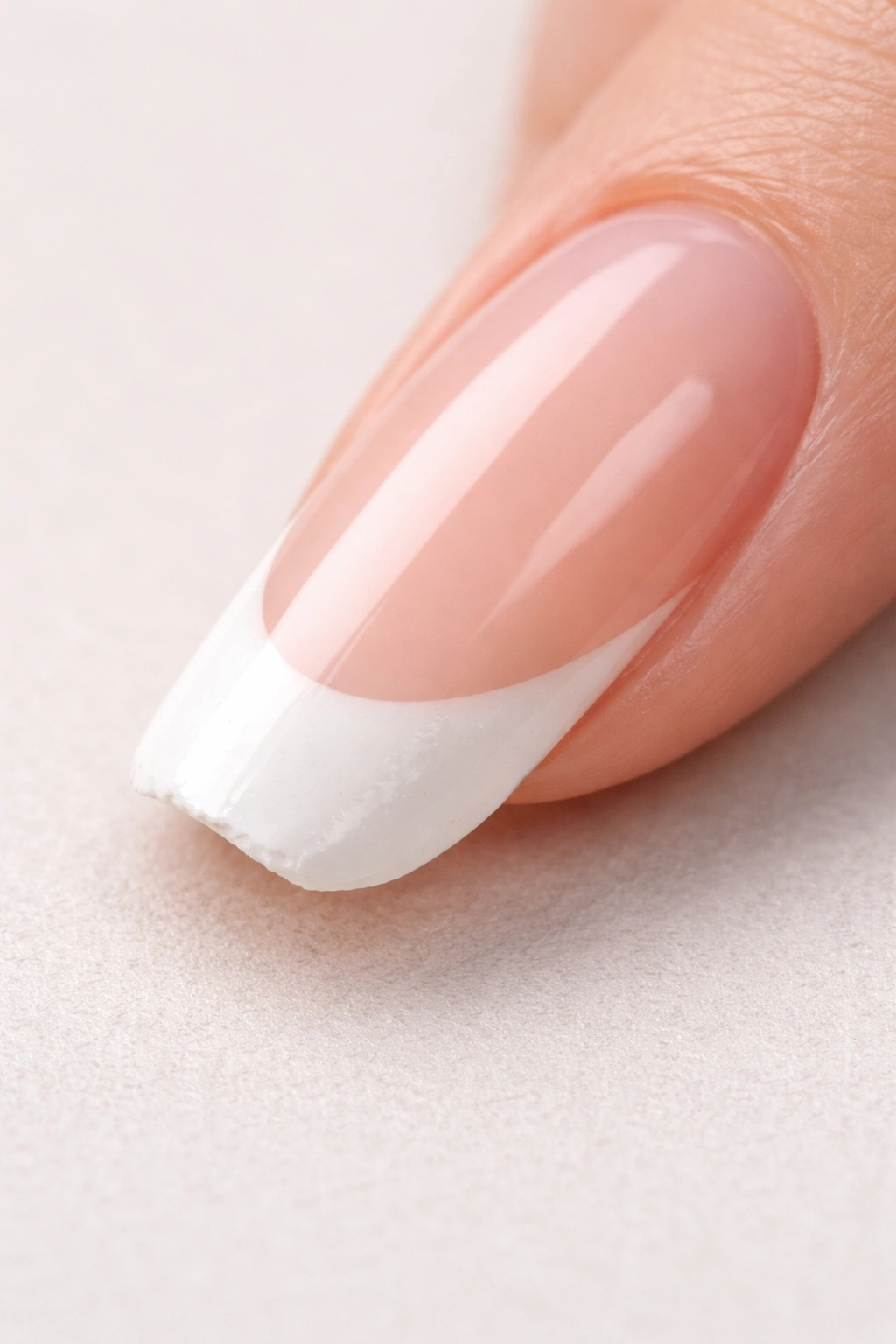
Even with the best intentions, certain habits and choices can make French nails look less polished than they should.
Shape and Filing Errors
Filing your nails too aggressively or at the wrong angle weakens the nail edge and causes splitting. Use a gentle downward stroke at a 45-degree angle, always stroking in one direction rather than sawing back and forth. A rounded file is gentler on nails than sharp-edged metal files. Avoid filing too short—maintaining adequate length means stronger nails and a more intentional look.
Color and Proportion Issues
Choosing a white tip that’s too thick or too thin disrupts the balance of the design. Most professionals aim for about 2-3mm of white tip, depending on the total nail size. Using white that’s too yellow or too blue creates an unrefined look—seek out pure whites or warm whites depending on your preference. The base color matters too; a pink that’s too dark or too orange can look dated rather than classic.
Neglecting Maintenance
The biggest mistake is letting your French tips go too long between maintenance. Visible regrowth at the base, a yellowed or chipped white tip, and rough edges make even the most beautiful design look neglected. Regular maintenance is non-negotiable for keeping long nails looking classy.
Final Thoughts
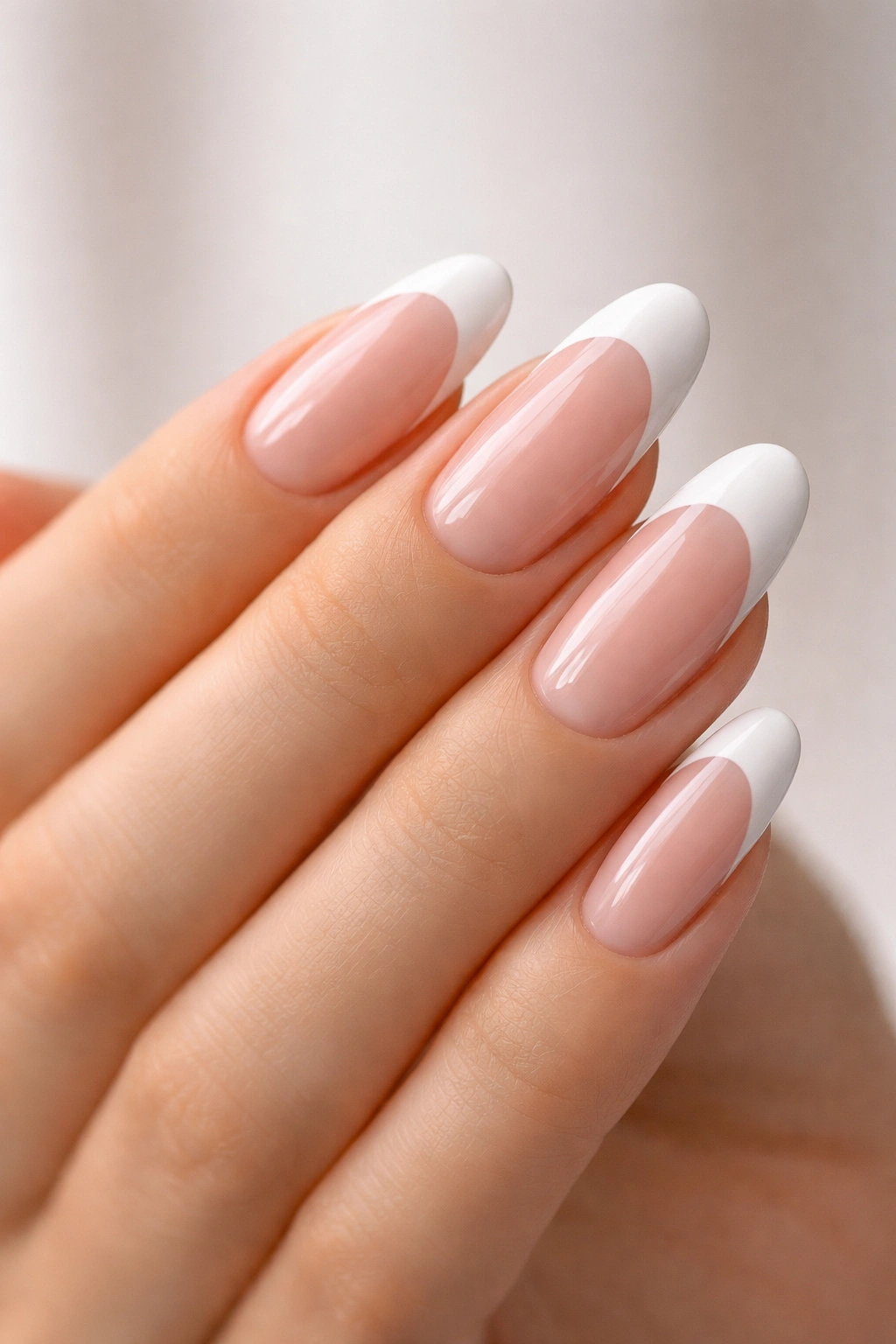
Long round French nails represent a perfect intersection of elegance, practicality, and timelessness. They work for virtually every occasion, flatter most hand shapes, and remain polished whether you’re at a formal event or running daily errands. The beauty of French tips is that they provide enough structure to feel intentional and refined, while also offering flexibility for personalization through color choices, finishes, and subtle details.
The twelve designs here represent different ways to interpret the French tip—from the purest classic version to more creative takes that add personality without sacrificing sophistication. Whether you choose a time-tested traditional pink and white or explore unexpected color combinations, chrome finishes, or subtle artistic touches, the underlying principle remains the same: French nails are classy because they’re restrained, precise, and made with intention.
The investment in regular maintenance—whether at a salon or at home—pays off in compliments and the genuine pleasure of looking down at your hands and seeing something that makes you feel polished and put-together. That’s the real luxury of a great manicure. It’s not about the cost; it’s about the consistent care and attention that makes your hands look and feel beautifully maintained. Long round French nails, done well and maintained regularly, deliver on that promise every single time.