


Blue can make or break a coffin set. On a tiny color swatch, baby blue, navy, teal, and cobalt all seem easy enough. Put those same shades on a tapered square tip, though, and every harsh line, chalky patch, and lazy blend jumps out the second your hand hits daylight.
That is why blue ombre coffin nails have more range than people give them credit for. They can read icy and clean, smoky and moody, glassy and almost translucent, or dark enough to feel a little dramatic. The trick is not piling on more glitter, more charms, more “extras.” The trick is getting the fade right.
I’m picky about ombre. A good gradient should look intentional from the cuticle to the free edge, and the coffin shape should stay sharp at the sides instead of ballooning out under layers of product. Too much white mixed into blue and the color goes flat. Too much pigment at the tip and the nail loses that soft melt that makes ombre worth doing in the first place.
Small choices decide the whole set—length, undertone, finish, and where the color starts fading—so it helps to sort those out before you pick the exact design.
Why Blue Ombre Coffin Nails Look So Good on a Tapered Tip
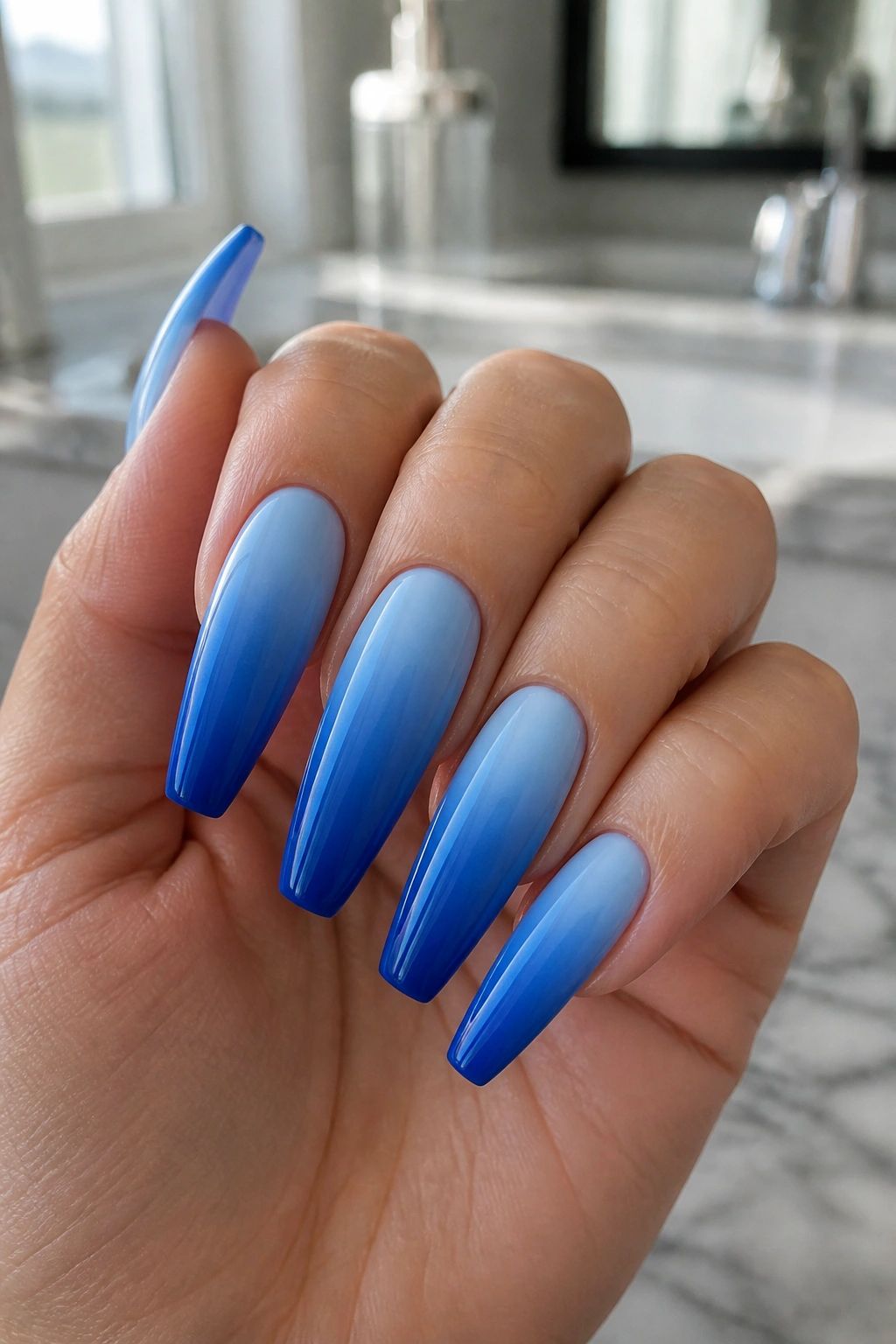
Why does this color family look stronger on coffin nails than on round or almond shapes? Geometry. The tapered sidewalls pull your eye inward, while the flat tip gives the gradient a clear stopping point. Blue has enough depth to show that shape off instead of washing it out.
A coffin nail also gives the ombre room to breathe. On a short rounded nail, the fade can collapse into two blurry bands. On a medium or long coffin tip, your tech has space to build a transition that moves from sheer at the cuticle to dense at the tip without that awkward stripe in the middle.
Blue shows every flaw.
That sounds harsh, but it is true. Pale blue makes patchiness obvious, navy makes thickness obvious, and chrome-tinted blue makes every lump in the surface reflect back at you. A clean coffin shape helps control that because the structure is easier to read from every angle.
Three things make this shape especially good for blue fades:
- The straight side lines keep the color shift looking narrow and neat.
- The flat edge makes darker tips feel deliberate rather than muddy.
- The extra length gives you room for two or three blue tones instead of a blunt color jump.
If you want a blue manicure that feels more polished than playful, coffin is the shape I’d pick first.
Choosing the Right Length for Blue Ombre Coffin Nails
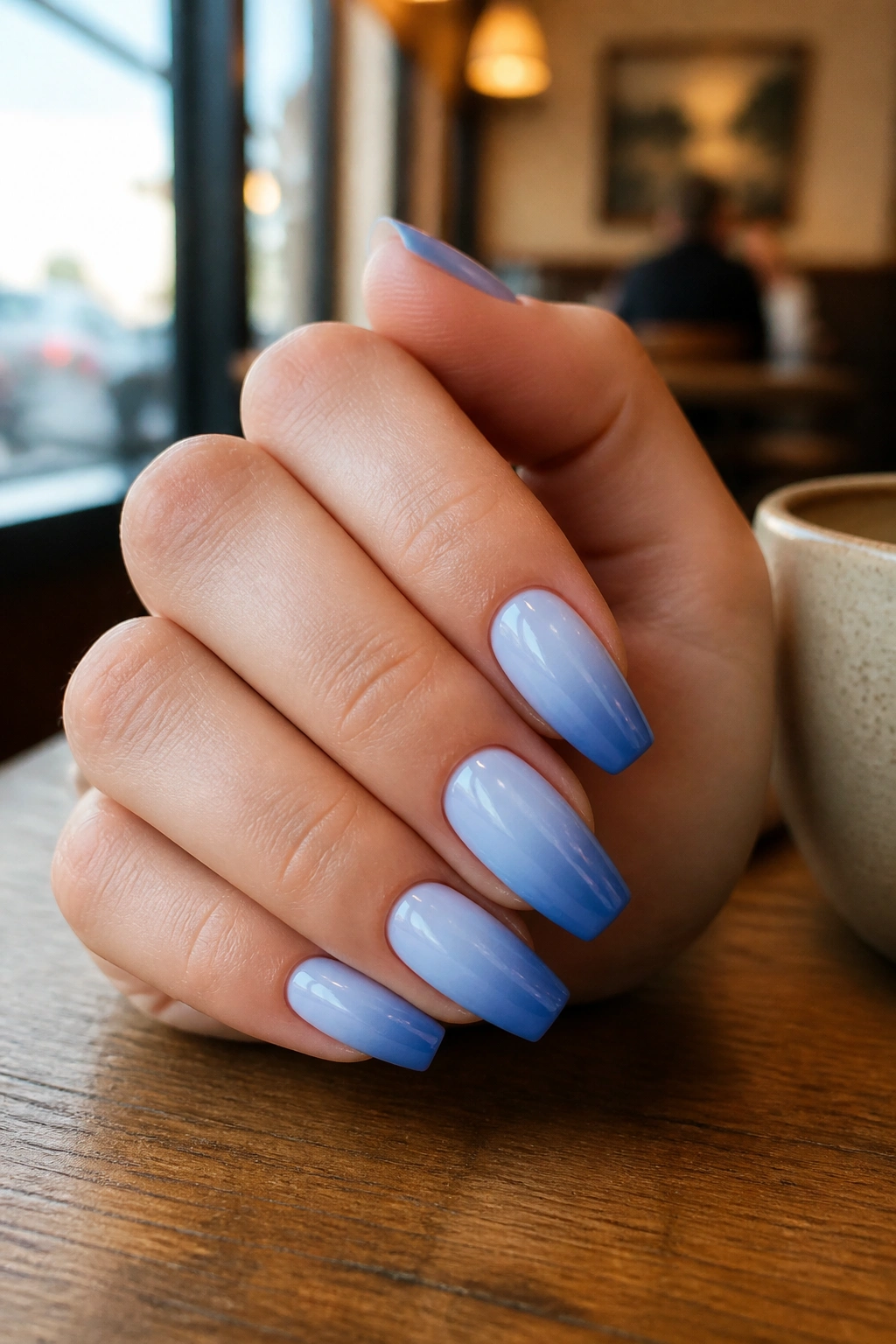
Length changes the whole mood of the fade. Same colors, different length, completely different manicure.
Short coffin nails—about 3 to 5 mm past the fingertip—look best with light-to-light blends, sheer jelly finishes, or nude bases with a blue haze near the tip. There just is not enough room for a dramatic navy-to-sky transition unless your tech is skilled with an airbrush.
Medium length is the sweet spot for most people. Think 6 to 10 mm past the fingertip. You get enough surface for a smooth gradient, your hands still work like normal, and the shape stays crisp for longer between fills.
Long coffin nails can handle the moody stuff: deep teal, blackened blue, sapphire glitter, chrome dust, even a clear jelly tip. They also need more structure at the apex—the built-up center of the nail that keeps the extension from snapping when you reach into a bag or catch a drawer edge.
A quick cheat sheet helps:
- Short coffin: milky blue, baby blue, nude-to-blue smoke
- Medium coffin: powder blue, cobalt glass, denim blue, periwinkle chrome
- Long coffin: navy fade, teal-black, glitter dip, ocean-to-clear jelly
If your daily life includes keyboards, gym gloves, or opening soda cans with your fingertips—yes, people still do that—medium is usually the smartest place to land.
How to Ask for Blue Ombre Coffin Nails That Fade Smoothly
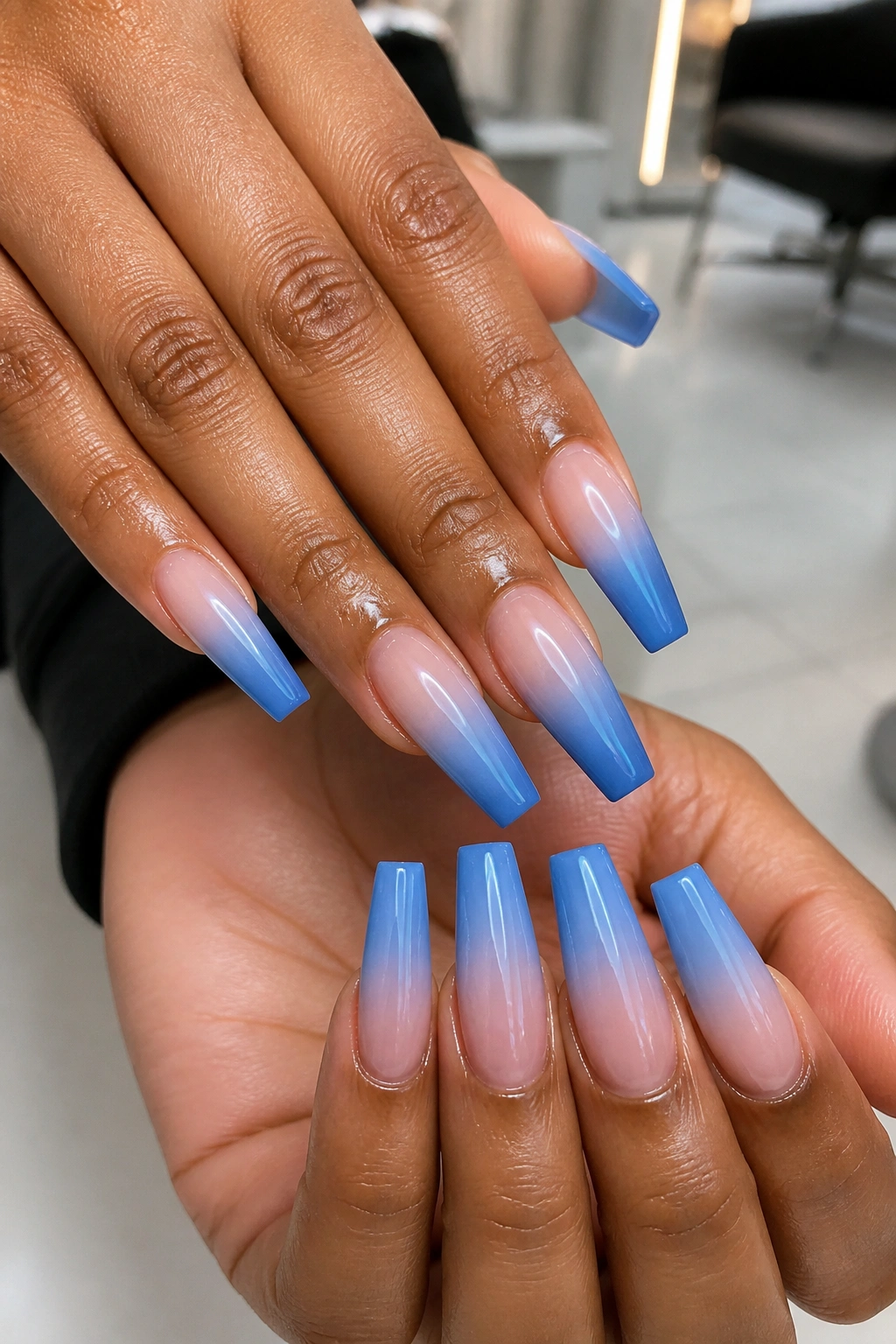
Do not sit down in the salon chair and ask for “blue ombre” like that is enough information. It is not. Blue can skew icy, dusty, gray, green, violet, or almost black depending on the pigment, and each finish changes the result again.
Pick the Blend Method Before the Color
A sponge ombre gives a soft fade, though it can look grainy if the gel is thick. An airbrushed fade is smoother and more even, especially with pale blue. A brush-blended gel fade works well for jelly shades and smoke effects because the color stays translucent instead of turning chalky.
If you like that glassy, almost wet look, ask for sheer blue gel layers rather than dense acrylic powder packed from tip to center. If you want a velvety matte set, your nail tech needs the surface almost flawless before top coat goes on, because matte does not hide dents.
Decide Where the Color Should Start
A cuticle fade gives you a softer grow-out. A mid-nail fade looks more dramatic but also needs cleaner upkeep because the color shift sits right where chips and scratches catch attention. Tip-heavy ombre is bold and sharp; full-length ombre feels softer.
Use plain language. Tell your tech things like:
- “I want the blue strongest in the last third of the nail.”
- “Keep the cuticle area milky, not nude.”
- “Make the blue sheer at first, then build it darker at the tip.”
- “I don’t want a white stripe under the blue.”
Choose the Finish Early
Gloss, matte, chrome, shimmer, jelly, cat-eye—each one changes how the ombre reads. A chrome powder over a soft blue fade makes the set colder and more metallic. A matte top coat makes dusty blue look richer. Fine shimmer can hide tiny blend flaws. Chunky glitter usually does the opposite.
And if you only remember one thing, remember this: ask to see the blue against your skin before application starts. A cool baby blue that looks clean in the jar can turn ashy once it is on the nail.
1. Icy Baby Blue Melting Into Milky White
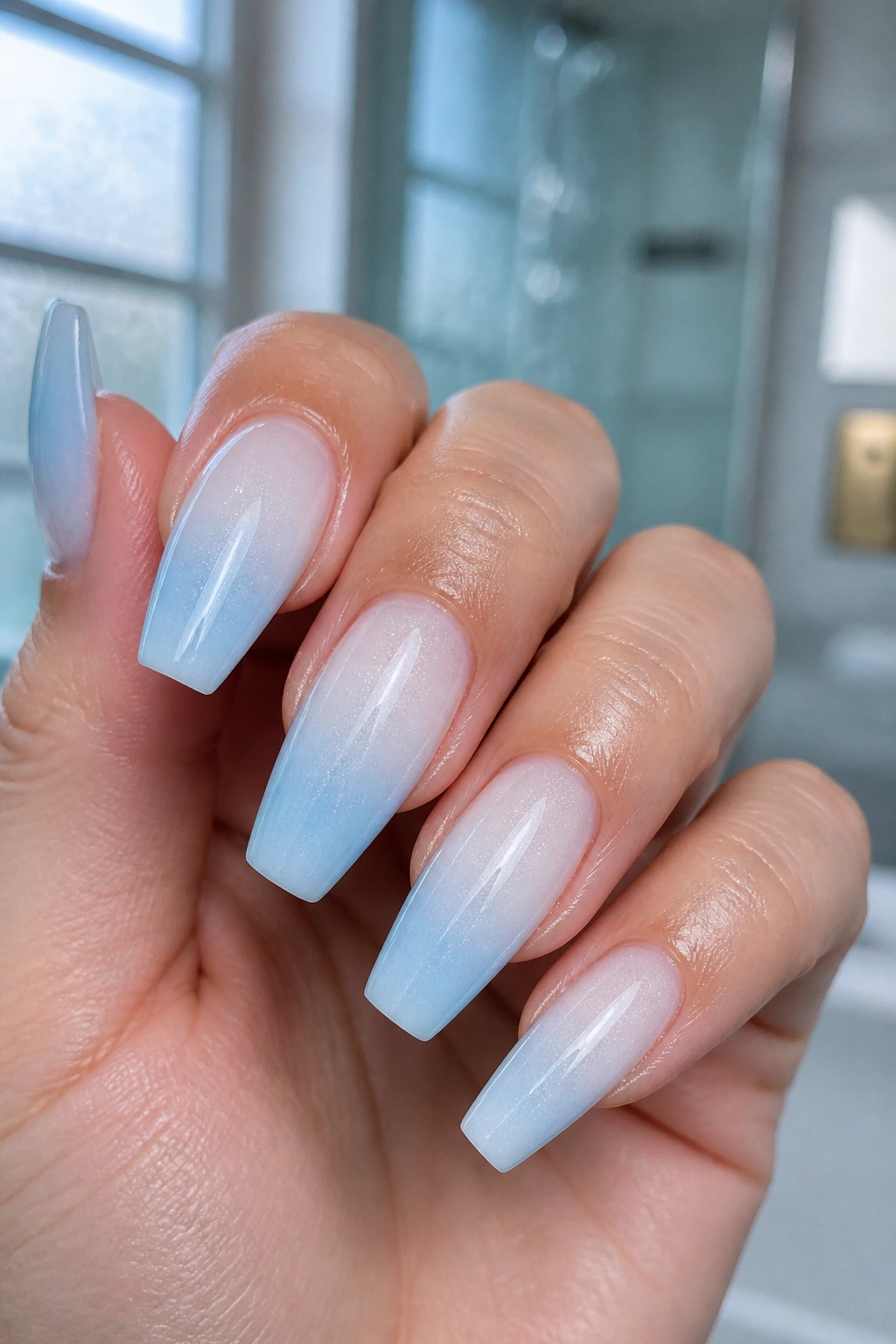
Cold, clean, and a little crisp around the edges, this is the set I’d point someone toward if they want blue ombre without committing to a dark manicure. The fade starts with a milky white or sheer cream base near the cuticle, then drifts into baby blue through the center before settling into a stronger icy tip.
The reason this design works so well on coffin nails is contrast. The shape has enough edge to keep the pale colors from feeling washed out, and the white at the base makes the blue look brighter instead of chalkier. That last part matters more than it sounds. If the white is too opaque, the whole nail can start reading like correction fluid under cool indoor light.
Why the White Matters
Milky white is softer than stark white, and that softness is what keeps the blend from looking striped. Your nail tech should build the fade in thin layers, curing between each one, rather than trying to smash white and blue together in one pass.
A thin shimmer top coat can help here, though I would skip chunky glitter. This look is strongest when the surface stays smooth and almost frosted.
Quick notes for this set:
- Best length: short to medium coffin
- Best finish: glossy or soft satin
- Ask for: a sheer white base, not a solid white block
- Watch for: blue that turns too gray halfway down the nail
Good call for: bridal events, winter trips, or anyone who wants a blue manicure that still feels light.
2. Powder Blue to Slate Blue Matte
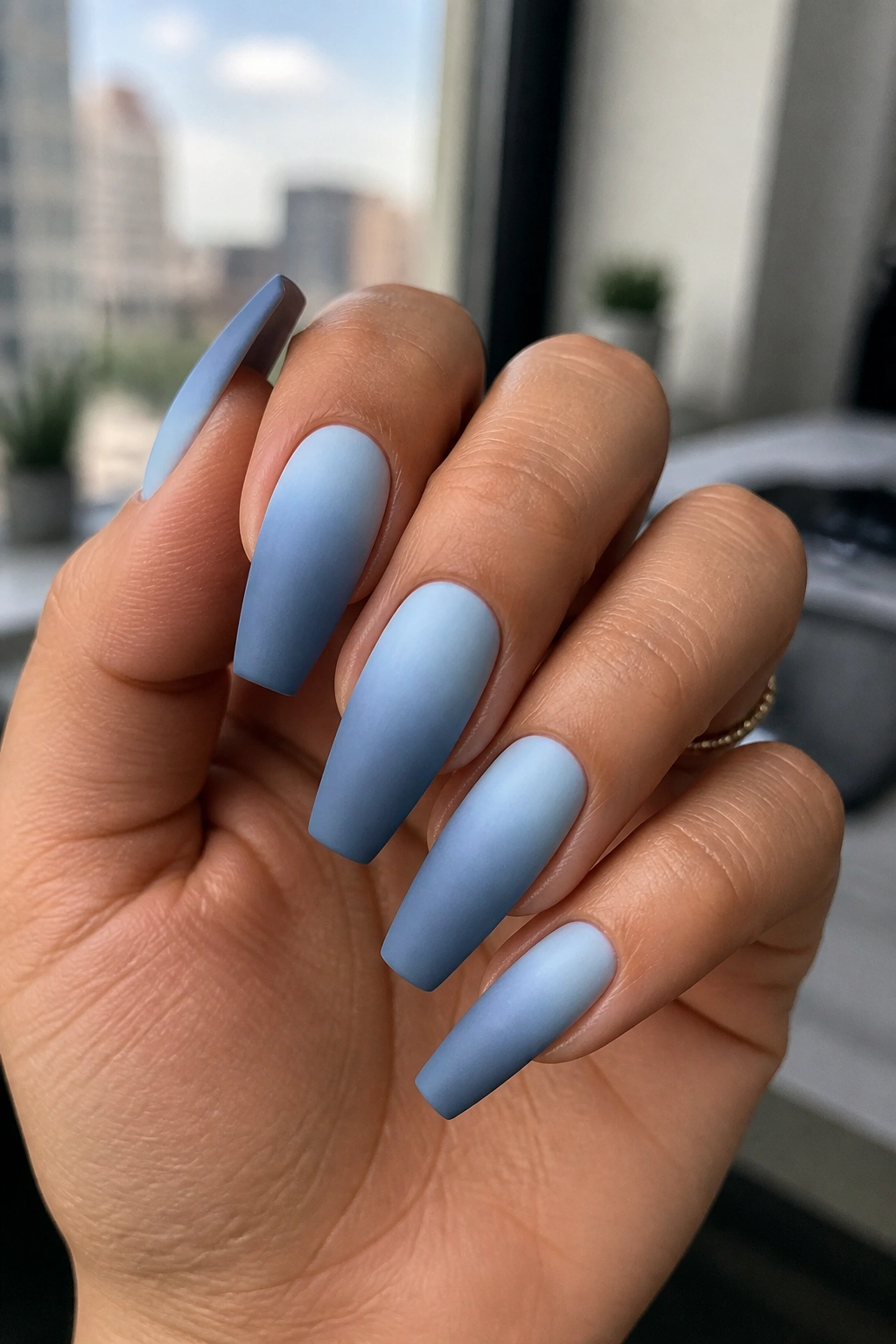
Matte makes dusty blue look richer. Not louder. Richer.
This fade starts pale at the cuticle with a soft powder blue, then deepens into a muted slate at the tip. Done well, it has that chalky-cashmere feel that a glossy finish cannot give you. The coffin shape helps because the straight edges keep the dusty tones from looking sleepy. On a rounded shape, the same color story can drift into “cute.” On coffin, it reads more deliberate.
There is one catch: matte exposes every flaw. The apex needs to be balanced, the sidewalls need to stay even, and the surface needs to be filed smooth before top coat. If your tech leaves ripples in the product, matte will show them faster than gloss.
I like this set best on medium-length nails with no rhinestones at all. Maybe a single matte accent on one finger if you cannot resist detail work, but more than that starts fighting the color gradient. Slate blue already gives you depth. You do not need extra noise.
Silver jewelry tends to sharpen this look. Gold can work, though it changes the vibe and makes the powder blue feel warmer than intended.
3. Aqua to Cobalt Glass Fade
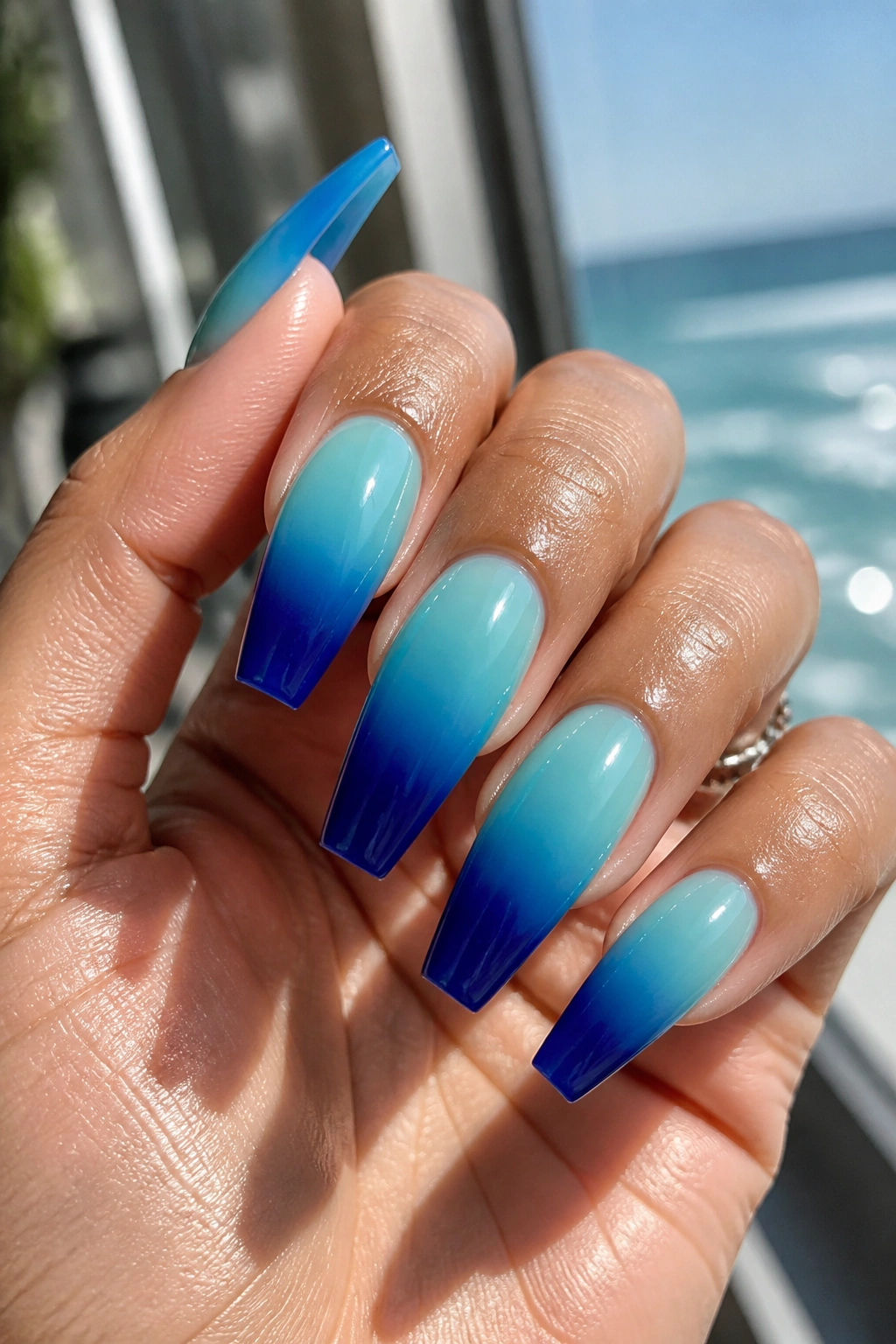
Why does this one look almost wet even when the top coat is fully cured? Transparency. Instead of building the fade with dense, creamy pigment, your tech uses jelly blue gels that let light pass through the layers. Aqua near the cuticle, deeper cobalt near the tip, and a glassy top coat over everything.
That translucence is what makes the ombre feel less painted-on and more suspended inside the nail. On a long coffin shape, the effect can be striking because the tip holds the darkest color while the center still glows through. It has more depth than a standard two-tone blend.
This is not the easiest set to pull off if your natural nails are uneven or damaged underneath, because sheer color shows what is beneath it. A builder base or clean extension helps.
How to Ask for That Glassy Fade
Use words your nail tech can act on:
- Ask for jelly or translucent blue, not full-coverage gel polish.
- Place the cobalt on the last third of the nail so the fade stays airy.
- Keep the cuticle area clear or lightly aqua, not nude, if you want a true glass effect.
- Finish with a high-shine top coat, and do not matte it down later.
Aqua-to-cobalt glass ombre has a watery depth that photos rarely capture well. In person, it feels cooler, cleaner, and sharper.
4. Nude Base with Blue Smoke Tips
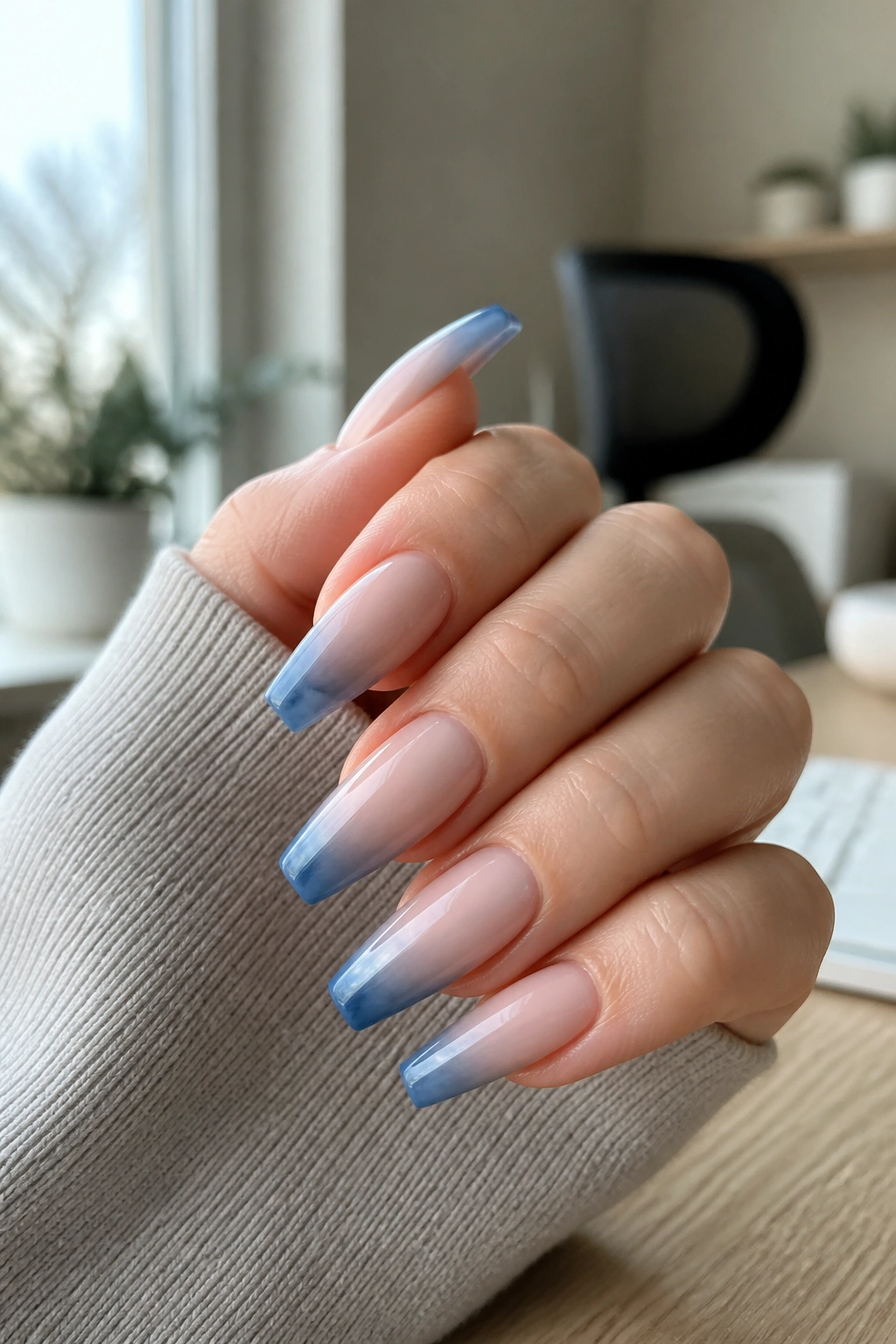
If you like blue but do not want ten fully blue nails waving around all week, start here. A nude base with smoky blue at the tips lets the color stay present without dominating the whole hand. It is one of the easiest ways to wear a bolder shade while keeping the manicure grounded.
The fade should look airy, almost diffused, as if the blue is drifting over the free edge rather than sitting on top of it. That means the nude base needs to match your skin tone closely. If the nude is too pink, the blue can turn purple. If the nude is too beige, the whole set can look dusty in a bad way.
I’ve seen this design rescue people from the “solid royal blue regret” phase more than once. Blue is fun in the bottle. Five days later, sometimes it feels like too much. A nude base solves that.
Ask for these details:
- A semi-sheer nude, not a heavy full-cover beige
- Smoky placement at the tip, feathered upward with a dry brush or airbrush
- Cool-toned blue-gray pigment if you want a hazy effect
- Extra sidewall cleanup, because nude shows shape mistakes fast
This one is office-friendly, dinner-friendly, and easy to grow out without the manicure looking tired by week two.
5. Midnight Navy Fading Up Into Sheer Sky
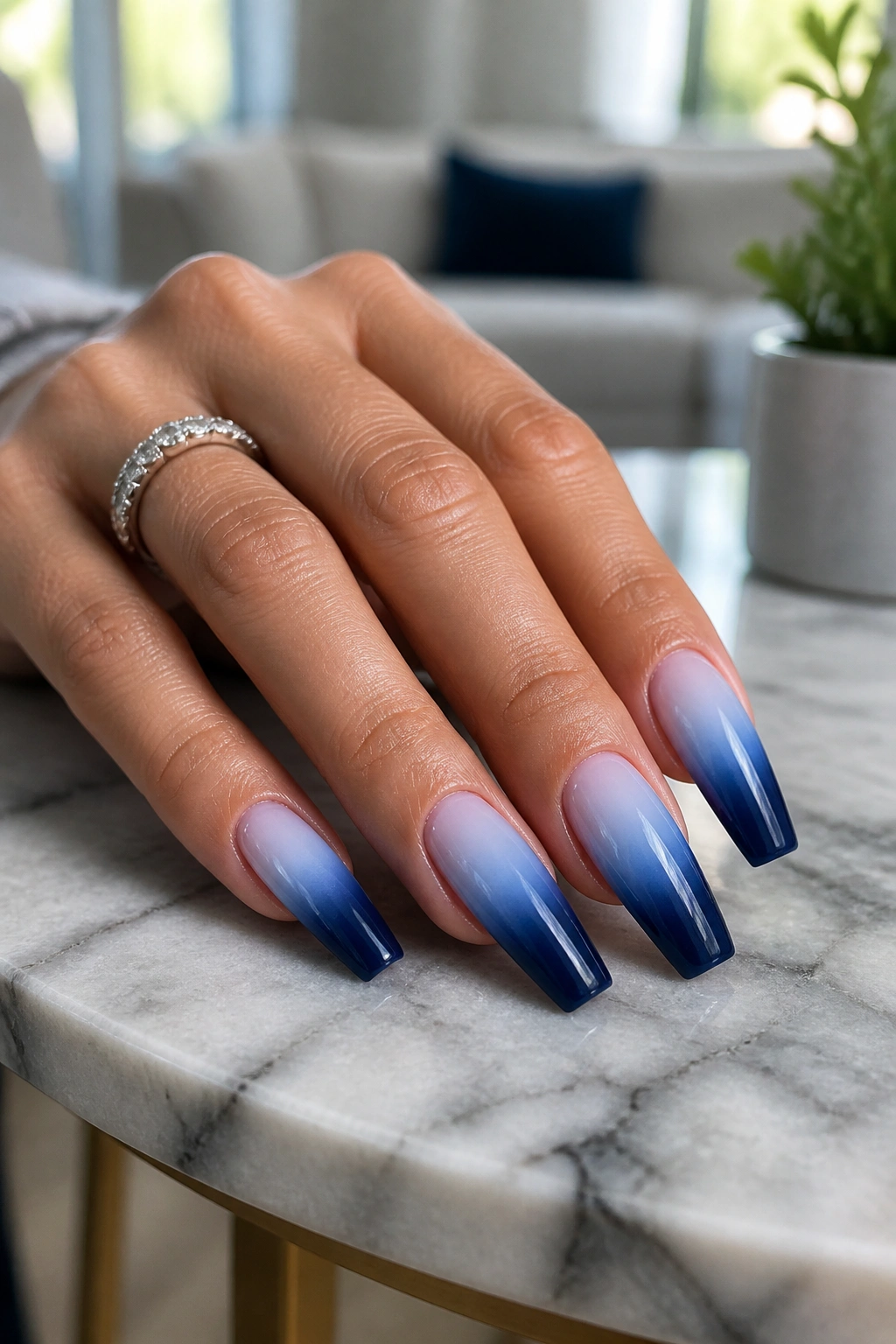
Dark at the tip. Airy near the cuticle.
This is the moody set that still feels refined. The tip starts with midnight navy, then softens through indigo into a sheer sky-blue haze before fading out near the cuticle. On a long coffin nail, the contrast pulls the eye forward and makes the fingers look longer. There is something architectural about it—the flat end stays bold while the rest of the nail lightens behind it.
Navy is less forgiving than people think. A bad navy blend can look bruised, especially if the middle of the fade turns muddy. Your tech needs enough separation between the darkest tip and the light mid-tone, and that often means layering two blues instead of one navy dragged upward.
Gloss suits this set better than matte, at least in my view. A glossy surface keeps the depth visible. Matte can flatten the navy and make the upper fade look dusty.
It also hides grow-out better than you might expect because the cuticle stays soft and sheer. That alone makes it worth considering if you are hard on your hands and do not want your fill line shouting at you after ten days.
Skip oversized gems here. Navy already carries visual weight. Let the color do the heavy lifting.
6. Royal Blue French Ombre with a Sharp Coffin Edge
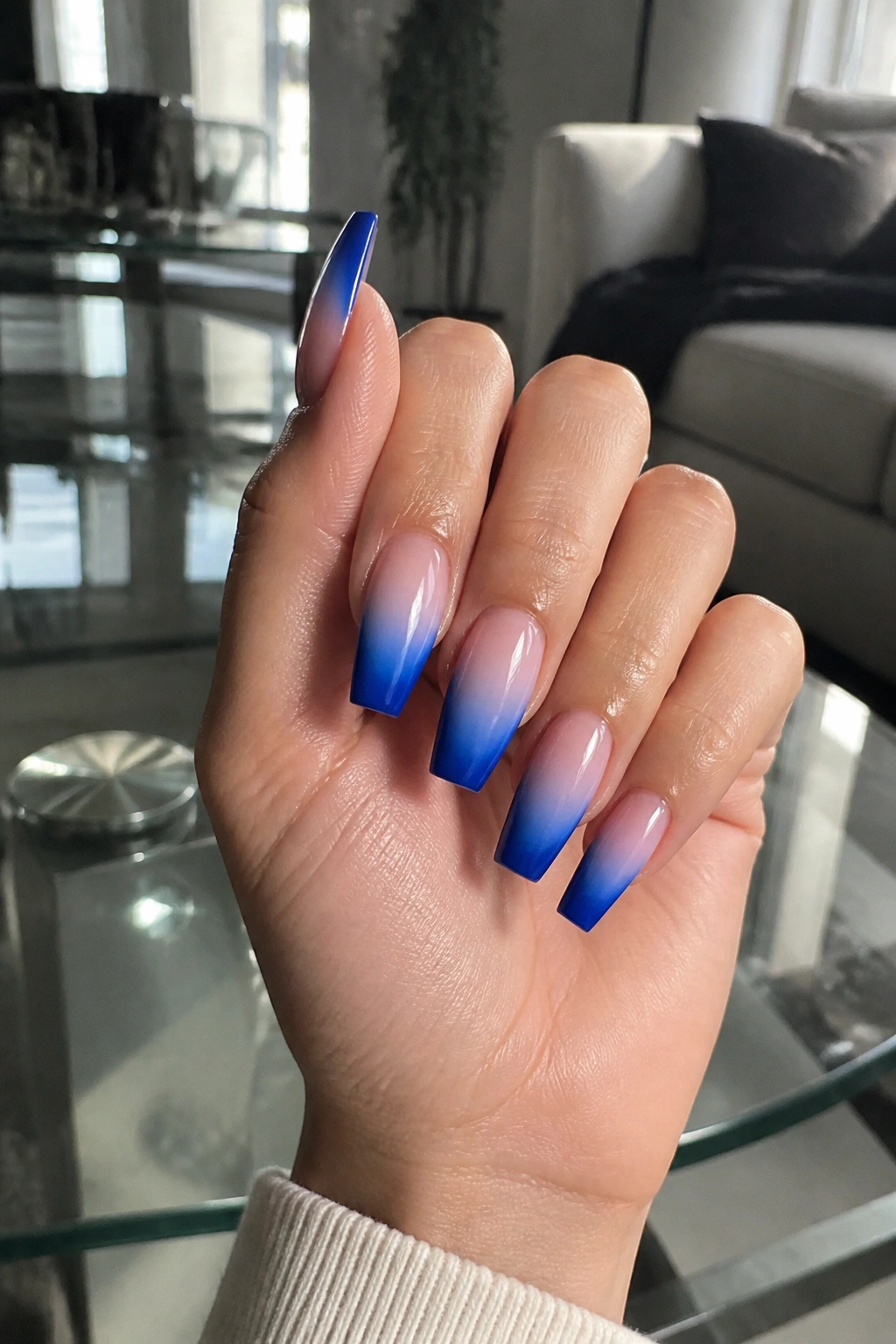
Unlike a classic French manicure with a hard smile line, a royal blue French ombre diffuses the color upward from the tip so the edge still feels crisp but the transition does not look painted with a ruler. You keep that clean French placement while swapping the white for something stronger.
This is a smart choice if you want blue without losing structure. The deepest royal tone stays concentrated right at the flat coffin tip, which keeps the shape obvious from across the room. Pull the color a little higher through the center, then let it melt out before the cuticle.
Who is it best for? Anyone who likes tidy nails more than decorative nails. If you love neat tailoring, sharp collars, minimal rings, and a manicure that looks planned instead of playful, this one fits that lane.
One recommendation: keep the smile line area soft, not cloudy. Tell your tech you want French placement with an ombre fade, not “blue tips blended a bit.” Those are different sets. The first looks precise. The second can look unfinished.
A thin strip of silver foil at the tip can work if you want a little edge, though I would stop there.
7. Periwinkle to Silver Chrome Mist
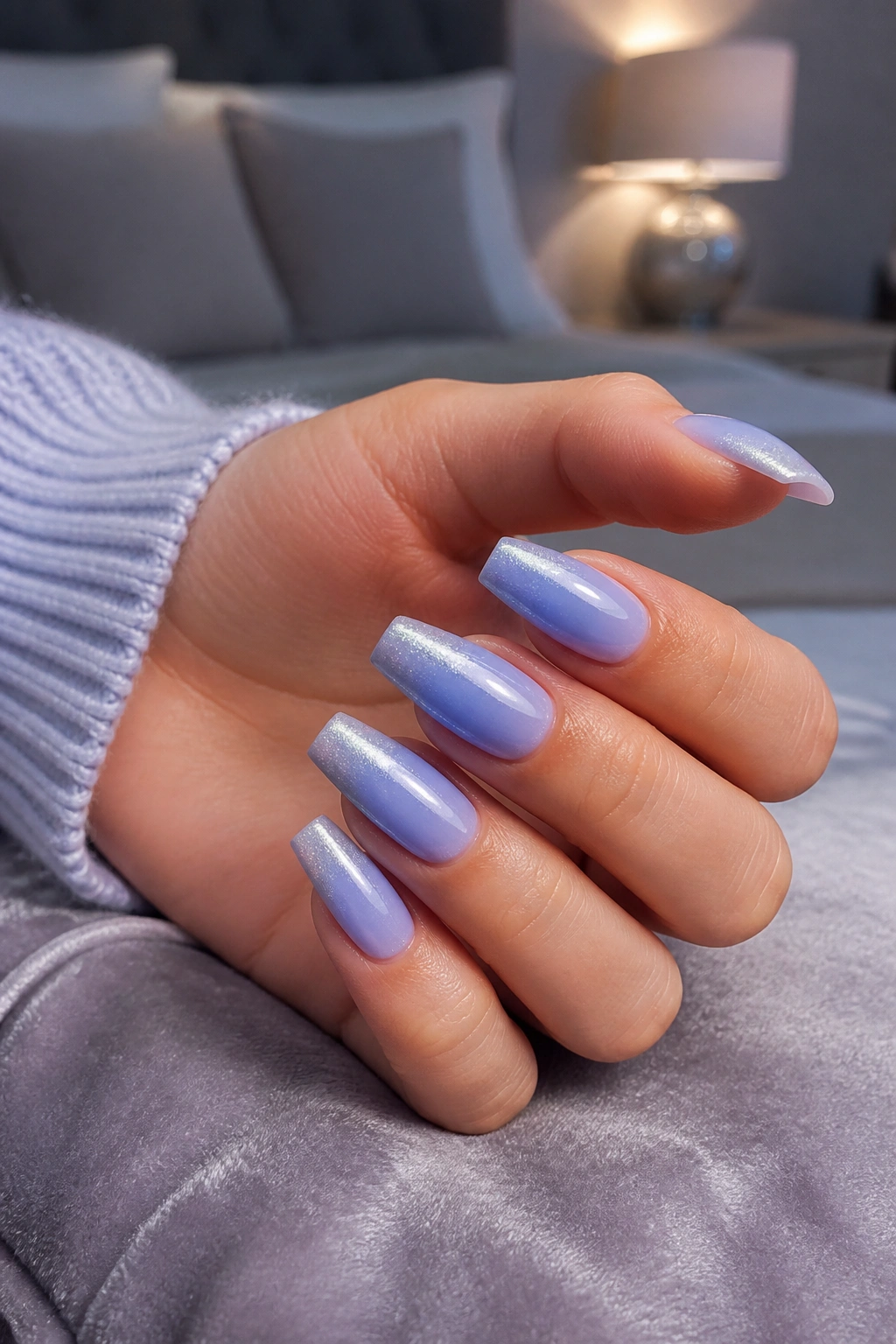
Under cool indoor bulbs, periwinkle topped with a veil of silver chrome has a frosted-metal feel that plain blue does not. The base stays soft and slightly lavender-leaning, while the chrome catches the upper layer and turns the fade colder, cleaner, and a little sharper.
The trick is restraint. Too much chrome and the blue disappears. Too little and you wonder why you bothered. I like the chrome concentrated from mid-nail to tip, where it can shift the ombre instead of covering it.
Where Chrome Can Go Wrong
Chrome powders cling to every uneven patch on the surface, which means prep matters more here than with a simple glossy ombre. The nail should feel smooth under a fingertip before powder goes on.
A few practical notes help:
- Best base color: soft periwinkle, not full lilac
- Best chrome tone: silver or ice-blue, never yellowed pearl
- Best length: medium coffin
- Skip: thick crystal clusters that compete with the metallic finish
If you want a set that feels cold in the best way—clean, silvery, polished—this one has a lot going for it.
8. Teal Blue Melting Into Soft Black
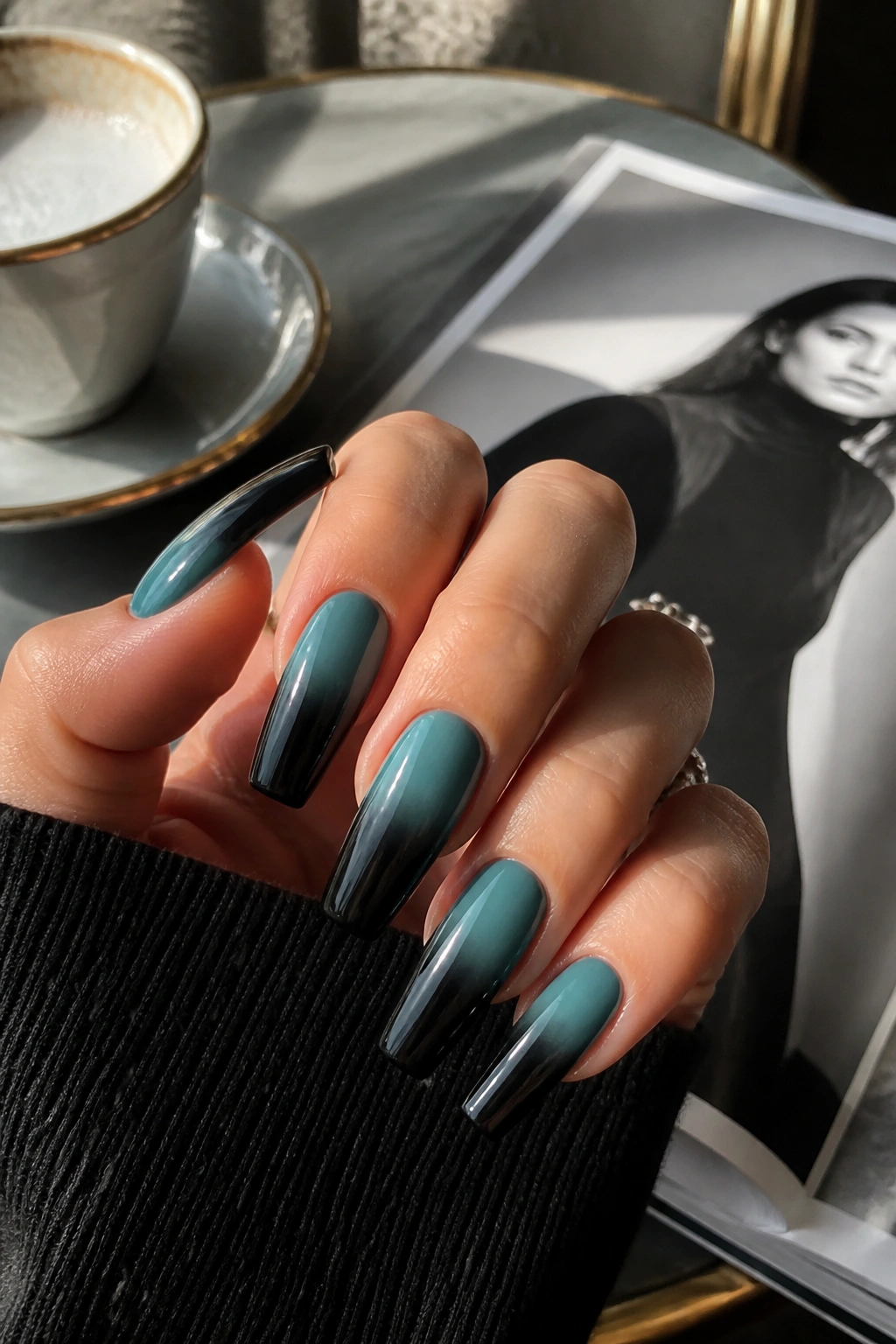
Teal and black can turn swampy fast. That is the risk, and it is why this set needs a controlled hand.
Done right, the fade starts with a deep marine teal through the center, then slides into a softened black at the tip. Not jet black slapped on the end. Soft black. There should still be enough blue visible in the darkest part of the nail that the ombre reads as deep-sea, not Halloween.
Long coffin nails suit this best because they give the darker tip space to settle. On shorter lengths, black can overpower the whole fade and eat the teal alive. A subtle cat-eye stripe over the center can add movement if you want it, though the base blend has to be solid first. Decorative effects do not fix muddy color.
I would keep the cuticle area sheer or smoke-gray rather than teal. Starting with too much saturation at the base makes the entire nail heavy. This design needs breathing room up top so the depth at the tip lands harder.
It is dramatic, yes. Still, it can look surprisingly polished with a black coat sleeve and a clean square watch face.
9. Cloud Blue Aura Ombre with an Iridescent Center
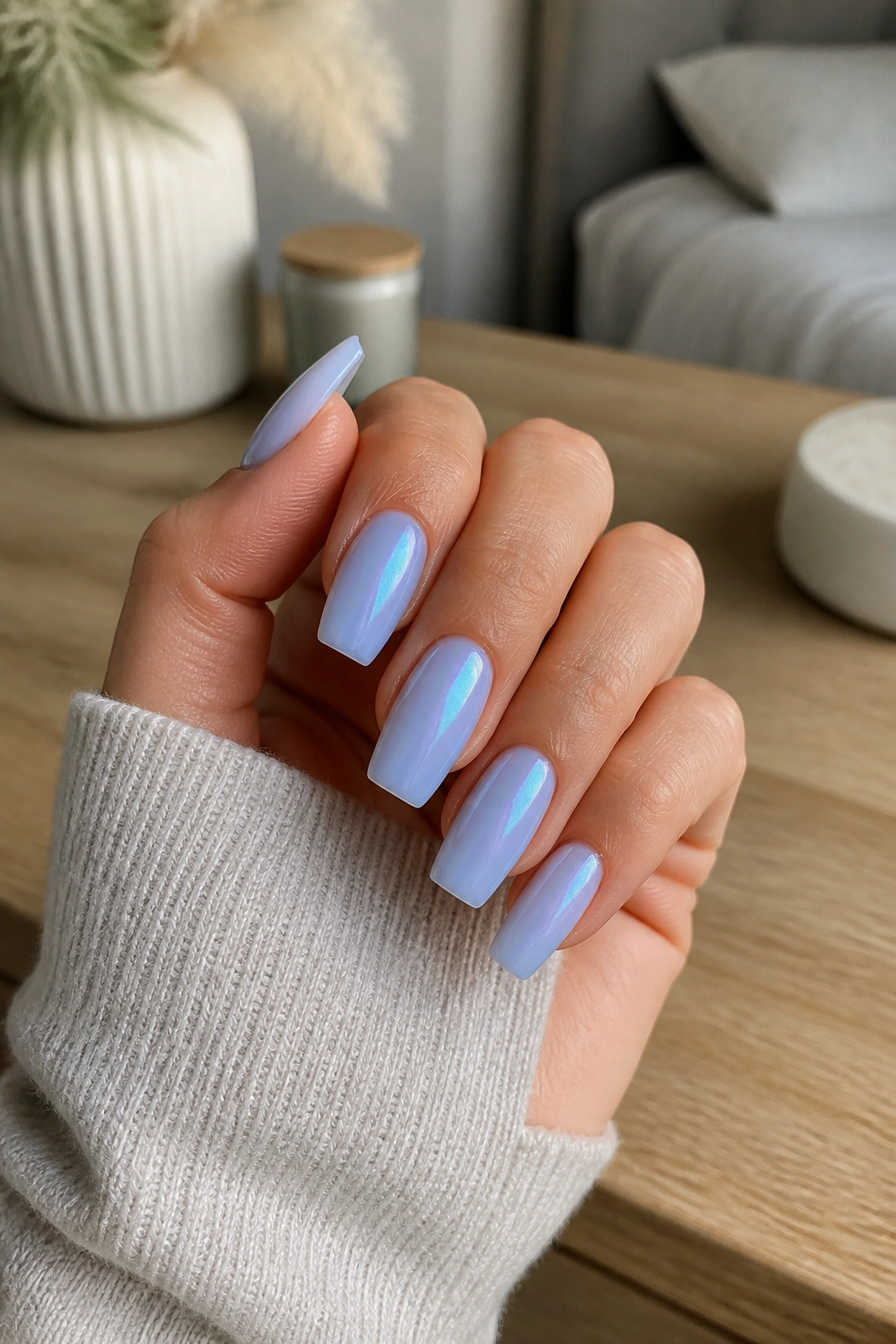
What if you want something softer than glitter and less strict than a straight two-color gradient? A cloud blue aura ombre gives you that hazy center glow while keeping the coffin shape defined at the edge.
The look starts with a pale blue or milky base, then a slightly brighter blue is diffused into the center of each nail. After that, an iridescent powder or fine shimmer goes over the middle, not the whole surface. The result is softer than chrome and less busy than glitter dip.
Placement Matters More Than Color Count
A lot of aura nails fail because the center bloom is too wide. On a coffin nail, keep the glow area around one-third to one-half of the nail width, and keep the deepest color slightly above center rather than dead in the middle. That leaves room for the edges to stay airy.
This design is a smart pick if you want blue ombre coffin nails that feel lighter on the hand. It suits medium lengths, looks good in both gloss and satin, and gives you some visual texture without relying on rhinestones.
One caution: iridescent powders can shift pink or yellow over blue. Ask to see the shimmer over a test swatch first if your goal is an icy finish.
10. Denim Blue Washed Into Soft Gray
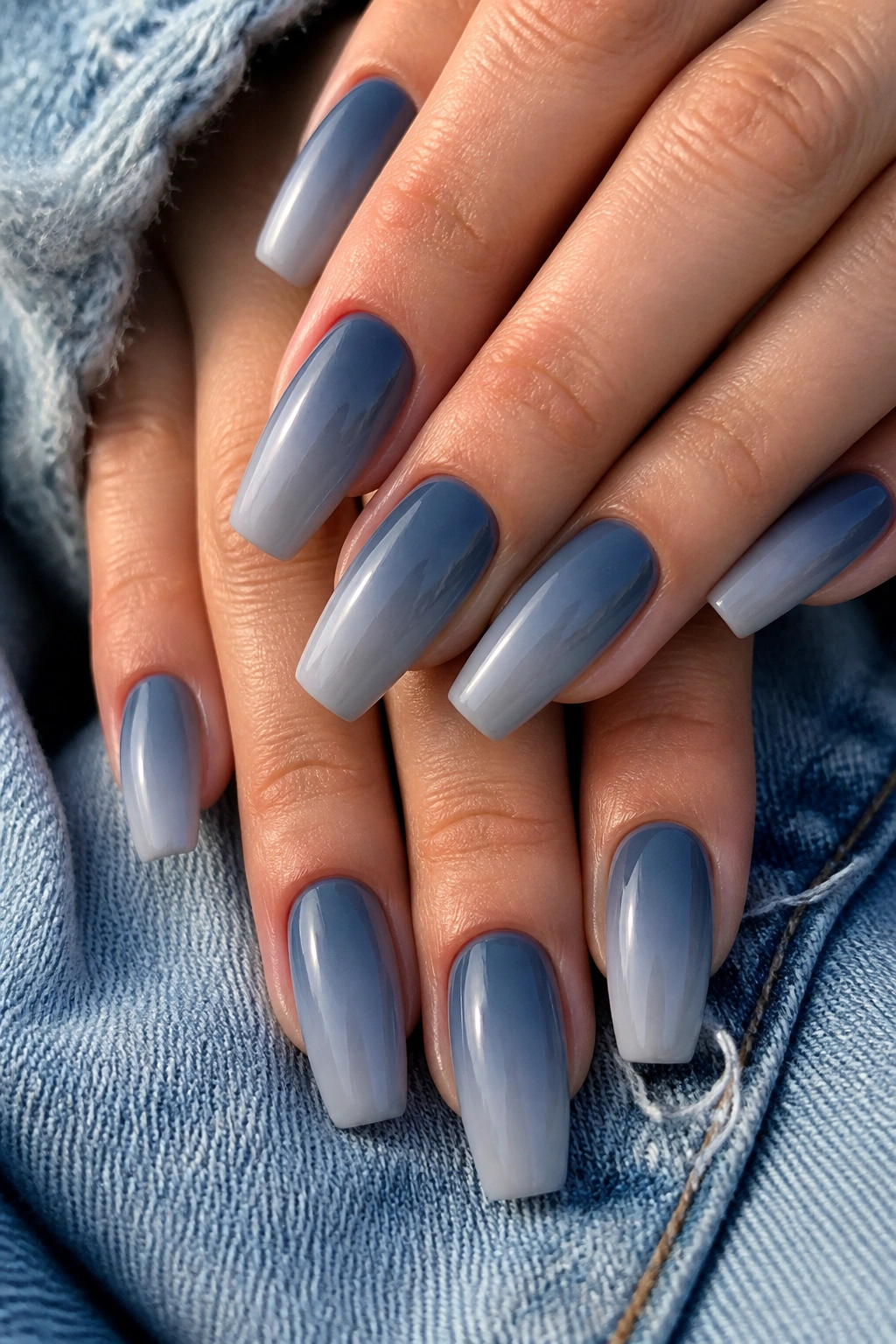
Denim blue sounds odd on paper. On nails, it reads grounded, easy, and a little expensive—especially when the fade ends in a worn gray instead of bright white.
This ombre feels different from baby blue or cobalt because it borrows from fabric rather than gemstones. The blue has a muted, slightly weathered cast, and the gray softens the entire set without draining it. On medium coffin nails, that creates a manicure with color but not too much shine or drama.
I would use either a satin top coat or full gloss. Matte can work, though it pushes the denim effect hard enough that the set starts looking almost chalk-painted. Sometimes that is the goal. Sometimes it makes the nails look dry.
Quick details to hand your tech:
- Keep the blue muted, closer to washed denim than bright cobalt
- Fade into pale gray, not white
- Use a fine brush blend, not chunky sponge dabs
- Choose medium coffin length so the fade has room
This is one of those sets that looks stronger with casual clothes than formal ones, which is not a complaint. Not every manicure needs to dress up.
11. Sapphire Glitter Dip Ombre
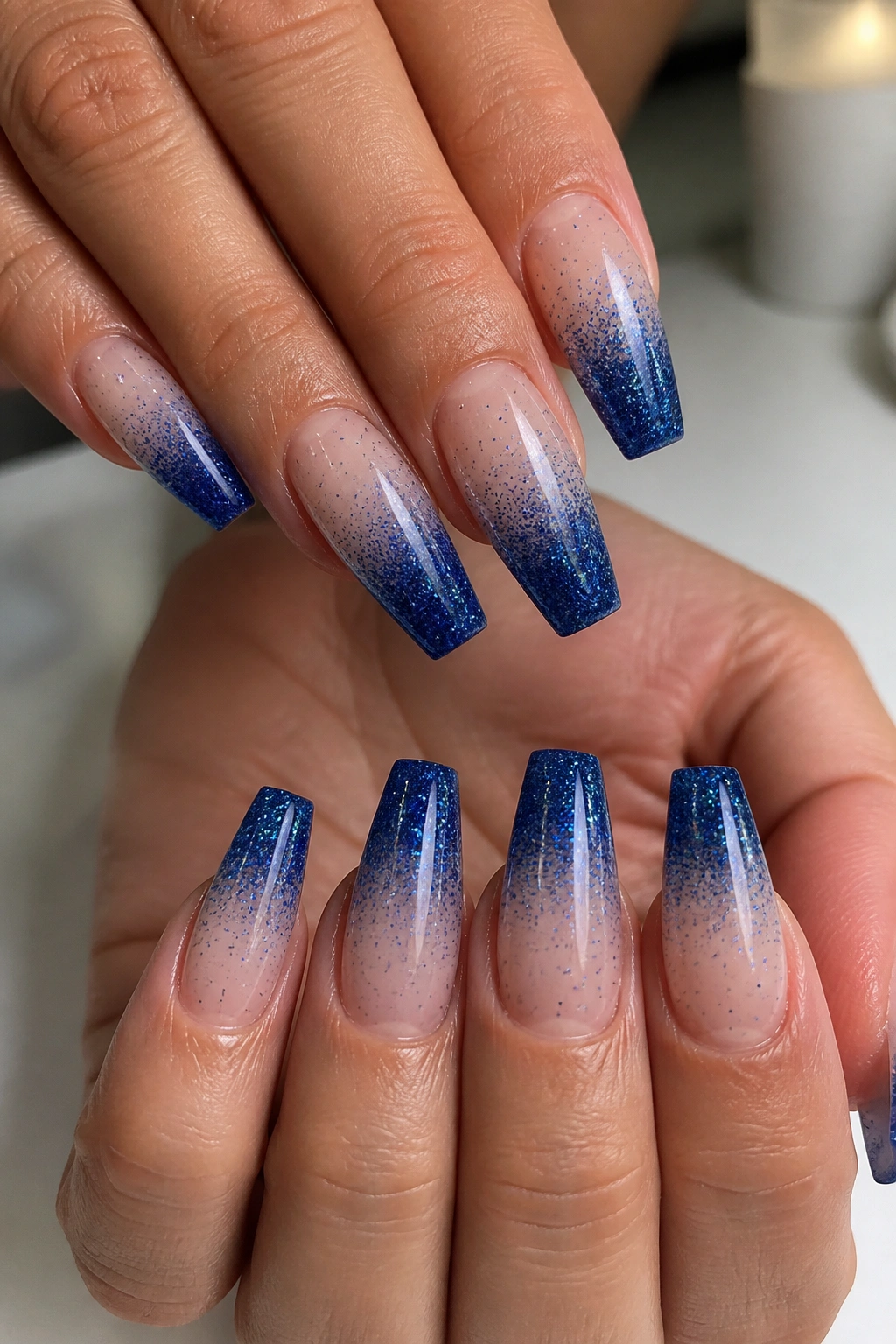
Fine glitter, not chunky confetti. That distinction decides whether this design looks crisp or messy by day three.
A sapphire glitter dip ombre starts with a clear, milky, or very pale blue base. The glitter is packed at the tip, then thinned out as it moves upward so the sparkle fades into the base color instead of sitting in a hard band. On coffin nails, the flat tip gives the glitter a clean starting edge, and the taper keeps the shimmer from spreading too wide.
Micro-glitter is the better choice here. Pieces around 0.2 to 0.4 mm give the nail that dense sapphire look without adding bulky texture. Big hex glitter can leave ridges, require more top coat, and make the tip look thicker than the rest of the nail. You can feel that imbalance every time you tap a screen.
This set is good when you want blue ombre with some flash but still want the shape to stay readable. A little depth near the tip, a smooth file-and-buff on top, and one or two thin coats of top coat are enough.
I would not mix this with chrome, foil, stickers, and stones all at once. Glitter already adds movement. Pile on more and the ombre gets lost.
12. Ocean Blue to Clear Jelly Tips
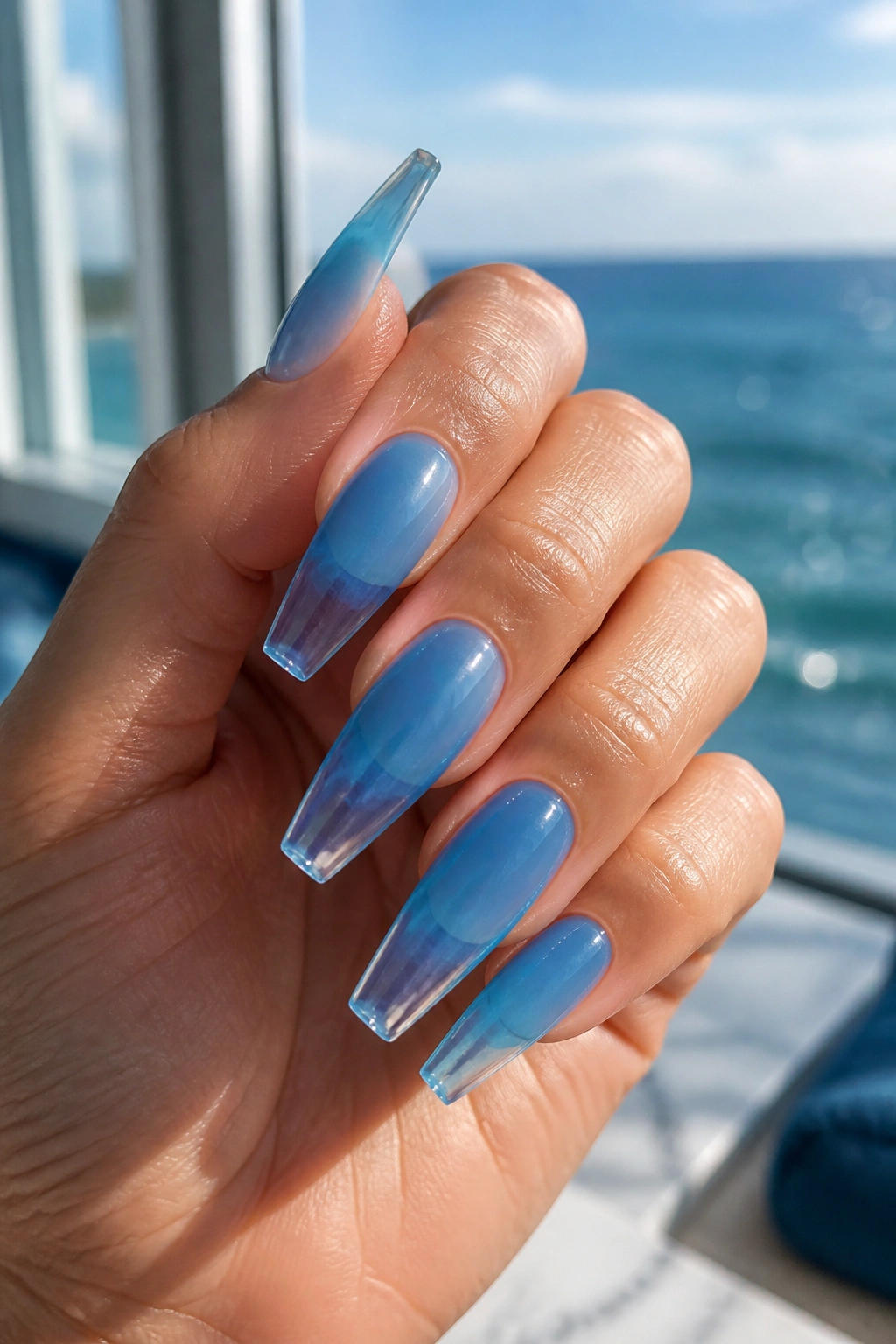
Unlike an opaque gradient, an ocean blue to clear jelly tip leaves the end of the nail partly translucent, which makes the coffin shape feel lighter and sharper at the same time. The blue sits strongest through the middle, then loosens into a sea-glass tint before fading into a clear tip.
This design has a fresh, airy look that suits longer extensions, especially in hard gel or builder gel where the clear tip can stay glossy and less prone to clouding. Acrylic can do it too, though the clarity of the end product matters more. A yellowed clear tip ruins the whole point.
The best version of this set uses layered transparent blue rather than one heavy coat of color. That way the nail still has light passing through the last few millimeters. In sunlight, the tip reads almost like tinted glass. Indoors, it still keeps that watery softness.
Who should pick this one? Someone who likes cleaner nail art, wears silver or white gold more often than yellow gold, and wants a set that feels lighter than navy but more interesting than baby blue. It is also smart for people who hate visible grow-out, since the cuticle area can stay almost clear.
Final Thoughts
The best blue coffin ombre sets all have one thing in common: the fade has a purpose. Icy blue into milky white feels cold and clean. Navy into sky feels deep and structured. Denim into gray feels worn-in and calm. Once that direction is clear, the rest of the manicure gets easier to judge.
Shape matters more than people expect. So does finish. A matte top coat can sharpen a dusty blue or ruin a bumpy surface. Chrome can cool a periwinkle fade or bury it. Glitter can add depth or hide bad blending for about two days before the texture tells on itself.
If you are choosing between two ideas, pick the one your nail tech can execute cleanly on your usual length. A smooth gradient on a medium coffin nail beats a crowded, overworked design every single time.