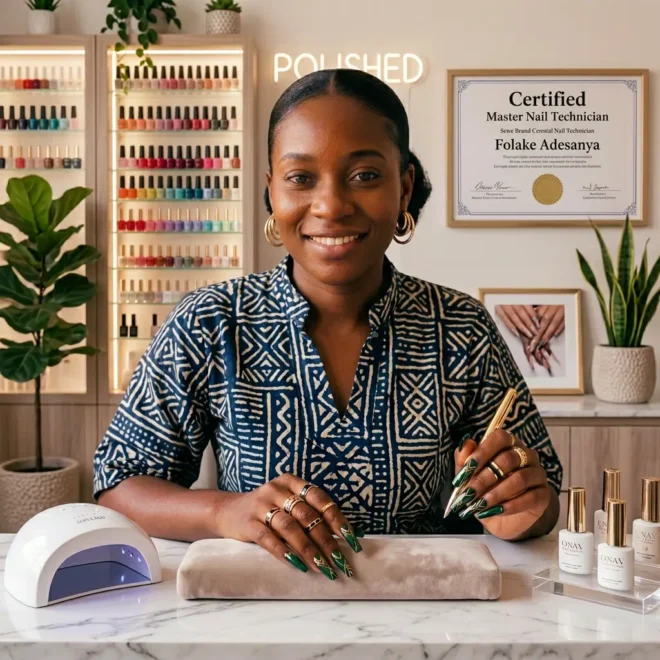


Short squoval nails are quietly becoming the most flattering nail shape of all — they’re long enough to look elegant but short enough to be genuinely practical. The squoval shape (that perfect hybrid between square and oval) gives you a modern, slightly softer edge than a pure square while maintaining the length and strength you need for everyday life. When you layer a French ombre effect on top of that? You’ve got something that photographs beautifully, feels sophisticated enough for a boardroom, and somehow still works at a casual dinner.
The magic of French ombre nails is that they take the timeless French manicure — that beloved white tip and neutral base — and blur the line between the two with a gradient instead of a sharp contrast. On short squoval nails, this gradient effect feels less dramatic than it does on longer shapes, which means the design reads as refined rather than show-stopping. It’s the kind of manicure that makes people compliment your hands without quite being able to pinpoint why they look so polished.
What makes this combination so special is the versatility hiding underneath. You can lean into barely-there pastels, go bold with contrasting color gradients, introduce shimmer, experiment with finishes, or play with undertones and undertones. Short squoval nails forgive a lot of design choices because the shape itself is forgiving — it suits every nail bed width, every skin tone, every hand size. Whether you’re looking to refresh your current manicure routine or trying the short squoval shape for the first time, there’s a French ombre version here that will feel exactly right for you.
1. Soft Pink to Ivory Gradient
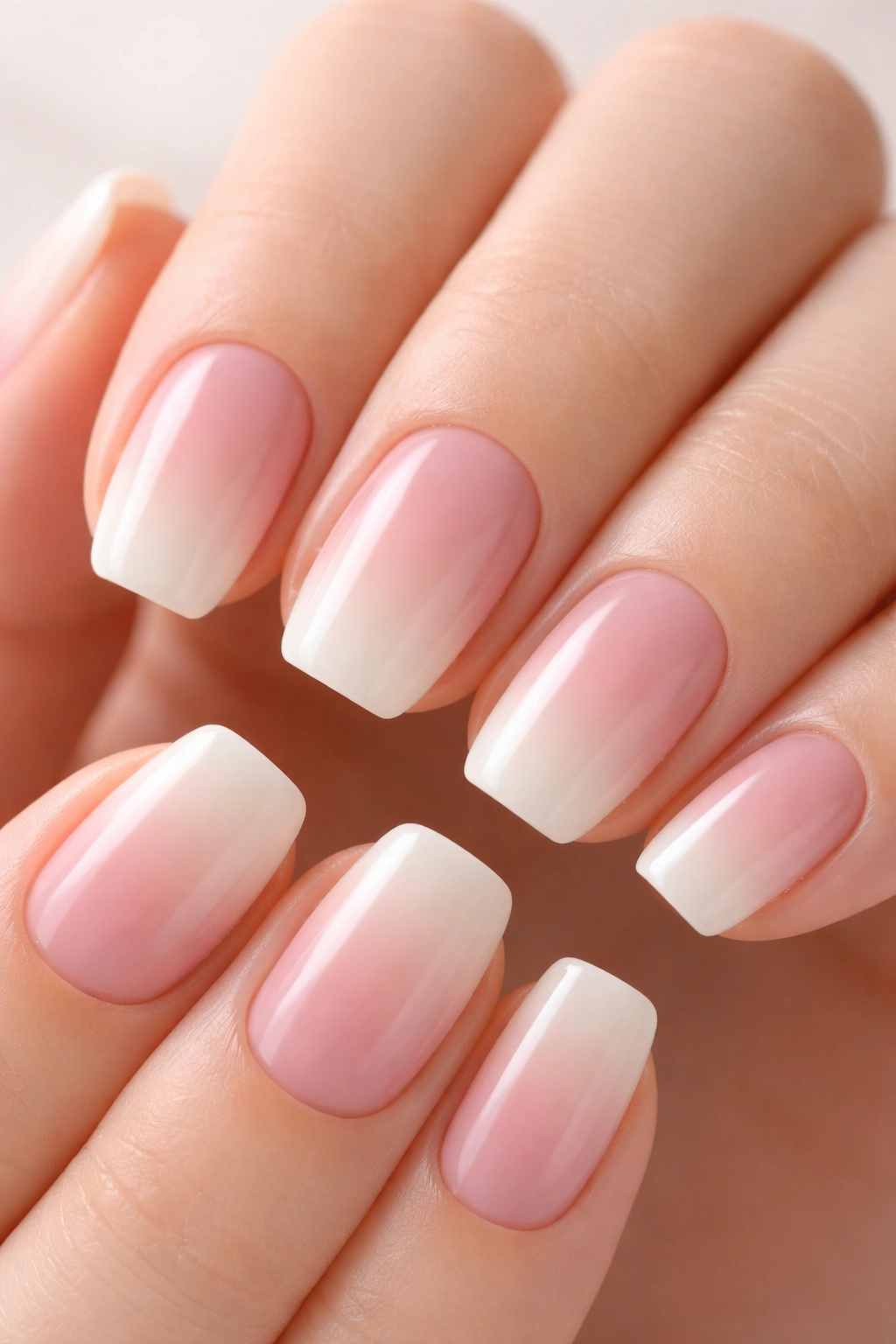
This is the French ombre that feels like coming home. You start with a soft, barely-there pink base — the kind of dusty rose that looks like a natural extension of your skin tone — and it transitions into creamy ivory at the tips. The gradient is intentionally gentle, which means there’s no harsh line where the color changes; instead, there’s this beautiful, almost imperceptible drift from one shade to the next.
Why This Design Works Beautifully
The soft pink to ivory combination works because it’s subtle enough to wear every single day without feeling like you’re making a statement, yet distinctive enough that people genuinely notice and comment on your nails. The colors complement almost every skin undertone — the pink has enough warmth to flatter deeper skin tones while the ivory adds brightness that works for cooler undertones. On short squoval nails, this gradient creates an elongating effect because your eye follows the transition from base to tip, which makes even shorter nail beds look more refined.
What Makes This Version Special
- The pink base can lean warmer (dusty rose, mauve) or cooler (dusty lavender-pink) depending on your skin’s undertone
- The ivory tip should be creamy rather than stark white — think vanilla rather than pure snow
- A subtle shimmer in the ivory adds depth without overwhelming the softness of the design
- This style reads professional in every context, from medical settings to creative industries
- The gradient should take up roughly 40-50% of the nail length for the short squoval shape
Pro tip: If you’re doing this at home, sponge the gradient onto the nail rather than trying to hand-paint it. Dampen a makeup sponge, apply both colors separately to the sponge in the areas you want them, then dab repeatedly onto the nail. The repeated dabbing motion blends the colors far better than a single swipe would.
2. Blush and Champagne with Gold Flecks
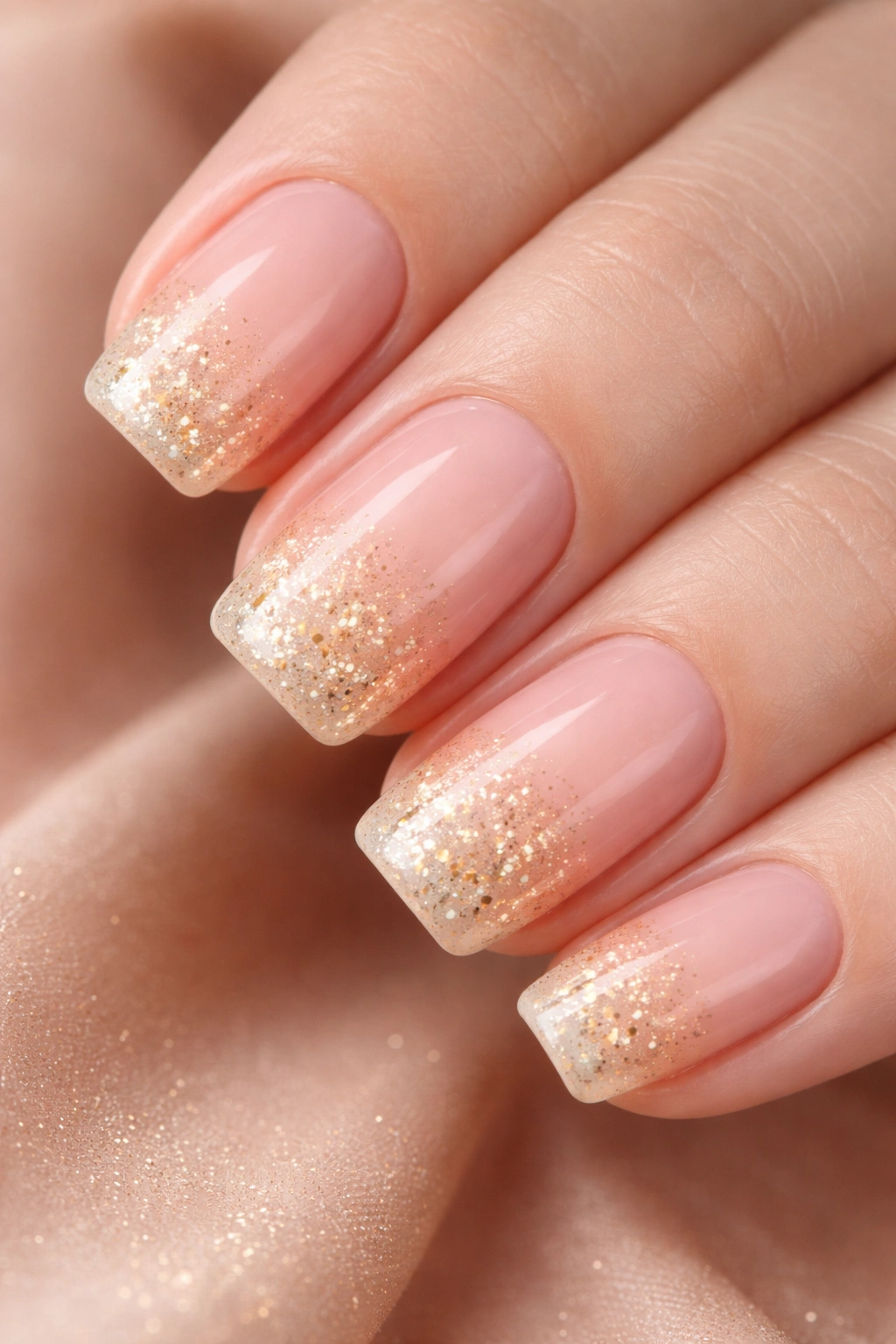
Imagine the softness of that first design but with a touch of celebration built in. This version uses a warm blush tone (slightly deeper than the soft pink option, with more apricot undertones) that gradually transitions to a champagne shade — that luxurious pale gold that catches light without being overtly glittery. Then you layer barely-there gold flecks throughout the champagne section for a subtle sparkle that makes the whole thing feel intentional and elevated.
Why Gold Adds the Right Amount of Drama
Gold flecks on a French ombre nail work because they’re strategic, not overwhelming. They sit in just the champagne gradient area, which means they create a focal point at the tip without making your entire nail sparkly. The gold also bridges the warm blush base and the cool champagne transition, which makes the gradient feel more cohesive. On short nails, this level of detailing reads as thoughtfully designed rather than overly fussy.
The Perfect Execution Details
- Use a blush with actual warmth — think peachy-rose rather than gray-toned pink
- The champagne should be pale enough that the gold flecks actually show up and twinkle
- Apply the gold flecks using a thin nail art brush or a toothpick dipped in gold gel — don’t just dump glitter on top
- The density of flecks should increase as you move toward the very tip
- This design photographs beautifully in natural light, especially where gold catches the sun
Worth knowing: If you’re nervous about the gold flecks looking tacky, you can achieve a similar effect with gold chrome powder brushed onto just the top portion of the champagne gradient. It’s more refined than loose flecks and gives you more control over the intensity.
3. Nude to White with Soft Gradient
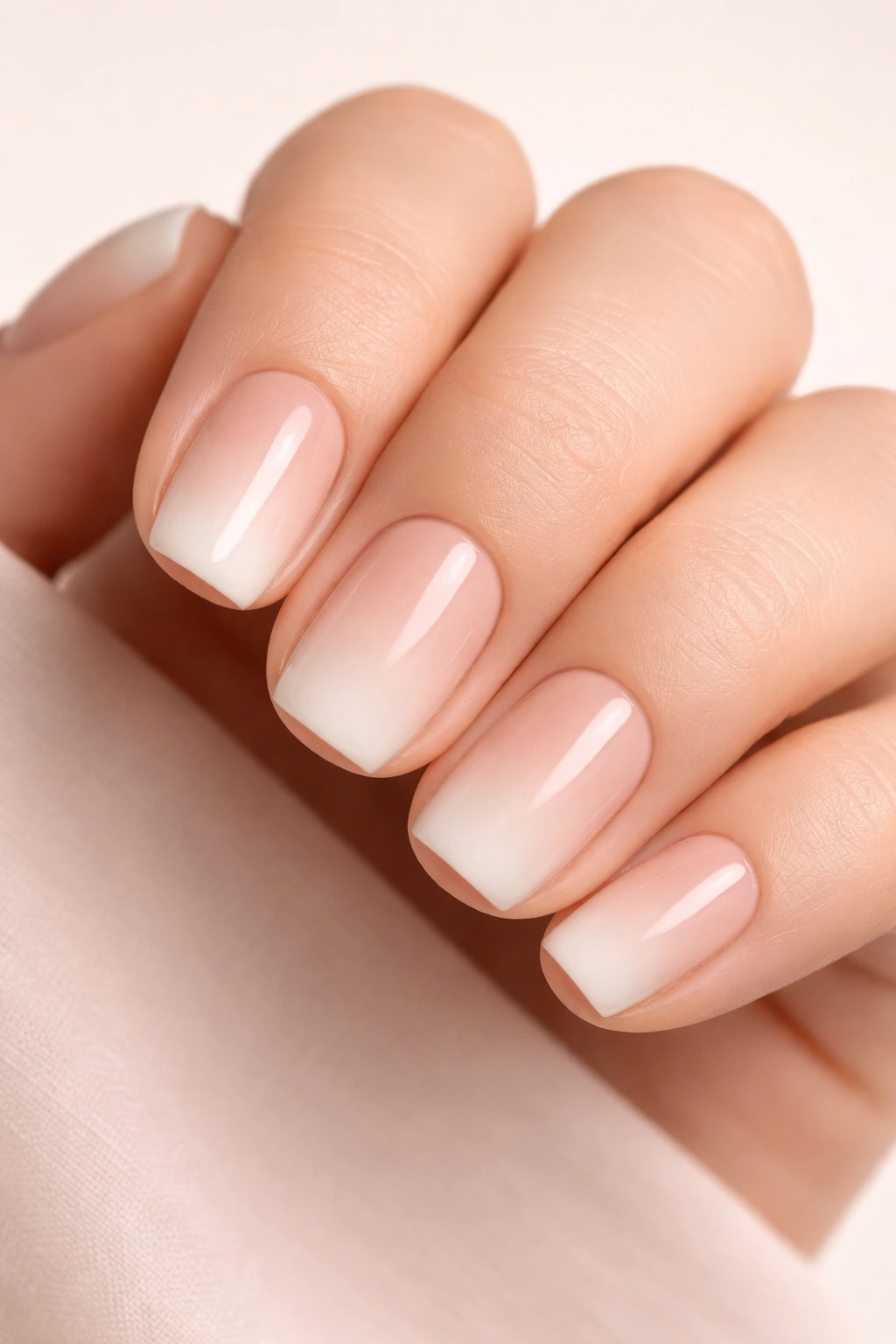
This is the French ombre for people who want the classic French manicure feel but with that modern gradient twist. You’re working with a warm nude base (slightly pinker or slightly more peachy depending on preference) that transitions to a pure white tip. The gradient is smooth and deliberate, with no harsh line where the two colors meet.
Why the Nude Base Changes Everything
A nude base instead of the traditional soft pink is significant because it creates a different visual effect. The white tip still pops against a nude background, but the contrast is slightly softer, which means the design feels contemporary without feeling like you’re reinventing something classic. The nude also has the ability to visually lengthen the nail bed because the color sits somewhere between your skin tone and the tip color, creating a subtle optical illusion.
Key Design Elements to Get Right
- The nude should match your actual skin tone as closely as possible — not warmer, not cooler, but an actual match
- The white should be slightly warm (off-white, cream-white) rather than cold or blue-toned
- The gradient should be most obvious in the center-to-tip area, with the base color remaining fairly solid for the first third of the nail
- On short squoval nails, aim for the white section to occupy roughly 30-35% of the total nail length
- This works best with a matte finish on the nude and a glossy finish on the white for contrast
Insider note: The secret to making this look expensive is keeping the gradient line blurry. Use a fine makeup sponge and sponge the colors together for 30-40 seconds longer than you think you need to. The blurriest blends look the most professional.
4. Peachy-Coral to Soft White Ombre
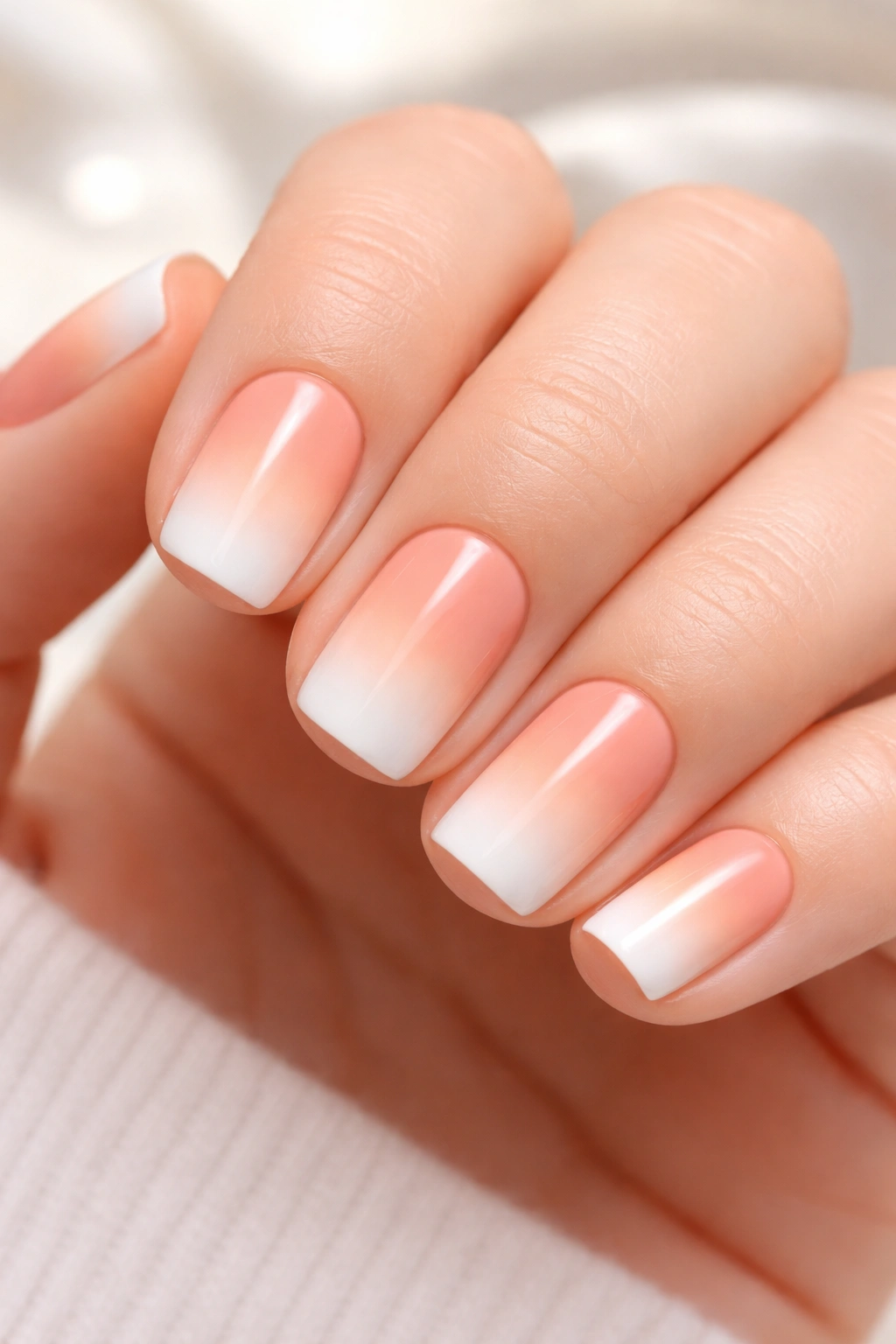
This version wakes up your whole hand because the base color has actual warmth and energy to it. You’re starting with a soft peach or coral-peach tone — not bright or loud, but decidedly warm and inviting — and letting it fade to a soft white or off-white at the tips. This gradient feels sunnier and more youthful than the blush variations while still maintaining sophistication.
Why Warm Tones Suit Short Nails
Warm peachy and coral tones actually complement short nail lengths better than cooler tones do. This is partly psychological (warm colors feel closer and more present, which makes the nails feel fuller) and partly about how color interacts with the nail shape. On a short squoval, the peachy tone creates a cohesive visual from the nail bed to the tip because the warmth feels naturally continuous. You’re not fighting against a cool undertone that might make the nails look pale or washed out.
What Makes This Stand Out
- The peach base works across all skin tones — warm skin tones love the direct match, while cooler and deeper skin tones appreciate how the warmth creates contrast
- The white fade should be gradual across the middle two-thirds of the nail
- Adding a tiny hint of shimmer to the white section (just barely-there, almost undetectable unless you’re in direct light) makes the gradient feel more dynamic
- This design pairs beautifully with warm-toned makeup and jewelry
Real talk: If you have naturally warm nail beds (which many people do), this design lets you lean into that rather than fighting it. It looks like a naturally enhanced version of your nails rather than something heavily designed.
5. Mauve to Lavender Ombre with Matte Finish
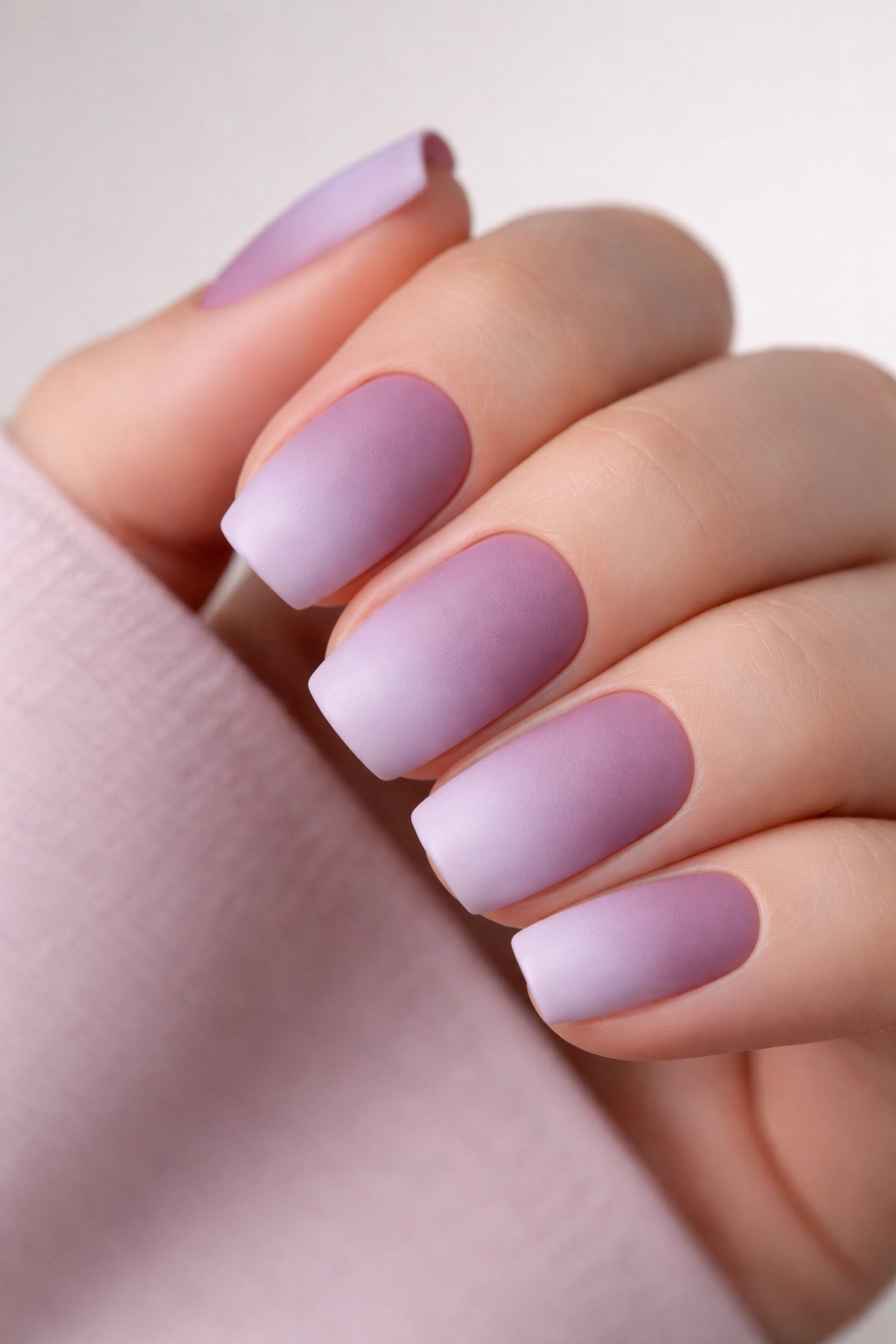
This one is for people who love the French ombre concept but want to move away from the pink and white territory entirely. A soft mauve base transitions to a pale lavender tip, and the whole thing gets finished in a matte topcoat instead of glossy. The result feels sophisticated, slightly moody, and entirely different from traditional French nails while still maintaining that elongating gradient effect.
Why Going Matte Changes the Whole Vibe
Matte finishes on French ombre nails feel more modern and editorial than glossy versions — they read as intentional design rather than “standard manicure with a matte top.” The matte also softens the color transition even further because you’re losing the reflective quality that makes glossy gradients pop. Instead of a crisp transition, you get something more diffused and atmospheric. On short squoval nails, this works gorgeously because the matte finish keeps the design from feeling like you’re compensating for short length with drama.
The Details That Matter
- The mauve base should have gray undertones — this keeps it feeling cool and sophisticated rather than pink-toned and feminine
- The lavender tip should be pale enough that it’s clearly different from the base but not so light that it disappears
- The gradient should be extremely blended — you want people to wonder if you did the whole thing in lavender and just used clever shading
- Apply a true matte topcoat, not a satin finish — the difference is subtle but significant
- This design works best with minimal or no embellishments — let the color speak
Pro tip: Matte finishes show texture more than glossy ones, so make sure your nails are buffed smooth before applying color. Any ridges will be more visible under matte than they would be under gloss.
6. Dusty Rose to Deep Mauve Gradient
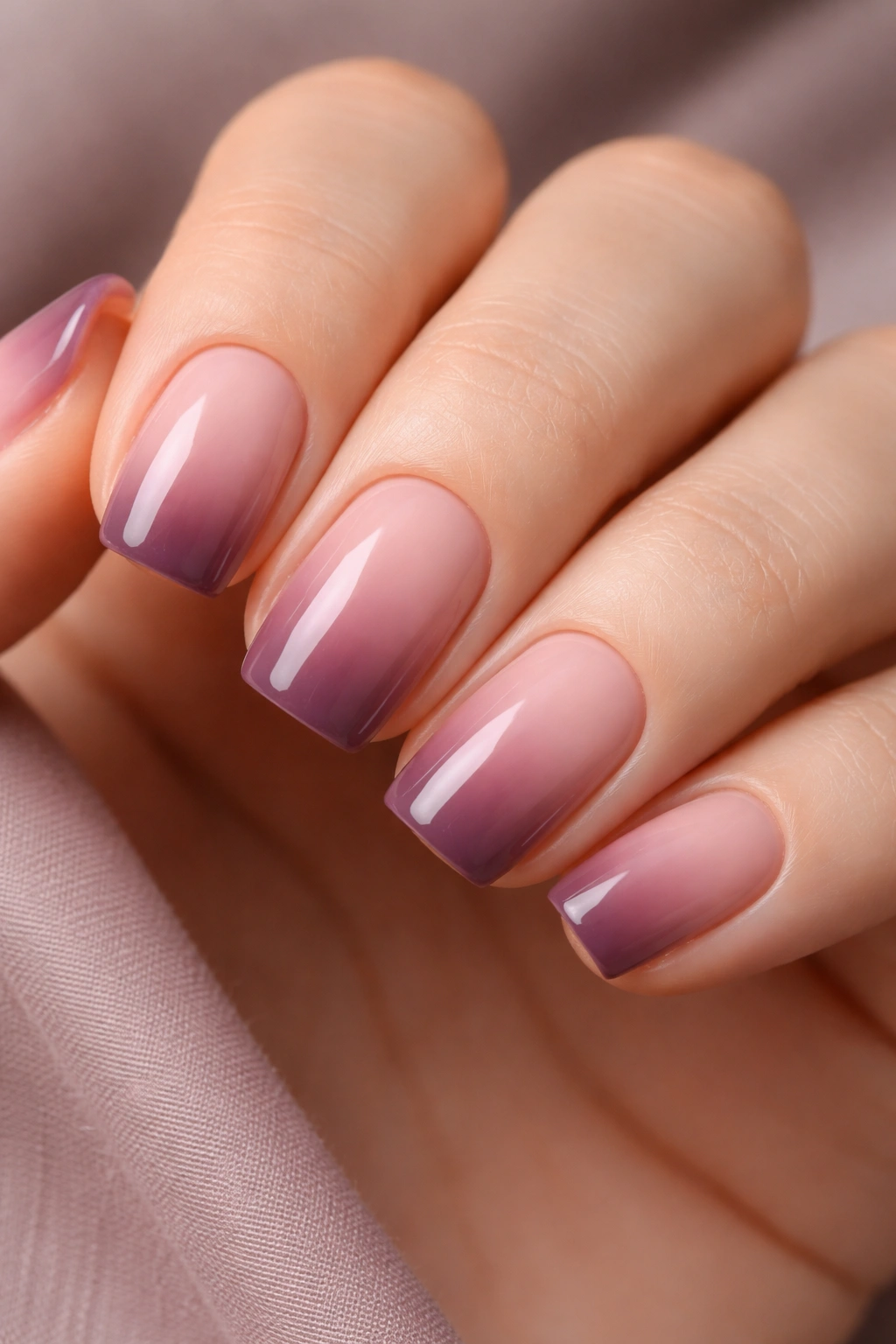
This is the French ombre for people who want more drama than the classic versions but still want something that reads as elegant rather than bold. You’re starting with a dusty rose base — that complex dusty pink with gray undertones — and graduating to a deeper mauve at the tips. The color shift is more pronounced than the earlier options, which creates visual interest and sophistication.
Why Deeper Gradients Still Work on Short Nails
When both your base and tip are complex, dusty tones rather than a light-to-white gradient, the whole design feels more intentional and less like “just a French manicure in different colors.” The deeper mauve at the tips is dark enough that it creates real contrast, but it’s not so dark that it looks harsh on shorter nails. The dusty quality of both colors (that gray undertone that keeps them from being pure pink or purple) means the design reads as refined rather than playful.
Key Features of This Design
- The dusty rose base should lean toward the cooler side — think mauve-rose rather than warm rose
- The deep mauve tip should be rich enough to create obvious visual contrast but not so dark that it looks burgundy
- The gradient should take up a larger portion of the nail than in other designs — maybe 60% instead of 40% — because the color shift is more dramatic
- This works beautifully in natural light and artificial light equally
- Consider pairing this with cool-toned jewelry rather than warm-toned for maximum cohesion
Worth knowing: This design reads different in different lighting. In warm lighting, the mauve edges toward purple. In cool or fluorescent lighting, it leans more gray. Both interpretations are gorgeous, but knowing this helps you understand why your nails might look slightly different in different settings.
7. Soft Beige to Pale Gold Ombre
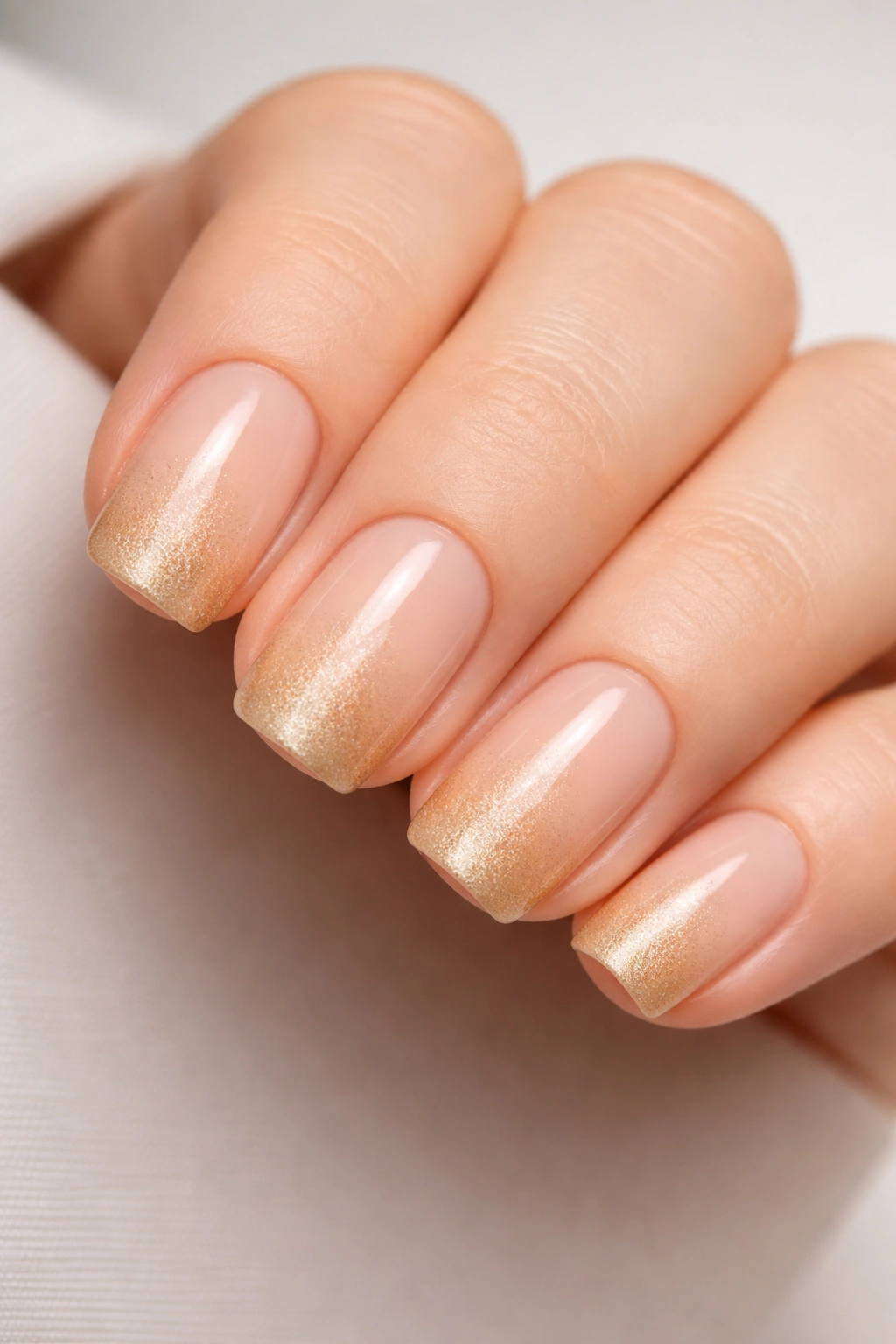
This version embraces warmth and light. You’re working with a soft, warm beige base — not quite peachy, not quite tan, just a gentle warm neutral — that transitions to a pale gold at the tips. The gold is subtle enough to work in professional settings but warm enough to feel luxurious and intentional. This is the French ombre for people who love neutral tones but want their manicure to feel slightly elevated from plain beige.
Why Gold Edges Feel Sophisticated
Pale gold tips on a French ombre nail create a high-end jewelry feeling without looking overtly glamorous. Gold is warm, which makes it naturally complementary to most skin tones. When you use a pale, soft gold instead of a bright or shiny gold, it reads as refined and understated rather than statement-making. On short squoval nails, this pale gold edge creates a flattering frame that makes your fingertips look longer and more refined without the design being obvious about what it’s doing.
How to Execute This Perfectly
- The beige base should be warm but not orange — think vanilla-beige or caramel-beige rather than tan
- The pale gold should be nearly champagne in how soft and subtle it is — more luminous than colorful
- You can achieve this effect with either a pale gold gel or a super-fine gold shimmer mixed into a clear topcoat
- The gradient should be subtle in the middle and more obvious as you move toward the tip
- Pair this with warm-toned makeup and gold jewelry for maximum impact
Quick note: If you’re worried about gold looking dated or too matchy with jewelry, try a champagne or pale rose-gold instead. The effect is similar but slightly more contemporary.
8. Blush to Rose Gold Chrome Ombre
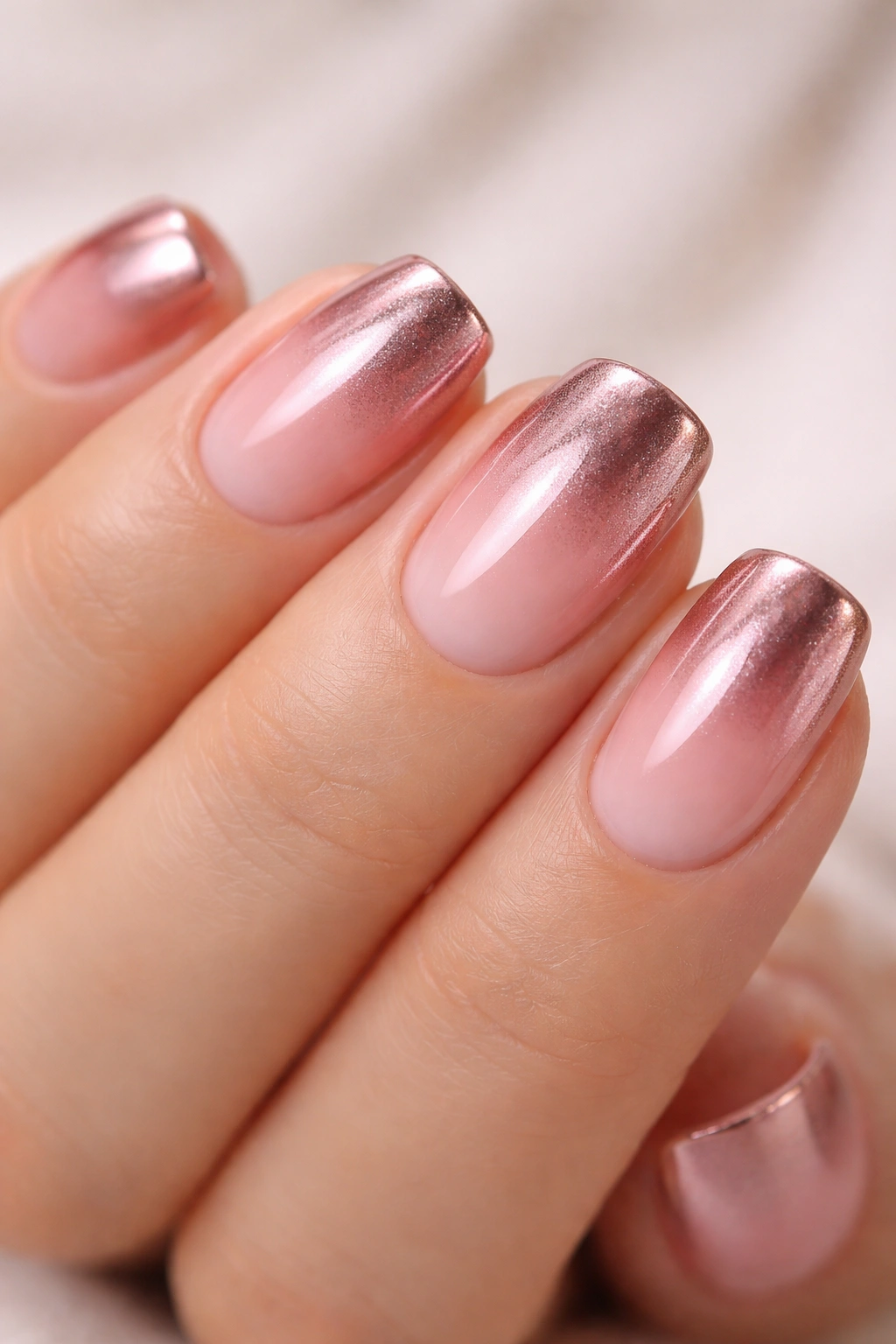
This design takes a soft blush base and introduces a trending element — rose gold chrome — into the gradient and tip area. The chrome doesn’t cover the entire tip like a full chrome nail would; instead, it’s integrated into the gradient zone so you get this beautiful fusion of ombre and chrome. It’s modern, eye-catching, and surprisingly wearable on short nails because the chrome is paired with a soft base color that grounds it.
Why Chrome Works in an Ombre Format
Chrome can feel overwhelming on short nails when it’s a full coverage look, but when you integrate it into an ombre gradient, something magical happens. The soft blush base acts as a visual anchor that keeps the chrome from feeling too futuristic or intense. The chrome catches light and creates movement, which draws attention without making the nails feel too loud. It’s the kind of design that looks interesting without being inappropriate for professional or formal settings.
The Technique Details
- Start with your blush base and apply it fully to the nail
- In the area where you’d normally start your gradient, apply the rose gold chrome — but instead of creating a hard line, blend the chrome into the blush using a sponge
- The chrome should be most concentrated in the final 25-30% of the nail
- You can use chrome powder or chrome gel, depending on your preference
- The result should look like the blush gradually transforms into a shimmery rose gold rather than two separate elements
Insider secret: The blending is everything with this design. If you rush the blending step, you’ll end up with chrome sitting on top of blush rather than integrated into it. Take extra time sponging the colors together.
9. Nude to Champagne with Pearl Finish
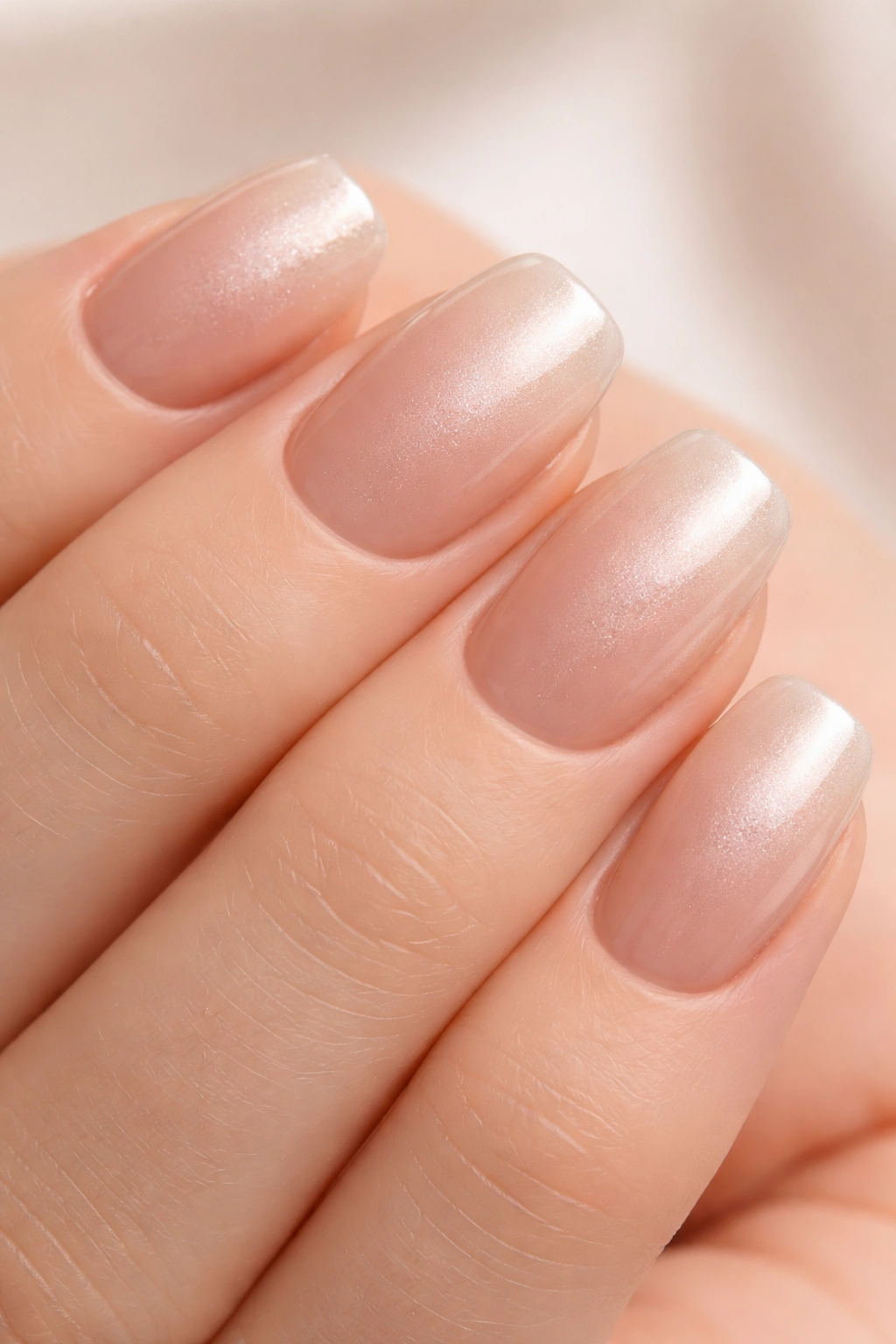
This design is understated sophistication in nail form. A warm nude base transitions to champagne, and the entire thing gets finished with a pearl topcoat that gives it this subtle, multi-dimensional shimmer. The pearl finish catches light differently than regular shimmer, creating this effect where your nails look slightly different from every angle without being overtly shiny or glittery.
Why Pearl Finish Elevates Everything
Pearl topcoats are having a moment because they’re sophisticated, subtle, and work in settings where regular shimmer might feel inappropriate. The pearl creates a soft glow that makes the gradient more dimensional without making it sparkly. It’s especially gorgeous on short nails because the shimmer plays across the surface without the length to really showcase it — instead, it just gives you this quiet, refined polish that catches light when you move your hands.
Application and Finish Details
- The nude should be slightly warmer than your skin tone to create subtle contrast with the champagne
- The champagne should be pale and soft — not bright or saturated
- The pearl topcoat should be applied as your final layer over the fully-finished ombre
- Make sure your base gradient is fully cured before applying the pearl topcoat
- The pearl works best under natural light and soft indoor lighting; it’s subtler under harsh fluorescent lights
Pro tip: If you can’t find a pearl topcoat you love, you can achieve a similar effect by mixing a tiny amount of pearl powder into your clear topcoat. The ratio matters — you want barely-there shimmer, not a full shimmery coat.
10. Cool Pink to Soft Taupe Ombre
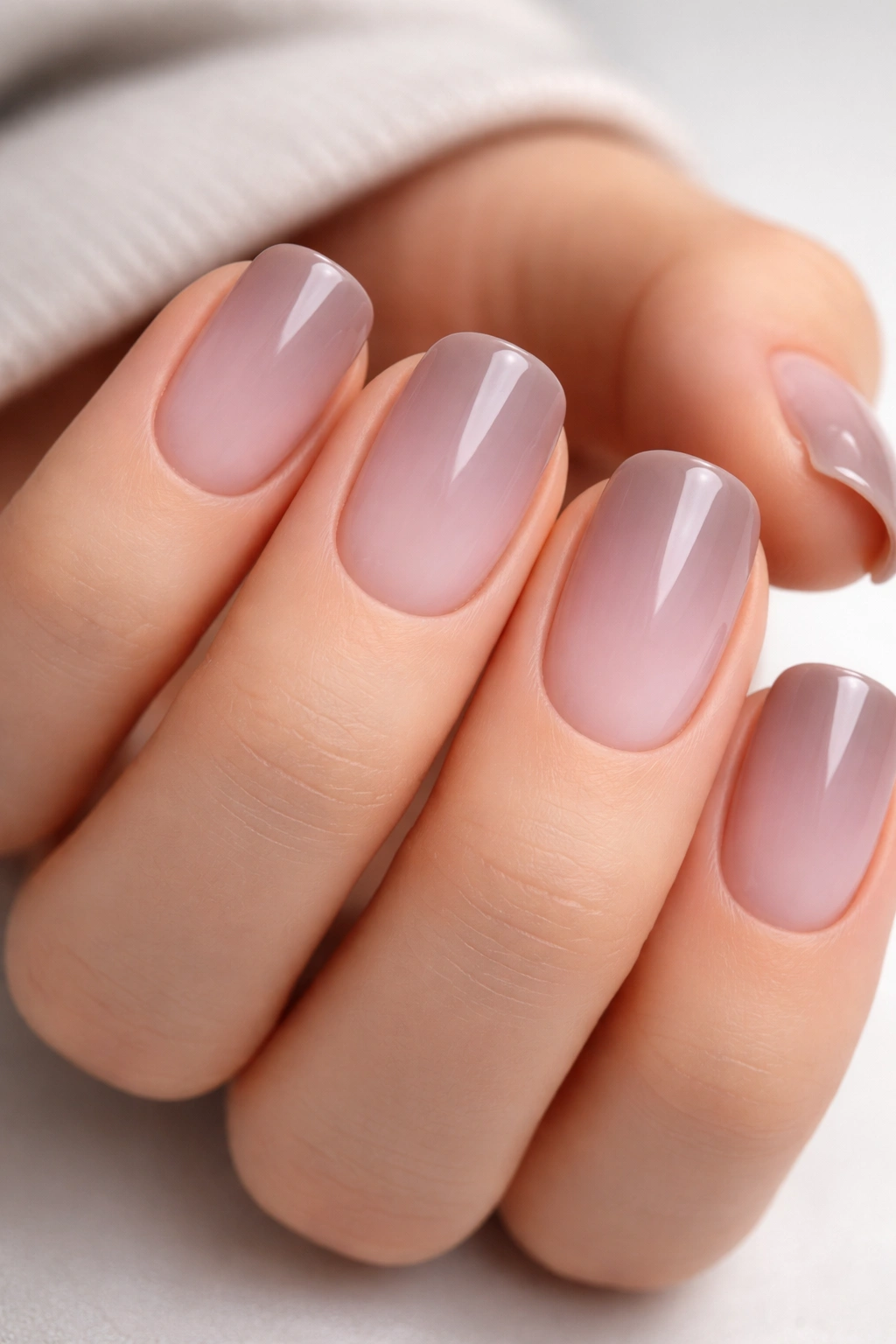
This final design is for the nail enthusiasts who love subtle color theory. You’re starting with a cool, rosy pink (think mauve-pink with gray undertones) and graduating to a soft taupe that has barely-there pink undertones. Both colors are cool and slightly muted, which creates a design that’s cohesive and sophisticated rather than contrasting. The taupe tip is darker than the pink base but not dramatically so — it’s a gentle progression rather than a bold statement.
Why Cool Tones Read as Modern
Cool-toned ombre designs feel more contemporary and editorial than warm tones because they’re less traditional. Instead of the peachy-pink and warm nude options, you’re in territory that feels intentional and design-forward. The cool pink to taupe combination works beautifully on short squoval nails because both colors are somewhat muted — they don’t fight for attention or create visual harshness. Instead, they create a design that’s interesting without being loud.
Execution and Styling Notes
- The cool pink base should have visible gray undertones — this distinguishes it from straightforward pink
- The taupe tip should be pale and warm enough to feel like a natural progression from the pink, not a jarring shift
- The gradient should be smooth and blended, with no visible line between the two colors
- This design pairs beautifully with cool-toned makeup (silvers, grays, cool-toned bronzers)
- It works equally well matte or glossy, though matte gives it a more editorial feel
Real talk: This color combination is less popular than the classics, which means if you wear it, your nails will genuinely stand out. People often can’t quite identify what makes this design look so sophisticated — they just know it does.
Final Thoughts
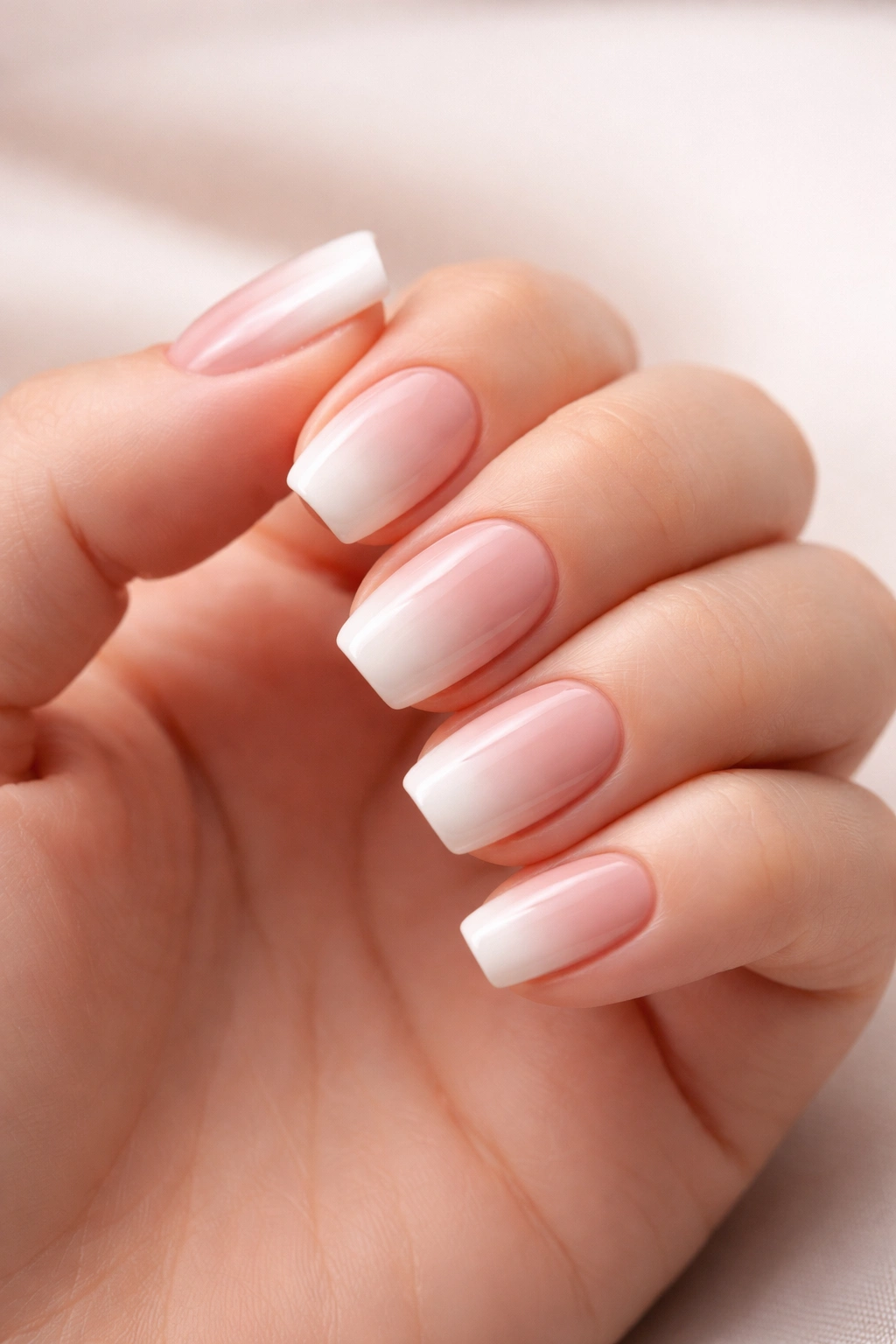
Short squoval French ombre nails represent the sweet spot between practical and beautiful. They give you the elongating effect of an ombre gradient, the timeless elegance of a French manicure design, and the everyday wearability of a shorter nail length. Whether you gravitate toward the classics — soft pink to ivory, nude to white — or want to explore color variations like peachy-coral, dusty rose to mauve, or cool pink to taupe, there’s a version here that matches exactly what you’re looking for.
The best part about this particular combination is how forgiving it is. If you’re getting these done professionally, you have a clear direction to show your nail technician and a design that they’ve almost certainly created before. If you’re doing them yourself, the gradient nature of the design means small imperfections actually look intentional — a slightly uneven blend just reads as part of the artistic effect. The short squoval shape means you don’t need to worry about length affecting the proportions, and the French ombre concept is flexible enough that you can adjust colors and finishes based on whatever mood you’re in.
The key to making any of these designs feel expensive and intentional is in the execution details. Smooth, well-blended gradients. Colors that actually coordinate rather than just being two random shades. Finishing touches like the right topcoat or strategic shimmer placement. These small choices are what elevate a French ombre from looking like something you did because you weren’t sure what else to do, to looking like something you specifically chose because it’s gorgeous.