

A short almond nail can do more than people think. Add leopard print, keep the length practical, and you get a look that feels playful, sharp, and a little bit expensive without trying too hard. The shape does some heavy lifting on its own: the soft taper makes fingers look longer, while the shorter length keeps the manicure wearable for typing, cooking, and everyday life. That combination is why short leopard print almond nails keep showing up everywhere.
Leopard print is one of those patterns that can go messy fast if the spacing is off or the spots are too uniform. But on a short almond nail, that same pattern becomes easier to control. You do not need a ton of surface area. You need a steady hand, a couple of brushes or dotting tools, and a plan for where the print should sit. Once you understand that, the whole thing stops feeling intimidating.
The best part? There are many ways to wear it. Some versions are soft and neutral. Some go bold with black and gold. Some work as tiny accents instead of full coverage, which is exactly what makes them friendly for beginners. The styles below are all practical, wearable, and doable without a salon appointment.
1. Classic Nude Leopard
Classic nude leopard is the safest place to start, and honestly, that is not a bad thing. A sheer beige, taupe, or milky nude base gives the print room to breathe, while the brown-and-black spots keep it from looking flat. On a short almond nail, this style feels polished without turning fussy.
Why It Works
The nude base softens the contrast, so any shaky lines or uneven spot shapes are less obvious. That matters a lot when you’re doing animal print by hand. A shorter nail also means you only need to place a few spots near the center and toward the tip, not pack the entire nail with pattern.
How to Do It
Use a base that matches your skin tone or sits one shade lighter. Then add irregular brown blobs with a small detail brush or the tip of a bobby pin, and outline a few of them with thin black curves. Don’t try to make every spot identical. That’s where people usually go wrong.
A good rule: leave at least one-third of the nail mostly open. The pattern looks cleaner that way.
Best for: beginners, office settings, and anyone who wants leopard print without a loud manicure.
2. Micro Leopard French Tips
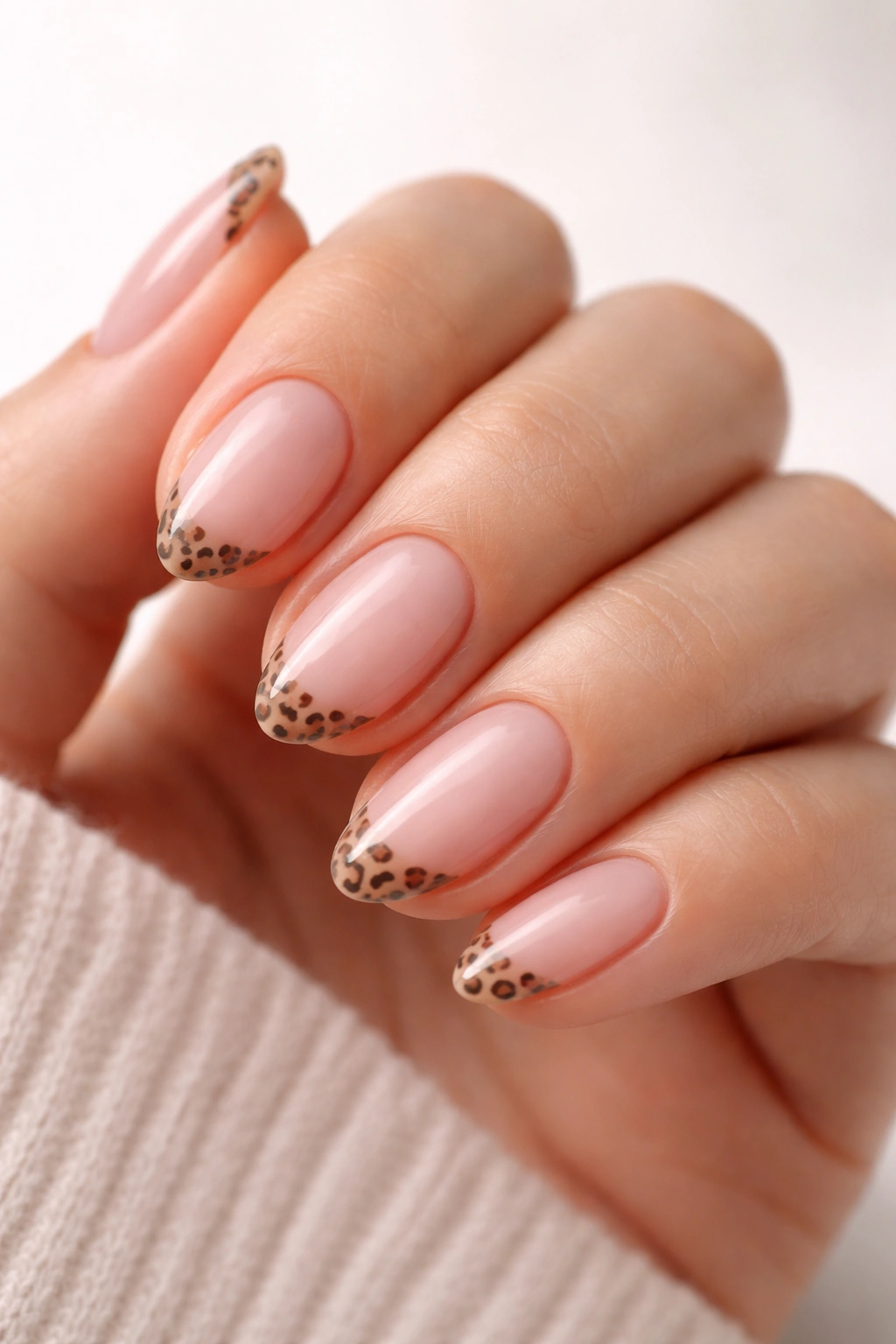
Micro leopard French tips are tiny, neat, and a little sneaky in the best way. Instead of covering the whole nail, the print sits only on the tip, following the soft curve of the almond shape. The result feels lighter than a full leopard manicure and easier to wear with nearly anything.
What Makes It Different
Because the design is concentrated at the edge, the eye reads it as detail rather than pattern overload. That’s useful on short nails, where a huge print can crowd the nail bed. You also get the benefit of a clean base, which gives the manicure that crisp, finished look people usually associate with more expensive salon work.
A Smart Way to Paint It
Paint the base in sheer pink, beige, or soft white. Once dry, sketch a thin curved tip in tan or caramel. Add tiny black “C” shapes and dots inside that tip area only. Keep the spots small. Big spots on a micro French tip tend to swallow the design.
If your freehand lines wobble, use striping tape or a very thin liner brush to map the edge first. Remove the tape before the polish fully hardens.
3. Chocolate Leopard on Milky White
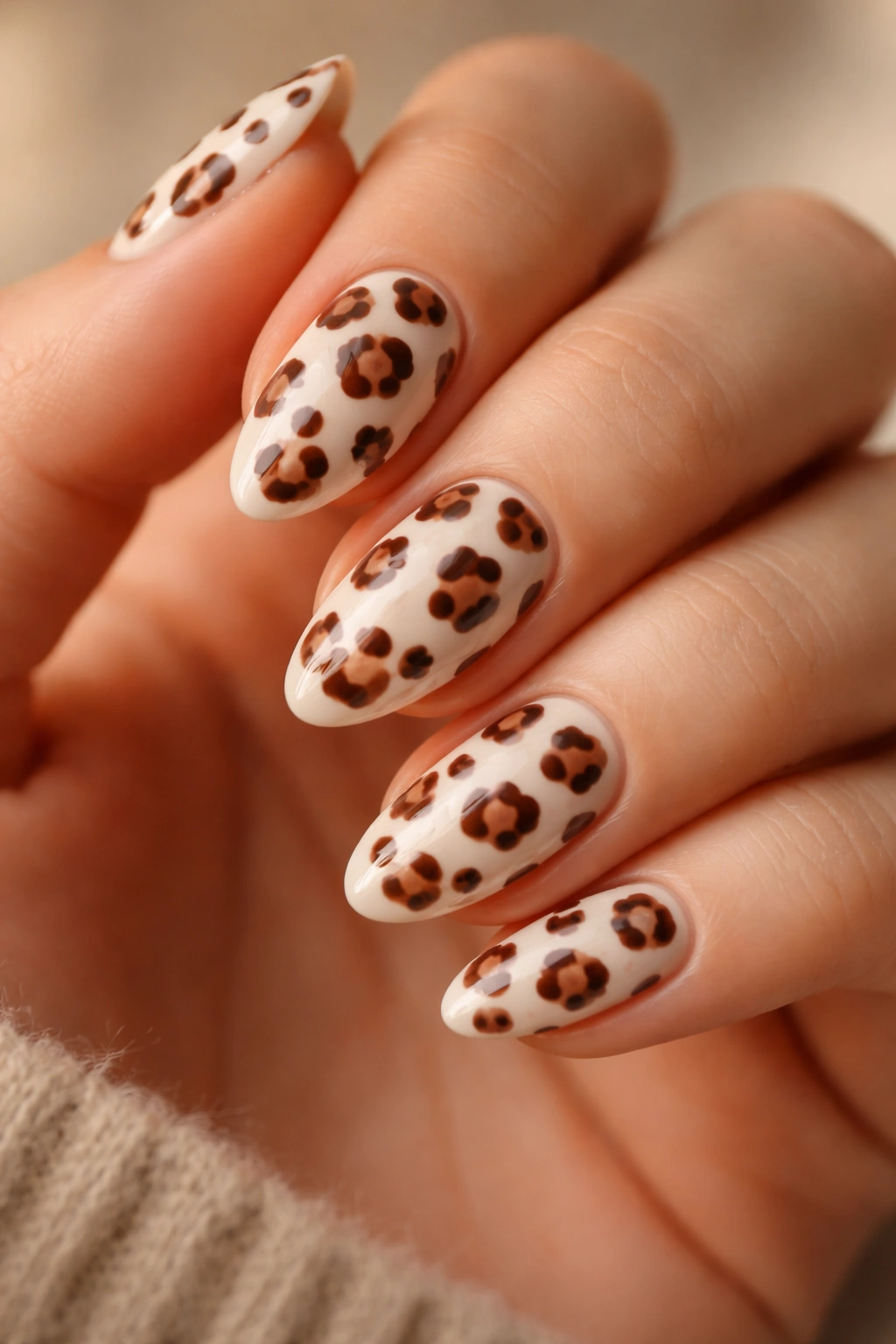
Chocolate leopard on a milky white base has a creamy, dessert-like look that feels warm instead of harsh. The white brightens the whole manicure, while the brown spots keep it from looking too sweet. On short almond nails, that contrast looks clean and deliberate.
It also photographs well under warm indoor light, which is why this combo pops in real life. The brown tones can range from espresso to milk chocolate, but I prefer using two shades: one medium brown for the spot fill and one deeper brown or black for the outline. That tiny bit of depth keeps the print from reading as flat dots.
Try making the spots slightly larger toward the center nail and smaller near the edges. That small shift helps the nail look balanced. And if you want the design to stay soft, skip pure black on the base. Too much black turns the whole thing heavy fast.
4. Leopard Accent Nails
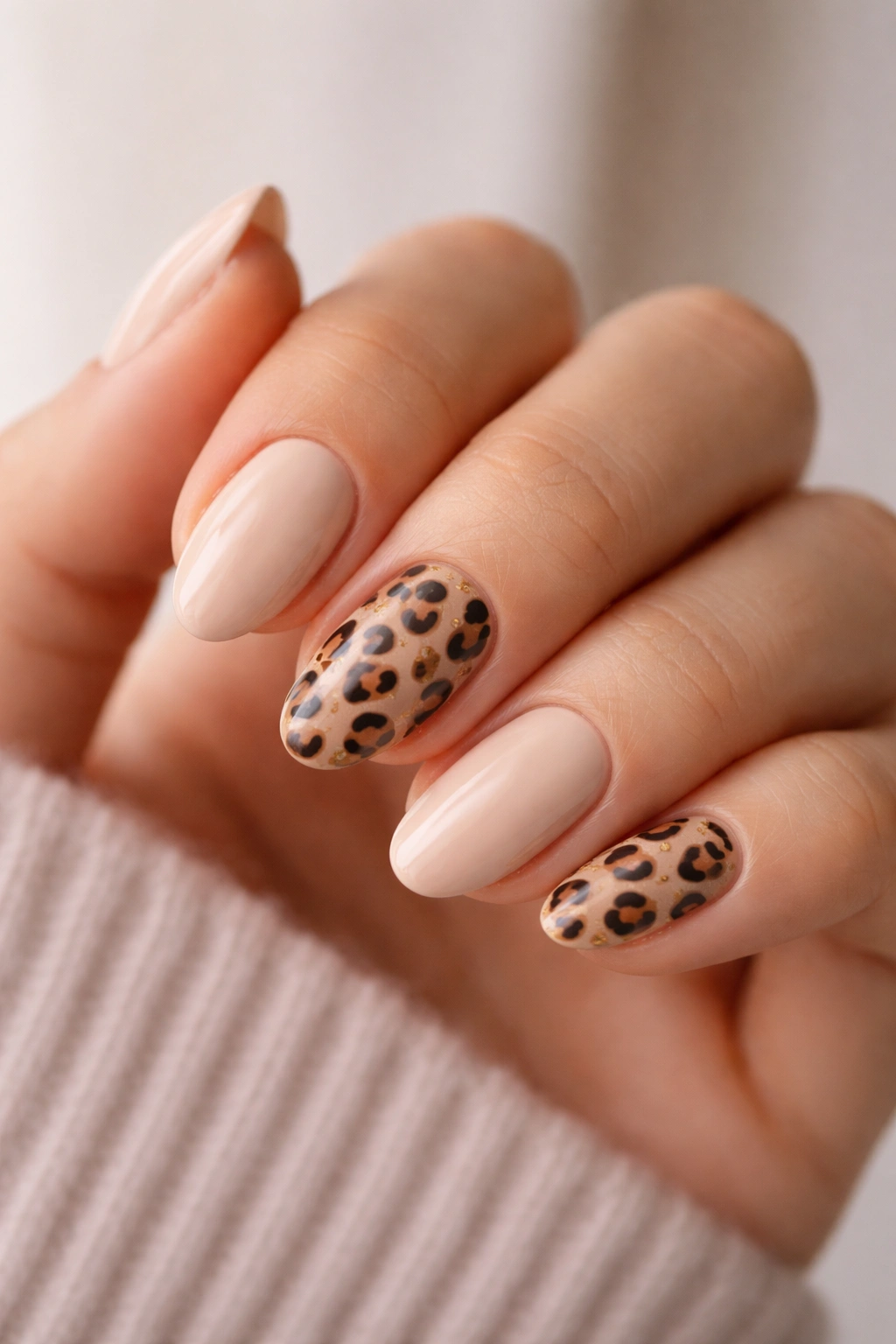
Leopard accent nails are the easiest way to wear the pattern if you are nervous about doing all ten fingers. You paint two nails with leopard print, then keep the rest in a plain shade that matches the print’s tones. Simple. Effective. Not boring.
A lot of people overdo accent nails by making them too loud. Don’t. The point is contrast, not competition. If the leopard nails are busy, keep the others quiet with nude, beige, soft brown, or sheer pink. That balance makes the manicure feel intentional instead of random.
This is also the most forgiving style if your right hand looks messier than your left. Put the leopard detail on the two nails you paint best. No one needs a full explanation.
What to Watch For
- Use the same undertone across all nails so the manicure doesn’t look patched together.
- Keep the accent nails on opposite hands for balance.
- Choose one accent finger per hand if you want something subtler.
5. Black and Gold Leopard
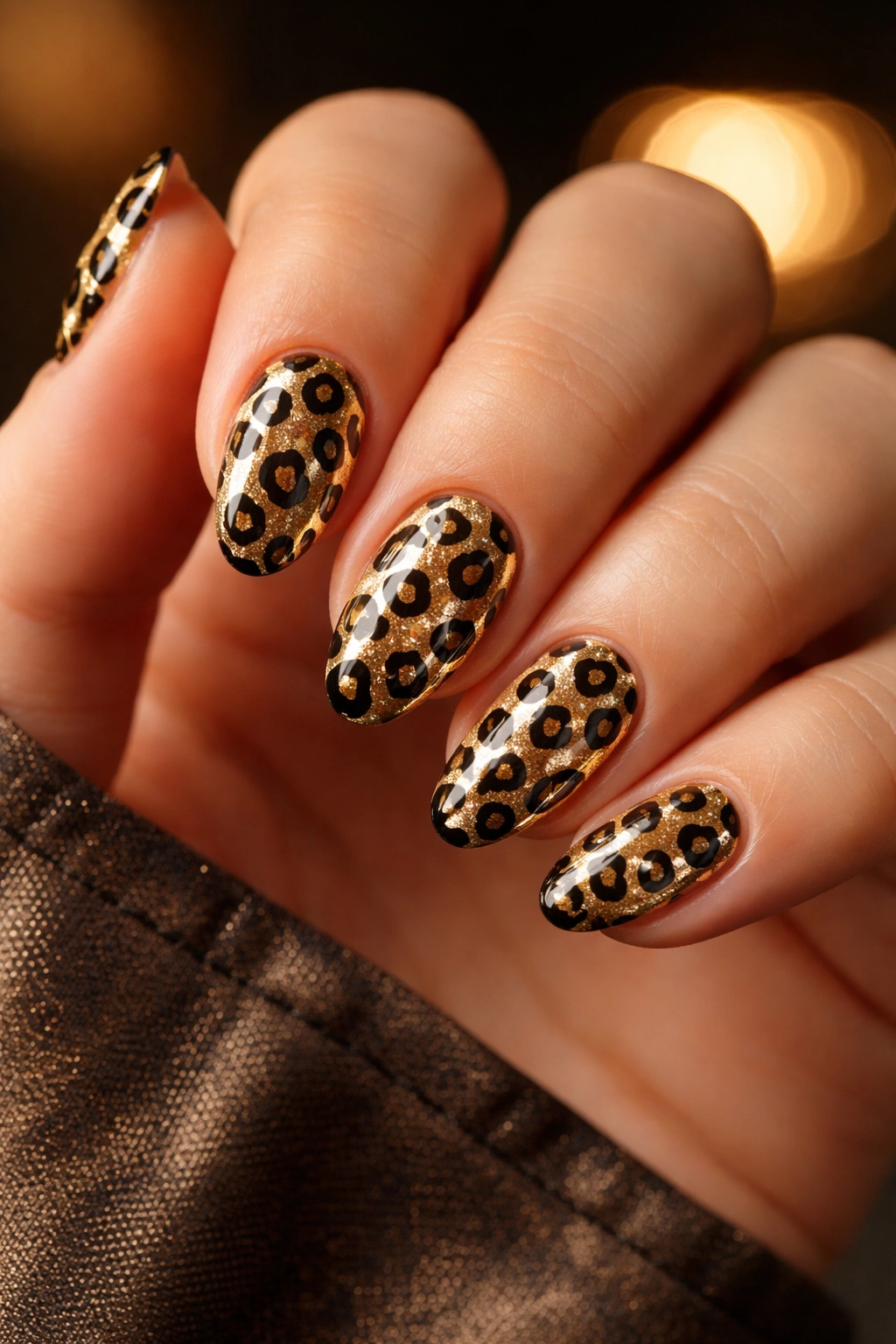
Black and gold leopard nails lean dramatic, but the short almond shape keeps them from becoming too much. The gold warms the print, and the black brings the sharp edge that leopard print needs. It’s a strong combo.
What I like about this version is the way light hits the gold. Use foil, chrome powder, or a metallic polish for the spots, then outline with black. On a short nail, you do not need a lot of metallic coverage. A few flashes are enough.
If you want the manicure to stay classy instead of costume-like, keep the base muted. Opaque black bases can work, but I prefer deep beige, smoky taupe, or sheer blush. That gives the gold room to shine without turning the nail into a full-on evening look.
How to Use It
Use this when you want your nails to show up in photos, at dinner, or anywhere you want a little drama. It works especially well with gold rings and warm-toned makeup.
6. Beige Leopard with Glossy Top Coat
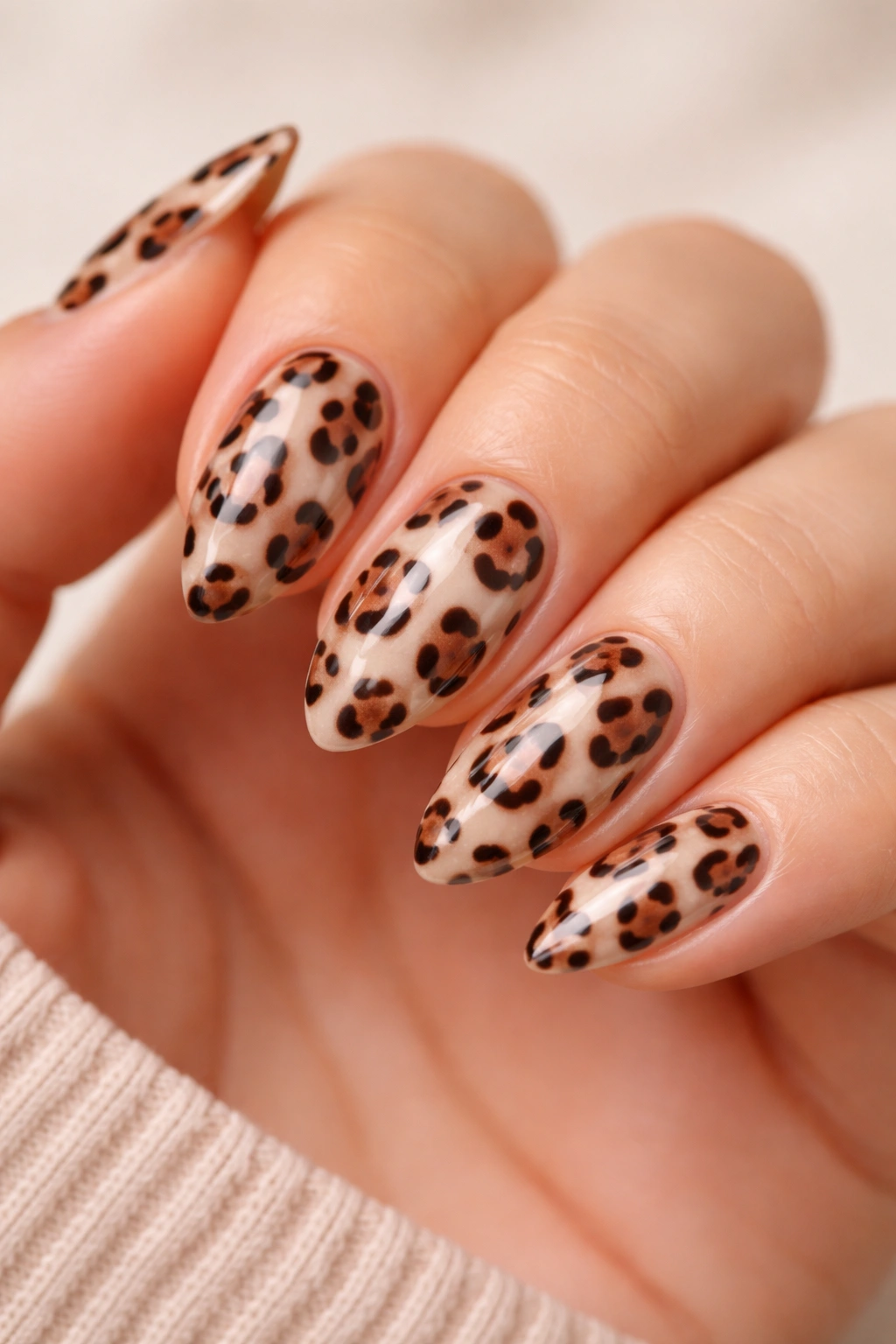
Beige leopard with a glossy top coat is one of those manicures that looks better than it sounds. The gloss makes the spots appear deeper and cleaner, almost like they’re under glass. On a short almond nail, the shine helps the shape read more clearly from a distance.
The trick here is restraint. If the beige is too yellow, the whole look can turn muddy. Go for a soft oatmeal, almond milk, or sand tone instead. Then use warm brown spots and a thin black outline. The gloss will do the rest.
A Useful Detail
After your design is dry, wait a little longer than you think before applying top coat. If the spots are even slightly tacky, the brush can drag them around. That ruins the crisp look fast.
This version is one of my favorites for people who like neutral nails but want something with a bit more personality. It’s calm, but not plain.
7. Leopard with One Glossy Nude Nail
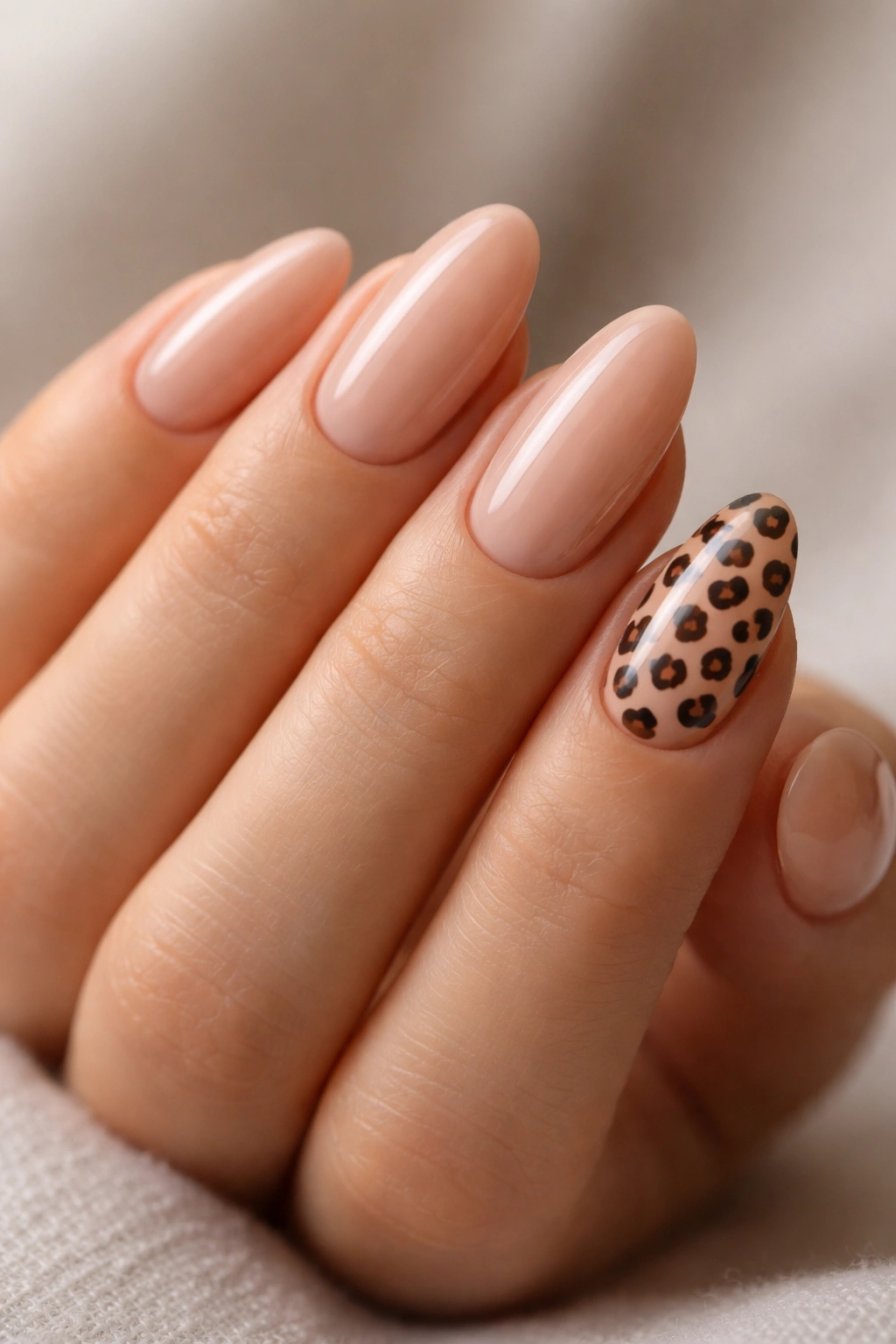
This style mixes one patterned nail with nine plain glossy nudes, and it works because of the contrast. One leopard nail feels like a wink. Two or three can start to feel louder, especially on shorter nails.
The single leopard nail is usually best placed on the ring finger or thumb. Those spots naturally draw the eye without making the whole manicure feel crowded. Keep the pattern slightly larger on that one nail so it reads clearly.
Don’t make the nude nails boring, though. A sheer nude with a high-shine finish gives the leopard nail a better backdrop. If the plain nails are dull or chalky, the whole set looks accidental.
This is the version I’d recommend if you want leopard print for the first time and do not want to regret it by day two.
8. Soft Gray Leopard
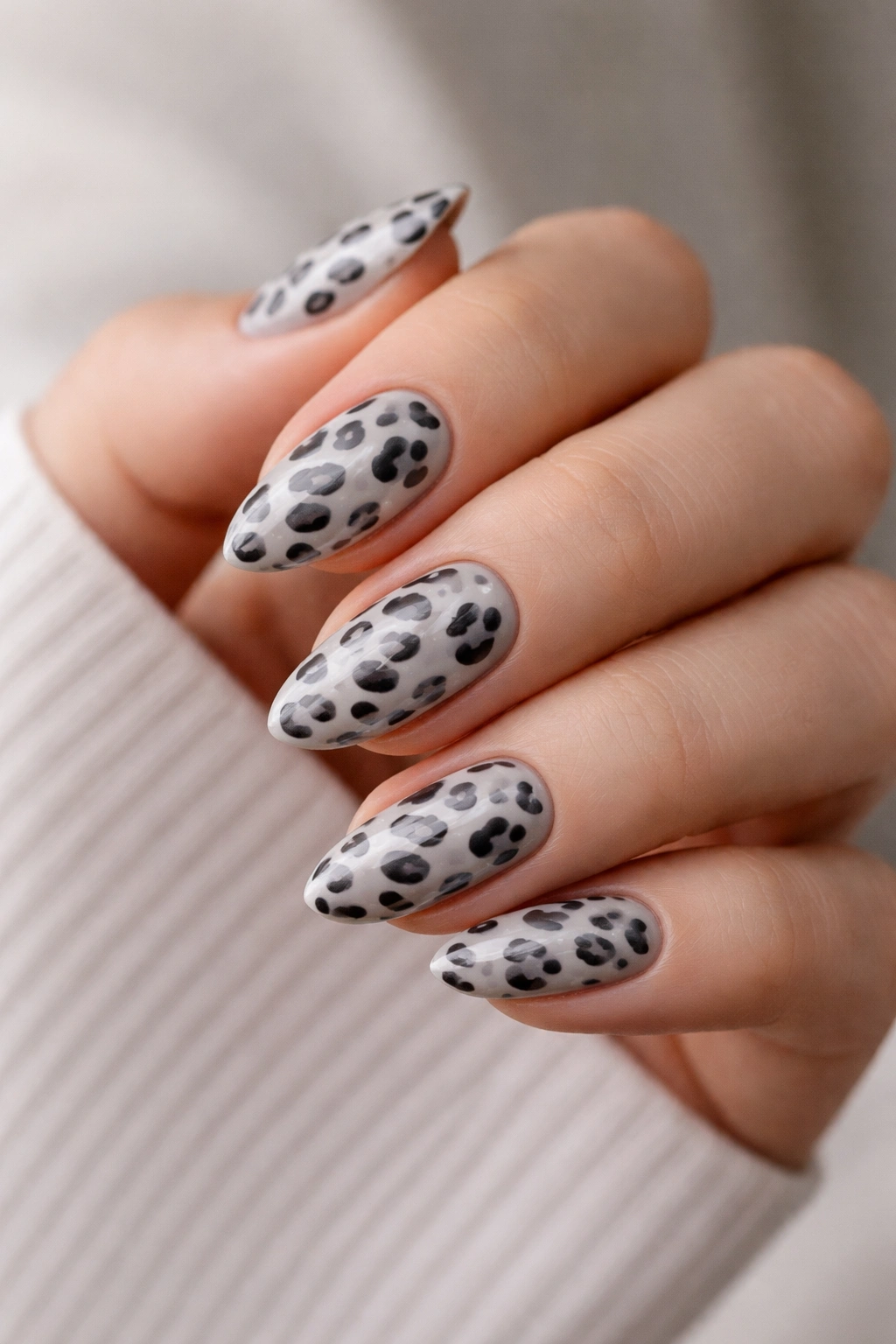
Soft gray leopard is cooler and calmer than the usual tan version. It has a smoky look that feels modern without trying too hard. Gray also gives the spots a different personality; they look a little less wild and a little more sleek.
Use a pale dove gray or greige base, then build the print with charcoal and black accents. The combination can look muddy if the shades are too close, so keep one color clearly lighter than the other. I like a light gray base with dark cocoa or charcoal spots, then a thin black outline on only some of them.
That uneven outlining matters. If every spot gets the same treatment, the design can look stiff. A few partially outlined spots look more natural and keep the eye moving across the nail.
Practical Note
Gray leopard is great if you wear silver jewelry or cooler-toned makeup. It tends to sit better with those finishes than warm brown leopard does.
9. Leopard Print with Negative Space
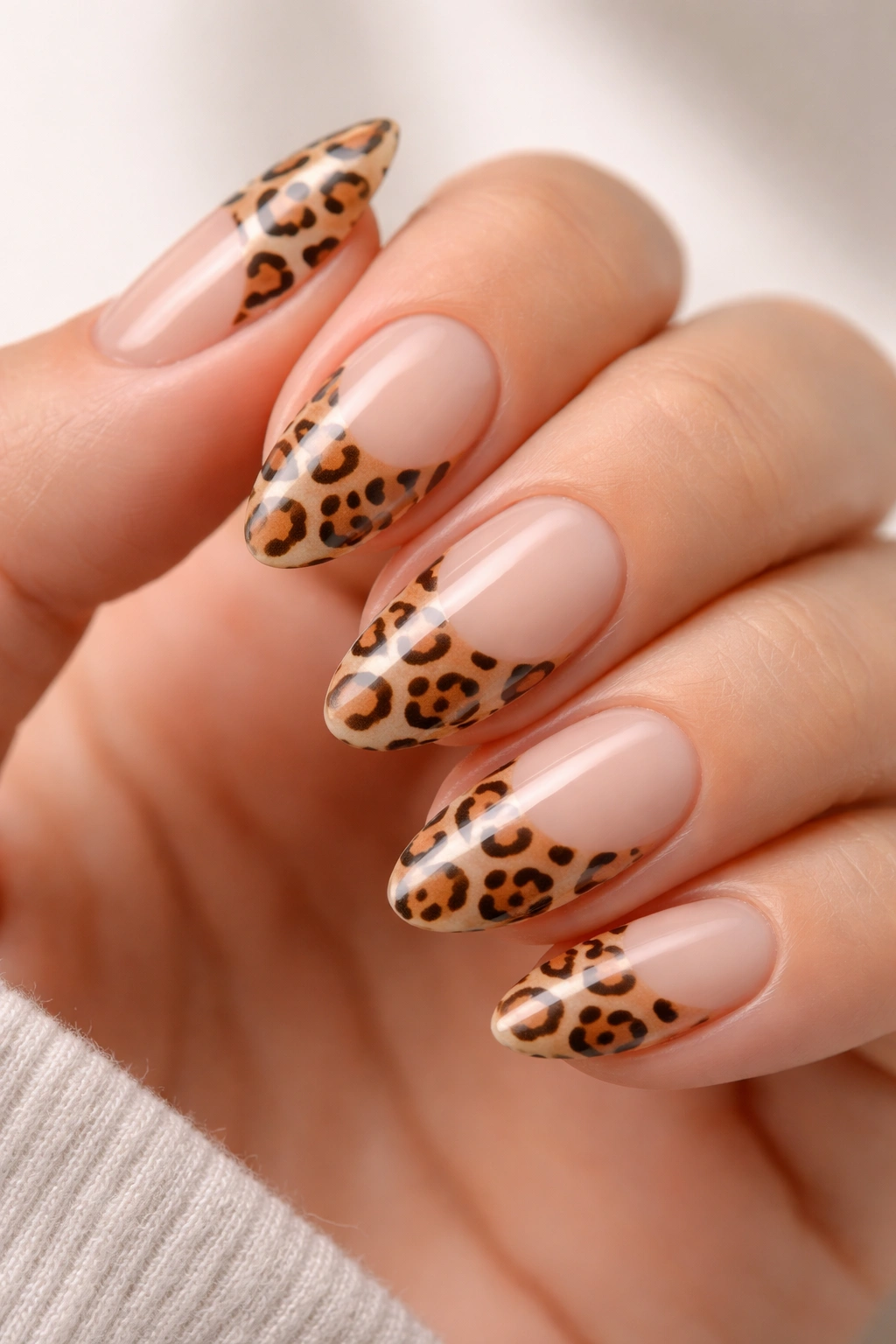
Negative space leopard print leaves part of the natural nail visible, and that makes the whole design lighter. On a short almond shape, this is a smart move. Full coverage can make the nail feel crowded; a partial design lets the shape stay visible.
You can do this by painting a sheer base, then leaving crescent shapes or small open zones near the cuticle or sidewalls. Add the leopard print only where the polish sits. That little gap of bare nail gives the manicure a cleaner edge.
This style is also nice if your nails are growing out and you want the manicure to last longer visually. The open space hides minor wear better than a fully painted nail. That’s a practical perk people do not talk about enough.
Best used with: sheer pinks, beige nudes, and thin spot clusters rather than dense patterning.
10. Brown Leopard with Chrome Touches
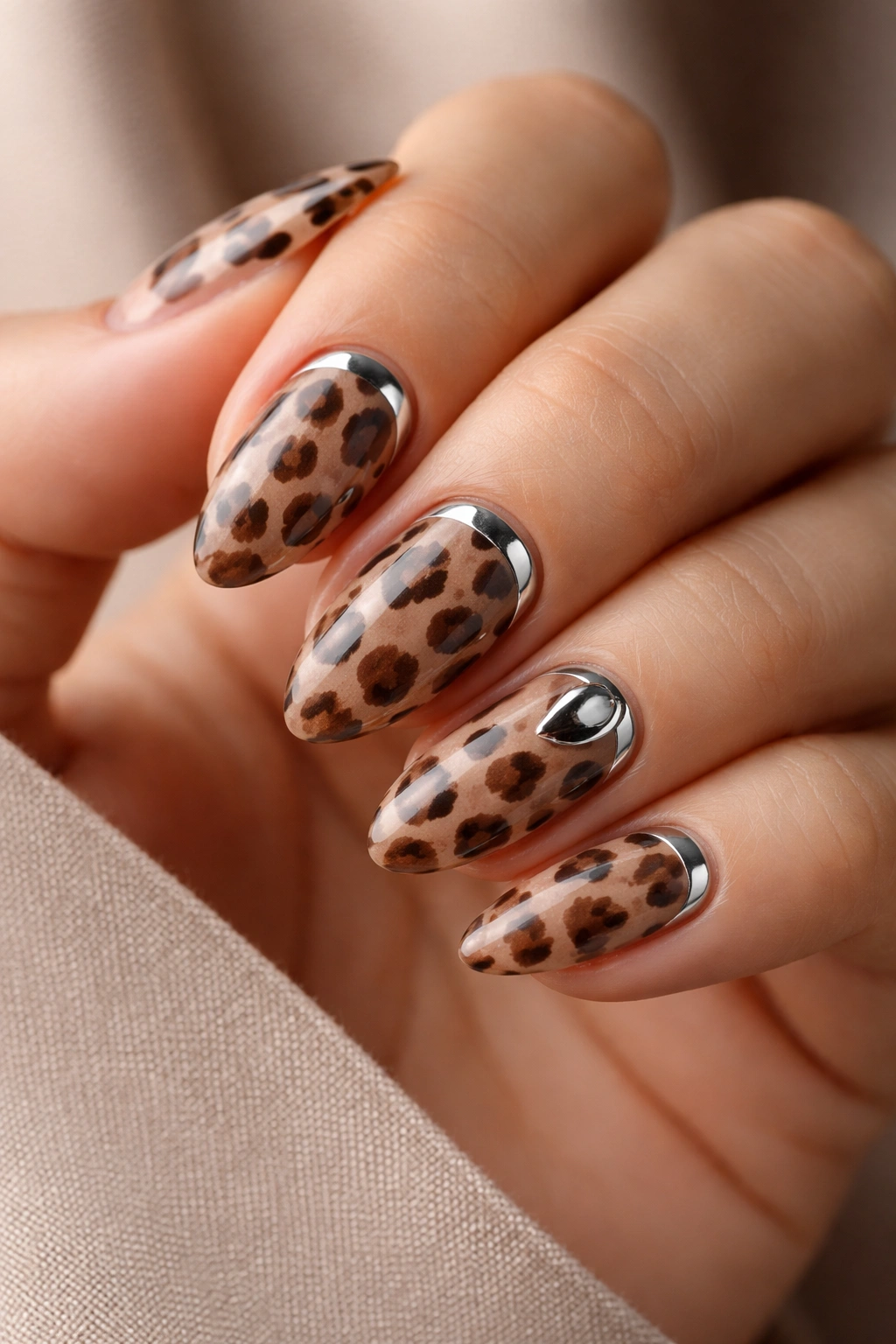
Brown leopard with chrome touches gives the familiar animal print a shinier, slightly more polished feel. You’re still working with warm brown spots, but the chrome adds a reflective edge that catches the eye when your hand moves.
The safest way to do this is to keep chrome as an accent, not the whole nail. A thin chrome stripe near the cuticle, a touch on one spot, or a very light chrome powder rubbed over the base can do the job. If you load too much chrome, the leopard print starts to disappear.
I prefer this style on shorter almond nails because the smaller nail surface keeps the shine contained. Long nails can make chrome look louder. Short nails handle it better.
If you want a manicure that looks a little more dressed up than plain leopard, this is a solid middle ground.
11. Matte Leopard with Glossy Spots
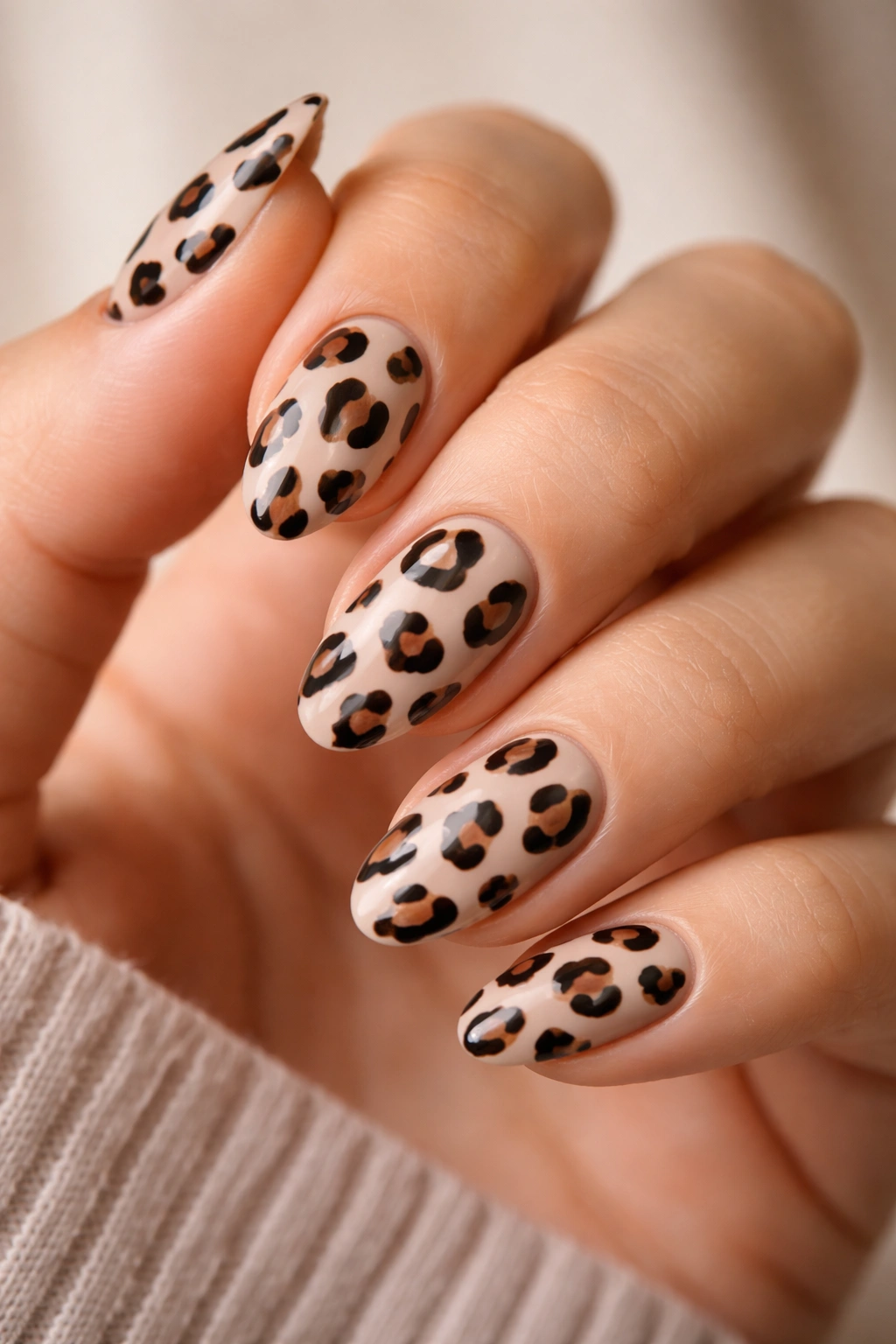
Matte leopard with glossy spots is one of the easiest ways to make a simple design feel more finished. The matte base mutes everything, then the glossy spots sit on top like tiny raised marks. You get contrast without changing the color palette much.
That texture shift matters. Same color, different finish. It’s a small trick, but it makes the print look deliberate and a little more expensive. On short almond nails, the matte finish can also make the shape appear softer and more elegant.
The main thing to remember: the matte top coat should go on only after the design is fully dry. If you matte over wet polish, the surface can haze unevenly. Then the shiny spots lose their sharpness, and the effect falls apart.
How to Get the Most From It
Use a smooth, even matte top coat and leave the glossy spots slightly larger than you think you need. The contrast shows up best when the gloss has room to breathe.
12. Pastel Leopard
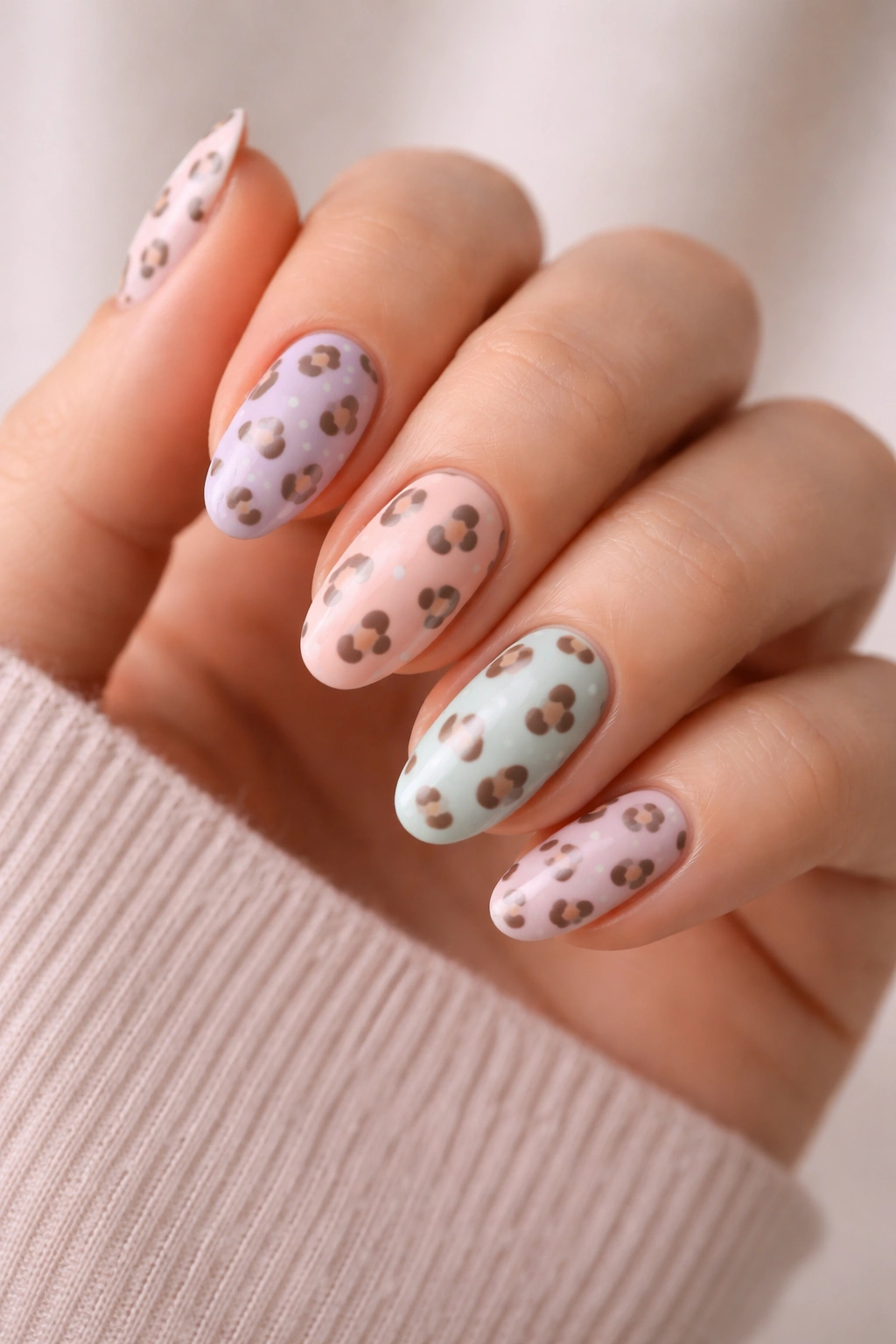
Pastel leopard is playful, and yes, it sounds like it should be childish. It doesn’t have to be. A muted lilac, blush pink, peach, or pale mint base can look surprisingly refined if you keep the spots small and the contrast soft.
This version works best when the leopard spots are done in dusty brown, mauve, or muted charcoal instead of hard black. That keeps the palette cohesive. If you use sharp black outlines on a pale pastel, the design can turn busy fast.
I like pastel leopard for warmer months, but honestly, it works any time someone wants a softer take on animal print. It is a good choice for people who love nail art but do not want their nails to shout from across the room.
Good Color Pairings
- Blush pink base with cocoa spots
- Lilac base with charcoal spots
- Peach base with dark brown spots
- Mint base with soft black outlines only
13. Leopard with Gold Foil Flecks
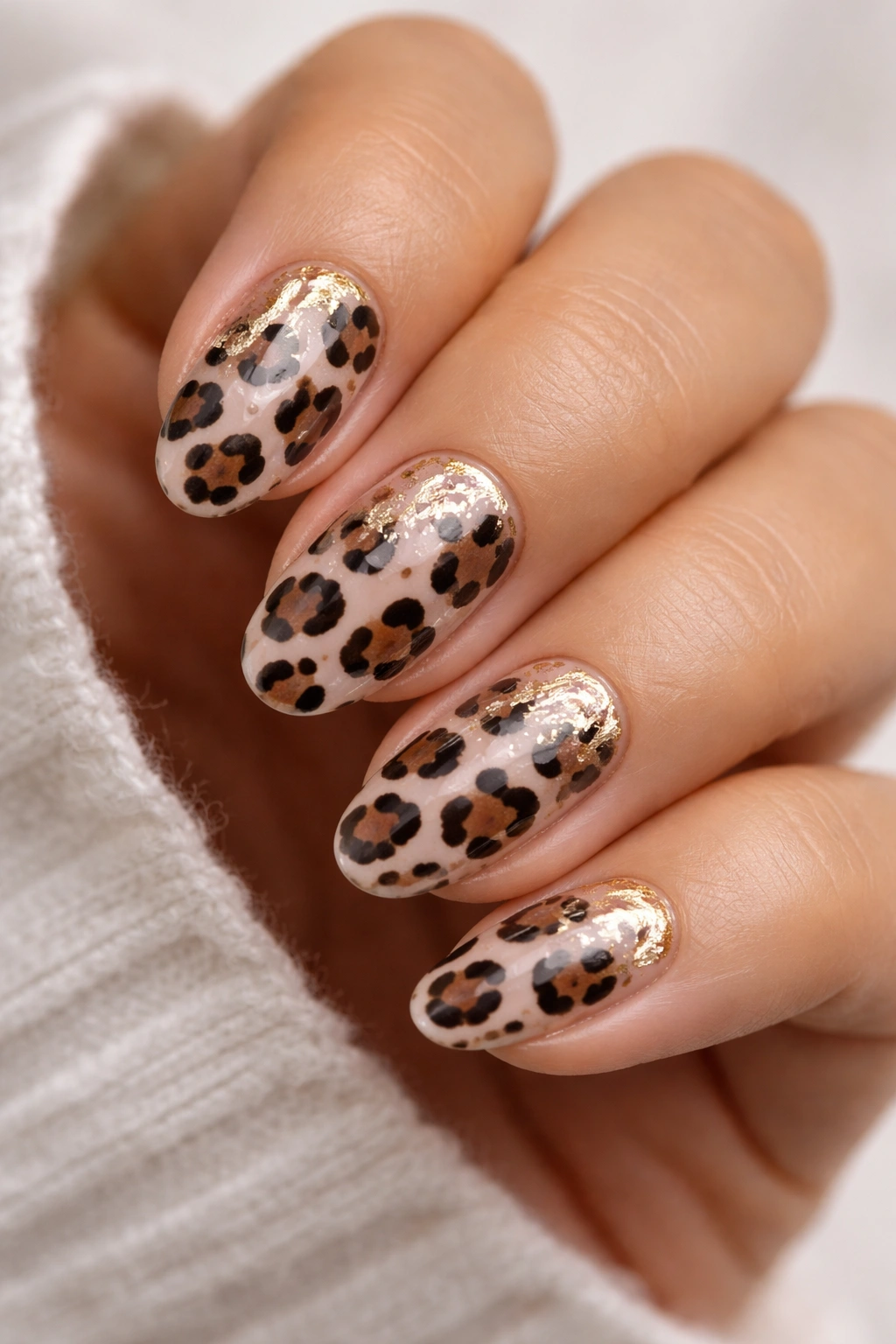
Leopard with gold foil flecks feels a little more textured and handmade. The foil breaks up the flatness of the base, which helps the leopard pattern blend into the nail instead of sitting on top like a sticker.
Use the foil sparingly. A few irregular flecks near the cuticle or around one side of the nail are enough. Then place the leopard pattern in the open areas. Too much foil can crowd the print and make the manicure feel busy in a bad way.
This one is for people who like details that look accidental but are actually well planned. It has that slightly imperfect finish that tends to look better on shorter nails than on long ones.
14. Reverse Leopard Cuticle Design
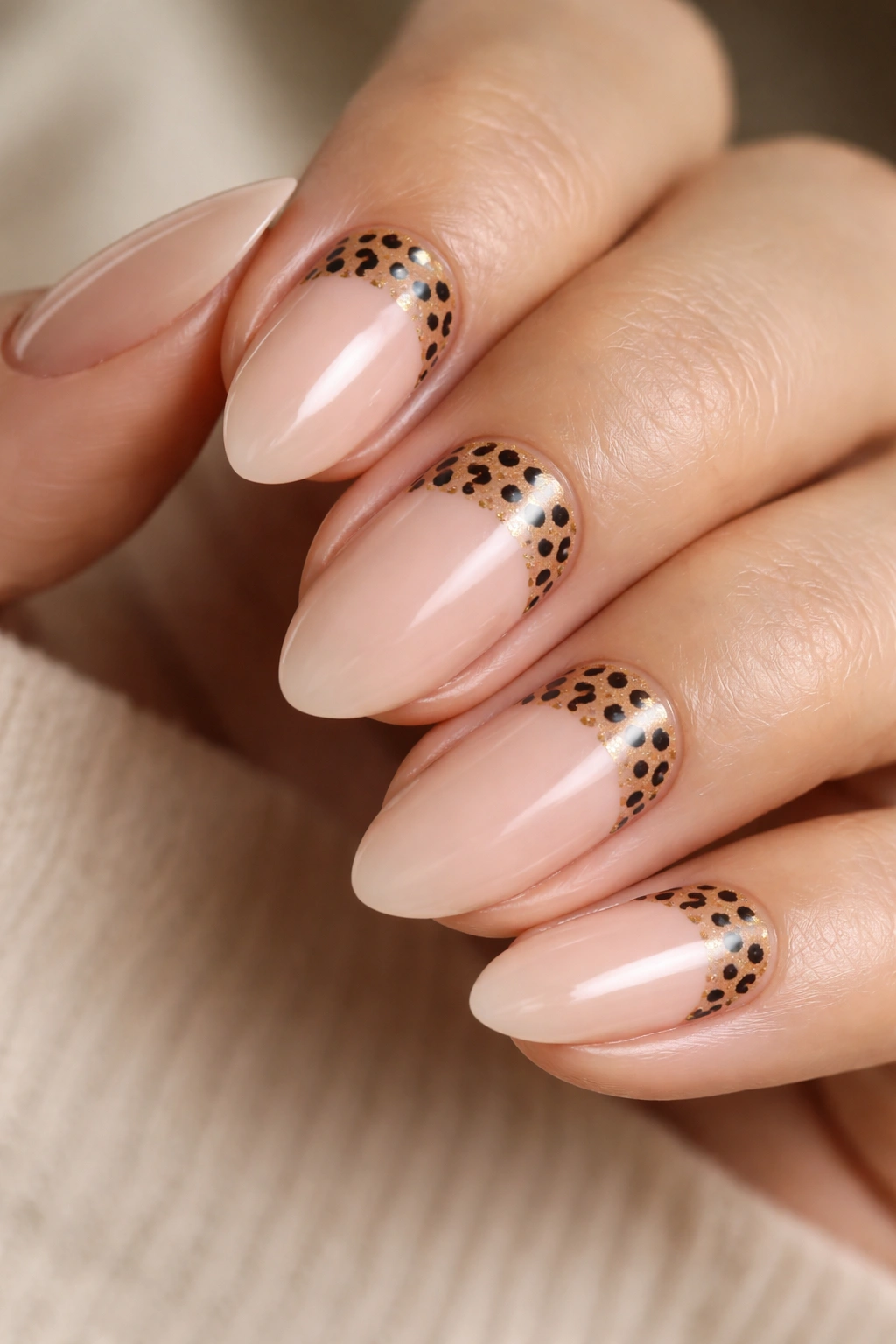
Reverse leopard cuticle designs place the print near the base of the nail instead of the tip. It’s a smart choice for short almond nails because the cuticle area is where the nail starts to feel most anchored. Put the pattern there, and the whole manicure looks balanced.
The rest of the nail can stay sheer or softly tinted. That gives the leopard spot cluster a nice frame. It also helps the design grow out more gracefully, since the busy part sits closest to the cuticle and not at the edge where chips show first.
This style has a fresh look without being loud. It’s a little unexpected, but not strange. Those are the best nail designs, in my opinion.
What to Keep in Mind
Make the pattern narrower than you would on a full-coverage nail. A small cluster near the cuticle is enough. If you spread it too wide, the negative space loses its point.
15. Minimal Leopard Dots
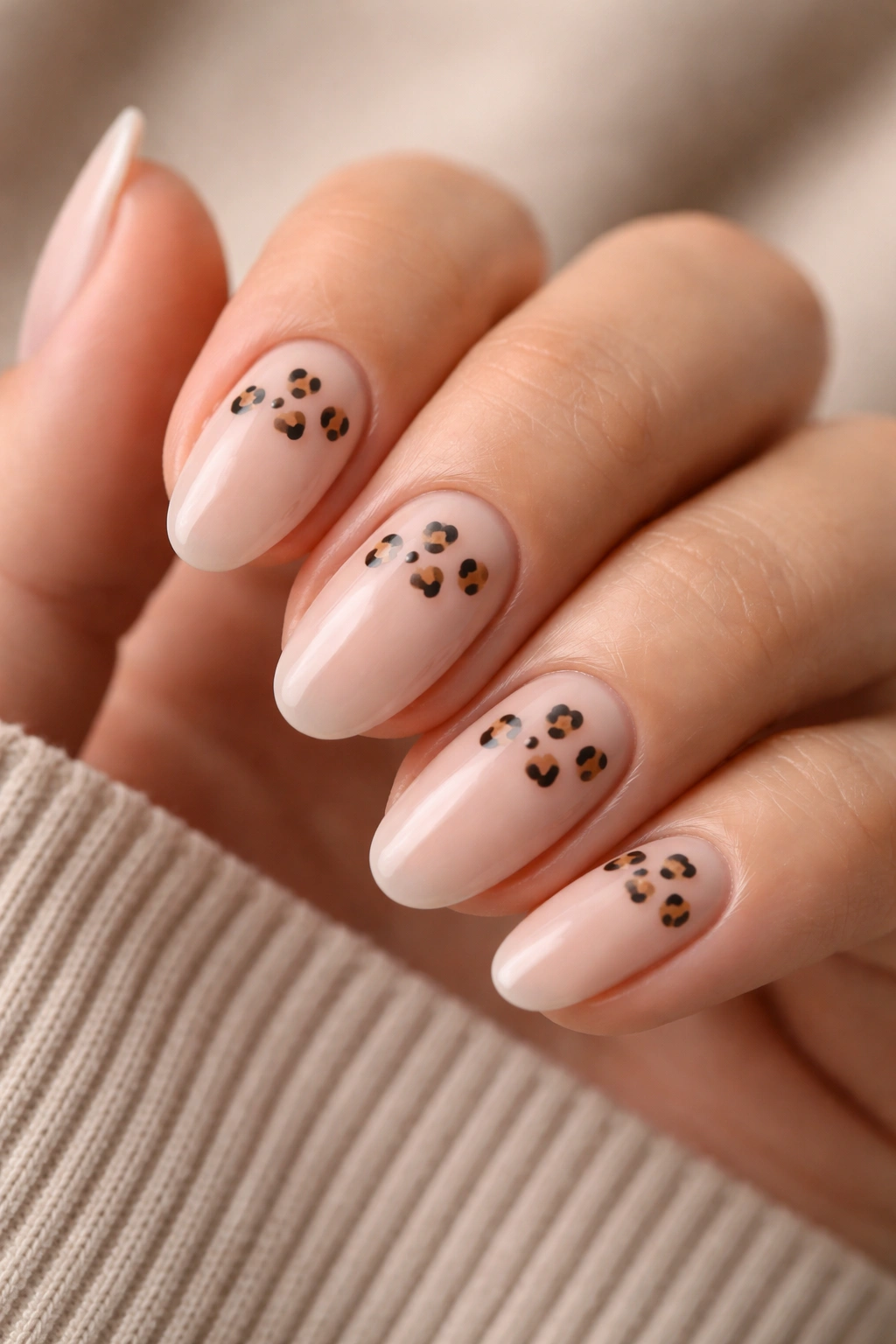
Minimal leopard dots are the easiest version on the list, and they might be the smartest one for beginners. You’re not drawing full spots everywhere. You’re placing a few tiny marks on each nail — enough to suggest leopard print without building a full pattern.
This style works especially well if your nails are short and you want something neat. A tiny cluster near the center or upper third of the nail looks intentional and clean. It also gives you more control, because one shaky line won’t ruin the whole look.
The nice thing about minimal leopard is that it wears well. Chips are less obvious, the design is faster to do, and the manicure still feels styled. That’s a rare combination.
How to Use It
Use a dotting tool, toothpick, or very thin brush. Place 3 to 5 small irregular marks per nail. Keep them uneven. That’s what makes them look like leopard spots instead of confetti.
Easy Ways to Make Short Leopard Almond Nails Look Better
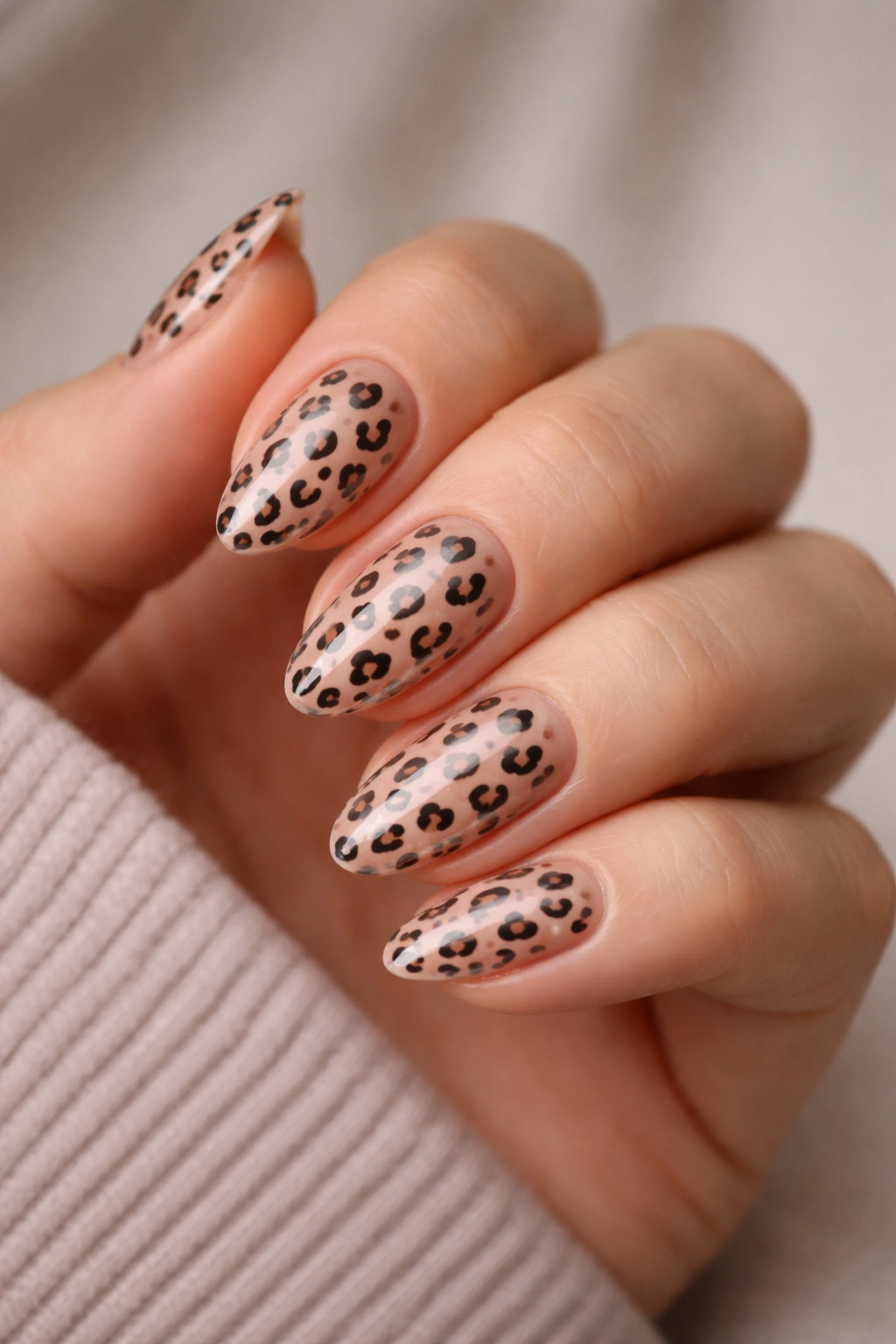
Short almond nails do not need complicated extras, but a few details can make the whole manicure land better. Shape matters first. If the almond tip is too pointy, leopard print can look harsh. If it is too round, you lose the elegance that makes the shape work so well.
Keep the apex subtle. The nail should taper, not stab. That sounds obvious, but a lot of home manicures go too sharp on one side and too wide on the other. A balanced almond shape gives the print a much cleaner canvas.
Clean cuticles help more than people admit. Even the prettiest leopard design looks sloppy if the polish is flooding the sidewalls or sitting on dry skin. Push back the cuticle gently, wipe the nail plate with remover, and let the design sit on a clean surface.
A thin top coat is worth caring about too. Thick top coat can blur the spots, especially if you’re using a matte or glossy finish over hand-painted detail. One smooth coat is enough. Don’t keep brushing over the same area.
How to Paint Leopard Print Without Losing Your Mind
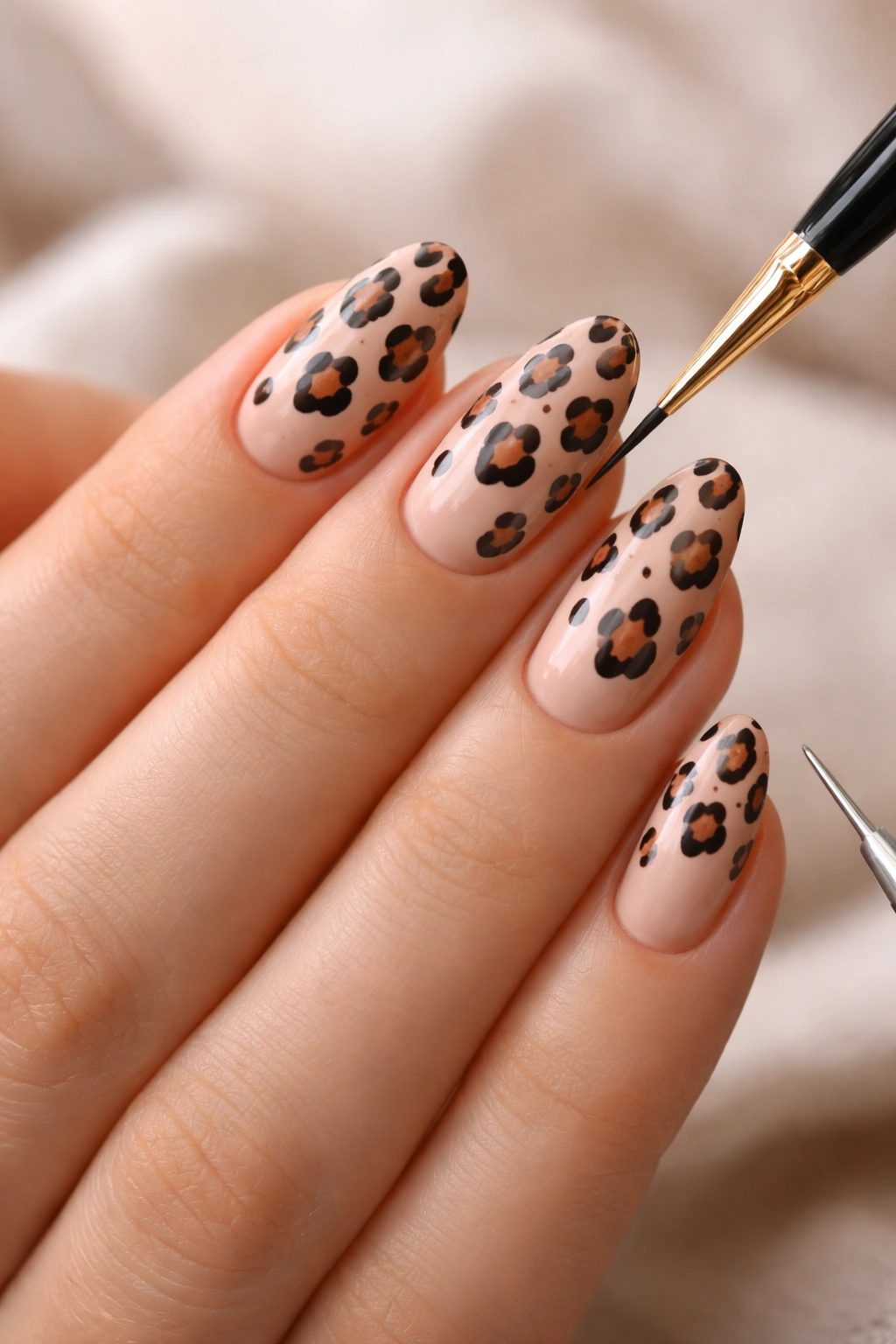
Start with the base color and let it dry completely. Half-dry polish is the enemy here. If the base moves when you add the spots, everything smears and you end up chasing the mess around the nail.
Then work in small irregular shapes. Leopard spots are not circles. They are broken, uneven blobs with open centers or partial outlines. A dotting tool can help, but a tiny brush gives more control. Both work fine if you keep your hand steady and stop trying to make each mark match.
If you mess up, fix one spot at a time. Do not wipe the whole nail unless you have to. That tiny bit of patience saves a lot of frustration, and it keeps the base from getting thick and gummy.
One more thing: step back every few nails. Seriously. Patterns look different when you hold your hand at arm’s length. What seems balanced up close can look crowded once you pull back.
Colors That Make Leopard Print Look Better on Short Almond Nails
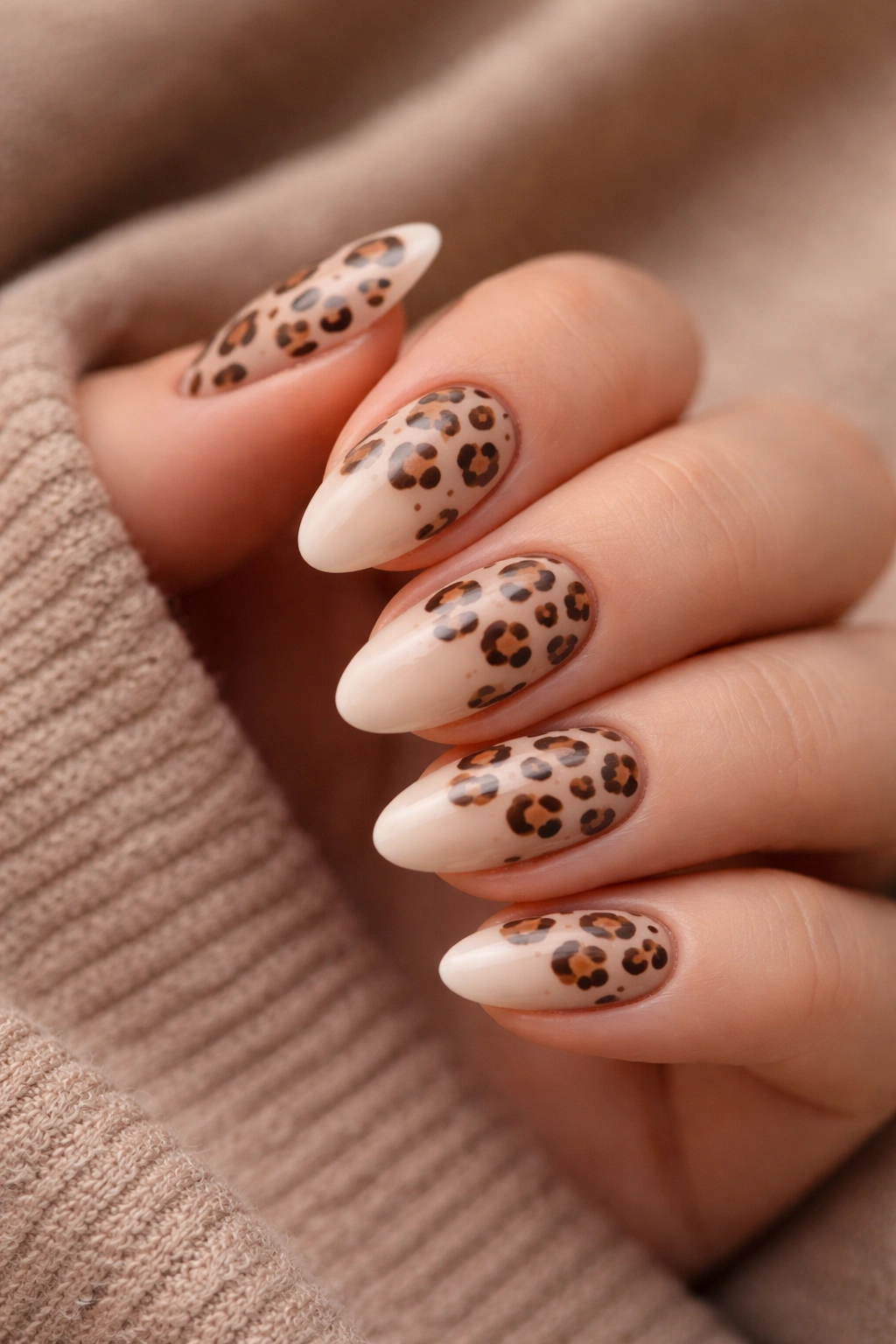
Warm beige, camel, caramel, chocolate, soft gray, and blush are the easiest colors to work with. They all give leopard print enough contrast without making the manicure feel heavy. If you want something more dramatic, deep burgundy or olive can work too, though those shades need a lighter hand with the spots.
Black is useful, but it is not always necessary. Too much black can flatten the design. A dark brown outline often looks softer and more wearable, especially on short nails where every line gets noticed fast.
Milky white bases are underrated. They make brown leopard spots pop without the harshness of a pure white background. Pure white can feel too crisp. Milky white has a little more warmth.
Keeping the Look Fresh Between Touch-Ups
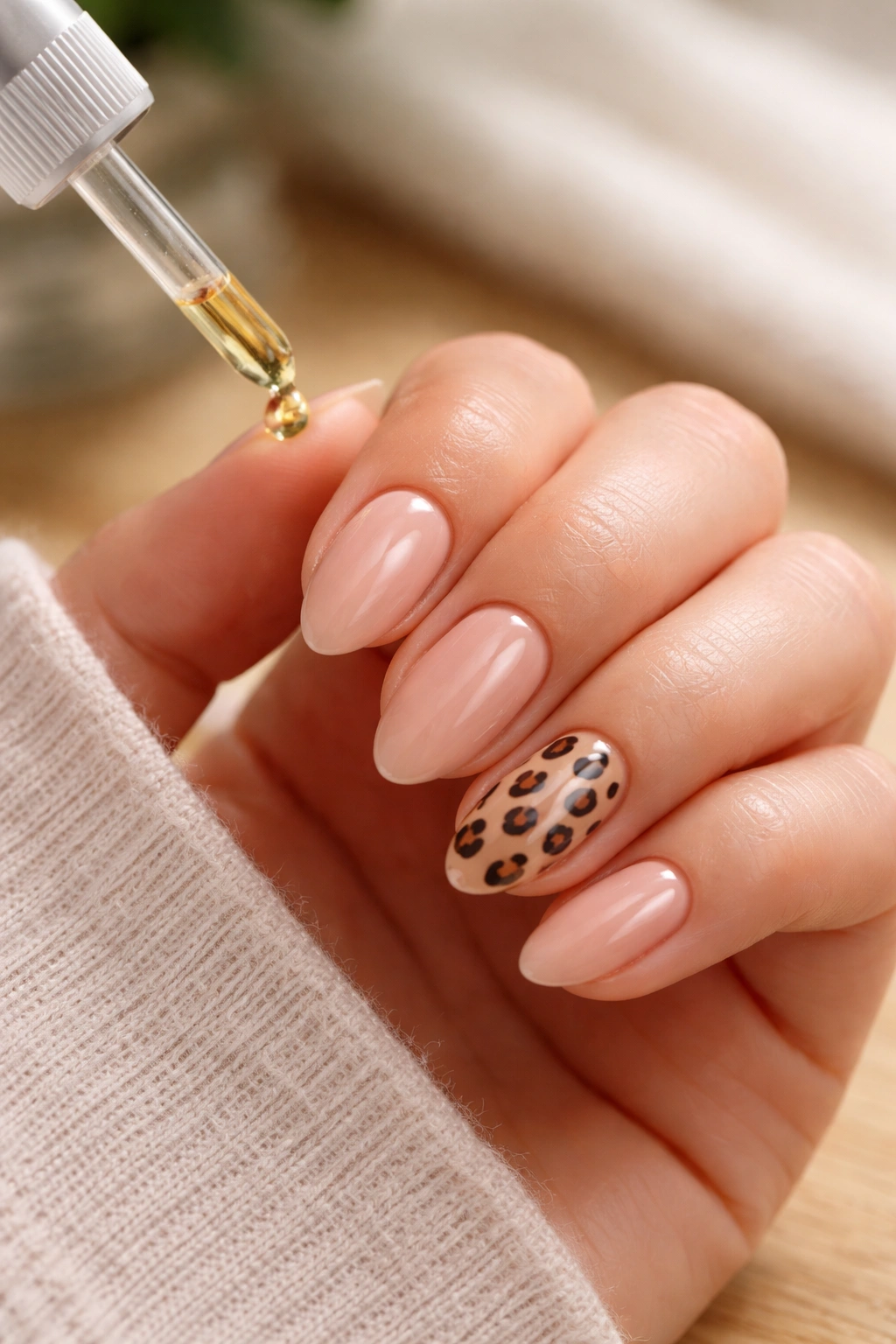
Short nails are forgiving, but they still need care. Use cuticle oil once or twice a day if your hands run dry. That keeps the skin around the nail from cracking and making the manicure look older than it is.
When the edge starts to wear, a thin layer of clear top coat can help extend the life of the design. Don’t flood the nail. Just seal the tip and smooth the surface. That small bit of maintenance goes a long way.
If one nail chips badly, do not panic. Leopard print hides patch work better than plain polish does. Repaint the damaged area with a few intentional spots, then seal it again. The design is naturally good at covering small mistakes.
Final Thoughts
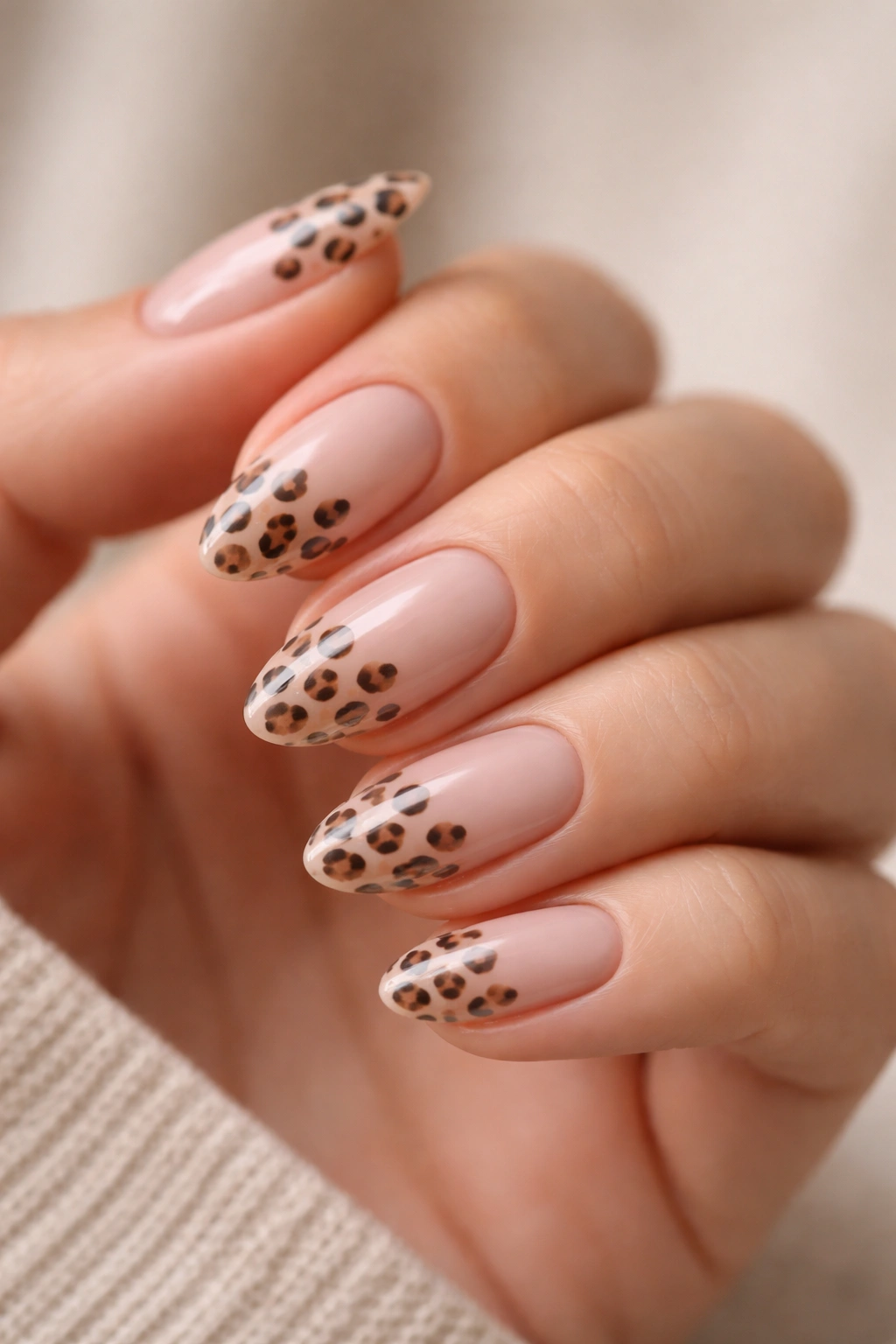
Short leopard print almond nails work because they hit a sweet spot: easy to wear, easy to style, and far less fussy than they look from a distance. The shape keeps the manicure soft, and the print brings enough attitude to stop it from feeling plain.
If you want the simplest path, start with nude leopard or a single accent nail. If you want more edge, try black and gold, matte finishes, or a reverse cuticle design. The pattern is flexible, which is part of why it never gets old.
And if your first attempt looks a little uneven, that is fine. Leopard print is supposed to have some irregularity. A perfectly matched set of spots usually looks worse than a slightly messy one, which is probably the most comforting thing about the whole trend.