

Short nails punish harsh color placement. A blunt stripe across a short tip can make the whole manicure look chopped off, which is why ombre short oval nails keep sticking around while louder manicure ideas come and go. The oval edge softens the outline of the nail, and the gradient gives the eye somewhere to travel, so even a short length can look a few millimeters longer.
Shape does more work here than people think. Square tips stop color dead. A long almond can carry a fade well, but on a shorter nail it can start to look pinched. Short oval sits in the sweet spot—rounded enough to stretch a blur of color, short enough to stay practical when you’re typing, texting, opening cans, or digging around in a tote bag.
The difference between a salon-looking ombre and a streaky one is not the color pair alone. It is the transition. Good techs build that soft middle with sheer layers, a sponge, an airbrush, or a milky overlay, and they know when the tip shade needs to stop before it swallows half the nail. I keep coming back to that because I have seen gorgeous colors die on the nail the second the fade line hit the middle too hard.
Some ombres whisper. Some have bite. On short oval nails, both can work if the color placement is smart and the blend looks misted rather than striped.
What makes ombre short oval nails look seamless
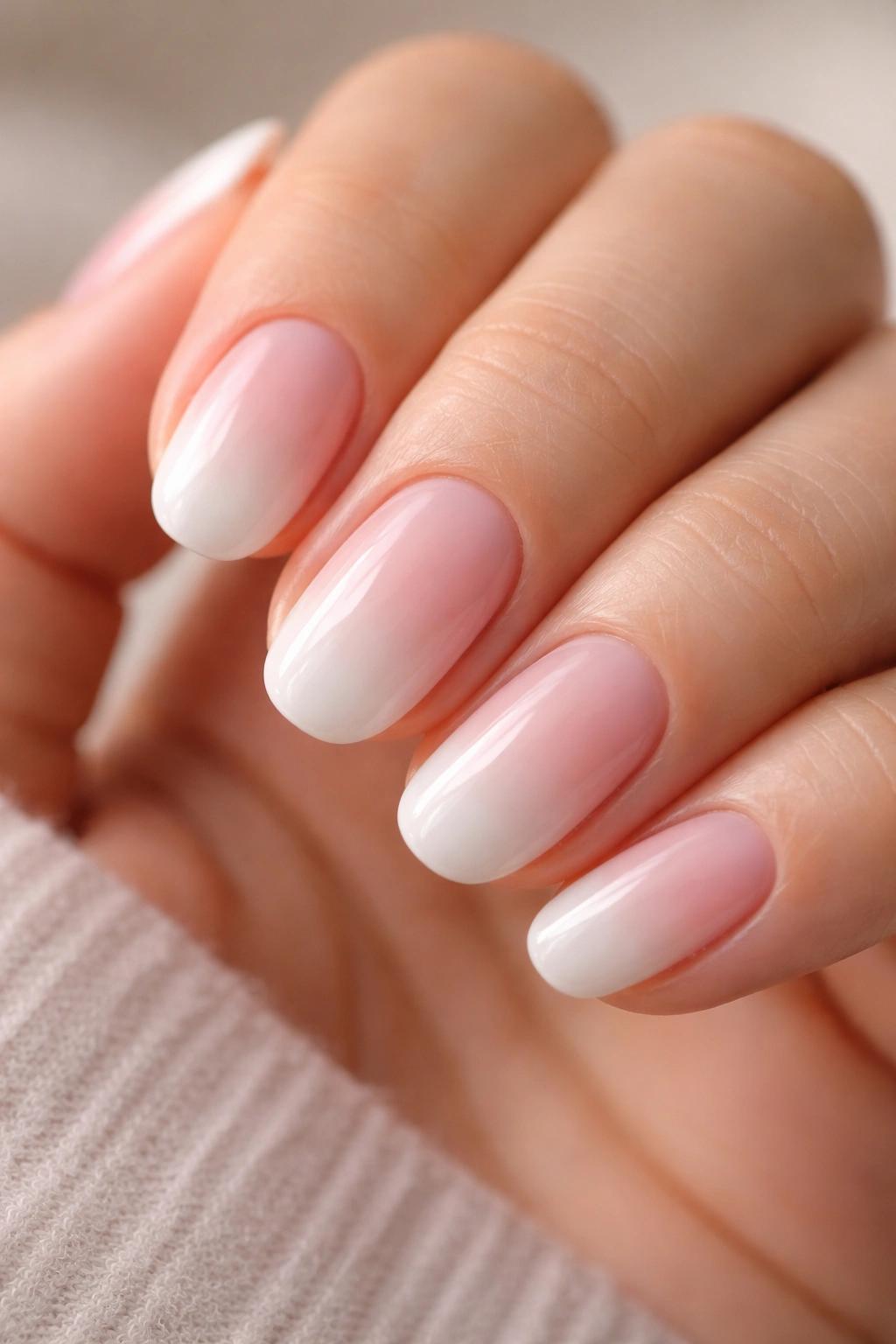
A smooth ombre is a spacing problem before it is a color problem. On a short nail, you do not have much surface to work with—often 8 to 11 millimeters from cuticle area to free edge, depending on nail bed length. If the deepest shade takes up half that space in one pass, the fade turns into a color block.
Keep the contrast in proportion to the length
Short oval nails handle soft contrast best. That does not mean every manicure has to be pale. It means the jump between shades needs help. A milky pink flowing into white works because the center has room to blur. A nude slamming into dark burgundy, with no jelly layer in between, usually looks abrupt on a short nail.
The trick is to use two or three thin passes instead of one heavy pass. Thin pigment diffuses. Thick pigment sits there and announces itself.
Use a middle layer, even if you cannot see it
A lot of the smoothest gradients have a quiet third shade in the middle—sometimes a sheer jelly, sometimes a milk-bath tone, sometimes a builder gel with a wash of color mixed in. You may not point to it once the manicure is done, yet it is doing the hard work. That middle tone softens the handoff between cuticle shade and tip shade.
At home, a small makeup sponge cut to nail width helps. In salons, many techs prefer a fine sponge dab, a gel brush feather, or an airbrush for that misty fade.
Finish hides more than people admit
Gloss can smooth small flaws. A thicker top coat fills tiny texture dips and makes the fade look deeper. Matte has its place, but matte is less forgiving—every rough patch and every uneven blend line shows up fast on a short nail.
Keep these points in mind when you ask for a seamless fade:
- Ask for a soft oval, not a sharp almond. The sidewalls should look gently rounded, not tapered.
- Keep the darkest or brightest shade in the top third of the nail if the length is short.
- Choose jelly or milky versions of bold colors when you can. They blur better.
- Cap the free edge thinly so the tip does not look bulky from the side.
- Use micro-glitter, pearl, or chrome powder sparingly if you want to disguise tiny blend flaws.
That last one matters more than people think.
How to ask for ombre short oval nails that stay soft, not streaky
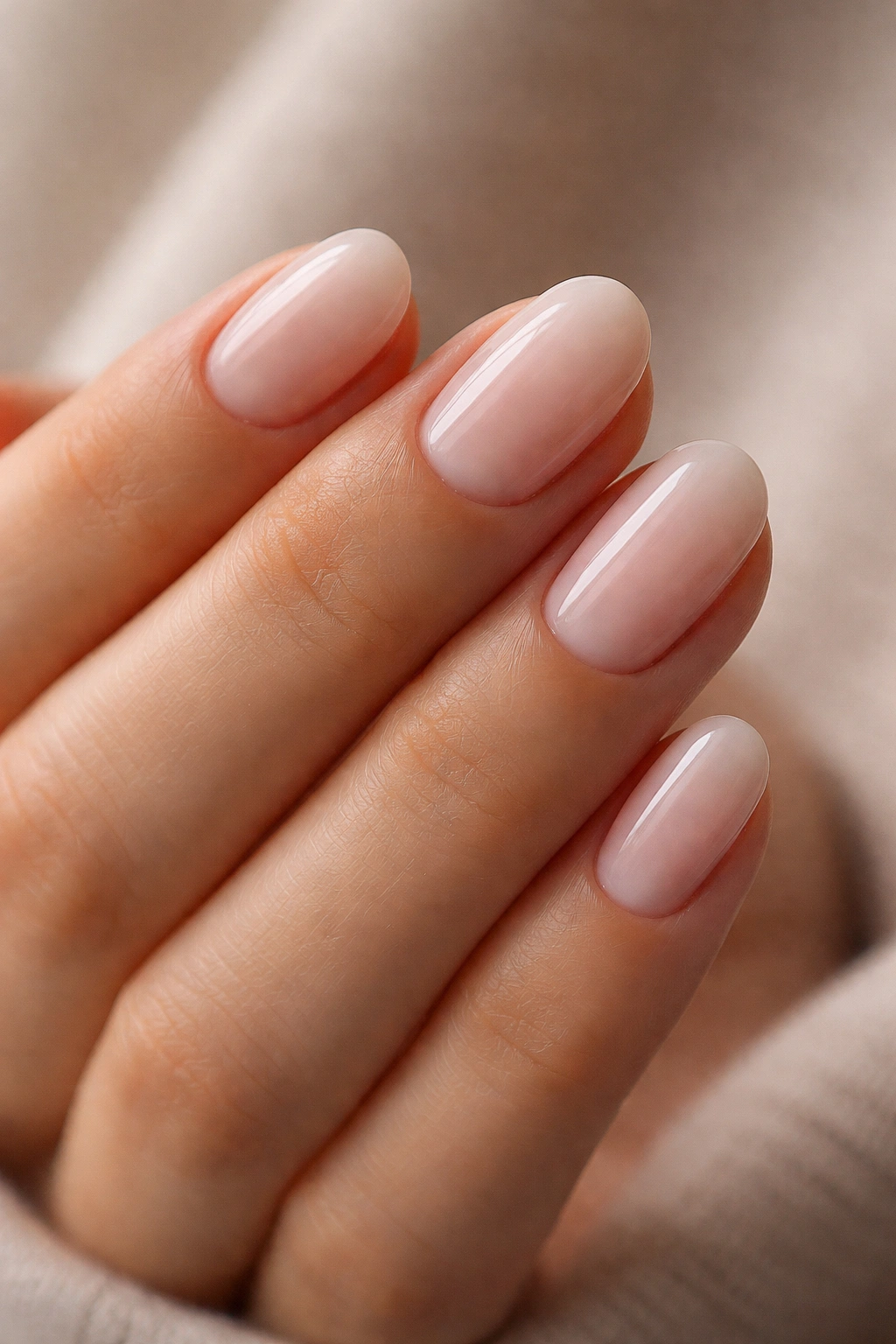
Need a shortcut when two swatches both look good in the bottle? Look at your hand, not the display wall. Undertone and nail-bed length tell you more than the bottle cap ever will.
If your skin pulls warm or golden, peach, beige, caramel, cocoa, coral, and warm pink tend to sit naturally against it. Cool or rosy skin often looks sharp with mauve, taupe, lilac, gray, blue-white, and black cherry. Neutral undertones can swing either way, which is handy if you like to change mood from one appointment to the next.
Nail-bed width matters too. A shorter, wider nail usually looks longer with a sheer base at the cuticle and the stronger color concentrated near the tip. If the darker shade starts too low, the nail can look shorter. The same color pair can look airy on one hand and heavy on another.
When you are in the chair, short phrasing works best. Ask for “a soft oval with a sheer cuticle area, stronger color at the top third, and a blurred middle”. If you want shine, say glossy. If you want a velvety finish, mention matte right away because the tech may need to blend a little more carefully before top coat.
And if you type all day or use your hands hard, skip bulky charms and chunky glitter. A clean fade wears better.
1. Milky Pink to Soft White Baby Boomer Fade
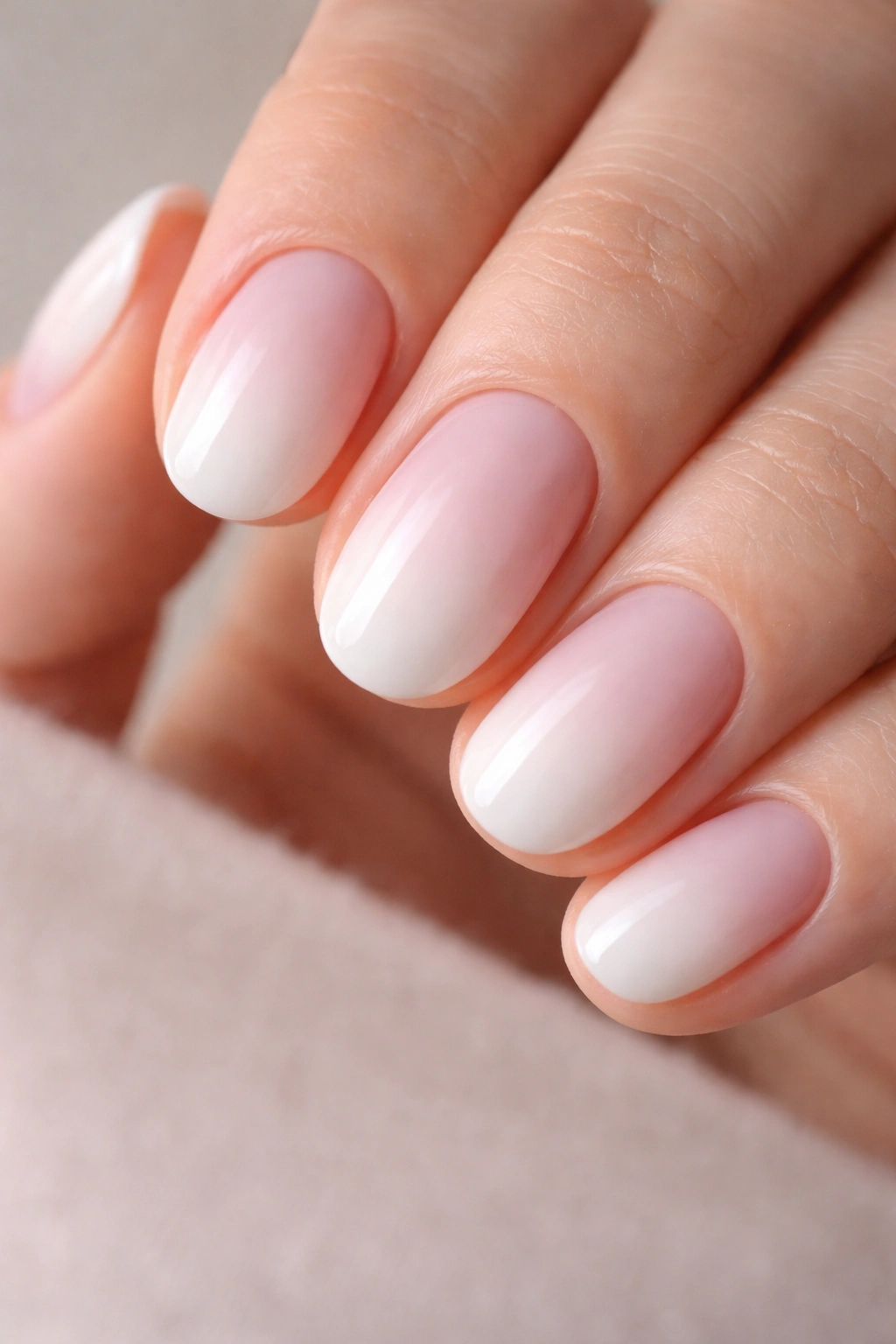
This is the manicure version of fresh linen: crisp, soft, and never out of place. Milky pink melting into soft white gives you the clean look of a French manicure without a hard smile line, which is exactly why the baby boomer fade keeps surviving every nail trend cycle.
Why it works on short oval nails
A short oval already has a rounded tip, so the white can float across the edge instead of stopping in a blunt line. That makes the nail look longer. Keep the white concentrated on the top 25 to 30 percent of the nail, then blur it downward with a sponge or feathering brush.
The pink matters as much as the white. A sheer rosy-milk base flatters more skin tones than an opaque ballet pink, and it lets grow-out look softer after two or three weeks.
Quick details that make this one land
- Best free-edge length: about 1 to 2 millimeters
- Best finish: glossy, with a smooth builder-gel overlay if you like a glassy surface
- Best white tone: soft white or milk white, not bright correction-fluid white
- Best use case: weddings, interviews, daily wear, and anyone who wants neat hands without thinking hard about color
Tip: if the white starts too low, ask for it to be pushed higher. That one tweak keeps the nail from looking squat.
2. Beige Nude to Caramel Ombre
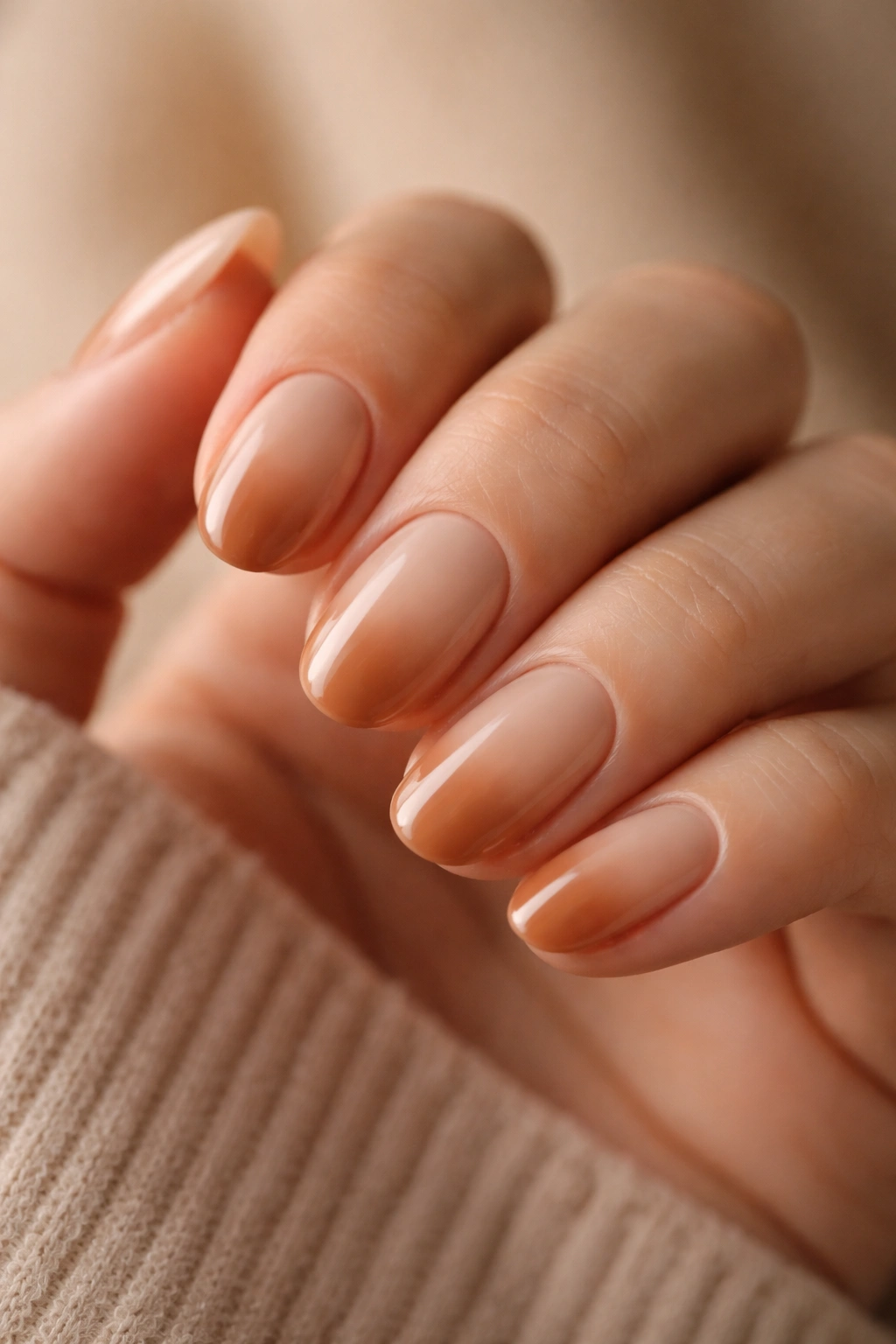
If a standard nude manicure vanishes against your skin, caramel fixes the problem. Beige at the base with caramel deepening at the tip gives the nail shape and depth, but it still feels grounded enough for daily wear.
The beauty of this combo is the warmth. On medium and deep skin, caramel looks rich instead of stark. On fair skin, go one step lighter—think latte or light toffee rather than full caramel—so the fade does not overpower the length. The color family stays the same; the saturation shifts.
Short oval nails benefit from that shadow at the tip. It frames the free edge and makes the nail bed look a little longer, especially if the beige at the cuticle stays sheer. A glossy top coat suits this fade best because it keeps the colors creamy and smooth. Matte can work, though it tends to make beige look chalkier if the underlying blend is not flawless.
I like this one for people who wear camel coats, brown leather, gold jewelry, or soft earth tones a lot. It feels polished in a quiet way, and it hides minor tip wear better than a pale nude manicure does.
3. Sheer Peach to Cream Apricot Fade
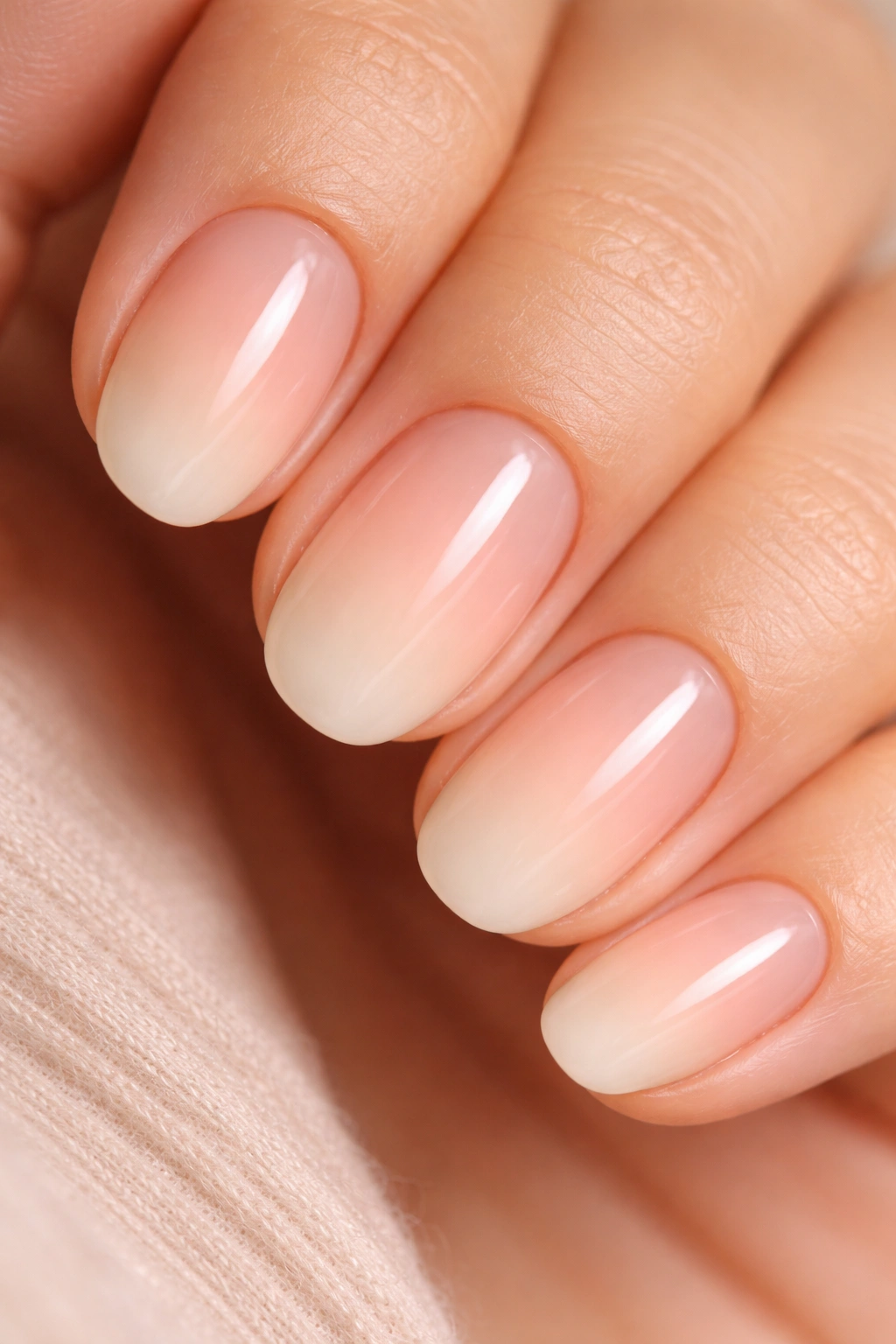
Why does peach make hands look brighter? Because it lifts sallowness without the sharpness that comes with some pinks. A sheer peach base washed into cream apricot feels warm, juicy, and easy on short nails.
Peach also plays nicely with the natural flush in the fingertips. That helps the ombre look like it belongs on the hand instead of sitting on top of it. On shorter ovals, use a translucent peach near the cuticle and keep the apricot strongest at the upper quarter of the nail. If the apricot gets too opaque too early, the whole effect turns heavy.
This is a smart pick if you like color but do not want red, neon, or anything that feels too dressed up for a Tuesday. The finish should look glossy and almost balm-like.
How to wear it so it stays soft
Pair this shade family with a milky base rather than a clear one. The milkiness diffuses the apricot and gives the center of the nail that hazy middle you want in a true ombre. If your skin has olive or golden tones, this fade usually looks lively right away. Cooler skin can still wear it—just choose a softer apricot with a whisper of pink in it.
One more note: this is one of those manicures that looks best when the cuticles are tidy. Peach draws the eye.
4. Rose Pink to Mocha Ombre
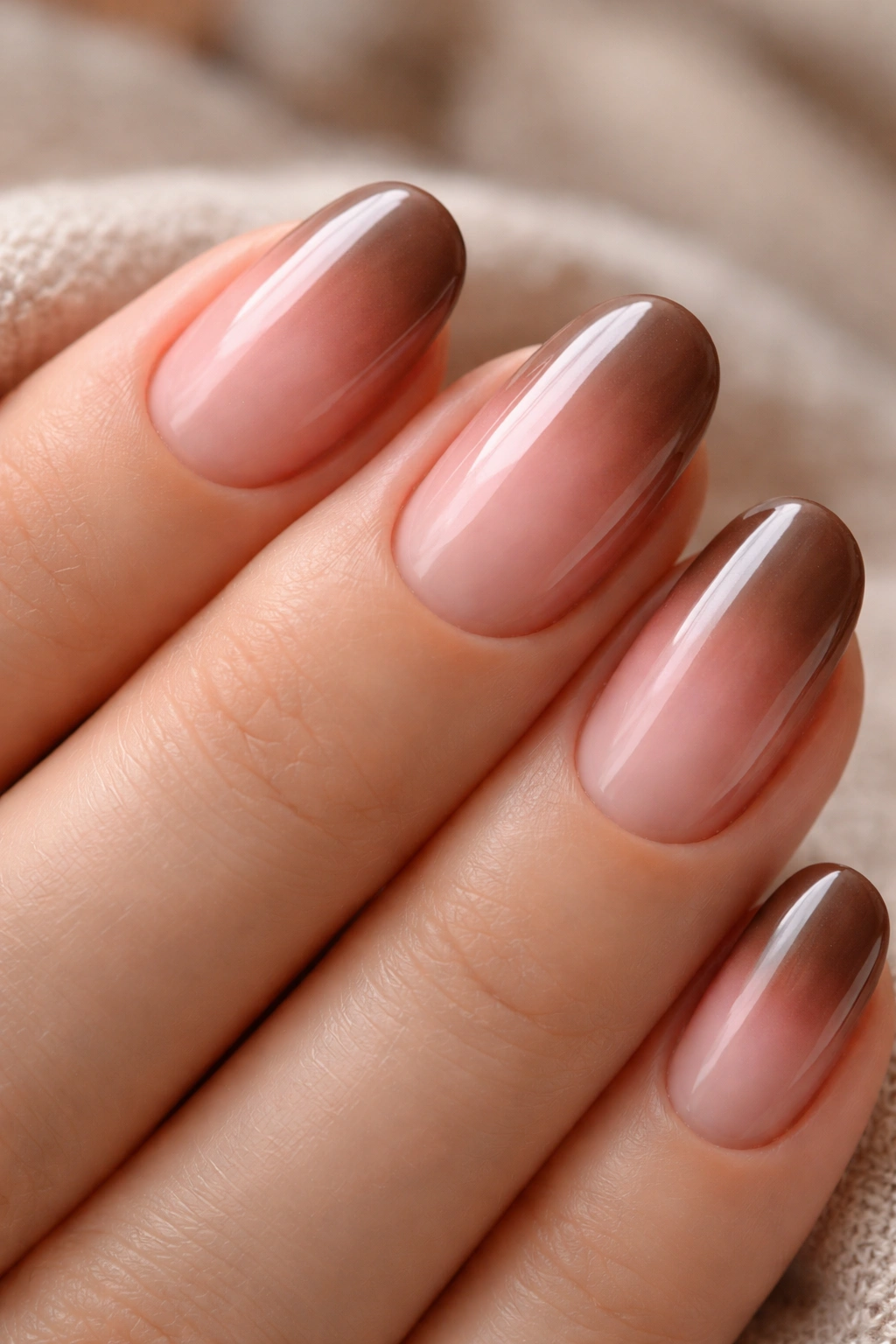
Picture the kind of manicure that still looks right with a white shirt, a charcoal sweater, and a silk slip dress. Rose pink fading into mocha hits that middle ground better than most neutral gradients do.
I like it because the rose keeps the look human. Brown-only fades can lean flat if the base is too beige. The pink adds blood flow back into the hand, while the mocha at the tip brings structure and depth.
A nail tech can make this combo look expensive fast if the center of the nail gets one smoky jelly layer over both shades. That softens the switch and keeps the ombre from splitting into “pink part” and “brown part.”
Here’s the formula that tends to work:
- Rose should stay sheer near the cuticle, almost like a tinted base coat
- Mocha belongs high on the nail, around the top 30 percent
- A pink-brown jelly wash over the center helps the blend disappear
- Medium gloss looks smoother than dead-flat matte on this color pair
The end result feels mature, but not stiff. That is a tricky line to hit, and this one does it.
5. Blush Nude to Dusty Mauve
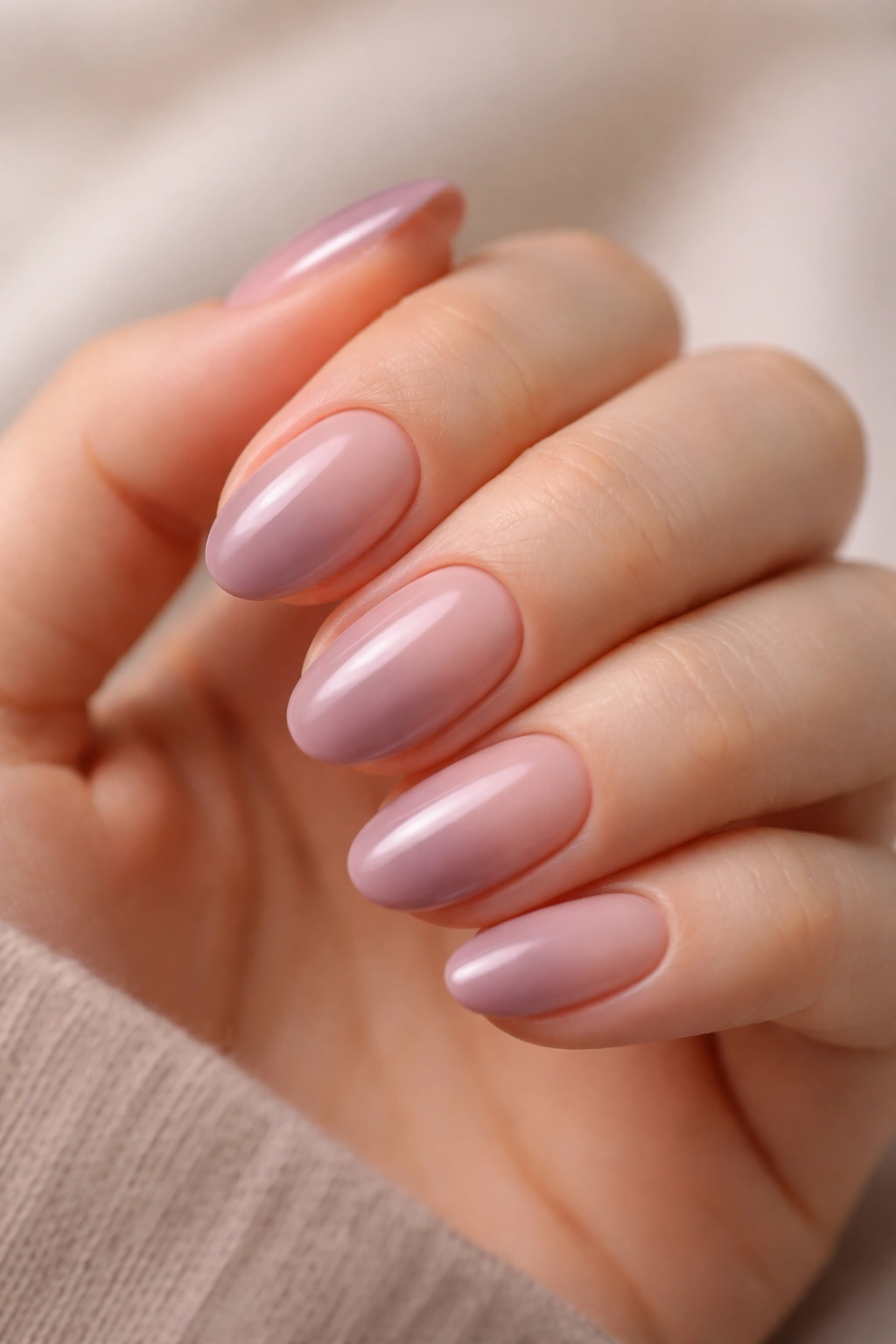
This is the shade I reach for when someone says they want pink, then immediately starts backing away from anything sweet. Blush nude into dusty mauve keeps the softness of pink but adds a little grit.
Dusty mauve works well on short oval nails because it has gray in it. That gray takes the edge off the color and helps it blur into a nude base instead of standing apart from it. On a small nail surface, that matters. Clean fade lines are hard enough; harsh pigment makes them harder.
There is also something flattering about mauve on hands that run cool or neutral. It can make redness look less obvious, and it tends to sit well next to silver rings, denim, black knits, and most office clothes without feeling plain. Warm skin can wear it too, though I would keep the blush base peachier so the hand does not look drained.
You can wear this glossy, but I have a soft spot for it with a satin or velvet-matte top coat. Not chalky matte. Satin. That slight sheen keeps the mauve alive.
Keep the oval rounded and short. If the nail starts getting longer, mauve can drift moody in a way that changes the whole point of the look.
6. Cool Taupe to Smoke Gray Fade
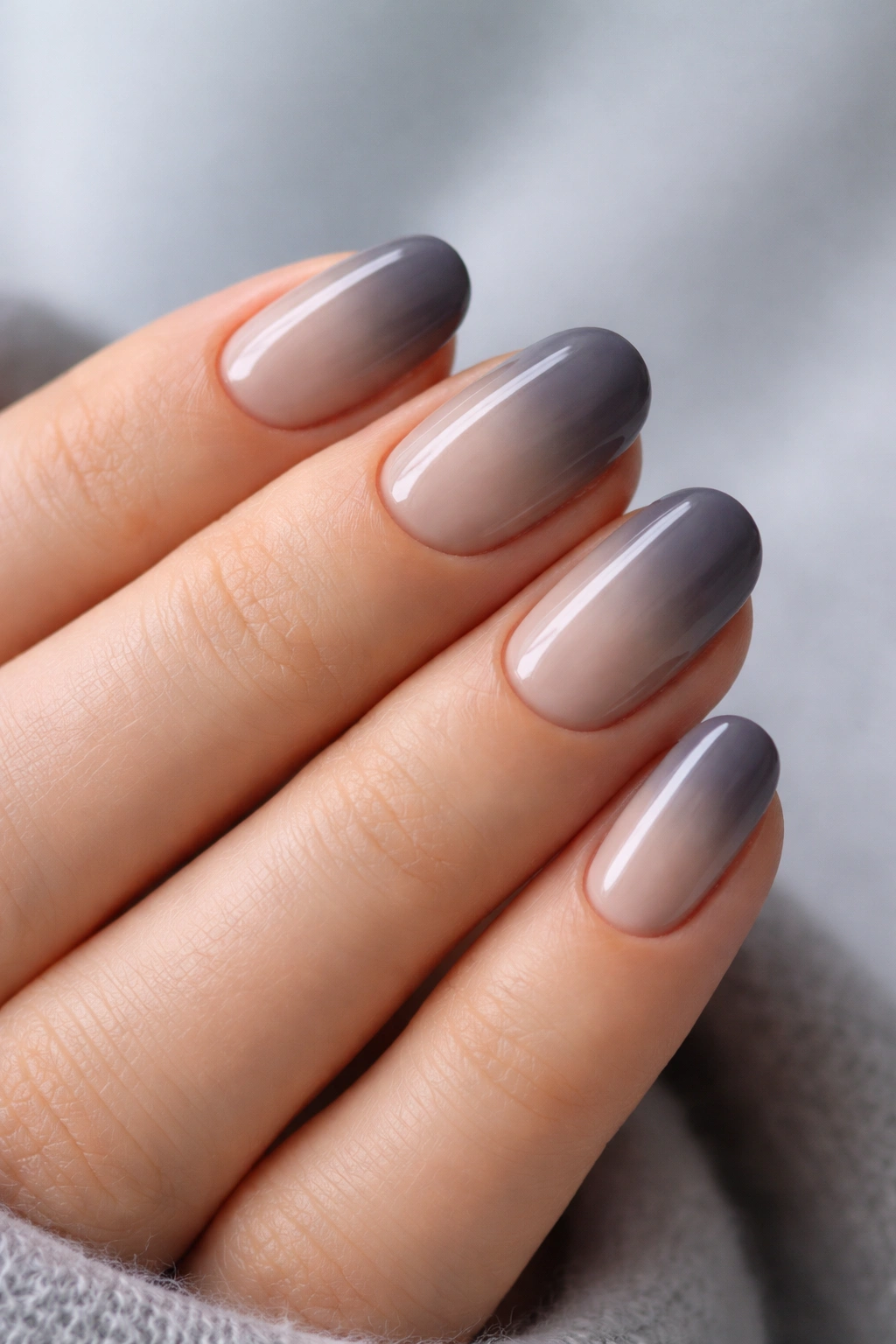
Unlike black smoke ombres, which can shrink a short nail if the placement is off by a millimeter, taupe fading into smoke gray keeps the mood cool without swallowing the shape. It gives you that minimalist edge people chase with slate and charcoal, but the softer base saves the length.
Taupe is doing the heavy lifting here. It bridges nude and gray, so the fade looks deliberate rather than stark. That makes it one of the best choices for anyone who wants a neutral manicure that is not pink, peach, or beige. On short oval nails, it also sharpens the outline of the tip in a clean way.
Who does this suit best? If your wardrobe leans black, navy, white, stone, and brushed silver, this fade makes immediate sense. Fair to medium cool-toned skin tends to wear it easily. Deeper skin can wear it too—choose a richer mushroom taupe and a deeper smoke gray so the contrast stays visible.
I would recommend gloss or a soft rubbery finish over matte here. Matte gray can look dusty fast. Gloss keeps it sleek, and a thin line of smoke gray at the free edge makes the nail look crisp from the side.
7. Lip Gloss Pink to Cherry Sorbet Tips
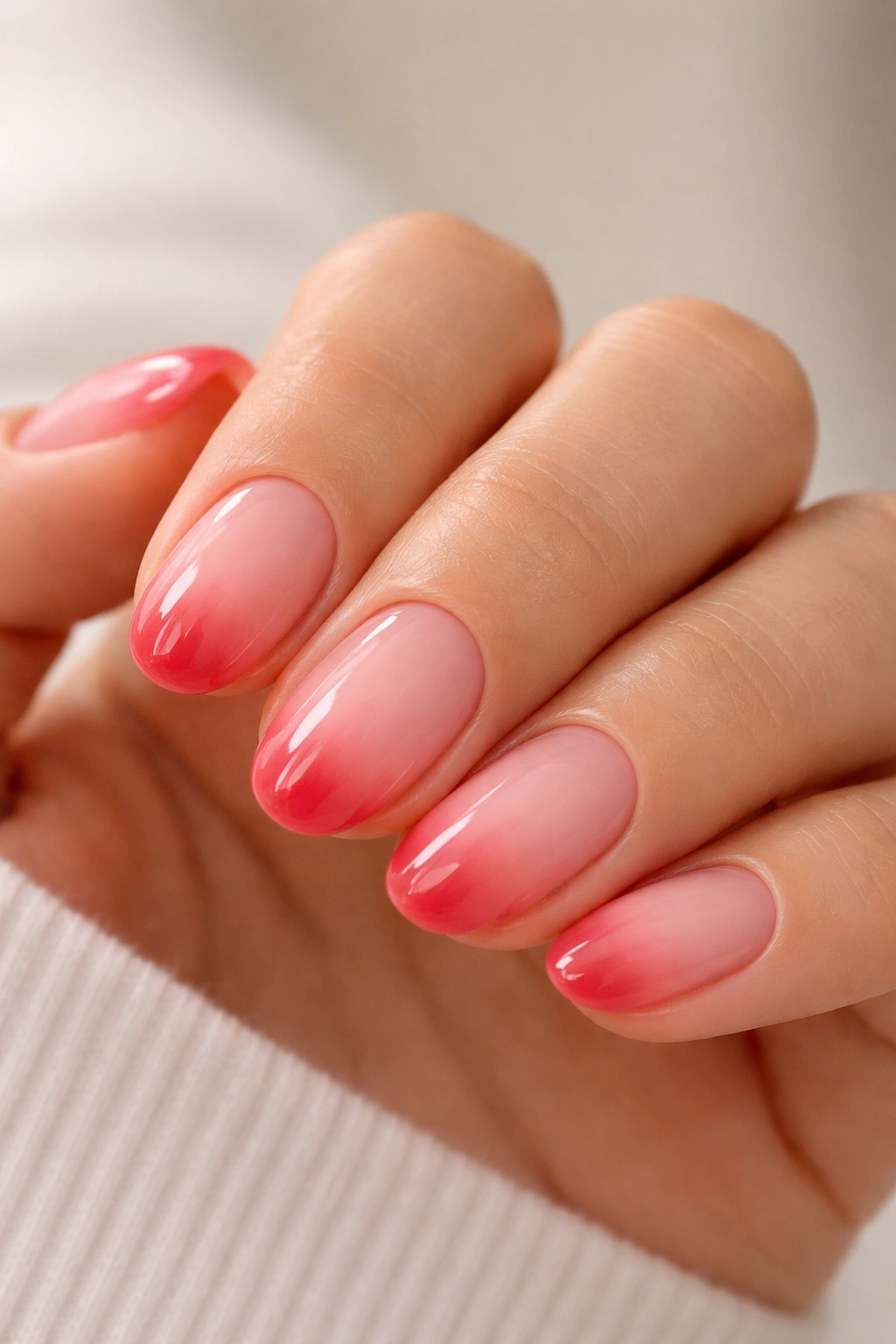
There is a reason juicy pink-red fades keep coming back: they make short nails look alive. Lip gloss pink at the base with cherry sorbet concentrated at the tip has more personality than a nude ombre, though it still feels wearable because the red stays sheer.
What makes this one different
This is not a classic red manicure. A full opaque red on short nails can look blunt if the shape is not immaculate. With an ombre, the cherry shade gathers near the edge, and the pink base keeps the whole nail looking lighter and longer.
Jelly textures matter here. If the cherry is too opaque, you lose the sorbet effect and end up with a harsh half-red tip. Ask for a translucent cherry or syrup red.
Quick facts worth knowing
- Best finish: high gloss, almost wet-looking
- Best color family: blue-red cherry for cool skin, tomato-cherry for warm skin
- Best placement: strongest color on the top 20 to 25 percent
- Best extra detail: one coat of sheer pink over the whole nail after blending
Tip: this fade hides grown-out edges better than a hard red French tip, which is one reason it wears so well between appointments.
8. Lavender Milk to Lilac Haze
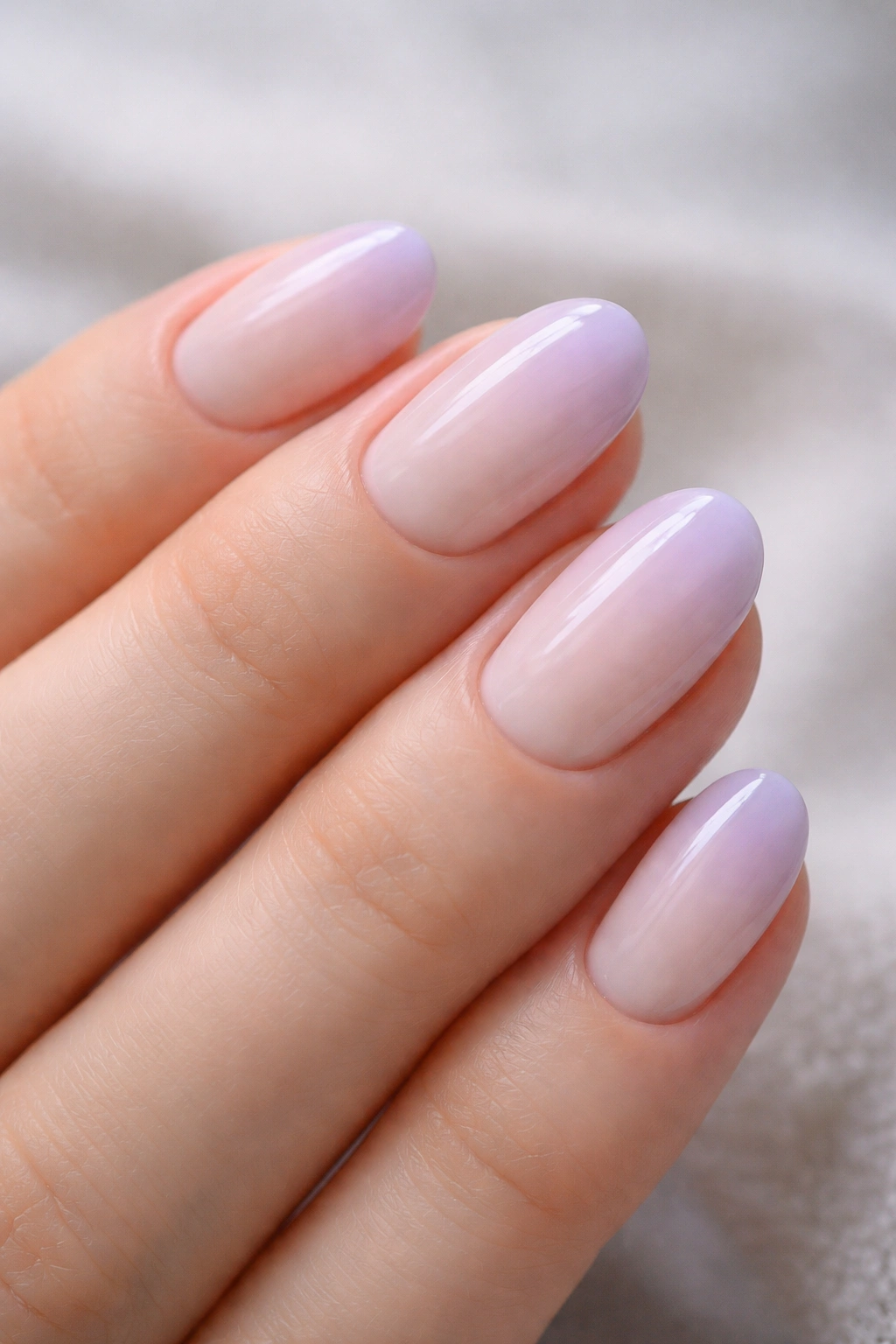
Lilac can act like a neutral if the base stays milky enough. That is the secret. Once the lavender turns chalky or fully opaque, it can feel juvenile on a short nail. Keep it creamy and slightly translucent, and it lands in a much smarter place.
Lavender milk near the cuticle softens the look of the nail plate and gives the hand a cooler, cleaner cast. The lilac at the tip should be a haze, not a block. Short oval nails suit this because the round tip stops the color from looking too graphic. The gradient feels airy instead of themed.
I like this color pairing on cool skin, though neutral undertones can wear it easily. It also looks good with pearl jewelry, icy makeup, gray sweaters, and all-white outfits. That sounds obvious, maybe, but some lilacs fight with white. This one does not if the base is milked out enough.
Chrome is optional here. A tiny veil of pearl powder over the top can make the lavender look smoother, though I would keep the chrome soft and skip anything mirror-bright.
9. Powder Blue to Cloud White
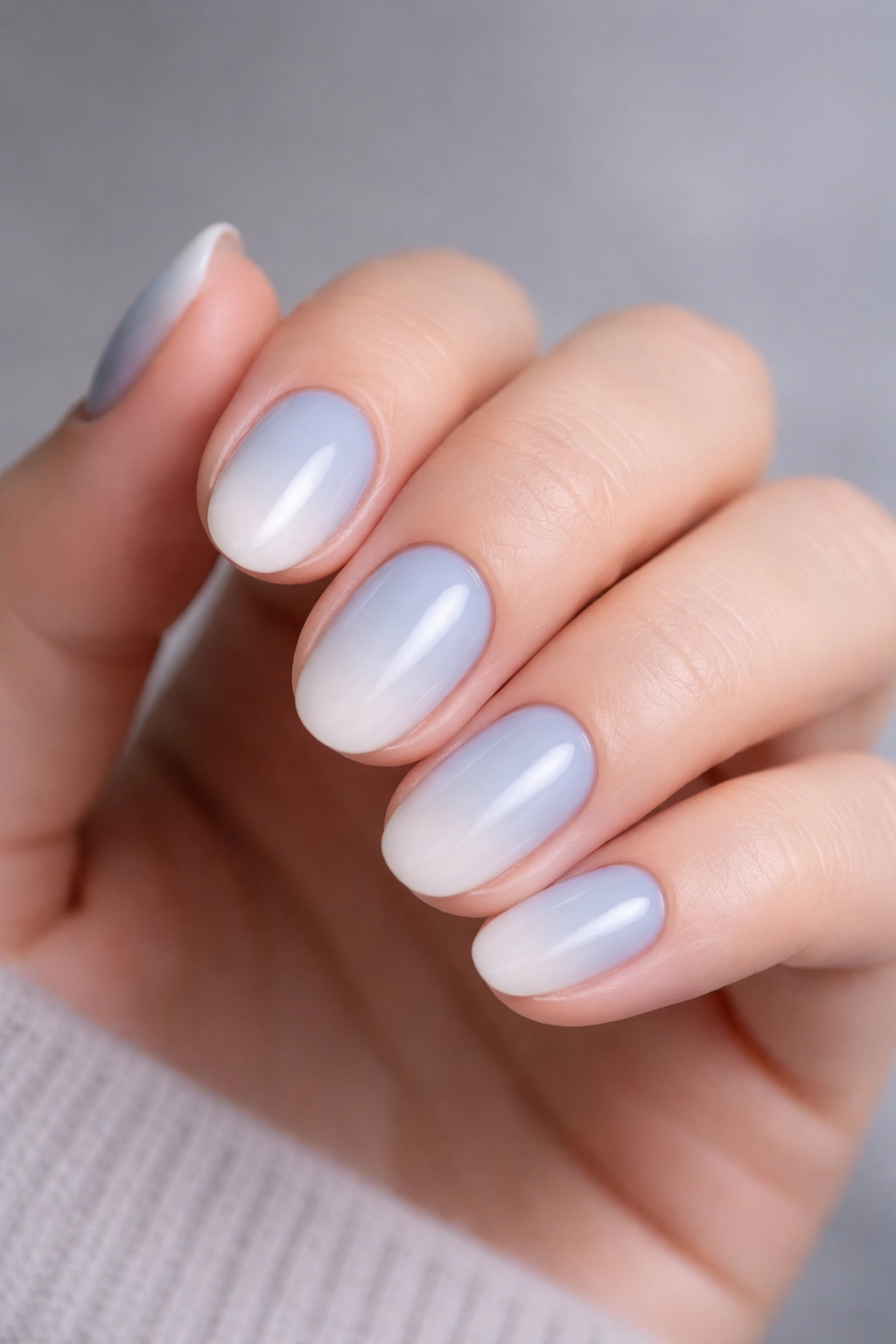
Blue on short nails sounds risky, so why does this fade look clean instead of cartoonish? Because powder blue and cloud white live close enough in value to blur into each other without shouting.
The safest version uses a sheer powder-blue wash across the nail, then builds white at the tip in thin layers until it looks like mist over the free edge. That gives the eye a clear direction from base to tip without a hard stop. On short oval nails, that gentle lift can make the shape look tidy and a touch longer.
Cloud white should not be bright white here. A softened white with a milky cast looks smoother next to blue. Bright white can make the blend look striped.
Where the fade should sit
Keep the strongest white on the top quarter of the nail and let the blue show through the center. If the white drops too low, the manicure starts to resemble a faded French tip rather than a true ombre. That is not wrong, though it is a different look.
This color pair is one of my favorites for people who want a clean manicure with more personality than pink offers. It has a crisp feel, and the short oval shape keeps it from turning too sweet.
10. Seafoam Mint to Bare Nude
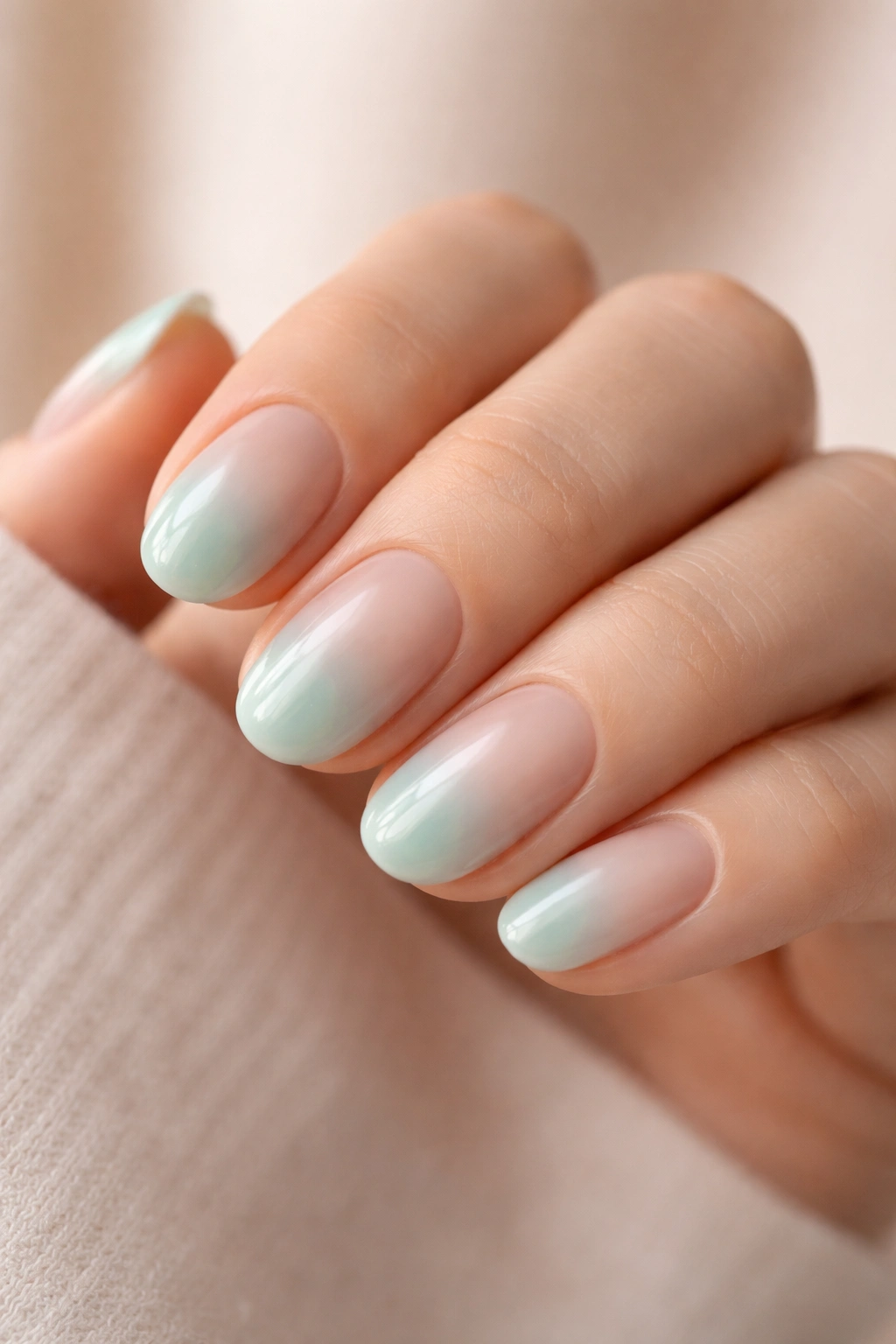
If you want color but still need your manicure to look neat from a few feet away, seafoam mint into bare nude is a smart move. The nude cuticle area keeps the hand grounded, while the mint tip brings freshness without the sharper kick of emerald or grass green.
Mint can go sideways fast when it is too opaque. On a short nail, that chalky block of green makes the tip look thick. A seafoam shade with a little gray or milk in it blends better and feels more grown-up. The bare nude underneath should match your skin depth closely, not perfectly, but closely enough that the cuticle area stays soft.
A salon version usually looks best when the mint is feathered on in two thin passes, then covered with a sheer nude wash through the center. That second layer prevents the mint from sitting on top like paint.
Good details to ask for:
- Nude base with a pink-beige or neutral-beige undertone
- Seafoam mint, not neon mint
- Glossy top coat
- No chunky art or decals—the fade is the point here
This one is bright in a clean way. That is a narrow lane, and mint handles it well.
11. Champagne Nude to Fine Gold Glitter
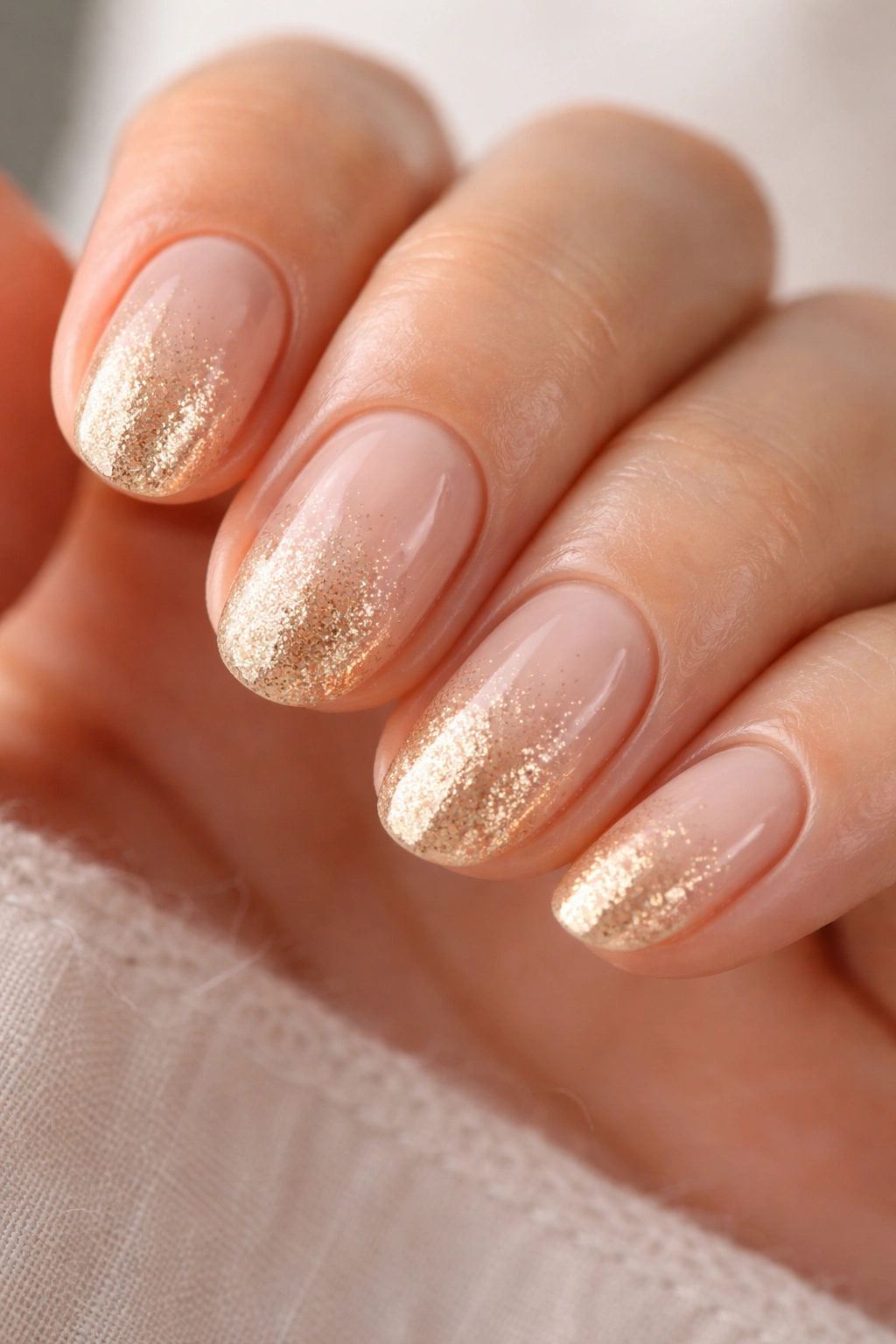
A clean glitter ombre is harder than it looks. The ones that work use fine gold dust, not chunky hex glitter, and they treat sparkle like texture rather than decoration. That is why champagne nude fading into micro-fine gold is such a strong choice on short oval nails.
The champagne base keeps the manicure from looking bare. It has a little warmth, a little sheen, and enough body to hold the glitter without making the nail plate look flat. Then the gold gets denser toward the tip, fading upward in tiny particles that flash when your hands move. You still see the shape of the nail. You do not lose it under confetti.
This fade is also forgiving. Small blend flaws disappear once the glitter is feathered through the middle, which makes it one of the easier ombre looks to wear if you like a bit of shimmer. That does not mean any gold glitter works. Large reflective pieces can make short nails look busy and thick.
I would keep this one for occasions when you want polish with a little lift—dinners, parties, photos, or the days when plain nude feels sleepy. Gold jewelry pulls it together fast.
12. Cocoa Brown to Espresso Fade
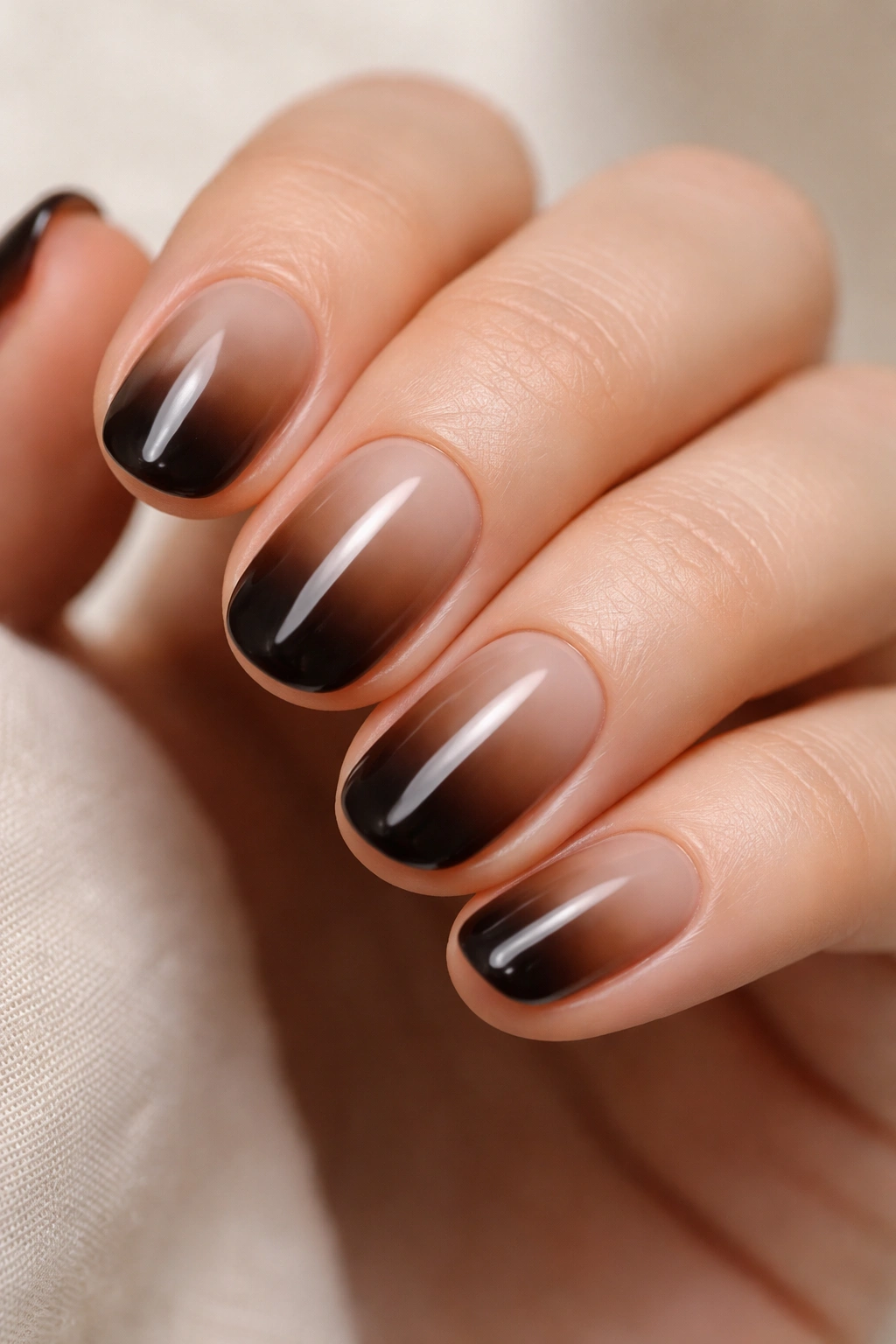
Unlike flat dark-brown polish, which can read heavy on a short nail, cocoa blending into espresso gives depth while still letting the shape breathe. You get richness at the tip, a smoother transition through the center, and a warmer feel than black or gray can offer.
The key is transparency. Cocoa at the base should look creamy and slightly sheer, not opaque like melted chocolate. Espresso belongs on the top edge, and even there it should be layered in thin coats. Short oval nails do not have enough length for a dense, one-coat espresso fade. That is where people lose the seamless blend and end up with a dark cap.
Who should try it? If you wear brown leather, gold hardware, camel wool, or deep neutral makeup, this manicure fits right in. Medium to deep skin carries it with ease. Fair skin can wear it too—use milk chocolate and soft espresso instead of full dark roast.
I lean glossy here. Brown gains depth under shine, and the fade looks more fluid. Matte brown can be chic, though it asks for a cleaner blend and more precise prep.
13. Peachy Coral to Sunset Tangerine
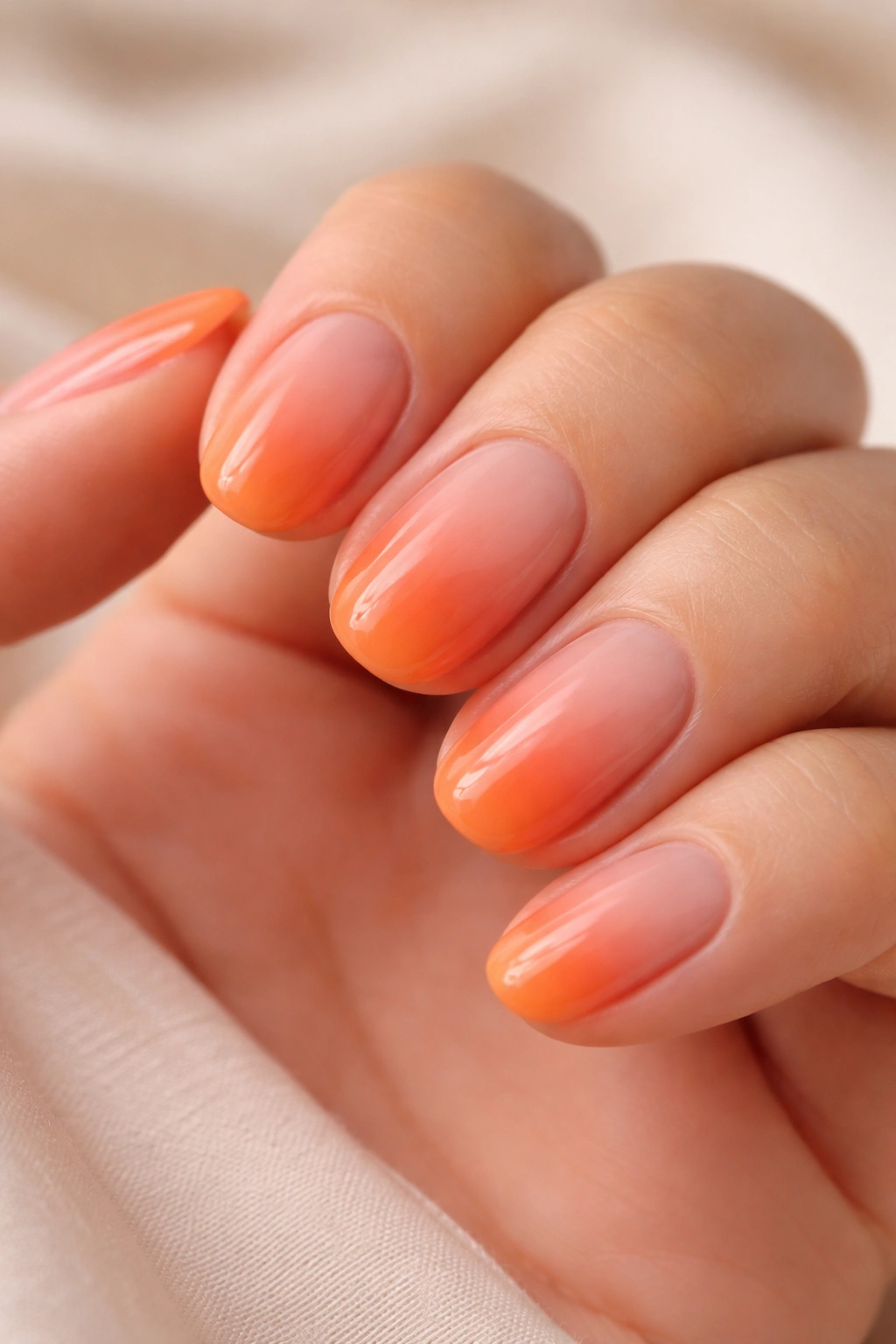
This fade has energy. Peachy coral melting into sunset tangerine brings a hit of warmth to the hand without pushing into neon territory, which matters on short oval nails where strong color can take over fast.
Why the color shift works
Coral already sits between pink and orange, so it acts as a built-in transition shade. That makes the gradient easier to blend than a straight nude-to-orange design. The base should stay peachy and translucent, while the tangerine gathers near the tip like a watercolor wash getting stronger.
On short ovals, that little kick of orange at the edge can make the manicure feel playful while still keeping the nail shape soft.
Best ways to keep it polished
- Choose a jelly tangerine, not an opaque orange cream
- Keep the center visible so the coral can bridge both colors
- Use a glossy top coat
- Match the coral to your skin warmth—rosier coral for cooler skin, golden coral for warmer skin
Tip: if orange scares you, start with more coral and only a veil of tangerine at the tip. You still get the lift, and the manicure stays easy to wear.
14. Milky Base to Black Cherry Smoke
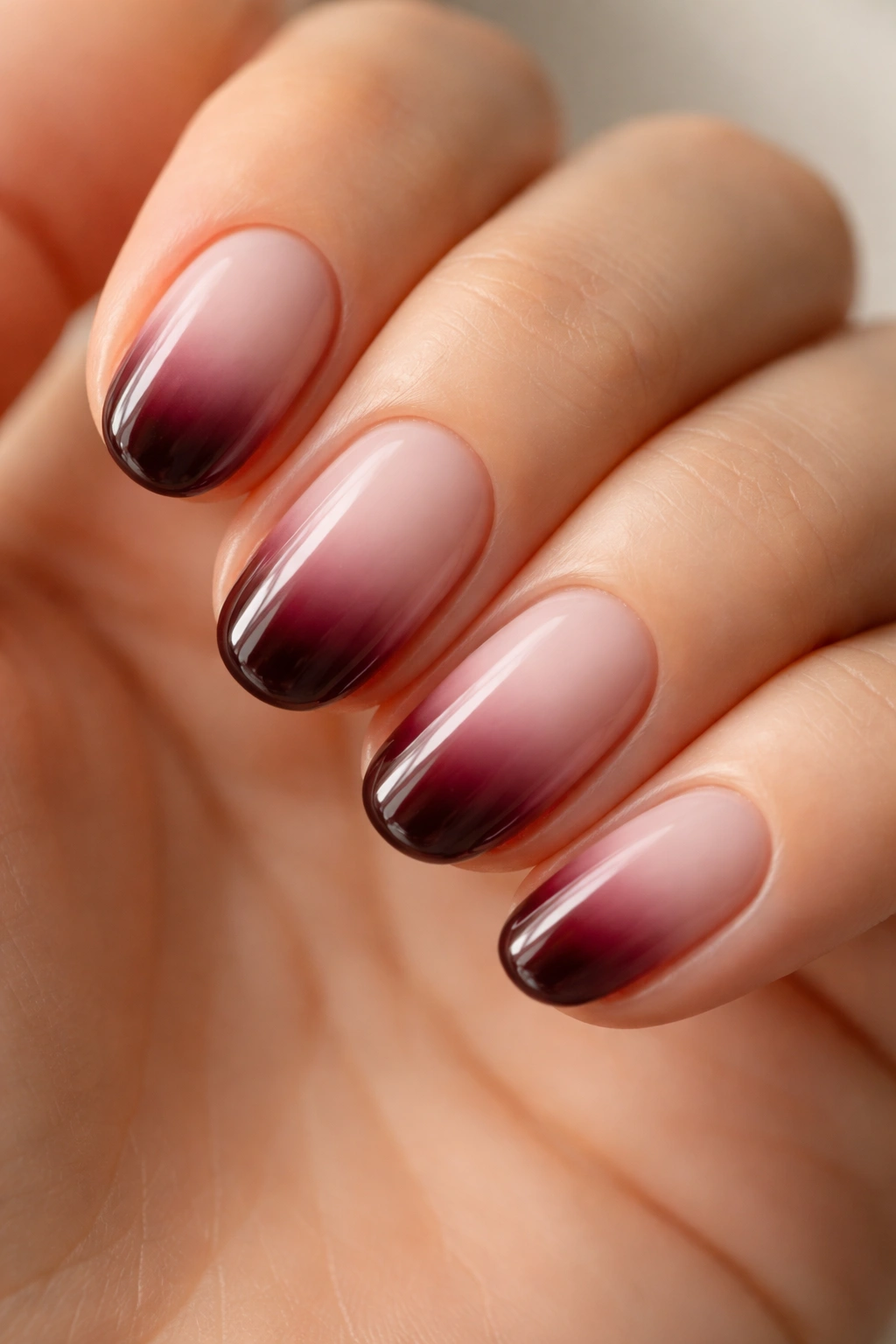
Dark ombre does not have to eat a short nail alive. The mistake is using a flat, opaque wine shade too soon. A black cherry smoke fade works because the base stays milky and the burgundy stays sheer long enough to drift upward rather than slam into the tip.
This is the moody option on the list, and I love it for that. The color reads richer than red, softer than black, and more interesting than a standard burgundy manicure. On a short oval, it can look polished and sharp if the deepest shade stays close to the free edge. Move it even 2 millimeters too low and the nail starts looking shorter.
Use jelly black cherry, plum-burgundy, or smoked merlot tones here. Skip flat oxblood creams unless the tech is layering them paper-thin. A touch of gloss brings the whole look together and keeps the center of the gradient visible.
And yes, this one pairs nicely with dark clothes and silver rings. It also looks strong against bare skin and a simple white tee, which is part of its charm.
15. Soft Ivory to Pearl Chrome Ombre Short Oval Nails
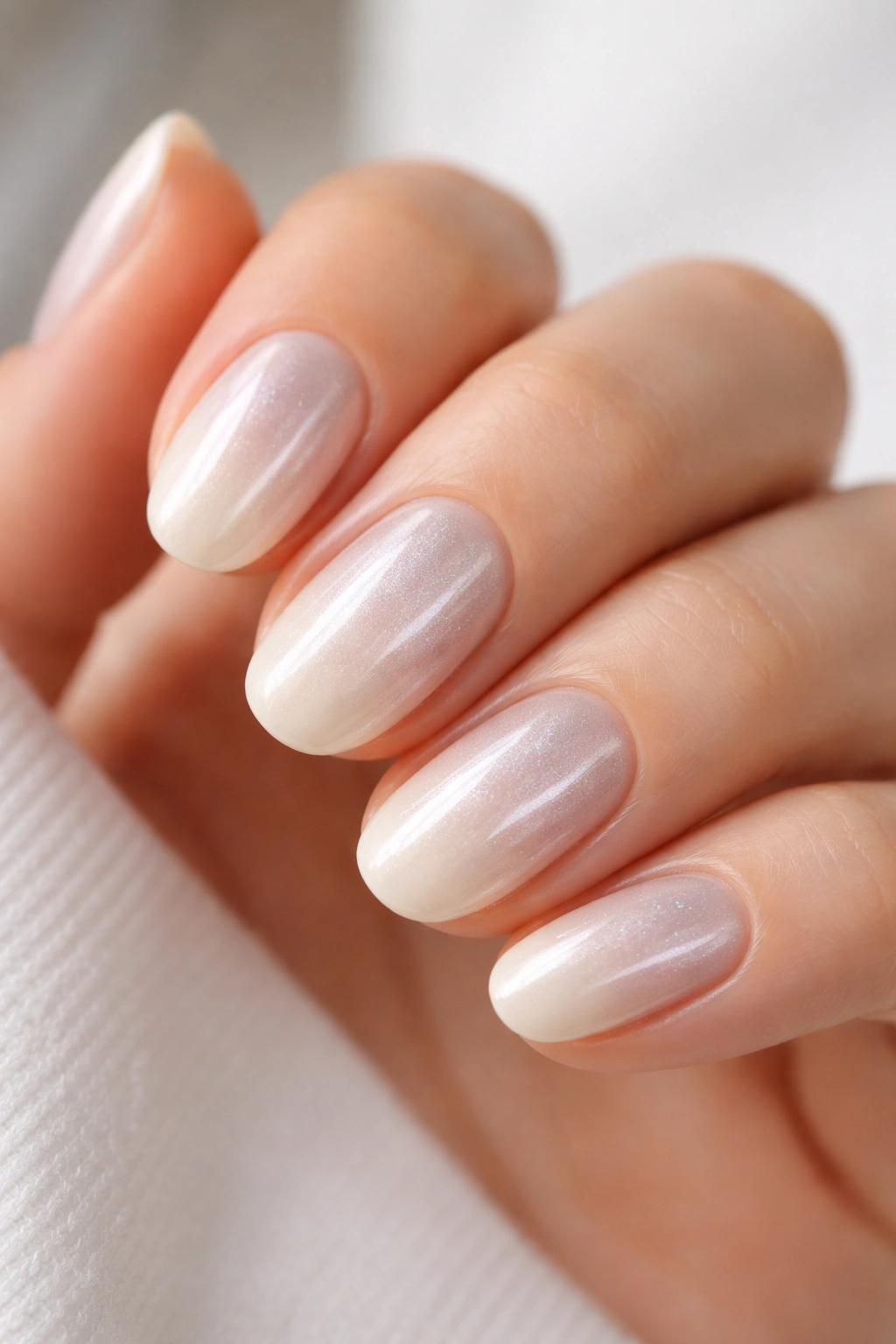
Chrome gets blamed for looking cold, though that usually happens when a mirror powder is rubbed over a full solid color. Soft ivory fading into pearl chrome is gentler. On short oval nails, it gives you shine without turning the manicure into a piece of metal.
The smartest version starts with an ivory or milk-white base, then concentrates pearl chrome on the upper half or top third of the nail. That placement matters. If the whole nail is chrome, the short length can look flatter. When the shine gathers near the tip and thins out through the center, the oval shape stays visible.
This one also benefits from restraint in the powder choice. Pearl, opal, or soft shell chrome works. Silver mirror powder is too hard-edged for the same effect. You want a nacre finish—the kind of sheen you see on the inside of a shell—not a foil look.
A non-wipe top coat is the usual base for chrome, and the surface needs to be smooth before the powder goes on. Any lump shows. But when it is done well, this is one of the cleanest dressy options for short nails because the ombre keeps the shine from feeling flat or heavy.
Final Thoughts
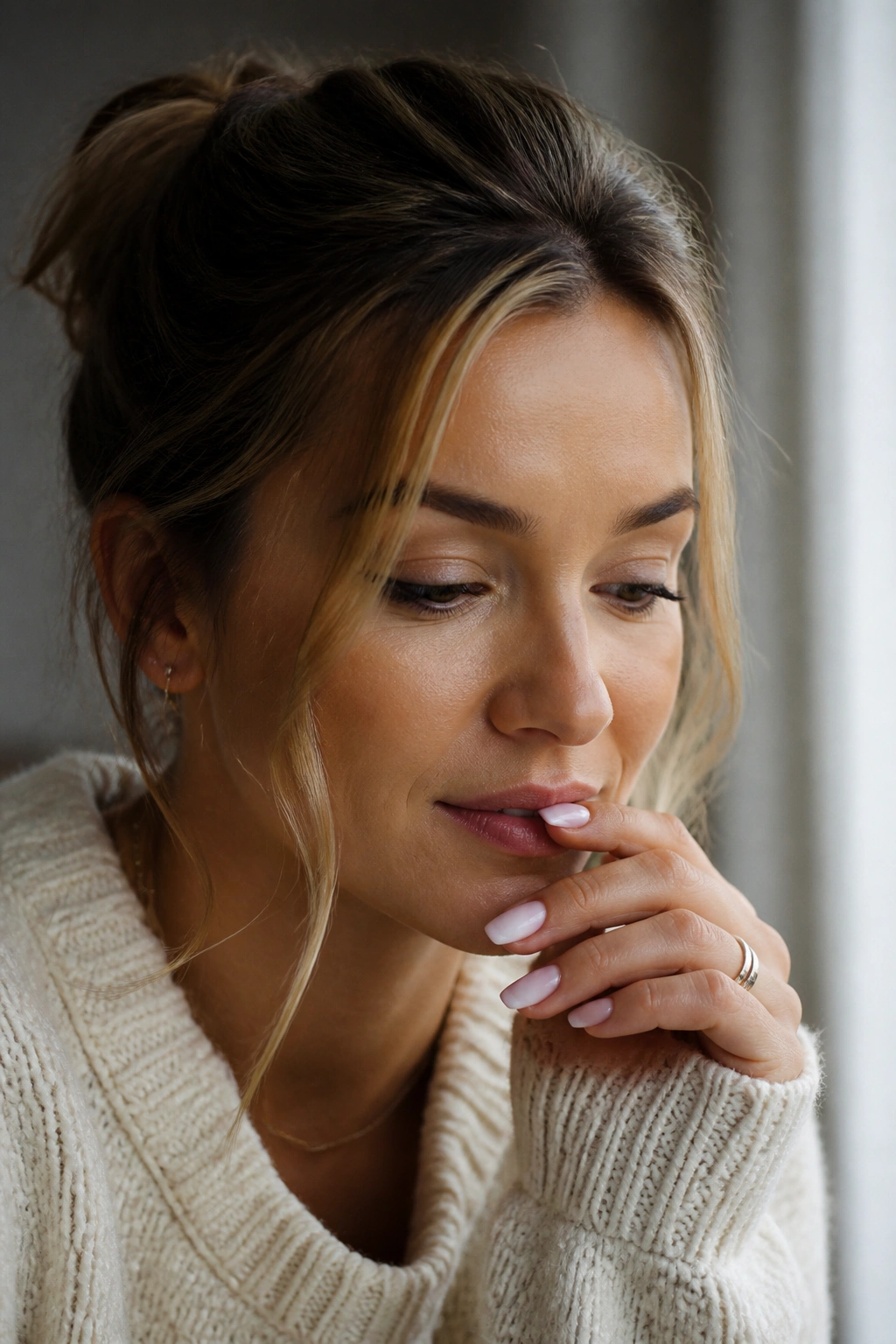
If I had to narrow this list down for most people, I would start with milky pink to white, beige to caramel, or taupe to smoke gray. Those three do the least fighting with daily clothes, hand tone, and regrowth.
The main mistake with short ombre nails is not choosing the “wrong” color. It is choosing too much contrast for too little space. A short oval gives you enough curve to carry a fade, though it still needs restraint. Keep the stronger shade high on the nail, use sheerer layers than you think you need, and let the middle stay hazy.
Save a couple of favorites, compare them against your skin in daylight, and pay attention to the finish as much as the color. On short oval nails, that soft blur is the whole point.