

When you’re standing at the altar, taking your first married kiss, or holding your new spouse’s hand during the first dance, your guests will see your nails. The ring shots alone—those beautiful close-ups photographers capture over and over—demand that your manicure be absolutely perfect. French tip wedding nails have remained a cornerstone of bridal beauty for decades because they strike an almost impossible balance: they’re classic enough to feel timeless in photos you’ll treasure forever, yet versatile enough to become something entirely your own. Whether you prefer stark minimalism or subtle embellishment, French tips offer a canvas that works with every wedding vision.
The reason French tips have endured through every beauty trend cycle is that they enhance rather than overpower. They elongate your fingers, draw attention to your engagement ring in the most flattering way, and complement every shade of bridal gown—from stark white to champagne to blush. But beyond the traditional white-on-pink version, French tips have evolved into something far more interesting. The design now encompasses countless interpretations, from ombré gradients that look like you’re wearing liquid silk, to metallic accents that catch light with every gesture, to unexpected embellishments that reveal your personality without sacrificing sophistication.
Why French Tips Are Perfect for Brides
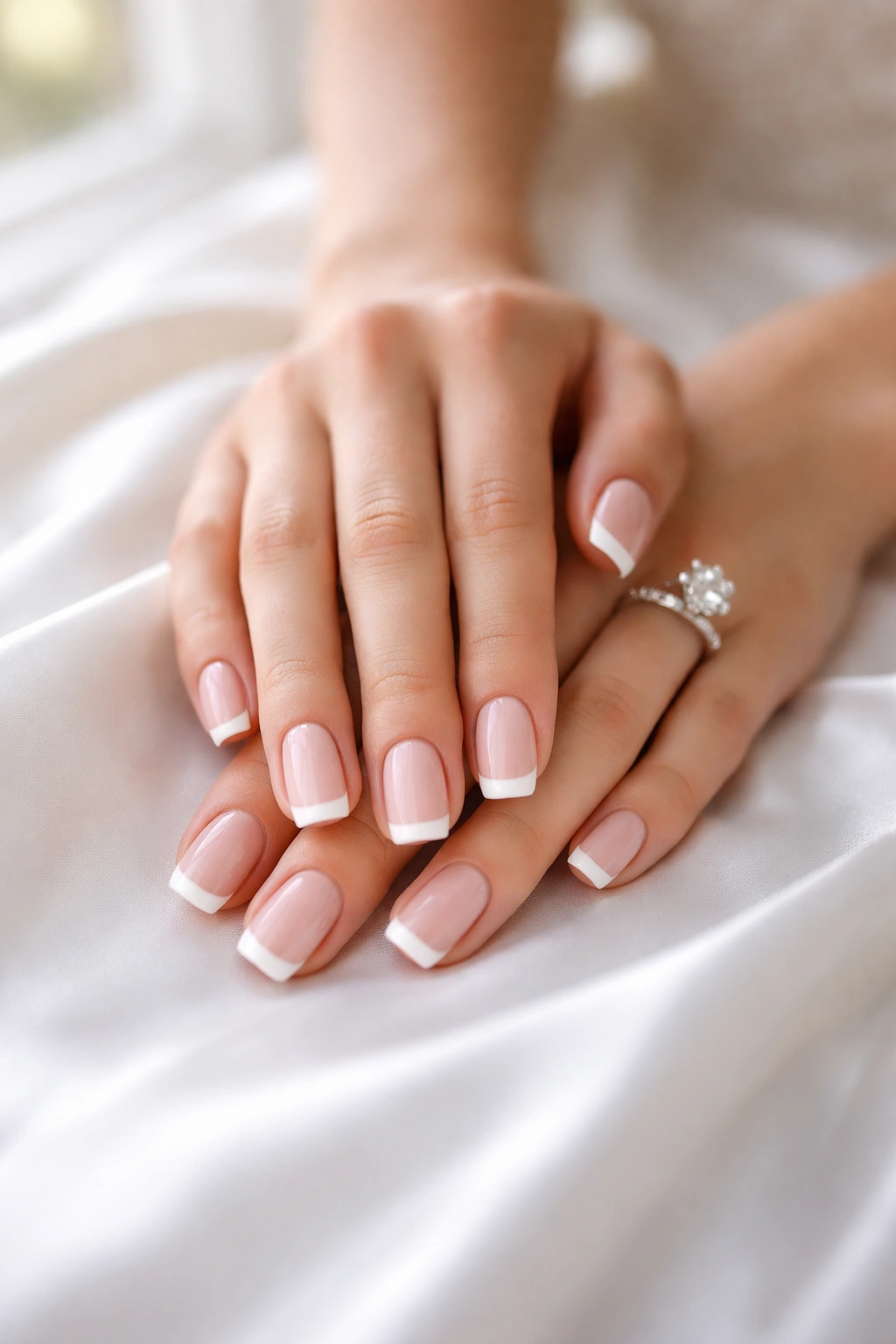
French tips deserve their place as a bridal manicure staple for several concrete reasons. First, they photograph exceptionally well. The contrast between the base and the tip creates visual definition that translates beautifully to every lighting condition—whether you’re bathed in natural window light during getting-ready shots or dancing under reception lighting. The definition means your hands look polished and intentional in close-ups without any glare or harsh reflection.
Second, French tips are forgiving. Unlike a full-color manicure that shows every tiny chip and smudge, French tips are specifically designed in a way that makes minor imperfections nearly invisible. If a small piece of the tip peels away during all-day festivities, it’s far less noticeable than if your entire nail were painted. This durability matters when you’re signing documents, hugging relatives, arranging flowers, and dancing for hours.
Third—and this is crucial—French tips work with every wedding aesthetic. A garden wedding calls for the same manicure as a black-tie evening celebration. Your French tips won’t clash with your dress, your bouquet, or your jewelry because the design is inherently neutral by design. It’s a foundation that lets the rest of your bridal vision shine.
1. Classic Almond French Tips with Soft Pink Base
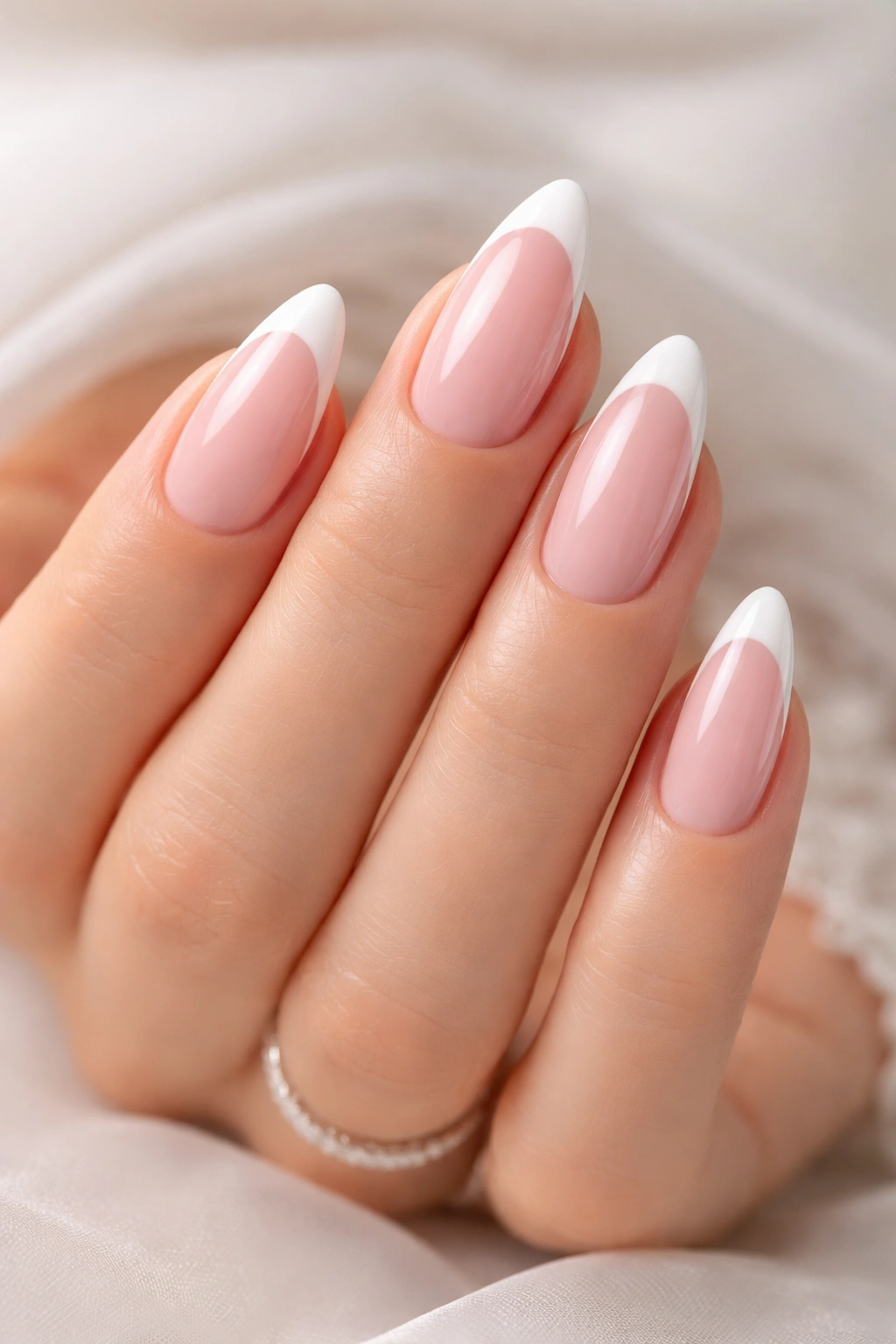
The foundation of timeless bridal beauty begins with shape and proportion. Almond-shaped nails elongate your fingers and create an inherently elegant silhouette that flatters every hand shape and size. When paired with a soft pink base and crisp white tips, this is the manicure that brides return to generation after generation—not because it lacks creativity, but because it represents understated perfection.
Why This Design Works for Weddings
The soft pink base sits somewhere between nude and blush—it disappears into your skin tone rather than creating contrast, which makes your hands recede slightly in photos, allowing your ring to be the absolute focal point. The white tips are crisp enough to read as intentional polish work without being stark or harsh. This combination flatters skin tones ranging from fair to deep, which is why it’s genuinely universal.
How to Make It Your Own
Keep the base color consistent, but adjust the shade to match your undertones. If you have cooler skin, a very pale or milky pink works beautifully. If you have warmer skin, lean toward a slightly deeper blush or peachy-pink tone. The tip can remain traditional white, or you can opt for a “vanilla” shade—a softer, creamier white that feels less bright next to an ivory gown.
Pro Tips for Perfect Application
Ask your nail artist for a thin white tip rather than a thick one. The rule of thirds works beautifully here: the white should occupy roughly the top third of the nail, creating proper proportion. Request a very gentle curve to the line where pink meets white—it should look natural and soft, not perfectly geometric. This slight imperfection is what makes it feel intentional and modern rather than overly precise.
Longevity and Maintenance
This style remains one of the longest-wearing options because the colors are forgiving. Book your appointment 2-3 days before your wedding—this timing allows any initial sensitivity in the polish to settle while still being fresh. The soft pink doesn’t show water spots or fingerprints the way darker shades do, and minor wear is genuinely invisible.
2. Deep French Tips with Almond Shape
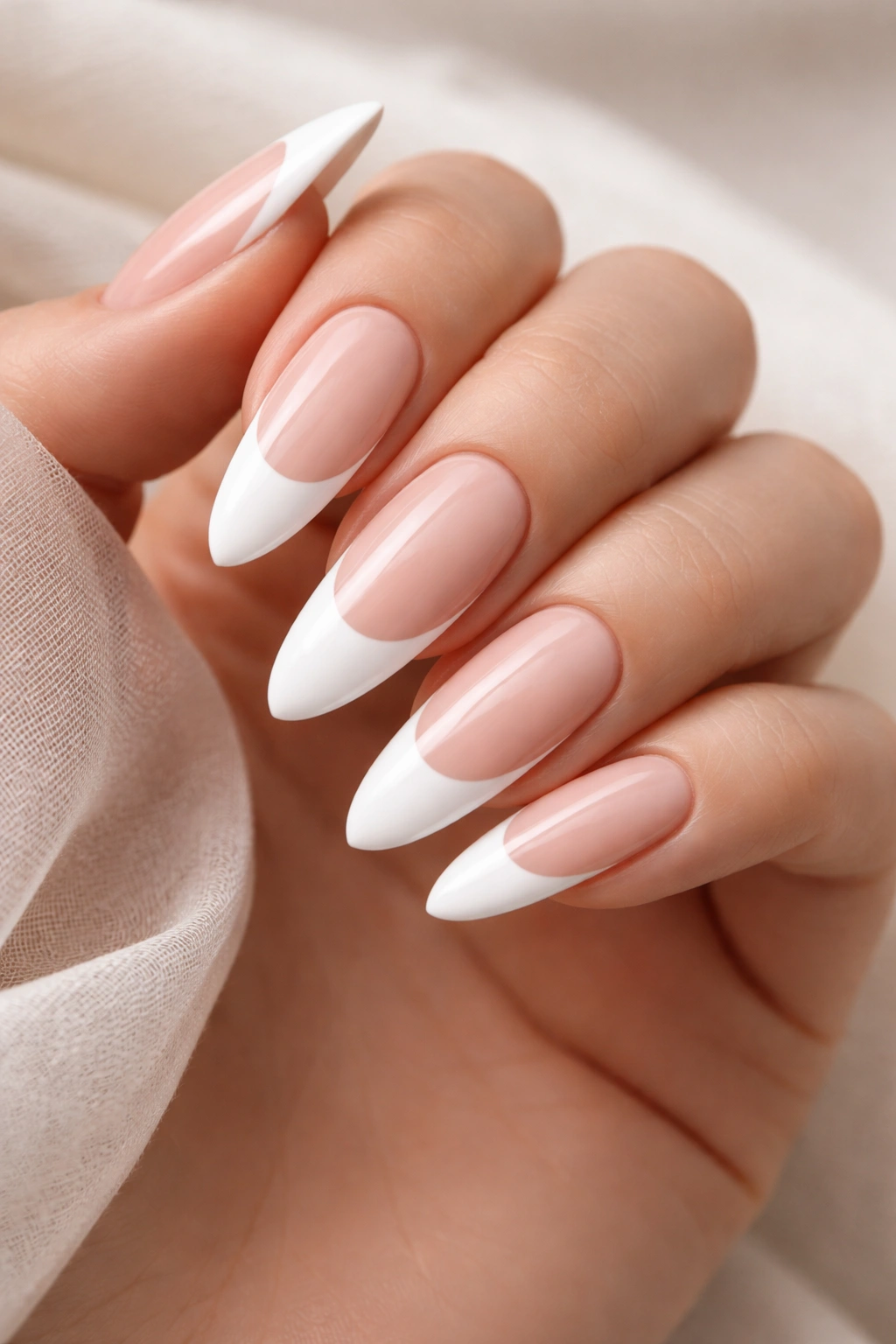
For brides who want their nails to make a statement without abandoning the French aesthetic, deepening the arch of the white tip creates instant visual impact. Instead of the traditional thin white line, a deeper French tip—where the white extends further up the nail bed, sometimes covering a quarter or even a third of the nail—creates a bolder, more modern interpretation of the classic design.
Why Brides Are Choosing This Look
A deeper French tip creates a more dramatic color-blocked effect. It photographs beautifully because the contrast is stronger, meaning your hands read as polished and intentional in every photo. This depth works particularly well if your bridal gown has significant embellishment or texture—the nails hold their own visually without getting lost in the overall composition.
Achieving the Right Proportions
The key to making a deeper French tip feel elegant rather than trendy is maintaining the almond shape. The tips should come to a subtle point that draws the eye upward along your finger. Ask your nail artist to create a slightly curved line rather than a straight one—the gentle arc feels more organic and flattering. The deeper the tip color you choose, the more important this curved line becomes to maintaining femininity in the design.
Color Combinations That Work
Traditional deep French pairs a nude or pale pink base with white tips, but the contrast becomes even more striking if you warm up the palette. A champagne base with white tips creates a softer, more romantic effect. Alternatively, a milky or translucent nude paired with bright white tips feels crisp and contemporary. For autumn or winter weddings, a deeper nude base with cream-colored tips feels rich without being costume-like.
Real-World Durability
Deeper French tips are incredibly durable because the structural integrity of your natural nail is less compromised. You’re not creating an extremely thin white tip that’s prone to breaking—there’s more substance to the design. This makes it an excellent choice if you’re planning an active day with lots of hand-intensive activities like bouquet tossing or cake cutting.
3. Ombré French Manicure with Soft Gradient
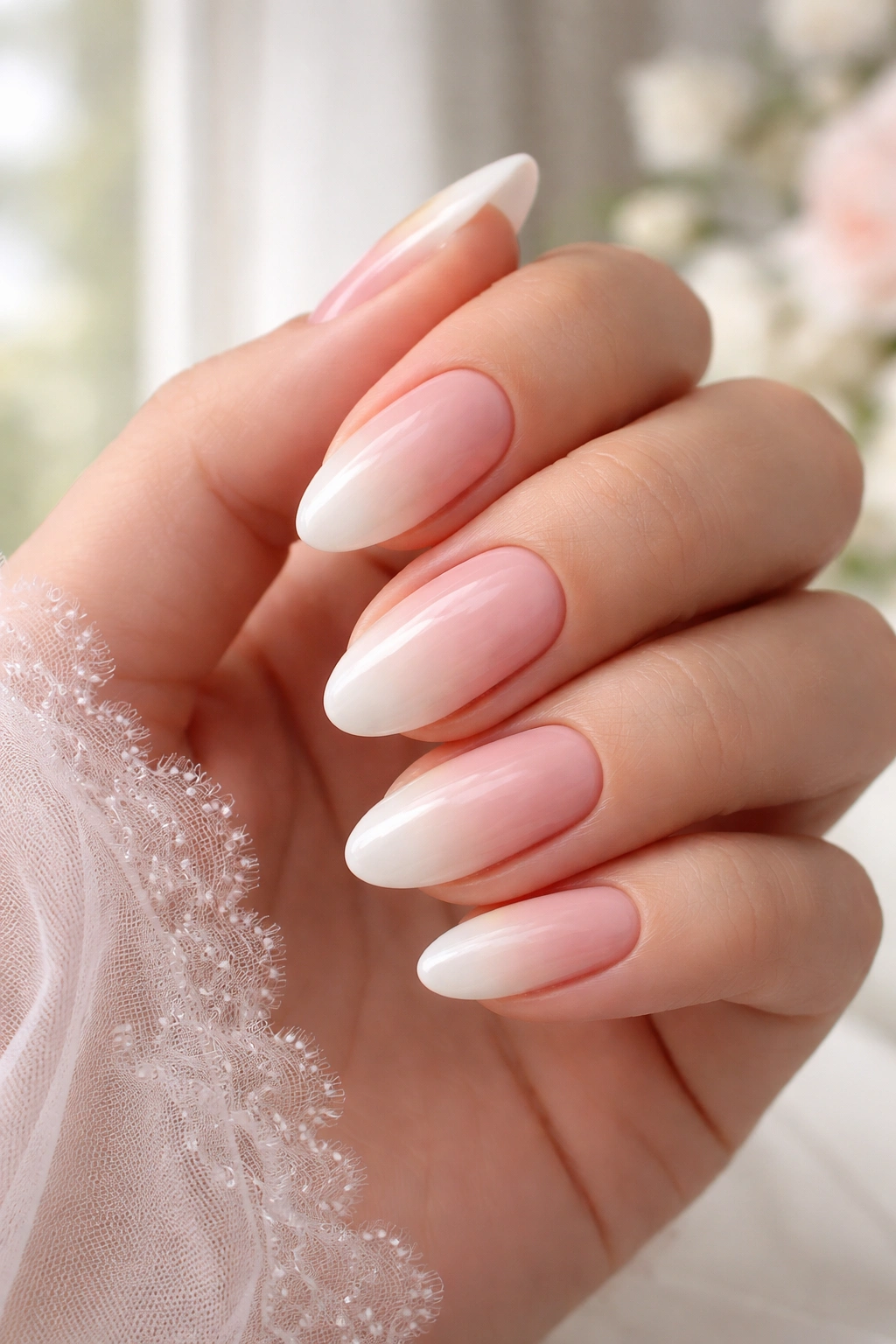
An ombré French manicure replaces the traditional solid tip with a gradient—a seamless fade from one color to another, typically flowing from a lighter shade at the base toward a deeper shade at the tip. When executed in soft, bridal tones like blush transitioning to ivory, or champagne fading to white, the effect is ethereal and modern while remaining utterly romantic.
The Science of Why This Works Photographically
Ombré creates dimension that reads beautifully in wedding photography. The gradient adds depth and movement to your nails, making them appear more three-dimensional than a solid color ever could. In photos, this gentle color transition catches light differently at different angles, creating visual interest without any sparkle or embellishment needed.
Choosing Your Color Gradient
The best approach is starting with a color that flatters your skin tone as the base, then selecting a tip color that’s 2-3 shades lighter. For cool undertones, soft pink fading to white or pale blush fading to cream works gorgeously. For warm undertones, consider champagne fading to white or warm beige fading to ivory. The key is ensuring the transition feels gradual and natural, not abrupt or blocky.
Application Method and Precision
This design requires a skilled nail artist who can blend colors seamlessly. Ask specifically for a “soft ombré” rather than a harsh gradient—they should use a sponging technique to create the fade, then blend the edges so there’s no visible line. Request that the lightest shade concentrate at the very tip, then gradually deepen as you move toward the cuticle.
Longevity Through Wedding Day and Beyond
Ombré manicures are genuinely durable because there are no sharp lines to chip. Without a defined edge where two colors meet, minor wear is camouflaged beautifully. The soft color palette means any growth at the cuticle blends seamlessly with the design. This is the manicure you can actually keep looking fresh through multiple days of wedding festivities and beyond.
4. Glitter or Shimmer French Tips with Pearl Accents
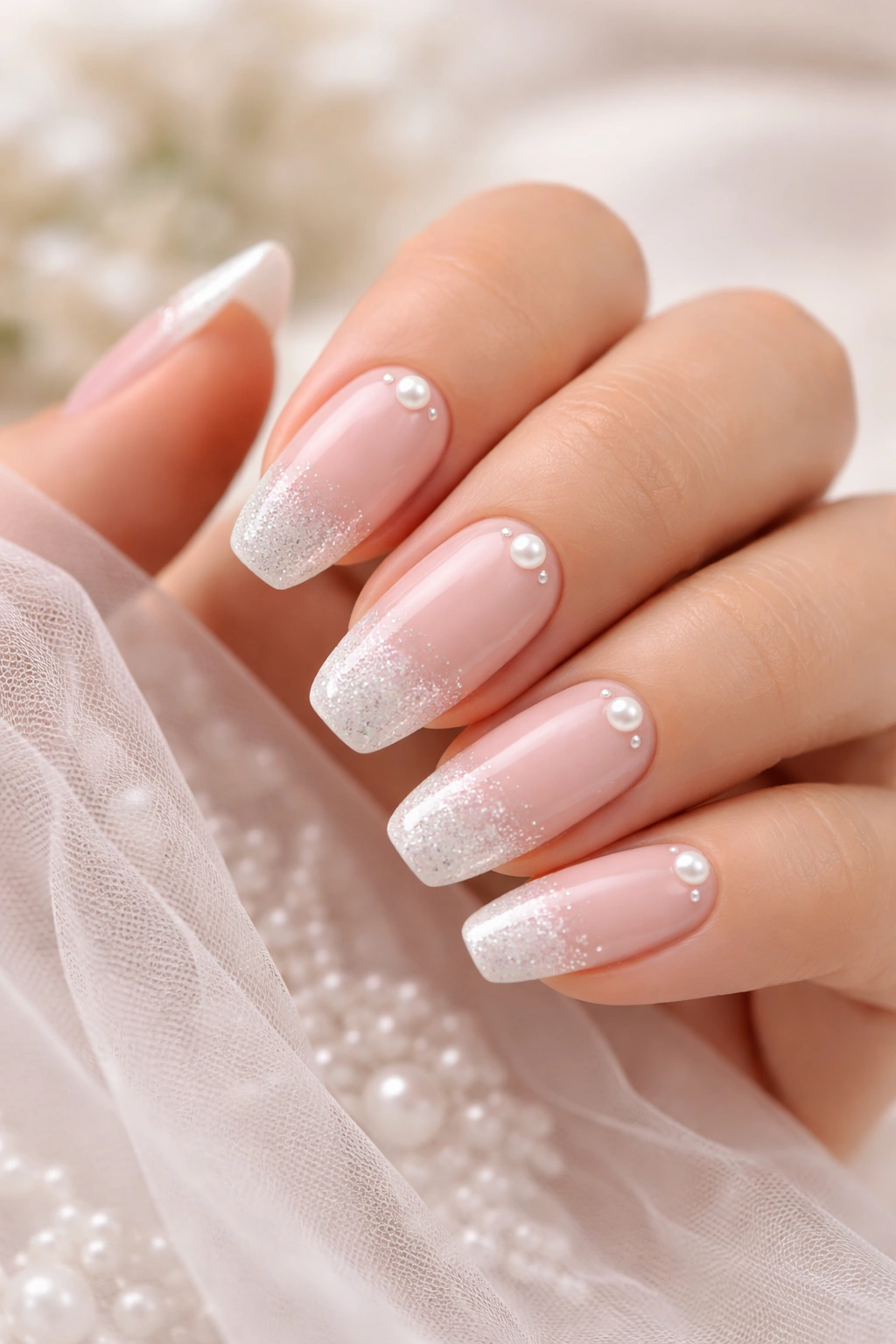
For brides who want their nails to sparkle without abandoning elegance, glitter or shimmer French tips offer the perfect solution. Rather than covering the entire nail in sparkle, this approach concentrates the shine at the white tips, then adds delicate pearl accents to elevate the effect. The result is a manicure that catches light beautifully without feeling over-the-top or costume-like.
Why Subtle Sparkle Photographs Exceptionally Well
Wedding photographers spend significant time capturing your hands—with your ring, holding the bouquet, exchanging rings, toasting with champagne. A subtle shimmer in your French tips catches light in every single one of these photos, adding a touch of celebration and glamour. Unlike full-coverage glitter, which can look flat or costume-like in certain lighting, tips with concentrated shimmer feel luminous and intentional.
Applying Shimmer Strategically
The most flattering approach is to keep the base color completely neutral and matte, then apply shimmer only to the white tip portion. This creates a beautiful contrast between the understated base and the sparkling tip. Ask your nail artist to use a finely milled glitter or shimmer powder rather than chunky glitter—the finer texture catches light more sophisticatedly and photographs better.
Pearl Placement for Maximum Impact
Tiny pearls or pearl-like embellishments can be placed along the tip line or clustered on the ring finger for a subtle accent. The key word here is tiny—individual pearls or a small cluster of 2-3 pearls per nail, not covering the entire tip. This restraint is what elevates the design from costume to couture. Pearls photograph beautifully because they have their own natural luminosity that flatters in every lighting condition.
Ensuring Embellishments Last All Day
Work with a nail artist who sets pearls and glitter into gel or acrylic. Loose embellishments that are simply glued on top of regular polish will inevitably detach during your wedding day activities. Ask your technician to reinforce any embellishments with a thick layer of clear gel on top, creating a protective seal. Bring backup embellishments and nail glue to your wedding just in case, but with proper application, they should remain secure all day.
5. Colored French Tips with Wedding-Coordinated Hues
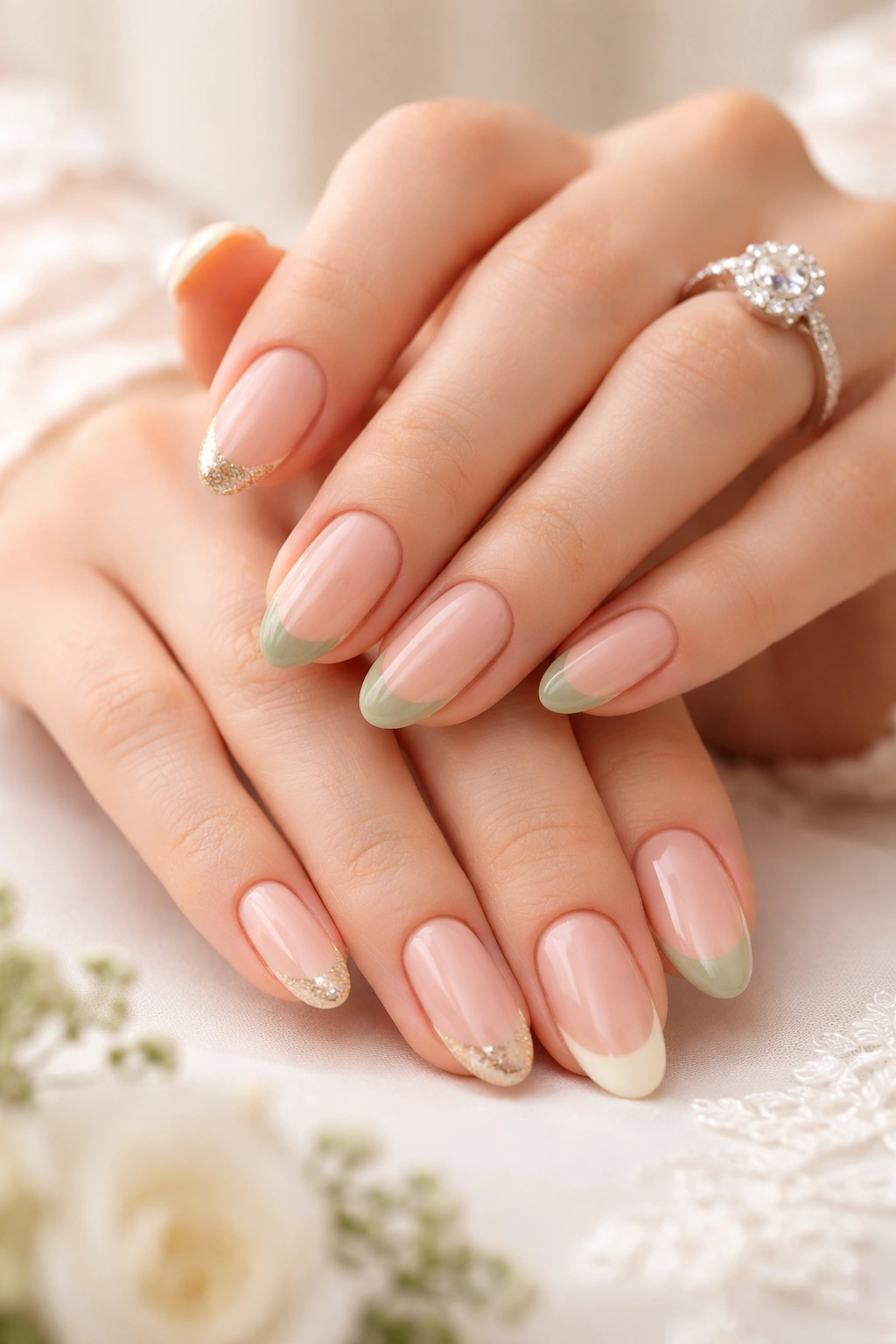
While the classic French manicure pairs pink with white, colored French tips offer an opportunity to weave your wedding palette directly into your manicure. Instead of white tips, choose a color that echoes your bouquet, your bridesmaids’ dresses, or your accent color throughout the wedding design. A champagne base with gold tips, a blush base with champagne tips, or a nude base with soft sage tips creates cohesion without the manicure screaming for attention.
Choosing a Tip Color That Complements Your Ring
The absolute most important consideration is how your chosen tip color interacts with your engagement ring. Gold and rose gold rings pair beautifully with warm tip colors like champagne, gold, peach, or soft coral. White and platinum rings work with cooler tip colors like silver, soft grey, pale blue, or bright white. The tip color should enhance your ring, not compete with it—when your hands are photographed together, the ring should be the obvious focal point.
Creating Cohesion With Your Wedding Details
Look at your wedding invitations, your bouquet, and your bridesmaids’ dresses. If your wedding features sage green florals, a subtle sage-green tip over a nude base creates beautiful visual continuity. If your bridesmaids are wearing dusty rose, those same tones in your tips create harmony in your hand-and-bouquet shots. If your reception features gold accents, gold tips feel celebratory rather than trendy.
Avoiding Trend-Dependent Choices
The safest approach is selecting tip colors that are inherently elegant and timeless: champagne, gold, soft peach, blush, cream, or neutral beige. These colors age gracefully in photos and won’t feel dated when you look back at your wedding pictures. Neon or extremely saturated colors, by contrast, often feel trendy and can appear artificial in photographs.
Balancing Color Without Overwhelming
A gentle rule: if your tip color is bold or saturated, keep the base understated and neutral. A champagne tip over white creates more impact than champagne over a patterned or multi-colored base. The simpler the base, the more statement your tip color can make while still reading as elegant rather than costume-like.
6. Minimalist Thin-Line French Tips
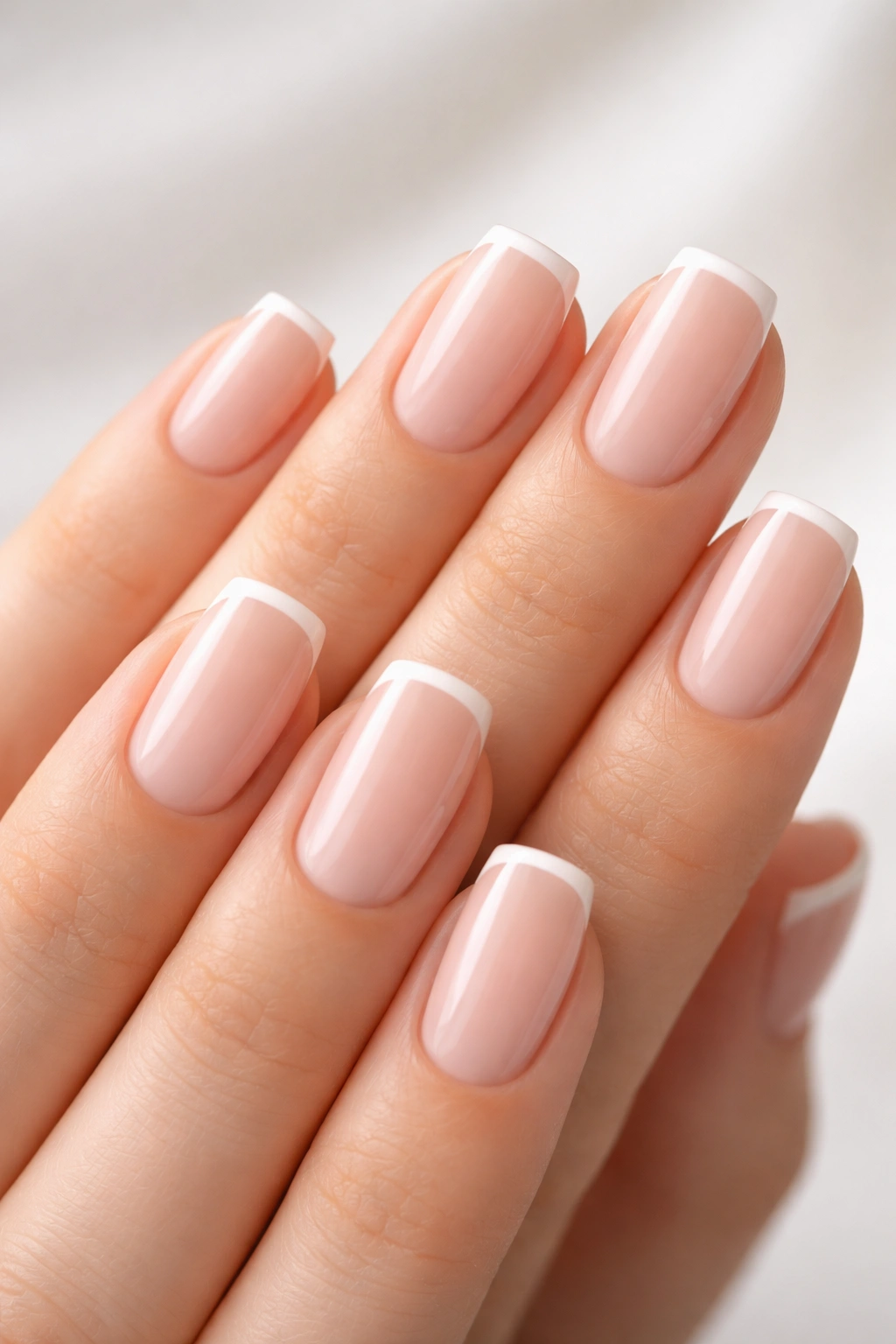
The opposite approach from the deep French tip, a minimalist French manicure features an extremely thin white line at the very edge of the nail—barely thicker than a pencil line. This design speaks to brides who love understatement and modern aesthetic sensibilities. A thin-line French tip creates the impression of perfect, healthy nails that just happen to be polished to perfection.
Why This Design Feels Contemporary
Thin-line French tips align with modern design principles that favor minimalism and negative space. The design is almost invisible until you look closely, at which point you notice the precise, intentional polish work. This approach feels refined and sophisticated without being fussy or overdone—it’s the manicure equivalent of a classic white button-down shirt.
Best Nail Shapes for Thin-Line Design
This design works beautifully on square and squoval (square-oval) shaped nails, where the geometry of the shape can be emphasized by a clean, thin line. On almond or round nails, a thin line can almost disappear entirely, so if you love this aesthetic, choosing a more geometric nail shape ensures the design reads clearly. The line should follow the edge of your natural nail shape exactly.
Application and Precision
Achieving a perfect thin-line French requires absolute precision from your nail artist. The line should be straight and consistent in width across all nails, with no wavering or thickness variation. This is not a DIY manicure—the technical skill required is significant. Request that your artist use a very fine brush and allow extra drying time between layers to prevent the white polish from bleeding into the nude base.
Longevity and Maintenance Advantages
Because there’s so little white polish involved, this design is exceptionally durable and forgiving. Any minor chips or wear are genuinely invisible to anyone but the closest inspection. The design maintains its polished appearance longer than more elaborate versions, making it perfect if you’ll have a long period between your manicure and your wedding day.
7. Floral or Lace-Inspired French Tips with Hand-Painted Details
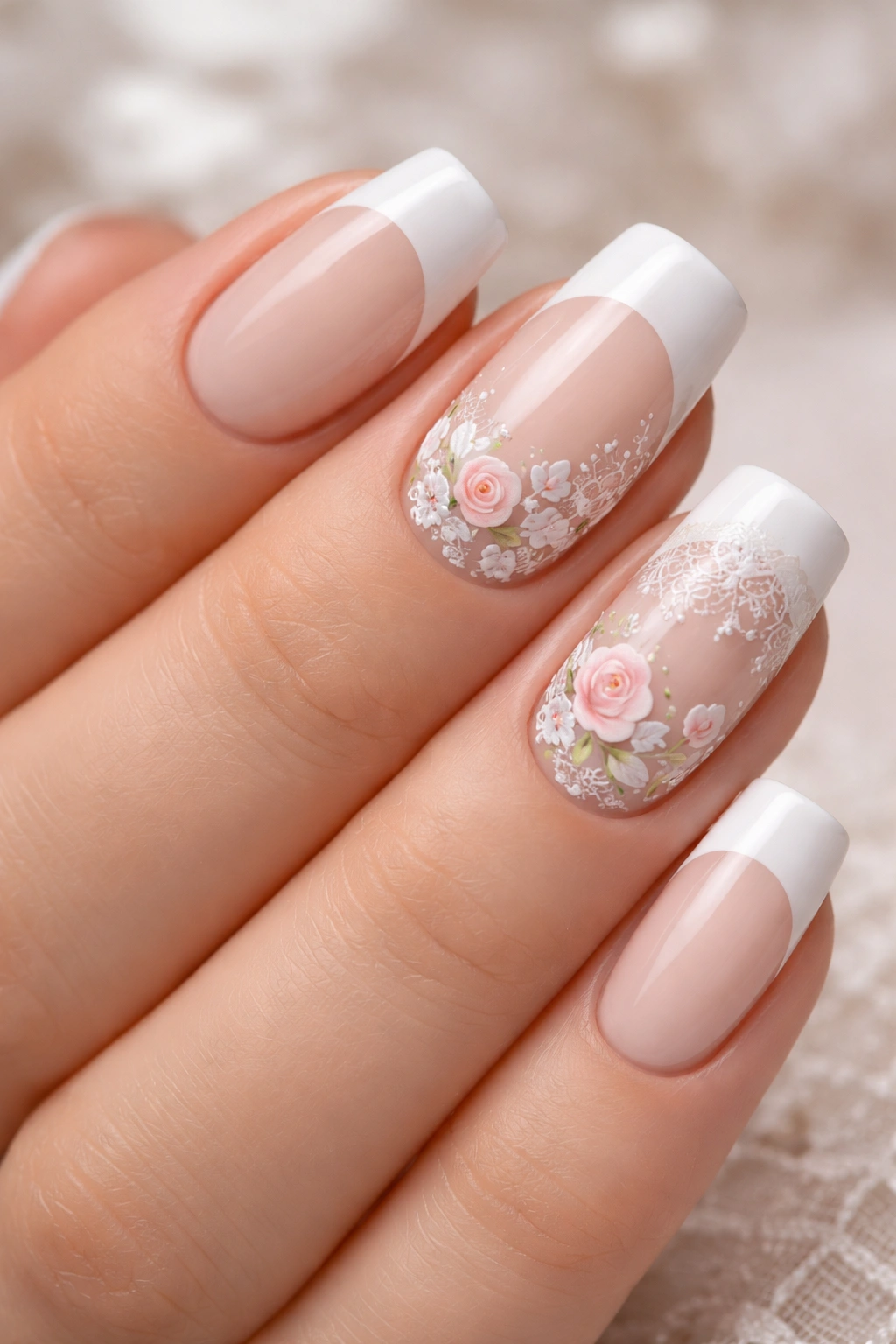
For brides who want artistry in their manicure, French tips paired with delicate hand-painted florals or lace-inspired designs transform the nails into wearable artwork. A white or pale pink tip remains the foundation, while a skilled nail artist adds dainty flowers, trailing vines, or lace patterns on a few accent nails or along the entire tip area. The effect is romantic, personal, and utterly timeless.
Selecting the Right Floral Elements
Choose flowers that appear in your wedding bouquet or have personal significance. Tiny hand-painted roses, baby’s breath, peonies, or wildflowers can be rendered in miniature on your nails with remarkable detail when created by a skilled artist. The scale should be tiny—these aren’t statement flowers but rather delicate details that require close observation to fully appreciate. Lace patterns, by contrast, work beautifully across multiple nails, creating a cohesive design that feels bridal without being costume-like.
Which Nails Get the Design
The most flattering approach is to limit the design to 2-3 accent nails—typically the ring finger and one or both pinky fingers. This restraint keeps the overall look polished and bridal rather than heavily decorated. The remaining nails stay clean with classic French tips, creating balance and allowing the designed nails to stand out as intentional focal points.
Working With a Skilled Artist
This design absolutely requires a nail artist with demonstrated experience in detailed hand-painted work. Ask to see a portfolio of previous floral or detailed designs they’ve created. The brushwork should be precise and the colors should blend smoothly—you’re looking for artistic quality, not rushed work. Book your appointment early because artists who can execute this level of detail often have longer wait times.
Photography and Detail Appreciation
Floral and lace-detailed French tips are specifically designed to be appreciated up close and in photographs. The delicate detail becomes a talking point whenever anyone sees your hands in photos—they’ll ask about the artistry and design. This is the manicure that makes people pause and really look at your nails, which means every detail matters.
8. Metallic or Chrome French Tips with Modern Edge
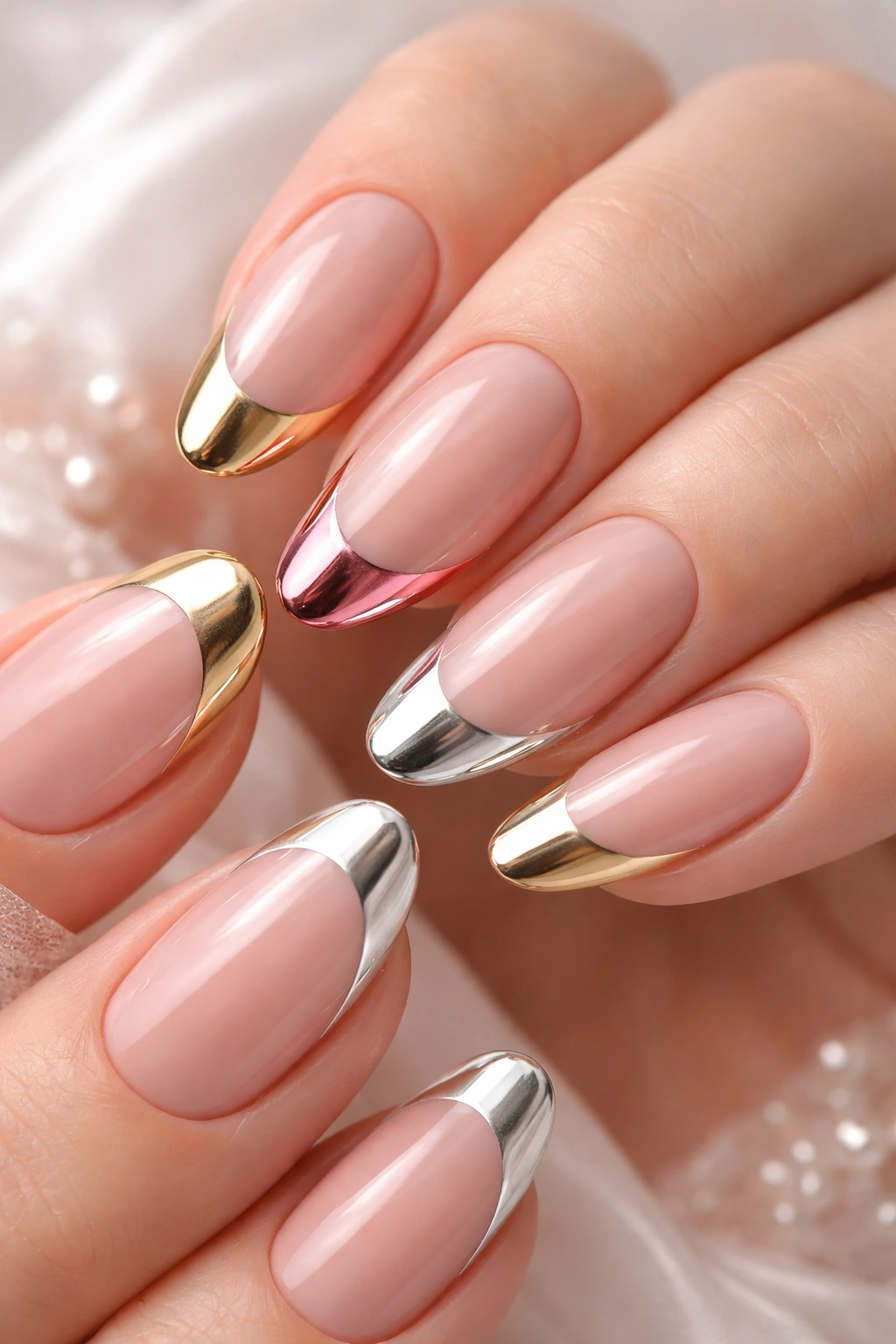
For brides who want their French tips to feel contemporary and unexpected, metallic and chrome finishes offer bold sophistication. Gold chrome tips, rose gold accents, or silver shimmer create a high-shine effect that photographs spectacularly while still maintaining the elegance of the French tip design. This approach works particularly well for modern, minimalist, or fashion-forward brides.
Understanding Different Metallic Finishes
Chrome is a mirror-like finish that reflects light dramatically, creating an almost liquid-metal appearance. Gold chrome feels warm and luxurious, while silver chrome reads cool and contemporary. Rose gold chrome splits the difference, offering warmth with a modern edge. These finishes require specialized products and application techniques, so you absolutely need an experienced technician who works regularly with chrome powders or specialized chrome polishes.
Pairing Metallics With Base Colors
A nude or milky base paired with metallic tips creates the most elegant and timeless effect. The neutral base allows the metallic tips to be the clear focal point without the overall look feeling trendy or costume-like. For a more daring approach, a soft pink or champagne base with metallic tips creates a luxe, upscale aesthetic—think high-end jewelry meeting bridal elegance.
Avoiding the Trendy Trap
Chrome nails have become somewhat trendy, so the key to ensuring your manicure feels timeless rather than temporarily fashionable is keeping the base color classic and the overall design simple. Avoid multi-colored chrome or designs that pair chrome with excessive glitter or embellishment. Let the metallic finish be the statement, supported by a clean, classic base.
Real-World Durability of Chrome Finishes
One consideration: chrome finishes can show fingerprints and water spots more visibly than traditional polish. You’ll want to bring a small microfiber cloth to your wedding and be mindful about touching your face or handling items that might smudge your nails. The finish itself is durable, but maintaining its pristine appearance requires a bit more intention than other manicure styles. Most brides find the visual payoff—those stunning ring shots with mirror-like nails—absolutely worth the extra care.
Final Thoughts
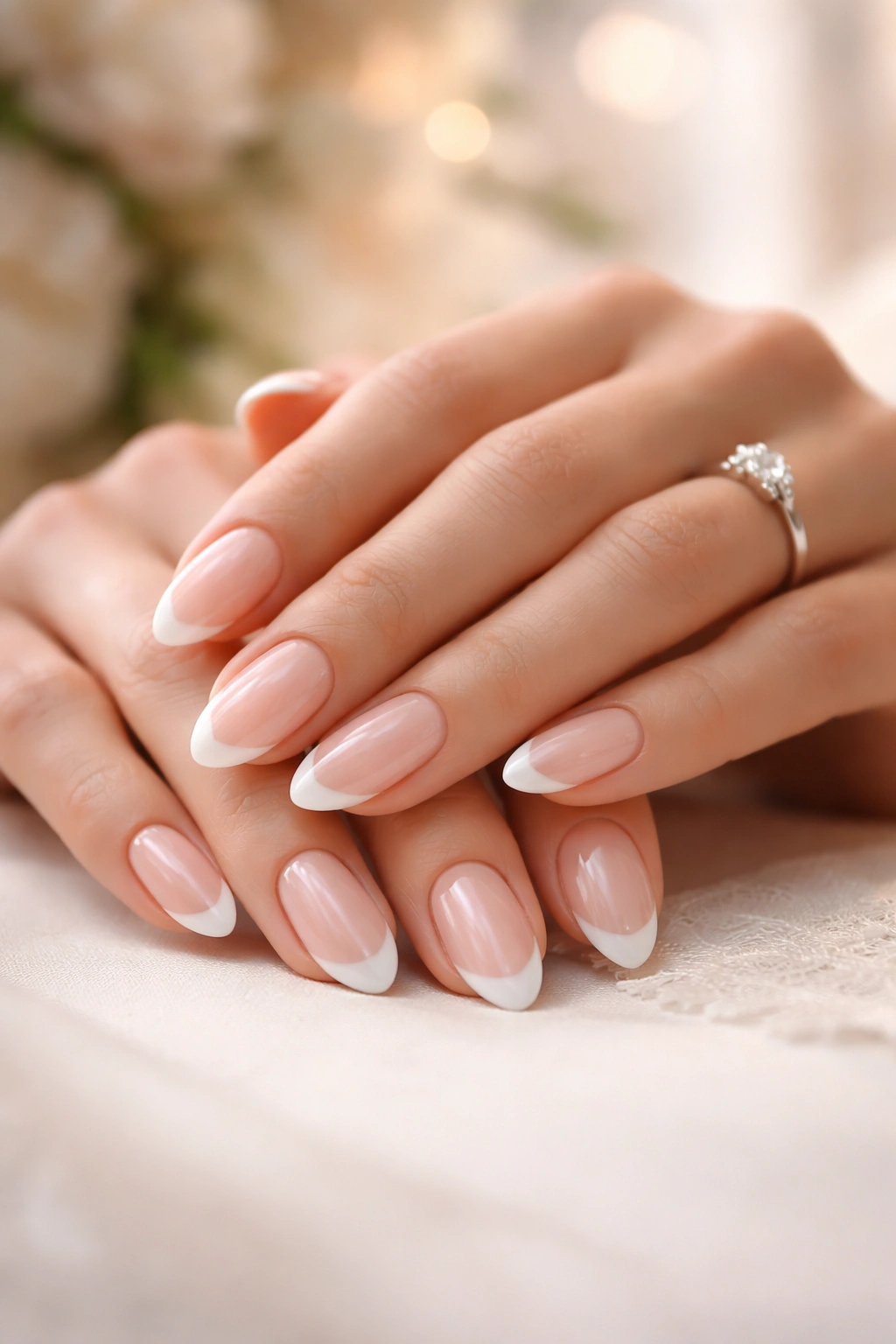
Your wedding nails are among the small, intentional details that contribute to the overall beauty of your bridal look. French tips, in all their variations, offer the perfect balance between classic elegance and personal expression. Whether you choose the timeless simplicity of a traditional almond French tip, the modern sophistication of an ombré gradient, the romantic beauty of hand-painted florals, or the contemporary edge of metallic finishes, you’re selecting a design that photographs beautifully and remains appropriate to look back on for decades.
The most important decision is choosing a style that feels authentically like you—not what you think a bride should wear, but what makes you feel confident and beautiful on your wedding day. Schedule your manicure 2-3 days before your wedding, allowing time for any initial drying while keeping the polish fresh. Work with a nail artist who understands your vision and demonstrates the technical skill to execute it flawlessly. And remember that on your wedding day, when you’re exchanging rings, holding your bouquet, and waving to guests, your nails will be part of thousands of photographs—make sure they tell the story of who you are, as the bride, as the person beginning this new chapter.