
Orange almond nail ideas work because the shape does half the styling for you. A soft taper makes orange look cleaner, sharper, and a little more expensive than it does on a blunt square nail, where the color can sometimes feel loud for the sake of being loud.
I’ve always liked orange polish for exactly that reason: it changes personality fast. Burnt orange can feel earthy and grounded, tangerine can read bright and crisp, and a glossy coral-orange can look almost juicy under natural light. Same color family. Totally different mood.
Almond nails also give orange room to breathe. On short almonds, the color reads neat and tidy. On longer tips, it gets a little more editorial, especially when you add chrome, foil, or a clean French line. The shape matters more than people think. A good almond is not pinched or pointy; it’s a gentle taper with enough softness at the tip that the eye slides right over it.
The fun part is how far you can push it without losing the elegance of the shape. Some versions are barely there. Some are full-on statement nails. All of them work because orange has range, and almond nails give it structure.
1. Burnt Orange Gloss Almond Nails
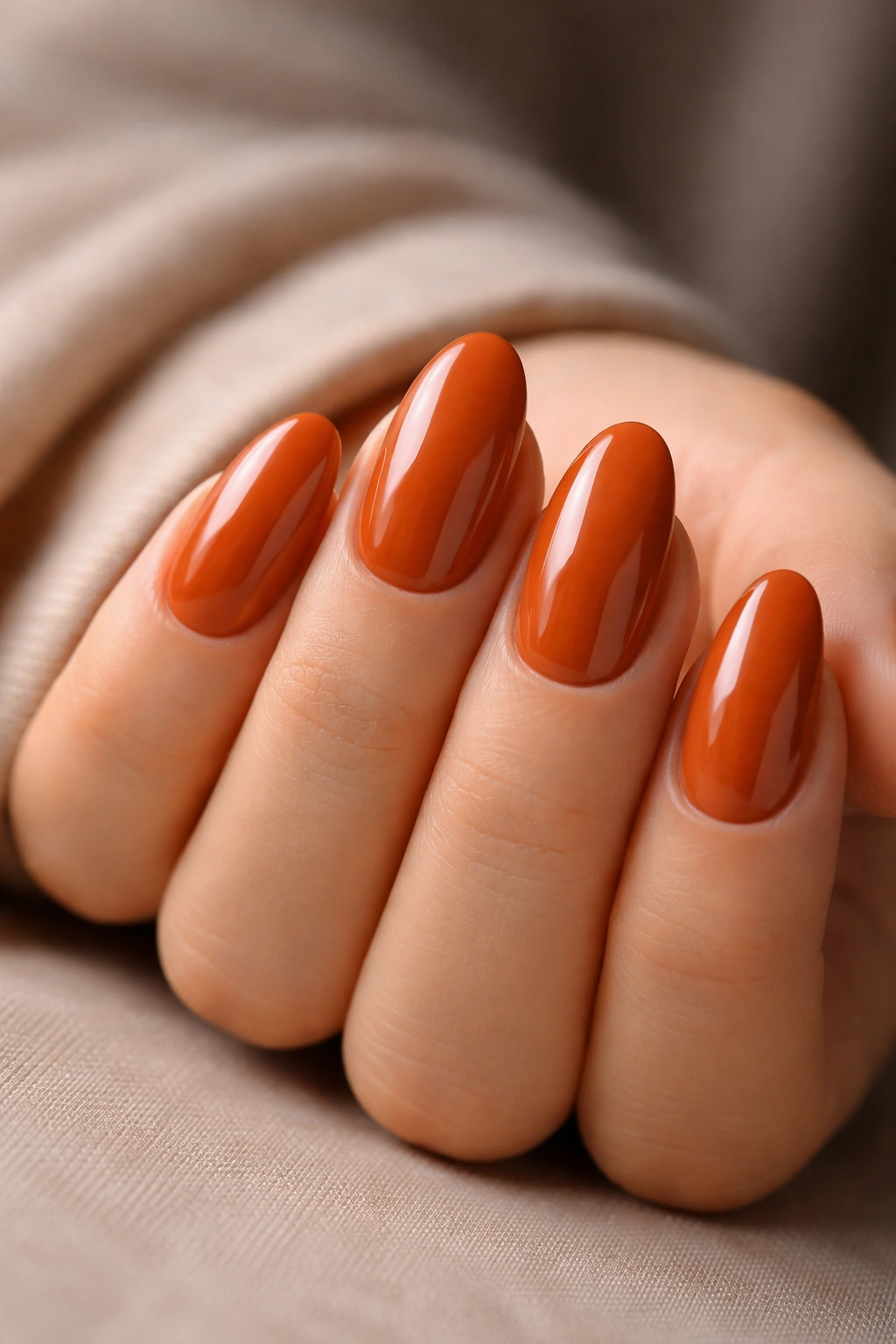
Burnt orange is the shade I’d hand to someone who wants orange without the circus. It has enough warmth to feel seasonal in spirit, but it still behaves like a neutral when you keep the finish glossy and the shape clean. On almond nails, that combo looks rich instead of random.
Why It Works
A burnt orange gloss set works because the color has depth. It usually sits somewhere between clay, cinnamon, and old copper, so it doesn’t flash neon the second light hits it. That makes it easy to wear with denim, black knits, gold jewelry, or a plain white shirt.
The gloss matters more than people expect. Matte can make the same shade lean dusty. High shine gives it a smooth, polished surface that keeps the color alive. If you want a manicure that feels steady, wearable, and a little grown-up, this is one of the safest orange choices.
- Best on short to medium almond nails where the taper stays visible.
- Looks especially good with gold rings or thin stacked bands.
- Ask for a full-coverage creme polish instead of a jelly finish if you want the color to stay deep.
- A thin top coat helps the surface stay glassy for days.
Pro tip: If the orange looks too bright in the bottle, one coat of a sheer brown base can quiet it down without making it muddy.
2. Tangerine Micro-French Almond Nails
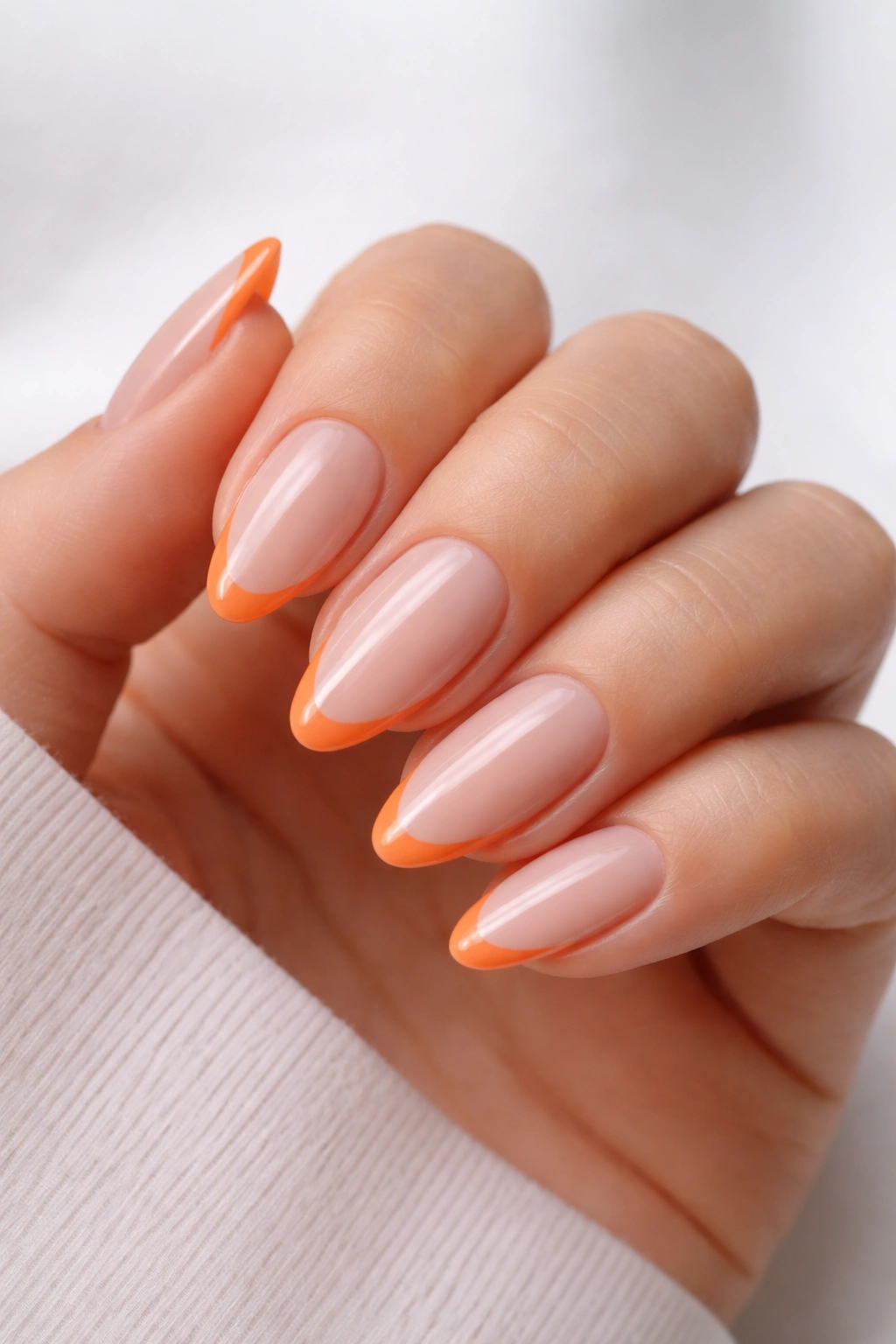
Why commit to a full orange nail when a thin line can do the job? A micro-French in tangerine gives you the color payoff at the very tip, which makes the manicure feel crisp and modern without taking over your whole hand.
The trick is the scale. The orange band should be slim enough that the almond shape still leads the eye. Too thick, and it turns into a blocky tip. Too thin, and you lose the point of the design. I like this style most on medium-length nails because there’s enough surface for the bare base to feel intentional.
This one is easy to love if you wear a lot of beige, gray, navy, or white. The nail still has personality, but it doesn’t fight your clothes. It’s also a smart pick if you want orange at work and do not want the whole set shouting across the room.
A sheer nude base keeps the look clean. A milky pink base makes the orange feel brighter. Either way, the line should be even and sharp, not wobbly.
3. Terracotta Matte Almond Nails
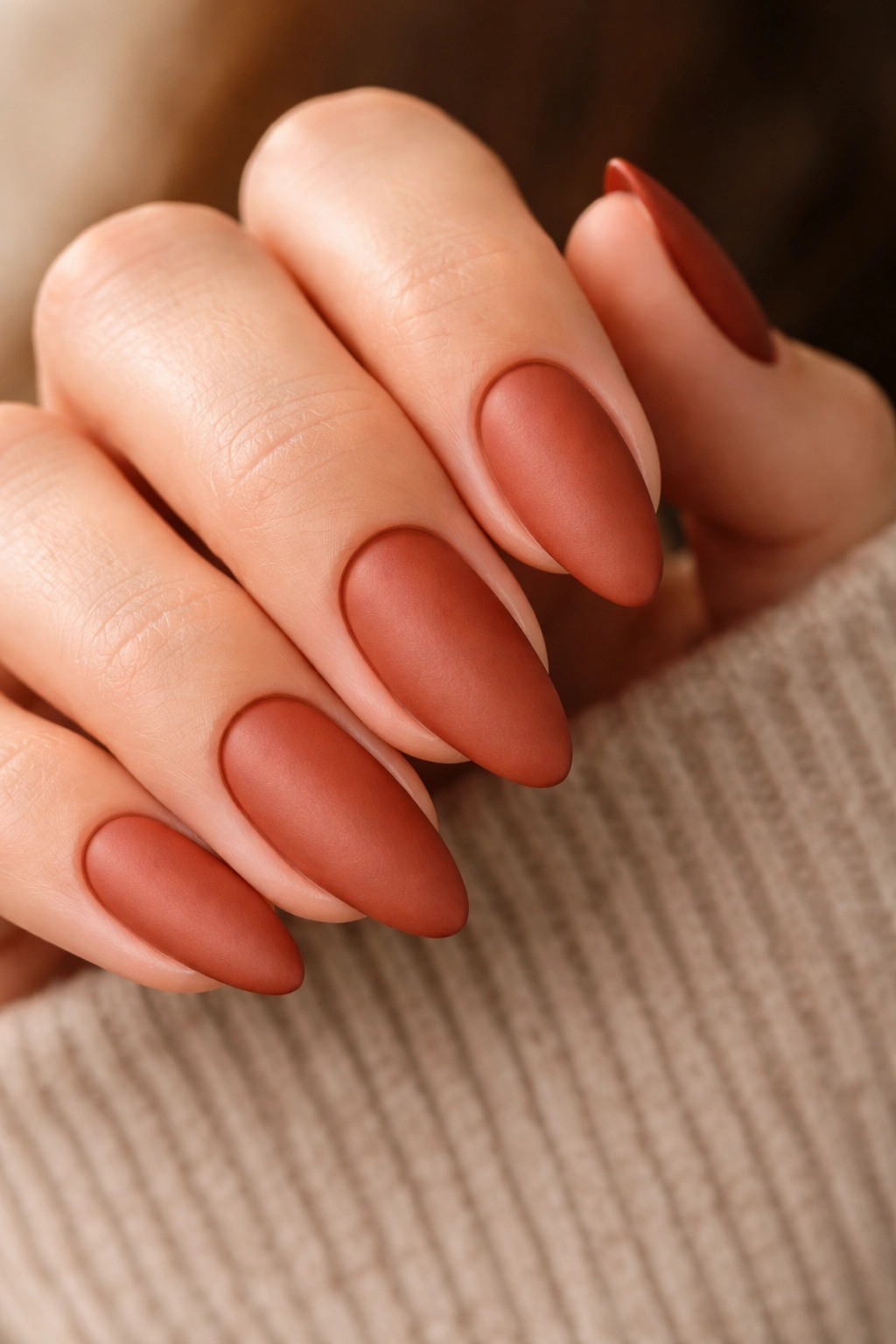
Why does matte terracotta feel calmer than glossy orange? Because the finish cuts the shine before the color gets too animated. You end up with something that looks like clay, spice, and soft suede all at once.
Matte works especially well on almond nails because the shape already has a gentle curve. A flat finish can sometimes look severe on square tips, but on an almond edge it feels grounded. The whole set reads quieter, which is nice if you like orange but don’t want your nails to be the loudest thing in the room.
How to Wear It
Ask for a terracotta that leans red-brown rather than pumpkin. That deeper note keeps the manicure from looking flat. A matte top coat can dry down fast, so make sure the color beneath is fully even before you seal it.
- Pair it with cream sweaters, brown leather, or dark wash denim.
- Keep the nails at medium length so the color has room to show.
- If the matte finish starts to scuff, a fresh top coat can revive it without removing the polish.
- Skip heavy glitter here. It muddies the effect.
A tiny bit of shine at the cuticle can look nice, but I’d keep the rest matte. Too much texture starts fighting itself.
4. Orange Chrome Almond Nails
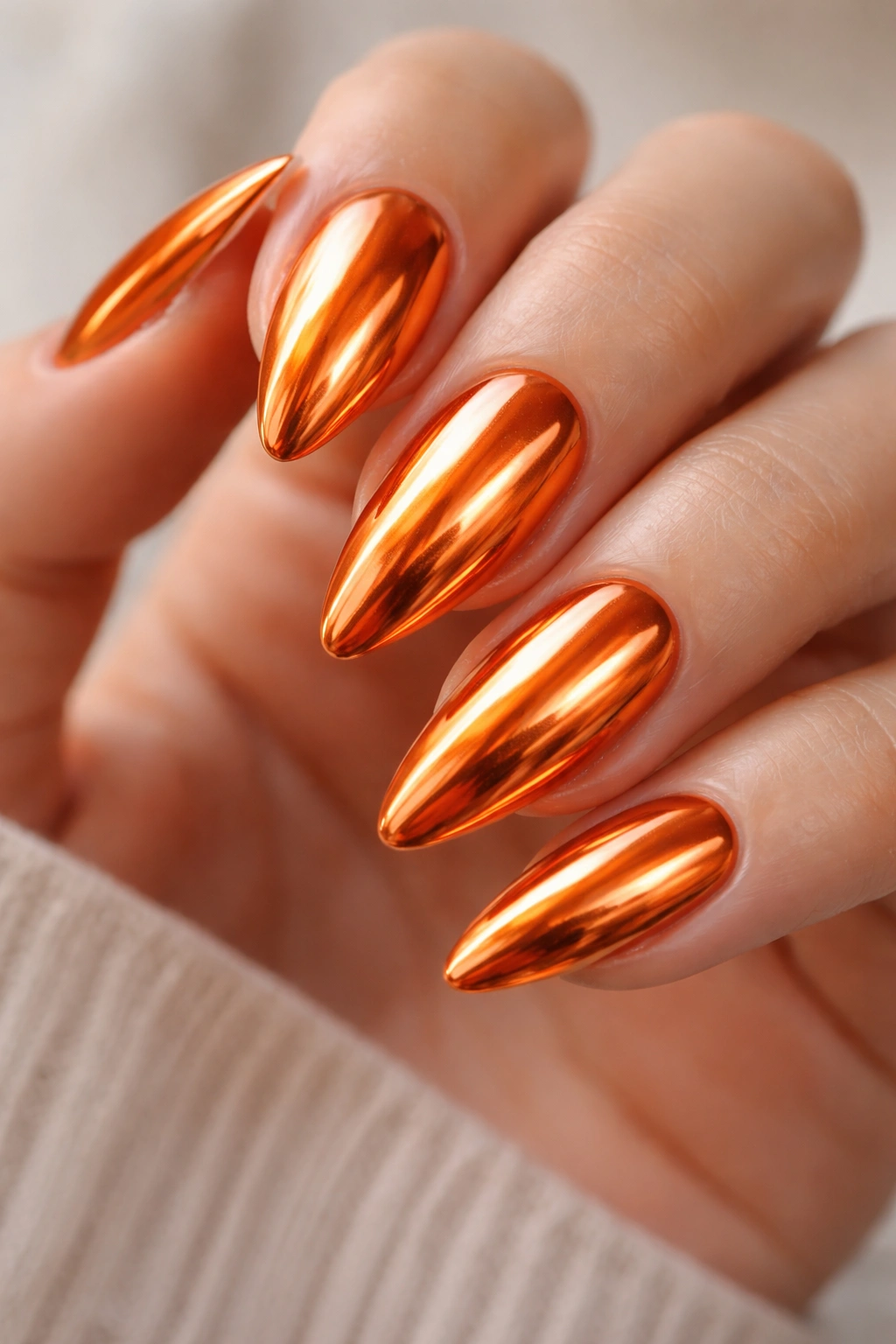
Walk into a room with orange chrome almond nails and people notice the reflection before they register the color. That’s the appeal. Chrome makes orange look metallic and wet, which is a much stronger move than plain shimmer.
A smooth base is non-negotiable here. Chrome shows every ridge, dent, and rough patch, so the nail surface has to be even before the powder or top layer goes on. On almond nails, the tapered shape helps the shine trail across the tip in a clean arc. That’s part of why this design feels sleeker than it sounds.
- Use a pale orange or peach base if you want the chrome to glow.
- Use a deeper orange base if you want a copper-heavy finish.
- Works best on medium to long almonds where the reflection has space to move.
- A no-wipe top coat is usually the cleanest route for the final shine.
The mood changes with the lighting. In daylight it can look bright and reflective. Under softer indoor light, it turns richer and warmer. That shift is what makes chrome worth wearing, honestly.
5. Citrus Ombré Almond Nails
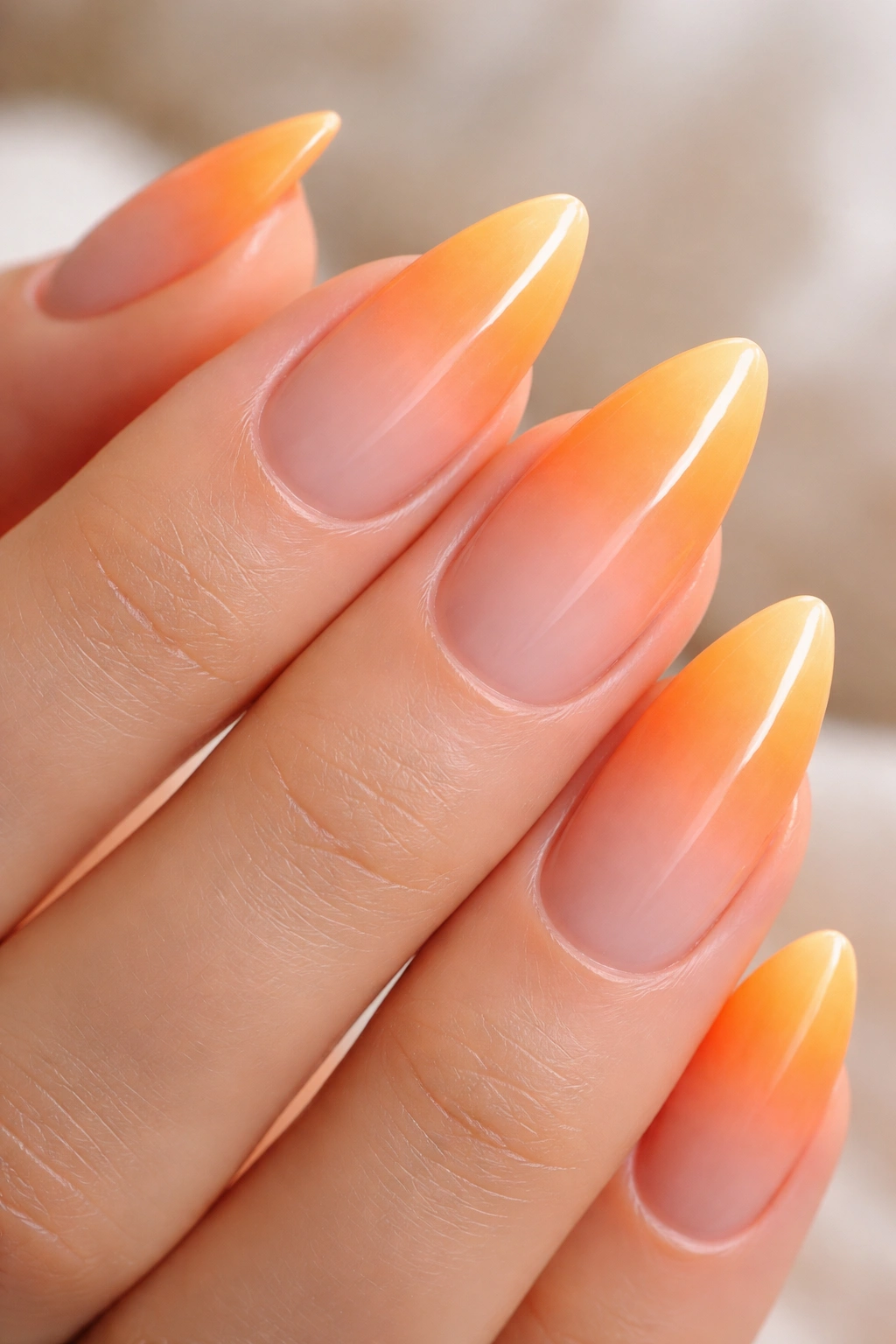
Citrus ombré is the manicure version of a slow color fade, and that softness gives orange a lot more range than a flat coat ever could. The shade can move from pale peach near the cuticle to tangerine at the tip, or from cream to coral to orange in one smooth sweep.
What I like here is how forgiving the gradient is. A solid orange nail shows every little gap as the polish grows out. Ombré blurs that line, so the manicure keeps looking intentional longer. On almond nails, the fade follows the natural taper, which makes the whole hand look lengthened.
There’s also a little movement in it. Not chaos. Just movement.
A good citrus fade should never look striped. The colors need to melt into each other so the eye reads one continuous glow. If the blend is too harsh, it starts to feel like three separate colors instead of one idea. That’s where a sponge or a soft brush blend helps a lot.
This is the kind of set that looks best when the finish is glossy and the base is smooth. Nothing fussy. Just clean color drifting from one shade to the next.
6. Coral Swirl Almond Nails
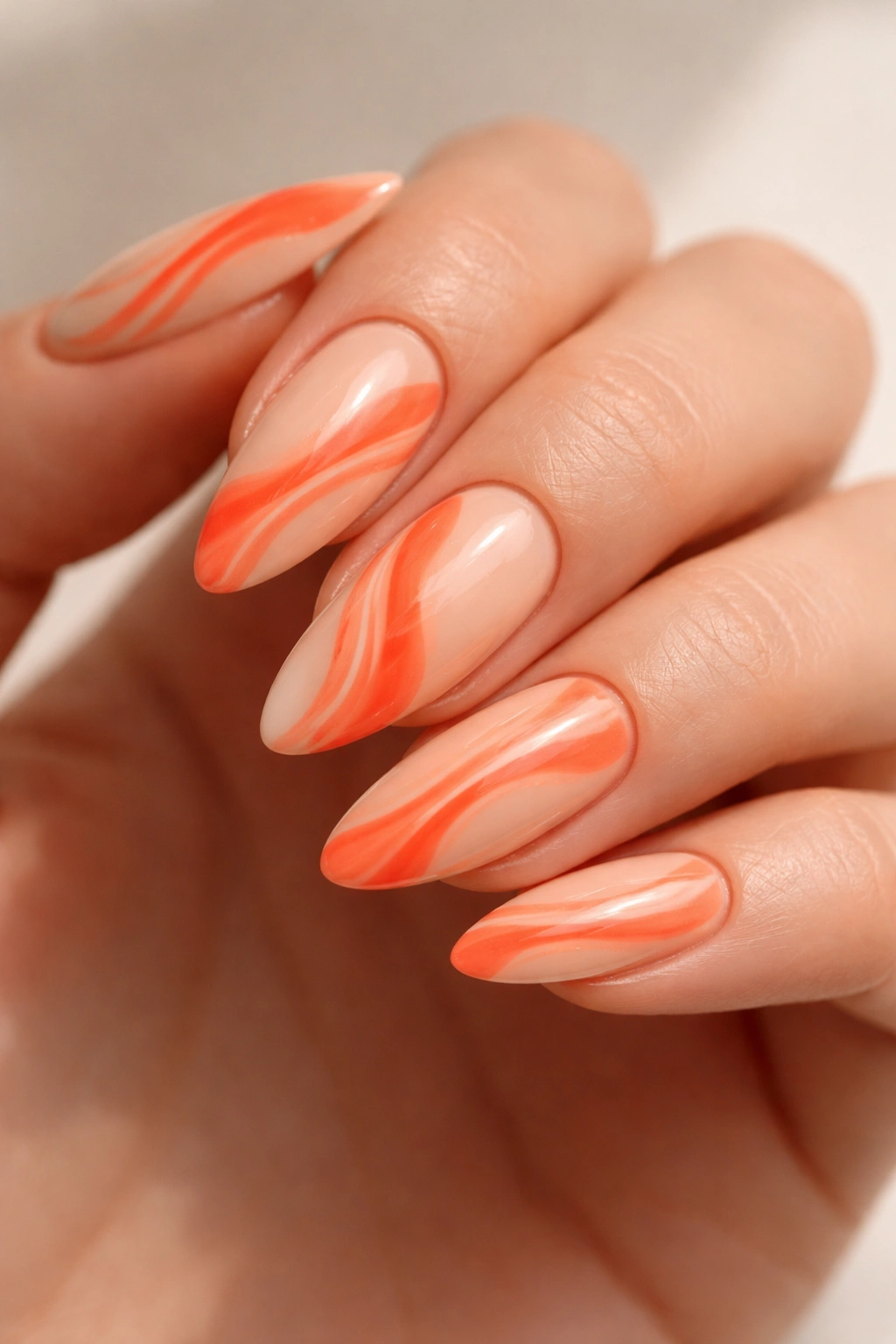
Coral swirl nails sit in that nice middle ground where orange feels playful but not childish. The swirls give the design motion, and the almond shape keeps the whole thing from tipping into candy-store territory.
Unlike a solid orange manicure, swirls let you mix shades without making the nails feel crowded. A cream base, a coral ribbon, and a deeper orange line can all live on the same nail if the spacing is careful. The secret is leaving enough blank space so each stroke has room to breathe.
What Makes It Different
Swirls work because they look hand-painted, even when they’re done with a steady brush and a clean plan. That slight irregularity is part of the charm. If every swirl is identical, the nails start to feel stiff. When the curves vary a little, the design feels alive.
- Best with sheer nude or milky pink bases.
- Add a touch of white if you want the coral to read brighter.
- Keep the swirls thin near the cuticle and a little wider near the tip.
- Great for people who like art, but not heavy art.
I’d choose this set for medium almond nails. The extra length gives the curves somewhere to travel, and the orange stays elegant instead of busy.
7. Orange Aura Almond Nails
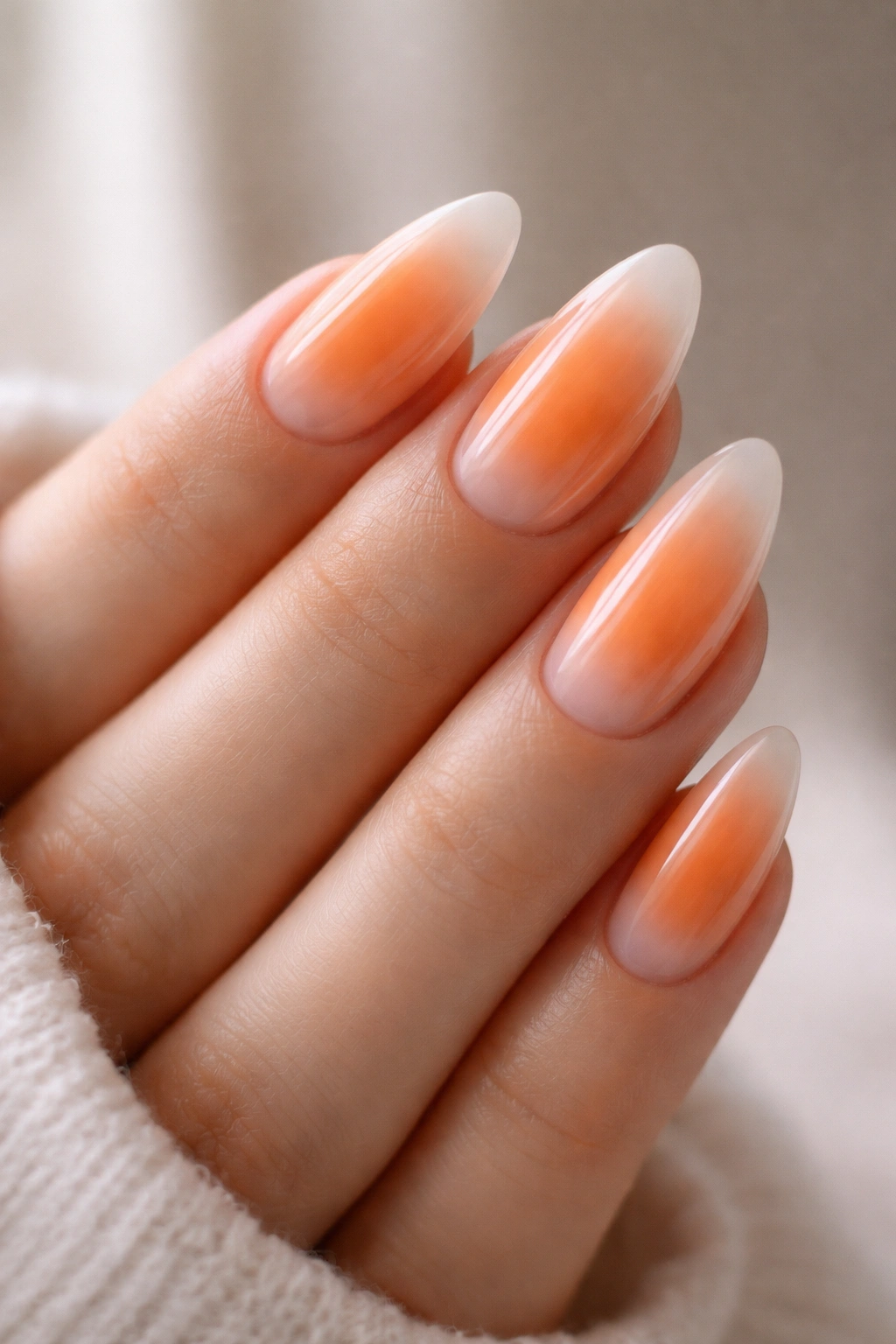
Orange aura nails have that soft-glow look that feels almost airbrushed, like the color is sitting inside the nail instead of on top of it. The center usually carries the orange, while the edges stay sheer, pale, or milky.
This design is built on contrast, but a gentle one. You get a bloom of color in the middle, then the shade diffuses outward so the perimeter stays light. On almond nails, that soft center glow follows the curve and gives the shape even more lift. It’s subtle from far away, then oddly mesmerizing up close.
The Glow Zone
Aura nails need softness at the edges. If the orange stops too abruptly, the effect disappears and you’re left with a blob. A sheer nude or translucent pink base helps the fade look dreamy instead of muddy.
What to Ask For
- A sheer base coat with a milky finish.
- A soft orange center, brushed or airbrushed outward.
- A gloss top coat to keep the aura effect luminous.
- Slightly longer almonds if you want the glow to spread.
This is one of those looks that feels calm but still interesting. I reach for it when I want color without a hard edge.
8. Neon Tangerine Almond Nails
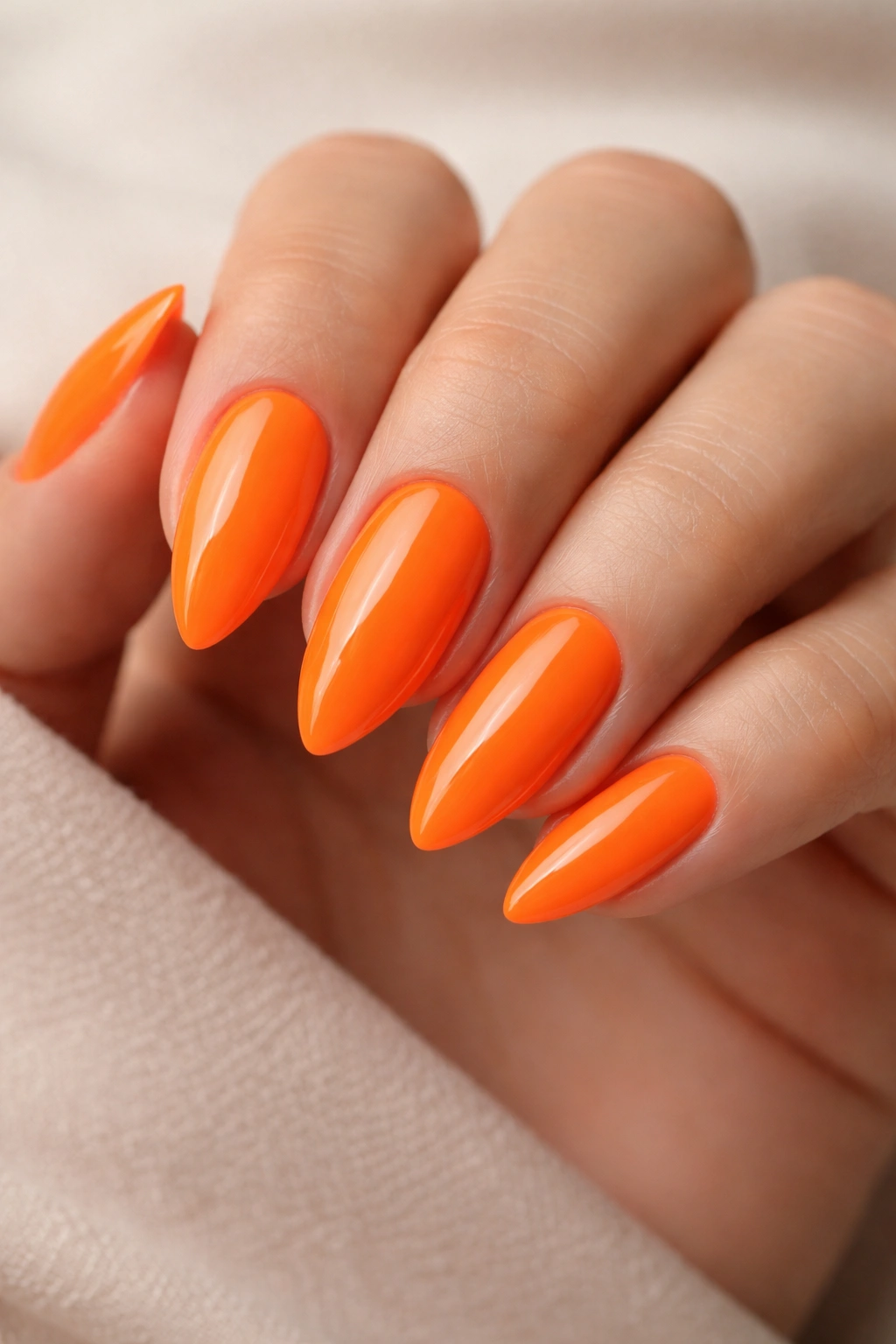
Neon orange is not shy, and that is exactly why almond nails make sense with it. The shape softens the blast of color just enough that the manicure feels sharp instead of flat-out aggressive.
The best version of this look is clean and simple. No extra art needed. A smooth neon tangerine across an almond tip already has enough energy, especially if the polish is opaque in two thin coats and sealed with a glossy top. If the surface is uneven, neon exposes everything. It’s a brutally honest color.
Tiny nails, big attitude.
That line says most of it. You do not need a long nail for this shade to work, but you do need a shape that looks intentional. On very short almonds, neon orange can read punchy and modern. On longer ones, it gets louder and more graphic.
I like this shade best when the rest of the look stays restrained. Bare wrists, simple rings, clean makeup. Let the nails do the talking. They already know how.
9. Marigold Negative-Space Almond Nails
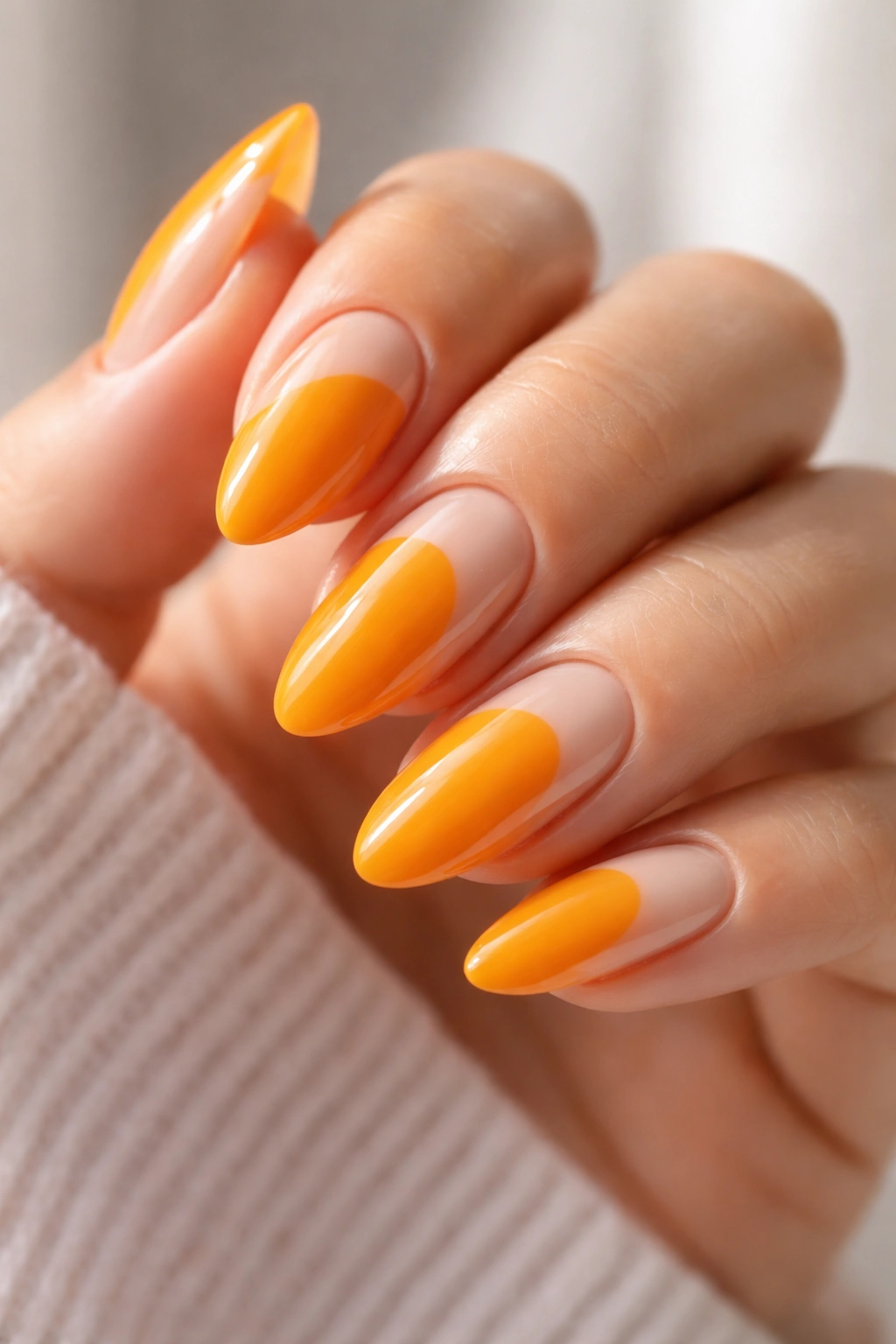
Marigold negative-space nails are a smart answer for anyone who wants orange but likes a little air around the color. Instead of filling the whole nail, the design leaves cuticle arcs, side slivers, or clear panels open so the orange feels lighter.
Why does that work so well? Because negative space breaks up the color block. Your eye can rest between the orange sections, which keeps the manicure from feeling dense. On almond nails, this is especially useful, since the taper already gives the design a sense of movement.
Where the Blank Space Goes
The cleanest versions usually place marigold along one side of the nail, around a moon at the base, or in thin geometric panels. A sheer nude base keeps the open areas tidy. A clear base looks sharper and more graphic, especially if the nail plate is naturally smooth.
This style is for the person who likes color but not clutter. It also grows out gracefully. The blank areas make the manicure look deliberate even after a little time has passed, which is a nice bonus when you do not want to be at the salon every minute.
A thin gold outline can sharpen the design, but I wouldn’t crowd it with too many details.
10. Pumpkin Spice Almond Nails
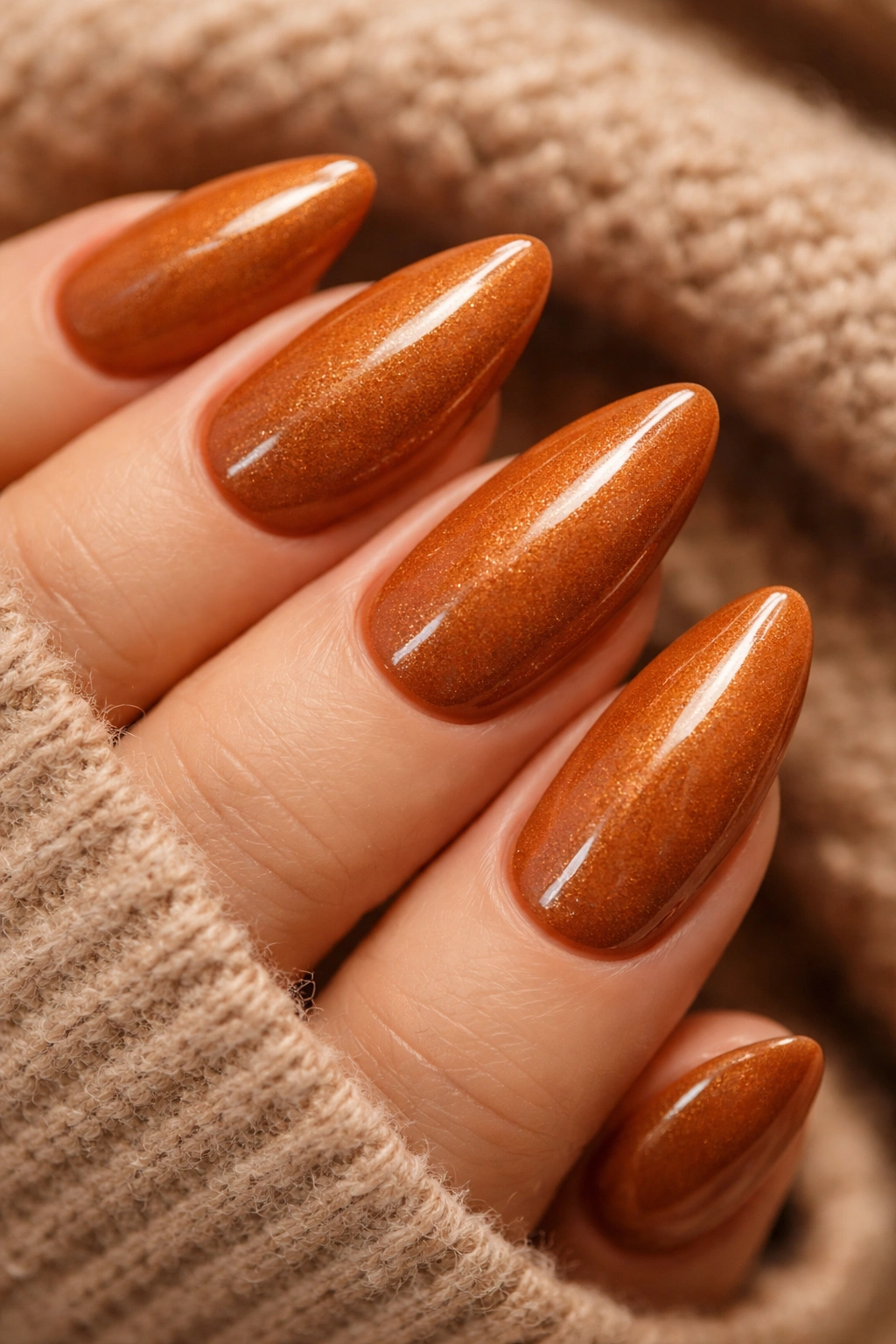
If you want orange to feel cozy instead of loud, pumpkin spice does the job. The color usually lands in a warm orange-brown lane with a hint of cinnamon, nutmeg, or toasted caramel, and that deeper base gives almond nails a richer finish.
There’s a little seasonal nostalgia baked into the shade, sure, but the manicure itself is more polished than novelty. A glossy pumpkin color on almond tips looks smooth and warm. Add a faint shimmer and it catches light in a way that feels softer than metallic chrome, less shiny than glass, but still lively.
- Choose a creme finish if you want the color to read deep and even.
- Pick a fine shimmer if you want a little movement without glitter.
- Works well with gold or tortoiseshell jewelry.
- Best on medium almond nails, where the shade doesn’t get cramped.
I’d wear this one with neutral clothes and let the nail color do the heavy lifting. It feels especially nice on hands that spend a lot of time holding a mug, steering wheel, or laptop trackpad. Tiny things. They matter.
11. Orange Marble Almond Nails
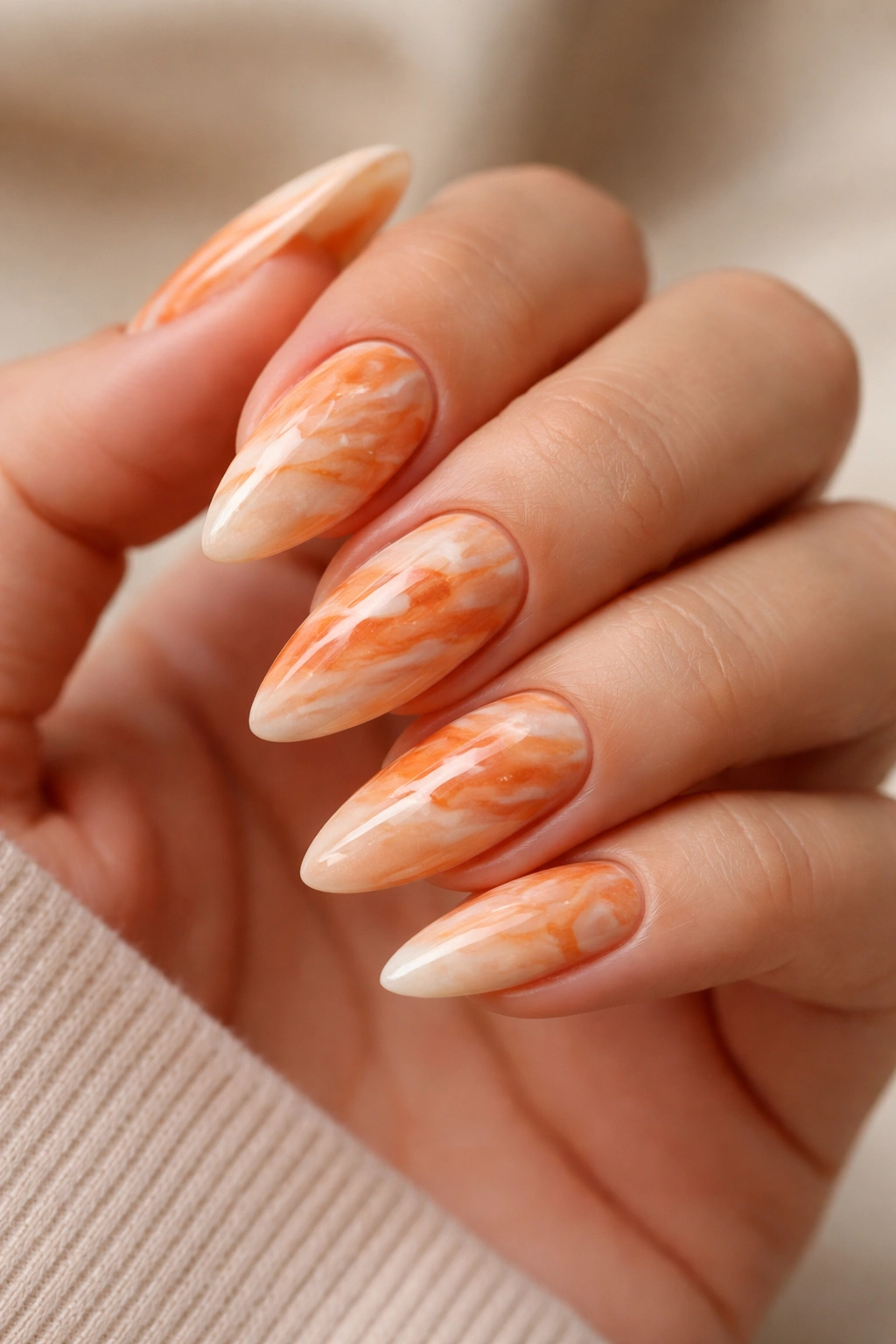
Orange marble nails are what happens when you want color, texture, and a little chaos, but not a full art project. The marble effect blends orange with white, cream, or pale peach so the nail looks like polished stone instead of a flat coat.
The part people get wrong is contrast. If the veins are too dark or too thick, the nail loses that smooth, mineral feel and turns busy. Thin white ribbons, soft orange swirls, and a translucent base usually look better than hard lines. On almond nails, the marble movement follows the shape in a way that feels almost natural.
I like this look because it hides tiny imperfections. A sheer marble design can be a little forgiving if the color placement isn’t identical on every nail. In fact, slight differences are part of the appeal. You want each nail to feel related, not cloned.
Gloss finish helps a lot here. It gives the marble a sealed, polished surface and makes the orange look deeper. Matte can work, but it flattens the stone effect. If I had to pick, I’d keep this one shiny.
12. Peach-to-Tangerine Fade Almond Nails
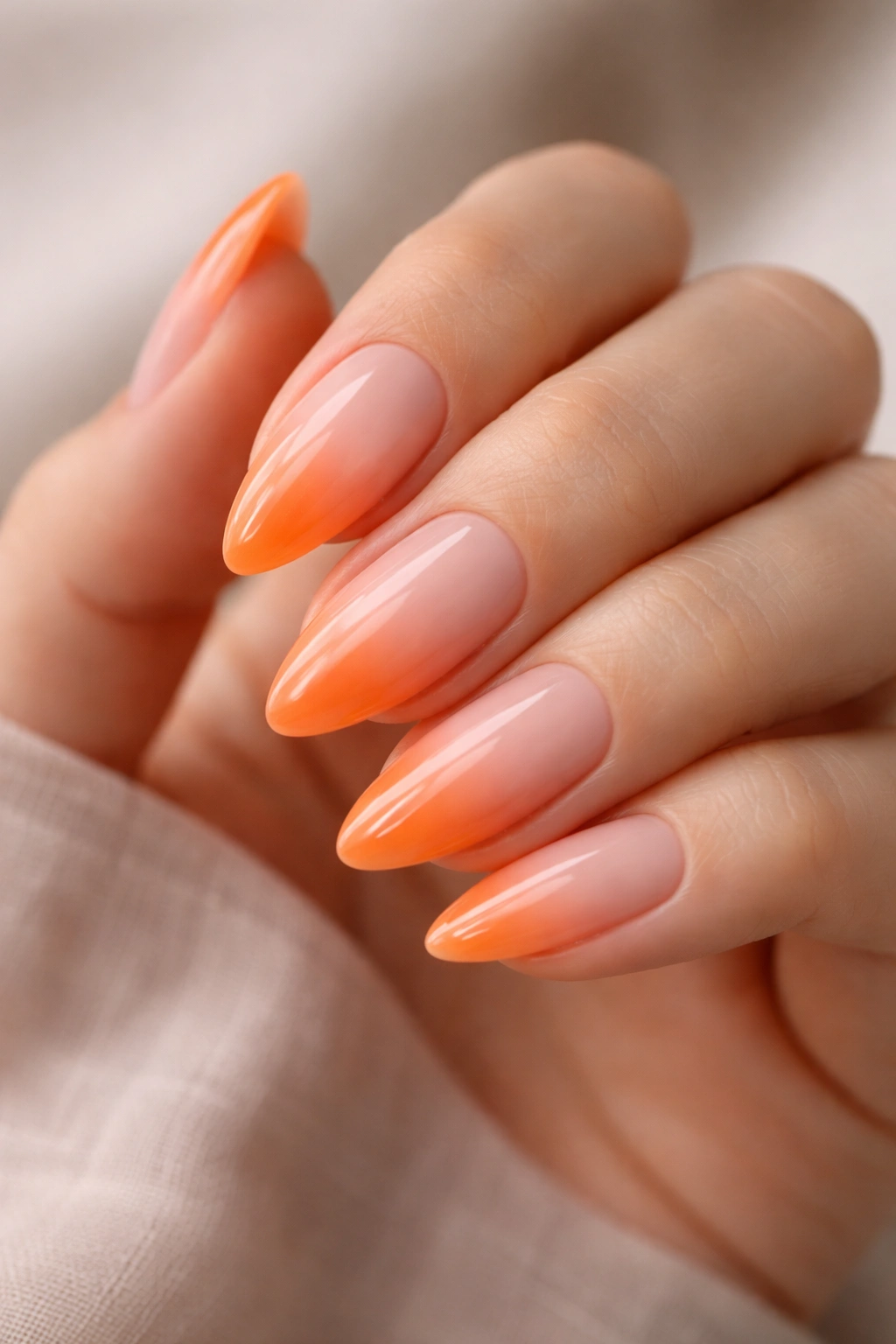
A peach-to-tangerine fade feels lighter than a hard ombré, and that airy quality is what makes it easy to wear. The color moves from pale peach at one end to a brighter orange at the other, but the transition stays soft and almost smoky.
Unlike a strict color block, this fade keeps the nail from looking cut into sections. That makes it a good pick if you want orange but prefer a manicure that feels smooth and polite. It’s still colorful. Just less bossy about it.
The fade also plays nicely with the almond shape because the tapered tip naturally carries the stronger orange. Your eye follows the color up the nail and lands at the point. Clean. Simple. No extra art required.
This one works well on people who like their nails to match a lot of outfits without disappearing entirely. Peach at the base keeps it gentle near the cuticle, while tangerine at the edge adds enough punch to keep the set interesting. A glossy top coat makes the gradient look more blended and less dusty.
13. Rust and Gold Foil Almond Nails
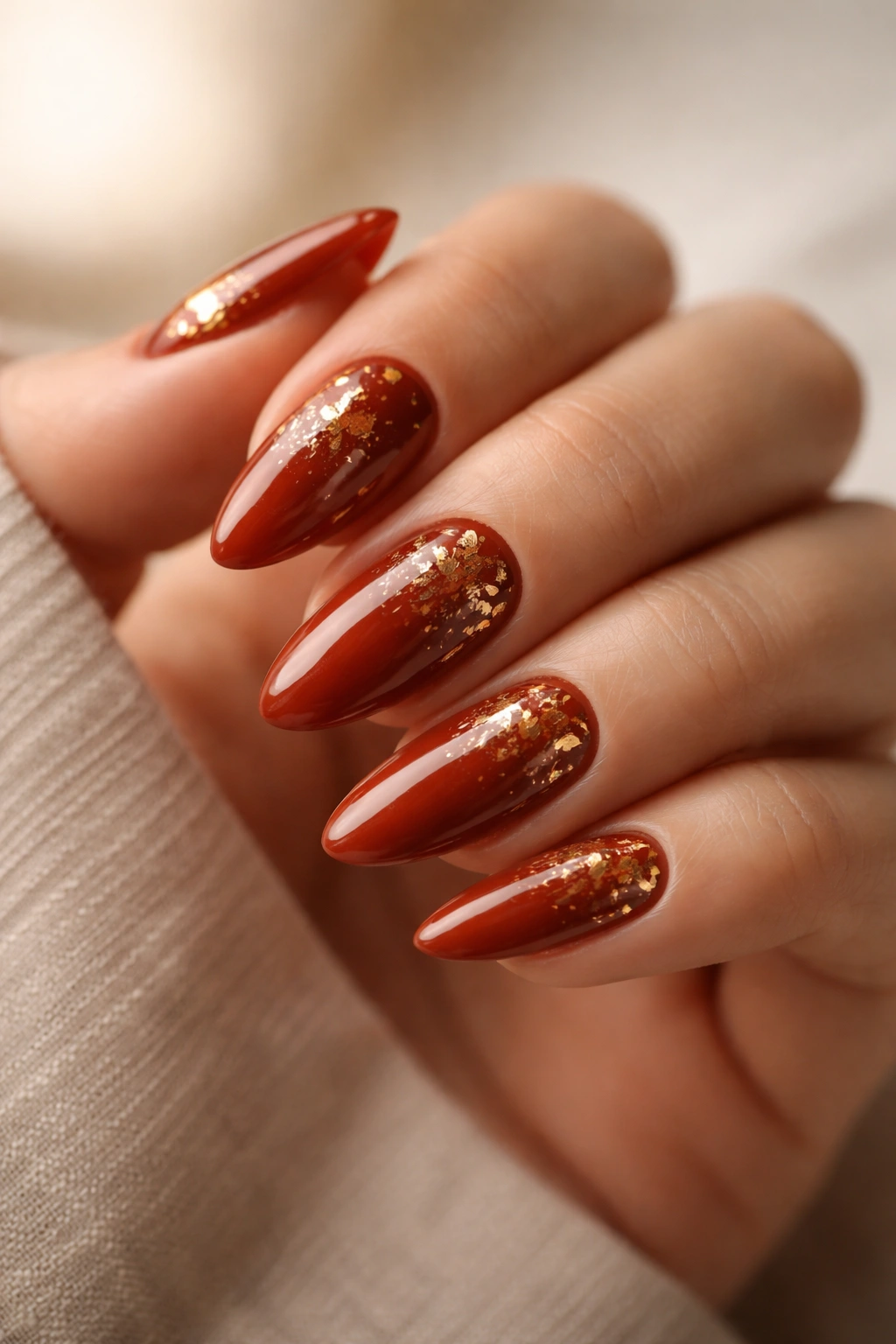
Rust and gold foil is one of those combinations that looks far more expensive than the effort it takes. The rust gives you a deep orange base with brown in it, while the foil adds little flashes of warm metal that sit on top like scattered leaf.
Why the Foil Matters
A little foil goes a long way. Too much, and the nail becomes noisy. A few small pieces placed near the center, sidewall, or tip are enough to break up the rust color and create movement. On almond nails, those flashes follow the curve nicely, which keeps the design feeling fluid.
Quick Placement Notes
- Use thin foil fragments, not chunky sheets.
- Place the foil on 1 to 3 accent nails if you want a more restrained set.
- A deep rust base makes the gold look warmer.
- A clear top coat is needed to lock everything down and smooth the texture.
This is a strong choice if you wear a lot of brown, black, camel, or cream. It has depth, but it doesn’t lean precious. That’s the part I like most.
14. Apricot Jelly Almond Nails
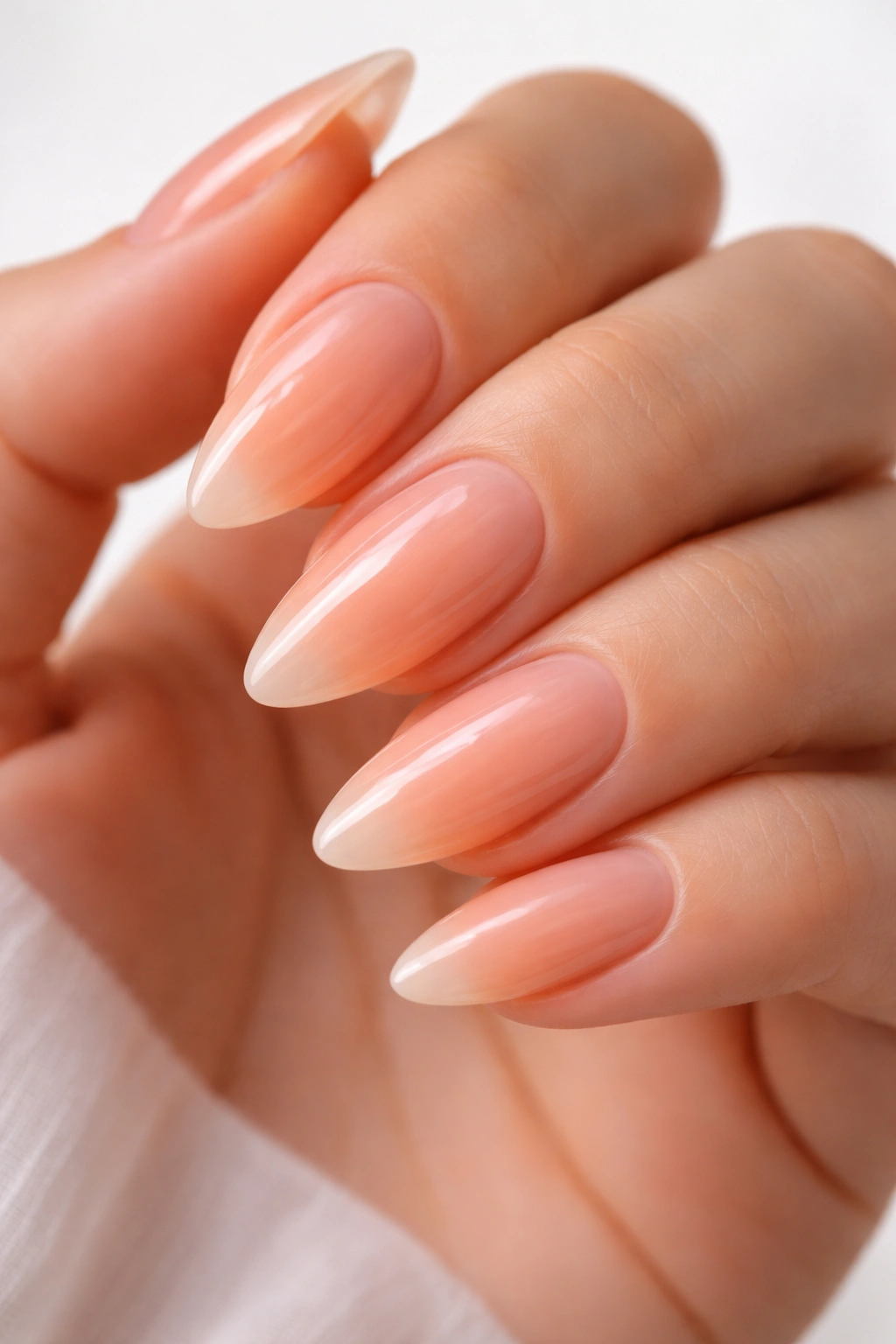
Apricot jelly nails look edible in the best way. The color is sheer, glossy, and slightly translucent, so the nail almost glows from inside instead of sitting as an opaque block on top of the plate.
That translucence is the whole point. A jelly finish lets a little of the natural nail show through, which softens orange into something lighter and fresher. On almond nails, that airy look is a nice counterpoint to the shape’s sleek outline. The result is pretty without being sugary.
Thin layers matter here. A jelly polish should be built up gently, usually in two or three sheer coats, so the color stays even and doesn’t turn streaky. If you rush it, the polish can look patchy near the free edge. That is the one thing to watch.
This is a great choice for people who want orange but fear a full solid color will feel too much. It’s also easy to pair with short or medium almonds, since the sheer finish keeps the nail from looking heavy. Apricot jelly is one of the few orange looks that can feel delicate.
15. Sunset Split Almond Nails
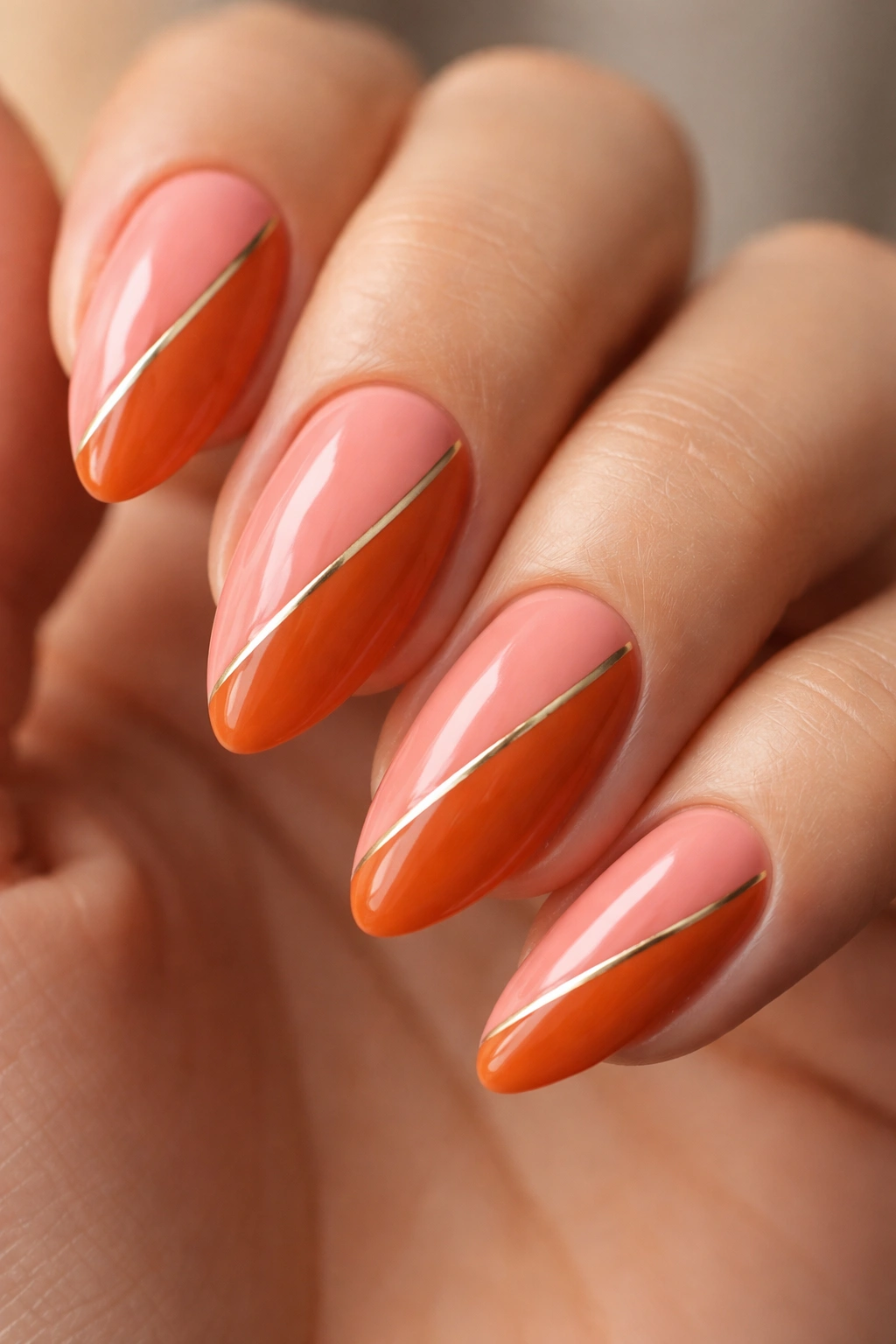
Picture one almond nail divided diagonally: coral on one side, deep orange on the other, and a slim gold line cutting through the middle. That’s the basic idea, and it works because the split gives orange some structure.
The diagonal line matters more than the shade pair. A hard vertical split can look stiff. A slanted division feels more fluid and follows the natural movement of the almond shape. It gives the eye a place to travel instead of stopping dead in the center.
How to Keep It Sharp
The colors need a clear difference. If both shades are too close, the split disappears. If they’re too far apart, the nail can feel disjointed. Coral and burnt orange are a nice match, especially when the dividing line is metallic or crisp white.
- Keep the line thin and steady.
- Use two colors with clear contrast.
- Try it on longer almond nails for more space.
- Add a tiny gold stripe if you want a more finished look.
This design has a little graphic edge, but it still feels wearable. I like that. It has shape without looking stiff.
16. Orange and Black Accent Almond Nails
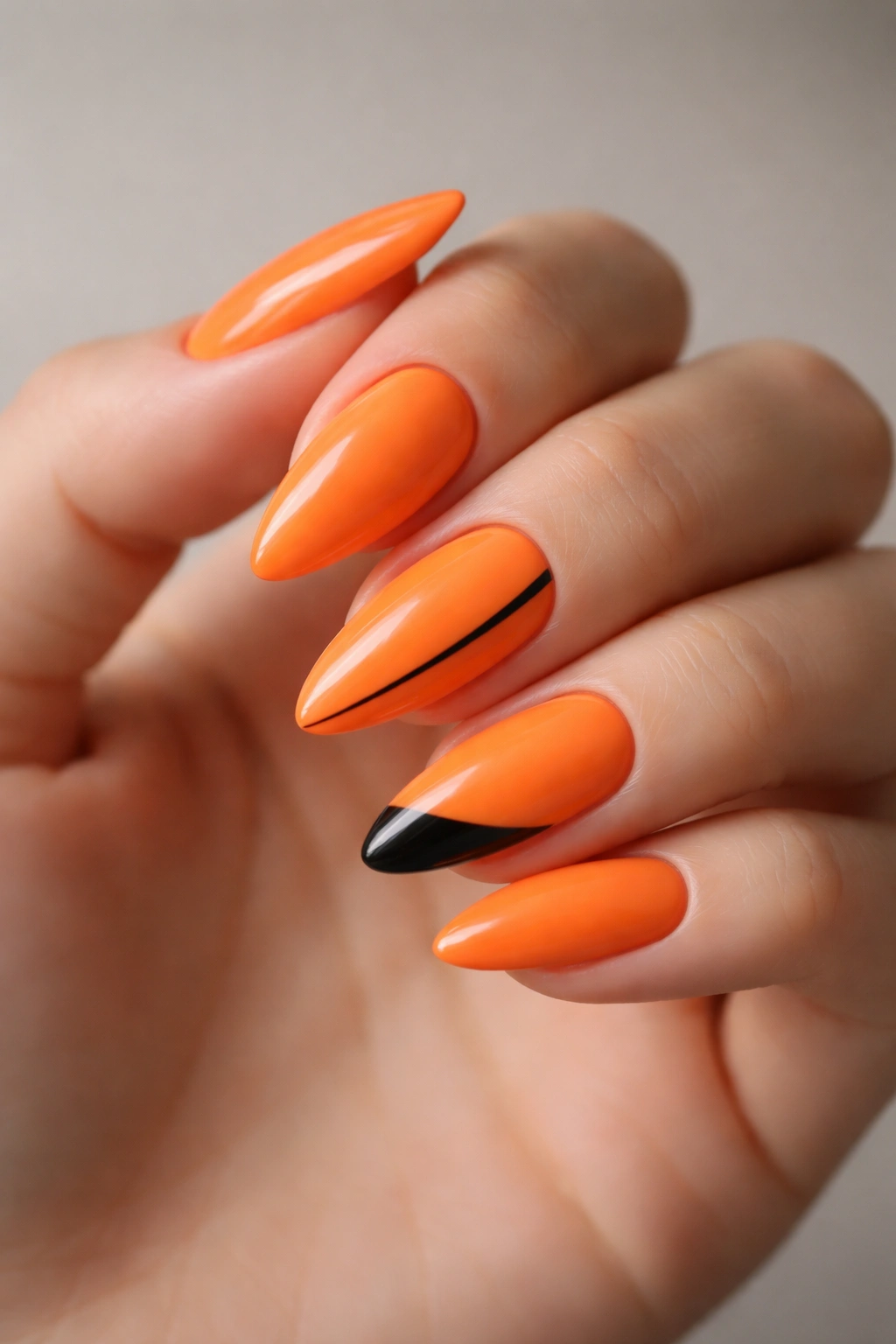
Black does not have to mean gothic. With orange, it can make the whole manicure look cleaner, sharper, and much more intentional. That contrast is especially strong on almond nails because the soft tip keeps the black from feeling too harsh.
The easiest version is a mostly orange set with one or two black accents: a thin stripe, a tiny dot near the cuticle, or a single black tip on an accent nail. If you want more drama, swap one full nail to black and let the rest stay orange. The point is contrast, not overload.
A glossy finish keeps the two colors from looking flat against each other. Matte black can work too, but then you need the orange to stay rich and bright so the set doesn’t feel muted. I’d avoid tiny busy art here. The color pairing already does enough.
This look makes sense if you like graphic nails but don’t want full nail art. It also has a clean line to it that suits sharper almond tips, especially when the shape is filed evenly on both sides.
17. Copper Velvet Almond Nails
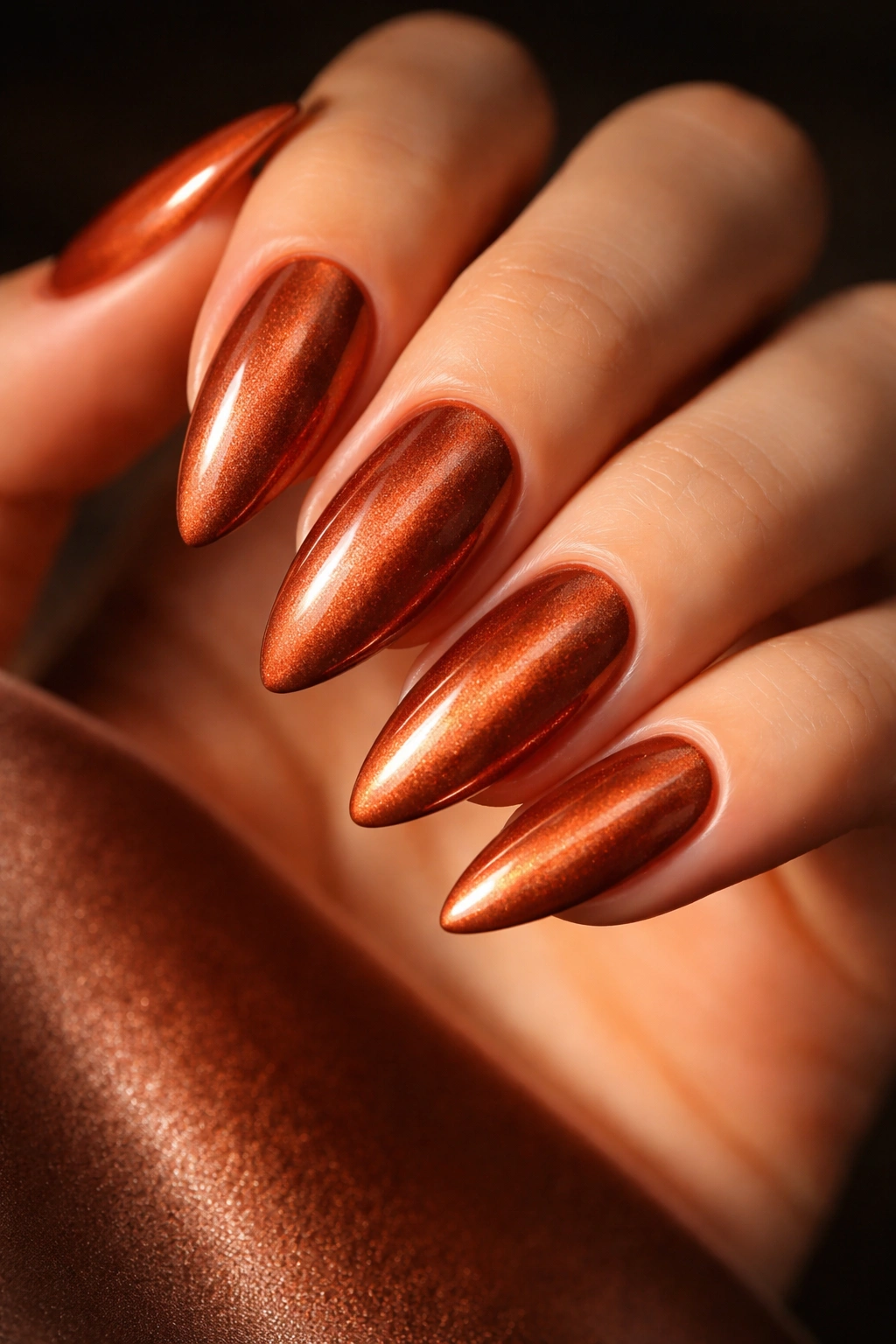
Copper velvet nails have that brushed-metal effect that looks soft until you tilt your hand. Then the color shifts. That shift is the whole draw.
This finish usually comes from magnetic polish, which pulls the shimmer into a fine line or shadow across the nail. On orange-leaning copper tones, the result feels plush, almost like fabric with a hidden sheen. It is more textured in appearance than chrome, but less mirror-bright. I think that middle ground is the sweet spot.
The almond shape helps the shimmer stretch from cuticle to tip in a smooth arc. A blunt shape can make magnetic polish look cut off, but almond tips let the glow taper naturally. If the polish is applied too thick, the effect gets muddy, so thin coats are the way to go.
This is a set for someone who wants dimension without glitter flakes. It looks expensive, but not in a loud way. More like burnished metal under soft light. One of my favorites, honestly.
18. Orange Half-Moon Almond Nails
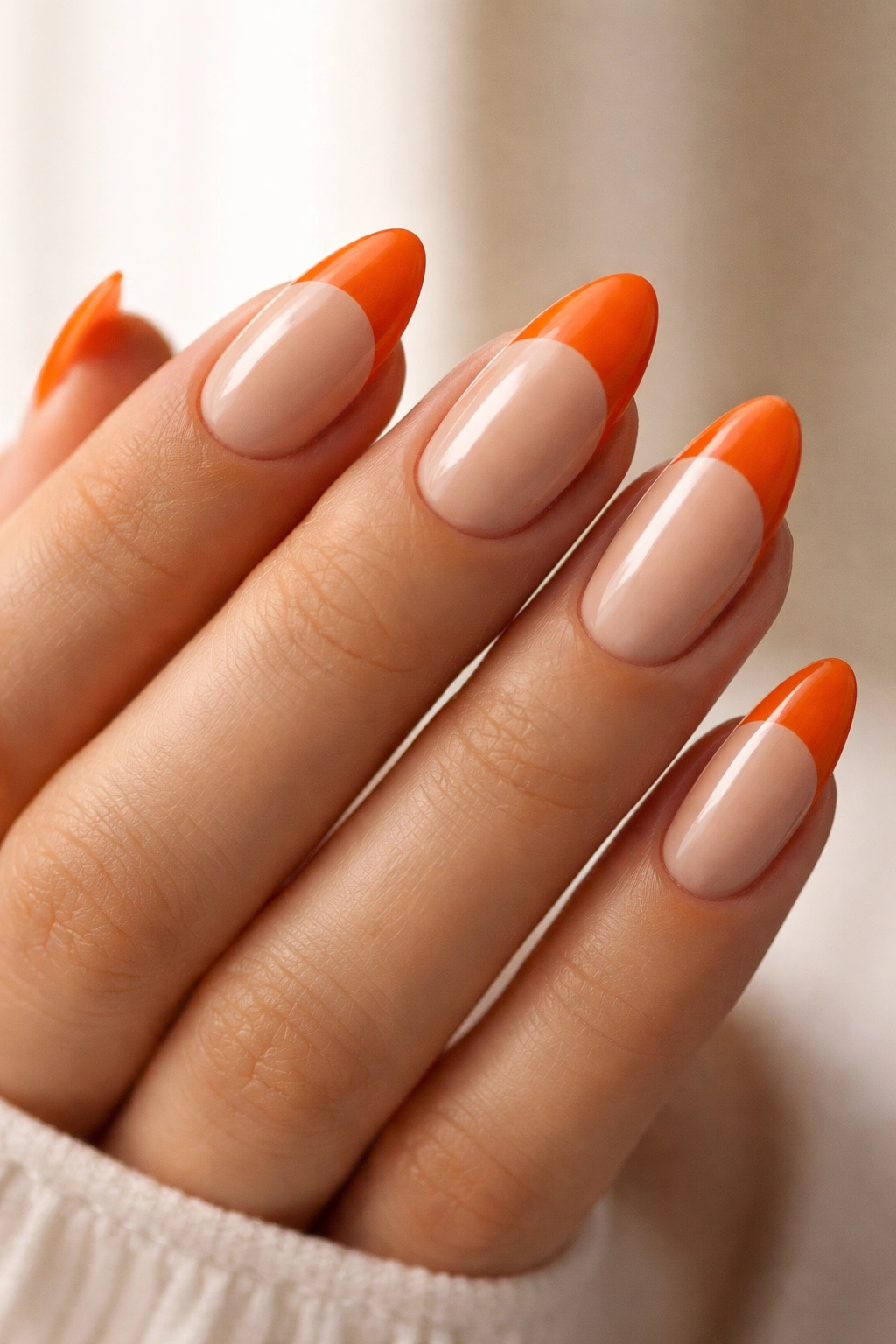
Half-moon nails keep the base airy and let the orange sit in the upper part of the nail, which is a neat trick if you want color but also like a cleaner grow-out line. The arc at the cuticle gives the design a little vintage structure.
Unlike a full orange coat, the half-moon format leaves part of the nail bare or pale, so the set doesn’t feel dense. That open space is doing real work. It breaks the color up and makes the almond shape look longer, especially if the orange starts just above the base curve.
Where the Arc Sits
You can keep the half-moon tiny and precise, or make it a bigger, bolder crescent. A nude or clear base keeps the manicure soft. A white base makes the orange sharper and more graphic. Either way, the arc should be smooth and centered.
This style is good if you like neat lines and do not want a lot of decoration. It also holds up nicely as the nail grows because the base design still looks deliberate after a little time has passed. That’s the kind of practical detail I always appreciate.
19. White Line Art on Orange Almond Nails
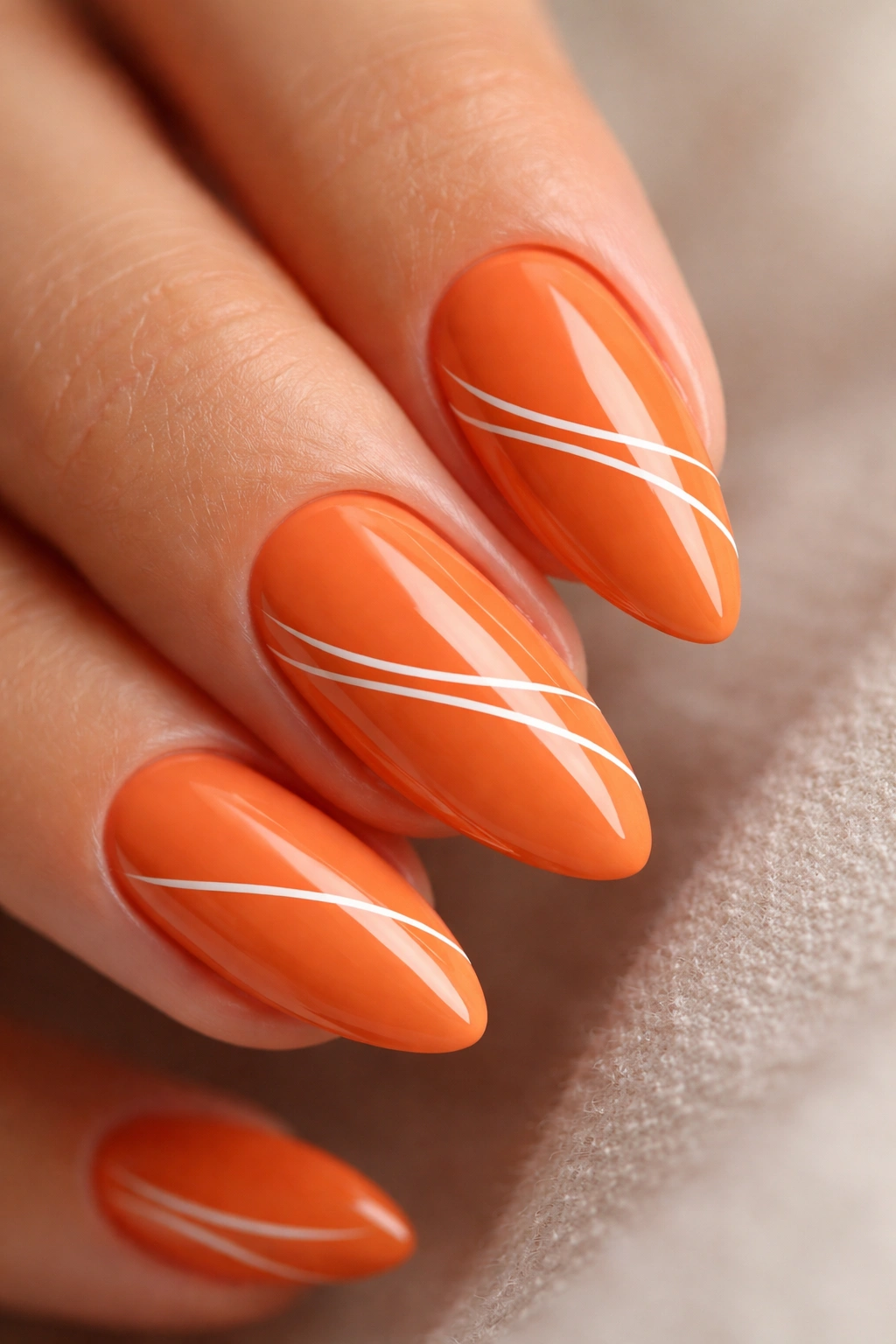
A few white lines. That’s all. And that’s exactly why it works.
Orange gives the nail a solid color field, then thin white line art cuts across it like a sketch on bright paper. Because almond nails have a soft curve, the lines can follow the shape or break it up with a small abstract shape. The design feels modern without needing a pile of extras.
Why It Stays Readable
White stands out cleanly against orange, even when the orange is deep or rusty. The lines should stay thin enough that the manicure still feels airy. If the art gets thick, the nail starts to look crowded and the orange loses its presence.
- Use one or two accent nails if you want a lighter look.
- Keep the lines fine and deliberate.
- A milky orange base gives the white more breathing room.
- Small geometric marks usually look sharper than busy swirls here.
This is a strong option if you like nail art but want something that still feels tidy. It has just enough personality to keep people looking twice.
20. Burnished Orange with Tiny Crystal Dots
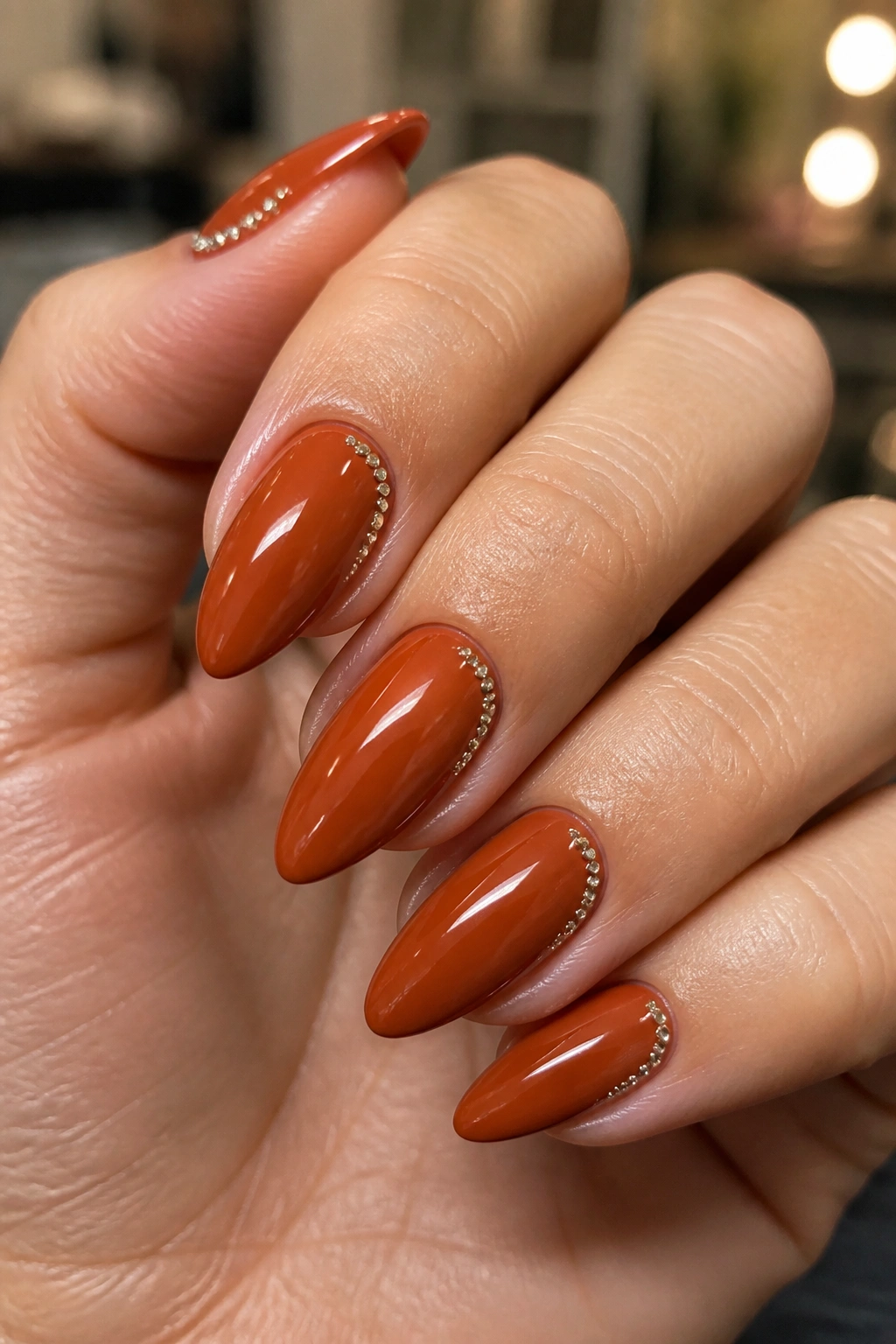
Burnished orange with tiny crystal dots is what I’d pick when I want orange to look polished, not playful. The base shade should lean deep and warm, somewhere between copper and brick, then the crystals add little points of light near the cuticle or along one side of the tip.
The key is restraint. A few tiny stones are enough. If you load the nail with sparkle, the orange gets pushed back and the set starts to look crowded. Two or three crystals per accent nail can be plenty, especially when the rest of the manicure stays smooth and glossy.
This design sits in a nice place between everyday and dressed up. It works on almond nails because the soft point gives the crystals a little trail to follow, and that tiny movement makes the whole set feel finished. I also like it on medium-length nails where the orange has room to stay rich.
If you want one orange manicure that can go from plain clothes to a more dressed-up look without changing the whole mood, this is the one I’d keep in reserve. Tiny stones. Deep color. Clean shape. That combination never has to try very hard.