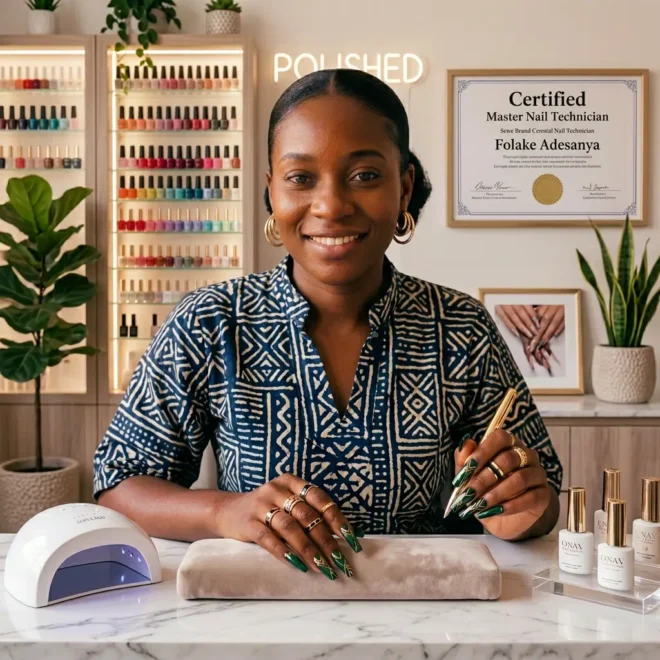


Short tortoiseshell almond nails have a habit of looking more expensive than they have any right to. That’s the charm of them. The amber, brown, black, and caramel layers create movement on a smaller nail shape, and the almond silhouette keeps the whole thing soft instead of heavy. On short nails, the pattern can look sharper, cleaner, and a little more wearable than it does on longer sets.
There’s also a practical reason people keep coming back to this look. Short tortoiseshell almond nails don’t fight with daily life the way longer shapes sometimes do. They still feel polished, but they’re less likely to chip on a bag zipper, a phone case, or the edge of a laptop. And because the tortoise pattern is naturally irregular, it hides tiny growth gaps better than a flat solid color. Useful little bonus.
The trick is choosing a version that suits the nail length instead of trying to cram a long-nail design onto a short canvas. Some tortoiseshell sets look best when the pattern stays sheer and airy. Others need a deep espresso border or a glossy top coat to keep them from looking muddy. That’s where the good designs separate themselves from the forgettable ones.
1. Sheer Honey Tortoiseshell Almond Nails
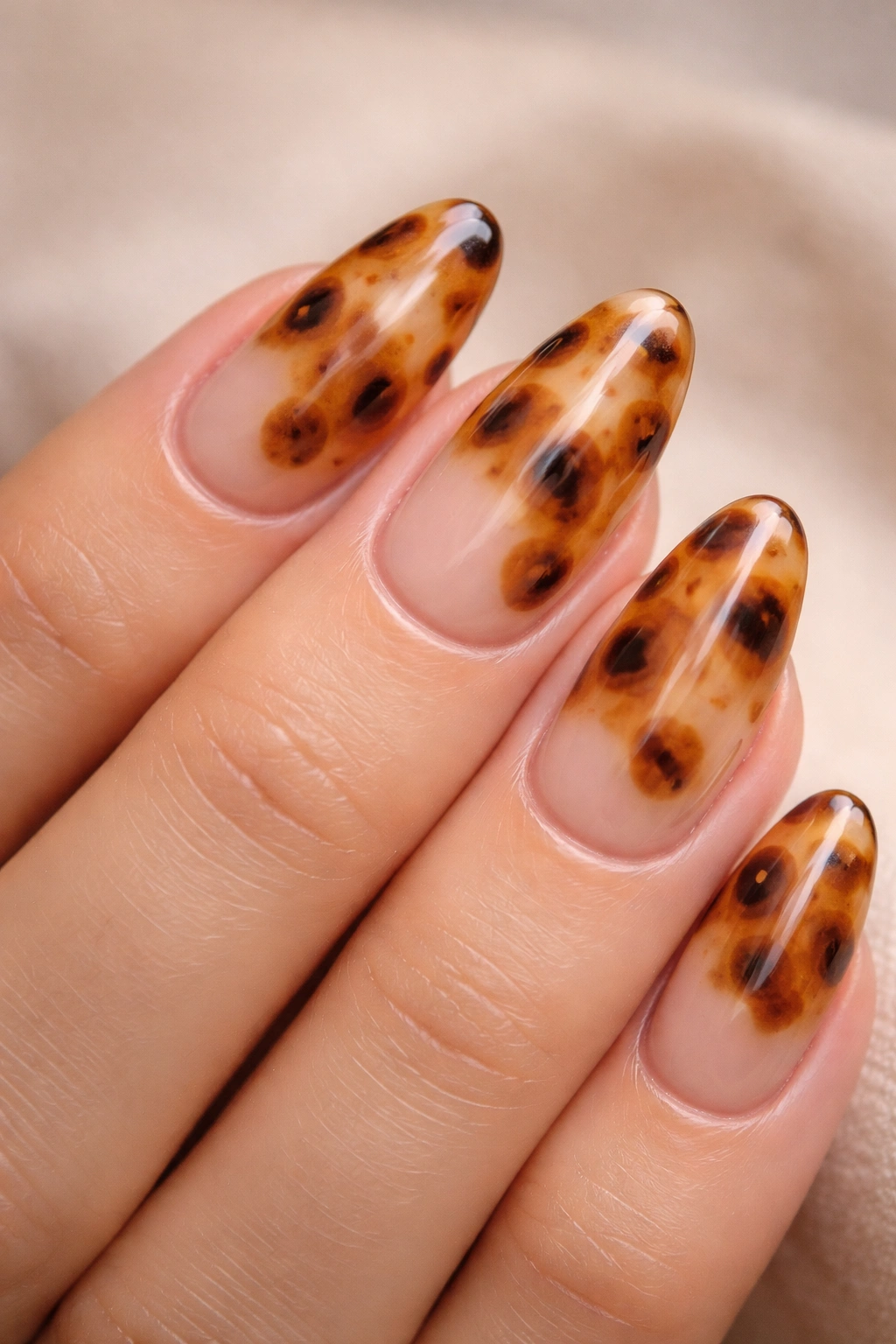
This is the version I reach for when I want tortoiseshell to look light, clean, and expensive without getting fussy. The base stays sheer nude, then amber and tea-brown patches float on top in uneven layers. On short almond nails, that translucency matters a lot. It keeps the design from feeling crowded.
Why it works on shorter nails
Short nails can lose detail if the pattern is too dense. Sheer honey tortoiseshell avoids that problem by giving each color room to breathe. The result looks almost like stained glass when the light hits it, but it still reads as polished from a distance.
The almond shape helps even more. Those tapered sides make the tortoise spots feel elongated, which keeps the nail from looking wide or boxy. If your natural nails are on the broader side, this style is a smart choice.
Best detail to ask for: a thin milky nude base with semi-transparent amber layers and a high-gloss finish.
Works well with: warm skin tones, gold rings, and short lengths that sit just past the fingertip.
Avoid: packing too much black into the pattern. It can turn the whole design muddy fast.
Pro tip: ask for irregular spot placement, not a repeated print. Repetition is what makes tortoiseshell look flat.
2. Deep Espresso Tortoiseshell With Glossy Edges
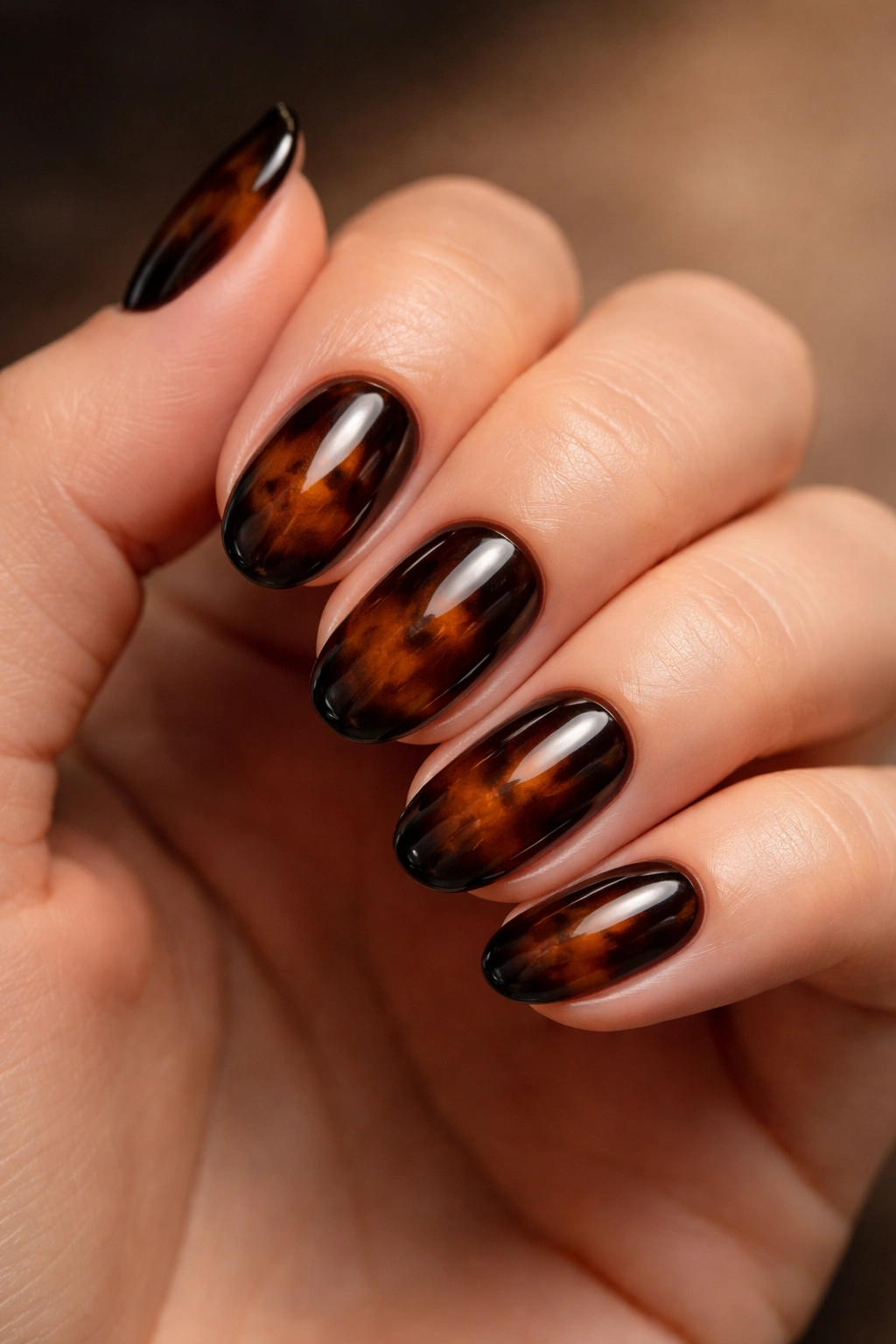
If the sheer version feels too soft, this one gives the design more bite. The pattern uses a darker brown base with espresso edges and inky black marbling near the corners. On short almond nails, that darker frame creates shape fast. You get drama without needing length.
What makes it different
Most tortoiseshell nails rely on warmth alone. This version leans into contrast. The dark perimeter makes each nail look more defined, which is useful if your nail beds are short or your hands have a lot of movement in the nails naturally.
It also wears nicely in real life. Darker tips and edges tend to hide tiny nicks better than pale outlines. The look feels a little moodier, a little more polished, and less sweet than honey tortoise. I like that. Not every tortoiseshell set needs to be soft.
The best versions keep the center semi-sheer so the nail doesn’t disappear into one dark blob. You want depth, not opacity.
Best for: evening looks, sleek outfits, and people who want tortoiseshell to read as a statement rather than a neutral.
Finish matters: a glossy top coat is non-negotiable here. Matte makes the brown tones look dull.
One thing to watch: if the black patches are too heavy, the nail can shrink visually. Keep the negative space.
3. Tortoiseshell French Tips on Short Almond Nails
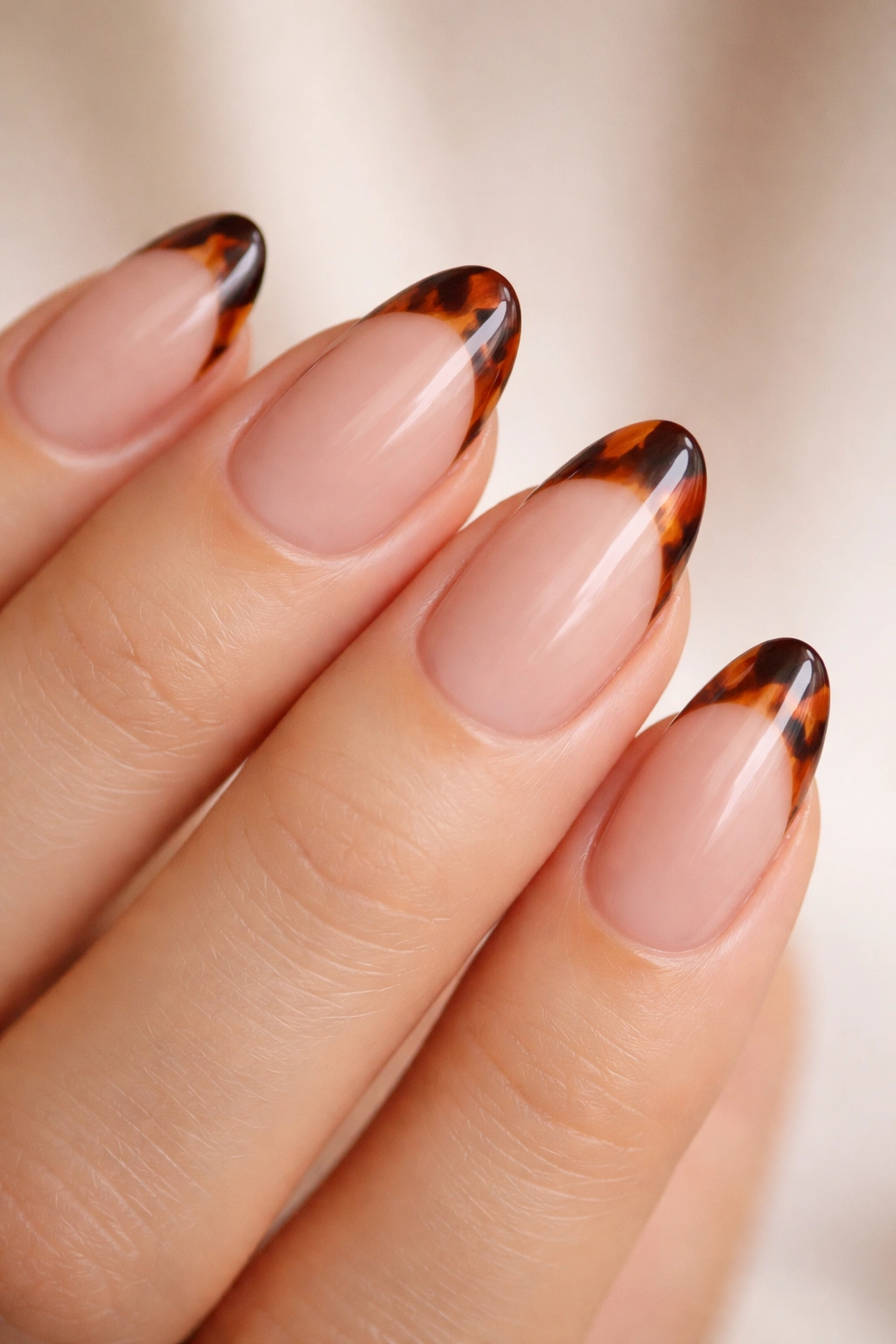
A tortoiseshell French tip is one of those ideas that sounds dramatic and then ends up being weirdly wearable. The base stays clean and nude, while the tortoiseshell appears only along the tips. On short almond nails, that placement is a lifesaver. It adds interest without eating up the whole nail plate.
How to use the tip placement well
The best short versions keep the French smile line slightly higher than a classic French, especially on almond nails. That small adjustment gives the illusion of length. A too-low tip can make the nail look stubbier, and nobody wants that.
This version also plays nicely with different wardrobes. It feels restrained with a blazer, but it still has enough pattern to stand out with denim or a simple sweater. I’d call it one of the smartest ways to wear tortoiseshell if you don’t want the full-nail effect.
A lot of nail techs use a thin amber wash first, then place darker tortoise spots only near the free edge. That creates depth without making the tip look pasted on. Small difference. Big payoff.
What to ask your nail tech for
- A sheer nude base
- Thin tortoiseshell tips with irregular brown and black spots
- A softly curved smile line to flatter short almond shapes
- High shine on top for a cleaner outline
Best for: first-time tortoiseshell wearers and people who like a neat finish.
Skip it if: you want the pattern to dominate the nail. This version is more subtle by design.
4. Caramel Swirl Tortoiseshell With Milky Nude Base
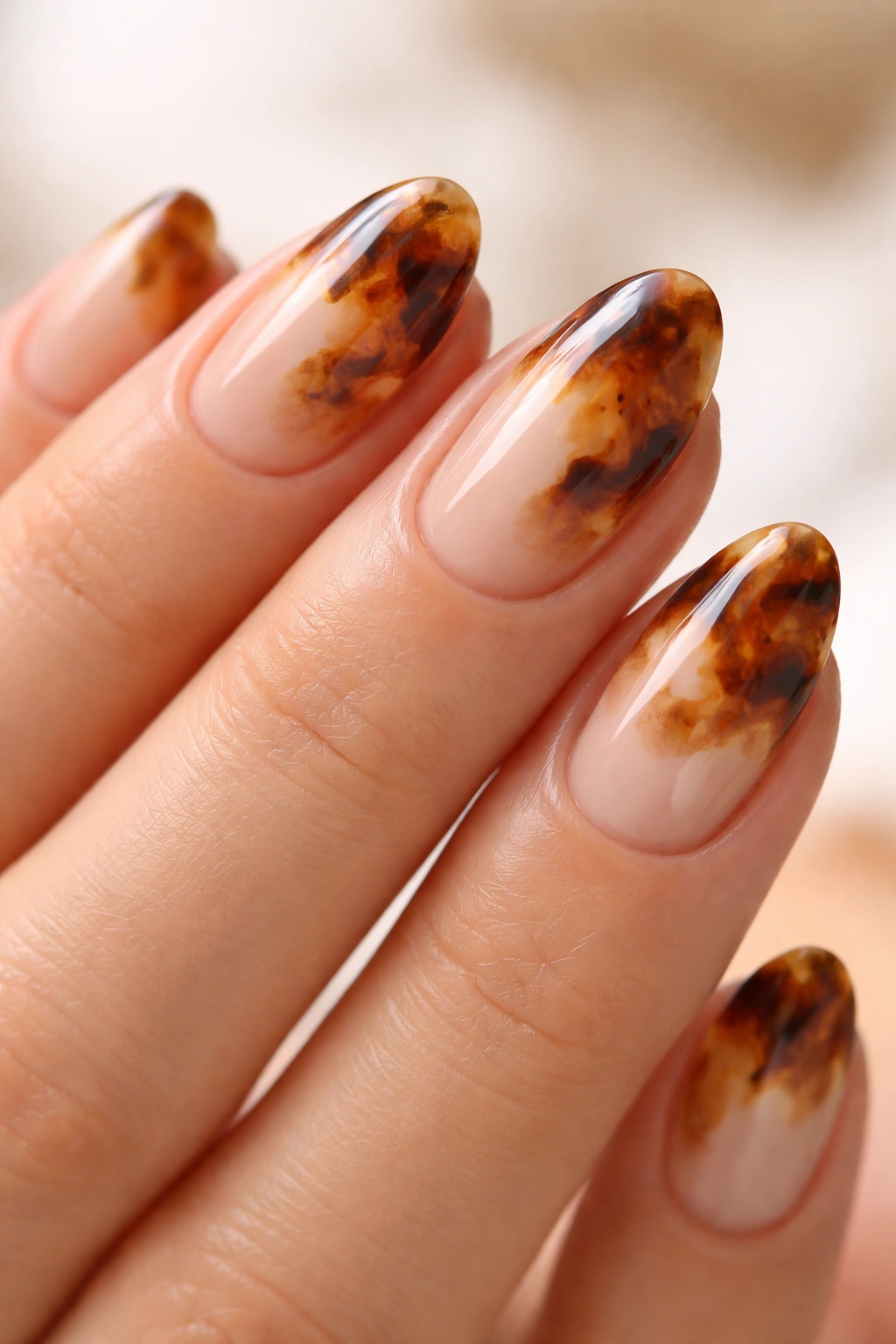
This one is warmer and friendlier than the espresso-heavy versions. Think caramel, tea, soft amber, and a little smoke. The nail never turns fully opaque, so the whole set feels airy even when the pattern is bold. On short almond nails, that balance is gold.
A milky nude base gives the design its structure. Without it, caramel tortoiseshell can blur into the nail bed and lose definition. With it, each spot stays readable. That matters more on shorter lengths, where every millimeter counts.
Why people keep choosing this shade family
Caramel tortoiseshell sits in a sweet spot between classic neutral and statement art. It’s not plain beige, but it also doesn’t scream for attention. Some designs try too hard. This one doesn’t.
The color mix works especially well if you wear warm jewelry, tortoiseshell glasses, camel coats, tan leather bags, or anything with brass hardware. The whole thing starts to feel coordinated without looking matched on purpose.
Short almond nails benefit from this soft contrast because the shape already has elegance built in. You do not need to pile on more detail. A few layered amber patches and a glossy seal are enough.
Best for: everyday wear, office settings, and anyone who likes warm neutrals.
Texture note: the final finish should look glassy, not sticky or thick.
Minor warning: if the nude base is too pink, the whole set can fight the tortoise tones.
5. Black-Rimmed Tortoiseshell Almond Nails
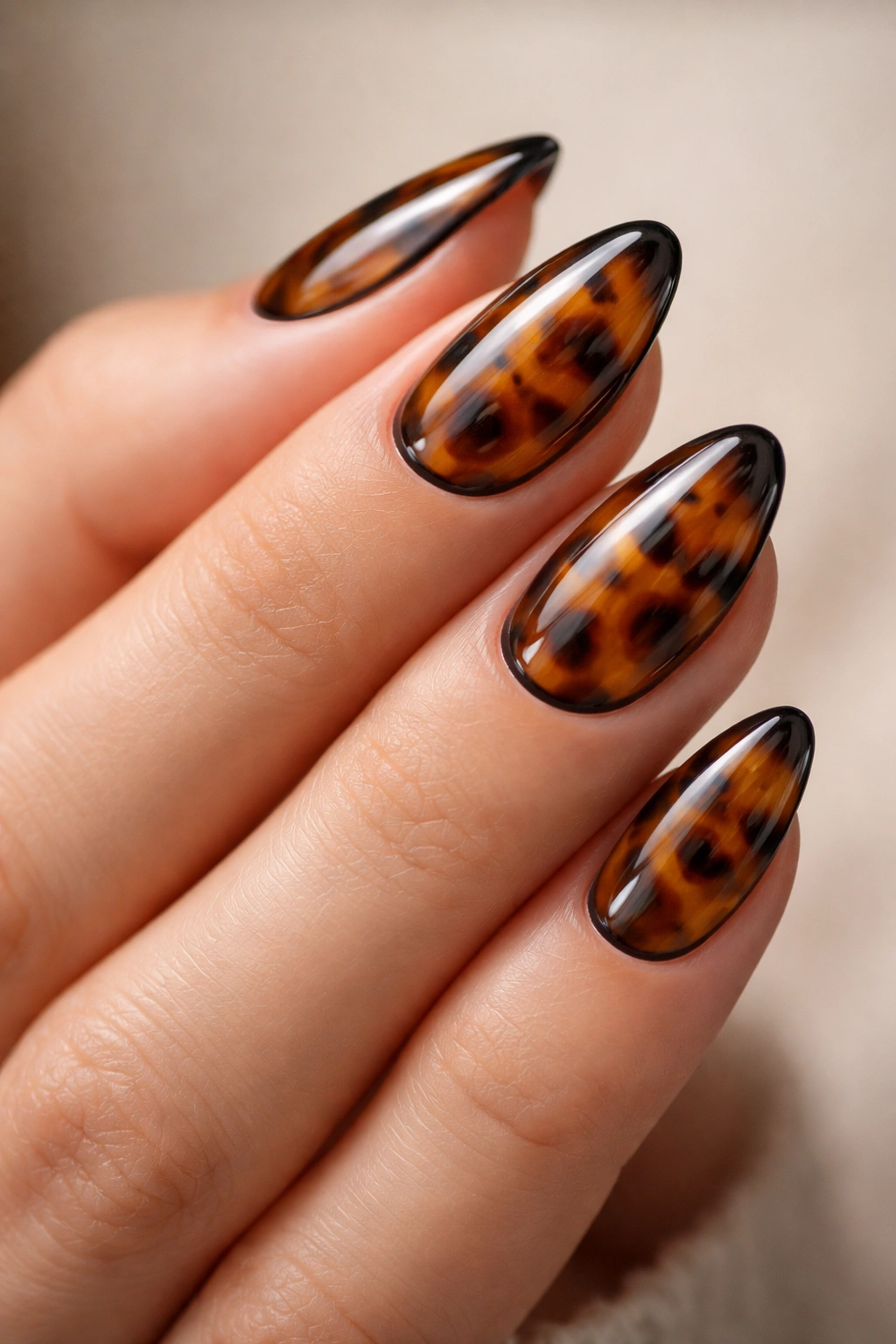
This design is bolder than it first sounds. The tortoiseshell pattern sits inside a thin black border or is framed by black sidewalls along the almond shape. That tiny line changes everything. It makes the design look sharper, cleaner, and much more graphic.
Why the border matters
Short nails can sometimes lose their edge. A black outline solves that. It gives the eye a clear place to stop, which keeps the nail from feeling too soft or washed out. On almond shapes, the border also emphasizes the taper, which is one of the reasons this style looks so sleek.
The design is especially good if you like fashion with a bit of contrast. Think black boots, leather jackets, gold hoops, or structured coats. It doesn’t need matching accessories, but it does seem to enjoy them.
The key is restraint. A line that’s too thick will crowd the nail. A line that’s too thin can disappear once the top coat goes on. There’s a narrow middle ground, and that’s where this design shines.
Best detail: a crisp black frame with a translucent amber center.
Good for: short nails that need definition and people who like a slightly dramatic finish.
Avoid: chunky borders that cut off the almond curve.
6. Matte Tortoiseshell With Soft Shine Accents
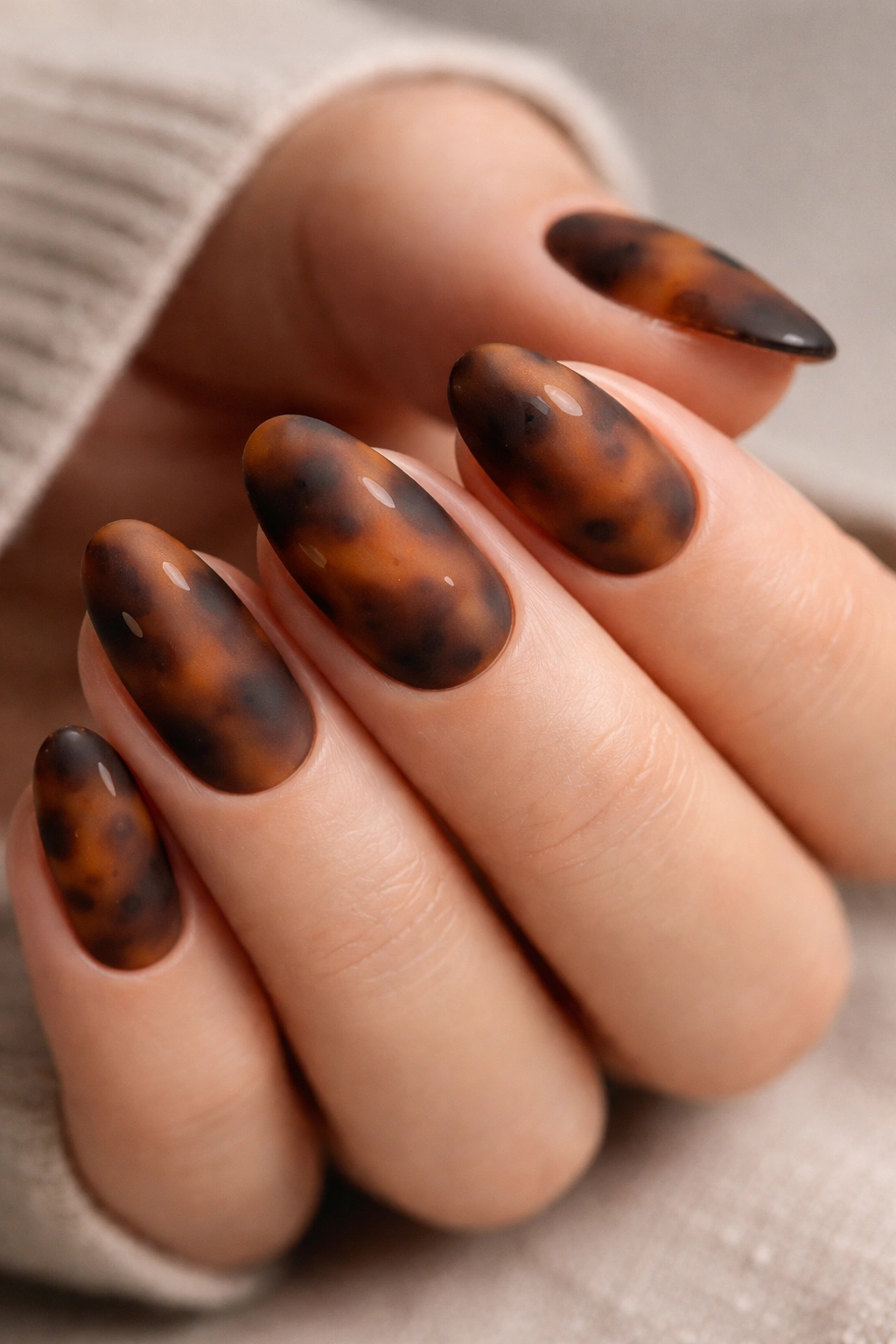
Matte tortoiseshell can go wrong fast. Flat brown on short nails often looks dusty instead of rich. But when it’s handled well, the result is surprisingly chic. The trick is to keep most of the nail matte while leaving tiny glossy accents on select tortoise spots.
That little contrast saves the whole look. The matte finish softens the pattern, and the gloss spots keep it from going dead. It’s a small visual trick, but it works.
The texture contrast is the whole point
Tortoiseshell already has built-in depth from the layering of colors. Matte polish can hide that depth if you’re not careful. So the design has to be planned with a lighter hand. You want cloudy amber, soft brown, and a few darker spots — not a heavy block of color.
This style also looks more modern than high-gloss tortoiseshell, which some people love and others find a bit too shiny. Matte gives the nails a velvety feel. Not literally, of course. But visually, yes.
I’d only recommend this on short almond nails if the nail tech keeps the layers sheer. Opaque matte tortoiseshell can turn blunt quickly.
Best for: minimal wardrobes, soft knits, and people who like texture over shine.
Best pairing: one glossy top coat just over the tortoise pattern on two accent nails. Subtle. Smart.
7. Tortoiseshell and French Vanilla Combo Nails
This version mixes two moods on the same hand: creamy French vanilla tones and classic tortoiseshell panels. The contrast is calm but not boring. On short almond nails, the result feels balanced because the lighter nails give your eye a place to rest between the patterned ones.
That balance matters. Too many tortoiseshell nails in a row can start to feel busy, especially on a shorter canvas. Breaking the set with pale vanilla or sheer beige makes the pattern stand out more. Oddly enough, less pattern gives you more impact.
How the mix usually looks best
A common approach is to keep two or three nails in a creamy neutral and let the tortoiseshell take over the rest. Another option is to do tortoise tips on a vanilla base. Either way, the pale shade should lean warm rather than stark white. Bright white can make the brown tones feel harsh.
This design is especially good if you like sets that look styled, not random. It feels intentional in a way that full pattern sets sometimes don’t. Also, it photographs well from arm’s length — and yes, that matters if you care about the overall finish rather than just the close-up.
Best for: mixed-media nail lovers and anyone who wants tortoiseshell without full commitment.
What makes it work: the vanilla nails need the same warm undertone as the tortoise brown.
Do not: use a cool milky white unless you want a sharper, colder contrast.
8. Micro Tortoiseshell Spots on Nude Almond Nails
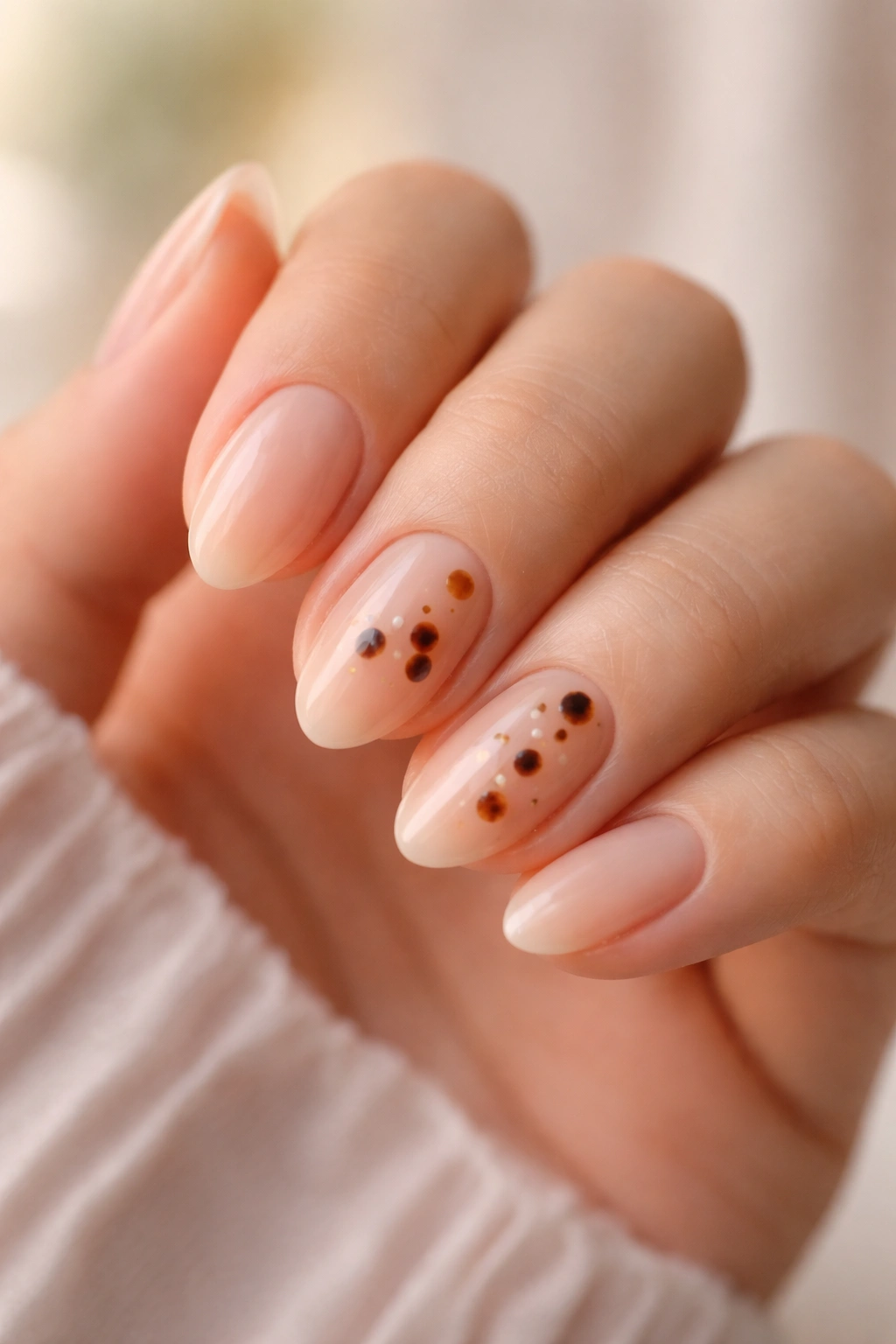
Tiny tortoiseshell spots look delicate in a way that full tortoise panels do not. The design stays mostly nude, with small amber and brown flecks scattered across one or two nails. On short almond nails, this can be a really elegant move because the pattern doesn’t overpower the shape.
Small pattern, big payoff
This version is for people who want just enough detail to feel styled. The nails still read as neutral from afar, but up close there’s a lot going on. That makes them good for everyday wear, especially if you work somewhere that leans conservative but you still want personality.
The pattern placement has to be uneven. If the spots are too evenly spaced, the nails start to look printed instead of hand-painted. A little randomness is the whole appeal. Imperfection is the point here. Funny how that works.
Micro tortoiseshell also grows out gracefully. Since the design is sparse, regrowth doesn’t scream for attention. That makes it practical for anyone who doesn’t want to rush back for a refresh.
Best for: short nails, quiet dress codes, and people who dislike heavy nail art.
Style note: keep the base sheer, not chalky.
Optional upgrade: a single gold foil fleck on one nail, but only one. More than that starts to look busy.
9. Half-Moon Tortoiseshell Almond Nails
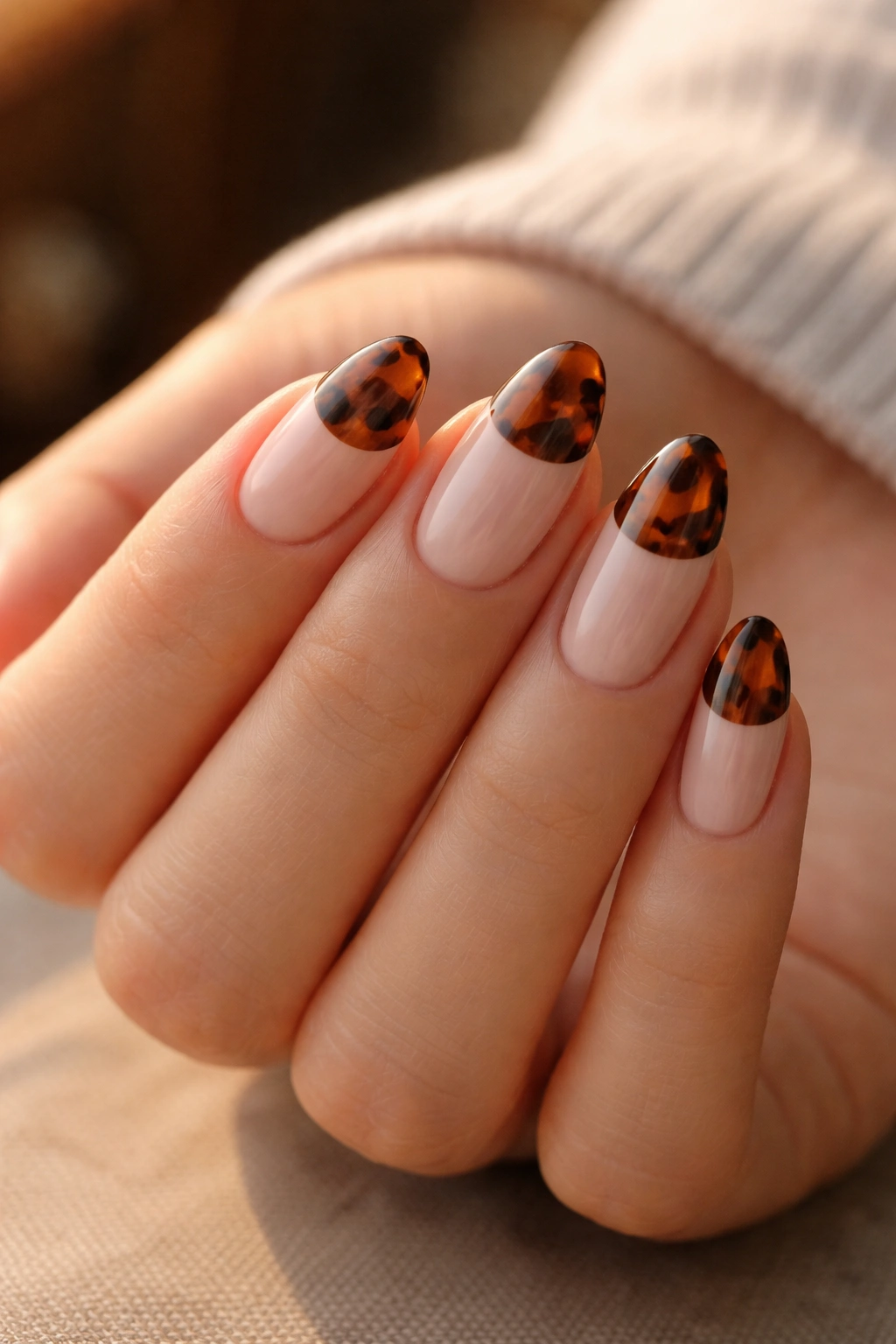
Half-moon tortoiseshell is a little more graphic than the usual all-over pattern. The tortoise design sits near the cuticle, while the rest of the nail stays nude or soft pink. That placement feels unexpected on short almond nails, and it also helps the nail look longer because the visual weight sits lower.
The shape of the half-moon matters. If it’s too rounded, it can look childish. If it’s too sharp, it can feel fussy. The best versions follow the natural cuticle curve and keep the tortoiseshell band slim.
Why this design stands out
Most people expect tortoiseshell to live on the tip or across the whole nail. Moving it down near the base changes the whole mood. The design feels fresher, almost a little vintage, especially with a clean almond shape.
It also gives you breathing room. On shorter nails, too much pattern can make the nail surface feel cramped. Half-moon placement solves that by leaving the upper portion open and light. That contrast makes the tortoise section stand out more than it would on a fully covered nail.
If you like rings, this design plays well with them. The eye naturally moves from the tortoise base to the jewelry. Nice little effect.
Best for: people who want something less common but still wearable.
Ask for: a slim tortoise moon and a sheer nude upper nail.
Avoid: filling the cuticle area too thickly, which can make the nails look grown-out faster.
10. Amber Glow Tortoiseshell With Gold Foil Touches
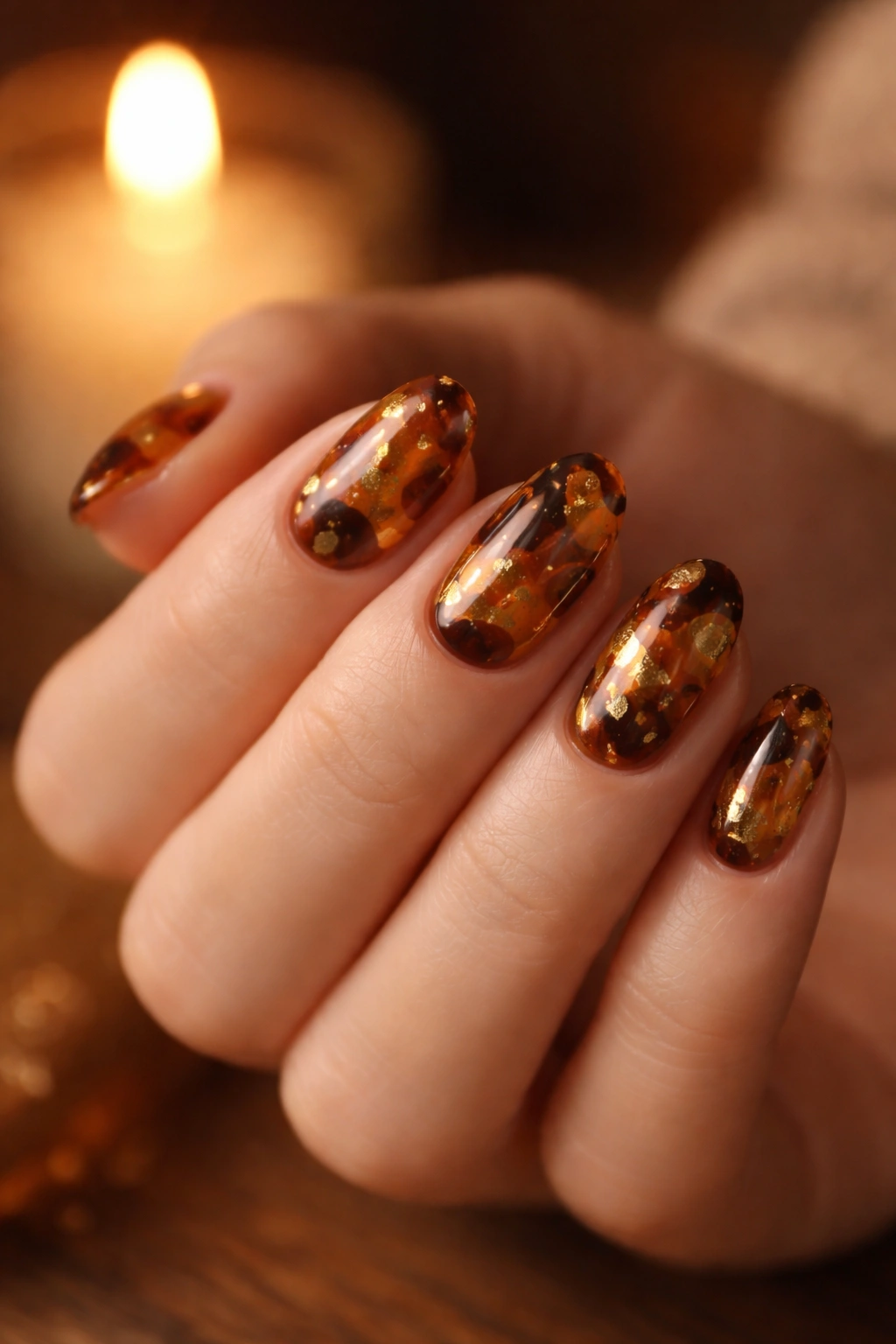
This is the dressier cousin in the group. The tortoiseshell pattern stays warm and translucent, but tiny bits of gold foil are placed sparingly between the brown layers. On short almond nails, that tiny metallic hit gives the design a lift without stealing the show.
How much foil is enough
Not much. That’s the whole answer. One or two fine foil fragments per nail is plenty. If you pile on too much, the design stops looking like tortoiseshell and starts looking like a craft project. Nobody wants that.
The foil works because tortoiseshell already has depth. Gold just catches the eye and makes that depth more obvious. It’s a small accent, not a new theme. The best sets keep the foil tucked inside the pattern rather than floating on top in random chunks.
This version looks especially good in warm indoor light. Candlelight, restaurant lighting, lamps with soft bulbs — all of it suits the amber tones. Daylight works too, but the gold pieces really wake up when the light is lower.
Best for: dinners, events, and anyone who wants a hint of glamour.
Best pairing: simple jewelry and a neutral outfit. Let the nails do the talking.
Watch out for: foil that’s too thick. It can stick up and chip early.
11. Deep Caramel Ombré Tortoiseshell Nails
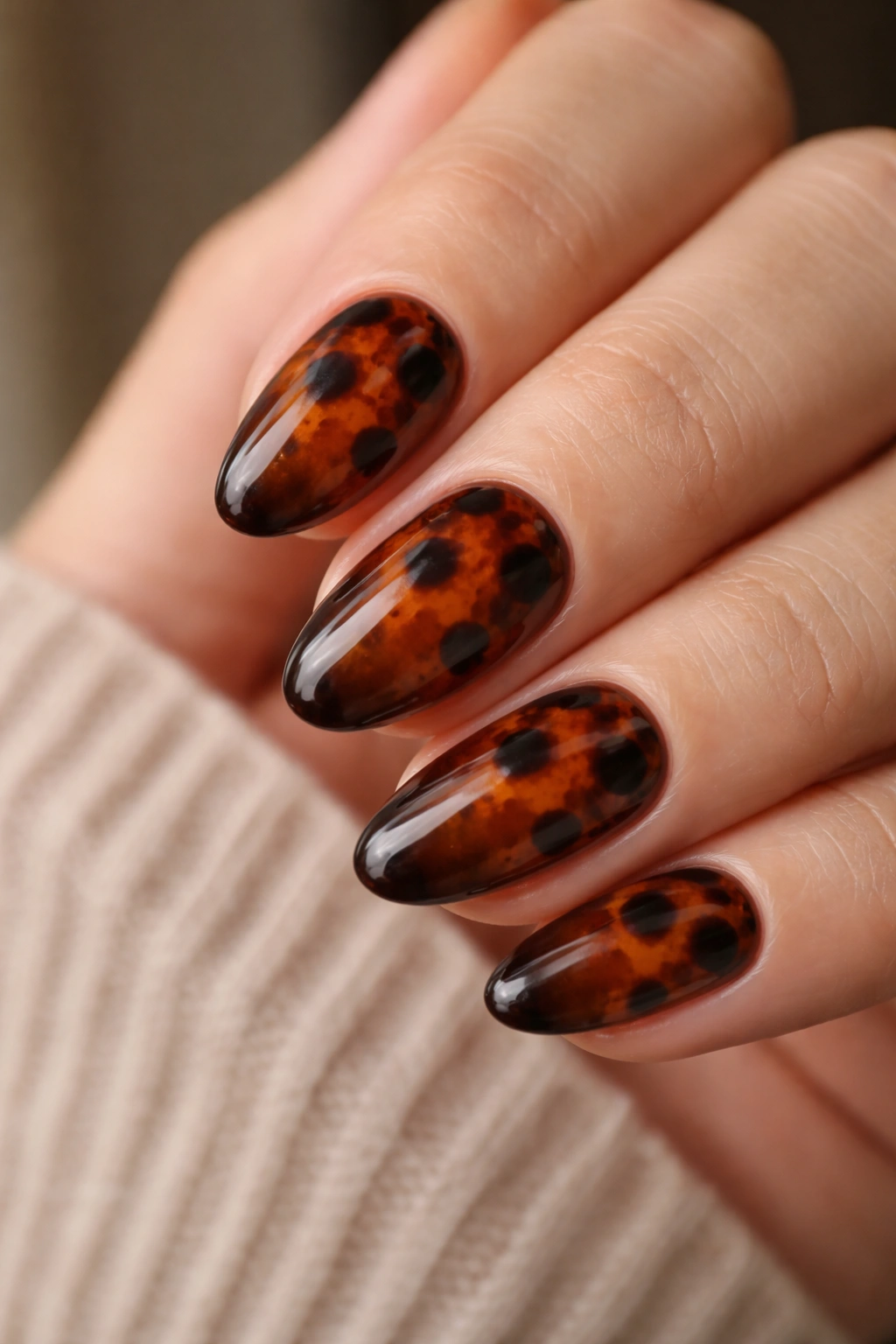
This design blends ombré shading with the tortoiseshell pattern, which gives the nails a smoky, layered feel. The color moves from lighter caramel near the base to deeper brown toward the tip, then the tortoise spots sit on top in uneven patches. On short almond nails, that gradient adds shape without making the nails look heavy.
The ombré does some of the visual work that length would normally do. That’s the clever part. It pulls the eye along the nail, so the shorter length feels a little more elongated.
Why ombré helps tortoiseshell
Tortoiseshell already relies on layering. Ombré gives it another layer to sit on top of, which can make the design feel richer and more dimensional. Done badly, though, it gets muddy fast. The colors have to stay in the same warm family. Caramel, chestnut, honey brown. Keep them related.
This style is for people who like their nails to look a bit softer and more blended rather than sharply outlined. If you want crisp edges, skip this one. If you want warmth and movement, it’s a strong choice.
The finish should be glossy. Always glossy. Matte and ombré together can flatten the effect, and that defeats the point.
Best for: warm-toned wardrobes, soft glam looks, and people who like depth over contrast.
Technical note: the brown transition should be feathered, not striped.
12. Tiny Accent Tortoiseshell on One or Two Nails
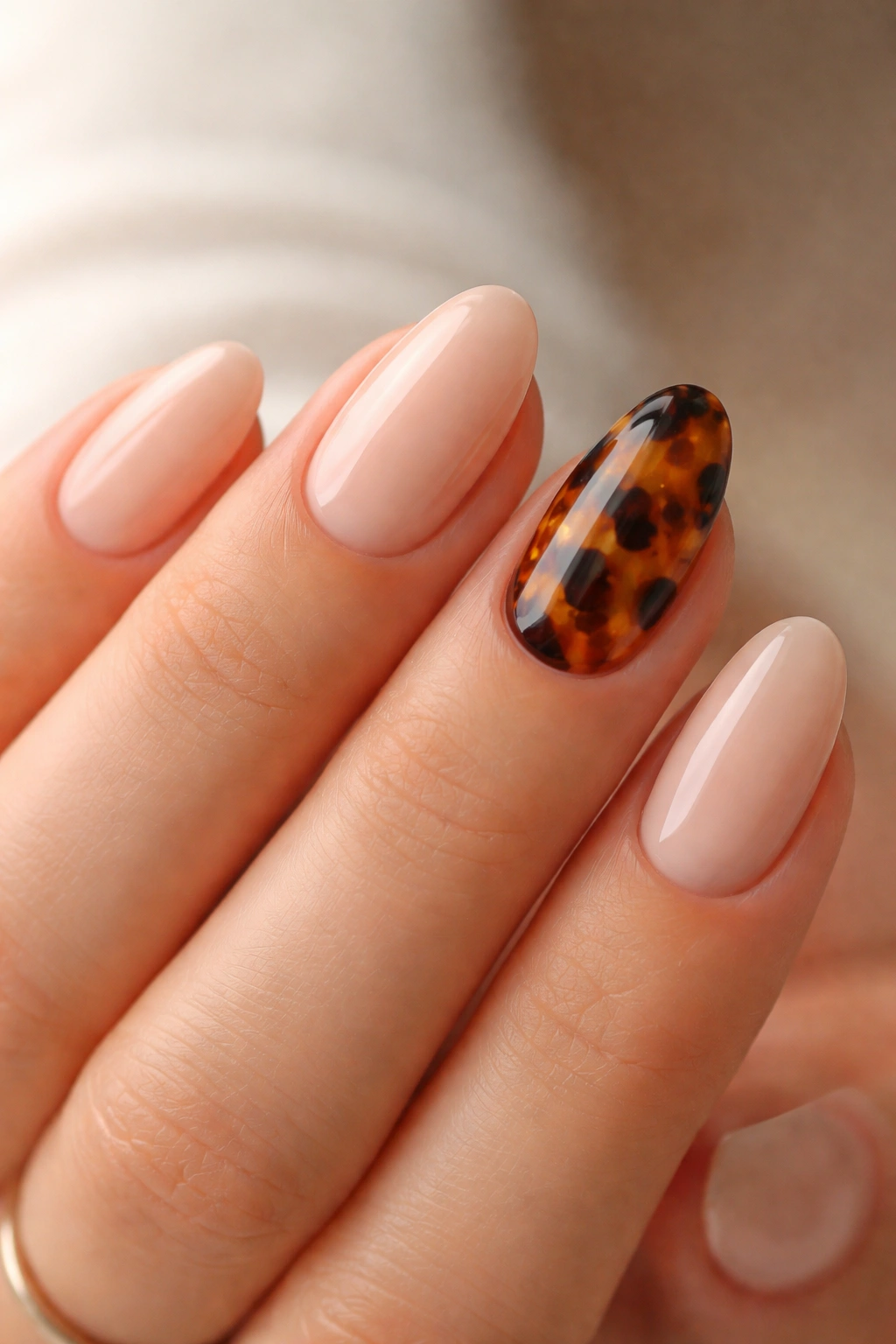
Sometimes the smartest design is the one that knows when to stop. A mostly nude short almond set with only one or two tortoiseshell accent nails can look sharper than a full ten-finger pattern. The contrast gives the design breathing room, and the nude nails make the accent pattern feel deliberate.
This is one of my favorite ways to wear tortoiseshell on short nails, honestly. It’s restrained but not plain. You get the pattern, the warmth, and the movement — then you leave enough bare space to keep the look clean.
Why less can look better
Short nails do not need a lot of decoration to stand out. A single accent nail can carry the whole mood if the color family is right. In this case, the tortoiseshell sits next to a sheer nude or milky beige, which makes the pattern feel more vivid by contrast.
It’s also easy to maintain. If one accent nail chips, it’s less annoying to fix than an entire patterned set. That sounds boring, but boring matters when you’re wearing nails for more than a photo.
This style works well for people who like a tidy hand but still want a bit of personality. It’s especially good if you wear a lot of neutrals and want a manicure that quietly pulls things together.
Best for: minimalist dressers and low-maintenance nail routines.
Best ratio: 1 or 2 tortoiseshell nails, 8 or 9 nude nails.
My take: this is the easiest version to live with, and one of the nicest to look at.
Shape, Finish, and Color Choices That Make Short Tortoiseshell Almond Nails Work
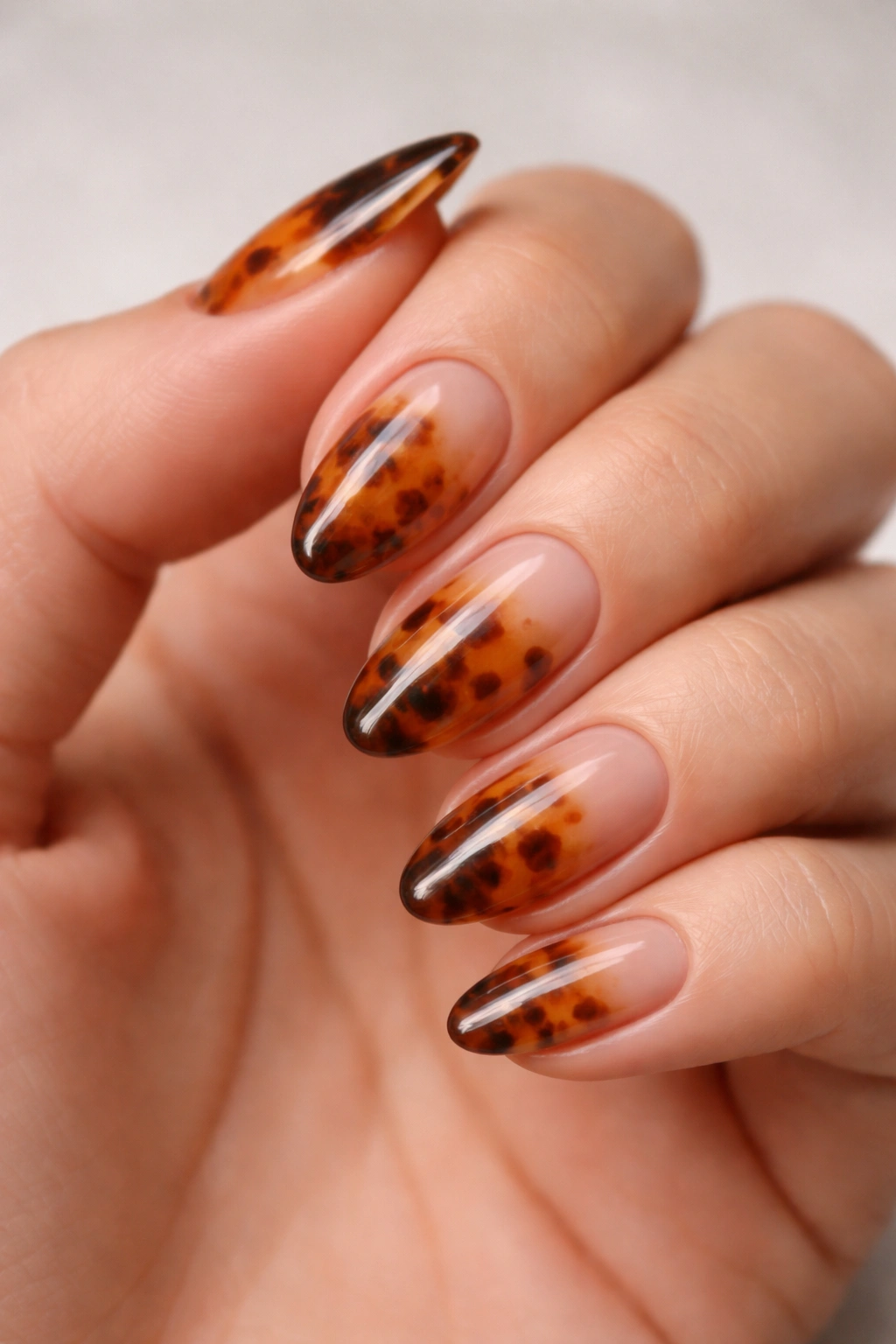
The design only works if the shape is respected. Almond nails should taper gently, not sharply. On short lengths, that taper creates the elegant line that keeps tortoiseshell from feeling too chunky. A blunt almond is basically a square nail in disguise. Not flattering. Not helpful.
Finish matters just as much. Glossy top coats usually win here because tortoiseshell depends on visible depth. Matte can work, but only if the pattern stays soft and translucent. If the color layers are dense, matte polish tends to kill the movement that makes tortoiseshell interesting in the first place.
Color choice is where people overcomplicate things. You do not need six brown tones. You need a clean trio: a sheer nude base, an amber or caramel layer, and a deeper brown or black accent. That’s enough. The best sets look like they were painted with restraint, not stuffed with every brown in the salon drawer.
How to Keep the Pattern From Looking Muddy
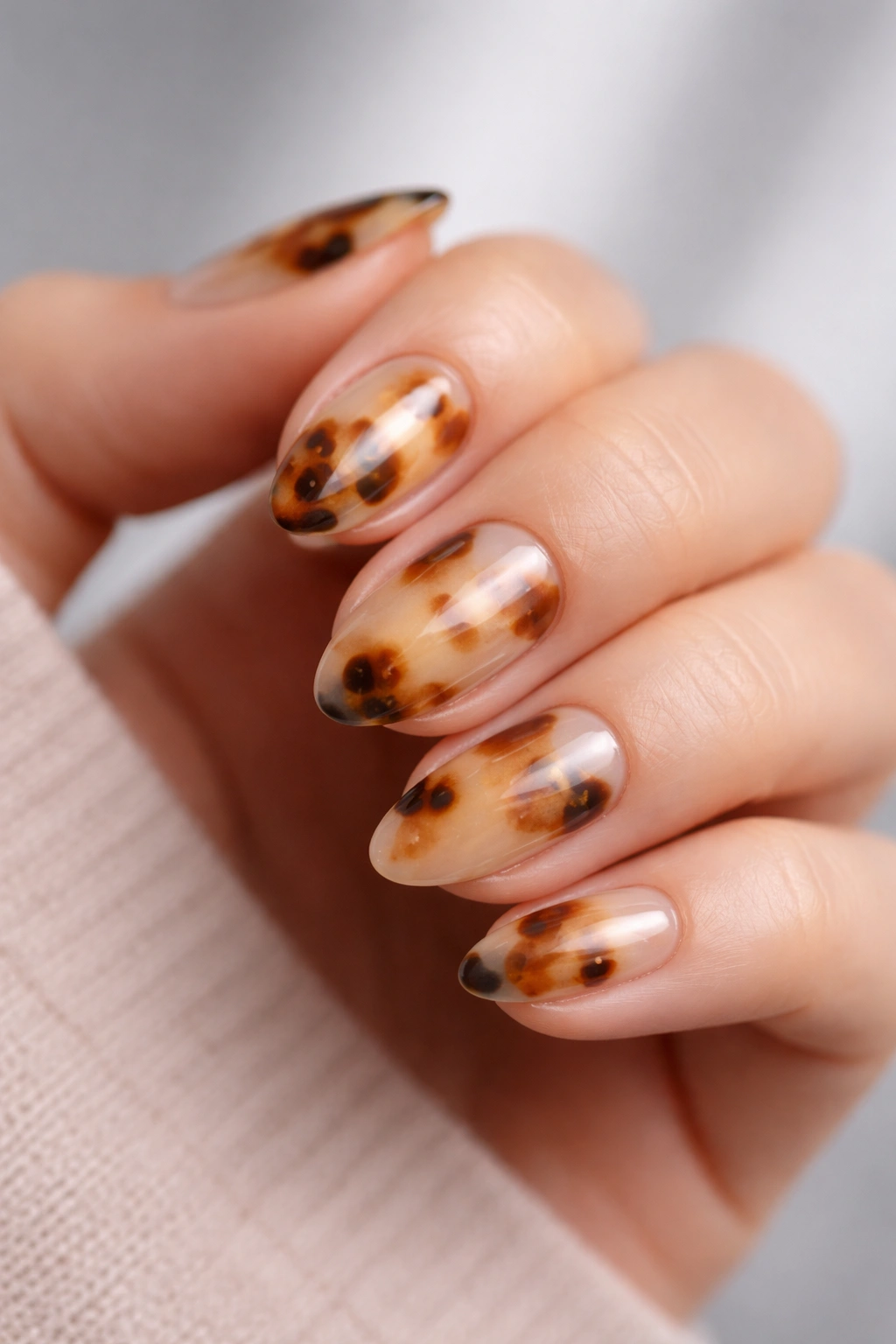
Muddy tortoiseshell is usually a layering problem. The colors were probably too opaque, too close together, or too heavily blended. Short nails make this even more noticeable because there’s less space for the pattern to spread out. One bad blob can take over the whole nail.
A good tortoiseshell design has air in it. You should still see the base moving through the pattern. If everything turns into one dense brown patch, the nail loses that classic tortoise effect and starts looking dull. The fix is usually simpler than people think: lighter base, thinner layers, and more negative space.
Another mistake is using black too generously. Black should sharpen the design, not bury it. A few dark spots are enough. Once black becomes the main color, the design loses warmth, and warmth is the whole reason tortoiseshell works so well on almond nails.
Styling Short Tortoiseshell Almond Nails With Outfits and Jewelry
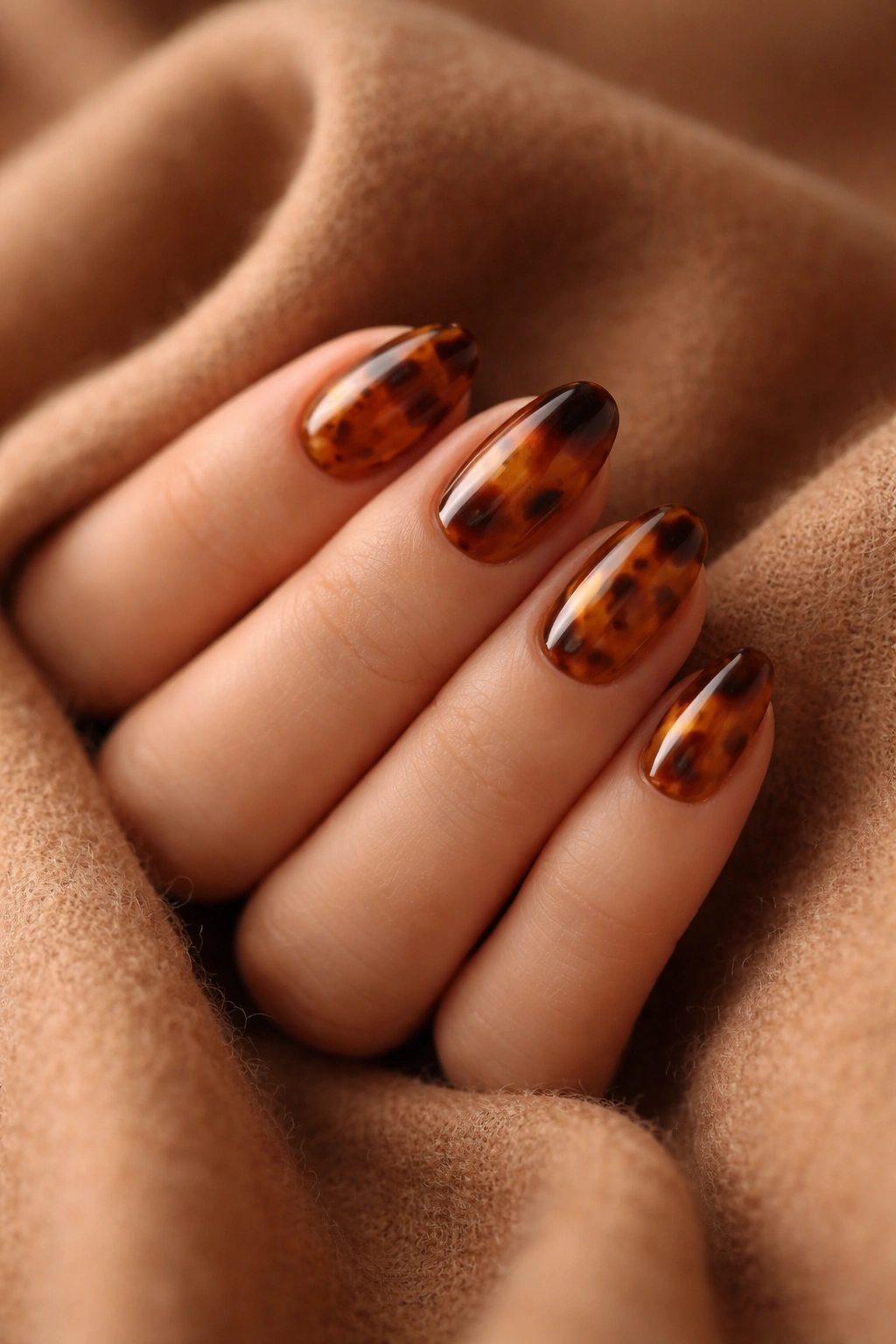
These nails like warm materials. Gold jewelry, tortoiseshell glasses, camel coats, chocolate leather, cream knits — all of that plays nicely with the pattern. You do not need to match everything exactly. In fact, exact matching usually looks forced. Just keep the tones in the same temperature range.
They also work with clean, simple outfits because the nails carry enough visual interest on their own. A white shirt and jeans suddenly feel more finished. A black sweater looks a little less plain. That’s the kind of manicure people notice without being able to say why.
One thing I’d avoid is pairing a very busy outfit with a heavily patterned tortoiseshell set. When too many things are competing for attention, the nails stop reading as polished and start looking lost. Let the manicure be the detail, not one more piece of noise.
Final Thoughts
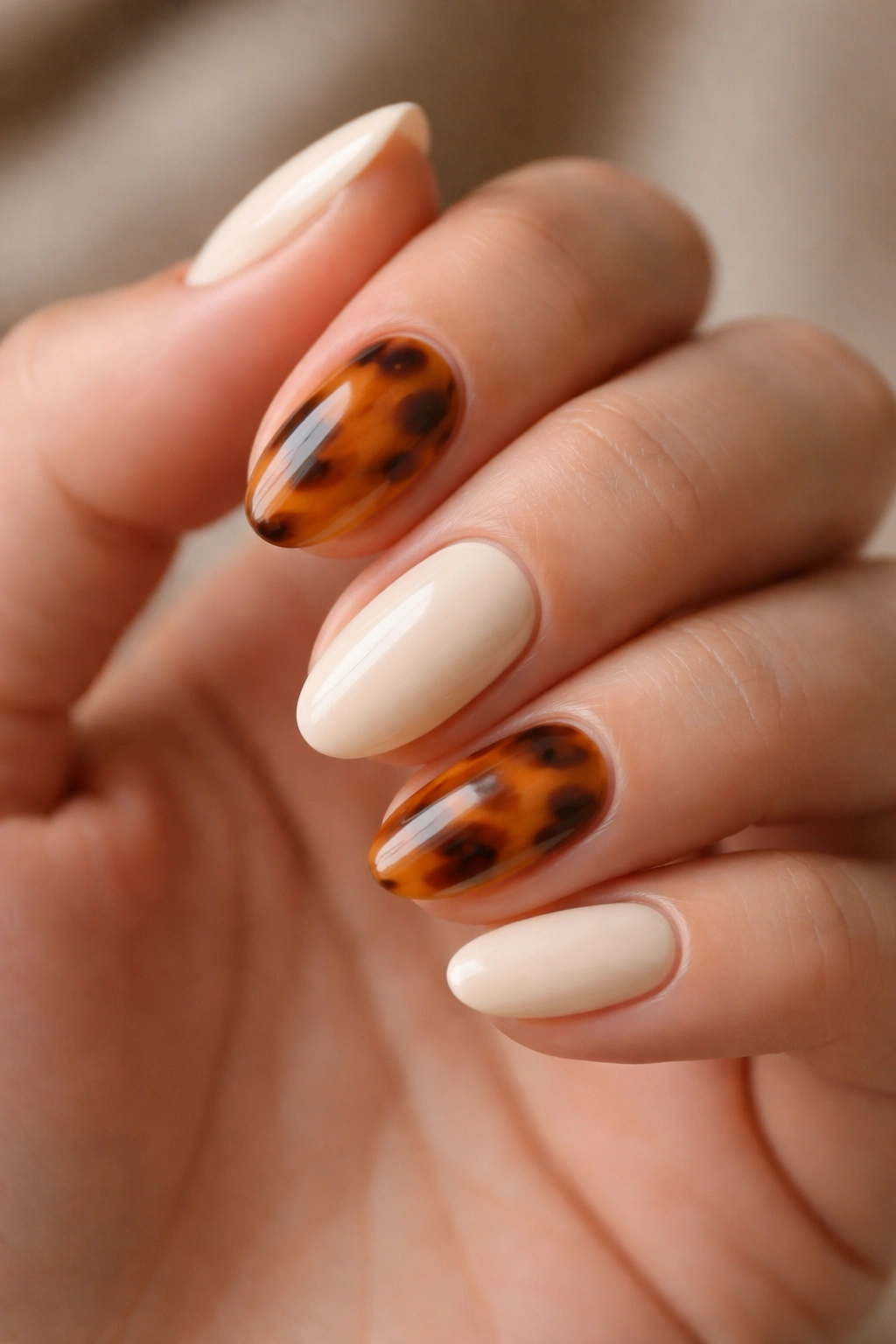
Short tortoiseshell almond nails stand out because they know how to balance contrast and restraint. That’s the whole appeal. The pattern is rich enough to feel special, but the shorter almond shape keeps it grounded and easy to wear.
The best versions are the ones that leave room for the pattern to breathe. Sheer bases, clean curves, and careful use of dark brown or black will always beat an overworked design. Keep it warm. Keep it readable.
And if you’re torn between a bold set and something quieter, start with one accent nail or a tortoiseshell French tip. It’s a small move, but it tells you a lot about whether the look suits your hands. Usually, it does.